Top Hanoi attractions in 2026
The Mausoleum, Temple of Literature, the Old Quarter, a UNESCO citadel and the water puppet theatre — with foreigner ticket prices in VND and USD, opening hours, dress codes and ready-made 1–3 day itineraries. No filler, just the practical stuff.
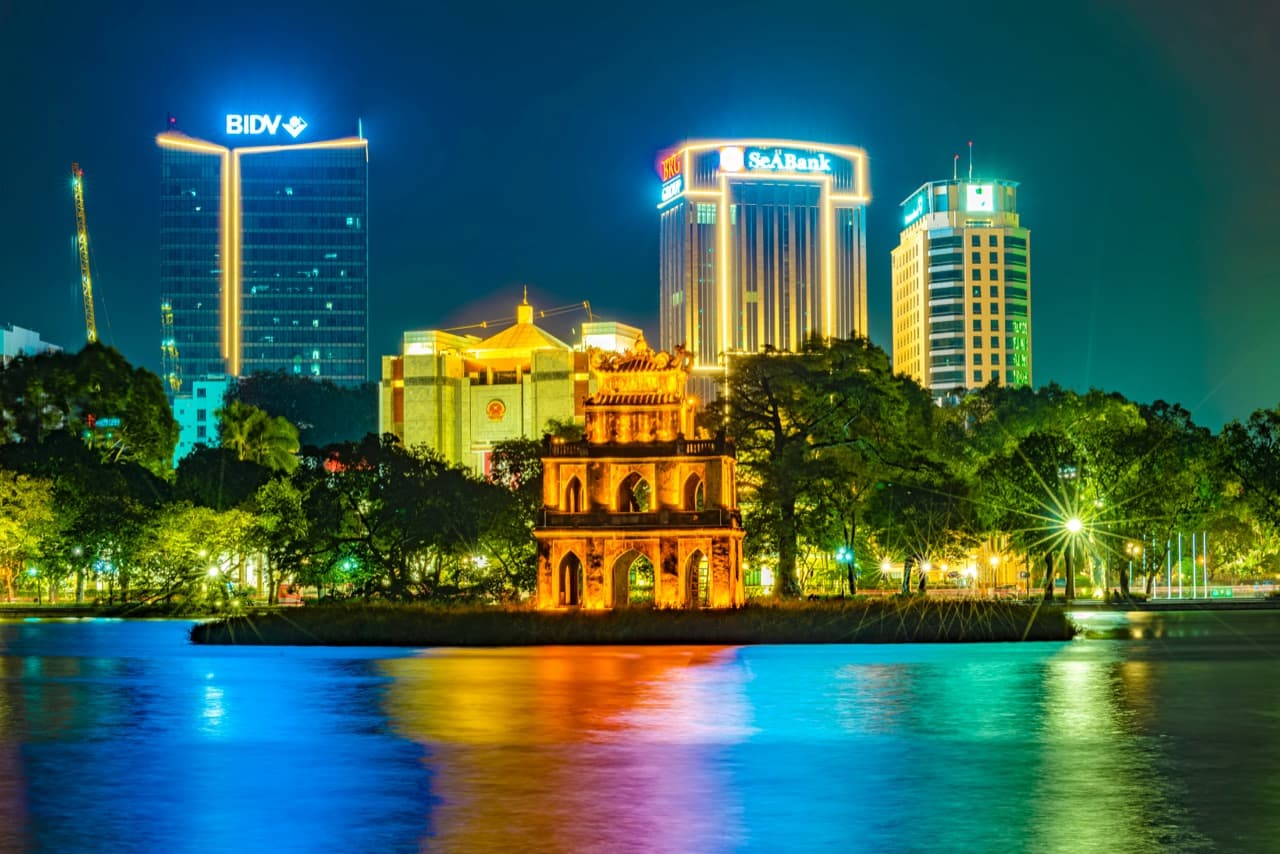
Hanoi is over a thousand years old — founded in 1010, one of the oldest capitals in Southeast Asia. Round every corner there's a pagoda, a colonial mansion or an underground bunker. Sixth-century Buddhist temples stand a hundred metres from 19th-century French streets, and between them runs the maze of the Old Quarter with its 36 craft lanes.
Everything worth seeing sits close together: you can walk the main sights in a day, and three is plenty for a proper look. Below are July 2026 prices in VND with rough USD conversions, opening hours, dress codes and itineraries you can follow as-is.
Prices current as of July 2026. Rough conversion: ~25,000 VND = $1. Foreigners pay the same listed entry as locals at most sights here.
- Ho Chi Minh Mausoleum (Lăng Chủ tịch Hồ Chí Minh): Free · 7:30–11:00 by season · closed Mon, Fri
- One Pillar Pagoda (Chùa Một Cột): ~25,000 VND (~$1) · 7:00–18:00
- Temple of Literature (Văn Miếu — Quốc Tử Giám): 70,000 VND (~$2.80) · 8:00–17:00
- Old Quarter (Khu phố cổ Hà Nội): Free · 36 craft streets
- Hoan Kiem Lake & Ngoc Son Temple (Hồ Hoàn Kiếm — Đền Ngọc Sơn): Temple: 30,000 VND (~$1.20) · 8:00–18:00
- Thang Long Citadel (UNESCO) (Hoàng Thành Thăng Long): 100,000 VND (~$4) · 8:00–17:00 · open daily
- Hoa Lo Prison (Nhà tù Hỏa Lò — Hanoi Hilton): 50,000 VND (~$2) · 8:00–17:00
- Museum of Ethnology (Bảo tàng Dân tộc học Việt Nam): 40,000 VND (~$1.60) · 8:30–17:30 · closed Mon
- Vietnamese Women's Museum (Bảo tàng Phụ nữ Việt Nam): 30,000 VND (~$1.20) · 8:00–17:00 · open daily
- Military History Museum (Bảo tàng Lịch sử Quân sự Việt Nam): 40,000 VND (~$1.60) · 8:00–17:00 · closed Mon
- Tran Quoc Pagoda (Chùa Trấn Quốc): Free · 8:00–16:00
- St Joseph's Cathedral (Nhà thờ Lớn Hà Nội): Free · 8:00–12:00, 14:00–17:00
- West Lake (Hồ Tây): 17 km waterfront · bike from 30,000 VND/hr
- Water Puppet Theatre (Nhà hát Múa rối Thăng Long): 100,000–200,000 VND · 5 shows/day
- Train Street (Phố Đường Tàu): Free · check the status before you go
- Long Bien Bridge (Cầu Long Biên): Free · 1.68 km · best at sunset
- Night Market & Dong Xuan (Chợ Đồng Xuân): Fri–Sun 18:00–23:00 · ~4,000 stalls
All of Hanoi's attractions — a price table
All the paid sights in Hanoi add up to about 500,000 VND (~$20) in total — roughly the cost of two dinners at a good Old Quarter restaurant. Here's the full breakdown for July 2026:
| Attraction | Entry (VND) | Entry (~USD) | Hours | Closed |
|---|---|---|---|---|
| Ho Chi Minh Mausoleum | Free | — | 7:30–11:00 by season | Mon, Fri |
| Temple of Literature | 70,000 | ~$2.80 | 8:00–17:00 | — |
| Thang Long Citadel (UNESCO) | 100,000 | ~$4 | 8:00–17:00 | — |
| Hoa Lo Prison | 50,000 | ~$2 | 8:00–17:00 | — |
| Ngoc Son Temple | 30,000 | ~$1.20 | 8:00–18:00 | — |
| Museum of Ethnology | 40,000 | ~$1.60 | 8:30–17:30 | Mon |
| Vietnamese Women's Museum | 30,000 | ~$1.20 | 8:00–17:00 | — |
| Military History Museum | 40,000 | ~$1.60 | 8:00–17:00 | Mon |
| Water puppet theatre | 100,000–200,000 | ~$4–8 | 5 shows/day | — |
| Tran Quoc Pagoda | Free | — | 8:00–16:00 | — |
| One Pillar Pagoda | ~25,000 | ~$1 | 7:00–18:00 | — |
| St Joseph's Cathedral | Free | — | 8:00–12:00, 14:00–17:00 | — |
The Ethnology and Military History museums close on Mondays. The citadel and the Women's Museum are open every day.
Ho Chi Minh Mausoleum and Ba Dinh Square
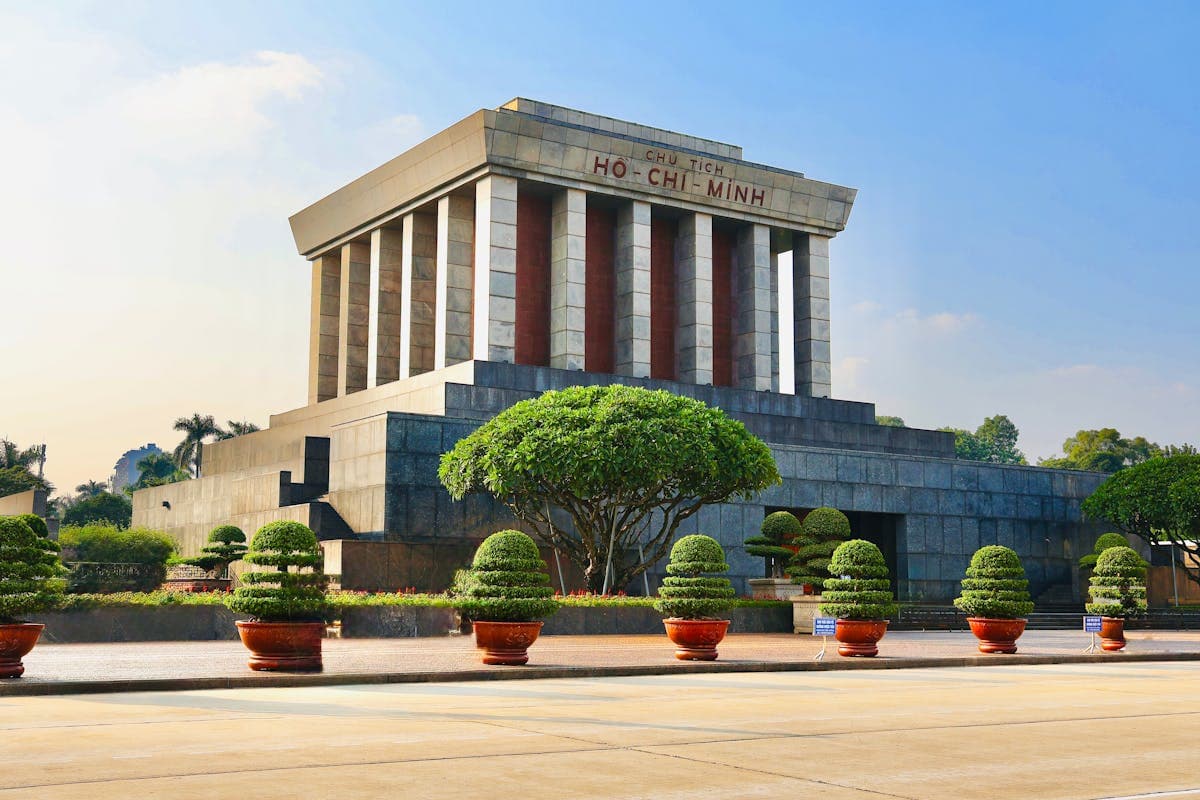
The Ho Chi Minh Mausoleum draws Vietnamese from all over the country — for them it's a pilgrimage, for visitors it's one of Hanoi's must-sees. Entry is free, but the rules are strict, and this is the one place where a foreigner's casual holiday outfit will get you turned away: no shorts, no miniskirts, no bare shoulders. Photos and video are banned inside. You leave cameras, large bags and backpacks at the free left-luggage counter by the entrance.
The marble building on Ba Đình Square holds the embalmed body of "Uncle Ho," founder of modern Vietnam. On this very square, on 2 September 1945, he read out the Declaration of Independence. Inside it's quiet, cool and solemn. The body lies in a glass sarcophagus under soft light. You file past in a loop and can't linger — the whole visit takes 10–15 minutes.
Hours: Tuesday–Thursday and Saturday–Sunday. From 1 April to 31 October, 7:30–10:30 (weekends until 11:00); from 1 November to 31 March, 8:00–11:00 (weekends until 11:30). Closed Monday and Friday. One more thing: every year the mausoleum closes for about two months of maintenance, and the dates move from year to year: in 2026 it is shut from 4 September to 2 November and reopens on 3 November. The management board (Ban Quản lý Lăng) announces the dates — plan around it.
Every hour there's a changing of the guard. The soldiers march in perfect sync, and locals come specially to watch — a spectacle even if you skip going inside.
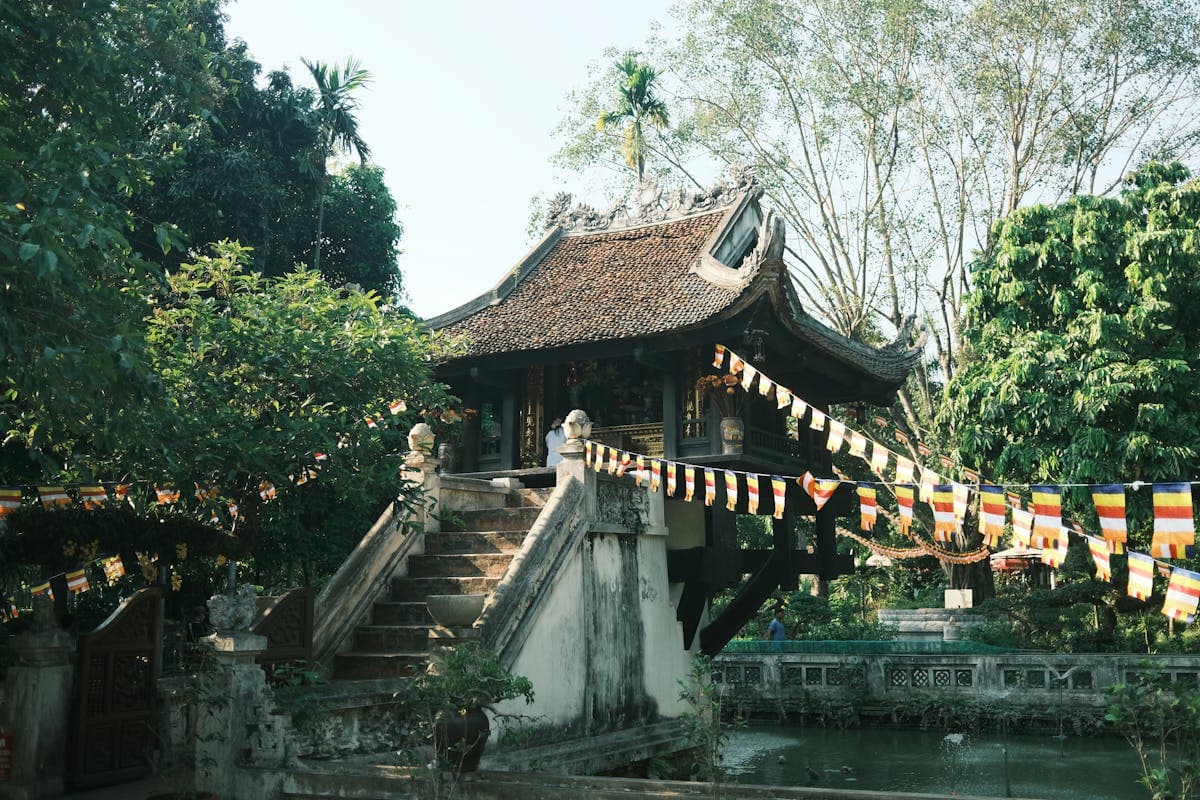
A hundred metres from the mausoleum sits the One Pillar Pagoda (Chùa Một Cột): a tiny wooden temple from 1049 balanced on a single concrete column in the middle of a lotus pond. Entry for foreigners is 25,000 VND (~$1). The legend: King Ly Thai Tong dreamed of the goddess Quan Am seated on a lotus, and ordered a temple built in the shape of the flower.
Another 200 metres on is the Ho Chi Minh Museum, an exhibition on the leader's life. The whole Ba Dinh Square complex takes 1.5–2 hours in the morning; then it's a 15-minute walk to the Temple of Literature.
Temple of Literature — Vietnam's first university
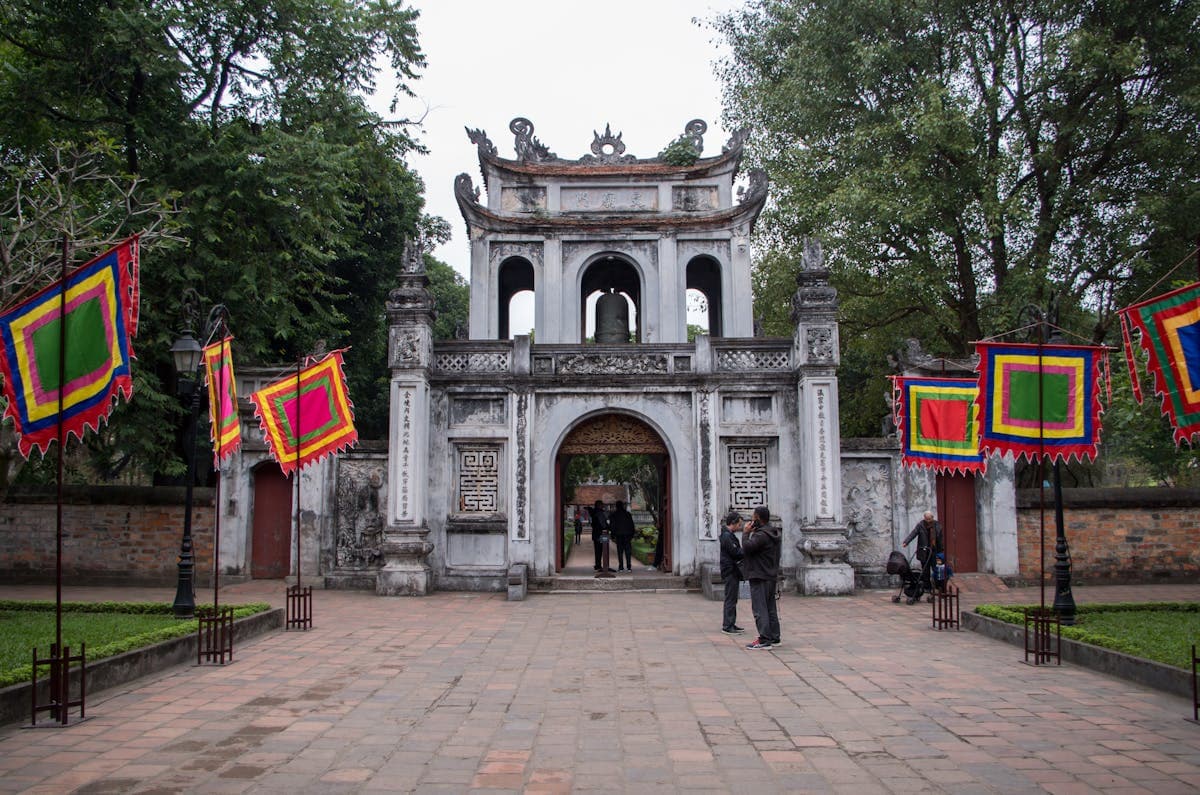
The Temple of Literature (Văn Miếu) was founded in 1070 under the Ly dynasty, and in 1076 Quốc Tử Giám, Vietnam's first university, opened beside it. Entry is 70,000 VND (~$2.80), open daily 8:00–17:00. It's not a museum in the usual sense but a working temple complex where, 900 years ago, they trained mandarins for the imperial court.
The grounds run to 54,000 m², five courtyards linked by gates. The second holds a lotus pond and the Khuê Văn Các pavilion, now a symbol of Hanoi — it's printed on the 100,000 VND note, the same one you'll hand over at the gate.
The third courtyard is the showpiece: 82 stone stelae mounted on the backs of stone turtles. Each carries the names of graduates of the imperial exams of the 15th–18th centuries — the honours list of its day. Vietnamese students still come to rub the turtles' heads for luck before exams, a tradition 500 years deep.
Planning the wider trip? → Hanoi travel guide — districts, transport, getting around
Fast Track — no queue at the border
5–10 minutes instead of an hour in the immigration queue
from$11per passenger
The Old Quarter — 36 craft streets
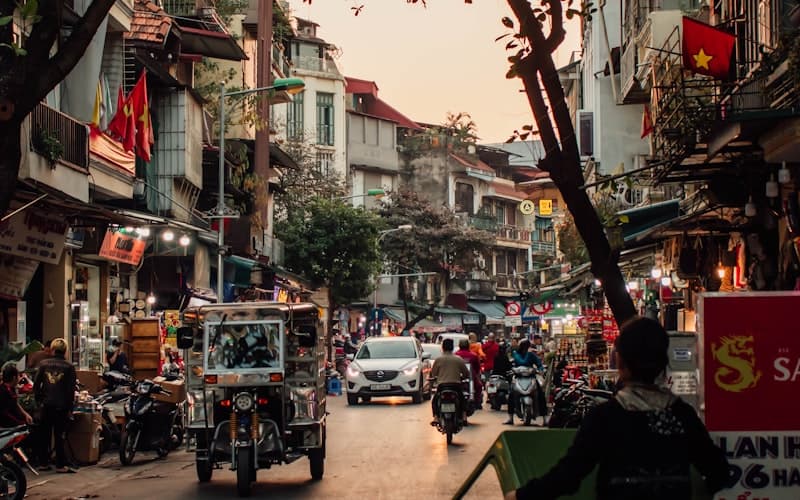
The Old Quarter is a maze of 36 narrow streets north of Hoan Kiem Lake. Each was historically tied to a specific craft, and many keep the trade to this day. Wandering here is free and endless.
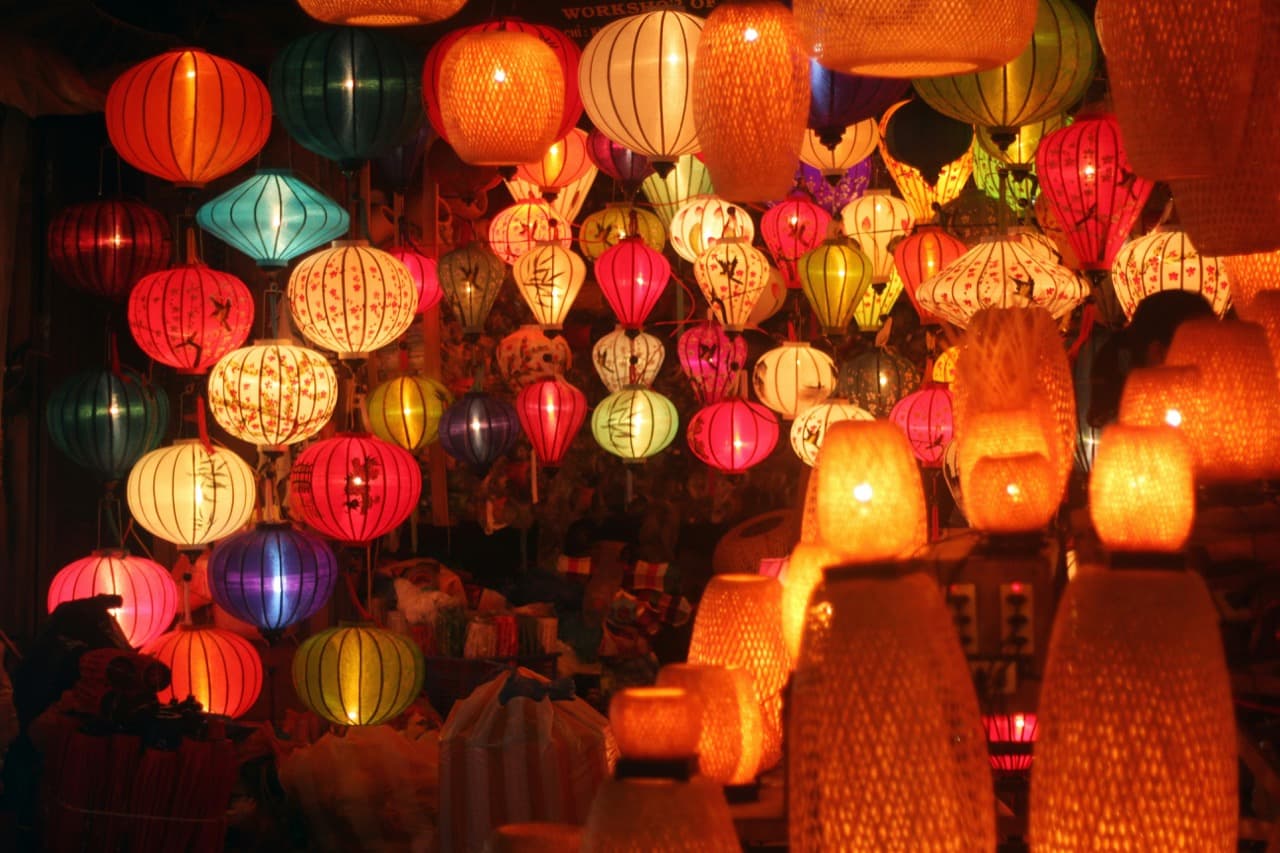
The street names tell you what you'll find. Hàng Bạc (Silver Street) — former jewellers, now money changers and jewellery shops. Hàng Gai (Silk Street) — fabric, silk and tailored suits made to order in 1–3 days. Lãn Ông — the traditional-medicine street; you smell the dried roots a block away. Hàng Mã — paper lanterns and ritual goods, a photogenic riot of red and gold. Before Tet (Lunar New Year) it's one long carnival.
Don't miss 87 Ma May Street — a museum of old Hanoi daily life. This narrow two-storey house with an inner courtyard shows how Hanoians lived for centuries: shop downstairs, bedroom upstairs, kitchen in the yard. Entry is 10,000 VND (~$0.40).
The only surviving gate of the old city wall is Ô Quan Chưởng (1749, rebuilt 1817). Easy to find — it stands at a junction next to Đồng Xuân Market, the largest covered market in Hanoi. The market runs daily 6:00–18:00, and until 23:00 on weekends.
Where to eat in the Old Quarter → Hanoi food guide — pho, bun cha, egg coffee and prices
Hoan Kiem Lake and Ngoc Son Temple

Hoan Kiem (Hồ Hoàn Kiếm — "Lake of the Returned Sword") is Hanoi's geographic and emotional centre. It's modest — 0.12 km², a half-hour walk around the shore. In the morning it's pensioners doing tai chi, by day tourists with cameras, in the evening young people with coffee on the benches.
The legend is a good one: in the 15th century Emperor Le Loi received a magic sword from the lake, used it to drive out the Ming Chinese invaders, then returned the blade to a golden turtle, messenger of the water god. Turtles really did live here — the last giant softshell (Rafetus swinhoei) was seen in 2016.
On the islet in the middle stands Ngọc Sơn Temple (Temple of the Jade Mountain). A bright-red wooden bridge, Thê Húc ("Rising Sun Bridge"), leads to it — probably the most photographed object in Hanoi. Temple entry is 30,000 VND (~$1.20). Inside: an altar, calligraphy and a preserved 250 kg turtle.
Thang Long Citadel — a UNESCO site
The Thang Long Citadel (Hoàng Thành Thăng Long) has been UNESCO-listed since 2010. For 13 straight centuries this was Vietnam's political centre. Entry is 100,000 VND (~$4), daily 8:00–17:00, no closing day.
- The Hanoi Flag Tower (33.4 m) is visible from a distance, one of the city's symbols. Built in 1812 under the Nguyen dynasty.
- The Đoan Môn Gate — the ceremonial entrance, surviving from the Le era (15th century). Five arched openings; only the emperor could pass through the central one.
- The ruins of Kính Thiên Palace — all that remains are staircases flanked by stone dragons. The palace itself is long gone, but the dragons still impress.
- The archaeological dig at 18 Hoàng Diệu Street — the largest in Southeast Asia. Ceramics, coins and palace foundations, with artefacts 800 to 1,300 years old.
Beneath the grounds is a military bunker from the Vietnam War, where the North Vietnamese command coordinated operations. A narrow staircase down, maps with pins on the walls, old telephones, dim bulbs — all left as it was. The contrast with the thousand-year-old ruins overhead is striking.
Hanoi's museums — from the "Hanoi Hilton" to ethnology
Hanoi has dozens of museums, but four are worth a dedicated visit — 160,000 VND (~$6.40) in total. The Ethnology and Military History museums close on Mondays; Hoa Lo Prison and the Women's Museum open daily.
Hoa Lo Prison — the "Hanoi Hilton"
Entry: 50,000 VND (~$2). Hours: 8:00–17:00 daily.
The French built it in 1896 for Vietnamese political prisoners. Its official name was Maison Centrale. It once covered 12,000 m²; about a third survives — the rest was demolished in the 1990s and built over with high-rises.
During the Vietnam War, downed American pilots were held here — they coined the nickname "Hanoi Hilton." Among the inmates was future senator John McCain. The exhibition runs over two floors: cells with wax figures, shackles, a guillotine, photographs. It's a heavy place, but important for understanding Vietnamese history.
Museum of Ethnology
Entry: 40,000 VND (~$1.60). Hours: 8:30–17:30, closed Monday.
One of the best museums in all of Southeast Asia. Vietnam's 54 ethnic groups told through costume, tools, ritual objects and reconstructed dwellings. The yard holds real houses: the long houses of the Ede, stilt houses of the Tay, funeral houses of the Bahnar. It's a big site with garden areas, 7 km from the centre — a 20-minute Grab from the Old Quarter, 40,000–60,000 VND.
Vietnamese Women's Museum
Entry: 30,000 VND (~$1.20). Hours: 8:00–17:00 daily.
Three floors: fashion and textiles, women in history, women and family. The section on women guerrillas — with photographs, personal effects and specific stories — lands hard. The museum is right by Hoan Kiem Lake (36 Ly Thuong Kiet), easy to pair with a walk.
Military History Museum
Entry: 40,000 VND (~$1.60). Hours: 8:00–17:00, closed Monday. Address: Đại lộ Thăng Long, Tây Mỗ ward — a new building open since November 2024. The old site on Điện Biên Phủ is closed.
In the open air: tanks, aircraft, anti-aircraft guns and the wreckage of an American B-52. Inside: documents, maps and photographs, from the wars with China (11th century) through the struggle against France to the confrontation with the US (the country's other war museums are in our guide to Vietnam's war museums). It is about 9–10 km from the citadel, 25–40 minutes by Grab.

Hanoi's temples and pagodas
Hanoi has hundreds of temples. But three deserve a dedicated visit — and each has its own story.
Tran Quoc Pagoda — 1,500 years on West Lake
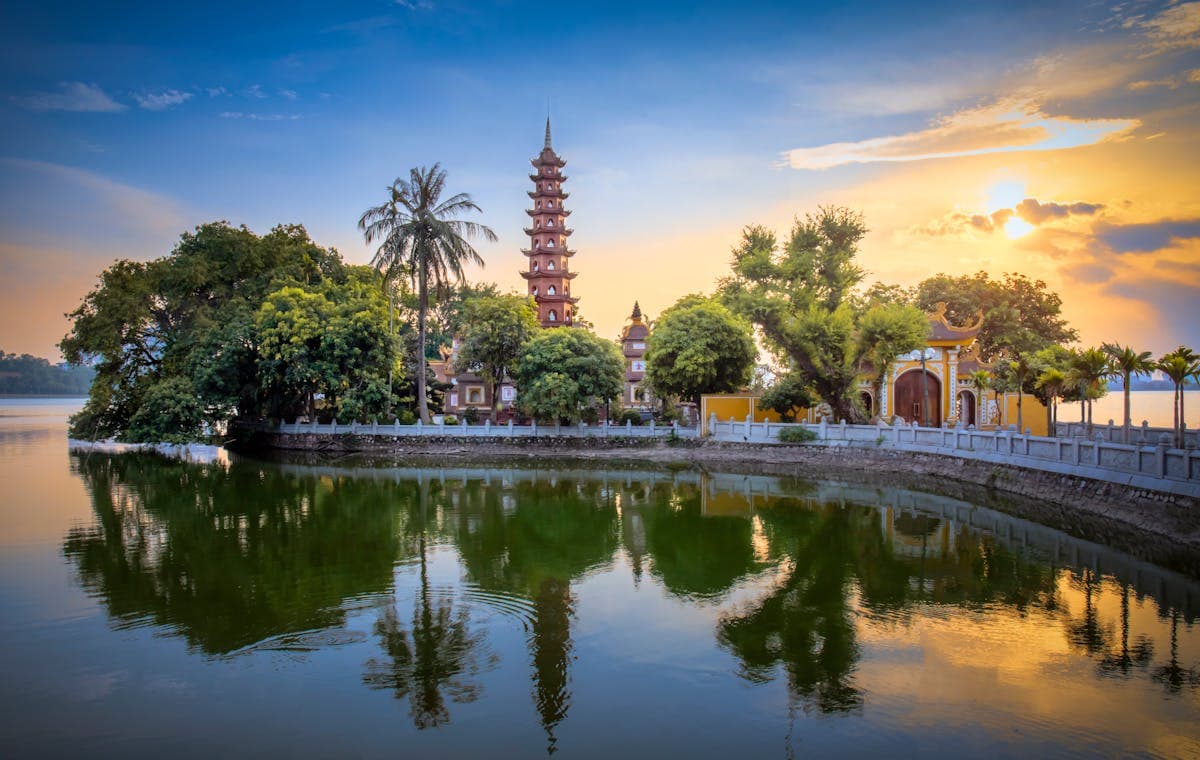
The oldest pagoda in Hanoi and one of the oldest in Vietnam — 544 AD, almost fifteen centuries. The signature shot is the 15-metre, 11-tier red stupa against the water, built in 1998. At sunset, when the pagoda mirrors in the lake, dozens of photographers gather. Entry is free, and for Vesak the shore by the pagoda is hung with lanterns. But it's a working Buddhist temple: no short shorts or bare shoulders.
One Pillar Pagoda
Mentioned above — it's in the mausoleum complex. Built in 1049, destroyed by the French in 1954 during their retreat, and rebuilt by the Vietnamese. A column, a lotus pond, a tiny temple — the whole thing fits on a 3x3-metre platform. Small, but iconic.
St Joseph's Cathedral
A neo-Gothic cathedral from 1886 — a hello from the French colonial past. It looks like a shrunken Notre-Dame de Paris: pointed arches, stained-glass windows, two square towers. Entry is free. The neighbourhood around it is one of Hanoi's trendiest — dozens of cafés and restaurants where Nhà Thờ meets Nhà Chung.
West Lake — Hanoi's quietest district
Hồ Tây (West Lake) is Hanoi's biggest body of water: over 500 hectares, with a shoreline of about 17 km. This is the expat district — the shore is lined with cafés, restaurants, international schools and homes with panoramic views.
For a visitor it's a chance to escape the chaos of the centre. Grab a bike (30,000–50,000 VND/hour, ~$1.20–2) and ride the shoreline. Along the way: Tran Quoc Pagoda, the Quán Thánh Temple (one of Hanoi's four sacred temples, entry 10,000 VND) and dozens of cafés with a water view.
The water puppet theatre — a show not to miss
The Thăng Long Water Puppet Theatre stages a Vietnamese art form over 1,000 years old. Performances once took place right on the rice paddies after harvest. Now it's a professional pool-stage in central Hanoi.
Tickets: from 100,000 VND (~$4) for economy to 200,000 VND (~$8) for VIP. The show runs 50 minutes. The July 2026 schedule: five shows a day at 15:00, 16:10, 17:20, 18:30 and 20:00, plus a 9:30 morning show on Sundays. Check it on the theatre's site before you go.
The puppeteers stand waist-deep in water behind a bamboo screen, working the wooden figures with long poles and strings — exactly how remains a professional secret. The stories come from myth and village life: fishermen, dragons, a phoenix, buffalo, boat races. A live band plays traditional instruments: the đàn bầu (one-string zither), flutes, drums.
The address is 57B Dinh Tien Hoang, a couple of steps from Hoan Kiem Lake. Open 365 days a year.
Train Street and Long Bien Bridge
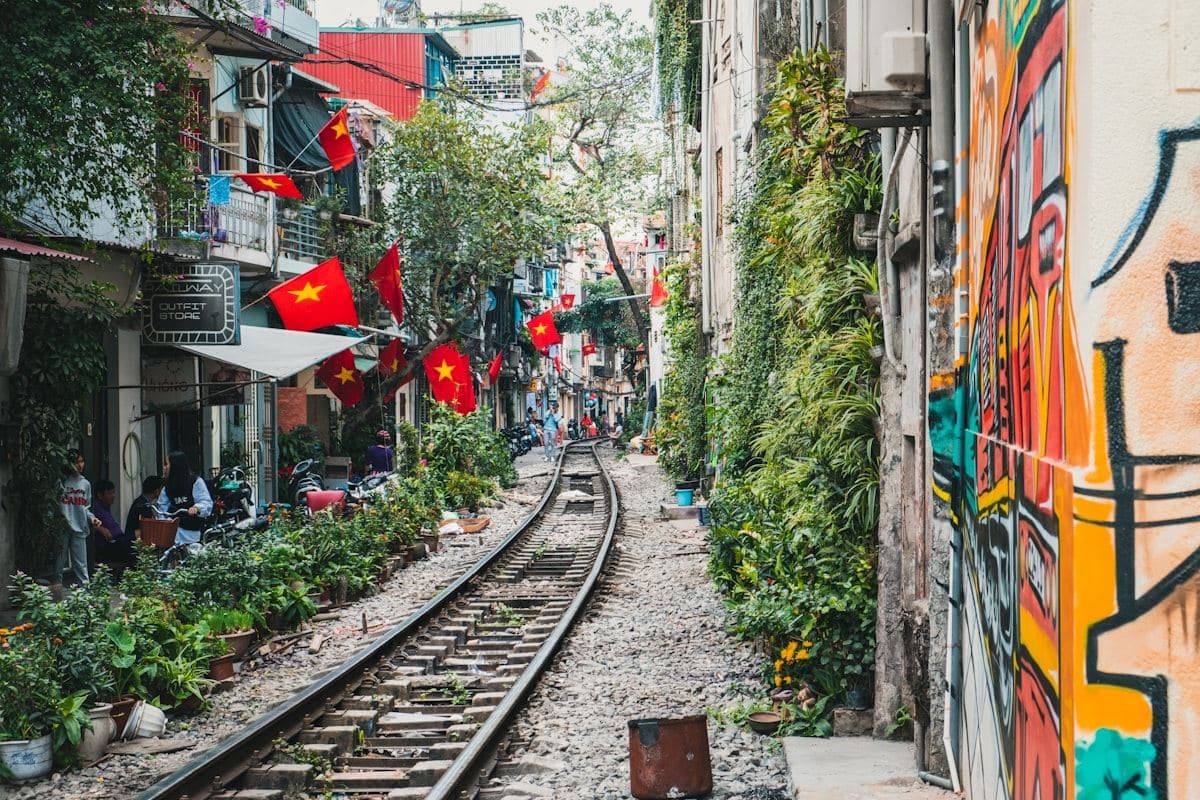
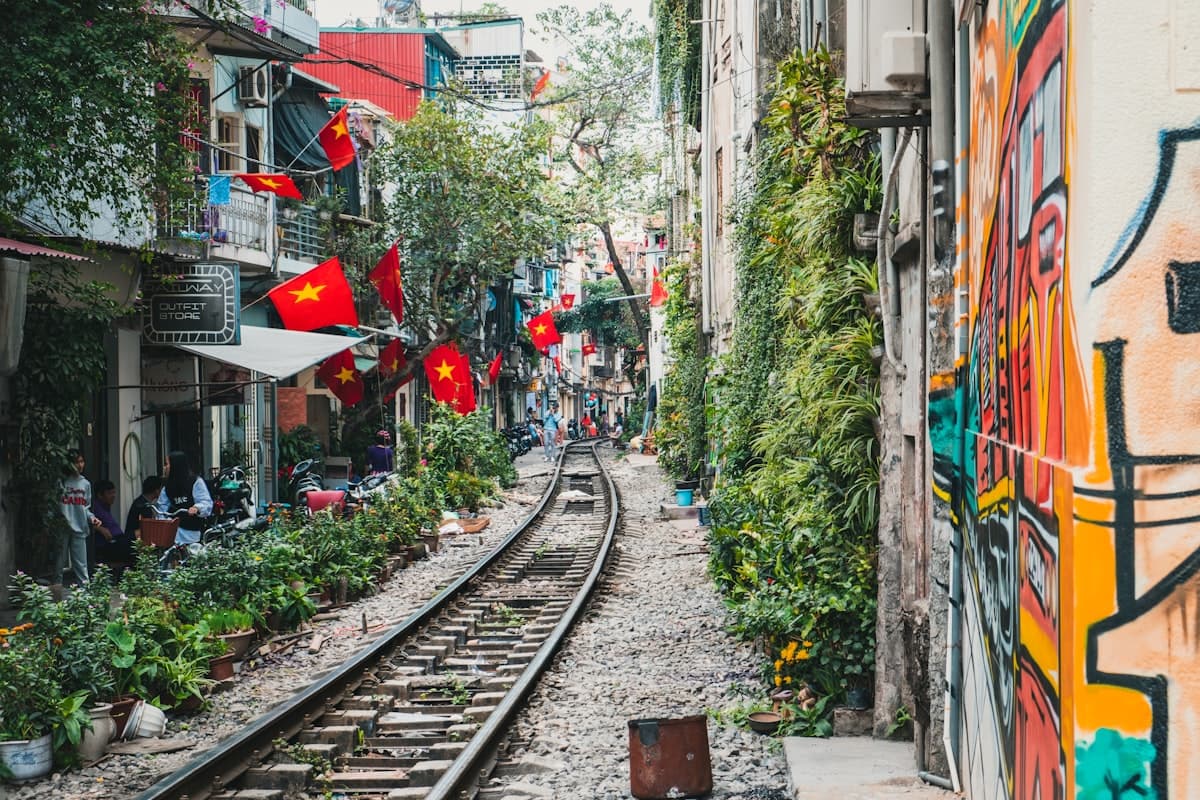
Train Street (Phố đường tàu) is a narrow lane where the railway runs between houses with less than a metre of clearance. When a train approaches, residents fold up tables, chairs and flower pots and press against the walls. A horn. The train roars past. A minute later everything is back in place.
Long Bien Bridge (Long Biên) is a 1.68 km steel hulk from 1903, designed by the engineers Daydé & Pillé (the project is often credited to Eiffel's circle). Trains, motorbikes and pedestrians still cross it. During the Vietnam War it was bombed repeatedly and the damaged spans were rebuilt, and you can still spot the difference in style.
The best time to walk it is sunset. You get the Red River, the banana plantations on the island in the middle, and the city skyline. Both sights are free, both within walking distance of the Old Quarter.
The night market and walking zone
The night market runs Friday, Saturday and Sunday, 18:00–23:00. It stretches 3 km: Hàng Đào → Hàng Ngang → Hàng Đường → Hàng Khoai → Đồng Xuân Market. Around 4,000 stalls — from a grandmother with a fruit tray to a T-shirt stand at 80,000 VND (~$3.20).
Worth trying:
- Bánh tráng trộn (rice paper salad) — 15,000–25,000 VND (~$0.60–1)
- Fruit shake — 20,000 VND (~$0.80)
- Phở cuốn (fresh rice-noodle rolls) — 30,000 VND (~$1.20)
- Kem dừa (coconut ice cream) — 20,000 VND (~$0.80)
Day trips from Hanoi — Ha Long, Ninh Binh, Sapa
From Hanoi it's easy to reach the three headline natural sights of northern Vietnam. Each needs at least a day (and Ha Long and Sapa are better with two).
| Destination | Distance | Travel time | Price (from) | What you'll see |
|---|---|---|---|---|
| Ha Long Bay (UNESCO) | 160 km | 3–4 hr | ~1,000,000 VND (~$40) | Cruise among 1,600 limestone islands, caves, kayaking |
| Ninh Binh / Tam Coc | 95 km | 2 hr | ~950,000 VND (~$38) | "Ha Long on land" — river boats among karst peaks and rice fields |
| Sapa | 320 km | 5–6 hr / night train | from ~$108 | Rice terraces, Mount Fansipan, Hmong and Dao villages |
With one free day, choose between Ha Long (sea and karsts) and Ninh Binh (river and rice fields — closer and cheaper). With two days, do Ha Long with an overnight on the boat. With three, add Sapa in the mountains. Prices, how to book English-guided departures and money-saving tips are all in the full guide to day trips from Hanoi. Ticket prices for every sight in one table are in the Hanoi price guide, and the craft streets and villages in the Hanoi shopping guide.
Itineraries for 1, 2 and 3 days
1 day — the essentials
If you're passing through Hanoi, here's the optimal route. Everything on foot.
| Time | What to do | Budget |
|---|---|---|
| 7:30–10:00 | Ho Chi Minh Mausoleum + One Pillar Pagoda | Free + 25,000 VND |
| 10:30–12:00 | Temple of Literature | 70,000 VND |
| 12:00–13:30 | Lunch in the Old Quarter (phở bò) | 50,000–80,000 VND |
| 14:00–15:30 | Hoan Kiem Lake + Ngoc Son Temple | 30,000 VND |
| 16:00–17:00 | Walk the Old Quarter + coffee | 30,000 VND |
| 18:30–19:20 | Water puppet show | 100,000–200,000 VND |
| 19:30–21:00 | Night market (if Fri–Sun) | from 50,000 VND on food |
| Total (entry + food) | — | ~355,000–485,000 VND (~$14–19) |
2 days — with museums and detail
Day 1 — the route above.
Day 2:
- 8:00–11:00: Thang Long Citadel (3 hours, 100,000 VND)
- 11:30–13:00: Military History Museum (40,000 VND) — since November 2024 it sits in a new building on Đại lộ Thăng Long, ~9–10 km from the citadel, so take a taxi
- 12:30–14:00: Lunch — bún chả on Hàng Mành (50,000 VND)
- 14:30–16:00: Hoa Lo Prison (50,000 VND)
- 16:30–18:00: West Lake + Tran Quoc Pagoda (free)
- Evening: dinner on the West Lake waterfront
Two-day total: ~750,000–950,000 VND (~$30–38) — entry tickets plus food.
3 days — with the surroundings
Days 1–2 as above. Day 3, your pick:
- Option A: A trip to Ninh Binh / Tam Coc (from 950,000 VND / ~$38). Depart 7:00, back by 19:00.
- Option B: Museum of Ethnology in the morning (40,000 VND) + Dong Xuan Market + Long Bien Bridge at sunset + Train Street (if open).
- Option C: A one-day Ha Long Bay cruise (from 1,000,000 VND / ~$40).
Getting there and getting around
Nội Bài Airport is 30 km from the centre. How to reach the city:
| Option | Price | Time | Notes |
|---|---|---|---|
| Bus 86 (express) | 45,000 VND (~$1.80) | ~1.5 hr | Wi-Fi, USB charging, runs to the train station via the centre |
| Bus 17 | 9,000 VND (~$0.36) | ~1 hr | To Long Bien Bus Station, near the Old Quarter |
| Grab / Be | 180,000–250,000 VND (~$7–10) | ~45 min | Easy, fixed price in the app |
| Vietnam Airlines shuttle | 40,000 VND (~$1.60) | ~1 hr | To the Old Quarter, check the schedule with the airline |
Around the city: everything worth seeing is in the Hoan Kiem and Ba Dinh districts — walk it. From Hoan Kiem Lake to the mausoleum is 2 km, 25 minutes. For the far-flung spots (Ethnology Museum, West Lake), use Grab. An average ride is 30,000–50,000 VND (~$1.20–2), paid card or cash in the app.
A rented motorbike is from 120,000 VND/day (~$4.80), but Hanoi's traffic is no place for beginners. Without riding experience in Asia, stick to Grab. Note you legally need an International Driving Permit with the A1 motorbike category to ride here.
What to know: the honest downsides
Hanoi is a city with character. Not a sterile resort but a living 8-million-strong metropolis. What to brace for:
- Traffic. Millions of motorbikes, constant honking, no traffic lights at half the junctions. Crossing the road is a quest. The trick is simple: walk slow and steady, don't stop, don't run. The flow parts around you.
- Air. December–March can bring thick smog; check the live AQI in the IQAir app. An N95 mask won't go amiss.
- Heat and rain. May–September brings downpours, humidity and 35°C. The most comfortable window is October–December and February–April.
- Touts. On Old Quarter streets you'll constantly be offered taxis, massages, restaurants. A polite "no, thank you" works. There's no aggression — it's just business.
- Taxi scams. A "broken" meter, a detour across the whole city. The fix is easy: Grab. Fixed price, route on the map, payment in the app.
The smell of phở from a basement kitchen at 6 a.m. A grandmother with a fruit yoke on a narrow street. Sunset from Long Bien Bridge. That's Hanoi.
Frequently asked questions
In a day you can cover all the headline sights: the Ho Chi Minh Mausoleum in the morning (free), the Temple of Literature (70,000 VND, ~$2.80), Hoan Kiem Lake with Ngoc Son Temple (30,000 VND, ~$1.20), the Old Quarter, and a water puppet show in the evening (from 100,000 VND, ~$4). Budget on entries is about 275,000 VND (~$11). The hour-by-hour route is in the section above.
Free: the Ho Chi Minh Mausoleum, Tran Quoc Pagoda, St Joseph's Cathedral, Long Bien Bridge, the Hoan Kiem lakeside, the whole Old Quarter, and Ba Dinh Square. On weekends there's the lakeside walking zone with street food and music. You could fill a full, busy day on free sights alone.
All the paid sights together come to about 500,000 VND (~$20): Temple of Literature (70,000), Thang Long Citadel (100,000), Hoa Lo Prison (50,000), Ngoc Son Temple (30,000), Ethnology Museum (40,000), Women's Museum (30,000), Military History Museum (40,000) and the water puppet show (100,000–200,000). Cheaper than a single day at an average theme park — and far more interesting.
Best of all — October–December and February–April. Cool (15–25°C), little rain, plenty of sun. May–September is long downpours, muggy 35°C heat and humidity through the roof. January can turn cold — down to 10°C, bring a jacket. At Tet (Lunar New Year) the city empties out: many places close, but the decorations and festive mood are worth it.
Yes, it's safe even late in the evening. Vietnam is one of the safest countries in Asia for travellers. The real risks are motorbikes on the pavement, pickpockets in the night-market crush and a forgotten bag in a café. Ordinary common sense and you'll be fine.
It depends on your passport. UK, French, German, Italian, Spanish and several other nationalities get a visa exemption of up to 45 days. US, Canadian, Australian and most other passport holders should get the e-visa in advance: up to 90 days, $25 single entry or $50 multiple entry, usually issued in a few working days. Apply only at the official site.
Prices current as of July 2026. Fees, schedules and rules were checked against open sources and traveller reviews. Before your trip, confirm on the official sites of each venue.
- Guide
Beaches Near Hanoi: Cat Ba, Ha Long & Day Trips 2026
Where to find a beach from Hanoi: Cat Ba, Do Son, Ha Long, Quan Lan and Co To — how to get there, the swimming season and day-trip tips.Beaches Near Hanoi: Cat Ba, Ha Long & Day Trips 2026 - Guide
Hanoi vs Ho Chi Minh City: Which to Visit in 2026
Hanoi or Ho Chi Minh City? North vs south compared — weather, prices, food, atmosphere, things to do and who each city suits.Hanoi vs Ho Chi Minh City: Which to Visit in 2026 - Guide
Flights to Hanoi: Noi Bai Airport, Hubs & Transfers
How to reach Hanoi by air: Noi Bai (HAN) airport, international hubs, domestic flights and the airport-to-centre transfer — with booking tips.Flights to Hanoi: Noi Bai Airport, Hubs & Transfers