How much does a trip to Vietnam cost in 2026?
A backpacker can travel Vietnam on about $25 a day, a mid-range trip runs $50–70, and luxury starts around $90, all before your flight in. A whole month, rent included, runs $700–1,500. Below: what your money buys at each level, ready budgets for 7, 10 and 14 days, a monthly cost of living by city, and the practical stuff on cards, cash and ATMs.

Vietnam is still one of the best-value countries in Asia: cheaper than Thailand (about 13% on average by Numbeo's March 2026 figures) and about half the price of Bali. By the Expatistan index it has ranked among the most affordable places to live for years running. A bowl of phở bò for around $1.50, a three-star hotel room for $25 a night, an hour-long massage for $8. Those are ordinary prices here, not a sale.
Exchange rate used here (July 2026): 1 USD ≈ 26,000 VND. Every figure below is in USD, with VND where it helps you plan on the ground, broken down by category, with ready budgets for 7, 10 and 14 days and a monthly cost of living if you are staying longer.
- $346–538
- $380–557
- $51–76
- UtilitiesDa Nang prices$58–135
- Home internetDa Nang prices$8–12
- $12–27
Three budget levels — from backpacker to luxury
Daily on-the-ground spending in Vietnam (flights excluded), per person:
Currency converter
| Level | What it covers | USD / day |
|---|---|---|
| Backpacker | Hostel, street food, buses, rented bike | $20–35 |
| Mid-range | 3–4★ hotel, cafés and restaurants, Grab, tours | $50–70 |
| Luxury | 5★ resort, fine dining, private tours, spa | $90+ |
Backpacker doesn't mean a tent and instant noodles. It buys air-conditioned hostels at $5–10 a night, a filling local meal for around $2, and a scooter for $7 a day. Plenty of long-term travellers spend two or three months here on this budget and never feel like they're going without.
Mid-range is a room with a pool, breakfast included, seafood dinners on a terrace. Grab instead of the bus, two or three tours over the trip, a massage every few days. This is where most first-time visitors land, and honestly where Vietnam is at its best value.
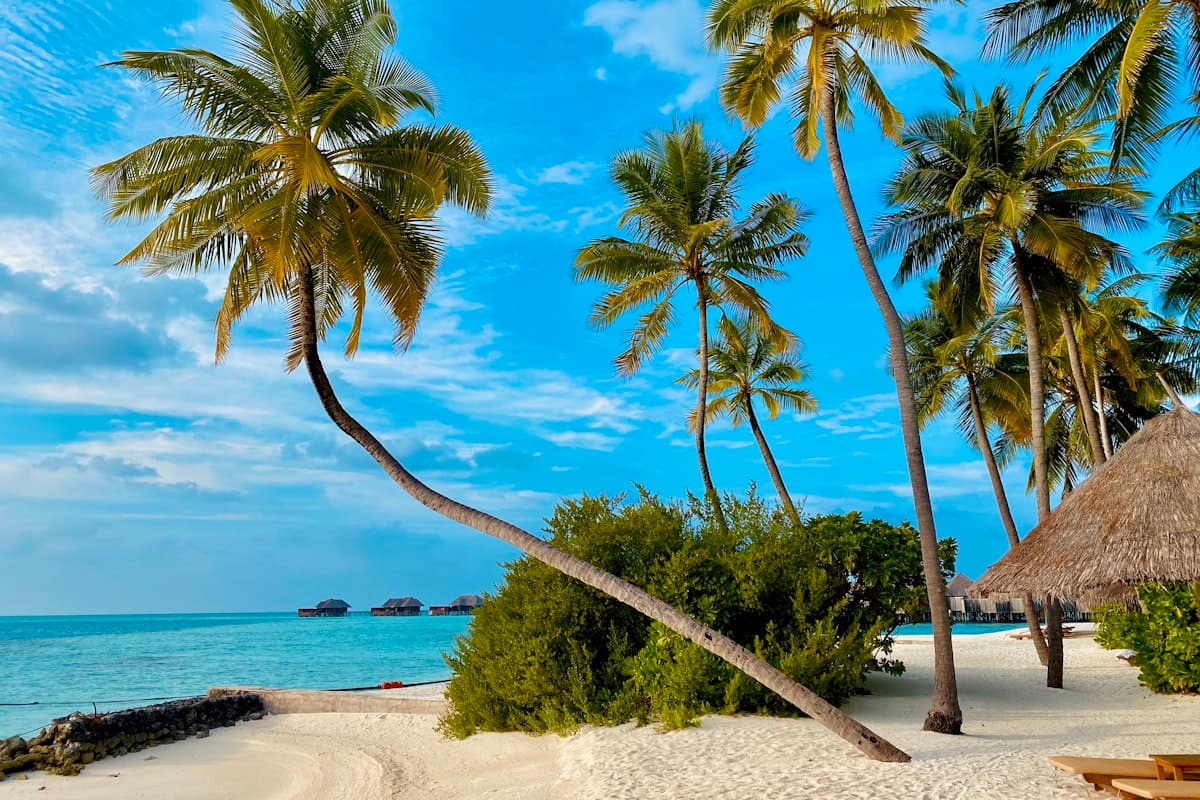
Luxury is Vinpearl, private transfers, dive safaris, restaurants with a wine list. There's no ceiling. A five-star resort on Phu Quoc can run $300–500 a night, and a private yacht in Ha Long Bay $1,000 for the day.
Flights — usually your single biggest cost

Airfare is the wild card. Once you land, Vietnam is genuinely cheap, but the flight in can easily be half your total budget, and it depends entirely on where you fly from. Rough return fares in economy, as of July 2026:
| From | Return fare | Flight time |
|---|---|---|
| Within SE Asia (Bangkok, Singapore) | $80–200 | 1.5–2.5 h |
| Australia / East Asia | $400–800 | 7–9 h |
| Western Europe | $600–1,000 | 12–14 h |
| North America | $900–1,500 | 18–22 h |
Vietnam Airlines and low-cost VietJet cover the main long-haul and regional routes into Hanoi, Da Nang and Ho Chi Minh City. If you're already in Asia, budget carriers make Vietnam almost a weekend trip.
Book two to three months out; prices climb as the date nears. Domestic hops on VietJet start around 800,000 VND (~$31) one way, so seeing several cities barely dents the budget.
Accommodation — from hostel to resort

| Type | USD / night | What you get |
|---|---|---|
| Hostel dorm | $5–10 | Shared 4–8 bed room, AC, Wi-Fi |
| Guesthouse | $10–20 | Private room, hot water |
| 3★ hotel | $20–40 | Pool, breakfast, central location |
| 4★ hotel | $40–80 | Spa, restaurant, sea view |
| 5★ resort | $100+ | Vinpearl, InterContinental, private beach |
Over 10 nights, two people sharing a room spend roughly $50–100 as backpackers, $200–400 mid-range, and $1,000+ for luxury. A double costs almost the same as a single, so couples get much more for their money.
Book two to three weeks ahead: online rates run 10–15% below walk-in prices. In high season (December–February) the popular resorts on Phu Quoc and in Nha Trang sell out a month out.
Food — how much to budget for eating

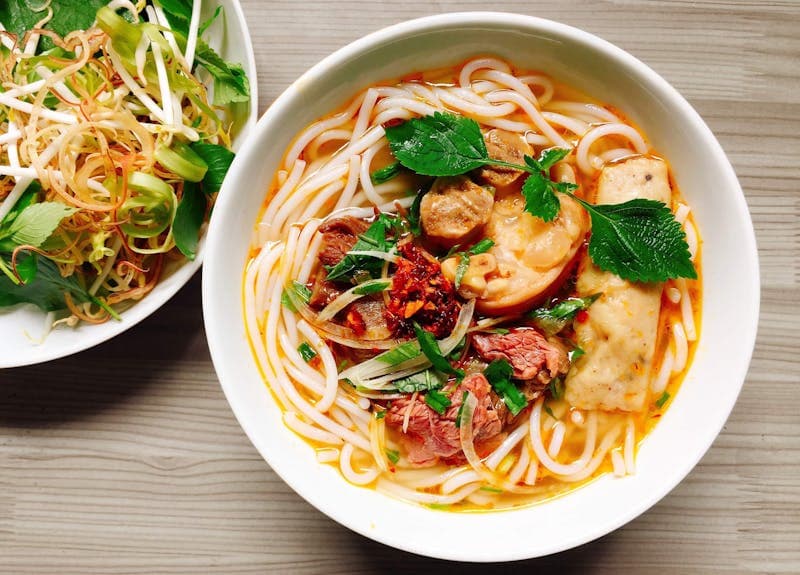
Food is where Vietnam really shows off. A filling meal for around $2, coffee for under $1, a litre of fresh mango shake for about $1.20. Eating well here is almost impossible to overspend on. Want the full menu of what individual dishes cost? That's in the prices guide; here we're after the daily total.
Daily food budget (per person)
| Level | What you eat | VND / day | ~USD / day |
|---|---|---|---|
| Backpacker | All meals at local kitchens, fruit | 150,000–250,000 | ~$6–10 |
| Mid-range | Mix of street food and restaurants, coffee, beer | 400,000–600,000 | ~$15–23 |
| Luxury | Restaurants, seafood, wine, desserts | 800,000+ | ~$30+ |
A month in Nha Trang, two of us: lunches and dinners in cafés, food delivery, fruit, drinks and snacks came to 12.5 million dong ($510), just $17 a day for the pair.traveller report (in Russian), make-trip.ru, 2025
What things cost: phở bò from 40,000 VND (~$1.50), a bánh mì sandwich from 20,000 VND (~$0.80), rice with meat 50,000–90,000 VND (~$2–3.50). A Bia Saigon beer from 12,000 VND (~$0.50). Vietnamese iced coffee with condensed milk 18,000–30,000 VND (~$0.70–1.15).


Getting around the country

Around town
| Mode | VND | ~USD |
|---|---|---|
| Grab car / taxi (5 km) | 30,000–50,000 | ~$1.15–1.90 |
| Grab Bike (5 km) | 15,000–25,000 | ~$0.60–1 |
| Scooter rental (day) | 150,000–300,000 | ~$6–12 |
| City bus | 7,000–12,000 | ~$0.30–0.50 |
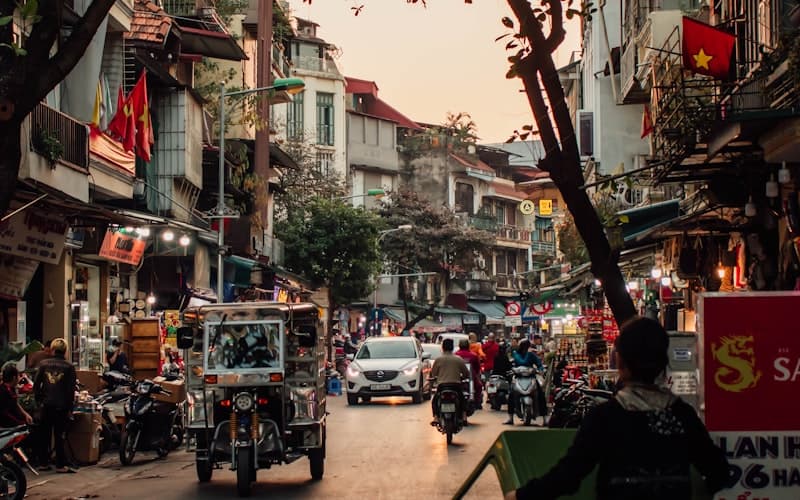
A rented scooter is the backpacker's default, and a full tank lasts two or three days of riding. Grab works in every major city. You summon a car or a bike-taxi in about 30 seconds, and the fare is fixed in the app, so there's no haggling over the price.
Between cities
| Route | Mode | Time | ~USD |
|---|---|---|---|
| Ho Chi Minh City → Mui Ne | Bus | 5 h | ~$10 |
| Nha Trang → Da Lat | Bus | 4 h | ~$8 |
| Hanoi → Ho Chi Minh City | VietJet flight | 2 h | from ~$31 |
Over 10 days, two people spend around $50–100 on transport as backpackers (scooter plus buses) and $150–250 mid-range (Grab plus one or two domestic flights).
Fast Track — no queue at the border
5–10 minutes instead of an hour in the immigration queue
from$11per passenger
Tours and activities

| Activity | ~USD |
|---|---|
| Group day tour | $15–40 |
| Massage (60 min) | $8–16 |
| Diving (2 dives) | $60–80 |
| Ha Long Bay day cruise | $50–80 |
For 10 days, plan on two or three tours and a couple of spa visits. Backpackers might spend $50 per person on activities across the whole trip; mid-range is closer to $200–400. And plenty of the best things are free: waterfront promenades, pagodas, parks, night markets and beaches.
SIM, insurance, visa and the small stuff
SIM card and internet
Buy a Viettel or Mobifone SIM right at the airport; you'll need your passport to register it. 4G in Vietnam is fast (30–50 Mbps). A 7–10 day data package runs ~$6–10, a 30-day one ~$10–18. If you'd rather not swap SIMs, an eSIM bought before you fly works from the moment you land.
Insurance
A basic two-week travel policy costs $25–50; add scooter cover and it's up to $80. Insurance isn't required to enter, but skipping it is a gamble: a doctor visit starts at $50 and hospitalisation from $1,000.
Visa
The single-entry e-visa is about $25, the multiple-entry version around $50. Apply a few working days before you travel and print the approval.
Money and exchange
Bring some US dollars to change on arrival. The USD → VND rate is the most reliable, and the place to change it is a bank or a licensed exchange counter. Since 9 February 2026, changing money outside licensed points is fined under Decree 340/2025/NĐ-CP. A jewellery shop (tiệm vàng) may exchange currency only with a State Bank exchange-agent certificate, and a visitor has no way to check it.
For everything else, ATMs are everywhere; withdraw larger amounts at once to save on the per-transaction fee (usually 20,000–55,000 VND, so ~$0.80–2). Visa and Mastercard are accepted at hotels, malls and mid-range restaurants, but street stalls, markets and small guesthouses are cash only. A 60% cash / 40% card split is the sweet spot. For the mechanics of the currency, denominations and where to change, see the guide to the Vietnamese dong.
Ready budget for 7, 10 and 14 days

On-the-ground cost per person (flights excluded)
| Length | Backpacker | Mid-range | Luxury |
|---|---|---|---|
| 7 days | $180–280 | $450–600 | $1,300+ |
| 10 days | $250–400 | $650–900 | $1,800+ |
| 14 days | $350–550 | $900–1,400 | $2,500+ |
Add your international flight on top: anywhere from ~$100 within Southeast Asia to $1,500 from North America. That's the one line that varies most between travellers, which is exactly why the totals above leave it out.
Detailed 10-day mid-range breakdown (per person)
| Line item | ~USD |
|---|---|
| Accommodation (10 nights, shared) | $150–250 |
| Food | $180–250 |
| Transport | $80–120 |
| Tours & activities | $150–250 |
| SIM + insurance | $40–60 |
| Shopping + buffer | $100–150 |
| Total (excl. flight) | $700–1,080 |
Figures current as of July 2026. Prices vary with season and exchange rate.
Monthly cost of living — staying longer as a nomad
Staying a month or more changes the maths completely. Renting by the month instead of paying nightly hotel rates is the single biggest saving, and it's why so many remote workers park themselves in Vietnam for a season.
A long-stay traveller or nomad spends roughly $700–1,500 a month, rent included, depending on the city and how much you cook versus eat out.
What a couple spends per month, by city
| City | Studio rent / mo | Total / mo (couple) | Notes |
|---|---|---|---|
| Da Lat | $250–400 | $900–1,300 | Cheapest base, cool climate, small expat scene |
| Da Nang | $350–500 | $1,100–1,700 | The nomad favourite: beach, coworking, fast Wi-Fi |
| Nha Trang | $300–500 | $1,000–1,600 | Beach city, good value, long-stay-friendly |
| Ho Chi Minh City | $450–750 | $1,500–2,200 | Priciest rent, but the most to do |
For one person, knock roughly 30–40% off those totals; a solo nomad in Da Nang lands around $900–1,100 a month all in. Rents in Da Nang and Ho Chi Minh City rose noticeably through 2025–2026 as more remote workers arrived, so budget for the top of the range if you're renting somewhere central and furnished.
One catch worth flagging: most landlords want a one-month deposit and a three-month minimum, so your first month runs higher than the steady-state figure. Once the setup costs are behind you, the monthly total settles into the ranges above.
Budget by destination — where it's cheaper, where it's not

| Destination | ~USD / day (mid-range) | Notes |
|---|---|---|
| Da Lat | ~$35–55 | Cool mountain town, cheapest of the popular spots |
| Nha Trang | ~$40–60 | Big beach resort, wide range of options |
| Da Nang | ~$40–60 | Modern city, long beach |
| Ho Chi Minh City | ~$45–70 | Metropolis, very cheap street food |
| Phu Quoc | ~$55–90 | Island premium of 15–25% |
The best-value destinations are Da Lat and Mui Ne. The priciest is Phu Quoc, where being an island pushes up the cost of rooms, transport and food. Nha Trang and Da Nang sit in the middle on price-to-infrastructure.
How to save — 10 tips that actually work

- Fly with a stopover. One-stop routings via Bangkok, Doha or a regional hub can save hundreds versus a direct flight.
- Book flights two to three months out. The closer to the date, the higher the fare.
- Eat at local kitchens. A meal is $1.50–3 instead of $5–10 at a tourist café.
- Rent a scooter. Around $7 a day, and you're not tied to any timetable.
- Use Grab. Fixed fares, usually cheaper than flagging a street taxi, no haggling.
- Book hotels ahead. Reserving two to three weeks out gets 10–15% off.
- Haggle at markets. A 30–50% discount off the first price is normal.
- Change money in town, not at the airport. A bank or a licensed counter gives 10–15% more than the arrivals hall; skip the tiệm vàng: only shops with a State Bank exchange-agent certificate may change money, and you can't check that.
- Head south in low season (May–October). Flights and hotels drop 20–30%.
- Buy tours on the ground. Street agencies undercut online platforms by 30–40%.
Common budget mistakes
Changing money at the airport. The rate is 10–15% worse than in town. Change just enough for a taxi and the first day, then use a bank or an ATM.
Forgetting the flight. Airfare can be half your budget. "Vietnam is cheap" is true, but only after you land.
Bringing cash only. Visa and Mastercard work at most hotels and shops; withdraw the rest from ATMs. Aim for roughly 60% cash, 40% card.
Blowing it all in the first days. Spread the budget evenly and set yourself a fixed daily allowance.
Skipping insurance. For $25–50 you get $30,000–50,000 of cover. A single hospital stay without it starts at $1,000.
Not haggling. At markets, the foreigner price is inflated 1.5–3×. Bargaining isn't rude here; it's part of the culture.
Forgetting tips. For 10 days, budget $15–40 for tips to housekeeping, guides and masseuses. Tipping isn't obligatory in Vietnam, but it's appreciated for good service. Who gets what is in our tipping guide.
FAQ
On the ground, flights excluded: a backpacker spends about $20–35 a day, a mid-range traveller $50–70, and luxury starts around $90. A comfortable week is roughly $350–500 a person before airfare.
Yes, if flights and hotel are paid. $1,000 over 10 days is $100 a day, which covers good food, a couple of tours, transport and massages. Two backpackers can share that same budget.
On the ground, budget $500–700 for a backpacker, $900–1,400 mid-range, and $2,000+ for luxury per person, before international flights. Fourteen days is the sweet spot for three or four cities without rushing.
A long-stay traveller or nomad spends about $700–1,500 a month, rent included
- Da Nang and Nha Trang$700–1,100run for one person
- Ho Chi Minh City and Hanoi$1,000–1,500once you factor in higher rent
- Da Latthe cheapestis of the popular bases
Full breakdown in the monthly cost of living section above
Yes. According to Numbeo, as of March 2026 the cost of living in Vietnam is about 13% below Thailand on average, with food and transport the biggest savings.
Bring some USD to change and rely on ATMs for the rest. Visa and Mastercard work at hotels, malls and mid-range restaurants; street stalls, markets and small guesthouses are cash only. A 60% cash / 40% card split works well.
It isn't required to enter, but going without it is risky. A basic two-week policy is $25–50. If you plan to ride a scooter, get a policy that covers it.
Da Lat is the cheapest of the popular spots (mountain town, no beaches). Among beaches, Mui Ne and Nha Trang are the best value. The priciest is Phu Quoc, with a 15–25% island premium.
- Money
Da Nang Food, Hotels & Prices 2026: A Daily Budget
Da Nang on the ground: what food, hotels and getting around cost, where to eat and stay and a daily budget in USD for 2026.Da Nang Food, Hotels & Prices 2026: A Daily Budget - Money
Cashing Out USDT for VND in Vietnam 2026: The Guide
How foreigners exchange USDT for Vietnamese dong: P2P, cash offices, legal status, the real rate, scams to avoid and tax basics.Cashing Out USDT for VND in Vietnam 2026: The Guide - Money
Da Lat prices 2026: hotels, food, tours — a full cost guide
What Da Lat costs in 2026: hostels from $4, pho from $1.20, canyoning from $70. Daily and weekly budgets at three levels, plus how to spend less.Da Lat prices 2026: hotels, food, tours — a full cost guide