Hanoi 2026: a guide to Vietnam's capital
Vietnam's thousand-year-old capital: the Old Quarter, Hoan Kiem Lake, four real seasons and street food from about $1. Where to stay, how to get in, what to budget, and day trips to Ha Long, Ninh Binh and Sapa. An overview guide before you go, with 2026 prices in VND and dollars.
Information here is current as of July 2026. Prices, schedules and visa rules have been checked against public sources and recent traveller reviews.
Hanoi in short — Vietnam's capital

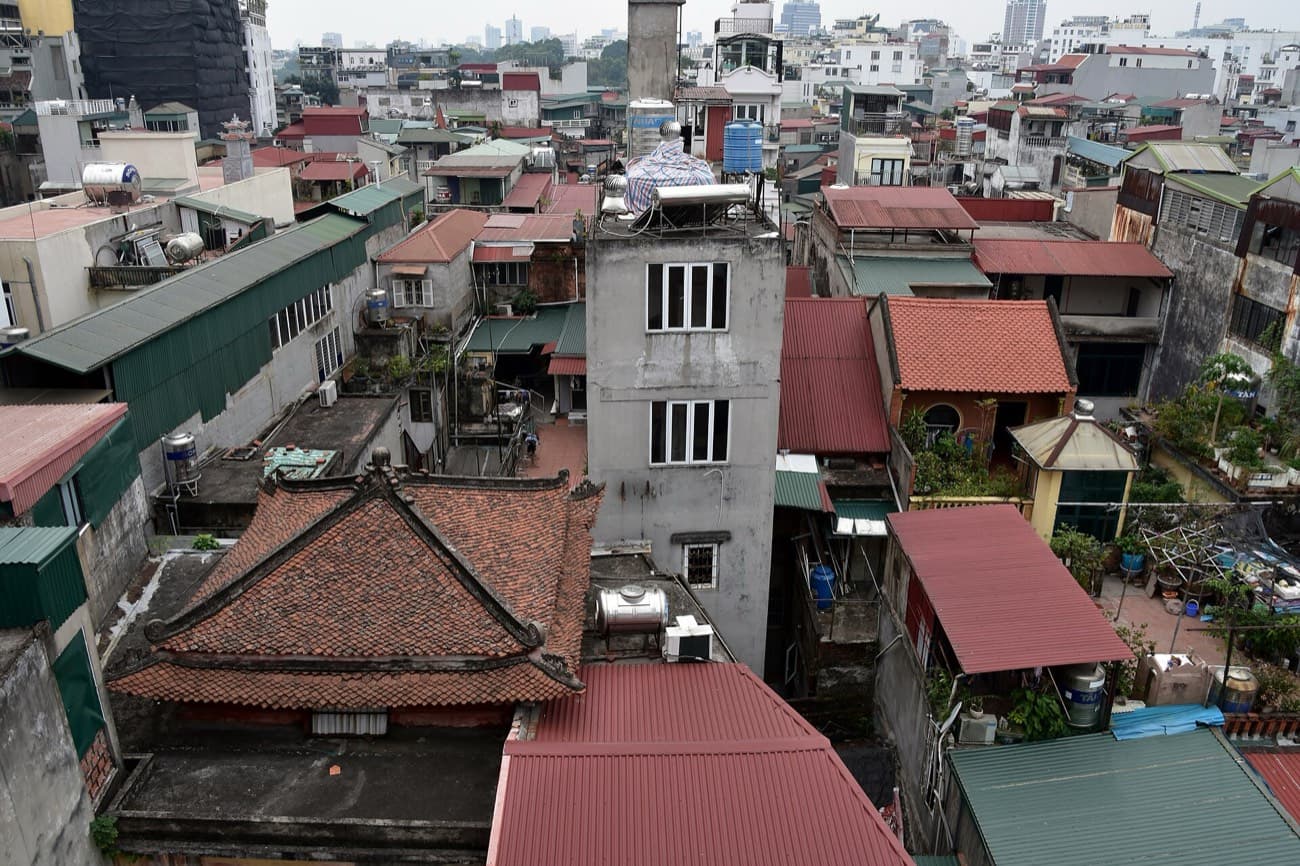
Hanoi has sat on the banks of the Red River (Hồng Hà) for more than a thousand years — one of the oldest capitals in Asia. In 1010, Emperor Lý Thái Tổ founded his capital here and named it Thang Long (Thăng Long — "ascending dragon"). The legend says he saw a golden dragon rising from the water and decided this was the place. The present name, Hanoi (Hà Nội — "the city between rivers"), stuck in 1831.
If Saigon is about commerce, high-rises and southern energy, Hanoi is about history and character. It is the country's cultural heart — people come for the northern kitchen, Confucian temples and French-colonial streets, not for a beach, because there isn't one in the city. Hanoi is dense, loud and at times hard going: winter adds dirty air to the damp, the traffic is chaotic, and tourists get overcharged. But this is where Vietnam feels most itself.
How the north differs from the south
The north and south of Vietnam are two different worlds. Hanoi versus southern Ho Chi Minh City is a bit like comparing a cool historic capital with a hot coastal boomtown: different climate, different food, different rhythm.
- Climate — four genuine seasons here. Down to 10°C in winter, up to 38°C in summer at 90% humidity. Ho Chi Minh City is simpler: 28–35°C all year round
- Food — the pho here comes with a clear, clean broth. And bun cha is barely found in the south — it is a purely Hanoian dish
- Character — Hanoians are more reserved and formal. In the south people are open and relaxed
- Architecture — pagodas, the 15th-century Old Quarter, French villas. The south is all skyscrapers and shopping malls
Who Hanoi suits
- History and culture lovers — a thousand years of Vietnamese history packed into a few square kilometres
- Food travellers — this is the birthplace of pho bo, bun cha, egg coffee and fifty more dishes you won't find down south
- Digital nomads — fast internet, rooms from $300/month, cafés with power sockets on every corner
- A launch pad — a base for trips to Ha Long Bay, Sapa, Ninh Binh and Hue
- Budget travellers — a hostel bed for $6, lunch for about $2, a beer for less than a dollar
Who it suits less: anyone chasing a beach (there isn't one — the nearest coast is a couple of hours out), and anyone who struggles with crowds, smog and street chaos. For the head-to-head with the south, see Hanoi vs Ho Chi Minh City.
Getting to Hanoi — Noi Bai airport and flights

Noi Bai airport (HAN)
Noi Bai is the main gateway to northern Vietnam, about 30 km north of the centre (45–60 minutes to the Old Quarter). Two terminals: T1 for domestic flights, T2 for international arrivals (this is where you land). A free shuttle runs between them every 10 minutes.
Flights into Hanoi
Hanoi is well connected across Asia and beyond. Non-stops run from major regional hubs — Bangkok, Singapore, Hong Kong, Seoul, Tokyo — and long-haul from Europe, the Gulf and Australia usually involves one stop. Common routings:
- Via Bangkok or Singapore — the cheapest and most frequent hops, 2–3 hour layovers
- Via Doha or Dubai (Qatar Airways, Emirates) — the smooth long-haul option from Europe
- Via Seoul, Taipei or Guangzhou — handy connections from North America
- Via Istanbul (Turkish Airlines) — one-stop from much of Europe
From Noi Bai airport to central Hanoi
It is about 30 km from the airport to the Old Quarter. The ride costs anywhere from about $2 to $18 — a 9x spread depending on how you go. Every option is priced out in the Hanoi transport guide.
| Option | Price (~USD) | Time | Notes |
|---|---|---|---|
| Bus #86 | ~$2 | 45–60 min | Best value, has WiFi |
| Bus #17 | ~$0.60 | 60–80 min | Cheapest, cash only |
| Grab / Be (car) | ~$7–10 | 30–45 min | Price fixed in the app |
| Official taxi | ~$14–18 | 30–45 min | Desks in the arrivals hall, e.g. Mai Linh |
| Private transfer | from ~$15 | 30–35 min | Meet-and-greet with a sign |
My driver contacted me through the app and redirected me to the correct location: Pillar 14 outside the terminal, located to the right if you are exiting out the main gate (look for ascending, not descending, numbers). Once I arrived at Pillar 14, I took a quick photo of where I was through the app so the driver could find meAllison Green, Eternal Arrival, 2026
Check Noi Bai transport options on the airport's official site.
Fast Track — no queue at the border
5–10 minutes instead of an hour in the immigration queue
from$11per passenger
Hanoi neighbourhoods — where to stay

The neighbourhood shapes everything: what you see, what you spend, and the mood you take home. Below is a quick take on five areas; for a deeper breakdown see Hanoi neighbourhoods, and for specific places to book, the Hanoi hotels guide.
The Old Quarter (Phố Cổ)
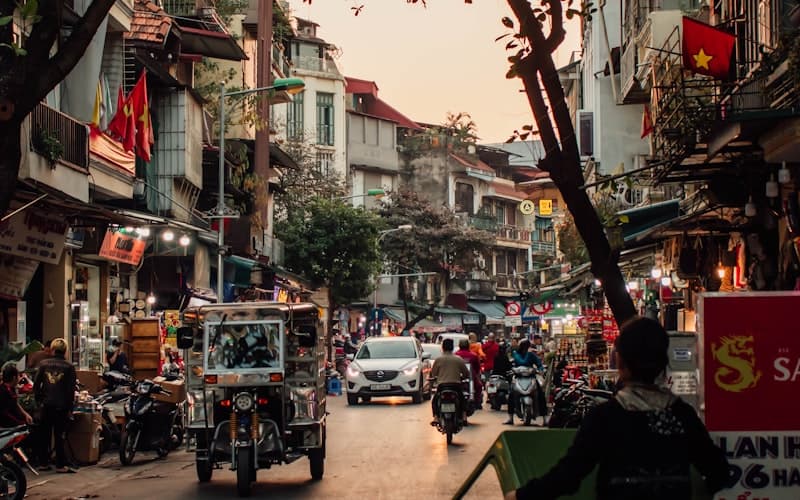
The "36 Streets" is the historic core. In the 15th century, 36 guilds of craftsmen worked here, and each street was named for its trade. Today it is a maze of lanes 2–3 metres wide, jammed with scooters, pedestrians and street food.
- Pros: the densest cafés, restaurants and atmosphere. Weekend night market (Fri–Sun, 18:00–23:00). Walking distance to Hoan Kiem Lake
- Cons: loud, cramped, tourist prices
- Prices: hostel $6–15/night, boutique hotel $40–80/night
- For whom: first-timers, 2–5 day trips, backpackers
Around Hoan Kiem Lake (Hoàn Kiếm)
The Lake of the Returned Sword and the streets around it are the cultural heart of Hanoi — the opera house, Ngoc Son temple, dozens of cafés and galleries. On weekends the lakeside roads close to cars and become a huge pedestrian zone.
- Pros: pretty, relatively quiet, cafés with lake views
- Cons: pricier hotels
- Prices: 4-star hotel $60–120/night, 5-star from $150/night
- For whom: couples, a calmer stay, mid to high budget
Tay Ho (Tây Hồ / West Lake)
Hanoi's largest lake, ringed by the expat and remote-worker scene. Coworking spaces, international restaurants, a lakeside loop for running and walking. On the shore stands the ancient Tran Quoc pagoda (6th century).
- Pros: quiet, green, expat infrastructure, coworking (Toong, UP)
- Cons: far from the Old Quarter (15–20 minutes by Grab)
- Prices: rentals $300–600/month, hotels from $30/night
- For whom: longer stays, freelancers, families with kids
According to expat guides and VietnamOnline, foreigners settling in Hanoi for the long haul most often pick Tay Ho. Xuan Dieu and To Ngoc Van streets have turned into the hub of the city's international café and dining life.
Ba Dinh (Ba Đình)
The government district, with wide boulevards. Here stand the Ho Chi Minh Mausoleum, the Temple of Literature, the One Pillar Pagoda and a cluster of embassies. Quiet and green.
- Prices: 4-star hotel $40–120/night, rentals $350–700/month
- For whom: business trips, history and museum lovers
Cau Giay (Cầu Giấy)
The western district: universities, parks, shopping malls. Zero tourists — and prices to match. Rentals from $200/month.
- For whom: budget travellers, students, long-term rentals
| Area | For whom | Hotel/night | To centre | Vibe |
|---|---|---|---|---|
| Old Quarter | Tourist, first visit | $6–80 | 0 min | Chaos, street food |
| Hoan Kiem Lake | Couples, comfort | $60–200 | 5 min | Elegant, strollable |
| Tay Ho | Expats, freelancers | $30–100 | 15–20 min | Quiet, green |
| Ba Dinh | Business, history | $40–120 | 10 min | Government quarter |
| Cau Giay | Budget, students | $5–40 | 20–30 min | Local, authentic |


Hanoi weather: four real seasons
The one thing to get right about northern Vietnam: this is not year-round summer. Unlike the south, Hanoi has four distinct seasons, and they feel very different. Turning up in a T-shirt in January is a classic mistake.
- Winter (Dec–Feb) — the surprise season: 10–18°C, grey skies, drizzle and a raw damp. Hotels usually have no heating, so your room can feel colder than the street. Winter is also when the smog builds up — morning AQI often sits in the "unhealthy" band
- Spring (Mar–Apr) — mild and warm but humid, with a fine drizzle the locals call mưa phùn. One of the better windows to visit
- Summer (Jun–Aug) — heat of 33–38°C at near-90% humidity, plus monsoon downpours. Physically draining, but it is low season and airfares drop
- Autumn (Sep–Nov) — the best of the year: dry, 20–28°C, clear skies. This is what people aim for
Short version: aim for autumn or spring. The month-by-month breakdown — temperatures, rain and what to pack — is in the Hanoi weather guide.
A 2–3 day Hanoi itinerary
Hanoi is compact: nearly everything worth seeing is within a couple of kilometres of Hoan Kiem Lake and walkable. Here is a working skeleton you can reshape to taste.
- Day 1 — the old centre. Hoan Kiem Lake and Ngoc Son temple, a wander through the Old Quarter (the "36 Streets"), then the water puppet theatre and a bia hoi at the Tạ Hiện junction in the evening. On weekends, add the night market
- Day 2 — history and colonial Hanoi. The Ho Chi Minh Mausoleum and One Pillar Pagoda first thing, then the Temple of Literature and Thang Long Citadel. After lunch, the French Quarter with the Opera House and Hoa Lo Prison
- Day 3 — Tay Ho and slow. Tran Quoc pagoda on West Lake, the area's cafés, the ethnology museum, shopping and Train Street (if it is open). Use this as the buffer day for whatever spilled over
Got more days? From here it makes sense to add a trip out of town: Ninh Binh as a day trip, Ha Long better with an overnight on a junk, Sapa at least two nights. All of it is below and in the guide to trips out of Hanoi.
Map & what to see in Hanoi

Confucian temples from the 11th century, French villas and grey concrete boxes of socialist modernism — in Hanoi you find all of it on one street. Almost all the main sights sit in the centre and can be walked; our Hanoi map guide sorts them by zone. The paid ones together come to roughly 555,000 VND (~$22). Each place is covered in the dedicated Hanoi attractions guide.
Green pins are free to enter, blue ones cost up to $3, and the amber pin is the water puppet theatre — the priciest ticket of the eight. Tap a pin for the fee, opening hours and district. One thing the map makes obvious: six of the eight sit inside a walkable Hoan Kiem — Ba Dinh loop, while the Ethnology Museum and Tran Quoc Pagoda stand apart.
- Ho Chi Minh Mausoleum: Free — Tue–Thu, Sat–Sun: 7:30–10:30 (Apr–Oct), 8:00–11:00 (Nov–Mar) — Ba Dinh
- Tran Quoc Pagoda: Free — 7:30–11:30, 13:30–18:00 — Tay Ho
- Temple of Literature: ~$2.80 — 8:00–17:00
- Ngoc Son Temple: ~$2 — 8:00–18:00 — Hoan Kiem
- Thang Long Citadel: ~$4 — 8:00–17:00 — Ba Dinh
- Hoa Lo Prison: ~$2 — 8:00–17:00 — Hoan Kiem
- Ethnology Museum: ~$1.60 — 8:30–17:30, closed Mon — Cau Giay
- Water Puppet Theatre: ~$4–8 — 4–5 shows a day — Hoan Kiem
| Sight | Entry (~USD) | Hours | Area |
|---|---|---|---|
| Ho Chi Minh Mausoleum | Free | 7:30–10:30 (Tue–Thu, Sat–Sun) | Ba Dinh |
| Temple of Literature | ~$2.80 | 8:00–17:00 | Dong Da |
| Ngoc Son Temple | ~$2 | 8:00–18:00 | Hoan Kiem |
| Thang Long Citadel | ~$4 | 8:00–17:00 | Ba Dinh |
| Hoa Lo Prison | ~$2 | 8:00–17:00 | Hoan Kiem |
| Ethnology Museum | ~$1.60 | 8:30–17:30 (closed Mon) | Cau Giay |
| Water Puppet Theatre | ~$4–8 | 4–5 shows a day | Hoan Kiem |
| Tran Quoc Pagoda | Free | 7:30–11:30, 13:30–18:00 | Tay Ho |
Ho Chi Minh Mausoleum and memorial complex
A marble building on Ba Dinh Square, with the embalmed body of "Uncle Ho" in a glass sarcophagus inside. Entry is free, but the rules are strict: shoulders and knees covered, no photos inside, hands out of your pockets. Bring your passport.
Nearby: the Stilt House (~$1), where Ho Chi Minh lived and worked, the Ho Chi Minh Museum (~$1.60) and the One Pillar Pagoda (free) — a unique 11th-century Buddhist temple on a single stone column.
Temple of Literature (Văn Miếu)
Vietnam's first university, founded in 1070. Five courtyards: gardens, lotus ponds, and 82 stelae on stone turtles bearing the names of 1,307 top graduates over 337 years (1442–1779). Entry: ~$2.80.
The Old Quarter and Hoan Kiem Lake
Hoan Kiem Lake (Hồ Hoàn Kiếm) is the symbol of the city. The legend: the general Le Loi received a magic sword and drove out the invaders, then the Golden Turtle took it back into the lake — hence the name, Lake of the Returned Sword. On an island in the middle stands Ngoc Son temple, reached by the red The Huc bridge. Entry: ~$2. On weekends the lakeside roads close to traffic — the best time for a stroll.
Thang Long Citadel (UNESCO)
From 1010 to 1810 this was the country's political centre. Excavations have exposed archaeological layers from several eras. Entry: ~$4.
Hoa Lo Prison (the "Hanoi Hilton")
The French built it in 1896 for political prisoners. During the Vietnam War it held American POWs. Entry: ~$2. A heavy place, but it makes the history real.
Train Street
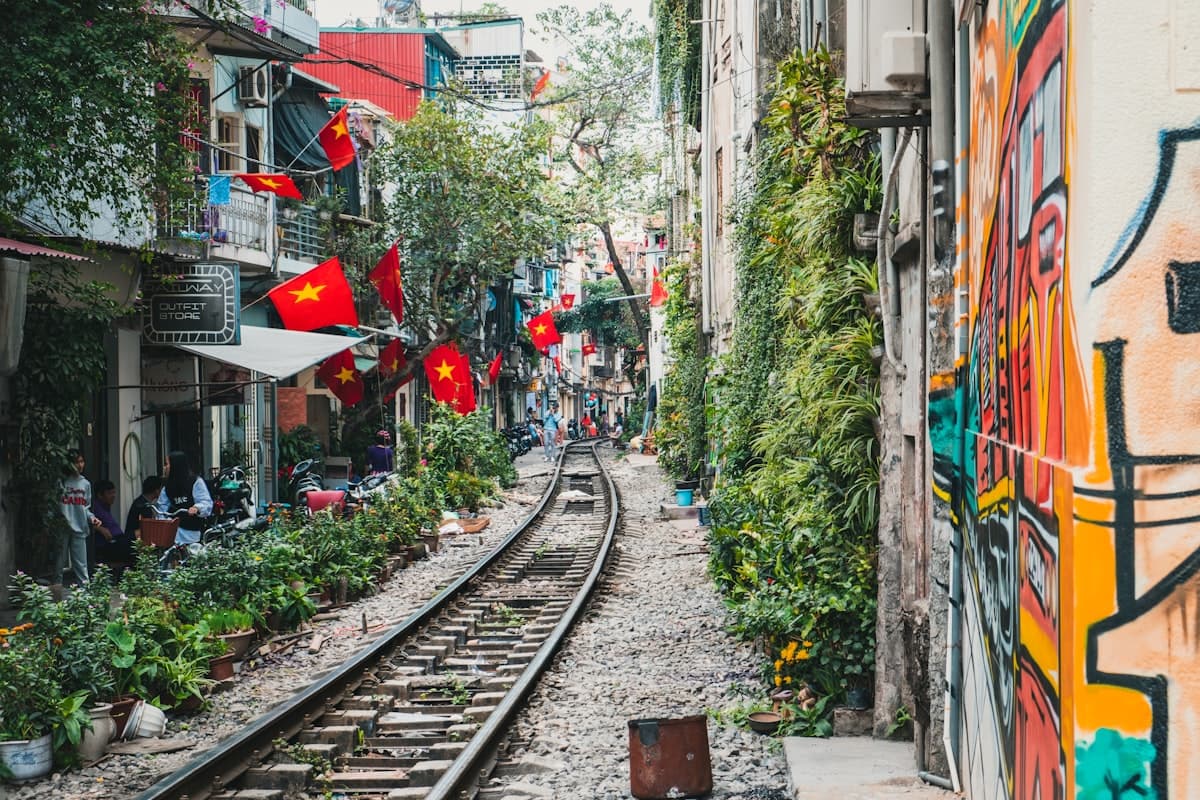
A train squeezes between homes with less than a metre of clearance. The cafés along the tracks became an Instagram hit, but the authorities keep closing the street on safety grounds. Check whether it's open before you go.
Water Puppet Theatre
An 11th-century Vietnamese art form: wooden puppets "dance" on water to a live orchestra. The Thang Long theatre by Hoan Kiem Lake runs 4–5 shows a day. Tickets: ~$4–8, and the show lasts 50 minutes.
Bat Trang ceramics village
15 km from the centre — a village that has thrown pottery for 700 years. A pottery-wheel workshop: ~$2–4. Entry is free. Get there by bus #47 from Long Bien or on Grab (~$2).
Trips out of Hanoi — Ha Long, Ninh Binh, Sapa

Hanoi is the natural base for the whole north of Vietnam. Within 320 km sit three places people fly across the world to see. Sort out your e-visa before you travel if your passport needs one.
Ha Long Bay — a UNESCO site
More than 1,600 limestone islands rise out of the emerald water of the Gulf of Tonkin. Caves, grottoes, floating villages, kayaking. Ha Long is 160 km away (2.5–3.5 hours by car). The town, cruises and seasons are in the Ha Long guide.

Ninh Binh — the "dry Ha Long"
The same karst cliffs as Ha Long, but with rice fields and rivers instead of the sea. "Kong: Skull Island" was filmed here. 80 km from Hanoi (1.5–2 hours). A day trip: from $30. Routes and sights are in the Ninh Binh guide.
- Trang An (UNESCO) — a boat ride through caves and cliffs
- Tam Coc — the less-hyped, wilder route
- Mua Cave — 500 steps up to a panorama of the rice fields
- Bai Dinh Pagoda — the largest Buddhist complex in Vietnam
Sapa — rice terraces and hill tribes
A mountain resort at 1,500 metres: rice terraces, villages of the Hmong and Red Dao people. 320 km from Hanoi, worth at least 2 nights. The overnight train is a classic: you fall asleep in the muggy city and wake up in the mountains with clouds outside the window. Full details in the Sapa guide.
- Sleeper bus: $15–20, 6–7 hours
- Train (sleeper cabin): $20–35, 8–9 hours
- Tour, 2 days / 1 night: from $100
Best time: September–November (golden terraces), March–May (green, water-filled fields). Winter is cold: 2–8°C.
Further northeast lies one more trip out of Hanoi: Ban Gioc, Vietnam's largest transnational waterfall, on the border with China. It's 7–8 hours from Hanoi and needs 2–3 days.
Mai Chau and the Perfume Pagoda
Mai Chau is a low-key alternative to Sapa, 145 km from Hanoi. Thai ethnic villages, rice fields, and cycling along dirt lanes. Tour: $40–80. Getting there independently and where to sleep: Mai Chau guide.
The Perfume Pagoda is a large Buddhist complex 60 km from Hanoi. First a boat along the river, then a cable car, then temples set right in the caves. Entry plus boat: 230,000 VND (~$9); with the return cable car, 490,000 VND (~$19). Best visited February to April.
| Destination | Distance | From | Min. days | For whom |
|---|---|---|---|---|
| Ha Long Bay | 160 km | $55 / $130 | 2 days | Everyone. A must |
| Ninh Binh | 80 km | $30 | 1 day | Budget, nature |
| Sapa | 320 km | $100 | 2 nights | Trekking, culture |
| Mai Chau | 145 km | $40 | 1–2 days | Cycling, villages |
| Perfume Pagoda | 60 km | ~$9 | 1 day | Buddhism, boats |
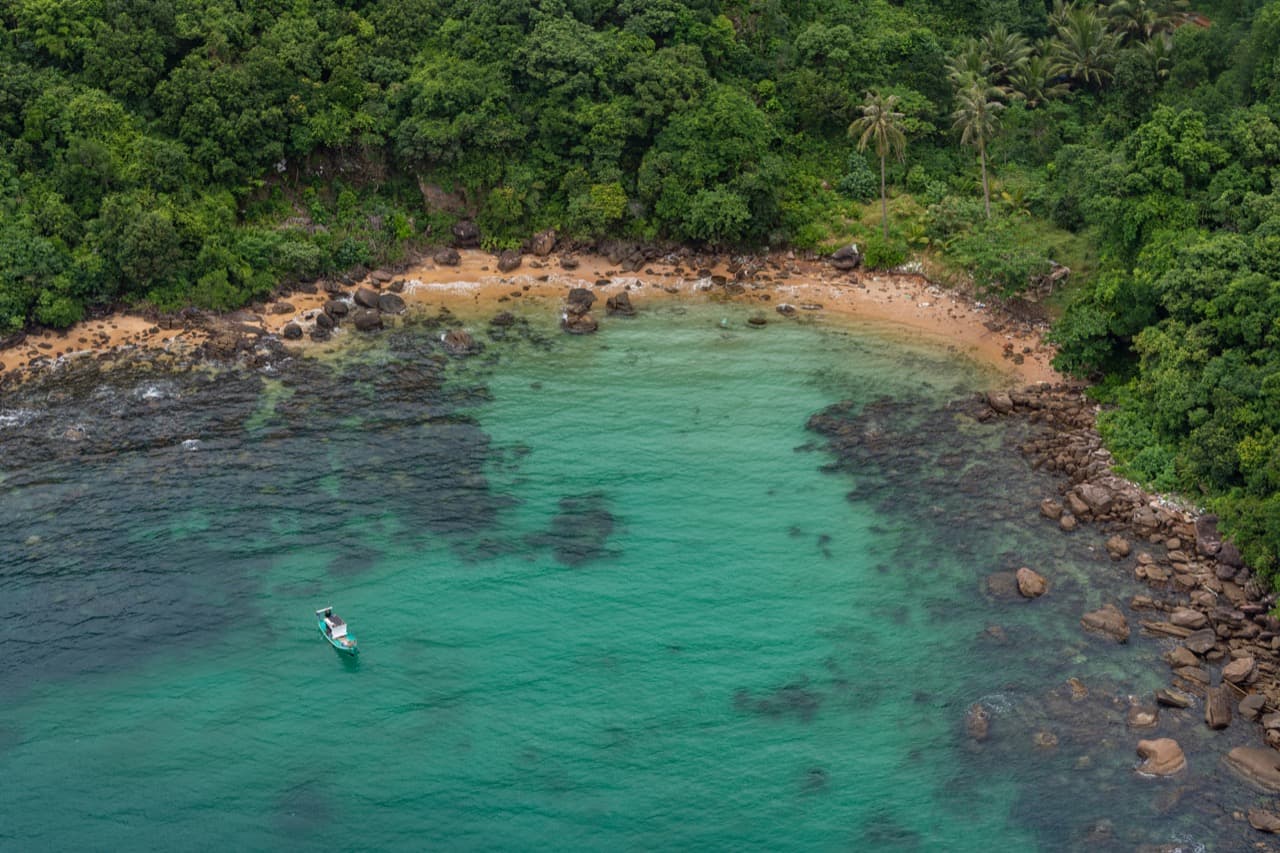
For the full rundown of every trip with prices and booking tips, see trips out of Hanoi. Want a swim instead? The nearest beaches near Hanoi work as a day out to the coast.
Food in Hanoi — what to try and where
Hanoi is where pho bo, bun cha and egg coffee were born. Street food here isn't just a snack but a ritual: locals perch on tiny plastic stools right on the pavement and eat. Genuinely, the whole city does it. Addresses, a map and ordering tips are in the full Hanoi food guide.

10 dishes to try
| Dish | Price (~USD) | What it is |
|---|---|---|
| Pho bo (Phở bò) | ~$2–3.20 | Rice-noodle soup with beef, clear anise broth |
| Bun cha (Bún chả) | ~$1.60–2.80 | Noodles + grilled pork + sweet-sour sauce. Hanoi's signature |
| Banh mi (Bánh mì) | ~$0.80–1.60 | Crisp baguette with pâté, meat and pickled veg |
| Banh cuon (Bánh cuốn) | ~$1.20–2 | Steamed rice rolls with a pork filling |
| Cha ca (Chả cá Lã Vọng) | ~$3.20–6 | Turmeric fish grilled with dill. Since 1871 |
| Bun bo nam bo | ~$1.60–2.40 | Rice noodles with beef and peanuts, no broth |
| Pho cuon (Phở cuốn) | ~$1.60–2.40 | Fresh pho sheets rolled around beef — a local original |
| Egg coffee | ~$1–1.80 | Coffee with a whipped-yolk foam. Invented in 1946 |
| Bia hoi | ~$0.20–0.40 | Fresh draught beer. About the cheapest on earth |
Two of these have their own deep dives: the steamed rolls in our guide to banh cuon, and the draught beer ritual in bia hoi.

Landmark places to eat in Hanoi
- Phở Thìn (13 Lò Đúc) — cult pho with wok-seared beef. ~$1.60–3.20
- Phở 10 Lý Quốc Sư (10 Lý Quốc Sư) — classic Hanoi pho in the centre
- Bún Chả Hương Liên (24 Lê Văn Hưu) — where Barack Obama ate bun cha with Anthony Bourdain in 2016. The "Obama Bun Cha". ~$1.60–3.20
- Bún Chả Đắc Kim (1 Hàng Mành) — an Old Quarter legend since the 1960s. ~$1.20–2.40
- Chả Cá Lã Vọng (14 Chả Cá) — a restaurant since 1871 (!); the street is named after it. ~$3.20–6
- Café Giảng (39 Nguyễn Hữu Huân) — where egg coffee was invented in 1946. Three generations of one family. ~$0.80–1.60
- Bia Hoi Corner (the Tạ Hiện junction) — beer for ~$0.20–0.40. Plastic stools, the real Hanoi
What a meal costs in Hanoi
Hanoi's coffee culture
Vietnam is the world's second-biggest coffee producer after Brazil, and Hanoi is where its coffee culture took root. Four core styles:
- Cà phê trứng (egg coffee) — strong coffee under a whipped-yolk "cap". Tastes like tiramisu in a cup
- Cà phê sữa đá — coffee with condensed milk and ice. The classic
- Cà phê đen — black through a phin filter. Strong, with cocoa notes
- Cà phê dừa — coffee with coconut milk, refreshing
Walked the Old Quarter and had a couple of coffees? Close the day with a Vietnamese massage — Hanoi has dozens of affordable spa parlours from about $10 an hour. Ten spas with addresses and prices are in our Hanoi spa guide.
Practical questions — scams to dodge, crossing the road, useful apps and what to skip — are collected in Hanoi tips & FAQ. What the whole thing costs — per day, per fortnight, per month — is in the Hanoi price guide (a two-day cheat sheet for food and getting around is in Hanoi food, transport and prices), and what to carry home is in the Hanoi shopping guide. An honest category-by-category verdict is in Hanoi reviews.
FAQ — planning a Hanoi trip
Three full days is the minimum. Day 1 — the Old Quarter, Hoan Kiem Lake and the water puppet theatre. Day 2 — the Mausoleum, the Temple of Literature, the Citadel. Day 3 — Tay Ho, the ethnology museum, some shopping. Add Ha Long (2 days) and Ninh Binh (1 day) and you are looking at a week. The classic mistake is treating Hanoi as a one-day transit stop and seeing almost nothing.
September to November is the sweet spot: 20–28°C, little rain, clear skies. March and April are good too, but more humid. Avoid June to August (heat up to 38°C plus monsoon downpours) and January to February (raw, damp cold down to 10°C, and hotels have no heating). During Tet, the Vietnamese New Year in January or February, half the shops are shut.
The opening price for a foreigner is inflated 2–5 times. The move: counter with 30% of what they ask, settle around 40–50%. If the seller won't budge, walk away — they often call you back. Dong Xuan (the tourist market) marks up harder than local markets like Cho Hom. In shops with fixed price tags, you don't haggle.
Traffic lights and crossings in Vietnam are more of a suggestion. The one rule: step out slowly and keep moving at a steady, predictable pace. Don't stop suddenly and don't run — the scooters read your trajectory and flow around you. It is unnerving the first time and second nature after a couple of days. The riskiest spots are the multi-lane roads without lights in Cau Giay and Hai Ba Trung.
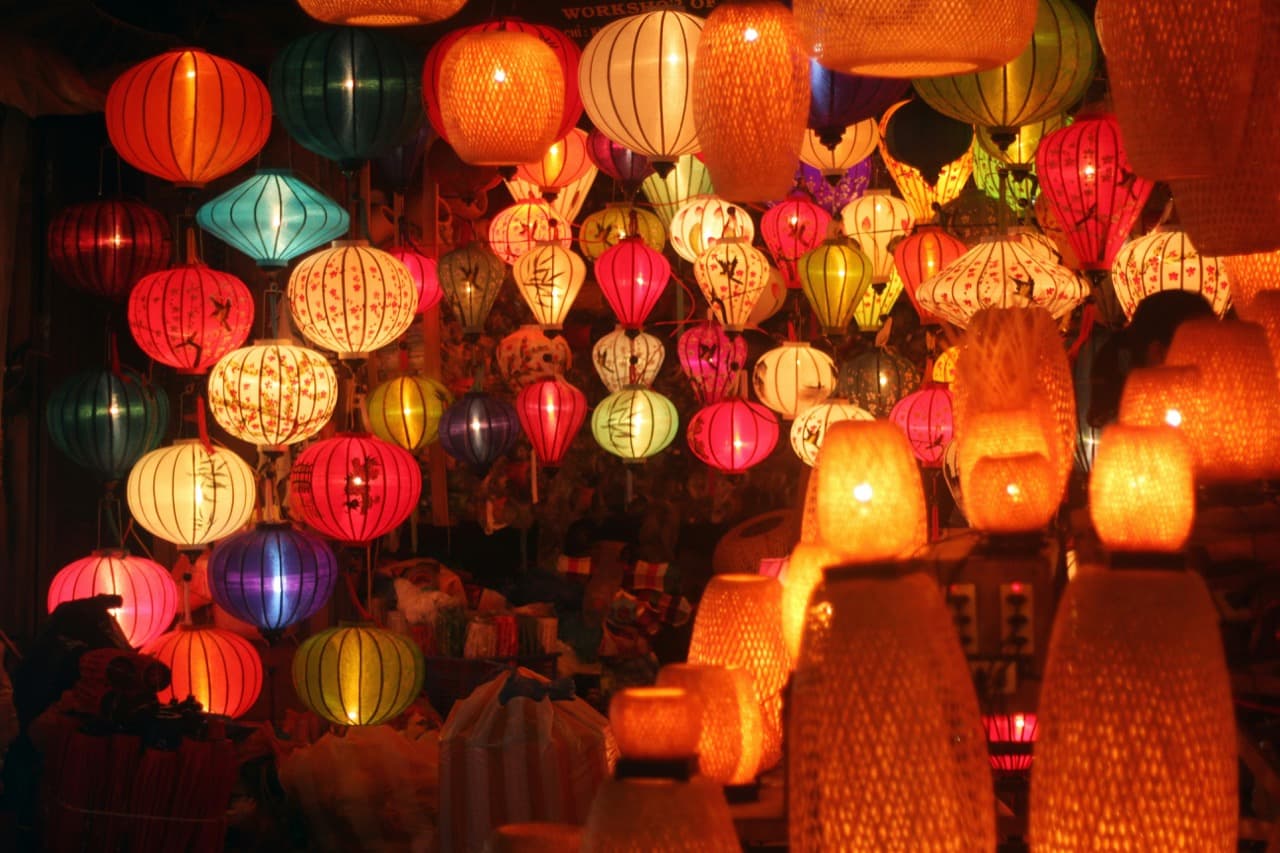
Yes, it is compact — about one square kilometre. A good 4–5 hour loop: Hoan Kiem Lake, then Hang Gai (silk), Hang Bac (silver), Hang Ma (paper lanterns), finishing at the Bia Corner with a glass of bia hoi. On Friday to Sunday evenings the weekend night market runs on Hang Dao. Wear comfortable shoes — the pavements are parked full of scooters, so you weave along the road.
It depends why you are going. Hanoi is for culture: a thousand years of history, the real northern Vietnamese kitchen, and trips out to Ha Long and Sapa. Da Nang is beach plus culture, with Hoi An 30 minutes away. Want the "real Vietnam" and can handle the chaos — start in Hanoi. Want an easy start with a beach — Da Nang.
Visas depend on your passport. Citizens of the UK, Norway, Switzerland, Japan, South Korea and 18 EU countries (including Germany, France, Italy, Spain, the Netherlands and Poland) get 45 days visa-free. Most others, including US, Australian and Canadian travellers, apply for the e-visa at evisa.gov.vn: up to 90 days, $25 single entry or $50 multiple entry. Check your passport's rules before booking. In Hanoi, cards work in hotels, malls and mid-range restaurants, but street food, markets and taxis are cash. Withdraw dong from a bank ATM (Vietcombank, BIDV, TPBank) — the fee is around 50,000 VND (~$2), and airport rates are 3–5% worse.
- Guide
Hanoi Map 2026: Areas, Landmarks, Metro and Airport
An interactive map of Hanoi: six areas to stay in, 16 landmarks with fees, both metro lines and the bus from Noi Bai. Distances and Grab fares, checked 2026.Hanoi Map 2026: Areas, Landmarks, Metro and Airport - Guide
Beaches Near Hanoi: Cat Ba, Ha Long & Day Trips 2026
Where to find a beach from Hanoi: Cat Ba, Do Son, Ha Long, Quan Lan and Co To — how to get there, the swimming season and day-trip tips.Beaches Near Hanoi: Cat Ba, Ha Long & Day Trips 2026 - Guide
Hanoi vs Ho Chi Minh City: Which to Visit in 2026
Hanoi or Ho Chi Minh City? North vs south compared — weather, prices, food, atmosphere, things to do and who each city suits.Hanoi vs Ho Chi Minh City: Which to Visit in 2026