
Ho Chi Minh City (Saigon): a 2026 travel guide
How to plan a trip to old Saigon: which district to stay in, how to get there, what a day costs, when to go, and a 2-3 day plan. A big, hot, chaotic megacity of 14 million with a metro since 2024, the best street food in Vietnam, and the launch pad for Cu Chi and the Mekong.
Ho Chi Minh City is Vietnam's largest city and the gateway to the south. Until 1976 it was called Saigon, and locals still call it that. Since 1 July 2025 the city has absorbed Binh Duong and Ba Ria-Vung Tau, and about 14 million people now live here. It isn't a beach resort or a quiet old town — it's a loud commercial megacity you come to for the food, the buildings and the trips out, not for the sand.
Information current as of July 2026. USD figures use a rate of roughly 26,000 VND = $1 — always confirm the live rate and prices on the ground, since they change.
French colonial villas stand shoulder to shoulder with skyscrapers, Buddhist pagodas sit across the street from rooftop bars, and pho stalls with 70 years of history share a block with Michelin restaurants. In December 2024 the city's first metro line opened here. The city changes fast.
This is the orientation guide. It answers the big questions — what the city is, whether it's for you, and how to plan a trip: districts, transport, budget, season and a rough itinerary. Each topic has its own deeper guide, linked as you go: what to see, food, hotels, prices.
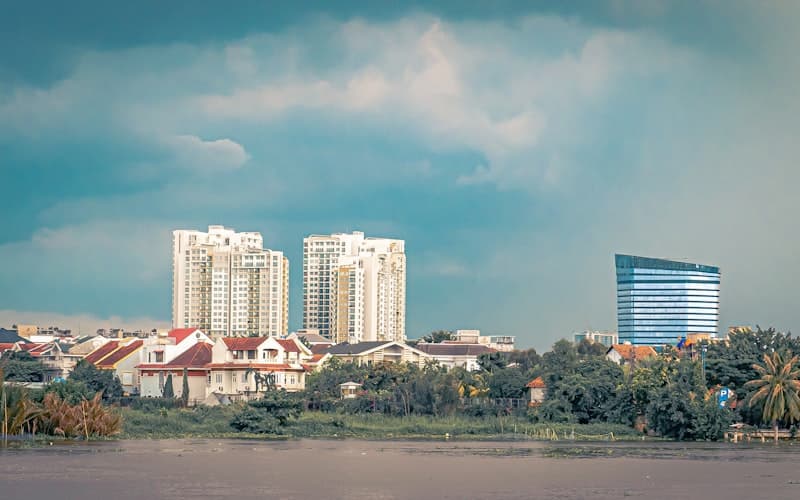
What kind of city is it, and is it for you
The short version: Saigon is big, hot and chaotic. It runs on energy, food, colonial architecture and nightlife, not on peace and quiet. There's no beach in the city, the air can be rough on some days, crossing the road is a skill you learn, and taxi touts at the airport will try their luck. If that sounds like fun (or at least doesn't scare you), you'll love it. If you want calm and coastline, treat it as a 2-3 day stopover and head for the sea.
- Come if you like big cities, street food and history, and want a base for the Cu Chi Tunnels and the Mekong Delta.
- 2-3 days is plenty if you're heading on to the beaches (Nha Trang, Phu Quoc, Mui Ne) and only need the city as an entry point.
- You could live here: cheap food, fast internet and coworking make it a strong base for remote workers — see the districts below.
From Saigon to Ho Chi Minh City — a short history
Before the 17th century, a small Khmer village sat on the bank of the Saigon River. Vietnamese settlers arrived in the late 1600s, and by the 18th century Saigon had grown into a busy trading port.
The French took over in 1859, made Saigon the capital of Cochinchina and laid out boulevards, the Notre-Dame Cathedral and the central post office — the buildings that are now the postcard shots. They nicknamed it the "Paris of the East," and the colonial quarter still earns the name.
On 30 April 1975 Saigon fell, and the city was renamed after Ho Chi Minh. But southerners never really took to the new name — in conversation everyone says "Saigon." The airport code is still SGN, for Saigon.
The national capital is Hanoi, up north. But the money moves here: Ho Chi Minh City is the country's largest economic centre. How life here differs from the capital is in our Ho Chi Minh City vs Hanoi comparison, and which one to visit is in our Hanoi vs Ho Chi Minh City guide for travellers.

Districts — where to stay and where to live
The city is still mapped by its districts (quận) — abolished as an administrative tier on 1 July 2025, but nobody has stopped using the names, least of all Grab drivers and landlords. As a traveller or expat you only need 5-6 of them. Which one comes down to your budget and why you came.
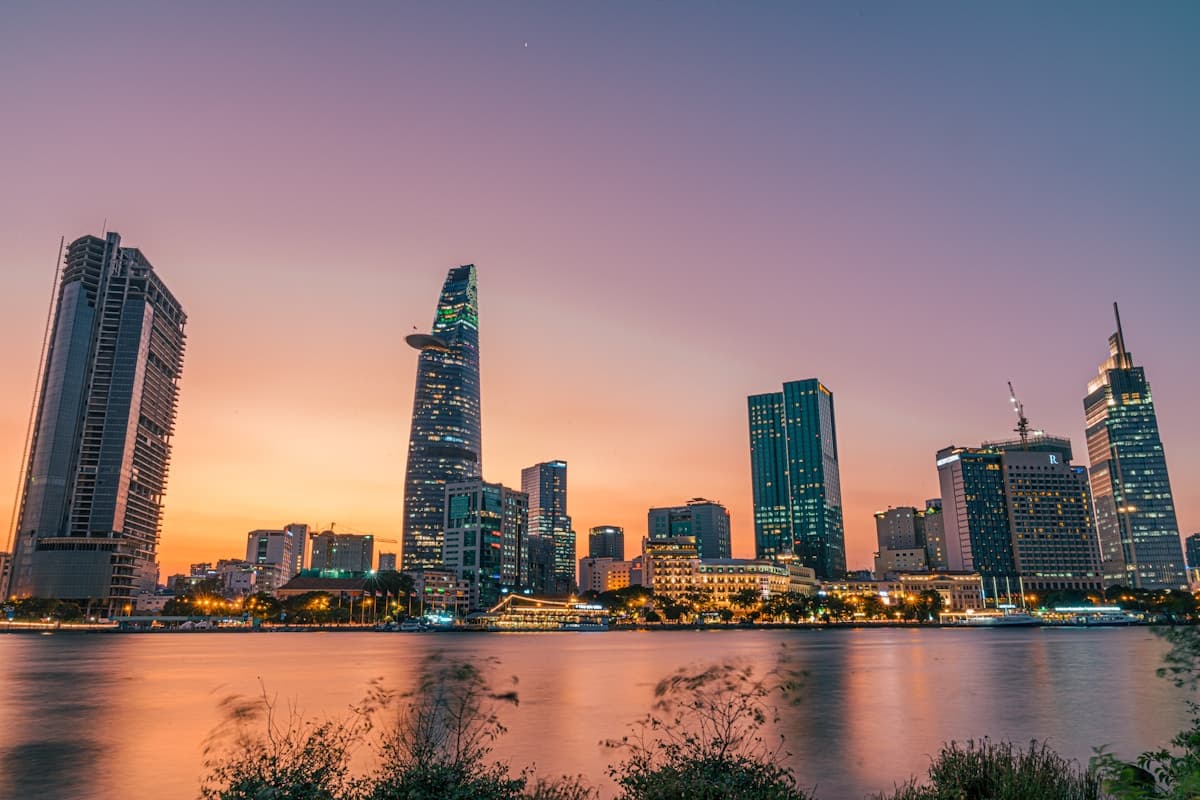
District 1 — the historic centre
Notre-Dame Cathedral, the Reunification Palace, the War Remnants Museum, Ben Thanh Market — all within walking distance. Plus the best hotels, restaurants and malls in the city.
Best for: first-time visitors and business travellers.
Key streets:
- Dong Khoi — the main "shop-window" street of boutiques and hotels
- Nguyen Hue — the pedestrian boulevard, an evening stroll
- Bui Vien — the backpacker street of bars and street food
- Pham Ngu Lao — budget hotels and hostels
Prices: hotels from ~$19/night (3-star), ~$69/night (5-star). Apartment rent from ~$400/month. Note that most mid-range and upmarket places take cards, but street stalls and small shops are cash-only, so keep some dong on you.
Downsides: the most expensive district, noisy, with traffic that sits for hours.
District 3 — quieter and cheaper
It borders District 1, so the sights are a walk away. Greener, calmer, and with far more local cafes than tourist ones. The War Remnants Museum, in fact, technically sits here.
Best for: being close to the centre without the crowds or the markup.
Prices: rent from ~$300/month. Hotels run 20-30% cheaper than in District 1.
Upsides: leafy streets, real Vietnamese food, a 5-minute motorbike ride to District 1.
District 2 (Thao Dien) — the expat district
Thao Dien, 10 km from the centre, is where most of the city's foreigners live. International schools, cafes serving oat-milk lattes, coworking spaces, yoga studios, craft breweries. People sometimes call it "Little Australia."
Best for: remote workers, digital nomads, expats and families.
Prices: rent from ~$350-500/month. The cost of living runs higher thanks to "expat pricing" in the venues.
Upsides: quiet, long-stay infrastructure, coworking spaces like The Hive and Toong.
The city has plenty of coworking spaces, densest here and in District 1. A day pass runs 110,000–250,000 VND (~$4–10), a month from 1,500,000 VND (~$58). Every space with prices, opening hours and metro access is in the Ho Chi Minh City coworking guide.
The catch is the 'expat bubble': it's easy to end up mixing only with other foreigners.
District 7 (Phu My Hung) — the family district
Built from scratch in the early 2000s on Korean and Japanese blueprints. Wide boulevards, parks, modern malls. It feels like a different city.
Best for: families and long stays.
Prices: rent from ~$400/month.
Upsides: safe, clean, parks and schools. Crescent Mall and Starlight Bridge are pleasant places to walk.
District 5 (Chinatown / Chợ Lớn) — colour and food
Vietnam's largest Chinatown. Binh Tay Market (one of the biggest in the city), Taoist temples, traditional apothecaries and the best Chinese-Vietnamese food around. Barely any tourists — just locals.
Best for: anyone after a real Asian city and food for next to nothing.
Binh Thanh — the Landmark 81 district
Just north of District 1. This is where Landmark 81 stands — the tallest building in Vietnam (461 m). Beside it, the Saigon River promenade and the Vinhomes Central Park development, with its park and pools.
| District | Best for | Rent/month | To centre | Main draw |
|---|---|---|---|---|
| District 1 | Tourists, business | from ~$400 | — | Everything on foot |
| District 3 | Quiet centre | from ~$300 | 5 min | Calmer, cheaper |
| District 2 | Expats, nomads | from ~$350 | 20 min | Coworking, cafes |
| District 7 | Families | from ~$400 | 30 min | Parks, safety |
| District 5 | Foodies, authenticity | from ~$250 | 15 min | Food, markets |
| Binh Thanh | Modern city | from ~$350 | 10 min | Landmark 81 |
According to Asia Lifestyle Magazine and Expat.com, a comfortable single life in Ho Chi Minh City runs $900-1,800 a month. Rent eats the biggest share; food, on the other hand, is gloriously cheap.
Getting to Ho Chi Minh City

Flights
Ho Chi Minh City is a major regional hub, with direct connections across Southeast Asia, East Asia, Australia and the Middle East. From Europe and North America you'll usually connect once — via Bangkok, Singapore, Doha, Dubai or Istanbul. Book 2-3 months out and travel in the low season (May-September) for the cheapest fares. More on routes and fares in the flights guide.
Visas — check by passport
Entry rules depend on your nationality. Many passports get 45 days visa-free; most others need an e-visa, which is quick to apply for online at the official portal evisa.gov.vn before you fly. Always confirm the current rule for your passport — the visa-free list changes.
Tan Son Nhat Airport (SGN)
Just ~7 km from the centre — one of the closest airports to a downtown in all of Southeast Asia. Close on the map, but traffic can turn the drive into 30-60 minutes, so leave a buffer. Three terminals: international T2, domestic T1 and T3 (Vietnam Airlines Group domestic flights moved to T3 in 2025).
| Option | Price | Time to centre |
|---|---|---|
| Taxi (Vinasun, Mai Linh) | 150,000-200,000 VND (~$6-8) | 20-45 min |
| Grab Car | from 100,000 VND (~$4) | 20-45 min |
| Bus 109 (express) | 20,000 VND (~$0.80) | 30-45 min |
| Bus 152 | 6,000 VND (~$0.25) | 40-60 min |
A new airport, Long Thanh, is being finished 40 km to the east. It is opening in phases and the commercial launch date has already slipped, so check which airport your flight uses before you travel. In time Long Thanh will take most international flights. The operator ACV now targets commercial launch on 24 December 2026, and the rail line from Thu Thiem is planned for 2030. More in our Long Thanh airport guide.

Fast Track — no queue at the border
5–10 minutes instead of an hour in the immigration queue
from$11per passenger
Getting around the city
Millions of motorbikes. The traffic looks like chaos but runs on its own logic; you get used to it in a couple of days. Here's how to move.

The metro (Line 1) — open since 2024
On 22 December 2024 the first line opened: 19.7 km from Ben Thanh (central, by the market) to Suoi Tien (the eastern suburbs). 14 stations, trains every 8 minutes at peak.
For now it's the only way to skip the jams out to the eastern districts. Ben Thanh will become the interchange. Line 2 (Ben Thanh - Tham Luong) is under construction, due around 2030.
By June 2025 Line 1 had been used by more than 10 million passengers (JICA).
Grab and taxis
Grab is the app everyone uses — GrabCar for a car, GrabBike for a motorbike taxi. The bike is cheaper and immune to traffic, but awkward with a suitcase. Pay in the app by card, or cash to the driver; both work.
| Mode | Price | Notes |
|---|---|---|
| GrabCar | from 40,000 VND (~$1.60) a ride | 15 min across town ≈ 80,000 VND |
| GrabBike | from 15,000 VND (~$0.60) | Faster in traffic |
| Taxi (Vinasun/Mai Linh) | from 11,000 VND/km (~$0.45) | Flagfall 10,000-15,000 VND |
Buses and the river bus
Over 100 routes, tickets 6,000-10,000 VND (~$0.25-0.40). The buses are air-conditioned, but signs are in Vietnamese only — Google Maps bails you out.
The river bus along the Saigon River is a way to dodge the traffic and see the city from the water. From 15,000 VND (~$0.60).
More on routes, passes and tricks in the transport guide.
Renting a motorbike
150,000-250,000 VND/day (~$6-10). You need a Vietnamese licence, or an International Driving Permit under the 1968 Convention together with your national licence for motorbikes (category A/A1). Traffic here is denser than in Hanoi — if you haven't ridden in Asia before, don't make this your first time.
Getting from the city to elsewhere in Vietnam
| Destination | Distance | Time | Transport | Price |
|---|---|---|---|---|
| Phan Thiet / Mui Ne | 200-220 km | 4-6 h | Bus | from 150,000 VND (~$6) |
| Vung Tau | 125 km | 1.5-2 h | Hydrofoil | 320,000-350,000 VND (~$12-13) |
| Da Lat | 300 km | 7-8 h | Bus | from 200,000 VND (~$8) |
| Cam Ranh / Nha Trang | 430 km | 1 h 15 min | Flight | from 1,000,000 VND (~$40) |
| Mekong Delta | 75 km | 1.5-2 h | Day tour | from ~$25 |
The nearest beach escape is Vung Tau (a 1.5-hour hydrofoil). For an hour-by-hour plan, see the Vung Tau weekend guide. The most popular day trip out of the city is the Mekong Delta: boats, canals and fruit orchards.

What to see and where to day-trip
From colonial architecture to the Cu Chi Tunnels, there are dozens of sights. The classics cluster in District 1, so you can knock out the highlights in a day and save trips like the tunnels and the Mekong for a second. This is the quick overview; the full rundown with prices and routes is in the attractions guide, guided trips are in the tours guide, and evening options are in the entertainment guide.
The colonial quarter
Saigon's French heritage is concentrated in District 1. The key buildings are all within walking distance of one another — you can cover them in half a day.
Notre-Dame Cathedral — Vietnam's main Catholic cathedral, 1880, built from Marseille brick, with two 58-metre bell towers. Under restoration since 2017, but the facade is open. Free.
The Central Post Office — high vaults, arched windows, a portrait of Ho Chi Minh on the far wall. It's a working post office, so you can actually send a postcard home. Free, 07:00-19:00.
City Hall (1902–1908, French Renaissance). No entry inside, but the floodlit facade at night is one of the best photo spots in town.
The Opera House — neoclassical, early 20th century. You only see the interior during a show. It hosts the A O Show, a contemporary circus about Vietnam (from 700,000 VND, ~$28).
History museums
| Museum | Entry | Hours | Time needed |
|---|---|---|---|
| Reunification Palace | 80,000 VND (~$3.10) | 07:00-18:00 | 1-2 h |
| War Remnants Museum | 40,000 VND (~$1.60) | 07:30-17:30 | 2-3 h |
| Museum of Vietnamese History | 60,000 VND (~$2.40) | Tue–Sun 08:00-11:30, 13:00-17:00 | 1-1.5 h |
| FITO Traditional Medicine Museum | 120,000 VND (~$4.80) | 08:30-17:00 | 1 h |
The Reunification Palace — the former Independence Palace. In the courtyard stand the very tanks that crashed through the gates in 1975. Inside: meeting rooms, bunkers, a helipad on the roof. All left as it was.
The War Remnants Museum — the Vietnam War told from the Vietnamese side. Photographs, hardware, documents. It's an emotionally heavy museum, and the exhibits are graphic — not one for small children. For many travellers it's the single most affecting stop in the city. Allow 1.5–2 hours for the visit.
Viewpoints
Bitexco Financial Tower (Saigon Skydeck) — the lotus-shaped tower, 262 m. The observation deck is on the 49th floor: a 360-degree panorama, 200,000 VND (~$8). One floor up is the EON Heli Bar on the former helipad, cocktails from 250,000 VND (~$10).
Landmark 81 Skyview — 461 m, 81 floors. The deck spans floors 79-81: 450,000 VND (~$18). Only worth it on a clear day.
Per reviews on Tripadvisor, the best time is at sunset or in the evening, when the city lights up.
Temples and pagodas
The Jade Emperor Pagoda (1909) — a Taoist temple with wood carvings and a turtle pond. It's a working temple, so keep it quiet. Free.
Tan Dinh Church (1876) — a bright-pink Gothic facade, the second-largest church in the city. A permanent fixture of Instagram feeds.
Giac Lam Pagoda (1744) — one of the oldest pagodas in the city.

The street food alone justifies the trip. For a proper crash course in the crispy southern crepe, see our guide to banh xeo, and for the local way to drink cheap draught beer with the crowd, our take on bia hoi.
Day trips: Cu Chi and the Mekong
The two trips out are what pull most people to Saigon beyond the city itself. The Cu Chi Tunnels — the wartime guerrilla network 60-70 km out by road — take half a day. The Mekong Delta — boats, canals and fruit orchards, 1.5-2 hours away — takes a full day. Both are easy to book as a tour straight from your hotel. To stay overnight, see our guide to My Tho, Ben Tre and Vinh Long.
When to go, budget and a 2-3 day plan
When to go
The south has two seasons. The dry season (December to April) is the best window: sun, little rain — though March to May gets brutally hot, up to 38-40 C. The wet season (May to November) brings short afternoon downpours, greenery and fewer crowds; the rain rarely wrecks a day if you keep an umbrella handy. More in the weather guide.
What a day costs
Rough per-person figures, flights aside: backpacker from ~$35 a day; mid-range $55-95; a 4-5-star hotel with taxis everywhere from ~$115. Food is cheap; accommodation and tours take the biggest bite. Full breakdown in the prices guide.
A 2-3 day plan
A skeleton that works; the detail on each stop is in the linked guides.
- Day 1 — the centre (District 1). Notre-Dame and the post office, the Reunification Palace, the War Remnants Museum, a pho lunch, Ben Thanh Market, then the Nguyen Hue walking street and bars on Bui Vien in the evening. Detail in the attractions and nightlife guides.
- Day 2 — a trip out. Cu Chi for half a day, or the Mekong for a full one; a rooftop bar or a massage (see spa) in the evening.
- Day 3 — your call. Cholon (District 5) and its markets, shopping (shopping guide), a street-food crawl (food), or the Landmark 81 deck. Practicalities — SIM, pharmacies, money — are in the tips and FAQ.
Key points on the map
An interactive map with districts, landmarks and routes is in the detailed map guide. For honest first-hand impressions, see the reviews.
- Ben Thanh Market (Chợ Bến Thành): The city's main market — District 1
- Notre-Dame Cathedral (Nhà thờ Đức Bà): Icon of colonial Saigon — District 1
- War Remnants Museum (Bảo tàng Chứng tích Chiến tranh): 40,000 VND (~$1.60) | District 3
- Bui Vien (Bùi Viện): Backpacker street — Bars and street food
- Landmark 81 (Landmark 81 Skyview): Tallest building in Vietnam — 461 m, 81 floors
- Cholon (Chinatown) (Chợ Lớn): The Chinese quarter — District 5
FAQ — planning a Ho Chi Minh City trip
Ho Chi Minh City suits travellers who want energy, modern infrastructure and nightlife: skyscrapers, malls, rooftop bars and a metro that opened in December 2024. Hanoi suits history lovers — 1,000-year-old temples, narrow lanes, mountains within reach. The climate is simpler in the south: a steady 30 C year-round with no winter. Hanoi turns damp and cool (10-15 C) from December to February. Neither is a beach destination — both are bases for trips out, and Saigon is the launch pad for the Cu Chi Tunnels and the Mekong Delta.
District 1 and District 7 are fine until 2-3am — streets are lit and police patrol. Bui Vien, the bar street, is loud but safe. Avoid dark lanes in District 4 and District 8, and flashing expensive gear after midnight. The real night risk is not crime but snatch thieves on motorbikes grabbing a bag off your shoulder. Wear a backpack and keep your phone in an inside pocket.
Heat of 33-35 C at 80% humidity is normal all year. Plan sightseeing for 7-10am and after 4pm. Midday, retreat to air-conditioned malls (Takashimaya, Vincom), cafes and museums. Wear cotton, drink 3+ litres of water. A sun umbrella beats a cap. The hottest stretch is March to May, when it can hit 40 C.
Worth it if you pick the right format. There are two entrances: Ben Duoc (farther out, less touristy, more authentic) and Ben Dinh (closer, more staged). Take a morning tour with an English-speaking guide — the storytelling makes the visit. Crawling into a real tunnel is not for the claustrophobic (60 cm wide). Half a day, from around 200,000 VND (~$8) with transport.
Three rules
- At rush hour (7-9am and 5-7pm) allow double the time or take the metro (Line 1, Ben Thanh to Suoi Tien)
- For hops under 3 km, take a GrabBike — the motorbike slips through any jam for 15,000-25,000 VND (~$0.60-1)
- Between District 1 and District 2 the Thu Thiem tunnel is fastest (10 min vs 30 by bridge at peak)
For a day with 4+ stops, book a GrabRent for 4 hours
Pho: Pho Le, with a local queue; Pho Hoa Pasteur (District 3) for the classic clear broth. Banh mi: Banh Mi Huynh Hoa (District 1), rated the best in town on street-food lists, with a 15-20 minute evening queue. Rule of thumb: if Vietnamese office and construction workers are eating there, the food is good and cheap.
Top three for payoff versus time
- The Mekong Delta — boats, fruit orchards, coconut candy (full day, from ~$20)
- The Cu Chi Tunnels — history and adrenaline (half day, from ~$8)
- Mui Ne / Phan Thiet — sand dunes and a fishing village (a weekend, from ~$60 with an overnight)
Vung Tau is a 2-hour hydrofoil away but the beaches are mediocre
- Guide
Ho Chi Minh City Spa & Massage 2026: Where to Go
Saigon spa and massage guide: types of treatment, the best spas by budget, Korean saunas, hotel spas and what a massage costs in 2026.Ho Chi Minh City Spa & Massage 2026: Where to Go - Guide
Ho Chi Minh City Transport 2026: Getting Around
Saigon transport guide: from Tan Son Nhat airport, the metro, Grab, buses, motorbikes and how to reach Mui Ne, Vung Tau and the Mekong Delta.Ho Chi Minh City Transport 2026: Getting Around - Guide
Cu Chi Tunnels 2026: How to Visit from Saigon
Cu Chi Tunnels guide: Ben Dinh vs Ben Duoc, what you see, tickets, how to get there from Ho Chi Minh City and whether the tour is worth it.Cu Chi Tunnels 2026: How to Visit from Saigon


