Hoi An weather month by month in 2026
Hoi An averages 26°C a year and has two clear seasons. Dry runs February to August, wet from September to January. Over 2,000 mm of rain falls a year, and almost half of it lands in October and November — the flood months. Here is when to go, and when to stay away.
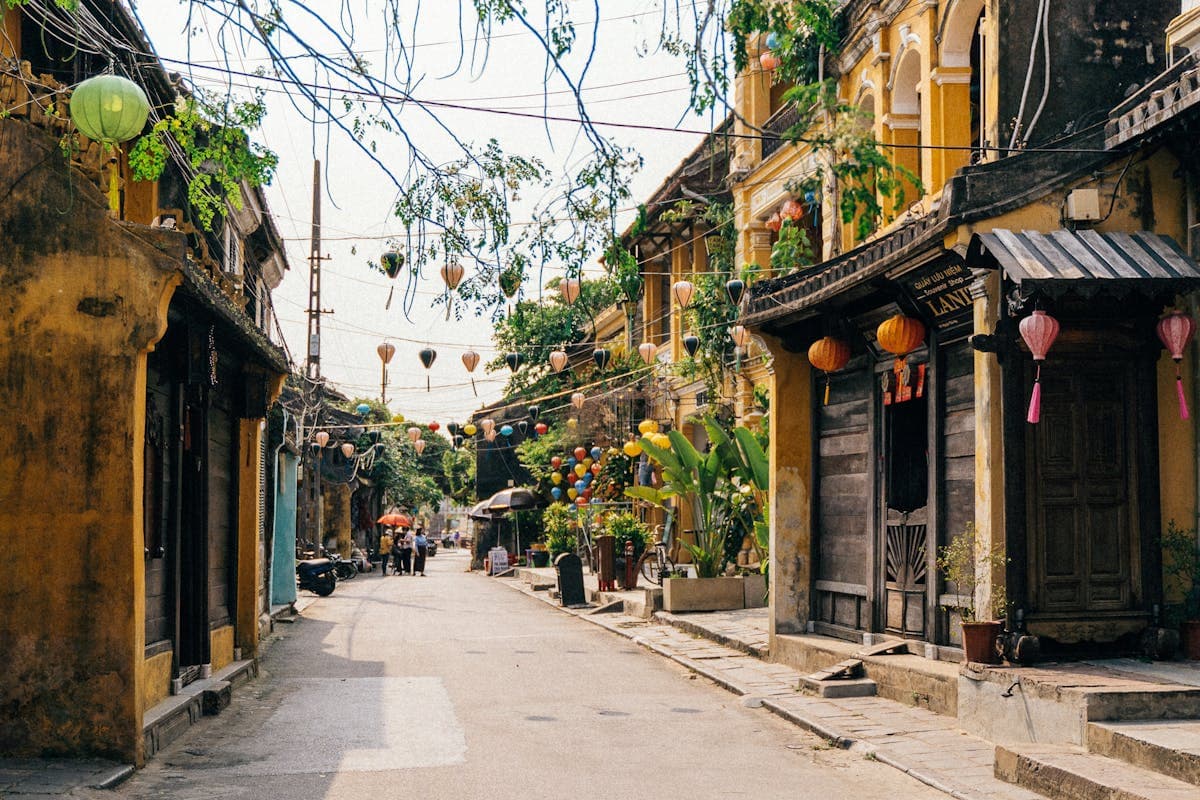
Hội An is a town on Vietnam's central coast with a year-round average of 26°C. Two seasons: dry from February to August, wet from September to January. Over 2,000 mm of rain falls a year, and almost half of it comes down in October and November.
Figures from climate-data.org, weatherspark.com and Vietnam's NCHMF. Always check a live forecast before you travel.
Hoi An weather month by month — the table
30-year averages. Best months: February, March, April. Worst: October and November, when the rain, typhoons and floods arrive.
Weather in Hoi An month by month
colour depth — rainfall per month
October
Rainyrainfall 650 mm · rainy days 20The wettest month: 650 mm, typhoons and flooding. Hotel rates run 30-50% lower.
| Month | Day / night | Sea | Rain (mm) | Verdict |
|---|---|---|---|---|
| January | 25 / 19°C | 23°C | 85 | Tail of the wet season, drying out |
| February | 26 / 20°C | 22°C | 25 | Dry season starts, sea still cool |
| March | 29 / 22°C | 24°C | 20 | The golden month |
| April | 31 / 24°C | 26°C | 35 | Last of the ideal months |
| May | 34 / 25°C | 28°C | 85 | Hot but quiet, beach season opens |
| June | 35 / 26°C | 29°C | 90 | Peak heat, perfect for swimming |
| July | 35 / 26°C | 29°C | 85 | Hottest, hide from midday sun |
| August | 34 / 25°C | 29°C | 115 | Short evening showers |
| September | 32 / 24°C | 28°C | 310 | Rains begin |
| October | 30 / 23°C | 27°C | 650 | Wettest — typhoons, floods |
| November | 28 / 22°C | 25°C | 430 | Still wet, far fewer tourists |
| December | 25 / 20°C | 24°C | 215 | Rain eases, floods end |
The temperature range is narrow: 25°C in winter, 34°C in summer. The sea never drops below 22°C, even in the coolest months.
Dry season in Hoi An: February to August

Seven months of low rainfall, warm sea and air from 27 to 34°C. Only 20-115 mm of rain falls a month, a fraction of the autumn deluge. You can lie on the beach or wander the Old Town without an umbrella.
February, March, April: the best time to go
Days of 27-32°C, sea at 22-26°C. Rain is 20-35 mm and showers are rare. Humidity of 79-82% is bearable even if you struggle with the tropics.
The heat has not set in yet, and the sea warms up closer to April. February water is cool (22°C) and not for long swims, but for cycling and walking the Old Town there is no better window. A bike rents for 30,000-50,000 VND (~$1.20-2) a day — enough to cover the whole centre in a morning.
In March the town comes back to life after the winter rains. The rice fields outside town turn green, and every evening the Old Town lights up with lanterns. The air hits 30°C, but the sea breeze softens the heat.
April is the last warm month before the summer furnace. The sea is 26°C, comfortable for swimming. There are slightly more tourists than in February and March, but nothing like the summer surge.

February is a treat if you are escaping a northern winter. After the frost back home, 27°C and sunshine feel like a gift.
May to August: hot but dry
Days of 33-34°C, sea at 28-29°C. Rain of 85-115 mm falls in short bursts, usually in the evening. This is beach time.
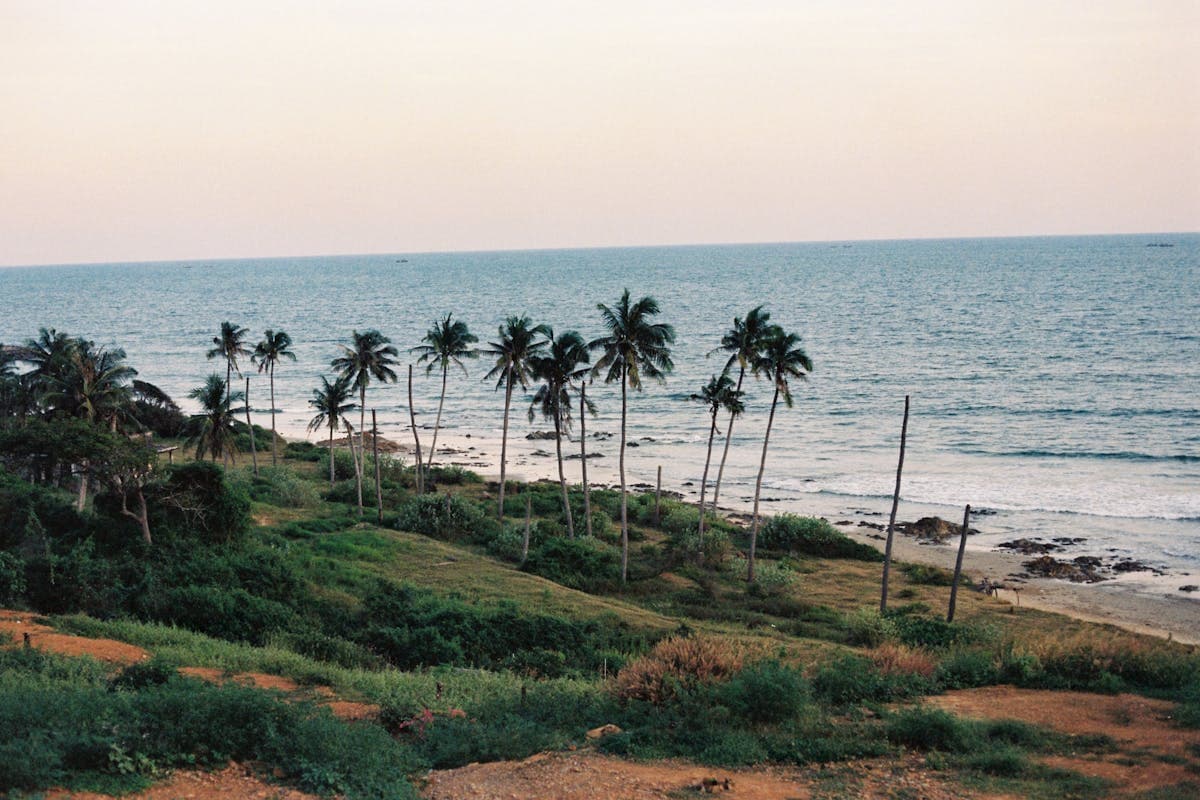
The heat peaks in June and July, occasionally topping 38°C. Humidity is at its yearly low of 76%. The sea is bath-warm — 29°C in June, July and August. Perfect for swimming, tough for walking under the sun.
May is a transition month. Rain is 85 mm, the temperature already 33°C, the sea warmed to 28°C. Crowds are still thin — the summer holidays have not started.
June and July are the hottest. Being outside between 11:00 and 15:00 is physically hard. The trick: walk the Old Town early or after 16:00, and hide in an air-conditioned café at midday — there are plenty on Nguyễn Thái Học and Trần Phú. A restaurant lunch runs 80,000-150,000 VND (~$3.20-6), so waiting out the heat in comfort is cheap.
By August the rain is heavier — up to 115 mm over 11 wet days. But this is not the rainy season yet: showers are short, usually after lunch, sun back within the hour. The evening rains are even pleasant, cooling the town after the day's heat.
Fast Track — no queue at the border
5–10 minutes instead of an hour in the immigration queue
from$11per passenger
Rainy season: September to January

From September to January Hoi An changes. Rainfall jumps from 310 to 650 mm a month, it pours for 17-20 days, and from September to November typhoons are on the cards. Central Vietnam is the main landfall zone for Pacific cyclones.
September to November: typhoons and floods
September is a transition. Rain already hits 310 mm (almost nine times April), but typhoons are still rare. The rain comes in the evening and at night; there is still sun by day. At 31°C it is more comfortable than the summer heat.
The real blow is October: 650 mm of rain over 20 wet days out of 31. It can rain for days without a break. November eases a little — 430 mm — but typhoons are still possible. October and November are the peak.
There are upsides. Tourists thin out three- to fourfold, and hotel prices drop 30-50%. The lantern-lit Old Town is especially photogenic in the rain — wet cobblestones catch the light and turn the place magical.
October reads like a cheap shoulder month online, and it is the exact month the central coast floods. If your heart is set on Hoi An or Da Nang, October is the one month to moveChasing the Chungs, chasingthechungs.com, 2026

December to January: the transition
The rain fades but humidity holds around 84%. The temperature drops to 25°C by day and 19-20°C at night — cold by Vietnamese standards. Locals pull out jackets and marvel at tourists in shorts.
December is still noticeably wet — 215 mm over 18 rainy days. But the character shifts: instead of long downpours you get on-and-off drizzle. Floods have usually ended by now, and the Old Town dries out.
January is the last month of the wet season, already closer to dry: 85 mm of rain over 12 wet days. It is 25°C by day, sea at 23°C. A touch cool for the beach, but ideal for wandering, shopping (Hoi An's tailors turn clothes around in 1-2 days) and grazing on street food.
Winter Hoi An's main draw is the lack of crowds. An Old Town ticket costs 120,000 VND (~$4.80), and in winter you will have the ancient lanes almost to yourself.
Sea temperature month by month

The sea off Hoi An never falls below 22°C, even in winter — you can swim year-round, though 22°C in February feels chilly. The water peaks from June to August at 29°C.
| Month | Sea temp | Swimming comfort |
|---|---|---|
| January | 23°C | Cool but swimmable |
| February | 22°C | Coldest of the year |
| March | 24°C | Fine, sea warming up |
| April | 26°C | Comfortable |
| May | 28°C | Warm |
| June | 29°C | Ideal |
| July | 29°C | Ideal |
| August | 29°C | Ideal |
| September | 28°C | Warm, but waves |
| October | 27°C | Waves, take care |
| November | 25°C | Cool, rough sea |
| December | 24°C | Cool |
The main beaches are An Bàng (about 4 km from the centre) and Cửa Đại (5 km out). An Bàng is the more popular and developed one: loungers, cafés, surf schools. Cửa Đại has been partly washed away by storms in recent years, but you can still swim there. For a full rundown of each beach, see our guide to Hoi An's beaches.
In the wet season the sea gets rough, and the red flags are not for show — the currents are dangerous. From October to December enter the water with care, and if a red flag is up, don't risk it.
The easiest way to reach the beach from central Hoi An is by bicycle (15-20 minutes) or motorbike (rental 100,000-150,000 VND / ~$4-6 a day). Grab works too, but a bike suits the narrow lanes better.





When to visit Hoi An

The ideal months are February, March and April. Dry, warm, and a moderate number of tourists.
| Rating | Months | Who it suits |
|---|---|---|
| Ideal | Feb, Mar, Apr | Everything: beach, sightseeing, photography |
| Good | May, Jun, Jul | Beach days, swimming in a warm sea |
| OK | Aug, Sep | Budget trips, rains starting |
| Risky | Dec, Jan | Cool, possible rain, but no crowds |
| Avoid | Oct, Nov | Downpours, typhoons, floods |
| Goal | Best months | Why |
|---|---|---|
| Beach | May-August | Sea 28-29°C, calm water |
| Sightseeing & Old Town | February-April | Not too hot, walk all day |
| Lantern festival | Year-round (full moon) | In dry months, no umbrella needed |
| Photography | October-November | Wet streets, mist, lantern reflections |
| Budget | September-January | Hotel prices 2-3x lower |
Hoi An's year-round average is about 26°C, with over 2,000 mm of annual rainfall. For comparison, Da Nang gets about 2,200 mm, per Vietnam's Institute for Building Science and Technology.
Hoi An's weather closely tracks neighbouring Da Nang (30 km away) — the climate is all but identical. If you plan to combine the two cities, a Da Nang-Hoi An transfer by GrabCar costs 300,000-400,000 VND (~$12-16) and takes 30-45 minutes.
Flooding in Hoi An: should you worry?
Flooding is part of life in Hoi An, mostly in October and November. The Thu Bồn river overflows and water rises in the Old Town streets. It sounds alarming, but it is not so bad — with the right prep.
It is not the whole town that floods, just specific low-lying spots:
- The Bạch Đằng riverfront — first to go under
- Nguyễn Thái Học and Trần Phú — the heart of the Old Town
- The market and its side lanes
Higher ground (the eastern side of town, the hotel zone closer to the beach) floods less often.
A typical flood lasts 1-3 days. There are 3-4 big ones a season. Usually the water rises half a metre to a metre and people get around by boat; in bad years the water rises higher. Locals are ready: furniture goes upstairs, goods come off the shelves. Within a couple of days the water drains and the town gets back to normal.
We had notice that the flood gates would be opened and water rose slowly over 2-3 daysAlyson Clarke, World Travel Family, 2017
How to prepare:
- Book a hotel away from the riverfront — look near An Bàng or on the eastern side of town
- Get insurance that covers natural disasters
- Watch the forecast and warnings from local authorities
- Keep documents and electronics in waterproof bags
If it is your first trip to Hoi An and you are unsure about dates, skip October and November. For seasoned travellers who don't mind the rain, this window offers a one-of-a-kind experience.
What to pack for Hoi An
What you bring depends on the season. The short version:
| Season | Clothing | Footwear | Must-have |
|---|---|---|---|
| Dry (Feb-Aug) | Shorts, tees, a light dress | Sandals, light trainers | SPF 50, hat, sunglasses |
| Wet (Sep-Jan) | Quick-dry clothes, windbreaker | Waterproof sandals | Rain poncho, waterproof phone case |
| Winter (Dec-Jan) | Cardigan, light sweater, trousers | Closed shoes | A warm layer for the evening (down to 19°C) |
In the dry season the sun is the enemy. SPF 50 is a must: you can burn in Hoi An in 30 minutes. A wide-brimmed hat guards against heatstroke. If you plan to rent a bike (30,000-50,000 VND / ~$1.20-2 a day), bring a cap and a water bottle.
In the wet season forget the umbrella — it is useless in strong wind. A light poncho (sold on every corner for 20,000 VND / ~$0.80) works better. Quick-dry synthetic clothes dry faster than cotton.
In winter (December-January) the temperature drops to 19°C at night. For Vietnamese that is cold; for most visitors, a mild chill. A cardigan or thin sweater is enough. But if you plan to sit at an open-air café by the river in the evening, bring something warmer.
For the Old Town, wear flat shoes — the stone paving is uneven, especially after rain. Heels get stuck in the gaps between the cobbles.
FAQ
February to April is the sweet spot: dry, a comfortable 27-32°C and fewer tourists than peak summer. The sea warms to 26°C by April. For beach days, May-July is better, with the water at 28-29°C. October and November are the worst months for downpours and typhoons.
March is dry season. Air is around 30°C by day and 22°C at night, with just 20 mm of rain — one of the driest months. The sea is 24°C, cool for long swims but fine for a quick dip. Ideal for exploring the Old Town and the countryside around it.
Yes, with caveats. In December-January the sea is 23-24°C — fine if you don't mind cool water, chilly if you do. February is the coldest of the year at 22°C. The sea can be rough after winter storms. Swim where lifeguards are on duty and stay out when a red flag is up.
Yes, typhoons are possible from September to November. Central Vietnam (Hoi An, Da Nang, Hue) is the main landfall zone for Pacific cyclones. The peak is October. Authorities issue warnings ahead of a typhoon. Direct hits don't happen every year, but heavy rain and storm winds are regular.
August is the last month of the dry season, but rain is noticeably heavier: about 115 mm. It is 34°C by day, 25°C at night. The sea is warm at 29°C. Showers are short, usually in the evening. Swimming is comfortable, but the sea can churn by month's end. Fine for the beach, though June and July are better.
Almost identical. Da Nang is 30 km away with the same climate — a difference of 1-2°C and 10-20 mm of rain. The one gap: Hoi An sits lower, close to the river, so floods hit its Old Town harder. Da Nang has no low-lying historic centre, so it stays dry.
Yes, but locally. Floods happen in October-November when the Thu Bồn river overflows. The riverside streets go under: Bạch Đằng, Nguyễn Thái Học, Trần Phú. Water sits for 1-3 days. The risk is lower away from the river: pick a hotel off the riverfront and watch for warnings from the Da Nang authorities.
- Guide
Hoi An Tours 2026: My Son, Cham Islands & Day Trips
Twelve tours from Hoi An in 2026: My Son, Cham Islands, basket boats, Tra Que, Hai Van Pass. Prices in USD, month-by-month season, where to book cheapest.Hoi An Tours 2026: My Son, Cham Islands & Day Trips - Guide
Hoi An Lantern Festival 2026: Dates, Tips & What to See
The Hoi An Full Moon Lantern Festival: 2026 dates, floating lanterns on the river, the best photo spots and how to experience it.Hoi An Lantern Festival 2026: Dates, Tips & What to See - Guide
Hoi An 2026: UNESCO Old Town, Tailoring & Beaches
Hoi An guide: the lantern-lit Old Town, custom tailoring, beaches, food, day trips and where to stay in Vietnam's prettiest heritage town.Hoi An 2026: UNESCO Old Town, Tailoring & Beaches