Kitesurfing & surfing in Mui Ne 2026: schools, spots, prices
Mui Ne gets 230+ windy days a year, a sandy bottom with no reef and water at +26 °C in winter. A kite lesson starts from ~$40/hour, surfing from ~$20/hour. IKO schools with English-speaking instructors, morning surf before the wind picks up, and a season that runs right through the northern winter. Here is everything about watersports in Mui Ne, with 2026 prices and an honest comparison of the schools.
This is the full rundown of kitesurfing, surfing, windsurfing and wing foil in Mũi Né. Spots, schools, prices in VND and US dollars, wind month by month, and a straight comparison of the IKO schools with English-speaking instructors.
Prices current as of July 2026. Rate used: $1 ≈ 26,000 VND.
Why Mui Ne is Asia's kite capital
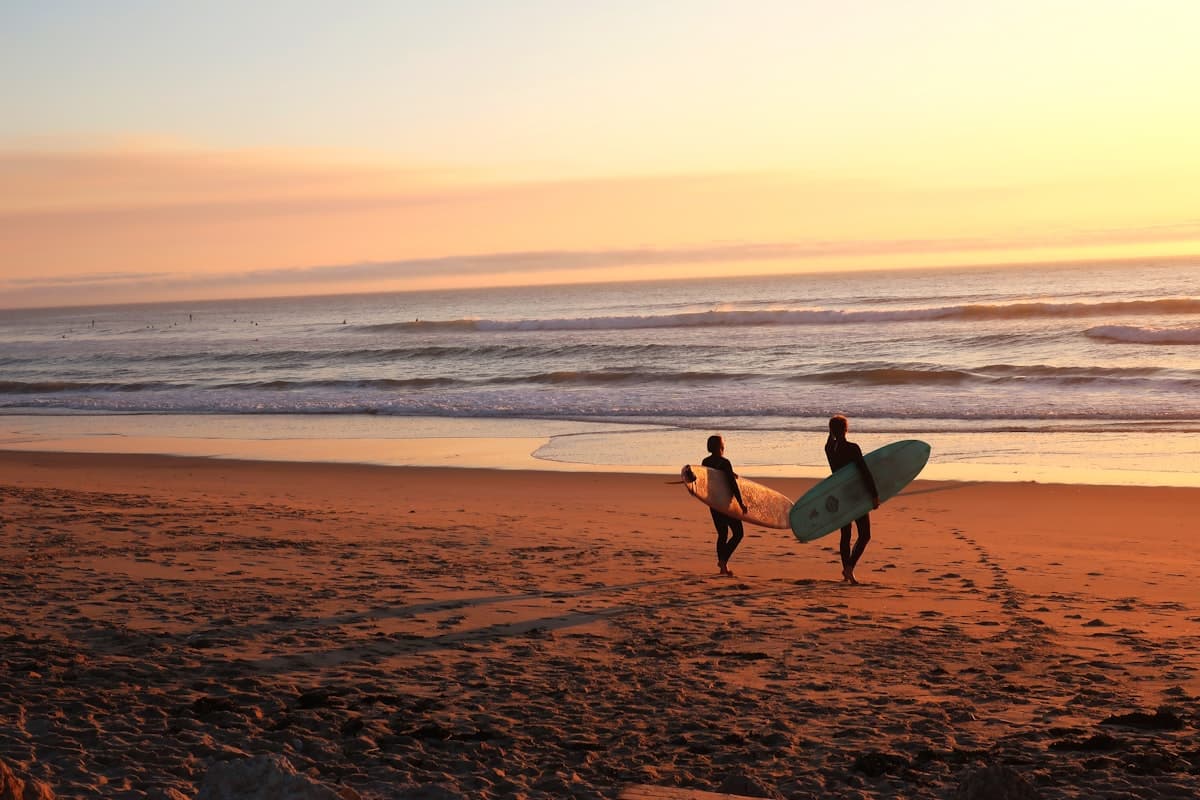
Mũi Né is one of the best-known kite spots in Southeast Asia, alongside Boracay and Bali. From November to March, 15–30 knots blows on almost every day, with gusts up to 40–45 knots on the strongest ones.
For a visiting kiter the draw is simple: warm water, cheap lessons and a long, reliable season while much of the northern hemisphere is freezing.
Why kiters pick Mui Ne:
- Sandy bottom with no reef, coral or rocks. Falling isn't scary
- Water at +25–30 °C year-round. No wetsuit needed
- Wide beaches where kiters, surfers and swimmers don't get in each other's way
- Thermal wind builds through midday, while the mornings are for surfing
- Lessons from ~$40/hour. Cheaper than Egypt, let alone Europe
The resort sits on the south-east coast, next to the town of Phan Thiết. The main street, Nguyễn Đình Chiểu (the Ham Tien strip), runs along the shore: dozens of kite and surf stations, restaurants and hotels. For the wider picture of the resort, see the complete Mui Ne guide.
Mui Ne is not for lounging on a sunbed. There's almost always wind and swell, and few sheltered bays. But if you'd rather stand on a board than lie on a deckchair, it's hard to beat: warm, cheap and stacked with schools.
When to go — wind season month by month
The wind season in Mui Ne runs from November to April. The northeast monsoon brings steady wind and dry weather. Rain is rare: sun and clear skies most days.
High season (November – March)
15–30 knots from morning to evening. December and January are the hardest: gusts to 40–45 knots, waves of 1.5–3 m. In the morning kiters launch on a 12 m², switch to 9 m² by midday, and some drop to 7 m² by evening. The thermal really cranks up.
This is a time for experienced riders. Beginners are more comfortable in November or March, when the wind is softer.
The wind in Mui Ne is thermal. It's 10–15 knots in the morning, 20–25 by noon, and 25–30-plus in the afternoon. Experienced kiters go out later in the day when the wind is stable; beginners do the opposite — morning, while it's gentler.
Shoulder months (October, April)
10–18 knots, softer and more predictable. This is the best time to learn: the conditions forgive mistakes and instructors are less busy. Some schools drop their prices.
Low season (May – September)
Southerly wind of 10–14 knots. Less consistent, but riding is still possible. Many schools stay open, though some instructors leave for the summer. The upside: empty beaches and accommodation up to 40% cheaper.
| Month | Wind (knots) | Waves (m) | Air (°C) | Water (°C) | For whom |
|---|---|---|---|---|---|
| November | 15–25 | 1–2 | 28–32 | 26–28 | All levels |
| December | 18–30+ | 1.5–3 | 27–30 | 25–27 | Experienced |
| January | 18–30+ | 1.5–3 | 26–30 | 25–26 | Experienced |
| February | 18–30 | 1.5–3 | 27–31 | 25–27 | Intermediate + experienced |
| March | 15–25 | 1–2 | 28–33 | 26–28 | All levels, learning |
| April | 10–18 | 0.5–1.5 | 30–35 | 27–29 | Learning |
| May–September | 10–14 | 0–1 | 28–34 | 27–30 | Low season |
Want to combine kiting with time on Vietnam's beaches? November and March are a good compromise: there's wind, but the beach doesn't turn into a sandstorm.
Kitesurfing — spots, conditions, what to expect
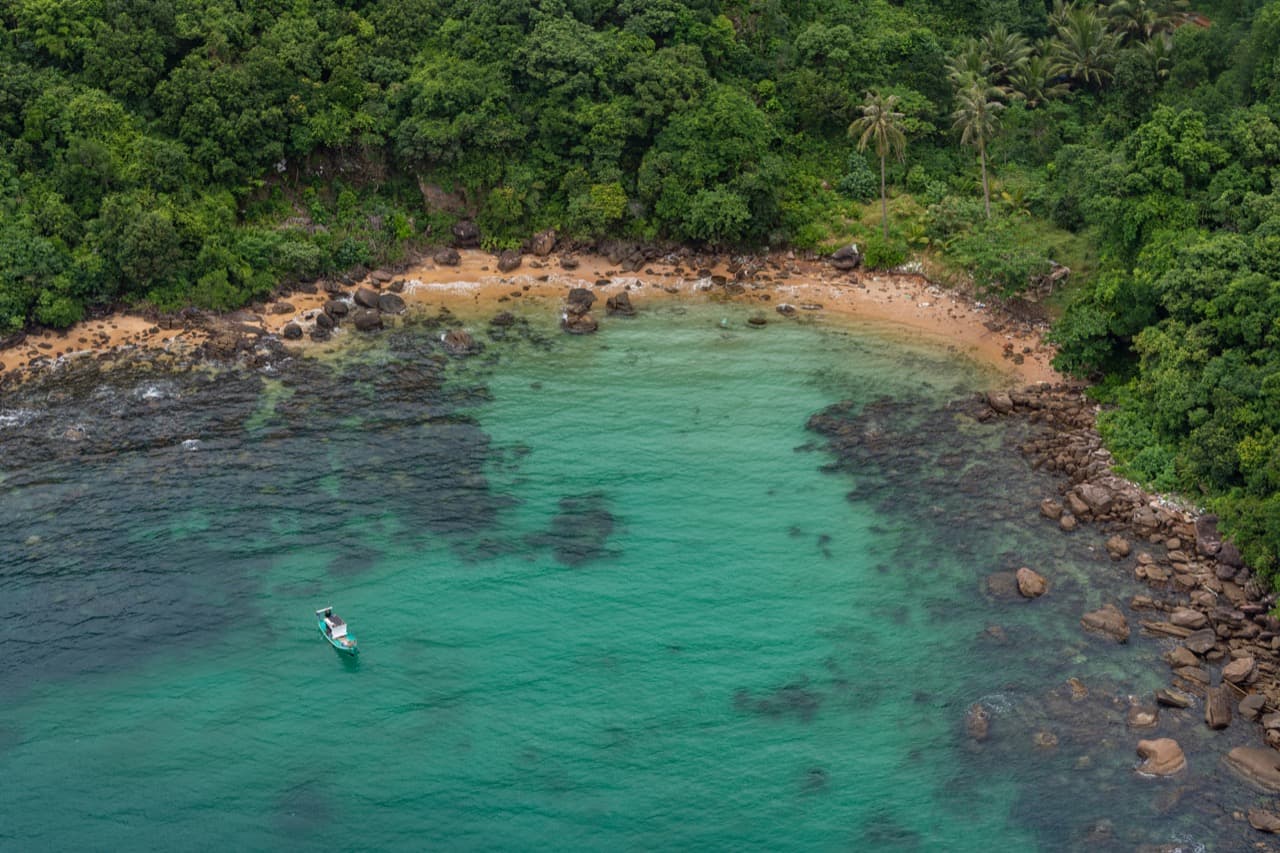
The Mui Ne coast has five main kite spots spread over 10 km of shoreline. It's 10–15 minutes by bike between the far ends. Each one suits a different level and riding style.
- Main kite beach (Ham Tien strip): The main kite zone with the most infrastructure — All levels
- Malibu Beach (Malibu): Kite lessons, shallows — Ideal for beginners
- Suối Nước (Bãi Suối Nước): More waves, fewer people — Intermediate +
- Africa / Ganh Beach (Ganh Beach): Wide beach without the crowds — All levels
- Secret Spot (Flat-water spot): The only flat water in the area — Freestyle, advanced
- C2Sky Kite Center (IKO school): English-speaking IKO school — from €50/hour
- Vietnam Kiteboarding School (IKO school): English-speaking instructors, IKO certification — from ~$50/hour
The best kite spots
| Spot | Conditions | Level | Notes |
|---|---|---|---|
| Malibu Beach | Shallows near shore | Beginners | Ideal for learning, shallow |
| Africa / Ganh Beach | Wide beach, varied bottom | All levels | Plenty of space, no crowds |
| Ham Tien / Main Beach | Main kite zone, many schools | All levels | Most infrastructure |
| Secret Spot | Flat water, sheltered from swell | Freestyle, advanced | The only flat water in the area |
| Suối Nước | More waves, fewer people | Intermediate + | North of the main zone |
Conditions on the water
Morning in Mui Ne belongs to surfers. The wind is still light and the waves are clean. By 10:00–11:00 the thermal kicks in and kiters hit the water. By midday it's 20–25 knots; by evening it can blow harder still.
The bottom is clean sand, no shells or coral. Fall and relaunch the kite in peace. The waves are wind chop: 1–2 m on a normal day, up to 3 m on a strong one. Between the swell there are flat patches, which freestylers love.
Water is +25–30 °C year-round. Boardshorts and a rash guard, nothing more.
Which kite to take
| Rider weight (kg) | Light (12–16 kn) | Medium (16–22 kn) | Strong (22–30 kn) |
|---|---|---|---|
| 55–70 | 12–14 m² | 9–10 m² | 7–8 m² |
| 70–85 | 14 m² | 10–12 m² | 8–9 m² |
| 85–100 | 14–16 m² | 12 m² | 9–10 m² |
Schools provide kites, and the instructor picks the size. If you bring your own, pack at least two: a 9 m² and a 12 m². That covers most days of the Mui Ne high season.
What to bring
Essentials: SPF 50+ sunscreen (you'll burn on the water in an hour), sunglasses with a retainer strap, a long-sleeve rash guard, and water shoes (the sand on the beach can scald). Optional: a lycra top, boardshorts, a GoPro.
| Gear | Notes |
|---|---|
| Kite + bar + lines | Provided by the school |
| Harness | Provided; bring your own if you have one |
| Helmet & impact vest | A must for beginners |
| SPF 50+ sunscreen | Reef-safe, water-resistant |
| Long-sleeve rash guard | UV protection |
| Water shoes | The sand gets hot |
| Sunglasses with strap | So you don't lose them |
Fast Track — no queue at the border
5–10 minutes instead of an hour in the immigration queue
from$11per passenger
Surfing in Mui Ne — morning waves, no reef
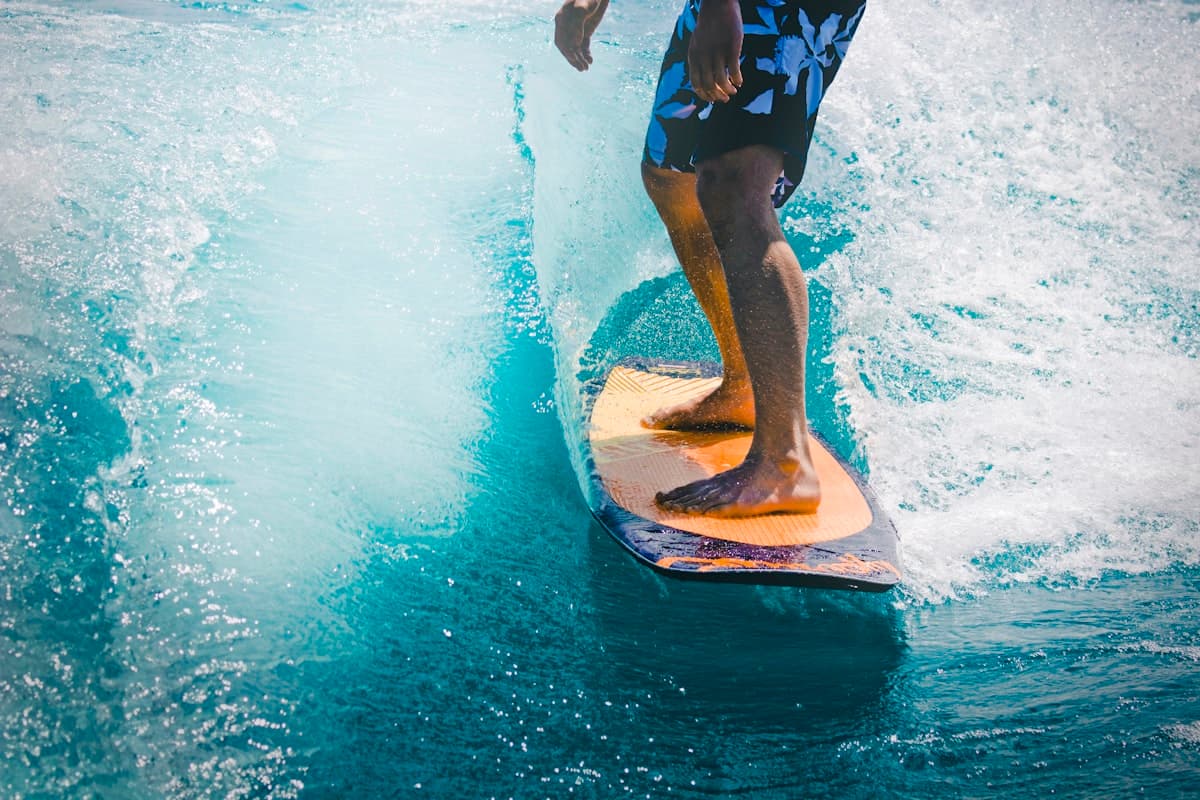
Surfing here is a morning thing. Before the wind picks up (usually by 10:00) the waves are clean and well-shaped, 1–1.5 m. On the biggest days up to 3 m. The bottom is sandy, the entry gentle and the currents moderate. For your first-ever surf, it's a great place.
Surf spots for beginners and beyond
| Spot | Waves | Level | Notes |
|---|---|---|---|
| Little Buddha (Sealinks) | 0.5–1 m, mellow | Beginners | Sheltered bay, no wind |
| Malibu | 0.5–1.5 m | Beginners, learning | Sheltered by a headland, consistent |
| Suối Nước | 1–2.5 m | Intermediate + | Punchier, fewer people |
| Africa / Surf4you | 1–2 m | Intermediate | In the resort zone, convenient |
How surf lessons work
Lessons start early: you're on the water by 6:00–7:00. First a theory session on the beach — how to catch a wave, how to pop up, where to look. Then into the water, with a beach boy always nearby to push you onto the wave and keep you safe.
The price usually covers the board, a rash guard, a helmet (for beginners), the beach boy's help and insurance. A lesson runs 1.5–2 hours — any longer and your arms just give out.
To be honest, surfing in Mui Ne is not Bali. The waves are wind swell, not ocean groundswell. There are no barrels. But for your first steps on a board it's hard to beat: safe, warm and cheap.
Surfing vs kitesurfing — which to choose
| Parameter | Surfing | Kitesurfing |
|---|---|---|
| Time of day | Morning (6:00–10:00) | Afternoon (11:00–17:00) |
| Learning curve | Lower — up in 1–2 lessons | Higher — water start in 3–5 days |
| Lesson cost | $20–30/hour | $40–65/hour |
| Gear cost | Board $300–600 | Full kit $1,500–3,000 |
| Adrenaline | Medium | High |
Many people do both in one trip: surf in the morning, kite in the afternoon. In Mui Ne that works a treat.
Mui Ne vs other spots — is it worth the trip?
| Parameter | Mui Ne | El Gouna | Bali | Tarifa |
|---|---|---|---|---|
| Wind season | November – April | May – October | June – September | June – September |
| Water (°C) | +25–30 | +22–28 | +27–29 | +18–22 |
| Lesson/hour | $40–65 | $60–90 | $50–80 | $80–120 |
| Stay/night | from $15 | from $40 | from $25 | from $60 |
| IKO schools | Several | Many | A few | Many |
Mui Ne's pros: the lowest prices, warm water with no wetsuit, IKO schools with English-speaking instructors, the option to combine surfing and kiting, and a season that lands in winter. Cons: the wind can be too strong for beginners, there's no flat water (except Secret Spot), the surf is weaker than Bali's, and it's a 4–5 hour drive from the nearest airport.
Windsurfing, wing foil, SUP — what else to try
Kitesurfing pulls the biggest crowd in Mui Ne, but it's far from the only game in town — or in the country: canyoning, caving and motorbike loops are in our Vietnam adventure activities guide.
Windsurfing
"Classic" windsurfers get the same steady 15–25 knots. Mui Ne has several windsurf stations along the strip; Surf4you (attached to a hotel, with its own school and restaurants on site) is one of the biggest. The season is the same as for kiting: November–April.
A windsurf lesson starts from ~$50/hour.
Wing foil — the new trend
Wing foil is catching on fast at the Mui Ne spots. C2Sky, Source Kiteboarding and Mana Watersports run intro courses. You stand on a foil board, hold an inflatable wing and use the wind to accelerate — it feels like flying over the water.
An intro course (2 hours) is ~$120. Renting the full kit is ~$55/hour. It helps to have good coordination and ideally some kite or windsurf experience.
SUP and other activities
SUP (stand-up paddle) is $10–20/hour. It works year-round and is great for a calm morning paddle before the wind builds. Many kite schools include SUP in their package.
Advanced kiters should try a downwind kite safari: routes of up to 65 km along the coast with a support boat. C2Sky, Surfpoint and a couple of other schools organise them. From $80–120 a session, boat included.
Which watersport to pick as a beginner
| Sport | Difficulty | Entry price | Season | For whom |
|---|---|---|---|---|
| Surfing | Low | from ~$20/hour | Nov – Mar (morning) | Anyone wanting a go |
| SUP | Minimal | from ~$10/hour | Year-round | Any age, families |
| Kitesurfing | Medium | from ~$40/hour | Nov – Apr | Active, 12+ |
| Windsurfing | Medium | from ~$50/hour | Nov – Apr | Fans of the classic |
| Wing foil | High | from ~$120/2 hours | Nov – Apr | Experienced watermen |
Not sure where to start? SUP just to get on the water. Surfing if you want to stand on a board. Kite if you're after the adrenaline and ready to put a week into learning.


The best kite schools — an honest comparison
Mui Ne has more than a dozen kite schools. Some teach in English, some in other languages. Here are the main English-speaking ones compared on the parameters that matter.
| School | Language | Price/hour | IKO | For whom |
|---|---|---|---|---|
| C2Sky Kite Center | EN | €50–60 | yes | International, all levels |
| Vietnam Kiteboarding School | EN | ~$50 | yes | All levels |
| Jibe's Beach Club | EN | ~$65 | — | All levels |
| Surfpoint | EN | ~$50 | — | Multisport |
| Source Kiteboarding | EN | ~$55 | — | Wing foil & kite |
| KiteFamily | EN | ~$60 | — | Families with kids |
How to choose a school — 5 criteria
- IKO certification. The International Kiteboarding Organization is the global teaching standard. The school issues a certificate accepted on kite spots worldwide. In Mui Ne, C2Sky and Vietnam Kiteboarding School are IKO-affiliated. With Level 3 you can rent gear from Mauritius to the Dominican Republic
- Instructor's language. On a kite, commands have to land instantly — it's a safety issue. Make sure you and your instructor share a fluent common language. "Let go of the bar!" needs a one-second reaction
- Group size. Ideally 1 student per instructor. Two at most. In a group of 3–4 you'll spend a lot of time standing on the beach waiting your turn
- Equipment. Ask about the kites: year, brand, condition. A new Duotone, Core or North is one thing; a patched-up 2019 kite is quite another
- What's included. Gear insurance, water rescue (boat or jet-ski), beach access, compressor, shower, locker. Decent schools include all of this as standard. Confirm before you pay
Common mistakes when picking a school
- Going for the cheapest option. A freelance instructor at $30/hour with no insurance or rescue can cost you dearly
- Not checking the gear. An old kite with worn lines is dangerous. Ask to see the kite before you pay
- Booking the whole course upfront. Better to pay for 1–2 hours, judge the school, then add the rest
- Ignoring the weather. No wind, no lesson. A proper school will reschedule
Surf schools — where a beginner should go
There are fewer surf schools than kite schools here, but enough for your first steps. Lessons are morning-only, before the wind.
| School | Language | Price per lesson | Format | Notes |
|---|---|---|---|---|
| Surf4you | EN | $25–30/hour | Private / group | Windsurf station with a surf school |
| Surfpoint | EN | 3 hours — ~$90 | Group | Surf + kite, combo packages |
| Local surf guides | EN (basic) | ~$20/hour | Private | Board rental discount after the course |
After a course, most schools give a 10–15% discount on rentals. Board rental: ~$7/hour, ~$75/week, ~$180/month.
A word on instructor level: this is not Bali or Sri Lanka. Instructors are usually kiters or windsurfers who can surf and teach beginners. For your first steps on a board, that's plenty.
Prices for lessons and rentals in 2026
On money, Mui Ne beats most spots in the world. Lessons are 1.5–2x cheaper than El Gouna (Egypt) and three times cheaper than Tarifa (Spain). Add accommodation and food and the gap grows wider still.
| Kitesurfing lessons 2026 | Price (~USD) | Price (VND) | What you get |
|---|---|---|---|
| 1 private hour | ~$40–50 | 1,040,000–1,300,000 | English-speaking instructor |
| 3-hour mini-course | ~$120–150 | 3,120,000–3,900,000 | Basics, kite piloting |
| 6-hour beginner course | ~$240–300 | 6,240,000–7,800,000 | Body-drag, first water starts |
| 5 days / 10 hours full IKO | ~$450–600 | 11,700,000–15,600,000 | Water start, riding on your own |
| Surfing lessons 2026 | Price (~USD) | Price (VND) | What you get |
|---|---|---|---|
| 1 private hour | ~$20–30 | 520,000–780,000 | Board, instructor, beach boy |
| 3 hours private | ~$100–110 | 2,600,000–2,860,000 | Full intro course |
| 3 hours group (2–3) | ~$80–90/person | 2,080,000–2,340,000 | Cheaper, less attention |
| Rental 2026 | Price (~USD) | Price (VND) | Notes |
|---|---|---|---|
| Surfboard (1 hour) | ~$7 | ~180,000 | — |
| Surfboard (1 week) | ~$75 | ~1,950,000 | — |
| Surfboard (1 month) | ~$180 | ~4,680,000 | — |
| Kite kit (1 week) | ~$440–480 | 11,440,000–12,480,000 | IKO Level 3+ required |
| Wing foil kit (1 hour) | ~$55 | ~1,430,000 | — |
| Kite beach access (1 day) | ~$3–10 | 78,000–260,000 | Compressor, shower, locker |
Prices current as of July 2026. Exact figures depend on the school and season.
Where you can save
- Group lessons are 20–30% cheaper, but you'll wait your turn
- 6–9 hour packages get a 10–15% discount on the hourly rate
- In October and April some schools drop their prices
- Bring your own kite: storage at a station is $3–10/day with a compressor and shower
- Book accommodation directly through the school or Booking. A guesthouse at $15/night, 200 m from the spot, is entirely realistic
How much to budget for a kite trip
| Expense | Amount (~USD) |
|---|---|
| Transfer airport – Mui Ne and back | ~$50–80 |
| Accommodation (10 nights, mini-hotel) | ~$150–250 |
| Beginner kite course (6 hours) | ~$240–300 |
| Food (10 days) | ~$150–250 |
| Bike rental (10 days) | ~$30–50 |
| Other (SIM, water, extras) | ~$30–50 |
| Total (excl. flights) | ~$650–980 |
Taking the full 5-day course instead of the 6-hour one? Add ~$220–300. Wintering for a month? Accommodation plus food compresses to ~$500–700/month.
Want the bigger picture on the cost of living in Vietnam? There's a separate Vietnam prices guide, but as a rule Mui Ne is one of the cheapest kite bases anywhere.
Getting to Mui Ne and where to stay near the spot

The road from Cam Ranh and Ho Chi Minh City
Mui Ne has no airport of its own. The nearest international one, Cam Ranh (CXR), is ~210 km away — a 4–4.5 hour drive. From Ho Chi Minh City (Tân Sơn Nhất, SGN) it's ~220 km, 4.5–5 hours.
A civil terminal at Phan Thiết airport is under construction, with an opening window of 2027–2028. There are no flights yet; details in our Mui Ne transport guide.
| Option | Time | Price | Notes |
|---|---|---|---|
| Sleeper bus | 5–6 h | ~$8–15 | The Sinh Tourist, Futa Bus |
| Private transfer (minivan) | 4–5 h | ~$25–40/person | Book via hotel or school |
| Taxi / Grab | 4–4.5 h | ~$80–120 | Whole car |
Many kite schools arrange an airport transfer — ask when you book. For the wider region, see the Phan Thiet and Mui Ne guide.
Where a kiter should stay — pick by distance to the spot
All the spots line one road, Nguyễn Đình Chiểu (the Ham Tien strip). Choose your stay by distance to "your" spot. A kite bag weighs 15–20 kg, and you won't want to lug it more than 200 m on foot.
Beachfront (100 m to the water):
- 3–5-star resorts — from ~$30–80/night. Malibu Resort, Seahorse, Pandanus — with direct access to the kite beach
- Mini-hotels — from ~$15–25/night. Simple, but close
For long-stayers (a month or more):
- Apartment/studio rental — ~$300–500/month
- A room in a guesthouse — ~$200–300/month
How to read the sand width in front of a specific hotel, and which resorts sit right on the kite spots, is covered in the Mui Ne hotels guide. For where to actually swim between sessions, see the Mui Ne beaches guide.
Food and infrastructure
The Ham Tien strip has dozens of cafés and restaurants. Breakfast with phở runs 50,000–70,000 VND (~$2–3). A seafood lunch is 150,000–300,000 VND (~$6–12). Many schools have their own bars and chill-out zones. Cards work at most resorts and larger restaurants; keep cash for street stalls and bike rental.
For the wider region, see the Mui Ne guide. Want more than just the spots? The white sand dunes, the Fairy Stream and the Kê Gà lighthouse are all within reach — the Mui Ne sand dunes guide covers the classic day trip. To get around on two wheels you'll need a licence and a helmet; Grab bikes are the easy alternative.
Safety — 7 rules for your first sessions

Kitesurfing is still an extreme sport. Serious injuries happen worldwide every year. Mui Ne forgives many mistakes thanks to its sandy bottom and warm water, but not all of them. Seven rules:
- Only with an instructor. Your first 6–10 hours must be with a professional. Self-teaching from YouTube endangers you and everyone around you
- Helmet and impact vest, no debate. A fall at 30 km/h onto water hits like concrete
- Don't ride offshore without experience. If the wind blows off the beach (offshore), it drags you out to sea. In Mui Ne the wind is usually cross-shore, but check every time
- Check your gear. Lines, chicken loop, safety system — all of it, before every session
- Know the self-rescue zones. The school must explain where to swim if the kite goes down and won't relaunch
- A certificate to rent. Without IKO Level 3 or the equivalent you won't be given gear. And rightly so
- Insurance. Standard travel insurance does NOT cover extreme sports. You need a specialist policy, from ~$2–5/day
What schools usually don't warn you about: on peak days (December–January, strong wind) the popular spots get crowded. Thirty to forty kites on one stretch, and you have to manoeuvre and follow the right-of-way rules. For a beginner, that adds stress.
Medical care and injuries
The nearest hospital is in Phan Thiết, 15 minutes by car. The Ham Tien strip has pharmacies and small clinics. Typical kiter injuries: sunburn (number one), line abrasions, sprains. Serious injuries while learning at a school are rare.
Make sure your insurance policy covers kitesurfing, surfing and watersports. Standard travel insurance does NOT.
FAQ — common questions
High season is November to March. 15–30 knots on almost every day. December and January are the hardest (up to 40+ knots) and suit experienced riders. Beginners are better off in November or March, when the wind is softer. April is the last windy month and works well for learning.
A full IKO beginner course with an English-speaking instructor (5 days / 10 hours) is ~$450–600 (about 11,000,000–15,000,000 VND). In that time most people manage a water start. A 3-hour mini-course from ~$120 gives you kite-control basics, but you probably won't make it onto the water in just 3 hours.
For a first surf, Mui Ne is a good fit. Sandy bottom with no reef, a gentle entry, water at +25–30 °C. Morning waves of 1–1.5 m are just right for learning. A lesson from ~$20/hour. But surfing here is morning-only: after 10:00 the wind picks up and blows out the waves.
No. The water is +25–30 °C year-round, a big plus over European and Egyptian spots. A rash guard for sun protection is enough. Many people ride in just boardshorts.
In 3 days (6–9 hours) you'll learn to fly the kite and do a basic body-drag. In 5 days (10 hours) most people manage a water start and ride in a straight line. Confident riding with tacking takes 2–3 weeks of practice. Plan on a 5-day course minimum.
Yes. C2Sky Kite Center and Vietnam Kiteboarding School are IKO-affiliated and teach in English; Jibe's Beach Club and Surfpoint also run English lessons. An IKO certificate is recognised on kite spots worldwide, and Level 3 lets you rent gear on your own.
Yes, many experienced kiters fly with their own. Airlines charge $30–100 for a kite bag. On the spot, station storage is $3–10/day: compressor, locker, shower and launch help included.
SUP and surfing are fine from age 8–10. Kitesurfing usually starts at 12–14, depending on weight (minimum 40–45 kg). KiteFamily specialises in kids. Month-wise, November or March beats the windy December–January.
- Guide
Tours from Mui Ne: Dunes, Fairy Stream & Day Trips
Tours and day trips from Mui Ne: the sunrise dune jeep, Fairy Stream and Cham towers, Ta Cu and Ke Ga lighthouse, Da Lat, Ho Chi Minh City and Cambodia, with 2026 prices.Tours from Mui Ne: Dunes, Fairy Stream & Day Trips - Guide
Mui Ne Reviews 2026: Is It Worth a Trip?
Honest Mui Ne reviews: what travellers love and criticise, who it suits (kiters, families) and whether it's worth it.Mui Ne Reviews 2026: Is It Worth a Trip? - Guide
Mui Ne 2026: Kitesurfing, Sand Dunes & Beaches
Mui Ne guide: the kitesurfing capital of Southeast Asia, red and white sand dunes, beaches, resorts, food and getting there from Saigon.Mui Ne 2026: Kitesurfing, Sand Dunes & Beaches