Backpacking Vietnam: $30 a day in 2026
Thirty dollars a day is the range the average backpacker lives on in Vietnam in 2026 — roughly 780,000 VND, or about $900 for a month on the ground without your flight. What it covers, what it doesn't, and how to stay inside it.

That thirty dollars buys a dorm bed, three street-food meals, a couple of Grab-bike hops and one activity — a museum, say, or a short tour. This is not about suffering or roughing it. It is the normal script: a 10-bed hostel in Hanoi's Old Quarter, a bowl of phở on plastic stools, an overnight Phuong Trang sleeper bus between towns, a glass of bia hơi for about $0.50 with dinner.
This is how seasoned Southeast Asia travellers move, and Vietnam is one of the friendliest countries on the continent for your wallet. This guide is about the lifestyle and the real monthly budget — not flights in and out, but what it actually costs to live and roam here.
- What's inside $30 a day, and what isn't
- A real backpacker day at $18, hour by hour
- Where to sleep for $4–12 a night
- How much food costs and where to eat it
- Getting around: sleepers, trains, Grab
- Free things to do across nine cities
- A 30-day north-to-south route for $900
- Visa by passport and a SIM for $6
- 10 tricks that save $5 a day
- The traps to avoid on the trail
What "$30 a day" means in Vietnam
The backpacker level in Vietnam for 2026 is a range of $25–35 a day per person, not counting your international flight. Inside $30 you fit: a dorm bed at $6, three street-food meals at $7, inter-city transport spread across the day ($4), one activity ($2–4), water-coffee-SIM ($2) and a $5 buffer for surprises. That is roughly 750,000 VND.
| Tier | $/day | $/month | What's included |
|---|---|---|---|
| Ultra-budget | $20–25 | $600–750 | 6-bed dorm, no cafés, shared local bike |
| Backpacker $30 | $25–35 | $750–1,050 | 8–10-bed dorm, street food, sleeper buses, 1 activity/day |
| Mid-range | $50–80 | $1,500–2,400 | 2★ single room, cafés, limousine minivans, tours |
| Comfort | $120+ | $3,600+ | 3–4★ hotel, restaurants, private car with driver |
What is NOT inside $30
The important thing is to set aside a buffer for the big one-off costs that blow up your daily count:
- Your international flight — return fares to Vietnam vary a lot by origin; from Europe, budget roughly $600–900 return in 2026.
- Ha Giang Loop (3–4 days) — self-drive from $50–60 (bike rental, fuel, homestays), or a guided easy-rider tour (they ride, you sit behind) at $130–170.
- Ha Long Bay cruise (one night on the boat) — $50–80 per person.
- Diving in Nha Trang or on Phu Quoc — $40–60 for two dives.
- A visa, if your passport needs one — e-visa $25 (single entry).
- Domestic flights — Vietjet/Bamboo from $24, though a night bus is usually the better backpacker call.
So $30 a day is about living in Vietnam, not arriving and leaving. For a month, a backpacker realistically plans $750 for daily life plus another $300–500 for 2–3 "big" activities. Add your flight on top and you have the full picture: a month here for $1,050–1,250 on the ground, flight extra.
A real backpacker day at $18 — hour by hour
So $30 doesn't stay an abstraction, here is a typical day in Hanoi in high season. No stunts, no heroics — a normal pace with walks, street food and one museum. Prices in two currencies: VND (what you actually hand over) and USD (what you keep your ledger in).
| Time | What | VND | USD |
|---|---|---|---|
| 07:00 | Old Quarter dorm (10-bed) | 156,000 | $6.00 |
| 08:00 | Bánh mì + trà đá | 31,000 | $1.20 |
| 10:00 | Walk around Hoan Kiem Lake | free | — |
| 11:00 | Coffee, cà phê sữa đá | 26,000 | $1.00 |
| 13:00 | Phở bò at a local spot | 52,000 | $2.00 |
| 15:00 | Museum of Ethnology (entry) | 42,000 | $1.60 |
| 18:00 | Cơm bình dân — rice buffet | 47,000 | $1.80 |
| 19:30 | Bia hơi × 3 glasses | 36,000 | $1.40 |
| 20:30 | Free walking tour from the hostel | free | — |
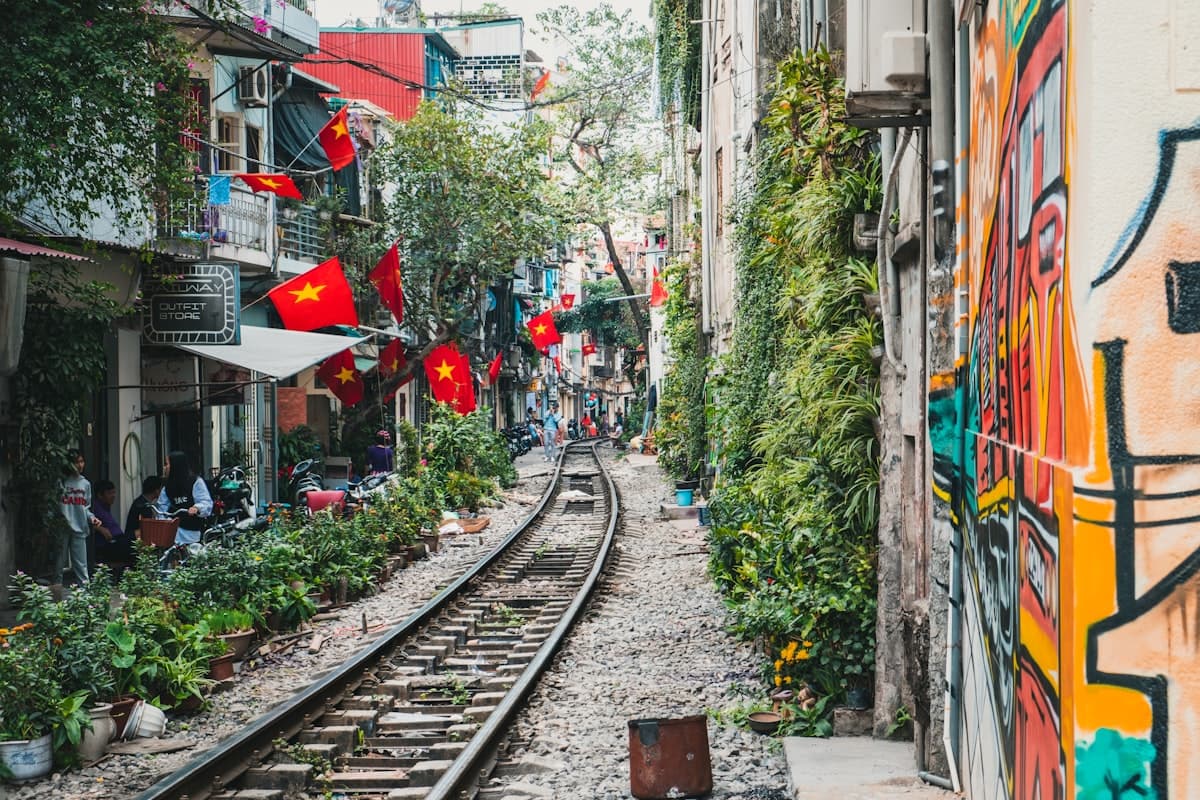
| 22:00 | Train Street (free) | — | — |
| Transport | 3 Grab-bike rides | 65,000 | $2.50 |
| Water | 2 × 1.5 L bottles | 13,000 | $0.50 |
| Total | — | 468,000 | $18.00 |
This is a "light" day — no inter-city move and no big activity. Once a sleeper bus ($10) or a Ha Long cruise ($60, one-off) lands in your schedule, the budget smooths out across the week: one day at $18, the next at $45, averaging around $30.
A cheap day is not a thin day. On that timeline: two full meals, coffee, a museum, three glasses of beer, a walk down the cult Train Street and a free walking tour. In pricey Norway the same $18 buys you about three hours.
The rule: beds and food are fixed lines, easy to hold in range. Transport and activities are the variables — that is where you have room to play. No inter-city move that day? Then there is budget for Nha Trang mud baths (from $10) or a Hoi An Ancient Town ticket ($5).


Hostels — where to sleep for $4–12 a night
Backpacker digs in Vietnam mean a hostel dorm at $4–12 ($7 on average), with air-con, free wi-fi and a simple breakfast. The lowest prices are in Hanoi and Nha Trang; the highest are on Phu Quoc. In big cities hostels grow in clusters — roughly a hundred per square kilometre in Hanoi's Old Quarter, about fifty around Pham Ngu Lao in Ho Chi Minh City.
Dorm prices by city
| City | Area | Dorm/night | Example hostels |
|---|---|---|---|
| Hanoi | Old Quarter | $4–10 (95–230k VND) | Hanoi Backpackers, Central Backpackers, Nexy |
| Ho Chi Minh City | Pham Ngu Lao / D1 | $5–12 (115–275k VND) | The Hideout, Town House 50, Common Room |
| Da Nang | My Khe / centre | $7–15 (160–340k VND) | Funtastic Beach, Memory Hostel |
| Hoi An | Ancient Town | $8–17 (180–390k VND) | Sunflower, Tribee Ksu, Vietnam Backpacker |
| Nha Trang | Trần Phú | $5–9 (115–205k VND) | Mojzo Inn, iHome |
| Da Lat | Centre | $5–10 (115–230k VND) | Mr Peace Backpackers, Wolfpack |
| Hue | Centre | $5–9 (115–205k VND) | Why Not Hostel |
| Sapa | Centre | $5–12 (115–275k VND) | Go Sapa, Mountain View |
| Phu Quoc | Long Beach | $9–18 (205–410k VND) | 9 Station, Sea Sense |
Hanoi and Ho Chi Minh City have the densest backpacker infrastructure: cheap dorms, free walking tours straight out of the lobby, organised pub crawls, laundry and help with bus tickets. Hoi An and Da Nang cost more thanks to the Korean tourist flow, but the beds are cleaner and the scene busier.
Named hostels worth the Hostelworld rating
If you'd rather go by proven spots:
- Hanoi Backpackers Hostel & Rooftop Bar — rated 9.0+, free beer daily 19:00–20:00, free pub crawls, free walking tours
- The One Hostel & Rooftop Pool (Hanoi) — 9.66/10, rooftop pool, calmer vibe
- Central Backpackers Old Quarter (Hanoi) — for the party crowd: rooftop bar, a constant crew
- NEXY Hostel (Hanoi) — designer interior, quieter neighbours, on the edge of the Old Quarter
- The Hideout (Ho Chi Minh City) — dorms from $7.50, small community, a weekly hostel party
- Mr Peace Backpackers (Da Lat) — the hub of the easy-rider scene; riders leave here for Ho Chi Minh City and Nha Trang over the mountains
The trick: Hostelworld dorms often cost less than on Booking
The same dorm on Booking.com and Hostelworld almost always differs in price. Booking takes a 15–18% commission from the hostel, and the hostel prices it in. Hostelworld takes 12–14% and caters to a backpacker crowd, so dorm prices there are the real ones. The gap is $2–4 a bed.
A second move: in Hanoi and Ho Chi Minh City you can walk in without a booking. Only in high season (December–January, and around Tet) and in Sapa in winter do you need to book ahead. The rest of the year hostels sit 30–40% empty.
The long-stay alternative
Planning a month or two in one city? A dorm stops being the smart pick. The alternative: renting a guesthouse room or a studio for four weeks through expat Facebook groups or Airbnb.
- Guesthouse room in Nha Trang / Da Nang / Da Lat: $200–350 a month, all in (air-con, wi-fi, linen)
- Studio in Ho Chi Minh City (off-centre) or Hanoi: $300–500 a month
- A shared room with other backpackers: $150–250 a month
That is slow travel rather than classic backpacking. But the per-night price drops to $5–8 all in, and you gain a kitchen — which cuts your food budget in half.
Fast Track — no queue at the border
5–10 minutes instead of an hour in the immigration queue
from$11per passenger
Food — $6–10 a day on street food
Street food is the centre of any backpacker budget in Vietnam. Three meals a day cost $5–9, before coffee and beer. There is nothing to compare it to back home: for the same money you might get one canteen lunch. Here it buys a full beef phở, a bowl of buffet rice and a breakfast built around a fresh baguette whose crackly crust flakes onto your lap.
| Dish | VND | USD |
|---|---|---|
| Bánh mì (pork baguette) | 20–50k | $0.80–2.00 |
| Phở bò (beef noodle soup) | 35–80k | $1.50–3.25 |
| Cơm tấm (broken rice) | 50–80k | $2.00–3.25 |
| Bún chả (Hanoi) | 40–80k | $1.60–3.25 |
| Bánh xèo (rice-flour crepe) | 50–80k | $2.00–3.25 |
| Cơm bình dân (rice buffet) | 35–50k | $1.50–2.00 |
| Bún bò Huế (Hue) | 40–60k | $1.60–2.50 |
| Cà phê sữa đá (iced coffee) | 20–40k | $0.80–1.60 |
| Bia hơi (draught beer) | 10–15k | $0.40–0.60 |
| Trà đá (iced tea) | 3–5k | $0.10–0.20 |
| Fresh smoothie sinh tố | 25–40k | $1.00–1.60 |
| Mango / mangosteen / durian, per kg | 20–60k | $0.80–2.40 |

Breakfast, lunch, dinner: three meals for $5
Breakfast $1.20. A bánh mì from a street vendor — baguette, pâté, ham, pickled carrot, cilantro, chilli. Crackly crust, 25 cm long. French engineering that changes your morning. Wash it down with iced green tea for 20 cents.
Lunch $2. A phở bò at any glass-fronted spot where locals sit on plastic stools. The broth simmers from 3 a.m., the beef is thin and tender, the rice noodles soft. A plate of greens comes with it — cilantro, basil, bean sprouts, lime. You season the bowl yourself.
Dinner $1.80. Cơm bình dân — "common rice," the people's buffet. A display of 8–12 dishes: fried pork, braised chicken in sauce, herb omelette, tofu in tomato, steamed veg, ginger duck. Point at three, they pile them over a mound of rice, tea and soup free. The price is fixed at 35–50k.
Add coffee and beer for another $1.30. That is $6.30 for a full day of eating — the backpacker floor. A realistic average is $7 once you factor in fruit and one "fancier" café meal.
Where NOT to eat so you don't overpay
In tourist quarters prices run 1.5–2× higher for the same quality. Specifically:
- Bui Vien in Ho Chi Minh City — a backpacker street, but on the strip itself a restaurant with an English menu charges 120k VND for a phở that costs 50k two blocks away
- Hoi An Ancient Town — inside, it's all tourist cafés; walk 200 metres toward the bus station and the same dishes are 40% cheaper
- The Da Nang seafront — a sea-view café lunch from $8 versus $2 in a side lane
- Train Street in Hanoi — coffee there is $3, and $1 in a café across the road
The rule is simple: the more English on the menu, the higher the prices. If the people around you are locals in work shirts with plastic cups of tea, you're in the right place. If there's mood lighting, air-con and plastic palms, that's a different price bracket.
Bia hơi — the cheapest beer in the world
Bia hơi means "fresh beer" — an unpasteurised local lager poured from 50-litre kegs. It has a 24-hour shelf life after brewing, so every spot's beer is its own. A 0.5-litre glass in Hanoi is 10–15k VND ($0.40–0.60). Nowhere on earth brews it cheaper.
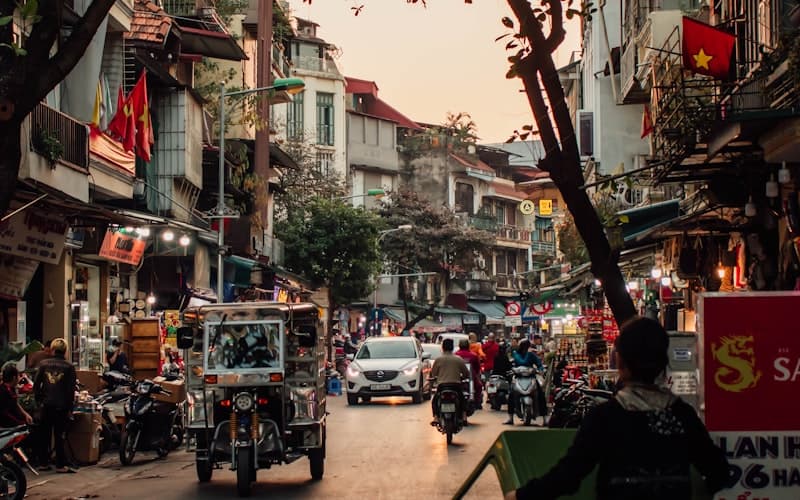
The main bia hơi spot in Hanoi is the Tạ Hiện × Lương Ngọc Quyến crossroads in the Old Quarter. Low plastic stools right on the pavement, a plate of đậu phộng (fried peanuts) for 10k, cashews, sometimes snails. From 18:00 this is the main backpacker camp in the country. Travellers and locals mix, and by 22:00 the beer runs out at every stall at once.
In Ho Chi Minh City the bia hơi culture is weaker — bottled Saigon Special or 333 at $1 is more the thing. If you specifically want bia hơi in the south, ask for bia hơi địa phương around Pham Ngu Lao.

Transport — sleeper buses and trains for $5–20
Vietnam is long and thin: 1,700 kilometres from Hanoi to Ho Chi Minh City. Backpackers close the gaps two ways — an overnight sleeper bus with reclining berths ($7–20 a leg) or the Reunification Express train with berths ($20–40). A plane is the last resort: budget carriers Vietjet/Bamboo from $24, but you lose a night on the road and the flight itself.
The sleeper bus — the backbone of backpacker logistics
| Route | VND | USD | Time | Type |
|---|---|---|---|---|
| HCMC → Mui Ne | 180–250k | $7.50–10 | 5 h | sleeper |
| HCMC → Da Lat | 280–400k | $11–16 | 7 h | sleeper |
| HCMC → Nha Trang | 295–450k | $12–18 | 9–11 h | night sleeper |
| Nha Trang → Hoi An | 350–500k | $14–20 | 11–12 h | night sleeper |
| Hoi An → Hue | 100–150k | $4–6 | 3.5 h | minivan |
| Hue → Hanoi | 350–500k | $14–20 | 13 h | night sleeper |
| Hanoi → Sapa | 250–400k | $10–16 | 5–6 h | sleeper / VIP cabin |
| HCMC → Can Tho | 165k | $6.80 | 4 h | comfort |
Phuong Trang (Futa) is officially the largest passenger carrier south of Da Nang. Own fleet, own terminals, departures every 1–2 hours on popular routes. Inside: reclining berths in three rows, air-con, a bottle of water and a blanket, one toilet stop mid-route. Scams are basically impossible — it's a legitimate corporation with fixed fares.
Sinh Tourist (the old Sinh Cafe) runs an open-ticket "hop-on / hop-off" system: buy a Ho Chi Minh City → Hanoi route for $50, get off in any city, catch the next bus a day or a week later. The ticket is valid 30 days. A 1990s backpacker classic, still alive.
The upside of sleepers. They save a hostel night ($5–10) — you lie down in Nha Trang at 19:00 and wake in Hoi An at 6:00, the day yours. No daylight lost. The berths are genuinely comfy up to about 175 cm; taller and your knees hit the seat in front.
The downside. The air-con is often blasting (bring a long-sleeve), drivers brake hard on the switchbacks (especially Nha Trang to Da Lat), and parking up at the bus station at 5 a.m. is normal practice (they won't wake you until 7).
Tickets: futabus.vn (for Phuong Trang), baolau.com (aggregator), 12go.asia (all Southeast Asia routes). Or at any hostel reception for +5%.
The Reunification Express — take the Hai Van Pass leg
| Route | Class | VND | USD | Time |
|---|---|---|---|---|
| Hanoi → Hue | hard sleeper | 600–900k | $24–36 | 13 h |
| Hue → Da Nang | soft seat | 95–150k | $4–6 | 2.5 h |
| Da Nang → Nha Trang | hard sleeper | 500–700k | $20–28 | 9 h |
| Nha Trang → HCMC | hard sleeper | 500–800k | $20–32 | 8 h |
The train is $5–10 more than the bus on the same route, but gives you a smooth ride without switchbacks, a proper toilet and a window with a view. One leg you should do by train specifically: Hue → Da Nang over the Hai Van Pass. For 2.5 hours the train crawls along a mountain pass above the sea, ocean in frame the whole way. Lonely Planet called it one of the world's great rail journeys, and that's fair.
Tickets: dsvn.vn (Vietnam Railways' official site) or baolau.com. Hard sleeper is 6 berths to a compartment, soft sleeper is 4 (about $10 more). Hard is fine for a backpacker — you'll sleep the night one way or another.
City transport — a Grab bike for $0.60
Inside cities the base is Grab, the local Uber. Download the app, add a card (or pay the driver cash), hail a bike or a car. Prices:
| Option | Price |
|---|---|
| Grab bike (short, 1–3 km) | 15–30k VND ($0.60–1.20) |
| Grab car (short) | 40–80k VND ($1.60–3.20) |
| Motorbike rental / day | 100–200k VND ($4–8) |
| Bicycle / day (often free from the hostel) | 30–50k VND ($1.20–2) |
| City bus | 7–10k VND ($0.30–0.40) |
A Grab bike is the fastest and cheapest option for one. The driver hands you a helmet (a bit grubby), rides the pavements and the wrong side of the road, but drops you at the door in five minutes. For two, take a Grab car — a touch dearer, but no backpack on your knees.
City buses are the cheapest of all (7k VND), but the routes are opaque and the stops are in Vietnamese. Really only worth it for the Ho Chi Minh City airport run (bus 109, 20k VND).
Renting a motorbike — $4–8/day and some risk
A 110–125cc scooter rents for 100–200k VND a day, or $50–80 a month. Petrol is 25k VND a litre, 15–30k a day. A scooter buys freedom: you can loop Phu Quoc, ride the Hai Van Pass between Hue and Da Nang, take the rice-field roads around Hoi An.
Even so, plenty of backpackers ride anyway — at their own risk. If you plan to ride much, sort out a 1968-Convention IDP at home before you go; it's cheap and it's what decides things at a checkpoint or after a crash. On the Ha Giang switchbacks a bike is unavoidable. If you're only in the cities, Grab covers you.
Things to do — mostly free, or nearly
About 90% of what people come to Vietnam for is either free or under $5. Beaches, promenades, markets, temples, parks, walking trails — all free. Museums are $1–4. Nature parks and caves are $5–25. The genuinely pricey stuff is Ha Long cruises ($50+), a guided Ha Giang Loop ($130–170) and diving ($40+).
Free must-dos across nine cities
Hanoi: Hoan Kiem Lake with its island pagoda, a walk through the Old Quarter's 36 craft streets, Train Street (cafés right on the tracks; ask a café for the day's train times), the Ho Chi Minh Mausoleum (free from outside; the interior is closed for restoration from 4 September to 2 November 2026 and reopens on 3 November), Lenin Park, the weekend night market on Hang Dao.
Ho Chi Minh City: the Central Post Office (free to walk in and shoot), the Notre-Dame Cathedral from outside (closed for restoration, no end date announced), Bui Vien Walking Street at night (beer and dancing), Nguyen Hue Walking Street, 23/9 Park, Ben Thanh Market (free to browse).
Hoi An: the Ancient Town from the outside (entry to the sites is 120k VND, $5 for 5 museums, but strolling the streets is free), An Bang Beach (4 km from the centre, clean and wide), a bike ride to Cam Thanh through rice fields and coconut groves (the bike is often free from the hostel), the evening lanterns in the old town.
Da Nang: the 9 km My Khe Beach (free entry, lounger 30–50k), the Dragon Bridge with its fire-and-water show Sat–Sun at 21:00, the Han riverfront, Han Market (free to browse).
Nha Trang: the 7 km city beach along Tran Phu (free, lounger 50k), Bãi Dương park, Long Son Pagoda with its hilltop white Buddha, Po Nagar from outside (inside is 30k).
Da Lat: Xuan Huong Lake in the city centre, the night market Chợ Đêm Đà Lạt, the Crazy House from outside (60k VND to enter), Linh Phuoc Pagoda with its glass mosaics (free), the coffee plantations around town (open access).
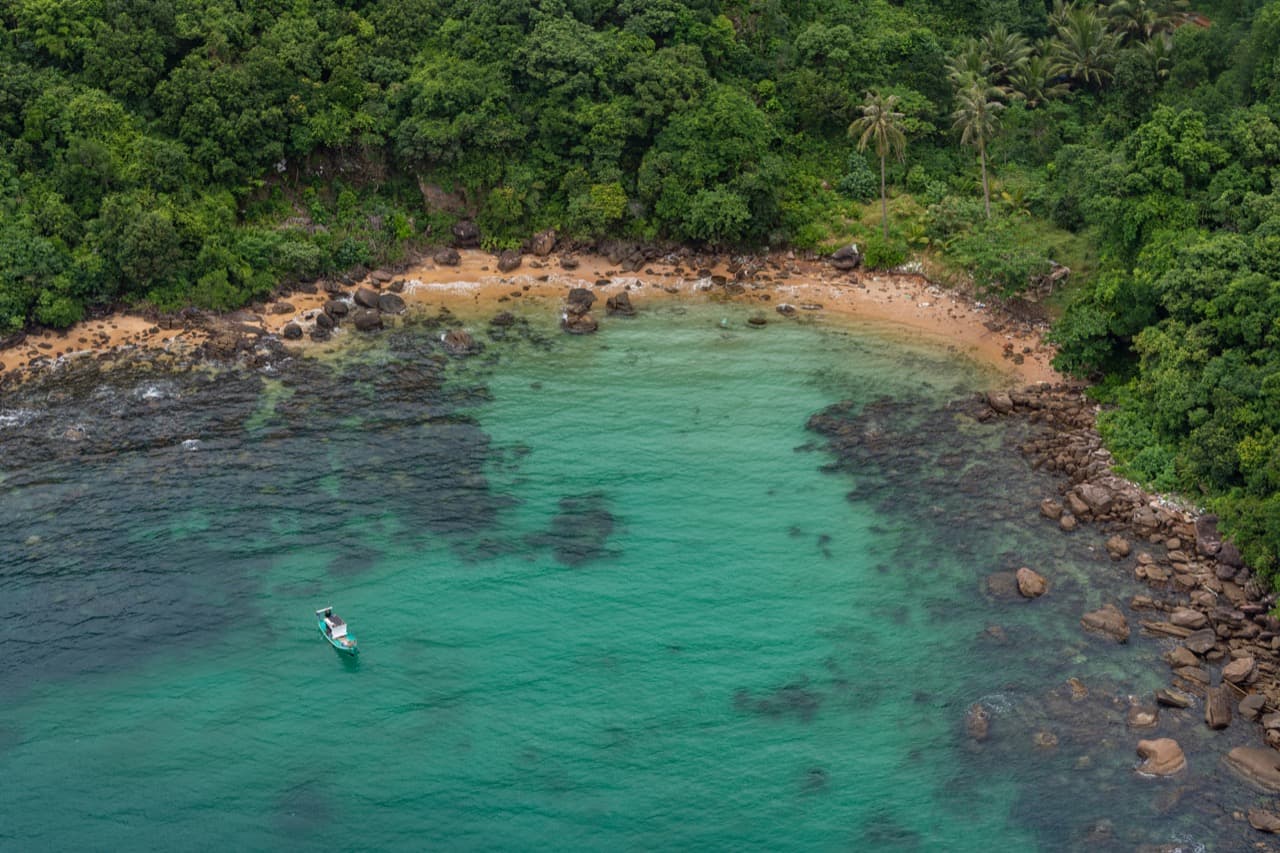
Phu Quoc: Long Beach (15 km of free sand), Sao Beach (white sand, free), Dinh Cau night market, the west coast by bike.
Sapa: the trek to Cat Cat village (70k VND entry), Lao Chai–Ta Van through the rice terraces (150k VND with a local guide), the Ham Rong viewpoint (60k).
Hue: a walk along the Perfume River, the Imperial City from outside (inside is 200k VND, $8), Thien Mu Pagoda (free), the Tự Đức tomb out of town ($4 separately).

Free walking tours from the hostels
Most backpacker hostels in Hanoi, Hue and Ho Chi Minh City run free walking tours — once a day, at 9:00 or 15:00, 2–3 hours. Student volunteers lead them (a university English-practice programme); a $2–5 tip at the end is the norm. They show you not just the tourist points but local coffee spots, markets and side streets you'd never find.
Pub crawls are the same, only with beer: $5–8 for a tour of 4–5 bars, a glass and a shot included at each. Central Backpackers (Hanoi), Vietnam Backpacker Hostels (Ho Chi Minh City) and Funtastic Beach (Da Nang) are the three main chains running crawls 5–6 nights a week.
When it's worth spending $50–80
A few activities justify a one-off hit to the budget:
- An overnight Ha Long Bay cruise — $50–80 per person (8 hours on the water, a night on the boat, kayaks, dinner, breakfast). Better than the $20 day tour that turns into a queue and a rush.
- The Ha Giang Loop, 3–4 days — self-drive from $50–60 (bike, fuel, homestays), or a guided easy-rider tour at $130–170 (they ride, you're the passenger). Vietnam's most spectacular road, switchbacks through mountains and ethnic-minority villages.
- Phong Nha — Paradise Cave plus Dark Cave — $25–30 for a day with transfer.
- Diving in Nha Trang or on Phu Quoc — $40–60 for two dives with an instructor. A PADI Open Water certificate is $250–300.
A month usually includes 2–3 such "big" activities, adding $200–400 on top of the $750 base. That puts the month at $950–1,150.

A 30-day route: north to south for $900
The classic month-long backpacker route through Vietnam is the Banana Pancake Trail in its Vietnamese stretch. From Hanoi to Ho Chi Minh City via Sapa, Ha Giang, Phong Nha, Hue, Hoi An, Da Nang, Nha Trang, Da Lat and Mui Ne, finishing in Ho Chi Minh City. Thirty days is a realistic pace with buffers for rest and laundry.
The phrase "Banana Pancake Trail" dates to the 1980s. It named the unofficial Southeast Asia circuit where hostels started serving banana pancakes for breakfast — an attempt to cater to Western travellers. Today the trail takes in Thailand, Laos, Vietnam and Cambodia; Vietnam is the longest part.
Breakdown by segment
| Segment | Days | Transport | Beds | Activities |
|---|---|---|---|---|
| Hanoi + Ha Long | 4 | $0 (arrival) | $24 | $80 (1-night cruise) |
| Sapa | 3 | $15 (sleeper) | $30 | $30 (trekking) |
| Ha Giang Loop | 4 | $20 | $35 | $60 (self-drive) |
| Phong Nha | 2 | $20 (sleeper) | $20 | $25 (Paradise Cave) |
| Hue | 2 | $15 (train) | $20 | $10 (Imperial City) |
| Hoi An | 3 | $10 (train Hue→Da Nang over Hai Van) | $30 | $10 (Old Town) |
| Da Nang | 1 | $5 (minivan) | $10 | $0 (beach) |
| Nha Trang | 3 | $20 (sleeper) | $24 | $25 (mud baths) |
| Da Lat | 2 | $14 (sleeper) | $18 | $10 (Crazy House) |
| Mui Ne | 2 | $11 (sleeper) | $20 | $10 (jeep tour) |
| HCMC + Mekong | 4 | $10 (sleeper) | $36 | $30 (Mekong + Cu Chi) |
| Total 30 days | 30 | $140 | $267 | $290 |
| + Food $7/day × 30 | — | — | — | $210 |
| BUDGET | — | — | — | $907 |
With a buffer, round it to $1,000 for 30 days on the ground, flight extra — a month of living in Vietnam including inter-city transport and four "big" activities (a Ha Long cruise, the Ha Giang Loop, mud baths and the Mekong).
Shorter alternatives
If a month feels like a lot, there are ready-made compressed versions:
- 14 days — Hanoi + Hue + Hoi An + Nha Trang + Da Lat + Ho Chi Minh City (backpacker budget $400–500)
- 21 days — add Sapa, Phong Nha and Mui Ne (backpacker $700+)
- 7 days, south — Ho Chi Minh City + Mekong + Mui Ne ($210–300)
- 7 days, north — Hanoi + Ha Long + Sapa ($305–465)
Most backpackers do the full 30 days (even a first "trial" of Southeast Asia tends to end in an extension). A month is the length where you don't want to leave, and a border run to reset your stay becomes a realistic option.
Direction: start north or south?
The backpacker community has argued this for years. The case for north to south: you land in a cool-season Hanoi (December–February) and head for warm Ho Chi Minh City — the weather improves as you go, and by the end you're acclimatised to the heat. The catch: Sapa can be fogged in for 3–5 days straight in winter.
The case for south to north: you start with the cheap Mekong and Mui Ne, saving pricier Hoi An and Sapa for the end when you know the country. The catch: you finish in a cooler Hanoi.
Either way, the best months to start are February–March or October–November (shoulder season, dry everywhere).
Visa and SIM — set up in 5 minutes
Whether you need a visa comes down to your passport. Many Western European travellers (UK, France, Germany, Italy, Spain and more) get a visa-free stay, though the length varies by nationality. US, Canadian and Australian passport holders — and most others — take an e-visa instead. Either way, sorting it out is quick and mostly online.
What you need to enter
| Requirement | Detail |
|---|---|
| Passport | Valid 6+ months from your entry date |
| Visa or visa-free | By nationality — visa-free, or an e-visa from evisa.gov.vn |
| Onward ticket | A booking out of Vietnam or on to a third country |
| Entry declaration | Filled online before arrival, gives you a QR code |
| Funds | No formal rule, but they may ask |
You fill in the online entry declaration in about 10 minutes and get a QR code by email. At the border you show your passport plus the QR (or a printout). Immigration queues run 20–40 minutes in Hanoi and Ho Chi Minh City, 10–20 in Da Nang and Cam Ranh.
If you need longer than your visa-free stay
By law a visa-free stay can only be extended through an inviting sponsor, and that's at the immigration department's discretion, not a right. The reliable options:
- An e-visa for up to 90 days — arrange it in advance, $25 single entry / $50 multiple. Via evisa.gov.vn; allow roughly 3 working days and check the current timing on the portal.
- A border run — cross into Cambodia (Phnom Penh by bus from Ho Chi Minh City for $20) or Laos (via Phong Nha to Savannakhet) and re-enter. There's no guarantee: re-entry is up to the border officer. Plenty of backpackers pair it with a trip to Angkor Wat.
A Viettel SIM for $6
For data and calls, get a local SIM or an eSIM.
| Carrier | Plan | VND | USD |
|---|---|---|---|
| Viettel | Tourist 30 days, 3 GB/day | 150–200k | $6–8 |
| Mobifone | Tourist 30 days, 60 GB + minutes | 180–250k | $7.20–10 |
| Vinaphone | Tourist 15 days, 1 GB/day | 199k | $8 |
Travellers report Viettel has the best coverage in Sapa, Ha Giang, Phong Nha and the Mekong Delta. For the backpacker route, Viettel is the usual pick. Buy at an official store (blue Viettel Store sign), not from the airport touts, whose rates run 2–3× higher. You'll need your passport to register.
If you'd rather not swap a physical SIM, get an eSIM through Airalo or Holafly: $10–15 for 5 GB over 7 days, activated by QR code before you fly. Handy for short trips, not worth it for a full month.
10 tricks that save $5 a day
A backpacker budget holds not through harsh scrimping but through small moves that add up to $150–200 over a month. Ten of them, community-tested:
- Hostelworld beats Booking by $2–4 a bed. Same dorm. Booking takes 15–18% commission, Hostelworld 12–14%. The difference goes to you.
- Cơm bình dân — a $1.80 rice buffet. A plain canteen that isn't on TripAdvisor. Point at three dishes, they pile them over rice. Tea and soup free. There's one in every neighbourhood.
- Trà đá free with your order. At local cafés the iced green tea comes unasked and unbilled. Tourist spots charge 15k. Ask trà đá miễn phí? and they'll pour it.
- An overnight sleeper = minus $8 on a room. The Ho Chi Minh City → Nha Trang leg (11 hours) by bus means sleeping on the road. No hostel needed, and the day's budget swings into the black.
- Grab, not the taxi rank, at stations and airports. At the rank they'll quote you 500k VND; a Grab from the app is 150k. That's 70% off. Open the app, walk 100 metres from the rank and order there.
- Bia hơi vs "Beer." In a bar with an English menu, a Saigon Special is 50k VND ($2). Round the corner on a plastic stool, bia hơi is 12k ($0.50). Minus 75% for the same buzz.
- Free walking tour from the hostel. 2–3 hours with a local student, a voluntary $2–5 tip at the end. A paid tour of the same points is $15–25. Minus $20.
- Bargaining on souvenirs: first price −50%. At Ben Thanh, Han and Dong Xuan markets the opening price for a tourist is double. Haggle hard: name half, walk away, come back. If they let it go at 60%, that's the deal.
- ATM limits and fees. Most ATMs dispense 2–3 million VND ($80–120) at a time with a 50–80k VND ($2–3) fee. Withdraw the max so you're not paying the fee daily.
- Change money at a bank, not a gold shop. Since 9 February 2026, exchanging money outside licensed outlets is punishable (Decree 340/2025/NĐ-CP). A gold shop may change currency only with a State Bank exchange-agent certificate, and a tourist has no way to check it. The bank rate is 2–3% worse but safer and legal.
Total: 10 moves = $5–7 saved a day = $150–210 over a month. On a $900–1,000 budget that's 20% — or an extra Ha Giang Loop in the plan.

Mistakes to avoid on the trail
Vietnam is a safe country for independent travellers. But there are a few traps that catch every second newcomer.
The jasmine souvenir bottle — don't take it home
At markets and tourist spots you'll see pretty glass bottles with a sprig of jasmine or orchid inside, filled with liquid. Price 50–100k VND ($2–4). Inside is cheap rice spirit with colouring. You can't drink it (it tastes awful) and taking it home is a gamble (check your home country's customs rules on plants and alcohol). A useless souvenir. If you want jasmine to bring back, buy dried flowers at a tea shop for $1.
Airport taxi touts in Hanoi — scammers
At Noi Bai (Hanoi) and Tan Son Nhat (Ho Chi Minh City) airports, taxi drivers swarm you at the exit offering "meter." In the car the meter is "broken" or runs 5× the real rate. A ride into the centre is 700k VND ($28) instead of 250k ($10) on Grab.
The rule: ignore every taxi offer at the terminal exit. Open Grab, walk to the car park (P2 at Tan Son Nhat, P3 at Noi Bai) and order from there. Your Grab driver picks you up at the car park, not the taxi rank.
The "free" Mekong boat with a mandatory purchase
On the small canals of the Mekong Delta they move you from a motorboat to a narrow rowing boat and promise it's "free." At the end of the run you're steered into a coconut-caramel or honey workshop and offered a "local product" for 100–200k. This isn't a scam, it's a normal part of the business — budget $5–10 for it in advance. If you don't want to buy, just say no; nobody pushes.
Beach theft in Nha Trang and Mui Ne
The beaches of Nha Trang and Mui Ne are known for theft. Local pickpockets work in a group: one distracts you with conversation, the other lifts a backpack off your lounger in 30 seconds. Never leave a bag on the sand while you swim. Leave it at the hostel, or with a friend on the beach.
Heat and dehydration
In the dry-hot season (March–May), temperatures in Ho Chi Minh City hit 40°C in the sun. Backpackers underestimate day one and get heatstroke. The rules:
- 3 litres of water a day, minimum
- SPF 50, reapplied every 2 hours
- A brimmed hat, no exceptions
- During peak heat (12:00–15:00) sit in an air-conditioned café
- Powdered electrolytes (Pocari Sweat, $0.50 a bottle) after a long walk
Cards and cash
Sort out payments before you land — a mix works best:
- Cash USD ($300–500 in small notes — $1, $5, $20, $50 — for tips and exchange)
- A Visa or Mastercard for hotels, trains and ATMs (contactless is widely accepted in cities)
- Some cash VND from an ATM on arrival for street stalls, which are cash-only
Since 9 February 2026, exchanging money outside licensed outlets is punishable (Decree 340/2025/NĐ-CP). Gold shops and "hotel exchange" desks are legal only with a State Bank exchange-agent certificate, which a tourist has no way to check, and there's a counterfeit risk on top.
FAQ
Yes. $30 a day (about 780,000 VND) is the standard backpacker level in Vietnam for 2026. It covers a $6 dorm bed, three street-food meals at $7, inter-city transport spread across the day ($4), one activity ($2–4) and water-coffee-SIM ($2). A realistic range is $25–35. The north and far south run cheaper; Hoi An and Da Nang run higher.
$750–1,100 for a month on the ground, flight excluded. A solid baseline is $900 for a 30-day north-to-south route with a Ha Long cruise, the Ha Giang Loop, Nha Trang mud baths and a Mekong day trip. Your international flight is separate and depends on where you fly from.
Hanoi (Old Quarter, $4–10), Nha Trang ($5–9), Hue ($5–9), Da Lat ($5–10). The priciest are Phu Quoc ($9–18) and Hoi An ($8–17). Named spots: Hanoi Backpackers Hostel & Rooftop Bar, The Hideout (Ho Chi Minh City), Mojzo Inn (Nha Trang), Mr Peace Backpackers (Da Lat). Book on Hostelworld — the same dorm is often $2–4 cheaper than on Booking.
It depends on your passport. Many Western Europeans get a visa-free stay (the length varies by nationality); US, Canadian, Australian and most other travellers take an e-visa (up to 90 days) from evisa.gov.vn. Either way you also fill in the online entry declaration and carry a passport valid 6+ months.
$6–10 a day for three street-food meals plus coffee and beer. Specifically: a bánh mì breakfast with tea $1.20, a phở lunch $2, a cơm bình dân dinner $1.80, coffee $1, beer $0.50. Tourist zones (Bui Vien, Hoi An Ancient Town, the Da Nang seafront) add 30%; stalls near universities and markets knock off 30%.
February–March or October–November — shoulder months, dry in the north and south (the centre gets its heaviest rain and typhoons in October–November). December–January is high season (prices up 15–20%, book ahead). May–September is the rainy season in the north and south (the centre is dry and hot), but prices drop about 20% and showers are usually short. Sapa is best March–May and September–November; the Ha Giang Loop is best April–October, and cold for the bike in December–February.
The bottom line
Backpacking Vietnam on $30 a day is no feat and no hardship — it's the normal way of life in a country where lunch is $2, a dorm is $6 and a sleeper bus across half the country is $15. A month on the ground plus the big activities lands at $900–1,100. Your flight adds more, and depends entirely on where you start from.
The real difference from a package tour is how densely you touch the country. In a month you see Sapa with fog over the terraces, sleep in a Hmong homestay, ride the Ha Giang Loop past views so good you forget to film them. You sleep in a sleeper-bus berth. You eat phở in Hanoi at five in the morning. You haggle at Ben Thanh. You drink bia hơi on a plastic stool in the Old Quarter. A 5★ hotel gives you none of that — it's a different format.
For a first taste of Southeast Asia, 30 days is a lot of impressions but not much time to really settle in. After a month, one of two things usually happens: you leave and come back six months later for a couple more, or you do a border run and stay on. It works more often than you'd think.
What to pack: a 40–55-litre backpack (carry-on size, so you skip checked bags), one long-sleeve (bus air-con), sandals and trainers, a hat, SPF 50, DEET repellent for Ha Giang and the Mekong, a 10,000 mAh power bank, an eSIM or an unlocked phone for a local SIM, USD in small notes for day one, and two bank cards from different banks (Visa + Mastercard).
Book your first hostel for two nights on Hostelworld about two weeks out. After that, play it by ear. The road will tell you where to linger and where to roll straight through.
- Guide
Ninh Binh Tours from Hanoi 2026: Day Trips, Costs, Routes
Every way to do Ninh Binh from Hanoi in 2026: group, small-group and private tour prices, one-day and two-day routes, trains, buses and the DIY maths.Ninh Binh Tours from Hanoi 2026: Day Trips, Costs, Routes - Guide
Vung Tau Weekend Trip from Ho Chi Minh City: 2-Day Plan
Vung Tau weekend trip from Ho Chi Minh City: ferry times and fares, a 2-day hour-by-hour itinerary, where to stay, what to eat and budgets from $42.Vung Tau Weekend Trip from Ho Chi Minh City: 2-Day Plan - Guide
Hoi An Workshops: Tailoring, Lanterns & Cooking Classes
Hands-on Hoi An: get clothes tailored, make a lantern, take a cooking class or try pottery at Thanh Ha — prices, where to go and what to pick.Hoi An Workshops: Tailoring, Lanterns & Cooking Classes