
Vietnamese massage: types, prices and what to pick
Vietnam's Tam Quat massage tradition is its own system with its own techniques and philosophy. From acupressure in Hanoi salons to seaweed wraps on the Nha Trang coast, here is how it differs from Thai massage, what each type costs, where to go, and how to tip without getting it wrong.
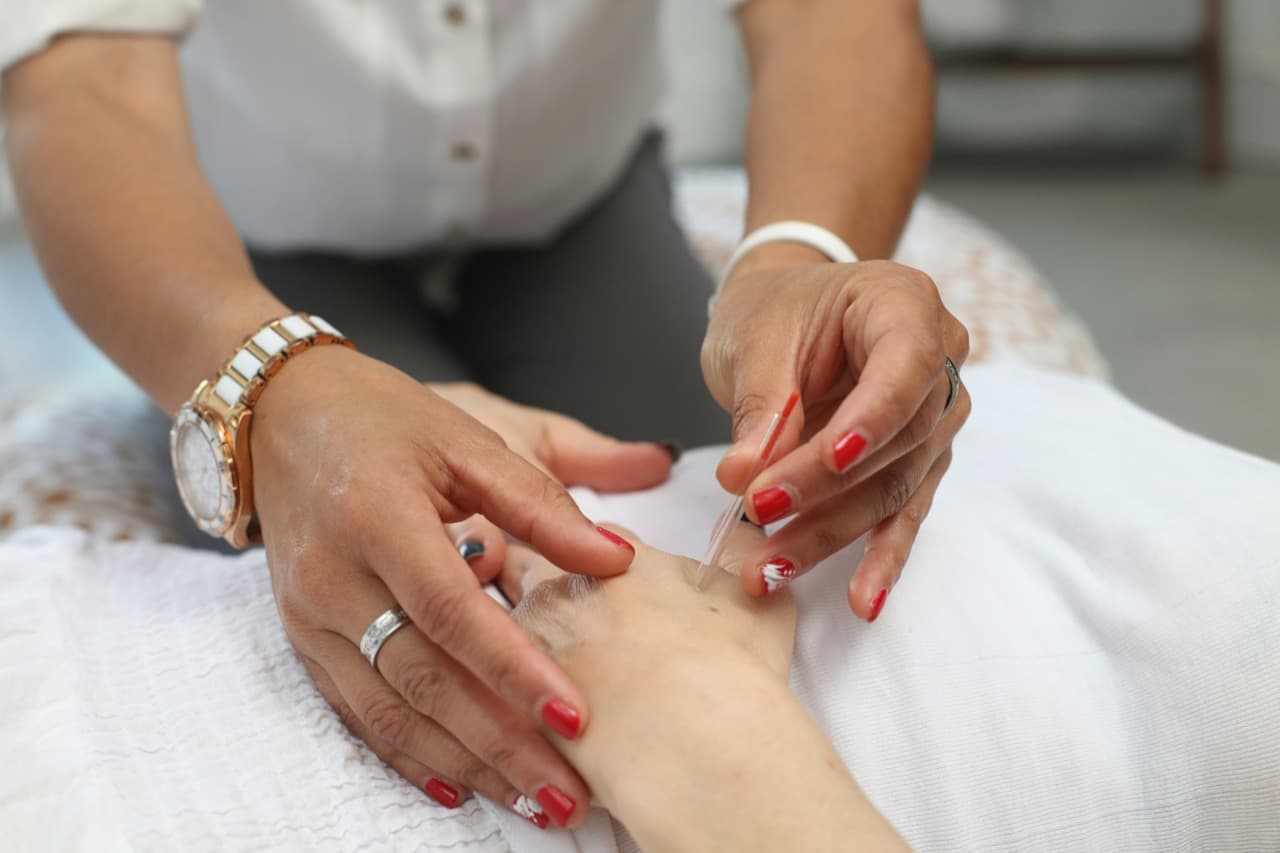
Vietnamese massage is not just a cheap stand-in for Thai. It is its own system: its own techniques, its own philosophy, four regional schools that feel noticeably different from each other.
From acupressure in Hanoi salons to seaweed wraps on the Nha Trang coast, there is a treatment here for every mood and budget. Prices in VND with rough dollar conversions, real salons and honest advice, all in one guide.
Information current as of July 2026. Rough conversion: ~26,000 VND = $1.
What Vietnamese massage is, and how it differs from Thai
Vietnamese massage, Tẩm quất (Tam Quat), is a deep pressure-point technique worked along the body's acupuncture meridians, with roots in Chinese medicine. The WHO runs a dedicated programme on traditional medicine. The basics reached Vietnam from China, and over the centuries the technique absorbed local traditions and grew into its own system.
The therapist works with fingers, palms, knuckles and elbows, alternating slow presses with brisk rubbing. The feeling is deep, but without sharp pain.
The main difference from Thai: no acrobatic stretches. Nobody is going to fold you into a lotus pose.
Vietnamese massage vs Thai: the key differences
| Feature | Vietnamese massage | Thai massage |
|---|---|---|
| Basis | Chinese medicine, acupressure | Ayurveda + yoga |
| Stretching | Minimal or none | Intense, yoga-style |
| Intensity | Medium, flowing | High, can be painful |
| Oils | Usually used (aroma, coconut) | Usually dry, no oil |
| Clothing | Usually undressed, under a sheet | Loose spa pyjamas |
| Price (60 min) | 200,000–350,000 VND (~$8–13) | 300,000–500,000 VND (~$12–19) |
By traveller consensus, Vietnamese massage suits anyone after relaxation without the drama, while Thai is for people who like to hear a good crack. One more distinction: Vietnamese massage often folds in acupressure — pressure on specific active points. The therapist may hold a single point for five to ten seconds, giving that sense of a muscle finally letting go.
Fast Track — no queue at the border
5–10 minutes instead of an hour in the immigration queue
from$11per passenger
Regional styles of Vietnamese massage

The technique shifts noticeably from region to region.
In the north (Hanoi), Chinese influence runs strong. Movements are slow, acupressure is precise, and therapists adapt to the season — warming moves in winter, cooling ones in summer.
In central Vietnam (Hue, Da Nang) the massage absorbed the palace medicine of the Nguyen dynasty. Local herbs are common, and "imperial massage" is not a marketing gimmick but a real treatment with several centuries behind it.
The south (Ho Chi Minh City) lives at a different tempo, and the massage is quicker and more dynamic. Plenty of reflexology, and therapists are generous with coconut and fruit oils.
On the coast (Nha Trang, Mui Ne), sea elements come into play: warm sand, shells, seaweed wraps. In Nha Trang the seaweed massage has become a signature treatment at many salons.
You'll genuinely feel the difference if you try a massage in Hanoi and then in Nha Trang. In the capital it is measured, almost meditative. On the coast it is livelier, aimed at unwinding after the beach or during a stay at one of the spa-inclusive wellness resorts.
Types and techniques of Vietnamese massage
Vietnam offers at least eight types of massage, each with its own philosophy and technique. Here are the main ones, from classic to exotic.
Classic Tam Quat (Tẩm quất)
The base treatment and calling card of the Vietnamese school. The therapist works the whole body: back, legs, arms, neck. Deep presses along the energy channels alternate with smooth rubbing and natural oils. A session runs 60 to 90 minutes. It suits anyone trying Vietnamese massage for the first time. You can dial the pressure up or down — just say mạnh hơn (harder) or nhẹ hơn (softer).
Hot herbal compresses (chườm sả / Chuom Sa)
The most distinctly Vietnamese treatment, hard to find outside the country. Cotton pouches are stuffed with medicinal herbs — lemongrass, turmeric, ginger, camphor — and steamed to temperature. The therapist presses the hot pouches into the muscles, alternating with hands-on work. The heat sinks into deep tissue while the herbal oils absorb through the skin. The scent is like someone brewed a tea from every spice in Asia at once. Especially good after a long flight or a day on a rented motorbike.
Hot-stone massage
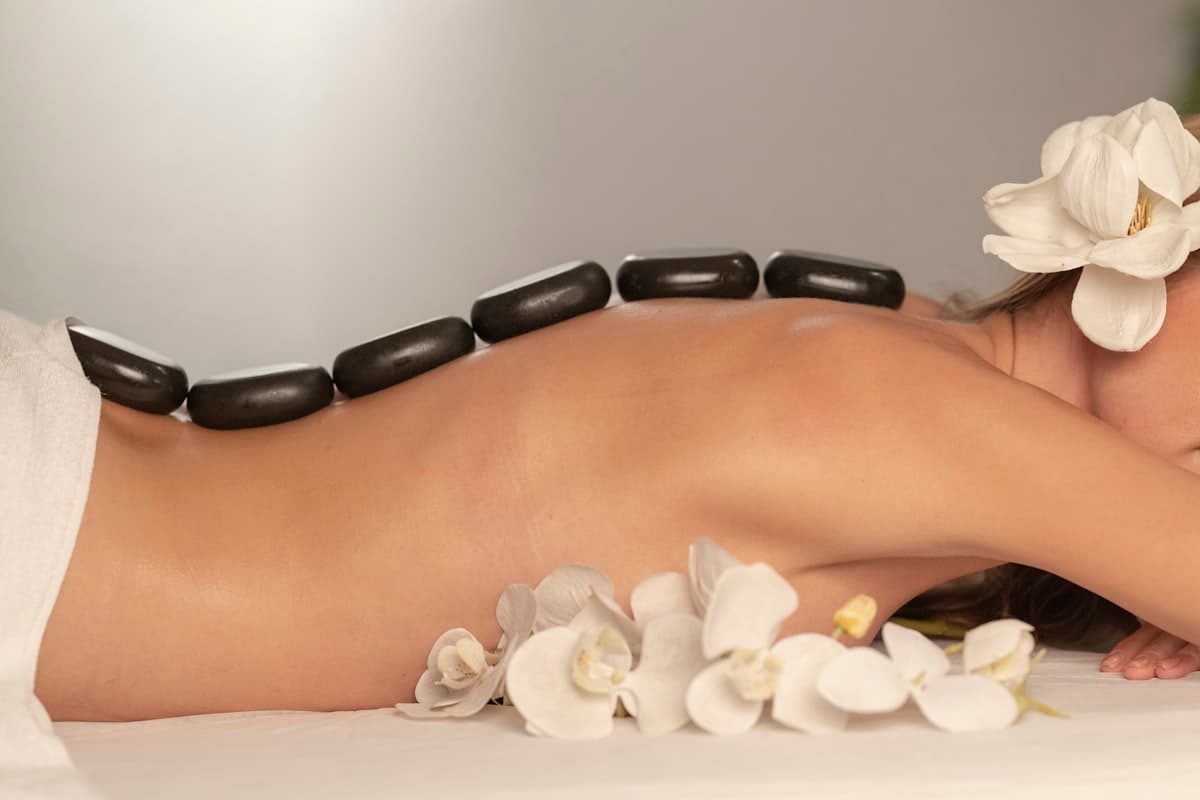
Heated volcanic stones are laid along the spine and on key points. The heat slowly melts the knots while the therapist works the rest by hand. The stones create deep warming — tough to match by hand alone.
Foot reflexology
The therapist works the feet, toes and ankles. By reflexology principles, the soles hold zones linked to every organ. Ideal after a day on your feet sightseeing. Sessions often start with a warm herbal foot soak — relaxation kicks in before the massage even begins.
Head and face massage (Gội đầu dưỡng sinh)
Literally "hair-washing to nurture life energy." It covers the scalp, neck, shoulders and face, and often opens with a traditional Vietnamese hair wash — a herbal-infusion rinse and scalp massage. Great for clearing a headache and neck tension after a flight.
Four-hands massage
Two therapists work in sync — one on the upper body, one on the lower. Your brain simply can't track it all and lets go of control. Some salons (Herbal Spa, Da Nang) even offer "six hands" — three therapists at once.
Bamboo massage
The therapist uses bamboo sticks of varying diameter for kneading, rubbing and vibration. The technique is especially effective on large muscle groups — back, thighs. The sticks deliver deeper pressure than hands, but without the pain.
Which type to pick
| What you want | Recommendation |
|---|---|
| First time in Vietnam | Classic Tam Quat — you get the local school |
| Wiped out after a flight | Head massage (Gội đầu) — clears tension fast |
| Sore after a trek | Hot herbal compresses (Chuom Sa) — warmth plus pain relief |
| Want a bit of luxury | Hot stones or four-hands — maximum unwinding |
| On a budget | Foot reflexology — the cheapest option |
| Chasing something unique | Blind massage — a different read of the body, and no upselling |

Blind massage — a distinctive Vietnamese experience
Blind massage is a well-established Vietnamese tradition: these salons operate in almost every tourist city in the country. Visually impaired therapists often outdo their sighted colleagues: their hands are their main way of reading the world.
The highest concentration of these salons is in Nha Trang. Expect 100,000–200,000 VND (~$4–8) an hour — one of the cheapest massages in Vietnam.
Pros:
- Low price with deep muscle work
- Sessions often run 1.5–2 hours (you formally pay for one)
- Therapists respond keenly to knots and tender points
Cons — honestly:
- Modest surroundings — not a spa atmosphere
- Can get noisy (shared room, not private cabins)
- Cleanliness varies — check reviews before you go
Worth trying at least once — it is both a social project (employment for people with disabilities) and honest massage with no upselling.
Where to find it
In Nha Trang, look for "Blind Massage" signs along the central streets. In Ho Chi Minh City, several salons operate in the centre, in what used to be Districts 1 and 3 (districts were abolished in 2025), some attached to Buddhist temples. In Hanoi, Omamori Spa is one of the best known. Addresses and prices for it and two more blind-therapist spas are in our Hanoi spa guide.
How to pick a spa and avoid a scam

In Vietnam, massage is offered on practically every corner. But not every salon is worth your time or money.
A good-salon checklist
- A transparent price list — on the wall or in a leaflet, with durations. If prices are only quoted out loud, expect surprises on the bill
- Clean towels and sheets — changed for every client
- Certificates — many salons post them on the wall
- Reviews on TripAdvisor or Google Maps — 4.0 stars and up, at least 50 reviews
- Private cabins — not a shared room with curtains, if privacy matters
Koreans go there; You aren't called in from the street; At the entrance they offer jasmine or corn tea; … There's a male masseurArtem Letyushev, vc.ru, 2026, translated by VietnamSpot
Red flags
- A tout grabs your arm and drags you inside
- No price list, and the cost is quoted "later"
- Dirty towels, a musty smell
- Too cheap for no clear reason — 50,000 VND an hour can mean hard-sell add-ons
- Pressure to buy the "full package"
"Extra services" spas — how to steer clear
Let's be blunt: happy-ending places exist in Vietnam, as they do across the region. Massage with sexual services is technically illegal, but in practice these spots hide behind an ordinary spa sign. If you just want a real massage and not a surprise, the two are easy to tell apart — the signals are visible from the door.
What to check so you land in a proper salon:
- The sign and window. A real spa lists the massage types and prices. Girl silhouettes, the word "VIP", winking emojis and blinking lights, with no price list — that is not about your muscles
- Opening hours. Legit salons run in the daytime and close by 10–11pm. A windowless place open around the clock that wakes up late at night is not your spot
- Who greets you. A normal daytime spa has both male and female therapists in uniform. If it is all touts at the door promising to "relax you properly", turn around
- Price. A massage at 50,000 VND "an hour" almost always means the money is made elsewhere. A fair rate starts at 150,000 VND
- Reviews. Five minutes on Google Maps settles it: an honest salon has dozens of reviews about the therapists' technique, not cryptic no-text ratings
The simplest route for a woman is a chain spa, blind massage, or booking through your hotel — the risk of that kind of surprise there is minimal. For a man, just pick by the price list and reviews rather than the tout on the street.
Common tourist mistakes
- Walking into the first place you see — a promoter lured you with a discount, and inside it is grubby. Spend five minutes on Google Maps
- Not agreeing the price up front — always confirm the cost before the treatment starts
- Booking right after the beach — hot oil plus sunburnt skin is a bad mix. Give your skin two to three days
- Being too shy to say "softer" — nhẹ hơn solves it
- Taking a long package on the first visit — start with 60 minutes
Vietnamese massage etiquette
Tipping
In Vietnam, tipping is a thank-you, not an obligation. Base it on the result: if the therapist asked about your problem areas and spent time on them, hand over 50,000–100,000 VND (~$2–4) directly. The nuance: in chain spas the tip is split among staff, while in small shops it goes straight to the therapist — there your 50,000 VND counts for far more.
What to wear and how to behave
Spas usually hand out disposable underwear or ask you to undress under a sheet. Take off jewellery before the massage — chains, rings, watches. If the treatment includes facial work (as in Gội đầu), skip the makeup.
Don't hesitate to tell the therapist if the pressure is too strong or too light — that is completely normal. Most therapists understand simple English: harder, softer, stop.
Handy Vietnamese phrases
| English | Vietnamese | Roughly sounds like |
|---|---|---|
| Harder | Mạnh hơn | man hun |
| Softer | Nhẹ hơn | nyeh hun |
| It hurts | Đau | dow |
| Thank you | Cảm ơn | gam un |
| Good | Tốt | tot |
When to skip it
- Fever, acute inflammation, infections
- Fresh injuries and open wounds
- Sunburn — wait two to three days
- Pregnancy — some techniques (hot stones, deep massage) are off-limits, but a light foot massage is usually fine
- Heart or vascular issues — check with a doctor first
- Guide
Flights to Da Nang: Airport, Hubs & Connections 2026
How to reach Da Nang by air: DAD airport, direct hub flights, connections via Hanoi or HCMC and the airport-to-centre transfer — with booking tips.Flights to Da Nang: Airport, Hubs & Connections 2026 - Guide
Flights to Phu Quoc: Airport, Visa-Free Entry & Hubs
How to reach Phu Quoc by air: PQC airport, domestic flights, hub connections and the island's 30-day visa-free entry for arrivals from abroad.Flights to Phu Quoc: Airport, Visa-Free Entry & Hubs - Guide
Getting Around Nha Trang: Grab, Taxis, Scooters & Buses
How to get around Nha Trang: Grab, Xanh SM, scooter rental, buses and the train — costs, the Cam Ranh airport run and tips for foreigners.Getting Around Nha Trang: Grab, Taxis, Scooters & Buses

FAQ — common questions about Vietnamese massage
It comes down to your pain threshold. Thai massage is stretching, twisting and yoga poses, and you can walk out feeling worked over. Vietnamese massage works differently — the therapist uses oil and works the acupuncture points with fingers, palms and elbows, with no extreme load on the joints. There is another key difference: each region of Vietnam has its own school. Hanoi favours a slow acupressure style, the coast adds shells and seaweed, Ho Chi Minh City is more dynamic. Do three cities in one trip and you effectively try three different massages — a range Thailand doesn't offer.
In Vietnam, tipping is a thank-you, not an obligation. Base it on the result: if the therapist asked about your problem areas and spent time on them, hand over 50,000–100,000 VND (~$2–4) directly. One thing to know: in chain spas (Herbal Spa, Sen Spa) the tip is split among all staff, while in small shops and with blind therapists it goes straight to the person — there your 50,000 VND counts for far more. Keep small notes handy, since change for a 500,000 VND note isn't always available.
Safer than it looks, if you choose well. Open Google Maps, find places rated 4.0+ with at least 50 reviews — that alone filters out most of the risk. Before you pay, glance inside: clean towels, private cabins and a price list on the wall are a good sign. If a tout grabs your arm at the door, walk on. For a first visit, pick an established chain (Herbal Spa in Da Nang, Golden Lotus in Ho Chi Minh City, Sen Spa in Nha Trang) for standardised service and fixed prices. Nha Trang has the widest choice of salons for any budget.
Absolutely worth it — it is one of the most distinctive Vietnamese treatments. Visually impaired therapists usually go through dedicated training and have a heightened sense of touch, literally reading your muscles by hand. The cost is just 100,000–200,000 VND (~$4–8) an hour, and in practice a session often runs 1.5 to 2 hours. Come on a weekday morning to skip the queues. Don't expect a spa atmosphere — it is a plain room with cots and can get noisy. But there is zero upselling. Nha Trang has the highest concentration of these salons — look for the "Blind Massage" sign.
A classic oil massage — no, hot oil on burnt skin feels awful. But there are two great alternatives. First, foot reflexology: it never touches the burnt areas and is just as relaxing. It starts from about 150,000 VND (~$6) an hour. Second, a herbal bath, where the medicinal herbs can even speed skin healing. Both are available almost everywhere in Vietnam's spas. Go back to a normal massage once the skin stops peeling — usually after two to three days. In the meantime, use an aloe cream, sold at any pharmacy.
It depends what you want. Hanoi does classic Tam Quat in the slow northern style, ideal for a first taste of Vietnamese massage. Da Nang is Chuom Sa herbal-compress country, the signature treatment of central Vietnam — try it at Herbal Spa. Nha Trang has the lowest prices (from 100,000 VND an hour) and over a hundred salons for every taste, including blind massage. Phu Quoc has spa resorts with sea views if you're after atmosphere. Do three cities in one trip and you get a ready-made spa route across the country.