7-day itinerary: southern Vietnam — Ho Chi Minh City, the Mekong and Mui Ne
In seven days across the south you see three different worlds: buzzing Ho Chi Minh City with its scooters and coffee shops, the slow Mekong Delta with its floating market and sampan boats, and beachy Mui Ne with red dunes and kitesurfing. A ready plan with Futa buses, 2026 prices in VND and USD, and three budget levels from ~$210 to ~$1,100, flights not included.

This route is built for travellers who want to see the country with their own eyes, not from an all-inclusive lobby. A week is plenty of time here: you can cover the city, the river and the beach, with a buffer left over in case a flight runs late. Entry is easy too — most Western passports get either a visa exemption or a quick online e-visa (more on that below).
If you have two weeks, extend it into the classic 14-day north-to-south run. If you would rather have someone handle the logistics, a package resort deal will cover the beach — but almost never the Mekong.
Three worlds in one 7-day route through southern Vietnam
In a week across the south you can realistically drive the classic Ho Chi Minh City → Mekong → Mui Ne triangle without exhausting yourself or your travel partner. The base shape: 2 days in the city, 1–2 days in the Mekong, 2–3 days in Mui Ne, plus an airport buffer on the last day. Per person, excluding flights, that runs from ~$210 (backpacker) to ~$1,100+ (comfort).
The whole route in one table:
| Day | Location | Programme | Where to sleep |
|---|---|---|---|
| 1 | Arrive HCMC | Grab from the airport (110,000–170,000 VND), rest, evening on Bùi Viện | District 1, HCMC |
| 2 | HCMC | Palace, War Remnants Museum, Cathedral, Post Office, sunset at Bitexco | District 1, HCMC |
| 3 | HCMC → Mekong | Ben Tre / My Tho tour ($19–35) or Futa bus to Can Tho | Can Tho or HCMC |
| 4 | Mekong → Mui Ne | Cai Rang floating market at 5:30 am, afternoon bus (8–9 h with a change in HCMC) | Mui Ne (Ham Tien) |
| 5 | Mui Ne | Ham Tien beach, sunset at the Red Dunes | Mui Ne |
| 6 | Mui Ne | Sunrise jeep tour (4:30 start): White Dunes, ostrich farm, fishing village, Fairy Stream | Mui Ne |
| 7 | Mui Ne → HCMC → fly out | Daytime Futa bus (~5 h), Grab to SGN airport | — |
What sets this plan apart: three budget levels in one table, specific Futa Phuong Trang departures, and three tourist traps flagged in advance (the "jasmine bottle" on the dunes, the taxis waiting at the Phan Thiet station, and the "free" boats in the Mekong). Prices are given in VND with a ~USD conversion at roughly 26,000 VND to the dollar (July 2026 — check the current rate before you travel).
Entry rules depend on your passport, so sort this out first. Citizens of the UK, Norway, Switzerland, Japan, South Korea and 18 EU countries (including Germany, France, Italy, Spain, the Netherlands and Poland) get 45 days visa-free; US, Canadian and Australian travellers usually take the online e-visa at evisa.gov.vn, which grants up to 90 days for about $25 and comes through in a few working days. Either way, your passport must be valid 6+ months, and the pre-arrival form at prearrival.immigration.gov.vn gets you into the priority immigration lane.
Route map: 21 points from Ho Chi Minh City to Mui Ne
All 21 points of the route on one map: Ho Chi Minh City (9 points), the Mekong Delta (4 points), Mui Ne and Phan Thiet (8 points). Colour marks the cluster — green for the recommended must-sees, blue for the rest. Tap a point to see the entry price and opening hours.
- Tan Son Nhat Airport (Sân bay Tân Sơn Nhất): SGN, 7 km from D1 — Grab to the centre 110,000–170,000 VND (~$4.50–7)
- Reunification Palace (Dinh Độc Lập): 80,000 VND / ~$3.10 — 07:00–18:00, 1.5 hours
- War Remnants Museum (Bảo tàng Chứng tích chiến tranh): 40,000 VND / ~$1.60 — 07:30–17:30, 2 hours
- Notre-Dame Cathedral (Nhà thờ Đức Bà Sài Gòn): Free, exterior only — Under restoration until 2027
- Central Post Office (Bưu điện trung tâm Sài Gòn): Free, 08:00–18:00 — Architect: Alfred Foulhoux
- Bitexco Sky Deck (Tháp Tài chính Bitexco): 200,000 VND / ~$8 — 09:30–21:30, best at sunset
- Ben Thanh Market (Chợ Bến Thành): Free, 06:00–18:00 — Night market until 24:00
- Jade Emperor Pagoda (Chùa Ngọc Hoàng): Free, 07:00–18:00 — 30 minutes
- Cu Chi Tunnels (Địa đạo Củ Chi): 70 km from HCMC, 110,000 VND — Tour $15–25, half a day
- My Tho (Mỹ Tho): 70 km / 1.5 h from HCMC — Thoi Son island, coconut farm
- Ben Tre (Bến Tre): 85 km / 2 h, the coconut capital — More authentic than My Tho, bike tours
- Can Tho (Ninh Kieu) (Bến Ninh Kiều): 170 km / 3.5–4 h from HCMC — The delta's main city, overnight stop
- Cai Rang Floating Market (Chợ nổi Cái Răng): 5:30–7:00 am, the delta highlight — Boat 200,000–500,000 VND
- Mui Ne (centre) (Mũi Né): 200 km / 5 h from HCMC — Ham Tien hotels, the main strip
- Phan Thiet (Phan Thiết): 20 km from Mui Ne, train station — Not the same place as Mui Ne
- White Dunes (Bau Trang) (Bàu Trắng): 30 km NE, sunrise — Quad bikes 200,000 VND
- Red Dunes (Đồi Cát Đỏ): Within Mui Ne, free — Sunset, sled 20,000–50,000 VND
- Fairy Stream (Suối Tiên): 15,000–20,000 VND, barefoot in the creek — 40 minutes upstream
- Fishing Village (Làng chài Mũi Né): Free, best 5–7 am — Basket boats (thúng chai)
- Red Canyon (Hẻm Đỏ Mũi Né): Free, off the standard tours — Photogenic, shaded in the morning
- Po Sah Inu Cham Towers (Tháp Chăm Pô Sah Inư): 15,000 VND / ~$0.60 — Ancient temples, viewpoint
The map helps if you plan from your phone: from above you can see the whole logic of the south. From SGN airport to the White Dunes you drive around via Phan Thiet. There is no airport in Mui Ne: the nearest are Tan Son Nhat in Ho Chi Minh City and Cam Ranh, and Phan Thiet airport is still under construction.
Days 1–2: Ho Chi Minh City in 48 hours

Ho Chi Minh City (still widely called Saigon) is Vietnam's largest city, home to about 14 million people since the 2025 merger with Ba Ria–Vung Tau and Binh Duong. In 48 hours you can walk the historic centre: Reunification Palace, the War Remnants Museum, the Cathedral, the Post Office, Ben Thanh Market and sunset on the 49th floor of Bitexco. Museum entry runs from 40,000 to 200,000 VND (~$1.60–8); with lunch, two people can do a full day for ~$25–35.
From SGN airport to the centre — 4 ways
Tan Son Nhat Airport (SGN) sits 7 km from District 1. Once you land, immigration takes 20–40 minutes, then four options to reach your hotel:
| Transport | Price | Time | When to take it |
|---|---|---|---|
| Grab (app) | 110,000–170,000 VND (~$4.50–7) | 20–45 min | Default, easy with luggage |
| Vinasun / Mai Linh (meter) | 130,000–180,000 + 10,000 toll | 20–45 min | If you have no data |
| Bus 109 (to Bến Thành) | 15,000–20,000 VND (~$0.70) | 45–60 min | Solo, travelling light |
| Bus 152 (budget) | 6,000–12,000 VND (~$0.30) | 60 min | Cheapest possible |
The HCMC metro is a separate story. Line 1 (Bến Thành — Suối Tiên) opened in December 2024, 19.7 km long. As of September 2026 it does not reach the airport — a common myth that circulates on forums. If it is your first time and you are dragging a suitcase, the metro is not the move.
Day 1 — landing, rest, evening on Bui Vien
Arrival usually puts you in "I'm at the hotel, I'm not moving" mode. That is fine — don't try to cram the programme into day one. The minimum plan: check in to a District 1 hotel, shower, lie down for an hour, dinner within 500 metres.
Where to stay:
- Hostel / dorm — 200,000–350,000 VND ($8–15) a bed. The Common Room Project, Town House 50.
- Budget 2–3-star — 600,000–1,100,000 VND ($25–45) a room. Saigon Youth Hostel, Liberty Central Riverside.
- Mid-range 4-star — 1.4–2.4 million VND ($60–100). Silverland Sakyo, Sherwood Residence.
- Premium 5-star — 4.2–9.5 million VND ($180–400). Park Hyatt, Reverie, Caravelle.
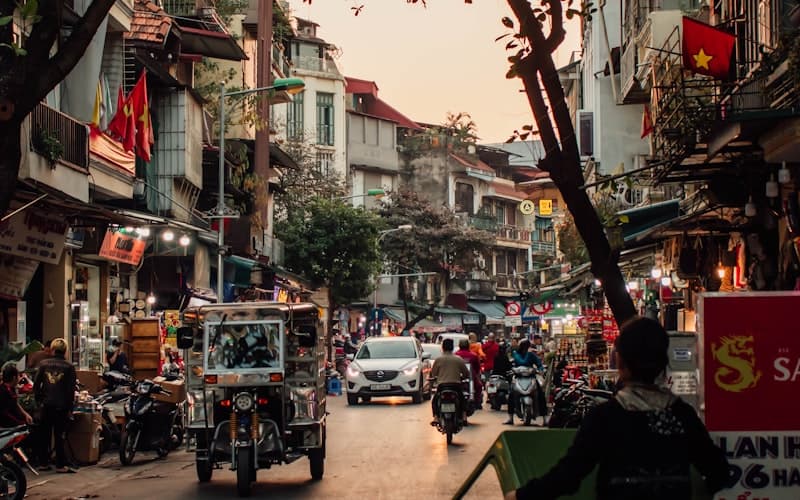
By evening, walk to Bui Vien street (Phạm Ngũ Lão) — the backpacker quarter, with street food, pavement bars and beer at 15,000 VND (~$0.60) a glass of bia hơi. The first crossing is a rite of passage: lots of scooters, few lights, two thousand headlights coming through the frame at once. Walk slowly and evenly, no sudden moves. The traffic flows around a pedestrian like water.
The key is to stay calm, walk at a steady pace, and keep signalingPeter Hall, VnExpress International, 2025
For dinner, grab cơm tấm (broken rice with pork) or a bowl of phở — 50,000–100,000 VND ($2–4). A couple of spots on Bui Vien have English menus, but the prices there are roughly double the street rate.
Day 2 — the historic centre and sunset
A day's route you can genuinely walk (about 4 km total — grab water in advance, it gets hot):
| Sight | Entry | Hours | Time |
|---|---|---|---|
| Reunification Palace | 80,000 VND / ~$3.10 | 07:00–18:00 | 1–1.5 h |
| War Remnants Museum | 40,000 VND / ~$1.60 | 07:30–17:30 | 1.5–2 h |
| Notre-Dame Cathedral | free | exterior only | 20 min |
| Saigon Central Post Office | free | 08:00–18:00 | 30 min |
| Ben Thanh Market | free | 06:00–18:00 | 1–2 h |
| Jade Emperor Pagoda | free | 07:00–18:00 | 30 min |
| Bitexco Sky Deck (49th floor) | 200,000 VND / ~$8 | 09:30–21:30 | 1 h |
Start at 8:30 at the Reunification Palace. This was the residence of South Vietnam's president, where on 30 April 1975 a tank crashed through the gates — the symbolic end of the war. The 1970s interiors are untouched: the office, the basement with radio rooms, the bar with vinyl records. An hour with a guide, ninety minutes without.
At 10:30, walk to the War Remnants Museum. Be ready — it is a heavy place. Photographs of the aftermath of Agent Orange, real munitions and weapons, survivors' stories. Most spend at least 1.5 hours; many leave earlier. Lunch afterwards is usually a café on Pasteur, quieter than the tourist streets.
After lunch: the Notre-Dame Cathedral (under restoration until 2027 — exterior only) and the Central Post Office opposite. The post office has run since 1891 and was designed by the architect Alfred Foulhoux. Inside: long wooden benches, retro phone booths and a full-length portrait of Ho Chi Minh.
By 15:00, head to Ben Thanh Market, the city's main tourist market. Buying here is pricey (they mark up double), but browsing and grabbing souvenirs works if you haggle hard. After 18:00 it flips to night mode — the street seafood stalls open.
For sunset, the Bitexco Sky Deck, 200,000 VND (~$8) for the 49th floor. Alternatives: the bar at Landmark 81 (higher, ~$10 for a cocktail with the same view), or the open-air Saigon Saigon Rooftop at the Caravelle if someone in the group dislikes glass and heights.
Cu Chi or the Mekong — which to pick if time is tight
The most common Ho Chi Minh City dilemma: the Cu Chi Tunnels or the Mekong. Both are half- or full-day trips out of town. If the Mekong is in your plan (as here), Cu Chi stays an option for a possible third day. If the week is compressed and the Mekong got cut, Cu Chi covers the "get out of the megacity" itch.
- Cu Chi Tunnels. 70 km from HCMC, group tour $15–25, ~4 hours. War history, reconstructed traps, narrow tunnels (you can crawl 40 metres if you are not claustrophobic). Entry without transfer is 110,000 VND.
- Mekong, 1 day. 75 km to My Tho / Ben Tre, $19–35, a full day. Boats, a coconut workshop, lunch with a local family. Less adrenaline, more nature.
All day trips from the city with prices are in the Ho Chi Minh City tours guide.
Days 3–4: the Mekong Delta — boats, floating market, coconuts

The Mekong Delta is 40,000 km² of canals, rice fields and floating villages, home to 17 million people and half of the country's rice. For a 7-day route there are two workable scenarios: a one-day group tour from Ho Chi Minh City to My Tho or Ben Tre ($19–35), or two days with an overnight in Can Tho for the dawn Cai Rang floating market (the delta's headline act).
My Tho, Ben Tre, Can Tho or Cai Be — which base to pick
The delta has 12 provinces, but tourist Mekong starts from four towns, each with its own character:
| Town | From HCMC | Known for | Best for |
|---|---|---|---|
| My Tho | 70 km / 1.5 h | Thoi Son island, coconut trade | One-day trip, budget travellers |
| Ben Tre | 85 km / 2 h | The "coconut capital," authentic villages | No crowds, bike tours |
| Can Tho | 170 km / 3.5–4 h | Biggest delta city, Cai Rang market | Two days with an overnight |
| Cai Be | 110 km / 2.5 h | Daytime floating markets | Day tours |
My Tho is the closest and the most touristy. Big 40-seat coaches come here; on Thoi Son island they walk you into a coconut-candy workshop and offer caramel to buy — decent commerce, but low on authenticity. Ben Tre, 15 km away across a bridge, has the same coconuts without the crowds, plus bike tours through the villages. Can Tho is the outlier: 4 hours away, but home to the Cai Rang floating market at dawn.
The recommendation here: if you have one day, take Ben Tre; if two days, Can Tho with an overnight.
Option A: one day — a group tour from Ho Chi Minh City
The most common scenario, especially if you want to free up an extra day for Mui Ne. An English-language group tour to My Tho / Ben Tre runs $19–35. What is usually included: the bus from Ho Chi Minh City (8:00 departure from De Tham), a motorboat through the canals, lunch with a local family, a coconut farm with candy tasting, a bee farm with honey tea, and a return by 18:00.
For a small-group or private version, expect $60–120 per person for a guide who does not rush you and takes questions.
Option B: two days — Can Tho for the dawn Cai Rang market
The headline of the southern route, and the reason to go deeper into the delta. The plan:
Day 3. Leave at 8:00 on a Futa / Phuong Trang bus from a Futa station (the pickup point is on the futabus.vn ticket). The ticket is 165,000 VND (~$6.80), the ride 3.5–4 hours. In Can Tho, stay near the Ninh Kieu waterfront — the main pedestrian zone, with cafés and a river-view restaurant. A guesthouse is $12–20, a 3-star hotel $30–50 (Vinpearl Can Tho is $70–120 for comfort).
Evening: dinner on the Ninh Kieu pier, a walk along the waterfront. Lights out at 21:00.
Day 4. Up at 5:00 am. No joke — this is critical. Grab water, head to the Ninh Kieu pier, and arrange a boat. The rate for 1–4 people is 200,000–500,000 VND (~$8–20). By 6:00 you are on the water, by 6:30 in the thick of the Cai Rang floating market. After 7:00 it starts thinning; by 8:00 it is empty and there is no point going.
What you see: 100+ sampan boats, each with a mast displaying samples of its goods (pineapple, mango, turnip, pumpkin — one boat per crop). Deals happen boat to boat, cargo passed by the bucketful over the sides. Breakfast comes off the water too — coffee and bún riêu (crab-and-tomato soup) from a floating stall, 30,000 VND (~$1.30) a bowl.
By 9:00 you are back at the pier and checked out. From there, two options: a Futa bus to Ho Chi Minh City (3.5 h) and then a night bus to Mui Ne, or a bus from Can Tho to HCMC with a connection to the afternoon Mui Ne bus. The second saves time but needs tight timing.
Traps and scams in the Mekong
Three typical stories worth knowing in advance so they don't annoy you:
- The "free boat with a mandatory purchase." On the small canals they move you from the motorboat to a narrow rowboat and call it "free." At the end they steer you into a coconut-candy workshop and ask you to buy a pack. It is a normal part of the business — just budget $5–10 for it.
- The jasmine souvenir bottle. Markets sell pretty bottles with jasmine inside for 50,000–100,000 VND. It is usually just tinted liquid — not worth drinking. Skip it.
- Pickpockets in the pier crowd. In high season the Ninh Kieu pier at 5:30 am is genuinely packed. Keep your wallet in front and your phone out of your back pocket.

Ho Chi Minh City to Mui Ne: 5 ways to get there

From Ho Chi Minh City to Mui Ne it is 200 km on highway AH1, ~4–5 hours. There is no direct train to Mui Ne (only to Phan Thiet, then a 20 km taxi) and no flights — there is simply nothing flying here. Five realistic options: a Futa bus, a Sinh Tourist open bus, the SPT train to Phan Thiet, a limousine minivan, or a private transfer.
| Transport | Price (VND) | ~USD | Time | When to choose it |
|---|---|---|---|---|
| Futa Phuong Trang (sleeper) | 180,000–250,000 | ~$7.50–10 | 4.5–5 h | Default: reclining berths and water |
| Sinh Tourist (open bus) | 200,000–260,000 | ~$8–11 | 5 h | Backpacker classic |
| SPT train to Phan Thiet | see dsvn.vn | — | 4 h | If you love trains + 1 h taxi |
| Limousine (9-seat minivan) | 350,000–460,000 | ~$14–19 | 4.5 h | Drops you at the hotel |
| Private transfer | $50–80 per car | ~$50–80 | 4 h | A group of 3–4 |
Recommendation for most. The night Futa sleeper at 22:00–23:00 for 180,000 VND. You save a hotel night ($25–50) and gain a full day in Mui Ne from the morning. Inside: three rows of reclining berths, air conditioning, a bottle of water and a toilet stop midway.
Phuong Trang Futa Bus is officially the south's leading passenger carrier, with a Ho Chi Minh City ↔ Mui Ne ↔ Can Tho network of sleeper buses. Book on futabus.vn or baolau.com (an aggregator of all carriers).
Phan Thiet ≠ Mui Ne: the main confusion
This trips up every other traveller. Phan Thiết is a big coastal city (Binh Thuan province was abolished in July 2025 and folded into Lam Dong), with the train station and bus terminal. Mũi Né is a beach suburb 20 km east, where the hotels are. If the train drops you at Phan Thiet station, you still have a 20–25 minute taxi or Grab to Mui Ne.
A Grab from Phan Thiet station to Mui Ne is 150,000–250,000 VND (~$6–10). Taxi drivers at the station may ask for 500,000 VND or more — the classic station markup. Don't agree; open Grab, and a car at a normal price arrives in five minutes.
Futa bus stations in Ho Chi Minh City
Futa has two main addresses in the city:
- De Tham (Phạm Ngũ Lão, District 1) — the backpacker quarter, steps from Bui Vien. Convenient if you stay in the centre.
- Mien Dong (Eastern Bus Terminal) — a big terminal on the eastern edge; a Grab there from the centre is 80,000–100,000 VND. The choice of departures is wider here.
HCMC → Mui Ne schedule (approximate — confirm on the day of purchase):
- Daytime: 07:00, 09:00, 11:00, 13:00 — arriving 12:00–18:00
- Night (sleeper): 19:30, 21:00, 22:30, 23:59 — arriving 00:30–05:00
Book ahead in high season (December–March). In summer, seats are usually available an hour before departure. Buses, trains and taxis across the country are covered in the Vietnam transport guide.
Fast Track — no queue at the border
5–10 minutes instead of an hour in the immigration queue
from$11per passenger
Days 5–7: Mui Ne — dunes, kitesurfing, fishing village

Mui Ne is 12 km of beach along Nguyễn Đình Chiểu street, white and red sand dunes instead of the usual beach scenery, and a moody sea (June to August brings red algae; the rest of the year is fine). For a 7-day route, plan 2–3 nights, depending on how you get there from the delta: one morning on the beach, one sunrise jeep tour, one evening on the dunes, plus the return to Ho Chi Minh City on day 7.
Where to stay: Ham Tien or Phan Thiet
The base area is Ham Tien (the central Mui Ne beach strip). Restaurants, bars, scooter rentals and the jeep-tour turn-offs are all here, within a 3 km radius. North Mui Ne, past the fishing village, is quieter and cheaper but with no evening life. Skip Phan Thiet city: no beaches, business-trip hotels.
| Category | Examples | Price USD/night |
|---|---|---|
| Hostel / guesthouse | Mui Ne Backpacker Village, Mui Ne Hills | $5–12 |
| Budget 2-star | May Bungalow, Hai Au Mui Ne | $20–35 |
| Mid-range 4-star | Bamboo Village Beach Resort, Lotus Village, Mandala Cham Bay | $50–90 |
| Premium 5-star | Anantara Mui Ne, Princess D'Annam (Ke Ga, ~40 km from Mui Ne), Centara Mirage | $150–300 |
Day 5 — check-in and beach time
If you took the night Futa sleeper, you arrive at 4:30–5:00 am. Don't pretend you are ready to swim: go to a café by the bus station, order cà phê sữa đá (Vietnamese iced coffee, 25,000 VND) and wake up over ninety minutes. Hotel check-in is usually from 14:00, but for 200,000–300,000 VND (~$8–12) many places will let you in early — just ask.
Morning: breakfast at any café on Nguyễn Đình Chiểu, then Ham Tien beach (central, a lounger with umbrella is 50,000 VND). From December to March the sea is clean and warm (25–26°C), with gentle waves. From June to August the central Mui Ne beach disappoints — algae turn the water a murky reddish soup. If you land in that window, go to Sea Links beach or up by the Anantara, where the water is cleaner.
A scooter is the handiest way around Mui Ne: 150,000–200,000 VND a day (~$6–8). Note the legal side: without a national category A1 licence (up to 125 cc) and an International Driving Permit under the 1968 Convention it is not allowed, and insurance won't pay out in a crash — factor that into your risk.
Sunset goes to the Red Dunes (Đồi Cát Đỏ). They are within Mui Ne and free. At the base, kids rent plastic sleds for 20,000–50,000 VND — you slide down like a hill. The sunset is lovely, but for an hour either side the dunes fill with tourists and vendors. Ignore the "jasmine tea" bottle someone will try to sell you for 100,000 VND — it is diluted tea with dye.
Day 6 — the sunrise jeep tour (the main event)
The activity people come to Mui Ne for. The standard jeep-tour route:
- Up at 4:30 am (no joke). Depart at 5:00.
- White Dunes (Bau Trang), 30 km northeast, for sunrise. Parking 15,000 VND. The main event is watching the sunrise from the crest, then a quad bike: 200,000 VND (30 minutes with a driver) or 850,000 VND (solo, unaccompanied).
- Ostrich farm near Bau Trang. Optionally, ride an ostrich ($3). Photogenic, no pretension.
- Back via the Mui Ne fishing village (Làng Chài). At 6–7 am the fishermen return in their basket boats (thúng chai) and a fish market runs on the shore. Free.
- Fairy Stream (Suối Tiên). 15,000–20,000 VND; leave your shoes at the entrance and walk barefoot up the creek bed for 40 minutes. The red and white sandstone walls are genuinely beautiful and photograph well.
At the White Dunes you need to pay attention and remember which base you were dropped off at, there are several. On the way back we walked to the wrong one and had to fret a littleНиколаевич, Vinsky Forum, 2015, translated by VietnamSpot
Tour price:
- Group ($7–10 per person) — a jeep for 6–8 people on the standard programme, no delays.
- Private jeep for 4–6 people ($25–40 per vehicle) — flexible; you can linger or add the Red Canyon.
Per Tripadvisor reviews (Mui Ne, 2025–2026), the sunrise tour consistently beats the sunset one: fewer people, soft light, cooler air. The sunset run is packed with tour-bus crowds, 35°C heat and the sun straight into your shot.
After the tour: beach, lunch, maybe a kitesurfing lesson. Prices — a 2-hour lesson $80–120, board rental 200,000–500,000 VND ($8–20). Kite season is November–March; in summer the wind is too weak.

Day 7 — a last beach and back to Ho Chi Minh City
A morning beach or spa, check out by 12:00. The daytime Futa bus to Ho Chi Minh City leaves at 13:00, arriving 18:00. From the Futa station to District 1 is a Grab for 80,000 VND, and from there to SGN airport another Grab for 150,000 VND — about 30 minutes.
Mui Ne's 6 main sights: entry and best time
| Sight | Entry | Highlight | Best time |
|---|---|---|---|
| White Dunes (Bau Trang) | 15,000 VND parking | Quad bikes, ostriches, sunrise | 5:30–7:00 |
| Red Dunes | free | Sleds, sunset, within Mui Ne | 17:00–18:30 |
| Fairy Stream | 15,000–20,000 VND | Barefoot up the creek, 40 min | before 10:00 |
| Fishing village (Làng Chài) | free | Basket boats, morning catch | 5:00–7:00 |
| Red Canyon (Hẻm Đỏ) | free | Off the standard tours | morning, shade |
| Po Sah Inu Cham Towers | 15,000 VND / ~$0.60 | Ancient temples, viewpoint | all day |
More tours and the resort overview: Mui Ne tours and the Mui Ne guide.
Budget for 7 days — three levels from ~$210 to ~$1,100
An independent 7-day trip through southern Vietnam costs one person ~$210–300 backpacker, ~$590–910 mid-range, and $1,100+ comfort. These figures exclude the international flight, which adds another $700–1,300 return depending on where you fly from. VND-to-USD is figured at roughly 26,000 VND to the dollar (July 2026).
Backpacker — $30–45 a day ($210–300 a week)
For those used to Southeast Asia and happy to sleep in dorms, eat on the street and take group tours.
| Item | 7 days | What it covers |
|---|---|---|
| Lodging (dorm/guesthouse) | $60–80 | $8–12/night, dorm or cheap single |
| Food (street) | $40–60 | $6–8/day, phở, cơm tấm, bánh mì |
| Intercity (buses) | $25–35 | HCMC ↔ Mekong ↔ Mui Ne (Futa) |
| In-city (Grab) | $15–25 | From SGN, around HCMC |
| Tours (group) | $50–70 | Mekong 1 day $25, Mui Ne jeep $10, museums $10 |
| Incidentals | $20–30 | Water, coffee, SIM, extras |
| Total | $210–300 | flights not included |
Mid-range — $75–100 a day ($590–910 a week)
The base level for most independent travellers: 3-star hotels, mid-range cafés, small-group or private tours.
| Item | 7 days | What it covers |
|---|---|---|
| Lodging (3-star) | $200–300 | $30–45/night, Saigon Youth, May Bungalow |
| Food (cafés and restaurants) | $100–140 | $15–20/day, a mix of street and café |
| Intercity (limousine/transfer) | $50–80 | 9-seat minivan or an upgraded Futa sleeper |
| In-city (Grab) | $40–60 | No skimping on transfers |
| Tours (private/small-group) | $150–250 | Mekong 2 days $100, private jeep $40, Cu Chi $25 |
| Incidentals, SIM, shopping | $50–80 | — |
| Total | $590–910 | flights not included |
Comfort — $150+ a day ($1,100+ a week)
4–5-star hotels, a private car with a driver on every leg, restaurants at $25–40 a dish. Park Hyatt in Ho Chi Minh City, Anantara in Mui Ne, Vinpearl in Can Tho. A realistic range is $1,100–1,800 for 7 days, flights aside.
Reference prices for the whole route
- Bitexco Sky Deck200,000 VND ≈ $8
- Reunification Palace80,000 VND ≈ $3.10
- War Remnants Museum40,000 VND ≈ $1.60
- Cu Chi Tunnels (ticket)110,000 VND ≈ $4.20
- Po Sah Inu Cham Towers15,000 VND ≈ $0.60
- Futa bus HCMC → Can Tho165,000 VND ≈ $6.80
- Futa bus HCMC → Mui Ne (sleeper)180,000–250,000 VND ≈ $7.50–10
- Limousine HCMC → Mui Ne350,000–460,000 VND ≈ $14–19
- Grab from SGN to District 1110,000–170,000 VND ≈ $4.50–7
- Group jeep tour, Mui Ne170,000–250,000 VND ≈ $7–10
- Private jeep, Mui Ne600,000–950,000 VND ≈ $25–40
- Mekong 1-day group tour (English)— VND ≈ $19–35
- Mekong 2 days + Can Tho overnight— VND ≈ $65–110
- Mekong 1 day, private guide— VND ≈ $60–120
- Street phở50,000–100,000 VND ≈ $2–4
- Iced coffee25,000–40,000 VND ≈ $1–1.70
- Glass of bia hơi15,000 VND ≈ $0.60
The full cost breakdown for the country is in the Vietnam budget guide.
The flight is a separate line item
A return flight to Ho Chi Minh City runs roughly $700–1,300 depending on origin. Direct is Vietnam Airlines; one-stop is Qatar Airways, Turkish Airlines, Singapore Airlines or Emirates. Book 2–3 months out via a metasearch (Skyscanner, Google Flights), but buy on the airline's own site to skip the aggregator's 5–10% fee.
For a cheaper southern base, some travellers fly into Bangkok or Kuala Lumpur and hop over on VietJet (a low-cost carrier) or Vietnam Airlines to Ho Chi Minh City for $60–120 one way.
When to go — the best time for the southern route

The best season for the Ho Chi Minh City → Mekong → Mui Ne route is December to March: air 26–32°C, sea 25–26°C, minimal rain, and no algae in Mui Ne. The worst month is September: peak rain, murky sea, nothing to do on the Mui Ne beach. Ho Chi Minh City and the Mekong hold up even in the rainy season — short afternoon storms don't break the plan.
| Month | Air °C | Mui Ne sea °C | Rain | Rating |
|---|---|---|---|---|
| January | 27–32 | 25 | minimal | ★★★★★ Ideal |
| February | 27–33 | 25 | minimal | ★★★★★ Ideal |
| March | 28–34 | 26 | minimal | ★★★★ Hot but dry |
| April | 30–36 | 27 | rare | ★★★ Up to 40°C in the sun |
| May | 28–34 | 28 | rain begins | ★★ Start of the season |
| June | 27–33 | 28 | rain, algae | ★★ Sea turns murky |
| July | 27–32 | 28 | evening rain | ★★ HCMC/Mekong still fine |
| August | 27–32 | 28 | evening rain | ★★ Same |
| September | 26–32 | 28 | peak rain | ★ Worst month |
| October | 26–32 | 27 | peak rain | ★★ Rainy |
| November | 26–31 | 26 | rain easing | ★★★★ Good |
| December | 26–30 | 25 | dry, cooler | ★★★★★ Ideal + NYE |
The southern nuance: beach vs city
The rule for the Ho Chi Minh City → Mekong → Mui Ne route is simple: the beach segment sets the season. The city and the Mekong survive any rain. Saigon is a megacity of air-conditioned cafés and malls; the delta is boats and rice fields that rain barely touches. But from June to August, Mui Ne turns into a reddish-brown sea of algae. That is not a beach worth spending a week of holiday on.
Lunar New Year (Tet)
Late January to early February. Vietnam's biggest holiday, lasting 5–7 days. Hotel and bus prices rise 25–40%, many shops and cafés close for the first 3 days, and Ho Chi Minh City empties out (locals head to relatives in the provinces). If you hit Tet, budget for it and book lodging two months ahead. The downside is the closures; the upside is the atmosphere and fireworks.
Package or independent — which to choose
A resort package to southern Vietnam is cheaper and simpler to organise, but it almost never includes the Mekong and gives you no freedom to move between points. An independent mid-range route costs more but goes exactly where you want. The table lays out the trade-off.
| Factor | Package | Independent route |
|---|---|---|
| What's included | Flight, transfers, 4-star hotel, insurance | You decide each line item |
| Resort | Near Nha Trang, or Nha Trang → Mui Ne | HCMC + Mekong + Mui Ne |
| Mekong | Only as a paid add-on tour | Built into the route |
| Flexibility | Low, fixed dates | High |
| Best for | First time in Asia, kids, little time | Experienced, budget-minded |
| Main risk | Charter delays, "didn't like the hotel" | Missed a bus, overpaid a taxi |
When to take a package:
- First trip to Southeast Asia and feeling nervous
- Travelling with kids under 10 (constant transfers wear them out)
- No time to plan (buy the tour and forget it until departure)
- You want an all-inclusive with a drink by the pool
When to go independent:
- You've done Asia and are ready to move around on your own
- The Mekong is a must (standard packages don't include it)
- You want real experiences, not a sun lounger
- Budget matters, but you're fine learning from a mistake or two
Which airports resort charters use
Many resort charters land in Cam Ranh (Nha Trang) rather than Ho Chi Minh City — a different region, central Vietnam's South China Sea coast. If you want "the south with the Mekong" as a package, you would have to take a "Cam Ranh + bus transfer to Mui Ne" deal (260 km, ~6 hours) and add the Mekong tour separately ($60–100 per person with a guide). All in, that often lands no cheaper than going independent.
FAQ — common questions about the 7-day route
The classic loop is Ho Chi Minh City (2 days) + the Mekong Delta (1–2 days) + Mui Ne (2–3 days) + a buffer day to get back and fly out. It is easiest to build from independent blocks: a Futa bus on each leg, a group day-tour to the Mekong for the one-day format, or a night in Can Tho for the dawn Cai Rang market.
- Backpacker — dorms, street food, group toursfrom ~$210
- Comfort — 4–5-star hotels, private car with a driver, restaurantsto ~$1,100+per person, excluding the international flight
- A mid-range week~$590–910
- A return flight to Ho Chi Minh City is separateroughly $700–1,300
Five ways: a Futa sleeper bus (180,000–250,000 VND, ~5 hours, the default), a Sinh Tourist open bus (200,000–260,000 VND), the SPT train to Phan Thiet (fares on dsvn.vn, then a 20 km Grab), a limousine minivan (350,000–460,000 VND), or a private transfer ($50–80 per car for 3–4 people). The late-night Futa sleeper at 22:30 saves a hotel night and gives you a full day in Mui Ne from the morning.
For one day, take a group tour from Ho Chi Minh City to My Tho or Ben Tre ($19–35), back by 18:00. For two days, take a Futa bus to Can Tho (165,000 VND, ~4 hours), sleep by the Ninh Kieu waterfront, and at 5:30 the next morning take a boat to the Cai Rang floating market. After 7:00 it empties out — going late is pointless.
December to March: air 26–32°C, sea 25–26°C, minimal rain, no algae. The worst months are June to August, when Mui Ne beach gets red algae and murky water. Ho Chi Minh City and the Mekong are fine even then — short afternoon storms don't break the plan. If you travel in summer, pick hotels on Sea Links beach or north of the centre, where the water is cleaner.
Resort packages to southern Vietnam exist, but they almost never include the Mekong Delta — the standard script is a beach stay near Nha Trang or Mui Ne. The Mekong is not part of a resort package. If it matters to you, go independent or add a Mekong day-tour separately ($60–100 per person with a private guide).
It depends on your passport. Citizens of the UK, Norway, Switzerland, Japan, South Korea and 18 EU countries (including Germany, France, Italy, Spain, the Netherlands and Poland) get 45 days visa-free. US, Canadian and Australian travellers usually take the online e-visa at evisa.gov.vn, which grants up to 90 days for about $25. Everyone needs a passport valid 6+ months. The pre-arrival form at prearrival.immigration.gov.vn, filled in before landing, gets you into the priority immigration lane.
Light cotton or linen clothing, closed shoes for Fairy Stream, insect repellent (mornings in the Mekong and Mui Ne), SPF 50+ sunscreen, a hat or cap, a water bottle (drink bottled water only), an eSIM from Viettel or Mobifone (60,000–80,000 VND for 10 GB / 30 days), a 10,000 mAh power bank for long transfers, and small USD notes ($1, $5, $20) for tips and exchange. Bring a Visa or Mastercard for hotels and cash for markets.
The bottom line
A 7-day route through southern Vietnam is the compromise between "see everything" and "don't burn yourself out." In a week you can walk Ho Chi Minh City in its three layers (French colonial architecture, war history, 21st-century megacity), drift into the Mekong Delta on a sampan boat with dawn at the Cai Rang market, and close with beach days in Mui Ne among the white and red dunes. Per person, that runs from ~$210 to ~$1,100+, flights aside.
What sets the southern triangle apart from a package sun-lounger is the shift between worlds. In the morning you drink coffee on a French veranda; by lunch you have moved to a boat village; you sleep by a river waterfront; a day later you are standing on the crest of the Bàu Trắng dune waiting for sunrise. Seven days is a lot — if you don't smear them across a single resort.
Book Futa buses and hotels ahead, especially in the December–March high season — demand for the night sleepers to Mui Ne clears every seat a couple of days out. On arrival day, keep $100–200 in cash for taxis and exchange; withdraw the rest from an ATM in District 1 (limit 2–3 million VND per go, fee 50,000–80,000 VND).
For most Western passports, entry is now quick — a visa exemption or a $25 online e-visa, plus the pre-arrival form for the priority immigration lane. Sort that out, buy the flight and go.
- Guide
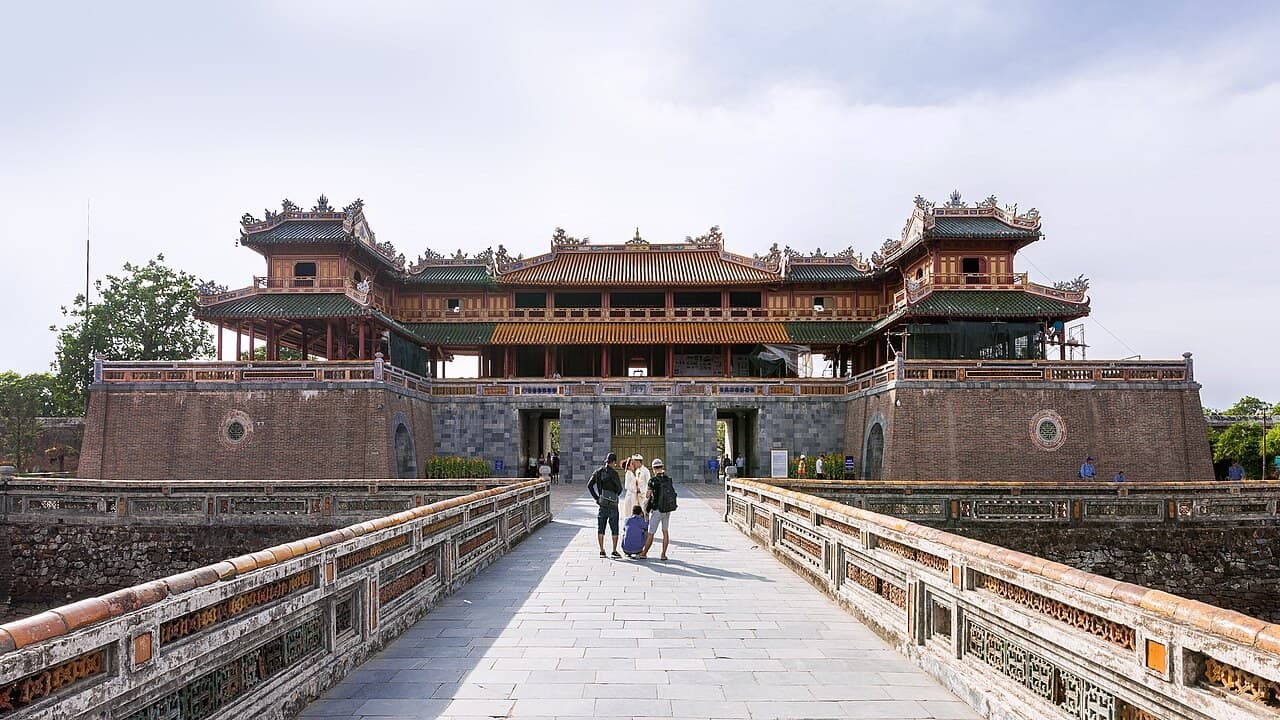
Is Hue Worth Visiting in 2026? An Honest 8/10 Review
Is Hue worth visiting? Our verdict is 8/10. The Citadel, the tombs and bun bo make the case for; ruins, rain and dead nights make the case against.Is Hue Worth Visiting in 2026? An Honest 8/10 Review - Guide
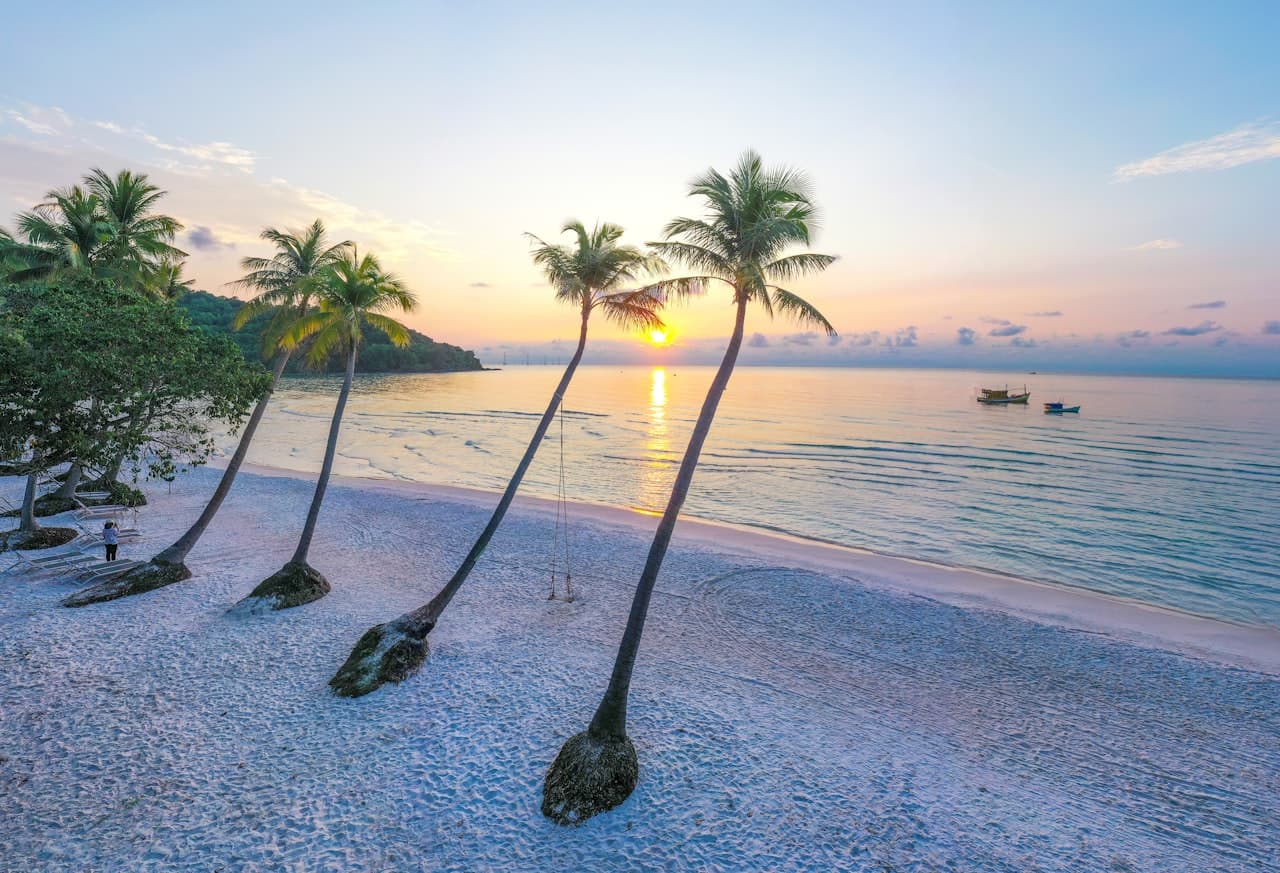
Phu Quoc vs Nha Trang, Da Nang, Mui Ne & Cam Ranh (2026)
Phu Quoc or Nha Trang, Da Nang, Mui Ne, Cam Ranh? Beaches, weather, prices, food and who each resort suits — a clear verdict for your 2026 trip.Phu Quoc vs Nha Trang, Da Nang, Mui Ne & Cam Ranh (2026) - Guide
Phu Quoc Reviews 2026: Is the Island Worth It?
Honest Phu Quoc reviews: what travellers love and criticise, who it suits, beaches, hotels and season — and a clear verdict.Phu Quoc Reviews 2026: Is the Island Worth It?