Tet: Vietnam's Lunar New Year 2027 — dates, traditions and what's closed
On 6 February 2027 Vietnam celebrates Tet Nguyen Dan, the Lunar New Year and the Year of the Goat. For a week or more the country pauses: shops shut, streets empty and hotel prices climb. Below: exact holiday dates, the traditions, a table of what closes and when it reopens, a travel-prep checklist and the questions foreigners ask most.

Tet dates in 2027 and the years ahead
Tết Nguyên Đán in 2027 begins on Saturday 6 February — the first day of the first month of the lunar calendar. It is the Year of the Goat (Đinh Mùi).
By law Tet is five public holidays. For civil servants the Ministry of Home Affairs proposed two options in August 2026: 4 to 10 February 2027 — seven days in a row, the one it recommends — or 5 to 14 February, ten days. Check which one is approved before you book. Private businesses may shift the days around, but not below five. For comparison, the 2026 break ran from 14 to 22 February, nine days. The rest of the year's public holidays, with dates, are in the Vietnam holiday calendar.
| Year | Tet date | Zodiac |
|---|---|---|
| 2026 | 17 February | Horse |
| 2027 | 6 February | Goat |
| 2028 | 26 January | Monkey |
| 2029 | 13 February | Rooster |
| 2030 | 3 February | Dog |
What Tet is, and why it's the biggest holiday

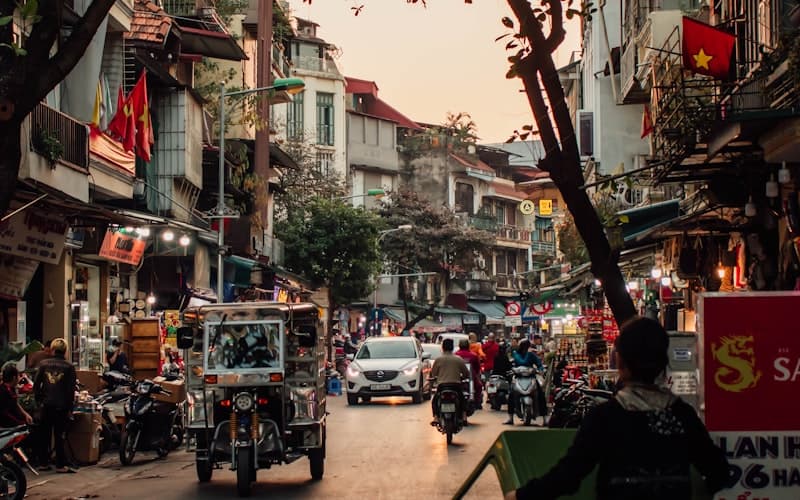
Tet is not just a flip of the calendar. It is the time when the entire country goes home — literally. Cities empty out two or three days before the holiday: workers in Ho Chi Minh City head back to their villages, students in Hanoi rush to their parents, and bus and train tickets sell out months in advance.
The heart of Tet is renewal. The old year and its troubles are left behind. Debts are paid, quarrels forgotten, the house scrubbed spotless. The family gathers around one table to honour the ancestors and welcome a new cycle.
Vietnamese people mark the Western New Year on 1 January too, but without much ceremony — more an excuse for a party. The real emotion, the gifts, the family dinners and the week-long break all belong to Tet.
One detail: during Tet people don't say a plain "happy new year." They say " Chúc mừng năm mới" — literally "congratulations on the new year," but with a warmth closer to "may all go well for you."
Traditions and customs of Tet
Getting ready: one to two weeks before
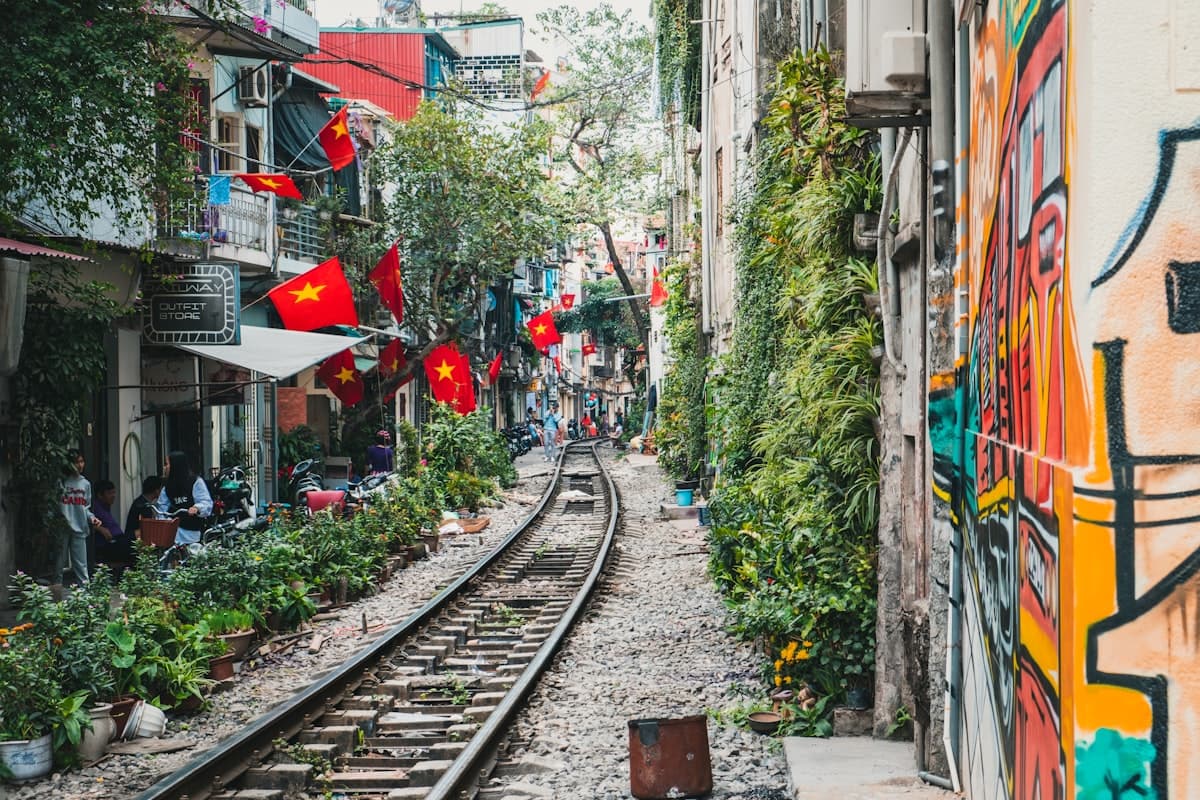
Deep cleaning (quét dọn). Families wash everything: floors, walls, windows, furniture. The point isn't hygiene but symbolism — you sweep out the bad luck of the old year. After Tet, though, you must not clean for the first three days, or you'll "sweep away the luck."
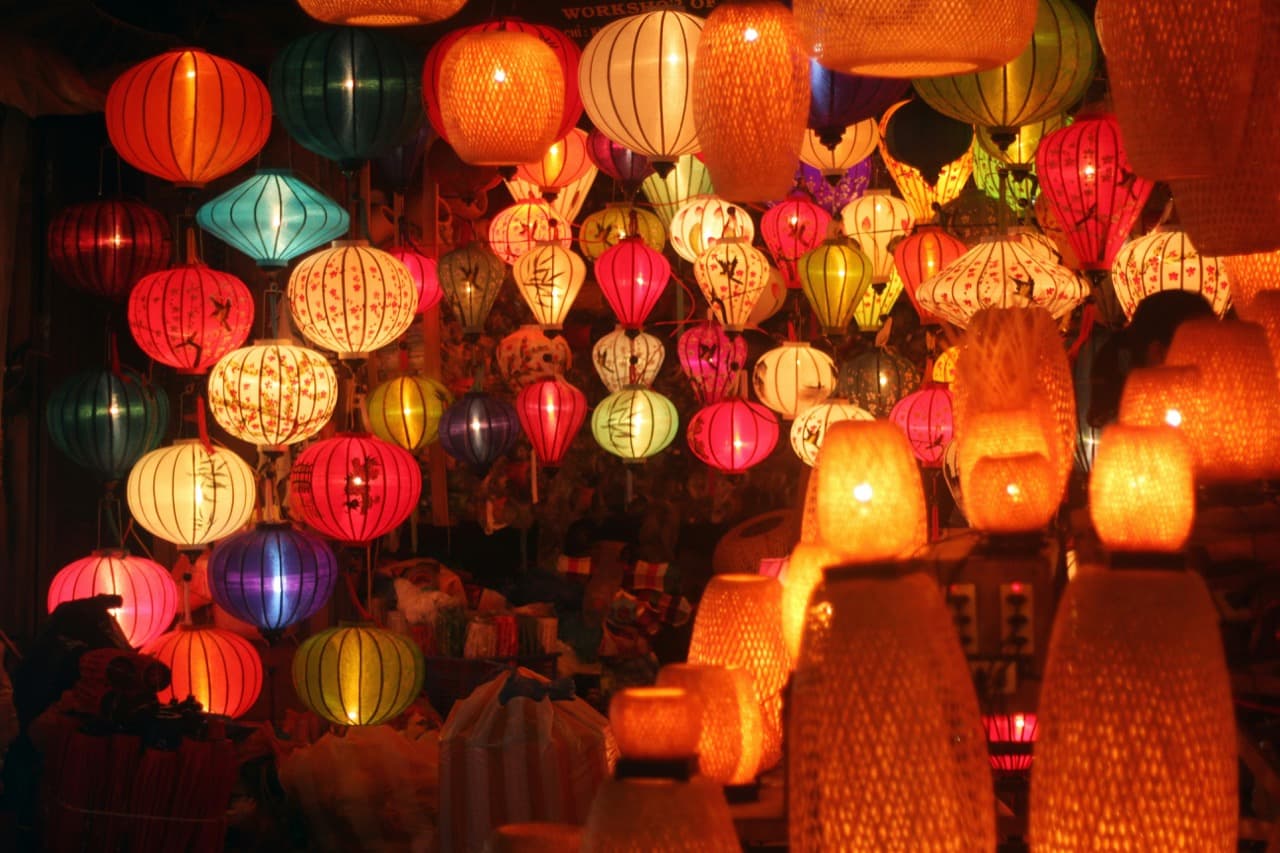
Flowers. In the south people buy branches of yellow apricot blossom (mai); in the north, pink peach blossom (đào). Everywhere there are kumquat trees (quất) heavy with golden fruit. The flower markets in the week before Tet are one of the most photogenic sights a traveller can catch.
The ancestor altar. Every home has one. Before Tet it is refreshed with fresh flowers, incense, fruit and boiled chicken. Vietnamese people believe the spirits of their ancestors return for the holiday.
Debts and quarrels. All money matters are settled before Tet. Asking to borrow in the first days of the new year is bad luck, and making peace with anyone you've fallen out with is done before the holiday too.
New Year's Eve and xông đất
New Year's Eve (Giao Thừa) is the most important night of the year. The family gathers at the table, incense burns on the altar, and at midnight the fireworks go off.
After midnight comes the wait for xông đất — the first visitor. Vietnamese people believe the first person to cross the threshold on the morning of day one sets the family's luck for the whole year. So they invite someone who is successful, healthy and always in good spirits. The guest brings fruit, sweets and red envelopes for the children.
Lì xì — the red envelopes
Lì xì are red envelopes of money. Elders give to the young: parents to children, bosses to staff, uncles to nephews. The amount is usually 20,000 to 500,000 VND (~$0.80–20). Crisp new notes and an uneven sum are the custom — a wish for the money to grow.
The red of the envelope wards off evil spirits; the money inside is a wish for prosperity. Guests at nicer hotels are sometimes handed an envelope too — a symbolic gesture.
What you don't do during Tet
- Don't clean the house — you sweep away the luck
- Don't take out the rubbish — you throw out the wealth
- Don't argue, curse or raise your voice
- Don't break dishes — it invites misfortune
- Don't lend money — you give away your good fortune
- Don't wear black or white — they are mourning colours
- Don't talk about illness or death
For a traveller this is cultural context more than a strict rule. But it's worth knowing — if only so you're not surprised when housekeeping doesn't clean your room on the first day of Tet.
What people eat during Tet

The New Year table is the centre of the holiday. Dishes are made ahead, often by the whole family together.
| Dish | Region | What it is |
|---|---|---|
| Bánh chưng | North | Square cake: sticky rice, pork and mung bean wrapped in dong leaves. Boiled for 12 hours |
| Bánh tét | South | The cylindrical version of banh chung — same fillings, different shape |
| Thịt kho tàu | South | Pork and eggs braised in coconut water and caramel |
| Mứt Tết | Everywhere | Candied fruit: coconut, ginger, lotus. Served with tea |
| Gà luộc | Everywhere | A whole boiled chicken — first for the altar, then the table |
Bánh chưng is the main symbol. Its square shape stands for the earth, the green leaves for gratitude to nature. It is made collectively: the family gathers, wraps the cakes and boils them through the night. Trying bánh chưng at Tet is a bit like sharing the one dish everyone at home makes for the holidays.
Where do you try it if restaurants are closed? At hotels (many run a Tet menu), in supermarkets (sold in the week before), or your Vietnamese neighbours may simply offer you some — which happens more often than you'd think.
Fast Track — no queue at the border
5–10 minutes instead of an hour in the immigration queue
from$11per passenger
What's closed during Tet and when it reopens

| Place | Status at Tet | When it reopens |
|---|---|---|
| Government offices | Closed | 11 or 15 February, depending on the holiday option |
| Banks & currency exchange | Closed | After the official break |
| Markets | Closed days 1–3 | From day 3, gradually |
| Family cafés | Closed days 1–4 | From day 4–5 |
| Hotel restaurants | Open | — |
| 7-Eleven, Circle K | Shorter hours | — |
| ATMs | Working | May run empty |
| Grab / taxis | Working | Pricier than usual |
| Hotels & resorts | Open | Much pricier than usual |
The hardest days are 5–8 February 2027 (the eve plus the first three days). From 9 February life returns to normal.
The real problem isn't a lack of food — your hotel will always feed you — but the inability to book tours, shop or run island trips in the first few days.
Should a traveller visit during Tet?

It depends on why you're going.
Go if:
- You want to see the real Vietnam — Tet reveals the culture like nothing else
- You're into traditions, temples and flower markets
- You're happy to pay more for hotels and live with closed cafés
- You're a photographer — flower markets, decorated streets, fireworks
Better skip it if:
- You're after a beach holiday with restaurants and tours
- You're on a tight budget (hotels and transport cost noticeably more)
- You want serious shopping
- It's your first time in Vietnam and you're unsure about a shut-down infrastructure
How to prepare for a Tet trip

- Book early. Popular hotels go fast for Tet, and rates run well above the usual
- Withdraw cash 2–3 days before Tet. Banks close and ATMs can run dry. You'll need dong — sort out any exchange in advance
- Stock up on food and water. Buy snacks, water and fruit at a supermarket a couple of days ahead. 7-Eleven stays open, but the range is thin
- Red and yellow are welcome. If you're invited over, wear something bright. Black and white — no
- Don't be the first through the door. The xông đất tradition means the first guest should be one the hosts have chosen themselves
- Say the greeting. Chúc mừng năm mới (chook mung nam moy) — "Happy New Year!" Locals will appreciate it
…I got to Mui Ne on the Friday after Tet, and it was utterly totally completely 100% booked. Every last bed in hotel and nameless guesthouse was occupied. …the weekend after Tet is brutal as everywhere is clogged by domestic touristsBenjamin Knight, Vietnam Coracle, 2019
Hotel rates current as of April 2026. Check current English-language sources before you travel.
FAQ
6 February 2027 is the first day of Tet, the Year of the Goat. The civil-service break is not final yet: in August 2026 the Ministry of Home Affairs proposed 4–10 February (seven days, the option it recommends) or 5–14 February (ten days). The most shut-down days are 5–8 February; from 9 February most places reopen. In 2026 Tet fell on 17 February.
Officially five holiday days. In practice the 2026 break was nine days (14–22 February), weekends included; in 2027 it will be seven or ten, depending on which option is approved. Many family businesses close for 4–5 days, big chains for 1–2. The rhythm is fully back about a week after Tet begins.
Tết is short for Tết Nguyên Đán, roughly "the festival of the first morning." It is the Vietnamese Lunar New Year, tied to the lunar calendar. Tet is not the same as Chinese New Year — Vietnamese people have their own name for it and don't like the two being mixed up.
For cultural travel, definitely — you'll see flower markets, fireworks, decorated temples and family feasts. For a beach holiday, probably not: restaurants close, tours are cancelled and hotels and transport cost noticeably more. The best compromise is to arrive a week before Tet, catch the build-up and leave before the shutdown.
Fruit (mandarins, watermelon), sweets (mứt Tết), tea, coffee. Money in a red envelope if it is a close acquaintance. Don't give knives, scissors, clocks or mirrors — they're considered bad luck. An even number of items is a bad idea too.
No, though the dates often coincide (both follow the lunar calendar). Tet is a distinct Vietnamese festival with its own traditions: bánh chưng instead of dumplings, mai blossom instead of peonies, and its own first-visitor custom, xông đất. Vietnamese people dislike hearing Tet called Chinese New Year — the right term is Vietnamese New Year, or simply Tet.
The country's second-biggest holiday is 30 April, Reunification Day: parades, fireworks and a long weekend.
Another lunar-calendar holiday is Vesak, the Buddha's birthday: processions, lanterns and a vegetarian week in May.
- Guide
Phu Quoc Reviews 2026: Is the Island Worth It?
Honest Phu Quoc reviews: what travellers love and criticise, who it suits, beaches, hotels and season — and a clear verdict.Phu Quoc Reviews 2026: Is the Island Worth It? - Guide
Doc Let Beach: White Sand & Shallow Sea Near Nha Trang
Doc Let beach near Nha Trang: white sand, a calm shallow sea and family-friendly spots — how to get there and the paid vs free stretches.Doc Let Beach: White Sand & Shallow Sea Near Nha Trang - Guide
Phan Thiet Reviews 2026: Is It Worth Visiting?
Honest Phan Thiet and Mui Ne reviews: what travellers love and criticise, who it suits and whether it's worth it — with real quotes and a verdict.Phan Thiet Reviews 2026: Is It Worth Visiting?