Vietnam visa-free entry: how it works at the border
If your passport is on Vietnam's exempt list, you get a fixed number of visa-free days with just a stamp on arrival. This guide is about the practical side: the online arrival card you now file before you fly, what to show at the border, how passport control actually goes, the stamp you must photograph, the e-visa if you need longer, visa runs, and the overstay fines that jumped in December 2025.
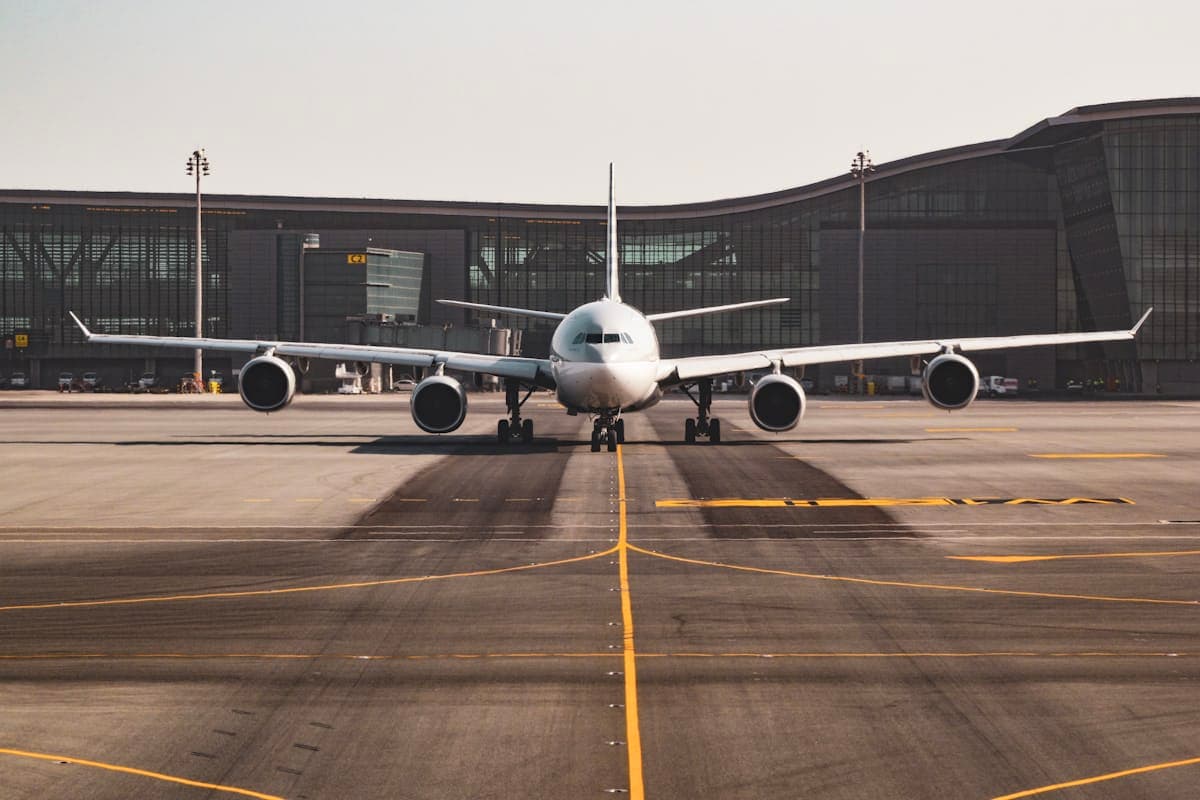
For most exempt passports the purpose of your trip is open: tourism, a business meeting, visiting friends. Citizens of the 12 countries added in August 2025 (Resolution 229/NQ-CP) are exempt for tourism only. The exemption covers all of Vietnam, including Phu Quoc island. The one thing that decides everything is which passport you hold.
How the visa-free regime works
Vietnam's visa-free entry is set by government decree and it is nationality-based. If your passport is on the exempt list, you get a fixed number of days on arrival — free, no paperwork, just a stamp. This guide is about the entry itself; for who qualifies and how many days each passport gets, see the full visa-free countries list. Here are the parameters that stay constant whatever the exact day count:
How the days are counted
The count is in calendar days, and it includes the day you land and the day you leave. If you arrive on 1 March with a 45-day allowance, your last legal day is 14 April. Never work this out from memory at the airport: the exit date is written into the stamp the officer gives you, and that date is the one that counts.
If you plan to stay longer than your visa-free window, sort out an e-visa (90 days) before you fly — the law allows an extension only through a sponsoring organisation, and it is at immigration's discretion, not a right.
What to show at the border

For a visa-free entry the paperwork is short, but two things catch first-timers out: a passport that runs out too soon, and, since April 2026, the online arrival card you now have to file before you fly. Here is what an officer can ask to see, in order of how likely it is.
Your passport — the one hard rule
The passport is the only truly mandatory document. The requirements:
If your passport has under 6 months of validity left, you can be turned away at the border. Check this before you buy tickets — it is the single most common reason travellers get refused.
Onward ticket and hotel booking
The law does not list an onward ticket among the conditions of the visa exemption, but in practice you should have a ticket out of Vietnam, home or to a third country, that leaves within your allowed days. At the border it is checked selectively; the airline is the real gatekeeper: check-in staff can refuse to board you without one, because if immigration turns you back, the carrier flies you out at its own cost. Keep the ticket on your phone or printed.
…99% they’ll pick on it, but not the Vietnamese at the border (they really don’t care) — it’s at the check-in desk at the airport before departure. They can refuse to let you on the flight… And excuses that you plan to leave overland for a neighbouring country don’t workvlad2308, Vinsky Forum, 2024, translated by VietnamSpot
A hotel booking is asked for even less often. If you are travelling without a fixed plan, a booking for your first night — via Booking or Agoda — is enough to satisfy the "address in Vietnam" question on the form.
Travel insurance
Travel insurance is not required to enter Vietnam and will not be checked at the border. It is still strongly advised: healthcare for foreigners is expensive here.
A clinic visit without cover can run $100–500, and hospital admission into the thousands. A day of travel insurance costs a couple of dollars — the maths is not close.
Travelling with children
Children get the same visa-free days as adults. Extra documents you may want on hand:
- The child's own passport (also valid 6+ months)
- A birth certificate — useful if surnames differ from the accompanying parent
- If the child travels with one parent only, some borders ask for a notarised consent letter from the other parent
Fast Track — no queue at the border
5–10 minutes instead of an hour in the immigration queue
from$11per passenger
At passport control — step by step

Clearing immigration on a visa-free stamp is simple, but the paperwork moved online in 2026, so it helps to know the flow before you are standing in line.
Step 1. File the digital arrival card before you fly
This is the part that has changed. According to Vietnam Airlines, the online arrival card is required at Ho Chi Minh City (Tan Son Nhat), Hanoi (Noi Bai), Da Nang and Cam Ranh. Foreign arrivals there file it, visa-free travellers included; the exception is visa-free passengers who land at Tan Son Nhat to connect to Phu Quoc. Do it on the official portal prearrival.immigration.gov.vn within 72 hours of your flight; it is free and takes a few minutes. You will enter:
- Full name — exactly as in your passport
- Passport number and date of birth
- Nationality — as on your passport
- Flight number and arrival date
- Purpose of visit — Tourism (or Business)
- Address in Vietnam — your hotel name or an address
When it is validated the system gives you a QR code. Save it — a screenshot is fine — because the officer scans it at the desk. The old paper arrival form still turns up at a few crossings that have not switched over yet; if you are handed one, fill it in English in block capitals. But do not count on paper: file the digital card first and treat the form as a backup.
Step 2. Passport control
At the desk, hand over:
- Your passport
- Your arrival-card QR code — on your phone, or the paper form if that is what the crossing uses
The officer checks the passport and may ask a quick question about your purpose and how long you are staying. Then they add the stamp with two dates: your entry date and the last day you are allowed to stay. Memorise that second date — it is your deadline.
Step 3. Customs
After immigration comes customs. Two channels:
- Green — nothing to declare
- Red — declare if you carry cash over $5,000 (or equivalent), alcohol above the allowance, or more than 200 cigarettes
Most travellers walk the green channel in under a minute. How much alcohol you can bring in duty-free, and what to drink once you land, is in our guide to alcohol in Vietnam.
Visa-free or a 90-day e-visa — which to pick

If you plan to stay longer than the visa-free window, it will not stretch to fit. The alternative is the 90-day e-visa, open to any nationality. In short:
- Visa-free — free, no application, a fixed number of days by nationality; best for a holiday of one to six weeks, a scouting trip, or a short business visit.
- e-visa (90 days) — $25 single / $50 multiple entry, about 3 working days on evisa.gov.vn; best for a long winter stay, remote work, or when you would rather not gamble on visa runs. We can file it for you — see the visa services page; we pay the government fee and refund it if the application is refused.
For the full side-by-side comparison — day counts by passport, extension rules and re-entry — see the visa-free countries list, which owns the who-qualifies detail.



Ports of entry — where your entry is valid

Where you can cross depends on how you enter. On a visa-free stamp there is no constraint — the exemption works at every international crossing, air, land or sea.
An e-visa is different: it is only valid at listed ports, and you name your port of entry on the application. As of December 2025 the e-visa is accepted at 83 border crossings — 17 airports, 27 land gates and 39 seaports — after Resolution 389/NQ-CP widened the list (baochinhphu.vn, 2025). All the airports you are likely to fly into are on it, but if you plan to cross by land or sea, check your exact gate is listed before you commit to the route.
Need the e-visa itself — how to apply, the $25 / $50 fee, processing time and copycat-site warnings? That lives in the full Vietnam visa guide, alongside every other visa type.
Visa runs — how to stay longer

A visa run means leaving Vietnam and re-entering to get a fresh visa-free stamp. It is legal and the most popular way to stretch a stay without a visa. The current entry law, as amended by Law No. 51/2019/QH14, no longer contains the old 30-day gap between visa-free entries, so a same-day return is not ruled out.
The classic routes are Cambodia (the Mộc Bài land crossing from Ho Chi Minh City, 3–4 hours) and short flights to Bangkok or Phnom Penh. Budget for the transport both ways plus any visa for the country you pop into; fares change with the season, so price the trip when you plan it.
Do it too often and immigration may ask extra questions or shorten your next stay — visa runs are tolerated, not a residency scheme. For long-term living, an e-visa or a work visa is the cleaner route; our full Vietnam visa guide walks through every visa type and how to extend.
Overstay penalties
Fines run from 500,000 to 40,000,000 VND (~$19–1,540) depending on how far you overstayed. Amounts under Decree 282 are markedly higher than before. For the full band-by-band fine table and how to settle an overstay, see the guide to overstaying in Vietnam.
How to avoid an overstay
- Photograph the stamp in your passport — the exit date is written on it
- Set a phone reminder for 5 days before it expires
- Book your onward ticket early — fares climb in high season
- Remember the count includes arrival and departure day
Arriving on Phu Quoc

Phu Quoc island has a separate 30-day visa-free rule open to any nationality, provided you fly in from abroad (per Vietnam Airlines, a transfer at Ho Chi Minh City or Hanoi without leaving the airport also counts) and stay on the island. Who qualifies, the conditions and how it compares with the nationwide exemption are covered in the visa-free countries list. At the border the entry itself works the same way described above — passport, arrival card and the stamp with your exit date.
Common mistakes
Miscounting the days. The allowance includes arrival and departure day. A frequent slip is counting that many "full" days and overstaying by one or two.
A passport under 6 months. Vietnam enforces this strictly. Five months and 29 days of validity is not enough — you can be refused at the border.
No onward ticket. Even where the border does not check, the airline may not board you without one. Buy at least a cheap, refundable onward ticket before you fly.
Paying the e-visa on a copycat site. Only evisa.gov.vn and its twin thithucdientu.gov.vn are official; look-alikes charge a markup and cause most of the "it never came through" problems.
The phantom 30-day gap. The 30-day break between visa-free entries is not in the current law (as amended in 2019), so a same-day return is not ruled out.
FAQ
It depends on your passport. Citizens of a set of exempt countries (much of the EU, the UK, Japan, South Korea and several others) get a fixed number of visa-free days on arrival. Everyone else applies for an e-visa in advance at evisa.gov.vn. Check your own nationality before you book.
A passport valid for at least 6 months with blank space for the stamps, plus proof of onward travel (a ticket out of Vietnam). Officers may also ask for a hotel booking or an address. Have the ticket and first-night booking on your phone or printed.
Yes, if you land at Ho Chi Minh City, Hanoi, Da Nang or Cam Ranh: according to Vietnam Airlines, the online arrival card is required there for foreign arrivals, visa-free included. Visa-free passengers connecting in Ho Chi Minh City to Phu Quoc are exempt. File it free at prearrival.immigration.gov.vn within 72 hours of your flight and save the QR code for the border.
A fixed number of calendar days counted from the day you land, including arrival and departure day. The exact figure depends on your passport, and the exit date is written in the entry stamp.
Not everyone, but it happens — and an airline can refuse to board you without one. In practice the onward ticket is checked more often at check-in than at the Vietnam border. Carry a refundable or cheap onward ticket to be safe.
Yes. The current entry law, as amended by Law No. 51/2019/QH14, no longer contains the old 30-day gap between visa-free entries, so a same-day return is not ruled out. Frequent back-to-back visa runs can draw extra questions, though.
Phu Quoc has its own 30-day visa-free rule open to any nationality when you fly in from abroad; per Vietnam Airlines, a transfer at Ho Chi Minh City or Hanoi without leaving the airport also counts, but you cannot continue to the mainland on it. If your passport already gets nationwide visa-free days, that is usually the better option; the island scheme mostly helps passports not on the general exempt list.
Under Decree 282/2025/ND-CP (from 15 December 2025), fines run from 500,000 to 40,000,000 VND (~$19–1,540) depending on length. Longer overstays can mean deportation and an entry ban, and even one day is logged.
- Preparation
Long Thanh Airport 2026: Opening Date, Flights, Transport
Long Thanh Airport, Ho Chi Minh City: ACV now targets 24 Dec 2026, which flights leave Tan Son Nhat by 2028, getting to the city, and what is still unknownLong Thanh Airport 2026: Opening Date, Flights, Transport - Preparation
Vietnam Visa 2026: E-Visa and Visa-Free Entry
Vietnam visas explained for every nationality: the 90-day e-visa and visa-free entry — how to apply on evisa.gov.vn, costs and timing.Vietnam Visa 2026: E-Visa and Visa-Free Entry - Preparation
Vietnam Visa Run: Border Runs, Routes & Costs 2026
The Vietnam visa run: resetting your stay via a border with Cambodia or Laos — the routes, costs, risks and whether it's still worth it.Vietnam Visa Run: Border Runs, Routes & Costs 2026