Vietnam vs Thailand: where should you go in 2026
Same region, same UTC+7, two very different trips. Thailand is still the bigger destination — 32.9 million arrivals in 2025 against Vietnam's 21.2 million — but the gap is closing fast: Vietnam grew 20% that year while Thailand shrank 7%. The country doesn't decide your trip, though; your segment does: family with kids, a winter base, kitesurf, dive. Below is a head-to-head on 12 points with current 2026 data.

Current as of July 2026. Exchange rates and visa rules change — key figures are flagged for regular updates. Conversions use ~26,000 VND = $1 and ~33 THB = $1.
The one-minute verdict
Don't want to read 4,000 words? Take the scenarios. Ten common situations and where each one points.
| If you're... | Pick | Why |
|---|---|---|
| Counting every dollar | Vietnam | About 13% cheaper on average per Numbeo, up to 30% at beach resorts |
| Travelling with kids 3–7, want comfort | Thailand (Samui, Phuket) | Mature hotel infrastructure, shallow sea, international paediatricians |
| Travelling with kids 3–7, want cheaper | Vietnam (Phu Quoc) | Quiet island, shallow water at Bãi Sao, Vinpearl Safari |
| After bars, clubs and nightlife | Thailand | Bangkok, Phuket, Pattaya — 50+ years of tourist tradition |
| Wintering by the sea for 3+ months | Da Nang or Nha Trang | Cheaper than Phuket, growing expat scene |
| A digital nomad who speaks English | Chiang Mai | Asia's biggest remote-work community |
| Chasing raw Asia and culture | Vietnam | Hoi An, Hue, Ha Long, Phong Nha — four UNESCO sites |
| After a cheap open-water dive cert | Koh Tao | Courses from ~$300, a world dive-training hub |
| Kiting or surfing | Mui Ne (kite) or Da Nang (surf) | Steady wind Nov–Apr, a dozen schools |
| After serious medical care | Bangkok | Bumrungrad, Bangkok Hospital — JCI level |
The general formula: Thailand = comfort and infrastructure. Vietnam = value and authenticity. Now the detail.
Vietnam vs Thailand on 12 points
The verdict column is a judgement call on each row, not a measurement — read it as where we would put our own money, and note that the specific place usually matters more than the country.
| Point | Vietnam | Thailand | Verdict |
|---|---|---|---|
| Daily budget (tourist) | $25–45 | $40–65 | Vietnam |
| Visa-free stay (Western passports) | 45 days (shorter list, through 2028) | 30 days (60 countries, since 15 Sep 2026) | Depends on passport |
| International connectivity | Hanoi, HCMC, Da Nang, Cam Ranh | Bangkok is a mega-hub | Thailand |
| Entry fee | $0 | 300 THB announced, repeatedly delayed | Vietnam |
| Beach quality | Good, but 5–6 postcard spots | Dozens of islands, white sand | Thailand |
| Food (variety) | Fresh herbs, light, coffee | Spicier, bolder, more varied | Thailand |
| Street food (price) | $1.50–4 a dish | $2.50–6 a dish | Vietnam |
| Nightlife | Modest, except Nha Trang | Bangkok, Phuket, Pattaya — anything goes | Thailand |
| Tourist infrastructure | Developing, sometimes chaotic | Polished over 50 years | Thailand |
| Heritage and culture | Hoi An, Hue, Sapa, Ha Long | Ayutthaya, temples | Vietnam |
| Healthcare for foreigners | Vinmec, Family Medical | Bumrungrad, Bangkok Hospital | Thailand |
| English-speaking scene | Da Nang, Hoi An, HCMC | Chiang Mai, Bangkok, islands | Thailand |
Thailand leads on 8 rows, Vietnam on 4. By count, Thailand. By logic, it depends. Two questions decide it: your budget, and why you're going. Free budget and you want polished comfort — Thailand. Price matters, or a Vietnam criterion lines up (wintering, surf, authenticity, coffee) — Vietnam.
Visas, entry and fees in 2026 — what changed

For most Western travellers, neither country needs a visa arranged in advance in 2026 — but the terms differ, and the exact rule turns on your citizenship.
| Point | Vietnam | Thailand |
|---|---|---|
| Visa-free stay | 45 days (selected passports, to 2028) | 30 days (since 15 Sep 2026) |
| If your passport isn't on the list | e-visa 90 days / ~$25 | most Western passports are on it |
| Extension | e-visa 90 days / ~$25 | +30 days / 1,900 THB (~$58) |
| Passport validity | 6+ months | 6+ months |
| Onward ticket | rarely checked | rarely checked |
| Entry fee | 0 | 300 THB announced, still delayed |
Thailand: the 60-day visa-free scheme that ran from July 2024 has ended. An Interior Ministry notification published in the Royal Gazette on 31 August 2026 cut the stay to 30 days from 15 September for tourists from 60 countries and territories, including the US and UK. Check your own passport before you fly. A further 30-day extension is available at an immigration office before your stay expires, for a 1,900 THB fee.
The 300 THB tourism fee — delayed again. Promised since 2020, the 300 THB air-arrival fee (150 THB by land or sea) has been pushed back repeatedly — to mid-2025, then into 2026, and as of July 2026 it still isn't live, with tourism operators lobbying to scrap it amid a soft arrivals year. Entry is free for now; if it does launch, budget roughly $9 a head.
Vietnam: the 45-day visa-free entry (introduced in August 2023, up from the old 15 days) now runs under Resolution 44/NQ-CP from 15 March 2025 to 14 March 2028. That instrument covers twelve countries — the UK, France, Germany, Italy, Spain, Russia, Japan, South Korea, Denmark, Sweden, Norway and Finland — and further nationalities have been added since under separate, shorter-dated schemes, so check your own expiry date rather than assuming 2028. US and Australian citizens are not on it, but they can enter on a 90-day e-visa for ~$25 at evisa.gov.vn, issued within about three working days. No entry fee is charged. Passport must be valid at least six months from entry.
Getting there — flights, times, costs

On raw connectivity, Thailand wins — Bangkok (BKK/DMK) is one of the busiest hubs on earth, with direct long-haul from Europe, the Middle East, Australia and North Asia, plus low-cost links across the region. Vietnam has good direct service to Hanoi (HAN), Ho Chi Minh City (SGN), Da Nang (DAD) and Cam Ranh (CXR), but fewer intercontinental frequencies. Practically, many travellers fly into Bangkok and hop to Vietnam on a 2-hour regional flight.
| Gateway | Airport | Direct long-haul? | Notes |
|---|---|---|---|
| Bangkok | BKK / DMK | Yes, extensive | Regional super-hub; onward flights everywhere |
| Phuket | HKT | Some seasonal | Direct charters from Europe in winter |
| Koh Samui | USM | No | Connect via Bangkok |
| Ho Chi Minh City | SGN | Some | Main southern gateway |
| Hanoi | HAN | Some | Best base for the north |
| Da Nang | DAD | Regional | Central coast; easy from Bangkok/Singapore |
| Phu Quoc | PQC | No | Connect via HCMC or Bangkok |
The two flight puzzles are Phu Quoc and Koh Samui. Neither has broad direct long-haul; both usually need a connection through a capital hub. Heading to the dream island — budget 2–4 hours for the transfer. Want to walk straight from arrivals to your hotel without a second check-in — Phuket, Cam Ranh or Da Nang.
Bangkok–Ho Chi Minh City is about 1h40 in the air; Bangkok–Hanoi about 1h50. That short hop makes a two-country trip genuinely easy — many travellers split a longer holiday between both.
Prices — a real basket comparison

Rates used here: $1 ≈ 26,000 VND, $1 ≈ 33 THB.
Per Numbeo (March 2026), living costs in Vietnam run about 13% below Thailand. That is the country-wide average; on the beach resorts the gap widens to as much as 30%. Phuket and Koh Samui are traditionally pricey, and Vietnam's beaches are only just catching up.
We were on Phu Quoc in October… We stayed on the beachfront. On Phuket in particular, and in Thailand in general, beachfront housing is much more expensive… But in Thailand the housing stock is badly worn and often smelly, while Phu Quoc has lots of new hotelsБрат-2, Vinsky Forum, 2024, translated by VietnamSpot
| Category | Nha Trang | Phuket | Gap |
|---|---|---|---|
| 3★ hotel / night | ~$20–36 | ~$36–56 | −40% |
| 4★ hotel / night | ~$45–76 | ~$70–120 | −35% |
| 5★ hotel / night | ~$120–250 | ~$180–400 | −30% |
| Lunch at a local café | ~$2–4 | ~$4–6 | −40% |
| Dinner with beer for two | ~$15–25 | ~$20–35 | −30% |
| Bottle of beer at a bar | ~$1.50–2 | ~$2.50–4 | −40% |
| Grab taxi, 10 km | ~$4–6 | ~$7–10 | −35% |
| Full-day excursion | ~$25–45 | ~$35–60 | −25% |
| Motorbike rental / month | ~$50–80 | ~$80–150 | −40% |
| SIM with data / 30 days | ~$5–8 | ~$10–15 | −40% |
| Café latte | ~$1.50–2.50 | ~$3–4.50 | −45% |
Monthly budget for one person
| Item | Nha Trang | Phuket | Chiang Mai | Da Nang |
|---|---|---|---|---|
| Studio rent, central | $280–400 | $500–800 | $350–500 | $360–540 |
| Food (home + café) | $440 | $640 | $560 | $500 |
| Transport | $90 | $180 | $140 | $110 |
| Leisure and connectivity | $200 | $300 | $240 | $220 |
| Comfortable total | $1,010–1,130 | $1,620–1,920 | $1,290–1,440 | $1,190–1,370 |
Chiang Mai is usually compared with Da Nang. Chiang Mai is slightly cheaper on long-term rent — but landlocked. Want the ocean within walking distance for the same money? Da Nang.
Heat, humidity, sea, and roughly half the cost of Phuket — that's the arithmetic that picks Vietnam when money isn't unlimited. Weighing a third option in the region? See our Vietnam vs Bali and Vietnam resort comparison guides.
Fast Track — no queue at the border
5–10 minutes instead of an hour in the immigration queue
from$11per passenger
Beaches — where the sand, sea and service are better

On sheer count and variety, Thailand leads. Dozens of islands and the postcard scenery of Krabi, Phi Phi and the Similans are the national brand. Vietnam plays a different game: long city beaches (Da Nang's Mỹ Khê runs 10 km and placed sixth in Asia at the 2024 Tripadvisor Travellers' Choice awards), winter calm on Phu Quoc, and low sunbed prices.
…in Vietnam… (Da Nang, Nha Trang)… the beaches are no worse than Phuket's and many times better than the beaches of somewhere like Pattaya (but worse than Thailand's protected excursion islands, which you won't be going to every day anyway)Midian, Vinsky Forum, 2026, translated by VietnamSpot
Thailand's beaches — top 5
- Phuket: 30+ beaches. Kata, Karon, Nai Harn (quiet), Surin (premium). Season Nov–Apr; red flags on the Andaman in the wet season.
- Koh Samui: Chaweng (party), Lamai (family), Bophut (fishing village), Maenam (quiet). Calm sea almost year-round.
- Krabi: postcard limestone cliffs, turquoise water, boats to Railay and the Hong Islands.
- Phi Phi and Koh Lipe: the best sea in photos. Harder, pricier to reach and crowded in season.
- Koh Chang and Koh Kood: eastern coast, cheaper than Phuket, wilder.

Vietnam's beaches — top 5
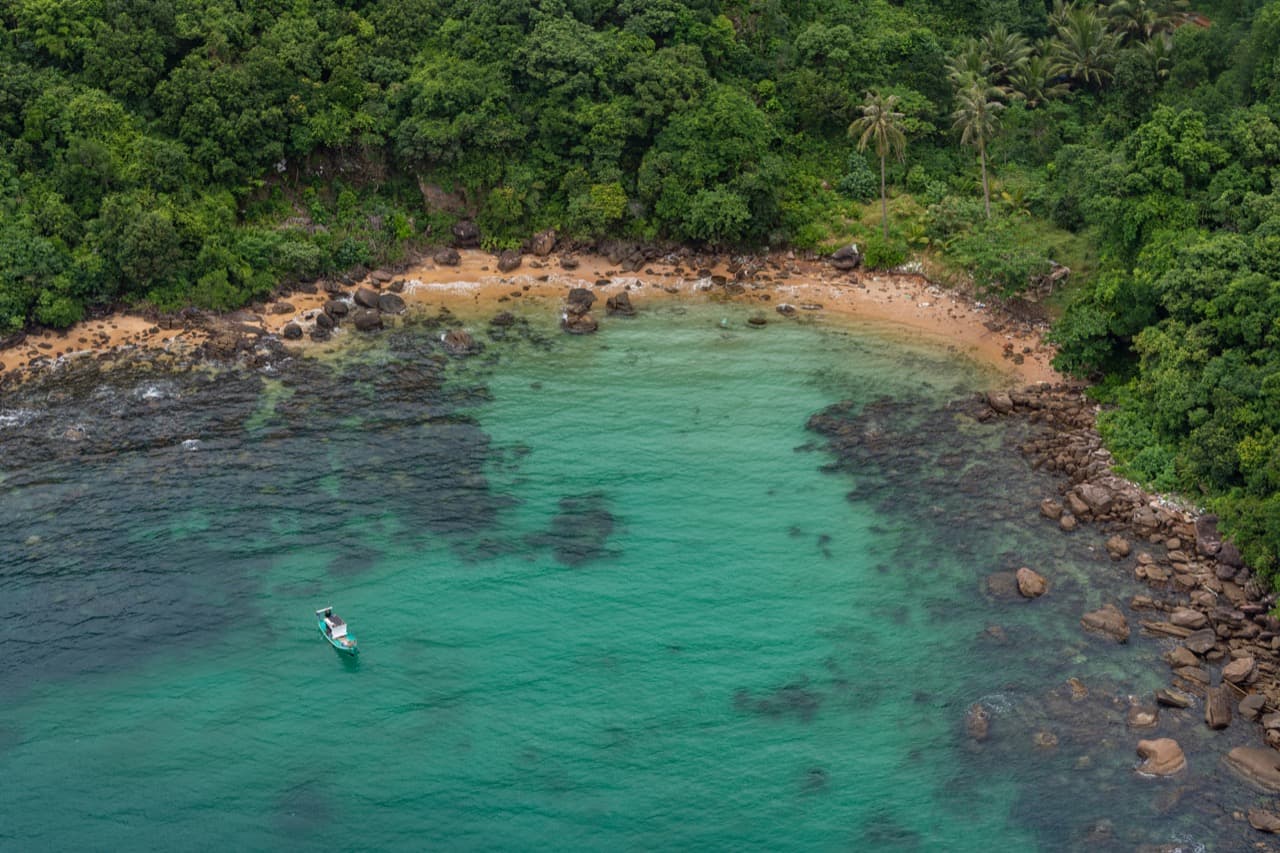
- Phu Quoc: Bãi Sao (white sand), Bãi Dài (long, with resorts), Bãi Trường (central). Season Nov–Apr.
- Da Nang: Mỹ Khê — 10 km of white sand, clean sea, international-chain hotels on the waterfront. Season Mar–Aug.
- Nha Trang: a 7 km city promenade plus the islands Hòn Một and Hòn Tằm for snorkelling. Season Feb–Sep.
- Mui Ne: yellow sand, constant wind. For kiting and surfing, one of the main spots in Asia.
- Con Dao: 16 wild islands on the far south. Six Senses, few tourists, world-class diving.

Pair for pair — which Vietnamese resort matches which Thai one
| If you like... | Vietnam | Thailand | The difference |
|---|---|---|---|
| Family island, white sand | Phu Quoc | Koh Samui | Phu Quoc is quieter and ~1.5× cheaper |
| City beach with a party scene | Nha Trang | Pattaya | Nha Trang is cleaner, cheaper, no sex-tourism |
| Long sand + modern city | Da Nang (My Khe) | Hua Hin | Comparable; Da Nang is cheaper |
| Kiting and wind | Mui Ne | Hua Hin | Mui Ne is one of the region's main kite spots |
| Premium, wild beaches | Con Dao | Koh Kood / Koh Chang | Con Dao is harder to reach, pricier, more exotic |
| Culture + a beach nearby | Hoi An (An Bang) | Krabi | Hoi An is UNESCO, lanterns |
Travellers on TripAdvisor and Reddit's r/VietnamTravel broadly agree: in winter Phu Quoc beats Phuket for cleanliness and calm, but loses on beach variety and activities. For the postcard beach, go Krabi, Phi Phi or the Similans. For long sand by a modern city, Da Nang or Hua Hin. On beaches, Vietnam has one world-class resort — Phu Quoc. Thailand has five.

Food — spicy vs fresh, coffee vs tea

Thai and Vietnamese cooking are related but work differently. Thai food hits loud — sweet, sour and spicy at once, built on coconut milk, chillies and curry paste. Vietnamese food runs on clean flavour: fish sauce, fresh herbs, rice, noodles. In Vietnam the chilli sits on the table so you add as much as you want; in Thailand it's cooked into the dish from the start.

What to order
Vietnam — must-try:
- Phở — rice noodles in broth with beef or chicken. Breakfast number one.
- Bánh mì — a baguette with pâté, veg and meat. ~$1.50 on the street.
- Cơm tấm — broken rice with grilled pork, a southern favourite.
- Bún chả — noodles with grilled pork, a northern dish.
- Egg coffee (cà phê trứng) and coconut coffee — local points of pride.
Thailand — must-try:
- Tom yum — a hot-and-sour soup with shrimp or chicken.
- Pad thai — stir-fried noodles with tamarind, peanuts and shrimp.
- Green curry — a coconut broth with chicken or beef.
- Mango sticky rice — mango with glutinous rice and coconut sauce.
- Som tam — a spicy green-papaya salad.
On the street, prices are almost identical: a bowl of phở in Nha Trang is ~$2, a plate of pad thai in Bangkok is ~60 THB (~$1.80) — within the margin of error. In restaurants Vietnam pulls ahead: dinner with beer for two at a local café is ~$15–25 versus ~$20–35 in Thailand.
Coffee is its own story. Vietnam is one of the world's top three producers, with a deep coffee culture: homegrown robusta, egg coffee, beans from Da Lat. Thailand leans to the tea side — Thai iced tea with condensed milk, matcha in every café.
Culture, nightlife and shopping

On out-of-the-box entertainment, Thailand leads. Half a century of tourism means a waterpark at every resort, cabaret, Muay Thai arenas, floating markets, and the nightlife of Bangkok and Phuket. Bangla Road in Phuket and Walking Street in Pattaya run around the clock.
Thailand's top options:
- Temples: Wat Pho and Wat Arun in Bangkok, Wat Rong Khun (the White Temple) in Chiang Rai.
- Night markets: Chatuchak in Bangkok (15,000 stalls), Patpong, the Sunday Walking Street in Chiang Mai.
- Shows: ladyboy cabaret, Muay Thai, ethical elephant parks such as Elephant Nature Park.
- Islands and diving: the Similans (a world top-10), Koh Tao, Phi Phi.
- Party: Bangla Road in Phuket, Khao San Road in Bangkok, Walking Street in Pattaya.
Vietnam's top options:
- Four UNESCO sites: Hoi An (old town), Hue (imperial complex), Ha Long Bay, Phong Nha-Ke Bang (the world's largest caves).
- Nature: the Sapa rice terraces, the Mekong Delta, the Cu Chi tunnels.
- Theme parks: VinWonders (Nha Trang, Phu Quoc, Nam Hoi An), Ba Na Hills with the Golden Bridge in Da Nang.
- Modest nightlife: Nha Trang's bars, Bui Vien Street in Ho Chi Minh City.
Shopping differs. Thailand is for brands and world-class malls: ICONSIAM and Siam Paragon in Bangkok. Vietnam is for made-to-measure: a silk or cashmere suit in Hoi An for $50–100, tailored in 24 hours. Bangkok has nothing quite like it.
On nightlife Thailand wins outright. Going for parties, bars, gigs and buzz — Bangkok or Phuket. In most Vietnamese cities it's quiet after 11pm.
Safety and healthcare
Both countries are safe for travellers, with little serious crime against foreigners. On the Global Peace Index 2026 Vietnam ranks 41st of 163 and Thailand 101st. In both, the real danger is the road, not the criminals.
Typical risks
More common in Thailand:
- Street theft in Bangkok, Pattaya and Phuket.
- Tuk-tuk scams — drivers steer you to gem "galleries" and timeshare offices under the "the attraction is closed today" line.
- Spiked drinks in some Pattaya tourist bars.
- Motorbike accidents — the leading cause of foreign-tourist deaths.
More common in Vietnam:
- Pickpocketing in Ho Chi Minh City, especially phones and bags snatched from passing motorbikes.
- Non-Grab taxi scams — the meter "accidentally" runs 10× fast.
- Fake dong notes at street money changers.
- Motorbike accidents — as in Thailand, the main risk.
Natural risks differ. Tsunami — Thailand only (the Andaman coast, last in 2004). Typhoons hit both, but in different seasons: Thailand's west coast from May to October, Vietnam's centre (Da Nang, Hue) from September to November. Dengue is present in both during the rainy season.
Healthcare
| Country | Top clinics | Accreditation | Doctor visit (private) |
|---|---|---|---|
| Thailand | Bumrungrad, Bangkok Hospital, Samitivej | JCI | $50–100 |
| Vietnam | Vinmec Hanoi/HCM, Family Medical Center | JCI (Vinmec) | $30–60 |
Thailand is the regional medical-tourism leader. The flagship is Bumrungrad International in Bangkok. For complex surgery, cardiac work and oncology, Bumrungrad is world-class.
Vietnam is catching up. Vinmec Times City in Hanoi was among the country's first JCI-accredited hospitals — Vinmec Central Park and FV Hospital in Ho Chi Minh City hold the accreditation too — handling oncology, cardiology and transplants. It runs 30–40% cheaper than Thailand and is comparable for routine care. Dentistry is its own story — Vietnam has a growing dental-tourism industry drawing patients from Australia, the US and Europe.
Ambulance services in both are weak by European standards. The standard move is to call a Grab and drive to a private clinic yourself. In large Thai cities the ambulance tends to arrive noticeably faster than in Vietnamese ones.
For the everyday stuff — a scooter graze, a stomach bug, a dressing and an X-ray — a walk-in at a private Vietnamese clinic typically runs under $100 and is usually quicker than the public route. Keep the receipts: most travel policies reimburse this tier of treatment, but only against paperwork.
Season by month — which country when
Vietnam is harder to plan than Thailand. The country stretches 1,650 km, and the north and south are two different climates. Thailand is simpler: Nov–Apr is high season almost everywhere, May–Oct is low. In Vietnam, when it's pouring on Phu Quoc, Nha Trang is in season — and vice versa.
There's zero time difference between the two — both are UTC+7. A flight between them takes 1.5–2 hours.
| Month | Phu Quoc | Nha Trang | Da Nang | Phuket | Koh Samui | Better |
|---|---|---|---|---|---|---|
| January | Peak | Swell | Rain | Peak | Good | Phuket |
| February | Peak | Season starts | Cool | Peak | Good | = |
| March | Peak | Good | Warm | Peak, hot | Good | = |
| April | Peak, hot | Excellent | Warm | Hot (38°C) | Good | Nha Trang |
| May | Rain begins | Peak | Hot | Rain | Good | Nha Trang |
| June | Rain | Peak | Hot | Rain | Rain | Nha Trang |
| July | Rain | Peak | Hot | Rain | Rain | Nha Trang |
| August | Rain | Peak | Hot | Rain | Rain | Nha Trang |
| September | Peak rain | Rain | Rain | Rain | Good | Koh Samui |
| October | Rain | Rain, swell | Typhoons | Rain ending | Rain | = |
| November | Season starts | Rain ending | Rain | Reopening | Rain | Phuket |
| December | Peak | Swell | Rain | Peak | Good | Phuket |
The short logic:
- December–February — both, but Thailand across the board, Vietnam only the south (Phu Quoc, Mui Ne).
- March–April — the most universal months for both.
- May–August — Vietnam (Nha Trang, Da Nang). Thailand's Andaman is in the rains.
- September — Koh Samui (its own east-coast season); nowhere much in Vietnam.
- October–November — transitional, a gamble.
Yes, October is an ambiguous month. It's a matter of luck. That year in October I didn't risk Phuket — we went to Koh Samet. Everything was finesnakee, Vinsky Forum, 2025, translated by VietnamSpot
For a month-by-month breakdown across every resort, see the Vietnam weather guide; for the full visa picture by nationality, the Vietnam visa guide.
Who should pick what — segments under the microscope

With small children (3–7)
Thailand. Koh Samui and Phuket are the two most family-friendly resorts in the region: shallow sea, gentle entry, hotels with kids' pools and paediatricians, international clinics nearby. The budget alternative in Vietnam is Phu Quoc — a quiet island, calm water at Bãi Sao, Vinpearl Safari with giraffes and zebras. Nha Trang is worse for toddlers: chaotic motorbike traffic, narrow pavements.
With teens (8–14)
Level. Nha Trang has VinWonders, a cable car and bars for parents in the evening. Da Nang has Ba Na Hills, surfing and cliff jumps. Phuket has Phi Phi snorkelling and Muay Thai shows. Budget decides: for the same money, the Vietnamese hotel is a category higher.
Young travellers — parties, bars, nightlife
Thailand. Bangkok (Khao San), Phuket (Bangla), Pattaya (Walking Street) — a different league. In Vietnam the comparable buzz lives in one place, Nha Trang, and even there it's tamer. Going for the parties — Thailand.
Budget travellers
Vietnam. Mui Ne or Phan Thiet is the cheapest comfortable holiday in the region: from ~$28 a day with hotel and three meals. The Thai price equivalent is Koh Chang, but it's slower to reach, with weaker infrastructure and fewer hotel choices.
Surfers and kiters
Vietnam. Mui Ne is one of Southeast Asia's main kitesurf spots — steady northeast wind from November to April, ten schools on one beach, gear rental $20–30 a day. For classic surf, Da Nang (Mỹ Khê) from September to March. In Thailand surf is mostly on Phuket (Kata Noi) from May to September, and the waves are middling.
Divers
Thailand. The Similans are a world top-10 dive destination. Koh Tao is a training hub with an open-water cert from ~$300. Vietnam has diving in Nha Trang (from ~$250 for open water) and on Con Dao — premium, untouched, but pricier. First cert on a budget — Koh Tao. Already certified and want the exotic — Con Dao.
Wintering 3+ months
| City | Budget/month | Sea | Community | Downsides |
|---|---|---|---|---|
| Da Nang (Vietnam) | $900–1,300 | Yes, walkable | Korean + growing expat | Rain Oct–Jan |
| Nha Trang (Vietnam) | $700–1,000 | Yes | Mixed, cheapest base | City beach isn't the best |
| Chiang Mai (Thailand) | $800–1,200 | No, 700 km inland | English digital-nomad | Smoky season Mar–Apr |
| Phuket (Thailand) | $1,200–1,800 | Yes | International | Pricey, crowded |
Low-budget wintering by the sea — Nha Trang. Family wintering with infrastructure and a beach — Phuket (from ~$1,500) or Da Nang (from ~$1,000–1,200). English-speaking digital nomad without the sea — Chiang Mai.
Premium holidays
Thailand. Aman Resorts, Six Senses, Banyan Tree, Mandarin Oriental — the chains with their flagship properties in Thailand. Vietnam's premium segment is catching up: Six Senses Con Dao, JW Marriott Phu Quoc, InterContinental Da Nang Sun Peninsula. World-class hotels, just far fewer of them.
Digital nomads
Chiang Mai — a European and American community, thousands of coworking spaces, cafés with fast Wi-Fi. Da Nang — an Asian community (Koreans, Japanese) plus a growing Western scene, with the ocean within walking distance. Choose by the language you want to work in and your priority: sea or community.
Culture and UNESCO lovers
Vietnam. Hoi An, Hue, Ha Long, Phong Nha-Ke Bang — four UNESCO sites on a 7–10-day route. Thailand's culture package is Ayutthaya and Sukhothai (the historic capitals) and Bangkok's temples. Lower density, points further apart.
When to pick Thailand (honestly)
We write about Vietnam, but honesty beats brand loyalty. Five scenarios where Thailand is the better call.
- Family with small kids + comfort with no compromises. Koh Samui and Phuket — world-class hotels, paediatricians, international schools. In Vietnam that exists only on Phu Quoc, and the infrastructure is thinner.
- First trip to Asia. Thailand is simpler: more English, clearer services, well-oiled logistics. A gentler way in.
- Premium resort. Aman, Banyan Tree, Mandarin Oriental — Thailand has dozens of top properties. Vietnam's premium is catching up, but the choice is still narrow.
- English-speaking wintering for a digital nomad. Chiang Mai is Asia's largest remote-work community. Da Nang doesn't reproduce that yet.
- Serious medical care. Bumrungrad and Bangkok Hospital — hubs of global medical tourism. Vinmec is catching up, but not yet level.
If none of these is you — Vietnam will most likely give you more for the same money.
When to pick Vietnam
The parallel list. Five scenarios where Vietnam is objectively better.
- Budget above all. Per Numbeo, Vietnam is about 13% cheaper than Thailand on average, with the gap reaching 30% at beach resorts. A month of comfortable living in Nha Trang is ~$1,000 versus ~$1,700 in Phuket.
- Authenticity and history. Four UNESCO sites on a 7–10-day route: Hoi An, Hue, Ha Long, Phong Nha-Ke Bang. Thailand doesn't offer that density.
- Wintering with the sea within walking distance. Da Nang and Nha Trang give you ocean, infrastructure and community for $700–1,300 a month — 1.5–2× cheaper than Phuket.
- Coffee and fruit. Vietnam is the world's second-largest coffee producer after Brazil and the largest grower of robusta by a wide margin, with a deep coffee culture of its own. Mango, rambutan, lychee, longan — dozens of fruits in season.
- Kite and surf. Mui Ne is one of the region's main kitesurf spots; Da Nang is Vietnam's best surf. Thailand's surf is weak, and kiting is mostly in Hua Hin.
FAQ
Vietnam is about 13% cheaper than Thailand on average, per Numbeo data from March 2026. On the beach resorts the gap is wider
- A 3★ hotel in Nha Trang a nightfrom ~$20runs versus ~$36 in Phuket
- A local-café lunchfrom ~$2versus ~$4
- The cheapest base in the region is Mui Ne or Phan Thietfrom ~$28 a dayincluding hotel and food
The nearest Thai equivalent is Koh Chang
With small children (3–7), Thailand if the budget allows: Koh Samui and Phuket have mature hotel infrastructure, shallow calm sea and international paediatricians. The budget alternative is Phu Quoc — a quiet island, calm water at Bãi Sao and Vinpearl Safari. With teens (8–14) the two are level: Nha Trang, Da Nang and Phuket all work, so budget decides.
March is a universal month for both. It's dry season in Nha Trang, Da Nang, Phu Quoc, Phuket and Koh Samui — 28–32°C, warm water, minimal rain. If it's your first trip to Asia, Phuket is simpler logistically. If price matters, Nha Trang or Phu Quoc are 25–30% cheaper.
May–August. On Thailand's Andaman coast (Phuket, Krabi, Phi Phi) it rains, swells rise and red flags go up. In Vietnam this is peak season in Nha Trang and Da Nang — dry, 30°C, clear. September is also tough for Thailand (except Koh Samui) and low season across most of Vietnam. From May to August the edge clearly goes to Vietnam.
Overall safety is comparable, and neither country is a standout risk for tourists. The main risks in both are motorbike accidents and petty scams. Thailand sees more tuk-tuk and timeshare cons; Vietnam sees more pickpocketing in Ho Chi Minh City and fake notes at street money changers. Tsunami risk applies only to Thailand's Andaman coast.
It depends on your passport, but for most Western travellers both are visa-free on arrival. Since 15 September 2026 Thailand grants 30 days visa-free to tourists from 60 countries and territories, including the US and UK; the old 60-day scheme has ended. Vietnam grants 45 days visa-free (through 2028) to a shorter list (UK, France, Germany, Italy, Spain and others); US and Australian citizens instead use a 90-day e-visa for ~$25 at evisa.gov.vn. Always check your own passport before booking.
Thailand has more world-class beaches — Phi Phi, Krabi, the Similans, Koh Lipe. Vietnam's top spots are Bãi Sao on Phu Quoc (white sand, turquoise water) and Mỹ Khê in Da Nang (10 km, sixth in Asia at the 2024 Tripadvisor Travellers' Choice awards). For the postcard and variety, Thailand. For a long city beach and winter quiet, Vietnam.
No — both are UTC+7, zero difference. Bangkok–Ho Chi Minh City is about 1h40 in the air; Bangkok–Hanoi about 1h50. Routing into Vietnam via Bangkok is a common combination, especially if you fly to Koh Samui (via Bangkok) and then hop into Vietnam.
- Guide
Day Trips from Doc Let 2026: Islands, VinWonders, Ba Ho
What you can reach from Doc Let Beach in 2026: the four-island boat tour, VinWonders, Ba Ho waterfall and Nha Trang mud baths, with the transfer cost added in.Day Trips from Doc Let 2026: Islands, VinWonders, Ba Ho - Guide
Hoi An Reviews 2026: Is the Old Town Worth Visiting?
Honest Hoi An reviews: what travellers love and criticise, how many days you need and who it suits — with real quotes and a clear verdict.Hoi An Reviews 2026: Is the Old Town Worth Visiting? - Guide
Ho Chi Minh City 2026: Saigon Guide for Travellers
Saigon guide: which district to stay in, what to see, the Cu Chi Tunnels, street food, getting around and visas for Vietnam's biggest city.Ho Chi Minh City 2026: Saigon Guide for Travellers