
Hoi An attractions in 2026
What to see in the Old Town and around it: the Japanese Bridge, the Chinese assembly halls, the old merchant houses and the museums. We break down the single ticket — what it covers and whether you actually need it — and give short pointers to the lantern festival, My Son and the Cham Islands, each with its own in-depth guide. Prices in USD, itineraries for 1, 2 and 3 days.
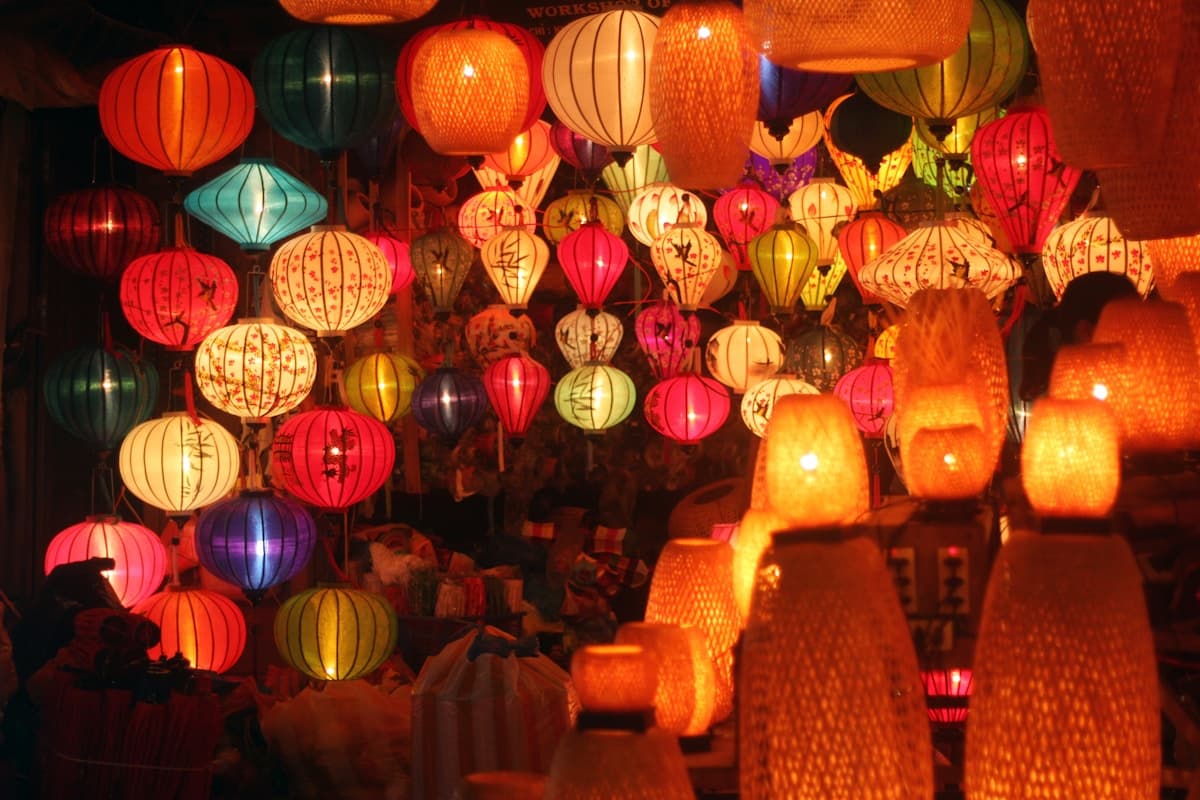
Hoi An is a former trading port, UNESCO-protected since 1999: more than a thousand historic buildings, architecture from the 15th–19th centuries, a Japanese bridge, Chinese assembly halls and merchant houses. You can sightsee here for two days straight and not get bored. Below is every main sight — what it is, why go, what it costs and when to turn up — plus short pointers on the lantern festival and the day trips, each with its own full guide.
Information current as of July 2026. Prices are converted at roughly 26,000 VND = $1 — always confirm on the spot.
- Japanese Bridge (Chùa Cầu): Covered by the single Old Town ticket — Heart of the Old Town
- Hoi An Old Town (Phố Cổ Hội An): Single ticket 120,000 VND (~$4.60) — UNESCO since 1999
- An Bang Beach (Bãi biển An Bàng): Free — 4 km from the Old Town
- Cham Islands (Cù Lao Chàm): Group tour from 800,000 VND (~$31) — UNESCO biosphere reserve
- Central Market (Chợ Hội An): Free — 06:00–21:00
- Tan Ky House (Nhà Cổ Tấn Ký): Covered by the single ticket — 200-year-old merchant house
- Fujian Assembly Hall (Hội Quán Phúc Kiến): Covered by the single ticket — 17th-century Chinese heritage
- Precious Heritage Museum (Di Sản Vô Giá): Free — Réhahn gallery, 26 Phan Bội Châu
- Thanh Ha Pottery Village (Làng gốm Thanh Hà): 35,000 VND (~$1.35) — 07:00–17:30 | workshop + souvenir
- Tra Que Vegetable Village (Làng rau Trà Quế): 20,000 VND (~$0.80) — 07:00–17:00
- My Son Sanctuary (Thánh Địa Mỹ Sơn): 150,000 VND (~$6) — 40 km from Hoi An | UNESCO
- Ba Na Hills (Sun World Bà Nà Hills): Day tour from 2,000,000 VND (~$77) — 65 km from Hoi An | Golden Bridge
The Old Town and the ticket — how it works
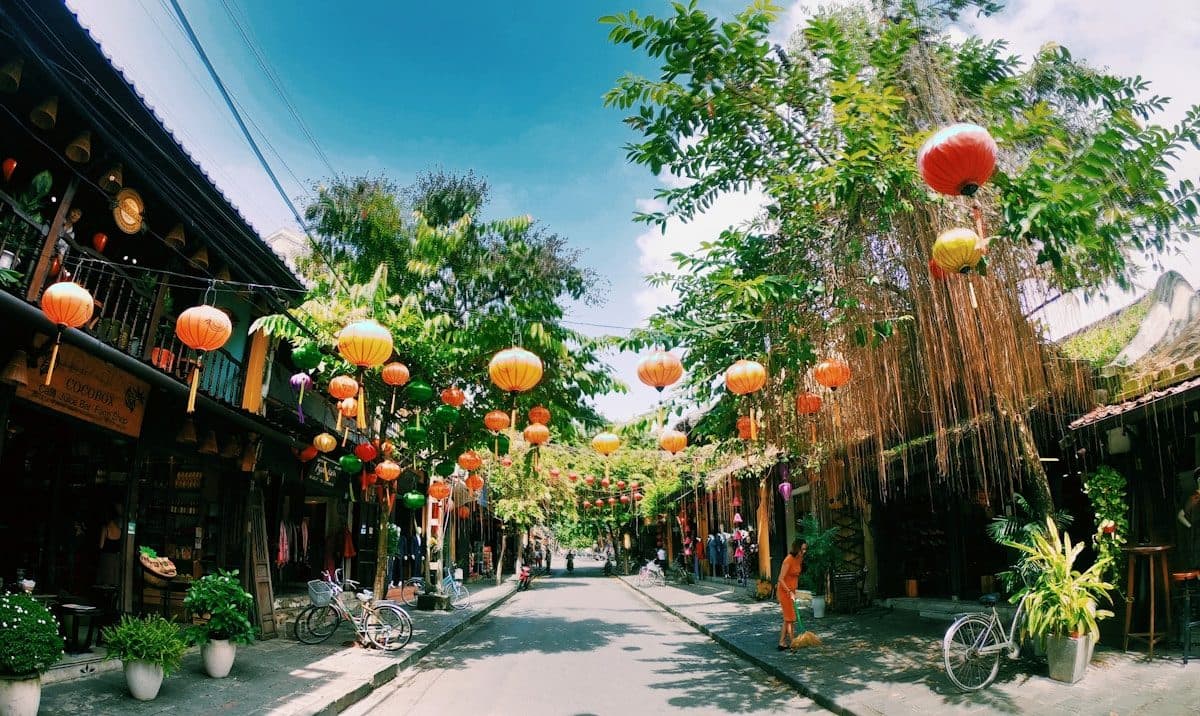
The Old Town is a handful of pedestrian streets along the river. The three main ones — Trần Phú, Nguyễn Thái Học and the Bạch Đằng riverfront — hold almost every sight. Cars and motorbikes are kept out of the centre for most of the day; check the exact hours on the spot. Come early in the morning: the crowds are thin and the heat hasn't landed yet.
The question every visitor asks is whether you need a ticket. Here's the honest answer. Walking the streets, the riverfront, the market and the night market is free, at any hour. The single ticket at 120,000 VND (~$4.60) is only needed to go inside the heritage buildings — the old houses, assembly halls, museums and the Japanese Bridge. It gives you 5 entries from a list of 22 sites; a coupon is torn off at each entrance. Children under 16 go free.
Ticket booths sit by the Japanese Bridge, by the market and on the corner of Trần Phú and Lê Lợi. You get a booklet with a map and the sites listed by category — old houses, assembly halls, museums, temples, workshop. Pick five; to see more, buy a second ticket.
| Detail | Info |
|---|---|
| UNESCO status | since 1999 |
| Historic buildings | over 1,000 |
| Single ticket | 120,000 VND (~$4.60) |
| Sites per ticket | 5 of 22 |
| Site opening hours | 08:30–18:00 |
| Children under 16 | free |
| Ticket validity | 24 hours for the sites |
Validity is the thing people get wrong in both directions. Coupons for the sites are valid for 24 hours, not for your whole stay. Keep the stub anyway: you pay to enter the Old Town only once. So buying it on your first evening and finishing the sites by the same time the next day is fine. Coming back a fortnight later with two unused coupons is not.
Our full Hoi An guide covers transport, neighbourhoods, lodging and budget. Here we focus on what to actually see.
What the ticket covers — the bridge, houses, halls, museums
The Japanese Covered Bridge (Chùa Cầu)
The city's icon, and the image on the 20,000 VND note. Japanese merchants built it in 1593–1595 to link their quarter with the Chinese one across the dividing canal. It's only about 18 metres long, yet it holds a small temple inside, dedicated to Trấn Vũ Bắc Đế, a guardian deity believed to bring people happiness. At the entrances stand statues of monkeys and dogs — by one story, construction began in the Year of the Monkey and ended in the Year of the Dog.
The bridge is covered by the single ticket. Its last big restoration ran in 2023–2024, so it looks well kept today. Come at dawn or just before sunset: by day it fills with tour groups, but early on you can photograph it empty.
The old houses — Tân Ký and Phùng Hưng
The merchant houses show how people lived and traded in the port 200 years ago. Two are worth the walk in:
- Tân Ký — one of the best-known merchant houses, over 200 years old. Its architecture blends three styles: a Japanese roof, Chinese carved beams, a Vietnamese floor plan. Several generations of one family lived and traded here. It's the busiest, so go early.
- Phùng Hưng — an 18th-century house where descendants of the owners still work as guides. From the first-floor balcony the family once watched the river and its ships. Quieter and calmer than Tân Ký.
Both are covered by the single ticket.
The assembly halls — the Chinese trading communities
Communities from different Chinese provinces lived in Hoi An, and each built its own assembly hall (hội quán) — a place to settle disputes, hold festivals and pray for good fortune in trade. Two of the most striking are covered by the ticket:
- Fujian Hall (Phúc Kiến) — the most impressive. Dedicated to the sea goddess Thien Hau (Thiên Hậu): inside are a model trading ship, an altar and coils of incense smoke hanging from the ceiling.
- Cantonese Hall (Quảng Đông) — the brightest: dragons, mosaic, a courtyard with a goldfish fountain. Save it for the end of your walk through the halls.
There's also the Chaozhou Hall (Triều Châu), with fine woodcarving, and the Hainan Hall (Hải Nam), built in memory of 108 merchants who died at sea. If you have coupons to spare, look in on those too.
Quan Cong Temple and the museums
If you have coupons left after the halls:
- Quan Cong Temple (Quan Công) — dedicated to a legendary Chinese general. Red walls, the scent of incense, quiet.
- Museum of Trade Ceramics — shows how the port linked Japan, China, India and the Arab world. Small, but it explains why Hoi An mattered in the first place.
- Handicraft Workshop — watch artisans make lanterns and pottery live. Don't confuse it with Thanh Ha village: this show is right in the Old Town.

What to see for free and after dark
Half of Hoi An sits outside the ticket. There's no charge here, and the impressions can beat the museums.
- The Bạch Đằng riverfront and the An Hội footbridge — the heart of Hoi An after dark, with the best view of the lantern-lit houses and the river.
- The central market (Chợ Hội An) — 06:00 to 21:00. Fruit, spices, hot food and the cheerful chaos of Vietnamese trade. Best around lunchtime.
- The An Hoi night market — every evening 17:00 to 22:00. Lanterns, souvenirs, street food. Prices are touristy — haggle, since the first price is often triple the real one.
- The Precious Heritage Museum — photographer Réhahn's gallery of portraits of Vietnam's ethnic groups. Free to enter, and one of the town's most underrated stops.
The stand-out evening treat is a lantern-lit boat on the Thu Bon river. Twenty minutes on the water is one of the most photogenic things in Hoi An. A whole boat (2–4 people) is from 100,000 VND (~$4) at the jetty by the night market. The paper lantern with a candle that you float on the river costs 10,000 VND (~$0.40).
The lantern festival — in short

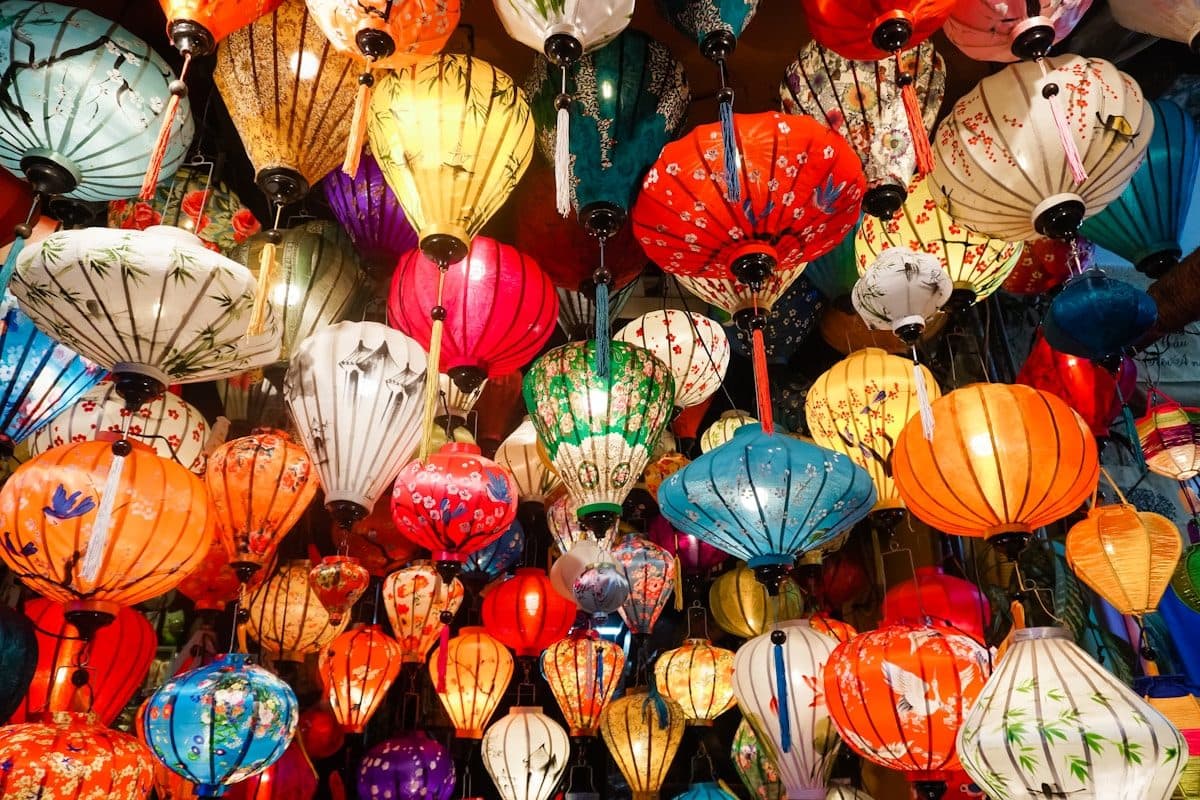
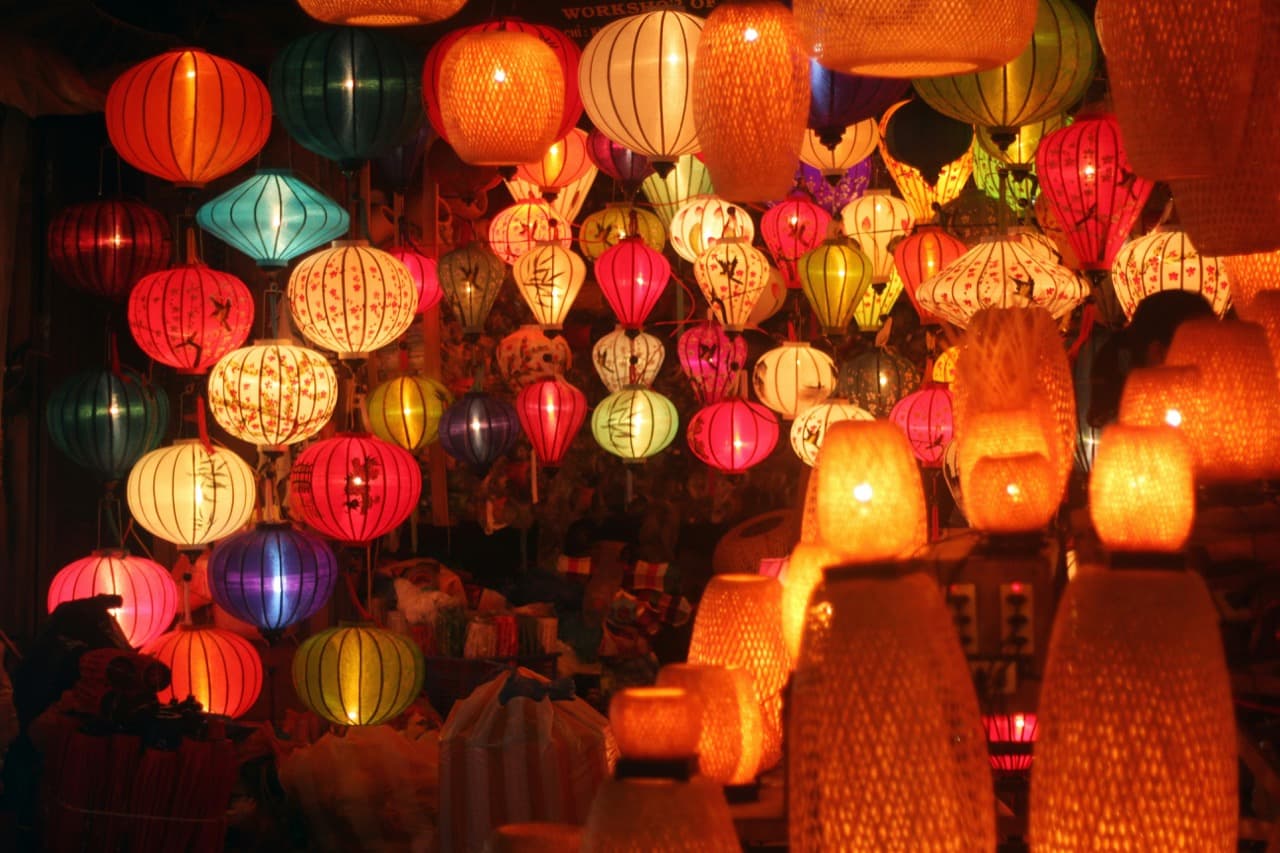
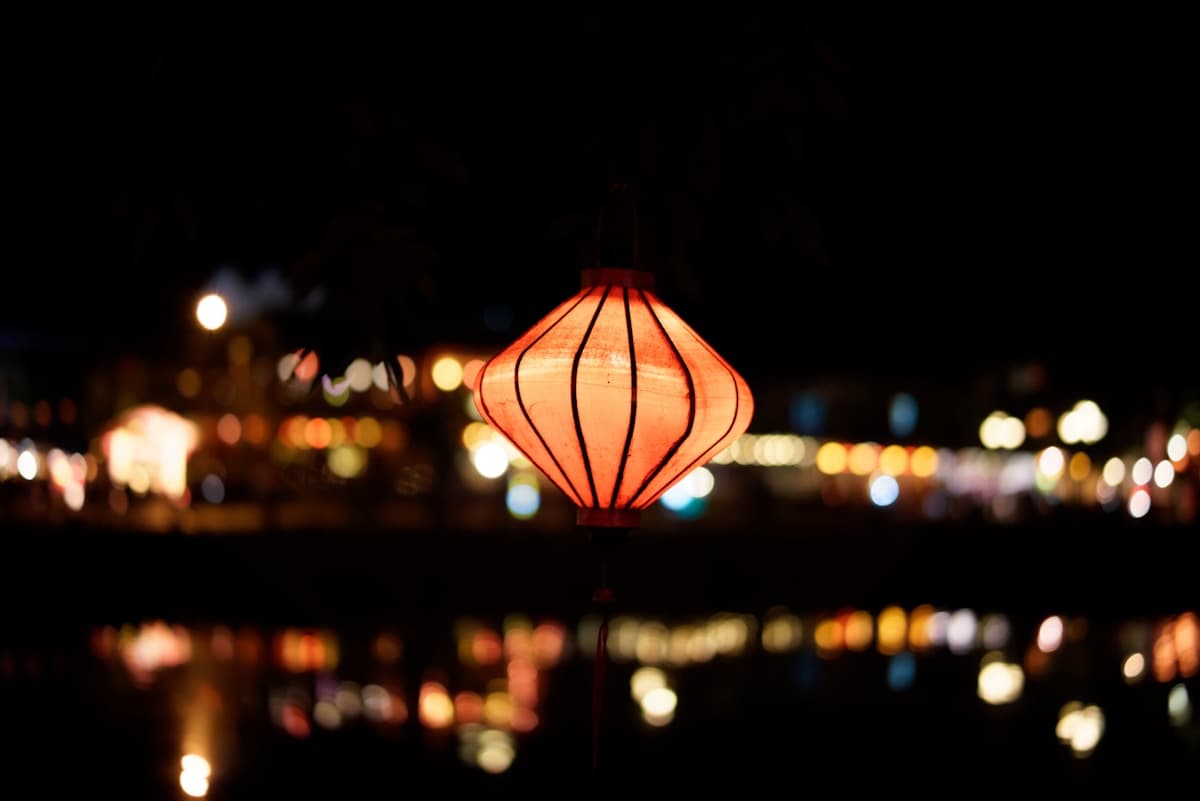
On every full moon (the 14th day of the lunar month) Hoi An turns off its electric lights and glows with thousands of silk lanterns and candles. The river becomes a stream of little lights, and the yellow walls of the houses glow under hundreds of lanterns. The biggest night of 2026 is Nguyen Tieu, 2–4 March; the second is the Mid-Autumn Festival in September–October.
The downside of festival nights is the crowds: on a full moon the streets are packed and a relaxed stroll isn't on. The good news is that the lanterns burn every night, and on an ordinary evening there are a third of the people.
Day trips from Hoi An — My Son, the Cham Islands, Ba Na Hills
Hoi An is a handy base for day trips. Three are worth an early start.
My Son (Thánh Địa Mỹ Sơn) — Cham temples from the 4th–13th centuries
The second UNESCO site near Hoi An: a Cham temple complex in a valley among the hills, 40 km from town. Some towers still stand despite the bombing of the Vietnam War — the craters are still visible. Entry is 150,000 VND (~$6); an organised tour with transfer and guide runs from about $30. Take a morning tour (departing 05:30–06:00): it's cool, quiet, and you make the 09:45 Cham dance show, which the ticket already covers. Full details in the My Son guide.
The Cham Islands (Cù Lao Chàm) — snorkelling
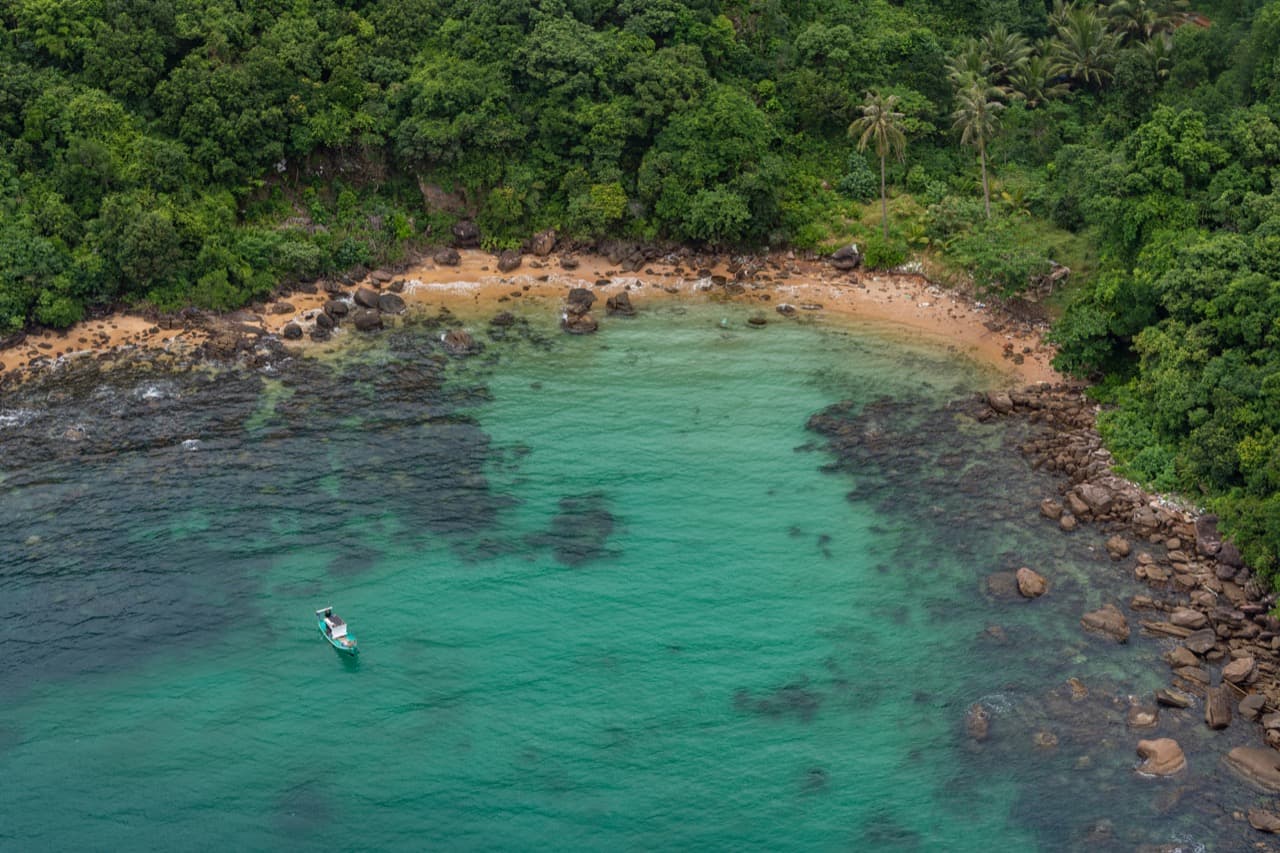
Eight islands about 18 km offshore make up a UNESCO marine biosphere reserve, with coral reefs and clear water. A group day trip with speedboat, lunch and snorkelling runs 800,000–1,200,000 VND (~$31–46), plus a compulsory 100,000 VND in fees. The speedboat gets you there in 20 minutes. The season is March to September; outside it the swell picks up and tours are often cancelled. Operators, diving and staying overnight are all in the Cham Islands guide.
Ba Na Hills and the Golden Bridge
A mountain resort 65 km from Hoi An (~1.5 hours by car): one of the longest cable cars in the world and the famous Golden Bridge (Cầu Vàng), "held up" by giant stone hands. A day tour is from about $75. It's 10°C cooler up top than on the plain. The photo queue at the bridge is 10–15 minutes on a weekday, up to 40 at weekends; the best light is in the morning, before the mist lifts.
Of course, it's not a cheap treat, but it's worth it. Just pick a good sunny day. Don't make our mistake: don't go on a rainy daynikale, Vinsky Forum, 2025, translated by VietnamSpot
On the way back many stop at the Marble Mountains (entry 40,000 VND, ~$1.50). More in the Da Nang guide.
Fast Track — no queue at the border
5–10 minutes instead of an hour in the immigration queue
from$11per passenger
Villages and beaches around Hoi An
Beyond the Old Town is a different Hoi An — no yellow walls, no selfie sticks. The most popular stop is the Bay Mau coconut forest (Bay Mau), 3–4 km out: rides in round bamboo basket boats (thuyền thúng) that a boatman spins on the spot to music. Entry is 30,000 VND (~$1.20); a boat with a rower is 90,000–150,000 VND (~$3.50–6) for two. Come by 07:00–08:00, when dozens of boats and a queue haven't built up.
Nearby are two craft villages: the potters' village of Thanh Hà, with 500 years of history (entry 35,000 VND, includes a class), and the herb village of Trà Quế, which grows the greens for every restaurant in town (entry 20,000 VND). Both run hands-on classes and both work well for families.
The coast begins a 10–15 minute ride away. An Bang is Hoi An's main beach: a wide strip of sand, palms, seafood restaurants, a lounger from 50,000 VND (~$2). Next to it are the quieter Cua Dai (hit by erosion) and the near-empty Hidden Beach. Every one is 15 minutes by bike along a flat road through the rice paddies.
The twice-yearly rice harvest takes place toward late April and late September. Just before, the fields are at their most beautiful – but for a few weeks after, you'll find bare, brown patches of landJames Pham, Lonely Planet, 2026
All the beaches, the facilities and how to choose are in the Hoi An beaches guide. For a bigger beach day, the Da Nang beaches are 30 km away.
What to see in 1, 2 or 3 days — itineraries
The ideal length for Hoi An is two full days. One for a quick look, three to take it slow and fit in a trip.
One day — the Old Town and an evening of lanterns
Morning (08:30–12:00): buy the single ticket and start at the Japanese Bridge. Then along Trần Phú to the Fujian Assembly Hall, Tan Ky House and the ceramics museum. Have a coffee on a balcony over the river.
Afternoon (12:00–16:00): lunch with cao lầu at any café on Nguyễn Thái Học (from 30,000 VND, ~$1.20) — Hoi An's signature noodle dish, made only here with water from one particular well. Then the central market and the Cantonese Assembly Hall.
Evening (17:00–21:00): the Bạch Đằng riverfront, a lantern floated on the water (10,000 VND), a boat ride, and dinner with bánh mì at the legendary Bánh Mì Phượng (from 20,000 VND, ~$0.80).
Two days — plus villages and beach
Day 2 morning: the Bay Mau coconut forest and basket boats (90,000 VND), then a bike ride to Thanh Ha pottery village (35,000 VND). Afternoon: An Bang beach and a seafood lunch. Evening: the Hoi An Memories light show (from ~350,000 VND; more in the Hoi An nightlife guide) or a free evening in the Old Town.
Three days — plus a day trip
Day 3: a morning trip to My Son (from $30), back by lunch, the rest of the day at Tra Que village or free. Alternative: a day tour to the Cham Islands with snorkelling (from 800,000 VND).
| Route | Budget (VND) | Budget (~USD) |
|---|---|---|
| 1 day | 250,000–400,000 | ~$10–15 |
| 2 days | 700,000–1,300,000 | ~$27–50 |
| 3 days (with My Son) | 1,100,000–2,000,000 | ~$42–77 |
This excludes lodging and food — just entry tickets, transport and activities. Lunch at an Old Town café is from 50,000 VND (~$2), a hostel night from 150,000 VND (~$6).
Getting to Hoi An
Hoi An has no airport of its own. The nearest is Da Nang International Airport (Sân bay quốc tế Đà Nẵng), 35 km north.
| Option | Time | Price | Note |
|---|---|---|---|
| Shuttle 01SB | — | 120,000 VND (~$4.60) | to Cua Dai pier, runs to flight times, 10 seats |
| Bus 02 from central Da Nang | ~70 min | up to 30,000 VND (~$1.15) | cheapest, doesn't stop at the airport |
| Grab | 30–40 min | 200,000–350,000 VND (~$8–14) | easier than a metered taxi |
| Taxi | 30–40 min | 350,000–500,000 VND (~$14–19) | haggle or ask for the meter |
| Private transfer | 30–40 min | from $15 | book ahead |
Grab works well — the fare is locked in the app, so there's no haggling. For a group of 3–4 the gap with the bus is minimal. Many Hoi An hotels arrange an airport transfer; ask when you book, as it's often included for stays of 2 nights or more.
From other cities: Hue is 3–4 hours by bus (from 120,000 VND); from Hanoi, the train to Da Nang (14–17 hours) plus a transfer; from Ho Chi Minh City, a flight to Da Nang (1.5 hours) plus a transfer. Hue is often paired with Hoi An — for what to see there, read our Hue attractions guide.
Inside Hoi An you don't need transport: the Old Town is 15 minutes on foot end to end. For the beaches and villages, take a bicycle (from 30,000 VND/day, often free at your hotel) or Grab. For more, see the Hoi An transport guide and the full Hoi An guide.
Hoi An attractions — price table
| Attraction | Price (VND) | Price (~USD) | Note |
|---|---|---|---|
| Old Town — single ticket | 120,000 | ~$4.60 | 08:30–18:00 · 5 of 22 sites |
| Japanese Bridge | in ticket | — | 08:30–18:00 · covered by the single ticket |
| Assembly halls | in ticket | — | 08:30–18:00 · covered by the single ticket |
| Old houses (Tan Ky etc.) | in ticket | — | 08:30–18:00 · covered by the single ticket |
| Museums (ceramics, history) | in ticket | — | 08:30–18:00 · covered by the single ticket |
| Precious Heritage Museum | free | — | Réhahn gallery |
| Floating lantern | 10,000 | ~$0.40 | evening |
| River boat | from 100,000 | ~$4 | evening · 20 min |
| Coconut forest (entry) | 30,000 | ~$1.20 | 07:00–17:00 |
| Basket boat | 90,000–150,000 | ~$3.50–6 | 30–40 min, 2 people |
| Thanh Ha pottery village | 35,000 | ~$1.40 | 07:00–17:30 · class + souvenir |
| Tra Que herb village | 20,000 | ~$0.80 | 07:00–17:00 |
| Hoi An Memories show | from ~350,000 | ~$14 | 20:00–21:00 · except Tue |
| My Son Sanctuary | 150,000 | ~$6 | 06:00–17:00 · 40 km from Hoi An |
| Cham Islands (tour) | from 800,000 | ~$31 | day tour · season Mar–Sep |
| Ba Na Hills (tour) | from 2,000,000 | ~$77 | day tour · 65 km from Hoi An |
Prices current as of July 2026. They can change — confirm on the spot.
Know before you go to Hoi An
A few practical points that save time and money:
Weather. The best time to visit is February to May: dry, warm (25–33°C), a calm sea. October to December is the rainy season, and the Old Town streets can flood — in November 2024 the water rose to knee height and only the upper floors of cafés were open.
Dress. Temples and assembly halls require covered shoulders and knees. Shorts and tank tops won't get you in. Bring a light shirt and long trousers or a skirt.
Haggling. At the central market and in Old Town shops, prices are marked up 2–3x for tourists. The opening price is a starting point, not the final sum.
Instagram spots. Some of Hoi An's corners have become queues for a photo: groups with photographers line up at the café corners by the bridge and the popular bougainvillea walls. To shoot in peace, come before 08:00.
Money. Change at a bank: since 9 February 2026 exchanging money outside licensed points is an offence (Decree 340/2025/NĐ-CP, up to 20 million VND for a private individual on $1,000–10,000), and a tourist has no way to verify a jewellery shop's exchange-agent certificate. Cards are taken in restaurants and hotels, but at the market and in the villages it's cash only — carry small notes.
Visas. Most nationalities (US, UK, EU, Australia and many more) can get Vietnam's 90-day e-visa online at the official evisa.gov.vn — apply a few days ahead and print the approval. Check the current rules for your passport before you fly, since eligibility and length depend on nationality.
Safety. Hoi An is one of the safest towns in Vietnam for visitors. The one real risk is pickpockets in the crowd during the lantern festival — keep your phone and wallet on you.
Connectivity. Free Wi-Fi is in almost every café and hotel, fast enough for video calls. For data on the move, grab a local eSIM before you fly or a Vietnamese SIM on arrival — a month with 3–5 GB a day costs 150,000–200,000 VND (~$6–8). English gets you a long way on menus and in apps.
FAQ — common questions about Hoi An attractions
Walking the streets, the riverfront and the market is free and open around the clock. The 120,000 VND (~$4.60) ticket is only needed to go inside five heritage sites of your choice: old houses, assembly halls, museums and the Japanese Bridge. A coupon is checked at those entrances almost every time; on the open streets it isn't.
5 entries from a list of 22 sites: the Japanese Bridge, four assembly halls, the Tân Ký and Phùng Hưng houses, Quan Cong Temple, the ceramics and history museums, and a handicraft workshop. A coupon is torn off at each entrance. Want more than five? Buy a second ticket. Coupons for the sites are valid for 24 hours; keep the stub for the rest of your stay, since you pay to enter the Old Town only once.
Morning — the Japanese Bridge, the Fujian Assembly Hall, Tân Ký House and the ceramics museum. Afternoon — lunch with cao lầu and the central market. Evening — the lantern-lit riverfront and a boat on the river. Full route in the "One day" section above.
Three main ones: the My Son Cham temples (entry 150,000 VND, tour from $30), the Cham Islands for snorkelling (group tour 800,000–1,200,000 VND, season March–September) and Ba Na Hills with the Golden Bridge (tour from about $75).
30 km, 30–40 minutes by taxi (350,000–500,000 VND, ~$14–19) or by Grab (200,000–350,000 VND, ~$8–14). Straight from the airport, shuttle 01SB costs 120,000 VND (~$4.60) and runs to the flight schedule. From central Da Nang the cheapest is bus 02, up to 30,000 VND (~$1.15), about 70 minutes.
Two full days is the sweet spot. One for the Old Town and the lantern-lit evening, a second for the villages, the beach and the show. Add a third if you want to visit My Son or the Cham Islands.
From a boat, no contest. The An Hội footbridge gives you the big picture, but on the water the little candles drift right past you. You hire a boat at the jetties along the Bạch Đằng riverfront — from 100,000 VND (~$4) for 20 minutes. There's no fixed rate, but don't pay more than 150,000 VND.
- Guide
Hoi An 2026: UNESCO Old Town, Tailoring & Beaches
Hoi An guide: the lantern-lit Old Town, custom tailoring, beaches, food, day trips and where to stay in Vietnam's prettiest heritage town.Hoi An 2026: UNESCO Old Town, Tailoring & Beaches - Guide
Hoi An Reviews 2026: Is the Old Town Worth Visiting?
Honest Hoi An reviews: what travellers love and criticise, how many days you need and who it suits — with real quotes and a clear verdict.Hoi An Reviews 2026: Is the Old Town Worth Visiting? - Guide
Hoi An Lantern Festival 2026: Dates, Tips & What to See
The Hoi An Full Moon Lantern Festival: 2026 dates, floating lanterns on the river, the best photo spots and how to experience it.Hoi An Lantern Festival 2026: Dates, Tips & What to See

