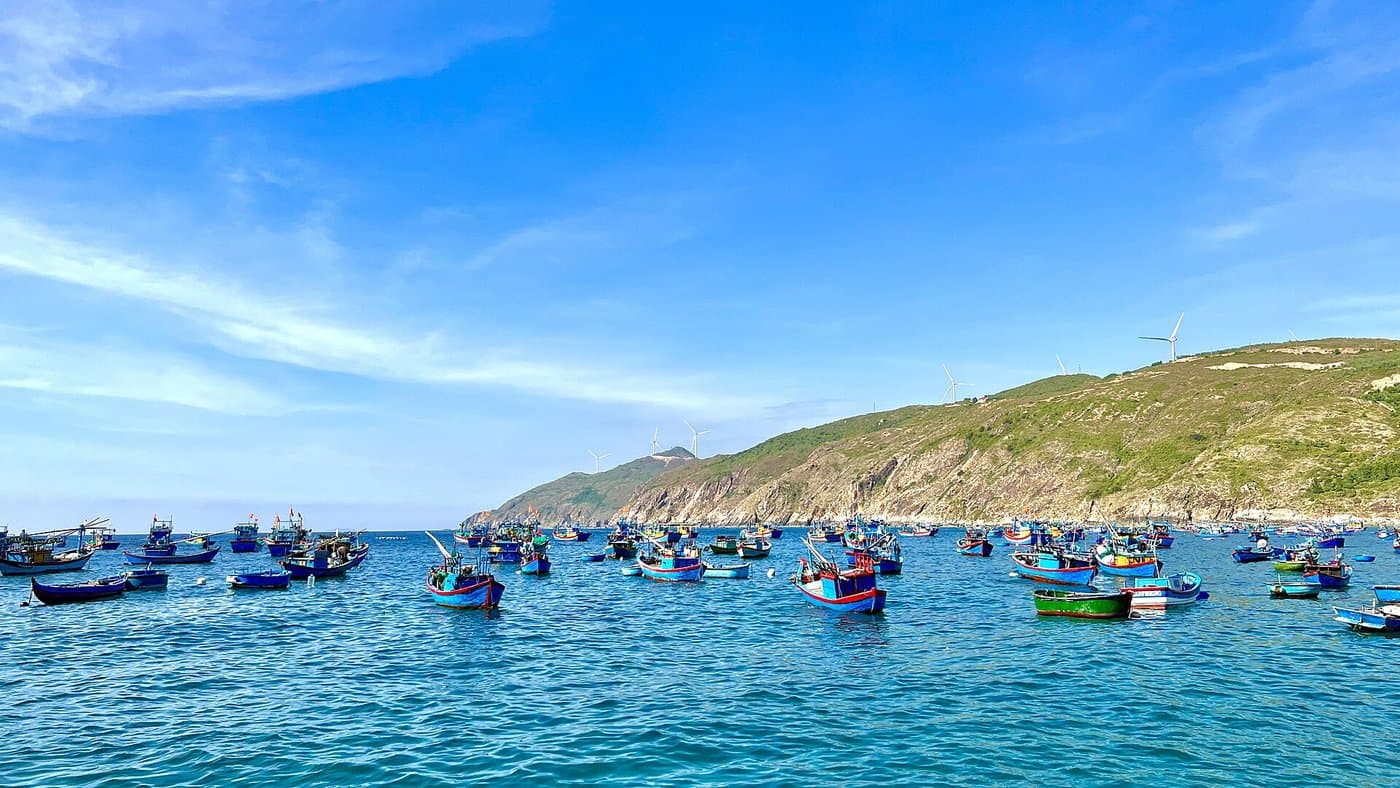
Quy Nhon, Vietnam: the complete 2026 guide — getting there, beaches, Cham towers, prices
Quy Nhon is a quiet, fast-rising beach city on Vietnam's central coast — the "next Da Nang," but far calmer, with the turquoise cove of Ky Co, thousand-year-old Cham towers and cheap seafood. Here is how to get there, where to swim, what to eat and when to go.

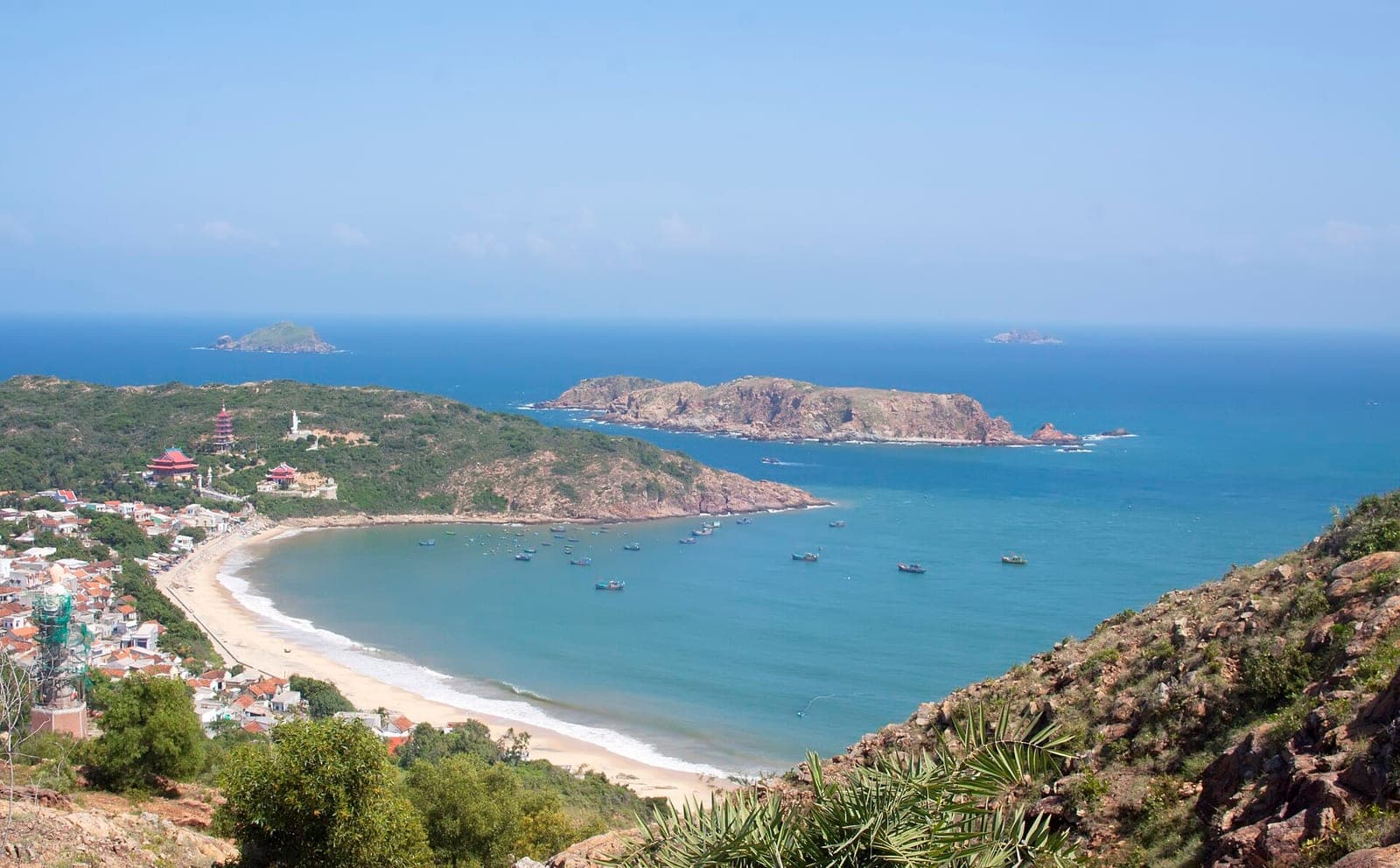
Quy Nhon (Quy Nhơn) is the anti-Nha Trang. No package tour buses, no wall-to-wall sun loungers, no rowdy beachfront bar strip. What it does have: Ky Co, a bay the color of bottle glass; eight complexes of ancient Cham towers; and seafood at prices that make the rest of coastal Vietnam look expensive.
The city sits on the South China Sea, roughly halfway between Da Nang and Nha Trang. Population around 280,000, its own airport — Phu Cat, with flights from Ho Chi Minh City and Hanoi — and buses in every direction. It has always been reachable; travellers just never bothered. That is starting to change.
This guide covers transport, beaches, sights, hotels, food, weather and an honest comparison with Nha Trang.
Quy Nhon on the map of Vietnam — where it is and why go
Quy Nhon is the capital of Gia Lai province: Bình Định was merged into it on 12 June 2025, and the enlarged province is run from Quy Nhon. As a region, Bình Định is one of the most history-dense parts of the country. This was once the heartland of the Champa kingdom, which left behind brick temple towers that are still standing a thousand years later.
| From | Distance | Travel time |
|---|---|---|
| Da Nang | 300 km | ~6 h (bus) |
| Nha Trang | 220 km | ~5 h (bus) |
| Ho Chi Minh City | 680 km | 1 h 15 min (flight) |
| Hue | 370 km | ~7 h (bus) |
| Hoi An | 330 km | ~6.5 h |
5 reasons to come to Quy Nhon
- Beaches without the crowds. Ky Co with its turquoise water, Bai Xep with fishing boats at sunset — and never a row of loungers packed edge to edge. Even in peak season there is room on the sand.
- Cham heritage. Binh Dinh is one of the main centres of Cham architecture in Vietnam: eight complexes, 800–1,000 years old, and most of them free to visit.
- Prices. A seafood dinner for two runs about 400,000 VND (~$16). A seafront guesthouse starts around 250,000 VND (~$10) a night — 30–40% cheaper than Nha Trang or Da Nang.
- Recognition. Lonely Planet's top 25 in the world for 2026.
- Luxury resorts. Anantara, MAIA and Avani are world-class — but the prices haven't caught up to Bali or Phuket yet.
Fast Track — no queue at the border
5–10 minutes instead of an hour in the immigration queue
from$11per passenger
How to get to Quy Nhon

Phu Cat airport (Phù Cát, code UIH) takes domestic flights from Ho Chi Minh City and Hanoi; there is no regular direct flight from Da Nang. If you are flying in from abroad, the usual route is a connection through Saigon or Hanoi. The alternative is a bus from a nearby city, or the train down the "Reunification" line.
By plane
| Route | Airlines | Time | Price |
|---|---|---|---|
| Ho Chi Minh City → Quy Nhon | VietJet Air, Vietnam Airlines | 1 h 15 min | ~$30–60 |
| Hanoi → Quy Nhon | VietJet Air, Vietnam Airlines | 1 h 40 min | ~$40–80 |
From the airport to the centre
Phu Cat is about 30 km north of Quy Nhon. Grab works, with a fixed fare. A taxi (Grab or Mai Linh) is 250,000–350,000 VND (~$10–14) and takes 40–60 minutes. Four- and five-star hotels often lay on a free shuttle.
By bus
Phương Trang (Futa) sleeper buses come with semi-reclining berths, air-con and Wi-Fi. From Da Nang or Nha Trang it is 150,000–200,000 VND (~$6–8) and 5–6 hours; from Ho Chi Minh City, 250,000–350,000 VND (~$10–14) and about 11 hours. Overnight departures save you a night's accommodation.
By train
Diêu Trì station is 10 km from the centre. Trains run the Reunification line (Hanoi–Ho Chi Minh City): roughly 4.5 hours from Da Nang, 4 hours from Nha Trang. Do it for the scenery — this stretch of coast is one of the most beautiful rail journeys in Asia.
The beaches of Quy Nhon

The beaches are the main draw. The water is clearer than Nha Trang's, the sand finer, and there are a fraction of the people. All twelve beaches, with entry fees and the swimming season, are in our Quy Nhon beaches guide.
- Ky Co (Kỳ Co): Turquoise water, cliffs — Gate 120,000 + shuttle 110,000 VND (~$9)
- Bai Xep (Bãi Xép): Quiet fishing cove — Guesthouses from ~$8
- Eo Gio (Eo Gió): Rocky headland, sea views — Entry 22,000–40,000 VND
- City beach (Bãi biển Quy Nhơn): Promenade, free — Facilities, gentle slope
- Hoang Hau (Hoàng Hậu): Natural rock pools — Ghenh Rang area, paid entry
Ky Co — the "Maldives of Vietnam"
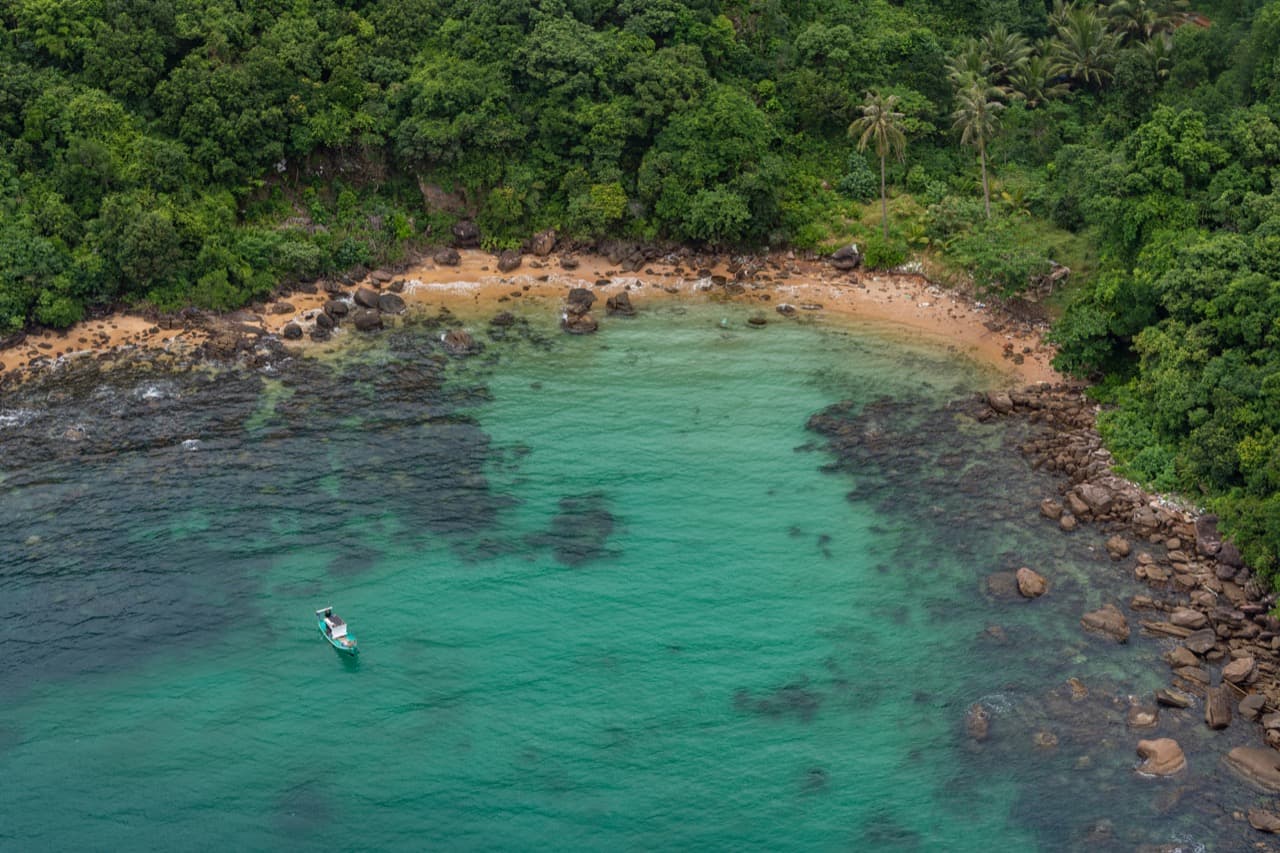
A bay 25 km north of the city, wedged between cliffs. The water is so clear you can see the bottom at 5–6 metres; the sand is white and fine. In 2026, entry is 120,000 VND (~$4.60), and a shuttle from the gate down to the water is another 110,000 VND (~$4.20). A paved road runs all the way to the gate; a boat from Nhơn Lý harbour is an option you arrange on the spot. The "Maldives of Vietnam" tag is earned — just know it is a trip out of town, a half-day outing rather than a walk from your hotel.
Bai Xep — a fishing cove with character
A small bay 12 km south. Round basket boats (thúng chai) on the sand, fishermen mending nets, a good sunset. Swimming is awkward — the seabed is rocky — but as a place to stay it is perfect, with rooms from about 200,000 VND (~$8). This little backpacker cove is where a lot of long-stay travellers end up parking for a week.
Eo Gio — the rocky headland
"Wind gorge" is what Eo Gió translates to. It is a rocky headland 20 km north, right next to Ky Co. The view from the top takes in the open sea and the coves below. You can't swim (waves and rocks), but you can photograph it endlessly. Entry is 22,000–40,000 VND (~$0.85–1.55); check the price at the booth. Come at sunrise and pair it with Ky Co — the two are next to each other.
The city beach
A long ribbon of sand along the An Dương Vương promenade. Free, with showers, clean water and a gentle slope. Runners in the morning, families in the afternoon, strollers in the evening. For a daily swim it is ideal — you don't have to go anywhere.
Hoang Hau (Queen Beach)
A rocky beach 3 km from the centre, inside the Ghenh Rang area (Ghềnh Ráng), which charges an entry fee. The surf has carved natural rock pools — basically free jacuzzis.


Cham towers and sights of Quy Nhon

Binh Dinh is one of the main centres of Cham architecture in Vietnam. The Champa kingdom built them from the 8th to the 13th century as temples to Shiva, Vishnu and Brahma. The bricks are laid with no visible mortar — one theory is careful grinding and a plant-based adhesive, and the exact technique is still debated.
Thap Doi — towers in the middle of town
Two towers from the 11th–12th century, standing right in a residential block on Trần Hưng Đạo street. The northern tower is taller than the southern one; both are restored, with a small park around them. Entry is free. Walk over, take a look, carry on.
Banh It towers — a hilltop complex
Four towers on a hill ~20 km north-west by road. The main one is 22 metres, carved with a dancing Shiva. From the top you look out over rice fields and a river. Entry is 10,000 VND (~$0.40). Even Vietnamese tourists rarely make it up here — chances are you'll have the hill to yourself.
Duong Long — the tallest Cham towers
Three towers 40 km from Quy Nhon. The central one, 39 metres, is the tallest surviving Cham tower in the country. It is 12th century, its walls carved with elephants, lions and dancers. You'll need a motorbike or a taxi to reach it.
Cha Ban citadel
Thành Chà Bàn was the Champa capital from the 11th century, 27 km northwest. The walls, gates and palace foundations survive. Give it an hour or so; entry is free.
Temples and pagodas
- Long Khanh pagoda — the largest Buddhist temple in Quy Nhon, its white Buddha statue visible from several points around the city. Free.
- Thập Tháp pagoda — an old Buddhist monastery next to Cha Ban, so combine the two.
Hotels and where to stay in Quy Nhon

Three zones to choose from: the centre (near the promenade — handy if you're doing it yourself), the south coast (Bai Xep and the resorts — the romantic option), and the north (Ky Co, newer developments).
| Hotel | Price/night | Area | Best for |
|---|---|---|---|
| Anantara Quy Nhon Villas 5★ | from ~$580 | South | Couples, honeymoons |
| MAIA Resort 5★ | ~$200–400 | Cat Tien, ~15 km north | Seclusion, luxury |
| Avani Quy Nhon 4★ | ~$80–150 | South | Families |
| FLC Luxury Hotel 4★ | ~$60–120 | North | Business |
| Seagull Hotel 3★ | ~$30–50 | Centre | Budget + sea |
| Bai Xep guesthouses | ~$10–20 | Bai Xep | Backpackers |
Anantara Quy Nhon Villas has pool villas set on a hillside dropping to a private bay — the hotel that put Quy Nhon on the international tourism map. MAIA is smaller and quieter, for anyone who prizes privacy.
Seagull Hotel is a 3-star on the promenade, beach across the road. The rooms are plain but clean, breakfast included. For budget travellers it is the best balance of price and location. Every area, 2026 prices and the full rundown of Anantara, AVANI, Maia and FLC are in our Quy Nhon hotels guide.
Prices current as of July 2026. Confirm on booking.com.
Food and the seafood scene in Quy Nhon

Quy Nhon is a sea town, so the food is built around seafood — but Binh Dinh is also famous for its own rice-noodle dishes you won't find elsewhere in Vietnam.
What to try
Bánh xèo tôm nhảy — crispy rice-flour pancakes cooked with "jumping" prawns (still alive when they hit the pan). This is the Binh Dinh version, made differently from the big southern one. 30,000–60,000 VND (~$1.20–2.40).
Bánh xèo tôm nhảy is served ‘open-top’, unlike in other cities where the pancake is folded in half. Compared to its Sài Gòn counterpart, the size of the pancake is a lot smaller: about 5 inches in diameterLuke Digweed, Vietnam Coracle, 2022
Bún chả cá — rice noodles in a clear fish broth with fish cakes. Half of Quy Nhon has this for breakfast. 25,000–40,000 VND (~$1–1.60).
Bánh hỏi — the finest rice vermicelli, woven into flat sheets and served with grilled pork, herbs and nước mắm. 30,000–50,000 VND (~$1.20–2).
Seafood. Prawns, crab, squid, lobster, either at the Chợ Đầm market or in the cafes along the promenade. A plate of prawns is 100,000–150,000 VND (~$4–6); green lobster 1,100,000–1,300,000 VND per kg (~$42–50), spotted lobster from 1,800,000 VND per kg.
Food prices
- Bánh xèo tôm nhảy30,000–60,000 VND ≈ $1.20–2.40
- Bún chả cá25,000–40,000 VND ≈ $1–1.60
- Bánh hỏi with pork35,000–50,000 VND ≈ $1.40–2
- Plate of prawns100,000–150,000 VND ≈ $4–6
- Green lobster, per kg1,100,000–1,300,000 VND ≈ $42–50
- Coffee (cà phê sữa đá)15,000–25,000 VND ≈ $0.60–1
- Saigon/Tiger beer15,000–25,000 VND ≈ $0.60–1
Quy Nhon weather by month

Tropical monsoon climate. The best stretch runs roughly March to September — dry, with a calm sea. The rain arrives in September and lasts into December, bringing the tail end of the typhoon season and the odd bit of flooding. October is the wettest month (350 mm of rain over 18 rainy days).
| Month | Air °C | Sea °C | Rainy days | Verdict |
|---|---|---|---|---|
| January | 23–27 | 24 | 5 | Great |
| February | 23–28 | 24 | 3 | Best time |
| March | 24–30 | 25 | 3 | Best time |
| April | 25–32 | 26 | 4 | Good |
| May | 26–33 | 28 | 5 | Good, hot |
| June–August | 27–34 | 29 | 3–4 | Hot |
| September | 26–32 | 28 | 14 | Rains begin |
| October | 25–30 | 27 | 18 | Peak rain |
| November | 24–29 | 26 | 16 | Wet |
| December | 23–27 | 25 | 10 | Rains easing |
February–April is ideal: warm, dry, sea at 24–26 °C. May–August is hot (up to 34 °C) but dry. September–November is not recommended — downpours, storms, and Ky Co closed because of the swell.
Getting around Quy Nhon
The city is compact — you can walk the centre, with its promenade, market and restaurants, in 20–30 minutes.
Motorbike. The main way to reach the beaches and towers. Rental is 150,000–200,000 VND a day (~$6–8). Bring your national licence with a motorcycle category plus an International Driving Permit (IDP); a helmet is mandatory. Take it slow on the dirt tracks to Ky Co, or skip them with one of the tours from Quy Nhon.
Grab. It works, but there aren't many cars — 5–15 minutes' wait in the centre. For trips out of town, arrange a ride in advance.
Bicycle. Hotels often lend them free or for 50,000 VND a day. Handy for the promenade and the near surroundings.
Quy Nhon or Nha Trang — which to choose

| Criterion | Quy Nhon | Nha Trang |
|---|---|---|
| Vibe | Quiet, authentic | Busy, touristy |
| Beaches | Uncrowded, wild coves | Long city beach, islands |
| English / expat scene | Minimal | Established |
| Prices | 30–40% lower | Higher |
| Infrastructure | Basic | Developed |
| Nightlife | Minimal | Bars, clubs |
| Sights | 8 Cham tower complexes | 1 complex, islands |
Choose Quy Nhon if you want quiet, authenticity and the "real" Vietnam — and if you're fine with basic infrastructure and a limited English-speaking scene.
Choose Nha Trang if you want developed infrastructure, an established expat scene, more to do in the evenings, and an easier time with kids in tow.
Money, SIM cards and a three-day itinerary

Money and cards
Exchange rate in July 2026: 1 USD ≈ 26,000 VND. There are Vietcombank, BIDV and Agribank ATMs in the centre. Visa and Mastercard are accepted only at resorts and the bigger restaurants — everywhere else it is cash. Withdraw a stack of dong at the airport or a downtown ATM before you head out to the beaches and towers, where card payment simply doesn't exist.
Connectivity and internet
A local SIM with 4G is from about 100,000 VND (~$4) for 30 days — Viettel, Mobifone or Vinaphone, sold in any small shop (bring your passport). Or set up an eSIM before you fly and skip the queue at arrivals. Wi-Fi is in most hotels and cafes at 10–50 Mbps. For the full picture see our guide to SIM cards and connectivity in Vietnam.
Safety
Quy Nhon is one of the safest cities in Vietnam — petty crime is rarer than in Ho Chi Minh City or Nha Trang. The usual rules still apply: don't leave valuables on the beach, don't carry your phone in a back pocket on a motorbike, and keep your passport in the hotel safe.
A 2–3 day plan
- Day 1 — city and sea. A morning on the city beach and promenade, the Thap Doi towers a short walk from the centre in the afternoon, then seafood near the Chợ Đầm market in the evening.
- Day 2 — Ky Co and Eo Gio. Head north early: sunrise on the Eo Gio cliffs, then a boat into Ky Co bay from Nhon Ly harbour, and back through the fishing village.
- Day 3 — Cham heritage. The hilltop Banh It towers, the Cha Ban citadel and Thập Tháp pagoda. You'll want a motorbike or a taxi for the day. If there is time left, end with sunset at Bai Xep.
Common mistakes
- Coming in the rainy season (September–November). Ky Co is closed, the surf is up, and it pours daily.
- Not carrying cash. Cards are taken only at the pricier places.
- Expecting a big English-speaking tourist machine. There isn't one. English is basic, but it gets you by.
- Skipping the motorbike rental. Without one you simply can't reach the towers and the further beaches.
FAQ
At least three. One for the beaches (Ky Co, Bai Xep, Eo Gio), one for the Cham towers and the Cha Ban citadel, one for the city, the promenade and the market. Want to unwind at a resort? Add two or three more.
- By Phương Trang (Futa) bus150,000–200,000 VND~$6–85 hours
- By train via Diêu Trìfrom 130,000 VND~$54 hours
- Direct flightsnothere are
A few bars on the promenade and the bar at Avani. No clubs. If nightlife is the point, this isn't the town.
Standard Vietnam rules apply. Most Western nationalities use the online e-visa (evisa.gov.vn); some passport holders get a short visa-free stay. Check your own passport's rules before you travel.
Basic English at hotels and tourist-facing cafes, but far less than in Da Nang or Hoi An. This is genuinely off the beaten path — a translation app and a few Vietnamese words help a lot.
City roads are calm — traffic is far lighter than in Ho Chi Minh City. But the dirt tracks to Ky Co and Eo Gio take some experience. You'll need your national licence with a motorcycle category plus an International Driving Permit (IDP), and a helmet.
- Guide
Quy Nhon Tours 2026: Islands, Phu Yen, Real Prices
Every day tour from Quy Nhon in 2026 — Ky Co and Hon Kho islands, the Phu Yen day trip, Cham towers. Verified prices in VND and USD, operators, what to skip.Quy Nhon Tours 2026: Islands, Phu Yen, Real Prices - Guide
Quy Nhon Beaches 2026: Best Coves, Prices, Seasons, Map
All 12 Quy Nhon beaches and coves: Ky Co, Bai Xep, Queen's Beach, the city beach. 2026 entry fees in VND and USD, swimming season, rip currents, map.Quy Nhon Beaches 2026: Best Coves, Prices, Seasons, Map - Guide
Quy Nhon Attractions 2026: Cham Towers, Coves, Lighthouses
What to see in Quy Nhon in 2026 — 11th-century Cham towers, Ky Co cove, an 1890 French lighthouse, pagodas. Verified fees in VND and USD, day routes, map.Quy Nhon Attractions 2026: Cham Towers, Coves, Lighthouses