Best photo spots in Vietnam: top Instagram locations
Ha Long Bay at sunrise, the golden rice terraces of Sapa, lantern-lit Hoi An, the red dunes of Mui Ne and the Golden Bridge in giant stone hands. Here are the most photogenic places in Vietnam, the exact time of day to shoot each one, what a drone will and won't get you, and how to actually reach the good angles in 2026.
A note on prices: figures are in Vietnamese dong (VND) with a rough dollar conversion at ~26,000 VND to $1 (mid-2026). Rates drift, so treat the ~$ as a ballpark.
The top photo locations in Vietnam
Below, each spot comes with the shot it's known for, the time of day that makes or breaks it, and how to get there.
- Ha Long Bay (Vịnh Hạ Long): Limestone karsts in the mist — sunrise from the top deck
- Sapa (Sa Pa): Rice terraces stacked up a hillside — sunrise, side-lit
- Mu Cang Chai (Mù Cang Chải): La Pan Tan and Mam Xoi viewpoints — gold at harvest, late September
- Hang Mua viewpoint (Hang Múa): Ninh Binh — a sampan between karst peaks — hundreds of steps, morning light
- Trang An (Tràng An): Ninh Binh — shoot from a rowing boat — eye level with the reeds
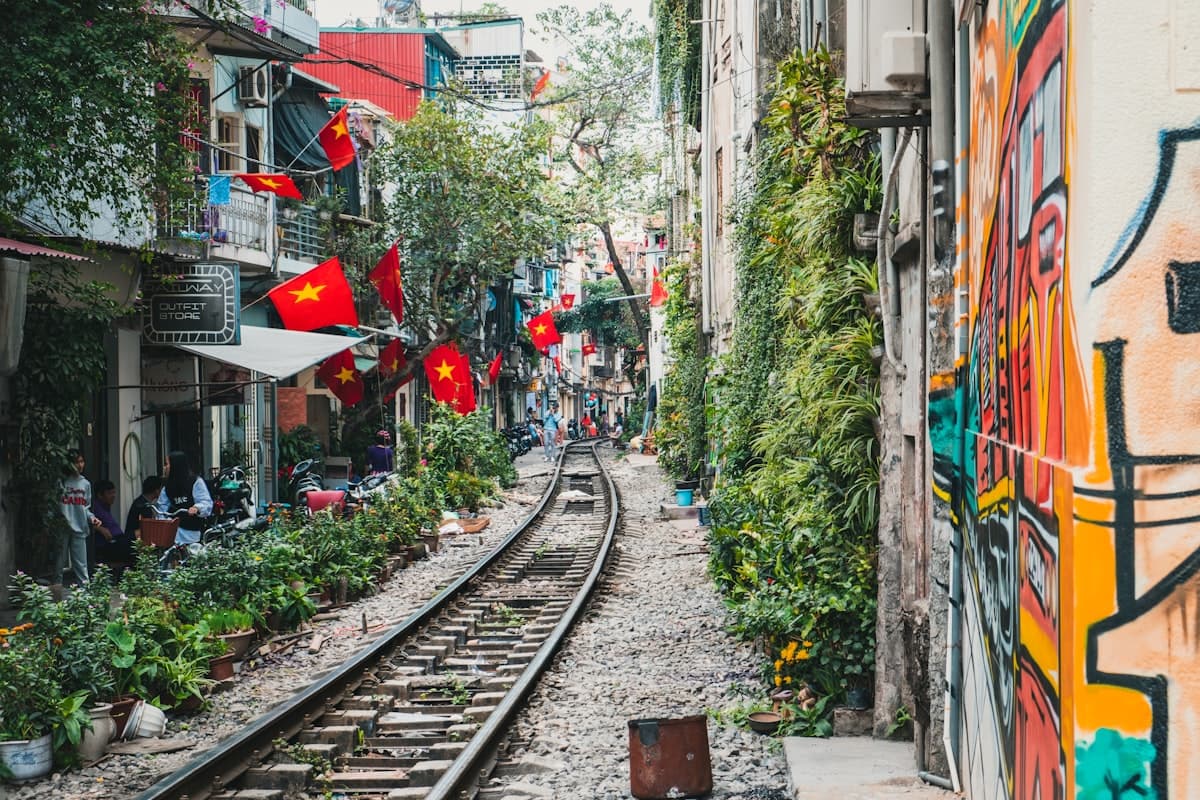
- Hanoi Train Street (Phố đường tàu Hà Nội): Colonial facades, a train in a lane — early morning
- Hue Imperial City (Hoàng Thành Huế): Imperial citadel and misty tombs — early morning
- Golden Bridge, Ba Na Hills (Cầu Vàng): The walkway held by two giant hands — first cable car, before the crowds
- Dragon Bridge, Da Nang (Cầu Rồng): Dragon Bridge and the coastline — sunset
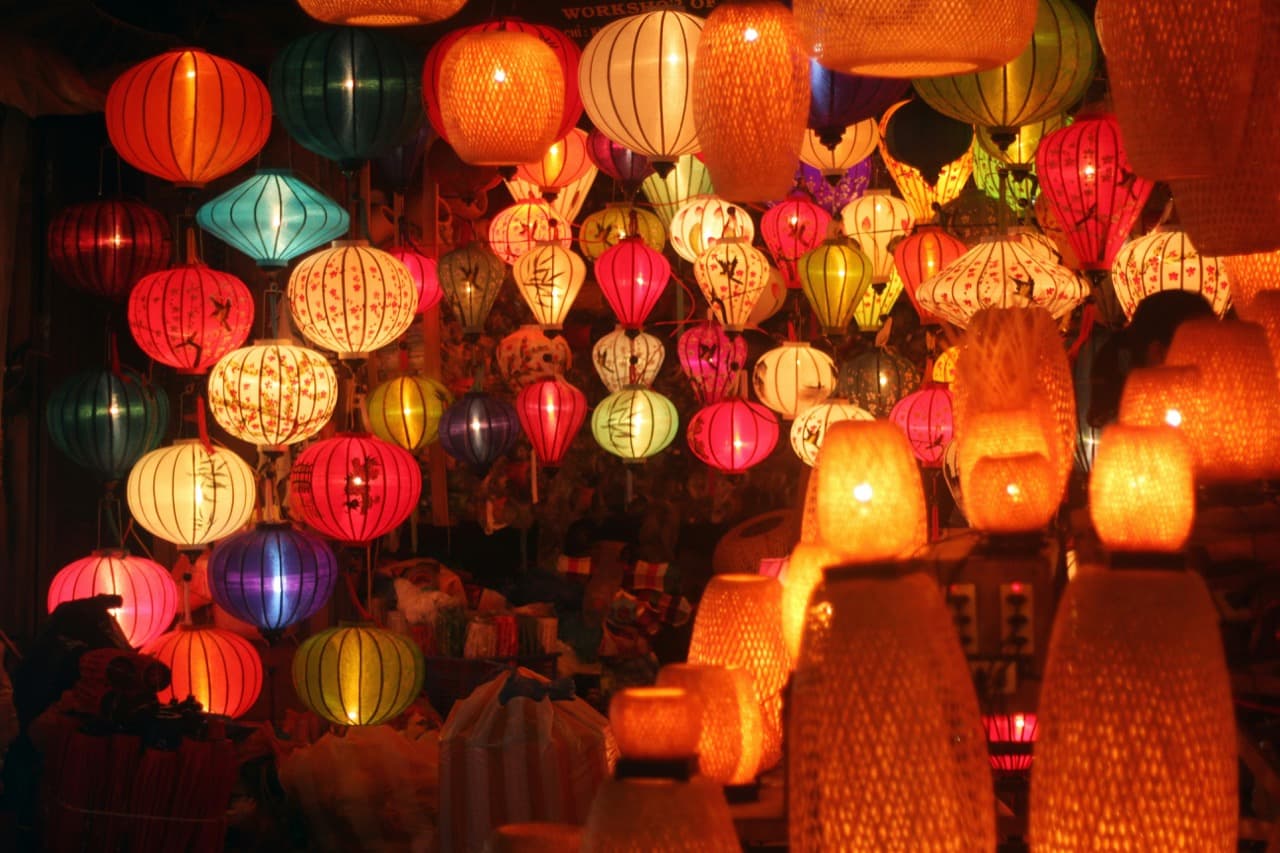
- Hoi An old town (Phố cổ Hội An): Silk lanterns over the river — dusk, blue hour
- White dunes (Bàu Trắng): Rippled sand and a lone figure — sunrise, an hour out of Mui Ne
- Red dunes, Mui Ne (Đồi cát bay Mũi Né): The smaller set right by town — sunset
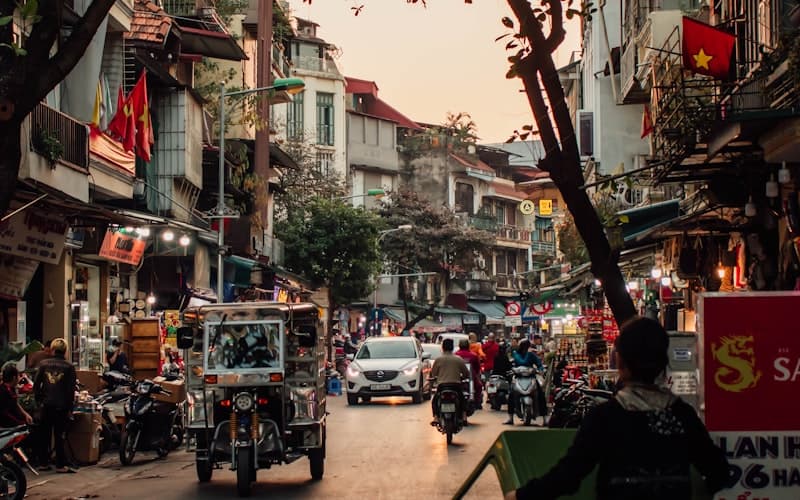
- Ho Chi Minh City (TP. Hồ Chí Minh): Motorbike streams and neon rooftops — night / blue hour
- Cai Rang floating market (Chợ nổi Cái Răng): Mekong Delta — boats trading at dawn — sunrise, from a small boat
Ha Long Bay (Vịnh Hạ Long)
Best light: sunrise from the top deck | The shot: limestone karsts in the mist
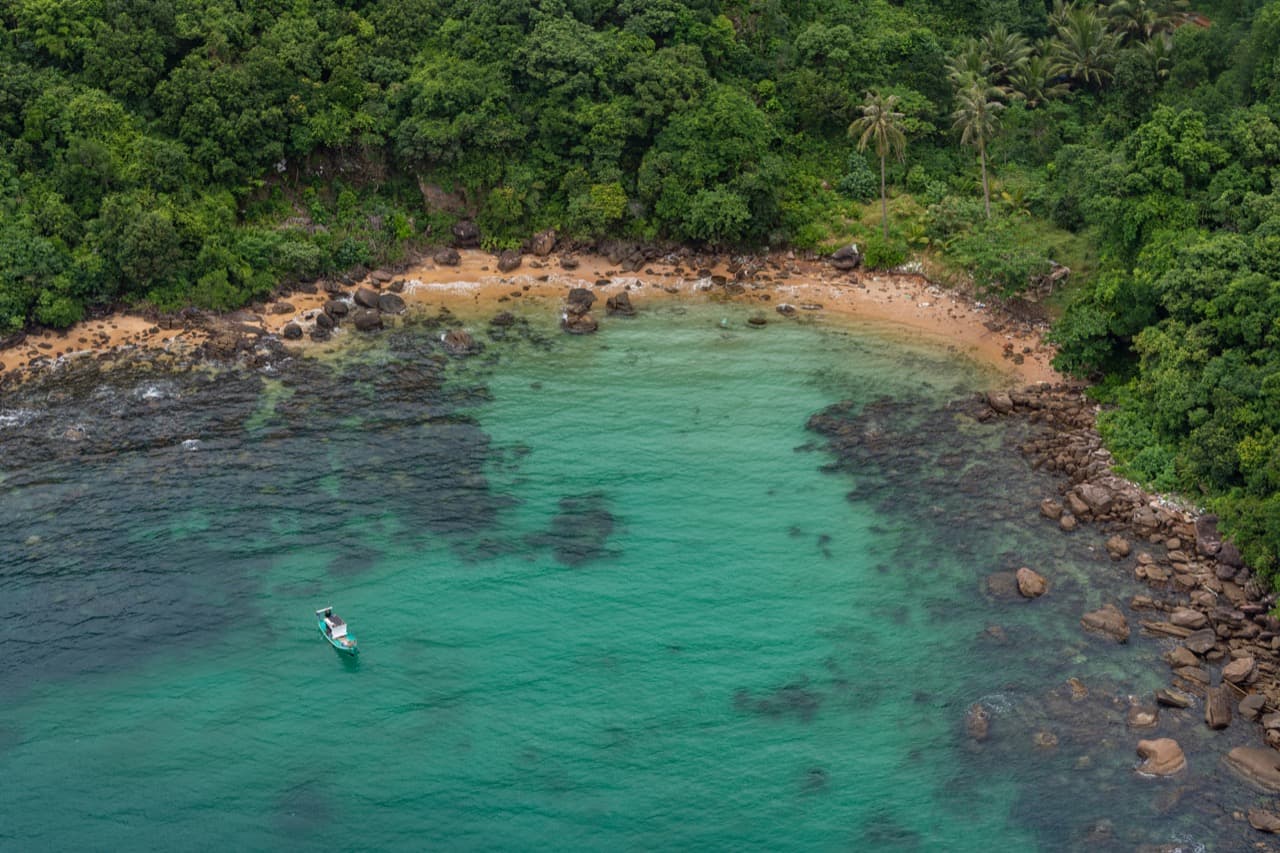
The postcard of Vietnam: thousands of forested limestone islands rising out of jade water, a UNESCO World Heritage site. The magic hour is dawn, when a low sea mist wraps the karsts and the day cruises haven't launched yet. Shoot from the sundeck of an overnight junk, or climb the steps on Ti Top Island for the classic wide angle over the fleet. For a quieter frame, aim your cruise at neighbouring Lan Ha Bay, which has the same scenery with a fraction of the boats.
Sapa & Mu Cang Chai rice terraces (ruộng bậc thang)
Best light: sunrise, side-lit | The shot: curved terraces stacked up a hillside
The staircased hills around Sapa and, further out, Mu Cang Chai are Vietnam's signature landscape. Timing is everything: the paddies are flooded mirrors in May and June, deep green through July and August, and molten gold at harvest in late September and early October. Low side-light at sunrise rakes across the steps and picks out every ridge. The classic viewpoints are La Pan Tan and Mam Xoi (the "raspberry hill") near Mu Cang Chai. For the full timing calendar and which valleys to pick, see our guide to the rice terraces.
Golden Bridge, Ba Na Hills (Cầu Vàng)
Best light: early morning, before crowds | The shot: the walkway held by two giant hands
The golden walkway cradled by two enormous stone hands, high in the hills above Da Nang, went viral the day it opened and hasn't stopped. Get there on the first cable car to shoot before the tour groups fill the deck, and pray for a little cloud drifting below the bridge — that sea of mist is what separates a great frame from a snapshot. Entry to Ba Na Hills including the cable car is about 950,000 VND (~$37); current tickets are in the Ba Na Hills guide.
Mui Ne sand dunes (đồi cát)
Best light: sunrise (white dunes), sunset (red) | The shot: rippled sand and a lone walking figure
A slice of desert on the coast near Phan Thiet. Two sets: the red dunes near town, glowing at sunset, and the bigger white dunes an hour out, best at first light when the sand is cool and the wind hasn't erased the ripples. Put a person in the frame for scale — a single figure walking a crest reads as a fashion shoot. Come early: by mid-morning it's hazy, crowded and roasting.
Ninh Binh — "Ha Long on land" (Tràng An)
Best light: morning, from a ridge | The shot: a sampan winding between karst peaks
The same dramatic limestone as Ha Long, but rising out of rivers and rice fields instead of the sea. Climb the several hundred steps of the Hang Mua viewpoint for the wide shot of the Ngo Dong river curling through the karsts, or shoot from a rowing boat in Trang An or Tam Coc at eye level with the reeds. A day trip from Hanoi, and far less crowded than the bay itself.
Cities, old towns and street scenes
Vietnam's cities are as photogenic as its landscapes, just in a different key: colour, lanterns, motorbike rivers and faces. A few reliably deliver.
| Place | The shot | Best time |
|---|---|---|
| Hoi An old town | Silk lanterns over the river | Dusk (blue hour) |
| Hanoi Old Quarter | Train Street, colonial facades | Early morning |
| Ho Chi Minh City | Motorbike streams, neon rooftops | Night / blue hour |
| Hue | Imperial citadel, misty tombs | Early morning |
| Da Nang beaches | Dragon Bridge, coastline | Sunset |
| Mekong Delta | Floating markets at dawn | Sunrise |
Hoi An is the crown jewel and the single most photographed town in the country. Come at blue hour, when the hundreds of silk lanterns switch on and reflect off the Thu Bon river. Full-moon evenings bring the lantern festival — chaotic, but unforgettable. Full guide: Hoi An.
In Hanoi, the famous Train Street — where cafes line tracks barely wider than a doorway — is the viral shot, but access to the tracks is restricted and the rules shift, so check locally first. In Ho Chi Minh City, shoot the motorbike rivers from a rooftop bar at blue hour: a long exposure turns the traffic into ribbons of light.

When to shoot — time of day and season
In the tropics, light is unforgiving. Midday sun is directly overhead, blowing out highlights and killing colour. The whole craft of shooting Vietnam is timing your day around the edges.

| Time | Light | Shoot this |
|---|---|---|
| Sunrise | Soft, warm, misty | Ha Long, terraces, dunes, markets |
| Morning | Clear, gentle | Old towns, temples, viewpoints |
| Midday | Harsh, flat | Interiors, caves, shade |
| Sunset | Golden, dramatic | Red dunes, beaches, Dragon Bridge |
| Blue hour | Deep blue, glowing lights | Hoi An lanterns, city skylines |
By season: the north (Ha Long, Sapa, Hanoi) is driest and clearest from October to April, though winter can bring grey haze to the mountains. The centre (Da Nang, Hoi An, Hue) is best February to August; October and November are the rainy, flood-prone months. The south and the dunes stay warm year-round, with the dry season running December to April.
Fast Track — no queue at the border
5–10 minutes instead of an hour in the immigration queue
from$11per passenger
Drones and the rules you actually need to know

A drone unlocks Vietnam's best angles — the spiral of the terraces, the scatter of Ha Long's islands — but the law is strict and worth understanding before you pack one.
The legal reality. Since 5 November 2025 the rules come from Decree 288/2025/NĐ-CP. The drone must be registered, the pilot must be 18 or older unless the drone weighs under 0.25 kg, and from 0.25 kg the pilot needs a licence. A foreigner also needs a Vietnamese organisation or individual to stand as guarantor. For a short trip that is a lot of paperwork, so weigh it before you pack a drone. Enforcement is real — cameras have been confiscated, especially near sensitive sites.
Where you must not fly:
- Airports and military zones — an automatic no-go, and heavily monitored
- City centres and government buildings — Hanoi and Ho Chi Minh City in particular
- Crowds and festivals — both illegal and rude
- Border areas — check local restrictions before flying near any frontier
If you do fly with the paperwork in order, stay over empty countryside and away from people. The terraces, the dunes and the quieter corners of Ha Long are where a drone pays off without drawing a crowd — and for more of those low-traffic spots, see our hidden gems of Vietnam.
Where to shoot, region by region

The north
The heavyweight for landscape photography. Ha Long Bay and Lan Ha for seascapes, Sapa and Mu Cang Chai for the terraces, Ninh Binh for karst-and-river, and the Ha Giang loop for the wildest mountain roads in the country. Base yourself in Hanoi and run day and overnight trips out.
The centre
The prettiest towns. Hoi An for lanterns, Hue for imperial history and misty tombs, and Da Nang as the modern hub with beaches, the Dragon Bridge and the Golden Bridge up in the hills. Marble Mountains near Da Nang hide caves with beams of light that photograph like a cathedral.
The south
Energy and water. Ho Chi Minh City for neon, rooftops and the motorbike chaos; the Mekong Delta for floating markets at dawn and green canals; the Mui Ne dunes for a desert on the coast; and Phu Quoc for beaches and sunsets. Shoot the delta from a small boat at first light, before the market thins out.
Gear, logistics and getting there
What to bring
- A wide lens for landscapes and old-town streets, and a light zoom for markets and portraits
- A small tripod for blue-hour lanterns and city long exposures — the light you want happens when it's dim
- Lens cloths and silica gel — humidity fogs glass instantly when you step out of air conditioning
- Spare batteries and cards — heat drains batteries faster than you expect
Getting to the shots
A rented motorbike is the photographer's tool of choice in the countryside — it stops anywhere and reaches viewpoints cars can't. In cities, Grab (the local ride app) is cheap and easy. For Ha Long, book an overnight cruise so you're on the water at sunrise; for the terraces, base in the nearest town and hire a local rider who knows which ridge catches first light.
Rough costs
| Item | Price (VND) | ~USD |
|---|---|---|
| Golden Bridge (Ba Na Hills, incl. cable car) | ~950,000 | ~$37 |
| Overnight Ha Long cruise (per person) | 1,500,000+ | ~$58+ |
| Hang Mua viewpoint, Ninh Binh | ~100,000 | ~$4 |
| Private car + driver (day) | 1,000,000–1,500,000 | ~$38–58 |
| Motorbike rental (day) | 120,000–250,000 | ~$5–10 |
Etiquette, safety and getting good portraits
Temples and pagodas. Dress modestly, covering shoulders and knees, and check for "no photo" signs inside prayer halls. Never point a camera at people mid-worship.
Sunrise safety. The best light means walking trails and clifftops in the half-dark. Bring a headtorch, watch your footing on wet terrace paths, and tell someone at your guesthouse where you're headed.
Protect your kit. Petty theft is uncommon but not unheard of in the big cities — keep a hand on your bag on a motorbike, and don't leave gear unattended on a beach. Heat and humidity are the bigger threat: let cold gear warm up before you open it, or condensation will fog the sensor.
The candid advantage. Vietnam's best portraits are the unposed ones — a cook lit by the flame of a street wok, a conical hat against green paddy. If you want a styled shoot instead, renting an áo dài for an hour is a popular way to get a portrait in the local silk dress. Either way, shoot fast, shoot respectfully, and the country hands you frames you couldn't stage.
FAQ
The classics are Ha Long Bay's limestone karsts, the rice terraces of Sapa and Mu Cang Chai, lantern-lit Hoi An, the sand dunes of Mui Ne and the Golden Bridge near Da Nang. Add the Ninh Binh valleys — "Ha Long on land" — for river-and-mountain shots.
Golden hour — the first hour after sunrise and the last before sunset — for soft warm light and empty frames. Midday tropical sun is harsh. Hoi An is best at dusk when the lanterns come on; the dunes and terraces are best at sunrise before the haze and crowds.
Only with the paperwork in order. Since 5 November 2025 (Decree 288/2025/NĐ-CP) the drone must be registered, the pilot must be 18 or older unless the drone weighs under 0.25 kg, and from 0.25 kg the pilot needs a licence. A foreigner also needs a Vietnamese organisation or individual as guarantor. Drones are banned over airports, military sites and many city centres.
Flooded and mirror-like in May and June, lush green in July and August, and golden for the harvest in late September and October. Late September is the single most photogenic window.
Most viewpoints are free or a small ticket. The Golden Bridge runs about 950,000 VND (~$37) with the cable car; a sunrise Ha Long cruise starts around 1,500,000 VND (~$58); a private car with driver is roughly 1,000,000–1,500,000 VND (~$38–58) a day.
For a candid street shot, no. But for a close portrait of a market vendor, a woman in traditional dress or a working fisherman, buy something small or offer a modest tip, and always ask first with a smile.
- Guide
Cu Chi Tunnels Private Guide 2026 — Tour from Saigon
A private Cu Chi Tunnels tour from Saigon with local expert guide Denny: itinerary, inclusions, per-person pricing from $40, easy booking via VietnamSpot.Cu Chi Tunnels Private Guide 2026 — Tour from Saigon - Guide
Getting to Phan Thiet: Trains, Buses & Getting Around
How to reach Phan Thiet and Mui Ne from Ho Chi Minh City by train, bus or limousine, plus the new railway, airport and getting around town.Getting to Phan Thiet: Trains, Buses & Getting Around - Guide
Hanoi Spa and Massage Guide 2026: Prices and 10 Best Spas
Hanoi spa guide 2026: Vietnamese massage, goi dau head spa, herbal steam, blind-therapist spas, real prices in VND and USD, and 10 spas on a map.Hanoi Spa and Massage Guide 2026: Prices and 10 Best Spas