Vung Tau weather by month: when to go
From November to April it is dry and sunny; from May to October the southwest monsoon brings rain. The sea is warm all year — from 26°C in January to 29°C in May. You can swim any month; the only questions are the showers, the surf and how murky the water gets.

Vũng Tàu follows the southern Vietnamese rulebook: dry and sunny from November to April, then rain from May to October when the southwest monsoon arrives. The sea stays warm the whole year. That means planning a trip comes down to one question — are you fine with afternoon showers, or do you want six months of pure sun. To plan the rest, keep the full Vung Tau guide handy.
This guide is for anyone coming to Vung Tau on a weekend from Ho Chi Minh City, flying in for a beach break, or chasing a surf session at Back Beach. Below: a month-by-month table, a breakdown of the seasons, prices in USD, and honest notes on rain, surf and water clarity.
Current as of June 2026. Sources: climate-data.org, weatherspark.com, weather-and-climate.com.
Vung Tau weather by month: air, sea, rain
Vung Tau sits on a peninsula 125 km southeast of central Ho Chi Minh City (since July 2025 it is formally a ward of the city), in a tropical monsoon climate (Köppen: Aw). The annual average is about 27.4°C, rainfall is roughly 1,400–1,900 mm a year (aggregators disagree), and nearly 90% of that falls in the six wet months. In winter the northeast monsoon blows dry and cool; in summer the southwest monsoon is humid and warm.
Weather in Vung Tau month by month
colour depth — rainfall per month
October
Mixedrainfall 240 mm · rainy days 16The season is leaving. A compromise: drier and warmer already, still cheaper and less crowded.
| Month | Day / Night | Sea | Rain | Rainy days | Verdict |
|---|---|---|---|---|---|
| January | 28° / 22° | 26° | 10 mm | 1 | Ideal |
| February | 29° / 23° | 26° | 8 mm | 1 | Ideal |
| March | 31° / 25° | 27° | 15 mm | 2 | Ideal |
| April | 32° / 26° | 28° | 50 mm | 5 | Good |
| May | 32° / 26° | 29° | 215 mm | 14 | Mixed |
| June | 31° / 25° | 29° | 300 mm | 18 | Rainy |
| July | 30° / 25° | 28° | 305 mm | 19 | Rainy |
| August | 30° / 25° | 28° | 285 mm | 18 | Rainy |
| September | 30° / 25° | 28° | 310 mm | 19 | Rainy |
| October | 30° / 24° | 28° | 240 mm | 16 | Mixed |
| November | 29° / 24° | 27° | 100 mm | 7 | Good |
| December | 28° / 22° | 26° | 30 mm | 3 | Ideal |
The driest month is February: one or two rainy days and 5–10 mm of rain. The wettest is September, up to 330 mm and 19 rainy days. It is hottest in March–May, when the thermometer holds steady at 31–32°C. It is coolest in January and December — 28°C by day, 22°C at night. That is still summer to most visitors, but by local standards it feels "fresh," especially by the sea where the wind never stops.
The water never drops below 26°C, even in the coolest months. You can swim any time of year — the only variables are the surf, the murkiness and how much rain falls in a day.
Seasons in Vung Tau: dry and rainy
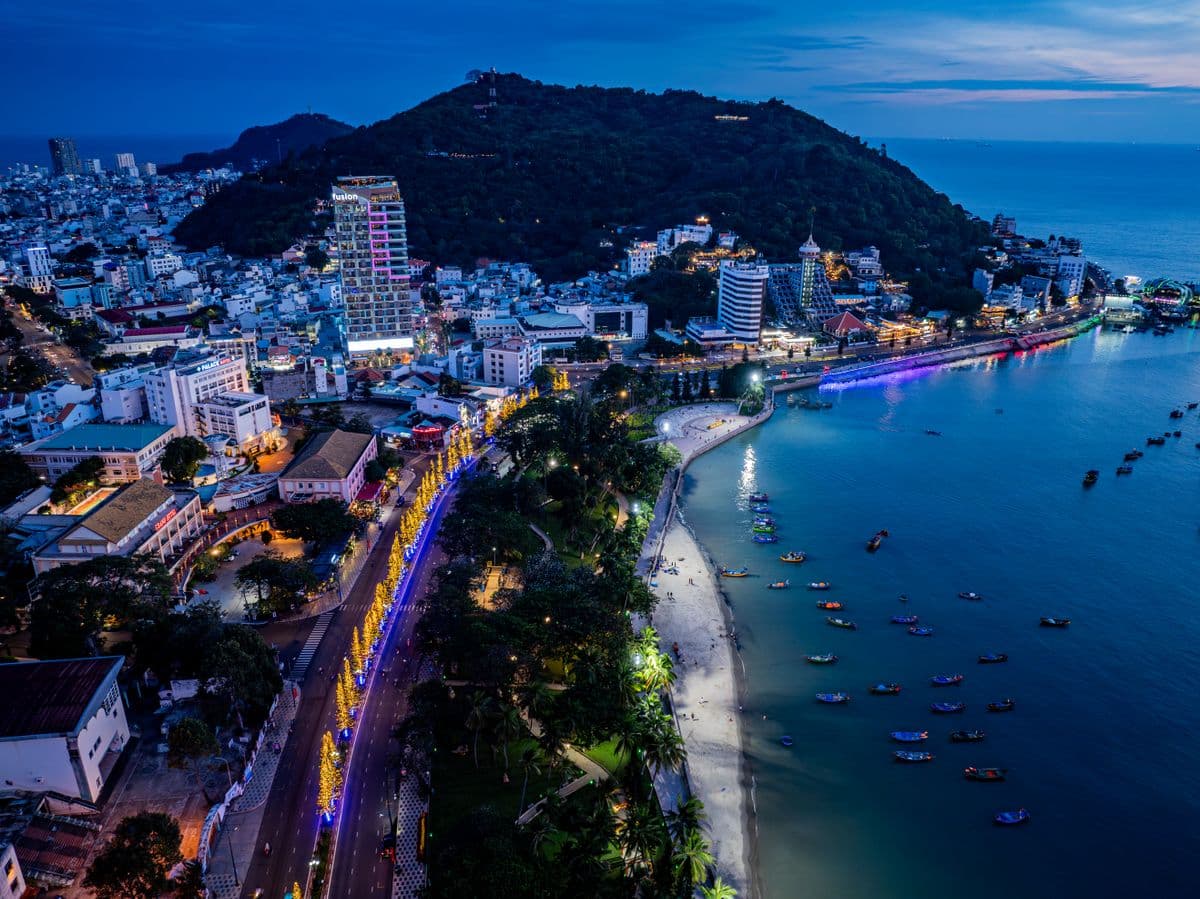
Unlike Cam Ranh or Nha Trang, where the dry season lasts eight months, Vung Tau splits into two nearly equal halves. Six months from November to April bring sun, clear skies and predictable weekends. Six months from May to October bring the southwest monsoon, and afternoon showers. It is the classic southern Vietnamese pattern — the same as Phu Quoc or Ho Chi Minh City, just milder, because Vung Tau is less exposed to ocean winds.
Dry season (November–April)
Six months without an umbrella. The northeast monsoon brings dry air off the continent, the rain retreats, humidity drops to 70–75%. This is high season: HCMC residents come for the weekend, foreigners come for a holiday, and around Bãi Sau a free sun lounger is hard to find on a Saturday.
Peak dry season is December–February. Days of 28–29°C, nights of 22–23°C, almost no rain (1–3 days a month). Humidity is lower, breathing is easier, and you can switch off the AC overnight. At Bãi Sau this is wave season: the northeast monsoon builds the surf. On Mũi Nghinh Phong cape the wind is strong at this time: a light windbreaker helps even by day.
March–April is a transition inside the dry season. It gets noticeably hotter — up to 31–32°C, the UV index climbs toward 11–12, and by April the first afternoon clouds appear. It is your last chance to catch a dry Vung Tau before the monsoon.
Hotel prices on dry-season weekends run 30–50% higher than on weekdays. For December–February, book 1–2 months ahead, especially sea-view rooms on Front Beach. Driving in from Ho Chi Minh City on a Saturday morning is the standard local plan, and the beaches are packed by 10 am.
Rainy season (May–October)

The southwest monsoon arrives in early May. First it is short showers every other day, then steady daily rain after lunch. Mornings are usually clear — good for the beach and breakfast by the sea. Clouds gather by 2–3 pm, it pours for an hour or so from 3 to 5 pm, then sun or a mild evening returns.
Humidity climbs to 85% and higher. This is the hard part: 30°C outside is bearable, but the air feels heavy, clothes cling, and the AC turns from luxury into survival gear. Locals reshape the day: beach before 11 am, lunch in a café, a siesta, a walk after 5 pm.
The sea peaks now: 29°C in May, 28°C through summer. Swimming is comfortable, but the surf builds, with waves of 0.5–2 m.
The rain peaks June–September: up to 330 mm and 18–19 rainy days a month. By October the intensity eases, and November gets three times less water than September. Low season means discounts — hotels drop 30–40%, cafés have empty tables, and the beach is deserted except for the fishermen.
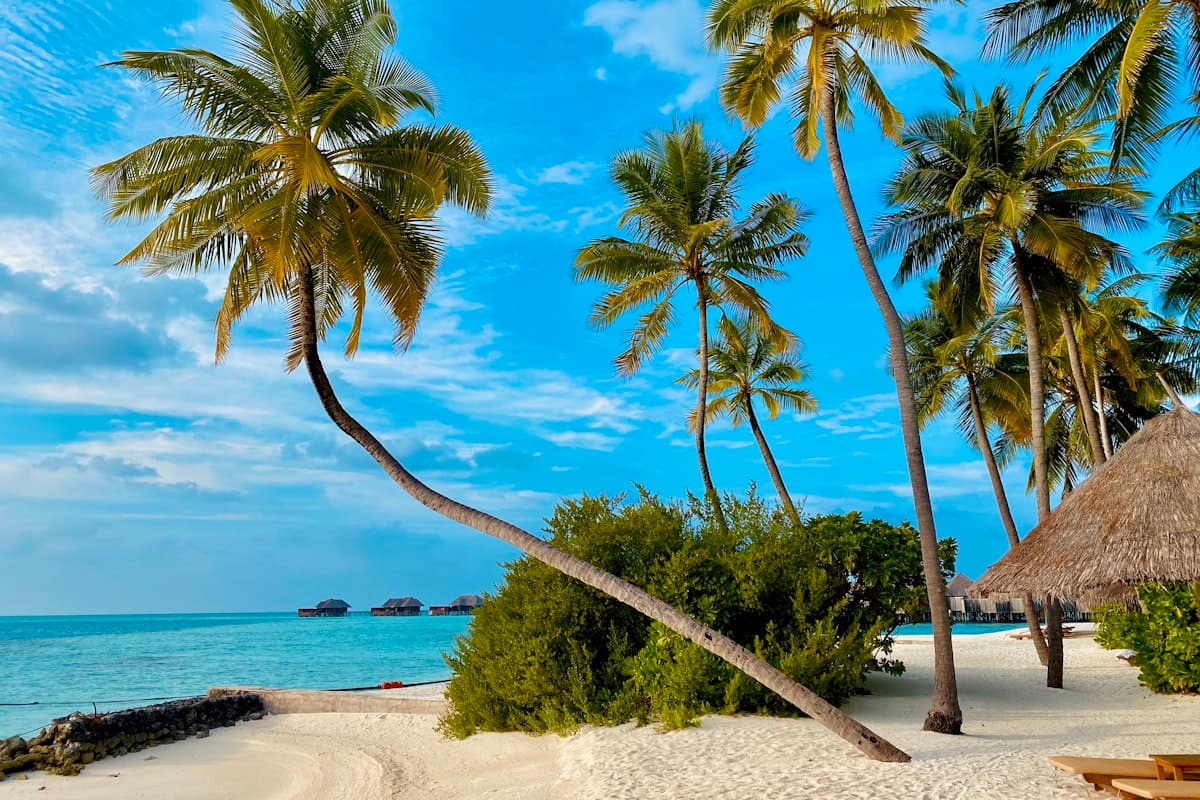
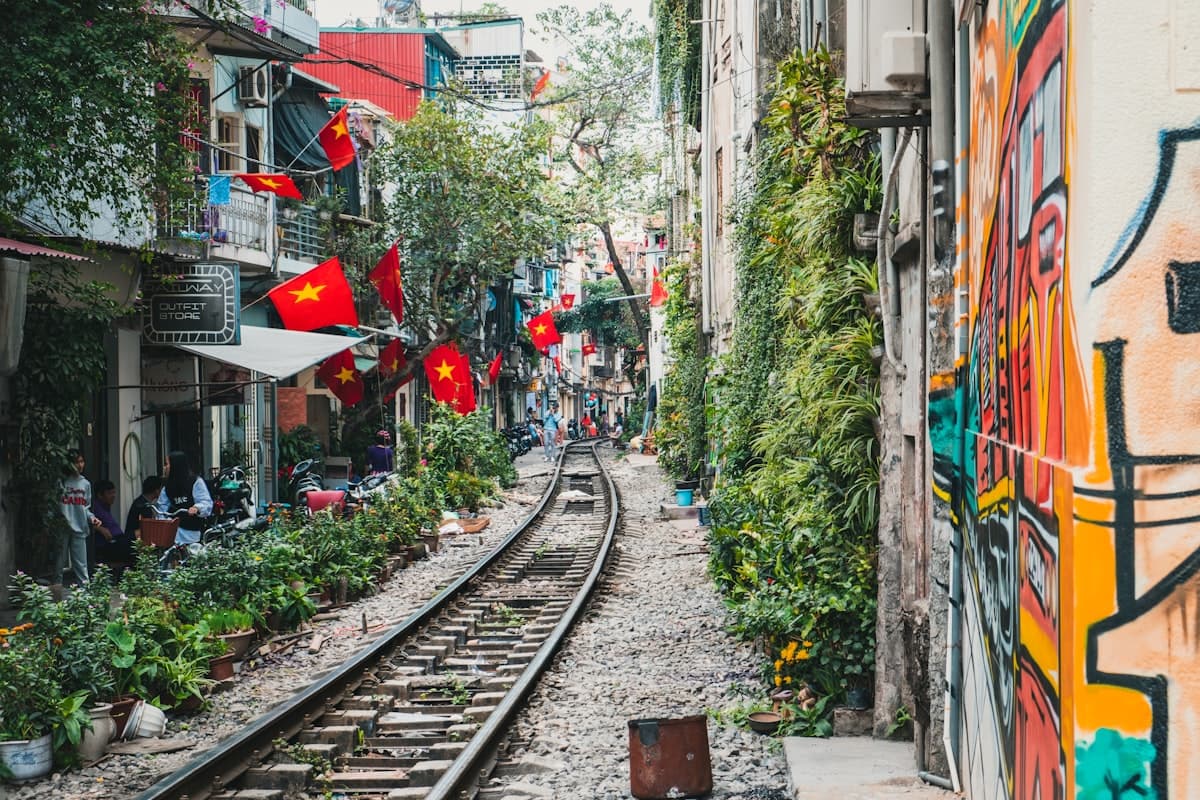
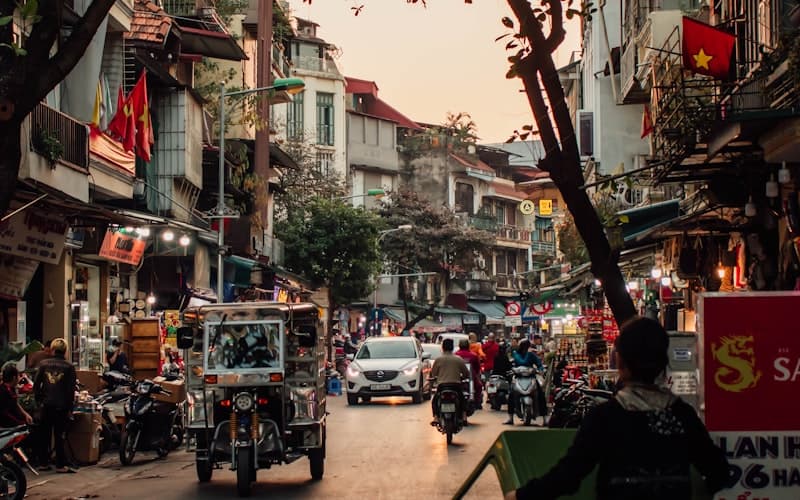

Vung Tau weather month by month — in detail

If your holiday lands on a specific month, here is what to expect. Sometimes the gap between April and May matters more than the choice between two resorts.
January — peak dry, cool
The most comfortable month for anyone who wilts in the heat. 28°C by day, 22°C at night, almost no rain — one shower a month, and a short one. The sea is 26°C, with wind and surf at Bãi Sau. Humidity is 70–75% and the air is easy to breathe. The one downside is peak season: prices are at their highest and Bãi Sau is crowded on weekends. Want it quieter? Come on a weekday.
February — the driest
The champion for dryness: 5–10 mm of rain all month and one rainy day on average. Same temperatures — 29°C by day, 23°C at night. Sea at 26°C. February often overlaps with Tet (Lunar New Year), which means local crowds and higher prices, but also fireworks, fairs and a festive mood on the seafront. One catch: Tet can shut some cafés and shops for 3–5 days while owners head home to family.
March — hot but dry
Temperatures near 31°C, 25°C at night, rain still scarce (10–20 mm, two days). Water at 27°C — warmer than in winter. This is the "transition" window: still dry, but genuinely tropical-hot. The UV index rises to 11. SPF 50+, a hat and shade after noon are mandatory. For the walk up to the Christ statue, set out at 7–8 am, or the 811 steps become a trial.
April — transitional, hot
The hottest month of the year: 32°C by day, 26°C at night. Water at 28°C. The dry season is officially still on, but by late April the first afternoon clouds appear and rainfall reaches 40–60 mm, up from 10–20 in March. Rainy days are still only 4–5 — not the rainy season yet, but no longer peak dry either.
May — rain begins
The turning point. The first half of May stays dry; the second brings regular showers. By month's end the rhythm is set: sun in the morning, rain after 3 pm. Rainfall jumps to 200–230 mm, with 14 rainy days. The water warms to 29°C — the yearly high. For a beach holiday, May is a gamble — the water is warm, but half the day the sky is grey.
June — rainy season
A full wet season. 280–320 mm of rain, 18 rainy days. Temperatures dip slightly — 31°C by day, 25°C at night — because cloud cover cuts the heating. Water at 29°C, surf steady. June is low season and hotels drop 30–40%. It is a chance to stay in a 4–5-star seaside hotel on a 3-star budget. The downside: humidity of 85–90%, muggy even at night, and wet clothes that take a day to dry.
July — peak rain
The wettest summer month: 290–320 mm of rain, 19 rainy days. Six straight days of rain is normal — but not "all day." It is usually one or two heavy downpours in 24 hours, with sun and mugginess in between. July suits those not here for the beach: budget travellers, or anyone living "local mode" — sea in the morning, then a café with coffee and work, seafood in the evening.
August — peak rain, downpours
Much like July: 30°C by day, 270–300 mm of rain, 18 rainy days. Water at 28°C. The surf can build and a red flag sometimes goes up on Bãi Sau.
September — peak rain, humid
The wettest month of the year: up to 330 mm of rain, 19 rainy days. 30°C by day, 25°C at night. Sea at 28°C, but with steady waves. By late September the rain begins to ease. September also carries the highest typhoon risk, though direct hits on Vung Tau are rare. If you go in September, book a hotel with free cancellation and check the forecast 3–5 days out.
October — season winding down
The rain starts to retreat: 220–260 mm, 16 rainy days. Same temperatures — 30°C by day. Sea at 28°C. By late October noticeably less water falls. It is a compromise between seasons: warmer and drier already, but still cheaper and less crowded than November.
November — dry begins
Rain drops off sharply: 80–120 mm, 7 rainy days. Temperatures ease to 29°C by day and 24°C at night. Humidity falls to 75%. Water at 27°C. From mid-November the days turn reliably clear. November is the best "between seasons" month: no winter crowds yet, prices off their peak, weather almost perfect. Many HCMC expats rate November and March as the best months for a Vung Tau weekend.
December — dry, cool
The start of peak dry season: 20–40 mm of rain, 3 rainy days. 28°C by day, 22°C at night — this is "Vietnamese winter," when locals put on light jackets. Sea at 26°C — comfortable to most visitors, "cold" to locals. December is popular for the New Year holidays, so hotel prices peak: book 2–3 months ahead, especially for 28 December to 5 January.
Best time to visit Vung Tau — by goal
There is no single answer — it depends on why you are going. Below is a "goal → best month" table based on typical trips, both weekend runs from Ho Chi Minh City and longer beach holidays.
| Goal | Best time | Why |
|---|---|---|
| Weekend from HCMC | Nov–Mar | Dry, predictable weekends |
| Beach holiday | Dec–Mar | Least rain, 28–30°C |
| Warm-sea swimming | Apr–May | Water 28–29°C — yearly high |
| Surfing at Back Beach | Nov–Mar | Northeast monsoon, east swell |
| Walk to the Christ statue | Dec–Feb | Not too hot, good visibility |
| Budget trip | Jun–Aug | Low season, 30–40% off |
| With kids | Dec–Mar | Mild sun, no showers |
| Tet festivities | Jan–Feb | Atmosphere, fireworks |
If your holiday is short and this is your only shot, choose December–March. If you live in Ho Chi Minh City and can come often, every season has its appeal: beach, walks and surf in winter, quiet in summer.
One more thing, and for Vung Tau it matters more than the season: the day of the week. This is Ho Chi Minh City's go-to weekend beach, so on Saturday and Sunday tens of thousands pour into Bãi Sau in any month of the year, rain or shine. By 10 am the loungers are gone, the water is murkier from the crowds, and the seafront is shoulder-to-shoulder in the evening. On weekdays it flips: the beach is half-empty, hotels run 20–30% cheaper and the sand is cleaner. If you can pick, come Tuesday to Thursday.
Weekend from HCMC. For a Saigon resident, Vung Tau is "leave Saturday morning, back Sunday evening." In the dry season the plan never fails. In the rainy season the weekend is a lottery: the downpour may land exactly on your Saturday. The move is to watch the forecast a day or two ahead and book somewhere with free cancellation.
Early May. The first two weeks of May sit right at the start of the rainy season — often still dry, sometimes already unpredictable. If you are travelling in early May, take the first week and book a hotel with free cancellation.
Fast Track — no queue at the border
5–10 minutes instead of an hour in the immigration queue
from$11per passenger
Surfing at Back Beach: when the waves come

Back Beach (Bãi Sau) is the only place near Ho Chi Minh City with a permanent surf community. The eight-kilometre strip of sand on the peninsula's east coast is open to ocean winds, and the wave season runs November to March, when the northeast monsoon sends in an east swell.
| Period | Waves | Who it suits |
|---|---|---|
| November | Peak season, east swell | Clean waves more often than in other months |
| Dec–March | East-northeast swell | Waves most days, but the wind often chops them up |
| April–Oct | Smaller and less frequent | Off season |
Board rental and surf lessons are available at Back Beach; check prices and times locally.
The best time for a lesson is early morning (6–8 am): the wind is still soft, the tide is right, and the beach crowds are only waking up. It gets harder by day — the sun bites and wind chop breaks up the wave.
Can you swim in Vung Tau
You can swim year-round. A water temperature of 26–29°C makes Vung Tau one of the warmest resorts in Vietnam — warmer than Nha Trang in winter and on par with Phu Quoc. The catch is not temperature but clarity.
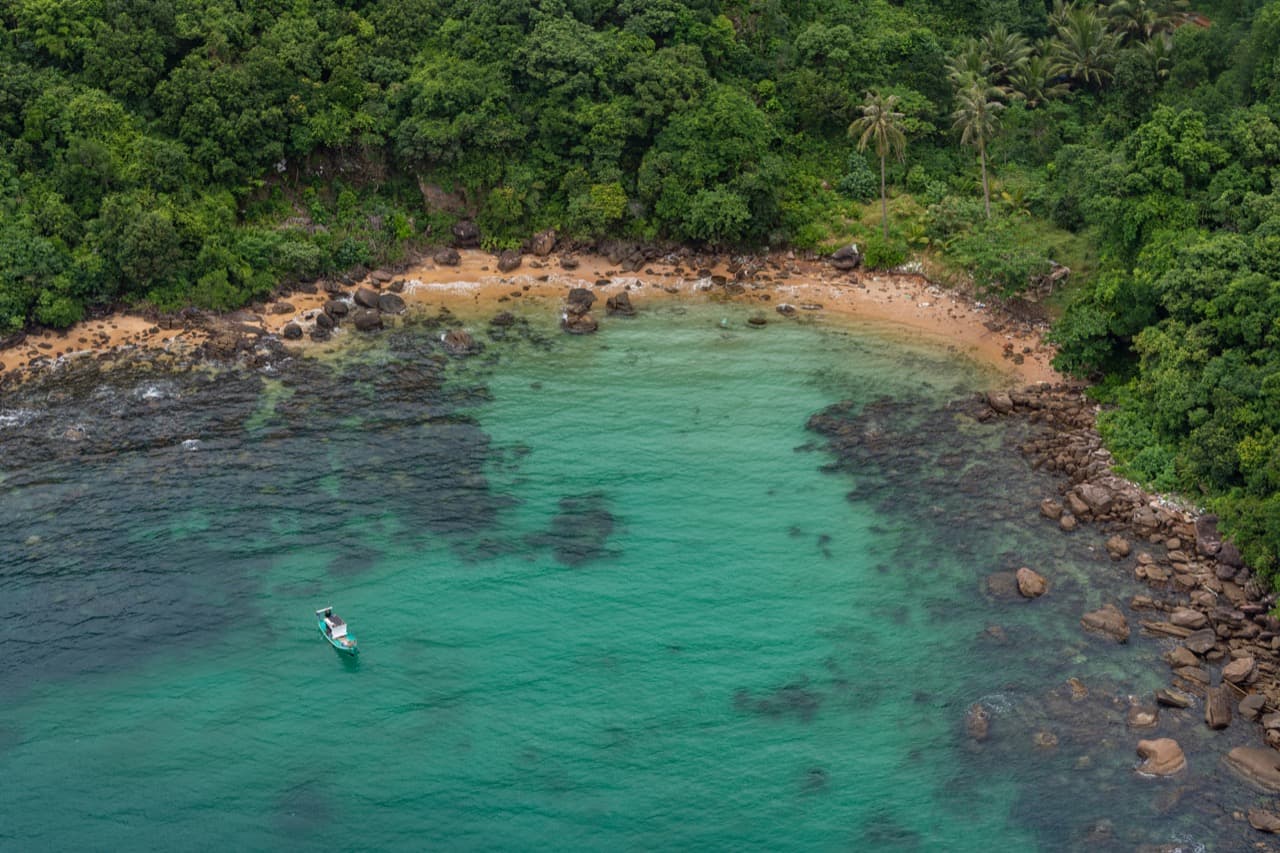
The sea off Vung Tau is never turquoise. The reason is the nearby Mekong Delta and its big rivers, which carry silt and sediment into the South China Sea. The water at the beaches ranges from greenish-grey to brownish, especially after rain. This is normal for Vietnam's southern coast.
By season
- December–March: clearer water, visibility 1–2 metres. Colour is greenish-grey, almost sea-blue at Front Beach in the early morning. The best time to swim.
- April–May: warm water, medium visibility. The surf is still gentle.
- June–October: after the regular rain, murkiness increases and visibility drops to 0.5–1 metre. Colour is grey-brown. Swimming is fine, but you won't get postcard shots underwater.
Where it is cleaner in Vung Tau itself
- Bãi Trước (Front Beach) — a small bay on the west of the peninsula. The water is cleaner, but swimming is awkward: the port is close and boats pass by. Good for strolls and sunsets.
- Bãi Sau (Back Beach) — the main swimming beach, 8 km of sand. The water is murkier, but it is open sea with room to spread out.
- Bãi Dứa (Pineapple Beach) — small and rocky, with cleaner water thanks to distance from the river mouths.
Where the water is genuinely clean nearby
- Long Son Island — 23 km north of Vung Tau, oyster rafts and floating restaurants.
- Con Dao — an archipelago 200 km away, by ferry or plane. Turquoise water, coral reefs. If you want the real "Vietnamese Maldives," go there — the weather and water are a different world.
For a full rundown of Vung Tau beaches with lounger prices and infrastructure, see the separate guide to the beaches.
What to pack for Vung Tau
The kit depends on the season. In winter (November–April) — the minimum, mostly light clothing and sun protection. In summer (May–October) — add rain and humidity gear.
Dry season (November–April)
- Light cotton and linen — shorts, T-shirts, dresses
- Swimwear, ideally two — one is always drying
- Sunscreen SPF 30–50+ (UV index 7–12)
- A hat and sunglasses
- A light windbreaker — the wind is constant on Mũi Nghinh Phong cape, and December–January evenings on the seafront are cool
- Closed trainers — for the climb to the Christ statue (811 steps)
- Water shoes — Bãi Sau has shells and stones
Rainy season (May–October)
Everything above, plus:
- A raincoat or light waterproof jacket (an umbrella breaks in the wind)
- A waterproof phone case and a dry bag for documents
- Quick-dry clothing — plain cotton takes half a day to dry after a downpour
- Mosquito repellent with 30%+ DEET — there are more of them after the rain
- Closed sandals or waterproof shoes — wet asphalt and puddles
What to do in Vung Tau when it rains
Rain is no death sentence for a holiday. Showers in Vung Tau usually last 1–2 hours, with sun in between. Locals simply wait it out in a café over an iced Vietnamese coffee. But if you want a plan, here are six options that work in any weather.
- Christ the Redeemer statue. The 32-metre statue on Tao Phung hill is Vung Tau's main sight. In the rain it is best not to go: 811 steps lead up to the statue, and they get slippery.
- White Palace (Bạch Dinh). The former residence of French governors-general, now a museum with late-17th-century (Kangxi era) ceramics from a shipwreck. Entry 15,000 VND (~$0.60). Indoors, a 1–1.5 hour visit.
- Hải Đăng Lighthouse. A French lighthouse from 1862 on Nho hill. A 15-minute walk up, and the views are worth it even in the rain. There is a covered café overlooking the peninsula.
- Seafood on the seafront. Cafés on Back Beach run in any weather. Grilled prawns, oysters, squid — an average bill of 250,000–500,000 VND (~$10–20) per person. In the rain it is even more atmospheric.
- Spa and massage. Thai massage from 200,000 VND (~$8) an hour, hotel spas from 800,000 VND (~$32). With the rain against the window — just the thing after a hot day.
- Lotte Mart shopping centre. Shopping, food court, cinema. Not the most touristy option, but if the rain settles in for the day, it is a way out.

A rain forecast in Vung Tau is rarely worth taking literally: the cloud icon in your app often means "two hours of rain somewhere around 4 pm," not "all day in the wet." Head out in the morning, be back by 3 pm — and the rainy season stops being a problem.
Vung Tau vs Phu Quoc, Con Dao, Mui Ne — which has better weather
All four resorts are southern Vietnam, and their climates are similar — with a few nuances.
| Resort | Dry season | Rain | Water | Clarity |
|---|---|---|---|---|
| Vung Tau | Nov–Apr | May–Oct | 26–29°C | Low |
| Phu Quoc | Nov–Apr | May–Oct | 27–30°C | High |
| Con Dao | Dec–Apr | May–Oct | 27–29°C | Very high |
| Mui Ne | Nov–Apr | May–Oct | 24–28°C | Medium |
Vung Tau — for a weekend from Ho Chi Minh City, surf and the feel of a Vietnamese town. The water is murky, but it is the closest to reach.
Phu Quoc — for a classic beach holiday with turquoise water. You fly in, it is pricier, but the views earn it.
Con Dao — for anyone after quiet, diving and crystal water. The archipelago is shielded from mass tourism and prices are higher.
Mui Ne — for kitesurfing and red dunes. The water is cooler thanks to a northern current, but the wind is ideal.
All four share the southern Vietnamese climate, so there is no "escaping the rain" within the south: either go to the centre (Cam Ranh, Nha Trang, where the rain falls in different months) or wait for November–April.
Practical weather tips
A few things forecasts don't tell you, but that help you plan without surprises.
UV index. From March to October, UV holds at 10–12 — the extreme range. You can burn in 20 minutes in the open sun, even through cloud. Reapply SPF 50+ every 2 hours; a hat and shade after 11 am are essential.
Air conditioning. 32°C outside, 18–20°C in malls and buses. A 12–14-degree swing is a common cause of colds among travellers. A light windbreaker solves it.
Humidity. In the rainy season, 85%+. Electronics fog up on leaving an air-conditioned room, and clothes take a day to dry. Silica-gel sachets for your camera aren't paranoia — they're a necessity.
Forecasts. Weather sites often show rain all day when it is really 40 minutes of downpour and then sun. Don't cancel plans over a cloud icon. The best approach: leave the hotel in the morning, be back by 3 pm.
Acclimatising. The first 2–3 days your body adapts to the heat and humidity. Drink more water (3–4 litres a day), skip alcohol in the sun, and don't overload day one with tours. Tap water is not drinkable — buy bottled (5,000–10,000 VND for 1.5 litres, ~$0.20–0.40).
Mosquitoes. Vung Tau has them, especially in the rainy season and at dusk. For evening walks and open-air restaurants, use repellent with 30%+ DEET. Local brands sell in any pharmacy for 30,000–50,000 VND (~$1.20–2).
FAQ
The best time is the dry season, November to April, and the sweet spot within it is December to March. These months are dry, air is around 28–31°C and UV is high, up to 11 in March. Rain is rare (1–3 days a month) and the water is 26–27°C — comfortable to swim in. If you want the warmest sea (29°C), come in April–May, but be ready for 32°C heat. Whatever the season, plan for weekdays: on weekends Vung Tau fills with day-trippers from Ho Chi Minh City and the beaches are packed even in the rain.
The sea is warm all year: from 26°C in December–February to 29°C in April–June. The low is January and December (26°C), the high is May and June (29°C). Swimming is comfortable any month. The catch is not temperature but clarity: the water is murky year-round because of the nearby Mekong Delta and the big rivers carrying silt.
The rainy season runs May to October — six months. The peak is June to September, with 270–330 mm of rain and 18–19 rainy days a month. Showers usually come in the afternoon (3–5 pm) and last 1–2 hours, while mornings and evenings stay clear. The dry season is November to April, when rain is rare (1–5 days a month).
The main wave season at Back Beach (Bãi Sau) is November to March, when the northeast monsoon sends in an east swell. Clean waves are most likely in November, though the wind often blows them out. From April to October the waves are smaller and less frequent. Board rental and lessons are available on the beach; check prices locally.
Typhoon season in Vietnam is July to November, peaking in September–October. But Vung Tau is in a low-risk zone: direct hits are rare, and the last notable one was Typhoon Durian in December 2006, which tore the roofs off around 500 homes in the province. The indirect effect is heavy rain and wind for 1–2 days a year, sometimes cancelled ferries from Ho Chi Minh City. If you plan for September–October, choose hotels with free cancellation.
The climate is similar; both are southern Vietnam, with the dry season running from November in Vung Tau and from December on Con Dao, through to April in both. But Con Dao wins big on clarity: on the archipelago the water is turquoise, with visibility up to 10 metres. Vung Tau stays murky year-round. Temperature is almost identical (±1°C). If clear water for snorkelling and photos matters, choose Con Dao. If access and a weekend from Ho Chi Minh City matters, choose Vung Tau (about 2 hours by fast ferry vs 1 hour by plane).
Tropical monsoon (Köppen: Aw — tropical savanna). The annual average is 27.4°C, yearly rainfall is roughly 1,400–1,900 mm (aggregators disagree) and humidity is 75–85%. The climate splits into two nearly equal periods: a dry season from November to April (northeast monsoon) and a wet one from May to October (southwest monsoon). Unlike northern Vietnam there is no cold winter here; unlike the centre, the rainy season is longer.
- Guide
Vung Tau Weekend Trip from Ho Chi Minh City: 2-Day Plan
Vung Tau weekend trip from Ho Chi Minh City: ferry times and fares, a 2-day hour-by-hour itinerary, where to stay, what to eat and budgets from $42.Vung Tau Weekend Trip from Ho Chi Minh City: 2-Day Plan - Preparation
Ho Chi Minh City to Vung Tau 2026: Ferry, Bus, Car
Ho Chi Minh City to Vung Tau in 2026: Greenlines ferry $12, buses from $3.50, the new CT.28 expressway in 70 minutes. Fares, schedules and what to book ahead.Ho Chi Minh City to Vung Tau 2026: Ferry, Bus, Car - Guide
Vung Tau 2026: Beach Escape from Ho Chi Minh City
Vung Tau guide: an easy beach weekend from Saigon — the Christ statue, lighthouse, beaches, seafood and how to get there by ferry or bus.Vung Tau 2026: Beach Escape from Ho Chi Minh City