Hanoi weather by month in 2026
Unlike the tropical south, Hanoi has four real seasons: a cold winter of padded jackets, a damp spring, a hot monsoon summer, and a dry, clear autumn. Temperatures swing from 8 to 38 °C and humidity runs 78–89%. The best time to visit is autumn — October and November.

In January the thermometer can drop to 8 °C, and with humidity near 80% even 15 °C turns into a raw, cutting cold. A fine drizzle-mist the Vietnamese call mưa phùn soaks a light jacket in half an hour. Summer swings the other way: 35 °C at 85% humidity feels like a solid 40 °C. Northern Vietnam runs on its own calendar — Hanoi has four real seasons, not the endless summer of the south.
Below is a full month-by-month table for all 12 months, with temperature, rainfall, humidity and a verdict for each.
Rainfall and rainy days are WMO normals for 1991–2020; temperatures from climate-data.org, weatherspark.com and weather-and-climate.com.
Hanoi's climate — subtropics with a real winter

Hà Nội sits in the Red River (Sông Hồng) delta, just 20 metres above sea level. The climate is humid subtropical, and the seasons flip sharply. The annual average is 23.6 °C, with about 1,600 mm of rain a year (the WMO normal) — more than twice what London gets, and more than most travellers expect from a city this far north.
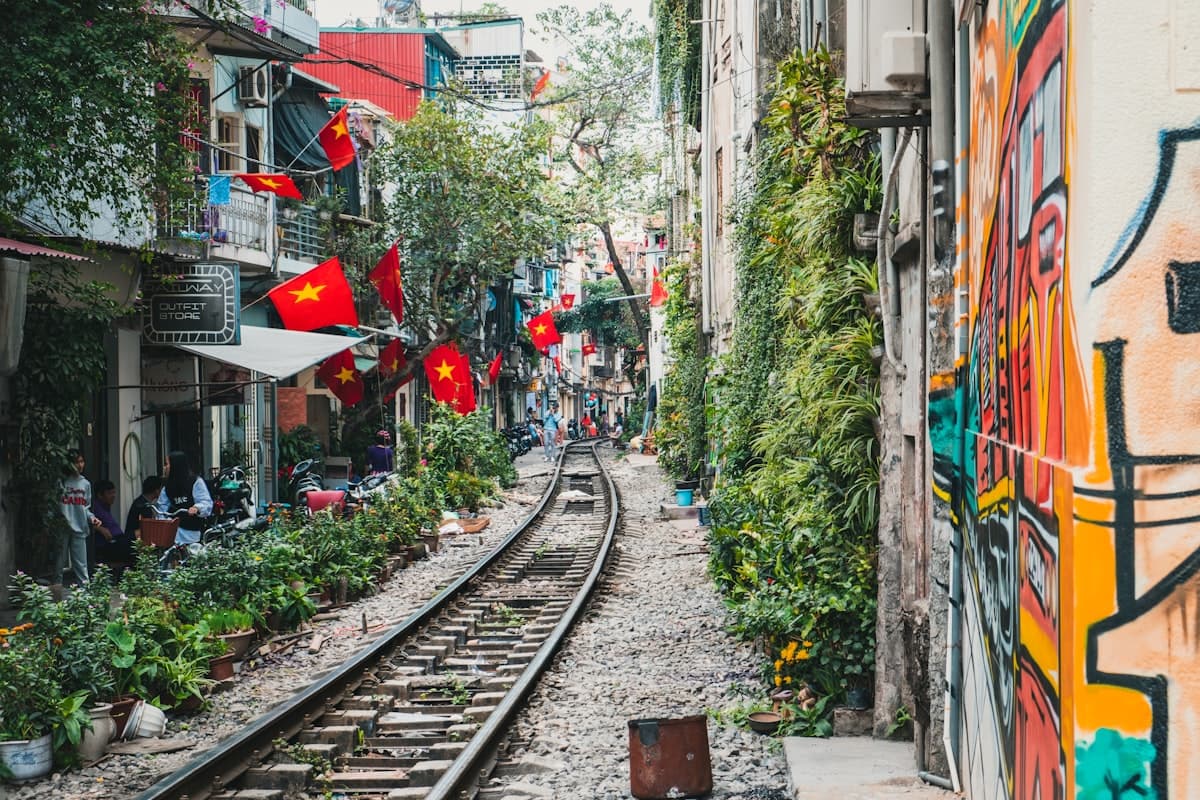
The big difference from southern Vietnam is that Hanoi actually has a winter. Not the tropical "winter" of Ho Chi Minh City, where it stays 28 °C year-round, but genuine chill — padded jackets, hotel space heaters, and cold evenings by Hoàn Kiếm Lake. Cold fronts from December to February can push temperatures down to 8–10 °C.
Where the south has two seasons, Hanoi runs a full four:
- Winter (December–February) — cool and damp, 14–22 °C, dropping to 8 °C in cold snaps, grey mưa phùn drizzle, winter smog, and usually Tet
- Spring (March–April) — mild and humid, 24–28 °C, misty mornings, blossoms
- Summer (May–August) — hot and humid, 32–38 °C, monsoon downpours, the odd typhoon tail-end
- Autumn (September–November) — heavy rain lingers into September, then October and November are the best of the year: warm, dry, clear, 25–30 °C, the classic "Hanoi autumn"
Humidity stays high all year: 78–89%. In winter it sharpens the cold — 12 °C at 80% humidity feels like 6–7 °C. In summer the same humidity turns 33 °C into a sauna.
The daily temperature swing is another quirk. It can be 28 °C in the afternoon and 18 °C by midnight — a 10-degree drop in a few hours. The south has nothing like it: there it stays 30 °C round the clock.
Typhoons hit the coast hardest, but they clip the north too, roughly July through September. By the time a storm reaches Hanoi, 100 km inland, it has weakened to a couple of days of steady rain and wind, and at worst some flooded streets. A trip out to Ha Long is another matter, though — cruises don't sail on typhoon days.
For the city itself — districts, transport and prices — see the full Hanoi city guide (Hanoi: complete city guide).
Hanoi weather by month: heat, rain, humidity
October–November and March–April are the four best months to visit. In the dry season (November–April) rainfall is 19–79 mm a month; at the peak of the rains (August) it is 335 mm across 18 rainy days.
Weather in Hanoi month by month
colour depth — rainfall per month
October
Idealrainfall 126 mm · rainy days 10The best time of year. Crisp air, golden light, 29°C. Ideal for a trip.
| Month | Day / Night | Rain (mm) | Humidity | Verdict |
|---|---|---|---|---|
| January | 20 / 14 °C | 28 | 81% | Good — coldest month, pack a jacket |
| February | 20 / 15 °C | 19 | 84% | Mixed — dry but grey; Tet closures |
| March | 24 / 18 °C | 55 | 85% | Ideal — spring, blossoms, comfortable |
| April | 28 / 22 °C | 79 | 89% | Good — warm but very humid, first storms |
| May | 32 / 25 °C | 188 | 83% | Mixed — heat builds, showers begin |
| June | 35 / 27 °C | 231 | 82% | Rainy — hottest month, feels like 40 °C |
| July | 34 / 27 °C | 300 | 83% | Rainy — longer, heavier downpours |
| August | 33 / 27 °C | 335 | 85% | Rainy — wettest month, streets flood |
| September | 32 / 25 °C | 195 | 82% | Mixed — heat eases, rain still strong |
| October | 29 / 22 °C | 126 | 80% | Ideal — best month of the year |
| November | 25 / 18 °C | 48 | 79% | Ideal — dry, warm, clear, no crowds |
| December | 22 / 15 °C | 24 | 78% | Good — cool season starts, cosy city |
Hanoi is not a beach resort. The nearest coast is Hạ Long Bay, 160 km away (3–4 hours by bus). If you want to pair sightseeing with a beach, check the weather in Ha Long too.
Dry season — November to April

Six months with minimal rain. But "dry" does not mean "warm": the winter months are colder than most visitors expect.
Winter (December–February)
December opens the cool season. Days run 20–22 °C, nights 14–15 °C, with little rain (24–28 mm). The sky stays overcast, and the drizzly mưa phùn gives the city a damp, late-autumn feel.
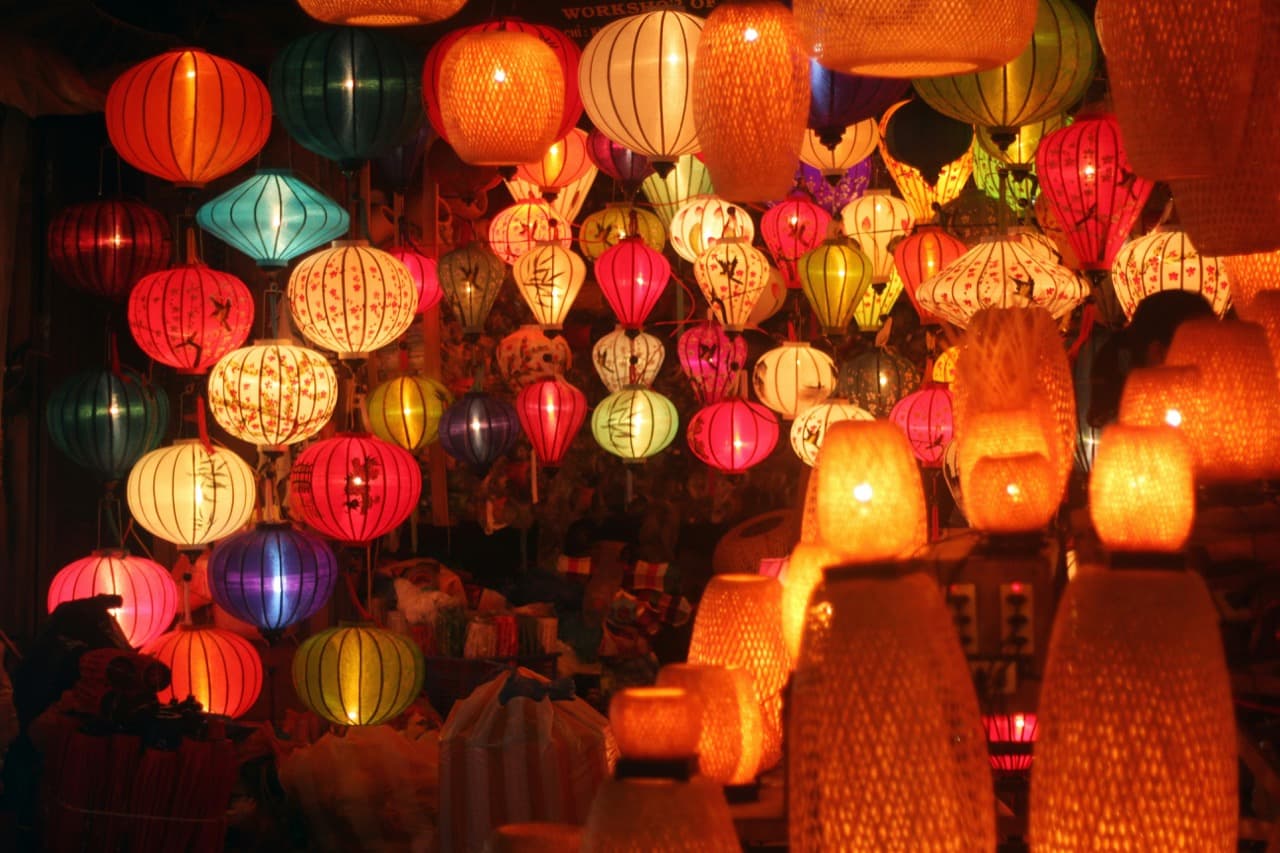
Still, December is a fine time to come. Temples and pagodas are free of crowds, and in cool weather a bowl of hot pho and an egg coffee land very differently than they do at 35 °C. The city is cosy in December — especially the Old Quarter, glowing under its lanterns.
January is the coldest month. With averages of 20 °C by day and 14 °C at night, cold fronts can drop it to 8–10 °C. On those days locals ride their bikes in gloves and scarves.
It's cool across the whole of northern Vietnam. In Hanoi right now there's a fine drizzle with a light north-easterly wind, 14 degrees, 11 at night (in Sapa 7–8 degrees, 4–5 at night)thehien, Vinsky forum, 2012, translated by VietnamSpot
The trap: budget hotels may not have a heater. Ask when you book.
February is one of the driest months (19 mm), but also the greyest — a hazy overcast can hang for weeks. On the upside, there are few tourists, hotels run 15–20% cheaper, and there are no museum queues.
Tet, the Vietnamese Lunar New Year, usually falls in January or February: the city fills with flowers and lanterns, but many places close for 3–5 days.
What to wear in winter: a warm jacket or padded coat, a sweater, closed shoes and an umbrella. Thermal layers help in January if you're heading further north — to Sapa or the mountain passes.



Spring (March–April)
In March Hanoi wakes up. Days hit 24 °C, nights are no longer cold (18 °C), and 55 mm of rain is easy to live with. Trees blossom along the streets, and in the evenings families stroll around Hoàn Kiếm Lake.
April is the crossover. It's warm (28 °C), but humidity spikes to 89%. Afternoon thunderstorms start: the sky darkens in half an hour, thunder rolls, a 40-minute downpour — then sun again. Rainfall is already up to 79 mm.
Rainy season — May to October

Heat and downpours. Not the most comfortable time, but hotels run 30–40% cheaper. Mornings are usually clear — you can wander until lunch, then wait out the rain in a cafe.
Summer (May–August)
May kicks it off. Temperatures cross 32 °C, rainfall hits 188 mm. The showers are still short, but the heat is already serious.
June is the hottest month in Hanoi: 35 °C by day. With 82% humidity it feels like 38–40 °C. Air conditioning in your room is non-negotiable. Rain falls almost daily, usually in the afternoon, so mornings are your window for the Old Quarter or a market.
August is the outright rainfall champion: 335 mm across 18 rainy days. After heavy storms the Old Quarter floods ankle-deep. It stays 33 °C, and the mugginess never lets up, day or night (27 °C).
Typhoon season runs July through September. Hanoi sits 100 km from the sea, so it catches a weakened storm — a day or two of rain and wind. But if Ha Long Bay or Cat Ba island is on your list, a typhoon can scrub the cruise, so watch the forecast and keep a spare day. Up in Sapa, the same summer brings fog and landslides on the mountain trails.
Early autumn (September–October)
September — the heat starts to back off (32 °C), but the rain is still strong (195 mm). It's the pivot month: one week sunny, the next under water.
October is worth the wait. Temperatures ease to 29 °C, rain eases off (126 mm), the air freshens. By the end of the month the sky clears, evenings turn cool, and the light over Hoàn Kiếm Lake goes golden.
Fast Track — no queue at the border
5–10 minutes instead of an hour in the immigration queue
from$11per passenger
When to visit Hanoi

October and November are the best months — the heart of the "Hanoi autumn": 25–29 °C, little rain, clean clear air after the monsoon, and golden light over the lakes. The second good window is March–April: spring, blossoms, 24–28 °C, but more humid and with the first storms.
| Period | Rating | Temperature | Pros | Cons |
|---|---|---|---|---|
| Oct–Nov | ★★★★★ | 25–29 °C | Dry, clear, comfortable | Cool by evening in November |
| Mar–Apr | ★★★★ | 24–28 °C | Spring, blossoms | April: humid, first storms |
| Dec–Feb | ★★★ | 20–22 °C | Few tourists, low prices | Cold, grey, drizzly |
| September | ★★ | 32 °C | Heat easing | Still heavy rain |
| May–Aug | ★ | 32–35 °C | Low prices | Heat, downpours, mugginess |
Come in winter and brace for the cold. Come in summer and brace for rain and heat. There's no flawless window — but October gets closest.
One thing to flag: Tet (the Lunar New Year, usually late January to early February) is a special time. The city is decorated and festive, but many restaurants and shops shut for 3–5 days, and hotel and flight prices spike. Book 2–3 months ahead.
Hanoi is a handy base for Ha Long Bay (3–4 hours), Ninh Binh (2 hours) and Sapa (5–6 hours). For routes and timing, see the guide to trips out of Hanoi.
What to pack

Hanoi isn't Phu Quoc, where shorts and flip-flops do the job. Get your wardrobe wrong and you'll spoil the trip.
Winter (December–February)
- A warm jacket or padded coat (nights down to 10 °C, and the humidity makes it feel colder still)
- A sweater or fleece for layering
- Closed shoes (not flip-flops!)
- An umbrella — the drizzle can last for days
- Thermals if you plan to head into the mountains
Spring and autumn (March–April, October–November)
- Light clothing plus a windbreaker for the evening
- An umbrella or light rain poncho
- Comfortable shoes for walking routes
- Sunscreen
Today in Hanoi there's a light drizzle, and a thin cardigan with summer jeans is comfortable. In Ha Long on 6–7 March it was warm during the day… but in the evening we wore jeans and warm jacketsDuhvan, Vinsky forum, 2012, translated by VietnamSpot
Summer and September (May–September)
- Light, breathable cotton or linen
- A packable rain poncho — essential (an umbrella won't stop a downpour)
- SPF 50 sunscreen
- A hat
- A spare T-shirt in your bag
Any season
- Long trousers for the evening (mosquito cover plus temple dress code)
- Mosquito repellent — mosquitoes are active in Hanoi year-round
- A power bank — heat drains a phone fast
- A dust/smog mask — Hanoi's air pollution is among the worst in Southeast Asia, especially in winter
Things to do in Hanoi when it rains

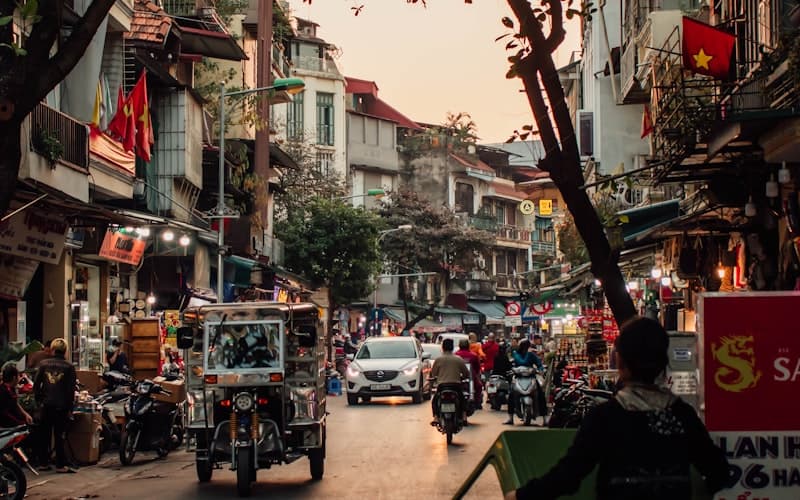
Rain in Hanoi is no reason to stay in your room. Covered markets run in any weather, museums cost pennies, and Old Quarter cafes rig awnings against the downpour. Showers usually come in the afternoon and last an hour or two; mornings are almost always clear.
Museums
Hanoi has dozens of museums, and entry to most costs less than a cup of coffee.
- Vietnam Museum of Ethnology — one of the best museums in Southeast Asia. 54 ethnic groups, reconstructed dwellings
- National Museum of Vietnamese History — from the Bronze Age to the present
- Vietnam Fine Arts Museum — Vietnamese painting and sculpture
- Vietnamese Women's Museum — the role of women in war, trade and culture
Tickets usually run 20,000–40,000 VND (~$0.80–1.60). Opening hours and the weekly day off vary by museum, so check before you go.
Water puppet theatre
Múa rối nước — the Thăng Long water puppet theatre. Check the schedule and ticket price at the box office (57B Đinh Tiên Hoàng, by Hoàn Kiếm Lake). It's an 11th-century craft: the puppeteers stand waist-deep in water behind a bamboo screen. There's nothing else quite like it.
The Old Quarter and food
The 36 streets of the Old Quarter (Phố Cổ) run in any weather — the rain only adds atmosphere. What to try:
- Pho (Phở) — hot rice-noodle soup. From 35,000 VND (~$1.40)
- Egg coffee (Cà phê trứng) — whipped yolk with condensed milk over coffee. Invented in Hanoi in the late 1940s. From 35,000 VND (~$1.40)
- Bun cha (Bún chả) — rice noodles with charcoal-grilled pork. This is what Obama ate in Hanoi. From 40,000 VND (~$1.60)
Other options
- Chợ Đồng Xuân market — the largest covered market. Three floors: clothes, souvenirs, food
- Keangnam Landmark Tower observation deck — 72nd floor, city panorama. ~150,000 VND (~$6)
- Spa and massage — from 200,000 VND (~$8) for an hour
- Cooking classes — make pho and spring rolls. From 500,000 VND (~$20), 2–3 hours
- Coffee shops — try egg coffee at Café Giảng or coconut coffee at Cộng Cà Phê. 35,000–65,000 VND (~$1.40–2.60)
FAQ

October and November are the two best months. Temperatures of 25–29 °C, little rain, fresh clear air after the monsoon. The second good window is March and the first half of April. Avoid June–August: heat above 35 °C and daily downpours.
Cool and damp. December–February: 20–22 °C by day, 14–15 °C at night. Cold fronts drop it to 8–10 °C, and humidity above 80% sharpens the chill. Pack a proper warm jacket.
May through October. The peak is August (335 mm, 18 rainy days). Rain usually comes in the afternoon and lasts one to two hours; mornings are often clear. An umbrella or poncho is a must.
Not in the city itself — Hanoi sits on a river, not the sea. Swimming in the lakes (Hoàn Kiếm, Hồ Tây) isn't advisable; the water is dirty. The nearest option is Ha Long Bay (160 km, 3–4 hours) or Cát Bà island.
Around 20 °C by day, 14 °C at night. Cold fronts can push it to 8–10 °C, and 81% humidity makes it feel colder. In January locals wear padded jackets and gloves.
June is the hottest month. 35 °C by day, and with 82% humidity it feels like 38–40 °C. Best to be out before 10am and after 4pm.
Completely. Ho Chi Minh City stays 28–35 °C year-round. Hanoi has a real winter of 10–15 °C. Its summer is even hotter (35 °C vs 33 °C), but its winter is 15–20 degrees colder. Packing for Hanoi and for Phu Quoc means two different suitcases.
Four, not two like the south. Winter (December–February) is cool and damp. Spring (March–April) is mild, humid and misty. Summer (May–August) is hot, with the monsoon and typhoon tail-ends. Autumn (September–November) still has heavy rain in September, then October and November turn dry and clear — the best time. For the wider picture, see the Vietnam weather guide by month.
Season runs July through September. Hanoi is 100 km inland and catches a weakened storm — a day or two of rain and wind, at worst some flooded streets. The coast takes the direct hit: Ha Long cruises are cancelled on typhoon days, so keep a spare day in the plan.
- Guide
Hanoi Tips & FAQ: Scams, Etiquette & Safety 2026
Practical Hanoi tips: common scams, etiquette, crossing the road, safety, apps and visas — the things first-time visitors need to know.Hanoi Tips & FAQ: Scams, Etiquette & Safety 2026 - Guide
Hanoi Reviews 2026: An Honest 7.2 out of 10
Honest Hanoi reviews for 2026: rated across 10 categories, the real pros and cons, food, air quality, day trips to Ha Long and Ninh Binh. Is it worth it?Hanoi Reviews 2026: An Honest 7.2 out of 10 - Guide
Beaches Near Hanoi: Cat Ba, Ha Long & Day Trips 2026
Where to find a beach from Hanoi: Cat Ba, Do Son, Ha Long, Quan Lan and Co To — how to get there, the swimming season and day-trip tips.Beaches Near Hanoi: Cat Ba, Ha Long & Day Trips 2026