Tours from Hanoi in 2026
Ha Long, Ninh Binh, Sapa and five more trips from Hanoi. 2026 prices in USD, routes, how to book English-speaking tours, and tips to keep the cost down.
Prices, routes and conditions checked in 2026 against open sources and recent traveller reviews.
Hanoi is the launch pad for northern Vietnam. Within 320 km of the capital sit five UNESCO sites (two of them, Ha Long and Trang An, are covered below), the highest peak in Indochina and rice terraces people fly across the world to see. A cruise on Ha Long Bay starts from around $35 for the day, and a combo trip to Ninh Binh with a boat and lunch costs about the same. Add street-food walks that run an hour and a half, three-day treks through the mountains around Sapa, and dozens of options in between.
Below: eight destinations with 2026 prices in VND and USD, step-by-step routes, tours versus doing it yourself, and where to book with English-speaking guides.
Prices current as of July 2026. Rate used: 1 USD ≈ 26,000 VND. Dollar figures are approximate.
- Hanoi (Starting point): Vietnam capital — the launch pad for every trip
- Ha Long Bay (Hạ Long, 160 km): 1,600 islands, a UNESCO site — Cruises from ~$35/day
- Ninh Binh (Ninh Bình, 90 km): Tam Coc, Trang An — Ha Long on land — Boat + lunch from ~$35
- Sapa (Sa Pa, 320 km): Mountain trekking, rice terraces — 2–3 days from ~$80
- Perfume Pagoda (Chùa Hương, 60 km): Sacred Buddhist complex — Boat + entry from ~$30
- Bat Trang (Bát Tràng, 15 km): Pottery village, workshops — Half day from ~$20
- Mai Chau (Mai Châu, 145 km): Homestay valley, rice fields — 1–2 days from ~$60
- Ba Vi National Park (Ba Vì, 60 km): Hiking, waterfalls, mountains — 1 day from ~$25
- Duong Lam (Đường Lâm, 50 km): Ancient village: 18th–19th-century laterite houses — A 300-year-old communal house
Where to go from Hanoi — an overview
Eight trips out of the capital, from a half-hour hop to a pottery village to a three-day mountain trek. The summary table below, with distances and prices, helps you get your bearings.
| Destination | Distance | Travel time | Length | Price (group) | Best for |
|---|---|---|---|---|---|
| Ha Long Bay | 160 km | 2.5–3.5 h | 1–2 days | from ~$35 | Everyone — a must |
| Ninh Binh (Tam Coc, Trang An) | 90 km | 1.5–2 h | 1 day | from ~$35 | Nature lovers |
| Sapa | 320 km | 5.5–6.5 h | 2–3 days | from ~$80 | Trekkers, photographers |
| Perfume Pagoda | 60 km | 2 h + boat | 1 day | from ~$30 | Culture, Buddhism |
| Bat Trang (pottery) | 15 km | 30–40 min | Half day | from ~$20 | Families with kids |
| Đường Lâm (ancient village) | 50 km | 1 h | 1 day | from ~$30 | History buffs |
| Ba Vi National Park | 60 km | 1.5 h | 1 day | from ~$25 | Hiking, nature |
| Mai Chau | 145 km | 3.5 h | 1–2 days | from ~$60 | Slow travel, homestays |
Ha Long and Ninh Binh are the two big hits. Only one free day? Choose between them: Ha Long gives you sea and karsts, Ninh Binh rivers and rice fields. Both are on the UNESCO list. Three days to spare? Add Sapa. Want a beach instead? Hanoi itself has no swimming beaches; the nearest options are in our roundup of beaches near Hanoi.
Group tours are simpler: they pick you up from your hotel in the morning and drop you back in the evening. Doing it yourself is 30–50% cheaper, but you have to plan. What follows is a breakdown of each destination with prices, routes and tips.
Still planning your trip to Hanoi? Our detailed guide to the capital covers the districts, where to stay and the food.
Ha Long Bay — cruises among 1,600 islands
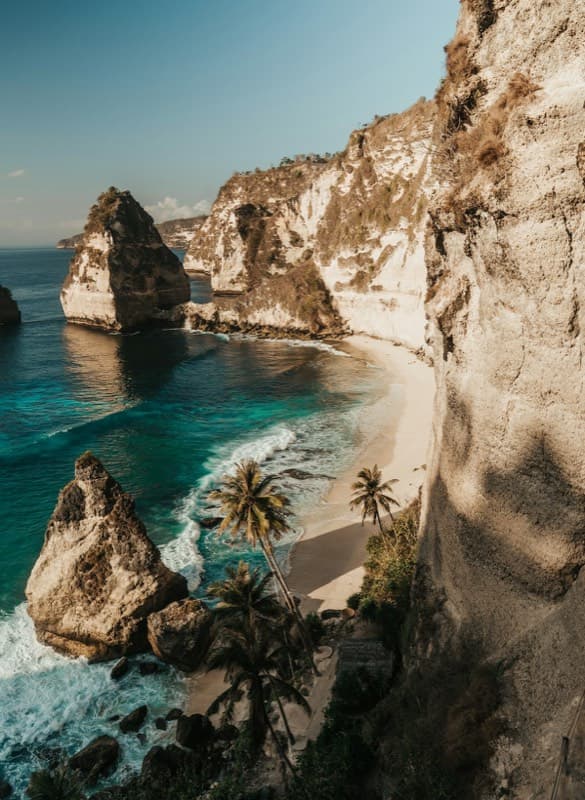
Hạ Long Bay is the headline trip from Hanoi. Around 1,600 limestone islands and karsts are scattered across the emerald water of the Gulf of Tonkin. It has been a UNESCO World Heritage site since 1994; in 2023 the listing was extended to "Ha Long Bay — Cat Ba Archipelago".
The bay is 160 km away, 2.5–3.5 hours by road. You arrive in the morning, board a boat and spend anything from four hours to two full days on the water.
Day cruise or overnight — which to choose
A single day, or a cruise with a night on board? Compare and decide:
| Feature | Day cruise | 2 days / 1 night |
|---|---|---|
| Time on the water | 4–8 h | ~24 h |
| Price (group) | $35–70 | $110–200 |
| What you see | 2–3 islands, 1 cave | Sunset, sunrise, kayaking, 3–4 caves |
| Meals | Lunch | Lunch + dinner + breakfast |
| Cabin | No | Yes, air-conditioned |
| Kayaking / swimming | Sometimes | Almost always |
| Verdict | A quick taste | The full experience |
If budget and time allow, go overnight. Sunset among the karsts, a seafood dinner on deck, morning tai chi on the bow — you get none of that on a four-hour day trip. The day cruise works when you are pressed for time: you see the main sights, but without the deeper experience.
In our view, a day trip to Ha Long isn't enough — take an overnight cruise so you catch the sunset and sunrise among the karsts.
How to get from Hanoi to Ha Long
160 km on the expressway. Your options:
| Option | Time | Cost | Notes |
|---|---|---|---|
| Tourist shuttle | 2.5–3.5 h | $10–15 | Most popular, hotel pickup |
| Public bus | 4–5 h | ~$6 (150,000 VND) | Long Bien, Gia Lam, My Dinh stations |
| Taxi / private car | 2–2.5 h | $45–60 | Up to 4 passengers, good for a group |
Most cruises include the transfer from Hanoi in the package price. Check when you book: if it is not included, the add-on is $10–15.
Ha Long cruise prices
| Category | Price per person | What's included | Example boats |
|---|---|---|---|
| Budget day cruise | $35–70 | 4–6 h on the water, lunch, 1 cave | Group tours |
| Standard 4★ (2d/1n) | $110–145 | Cabin, 3 meals, kayaking, caves | Amanda, Phoenix, Swan |
| Premium 5★ (2d/1n) | $150–200 | Balcony cabin, spa, bar | Heritage, Paradise, Bhaya |
Ha Long tips
Bai Tu Long and Lan Hạ are the less-hyped corners of the bay. Same karst cliffs, emerald water and caves — just without the crowds. Cruises cost the same or less. If you want the real bay rather than a conveyor belt, look for these routes.
Pack a swimsuit, SPF 50+ sunscreen, motion-sickness tablets (the water can get choppy, especially in winter) and cash — cards aren't accepted everywhere on boats and islands.
What you do on a cruise. A typical 2 days / 1 night programme: lunch on board → kayaking among the karsts → a cave visit (usually Sửng Sốt or Thiên Cung) → sunset with a cocktail on deck → seafood dinner → a spring-roll cooking class → sleep in the cabin → sunrise → tai chi on deck → breakfast → more swimming or another kayak → lunch → back in Hanoi by 4–5 pm.
For routes, islands, caves and practical details, see the full Ha Long Bay guide.
Ninh Binh — "Ha Long on land"
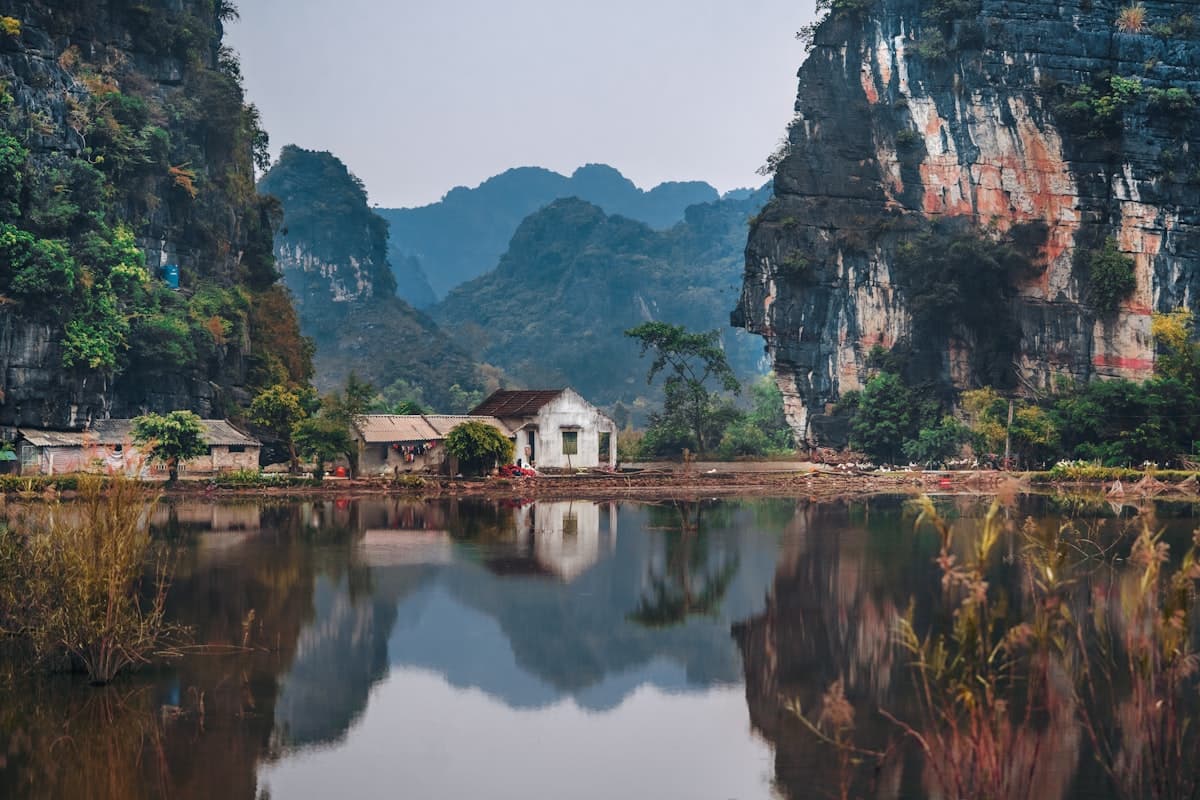
90 km south of Hanoi lies Ninh Bình province, nicknamed "Ha Long on land." Same karst cliffs, but instead of sea there are rivers, rice fields and ancient Buddhist temples. The Tràng An complex has been a UNESCO site since 2014 — and a mixed one (nature + culture), the only such listing in Vietnam.
This is the most budget-friendly of the big trips, and the easiest to do without a tour. A day combo tour starts from ~$35: transfer, boat and lunch. For the full picture, see the Ninh Binh guide.
Ninh Binh is the cheaper, less touristy alternative to Ha Long, with the same kind of karst scenery.
Trang An or Tam Coc — which to choose
Two main boat routes, each with its own character.
Tràng An is the grander one. Three routes (2 to 4 hours by boat), gliding through caves where the boat ducks under the cliffs. This is the UNESCO site, so there are more visitors. Ticket: 300,000 VND (~$11.50). Boats run 7 am to 5 pm.
Tam Cốc is the intimate one. The boat drifts through rice fields for 1.5–2 hours in silence. The scenery is softer and there are fewer people. Entry: 120,000 VND (~$4.60) per person, and the boat is 150,000 VND (~$5.80) for two. In May and June the rice ripens and the fields turn gold.
Trang An for scale and variety, Tam Coc for quiet and photogenic calm. Both are worth it.
Don't skip Múa Cave. It is 500 steps up a steep slope, but the top rewards you with a panorama over the rice fields and karst cliffs — the classic postcard shot. Entry: 100,000 VND (~$4). The climb takes 30–40 minutes; bring water.
How to organise a trip to Ninh Binh
An organised tour is the easiest. A "Hoa Lu + Tam Coc + Mua" combo costs ~$35 per person and includes hotel transfer, tickets, the boat, lunch and an English-speaking guide.
A typical day itinerary:
- 8:00 — depart your hotel in Hanoi
- 10:30 — Hoa Lu, Vietnam's ancient capital (10th century), the emperors' temples
- 12:00 — lunch at a local restaurant (included)
- 13:00 — Bích Động, pagodas on the mountainside, or a boat through Tam Coc
- 14:30 — climb to Mua Cave (optional)
- 16:00 — head back
- 18:30 — return to Hanoi
On your own is cheaper, but takes a little organising:
- Hanoi–Ninh Binh train: 80,000–120,000 VND ($3–5), 2–2.5 h. Tickets on dsvn.vn
- Motorbike rental on the spot: 100,000–150,000 VND/day (~$4–6)
- Trang An boat: 300,000 VND (~$11.50)
- Private car with driver for the day: 1,200,000–1,500,000 VND ($48–60) — handy for a group
All in, doing it yourself runs about $14–20 per person if two of you split a car.
Fast Track — no queue at the border
5–10 minutes instead of an hour in the immigration queue
from$11per passenger
Sapa — rice terraces and mountains
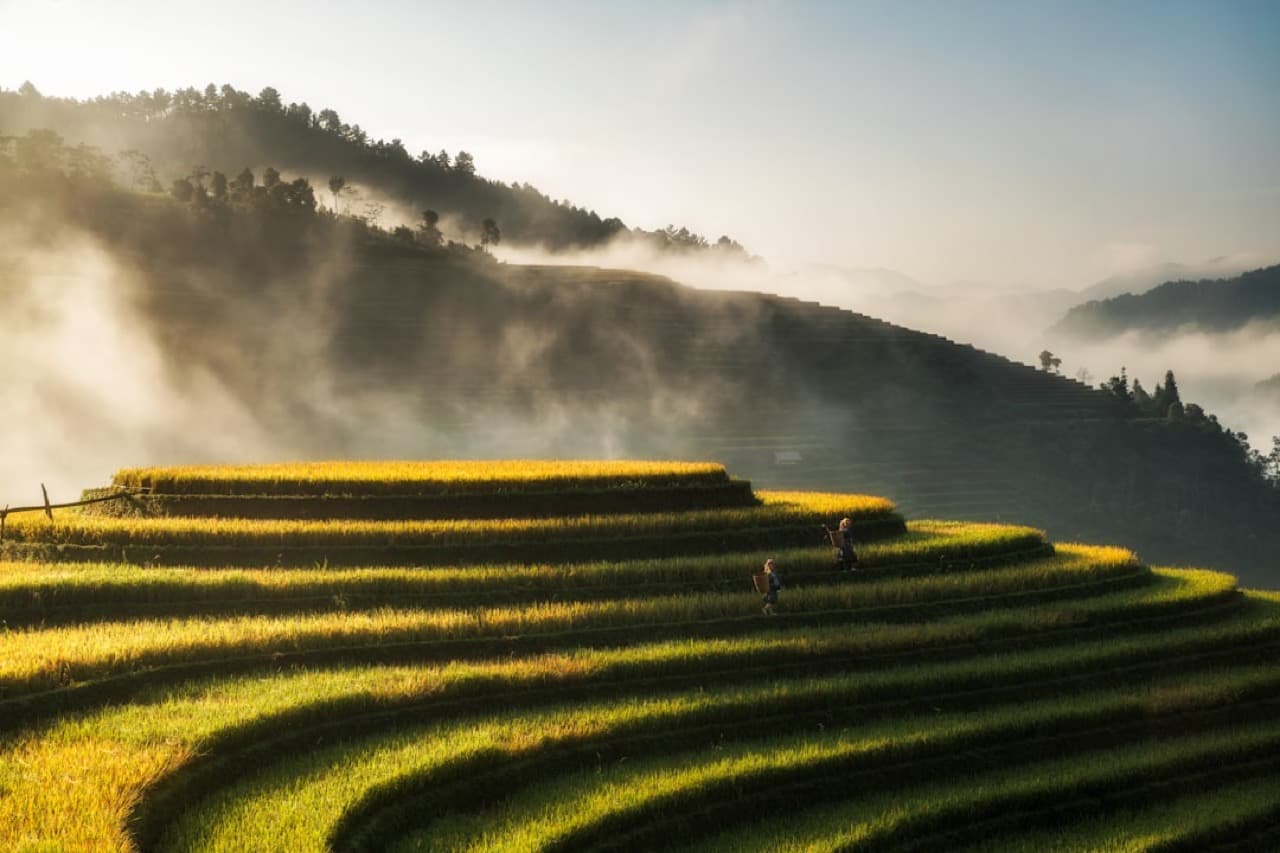
Sa Pa is a mountain town at 1,500 m, 320 km from Hanoi. Rice terraces cascade down into the valleys in tiers, and the villages are home to the Hmong, Red Dao and other highland peoples. On the horizon stands Fansipan (3,143 m), the highest point in Indochina.
Give Sapa at least two days. The one-way journey alone takes 5–6 hours by bus. But the scenery is like nothing else in Vietnam — worth carving out a dedicated leg of your trip. For the town, villages and homestays in depth, see the Sapa guide.
How to get from Hanoi to Sapa
320 km over mountain passes. The options:
| Option | Time | Price | Pros | Cons |
|---|---|---|---|---|
| Sleeper bus | 5.5–6.5 h | ~$12 (380,000 VND) | Cheap, flat beds, direct | Tiring, winding road |
| Overnight train to Lao Cai + bus | 8–9 h + 1 h | $20–27 (berth) | Sleep on the way, save a day | Pricier, change at Lao Cai |
| Limousine minibus | 5 h | $15–20 | More comfortable than a regular bus | No flat beds |
Buses leave Hanoi all day, from morning to night, with the big operators running almost hourly. The night run is handy — you arrive at dawn.
Night trains leave Hanoi in the evening and reach Lào Cai early in the morning; check the current timetable on dsvn.vn. From Lao Cai to Sapa it is another hour by bus (50,000 VND / ~$2) or taxi (~300,000 VND / ~$12).
Trekking and villages
Trekking is what people come here for. You only see the terraces, mountain trails and ethnic villages on foot.
Lao Chai and Ta Van is the most popular route. 12–15 km through 4 villages, 5–6 hours across the rice terraces. A guide is essential — it is genuinely easy to get lost at the forks, and the guide also introduces you to local families and translates. Cost per group: $20–40/day.
Cat Cat Village is an easy 3 km walk for those not up for hours of hiking. It is a Hmong village with traditional houses, a waterfall and weaving workshops. Entry: 100,000 VND (~$4). You can walk there from central Sapa in 30 minutes.
Homestays — a night with a Hmong family, from 250,000 VND (~$10) with dinner and breakfast. You sleep on a mattress, eat with your hosts and drink coffee in the morning overlooking the terraces. Want more comfort? Eco-lodges with valley views run from $40–50 a night.
Fansipan. The cable car is paid; check the current fare with the operator, Sun World Fansipan Legend. At the top you get clouds, a temple and the feeling of standing on the roof of Indochina; on a clear day you can see for tens of kilometres. On foot it is a 2-day trek with a tent, for the well-prepared. Most people take the cable car.
When to go to Sapa
The season changes the picture completely:
September–November: golden terraces before the harvest. The rice yellows and the tiers turn into an amber staircase. The best time for photos. Peak: late September to early October.
March–May: green and blossoming, the terraces flooded with water and mirroring the sky. Beautiful in a different way — fresh and "wet."
December–February: cold. Around +5°C by day and near freezing at night, sometimes with frost on the terraces. Bring warm clothes. On the plus side, almost no tourists and lower prices.
June–August: hot, humid, rainy and misty. Roads wash out and trails get slippery. Not the best time for trekking, though some enjoy the "mystical" atmosphere.
Organised tours (2 days / 1 night) cost $80–150 per person: bus or train both ways, guided trekking, a homestay or hotel, and meals. This is the one trip where a tour almost always beats going solo — the overnight logistics and a trekking guide are a lot to arrange yourself. Book through GetYourGuide, Klook or an Old Quarter agency — the agencies run 10–20% cheaper, but without the guarantees.
Perfume Pagoda — a boat to Buddhist temples in the hills
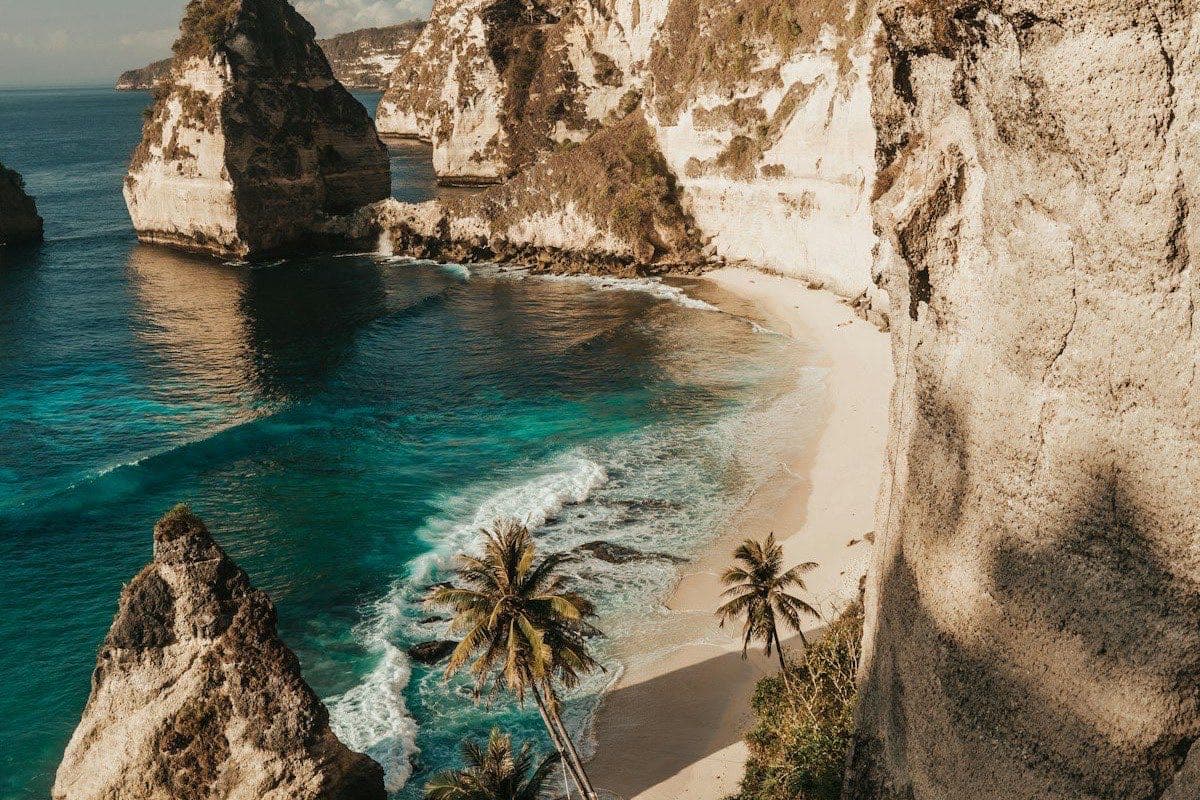
60 km from Hanoi lies the Chùa Hương (Perfume Pagoda) complex: dozens of Buddhist temples and pagodas scattered across the hills and caves. A tour costs $30–45 with transfer and lunch.
The journey: 2 hours by road to the Bến Đục pier, then an hour by boat up the Yen stream (Suối Yến). The boat leg is arguably the best part — still water, karst mountains on both sides, women in conical hats rowing the boats. Silence.
Up to the main pagoda in Huong Tich cave you go on foot (1.5 hours of steps) or by cable car (70,000 VND / ~$3). On foot is more interesting: you pass smaller temples and shrines along the way.
Best time: January–March, the Chùa Hương festival. Hundreds of thousands of Vietnamese pilgrims, incense, rituals and chanting. Grand and authentic, but crowded: queues for the boat and at the cave. The rest of the year is far quieter.



Bat Trang — a pottery village for half a day
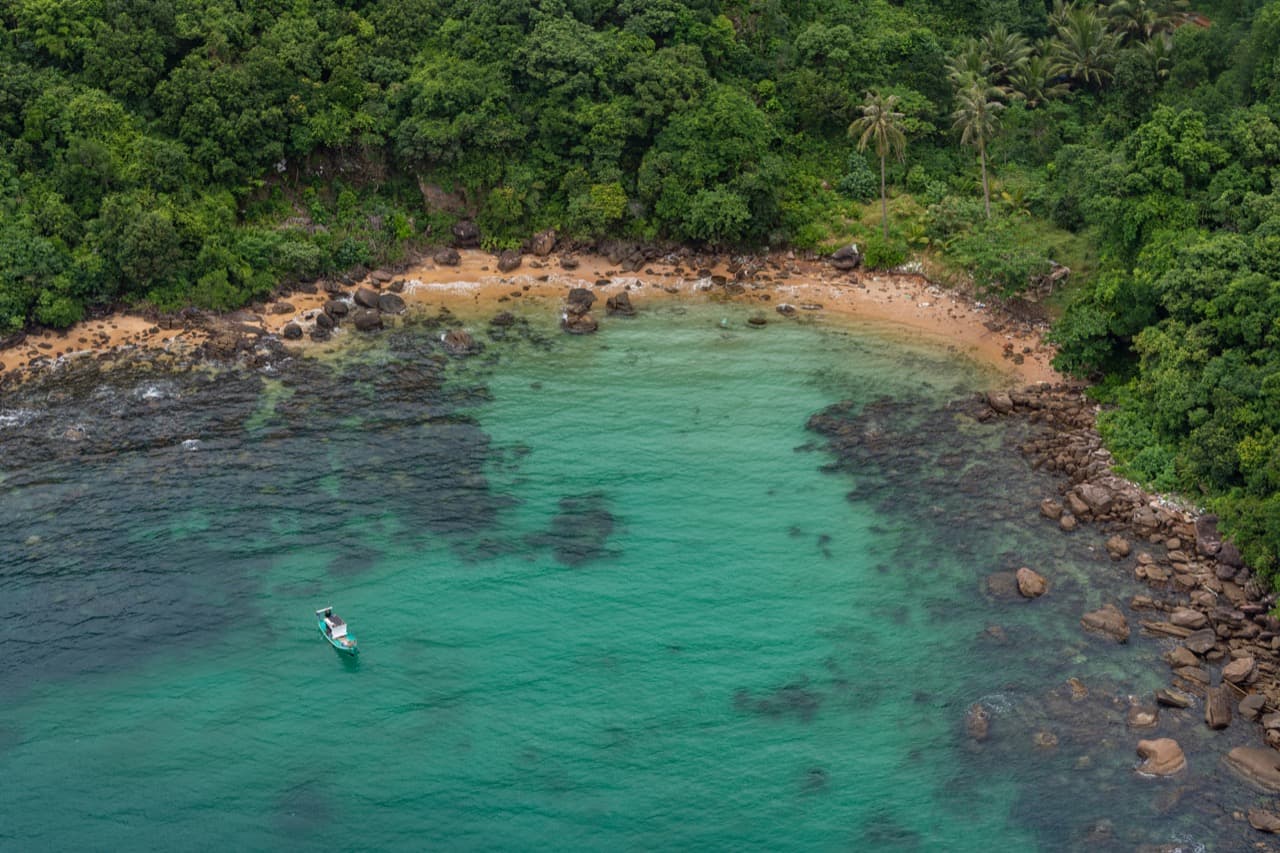
15 km from the centre and you are in Bát Tràng, a potters' village with 700 years of history. It is the closest trip from Hanoi, and half a day is plenty.
Entry is free. A turn at the pottery wheel is 30,000–70,000 VND ($1.20–2.80), from 20,000 for children. You cannot take your piece away the same day: it dries for 24 hours and fires for another day or two, so either come back or pay 50,000–100,000 VND ($2–4) for delivery in Hanoi.
The ceramics museum is 60,000 VND (~$2.40). The whole village is lined with shops selling vases, tea sets and plates. A set starts from 200,000 VND (~$8) — the same items cost 2–3 times more in central Hanoi.
Getting there: bus route 47A from Long Bien station — 7,000 VND (~$0.30), 30–40 minutes. Or a taxi for 300,000–350,000 VND ($12–14) from central Hanoi. It is simple to reach on your own, so a guided tour here rarely makes sense.
Mai Chau and Ba Vi — two more options
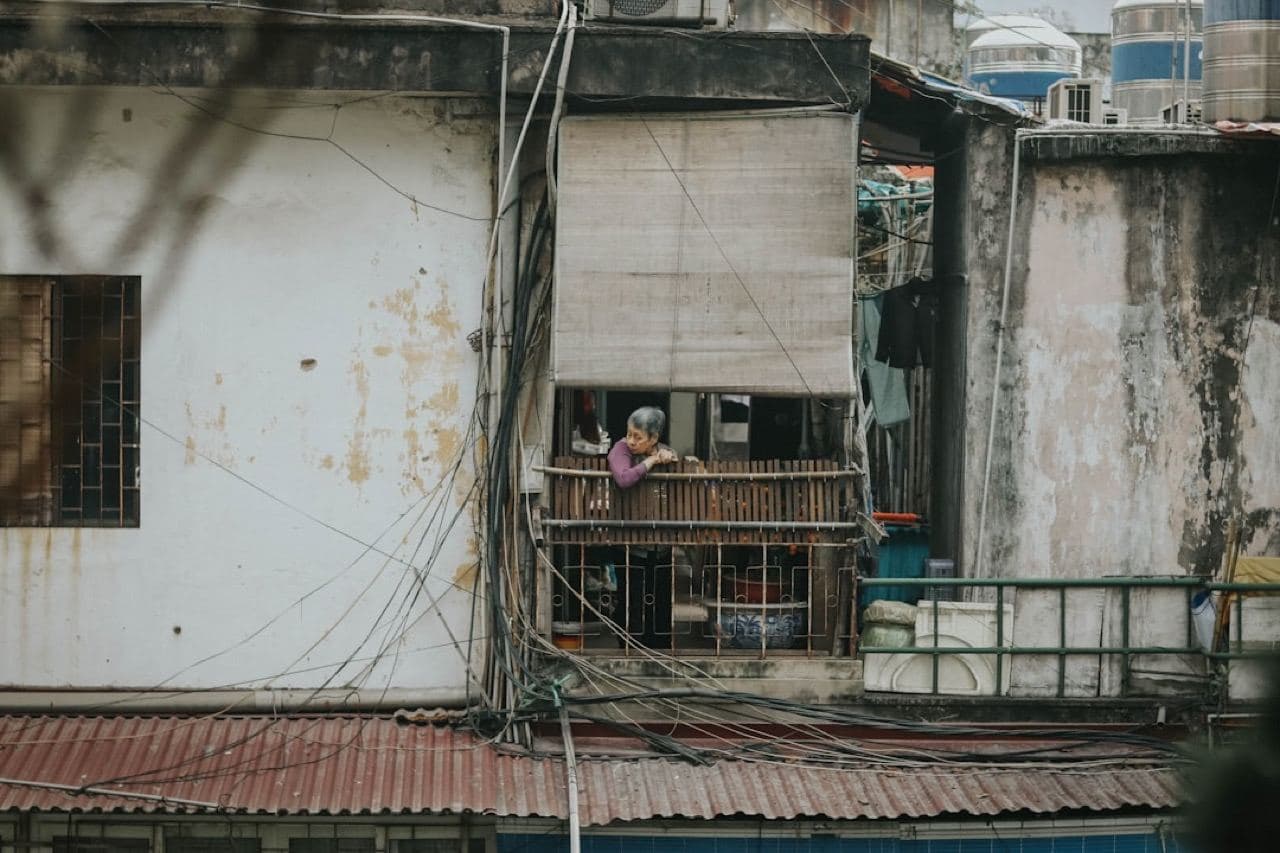
Mai Châu is a mountain valley 145 km from Hanoi (3.5 hours). Rice fields, Thai ethnic villages, bicycles, quiet. It is less about grand views and more about village life. Homestays from 200,000 VND (~$8). People usually go for 1–2 nights. Tours from ~$60. Villages, homestays and getting there on your own: Mai Chau valley guide. Past Mai Chau, 160 km from Hanoi, lies the Pu Luong reserve: 2–5 day itineraries in our Pu Luong guide.
Ba Vì National Park is 60 km away (1.5 hours). Three peaks in the clouds, tropical forest, waterfalls and cool air even in summer. Entry: 60,000 VND (~$2.40). The climb to the main peak (1,296 m) takes 2–3 hours on a trail through the jungle. Along the way are the ruins of a French sanatorium — collapsed walls and columns swallowed by trees.
Ba Vi suits anyone who wants nature without a long drive. You can combine it with Đường Lâm village (50 km), where the houses are 18th–19th-century laterite and the communal house is 300 years old.
A Hanoi city tour — what to see in a day

Hanoi itself is worth a week of exploring. A thousand-year-old capital, the 36 streets of the Old Quarter, French colonial architecture, dozens of temples and, of course, the best pho bo in Vietnam. A guided city tour runs from $15 (group) to $110 (private, English-speaking).
What a standard city tour covers
- The Old Quarter (36 streets) — a maze of narrow lanes, each historically dealing in one trade: silk, silver, paper, tinware. The streets still carry the names of those goods. This is also where you find the city's best street food.
- Hoàn Kiếm Lake (Lake of the Returned Sword) — the heart of Hanoi. The Ngoc Son Temple sits on a tiny island in the middle, reached by the red Thê Húc bridge.
- The Temple of Literature (Văn Miếu) — the temple was founded in 1070, and in 1076 it gained Quốc Tử Giám, Vietnam's first university. Stone stelae on the backs of turtles carry the names of graduates. Entry: 70,000 VND (~$2.80).
- The Ho Chi Minh Mausoleum — free, but with a strict dress code: no shorts, tank tops or hats. Open Tue–Thu, Sat and Sun, mornings only: from 7:30 in April–October and from 8:00 in November–March; closed all day Monday and Friday. It also shuts for annual maintenance — in 2026 from 4 September to 2 November.
- The One Pillar Pagoda (Chùa Một Cột) — small but photogenic, an 11th-century Buddhist shrine on a single stone pillar.
- Train Street — trains pass within 30 cm of the houses and cafés. Passing times: around 3:30 pm and 7 pm (check the schedule, it changes).
Street food and cooking tours
A street-food tour — from ~$15 for a 2–3 hour walk through the Old Quarter. You try 5–7 dishes: pho bo, bun cha, banh mi, spring rolls and egg coffee (cà phê trứng). Groups are small — up to 6 people.
A cooking class — from ~$30: you first head to a local market with the chef to shop for ingredients, then to the kitchen to cook 4–5 Vietnamese dishes. Vegan options exist.
The water puppet theatre by Hoan Kiem Lake — 100,000 VND (~$4), 50 minutes. An 11th-century tradition: puppets "dance" on the water to live music. Get tickets ahead — they often sell out.
A cycling tour of the outskirts (4–5 hours, from ~$30). Villages, rice fields, Buddhist temples. A relaxed pace, suitable for any level. Some tours combine cycling with Bat Trang.
Want to know Hanoi more deeply? See the Hanoi food guide, the transport guide, and the attractions and sights. What tours cost relative to everything else is in the Hanoi price guide. Trips out to the Bat Trang and Van Phuc craft villages are covered in the Hanoi shopping guide.
How to book tours from Hanoi
English-speaking guides are easy to find in Hanoi. There are three main ways to book:
| Where | Prices from | Payment | Notes |
|---|---|---|---|
| GetYourGuide | ~$15 | Visa / Mastercard | English reviews, free cancellation |
| Klook | ~$14 | Visa / Mastercard | Strong for Asia, app deals |
| Old Quarter agencies | ~$12 | Cash (VND / USD) | Cheapest, but no guarantees |
GetYourGuide and Klook let you book before you arrive, with English reviews and card payment. Both cover the main destinations — Ha Long, Ninh Binh, Sapa, the Perfume Pagoda and Hanoi city tours — with daily departures.
Local agencies cluster in the Old Quarter — dozens of them along Hàng Bạc and Lương Ngọc Quyến. Prices run 10–20% below the platforms, but with no guarantees or reviews. Payment is cash (dong or dollars). Haggle — the first price is always inflated.
How much Hanoi tours cost
The prices below are per person on a group booking. Private tours cost 2–4 times more, but with a group of 3–4 the difference evens out.
Currency converter
- Hanoi city tour (3–4 h)360,000–770,000 VND ≈ $15–30
- Street-food tour (2–3 h)510,000–900,000 VND ≈ $20–35
- Cooking class770,000–1,400,000 VND ≈ $30–55
- Bat Trang (half day)510,000–1,280,000 VND ≈ $20–50
- Perfume Pagoda (1 day)770,000–1,150,000 VND ≈ $30–45
- Ninh Binh combo tour (1 day)900,000–1,280,000 VND ≈ $35–50
- Ha Long day cruise900,000–1,800,000 VND ≈ $35–70
- Ha Long 2d/1n 4★2,800,000–3,700,000 VND ≈ $110–145
- Ha Long 2d/1n 5★3,800,000–5,100,000 VND ≈ $150–200
- Sapa 2d/1n (trekking)2,000,000–3,800,000 VND ≈ $80–150
- Mai Chau 2d/1n1,530,000–2,550,000 VND ≈ $60–100
Prices current as of July 2026. Rate used: 1 USD ≈ 26,000 VND.
A week's budget for tours from Hanoi
How much do you really need for a few trips? Two scenarios:
Budget (5 days):
- Hanoi city tour (on your own): ~$5 (entry tickets)
- Street-food tour: ~$20
- Ninh Binh (on your own): ~$13
- Ha Long day cruise: ~$35
- Total: ~$73
Comfort (7 days):
- City tour with a private English guide: ~$25
- Cooking class: ~$40
- Ninh Binh tour: ~$35
- Ha Long 2d/1n 4★: ~$120
- Sapa 2d/1n: ~$105
- Total: ~$325
How to save
Doing it yourself is 30–50% cheaper than a tour. Take Ninh Binh:
- Tour: ~$35 (transfer + boat + lunch + guide)
- On your own: train ~$3 + boat ~$11.50 + lunch ~$2 = ~$17
But a tour saves time and hassle: they collect you from the hotel, drive, feed you and bring you back. On a short visit the tour wins on value for convenience.
Another lever is the low season. May–September: Ha Long cruises drop 30–40%, Sapa hotels 20–30%. Booking 2–3 weeks ahead also earns a discount, especially on cruises.
What to know before you go — practical tips

The things that don't make it into tour descriptions but shape the experience.
When to book
Overnight Ha Long and in-season Sapa (September–November) sell out 2–3 weeks ahead. Book at least a week out, ideally two. Day trips (Ninh Binh, Bat Trang, the city tour) you can grab a day or two ahead, or even that morning — there are usually spots.
What to pack
For any trip out of Hanoi:
- Cash (dollars or dong) — cards aren't accepted in remote places
- SPF 50+ sunscreen and a hat — the sun is fierce even in winter
- Comfortable shoes — sneakers or trekking sandals, not flip-flops
- A rain jacket — showers happen even in the "dry" season, and they come out of nowhere
- A light layer — the AC on buses and cruises runs at Arctic settings
Safety
It is safe overall. The risks aren't about crime:
- Seasickness on boats — Ha Long can get choppy in winter. Prone to it? Take tablets in advance
- Mountain roads — the winding drive to Sapa is tiring. On night buses you sleep; on day buses you hold the rail and watch the view
- Motorbikes — if you rent one in Ninh Binh, be careful: the roads are narrow and local traffic is chaotic
- Heat — summer temperatures hit +38°C. Drink water and stay out of the midday sun
Common mistakes
Too tight a schedule. Ha Long + Ninh Binh + Sapa in 3 days is a conveyor belt, not a trip. Allow at least 5–6 days for three destinations, or you'll spend half the time on a bus.
Cutting corners on the cruise. The cheapest ($25–30) are old boats with minimal service on the busiest stretch of the bay. The gap in quality between $35 and $70 is huge.
Ignoring the weather. Sapa is genuinely cold in winter, and Ha Long is hazy in summer. Check the forecast and adjust your route.
Only Ha Long. Ninh Binh is no less beautiful, but most travellers haven't heard of it. Don't repeat that mistake — both trips are worth the time.
An ideal 5–7 day route from Hanoi
Got a week? Here is a relaxed breakdown:
Day 1: Hanoi city tour + a street-food walk in the evening
Days 2–3: Ha Long overnight (2 days / 1 night)
Day 4: Ninh Binh (Tam Coc + Mua) — a day tour
Day 5: A free day in Hanoi — Bat Trang in the morning, the Temple of Literature in the afternoon, water puppets in the evening
Days 6–7: Sapa (2 days / 1 night on the overnight train)
Budget for the tours: roughly $250–420 depending on comfort. Plus food, lodging and transport in Hanoi itself. This route covers all the main destinations and still leaves room to rest.
Frequently asked questions
The top three: Ha Long (a cruise, from ~$35/day), Ninh Binh (a boat through rice fields, from ~$35) and Sapa (mountain trekking, from ~$80 for two days). For a short stay, add a city tour and a street-food walk — from ~$15, half a day. A week? That covers an overnight Ha Long, Ninh Binh and Sapa.
- A group day cruise$35–70
- Overnight on a 4-star boat$110–145
- On a 5-star$150–200
Meals and activities (kayaking, caves) are usually included. Transfer from Hanoi is often included too, but confirm — sometimes it is a $10–15 add-on
- The sleeper bus~$12is faster (5.5–6.5 hours) and cheaper
- The overnight train$20–27is pricier, for a berth, but you sleep on the way and wake up in the mountains
- The train runs to Lao Cai8–9 hoursthen an hour by bus
Both work: budget, or the romance of the railway
Yes, and plenty. Book English-guided tours through GetYourGuide or Klook, or with Old Quarter agencies. Ha Long, Ninh Binh, the city tour and street food all have daily English departures. For the longer trips (Sapa, Perfume Pagoda) a standard group tour is fine — the scenery does the talking.
Sea and karsts — Ha Long. River and rice fields — Ninh Binh. Ninh Binh is closer (90 km vs 160 km), cheaper and less touristy. Ha Long is bigger and more "postcard." Both are on the UNESCO list. First trip and you want the iconic bay? Ha Long. Value quiet? Ninh Binh.
Online platforms (GetYourGuide, Klook) take Visa and Mastercard, so you can book before you arrive. Local Old Quarter agencies want cash in dong. ATMs are everywhere, and it is worth carrying cash for boats, entry tickets and remote stops where cards aren't accepted.
October–April, the dry season, +18–28°C. For Sapa — September–November (golden terraces) or March–May (green fields). Ha Long is good year-round, hazy in winter. Summer (May–September) is hot and rainy, but cruise discounts reach 40%.
Information checked in 2026. Prices and conditions change — confirm before you travel.
- Guide
Flights to Hanoi: Noi Bai Airport, Hubs & Transfers
How to reach Hanoi by air: Noi Bai (HAN) airport, international hubs, domestic flights and the airport-to-centre transfer — with booking tips.Flights to Hanoi: Noi Bai Airport, Hubs & Transfers - Guide
Hanoi Map 2026: Areas, Landmarks, Metro and Airport
An interactive map of Hanoi: six areas to stay in, 16 landmarks with fees, both metro lines and the bus from Noi Bai. Distances and Grab fares, checked 2026.Hanoi Map 2026: Areas, Landmarks, Metro and Airport - Guide
Hanoi Transport 2026: Metro, Grab & Getting Around
Hanoi transport guide: Noi Bai airport, the metro, Grab, buses and motorbikes, and how to reach Ha Long, Sapa and Ninh Binh.Hanoi Transport 2026: Metro, Grab & Getting Around