Things to do in Cam Ranh: the bay, islands and when to go to Nha Trang
Straight talk: Cam Ranh has few classic sights. It is a beach-resort and airport area, not a town of museums and a promenade. What it does have — a shell temple, two war memorials, wild islands and a mini-Maldives peninsula — fills a day or so. Here is what is genuinely worth your time, and when to make the 35 km run from the airport to Nha Trang for the rest.
Cam Ranh is the airport that serves this stretch of Vietnam's central coast, plus a long strip of five-star resorts along the beach. There is no resort town here — no promenade, no museums, no night markets. Classic sights you can count on one hand, and half of them are "sights" only loosely.
That does not mean there is nothing to do. A temple built from seashells, two memorials with unusual military history, wild islands and a peninsula locals call a "mini-Maldives" will fill a day or two. For Po Nagar, a cable car and theme parks, though, you go to Nha Trang — 35 km from the airport, 45 minutes by bus.
Below is what is genuinely worth seeing in Cam Ranh itself, with 2026 prices in VND and a rough US-dollar figure, plus a ready one-day route. Planning a trip to Cam Ranh? Save this page.
Prices current as of July 2026. Rates shift — confirm on the spot. Rough conversion: ~26,000 VND = $1.
Honestly, how much is there to see?
Measured against Hoi An or Nha Trang, Cam Ranh barely registers. Here is everything in the town and its immediate surroundings that actually earns a stop:
- Tu Van Temple (Chùa Từ Vân): Temple built from shells and coral — 39 m tower, free entry
- Gac Ma Memorial (Khu tưởng niệm Gạc Ma): 64 sailors, 1988 Spratly clash — Free, 30–40 min
- Friendship Memorial (Tượng đài Cam Ranh): Vietnam–Russia — Park by the airport, free
- Cam Ranh Bay (Vịnh Cam Ranh): Deep-water harbour — Naval zone — view from water and hills only
- Binh Hung Island (Đảo Bình Hưng): Naval base security zone — Tourism banned
- Binh Ba Island (Đảo Bình Ba): "Lobster island" — Tourism banned
- Binh Lap Peninsula (Bình Lập): "Vietnamese Maldives" — Boat from the pier, 30–40 min
- Hon Ba Reserve (Hòn Bà): Peak ~1,500 m, cloud forest — Yersin's house, an hour away
- Cam Duc Market (Chợ Cam Đức): Fruit and seafood — 2–3× cheaper than resort prices
- Tu Van temple (Chùa Ốc) — a temple built from seashells and coral, with a 39 m tower. The one real must-see.
- Two memorials — Gac Ma and the Vietnam–Russia Friendship Memorial. Unusual military history, more for adults.
- The Binh Lap peninsula — wild nature and snorkelling, but it is a half-day outing. Binh Hung and Binh Ba islands are closed to tourism.
- Cam Duc market, salt fields, the fishing harbour — everyday provincial life with no tourist gloss.
Long Beach (Bãi Dài), the golf course, a water park and the sheep farm count as "attractions" too, but they are really beach time and tours — covered in our beaches guide and tours guide.
Bottom line: one day covers Cam Ranh itself. Want museums, a cable car, theme parks and a real choice of tours? Budget a day or two for Nha Trang. Here is each local spot in turn.
Cam Ranh Bay and the military harbour
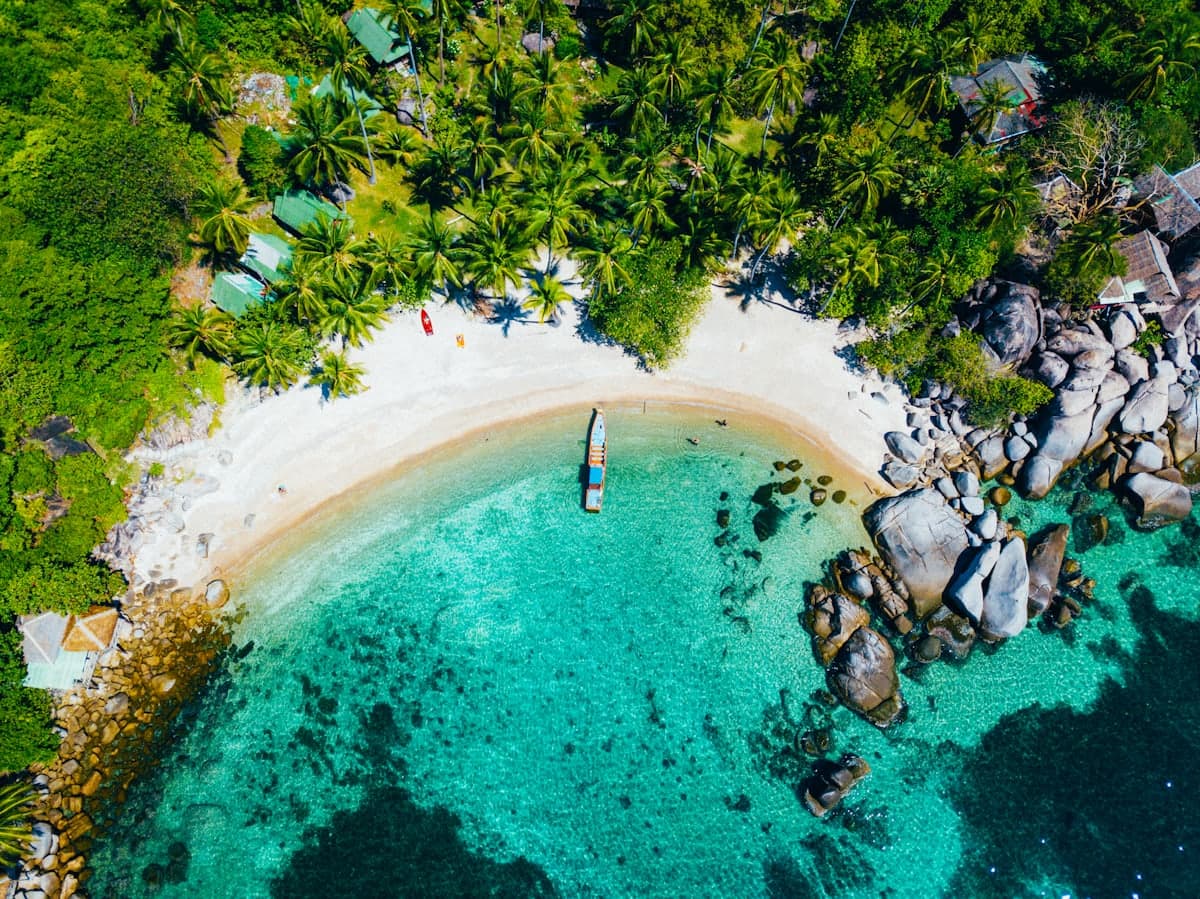
The bay is the reason Cam Ranh exists. It runs about 12 km long and 8 km wide, reaches 32 m deep at the mouth, and hills close it off on three sides — so the water inside is calmer and warmer than the open coast. That shelter is also why the peninsula filled up with five-star resorts.
It is a bay with a heavy history. French, American, Soviet and Vietnamese warships have all anchored here; from the late 1970s to 2002 it hosted a Soviet, then Russian, naval base. Today it is an active Vietnamese naval base, which matters for one practical reason.
The peninsula stretches south from the airport. The eastern shore is resort country — Movenpick, Melia Vinpearl, Radisson Blu, Riviera Resort — while the western side hides wild beaches reachable only by motorbike down dirt tracks. It is 20–30 minutes into town by taxi. Rent a motorbike (from 150,000 VND / ~$6 a day) and the coastal road is a pleasure in itself: hills on your left, sea on your right, resort gates every kilometre.
Long Beach (Bãi Dài)
Bãi Dài literally means "long beach," and that is the pitch: kilometres of fine white sand and turquoise water. The beach runs three ways — five-star resort strips at the north (day passes from 500,000 VND / ~$20), café loungers and kitesurf rental in the middle (from 50,000 VND / ~$2), and empty wild sand to the south. Entry is free; motorbike parking is 10,000–20,000 VND. It sits 12 km from the airport, a 15-minute taxi from Cam Ranh (80,000–120,000 VND / ~$3–5).
One catch: in the windy months (November–January) the open stretches get real waves, so for calm swimming, tuck into the sheltered coves.
Fast Track — no queue at the border
5–10 minutes instead of an hour in the immigration queue
from$11per passenger
Islands: Binh Ba and Binh Hung
The bay is dotted with small islands, and boat trips leave from both Cam Ranh and Nha Trang. The two nearest ones are closed to tourists: both lie inside the naval base security zone.
| Island | Why go | Access | Cost |
|---|---|---|---|
| Binh Hung | Clear water and coral close to shore | Tourism banned (Decision 04/2025/QĐ-TTg) | No legal tours |
| Binh Ba | "Lobster island" — once famous for cheap lobster | Tourism banned (Decision 04/2025/QĐ-TTg) | No legal tours |
Binh Hung (also called Hòn Chút) is off-limits too: the same Decision 04/2025/QĐ-TTg bans tourism there, and tour operators may not sell or advertise trips to it.
Binh Ba is off-limits. It lies inside the naval base security zone, Government Decision 04/2025/QĐ-TTg bans all tourism there, and in June 2026 the authorities repeated the ban: tours sold on social media are illegal. Eat its farmed lobster on the mainland; for dinner on a floating raft, head to Vinh Hy Bay, further south down the coast.
Binh Lap peninsula — Vietnam's mini-Maldives
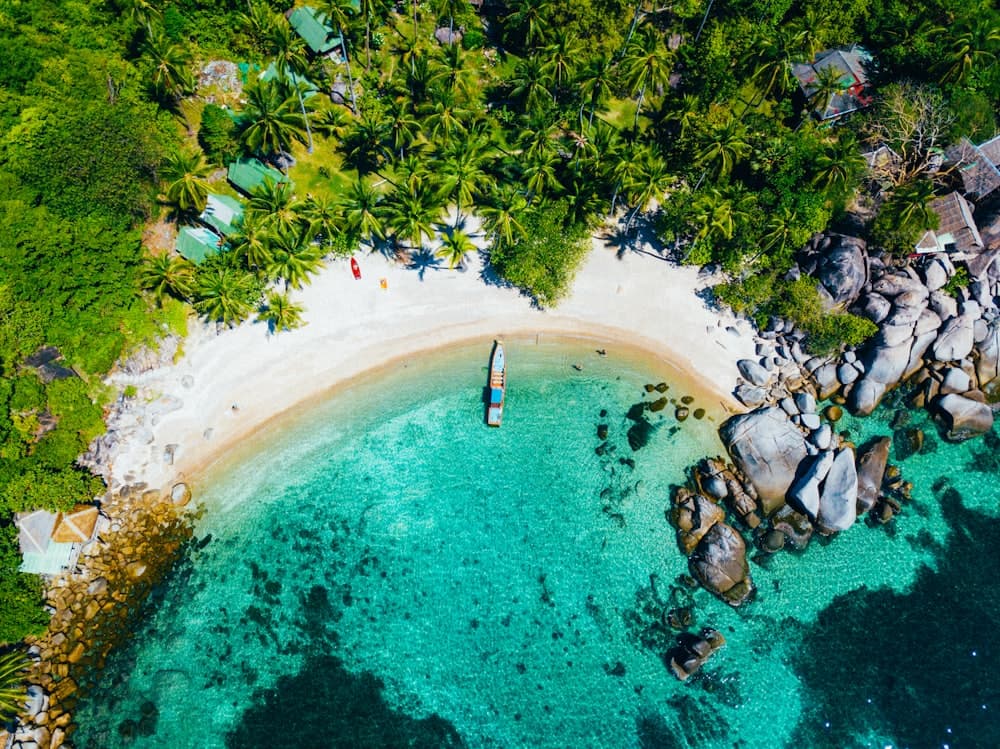
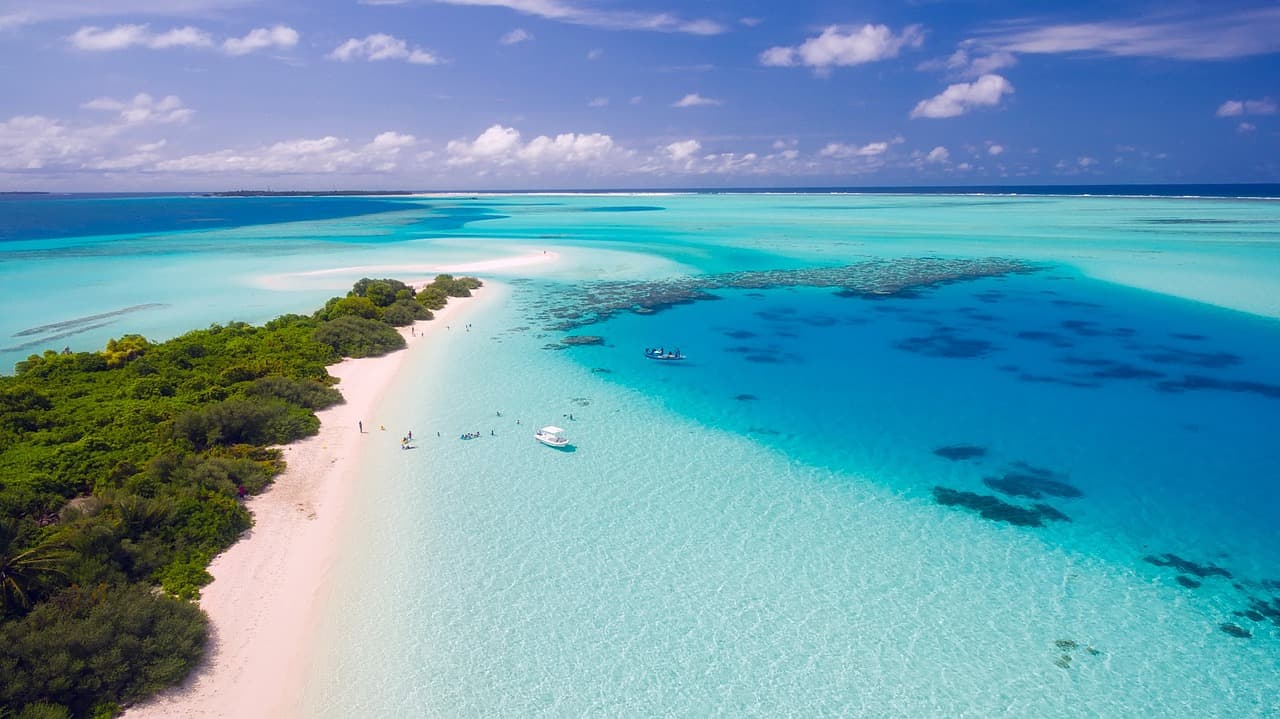
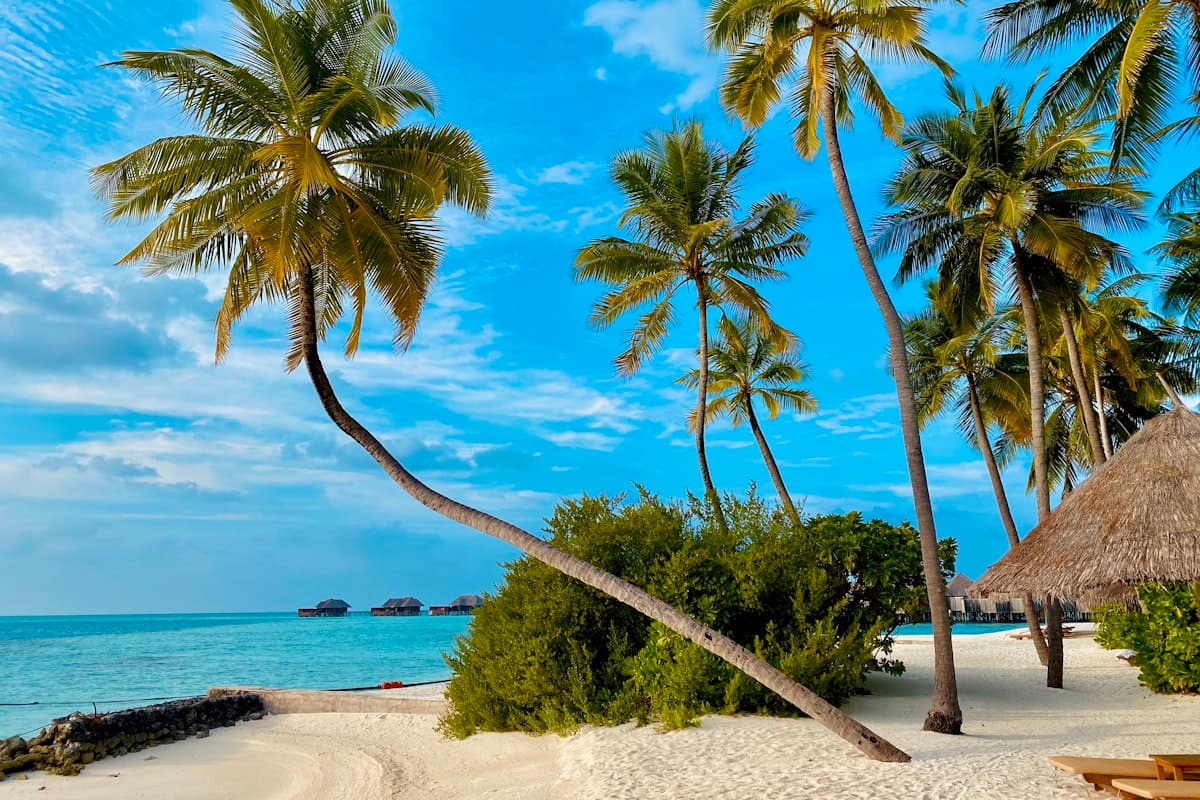
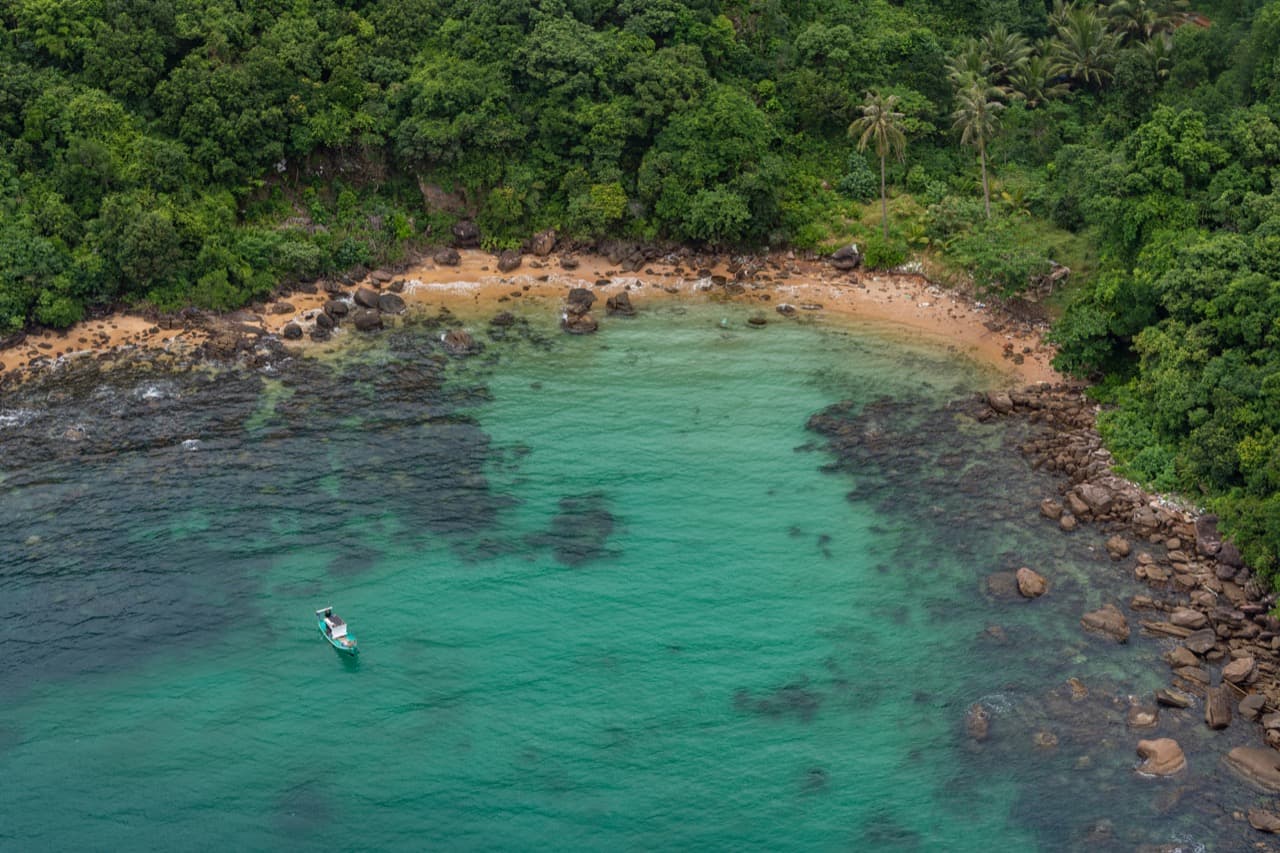
Binh Lap (Bình Lập) is a peninsula on the southern side of the bay that locals nickname the "Vietnamese Maldives." White sand, turquoise water, coral right off the beach — the resemblance holds. The difference is the bill: a night on Binh Lap runs 10–15 times cheaper than the real thing.
You can pitch a tent on the sand, rent a mask and snorkel for 50,000 VND (~$2) and have the sunrise to yourself. An organised day trip with lunch and a boat starts around 800,000 VND (~$32).
The catch is logistics. The boat from the pier takes 30–40 minutes and costs from 200,000 VND (~$8) per person; overland is a long winding road. On the peninsula there are a few guesthouses and a couple of cafés, and the signal comes and goes. Awkward with small children, perfect for anyone chasing quiet.


Tu Van temple, memorials and history
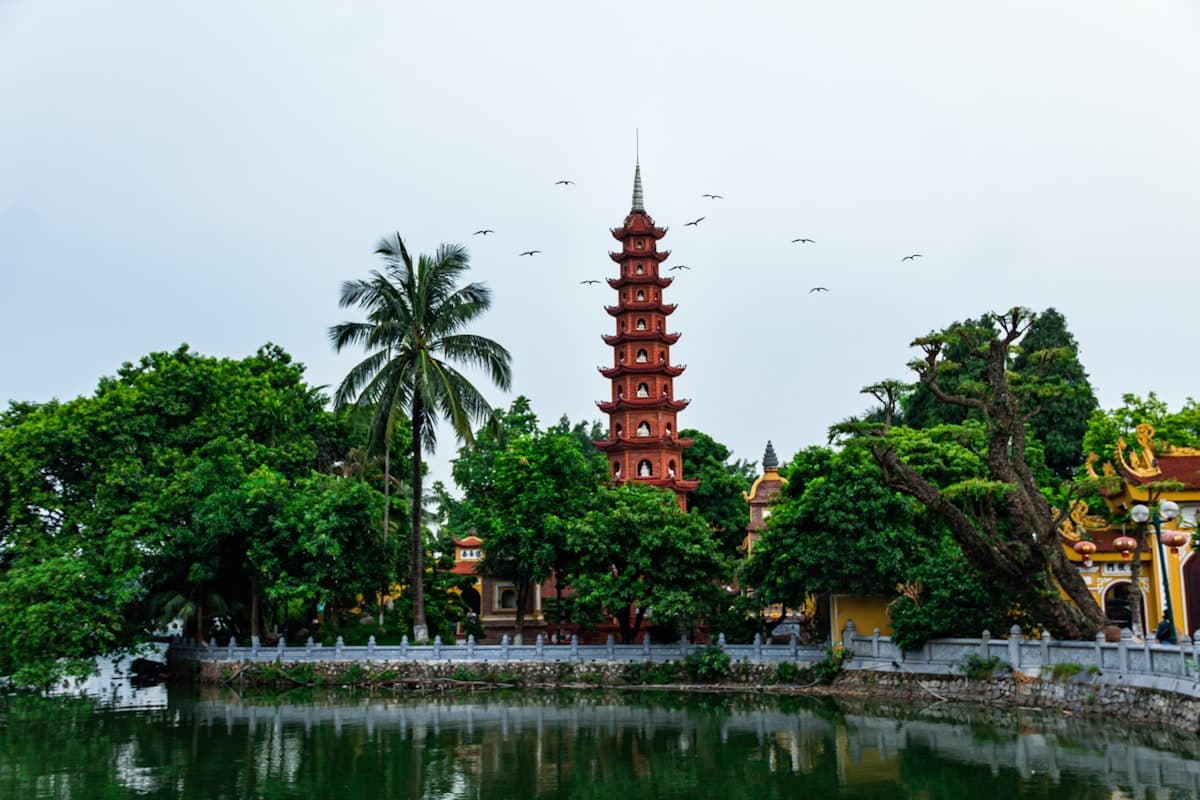
Tu Van temple (Chùa Ốc, "shell pagoda") is Cam Ranh's standout sight. The whole complex is built from stones, coral and seashells, laid by hand since 1968. There is no entry fee — the monks accept voluntary donations only (20,000–50,000 VND / ~$0.80–2). It sits at 388 đường 3 tháng 4, near the town centre; 15–20 minutes on foot from the centre or a 50,000–70,000 VND (~$2–3) taxi. Cover shoulders and knees — it is an active Buddhist temple.
The heart of it is the coral Bao Tich tower: 39 m tall, two storeys, 49 smaller towers with Buddha and Bodhisattva statues, walls spiralling upward under mosaics of shells — no two patterns alike. Climb it for the bay panorama; before 09:00 you'll have the top almost to yourself. Wear closed shoes — the coral paths are uneven.
Then there is the Dragon Labyrinth, laid out in the shape of a reclining dragon. You enter through the tail into 500 m of tunnels staging the 18 levels of Buddhist hell — each with its own scene of punishment, lighting and sound effects. Bring a torch or use your phone; the passages are dark and narrow. Kids under 7–8 react in two ways: "again!" or tears.
The two war memorials
The bay's military past has left two memorials, and both are worth a short stop.
The Gac Ma Memorial (Gạc Ma) honours 64 Vietnamese sailors killed on 14 March 1988 in a clash near the Spratly Islands. For Vietnamese it is a place of grief and pride at once. It stands on the coast north of town, by Bai Dai, stelae turned to the horizon, and sees few tourists — mostly Vietnamese families and veterans. Free, 30–40 minutes to look around; signage is in Vietnamese but the visuals speak for themselves.
The Vietnam–Russia Friendship Memorial, in a park by the airport, marks the Soviet-era naval cooperation — a Vietnamese sailor and a Soviet pilot cast in a hilltop monument, with the names of servicemen who died over the years of the base. It is the only memorial of its kind in Vietnam and a curious footnote for any visitor interested in Cold War history. Free, and best in the morning or late afternoon — the hilltop bakes at midday.
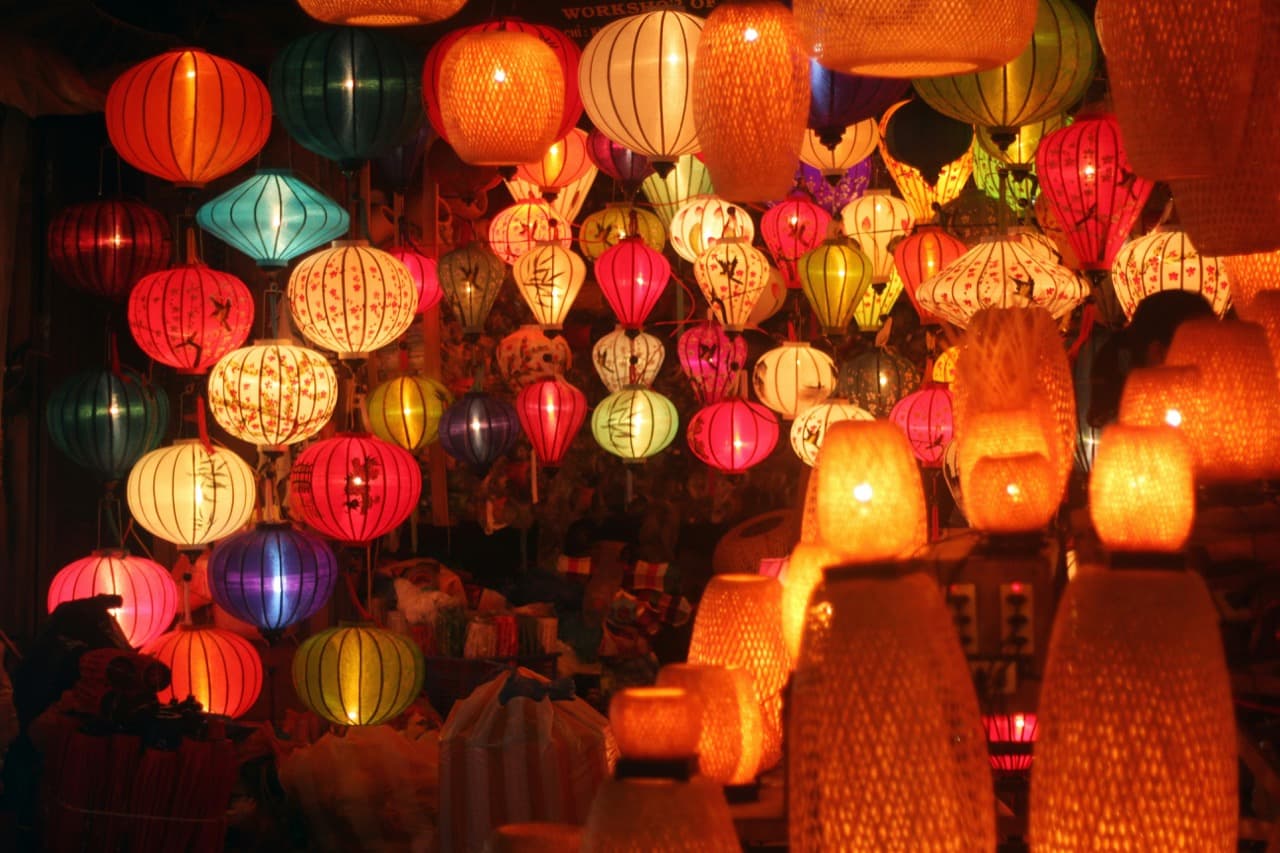
Three more historic spots round it out: the brick Gothic Citeaux monastery (Đan Viện Citeaux); the small Lang Ong — Den Ba fishermen's temple, incense and red lanterns and no tour buses; and the modest free Cam Ranh Museum, from the ancient Cham to the Soviet base (hours are erratic — try a weekday morning).
Local colour: Hon Ba, salt fields and the market
Beyond the temple and the memorials, a few spots show provincial life with no tourist gloss. None of them is a reason to fly in on its own; if you have a spare couple of hours, this is where to spend them.
Hon Ba nature reserve
Hon Ba (Hòn Bà) is a forested mountain rising to about 1,500 m, a bit over an hour inland from the coast. The top is noticeably cooler and wetter than the beach — cloud forest, streams and the old mountain house of the French scientist Alexandre Yersin. The switchback road is scenic but demands confident driving; if you're new to a motorbike, don't attempt it. As a break from the heat, it's a solid half-day.
Salt fields and the fishing harbour
South of town the road runs past salt fields, where in the dry months workers in conical hats rake salt into white pyramids — photogenic and entirely un-touristy. Nearby is a working fishing harbour with round coracle boats. Neither is worth a special trip, but both are an easy pause on the way to the islands.
Cam Duc market
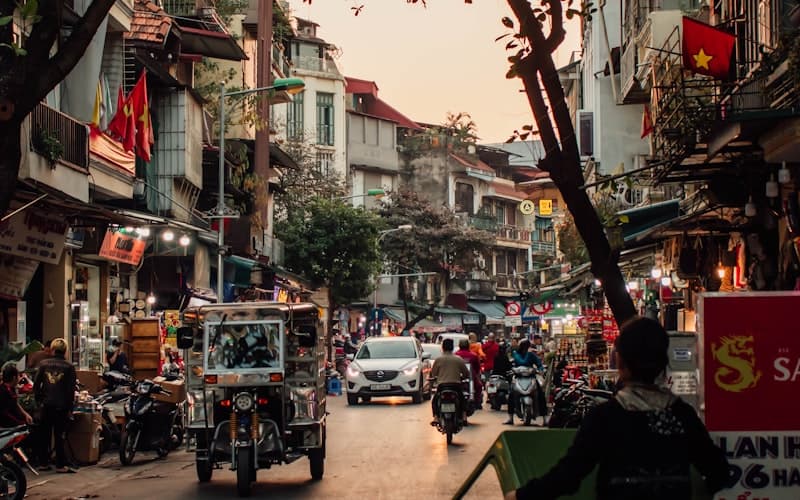
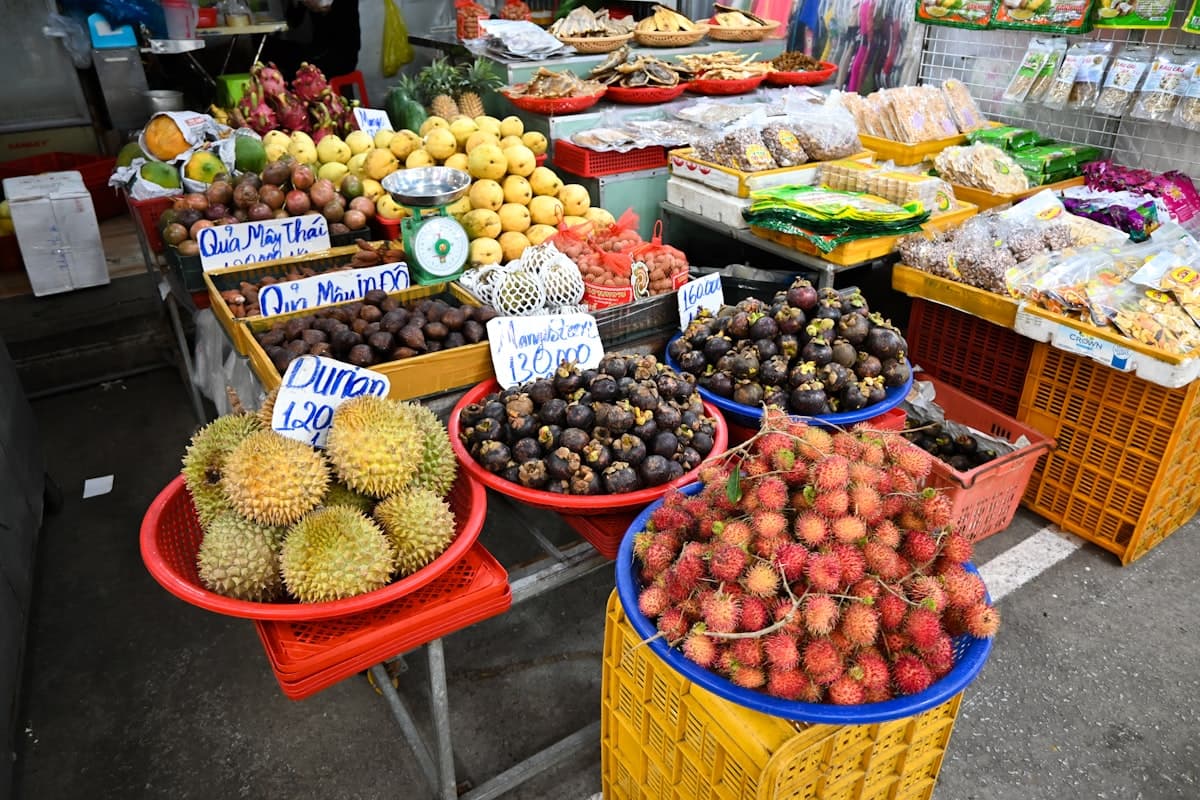
Cam Duc market (Chợ Cam Đức) lies north of Cam Ranh, in what used to be Cam Lam district. Mornings bring seafood straight off the boats — shrimp, squid, crab — plus fruit, spices and loose-weighed coffee. Prices run 2–3 times below the resort shops: a kilo of tiger prawns from 200,000 VND (~$8), mango from 30,000 VND (~$1.20). Haggling is expected, and 10–20% comes off. Come at 06:00–08:00 for the full spread; by lunchtime the aisles thin out. Cash only, and a good place to practise pointing and smiling.
A one-day Cam Ranh route
One day covers the main sights. This route works self-guided by motorbike or taxi.
| Time | Place | Duration | Cost | Getting there |
|---|---|---|---|---|
| 07:00–09:00 | Tu Van temple + Dragon Labyrinth | 2 h | Free | Taxi 50,000–100,000 VND |
| 09:30–10:30 | Cam Duc market: breakfast & fruit | 1 h | 50,000–100,000 VND (~$2–4) | 15 min by taxi |
| 11:00–15:00 | Long Beach (Bãi Dài): swim + lunch | 4 h | Lounger 50,000 + lunch 150,000 VND | 20 min by taxi |
| 15:30–16:30 | Vietnam–Russia Friendship Memorial | 1 h | Free | 10 min by taxi |
| 17:00–18:30 | Salt fields / fishing harbour at sunset | 1.5 h | Free | on the way |
Day total: roughly 300,000–450,000 VND (~$12–18) on entries, food and drinks, plus transport (about 400,000 VND / ~$16 in taxis for all the hops).
By motorbike it's cheaper: 150,000 VND (~$6) a day plus a few dollars of petrol, and you decide where to linger. The coastal roads are smooth — the drive is half the fun. One caveat: without your national A1 or A licence plus an International Driving Permit, your travel insurance won't cover a crash, so ride only if you're properly licensed and helmeted.
Two-day version: Day 1 as above; Day 2, a trip to Nha Trang (see below) or a boat day to the islands with snorkelling.
For the real sights, go to Nha Trang
Here it is plainly: if you came to see attractions rather than lie on a beach, the honest move is to give a day to Nha Trang. That is where everything Cam Ranh lacks is concentrated — the 7th–12th century Po Nagar Cham towers, the giant white Buddha at Long Son, the cable car over the bay, VinWonders with its water park, and islands for diving. It is 35 km from the airport, 45 minutes on bus No. 18 for 60,000 VND (~$2.40).
No point repeating all of it here — it lives in its own guide, with prices and a map:
Quick list of what else is within reach: Yang Bay eco-park (~60 km) with waterfalls, hot springs and mud baths; the Ba Ho waterfalls (~40 km) with jungle cascades and rocks to jump from; and the Thap Ba mud baths near Nha Trang. Prices and logistics are all in the tours guide, so there's no duplicated table here.
Getting around Cam Ranh
The town is compact: 20–30 minutes from airport to centre, 15 to Long Beach. A motorbike is easiest, but you won't be stuck without one — taxis and Grab both work.
| Route | Mode | Price (VND) | Price (~USD) | Time |
|---|---|---|---|---|
| Airport → Cam Ranh centre | Taxi | 100,000–150,000 | ~$4–6 | 20–30 min |
| Cam Ranh → Nha Trang | Bus No. 18 | 60,000 | ~$2.40 | 45–60 min |
| Cam Ranh → Nha Trang | Taxi / Grab | 500,000–600,000 | ~$20–24 | 45 min |
| Cam Ranh → Long Beach | Taxi / Grab | 80,000–120,000 | ~$3–5 | 15 min |
| Motorbike rental | Per day | 150,000 | ~$6 | — |
Bus No. 18 is yellow-and-white, marked Nha Trang – Sân Bay Cam Ranh on the windscreen. It runs 05:00 to 21:55 every 30–60 minutes; pay the conductor on board. Grab works here but has fewer cars than Nha Trang, so you may wait 10–15 minutes — at peak times it's simpler to have reception call a taxi.
FAQ
Be honest with yourself: Cam Ranh has few classic sights. It is a beach-resort and airport area, not a town of museums. The seashell Tu Van temple, two war memorials, the bay and a couple of wild islands fill about a day. For the real attractions — Po Nagar towers, a cable car, islands and a theme park — take the 35 km hop from the airport to Nha Trang. The beach and the tours have their own guides.
No. The bay holds an active Vietnamese naval base, so the harbour is closed — you can only enjoy the views from the bay and hills. Binh Ba, the "lobster island" beside it, lies inside the naval base security zone, and Decision 04/2025/QĐ-TTg bans all tourism there.
- Bus No. 1860,000 VND~$2.40runs 05:00–21:55, takes 45–60 minutes
- Minivan100,000 VND~$4
- Taxi or Grab500,000–600,000 VND~$20–24
Grab cars can be scarce
Yes, entry is free; motorbike parking is 10,000–20,000 VND. The north is resort territory with day passes from 500,000 VND (~$20); the middle has café loungers from 50,000 VND; the south is empty wild sand.
No public one in Cam Ranh, though Swandor, Selectum Noa and ALMA have slides inside the resort. The nearest full park is VinWonders Nha Trang, 30–40 minutes by taxi. An adult ticket is 1,050,000 VND (~$40). Many hotels run shuttles.
Easily. Everything sits within 15–20 km, reachable by rented motorbike or taxi, and entry is free almost everywhere. A guide only pays off for the Dragon Labyrinth or for trips beyond Cam Ranh — Yang Bay, the islands or Nha Trang.
Read also:
- Cam Ranh: the full 2026 guide — where to stay, eat and how to get around
- Cam Ranh beaches — Long Beach, wild strips and the swimming season
- Cam Ranh tours — islands, Yang Bay, VinWonders and golf
- Nha Trang attractions — Po Nagar, Long Son, islands and the cable car
- Guide
Cam Ranh Reviews 2026: Quiet Resort or Too Sleepy?
Honest Cam Ranh reviews: a calm resort break vs busy Nha Trang, the pros and cons and who it suits, with a verdict.Cam Ranh Reviews 2026: Quiet Resort or Too Sleepy? - Guide
Tours from Cam Ranh: Islands, Nha Trang & Da Lat
Tours and day trips from Cam Ranh: Binh Ba and Binh Hung islands, Nha Trang, diving and snorkelling, Da Lat and eco-parks — with prices.Tours from Cam Ranh: Islands, Nha Trang & Da Lat - Guide
Cam Ranh Beaches: Long Beach & Where to Swim 2026
Cam Ranh beaches: Long Beach (Bai Dai), resort beaches and islands — where to swim, the season, family spots and how to get there.Cam Ranh Beaches: Long Beach & Where to Swim 2026