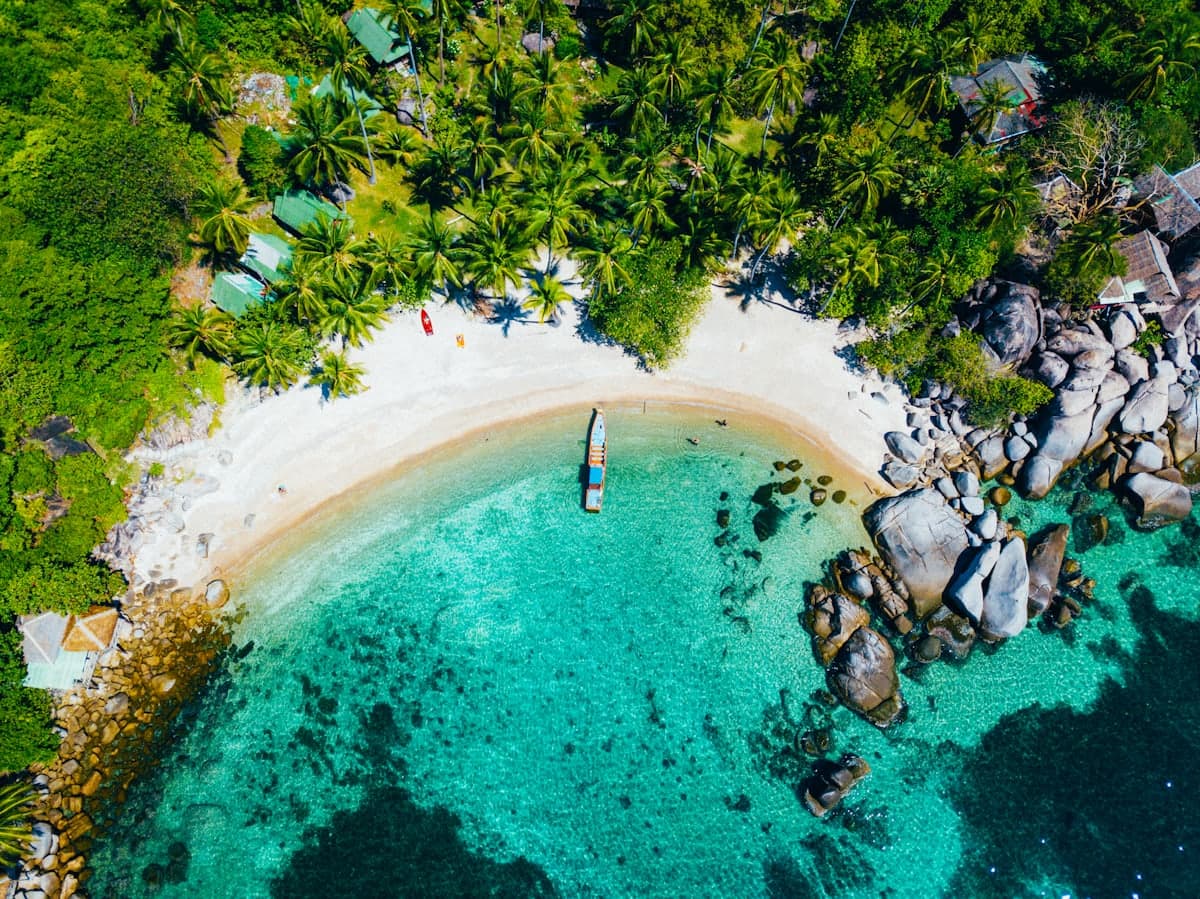
Cam Ranh beaches: Bai Dai and beyond — a 2026 guide
Fifteen kilometres of white coral sand, clear South China Sea water and not a single vendor pushing a massage. Cam Ranh's beaches look the way Nha Trang looked twenty years ago — quiet, wide and mostly empty.
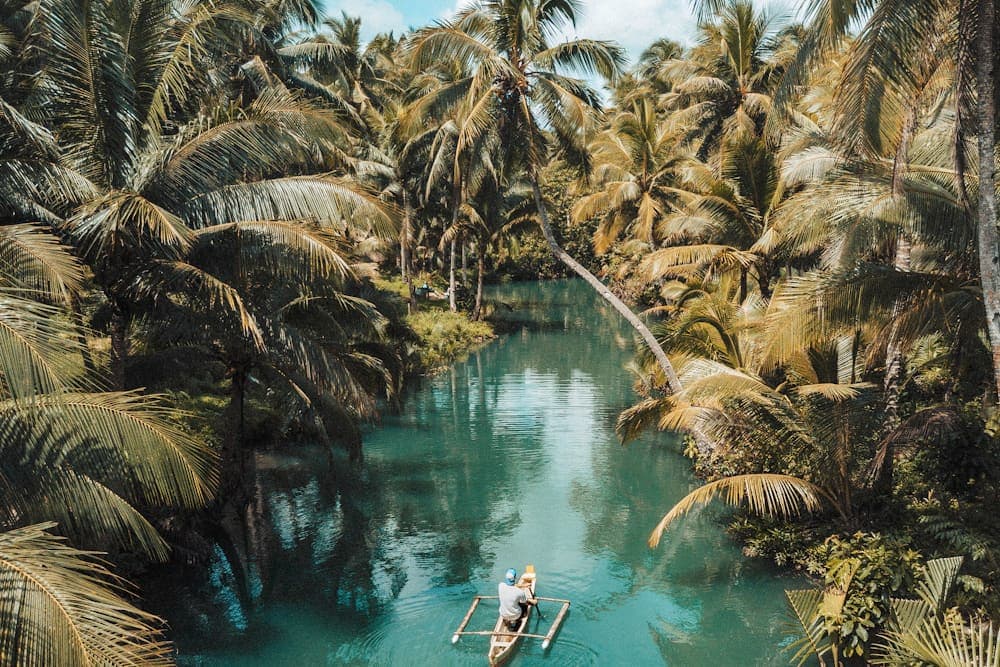
Most travellers who fly into Cam Ranh airport only ever see Bãi Dài through a transfer window on the way to Nha Trang. That is a mistake. One of Vietnam's best beach strips sits right between the airport and the city, and almost nobody stops.
Cam Ranh is not a resort town with bars and nightlife. It is a strip of resorts along a beach that, until recently, only local fishermen knew about. A sunbed on the public stretch runs ~$2–4, the bus from Nha Trang is up to ~$2, and the water warms to 29 °C from May through August. For the district itself, see the full Cam Ranh guide.
Below: every beach broken down with its infrastructure, fact cards and a comparison table. Plus the month-by-month weather, 2026 prices in VND with a rough dollar conversion, and tips for anyone coming for the first time.
What sea is Cam Ranh on?
Cam Ranh sits on the South China Sea. Vietnamese call it Biển Đông (the East Sea). The town is in Khanh Hoa province, on the southeast coast, about 35 km south of Nha Trang.
Technically this is a sea, but it links directly to the Pacific through the straits between the Philippines, Borneo and Malaysia. For swimming the difference is nil: the water off Cam Ranh is warm all year, from about 25 °C in winter to 29 °C in summer. Salinity is standard, around 33‰.
Cam Ranh Bay is one of the finest deep-water harbours in Southeast Asia. A narrow mouth keeps ocean swell out. The military claimed the bay back in the 19th century — first the French, then the Russian fleet in 1905 before the Battle of Tsushima, later the Americans. A Soviet, then Russian, naval base operated here from 1979 to 2002. Today the bay works as a port and fishing harbour.
You don't swim in the bay itself but on the peninsula to the north, where a long strip of white-sand coast runs for kilometres. The shore is gentle: it is still knee-deep for an adult 30–50 metres out. For families with toddlers, that is the decisive argument for Cam Ranh — a child can paddle in the shallows with no risk of dropping off into deep water.
The bottom is sand, with no rocks or coral near shore. You will hit the odd shell, so water shoes help, especially at the waterline where the surf washes up small fragments.
Water colour depends on the season. January to August it is turquoise and clear, with 3–5 metres of visibility. In the monsoon (September–November) it turns green and murky with sand and silt. After a storm you may see debris near the shore — branches, seaweed, plastic — but noticeably less than on Nha Trang's beaches.
Cam Ranh used to be a town of Khanh Hoa; the 2025 reform abolished that status. And "town" was always generous: a large village with a market, a couple of cafés and a fishing port. All the tourist life sits on the resort peninsula, 10 km from the centre. Cam Ranh is not Nha Trang: no restaurant promenade, no nightlife. Beach, resort and quiet.
- Bai Dai (Long Beach) (Bãi Dài): 15 km of white coral sand — Gentle entry | Uncrowded — Jan–Aug | Families, couples
- Airport Beach (Airport Beach): ~300 m, yellow sand — Planes overhead | Few people — Spotting, photo shoots
- Cam Ranh Bay (Vịnh Cam Ranh): No swimming | Fishing villages — Day trips, seafood | Year-round
- Binh Lap peninsula (Bình Lập): "Vietnamese Maldives" — Wild coves, camping | No facilities — Year-round | Seclusion
- ALMA Resort (Bãi Dài): Water park, 12 pools — Private stretch of beach
- Mövenpick Resort (Bãi Dài): Beachfront resort — Private stretch of beach
- Radisson Blu Resort (Bãi Dài): Beachfront resort — Private stretch of beach
- Melia Vinpearl (Bãi Dài): Beachfront resort — Private stretch of beach
- Cam Ranh Riviera (Bãi Dài): Beachfront resort — Private stretch of beach
- Selectum Noa Resort (Bãi Dài): Beachfront resort — Private stretch of beach
- Aquamarine Resort (Bãi Dài): Beachfront resort — Private stretch of beach
Bai Dai — Cam Ranh's main beach
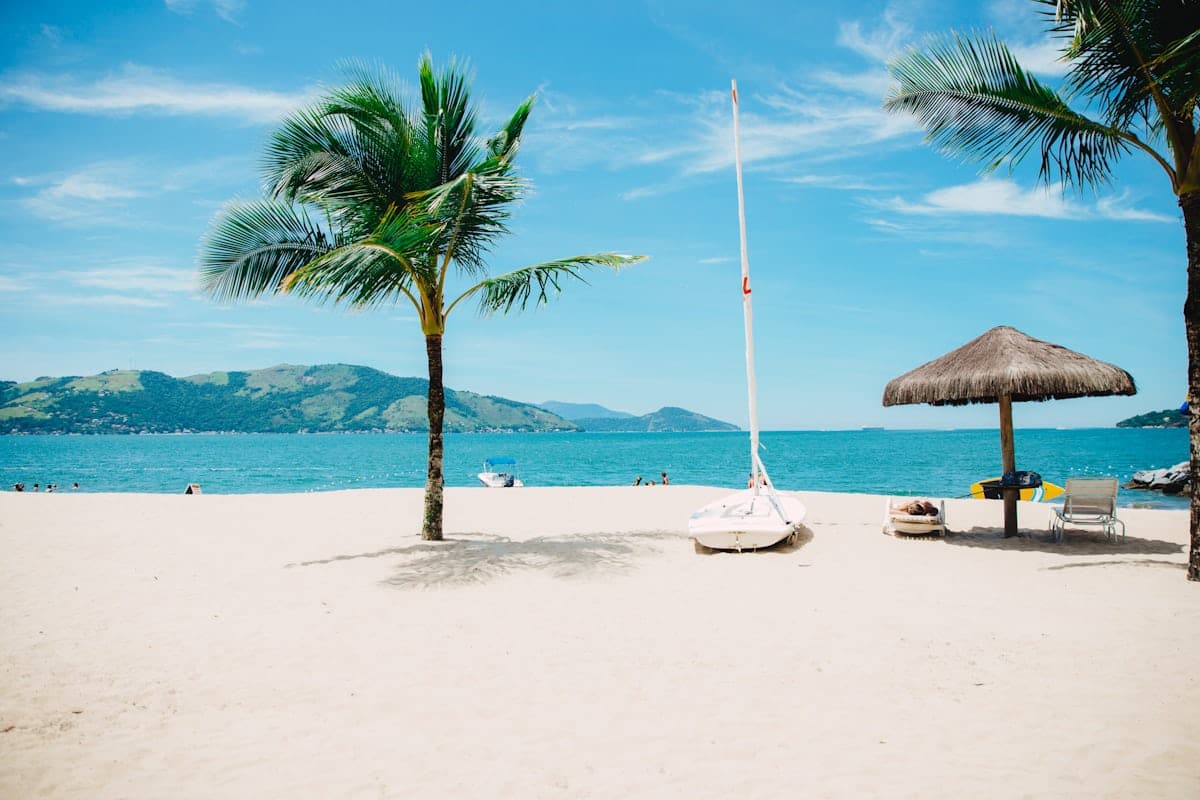
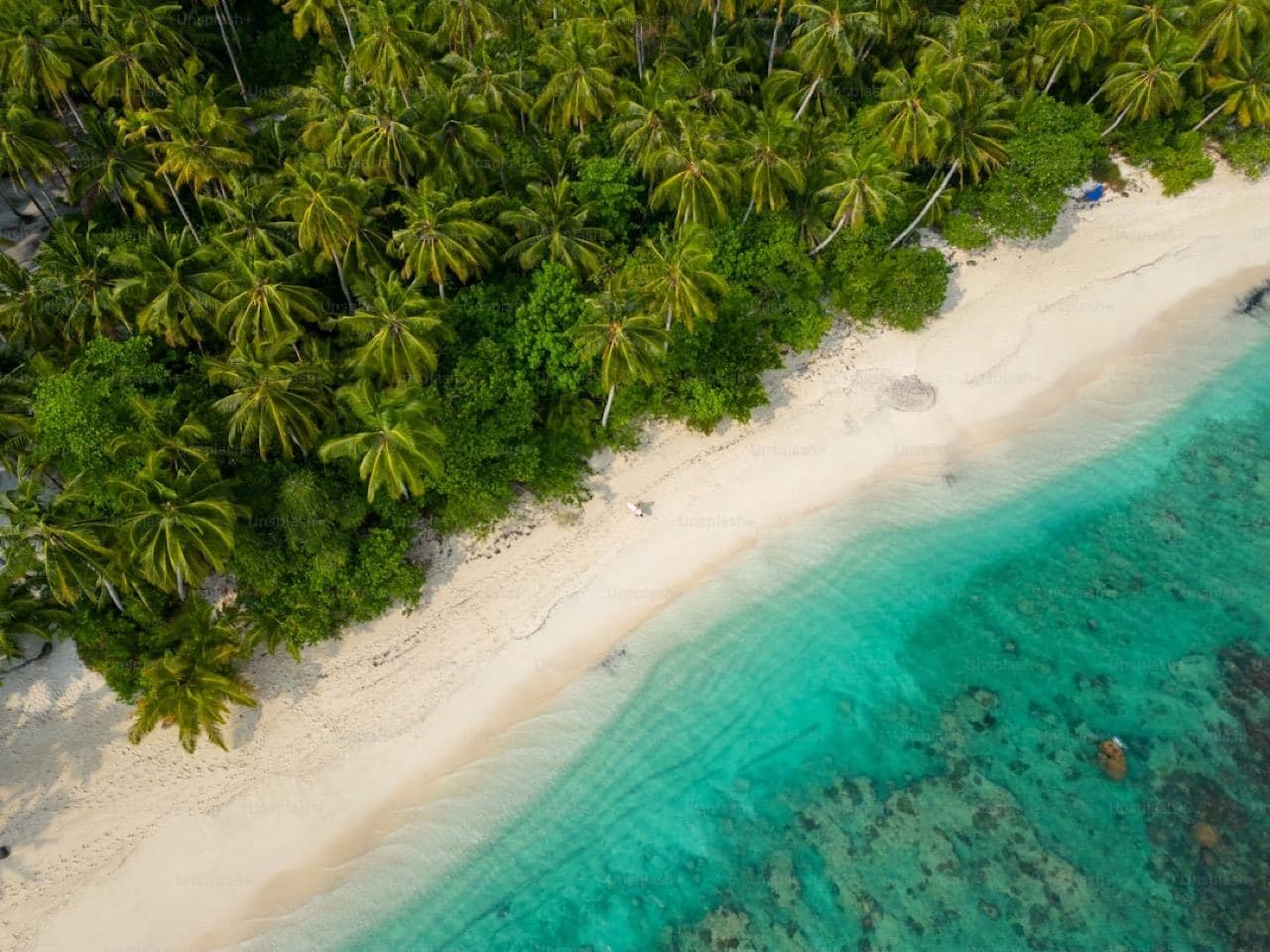
Bãi Dài (Long Beach) runs 15 kilometres along the coast. White coral sand, a gentle entry, turquoise water in the dry season. Even at the January peak, when Nha Trang is lounger-to-lounger, on Bai Dai you can easily find an empty patch hundreds of metres from the nearest person.
What it's like
The sand on Bai Dai is fine, white and coral-based. It is lovely underfoot, but by midday it turns scorching. Bring flip-flops if you plan to walk the open, shadeless stretches.
The entry is shallow: at low tide it is a 50–70 metre wade to chest depth. Waves in the dry season (January–August) are minimal — the sea feels like a huge warm pool. Visibility is good, with the bottom clear at 3–5 metres.
…the tides were noticeable: if in the morning you had to swim to the buoys and the water there was about 3 metres deep, then towards evening you had to walk quite a way to reach depth…Сергей Н, tophotels.ru, 2025, translated by VietnamSpot
The white sand is no accident. This isn't ordinary quartz sand but coral ground down over millennia, and it is finer and whiter than many stretches of Phu Quoc. The water here is often calmer than at Nha Trang, too, which is why families keep choosing it.
What sets Bai Dai apart from Nha Trang's town beaches:
- Crowds. Eight resorts stand along the 15-kilometre strip. Between them are empty stretches a kilometre wide, without a soul. Over the New Year holidays resort occupancy hits around 82% — and the public beach is still half-empty.
- Cleanliness. No vendors, no café litter, no wall-to-wall loungers. The surf occasionally washes up plastic and branches, but far less than on the town beaches.
- Quiet. No karaoke, no music from bars. Surf, wind, gulls. After the Nha Trang promenade it feels like a different country.
- Width. From the waterline to the vegetation it is 30–50 metres. There is room even at peak season.
Bai Dai infrastructure
Bai Dai splits into two worlds: resort stretches with full facilities, and public ones where you are on your own.
The resort zone (8 hotels along the coast):
- Loungers, umbrellas and beach towels — free for guests
- Restaurants and beach bars with cocktails and light bites
- Water sports — kayaks, SUP boards, snorkelling, water skiing
- Showers, changing rooms and lockable lockers
- Lifeguards on the towers from 7:00 to 18:00
- Kids' beach zones (sandpits, inflatable slides by the water)
The public stretches:
- Lounger + umbrella: 50,000–100,000 VND (~$2–4) a day
- A few cafés with simple Vietnamese food: pho, chicken rice, grilled seafood — 50,000–150,000 VND (~$2–6)
- Cold drinks: a coconut ~30,000 VND (~$1.20), a beer 20,000–30,000 VND (~$0.80–1.20)
- Showers and toilets — not on every stretch; aim for the cafés
- No lifeguards, or only irregular ones
Between the resorts, empty stretches run from 200 metres to 2 kilometres. Zero shade. Zero facilities. Zero people. Want the desert-island feeling? Come with an umbrella, water and food. Just know the nearest toilet may be a kilometre away.
Who Bai Dai suits
- Families with kids — shallows, no waves in the dry season, a safe bottom
- Couples — secluded stretches, romantic sunsets, quiet
- Resort lovers — five-star all-inclusive hotels right on the sand
- Anyone tired of crowds — a day trip from Nha Trang for the silence
It does not suit partygoers (no bars or clubs), backpackers (no budget stays nearby) or surfers (no waves in the main season).
Getting to Bai Dai
From Cam Ranh airport to Bai Dai it is about 10 km, 10–15 minutes by taxi. From central Nha Trang it is 20–25 km, half an hour to forty minutes.
| Transport | From | Time | Cost | Notes |
|---|---|---|---|---|
| Bus 18 | Nha Trang | 40–50 min | up to 50,000 VND (~$2) | Stops marked by orange signs |
| Taxi | Nha Trang | 25–35 min | 200,000–400,000 VND (~$8–16) | One way |
| Grab | Nha Trang | 25–35 min | 150,000–300,000 VND (~$6–12) | Price fixed in the app |
| Motorbike (rental) | Nha Trang | 30–40 min | 100,000–180,000 VND/day (~$4–7) | Needs a national licence + IDP |
| Taxi | Airport | 10–15 min | 100,000–200,000 VND (~$4–8) | Short hop |
Bus 18 is the cheapest option. It runs every 20–30 minutes on the "Nha Trang — Cam Ranh airport" route. The Bai Dai stop is easy to miss, so tell the driver in advance: say "Bãi Dài" or show the name on your phone. Or track your route by GPS and hit the stop button.
Grab is the middle ground. The price is fixed when you book, the driver knows the route, and you pay by card or cash. Grab averages 20–30% less than a regular taxi.



Other Cam Ranh beaches
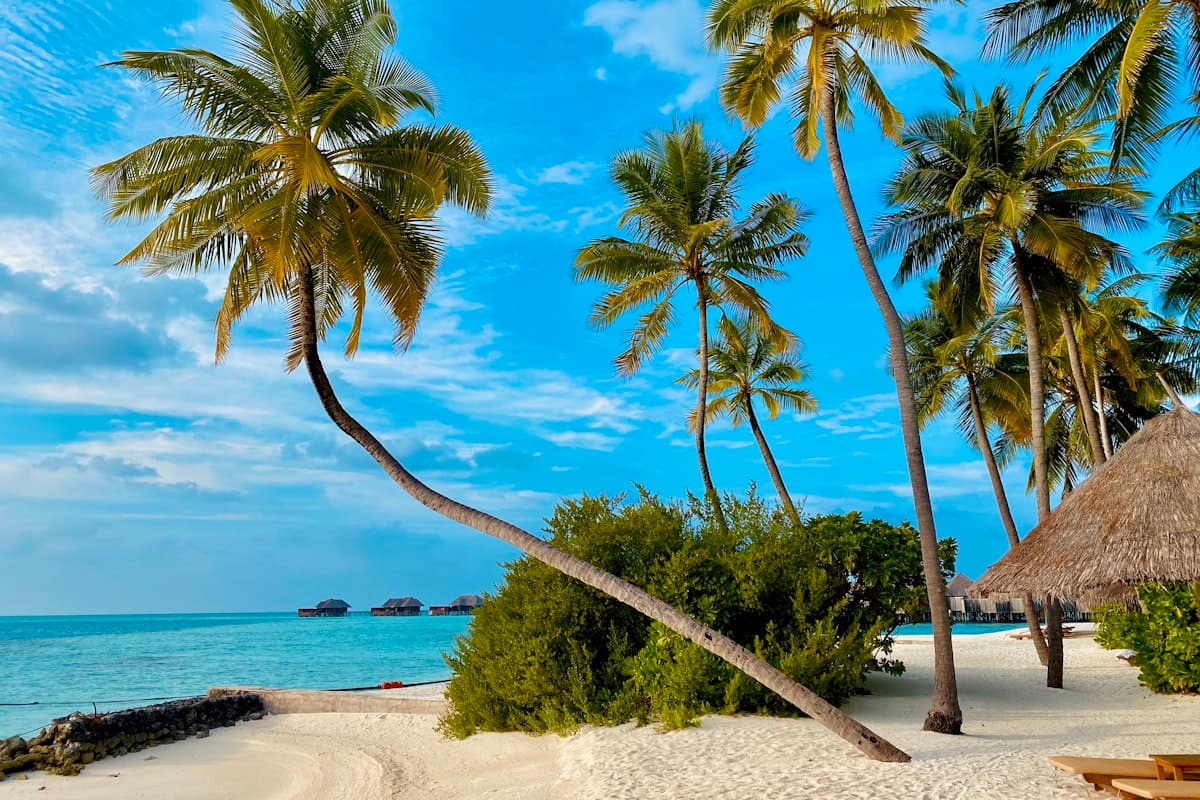
Bai Dai is the main beach, but not the only one around. Four more spots each have their own character. They won't replace a full beach day, but for a half-day outing or unusual photos they are just right.
Pearl Beach (Bãi Ngọc)
A small beach in a sheltered cove. Bãi Ngọc means "pearl," and the name fits: the water is clearer than on Bai Dai.
Vietnamese bloggers come for the photos; foreigners almost never do. Facilities are nil — no loungers, no cafés, no toilets. Bring water, food and a bin bag, and carry your rubbish out.
You can only reach it by bike or taxi; no buses come here. Part of the road is dirt and gets slippery after rain.
Who it suits: anyone after seclusion with no compromises. Romantic walks and photo shoots.
Airport Beach
A beach right at the end of the runway. Planes come in to land directly overhead, at 50–70 metres. Noise, engine wash, the fuselage blotting out the sun for a second. For plane-spotting and photos it is a cult spot. Flights land regularly, so you won't wait long for a shot.
Swimming here isn't great: no shade, no loungers, and the sand is yellow and coarser than on Bai Dai. The bottom is rocky in places. Come for an hour or so for the shots, and save the beach day for Bai Dai.
Cam Ranh Bay
Vịnh Cam Ranh is not a swimming beach. It is a deep-water harbour with blue and turquoise fishing boats, and shore villages where fish dry on the streets and nets get mended. No loungers, no umbrellas, no tourist infrastructure. What it has is the "real Vietnam" that travellers burnt out on resorts come looking for.
A motorbike loop along the bay is a great half-day outing — jungle mountains, islets, fishing villages with bright boats. Stop to eat seafood at a local shorefront café: grilled prawns from 150,000 VND (~$6), a whole fish from 200,000 VND (~$8). Half the price of Nha Trang's restaurants, and the freshness is the morning catch.
For history buffs: the remains of the Soviet naval base survive here, with a memorial stele and a few buildings still on site.
Binh Lap peninsula
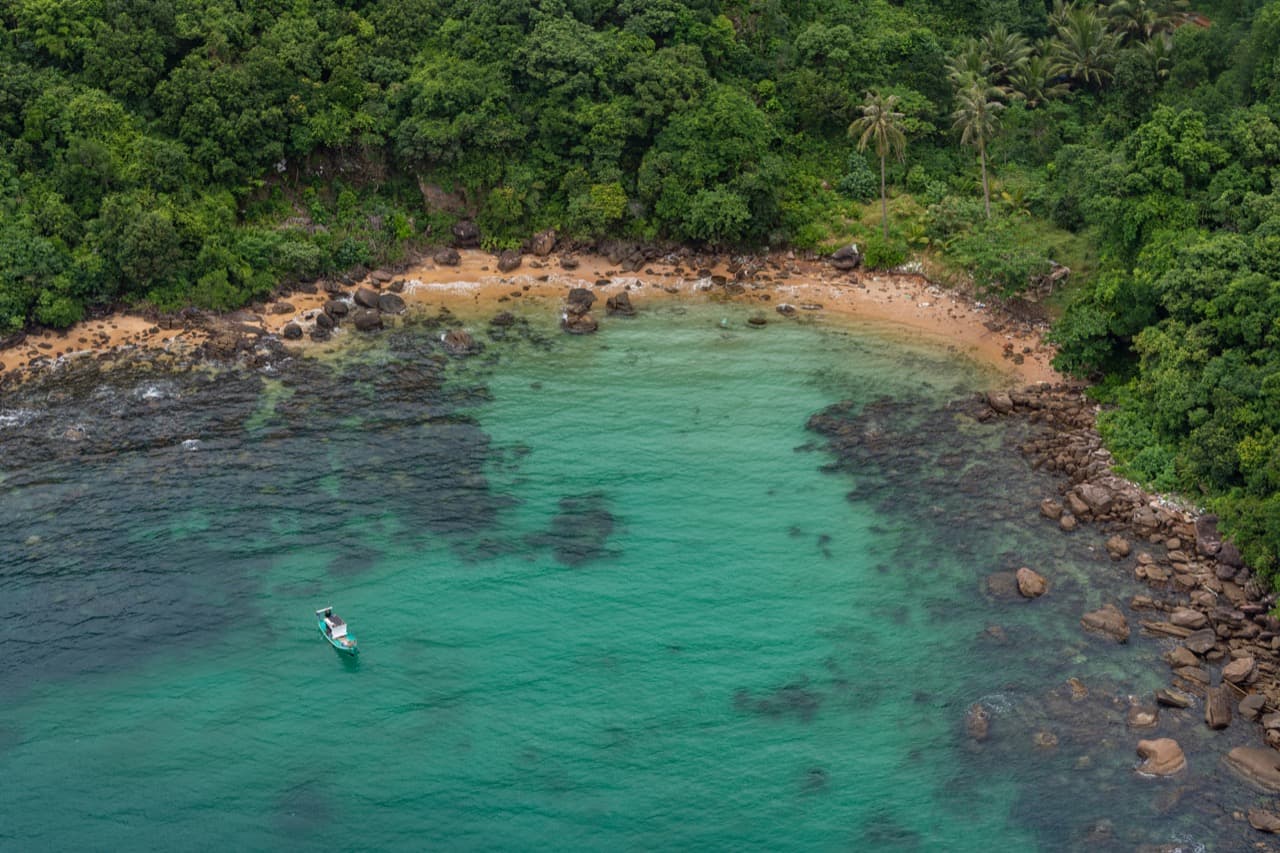
South of the bay sits the Bình Lập peninsula — quiet, undeveloped coves with white sand, turquoise water and coral right off the shore. Locals call it the "Vietnamese Maldives," and in the dry season the comparison holds. There is next to no infrastructure: pitch a tent on the sand or take a room in a fisherman's guesthouse, with a café or two and patchy phone signal.
It is a long haul — about an hour from Bai Dai by bike or taxi, part of it on a dirt track — so it draws people who want live-reef snorkelling and silence with no resorts. For the full breakdown with prices, camping and boat tours, see the Cam Ranh attractions guide.
Fast Track — no queue at the border
5–10 minutes instead of an hour in the immigration queue
from$11per passenger
Which beach to pick
For a beach day it is Bai Dai, no contest. You will spend 95% of your time here. The other spots are for a half-day of variety and offbeat photos. All the beaches are pinned on the map above — tap a marker for details. For a longer intro to the district, see the Cam Ranh guide.
Cam Ranh beach season — when to swim
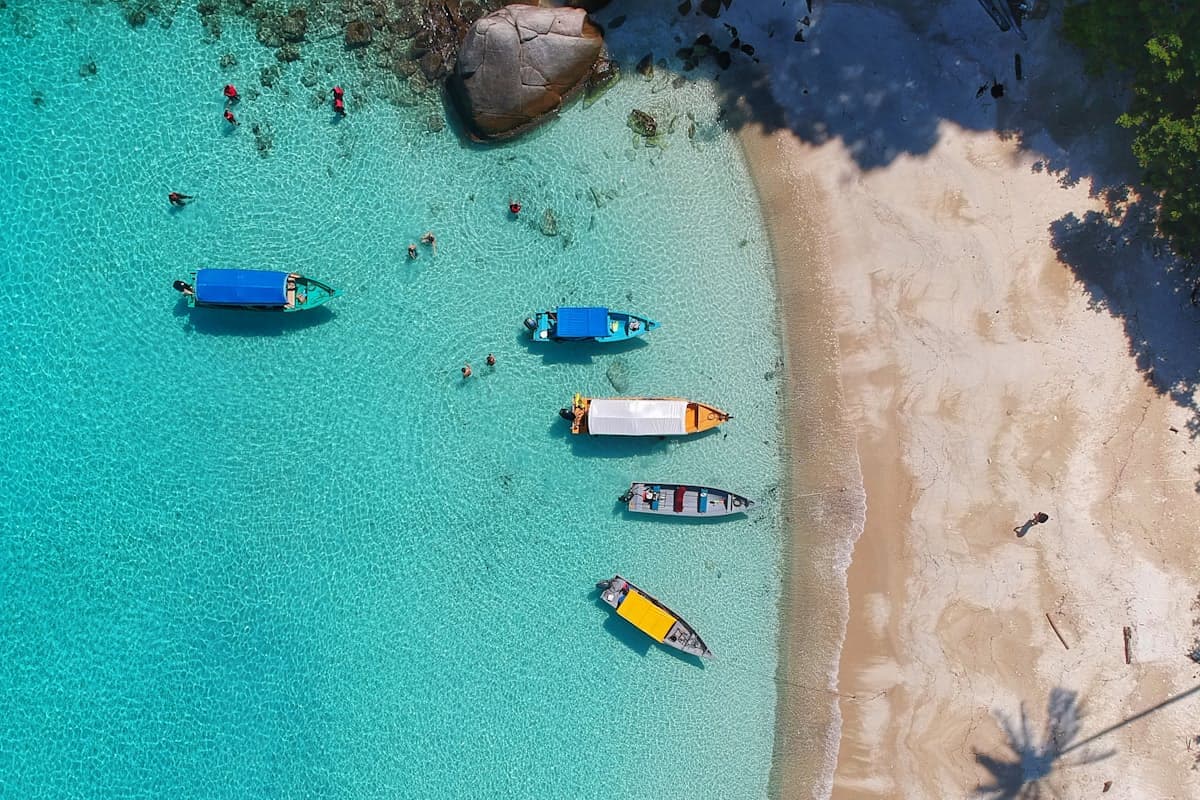
The swimming season in Cam Ranh runs January through August — eight months. The ideal window is February to April: a comfortable 27–30 °C, water at 25–27 °C, almost no rain, and fewer tourists than over the New Year holidays.
| Months | Air | Water | Sea | Verdict |
|---|---|---|---|---|
| January–April | 26–31 °C | 25–27 °C | Calm, clear, minimal rain | Best time |
| May–August | 31–32 °C | 28–29 °C | Calm, hot, harsh sun | Good, use SPF 50+ |
| September–November | 28–31 °C | 27–28 °C | Monsoon: waves, murky, rip currents | Worst time |
| December | 27 °C | 26 °C | Rain easing, sea calming | Transitional |
January–April. The best time. Minimal rain, calm sea. February is the record-holder: 25–33 mm of rain all month, just one rainy day. Water at 25 °C — warmer than it sounds if you are used to a cooler home coastline.
May–August. Hot: 31–32 °C, high humidity, but little rain. Water up to 29 °C, almost a hot bath. The sea is calm and the wind light. The one downside is the sun — go without cream and you will burn in half an hour.
September–November. Monsoon. The rain doesn't last all day: usually a heavy downpour for an hour or two after lunch, then sun. But the sea churns — waves up to 1–1.5 m, water murky with sand and silt, and rip currents appear. You can swim, but it is no fun. Rain peaks in November, at up to 320 mm.
In mid-September… there was a typhoon in China and around Da Nang, but it was calm where we were. … By the end of September the waves picked up and the wind cameANTalya, tophotels.ru, 2025, translated by VietnamSpot
December. A transitional month. The rain eases and the sea settles. By late December conditions are already good. Many people fly in for the New Year holidays, and that is when resort prices peak.
Coming in the monsoon? Don't worry. Rain in Cam Ranh isn't a grey all-day drizzle. It is a tropical downpour for 40–60 minutes, then sun, and everything is dry within half an hour. Mornings are usually clear: swim from 7:00 to noon, and wait out the rain at the resort in the afternoon.
Cam Ranh or Nha Trang — where are the beaches better?
Cam Ranh is cleaner, emptier, and its sand is whiter. Nha Trang wins on infrastructure, nightlife and cheaper accommodation. The question is simple: do you want a beach, or a city with a beach?
| Criterion | Cam Ranh (Bai Dai) | Nha Trang (town) |
|---|---|---|
| Sand | White, fine, coral | Yellow, medium |
| Water | Clear, calm | Depends on season, can be murky |
| Depth at shore | Shallows 30–50 m | Medium, drops off faster |
| Crowds | Quiet even in season | Busy, especially in the centre |
| Off-resort facilities | Minimal | Developed — cafés, shops, pharmacies |
| Style of stay | Resort, all-inclusive | Urban, independent |
| For families with kids | Excellent — shallow, safe, quiet | Good, but loud and crowded |
| Nightlife | None | Developed — bars, clubs, karaoke |
| To the airport | 10–15 min | 30–40 min |
| Lounger + umbrella | ~$2–4 | ~$1.20–3 |
| Food near the beach | Resort or 2–3 cafés | Dozens of restaurants and cafés |
Cam Ranh is for anyone who wants quiet, white sand and a calm sea. Who is happy to pay for a resort and doesn't need bars and clubs. Families with toddlers, couples and anyone who values beach quality over the number of restaurants within walking distance.
Nha Trang is for anyone who wants infrastructure, lower prices, dozens of restaurants and an evening promenade. For independent travellers, backpackers and anyone mixing beach with city life. Compare the two in the Nha Trang beaches guide and the Nha Trang overview.
The compromise: stay in Cam Ranh (a beach resort) and take day trips into Nha Trang — for shopping, food and sights. A taxi is ~$8–16, bus 18 is up to ~$2. Half an hour on the road.
The reverse works too: stay in Nha Trang (cheaper, more choice of stays and food) and head out to Bai Dai two or three times per trip. Bus 18 costs up to ~$2 and takes 40–50 minutes. Handy if you don't want to spring for a resort.
Here is the thing: many travellers who fly into Cam Ranh never realise that one of Vietnam's best beach zones lies between the airport and Nha Trang. They climb into a transfer and drive 40 minutes to the hotel, past 15 km of white sand out the window. If you have the choice, spend at least a day on Bai Dai. You will feel the difference right away.
Cam Ranh resorts with their own beach
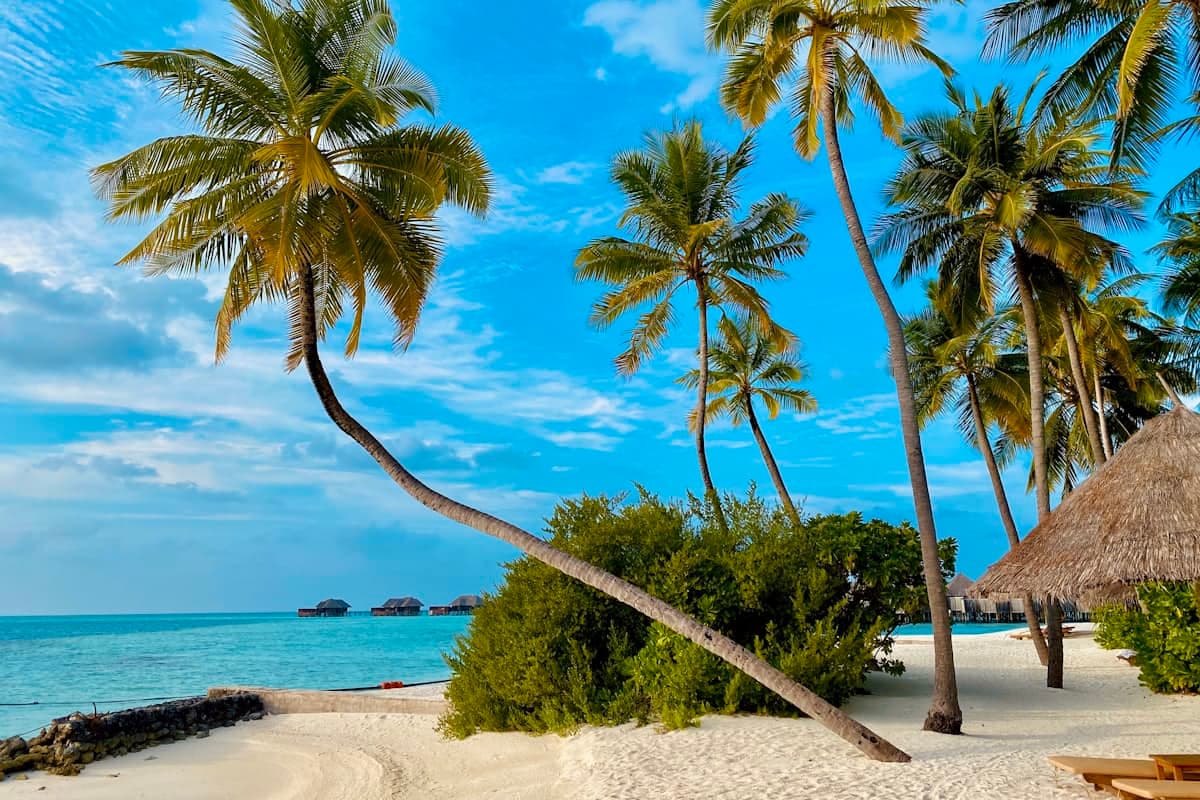
The Bai Dai peninsula has 8 large resorts, each with its own stretch of beach. Guests use the beach facilities for free. Officially all beaches in Vietnam are public, but in practice the loungers and umbrellas are for guests only, and security will politely ask outsiders to move to the public stretch. For the full ranking with rates, room types and pool villas, see the Cam Ranh hotels guide.
| Resort | Stars | From/night | Beach & features |
|---|---|---|---|
| ALMA Resort | 5★ | from ~$120 | Long private beach. Top family resort in Vietnam. Water park, 12 pools |
| Mövenpick Resort | 5★ | from ~$150 | 5,000 m² rope park. Signature daily "Chocolate Hour" |
| Amiana Resort | 5★ | from ~$130 | 5,000 m² seawater pool. Spa and mud baths. Buffet breakfasts |
| Radisson Blu Resort | 5★ | from ~$140 | ESPA spa, 6 restaurants, photogenic thatched umbrellas on the sand |
| Melia Vinpearl | 5★ | from ~$160 | Vinpearl brand. Huge grounds. VinWonders on Hon Tre is about an hour away by ferry |
| Cam Ranh Riviera | 5★ | from ~$80 | Good value. Nice beach, more compact grounds |
| Selectum Noa Resort | 4★ | from ~$110 | Ultra all-inclusive. Full board, drinks and entertainment included |
| Aquamarine Resort | 4★ | from ~$60 | Budget option with beach access. Basic service |
Prices current as of 03/2026. Book ahead: in January and over Tet, five-star occupancy hits around 82%.
For families, ALMA Resort is the pick of the coast: 12 pools, a water park, kids' clubs by age group, and a shallow, safe entry to the sea. The grounds are so big you could go a week without leaving.
Mövenpick stands out for its 5,000 m² rope park, the largest at any hotel in the region. The chain's signature touch is "Chocolate Hour": every day the lobby lays out desserts and hot chocolate. Kids love it.
Radisson Blu leans on its ESPA spa and six restaurants, with those photogenic thatched umbrellas lined up on the sand. It is a strong all-round five-star if you want polish without ALMA's scale.
Water sports on Cam Ranh beaches
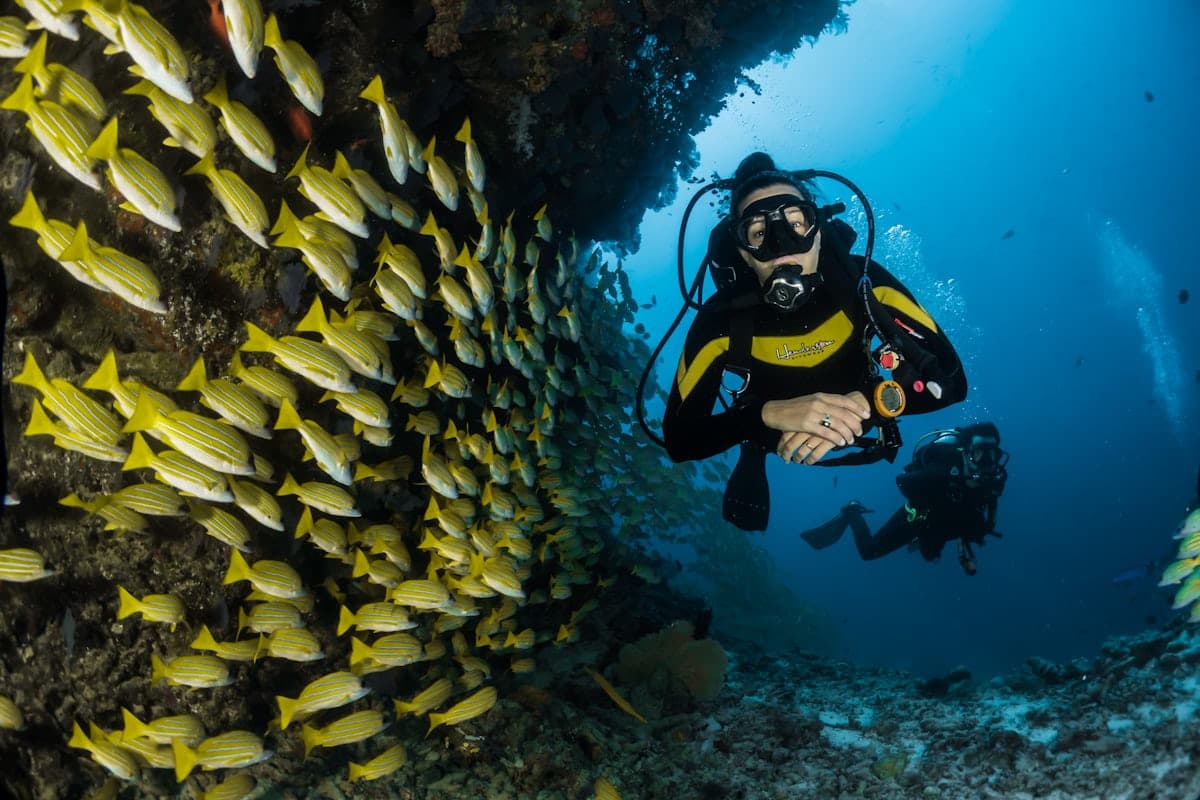
On Bai Dai, water activities are run by the resorts and tour operators. On the public stretches there is little on offer — at most a kayak from local guys at a negotiable price.
| Activity | Cost | Duration | Where |
|---|---|---|---|
| Snorkelling (tour) | from 500,000 VND (~$20) | 3–4 hours | Resorts, tour desks |
| Diving (1 dive) | from 1,500,000 VND (~$60) | 1–1.5 hours | Resort dive centres |
| Intro dive for beginners | from 2,000,000 VND (~$80) | 2 hours | ALMA, Mövenpick |
| Kayaking | from 300,000 VND (~$12) | 1 hour | Mövenpick, ALMA, Radisson |
| SUP board | from 400,000 VND (~$16) | 1 hour | Resorts |
| Jet ski | from 800,000 VND (~$32) | 30 min | Resort beaches |
| Parasailing | from 1,000,000 VND (~$40) | 15 min in the air | Seasonal (Jan–Aug) |
Snorkelling is the most accessible option. Tours run out to the islands in the bay, where there are coral reefs and visibility up to 10–15 metres. Mask, snorkel and fins are included. Some tours include lunch on board — check when booking.
Diving is for certified divers (you will need a PADI, SSI or equivalent card). Beginners can do an intro dive: 30 minutes of theory, 30 in a pool, then an open-water dive to 5–8 metres. From ~$80, but the experience is worth it.
Kayaking on Bai Dai is its own story. The water is calm as a lake with no currents, and from a kayak you see mountains and coastline you can't make out from shore. Before 9:00 is the best time: not yet hot, the water glassy, the light soft.
Parasailing only runs in the dry season (January–August). In the monsoon the wind is too strong. You climb to 50–70 metres and spend 12–15 minutes in the air. From up top you see the whole Bai Dai coastline and the mountains on the horizon.
Want a look underwater without a tour? Buy a mask and snorkel in Nha Trang (from 150,000 VND / ~$6) and swim out 50–100 metres off Bai Dai near the resorts. At 2–3 metres deep you will meet small fish and starfish. There is no proper coral near shore — for that you head to the islands. But for a first go, it is enough.
Getting to Cam Ranh beaches
From the airport to the Bai Dai beach zone it is 10 km, 10–15 minutes. From central Nha Trang it is 20–25 km, half an hour to forty minutes. The road is smooth asphalt, no mountain switchbacks. Every way of reaching Cam Ranh — buses, taxis, transfers — is covered in the Cam Ranh transport guide.
From Cam Ranh airport
Cam Ranh airport (CXR) is the nearest for both Cam Ranh and Nha Trang. Terminal T2 handles international flights, with a growing number of routes across Asia and beyond.
On the way out you will find Mai Linh and Vinasun taxi desks. The fixed fare to Bai Dai is 100,000–200,000 VND (~$4–8). Grab works too and is often 15–20% cheaper. If you have booked a resort, ask whether there is a free transfer — most five-stars include one.
From Nha Trang
| Transport | Time | Cost | Pros | Cons |
|---|---|---|---|---|
| Bus 18 | 40–50 min | up to ~$2 | Cheap | No A/C, easy to miss the stop |
| Grab | 25–35 min | ~$6–12 | Fixed price, A/C | Needs data to hail |
| Taxi (Mai Linh) | 25–35 min | ~$8–16 | Hail on the street | Pricier than Grab, metered |
| Motorbike (rental) | 30–40 min | ~$4–7/day | Freedom to roam | Needs a licence, crash risk |
| Car with driver | 30 min | from ~$20 | Comfort, no hassle | Price |
A motorbike is the best option if you want to hit several beaches in a day (Bai Dai, Pearl Beach, Airport Beach) and drop into a fishing village. Rental in Nha Trang starts around 100,000 VND/day (~$4) for a Honda Wave, from 150,000 VND (~$6) for a Honda SH scooter. You need your national licence plus an International Driving Permit (1968 Vienna Convention): A1 covers a Honda Wave, anything over 125 cc needs category A. Traffic in Vietnam is chaotic, but the highway to Cam Ranh is straight and calm.
Safety on Cam Ranh beaches

In the dry season (January–August), Cam Ranh's beaches are safe: shallow water, minimal waves, warm and clean. The main risks are jellyfish in summer and rip currents in the monsoon.
Jellyfish and plankton
From June to September, jellyfish and "stinging" plankton appear near the shore. The stings aren't dangerous but they are unpleasant: redness, itching, a fine rash, sometimes a burning sensation. It clears in 1–3 days.
But there are jellyfish in the water, though not dangerous ones. One brushed me lightly once, and the spot on my arm itched like a nettle sting for about 10 minutesЕлизавета, tophotels.ru, 2025, translated by VietnamSpot
Watch the beach flags:
- Green — safe to swim
- Yellow — caution, waves or currents
- Red — no swimming
- Purple — marine life in the water (jellyfish, plankton)
Rip currents
Bai Dai gets rip currents, especially in the monsoon (September–November). A rip is a narrow band of water 5–15 metres wide that pulls away from shore at up to 2.5 m/s. Even a strong swimmer can't out-swim it head-on.
How to spot one: a band of murky or foamy water running perpendicular to the shore, with debris and foam moving out to sea.
Caught in one? Don't fight it. Swim parallel to the shore until you are out of the flow (usually 20–30 metres), then head in. Tired? Float on your back and wait. The current will carry you 50–100 metres, but there it weakens and you can calmly return.
Sun and heat
The tropical sun is no joke. From May to August it is 31–32 °C with a UV index of 10–12. Without SPF 50+ you will burn in half an hour, even on a cloudy day. The peak is 10:00 to 15:00 — best spent under an umbrella.
Lifeguards
Resort lifeguards are on duty from 7:00 to 18:00. On the public stretches of Bai Dai they are irregular or absent altogether. On the public beach with kids, don't let them wander far and don't swim alone yourself.
General safety rules
- Don't swim alone on empty stretches — if you cramp up or get caught in a current, there is no one to help
- Don't go in after drinking. It sounds obvious, but most water incidents come down to exactly this
- Don't dive in head-first. It is shallow. Seriously. Even at waist depth the bottom can be a metre below the surface
- A rash guard or swim shirt protects against both sun and jellyfish
- Drink water every 30–40 minutes — dehydration in the heat sneaks up on you
- Keep your phone in a waterproof case — a wave can soak your things on the sand
Practical tips for a beach day in Cam Ranh
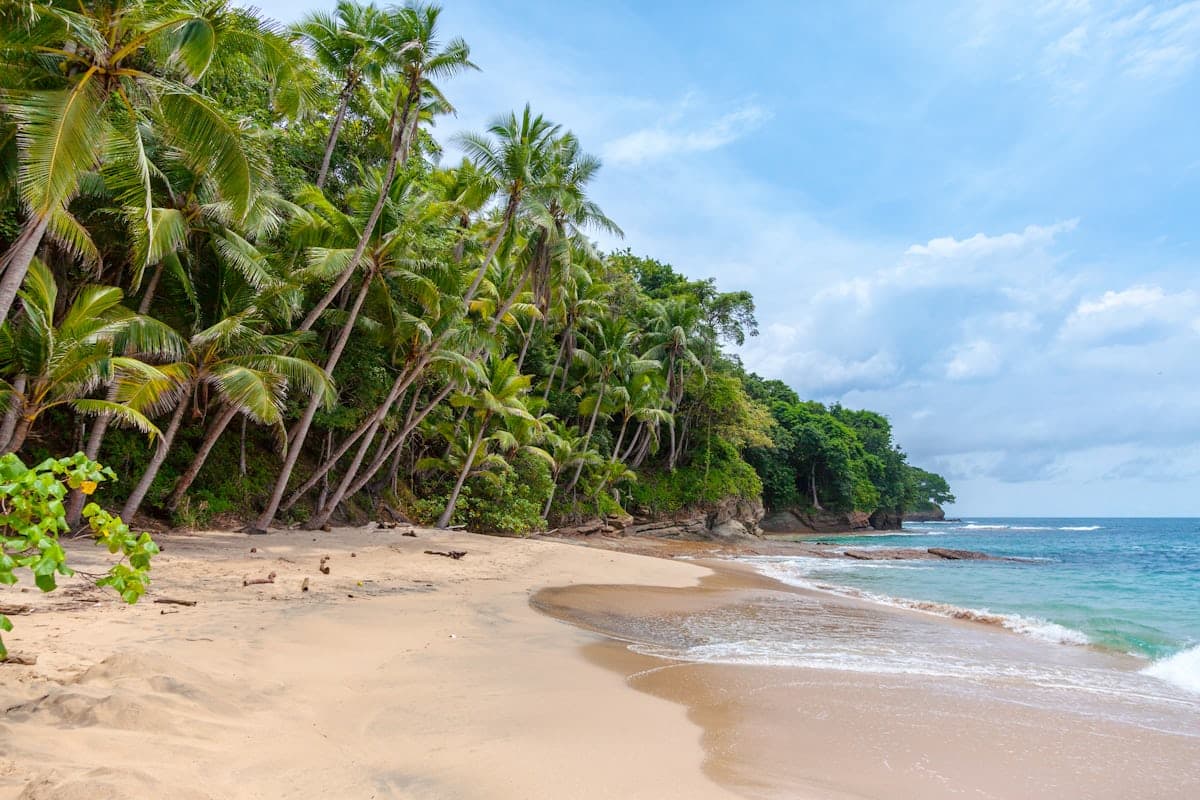
Cam Ranh is not a town with a shop on every corner. The nearest supermarkets are the Co.opmart branches in Cam Ranh town and in Nha Trang, each 20–30 minutes away by taxi. A resort has almost everything on site, but at resort prices — two to three times the town rate. Coming for a day at the beach? Come prepared.
What to bring to the beach
- Reef shoes or water shoes — the coral sand is fine, but shell and coral fragments turn up
- SPF 50+ cream (reapply every 2 hours and after every swim)
- Cash in dong — the public stretches take no cards anywhere
- Water — at least 1.5 litres per person. It goes fast in the heat
- A beach umbrella or tent if you head to a public stretch without loungers
- A snorkelling mask if you want to swim out for a look
- A dry bag for your phone and documents — a wave can wash over your things
Money and payment
Change money in Nha Trang, not Cam Ranh: a bank branch or a licensed exchange counter beats the airport rate. Since 9 February 2026, exchange outside licensed points is penalised under Decree 340/2025/ND-CP: for $1,000–10,000 an individual faces a fine of up to 20 million VND, more above that. A gold shop may exchange currency only with a State Bank exchange-agent certificate, and a tourist has no way to check it. Resorts take Visa and Mastercard, but the conversion rate is the bank's — not in your favour. On the public beaches and at local cafés it is cash in dong only. There are hardly any ATMs in the resort zone, so withdraw cash in advance.
Connectivity and internet
Wi-Fi is in every resort (free for guests). On the public beach there is none. Buy a SIM at the airport: from 100,000 VND (~$4) for 30 days of unlimited data (speed throttled after 5 GB/day). Better still, set up an eSIM before you fly so you have data the moment you land. 4G covers the whole coast reliably.
Food on and near the beach
Resorts have restaurants with international and Vietnamese menus. Breakfast (buffet) is usually included; lunch runs from 200,000 VND (~$8), dinner from 300,000 VND (~$12). On the public stretches there are a couple of cafés with simple Vietnamese food: pho from 40,000 VND (~$1.60), chicken rice from 50,000 VND (~$2), grilled seafood from 150,000 VND (~$6). A coconut is 30,000 VND (~$1.20).
Want it cheaper? Take a Grab to the fishing village on the bay shore. Seafood is half the resort price, and the freshness is the morning catch. Or head into Nha Trang for street food, where the choice is many times wider.
Good to know
- Don't leave valuables unattended on the sand. Theft is rare, but it happens
- The public stretches have no shade. Without an umbrella or canopy it gets rough
- Leaving the Bai Dai car park, they sometimes charge 10,000–20,000 VND (~$0.40–0.80) per motorbike. Unofficial, but not worth arguing over
- The beach is dark in the evening with no lights — carry a torch
Cam Ranh beaches FAQ
The South China Sea, part of the Pacific. Vietnamese call it the East Sea (Biển Đông). The water off Cam Ranh is warm year-round: 25 °C in January, 29 °C from May to August. The shore is shallow, the entry gentle and sandy. It is comfortable even with small children. The bottom has no rocks or coral.
Technically a sea, but it connects directly to the Pacific. For swimming there is no difference: the water is salty, warm and clear in the dry season. Tides are weak, and dry-season (January–August) waves are 0.3–0.5 m. It only churns from September to November, when waves reach 1–1.5 m.
January to August — eight months. Best of all are February, March and April: 27–30 °C, water 25–27 °C, almost no rain, a clear sea. May to August is also good but noticeably hotter (31–32 °C). The worst is October and November: rain every other day, waves, murky water and rip currents.
Yes. From January to August Bai Dai is nearly wave-free, calm as a lake. In the monsoon, Bai Dai's waves reach 1–1.5 m.
In the dry season (January–August), yes. Shallows stretch 30–50 metres from shore, waves are minimal and the water is warm (25–29 °C). Resorts have lifeguards on duty. The public stretches may not, so watch your kids yourself. In the monsoon (September–November) take more care: rip currents and waves appear. A purple flag on the beach means jellyfish in the water.
- Bus 18up to ~$240–50 minutes
- Grab~$6–1225–35 minutes, price fixed in the app
- Taxi~$8–1625–35 minutes
- Motorbikefrom ~$4/day30–40 minutes, rental
The bus is cheapest; Grab is the easiest
- On the public stretches of Bai Dai~$2–4for a sunbed-and-umbrella set for the day
- At resortsfreeit is for guests
- Pearl Beach and Airport Beachno loungersbring your own mat
For reference, in Nha Trang loungers on the town beach are ~$1.20–3
- Guide
Cam Ranh Airport (CXR): Live Board, Flights & Transfers
Live arrivals and departures for Cam Ranh airport (CXR) with gates and baggage belts, terminals, routes and the transfer into Nha Trang.Cam Ranh Airport (CXR): Live Board, Flights & Transfers - Guide
Cam Ranh Map: Airport, Resorts, Beaches & Nha Trang
A traveller's map of Cam Ranh: the airport, the Bai Dai resort strip, the town and the road to Nha Trang — and where everything is.Cam Ranh Map: Airport, Resorts, Beaches & Nha Trang - Guide
Cam Ranh Reviews 2026: Quiet Resort or Too Sleepy?
Honest Cam Ranh reviews: a calm resort break vs busy Nha Trang, the pros and cons and who it suits, with a verdict.Cam Ranh Reviews 2026: Quiet Resort or Too Sleepy?