
Ho Chi Minh City: safety, scams and FAQ for 2026
Is Saigon safe, how to dodge the classic tourist scams, how to actually cross a road full of motorbikes, what not to do out of politeness, plus a no-nonsense FAQ on visas, money, water and tipping.
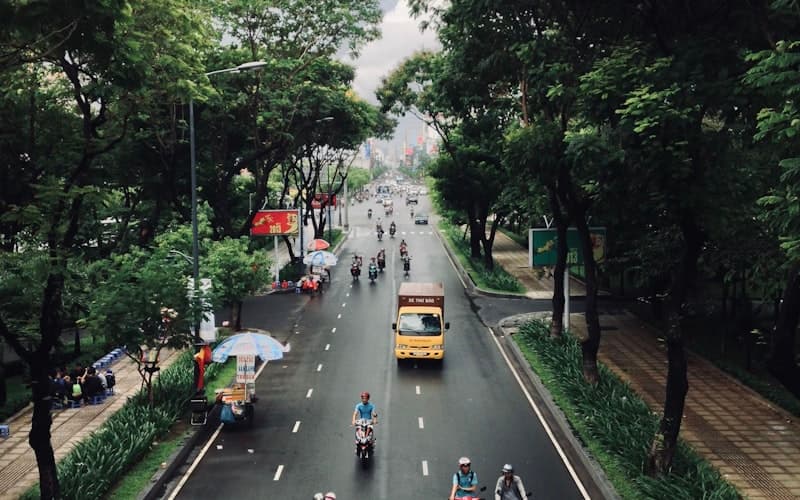
Saigon can look like chaos on day one: a river of motorbikes, no obvious right of way, vendors calling out on every corner. It is not dangerous, just loud and fast. Get a handful of local habits right and the city turns easy. Below: how safe it really is, the scams worth knowing, the counter-intuitive way to cross a road, a few etiquette landmines, and a practical FAQ. For the wider picture, see our full Ho Chi Minh City guide.
Is Ho Chi Minh City safe?
Short answer: yes. By the standards of a city of fourteen-plus million, Saigon is remarkably safe for visitors. Violent crime against tourists is very rare, solo travellers and women report feeling comfortable walking at night, and the atmosphere in most districts is relaxed rather than edgy. What you need to guard against is not muggers but opportunistic petty theft.
| Concern | Real risk | What to do |
|---|---|---|
| Violent crime | Very low | Normal city awareness is enough |
| Phone / bag snatching | The main risk | Bag on the wall side, phone away near roads |
| Pickpockets | Moderate in crowds | Front pockets, zipped bag, no back pocket wallet |
| Overcharging / scams | Common, low stakes | Agree prices first, count your change |
| Traffic | Genuine hazard | Cross slowly, look both ways, expect wrong-way bikes |
Honestly, the most likely thing to hurt you in Saigon is the traffic, not a criminal. Motorbikes come from every direction, including the wrong one and up onto the pavement. Treat the road with respect and you have covered most of the danger.

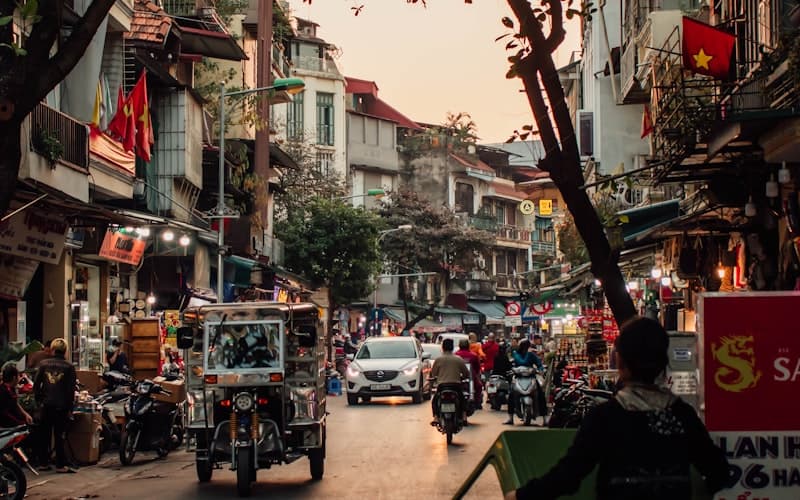


Pickpockets and the scams worth knowing
None of these are elaborate or dangerous. They are small hustles that cost a few dollars or an unlucky traveller a phone. Knowing the shape of each one is enough to sidestep it.
Drive-by phone snatching
The classic. You are standing near the kerb, texting or filming, and a passenger on a passing motorbike plucks the phone straight out of your hand. It happens in a second and the bike is gone. Do not use your phone while walking beside the road, do not hold it out for photos over the traffic, and keep your bag on the side away from the street, strap across your body.
Taxi and ride scams
Some street taxis run rigged meters or take the scenic route. Skip the guesswork: use Grab or Xanh SM (the electric fleet), where the price is fixed in the app before you get in. If you do take a metered cab, stick to the reputable brands Vinasun and Mai Linh. Full breakdown in the transport guide.
Street vendor tricks
A friendly vendor drops the yoke of coconuts or a conical hat on your shoulder for a "free" photo, then demands payment. Shoe-shiners point out a fault in your shoes and quietly quadruple the price. Fruit and souvenir sellers near landmarks quote a tourist rate. The fix is the same everywhere: agree the price out loud before anything happens, or a firm "no thank you" and keep walking.
| Scam | How it works | Defence |
|---|---|---|
| Phone snatch | Grabbed from your hand by a passing bike | Keep it in your pocket near roads |
| Rigged meter | Taxi meter runs fast or long route | Use Grab / Xanh SM app pricing |
| Coconut photo | "Free" photo, then a bill | Decline or agree a price first |
| Wrong change | Short-changed on many-zero notes | Count notes, learn the colours |
| Shoe repair | "Fix" you never asked for | Wave off, walk on |
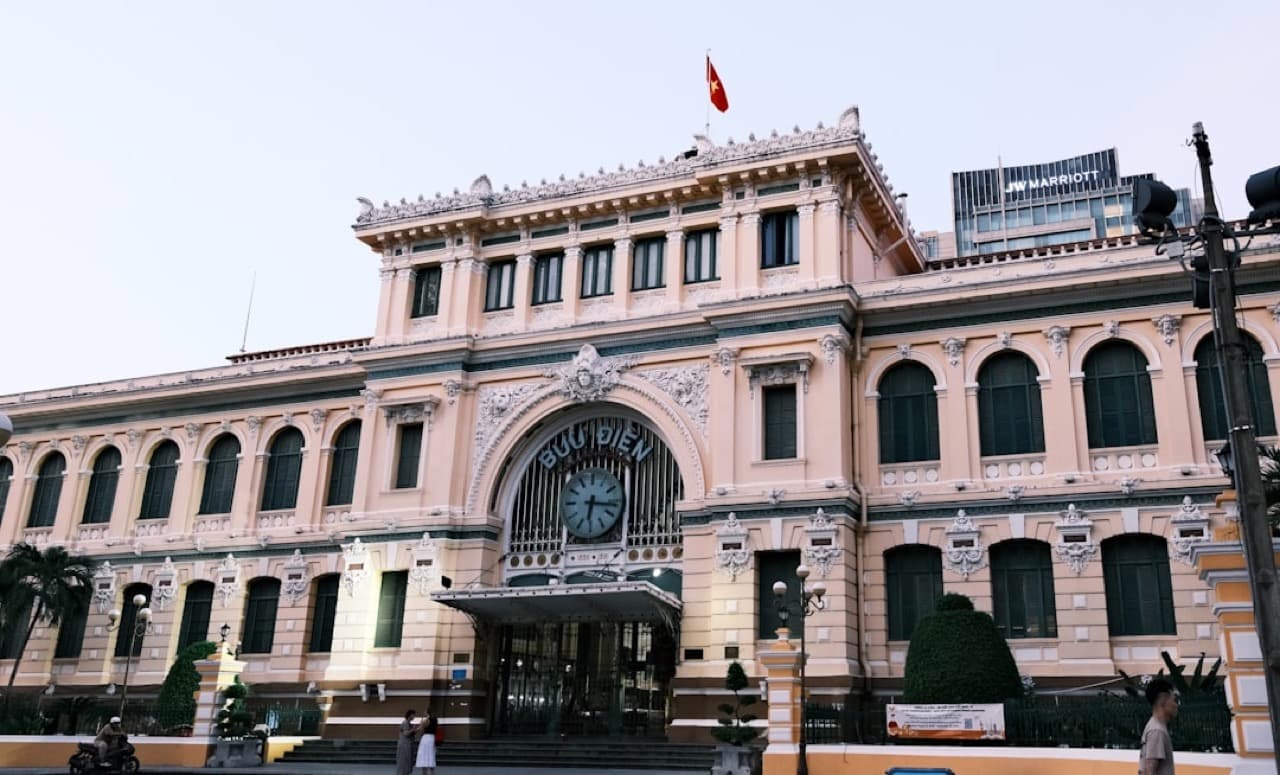
Fast Track — no queue at the border
5–10 minutes instead of an hour in the immigration queue
from$11per passenger
How to cross the road in Saigon
This deserves its own section, because it is the single skill that separates a rattled tourist from a relaxed one — and it is completely counter-intuitive. There are traffic lights, but at most crossings the motorbikes simply keep coming. Waiting for a gap can mean waiting all day.
The trick: step off the kerb and walk across at a slow, steady, predictable pace. The riders are watching you and steering around you in real time — as long as you move the way they expect. Your job is to be readable, not to dodge.
It's quite challenging, but you get used to it… The key is to stay calm, walk at a steady pace, and keep signalingPeter Hall, living in Ho Chi Minh City since 2019, VnExpress International, 2025
- Look both ways — bikes come the wrong way and along the pavement too.
- Step off calmly and keep a constant speed. No sprinting.
- Never freeze or jump back — that is what causes accidents, because riders have already committed to a line behind you.
- Make eye contact with the closest riders and hold your line.
- Phone away, both hands free. Cross with a group of locals if you can.

Etiquette and customs
Vietnamese people are forgiving of foreign visitors, and no one expects you to get everything right. But a few small habits will earn goodwill and keep you from an awkward moment.
- Dress modestly at temples and pagodas. Cover shoulders and knees, and take your shoes off where signs or a pile of sandals tell you to.
- Keep your cool. Losing your temper or raising your voice in public makes you lose face — and the other person too. A smile gets you much further than an argument.
- Use both hands when giving or receiving something, especially money or a business card. A small thing that reads as respect.
- Don't touch people's heads, and don't point your feet at people or altars — the head is respected, the feet are not.
- Ask before photographing people, especially older vendors and monks. Most will happily say yes.
- Take your shoes off when entering a home, and often small shops or homestays too.

Practical tips for a smooth trip
The small stuff that saves time and money once you are on the ground. Get a local SIM or eSIM sorted, keep some cash on you, and download the two or three apps that run this city.
| Need | What to do | Cost / note |
|---|---|---|
| Getting online | Buy a tourist SIM at Tân Sơn Nhất airport, or an eSIM before you fly | SIM from ~60,000 VND (~$2.50); passport needed |
| Best network | Choose Viettel for coverage; 5G in the centre | Wi-Fi is free almost everywhere |
| Getting around | Grab / Xanh SM for cars & bikes | Bike ride across D1 ~$1 |
| Money | Cash for street food, card in malls | ~26,000 VND = $1; use bank ATMs |
| Water | Bottled or filtered only | ~10,000 VND a bottle |
| Health | Buy travel insurance before you fly | FV Hospital & Family Medical Practice speak English |
Money and ATMs. Cards work in malls, chains and mid-range restaurants, but street food, markets and mototaxis are cash only, so keep small đồng notes on you. Withdrawing from an ATM adds up: banks charge around 3% and usually cap each withdrawal at 2–5 million VND. You lose the least at big-bank machines — Vietcombank, BIDV, Techcombank. Roughly 26,000 VND to the dollar; take out a larger amount at once to spread the fee.
Plugs and power. Vietnam runs on 220V, 50Hz with type A and C sockets, so both flat US-style and round European two-pin plugs fit — most travellers need no adapter unless their charger has a third earth pin.
For messaging, WhatsApp works fine without any VPN, and locals use Zalo for everything from bookings to chats with a guesthouse. Google Maps and Grab are your navigation stack; both are in English. Pharmacies (nhà thuốc) are on every corner and sell a lot over the counter cheaply. For anything serious, a private clinic is the easier option — a consultation runs roughly 500,000–1,500,000 VND (about $20–60), which is why insurance sorted before departure matters.
FAQ
Yes. Violent crime against travellers is very rare, and you can walk most areas late into the evening. The real risk is petty theft: pickpockets and drive-by phone snatchers on motorbikes. Keep your bag on the wall side, use Grab instead of hailing taxis, and do not wave your phone around near the kerb.
The usual ones: metered taxis that run fast (use Grab or Xanh SM instead), the coconut-vendor photo trick that ends with a bill, shoe-shiners and street sellers who inflate prices, and rigged change with the many-zero đồng notes. Agree the price before any service, and count your change.
Step off slowly and walk at a steady, predictable pace. Do not run, freeze or dart back — the motorbikes read your speed and flow around you. Make eye contact with drivers, keep your phone in your pocket, and let the traffic do the swerving.
It depends on your passport. Citizens of the UK, most EU countries and several others get a visa exemption of up to 45 days; everyone else applies for the e-visa online at evisa.gov.vn (90 days, single or multiple entry). Your passport must be valid for at least six months.
Tipping is not expected and there is no fixed rate. Nicer restaurants may add a 5–10% service charge. For good service, rounding up or leaving 20,000–50,000 VND (about $1–2) is appreciated but never required.
No — stick to bottled or filtered water, which is cheap and everywhere. Ice in cafés and restaurants is generally made from filtered water and is fine; the machine-cut cylindrical ice with a hole through the middle is the safe kind.
In malls, chains and mid-range restaurants, yes. Street food, markets and small cafés are cash only, so carry small đồng notes and withdraw from bank ATMs — fees run about 3%, with a 2–5 million VND cap per withdrawal, so take out a larger amount at once. Watch the zeros: 100,000 VND and 10,000 VND look alike in a hurry.
220V, 50Hz, with type A and C sockets. Both flat US-style and round European two-pin plugs fit, so most travellers need no adapter — bring one only if your charger has a third earth pin.
The dry season, December to March, with warm days around 31–33 °C and little rain. The wet season (May–October) is cheaper and the rain is short and predictable — an afternoon downpour, then clear skies again.
- Guide
Ho Chi Minh City Transport 2026: Getting Around
Saigon transport guide: from Tan Son Nhat airport, the metro, Grab, buses, motorbikes and how to reach Mui Ne, Vung Tau and the Mekong Delta.Ho Chi Minh City Transport 2026: Getting Around - Guide
Mekong Delta 2026: Day Trips from Ho Chi Minh City
Mekong Delta guide: day and overnight trips from Saigon, the Cai Rang floating market, My Tho, Ben Tre and Can Tho — how to book and prices.Mekong Delta 2026: Day Trips from Ho Chi Minh City - Guide
Ho Chi Minh City Nightlife & Shows 2026: What to Do
Saigon entertainment guide: the AO Show, water puppets, rooftop bars, clubs, karaoke, cinemas, theme parks and river dinner cruises.Ho Chi Minh City Nightlife & Shows 2026: What to Do


