
Cham Islands: the best day trip from Hoi An in 2026
Eight islands, 20 minutes by speedboat off Hoi An — a UNESCO biosphere reserve with coral reefs to snorkel and fishing villages where squid is sold straight off the boat at dawn. A group tour with lunch and snorkelling starts from 800,000 VND (~$31).

The Cù Lao Chàm archipelago sits about 18 km offshore — a marine protected area that UNESCO recognised as a biosphere reserve in 2009. Almost all the islanders live on Hòn Lao; the other seven are forest fringed with reef. From March to September you can go every day. From October to February the sea turns rough and boats are often cancelled, so it is not a trip to plan for those months.
- Cửa Đại pier (Cảng Cửa Đại): Speedboat departure point from Hoi An — ~260,000 VND (~$10)
- Bãi Chồng beach (Bãi Chồng): Main beach, cafés, facilities
- Bãi Xếp beach (Bãi Xếp): Quiet beach, snorkelling spot
- Bãi Ông beach (Bãi Ông): Long sandy beach, gentle entry — Good for families with kids
- Bãi Làng village (Bãi Làng): Fishing village, morning seafood market
- Hải Tạng pagoda (Chùa Hải Tạng): Free — 18th-century Buddhist pagoda at the foot of the hill
Fast Track — no queue at the border
5–10 minutes instead of an hour in the immigration queue
from$11per passenger
Getting there from Hoi An and Da Nang

Every boat leaves from Cửa Đại pier, 7 km from central Hoi An. Getting to the pier is a 15-minute taxi or Grab ride (30,000–50,000 VND, ~$1.15–1.90).
| Option | Time | Price | Notes |
|---|---|---|---|
| Speedboat | 20–25 min | ~260,000 VND (~$10) | The most popular option |
| Wooden boat | 90 min | 50,000–100,000 VND (~$2–4) | Morning departure only, ~07:00 |
| Boat from Da Nang | 40–50 min | from 400,000 VND (~$15) | Handy if you are based in Da Nang |
Most visitors take the speedboat — fast, comfortable and less prone to seasickness. The wooden boat is for the adventurous: it rolls, it splashes, but it is authentic and a quarter of the price.
The return boat usually leaves around 14:00–15:00. If you are travelling independently, check the schedule in advance so you don't get stranded.
What the trip costs

On top of the boat fare, add the island fees — about 100,000 VND. The breakdown below is approximate, so check the exact amounts with your operator:
- Entry ticket70,000 VND ≈ $2.70
- Marine conservation fee30,000 VND ≈ $1.15
- Total fees100,000 VND ≈ $3.85
These fees fund the marine reserve. On a group tour they are usually already bundled in — worth confirming when you book.
Comparing your options
| Format | Price (VND) | Price (~USD) |
|---|---|---|
| Group day trip (boat + snorkel + lunch) | 800,000–1,200,000 | ~$31–46 |
| Private tour (boat + guide + route) | 2,000,000–3,500,000 | ~$77–135 |
| Independent (boat + fees) | ~360,000 | ~$14 |
| Diving (2 dives) | from ~1,820,000 | from ~$70 |
The group tour is better value than it looks. A lunch of fresh seafood is included — grilled shrimp, squid and fish. Going solo doesn't save much, because you still pay for the mask and lunch on the island. The downside of the group format is the crowd: several boats dock at the main beach at once. If you want quiet, take a private tour or stay overnight on the island.
Tour groups are taken on a whirlwind schedule: boarding a speedboat at 8 a.m., visiting a few historical sites, snorkeling to see coral reefs by 10:30 a.m., having lunch at noon, and heading back to the mainland by 2 p.m.Tam Anh, VnExpress International, 2026
Prices current as of April 2026 (~26,000 VND = $1).



Snorkelling and diving

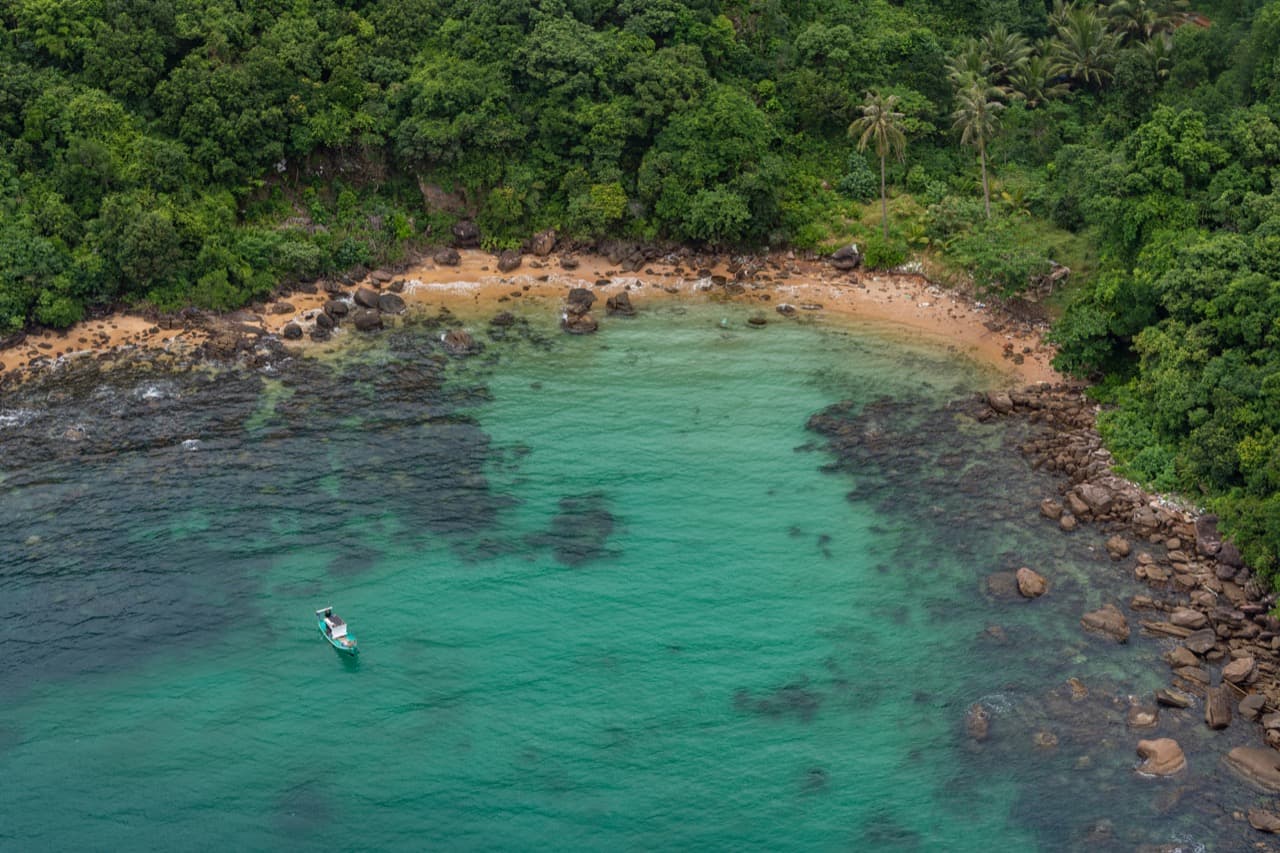
The corals and reef fish are the whole reason to come. Underwater visibility runs 8 to 15 metres, best in June–August. The water warms to 27–29 °C.
Where to swim
The main snorkelling spots are off Hòn Tai island and along the west side of the main island. On group tours the guide takes you to two or three spots, hands out a mask, snorkel and vest, and you swim 30–40 minutes at each.
Reef fish in dozens of species, starfish, sometimes turtles. The coral is battered in places by typhoons and people, but there are plenty of living patches.
Diving
Dives around the islands are run by Hoi An dive centres, Cham Island Diving Center among them. Two dives with full gear and an instructor start from ~$70 (about 1,820,000 VND). It suits both beginners (discovery dive) and certified divers.
The island beaches

Hòn Lao has four main beaches, each with its own character.
Bãi Chồng is the main beach by the jetty. Cafés, shade, loungers. Most group tours land here, so it gets busy at peak season — but it also has the best facilities on the island.
Bãi Xếp is quieter and less crowded. A good entry into the water, with a snorkelling spot right off the shore. The pick if you want some peace.
Bãi Ông is long, sandy and shallow-shelving. Good for families with kids — you can stand waist-deep 30 metres out.
Bãi Bắc is the far, wild beach, reachable only by boat. Almost no one around, clear water — but zero facilities.
What to see on land

If you have had enough of the sea (or want to stretch your legs after snorkelling), there is plenty to do on the island.
Tourists can rent motorbikes to get around the island for VND150,000-200,000 per day. The coastal roads winding around the island are fully paved with concrete… But riders should watch out for several steep slopes along the way.Tam Anh, VnExpress International, 2026
Bãi Làng village is a working fishing village. A morning seafood market, narrow streets of stone houses, fish-drying racks. This is where you feel the island as it is without the tourists.
Hải Tạng pagoda is a Buddhist pagoda from the 18th century (1758) at the foot of the hill on the west of the island. A quiet spot, usually empty. Free.
The lighthouse trail is a walking route through the forest to the top of the island. Two hours round trip, a moderate climb. From the top, a view over the whole archipelago.

When to go, and when not to
Season: March to September. Peak is June–August: warm water, top visibility for snorkelling, settled weather.
Avoid: October to February. The northeast monsoon whips up the waves, and boats often cancel their runs. Even if you find a boat, the seasickness and murky water aren't worth it.
March and September are shoulder months: the sea is calm more often than not, but cancellations happen in bad weather. Check the forecast the day before you go, and book a tour that lets you reschedule.
Practical tips
- Skip the plastic bags. Leave single-use plastic on the mainland — check the reserve rules with your operator. Bring a reusable bag and a water bottle.
- Book your tour ahead in peak season (June–August). Spots on the morning boats fill up.
- Bring: reef-safe sunscreen (no oxybenzone, which kills coral), a dry bag for your phone, trainers for the lighthouse trail.
- Carry cash. Don't count on finding an ATM on the island, and cafés and shops mostly take cash in VND.
- Beach litter is, sadly, a problem. In the rainy season plastic washes in from the mainland.
- Staying over is possible in the Bãi Làng guesthouses (from 200,000 VND, ~$8 a night), but choice is limited. Most people go as a day trip.
Frequently asked questions
- A speedboat from Cửa Đại pier~260,000 VND~$10takes 20–25 minutes and costs
- The pier from central Hoi Ana 15-minute taxi ride
- A local wooden boat in the morning50,000–100,000 VND~$2–4also runs, but the crossing takes 90 minutes
- A group day trip with a speedboat, snorkelling and lunch800,000–1,200,000 VND~$31–46
- Island fees (check with your operator)about 100,000 VND
- A private touraround 2,000,000 VND~$77
- Doing it yourself (boat plus fees)about 360,000 VND~$14
Yes — Bãi Làng village has guesthouses from about 200,000 VND (~$8) a night. Rooms are basic: simple bedrooms with a fan or air-con. There are only a few restaurants, but the seafood is fresh. The reason to stay is catching sunrise without the crowds and snorkelling early.
The season runs March to September: calm sea, warm water, visibility up to 15 metres, with June to August the peak for snorkelling. From October to February the northeast monsoon brings rough seas and boats are often cancelled. Check the forecast the day before you go.
Leave single-use plastic bags on the mainland: the islands are part of a biosphere reserve, and plastic litter already washes up on the beaches. Bring a reusable bag and water bottle, and choose reef-safe sunscreen (no oxybenzone) so you do not harm the coral.
If you are in Hoi An between March and September, absolutely. In a single day you get snorkelling, a seafood lunch, a beach and a fishing village — the best-value day trip out of town. Just do not expect world-class reefs: the coral is patchy and group tours can get crowded. If you are chasing serious diving, other Vietnamese islands (Con Dao, Phu Quoc) go deeper.
- Guide
Hoi An 2026: UNESCO Old Town, Tailoring & Beaches
Hoi An guide: the lantern-lit Old Town, custom tailoring, beaches, food, day trips and where to stay in Vietnam's prettiest heritage town.Hoi An 2026: UNESCO Old Town, Tailoring & Beaches - Guide
Hoi An Lantern Festival 2026: Dates, Tips & What to See
The Hoi An Full Moon Lantern Festival: 2026 dates, floating lanterns on the river, the best photo spots and how to experience it.Hoi An Lantern Festival 2026: Dates, Tips & What to See - Guide
Hoi An Reviews 2026: Is the Old Town Worth Visiting?
Honest Hoi An reviews: what travellers love and criticise, how many days you need and who it suits — with real quotes and a clear verdict.Hoi An Reviews 2026: Is the Old Town Worth Visiting?

