Fruits of Vietnam: a photo guide with names, prices and seasons
25+ tropical fruits of Vietnam with photos, names in Vietnamese, 2026 prices in VND and USD. A month-by-month season chart, how to pick and eat each one, and what you can take home.
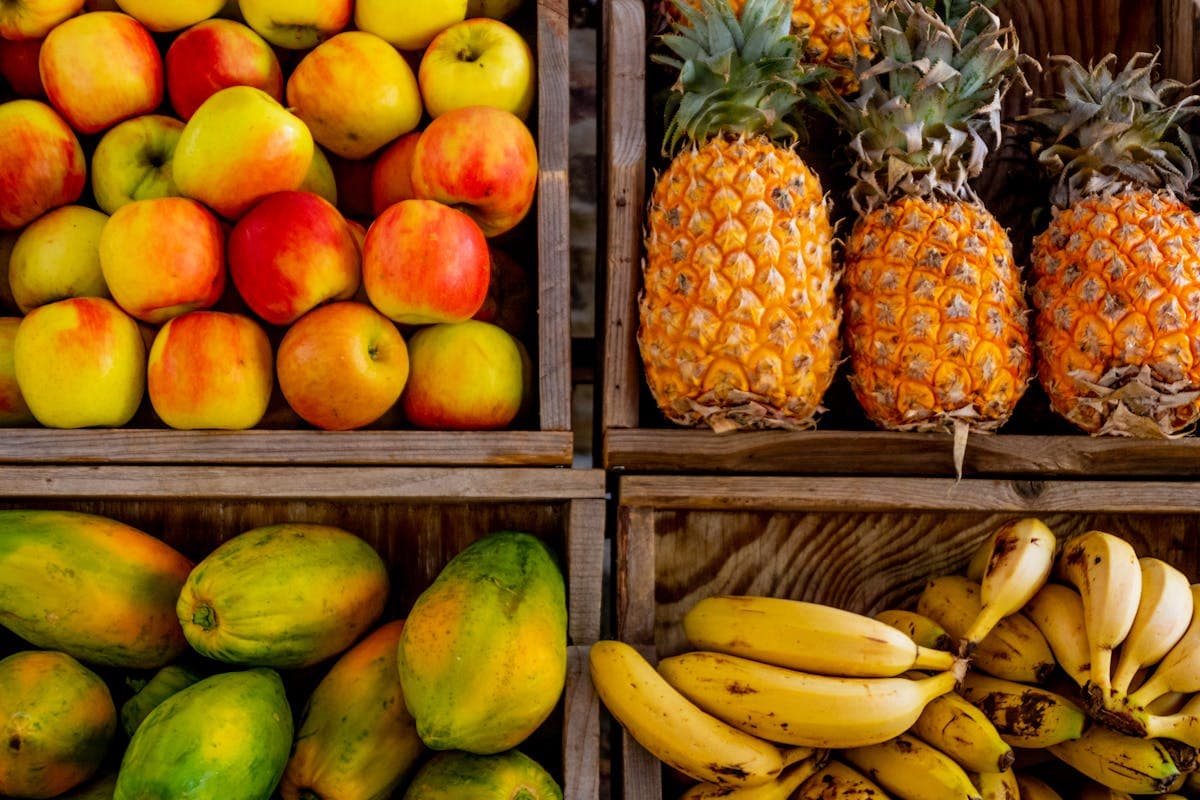
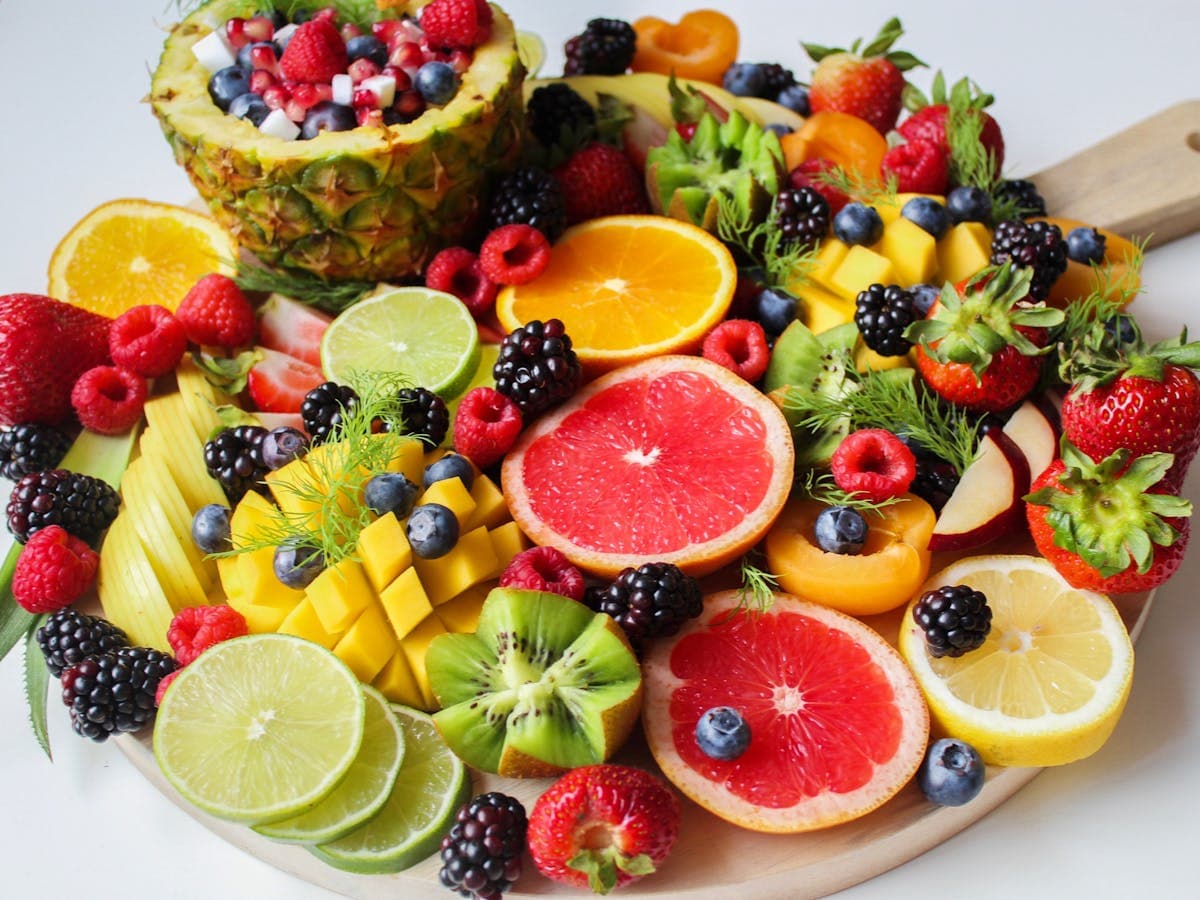
In Vietnam there is fruit all year round; from north to south only the mix changes. Over 40 kinds grow here, and most cost a fraction of what you pay back home. A kilo of mango for ~$1, dragon fruit for ~$0.40, a whole pineapple for ~$0.50 — these aren't sale prices, they're just what fruit costs at a Vietnamese market.
This guide covers every fruit worth knowing, with photos and names in Vietnamese so you can point at a stall and be understood. For each one there are 2026 prices, the season and how to pick and eat it. To keep the zeros straight, remember the rough rate: 26,000 VND ≈ $1.
Currency converter
Exotic Vietnamese fruits — the must-tries
These are the fruits worth flying for. Most you won't find in a Western supermarket — and where you do, the price is five to ten times higher and the taste is nothing like it. Each one below has a photo and its Vietnamese name: show it to a market vendor and you're sorted.
Mango (xoài)
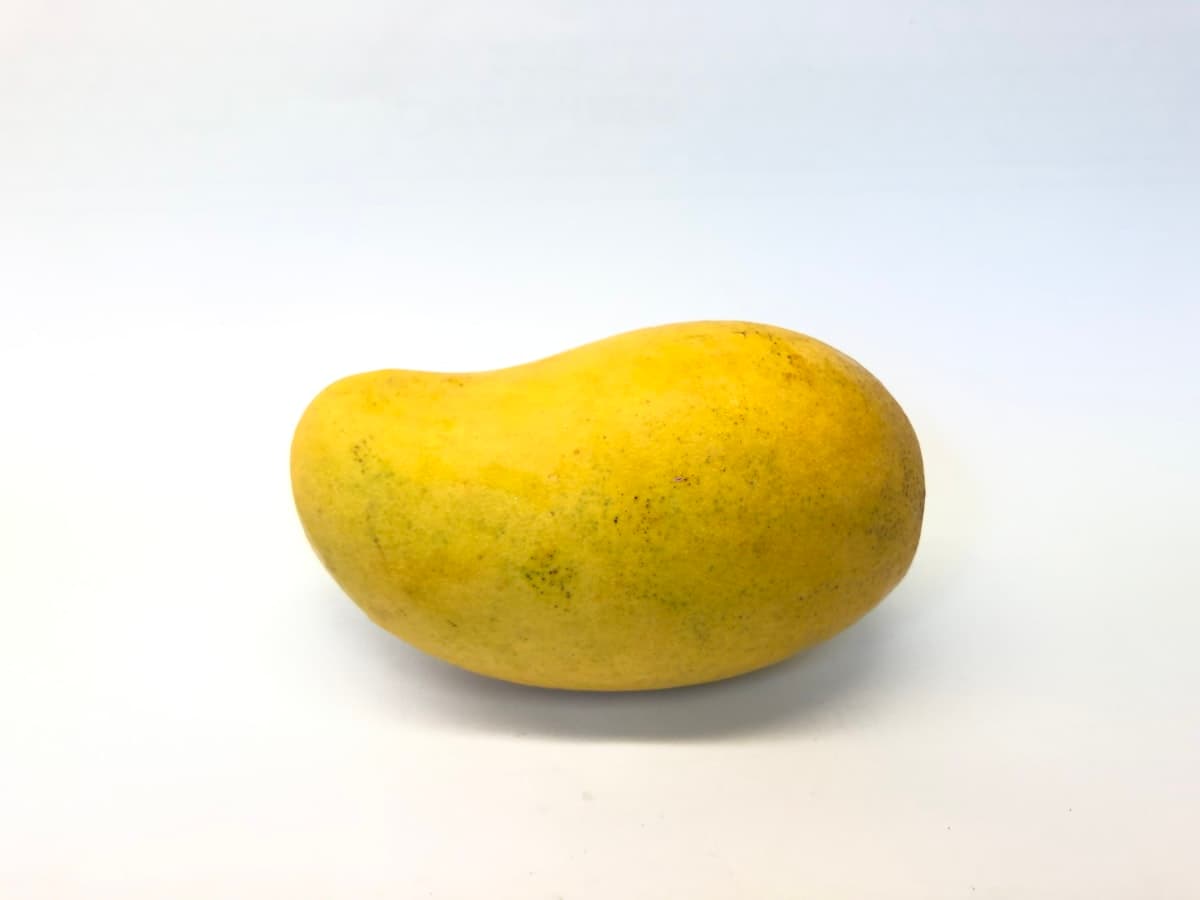
Season: February–May | Price: 25,000–68,000 VND (~$1–2.60/kg)
Markets sell around ten varieties: the yellow ones are so sweet they taste like fruit syrup, while the green ones carry a citrusy tartness with a faint strawberry note.
How to eat: cut down each side of the stone, score the flesh into cubes in the skin, then push the skin inside out — the classic mango hedgehog.
Durian (sầu riêng)
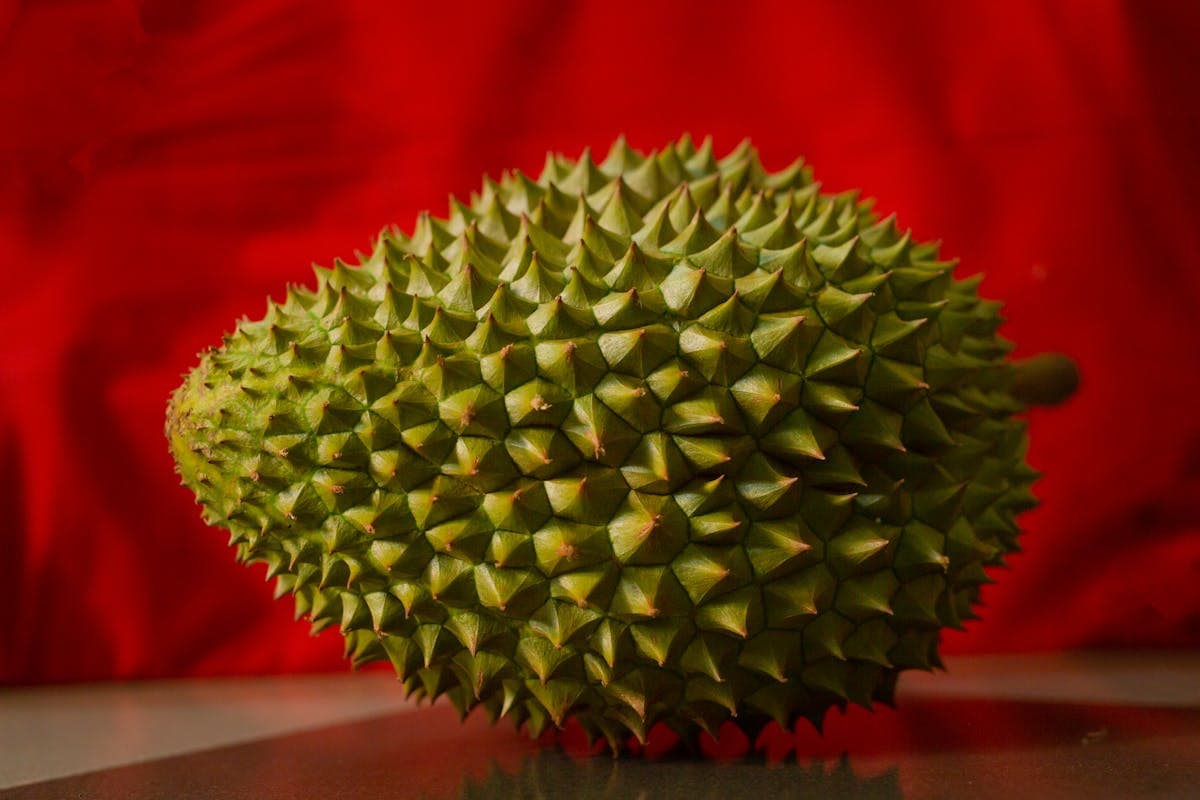
Season: May–September | Price: 60,000–120,000 VND (~$2.40–4.80/kg)
The "king of fruits," as it's known across Southeast Asia. On the outside it looks like a spiky melon; inside is soft, custardy flesh that tastes like a blend of mango, papaya and vanilla cream. The catch is the smell — often compared to raw onions and old socks at the same time.
Mangosteen (măng cụt)
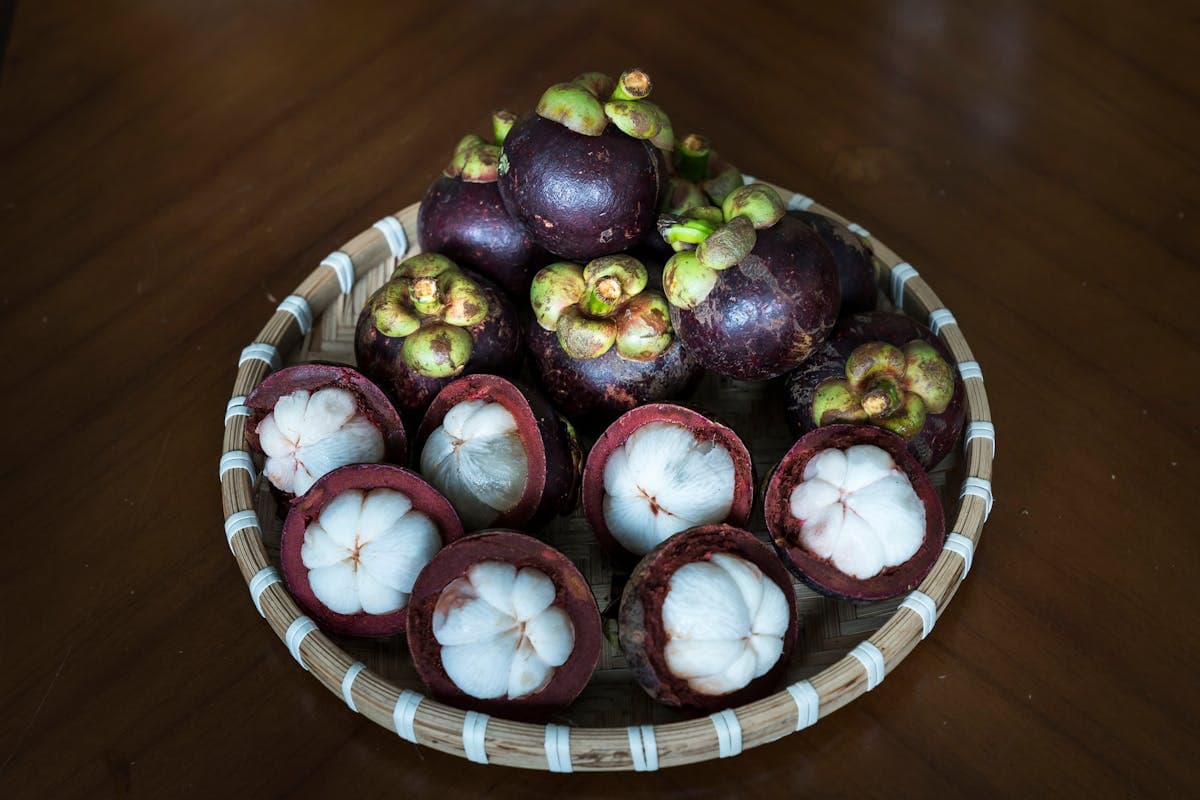
Season: May–July | Price: 30,000–80,000 VND (~$1.20–3.20/kg)
The "queen of fruits" — the perfect antidote to durian. Tangy-sweet and refreshing, with soft white segments hidden under a thick purple rind. One of the best tropical fruits going.
Rambutan (chôm chôm)
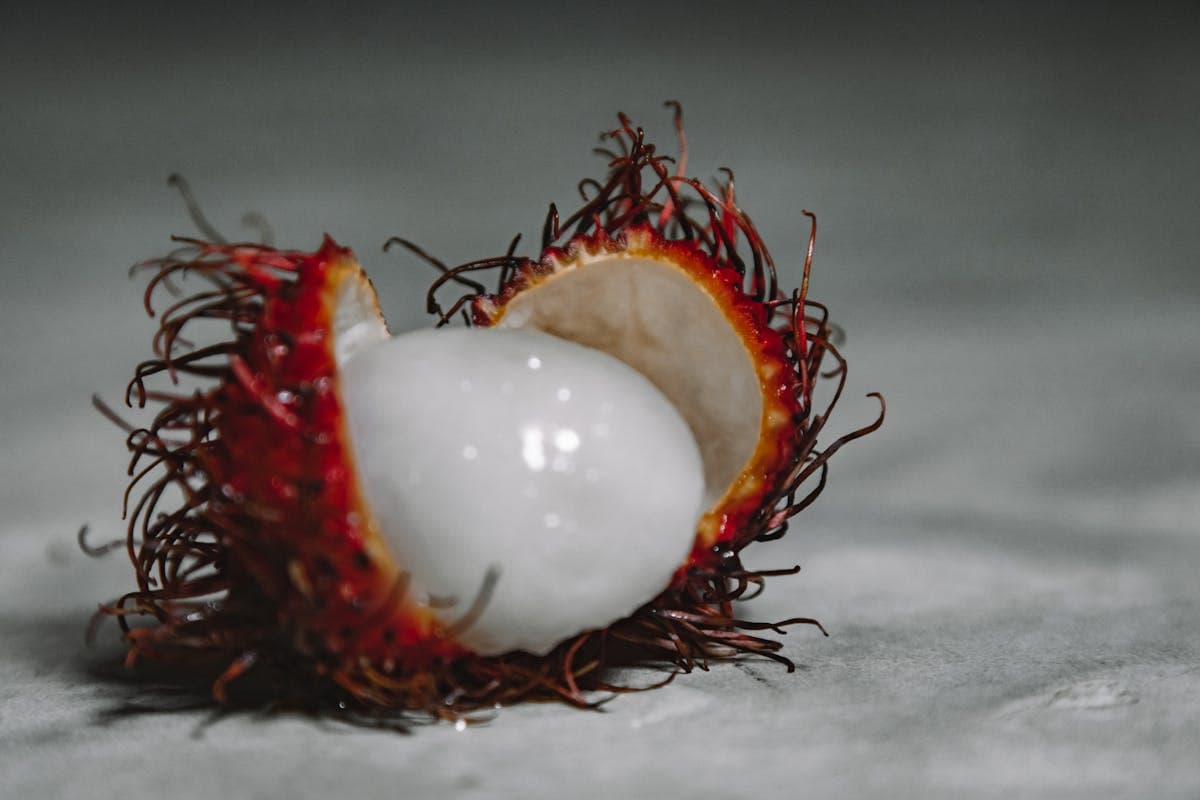
Season: May–October | Price: 20,000–40,000 VND (~$0.80–1.60/kg)
It looks like a hairy red ball, but inside is juicy, watery flesh — like grape, only richer and a touch tarter. One of the cheapest exotic fruits here.
Lychee (vải)

Season: May–July | Price: 15,000–50,000 VND (~$0.60–2/kg)
Under the firm red skin is translucent white flesh with a gentle aroma and a sweet flavour. Lychee is incredibly juicy and refreshing, especially chilled.
Longan (nhãn) — the "dragon's eye"

Season: June–August | Price: 35,000–50,000 VND (~$1.40–2/kg)
A relative of lychee, but with a melon-like note. Small fruit in a thin brown shell; inside, translucent sweet flesh and a dark seed — the reason it's called the "dragon's eye."
Dragon fruit / pitaya (thanh long)
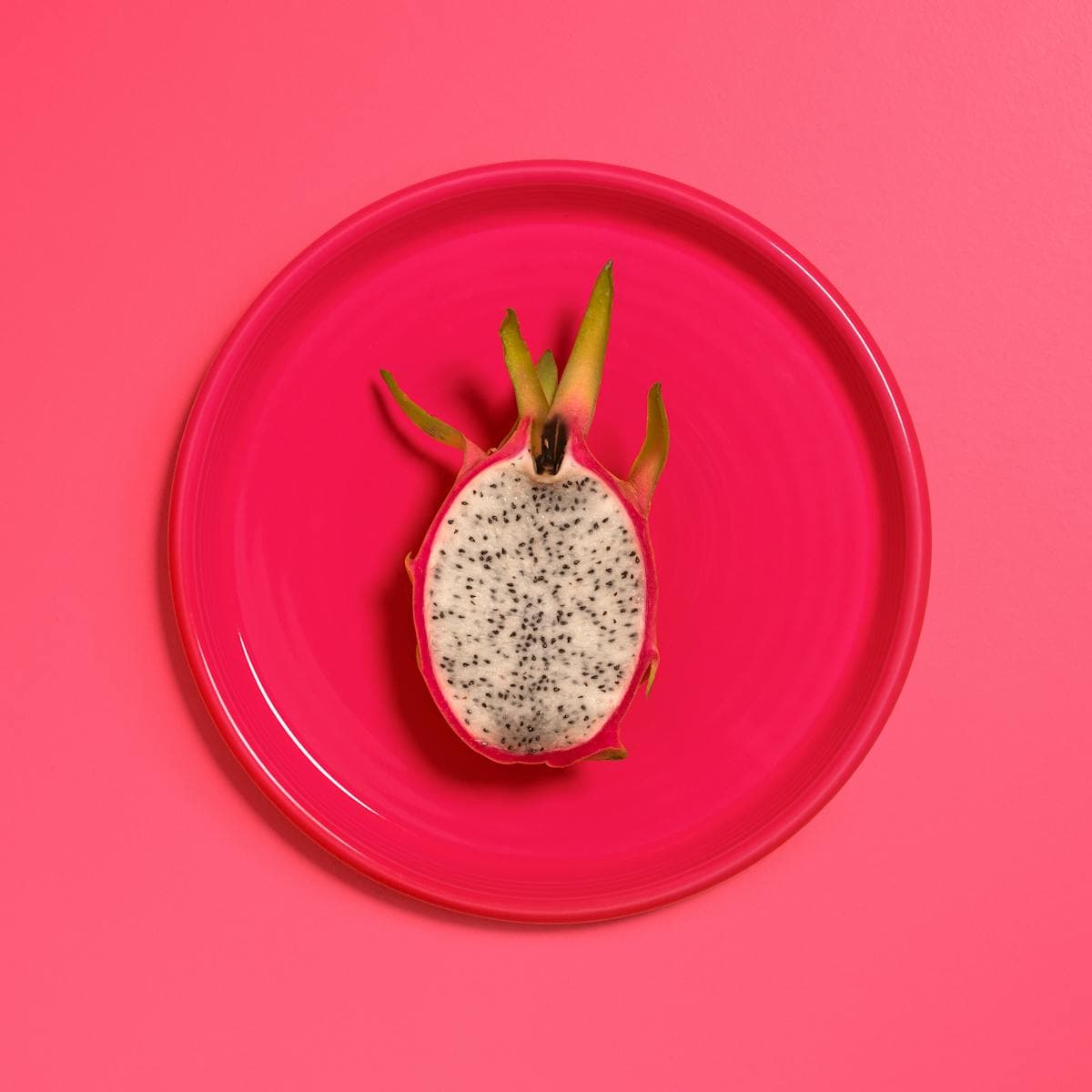
Season: year-round (peak: May–October) | Price: 10,000–25,000 VND (~$0.40–1/kg)
The most photogenic fruit in Vietnam. Pink scaly skin outside, white or red flesh dotted with tiny black seeds inside. The taste is mild, refreshing and not too sweet. The main growing area is Binh Thuan, the countryside around Phan Thiet and Mui Ne, where thousands of hectares are given over to it.
Passionfruit (chanh dây)

Season: year-round (peak: July–December) | Price: 35,000–50,000 VND (~$1.40–2/kg)
Tart, aromatic, with crunchy seeds. In Vietnam passionfruit goes into juices, smoothies and desserts more than it's eaten straight, usually with a little sugar or honey. Counterintuitively, wrinkled skin means ripe.
Jackfruit (mít)

Season: January–May | Price: 30,000–50,000 VND (~$1.20–2/kg)
The biggest tree-borne fruit in the world — usually 10–30 kg, with the odd giant reaching 50. The flesh is sweet and firm, with a bubblegum-and-banana aroma. Markets sell it pre-cut, so don't buy a whole one. A dull thud when you tap it means ripe.
Sapodilla (hồng xiêm)
Season: September–December | Price: 15,000–25,000 VND (~$0.60–1/kg)
Tastes like a persimmon with a pear or honey aroma. Good sapodilla has smooth flesh with no grit or fibres. Slightly soft skin with no cracks means ripe; firm means unripe and it'll be astringent.
Star apple (vú sữa)
Season: November–March | Price: 40,000–60,000 VND (~$1.60–2.40/kg)
The Vietnamese name vú sữa means "milk breast," for the milky white liquid that seeps out when you cut it. The flesh is creamy, jelly-like and gently sweet. A winter fruit — perfect if you visit from December to February. Cut it in half and scoop with a spoon; don't eat the skin.
Custard apple / soursop's cousin (mãng cầu)
Season: July–September | Price: 45,000–70,000 VND (~$1.80–2.80/kg)
A green bumpy skin hides the softest white flesh, tasting of vanilla cream. Fruit can reach 1.5 kg. Very fragile — it travels badly, so eat it on the spot. When the bumps on the skin start to darken, it's ripe.
Tamarind (me)

Season: January–March | Price: 30,000–50,000 VND (~$1.20–2/kg)
Pods with a sweet-sour, paste-like pulp. It's used in cooking (sauces, soups), eaten as a snack, and the candied version is a popular souvenir you can actually take home.
Star fruit (khế)

Season: year-round | Price: 15,000–25,000 VND (~$0.60–1/kg)
Sliced across, it's a five-pointed star. The flavour is refreshing and sweet-tart. Often used to garnish cocktails and desserts.
Guava (ổi)

Season: year-round | Price: 15,000–30,000 VND (~$0.60–1.20/kg)
Shaped like a green pear, with bright orange or pink flesh. The taste is a cross between pear and strawberry. Vietnamese people eat guava dipped in a salt-and-chilli mix — worth a go.
Rose apple (roi)
Season: April–June | Price: 15,000–25,000 VND (~$0.60–1/kg)
A crisp, watery, pear-shaped fruit. Mild flavour, faintly sweet. A great snack in the heat — it really quenches thirst.
Salak / snake fruit (mây Indo)
Season: June–December | Price: 50,000–80,000 VND (~$2–3.20/kg)
The skin looks like snakeskin, hence the name. The flesh is firm and crunchy with a sweet-tart flavour. Peel it carefully — the skin is prickly.
Buddha's hand (phật thủ)
Season: October–February | Price: 50,000–100,000 VND (~$2–4/kg)
A curious citrus shaped like a hand with long fingers. There's almost no flesh — it's used to scent rooms, tea and food. More decorative than edible, but a real showpiece.
Familiar fruits — cheaper than at home
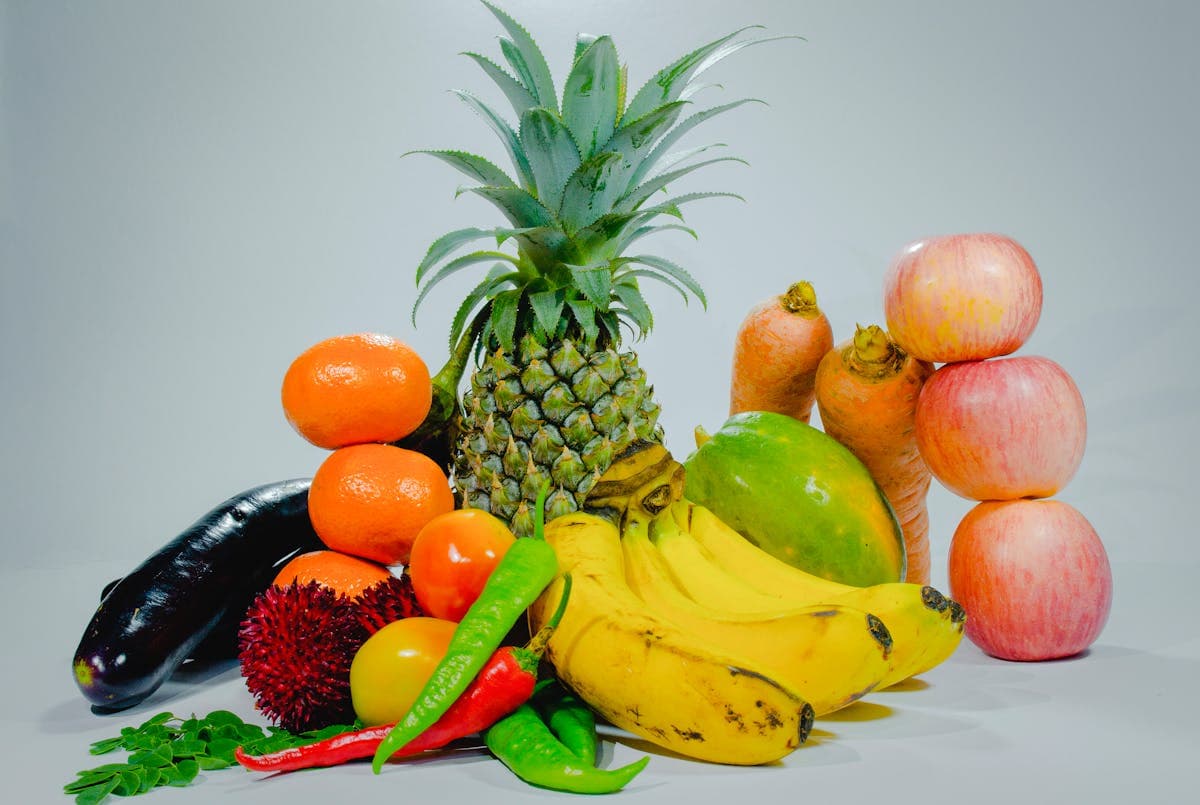
These fruits are ones everyone knows, but in Vietnam they cost three to five times less and taste noticeably better — they ripen on the tree, not in a shipping container.
| Fruit | Vietnamese name | Price (VND/kg) | Price (~USD) | Season |
|---|---|---|---|---|
| Pineapple | dứa / thơm | 13,000–25,000/each | ~$0.50–1/each | Year-round |
| Banana | chuối | 15,000–25,000 | ~$0.60–1 | Year-round |
| Watermelon | dưa hấu | 10,000–20,000 | ~$0.40–0.80 | Year-round |
| Coconut | dừa | 10,000–20,000/each | ~$0.40–0.80/each | Year-round |
| Pomelo | bưởi | 30,000–50,000/each | ~$1.20–2/each | Aug–Feb |
| Papaya | đu đủ | 15,000–25,000 | ~$0.60–1 | Year-round |
| Grapes | nho | 80,000–120,000 | ~$3.20–4.80 | Year-round (imported) |
| Mandarin | quýt | 25,000–40,000 | ~$1–1.60 | Oct–Mar |
Vietnamese bananas are small, sweet and fragrant. Papaya is orange and juicy, with the enzyme papain that aids digestion. Vendors often peel and slice a pineapple right in front of you — handy for eating on the move.
Fast Track — no queue at the border
5–10 minutes instead of an hour in the immigration queue
from$11per passenger
Fruit season, month by month
This chart shows what will be in season during your trip. In season, fruit is two to three times cheaper and noticeably better.
| Fruit | Jan | Feb | Mar | Apr | May | Jun | Jul | Aug | Sep | Oct | Nov | Dec |
|---|---|---|---|---|---|---|---|---|---|---|---|---|
| Mango | — | V | V | V | V | — | — | — | — | — | — | — |
| Durian | — | — | — | — | V | V | V | V | V | — | — | — |
| Mangosteen | — | — | — | — | V | V | V | — | — | — | — | — |
| Rambutan | — | — | — | — | V | V | V | V | V | V | — | — |
| Lychee | — | — | — | — | V | V | V | — | — | — | — | — |
| Longan | — | — | — | — | — | V | V | V | — | — | — | — |
| Jackfruit | V | V | V | V | V | — | — | — | — | — | — | — |
| Custard apple | — | — | — | — | — | — | V | V | V | — | — | — |
| Sapodilla | — | — | — | — | — | — | — | — | V | V | V | V |
| Star apple | V | V | V | — | — | — | — | — | — | — | V | V |
| Tamarind | V | V | V | — | — | — | — | — | — | — | — | — |
| Rose apple | — | — | — | V | V | V | — | — | — | — | — | — |
| Dragon fruit | * | * | * | * | V | V | V | V | V | V | * | * |
| Passionfruit | * | * | * | * | * | * | V | V | V | V | V | V |
| Pomelo | V | V | — | — | — | — | — | V | V | V | V | V |
| Mandarin | V | V | V | — | — | — | — | — | — | V | V | V |
V — peak season (best price and taste) | * — available year-round | blank — off-season
Fruit prices in Vietnam in 2026
Here's a summary of prices, in season and out. These are market prices. In supermarkets (BigC, Lotte Mart), add 30–50%.
| Fruit | In season (VND) | In season (~USD) | Off-season (VND) | Off-season (~USD) |
|---|---|---|---|---|
| Mango | 25,000–40,000 | ~$1–1.60 | 50,000–68,000 | ~$2–2.70 |
| Durian | 60,000–90,000 | ~$2.40–3.60 | 100,000–120,000 | ~$4–4.80 |
| Mangosteen | 30,000–40,000 | ~$1.20–1.60 | 60,000–80,000 | ~$2.40–3.20 |
| Rambutan | 20,000–30,000 | ~$0.80–1.20 | 35,000–40,000 | ~$1.40–1.60 |
| Lychee | 15,000–30,000 | ~$0.60–1.20 | 40,000–50,000 | ~$1.60–2 |
| Longan | 35,000–40,000 | ~$1.40–1.60 | 45,000–50,000 | ~$1.80–2 |
| Dragon fruit | 10,000–15,000 | ~$0.40–0.60 | 20,000–25,000 | ~$0.80–1 |
| Passionfruit | 35,000–40,000 | ~$1.40–1.60 | 45,000–50,000 | ~$1.80–2 |
| Jackfruit | 30,000–40,000 | ~$1.20–1.60 | 40,000–50,000 | ~$1.60–2 |
| Pineapple (each) | 13,000–15,000 | ~$0.50–0.60 | 20,000–25,000 | ~$0.80–1 |
| Coconut (each) | 10,000–15,000 | ~$0.40–0.60 | 15,000–20,000 | ~$0.60–0.80 |
Regional differences: on Phu Quoc fruit runs 20–30% pricier than in Nha Trang — it's an island, so logistics cost more. The lowest prices are at the wholesale markets of Ho Chi Minh City.
What travellers spend: around 50,000–100,000 VND a day (~$2–4) is plenty to stuff yourself with fruit.

Where to buy fruit in Vietnam
- Dong Xuan Market (Chợ Đồng Xuân): Hanoi — one of the capital's oldest markets
- Han Market (Chợ Hàn): Da Nang — central and compact
- Con Market (Chợ Cồn): Da Nang — a big market, lower prices
- Dam Market (Chợ Đầm): Nha Trang — central, near the waterfront
- Xom Moi Market (Chợ Xóm Mới): Nha Trang — a locals’ market, few tourists
- Ben Thanh (Chợ Bến Thành): Ho Chi Minh City — big selection, inflated prices
- Binh Tay (Chợ Bình Tây): Ho Chi Minh City, Cholon — wholesale, lowest prices
- Dinh Cau Night Market (Chợ Đêm Dinh Cậu): Phu Quoc — fruit, seafood and street food
- Duong Dong Day Market (Chợ Dương Đông): Phu Quoc — daytime, local produce
Markets — the best prices
The freshest, cheapest fruit is at markets. Go in the morning (before 8am) — better produce, more choice, and vendors more willing to deal.
Nha Trang:
- Xom Moi Market (Chợ Xóm Mới) — a locals’ market, prices below the tourist ones. Few tourists, honest prices
- Dam Market (Chợ Đầm) — central, near the waterfront. Higher prices, but convenient
Phu Quoc:
- Dinh Cau Night Market (Chợ Đêm Dinh Cậu) — fruit, seafood and street food, evenings and nights
- Duong Dong Day Market (Dương Đông) — vegetables, fruit and local produce
Ho Chi Minh City:
- Ben Thanh (Chợ Bến Thành) — touristy, big selection, but inflated prices
- Binh Tay (Chợ Bình Tây) — the wholesale market in Cholon. The lowest prices in the city
Da Nang:
- Han Market (Chợ Hàn) — central and compact
- Con Market (Chợ Cồn) — a big market, lower prices
Hanoi:
- Dong Xuan (Chợ Đồng Xuân) — one of the capital's oldest markets
Supermarkets
BigC, Lotte Mart, WinMart, Co.op Mart — fruit washed, packed and fixed-price. Around 30–50% more than a market, but easy if you'd rather not haggle. Most take cards, unlike market stalls, which are cash only.
Street carts
Mobile carts with pre-cut fruit — great for a snack on the go. Pineapple, watermelon and mango come already peeled. Prices are roughly market level.
Buying tips
- Bargain. A 10–30% discount is normal at markets. Point at the price and say "too expensive" (đắt quá) with a smile
- Mornings are best. Fresher, cheaper, more choice
- Tell the vendor what it's for: "to eat now" gets you ripe ones, "for the plane" gets you firmer ones
- Watch the weighing — at tourist markets the scales sometimes "err" in the vendor's favour
Taking fruit home from Vietnam
What you can and can't carry
What travels well
| Fruit | Travels | Note |
|---|---|---|
| Mango (green) | Excellent | Ripens in 2–3 days |
| Dragon fruit | Excellent | Tough skin protects it |
| Passionfruit | Good | Don't crush |
| Rambutan | Good | Keeps 2–3 days |
| Mangosteen | So-so | Spoils quickly |
| Lychee | Poor | 1–2 days max |
| Custard apple | Poor | Very fragile, eat on the spot |
How to pack it
- Buy slightly underripe fruit — tell the vendor "for the plane" (đem lên máy bay)
- Wrap each fruit in paper or newspaper
- Buy a plastic basket at the market (20,000–50,000 VND). Fragile fruit (mangosteen, rambutan) goes in a rigid container only
- Don't stack heavy fruit on top of soft fruit
Good to know — a few warnings
Go easy the first time. Try exotic fruit in small amounts at first. Even if you have no allergies at home, your reaction to tropical fruit can be unpredictable.
Wash your fruit. Even if you peel it, bacteria on the surface transfer to the flesh when you cut. Market fruit isn't sold washed, so give it a rinse — bottled water if the tap water worries you.
FAQ
Vietnam grows more than 40 kinds of tropical fruit, thanks to its hot, humid climate and varied regions. Among the traveller favourites: mango (sweet, fragrant), durian (the pungent "king of fruits"), mangosteen (soft tangy-sweet flesh), rambutan (juicy, like a lychee), dragon fruit (pink or white), passionfruit, jackfruit (the largest tree-borne fruit in the world), lychee, longan, papaya, guava and coconut.
Most are around all year, but some are strongly seasonal — mangosteen and durian are best from May to August, lychee from May to July. See the month chart above for the full picture.
The top five to start with
- Mangofrom 30,000 VND/kgsoft and sweet
- Mangosteentangy-sweetand cooling in the heat
- Rambutanfrom 20,000 VND/kgjuicy, cheap and easy to peel
- Dragon fruitphotogeniclight and a great traveller
- Passionfruitaromaticideal in shakes and smoothies
If the strong smell doesn’t put you off, you have to try durian. It’s a food experience that splits people into fans and haters. Buy it pre-opened at the market and let the vendor pick a ripe one. For more of Vietnam’s food, see our guide to Vietnamese cuisine and our roundup of street food
Usually yes in small amounts, but it depends on your destination — many countries restrict or ban fresh fruit at customs, so check your home country’s rules before you fly. Delicate fruit travels better in hand luggage — it bruises in the hold, while Vietnam Airlines suggests checking in smelly fruit. A rigid plastic basket (20,000–50,000 VND at the market) is the best container
Vietnam Airlines accepts durian up to 5 kg, sealed in plastic, except on ATR72 flights. Best travellers: green mango, dragon fruit and passionfruit. For more on what to take home, see our food guide
Tricky. Because of the smell not every airline takes durian. Vietnam Airlines accepts up to 5 kg sealed in plastic, but not on ATR72 flights. Other carriers set their own rules, so check before you buy, or just skip it.
Enjoy durian on the spot: at markets in Nha Trang, the Phu Quoc night market, or a café. Try the durian ice cream, chips and candy — those you can carry home.
From December to February you get seasonal winter fruit
- Star applecreamy, lightly sweet
- Sapodillacaramel flavour
- Pomelotangy-sweet, large
- Mandarins
- Tamarindtartfor sauces and candy
Year-round fruit — bananas, dragon fruit, guava, coconut, papaya, pineapple, watermelon — is always around. The choice is a touch narrower than summer, but you won’t go hungry. Winter in Vietnam also means seafood, pho and street food
The lowest prices are at local markets, where the Vietnamese shop. Go before 8am — fresher produce, more choice, and vendors keener to deal. Ask for a discount without hesitation — 10–30% off the opening price is realistic.
Best markets by city: in Nha Trang it's Xom Moi (Chợ Xóm Mới), a locals’ market with prices below the tourist ones; in Ho Chi Minh City the wholesale Binh Tay (Chợ Bình Tây) in Cholon; in Da Nang Con Market (Chợ Cồn); on Phu Quoc the Duong Dong day market. Supermarkets (BigC, Lotte Mart, WinMart) are handier but 30–50% dearer.
Read also: Vietnamese cuisine: 20 dishes · Vietnamese street food · Nha Trang: the full guide
- Food
Ho Chi Minh City Food 2026: What & Where to Eat
Saigon food guide: pho, banh mi, com tam, street food and the best restaurants by district — the local dishes to try and where, with prices.Ho Chi Minh City Food 2026: What & Where to Eat - Food
Pho Bo: Vietnam's Beef Noodle Soup Explained
Pho bo, Vietnam's beef noodle soup: the history, north vs south styles, how to eat it, what to order and where to find the best bowl.Pho Bo: Vietnam's Beef Noodle Soup Explained - Food
Phan Thiet Food: Seafood, Banh Can & Fish Sauce
What to eat in Phan Thiet and Mui Ne: fresh seafood on Bo Ke, banh can, the home of fish sauce and local dishes — where to eat and what it costs.Phan Thiet Food: Seafood, Banh Can & Fish Sauce