Getting around Vietnam in 2026: the complete transport guide
45 million motorbikes for 92 million people, a first metro line, sleeper buses with flat beds, and motorbike taxis from about $0.60. Everything a traveller needs on how to get around Vietnam — and what to pick between cities.
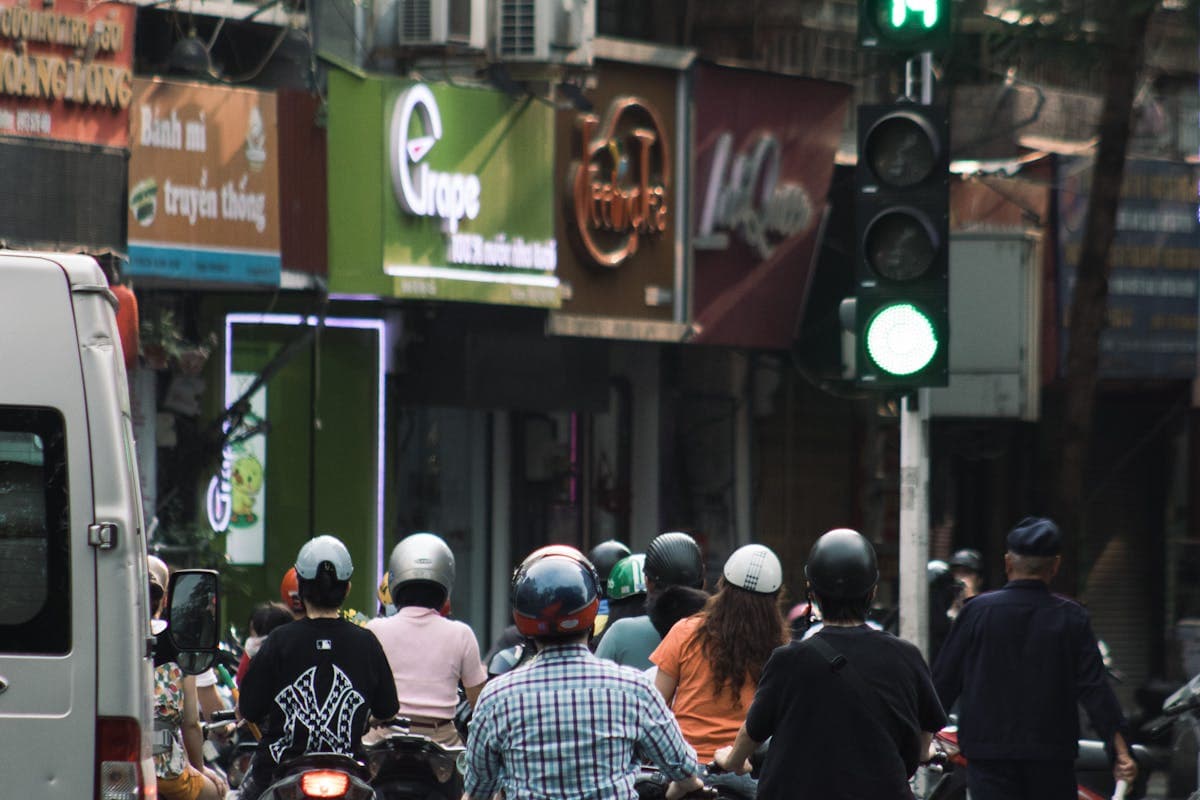
How do you get around Vietnam? In town you use a ride app — Grab or Xanh SM, with motorbike-taxi rides from about $0.60. Between cities you fly for long hops and take the train or a sleeper bus for shorter, scenic ones. The one catch for foreigners: since 2025 the fines for riding a bike without a licence run up to ~$320, so sort out an International Driving Permit before you go.
Vietnam transport: price, speed, comfort
| Transport | Price | Speed | Comfort | When to use it |
|---|---|---|---|---|
| GrabBike (motorbike taxi) | from ~$0.60 | Fast | Medium | Short city hops |
| GrabCar (car taxi) | from ~$2 | Fast | High | Luggage, family, rain |
| City bus | $0.20–0.40 | Slow | Low | Budget, if you know the route |
| Motorbike rental | from ~$4/day | Fast | High | Freedom, self-guided trips |
| Sleeper bus (overnight) | $8–20 | Medium | Medium | Between cities, save on a hotel night |
| Train | from ~$4 | Slow | High | Scenic routes, comfort |
| Domestic flight | from ~$25 | Fast | High | Long distances |
| Ferry / speedboat | from ~$8 | Medium | Medium | Islands (Phu Quoc, Con Dao) |
A quick note on prices: everything below is in Vietnamese dong (VND) with a rough dollar conversion at ~26,000 VND = $1 (the rate in July 2026). Rates drift, so treat the ~$ figures as ballpark.
Currency converter
Taxis and ride-hailing apps
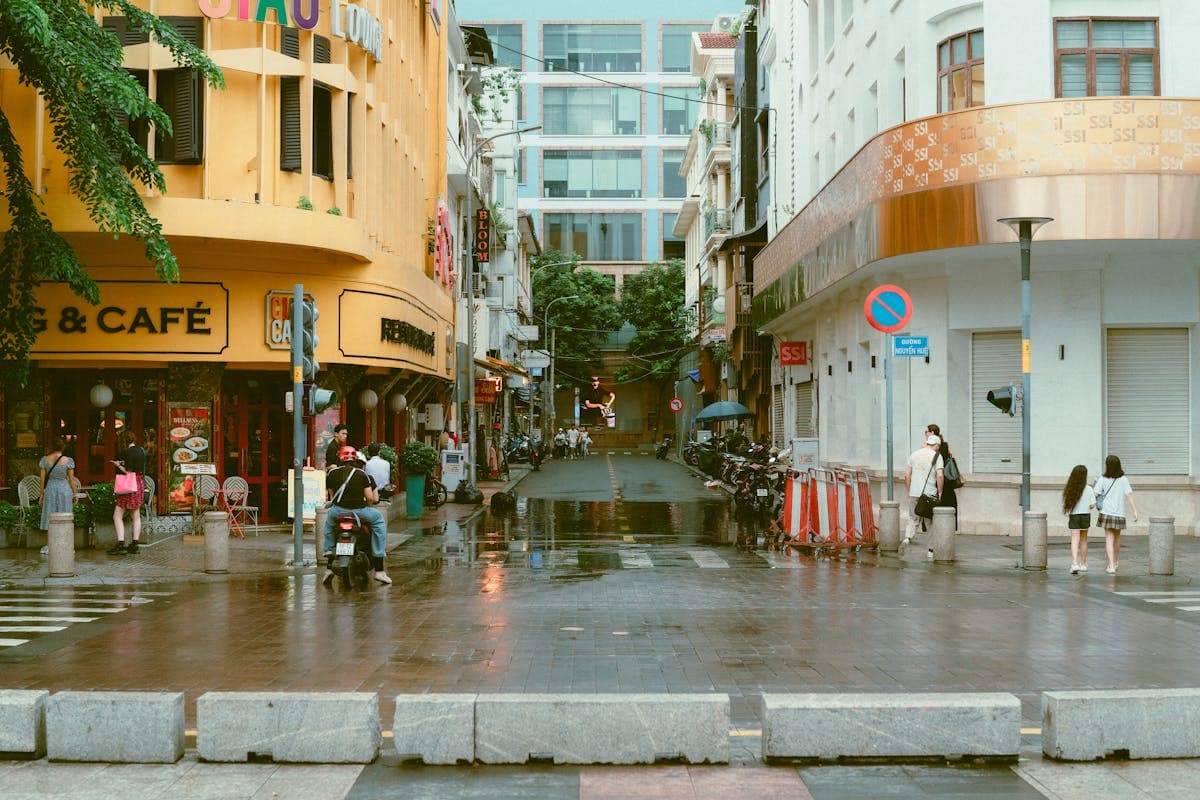
For anyone who has just landed, a taxi is the simplest way to move. No bus routes to decode, no station to find, no bike to rent. Open an app, book a car, go. But there are a few apps, and the differences matter.
Grab — the one app to install
Grab is the Uber of Southeast Asia: after Uber pulled out of the region in 2018, Grab took over. In Vietnam it works in cities and resorts, Phu Quoc included. On Con Dao the app shows no cars. It is not the market leader any more — the electric fleet Xanh SM overtook it by mid-2025, with about 45% of the taxi market against Grab's 36% (VnExpress, 2026) — but for a first-timer it is still the easiest app to use: you only need data, not a local number, and the in-app chat auto-translates. If you install one transport app before your trip, make it this one.
How it works:
- Download the app (App Store / Google Play).
- Register with a phone number (you need a Vietnamese SIM or an eSIM with data).
- Set your destination on the map.
- See a fixed fare before you book.
- The driver arrives in 3–7 minutes.
Grab services:
- GrabBike — motorbike taxi, the cheapest option. The driver hands you a helmet and you ride pillion.
- GrabCar Economy — a regular car (usually a Toyota Vios or Hyundai i10).
- GrabCar 7-seater — a minivan for a group or lots of luggage.
- GrabTaxi — hail a standard metered taxi through the app (meter, not a fixed fare).
Grab prices (2026)
| Trip | GrabBike | GrabCar |
|---|---|---|
| Short (3–5 km) | 15,000–25,000 VND (~$0.60–1) | 50,000–70,000 VND (~$2–2.80) |
| Medium (10 km) | 30,000–45,000 VND (~$1.20–1.80) | 80,000–120,000 VND (~$3.20–4.80) |
| Cam Ranh → Nha Trang (40 km) | — | 300,000–400,000 VND (~$12–16) |
Paying: you can link an international Visa or Mastercard, but many travellers keep it simple and pay cash in VND — just select Cash in the payment settings. Carry small notes; drivers rarely have change for a 500,000 VND bill.
We used Grab constantly in Hanoi — drivers show up right at your GPS pin, the fare is fixed before you go, and it worked out cheaper and easier than the airport taxi desk. — traveller reviews, Tripadvisor, 2025
Grab alternatives: Be, Xanh SM, InDrive
Be (Be Group) is the home-grown Vietnamese rival to Grab. Fewer drivers, but reliable in the big cities and sometimes a touch cheaper.
Xanh SM is the all-electric taxi fleet from VinFast (Vingroup) — silent, clean cars, and now the biggest ride-hailing app in the country by market share. On comparable routes in Hanoi and Ho Chi Minh City it often comes in cheaper than Grab, so it is worth having as a backup when Grab surges in rain or peak hour. The app has an English interface and card payment works well.
InDrive lets you name your own price and the driver accepts or counters. Handy in Ho Chi Minh City and Hanoi when surge pricing hits the other apps.
Traditional and motorbike taxis
If the apps fail (no data, dead phone), look for Vinasun cars (white with a green stripe, common in the south) or Mai Linh (green, nationwide). These two run honest meters.
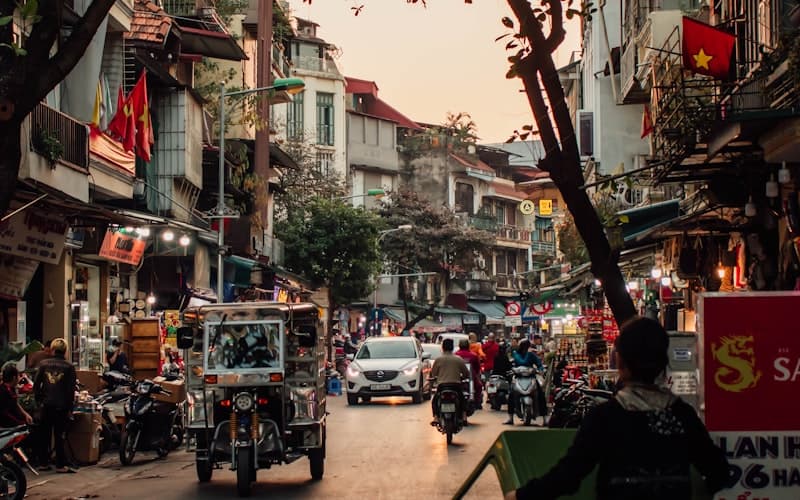
Xe ôm (motorbike taxi) — riders waiting on street corners. From 10,000 VND for a short hop, but agree the price first, because there is no meter.




Renting a motorbike or scooter
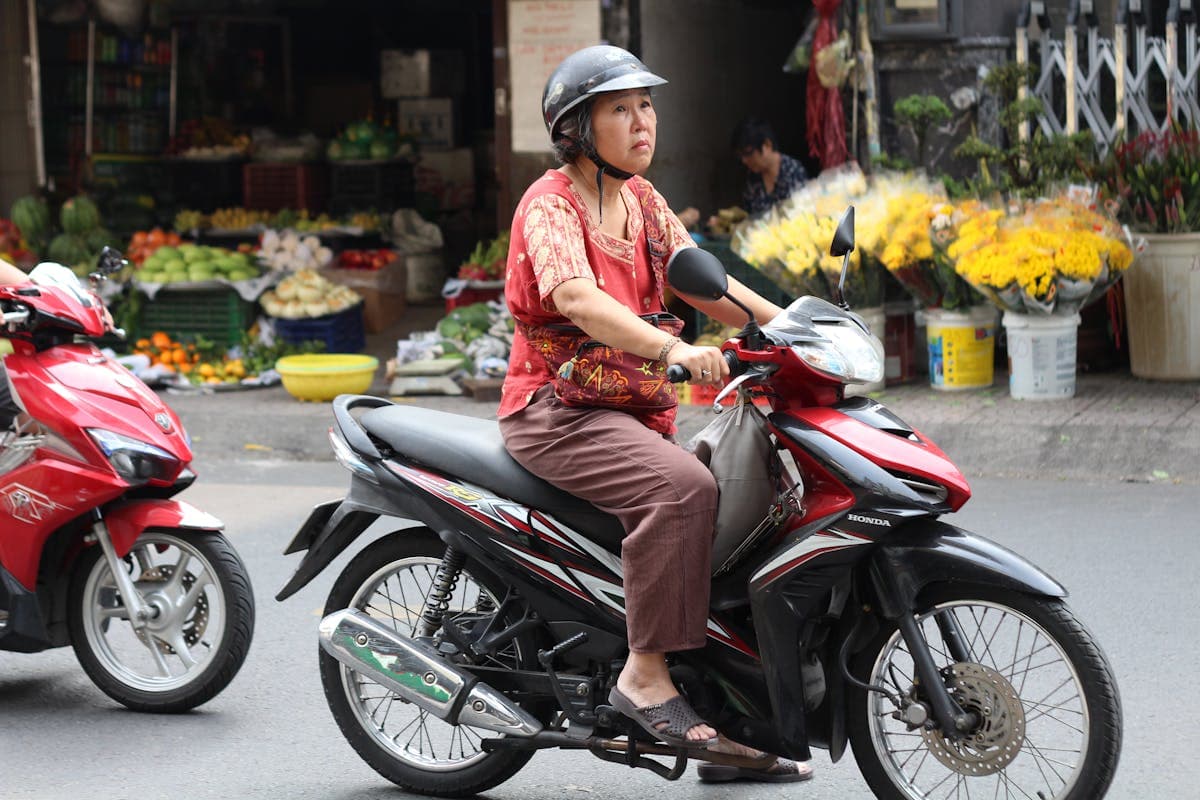
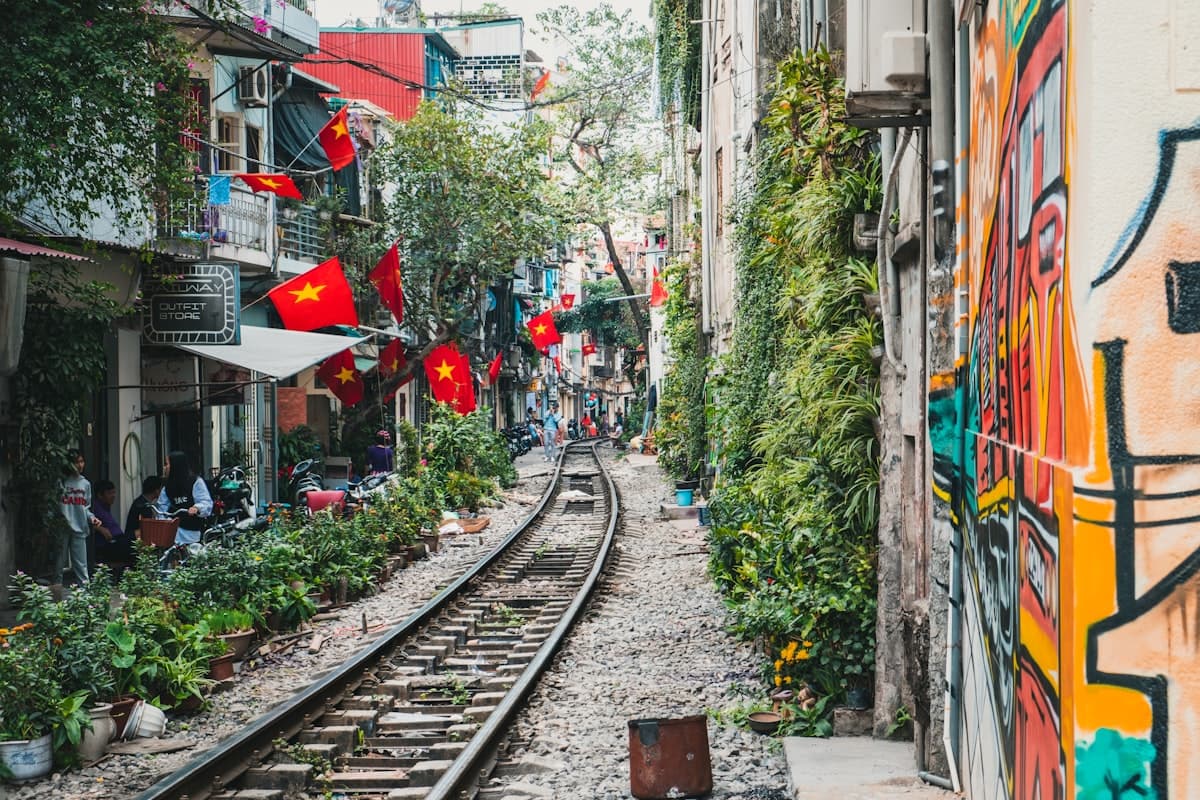
A bike is freedom: circle a headland, reach a village no bus goes to, stop at a cafe over the rice paddies. But for a foreigner it is also a responsibility — since 2025 riding without a licence is fined under a new, tougher decree.
Motorbike and scooter rental prices
| Bike type | Per day | Per month |
|---|---|---|
| Semi-auto (Honda Wave, Dream) | 100,000–150,000 VND (~$4–6) | 1,500,000–2,500,000 VND (~$60–100) |
| Automatic (Air Blade, Lead) | 150,000–200,000 VND (~$6–8) | 2,500,000–3,500,000 VND (~$100–140) |
| Petrol (1 litre) | ~25,000 VND (~$1) | — |
A scooter tank holds 4–5 litres, so filling up costs 100,000–125,000 VND (~$4–5) and covers 150–200 km.
Do you need a licence for a bike in Vietnam?
- Up to 50 cc (moped) — you can ride from 16 without a licence, as long as its top speed is 50 km/h or less.
- Over 50 and up to 125 cc (most scooters) — you need an A1 category on your IDP.
- Over 125 cc — you need category A: that is the rule since January 1, 2025 under Law 36/2024 on Road Traffic Order and Safety.
An International Driving Permit (IDP) is a translation of your home licence, issued in your own country (usually through your national automobile association) before you travel. Carry both documents — the IDP and your original national licence — because the IDP is only valid alongside it. Check which convention your IDP follows: Vietnam recognises the 1968 Vienna Convention IDP together with your national licence, while a 1949 Geneva Convention IDP (the kind issued in the US) is not valid here. Which permit works for your country and how residents convert to a Vietnamese licence is in our Vietnam driving licence guide.
Fines and safety
Since 1 January 2025 Vietnam has enforced decree 168/2024/NĐ-CP. The fines have risen sharply.
Fast Track — no queue at the border
5–10 minutes instead of an hour in the immigration queue
from$11per passenger
Renting a car
Car rental in Vietnam works differently from Europe. The default is a car with a driver. Self-drive exists, but Vietnamese traffic is no place for an unprepared driver.
With a driver (the usual way)
Self-drive (limited)
Self-drive rentals are available through international platforms and the Vietnamese service VinRent (VinFast EVs), from about $18–40/day. You need an IDP, to be 21+, and a credit card (Visa/Mastercard) for the deposit.
Intercity buses and sleeper buses
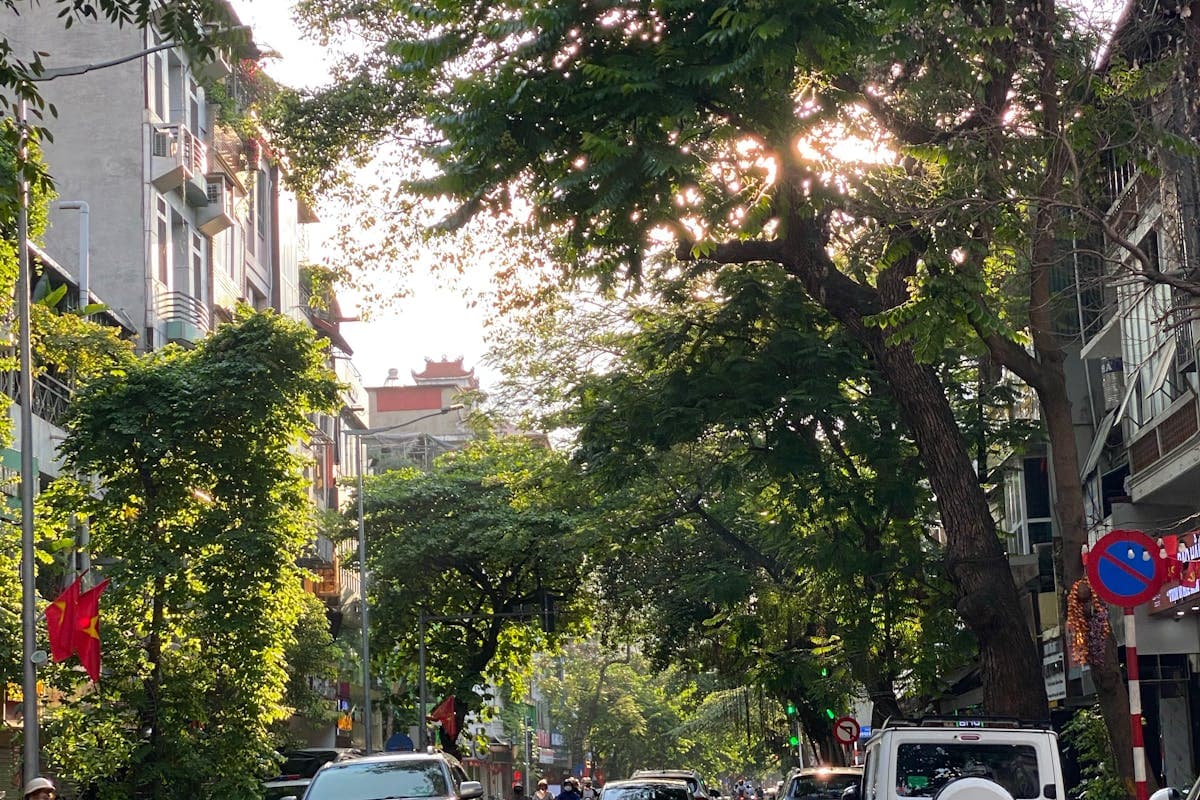
The sleeper bus (sleeping bus) is a signature Vietnamese format. Instead of seats, you get flat berths on two levels in three rows. You lie down, pull up a blanket, fall asleep — and wake up in Nha Trang eight hours later. Double saving: on transport and on a hotel night.
A VIP sleeper — two rows of beds, curtains, more space. It costs 30–50% more, but if you're over 180 cm it's worth it. — twopeasabroad.com, 2025
Major operators
| Company | Routes | Notes |
|---|---|---|
| Futa Bus (Phương Trang) | Nationwide | Biggest network, newer buses, Wi-Fi |
| The Sinh Tourist | HCMC ↔ Hanoi | Traveller favourite, online booking |
| Hanh Cafe | Nha Trang–Mui Ne–HCMC | Well-established brand |
| Hoàng Long | Hanoi ↔ HCMC | Large air-conditioned coaches |
Bus routes, times and fares
| Route | Time | Price |
|---|---|---|
| HCMC → Nha Trang | 8–10 h | 200,000–350,000 VND (~$8–14) |
| Nha Trang → Da Lat | 3–4 h | 120,000–180,000 VND (~$4.80–7.20) |
| Hanoi → Sapa | 5–6 h | 200,000–350,000 VND (~$8–14) |
| Hanoi → HCMC | ~30 h | 450,000–800,000 VND (~$18–32) |
Trains and railways
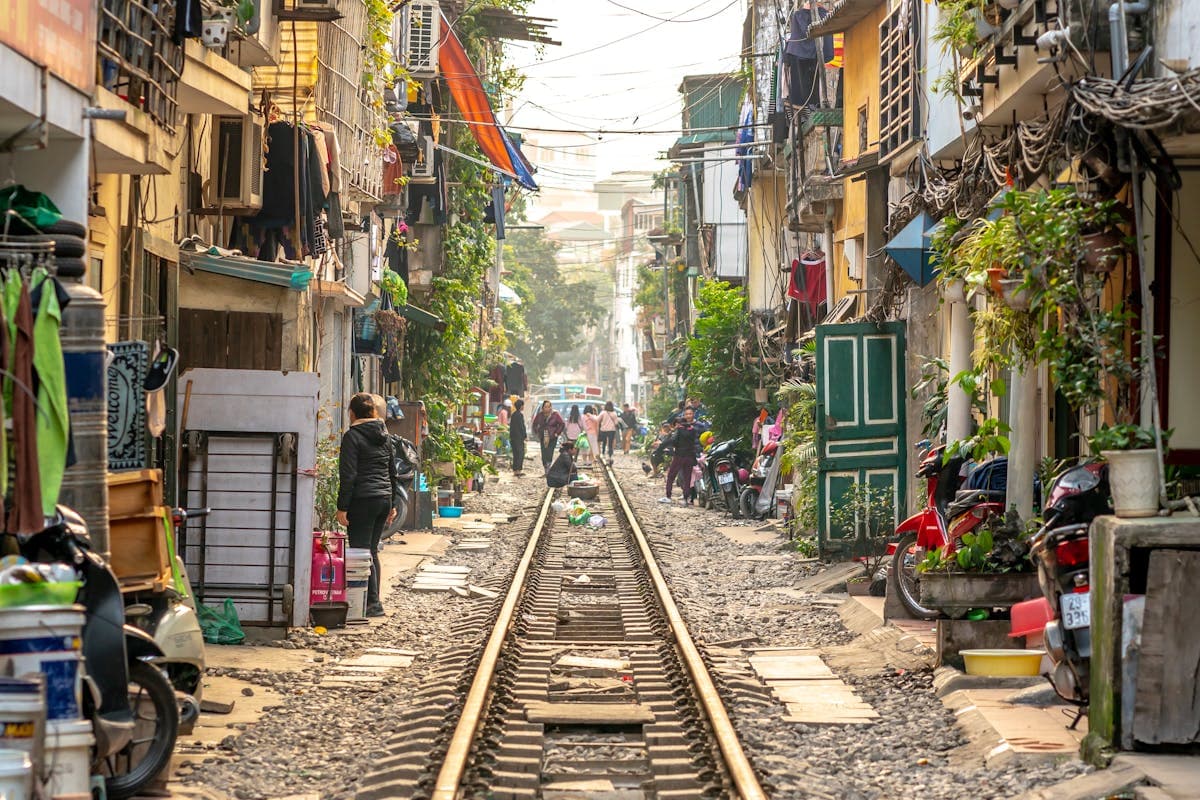
Vietnam Railways is 2,600 km of track hugging the coast, from the Chinese border through Hanoi to Ho Chi Minh City. The train is not the fastest way to travel, but it is the most atmospheric — especially the Da Nang to Hue leg over the Hải Vân Pass.
Reunification Express
The headline route is Hanoi ↔ Ho Chi Minh City (1,726 km, about 32–37 hours). It runs the entire coast: Hue, Da Nang, Nha Trang, Phan Thiet. Five or six SE train pairs run daily (the faster, air-conditioned services).
Carriage classes and prices (Hanoi → HCMC)
| Class | Description | Price |
|---|---|---|
| Hard seat | Hard seat, no air-con | ~600,000 VND (~$24) |
| Soft seat (A/C) | Cushioned seat, air-con | ~850,000 VND (~$34) |
| Hard berth (A/C) | 6-berth compartment, firm bunks | ~1,100,000 VND (~$44) |
| Soft berth (A/C) | 4-berth compartment, soft bunks | ~1,500,000–2,200,000 VND (~$58–85) depending on train and berth |
The most beautiful routes
Da Nang → Hue (2.5–3 h, from 100,000 VND / ~$4) — the stretch over the Hải Vân Pass, one of the world's great railway rides. Mountains, tunnels and a panoramic run along the coast.
Hanoi → Lào Cai/Sapa (8 h, overnight, from 500,000 VND / ~$20) — fall asleep on the plains around Hanoi, wake at 1,500 m among the rice terraces. Luxury cabins — Violette Express, Sapaly, Chapa Express — run from about $40–70.
Getting between cities: what to choose
Vietnam stretches 1,700 km north to south. The right choice depends on distance, budget and time.
| Route | Plane | Train | Bus |
|---|---|---|---|
| HCMC → Hanoi | 2 h, from $29 | 32–37 h, from ~$24 | ~30 h, from ~$18 |
| HCMC → Nha Trang | 1 h 10 min, from $29 | 7–9 h, from ~$16 | 8–10 h, from ~$8 |
| HCMC → Da Lat | 50 min, from ~$20 | none | 6–7 h, from ~$7 |
| Hanoi → Sapa | none | 8 h (overnight), from ~$20 | 5–6 h, from ~$8 |
| HCMC → Phu Quoc | 1 h, from $25 | none | none (ferry) |
Domestic flights

For anything over 800 km, flying is the best call. HCMC → Hanoi is two hours instead of 32 on the train. Domestic flights are cheap, frequent and easy to book.
| Airline | Type | Baggage |
|---|---|---|
| Vietnam Airlines | Full-service | 23 kg (check your fare includes it) |
| VietJet Air | Low-cost | Extra (from $5) |
| Bamboo Airways | Mid-range | Included |
Getting around town

Within a city you have four options: taxi (Grab), bus, metro (in HCMC and Hanoi) and bike. It depends on the city — Hanoi and HCMC have proper bus networks, while Nha Trang and Phu Quoc barely have any.
City buses
| City | Routes | Fare | Hours |
|---|---|---|---|
| Hanoi | 100+ | 5,000–10,000 VND (~$0.20–0.40) | 5:00–21:00 |
| HCMC | ~160 | 5,000–15,000 VND (~$0.20–0.60) | 5:00–20:00 |
| Da Nang | ~15 | 5,000–8,000 VND (~$0.20–0.32) | 5:30–18:00 |
For navigation, download BusMap — it shows routes, stops and arrival times, with an English option.
Metro
HCMC — Line 1 (opened 22 December 2024): route Bến Thành → Suối Tiên. 19.7 km, 14 stations. Runs 5:00–22:00. A single ride is 7,000–20,000 VND (~$0.28–0.80); a monthly pass is 300,000 VND (~$12).
Hanoi — Line 2A (opened November 2021): route Cát Linh → Hà Đông. 13.1 km. A single ride is 9,000–19,000 VND (~$0.36–0.76); a monthly pass is 280,000 VND (~$11).
Hanoi — Line 3 (first section opened in 2024): the elevated stretch Nhổn → Cầu Giấy already carries passengers through the university district, and the underground section to Hà Nội station is still being built. Fares work the same way — from 8,000 VND by distance. Hanoi plans several more lines by 2030, so check the current map before you go.
Transport guides by city
Routes, fares and airport transfers for each city: Hanoi · Ho Chi Minh City · Da Nang · Hue · Nha Trang · Da Lat · Phu Quoc · Con Dao
Cyclos and the exotic
Xích lô (cyclo) — a three-wheeled bicycle with the passenger seat up front. They work the old quarters of Hanoi and HCMC. From 50,000 VND (~$2) for 15–20 minutes. Always agree the price before you sit down, or you'll be quoted three to five times more.
Ferries and boats
Ferries and speedboats are the main way to reach the islands: Phu Quoc, Con Dao and the Nam Du archipelago.
| Route | Company | Time | Price |
|---|---|---|---|
| Rạch Giá → Phu Quoc | Superdong | 2.5 h | 250,000–450,000 VND (~$10–18) |
| Hà Tiên → Phu Quoc | Superdong, Ngọc Thành | 1–1.5 h | 200,000–350,000 VND (~$8–14) |
| HCMC → Vung Tau | Greenlines DP | 2 h | 320,000–350,000 VND (~$12.30–13.50) |
Airport transfers
Don't take up the offers in the arrivals hall: taxi touts and "helpers" inflate prices two to three times over. Walk outside, open Grab, or find the bus stop.
Cam Ranh (CXR) → Nha Trang
| Option | Price | Time |
|---|---|---|
| Shuttle bus | 65,000 VND (~$2.60) | 50–60 min |
| Grab | 300,000–400,000 VND (~$12–16) | 40–50 min |
| Private taxi | 500,000–700,000 VND (~$20–28) | 40 min |
Tân Sơn Nhất (SGN) → central HCMC
- Bus 109 — 20,000 VND (~$0.80), 45–60 min
- Grab — 80,000–150,000 VND (~$3.20–6), 20–40 min
Nội Bài (HAN) → central Hanoi
- Bus 86 — 45,000 VND (~$1.80), 45–60 min
- Grab — 200,000–350,000 VND (~$8–14), 30–50 min
Phu Quoc (PQC) → hotels
On Phu Quoc there are VinBus electric buses (routes 17 and 19): airport → Dương Đông → Grand World. In the daytime route 17 runs every 15–30 minutes, air-conditioned. Check the fare with the driver.
Useful transport apps
| App | For | Note |
|---|---|---|
| Grab | Taxis, motorbike taxis, delivery | The main app |
| Xanh SM | Electric taxis | English interface, card payment |
| Google Maps | Navigation, routes | Works better than Apple Maps here |
| BusMap | City buses | Hanoi, HCMC, Da Nang |
| 12go.asia | Bus, train and ferry tickets | English interface |
Common mistakes
- Taking a taxi at the airport exit — two to three times the price. Book a Grab or head to the bus stop.
- Leaving your passport as a bike deposit — hand over a copy or cash instead.
- Riding without an IDP — a fine up to ~$320, an impounded bike, and no insurance cover for hospital bills after a crash.
- Buying tickets from street middlemen — markups up to 200%. Use 12go.asia or the official ticket office.
- Ignoring BusMap — city buses in Hanoi and HCMC genuinely work and cost $0.20–0.60.
- Not haggling with a cyclo — settle the price before you go, or you'll be charged five times more.
FAQ
Grab is the easiest to install before you land — think of it as the Uber of Southeast Asia. It works in every major city, shows a fixed fare before you book, and you can pay cash. For a longer stay, add Xanh SM (the electric fleet that overtook Grab by mid-2025) — it is often cheaper. You only need data, not a local number, so set up an eSIM or buy a local SIM in arrivals.
Yes — and without one you risk a fine and a voided insurance claim after a crash. The plan:
- Get an International Driving Permit (IDP) with a motorcycle category in your home country before you travel
- Carry both documents: the IDP and your national licence
- Check the engine size at rental — most scooters are 110–125 cc, which needs an A1 category
It depends on type and time of day. GrabBike is half the price of GrabCar but only suits trips without luggage. In rush hour (7–9 am, 5–7 pm) Grab prices rise 30–50%, so build in a buffer or leave earlier. For airport runs, booking a GrabCar in the app beats the taxi desk — a 30–40% saving.
For the scenery, yes. Vietnam Railways runs the length of the coast, and the most beautiful stretch is Da Nang → Hue over the Hải Vân Pass (about 3 hours, from ~$4). Book on dsvn.vn or via baolau.com, which has an English interface.
Almost — cities and resorts, Phu Quoc included. On Con Dao the app shows no cars. Three situations where Grab falls short: 1) no internet — buy a SIM in arrivals before you leave the hall; 2) remote villages and mountain roads have few drivers, with 20–30 minute waits; 3) in heavy rain drivers mass-cancel. For those cases, remember two reliable firms: Vinasun (white with a green stripe) and Mai Linh (green) — both run honest meters.
The fine is the least of it. The real consequences: 1) your bike can be impounded — if you fly out soon, your deposit is at risk; 2) a standard travel policy won't cover a crash without a licence, so hospital bills come out of your pocket; 3) since 2025 police run checks near beaches and tourist zones.
Useful phrases for getting around
| Phrase | Vietnamese | Sounds like |
|---|---|---|
| How much? | Bao nhiêu tiền? | bao nyew tyen? |
| Stop here | Dừng ở đây | zung uh day |
| Let's go | Đi thôi | dee thoy |
| Too expensive! | Đắt quá! | dat kwa! |
| I need a helmet | Tôi cần mũ bảo hiểm | toy kun moo bao hyem |
- Guide
Reunification Day in Vietnam: April 30 Travel Guide
What April 30 means in Vietnam — parades, fireworks, what's closed during the Apr 30 – May 1 block, prices in VND and USD, and whether to plan around it.Reunification Day in Vietnam: April 30 Travel Guide - Guide
Nha Trang Photo Spots: Where to Get the Best Shots
The best photo spots in Nha Trang: beaches, Cham towers, viewpoints and markets — what to shoot, when to go and a one-day photo route.Nha Trang Photo Spots: Where to Get the Best Shots - Guide
Ha Long Bay Cruises: How to Choose & What They Cost
Ha Long Bay cruises: 1, 2 and 3-day trips, boat classes, what's included, Bai Tu Long and Lan Ha — how to choose and book, with 2026 prices.Ha Long Bay Cruises: How to Choose & What They Cost