
Driving in Vietnam: road rules, the zero alcohol limit and Decree 168 fines for foreigners
Riding in Vietnam means a zero alcohol limit, an amber light fined like a red, Decree 168 fines that jumped in 2025, and a possible impound for riding without a valid licence. This is the law side of two wheels in Vietnam: road rules, fines, police stops and what happens after a crash. Which licence is valid has its own guide; for what a bike costs and how to rent one, see our motorbike rental guide.

A motorbike in Vietnam is freedom: reach a hidden beach, slip past a jam, ride the pass up to Da Lat. That freedom has a legal catch, though: fines rose sharply in 2025, and riding without a valid licence now means a fine and a possible impound.
This guide covers the law side of two wheels: the road rules that differ from home, the zero alcohol limit, the Decree 168 fines table, police stops and who carries the blame in a crash. What a bike costs, how to inspect one and what to leave as a deposit lives in the motorbike rental guide, and which licence is valid for your country in the driving licence guide.
Information current as of July 2026. Fines are set in Vietnamese dong; USD figures use ~26,000 VND to $1.
How Vietnamese traffic actually works
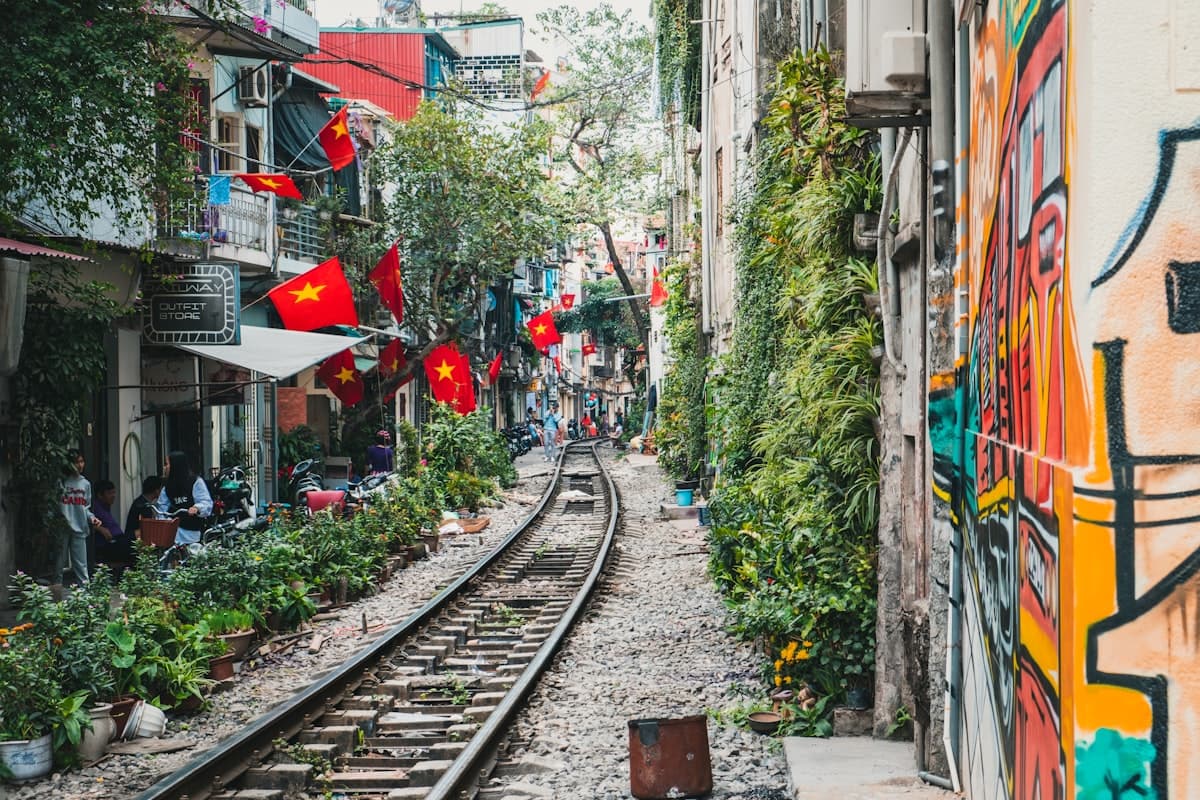
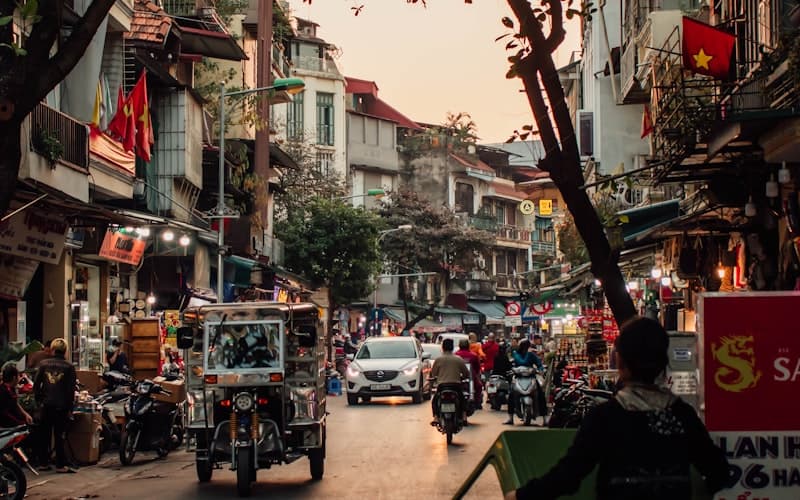
Vietnam drives on the right, like most of Europe and the US. Handlebars on the left, overtake on the left. That is roughly where the familiarity ends, and the flow feels less like a rulebook and more like a fast-moving negotiation.
Speed limits
| Road type | Motorbike limit |
|---|---|
| Built-up area, divided road or one-way road with two+ lanes | 60 km/h |
| Built-up area, undivided two-way road or single-lane one-way road | 50 km/h |
| Outside built-up areas, divided road or one-way road with two+ lanes | 70 km/h |
| Outside built-up areas, undivided two-way road or single-lane one-way road | 60 km/h |
| Moped (xe gắn máy), any road | 40 km/h |
| Expressways | Motorbikes banned outright |
Limits follow Circular 38/2024/TT-BGTVT (in force since 1 January 2025); the expressway ban is in the Road Traffic Law 36/2024, Article 25.
In practice, city traffic moves at 30–50 km/h and rural roads see bikes cruising at 50–70 km/h. Speed cameras are appearing but still rare — most fines are written by traffic police on the spot.
Lights and signs
Traffic lights work as you would expect: red stops, green goes. There is no right-on-red exception: a red light means no entry (Road Traffic Law 36/2024, Article 11), so wait for green even when turning right.
Most lights have a countdown timer, so you can see how many seconds are left before the change. Handy once you get used to it.
Road signs follow the Vienna Convention, so the pictograms will be familiar to any Western driver. The text is in Vietnamese, but the symbols are standard.
The unwritten rules: horn, right of way, roundabouts
In Vietnam the horn is communication, not aggression. A short beep means "I'm here, don't pull across." When overtaking, you honk — otherwise the other rider simply won't see you. A long blast means "careful, danger."
Officially, unmarked junctions give way to the right. In reality, size rules: a bus beats a truck, a truck beats a motorbike, and a motorbike yields to everyone.
On roundabouts the theory is that traffic already on the circle has priority. In practice everyone enters at once. Move slowly and be ready for movement from every side.
What surprises Western riders most
| Situation | What to expect back home | Vietnam |
|---|---|---|
| The horn | A warning, used sparingly | The main tool of communication |
| Roundabout priority | Traffic on the circle | Formally yes, effectively chaos |
| Pedestrian crossings | Pedestrians have priority | Formal priority, but the flow won't stop |
| Alcohol limit | A small legal threshold | Absolute zero |
The two that catch foreigners hardest are the amber light (fined like a red) and alcohol (an absolute zero limit). Both have their own sections below, because both are expensive to get wrong.
Licence and papers on the road: the short version
Vietnam recognises only the 1968 Vienna Convention IDP, carried together with your home licence, or a Vietnamese licence; the 1949 Geneva permit issued in the US, Australia and Canada is not valid here. No licence is needed only for a moped by Vietnam's definition: up to 50cc and no faster than 50 km/h. Most rental scooters are 110–125cc and need category A1, anything above 125cc needs A, and Decree 168 splits the fines at the same line. Which permit works for your country, and how residents convert to a Vietnamese licence under Circular 108/2026 (Art. 24), is in our Vietnam driving licence guide.


Fast Track — no queue at the border
5–10 minutes instead of an hour in the immigration queue
from$11per passenger
Fines in 2026 under Decree 168
Decree 168/2024/ND-CP has been in force since 1 January 2025, and it raised motorbike fines 3–5x across the board (a red light went from 1 million to 6 million VND) (baochinhphu.vn, 2025). In tourist zones like Nha Trang, Phu Quoc and Da Nang, police now issue official tickets that log to a national database. The two lines that hit foreigners hardest: riding without a valid permit, and the amber light.
Ride without a valid permit and the fine is only half of it — police can impound the bike (Decree 168, Article 48), with storage fees on top. If it is a rental, you keep owing the shop for the days it sits in the pound. Crash while unlicensed and you are already an offender, however fault is split, and your insurer walks away.
Fines for motorbike riders
| Offence | Fine (VND) | ~USD |
|---|---|---|
| No helmet / unfastened helmet | 400,000 – 600,000 | ~$16 – 24 |
| No permit (up to 125cc) | 2,000,000 – 4,000,000 | ~$80 – 160 |
| No permit (over 125cc) | 6,000,000 – 8,000,000 | ~$240 – 320 |
| IDP without your home licence (up to 125cc) | 2,000,000 – 4,000,000 | ~$80 – 160 |
| Running a red light | 4,000,000 – 6,000,000 | ~$160 – 240 |
| Running an amber light | 4,000,000 – 6,000,000 | ~$160 – 240 |
| Riding into oncoming traffic | 4,000,000 – 6,000,000 | ~$160 – 240 |
| Phone in hand | 800,000 – 1,000,000 | ~$32 – 40 |
| Earphones while riding | 800,000 – 1,000,000 | ~$32 – 40 |
| Riding on the pavement | 4,000,000 – 6,000,000 | ~$160 – 240 |
| Speeding by 5–10 km/h | 400,000 – 600,000 | ~$16 – 24 |
| Speeding by 10–20 km/h | 800,000 – 1,000,000 | ~$32 – 40 |
| Speeding by 20+ km/h | 6,000,000 – 8,000,000 | ~$240 – 320 |
The amber light is the trap. Running an amber is fined exactly like a red — 4–6 million VND (~$160–240). Coming from a country where amber means "hurry through," that instinct is expensive here. When it changes, stop.
What changed on 1 January 2025, in short: fines up 3–5x on 2024, possible impound for riding unlicensed or drunk, more enforcement cameras, and official tickets instead of roadside deals.
The zero alcohol limit
Vietnam runs an absolute zero limit for alcohol on a bike. Not a low limit — zero. There is no legal "one drink" margin like the small blood-alcohol thresholds most Western countries allow. Any reading at all is an offence, and enforcement is aggressive: breath checks outside bars and restaurants are routine, especially in the evening.
| Alcohol level | Fine (VND) | ~USD | Extra penalty |
|---|---|---|---|
| BAC up to 50 mg/100 ml blood | 2,000,000 – 3,000,000 | ~$80 – 120 | 4 points off your licence |
| BAC 50–80 mg/100 ml blood | 6,000,000 – 8,000,000 | ~$240 – 320 | 10 points off your licence |
| BAC over 80 mg/100 ml blood | 8,000,000 – 10,000,000 | ~$320 – 400 | Licence suspended 22–24 months |
The takeaway is simple. Do not have a drink and then ride, and do not ride the morning after a heavy night — one beer can still register hours later. If you have been drinking, use a Grab or a taxi. It is cheaper than any fine and far cheaper than a crash.
Insurance and who pays when it goes wrong
The compulsory policy
Every motorbike in Vietnam must carry compulsory third-party liability cover. It is cheap, and the rental shop has usually arranged it already. What it covers is narrow: damage to other people — their injuries, their property. What it does not cover is your injuries, your bike, or your evacuation.
No licence means your travel insurer walks away
This is where the licence question stops being paperwork and starts costing money. Even a policy with a motorbike add-on will refuse the claim if you had no valid licence or no helmet at the moment of the crash — because without a licence Vietnamese law treats you as the offender. No licence, refused. No helmet, refused. Engine size above the limit written into your policy, refused.
Which policies genuinely cover riding, and which providers to look at, is worked through in the motorbike rental guide. Below is what treatment costs when the policy does not pay.
What treatment costs after a crash
| Service | State hospital | Private clinic |
|---|---|---|
| Emergency room visit | $10–30 | $100–200 |
| Hospital stay (per day) | $20–50 | $200–500 |
| X-ray / CT scan | $10–30 | $50–200 |
| Fracture, no surgery | $50–150 | $500–2,000 |
| Fracture surgery | $200–500 | $2,000–10,000+ |
| Road rash | $20–50 | $100–300 |
Private hospitals — Vinmec, FV Hospital, Family Medical Practice — want payment upfront or proof of insurance before they treat you. State hospitals will admit you without a deposit, but expect a language barrier and much plainer conditions.
Medical evacuation to Bangkok or Singapore after a serious injury runs $10,000–50,000 and up. That is the number a good travel policy exists to cover.
Police stops: what to expect

Checkpoints are routine, especially at the entrances and exits of cities and throughout tourist zones. Getting waved over is normal and usually quick. Have your papers ready and it is a two-minute stop.
What to have on you:
- Passport, or a clear copy
- Your valid licence — a 1968 IDP with your home licence, or a Vietnamese licence
- Blue Card (the bike registration; a rental shop provides it)
- The insurance slip
How to handle it: pull over, kill the engine, be polite, don't panic. Since 2025 police mostly write official tickets (biên lai) that log to the national database. If an officer hints at settling on the spot, politely asking for a receipt tends to end that conversation.
Helmets and the safety law
Helmets are compulsory for the rider and every passenger — no exceptions, including for the child on the seat in front of you. Riding without one, or with the strap undone, is 400,000–600,000 VND (~$16–24). It also voids your travel insurance if you are hurt.
The catch: the "helmet" a rental shop hands you is often a thin plastic cap that cracks like an eggshell in a real fall. Legally it ticks the box; practically it protects almost nothing. Buy your own — it is cheap here.
- Half-face (open) — 200,000–500,000 VND (~$8–20)
- Full-face (closed) — 500,000–1,500,000 VND (~$20–60)
A full-face helmet covers the jaw, the most common break in a bike spill. If you are riding more than a couple of days, it pays for itself the first time you don't need it.
The rest of staying alive on Vietnamese roads — reading the flow, wet-season riding, night rides, which hazards to watch — lives in the rental guide's safety section, so this article can stay on the law.
If you crash: what the law requires
The legal duties after a crash matter as much as the first aid. Leaving the scene is fined under Decree 168 (8–10 million VND if you caused the crash), and a police report is the document your insurer needs before it pays anything.
- Stop and stay. Riding off is fined, and with serious consequences it can become a criminal case.
- Injuries first. Anyone hurt, call an ambulance: 115.
- Make it safe, then call the police on 113 for a report — no report, no insurance claim.
- Record everything: the scene, the damage, injuries, the other vehicles' plates.
- Exchange details — name, phone, plate number.
- Call your insurer, then the rental shop.
- See a doctor even if you feel fine; adrenaline hides real injuries.
- Keep the paperwork: police report, medical notes, receipts, photos.
Who is at fault
If the parties can't agree, the police decide, and their decision is final. Vietnam often applies a shared-fault principle, so even when the other rider is formally to blame you may be told to cover part of the damage.
If you're involved in an accident, you could face criminal charges and may need to pay compensation to injured people, even if the injuries are minor. There is also the possibility of a travel ban while the investigation is carried out.UK Foreign Office travel advice, GOV.UK, 2026
Riding without a valid licence puts you on the back foot: it is a separate offence with its own fine, while fault for the crash itself is still decided on the facts. And a standard travel policy won't save you: most exclude motorbike injuries outright, and even a policy with the riding add-on is void without a valid licence and a helmet. A broken bone with no cover runs from $50–150 at a state hospital to $2,000–10,000+ for surgery at a private clinic, all out of pocket. This is the real reason the licence question at the top of this guide matters.
Emergency numbers
| Service | Number |
|---|---|
| Police | 113 |
| Ambulance | 115 |
| Fire | 114 |
Emergency operators speak Vietnamese only. Ask nearby locals or hotel staff for help. If things get serious, contact your country's embassy or consulate — most keep a 24-hour line for citizens in trouble.
Where you can legally ride — and where checks are strict

The law is the same everywhere; how often you meet a checkpoint is not. Tourist hubs and city edges see the most stops, so this is where an invalid IDP catches people out fastest.
Ho Chi Minh City — heaviest enforcement, densest traffic
Around 10 million bikes and constant congestion. Police checks are frequent and cameras are spreading. Not the place to test whether your paperwork holds up. (More on the city: Ho Chi Minh City guide.)
Nha Trang, Da Nang, Phu Quoc — tourist zones, regular checks
Coastal roads that are easy to read, but checkpoints sit at the city entrances and exits and they do check permits. Phu Quoc and the Hà Giang Loop have become known for checking foreigners specifically. If your only IDP is the 1949 one, this is exactly where it goes wrong. (See the Nha Trang, Da Nang and Phu Quoc guides.)
Da Lat and mountain passes — checks plus real risk

The Khánh Lê pass (Nha Trang–Da Lat, QL27C) and the Hà Giang Loop are iconic rides, but checkpoints there check IDPs and no permit means a fine and impound. Add fog, switchbacks and slippery roads, and this is licence-and-experience territory, not a first ride. (See the Da Lat guide.)
FAQ
Only a 1968 Vienna Convention IDP carried with your home licence, or a Vietnamese licence; the 1949 Geneva permit from the US, Australia and Canada is not valid. Country by country, see which licences are valid in Vietnam.
US, Australian and Canadian IDPs follow the 1949 Geneva format and are not valid here; the UK issues both, so ask for the 1968 Vienna version by name. What to do if yours is a 1949 permit is in our guide to IDPs and licence conversion.
Convert your home licence: under Circular 108/2026/TT-BCA (Art. 24) you need a valid national licence and a visa or temporary residence card with at least 90 days left, or a permanent residence card, and there is no riding test. Documents and timing are in our guide to converting your licence in Vietnam.
Zero, with no legal margin. Any trace is an offence, and evening breath checks are routine. Fines start at 2,000,000 VND (~$80) and climb to 8,000,000–10,000,000 VND (~$320–400) with a licence ban of up to two years for higher readings. One beer the night before can still register in the morning — if you drink, take a Grab.
Under Decree 168/2024: 2,000,000–4,000,000 VND (~$80–160) up to 125cc, and 6,000,000–8,000,000 VND (~$240–320) over 125cc. On top of the fine, police can impound the bike (Decree 168, Article 48), with storage fees. Police log tickets to a national database now, so an on-the-spot cash settlement no longer reliably makes it disappear.
No — and it backfires. Agents sell fake permits, but since 2025 police check authenticity against a national database from a roadside tablet. A fake means a fine plus criminal liability for document forgery, and a guaranteed insurance refusal in any crash. The only legal routes are a 1968 IDP from home or a converted Vietnamese licence.
The police decide fault from what happened, and their call is final; Vietnam often applies shared fault. Riding unlicensed is a separate offence with its own fine, and your insurer will refuse to pay. Never leave the scene (a fine of 8–10 million VND if you caused the crash, and possibly a criminal case if the consequences are serious), call 115 for injuries and 113 for the report your insurer will demand, and photograph everything. With no cover and no licence, a fracture costs anywhere from $50–150 at a state hospital to $2,000–10,000+ for surgery at a private clinic, out of pocket.
Common mistakes
- Assuming any IDP works. The 1949 Geneva permit from the US, Australia or Canada is not valid here. Check the format before you fly, or plan for a Vietnamese licence.
- Carrying the IDP without the home licence. One is worthless without the other — police treat it as unlicensed.
- Treating amber as "go." Running an amber is fined the same as a red, 4–6 million VND. When it changes, stop.
- Drinking and riding. Zero limit, and one beer the night before can still fail a morning test.
- Riding with a rental's flimsy helmet cap. It clears the law but not a real fall, and a hurt head with the wrong helmet complicates any insurance claim.
- Buying a fake licence. Police scan authenticity roadside now; it means a fine plus a forgery charge.
- Assuming "everyone does it" still holds. That was true until 2025. Decree 168 made the fines and impounds very real.
- Guide
Things to Do in Da Nang: Fun, Shows & Nightlife 2026
What to do in Da Nang: Sun World, the Dragon Bridge fire show, beach clubs, rooftops, day trips and family-friendly picks — with prices and tips.Things to Do in Da Nang: Fun, Shows & Nightlife 2026 - Guide
Beaches Near Hanoi: Cat Ba, Ha Long & Day Trips 2026
Where to find a beach from Hanoi: Cat Ba, Do Son, Ha Long, Quan Lan and Co To — how to get there, the swimming season and day-trip tips.Beaches Near Hanoi: Cat Ba, Ha Long & Day Trips 2026 - Guide
Tours from Cam Ranh: Islands, Nha Trang & Da Lat
Tours and day trips from Cam Ranh: Binh Ba and Binh Hung islands, Nha Trang, diving and snorkelling, Da Lat and eco-parks — with prices.Tours from Cam Ranh: Islands, Nha Trang & Da Lat


