Renting a motorbike in Vietnam in 2026
Can tourists rent a motorbike in Vietnam? Yes — but the licence rules matter, and so does the road. Rental starts around 100,000 VND (~$4) a day and buys a freedom no taxi or bus can match. Here's what it really costs, the deposit trap, which bike to pick, how to check it before you ride off, and what to do if you crash.
What renting a motorbike in Vietnam costs
What you pay turns on four things: the city, the type of bike, the season and how long you take it. In high season (November to April) rates climb 30–40%. A bike is only one way to get around; for the rest, see our guide to transport in Vietnam.
Motorbike rental prices by city
| City | Automatic/day | Manual/day | Month (auto) |
|---|---|---|---|
| Nha Trang | 150,000–200,000 VND (~$6–8) | 100,000–150,000 VND (~$4–6) | 2,000,000–2,500,000 VND (~$80–100) |
| Phu Quoc | 180,000–250,000 VND (~$7–10) | 120,000–180,000 VND (~$5–7) | 2,500,000–3,000,000 VND (~$100–120) |
| Da Nang | 150,000–200,000 VND (~$6–8) | 100,000–150,000 VND (~$4–6) | 2,000,000–2,500,000 VND (~$80–100) |
| Ho Chi Minh City | 150,000–250,000 VND (~$6–10) | 100,000–180,000 VND (~$4–7) | 2,000,000–3,000,000 VND (~$80–120) |
| Hanoi | 100,000–200,000 VND (~$4–8) | 80,000–150,000 VND (~$3–6) | 1,500,000–2,500,000 VND (~$60–100) |
| Mui Ne | 100,000–150,000 VND (~$4–6) | 80,000–120,000 VND (~$3–5) | 1,500,000–2,000,000 VND (~$60–80) |
| Da Lat | 120,000–180,000 VND (~$5–7) | 80,000–130,000 VND (~$3–5) | 1,500,000–2,000,000 VND (~$60–80) |
| Hoi An | 100,000–170,000 VND (~$4–7) | 80,000–130,000 VND (~$3–5) | 1,500,000–2,000,000 VND (~$60–80) |
Prices peak on Phu Quoc, where public transport is thin and a bike is close to essential. They bottom out in Mui Ne and Hoi An, where distances are short. As a rough anchor, ~26,000 VND is about $1 (July 2026); check the day's rate before you convert.
What moves the price
- Transmission. Automatics cost 30–50% more than manuals. Semi-automatics (Honda Wave) are the cheapest option.
- Season. High season (November to April) adds 30–40%. On Phu Quoc at peak (December to February) a free bike can be hard to find — book ahead.
- Duration. From a week you get 10–20% off; by the month the daily rate falls two- to threefold.
- Model and condition. A new Honda Airblade costs more than a tired Honda Wave — but is far less likely to break down on you.
The deposit
Most shops want a deposit. Your options:
- Cash: 1,000,000–10,000,000 VND (~$40–385), depending on the model. A Honda Vision runs 2–3 million VND; a Honda Winner sport bike, 5–10 million.
- Passport. Many shops will happily hold your passport instead of cash. Don't. Without it you can't check into a hotel, change money or deal with police. Leave a photocopy and pay the cash deposit.
Do you need a licence to rent one?
Here's the honest answer, because the shops won't give it to you: to rent, no — any street shop will hand you a scooter on a passport copy and a deposit, no questions asked. To ride it legally, yes. And most tourists ride without the right paperwork and are technically breaking the law without knowing it.
Vietnam recognises an International Driving Permit issued under the 1968 Vienna Convention, carried together with your home licence. It does not recognise the older 1949 Geneva Convention permit, which some countries still issue — check which convention is printed on yours. Show a Vietnamese officer a 1949 permit and it reads as "no licence," so a tourist with the wrong permit is, on paper, unlicensed the moment they start the engine.
Which IDP format works, the A1/A category split and how to convert to a Vietnamese licence for a long stay are in our Vietnam driving licence guide. The exact fines are in the guide to driving in Vietnam, licences and fines. If you plan to ride, read both before you fly.
Fast Track — no queue at the border
5–10 minutes instead of an hour in the immigration queue
from$11per passenger
Types of motorbike — which to pick
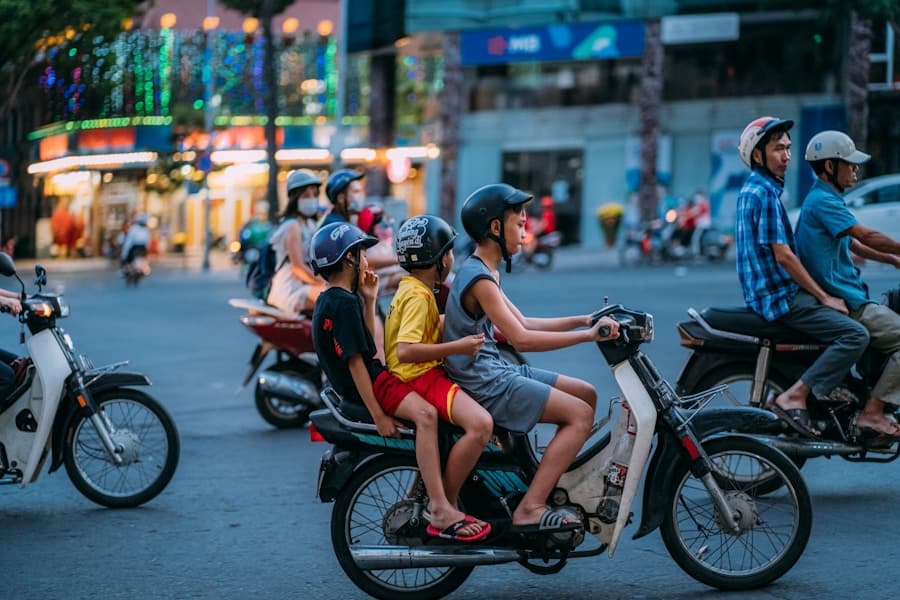
A motorbike rental in Vietnam usually means choosing between four types. Price tracks the model and engine size.
| Type | Models | Engine | Price/day (VND) | Best for |
|---|---|---|---|---|
| Automatic scooter | Honda Vision, Lead, Yamaha Janus | 110–125cc | 150,000–250,000 | Beginners, city |
| Sport automatic | Honda Airblade, Yamaha NVX | 125–155cc | 200,000–300,000 | Confident riders, longer trips |
| Semi-automatic | Honda Wave, Future | 110–125cc | 100,000–180,000 | Budget, simple routes |
| Manual motorcycle | Honda Winner, XR150, Royal Enfield | 150–400cc | 250,000–800,000 | Mountains, long hauls |
What to choose
For the city and short hops — a Honda Vision or Lead. Automatic, easy to ride, thrifty on fuel. The pick for Nha Trang and Da Nang.
For islands and beach roads — a Honda Airblade or Yamaha NVX. More power and better footing on sand and dirt. Best on Phu Quoc.
For mountain routes — a Honda Winner or XR150. Manual, with real pull on climbs. What you want for Da Lat, the Hải Vân pass and the Hà Giang loop.
Fuel and filling up

Fuelling a scooter in Vietnam is simple and cheap.
Where to fill up:
- Chain stations — Petrolimex (the biggest), PV Oil. Fixed prices, good fuel, in every town.
- Roadside bottles — one- and two-litre plastic bottles of petrol at the kerb. 20–30% pricier, but a lifesaver out in the sticks and up in the hills.
- Note: shops usually hand over the bike near empty. Hit the nearest station straight away.
In the highlands (Da Lat, Sa Pa, Hà Giang) stations are further apart — top up at every chance.
Police checks and the fine that lands on the renter
Police checkpoints are routine near city edges and in tourist zones, and since 2025 they check foreigners far more often. The two fines you're most likely to meet: no helmet (400,000–600,000 VND, ~$16–24) and no valid licence (from 2,000,000 VND, ~$80). The full fines table — red lights, speeding, the zero-alcohol limit — is in the driving guide.
What makes an unlicensed stop worse for a renter than a local: the bike can be impounded until the fine is decided, and it isn't yours. You keep paying the shop's daily rate the whole time it sits in the pound, on top of the fine and the impound fees. Carry your IDP, a passport copy and a copy of the bike's registration so a routine check stays routine.
Insurance — and the slip that doesn't cover you
The dangerous myth here is that the paper the shop hands you is insurance. It usually isn't. Three separate things get called "insurance" on a rented bike, and only one of them protects you:
- The bike's compulsory third-party policy — cheap and usually already baked into the rental. It covers minimal damage to other people, nothing of yours. A formality.
- The shop's "rental insurance" — most of the time a worthless slip. The Vietnamese fine print often limits it to Vietnamese citizens, so as a foreigner you get nothing from it.
- Your own travel medical policy — the only cover that pays for you. Buy it before the trip with a motorcycle-riding option, and read the rider clause: without a valid licence the insurer can refuse, and a broken bone runs $1,000–3,000 out of pocket (a serious injury, far more).
If you do come off the bike: don't leave the scene (that's an 8–10 million VND fine, and a criminal case if someone is seriously hurt), call an ambulance on 115 and the police on 113, film the damage and the plates, then phone your insurer and the rental shop. The full step-by-step — police report, who's at fault, what treatment costs — is in the driving guide.


Where to rent — shops and platforms
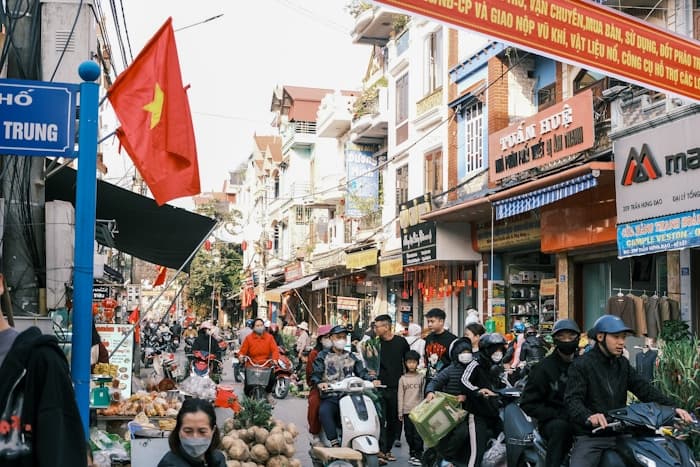
To rent a bike you need a passport (or a copy), cash for the deposit and, ideally, your IDP. Here are the main ways to find a shop.
Online platforms
| Platform | Pros | Cons |
|---|---|---|
| Riderly | International, insurance included on some bikes, guarantees | 20–30% markup, not every city |
| Rentabike VN | English support, clear terms, long-trip friendly | Limited to bigger hubs |
| Style Motorbikes | One-way rentals between cities, well maintained | Pricier than street shops |
Hotel rentals
Convenient: the bike is brought to the desk and returned there. But 20–50% dearer than street shops. Good if you'd rather not spend time hunting.
Street shops
"Motorbike for rent" signs line every tourist street. Cheapest prices, but the bikes are often old and you get no rental paperwork. Haggle — the first price is almost always padded.
How to spot a good shop
Look for one that takes a cash deposit or card hold (not your passport), gives you a written contract, offers two decent helmets, and lets you photograph the bike before you leave. English-speaking shops used to foreigners will also help you register the paperwork and talk you through routes if the bike breaks down.
Pickup checklist
Before you ride off the lot, check:
- Inspect the bike for scratches, dents and cracked plastic.
- Photograph and film it from every angle — that's your defence against damage claims.
- Test the brakes — front (lever on the bar) and rear (pedal or lever).
- Check the lights — indicators, headlight, brake light.
- Check the mirrors — both present and not loose.
- Check the tyres — tread not worn, no cuts.
- Look at the fuel — the tank is usually near empty.
- Ask for two keys — or find out where the spare is.
- Get helmets — two if you'll ride with a passenger.
- Save the shop's number — you'll want it if the bike breaks down.
- Confirm the return rules — time, place, whether the tank must be full.
Staying safe on Vietnam's roads
The mindset that keeps you upright
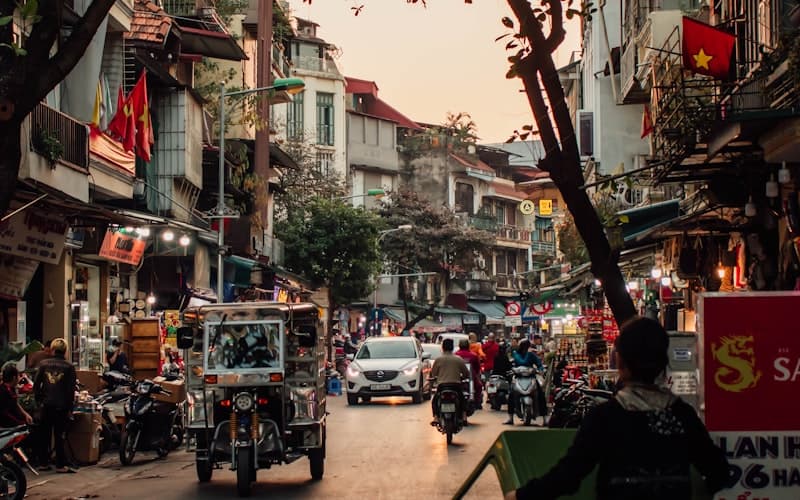
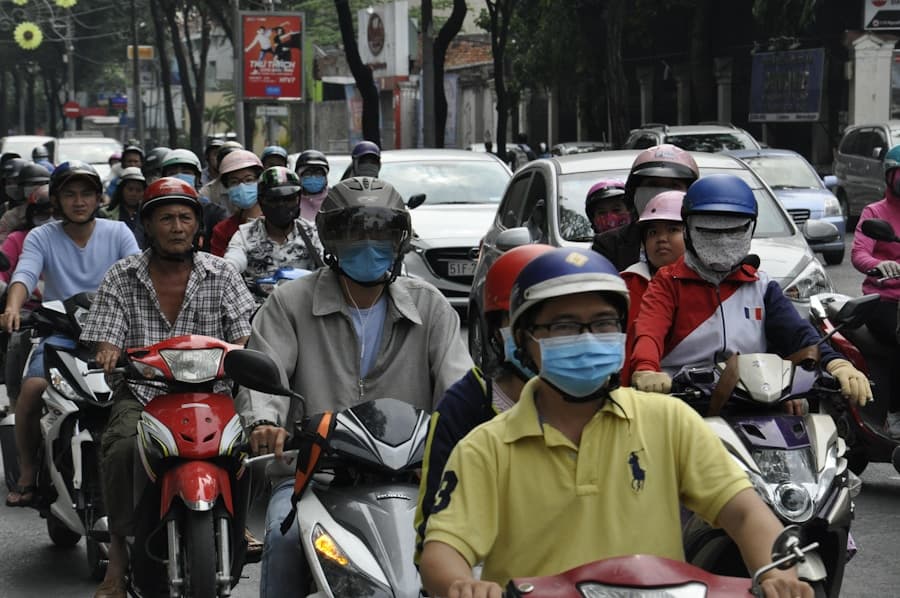
Vietnamese traffic shocks newcomers, but you adapt in a day or two once you stop fighting it. The flow is a slow, constant negotiation: no sudden moves, no hard braking, and honking is a friendly "I'm here," not road rage. Merge into it at a steady pace rather than waiting for a gap that never comes, and let pedestrians and stray turns wash past you instead of stamping on the brakes. How the rules actually work (right turns on red, roundabout priority, the horn code, the speed limits) is in the driving guide. On a rented bike what matters is the riding, so keep it calm and predictable.
Rule number one: never be the first to make a move. Let others lead – they know what they're doing. If you wait, watch, and follow the rhythm, you'll blend in better and stay safer.Kirsten Powley, Rough Guides, 2025
Ten safety rules
- Always wear a helmet — you and your passenger. Riding without one is 400,000–600,000 VND.
- Don't speed — limits depend on the road type, so follow the signs. There are cameras.
- Move with the flow — no sudden overtaking, no sudden braking.
- Careful on wet roads — scooters slide. Cut your speed by 30%.
- Never ride after drinking — a 2–10 million VND fine depending on your blood alcohol, plus impound. The limit is zero; more in our guide to alcohol in Vietnam.
- Bag between your feet or under the seat — protection against snatch-theft on the move.
- Avoid night rides — poor visibility, oncoming riders without lights.
- Don't touch your phone — a fine, and a real crash risk.
- Tet and peak season are the most dangerous — more tourists, holidays, more crashes.
- Treat day one as practice — ride quiet streets and get the feel of the bike first.
Buy vs rent — which pays off
If you're staying in Vietnam a while, buying a used bike can beat renting.
| Factor | Rent | Buy used |
|---|---|---|
| Cost | ~$60–120/month on a monthly rate (1.5–3 million VND) | ~$300–800 for a used Honda Vision |
| Payback | — | ~3–13 months, sooner if you count resale |
| Repairs | On the shop | On you (but cheap) |
| Resale | — | Sell for 70–80% of the price |
| Paperwork | None (the shop handles it) | Need the blue card (registration) |
| Verdict | Trips up to 2 months | Staying 3 months or more |
Where to buy: Facebook Marketplace, expat groups and street dealers. Always check the blue card — without it the bike can't be legally used or sold.
Renting city by city
Nha Trang
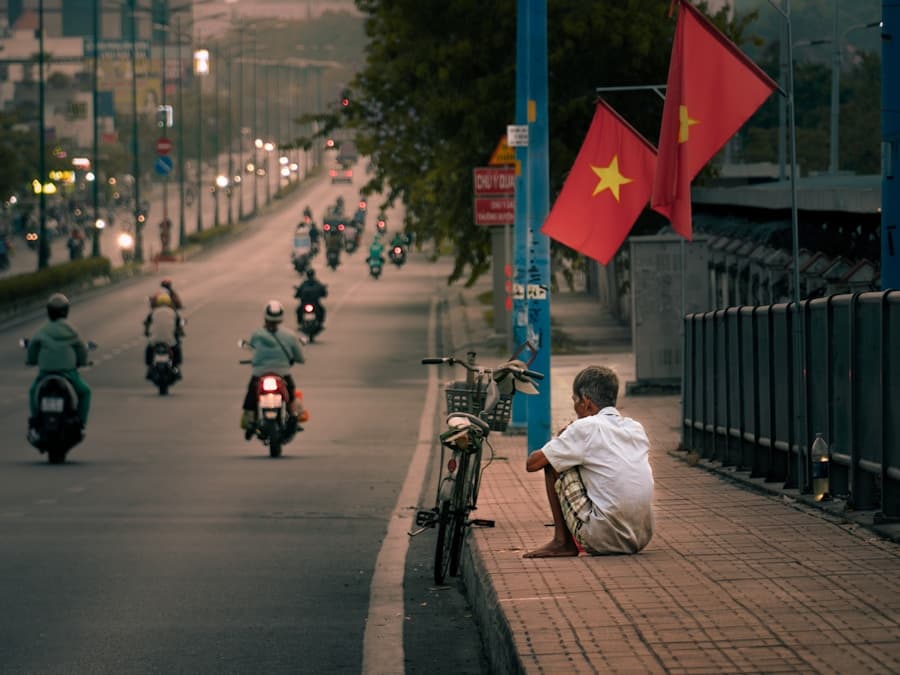
The easiest city to rent a scooter in. Flat terrain, straight streets, moderate traffic, and police relatively relaxed with tourists. A bike is the best way to reach Bãi Dài (Doc Let) beach or the districts beyond the centre — see our Nha Trang guide for what's worth the ride.
Phu Quoc
On Phu Quoc a bike is close to essential — the only public transport is the VinBus network, which mostly runs along the west coast. Roads are good, traffic calm. Police do check licences at the airport road and in Dương Đông, so ride with your paperwork on you. Prices sit a little above the mainland.
Da Nang
Da Nang is a modern city with wide streets and an easy grid, ideal for riding out to the beaches and the Dragon Bridge. Police are stricter than in Nha Trang, though — they check licences more often. Nearby is the Hải Vân pass, one of the great rides in Asia.
Ho Chi Minh City
Ho Chi Minh City is a megacity with the densest traffic in the country. Not for beginners. With no experience of Asian chaos, use GrabBike (motorbike taxi) instead. For confident riders, rentals start at 100,000 VND/day — but your nerves cost more.
Da Lat and the highlands
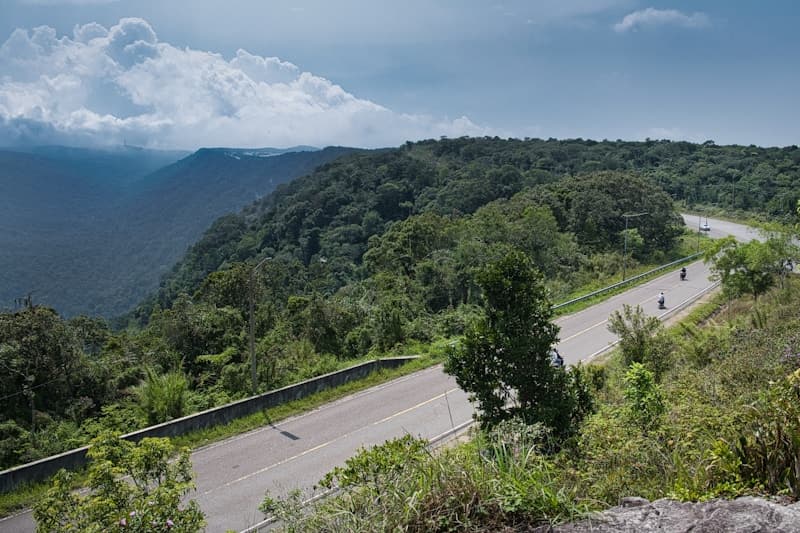
Switchbacks, fog and steep climbs. You want a powerful bike (Honda Winner, XR150) and some riding experience — but the views are extraordinary. Check the brakes before you set off and pack a jacket: at 1,500 m it's cool even at midday.
FAQ
Yes — but the licence rules matter. Renting is easy: a passport copy and a deposit, and any shop will hand you the keys. Riding it legally is another thing: you need a 1968 Vienna Convention IDP with a motorcycle category, carried with your home licence. Most tourists skip that and ride technically unlicensed. It's common, but it voids your insurance and risks a fine. The full licence and IDP breakdown is in the driving guide.
- Automatics100,000–300,000 VND/day~$4–12
- Manuals80,000–180,000 VND/day~$3–7
- By the monthfrom about 1,500,000 VND~$60
It's priciest on Phu Quoc, where automatics start at 180,000 VND/day because a bike is the only sensible transport on the island. Nha Trang and Da Nang are cheaper with more choice. Haggle on monthly rentals — a 15–20% discount is almost always there
Never. Without your passport you can't check into a hotel, deal with police, change money or even get a SIM card. Leave a photocopy and a cash deposit — usually $50–200 or the VND equivalent. Proper shops take a card hold. If a shop insists on the passport itself, that's a red flag; find another.
Film the bike from every angle first — that video is your only defence when the shop points at a scratch on return
- Test both brakes, the lights and indicators, and the mirrors
- Look at the tyres for tread and cuts
- Note the fuel (usually near empty, so head straight to a station)
- Ask for a second key and, if you're two-up, a second helmet
- Save the shop's number for a breakdown
If they rush you and won't let you inspect it, walk to the next shop
A Honda Vision or Lead — automatic, 110–125cc, easy to handle with a low centre of gravity. A Vision weighs just 96 kg, so anyone can manage it. Skip the heavy manual bikes (Winner, XR150) and don't head into the mountains without experience — the switchbacks around Da Lat and the Hải Vân pass are genuinely dangerous for novices. Practise on empty streets early in the morning first. Never ridden two wheels? Start with GrabBike (motorbike taxi) and rent a bike later.
Standard travel insurance doesn't. You need a policy with a motorcycle-riding option (look for "moped/motorcycle riding" wording). Without a valid licence the insurer can deny the claim even on an upgraded policy — check the fine print. A broken arm can cost $1,000–3,000 out of pocket; a serious injury, $5,000–15,000. Adding the motorbike option costs far less than paying for treatment yourself.
- Guide
Hoi An Tours 2026: My Son, Cham Islands & Day Trips
Twelve tours from Hoi An in 2026: My Son, Cham Islands, basket boats, Tra Que, Hai Van Pass. Prices in USD, month-by-month season, where to book cheapest.Hoi An Tours 2026: My Son, Cham Islands & Day Trips - Guide
Da Lat Attractions: Crazy House, Pagodas & the Old Station
Da Lat's city sights: Crazy House, Linh Phuoc Pagoda, Truc Lam Monastery, the old station, Xuan Huong Lake and the glass bridge — with 2026 tickets and a one-day route.Da Lat Attractions: Crazy House, Pagodas & the Old Station - Guide
Hue Tours 2026: Tombs, DMZ & Day Trips
Hue tours guide: imperial tombs, Bach Ma, the DMZ, a Perfume River boat and the Hai Van Pass to Hoi An — how to book and 2026 prices.Hue Tours 2026: Tombs, DMZ & Day Trips