Bat Trang — the pottery village outside Hanoi
Bat Trang (Bát Tràng) is a working pottery village 15 km from central Hanoi, where clay has been thrown and fired for seven hundred years. People come for ceramics at production prices, a pottery-wheel class for 30,000–70,000 VND, and a museum shaped like giant potter's wheels. Entry is free, the bus from town costs 7,000 VND, and half a day covers it all.
What Bat Trang Is: the Basics
- Ceramic Museum (Bảo tàng gốm Bát Tràng): Ticket 60,000 VND (~$2.3) — Weekdays 08:00–17:00, weekends to 18:00
- Ceramics market (Chợ gốm Bát Tràng): Hundreds of stalls, haggle 10–20% — Cash only
- Communal house (Đình Bát Tràng): The village's historical heart — Carved timber
- Van Van house (Nhà cổ Vạn Vân): Private 15th–19th c. ceramics collection — Free entry
- Long Bien bus interchange (Điểm trung chuyển Long Biên): Bus 47A: 7,000 VND (~$0.3) — 45 minutes to the village
- Chuong Duong bridge (Cầu Chương Dương): Red River crossing — On the way to the village
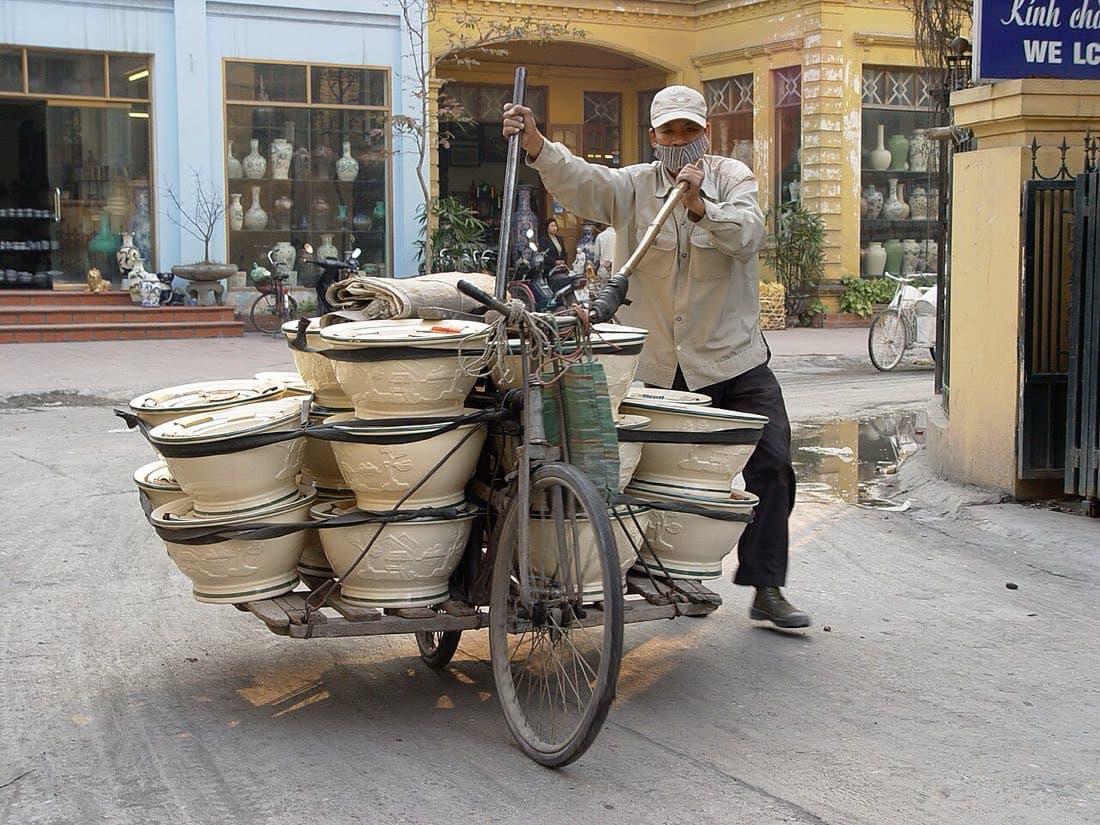
Bat Trang is not an open-air museum but a working village: kilns hum behind gates, unfired pieces dry in courtyards, and three-wheeled carts haul boxes of dishes down the lanes. The tourist layer — market, museum, workshops — grew on top of production rather than replacing it.
| Detail | Value |
|---|---|
| Where | Bat Trang commune, ~15 km southeast of central Hanoi |
| Entry | Free |
| Ceramic Museum | 60,000 VND (~$2.3), weekdays 08:00–17:00, weekends to 18:00 |
| Pottery class | 30,000–70,000 VND adults, 20,000–50,000 kids |
| Getting there | Bus 47A (7,000 VND, 45 min) or Grab (150,000–250,000 VND) |
| Time needed | 3–5 hours including travel |
| Payment | Cash; cards rarely accepted |
The question worth answering before you go is why you are going. For shopping, head to the market; for the experience, book a wheel; for photos, the museum. Combining all three works, but the market eats more time than you expect.
History: Seven Centuries of Clay
According to legend, potters came here from Bo Bat in Ninh Binh province after the capital moved to Thang Long — today's Hanoi — in 1010; written records of the village date from the 14th–15th centuries. The location was no accident: white kaolin clay nearby and the Red River at the doorstep, a ready trade route to the capital and the sea ports.
By the 15th–17th centuries Bat Trang ceramics were an export good, turning up in Japan, across Southeast Asia and in European collections — Portuguese and Dutch traders shipped Vietnamese ware alongside Chinese. The 20th century brought collectivization and the crisis of the 1990s; the village came out the other side as a cluster of private workshops.
The technical marker collectors look for is men rạn glaze — crackle: during firing it develops a web of fine cracks. It began as a defect and became a signature. The second giveaway is cobalt-blue painting on white, with dragons, carp and landscapes.
Family workshops operate here today, and ceramics remain the livelihood of many households. Bat Trang is the most famous but not the only craft village around Hanoi — from silk-weaving Van Phuc to bamboo Phu Vinh, the rest are covered in our craft villages guide.
Getting There from Hanoi
Four workable options, cheapest to most convenient.
| Option | Price | Time | Notes |
|---|---|---|---|
| Bus 47A | 7,000 VND (~$0.3) | 45 min | From the Long Bien bus interchange |
| Grab / taxi | 150,000–250,000 VND (~$6–10) | 30–40 min | Good for two or three; harder to catch a ride back |
| Motorbike rental | 120,000–200,000 VND/day | 35 min | Licence needed; bridge traffic is heavy |
| Guided tour | from 600,000 VND (~$23) | half day | Usually bundled with other sites |
Bus 47A is the obvious pick for solo travelers: it leaves from the Long Bien bus interchange, five minutes' walk from the Old Quarter, and drops you at the village gate. The conductor takes cash on board and gives change. Check the timetable and the last bus back in the Timbus app; the village empties after 18:00, so leaving earlier makes sense.
Grab pays off in a group: 200,000 VND split three ways beats a taxi and outruns the bus. The catch is the return leg — drivers are reluctant to come out to the suburb and signal drops in the narrow lanes. Walk back to the main gate and book from there.
Fast Track — no queue at the border
5–10 minutes instead of an hour in the immigration queue
from$11per passenger
What to See in the Village
The Ceramic Museum (Bảo tàng gốm Bát Tràng, officially Trung tâm Tinh hoa làng nghề Việt) is the village's photogenic anchor: the building is designed as seven potter's wheels rising out of the ground. Inside are a history exhibition, a gallery of contemporary makers, a café and a shop. A ticket for floors 1, 2 and 4 costs 60,000 VND (as of August 2026); open 08:00–17:00 on weekdays and until 18:00 at weekends. The ground floor hosts pottery classes.
The ceramics market (Chợ gốm Bát Tràng) is the heart of the tourist side: covered rows of hundreds of stalls, from tea sets to garden pots and ceramic cat banks.
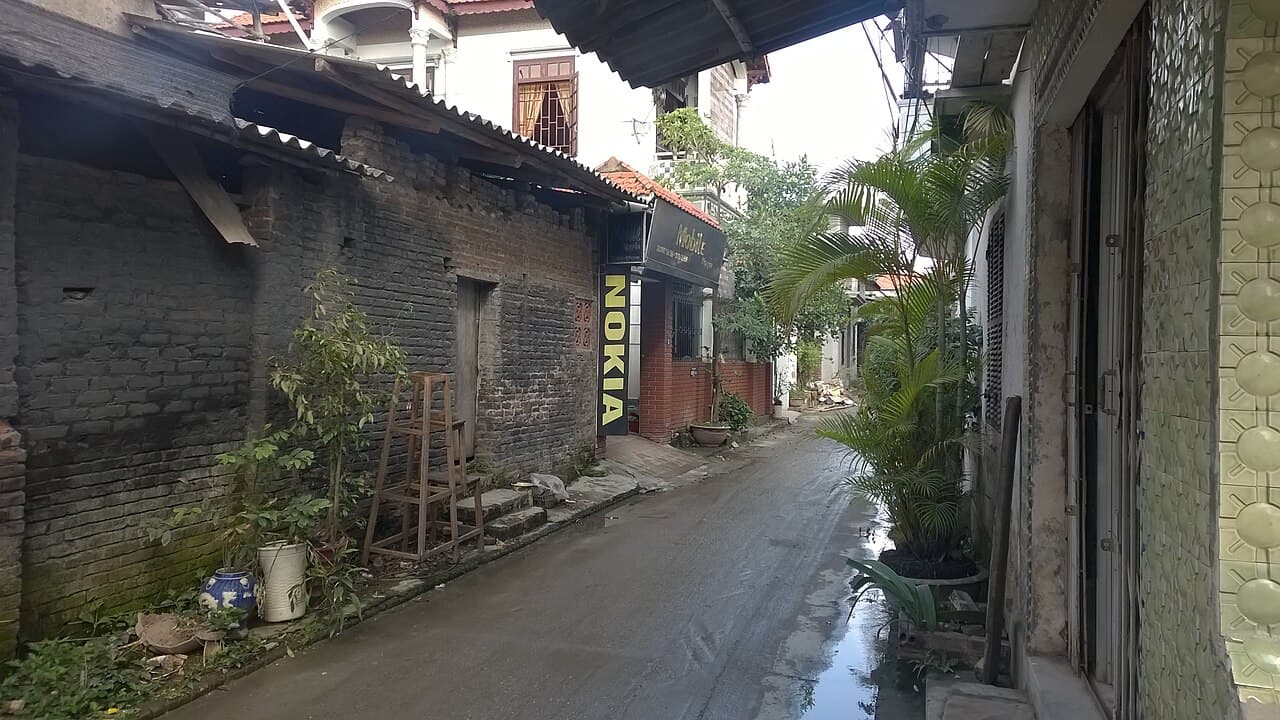
The old village starts right behind the market: narrow lanes with walls built from broken blanks, courtyards of drying ware, kilns. This is where you simply wander — the most alive part of Bat Trang and the best source of photographs.
The communal house (đình Bát Tràng) and Van Van house (Nhà cổ Vạn Vân) cover the historical program. The first is a traditional community temple with carved timber; the second a private house-museum with 15th–19th century ceramics, free to enter, donations welcome.
The Pottery Class: How It Works
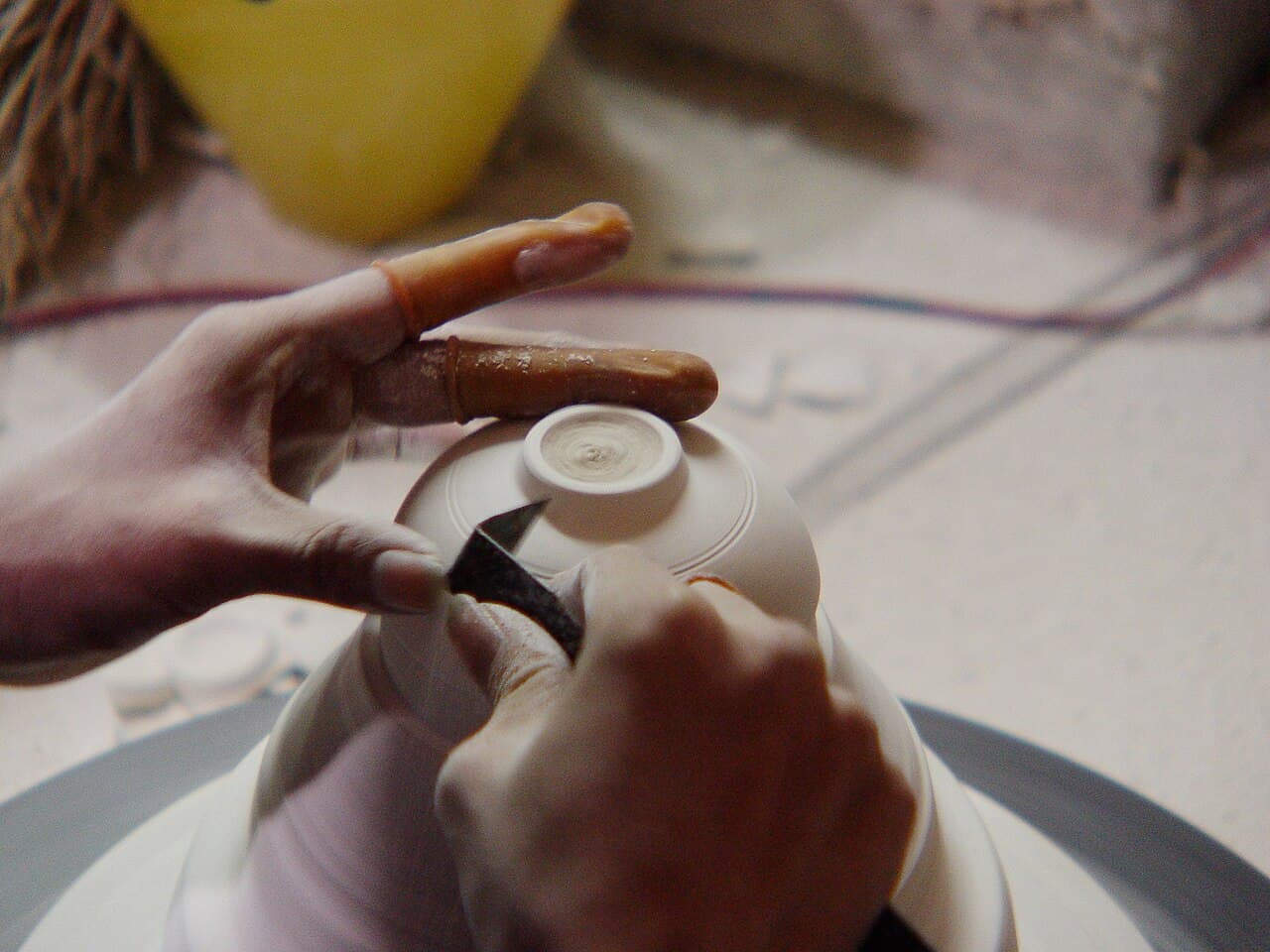
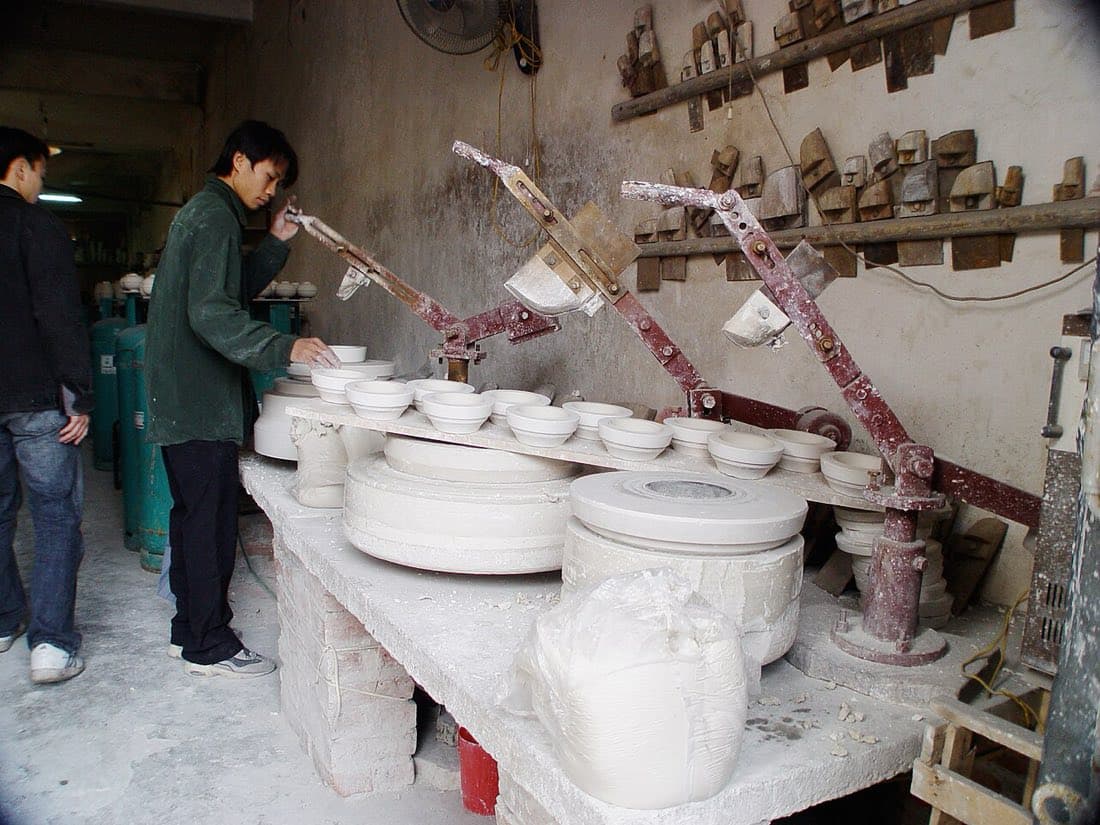
The wheel is what brings families here. The format is the same everywhere: you pay for a seat, get a lump of clay and an instructor, produce a wobbly cup under their hands, then decide what to do with it.
- Pay for a seat at the wheel — 30,000–70,000 VND for adults, 20,000–50,000 for children. Café-attached studios charge 50,000–100,000 including a drink.
- Twenty to thirty minutes on the wheel. The instructor sets your hands and will finish the piece for you if asked.
- Drying: the piece needs a day to dry and another day or two to fire.
- Painting is a separate option: either your own piece after firing, or a ready plaster figure for 30,000–50,000 VND.
- Collect it yourself in 1–3 days or arrange delivery within Hanoi for 50,000–100,000 VND.
The honest version: half an hour will not produce a decent cup. If you want a beautiful object, buy one at the market; the wheel is for the experience and the clay under your fingernails. Kids love it unconditionally; adults are split.
What to Buy and What It Costs

Bat Trang ceramics are a practical souvenir: genuinely cheaper than Hanoi's tourist quarters and definitely not made in China. Price guides:
| Item | VND | ~$ |
|---|---|---|
| Cup or small bowl | 20,000–80,000 | 1–3 |
| Medium plate | 50,000–150,000 | 2–6 |
| Teapot | 150,000–400,000 | 6–15 |
| Six-person tea set | 300,000–1,500,000 | 12–58 |
| Vase, 30–40 cm | 200,000–800,000 | 8–31 |
| Ceramic cat bank | 80,000–250,000 | 3–10 |
| Magnet or small souvenir | 15,000–40,000 | 0.6–1.5 |
- Haggling. A 10–20% discount at the market is standard. Museum and branded studios hold fixed prices.
- Quality. Check the rim for chips and the base for wobble: mass-produced and handmade sit on adjacent tables.
- Packing. Ask for bubble wrap and a box — free, but the default is newspaper.
- Transport. Do not put fragile ceramics in carry-on: check it wrapped in clothes, or arrange shipping from the shop.
- Cash. Bring 500,000–1,000,000 VND (~$19–38) per person; the village has few ATMs and they run dry on weekends.
Wider shopping context is in our Hanoi shopping guide and the country-level what to buy in Vietnam.
Telling Good Ceramics from Filler
Sound. Flick the rim with a fingernail: properly fired ceramic rings clean, underfired thuds. The fastest test, and sellers are used to it.
The base. Turn it over. Handmade pieces have a slightly uneven base with faint wheel marks but sit stable. Slip-cast filler has a suspiciously smooth base, often with burrs at the edge.
Glaze. True men rạn is an even web of fine cracks under the glaze. If the cracks sit on top and catch your nail, that is a defect, not a technique.
Painting. Hand-applied cobalt shows uneven line weight and varying saturation. Decal transfer is perfectly regular with a crisp edge — cheaper, and a different thing entirely.
Beyond Tableware
The range is wider than the front rows suggest: altar ware (incense burners, candlesticks, offering vases — most Vietnamese homes keep an ancestor altar), garden ceramics, traditional roof tiles, minimalist designer series for Hanoi cafés, and ceramic jewelry — beads, pendants, earrings, the rare Bat Trang souvenir that does not break in a backpack.
Packing and Shipping Home
A box for a tea set costs 20,000–50,000 VND, usually free on a larger purchase. Delivery within Hanoi runs 50,000–100,000 VND, arriving at your hotel the next day. International shipping goes through Hanoi courier services, though it easily costs more than the ceramics. Simple rule: carry the small things yourself, ship the sets and vases — or buy them on your last day.
Pros, Cons and Alternatives
Go if you travel with kids or want the tableware
- The pottery wheel works for every age — kids refuse to leave it
- Tableware is cheaper than downtown, and the souvenir is a useful one
- Half a day covers everything if the Old Quarter has worn thin
Skip it if
- You want an untouched village — the tourist part is commercial
- You pack light — ceramics are heavy and risky to transport
The honest downsides: the market is a market, with repetitive stock and a whiff of conveyor belt; on weekends school groups and Hanoi families arrive and the workshops queue up. Plus the trip itself — 45 minutes each way for tableware is not everyone's idea of a morning.
Although Bat Trang draws crowds, the villages along the Cau River feel quieter and more real… Unlike Bat Trang's white clay, Phu Lang artisans use reddish clay that produces its famous eel-skin yellow glaze and deep brownsBien Nguyen, Lonely Planet, 2026
Alternatives if Bat Trang misses or you want contrast: Van Phuc silk village (same logic, textiles, closer to town), Duong Lam with its laterite houses, or the craft villages around Hoi An. All of them are in our craft villages guide.
VietnamSpot on InstagramTips, lifehacks and news for living in VietnamFollow





FAQ — Bat Trang Pottery Village
Entering the village is free — it is an ordinary settlement, not a museum complex. You only pay for specific activities: the Ceramic Museum ticket is 60,000 VND (~$2.3), a pottery-wheel class is 30,000-70,000 VND, and painting a ready figure runs 30,000-50,000 VND.
The cheapest way is bus 47A from Long Bien station: 7,000 VND (~$0.3), about 45 minutes; check frequency and the last bus in the Timbus app. Grab or a taxi costs 150,000-250,000 VND and takes 30-40 minutes. A motorbike works if you hold a licence: the route is simple but traffic on the Red River bridge is dense.
Three to five hours including travel. An hour for the market, an hour for the museum, an hour for a pottery class, half an hour for the old lanes, then the bus back. If you only want to shop, two hours on site is enough; with kids doing the wheel, budget the full day.
Yes, with caveats. Fragile pieces belong in checked luggage wrapped in clothes, not in carry-on. Shops will bubble-wrap for free if you ask. Large vases and full tea sets are easier to ship — many workshops work with courier services.
Yes, it is one of the few day trips near Hanoi built for kids: a wheel session costs 20,000-50,000 VND for a child, instructors are used to small hands, and painting ready figures works even for three-year-olds. The museum has a café and proper toilets, which is not a given in the outskirts.
A weekday morning, 09:00-10:00: fewer people, free workshops, softer light. Weekends bring school trips and Hanoi families, and the wheels queue up. There is no real seasonality, though June to August is hot and humid and the lanes get muddy in the rain.
Almost nowhere. Cash is the default at the market and in the workshops; only the museum and a couple of large studios take cards. ATMs in the village are few and run empty on weekends, so withdraw in Hanoi: 500,000-1,000,000 VND (~$19-38) per person is plenty.
Yes, and it makes sense — the village fills half a day. Natural pairings: Bat Trang in the morning plus the Ethnology Museum or the Temple of Literature in the afternoon; or Bat Trang with Van Phuc silk village to compare two crafts in a day.
A Half-Day Itinerary
09:00 — bus 47A from Long Bien (or Grab). 10:00 — the Ceramic Museum: exhibition, rooftop view, coffee downstairs. 11:00 — a pottery class on the museum's ground floor or in a private studio. 12:00 — lunch at a local spot (50,000–120,000 VND). 13:00 — the ceramics market and shopping. 14:30 — the old lanes, communal house, Van Van house. 15:30 — bus back.
Read also: Craft villages of Vietnam · Hanoi attractions · Tours from Hanoi · What to buy in Vietnam
- Guide
Quy Nhon Beaches 2026: Best Coves, Prices, Seasons, Map
All 12 Quy Nhon beaches and coves: Ky Co, Bai Xep, Queen's Beach, the city beach. 2026 entry fees in VND and USD, swimming season, rip currents, map.Quy Nhon Beaches 2026: Best Coves, Prices, Seasons, Map - Guide
Da Nang 2026: Vietnam's Nomad-Favourite Coastal City
Da Nang guide: beaches, Dragon Bridge, where to stay, getting around and day trips — the most liveable coastal city in Vietnam for travellers and nomads.Da Nang 2026: Vietnam's Nomad-Favourite Coastal City - Guide
Things to Do in Da Nang: Fun, Shows & Nightlife 2026
What to do in Da Nang: Sun World, the Dragon Bridge fire show, beach clubs, rooftops, day trips and family-friendly picks — with prices and tips.Things to Do in Da Nang: Fun, Shows & Nightlife 2026