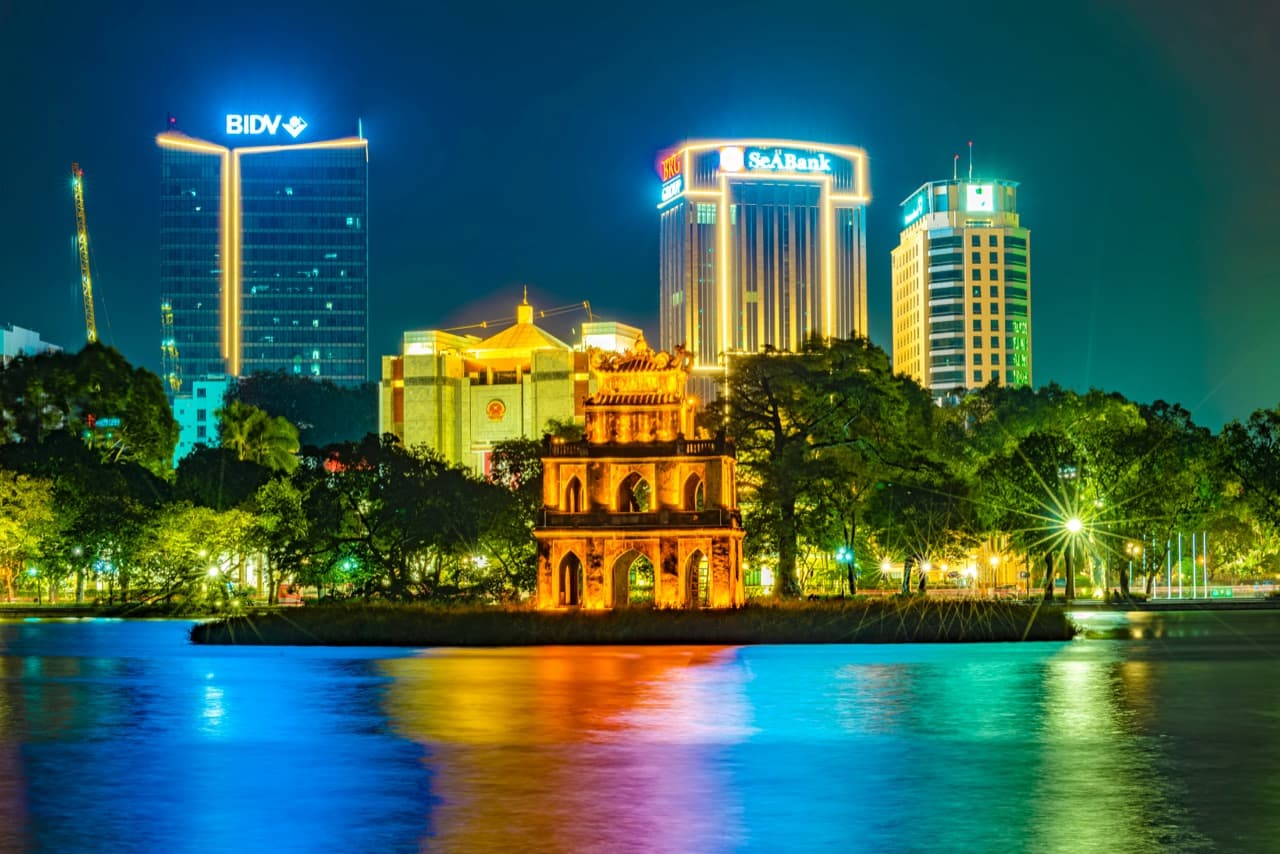
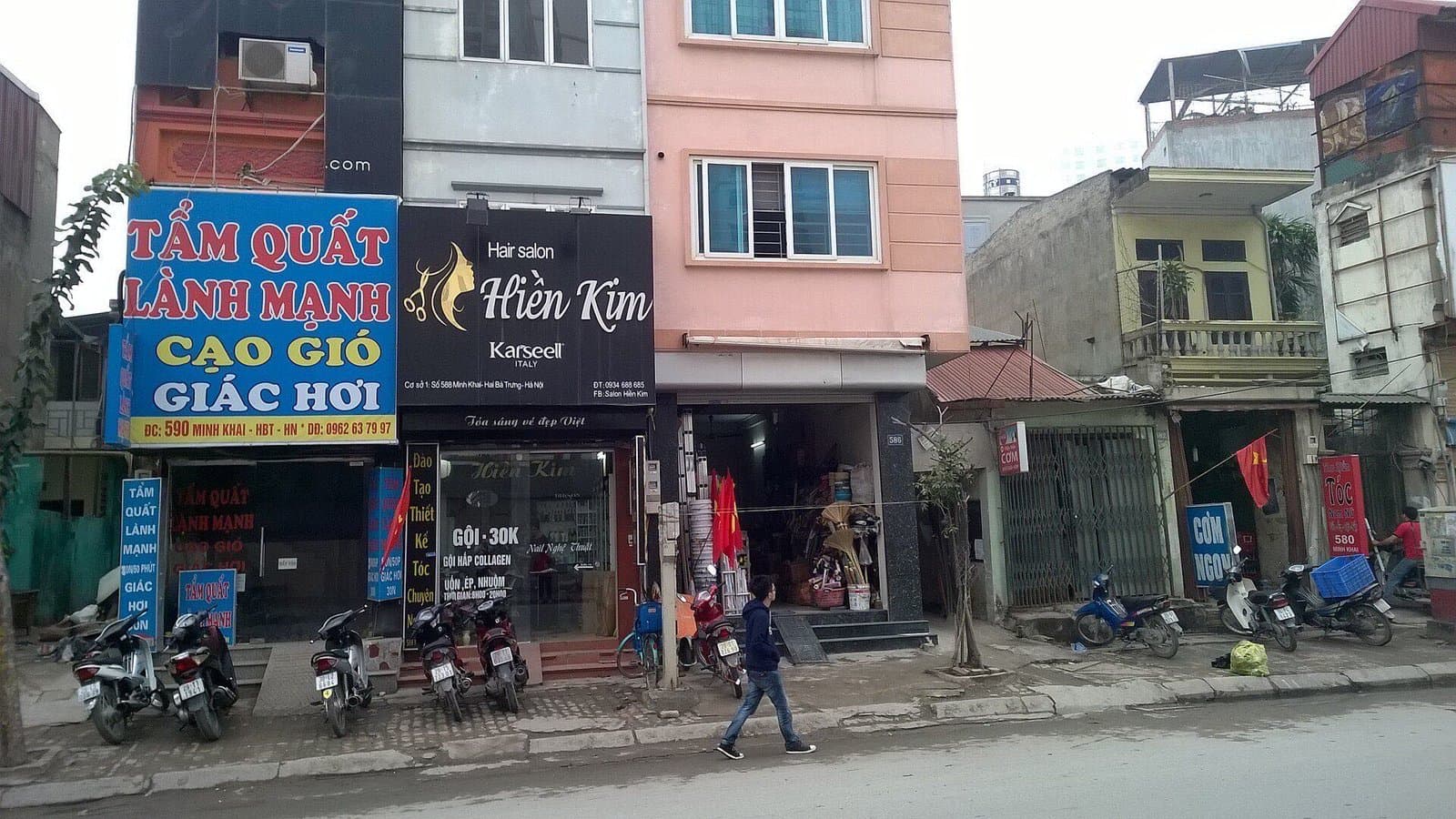
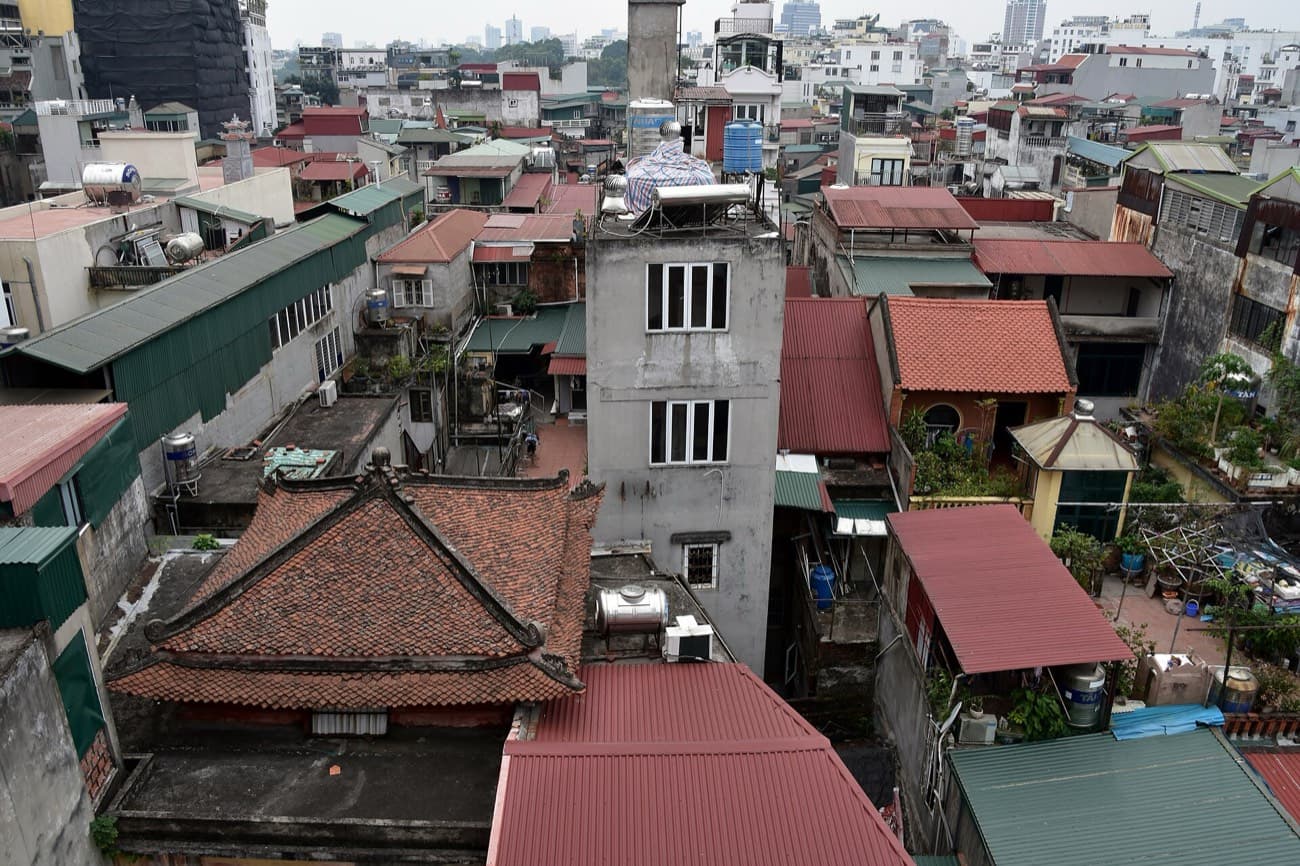
Hanoi or Ho Chi Minh City — which to choose in 2026
Between the two cities lie 1,760 km and a thousand years of history — north versus south. We compare Hanoi and Ho Chi Minh City (with Da Nang in the middle) on prices, climate, food, metro and logistics, and give a verdict by trip type for 2026.

Between Hanoi and Ho Chi Minh City lie 1,760 kilometres and a thousand years of history. Hanoi is the northern capital with four seasons, an Old Quarter, and a base for Halong Bay and Sapa. Ho Chi Minh City is the southern metropolis, the economic heart of the country, with its first metro line (opened 22 December 2024) and the Mekong Delta around the corner. Halfway between them sits Da Nang, the calmer coastal alternative. Here is the full comparison — prices, climate, food, infrastructure and logistics.
Hà Nội is a city between rivers, founded in 1010 as Thang Long, "the ascending dragon." Thành phố Hồ Chí Minh has been the official name of the former Saigon since 1976, though locals still call it by the old name. Ho Chi Minh City is the country's main economic centre. Hanoi remains the political and cultural capital.
Information current as of July 2026. Rate used: 26,000 VND ≈ $1.
Hanoi vs Ho Chi Minh City: the key differences
Hanoi is a compact, thousand-year-old capital with a real winter and a base for Halong. Ho Chi Minh City is a sprawling southern metropolis with a metro, sky bars and the Mekong nearby. The gap between them is not only geographic — these are two temperaments, two kitchens, two rhythms of life.
| Criterion | Hanoi | Ho Chi Minh City |
|---|---|---|
| Location | North, Red River Delta | South, Mekong Delta |
| Population (metro area) | ~8.5M (10M) | ~14M (after the 2025 merger) |
| Airport | Noi Bai (HAN), 30 km out | Tan Son Nhat (SGN), 6 km |
| Metro | 2 lines (2021 and 2024) | Line 1 since 22.12.2024, 19.7 km |
| Best season | October-April | December-April |
| Climate | 4 seasons, winter to +10 °C | 2 seasons, +27 °C year-round |
| Studio rent | $300-500 | $400-700 |
| Signature draw | Halong + Sapa + Ninh Binh | Mekong + Cu Chi + nightlife |
| Food | Pho bo (birthplace), bun cha, egg coffee | Hủ tiếu, cơm tấm, Michelin |
| Best for | Culture, food origins, backpacking | Business, nightlife, warm wintering |
Information current as of 07/2026. Rate used: 26,000 VND ≈ $1.
Getting there and around

Both cities have full international airports, so you rarely need a domestic connection to start your trip. The real difference is on the ground: the distance from the runway to a hotel bed. That is where the south wins big.
| Parameter | Hanoi (HAN, Noi Bai) | Ho Chi Minh City (SGN, Tan Son Nhat) |
|---|---|---|
| Distance to centre | 30 km | 6 km |
| Airport taxi | ~$16-22, 45-60 min | ~$7-11, 15-25 min |
| Shuttle bus | ~$1.50, 50 min | ~$1-2, 30 min |
| Grab / Be app | Works, cheaper than counter taxis | Works, cheaper than counter taxis |
| English at the airport | Signs and staff OK | Signs and staff OK |
Tan Son Nhat is one of the most convenient airports in the region. Six kilometres to the centre: order a Grab, and 20 minutes later you are checking into a hotel on Bui Vien. Noi Bai is trickier — you cross half the suburbs, and at rush hour it can easily take an hour and a half.
Between the two cities — 1,760 km by land (about 1,150 as the crow flies), and three ways to cross them:
- Fly with Vietnam Airlines, VietJet Air and others. About 2 hours, from 1,200,000 VND (~$46). The fastest and often the cheapest option.
- The Reunification Express train — a legend of Vietnamese rail. 32-36 hours the length of the country, a sleeper berth from 950,000 VND (~$37). Slow travel with a rolling window on the whole coast.
- The sleeper bus — 38-42 hours, from 600,000 VND (~$23). For overland enthusiasts and travellers with more time than money.


Climate and the best time to go

Climate is the single biggest deciding factor. Hanoi sits in a subtropical monsoon belt with four seasons and a genuine winter down to +10 °C. Ho Chi Minh City is tropical, two seasons — dry and wet — and a steady +27 °C all year. If you fly in to "warm up" in January without checking the forecast, Hanoi will surprise you with a grey sky and drizzle.
Hanoi's climate — 4 seasons
Hanoi is one of the few places in Vietnam where you can actually feel cold. Winter (December-February) hovers around +12...+18 °C and drops to +8 °C at night. Homes have no heating, so locals run the air-con in heat mode. Spring (March-April) brings fog and drizzle. Summer (May-August) is hot and humid: +32...+35 °C, 85% humidity, downpours. Autumn (September-November) is the golden window: dry, +22...+28 °C, clear skies.
The annual average is +24.5 °C, with roughly 1,680 mm of rain a year, peaking in July.
Ho Chi Minh City's climate — 2 seasons
Ho Chi Minh City is as steady as a clock. The dry season runs December to April: +25...+35 °C, 60-70% humidity, almost no rain. The wet season (May-November) brings +27...+32 °C and daily downpours — short but heavy, usually in the afternoon — with humidity up to 85-90%. Typhoons are rare, as the city is shielded by land.
The annual average is +27.5 °C. The gap between the coolest and hottest month is just 4 °C — one of the most stable climates in the world.
Month-by-month comparison
| Month | Hanoi, °C | HCMC, °C | Rain Hanoi / HCMC | Better bet |
|---|---|---|---|---|
| January | +16 | +27 | Dry / dry | HCMC |
| February | +18 | +28 | Drizzle / dry | HCMC |
| March | +21 | +29 | Fog / dry | Both |
| April | +25 | +30 | Dry / dry | Both |
| May | +28 | +29 | Rain / showers | Neither ideal |
| June | +30 | +28 | Showers / showers | No |
| July | +30 | +28 | Peak rain / showers | No |
| August | +29 | +28 | Rain / showers | No |
| September | +28 | +28 | Rain / peak showers | No |
| October | +25 | +28 | Dry / rain | Hanoi |
| November | +21 | +28 | Dry / dry | Both |
| December | +18 | +27 | Dry / dry | Both |
Best window for Hanoi — October-November and March-April. Dry, not hot, not cold. Autumn brings the golden rice terraces of Sapa; spring, the flowering bombax in the Old Quarter.
Best window for Ho Chi Minh City — December-April. Ideal for anyone fleeing a northern-hemisphere winter: a steady +30 °C, minimal rain, and you can plan every day without watching the clouds.
The overlap — March-April. Both cities are at their best. If you want to see both in one trip, aim here.
Atmosphere and character

Hanoi and Ho Chi Minh City are two different Vietnams. Hanoi is slow, Confucian (what travellers themselves say about it is in our Hanoi traveller reviews), respectful of hierarchy, with quiet hours by Hoan Kiem Lake. The south is open, commercial, all metropolis energy and rooftop bars till dawn. You feel it even in how people bargain: a Hanoian mulls it over before yielding, a Saigonese smiles and offers a discount straight away.
Hanoi's Old Quarter keeps its 15th-century plan: 36 guild streets, each named for a trade — silver, silk, paper. At dawn elders do tai chi by the lake, by day carts of fruit weave through the lanes, and in the evening families gather at plastic stools over bia hơi draft beer at 15,000 VND (~$0.58) a glass.
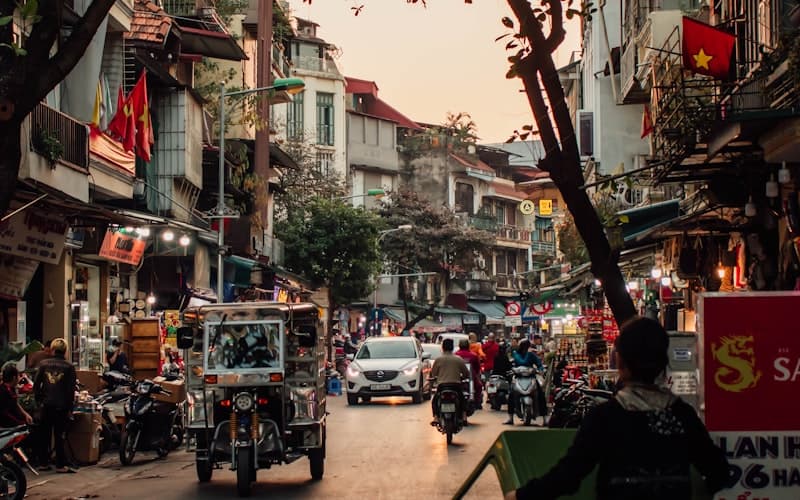
The south looks different. Bitexco Financial Tower next to the 19th-century Notre-Dame Cathedral. A river of motorbikes five lanes deep at the Ben Thanh roundabout. The Chill sky bar on the roof of AB Tower with the whole city below. French villas in District 3, a Korean quarter in District 7, and backpacker Bui Vien where five cover bands play at once at midnight.
The pace differs too. In Hanoi shops close by 21:00, and by midnight the Old Quarter is nearly asleep. In the south peak activity runs 20:00 to 02:00: night markets, food courts, clubs and massage parlours all stay open late. More on the southern scene in the Ho Chi Minh City nightlife guide.
Map & what to see — sights and day trips

Hanoi wins on the density of historic sites inside the city and on proximity to the country's great natural wonders: Halong, Sapa, Ninh Binh. The south leads on 20th-century war history, colonial architecture and access to the Mekong Delta.
What to see in Hanoi
The two maps below are really about scale. Green pins are free, blue ones charge entry; tap any pin for the price and how long to allow. In Hanoi everything except West Lake falls inside a two-kilometre circle around Hoan Kiem.
- Hoan Kiem Lake & Ngoc Son Temple: 30,000 VND (~$1.20) — 1-2 h · everyone
- Old Quarter (36 streets): Free — 2-3 h · everyone
- Temple of Literature: 70,000 VND (~$2.70) — 1-2 h · history fans
- Ho Chi Minh Mausoleum: Free — 1-2 h · everyone
- Thang Long Citadel: 100,000 VND (~$3.80) — 2 h · history fans
- Water puppet theatre: from 100,000 VND (~$3.80) — 1 h · families
- Hỏa Lò Prison: 50,000 VND (~$1.90) — 1 h · history fans
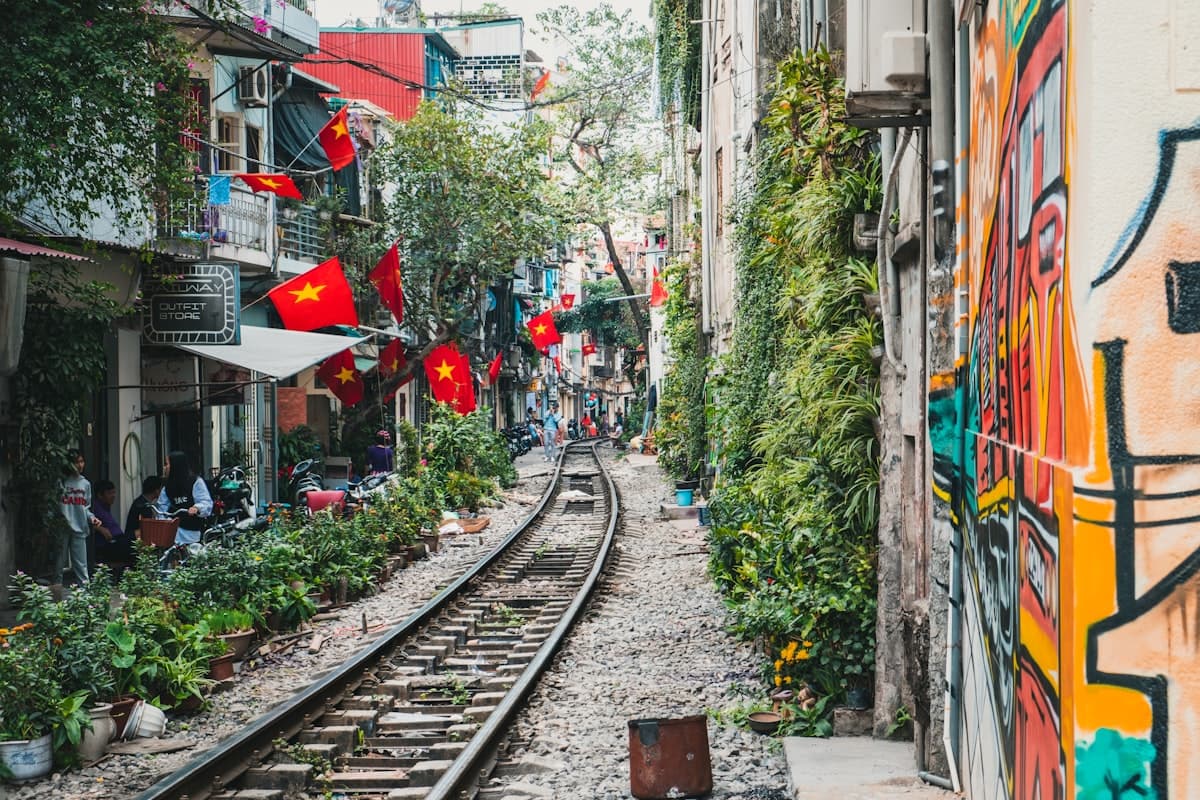
- Train Street: Free — 1 h · photographers
- West Lake: Free — Half a day · everyone
| Place | Price | Time | For whom |
|---|---|---|---|
| Hoan Kiem Lake + Ngoc Son Temple | 30,000 VND (~$1.20) | 1-2 h | Everyone |
| Old Quarter (36 streets) | Free | 2-3 h | Everyone |
| Temple of Literature (Văn Miếu) | 70,000 VND (~$2.70) | 1-2 h | History fans |
| Ho Chi Minh Mausoleum | Free | 1-2 h | Everyone |
| Thang Long Citadel (UNESCO) | 100,000 VND (~$3.80) | 2 h | History fans |
| Water puppet theatre | from 100,000 VND (~$3.80) | 1 h | Families |
| Hỏa Lò Prison | 50,000 VND (~$1.90) | 1 h | History fans |
| Train Street | Free | 1 h | Photographers |
Hanoi's biggest asset is not the city itself but what surrounds it. Halong Bay (3.5 hours by bus or train, a UNESCO site) is Vietnam's headline natural wonder. Sapa, with its terraces and mountain peoples, is 5-6 hours by bus. Ninh Binh, the "inland Halong," is about two hours by bus.
A day trip to Halong with lunch on a junk runs 1,200,000-1,800,000 VND (~$46-69). A two-day tour with an overnight on the boat starts at 3,500,000 VND (~$135).
What to see in Ho Chi Minh City
The southern picture is different. The colonial core — post office, cathedral, opera house, palace — sits even tighter than Hanoi's, but Thien Hau Pagoda pulls you four kilometres west into Cholon, and Bui Vien sits south in the backpacker quarter.
- Notre-Dame Cathedral of Saigon: Free — 30 min · everyone
- Central Post Office: Free — 30 min · everyone
- Independence Palace: 80,000 VND (~$3.10) — 1-2 h · history fans
- War Remnants Museum: 40,000 VND (~$1.50) — 2-3 h · adults
- Ben Thanh Market: Free — 1-2 h · everyone
- Bitexco Sky Deck: 200,000 VND (~$7.70) — 1 h · views
- Thien Hau Pagoda: Free — 1 h · everyone
- Saigon Opera House: Free (facade) — 30 min · everyone
- Bui Vien Walking Street: Free — Evening · young crowd
| Place | Price | Time | For whom |
|---|---|---|---|
| Notre-Dame Cathedral of Saigon | Free | 30 min | Everyone |
| Central Post Office | Free | 30 min | Everyone |
| Independence Palace | 80,000 VND (~$3.10) | 1-2 h | History fans |
| War Remnants Museum | 40,000 VND (~$1.50) | 2-3 h | Adults |
| Ben Thanh Market | Free | 1-2 h | Everyone |
| Bitexco Sky Deck | 200,000 VND (~$7.70) | 1 h | Views |
| Thien Hau Pagoda (Cholon) | Free | 1 h | Everyone |
| Bui Vien Walking Street | Free | Evening | Young crowd |
The War Remnants Museum is one of the most powerful museums in Asia. It shows, without softening, what the war meant seen through Vietnamese eyes: Nick Ut's photographs, the Agent Orange exhibit, captured American hardware in the yard. Visitors leave subdued.
What lies around the city:
- The Mekong Delta (1.5-2 h to My Tho or Ben Tre) — the south's great natural draw. A day tour from 600,000 VND (~$23), a two-day homestay from 2,200,000 VND (~$85). Boats along the channels, floating markets, coconut farms.
- The Cu Chi Tunnels — 40 km out, a Viet Cong stronghold. A half-day tour, 400,000-700,000 VND (~$15-27).
- Vung Tau — the nearest coast, 2 hours by bus or fast ferry.
- Can Tho — 3.5 hours, the Cai Rang floating market at dawn.
Verdict on sights
| Category | Hanoi | Ho Chi Minh City |
|---|---|---|
| Historic heritage in-city | ★★★★★ | ★★★★ |
| Colonial architecture | ★★★★ | ★★★★★ |
| 20th-century war history | ★★★ | ★★★★★ |
| Nature within a day trip | ★★★★★ (Halong, Sapa, Ninh Binh) | ★★★★ (Mekong, Vung Tau) |
| Nightlife | ★★★ | ★★★★★ |
| Museums | ★★★★ | ★★★★ |
Bottom line: Hanoi is for those who want "all of Vietnam" in one trip via day tours. The south is for lovers of city life, war history and the Mekong.
Fast Track — no queue at the border
5–10 minutes instead of an hour in the immigration queue
from$11per passenger
Prices — where it's cheaper to live and travel
Ho Chi Minh City is pricier than Hanoi on consumer costs and even more so on rent. The southern market runs hot on foreign investment and expat demand: Korean, Japanese and Western offices pull prices up. Hanoi has less of that pressure, and a central studio there rents for the same $400 that gets you a guesthouse room at best in the south.
Housing
| Type | Hanoi / month | HCMC / month |
|---|---|---|
| Studio (centre) | $300-500 | $400-700 |
| 1-bedroom | $350-600 | $500-800 |
| 2-bedroom | $500-900 | $700-1,200 |
| 3★ hotel / night | from 500,000 VND (~$19) | from 600,000 VND (~$23) |
| 5★ hotel / night | from 1,800,000 VND (~$69) | from 2,200,000 VND (~$85) |
Rent figures — 07/2026, per numbeo.com.
In Hanoi the best value is Tay Ho (an expat district with a lake) and Ba Dinh. In the south, District 3 or Phu Nhuan — 10-15 minutes from the centre without the District 1 tourist markup. Where to look is covered in the district guides.
Food and coffee
| Item | Hanoi | HCMC |
|---|---|---|
| Pho bo at a café | 40,000-60,000 VND (~$1.50-2.30) | 50,000-80,000 VND (~$1.90-3.10) |
| Banh mi (sandwich) | 20,000-30,000 VND (~$0.77-1.20) | 30,000-50,000 VND (~$1.20-1.90) |
| Iced coffee (cà phê sữa đá) | 15,000-25,000 VND (~$0.58-0.96) | 25,000-45,000 VND (~$0.96-1.70) |
| Lunch at a local café | 100,000-200,000 VND (~$3.80-7.70) | 150,000-300,000 VND (~$5.80-12) |
| Restaurant (avg. bill) | 400,000-800,000 VND (~$15-31) | 600,000-1,200,000 VND (~$23-46) |
| Bia hơi draft beer | 5,000-15,000 VND (~$0.19-0.58) | 15,000-30,000 VND (~$0.58-1.20) |
Some of the cheapest beer in the world is a Hanoi thing. Bia hơi on the corners of the Old Quarter starts at 5,000 VND (~$0.20) a glass. In the south prices start at 15,000 VND and, for tourists, often hit 50,000.
Monthly budget (per person)
| Style | Hanoi | HCMC |
|---|---|---|
| Minimum (hostel, street food) | from ~$450 | from ~$580 |
| Comfort (studio, cafés, tours) | ~$900-1,350 | ~$1,150-1,800 |
| Premium (apartment, restaurants) | from ~$2,250 | from ~$3,100 |
Food — north versus south

The food of Hanoi and the south is two different Vietnams on a plate. The north is restrained and minimalist, all about a clean flavour. The south is sweet and rich, with a mountain of herbs and southern spices. Hanoi is the birthplace of phở bò, bún chả and egg coffee. The south is the capital of hủ tiếu, cơm tấm and the stage for the MICHELIN Guide Vietnam.
| Dish / drink | Hanoi (birthplace) | HCMC (southern version) |
|---|---|---|
| Signature | Phở bò (clear broth) | Hủ tiếu (noodles with shrimp and pork) |
| House dish | Bún chả (grilled pork + noodles) | Cơm tấm (broken rice with pork) |
| Street fast food | Bánh cuốn (steamed rice rolls) | Bánh xèo (crispy shrimp crepe) |
| Regional specialty | Chả cá Lã Vọng (turmeric fish) | Bò né (sizzling beef skillet) |
| Coffee | Cà phê trứng (egg coffee, since the late 1940s) | Cà phê dừa (coconut coffee) |
| Avg. street bill | 30,000-60,000 VND (~$1.20-2.30) | 50,000-100,000 VND (~$1.90-3.80) |
In Hanoi, make the detour to Bun Cha Huong Lien on Lê Văn Hưu: in 2016 Barack Obama and Anthony Bourdain ate bun cha here, and photos of that visit now hang on the walls. The menu has a "Combo Obama" set (bun cha + nem cua bể + a Hanoi beer).
The south wins on the sheer range and scale of its restaurant scene. There are fine-dining restaurants (Anan Saigon, Hoa Tuc), rooftop bars with signature cocktails (Chill, Social Club, Saigon Saigon Bar), and dozens of international kitchens — Korean, Japanese, Mexican. You can breakfast on a wheat bánh mì with pâté, lunch on cơm tấm, and finish with oysters up in Bitexco.
Transport, metro and the motorbike chaos

Ho Chi Minh City has around 7.5 million motorbikes, close to one per resident within the city's pre-2025 borders, which makes it one of the most motorbike-dense megacities in the world. Hanoi has around 6 million for 8.5 million. In both, crossing the road at rush hour is a skill of its own: walk slowly, don't stop, and let the flow part around you.
The transport story of 2024 was the south getting its first metro. Line 1 (Bến Thành – Suối Tiên, 14 stations, 19.7 km) opened on 22 December 2024. A ride costs 6,000-20,000 VND (~$0.23-0.77), and Ben Thanh to Suoi Tien takes about 30 minutes.

For the first 30 days of commercial operation, Line 1 was free for all passengers.per Vietnam+, 2024-2025
Hanoi got its metro earlier: the Cát Linh – Hà Đông line has run since November 2021, and the elevated section of Nhổn – Hà Nội since August 2024. Coverage is still modest, but it is being built out toward the airport-to-city route.
Transport options compared
| Parameter | Hanoi | HCMC |
|---|---|---|
| Metro (lines) | 2 (2021 and 2024) | 1 (since 12.2024), Line 2 under way |
| Metro coverage | suburban branches | main centre-east route |
| Motorbikes per capita | ~0.7 | ~0.8 |
| Xanh SM e-taxi | Available, well developed | Available, well developed |
| Grab / Be | Everywhere | Everywhere |
| Motorbike rental | 100,000-150,000 VND/day (~$3.80-5.80) | 120,000-180,000 VND/day (~$4.60-6.90) |
Xanh SM e-taxis (from VinFast) are the best pick if you don't want to haggle: fixed fares, new cars, trained drivers. The rule is simple — book through the app, don't flag one on the street. How rides work in each city is covered in the Hanoi transport guide and the Ho Chi Minh City transport guide.
Where to stay — districts and infrastructure

Your choice of district decides half your impression of a city. In Hanoi the interesting radius is compact — most sights sit within 3 km of Hoan Kiem. The south sprawls 20 km across, and Phu My Hung to Cholon is a forty-minute ride.
Hanoi by district
- Hoan Kiem (centre) — the Old Quarter, hotels from $25, every sight within walking distance. Noisy, touristy.
- Ba Dinh — the government quarter: mausoleum, museums, quieter and greener.
- Tay Ho (West Lake) — the main expat district. Cafés, coworking spaces, Western groceries. Rent from $400/month.
- Long Bien — across the river, budget (from $250/month) but 20 minutes to the centre.
How to choose a district in the capital is covered in the Hanoi districts guide. District names here are the everyday ones: since 1 July 2025 Vietnam has no district tier of government, as the admin reform guide explains.
Ho Chi Minh City by district
- District 1 — the tourist heart, all the main sights, hotels from $19. The priciest.
- District 3 — next to D1, quieter, greener, more authentic. Rent from $300/month.
- District 2 (Thao Dien) — the expat district: Western cafés, schools, yoga. From $350-500.
- District 7 (Phu My Hung) — the Korean-Japanese quarter, new condos, parks. From $400.
- District 5 (Cholon) — Chinatown, pagodas, authentic and cheap. From $250.
Expat and English-speaking scene
Neither city matches a beach town like Da Nang or Nha Trang for a ready-made foreign community, but both have solid English-speaking scenes — you just find them in different places.
| Parameter | Hanoi | HCMC |
|---|---|---|
| Expat hub | Tay Ho (West Lake) | Thao Dien (D2), Phu My Hung (D7) |
| Coworking spaces | A handful, growing | Many, well established |
| English on menus / signs | Common in tourist zones | Very common, wider spread |
| International schools | Several | Many, largest choice |
| Overall expat community | Smaller, tighter-knit | Larger, more dispersed |
The south has the bigger, more established expat infrastructure — more coworking, more international schools, more English on the street. Hanoi's community is smaller but tighter, clustered around Tay Ho, and easier to plug into if you want a scene where people actually know each other.
Common mistakes when choosing
The most common error is choosing "by the Instagram photos" and ignoring the season. Hanoi in December is +12 °C, grey and drizzly. If you flew in to warm up, that is a shock. January in the south is a steady +28 °C and sunshine.
Other slip-ups:
- "Hanoi is a village next to Saigon." Hanoi is compact, but it is a capital with the population of a major city. It is simply less dense: wide boulevards, lakes, parks.
- "There's nothing to see in the south but skyscrapers." The War Remnants Museum, Independence Palace, the colonial quarter, Chinatown, the Cu Chi Tunnels — that is easily 4-5 days.
- "You can only fly direct to Hanoi." Both cities have full international airports; long-haul carriers serve both.
- "The Ho Chi Minh City metro isn't running yet." Line 1 opened 22 December 2024. It runs every 5-10 minutes.
- "Combining them is expensive." The flight between the cities is from ~$46. A two-week "Hanoi + Halong + south + Mekong" route is only 10-15% more than a single-base holiday.
Which city is for you — the verdict
There is no universal answer. Both cities are must-sees for understanding Vietnam, and each gives a different experience. Here are concrete calls by trip type:
| Who you are | Better bet | Why |
|---|---|---|
| First-timer, 5-7 days | Hanoi | compact, authentic, Halong and Sapa nearby |
| Backpacker, 2-3 weeks | Start south | handy base for southern beaches and the Mekong, then train north |
| Business trip | HCMC | financial centre, international offices |
| Remote worker / nomad | Hanoi cheaper, HCMC easier | Hanoi ~$700-1,000/mo, HCMC ~$1,000-1,500, but more coworking |
| Winter escaper (Dec-Mar) | HCMC | steady +28 °C; Hanoi may surprise with +10 °C and drizzle |
| Foodie | Hanoi first, HCMC for range | Hanoi = classics and origins, HCMC = Michelin |
| History lover | Hanoi | thousand-year capital, Thang Long Citadel (UNESCO) |
| Nightlife lover | HCMC | sky bars, Bui Vien, District 1 and 2 clubs |
| Family with kids 6+ | HCMC | warmer, Suoi Tien park on the metro, water parks, zoo |
| Honeymooners | Hanoi + Halong | overnight junk in the bay, spa in Tay Ho |
| Beach + city balance | Da Nang | central coast, milder year-round, airport 10 min from the sand |
If you can, do both. The flight between the cities is 2 hours and from ~$46. A good 10-14 day route: Hanoi (3-4 days) → Halong (2 days) → fly to Ho Chi Minh City (3 days) → Mekong (2 days). That gives you the north, the south and two of the country's great natural draws. Short on time and want a beach in the mix instead? Swap in Da Nang for a central stop.
For remote workers weighing a longer stay, it is worth living a month in each — that is how you learn which rhythm fits. Many end up choosing Hanoi for its compactness and atmosphere, and many the south for business and year-round warmth. The same choice seen from the south, with a section on business and remote work, is in our Ho Chi Minh City vs Hanoi comparison.
Full Hanoi guide · Full Ho Chi Minh City guide · Da Nang guide
FAQ — common questions
For a first trip, most travellers pick Hanoi. It is compact, cheaper and more atmospheric, and in one week you can add Halong Bay, Sapa or Ninh Binh without long transfers. Ho Chi Minh City is a metropolis that reveals itself more slowly and rewards more days. Only have a week? Choose Hanoi. Ten days or more? Do both.
- Hanoi is cheaper on consumer pricesyes, rent most of all
- A central studio in Hanoiaround $300/month
- Versus in the south$400
- Pho in Hanoiabout 40,000 VND~$1.60street food
- In the south50,000 VND~$2
- A lean monthly budget in Hanoinear $450
- In the south$580
Ho Chi Minh City sits at +27...+30 °C year-round. Hanoi in winter (December-February) can be +10...+18 °C — which surprises anyone who pictures Vietnam as hot all year. Travelling in December-February to warm up? Go south. Winter Hanoi suits culture and day trips, not the beach.
Yes, and it is the most rewarding format. The cities are 1,760 km apart — the flight is about 2 hours and from ~$46. A good 10-14 day route: Hanoi and Halong (5-6 days), fly to Ho Chi Minh City, then the city and the Mekong (5-6 days). You can also ride the Reunification Express, 32-36 hours with views of the whole country.
- The direct flightabout 2 hours
- Ticketsaround 1,200,000 VND~$46
- Noi Bai airport in Hanoi30 km from the centre
- Tan Son Nhat in the south6 km out
It depends on your style. Hanoi is the home of the classics: pho bo, bun cha, cha ca, egg coffee. The kitchen is restrained and minimalist. The south is the capital of southern dishes (cơm tấm, hủ tiếu) and has the country's most developed restaurant scene: restaurants in the MICHELIN Guide, plus dozens of sky bars and international restaurants. For authenticity, Hanoi; for variety, the south.
The visa rule is the same in both cities and depends on your passport, not your destination. Many nationalities (UK, most EU, Australia, US and more) use the online e-visa valid up to 90 days, applied for at evisa.gov.vn before arrival; a short list of countries gets a visa exemption. Both Noi Bai and Tan Son Nhat accept e-visa holders — check your nationality on the official site.
- Guide
Hanoi Attractions 2026: Old Quarter & Top Sights
Hanoi attractions: Hoan Kiem Lake, the Old Quarter, the Temple of Literature, the Mausoleum, West Lake and water puppets — tickets and routes.Hanoi Attractions 2026: Old Quarter & Top Sights - Guide
Hanoi Spa and Massage Guide 2026: Prices and 10 Best Spas
Hanoi spa guide 2026: Vietnamese massage, goi dau head spa, herbal steam, blind-therapist spas, real prices in VND and USD, and 10 spas on a map.Hanoi Spa and Massage Guide 2026: Prices and 10 Best Spas - Guide
Hanoi Map 2026: Areas, Landmarks, Metro and Airport
An interactive map of Hanoi: six areas to stay in, 16 landmarks with fees, both metro lines and the bus from Noi Bai. Distances and Grab fares, checked 2026.Hanoi Map 2026: Areas, Landmarks, Metro and Airport