Transport in Phan Thiet in 2026
Most people reach Phan Thiet from Ho Chi Minh City, 200 km away, by bus, train or private transfer. The new Dầu Giây–Phan Thiet expressway cut that drive from six or seven hours down to about 2.5–3.5. There is no civilian airport yet, and once you arrive the town runs on bus No. 1, taxis and rented motorbikes. Grab works, but with fewer cars than Nha Trang, so it can keep you waiting. Below is every way to get here and get around, with mid-2026 prices.

- Phan Thiet bus station (Bến xe Phan Thiết): Where buses from Ho Chi Minh City arrive — Mui Ne is another 22 km east
- Phan Thiet railway station (Ga Phan Thiết): Terminus of the SPT2 train from HCMC — 3 hr 57 min in transit
- Lotte Mart (Lotte Mart Phan Thiết): Bus No. 1 stop on the Phan Thiet — Mui Ne route — Fare 8,000–20,000 VND
- Fishing village (Làng Chài Mũi Né): Last stop of bus No. 1 — Whole route ~22 km, 35–40 min
- Phan Thiet airport (Sân bay Phan Thiết): Under construction, no flights yet — Site in Mũi Né ward
| Mode | From | Time | Price | Best for |
|---|---|---|---|---|
| Bus | Ho Chi Minh City | 4–5 h | 140,000–180,000 VND (~$5.60–7.20) | Budget travellers |
| Train SPT2 | Ho Chi Minh City | 3 h 57 min | 400,000–450,000 VND (~$16–18) | Comfort without splurging |
| Car / transfer | Ho Chi Minh City | 2.5–3.5 h via expressway | from ~$60 | Families, groups |
| Bus / train | Nha Trang | 4.5–6 h | 300,000–350,000 VND (~$12–14) | Budget |
| Transfer | Cam Ranh (CXR) | 3–3.5 h | from ~$25 | Arriving into Cam Ranh |
| Bus | Da Lat | 4–5 h | 130,000–190,000 VND (~$5.20–7.60) | Budget |
The nearest airports are Tân Sơn Nhất (Ho Chi Minh City, SGN), 200 km away, and Cam Ranh (CXR), 190 km. Phan Thiet is building its own civilian airport right now, but you cannot fly there yet. More on that below and in our Phan Thiet airport guide.
For the wider picture of the town, see our Phan Thiet guide.
Currency converter
Bus from Ho Chi Minh City to Phan Thiet

The bus is the cheapest way to get from Ho Chi Minh City to Phan Thiet. The road is about 200 km and takes 4–5 hours. It used to be six or seven; the Dầu Giây–Phan Thiết expressway, open since 2023, changed that. Buses run on it now, so you no longer crawl for an hour just getting out of the city. Over holidays (Tet, long weekends) it can still slip back to six hours, but that is the exception rather than the rule.
Daytime services (open bus)
A ticket is 140,000 VND (~$5.60). Daytime buses leave roughly every two hours from early morning, the last around 17:00; after that the overnight services take over. Seats are semi-reclining, there is air conditioning, and they hand out water and wet wipes. A bus usually seats 30–40; not every operator has an onboard toilet, so expect one or two 15-minute rest stops.
The route out of Ho Chi Minh City passes the industrial zones of Bình Dương and Đồng Nai, then hits the coast. The last hour runs along the sea. Grab a window seat on the right and you will have something to look at.
Overnight services (sleeping bus)
A sleeping bus is a double-decker with berth beds. The ticket is 180,000 VND (~$7.20). Departures are in the evening (18:00–23:00) with an early-morning arrival. Upside: you save a night in a hotel. Downside: not everyone manages to sleep, especially on the lower deck, which bounces more. Take your shoes off before boarding — they go in a bag. Each berth has a blanket and a pillow.
The berths are sized for someone up to about 175 cm. If you are taller, your feet will press against the end. The upper deck is quieter, with no one squeezing past.
Bus companies
Two main operators run this route:
Futa Bus (Phương Trang) — the orange buses. It is the largest intercity network in southern Vietnam. Departures are from its own terminal on Phạm Ngũ Lão or the Bến xe Miền Đông bus station. Tickets on futabus.vn or at the offices.
Sinh Tourist — a tourist operator backpackers know all across Southeast Asia. Its office is on Phạm Ngũ Lão (the traveller street in District 1). The buses cost a touch more, but there are fewer crowds and the service is steadier.
Booking online through 12go.asia is handy — you can compare operators, pick the bus type and pay by card. The e-ticket lands in your inbox; show it on your phone at boarding.
Where the buses arrive
Buses pull into the Bến xe Phan Thiết terminal on the edge of the town centre. From there the Mui Ne resort strip is another 22 km east. Options: city bus No. 1 (8,000–20,000 VND by distance, 35–40 minutes), a metered taxi (150,000–200,000 VND) or Grab. Some Futa Bus services make an intermediate stop at the Mui Ne turnoff — ask the driver when you board, or you will ride all the way to the terminal.
Train from Ho Chi Minh City to Phan Thiet

Two trains serve this route: the SPT2 from Ho Chi Minh City and the SPT1 back. From 11 September to 30 December 2026, tickets are sold for Fridays, Saturdays and Sundays only (operator notice). The ride takes about four hours, up to an hour faster than the bus. A ticket is ~$16–18, and you get a proper seat with room to stretch your legs and a changing view out the window.
| Direction | Departs | Arrives | Duration |
|---|---|---|---|
| HCMC → Phan Thiet | 06:45 | 10:42 | 3 h 57 min |
| Phan Thiet → HCMC | 13:30 | 17:46 | 4 h 16 min |
The train leaves from Ho Chi Minh City's main station, Ga Sài Gòn (locally called Hòa Hưng station, in the former District 3). It arrives at Ga Phan Thiết — a tiny station on the northern edge of town, about 3 km from the sea, so take a Grab.
Carriage types and where to sit
There are two carriage types:
- Hard seat — the cheapest option, ~$16. Plastic seats, air conditioning not guaranteed. Bearable for four hours
- Soft seat with AC — ~$18. Cushioned, reclining seats, air conditioning and power sockets
If you can choose, take the soft carriage — it is only $2 more. They sell coffee, instant noodles and snacks along the way. Not every train has a dining car, but vendors walk the aisles regularly.
Where to buy tickets
- The Ga Sài Gòn counter — the most reliable. Come 1–3 days ahead, especially on weekends
- dsvn.vn — the official Vietnam Railways site, not always stable
- 12go.asia — an aggregator with a clean interface, $1–2 markup
The train has one real drawback: a rigid timetable. One service there, one back. Miss the 06:45 and the next train is on the next sale day. Buses are far more flexible here.
The upside: at Ga Phan Thiết there is no swarm of taxi drivers quoting inflated fares — the station is quiet, so you calmly call a Grab and roll out in five minutes.
Airport transfer to Phan Thiet

From Ho Chi Minh City (Tan Son Nhat airport)
It is about 200 km from SGN to Phan Thiet. On the expressway a private transfer takes 2.5–3.5 hours and starts at $60–80 for a 4-seat car. A 7-seat minivan is $100–120. If you are travelling as a family or a group of 3–4, the per-head cost is close to the bus, and the comfort is on another level: you are met at arrivals with a sign and driven to your hotel door.
Where to book:
- Klook — book online, the car waits in the arrivals area
- 12go.asia — compare operators and prices
- KiwiTaxi — online booking with English support and a driver at arrivals
There is also a budget combo: a taxi from the airport to the Bến xe Miền Đông terminal (30 minutes, 100,000–150,000 VND), then a bus to Phan Thiet. The saving is real, but with luggage and after a flight it is a slog.
From Cam Ranh (CXR airport)
Flying into Cam Ranh? It is ~190 km to Phan Thiet, 3–3.5 hours on a good coastal road through Ninh Thuận province. A transfer runs from ~$25 for the car, noticeably cheaper than from Ho Chi Minh City. There is no direct bus: you would first ride to Nha Trang (40 minutes), then change to an intercity bus or train. A transfer is both faster and simpler.
Book through the same services — Klook, 12go.asia. Or ask your Phan Thiet hotel to arrange the pickup: many resorts offer a fixed-price transfer for guests.
Transfer prices are current as of mid-2026. Confirm on the operators' sites.
From Nha Trang and Da Lat to Phan Thiet

From Nha Trang
The distance is 240 km on the QL1A highway, mountain road in places over the pass. The bus takes 4.5–6 hours and costs $12–14. Direct services are few — most are through-buses from Ho Chi Minh City, so the timetable drifts and a bus can run an hour or ninety minutes late.
The alternative is the train, about 4 hours. More comfortable and more predictable on timing, but North–South trains stop not in Phan Thiet but at Ga Bình Thuận, about 10 km from Ga Phan Thiết; from there it is Grab or a taxi to Mui Ne. It runs along the coast, and the window views are among the best on the whole Vietnamese line.
Buy tickets at travel offices, your hotel reception, or ahead of time on 12go.asia. In high season (November–March) book 2–3 days out, especially for the train. See our Nha Trang guide for more on the city.
From Da Lat
A 160-km mountain road over a pass at 1,500 metres. The bus is 4–5 hours, 130,000–190,000 VND (~$5.20–7.60). The road twists down switchbacks — the views are stunning, but if you get carsick, take a tablet 30 minutes before departure. Dropping from 1,500 m ( Da Lat) to sea level in three hours makes itself felt.
Operators offer different comfort tiers: plain seats from ~$9 up to VIP with Wi-Fi, blankets and food for ~$20. Check the bus type before you buy — the gap between a "local" and a "tourist" bus is real.
Halfway, the bus stops at the pass — they sell coffee and fruit there. Get out and stretch even if you do not feel like it: the last two hours are all switchbacks down to the coast.
Fast Track — no queue at the border
5–10 minutes instead of an hour in the immigration queue
from$11per passenger
City buses: Phan Thiet — Mui Ne

Phan Thiet has four city routes, No. 1, No. 4, No. 6 and No. 9, but only No. 1 goes to Mui Ne — it runs the length of the Mui Ne resort strip, from central Phan Thiet to the fishing village. For getting straight to Mui Ne from Ho Chi Minh City, Cam Ranh or Nha Trang, see how to get to Mui Ne.
Route No. 1 — the tourist line
Bus No. 1 starts from central Phan Thiet (the market area), passes Lotte Mart, then runs along Nguyễn Đình Chiểu through the Mui Ne hotel strip and ends at the fishing village. The whole run is about 22 km, 35–40 minutes.
It comes every 20–30 minutes and runs from 5:30 to 19:00. After 19:00 there is no public transport between Phan Thiet and Mui Ne — taxi or Grab only.
| Segment | Fare (VND) | Fare (~USD) |
|---|---|---|
| Up to 10 km | 8,000 | ~$0.30 |
| 11–20 km | 11,000 | ~$0.40 |
| 21–30 km | 16,000 | ~$0.60 |
| 31–40 km | 20,000 | ~$0.80 |
For comparison: the same trip by taxi is 150,000–240,000 VND (~$6–9.60). About ten times the price.
How to use the city bus
There are no proper stops with timetables here. See a bus, wave your hand. It stops. You pay the conductor in cash on boarding: they name the fare based on your segment. They give change, but it helps to carry small notes (10,000, 20,000 VND).
Getting off is trickier — tell the conductor in advance where you need to go. Name your hotel or a landmark in English, or point to the spot on the map on your phone. Otherwise it will sail past and you ride to the end of the line.
Routes No. 4, No. 6, No. 9
These serve Phan Thiet's residential districts and outlying villages. A traveller might need one only in one case: if you are staying in Phan Thiet itself rather than Mui Ne. Then bus No. 4 gets you to the Chợ Phan Thiết market and No. 9 to the Phú Hài district. You pay the conductor the same way, by distance.
Taxis and apps in Phan Thiet

Taxis in Phan Thiet work two ways: on the meter and at a fixed fare. The meter is cheaper, but not every driver turns it on. A fixed fare is handier for short hops, but usually 20–30% dearer.
Metered fares vs Grab
| Item | Meter | Grab |
|---|---|---|
| Per km | 15,000–20,000 VND (~$0.60–0.80) | 10,000–16,000 VND (~$0.40–0.65) |
| Base fare | 8,000 VND (~$0.32) | — |
| Phan Thiet → Mui Ne (~22 km) | 150,000–240,000 VND (~$6–9.60) | 120,000–180,000 VND (~$4.80–7.20) |
| Mui Ne → Lotte Mart (~16 km) | 120,000–180,000 VND (~$4.80–7.20) | 90,000–140,000 VND (~$3.60–5.60) |
| A ride within Mui Ne (~5 km) | 40,000–60,000 VND (~$1.60–2.40) | 30,000–50,000 VND (~$1.20–2) |
Grab is cheaper on average by 20–40%, and the price is set before you ride. Meters spring "surprises": the driver takes the long way, the meter spins fast, or the taxi conveniently "breaks down" outside a pricey restaurant (a classic). With Grab, none of that.
Grab and other apps — what works
Grab (think of it as Southeast Asia's Uber) is Vietnam's main ride app, and it is your default here. Just set your expectations lower than in the big cities. In Phan Thiet town it is usually fine; out along the Mui Ne strip the driver pool thins out, and a request can sit for 10–15 minutes or come back with no cars at all, especially after 21:00 and in the rain. When that happens, flag a metered taxi or grab a xe ôm. The upside of the app: the fare is locked before you go, so what it shows is what you pay, cash or card.
Uber pulled out of Southeast Asia years ago (Grab bought its operations here), so do not go looking for it. Xanh SM (VinFast's electric taxi) has few or no cars in Phan Thiet, so check the app before you count on it.
Taxi companies: which to flag on the street
Without an app, look for Mai Linh (green) or Vinasun (white-green with a red stripe) cars. These are reliable companies that run on the meter.
Street taxis outside these networks are a lottery. Some are honest, some quote a fixed fare two to three times the going rate. Simple rule: if the driver refuses to switch on the meter, do not get in.
Motorbike taxis (xe ôm)
Xe ôm — a motorbike taxi, two to three times cheaper than a car. Short hops around Mui Ne are 20,000–40,000 VND (~$0.80–1.60). Two ways to catch one: through Grab (the GrabBike option — fixed price, vetted drivers) or by haggling with the riders parked along the road (cheaper, but you bargain).
A bike taxi is great for one passenger without heavy luggage. It beats a car in rush hour, wind in your face, and it slips through jams (of which Phan Thiet, admittedly, has almost none) without delay.
Renting a motorbike or car

The motorbike — Mui Ne's main transport
Renting a bike is option number one for independent travellers in Mui Ne. On one you can ride to the White Dunes, the Red Canyon, the fishing village and back in a single day. The beaches around Phan Thiet are no trouble either.
Not keen on riding through soft sand yourself? The dunes are easier to reach by jeep or quad, with a driver who knows which sand is firm and which will bog you down. That is really a tour rather than transport; we cover it in our Phan Thiet and Mui Ne tours guide.
| Bike type | Per day | Example models |
|---|---|---|
| Semi-automatic | 100,000–130,000 VND (~$4–5.20) | Honda Wave, Yamaha Sirius |
| Automatic | 150,000–200,000 VND (~$6–8) | Honda Air Blade, Click, Lead |
| Powerful (150 cc+) | 200,000–300,000 VND (~$8–12) | Honda Winner, Yamaha Exciter |
On a long rental (a week or more) the price drops 20–30%. A month on a semi-automatic runs 2,000,000–2,500,000 VND (~$80–100).
Where to rent
- Rental shops along Nguyễn Đình Chiểu in Mui Ne — a "Motorbike for rent" sign roughly every 200 metres. Haggle: the first price is usually 20–30% above the real one
- Online through booking platforms — delivery straight to your hotel, English support. A little dearer, but easier
- At the hotel reception — they add 50,000–100,000 VND, but you go nowhere to arrange it
Deposit and documents
For a deposit they take your passport or your driving licence. Some shops accept a passport copy plus a cash deposit (from $50–100). Leaving your original passport is risky, though plenty of people do it in Mui Ne without trouble. But if the shop shuts or the bike "vanishes," you are left without your documents.
Fuel
A litre is about 23,000 VND (~$0.90), and the price moves with state regulation. Petrol stations (trạm xăng) turn up every 3–5 km along the main roads. There are also roadside mini-stations — plastic bottles of petrol on a stand. Slightly pricier, but a lifesaver in a pinch.
A Honda Wave gets 150–200 km per tank. A week of riding around Mui Ne is one fill-up. If you plan to ride out to the dunes (60 km round trip), fuel up before you go.
Licence and safety
Legally you need a Vietnamese licence or an International Driving Permit (IDP). Note: the IDP alone is not enough — it must be backed by a home licence that covers motorbikes, so sort out the right class before you fly. In practice Mui Ne police check rarely, but "rarely" is not "never." The fine under Decree 168/2024 is 2,000,000–4,000,000 VND (~$80–160) for a bike up to 125 cc and 6,000,000–8,000,000 VND (~$230–310) for anything bigger. And the big one: without a licence, insurance will not cover a crash. Ride carefully and know the basic road rules before you set off.
Car with a driver
To drive a rented car yourself, you need a Vietnamese class-B licence or an IDP backed by your home licence. A car with a driver is simpler. A full day (8–10 hours) runs from 1,200,000 VND (~$48) for a sedan, from 1,500,000 VND (~$60) for a minivan.
When it makes sense: a Phan Thiet → Da Lat run over the mountains, a full-day tour of Bình Thuận province, or a transfer with luggage. For daily hops around Mui Ne, a bike or Grab is simpler.


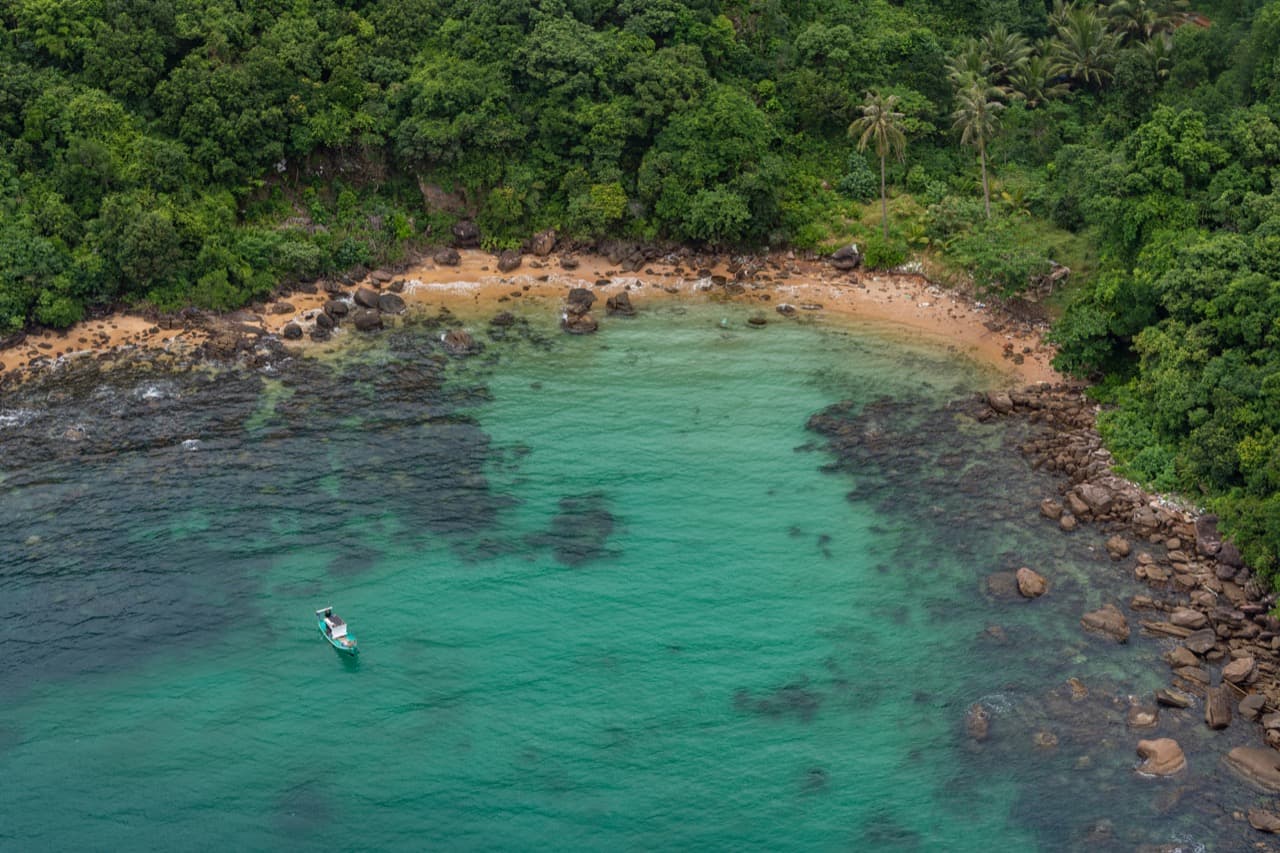
Phan Thiet airport — when it opens

As of mid-2026 there is no civilian airport in Phan Thiet. The military side of the airfield is already built (a 3,050-m runway, taxiways, navigation equipment), and the civilian part with the passenger terminal broke ground on 27 April 2026, with Sun Group as investor.
What is known about the future airport:
- Location: Mũi Né ward, Lâm Đồng province (Bình Thuận before the 2025 reform)
- Class 4E — able to handle Boeing 787 and Airbus A350
- Capacity: 2 million passengers a year by 2030
- Planned opening: 2028 (Sun Group promises to finish in two years)
Do not build a trip around that date, though. The project has a long history, and its deadlines have slipped before. Once the terminal is running, you will reach Phan Thiet without the 200-km transfer: instead of a flight to Ho Chi Minh City plus hours on the road, it is a direct flight and 15 minutes to your hotel.
For now the nearest airports are Ho Chi Minh City (SGN, 200 km) and Cam Ranh (CXR, 190 km). The full breakdown of flights and timings is in our Phan Thiet airport guide.
Taxis, tickets, berths: where people slip up

Taxi: insist on the meter. Street drivers offer a fixed fare — 99% of the time it is above the metered price. Get into a Mai Linh or Vinasun only, and ask for the meter. Or call a Grab — the price is shown up front and the driver cannot pick the long way.
Bus No. 1: do not look for a stop. Just stand by the road and raise your hand. The bus stops. There is no timetable on a board and no marked stops. It looks odd, but that is how public transport works here. Upside: it comes every 20–30 minutes.
Passport as a bike deposit. Many shops want your original passport. Safer is a copy plus a cash deposit ($50–100). If the shop refuses, photograph your passport and note the owner's address and phone number.
Book the transfer ahead. In high season (November–March) transfer cars can run short, especially over the New Year week. Book 3–5 days out via Klook or 12go.asia.
Sleeping bus: take the upper berth. The lower deck bounces more, passengers squeeze past, and you might end up next to a suitcase that did not fit in the hold. The upper berth is quieter.
SPT2 train: buy the ticket 3 days ahead. On weekends and Vietnamese holidays tickets sell out. Buying at the Ga Sài Gòn counter is more reliable than online — the railways site sometimes goes down.
Futa Bus: ask to be dropped at the Mui Ne turnoff. Not every bus swings into the resort strip — many go straight to the Phan Thiet terminal. Say "Mui Ne" to the driver at boarding and he will stop at the fork.
Grab at night: book early. After 21:00 there are few cars in Mui Ne. If you are having dinner in Phan Thiet, order your Grab back 5–10 minutes before you leave the restaurant.
Planning to linger in Phan Thiet? See the full Phan Thiet guide and, if you are heading up the coast, our Mui Ne guide.
FAQ
- A daytime open bus140,000 VND~$5.60departures every two hours from Phạm Ngũ Lão; on the new expressway the ride takes 4–5 hours
- A sleeping bus180,000 VND~$7.20costs a little more but saves a night in a hotel
- The SPT2 train~$16–18more comfortable (about 4 h) but runs
- A transferfrom ~$60per car, worth it for a group of four
Not a civilian one yet. The military side is already built, and the civilian part broke ground on 27 April 2026, with Sun Group as investor. Sun Group promises to finish in two years, which points to 2028. For now the nearest airports are Ho Chi Minh City (SGN, 200 km) and Cam Ranh (CXR, 190 km).
Yes, but with fewer cars than in big cities. It is usually fine in Phan Thiet town; along the Mui Ne strip the driver pool thins out, so a request can sit for 10–15 minutes or come back empty, especially after 21:00 and in the rain. When that happens, flag a metered taxi or a xe ôm. Uber does not operate in Vietnam. For short hops there is GrabBike (a motorbike taxi) from 20,000 VND (~$0.80).
- On the meter150,000–240,000 VND~$6–9.60
- Via Grab120,000–180,000 VND~$4.80–7.20
- The distance22 kmthe trip 17–30 minutes
- City bus No. 18,000–20,000 VND~$0.30–0.80covers the same route, but takes 35–40 minutes
Bus No. 1 — every 20–30 minutes from 5:30 to 19:00. The fare board inside shows 8,000–20,000 VND (~$0.30–0.80) depending on distance. There are no proper stops: stand by the road and raise your hand. The last service is around 19:00; after that it is taxi or Grab only.
Rental shops in Mui Ne usually do not ask — a passport or a copy plus a deposit is enough. But legally you need a Vietnamese licence or an International Driving Permit (IDP), and the IDP only counts together with a home licence that covers motorbikes. Without one the police can fine you 2,000,000–4,000,000 VND (~$80–160) under Decree 168/2024 for a bike up to 125 cc and 6,000,000–8,000,000 VND for anything bigger, and your insurance will refuse to pay out after a crash. You ride at your own risk.
- By transfer or taxi3–3.5 hoursover the ~190 km coastal road
- A transferfrom ~$25costs for the car
- No direct bus from Cam Ranhonly via Nha Trangwith a change, which takes 5–6 hours and makes little sense for the difference
- Guide
Phan Thiet Airport & How to Get There in 2026
Getting to Phan Thiet and Mui Ne: the nearest airports, the fast train and bus from Ho Chi Minh City, the new expressway and what the new airport changes.Phan Thiet Airport & How to Get There in 2026 - Guide
Phan Thiet Reviews 2026: Is It Worth Visiting?
Honest Phan Thiet and Mui Ne reviews: what travellers love and criticise, who it suits and whether it's worth it — with real quotes and a verdict.Phan Thiet Reviews 2026: Is It Worth Visiting? - Guide
Phan Thiet Map: Areas, Beaches & Where to Stay
A traveller's map of Phan Thiet and Mui Ne: the city vs the resort strip, beaches, dunes and sights — and where to base yourself.Phan Thiet Map: Areas, Beaches & Where to Stay