ATMs in Vietnam: how to withdraw cash with a foreign card in 2026
ATMs in Vietnam take Visa and Mastercard almost everywhere, but a single withdrawal is usually capped at 2–5 million VND (~$77–190), and the machine charges anything from 20,000 VND (~$0.80) to 3–4% of the amount. The only reliable figure is the one on the screen in front of you: Vietnamese banks don't publish what they charge cards issued abroad.
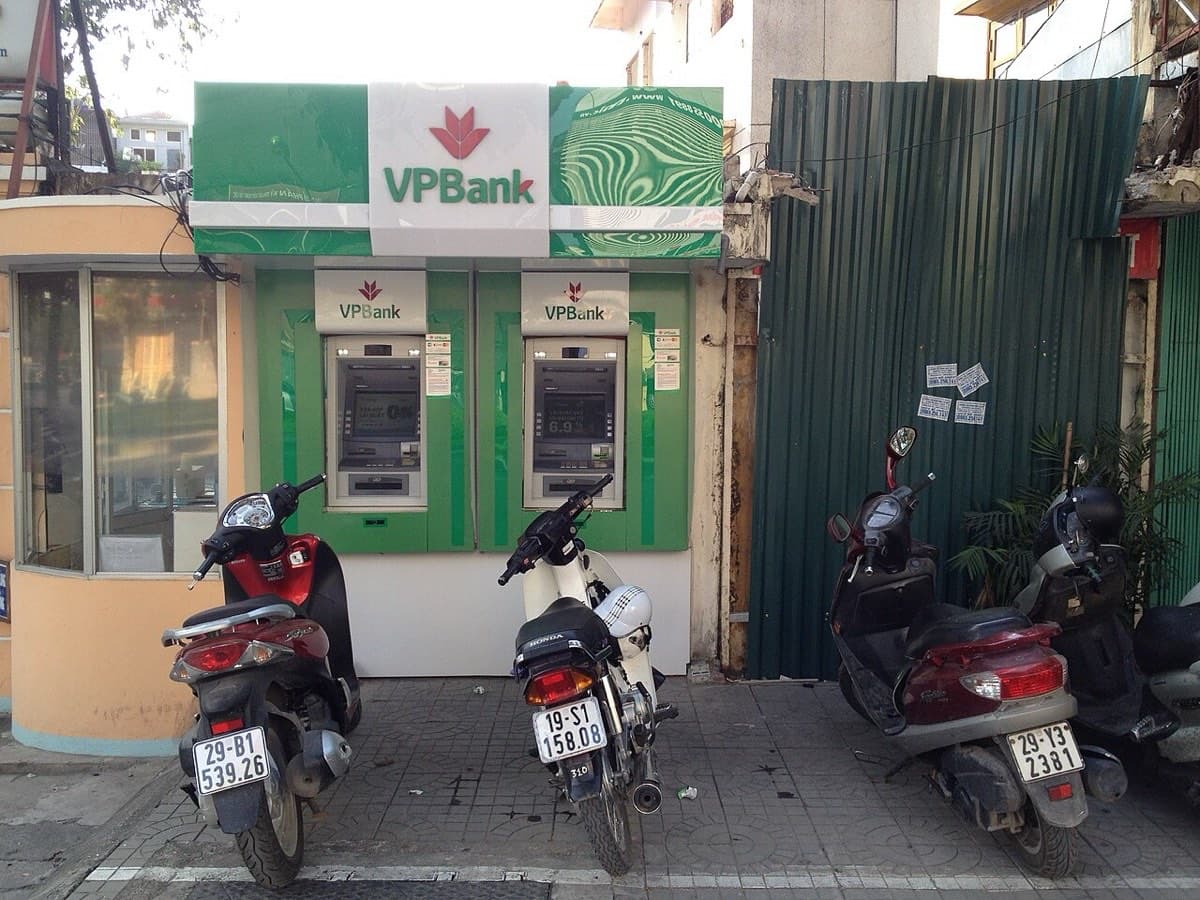
That is why the "fee-free ATM" lists online disagree with each other and go stale fast. Below is what travellers report for each bank, where those reports agree and where they don't, and how to avoid overpaying on the exchange rate. If this is your first trip, our first trip checklist covers the rest of the prep.
Which cards work at ATMs in Vietnam
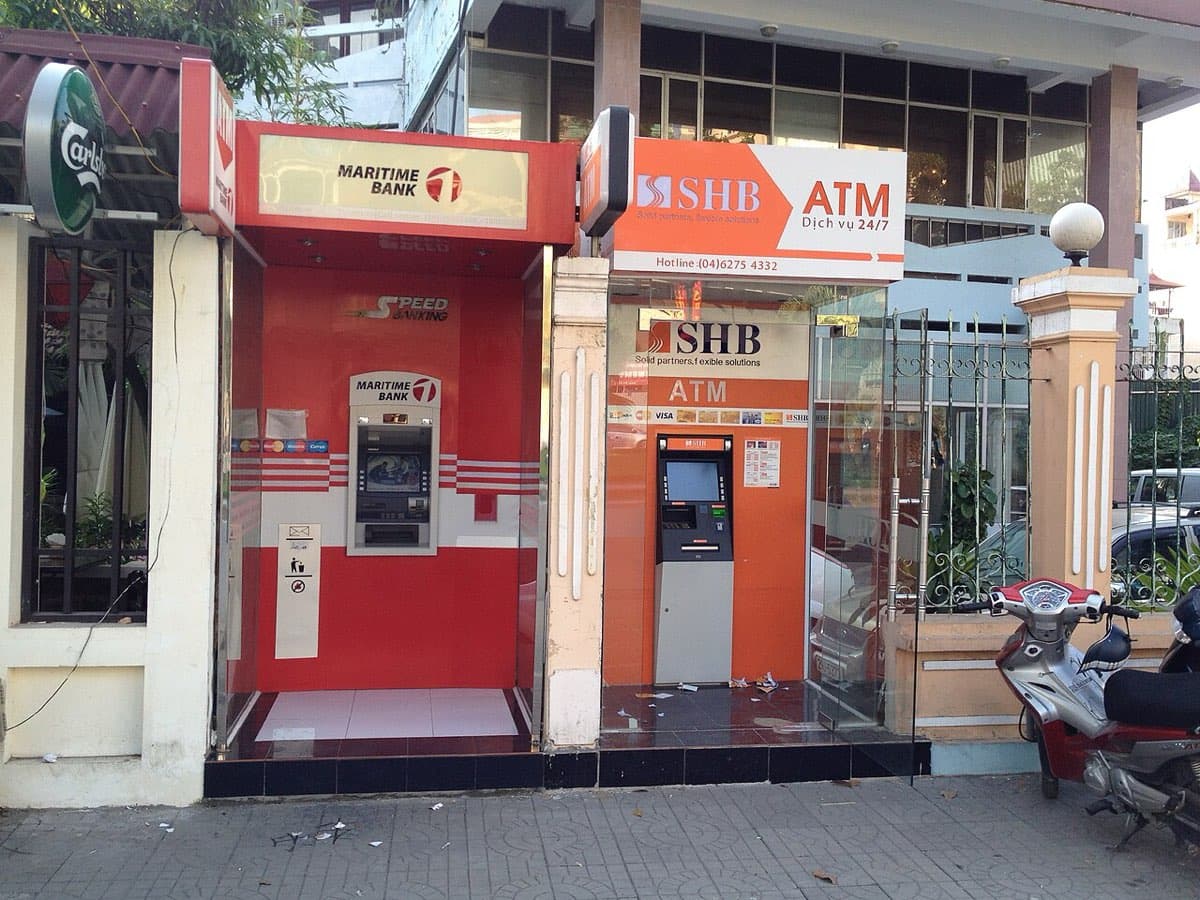
Visa and Mastercard debit and credit cards from the US, UK, EU, Australia, Singapore and most other countries work in Vietnamese ATMs, as do multi-currency cards like Wise and Revolut. Many machines also accept UnionPay and JCB; the network logos are on the machine or the booth door.
Before you fly, open your bank's app and check two things: that overseas transactions are switched on, and what your daily cash withdrawal limit is. Fraud systems sometimes decline the first transaction in a new country. If an ATM says "Declined" when you know the money is there, check your banking app for an alert before hunting for another machine.
Your own bank's fees matter as much as the ATM's. Look for "foreign transaction fee" and "out-of-network ATM fee" (or "ATM withdrawals abroad") in your card terms. Some fintech apps also show which local ATMs don't add a surcharge, so it's worth a look before you land.
How much an ATM withdrawal costs: two fees
Every ATM withdrawal in Vietnam can carry two separate charges, taken by two different banks.
The first comes from the Vietnamese bank that owns the ATM. Usually it's a flat 20,000–55,000 VND (~$0.80–2) per withdrawal; some banks charge a percentage instead: BIDV reportedly 3% with a 50,000 VND minimum, TPBank about 3.3%. The fee is supposed to appear on screen before you confirm, but not always. In late 2025 a traveller on the TripAdvisor Vietnam forum reported that TPBank took 165,000 VND (~$6.30) on a 5 million VND withdrawal without showing any fee on screen; it only turned up on the statement.
The second comes from the bank that issued your card: an ATM fee for using another bank's machine abroad, plus a foreign transaction fee on the conversion. Some cards charge nothing up to a monthly allowance; others take a percentage with a minimum in dollars or euros. Only your card terms can tell you.
Here is what it looks like on 5 million VND (~$190). At an ATM with a flat 50,000 VND fee, the local charge is 1%. At one charging 3.3%, it's 165,000 VND. Your own bank's fee comes on top. With a flat fee, the cost is the same for 2 million or 5 million, so take out the most the machine allows in one go.
ATM fees and limits by bank
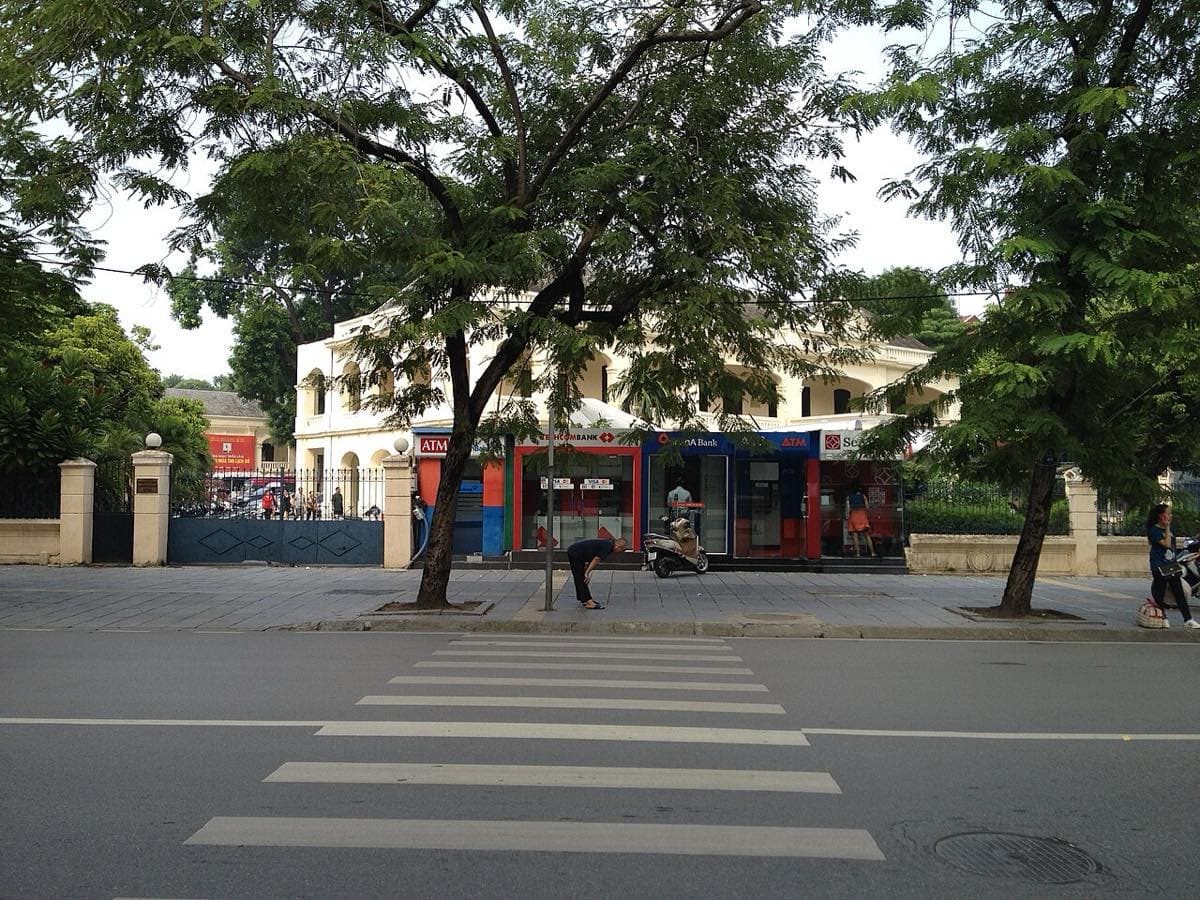
Fees and per-withdrawal limits differ by bank, and no bank publishes official figures for foreign cards. The table is compiled from 2026 travel guides and traveller reports from mid-2025 to May 2026. The last column shows how far those reports agree.
| Bank | Fee on foreign cards (as reported) | Limit per withdrawal | Do reports agree? |
|---|---|---|---|
| VPBank | 0 VND; the only fee report was later withdrawn | up to 10,000,000 VND (~$385), 5M at some machines | on fees yes, on limits no |
| TPBank | about 3.3% since mid-2025 | 2,000,000–5,000,000 VND | yes |
| Vietcombank | about 50,000–55,000 VND (~$2) | 2,000,000–5,000,000 VND | broadly |
| BIDV | 3% with 50,000 VND minimum, or about 55,000 VND flat | 2,000,000–3,000,000 VND | no |
| Agribank | from 22,000 VND to 220,000 VND on 5M | 3,000,000–5,000,000 VND | no |
| ACB | from 0 to 132,000 VND on 3M | 3,000,000 VND | no |
| Techcombank | 22,000–60,000 VND | 5,000,000 VND | no |
| Sacombank | about 55,000 VND | 2,000,000–3,000,000 VND | broadly |
Data current as of November 2026. The final fee is whatever the ATM shows before you confirm.
VPBank: why everyone recommends it, and the catch
VPBank is the ATM 2026 travel guides recommend most: no fee of its own on foreign cards and a limit of up to 10 million VND (~$385) per withdrawal. TripAdvisor forum reports from December 2025 to January 2026 agree: no VPBank fee on statements. One poster did report a fee, then withdrew the report when the statement showed a plain Mastercard rate with no ATM fee.
So try VPBank first, then check your statement after the first withdrawal: if you lost more than your card network's rate explains, switch banks. And don't count on the full 10 million. In the same reports some VPBank machines paid out 10 million VND in one go, others only 5 million.
TPBank: no longer free
A couple of years ago TPBank was recommended alongside VPBank, and many guides still say so. Several independent sources now report that since June 2025 TPBank charges foreign cards about 3.3% of the amount — roughly 165,000 VND (~$6.30) on 5 million, more than the flat fee at most banks. If a TPBank screen shows a percentage, cancel and walk to the next ATM.
Other banks
The big state banks (Vietcombank, BIDV, Agribank) have ATMs almost everywhere, small towns included, and you pay for that reach. Vietcombank reportedly charges about 50,000–55,000 VND per withdrawal. BIDV and Agribank reports vary the most: some say a flat 22,000–55,000 VND, others a percentage. In May 2026 an Agribank ATM in Sapa took 220,000 VND (~$8.50) on 5 million VND, about 4.4%.
ACB is listed as fee-free in some guides, but in January 2026 a traveller with a UK card paid 132,000 VND on 3 million VND there, even though the screen promised free withdrawals for European cards. Going by the reports, there is no reliable "second free bank" after VPBank.
Currency converter
Getting set up in Vietnam?
Visa fast-track, housing rentals, tours — our manager sorts it out for you, in English.
Exchange rate: why you should always pick VND
Some Vietnamese ATMs offer to charge you in your card's currency (dollars, pounds, euros) instead of dong. This is dynamic currency conversion (DCC): the ATM operator sets the rate instead of Visa or Mastercard, and it is almost always worse.
The screen shows two options: the amount in VND and the amount in your currency, sometimes with "Accept conversion" and "Decline conversion" or "Without conversion" buttons. Choose VND and decline the conversion. Your card network then converts at its own rate, and your bank adds its foreign transaction fee if your card has one.
Visa says ATMs must give you the choice and must not decide for you. If the required details are missing or you feel pushed towards one option, Visa recommends declining the conversion and reporting it to your card issuer.
"Merchants and ATMs should give you a choice to accept or decline currency conversion and must not choose on your behalf."Visa, checked 11/2026
Withdrawals don't always hit your account straight away. Travellers report the charge posting within 3–4 days at the rate on the day your bank processes it, so the amount in your app right after the withdrawal may differ from the final one.
How to withdraw cash from an ATM in Vietnam, step by step
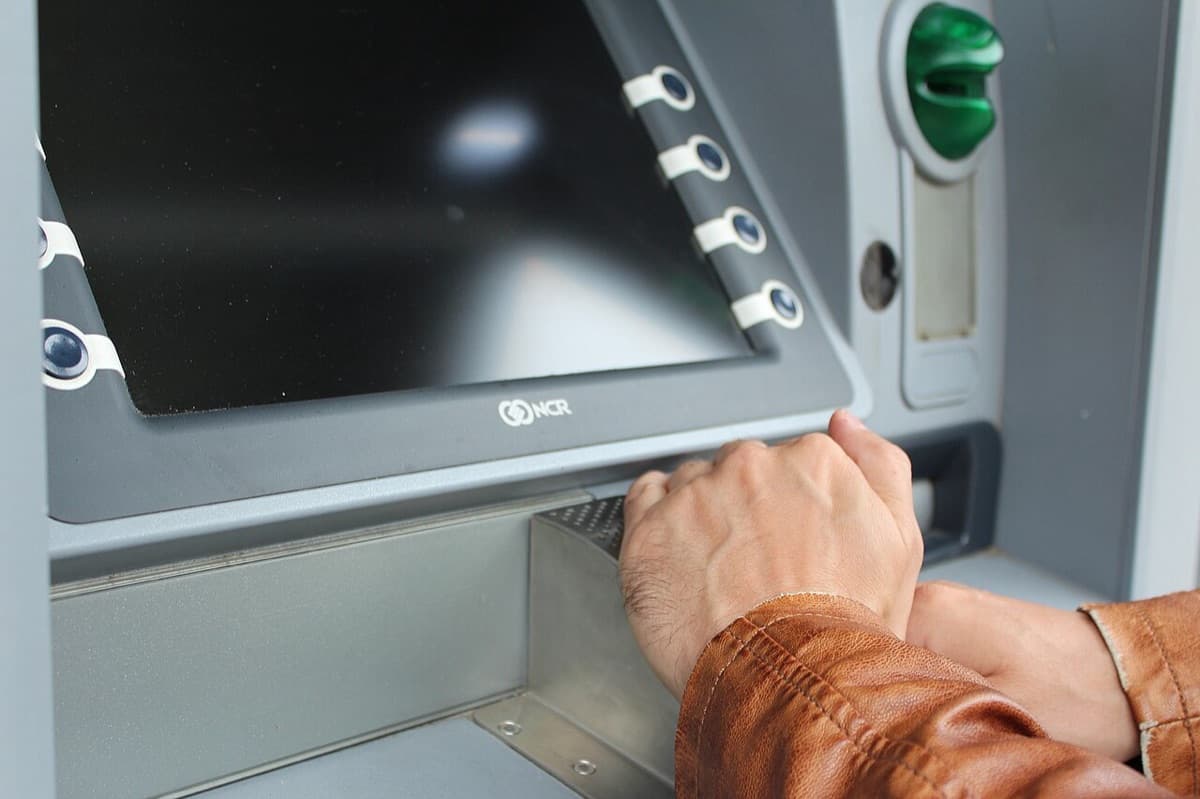
- Pick an ATM inside a bank branch or a shopping mall, ideally in daytime, with your card network's logo on it.
- Check the card slot and keypad: a loose or bulky overlay is a reason to use another machine.
- Insert your card and choose English.
- Choose cash withdrawal.
- Enter an amount close to the machine's limit, so a flat fee costs you a smaller share.
- Read the fee screen. If it shows a percentage and you'd rather use another bank, press "Cancel".
- When asked about conversion, choose VND and decline the conversion.
- Take your card, then the cash and the receipt. Count the notes before you walk away.
Fast Track — no queue at the border
5–10 minutes instead of an hour in the immigration queue
from$11per passenger
Where to find ATMs: airports and cities
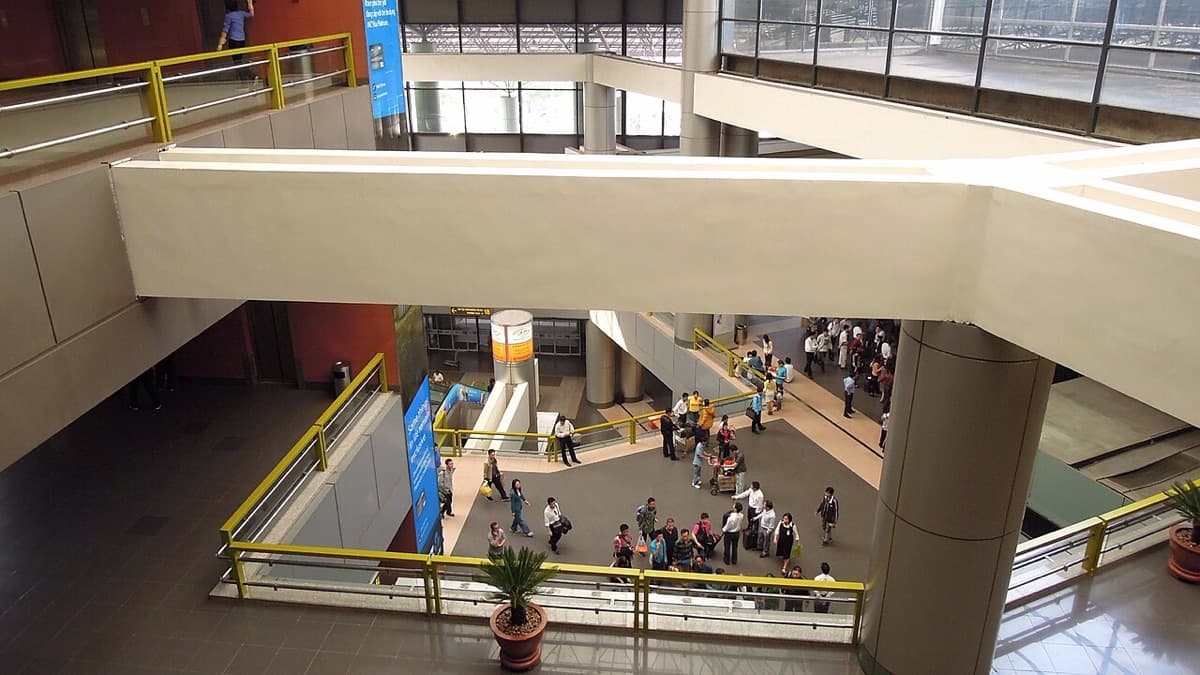
Airports, bank branches and shopping malls all have ATMs wherever tourists go. According to the Vietnam National Authority of Tourism, ATMs stand just outside the entrances of the country's airports. At Hanoi's Noi Bai there is also an ATM inside the immigration area, so you can pay a visa-on-arrival fee in dong. Da Nang has no ATM in the immigration area, so bring USD or VND for any fees there.
"ATMs can be found just outside the entrances of Vietnam's airports. Most local ATMs dispense sums of 2,000,000 VND to 5,000,000 VND per transaction."Vietnam National Authority of Tourism, checked 11/2026
At the airport, take out just enough for the taxi or transfer and your first day. There are fewer banks to choose from, and reports include some pricey withdrawals: in December 2025 a BIDV ATM at an airport took 110,000 VND (~$4) on just 2 million VND. You can get the rest in town.
In cities, use ATMs in bank branches and malls: they're less likely to be empty or tampered with, and if something goes wrong there's bank staff nearby. Empty or broken machines are common. In December 2025 Hoi An's only VPBank ATM was often out of order, and in January 2026 a traveller found the Da Nang VPBank machine empty and used the MB Bank next door. Know two or three banks near where you stay, not just one.
ATM safety: skimmers and swallowed cards
The Government of Canada's travel advice (updated 19 October 2026) says card and ATM fraud is common in Vietnam, including schemes where victims are drugged and taken to withdraw cash. The precautions are simple: use ATMs in branches or malls rather than a lone machine on a dark street, cover the keypad when you type your PIN, and don't accept "help" from strangers at the machine. Other common tricks are covered in our guide to scams in Vietnam.
"Credit and debit card as well as ATM fraud occurs frequently, including scams involving drugging victims and taking them to ATMs to withdraw money."Government of Canada, updated 19 October 2026
If an ATM keeps your card, freeze or block it in your bank's app or by phone straight away, so nobody can use it if the card is retrieved. Then go to a branch of the bank that owns the ATM with your passport. Vietnamese banks return retained cards at the branch, but for cards from foreign banks the process can differ, and sometimes a replacement is quicker. Step-by-step actions and bank hotlines are in our guide to a blocked card or account. That's why it pays to travel with two cards from different banks and keep them apart.
ATM or exchanging cash
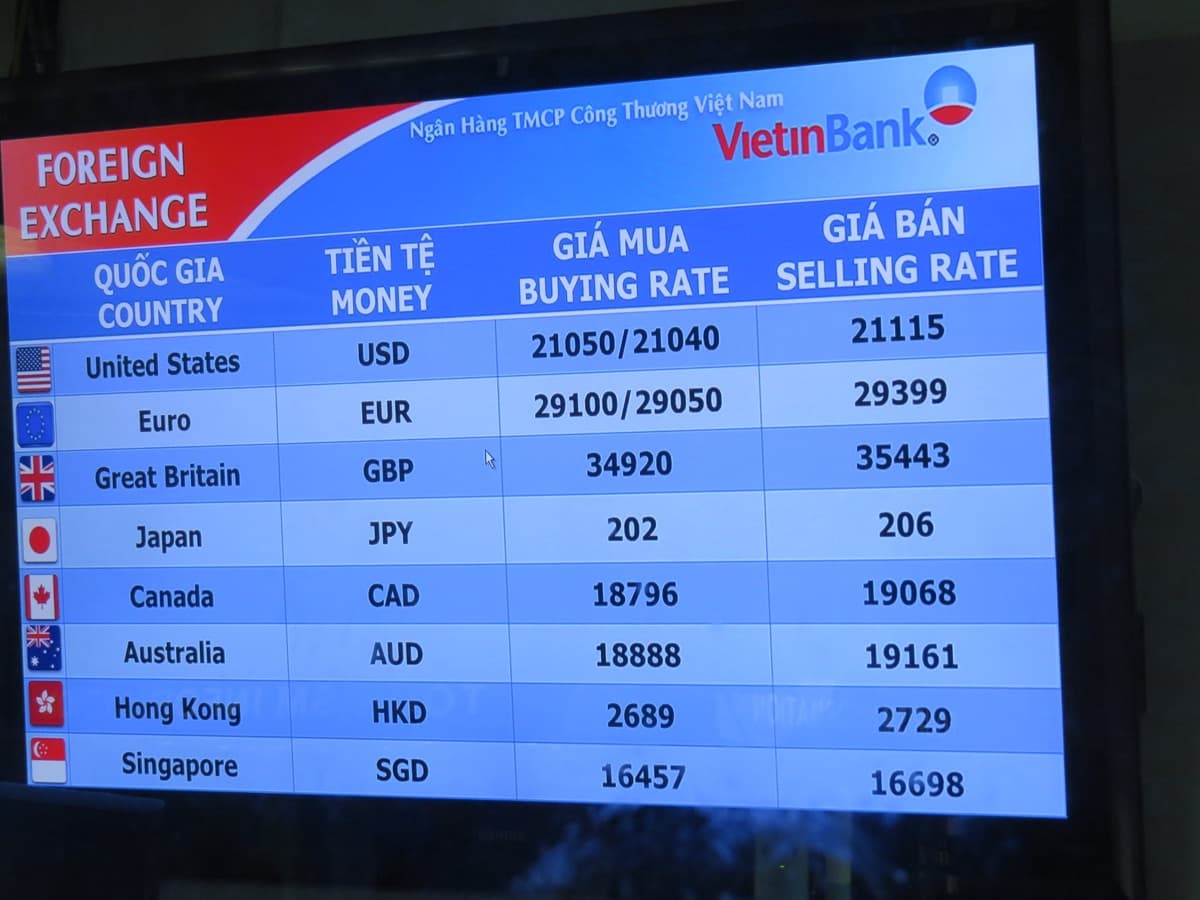
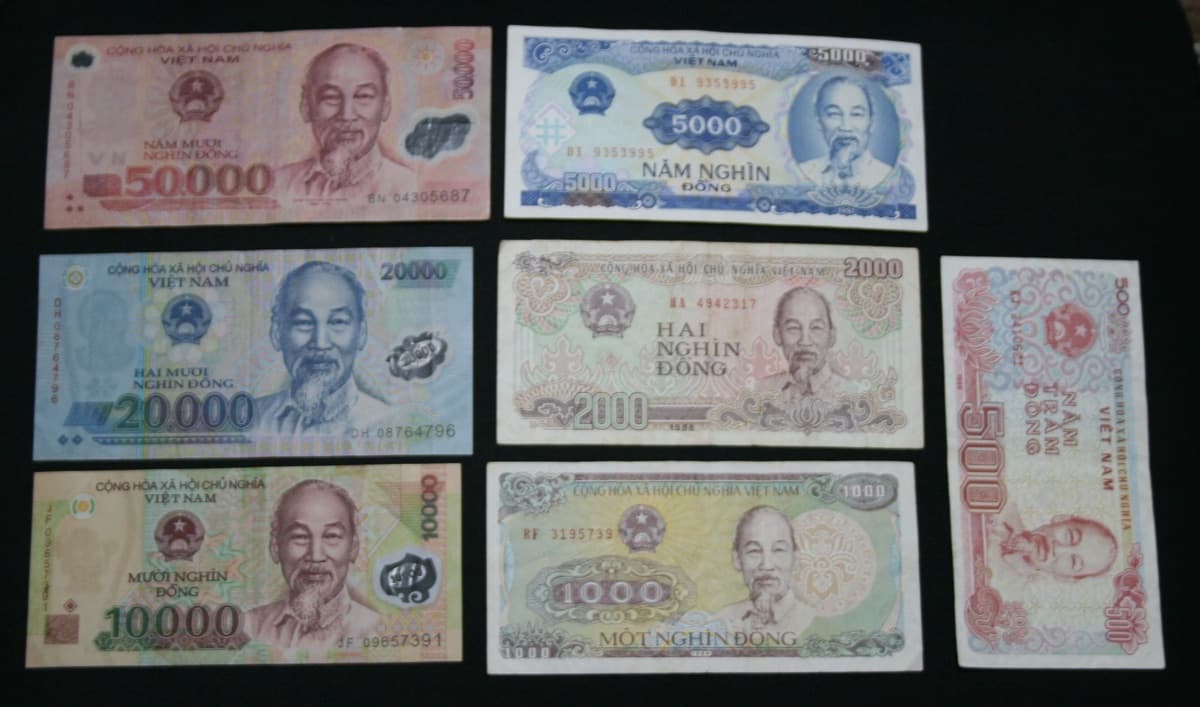
ATMs make sense when you need cash in smaller amounts and your card has fair overseas terms. If your bank charges a percentage on each withdrawal plus a foreign transaction fee, and the Vietnamese ATM adds 50,000 VND on top, bringing US dollars and exchanging them locally can work out cheaper. Where and how to exchange is covered in our guide to the Vietnamese dong exchange rate.
Many travellers combine both: some dollars as a reserve for the first days or for a swallowed card, plus withdrawals in town at the maximum amount. To see how much cash typical spending takes, check our overview of prices in Vietnam. If you're staying long-term, a Vietnamese bank account is worth looking into.
Common ATM mistakes
- Accepting the conversion. Seeing the amount in your own currency feels convenient, but the ATM sets the rate. Choose VND.
- Trusting old fee lists. "TPBank is free" stopped being true in mid-2025. Watch the screen and check your statement after the first withdrawal.
- Travelling with one card. An ATM can keep it and your bank can block it over a suspicious transaction. A second card from another bank, or some dollars in reserve, solves that.
- Not knowing your own bank's fees. Sometimes your issuer charges more than the Vietnamese ATM. Check before you fly.
FAQ
There are two limits. The ATM pays out usually 2–5 million VND per withdrawal, and VPBank reportedly up to 10 million VND. How many withdrawals you can make in a row is up to your bank: the daily cash limit abroad is in your card terms and can often be changed in the app. If you need more, make several withdrawals or raise the limit before your trip
Usually for one of three reasons:
- the amount is above that machine's limit — try 3 or 5 million VND instead of 10
- your bank blocked the transaction as suspicious — check your banking app for alerts
- the ATM ran out of cash — try the next one
If every ATM declines you, call your bank
Take a photo of the ATM and its ID number and keep the receipt if one came out. Then report it to your bank: it issued the card, so it handles the disputed transaction. If the ATM is inside a branch, tell the staff right away, which helps the investigation
Only for the first few hours: taxi, transfer, SIM card. Airports have ATMs, but fewer banks and sometimes higher fees than in town. Take out the bulk of your cash at bank branches in the city
Once, if the ATM charges a flat fee: 50,000 VND on 5 million is 1%, on 1 million it's 5%. With a percentage fee, like TPBank's, the amount makes no difference, which is one more reason to look for ATMs with a flat fee or none
Read next: Dong exchange rate · Vietnam travel budget · Scams in Vietnam · Bank account in Vietnam
VietnamSpot on InstagramTips, lifehacks and news for living in VietnamFollow


- Money
Freelancer Taxes in Vietnam 2026: What Nomads Owe
Tax residency, PIT rates, social contributions, double-taxation treaties and whether remote work is legal for foreign freelancers in Vietnam.Freelancer Taxes in Vietnam 2026: What Nomads Owe - Money
Da Lat prices 2026: hotels, food, tours — a full cost guide
What Da Lat costs in 2026: hostels from $4, pho from $1.20, canyoning from $70. Daily and weekly budgets at three levels, plus how to spend less.Da Lat prices 2026: hotels, food, tours — a full cost guide - Money
Phu Quoc Prices 2026: Food, Hotels & Daily Budget
How much Phu Quoc costs in 2026: food, transport, hotels and attractions in USD, daily and trip budgets, and why the island runs pricier than the mainland.Phu Quoc Prices 2026: Food, Hotels & Daily Budget