Vietnam in January: weather, resorts and costs
January in Vietnam is peak season in the south: 30–33 °C, water 26–28 °C, almost no rain. Phu Quoc and Mui Ne have their best conditions of the year right now. The north is cold — 17–20 °C, no swimming — but great for sightseeing in Hanoi and Ha Long Bay. Below: a weather table by region, resort comparisons, 2026 costs and what to pack.

January at a glance
- Where to go
- Phu Quoc and Mui Ne
- Sea in the south
- 26–28 °C
- Rain in the south
- almost none
- vs December
- +15–30%
Below you'll find a detailed weather table for every region, a side-by-side of the resorts, real 2026 costs in USD, and practical advice: what to pack, what to do, and where not to go for a beach holiday. January is one of the three best months to visit — but only if you pick the right coast.
Vietnam weather in January by region: map, air, sea

January is one of the most contrasting months in Vietnam. The south is dry and hot, the centre is changeable, and the north has what counts locally as real winter. The temperature gap between Hanoi and Phu Quoc reaches 15 degrees — effectively two different countries.
Green pins mark beach season in January, blue ones are worth it for sightseeing and cruises rather than the sea, and the amber one is a beach with caveats. Tap a pin for temperature, sea and how much rain to expect.
- Phu Quoc (Phú Quốc): 30–32°C, sea 26–28°C — Rain: 2–3 days (10–20 mm) — Best time of year
- Phan Thiet / Mui Ne (Phan Thiết / Mũi Né): 29–33°C, sea 25–27°C — Rain: 1–2 days (5–10 mm) — Perfect for the beach
- Hanoi (Hà Nội): Day 17–20°C, night 7–16°C — Rain: 6–8 days (20–30 mm) — Sightseeing, not the beach
- Sapa (Sa Pa): Colder than Hanoi: nights down to 7°C — Fog, sometimes frost on the peaks — Sightseeing, not the beach
- Ha Long (Hạ Long): Day 17–19°C, night 13–15°C — Rain: 6–8 days (20–25 mm) — Bay cruise
- Da Nang (Đà Nẵng): 22–24°C, sea 22–23°C — Rain: 10–12 days (80–100 mm) — Surfing, sightseeing
- Hue (Huế): 22–24°C, sea 22–23°C — Rain: 10–12 days (80–100 mm) — Sightseeing
- Ho Chi Minh City (TP. Hồ Chí Minh): Day 30–33°C, night 22–24°C — Rain: 2–3 days (10–15 mm) — Sightseeing, nightlife
- Nha Trang (Nha Trang): 26–27°C, sea 23–25°C — Rain: 5–7 days (35–50 mm) — Beach, with caveats
| Region | Day t° | Night t° | Sea t° | Rain, mm | Rainy days | Best for |
|---|---|---|---|---|---|---|
| Hanoi | 17–20 °C | 7–16 °C | — | 20–30 | 6–8 | Sightseeing, not the beach |
| Ha Long | 17–19 °C | 13–15 °C | — | 20–25 | 6–8 | Bay cruise |
| Da Nang, Hue | 22–24 °C | 17–19 °C | 22–23 °C | 80–100 | 10–12 | Surfing, sightseeing |
| Nha Trang | 26–27 °C | 21–23 °C | 23–25 °C | 35–50 | 5–7 | Beach, with caveats |
| Ho Chi Minh City | 30–33 °C | 22–24 °C | — | 10–15 | 2–3 | Sightseeing, nightlife |
| Phan Thiet, Mui Ne | 29–33 °C | 21–23 °C | 25–27 °C | 5–10 | 1–2 | Perfect for the beach |
| Phu Quoc | 30–32 °C | 22–24 °C | 26–28 °C | 10–20 | 2–3 | Best time of year |
The north hits its coldest. In Sapa the temperature drops to 7 °C at night, and thick fog rolls in by morning. Most hotels have no heating — ask for a space heater at check-in.
The centre — in Da Nang and Hue the rainy season is formally ending, but rainfall is still noticeable: 80–100 mm over the month. Nha Trang is markedly drier, with the dry season already beginning, though the sea is still choppy from the north-east monsoon.
The south is at its peak. Phu Quoc, Phan Thiet and Mui Ne are dry, sunny, 30 °C and up. Showers are rare and short, usually under half an hour. More in the Phan Thiet weather guide.
Weather figures are for 2026. Sources: climate-data.org, weatherspark.com.
Where to go in Vietnam in January — resorts by region
January is high season in the south, and that is where you go for the beach. The centre suits travellers who don't mind waves, and the north is for sightseeing and mountain trekking.
Southern Vietnam — the best pick for the beach
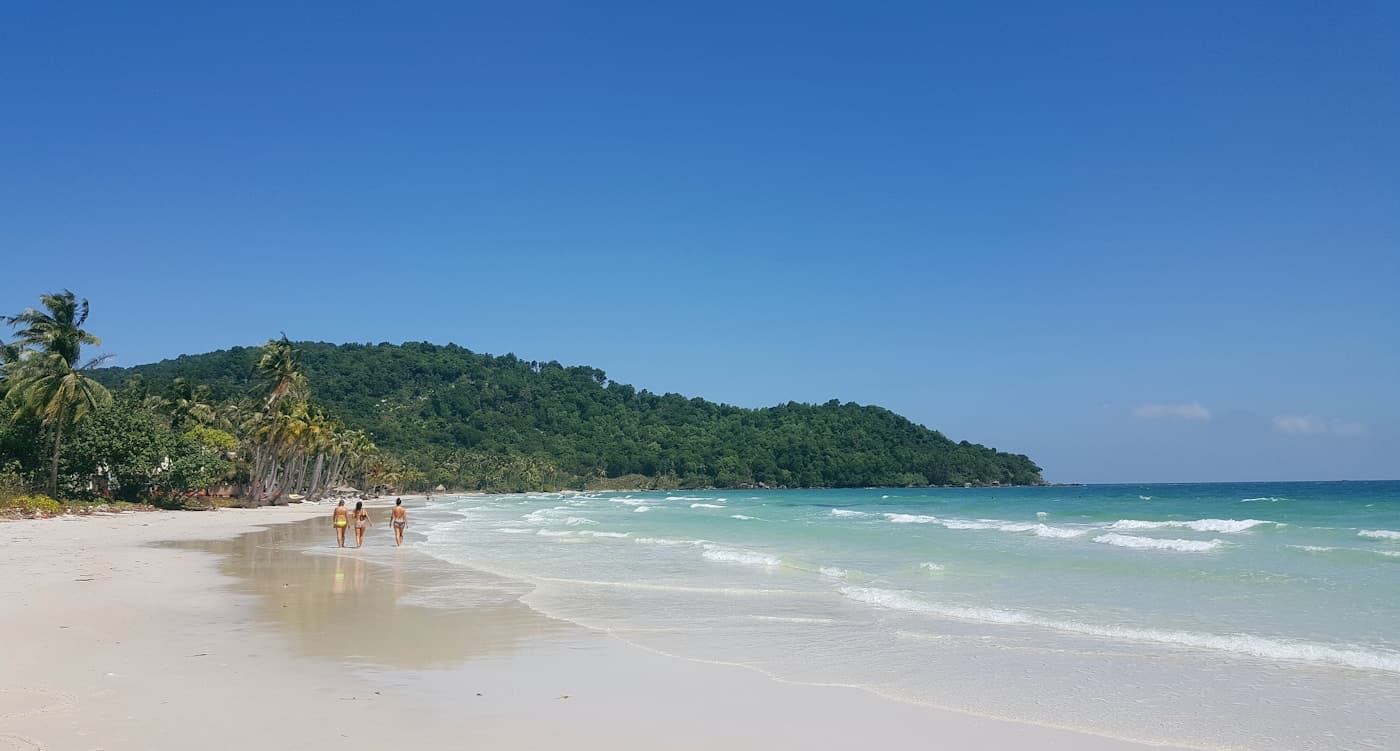
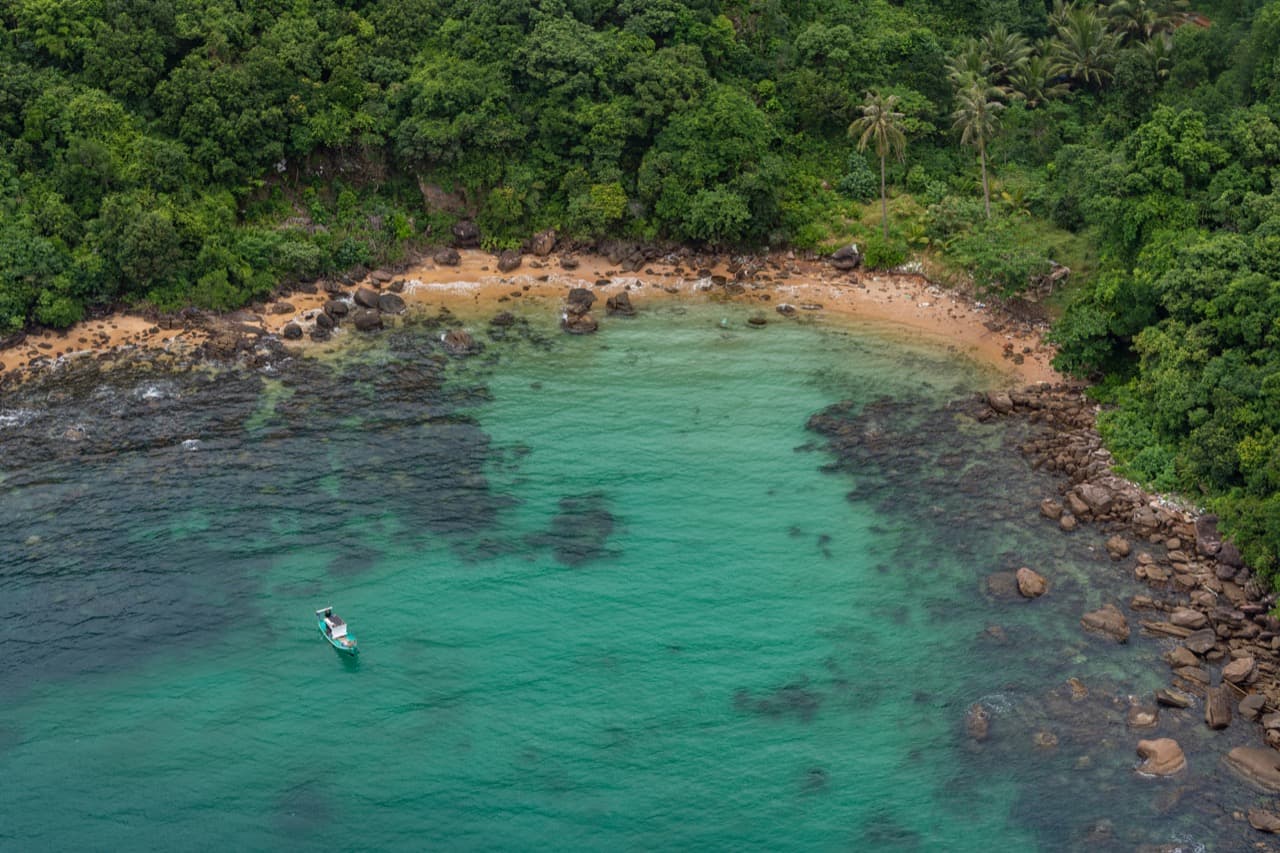
Phu Quoc is at the peak of its dry season. Water 26–28 °C, rain on just 2–3 days a month, and even then a short afternoon downpour. The best beaches: Bãi Sao (Sao Beach) — white sand and a gentle entry; Bãi Dài (Long Beach) — a wide strip with fewer people. Diving off Turtle Island offers visibility up to 15 metres and water 27–30 °C. For the full picture of the island, see the Phu Quoc guide.
Phan Thiet and Mui Ne are ideal for kitesurfing: January brings steady 15–25-knot wind. The sea is calm on the main beaches, with waves out at the kite spots. It works for families too: gentle entry, few jellyfish. The red and white sand dunes are a sight in themselves — sunrise over them looks otherworldly.
Con Dao — an archipelago of 16 islands with a national park. It is harder to reach (a 45-minute flight from Ho Chi Minh City), which is exactly why there are no crowds. Water 27 °C, diving with turtles. Ideal if you're after solitude.
Ho Chi Minh City isn't a resort, but it's a great base for day trips: the Mekong Delta, the Cu Chi tunnels, and Bến Thành (Ben Thanh) Market. It's hot — 30–33 °C — but dry. More in the Ho Chi Minh City guide.
Central Vietnam — with caveats
Nha Trang is technically at the start of its dry season, but the north-east monsoon is still working: the sea is choppy, and red flags go up on the city beach at Trần Phú (Tran Phu). Showers are brief and the temperature is comfortable (26–27 °C). If you're not tied to the beach, the town is a solid choice: it's among the cheapest resorts in Vietnam, with plenty to do — from mud baths to night markets. See the Nha Trang guide.
Da Nang gets waves up to 2 metres at Mỹ Khê (My Khe Beach). Not the best time to swim, but just right for surfing. The Marble Mountains, the Linh Ung pagoda with its Lady Buddha statue, and a trip to medieval Hoi An (30 minutes by taxi) make for a strong sightseeing programme. More in the Da Nang guide.
Northern Vietnam — for sightseeing
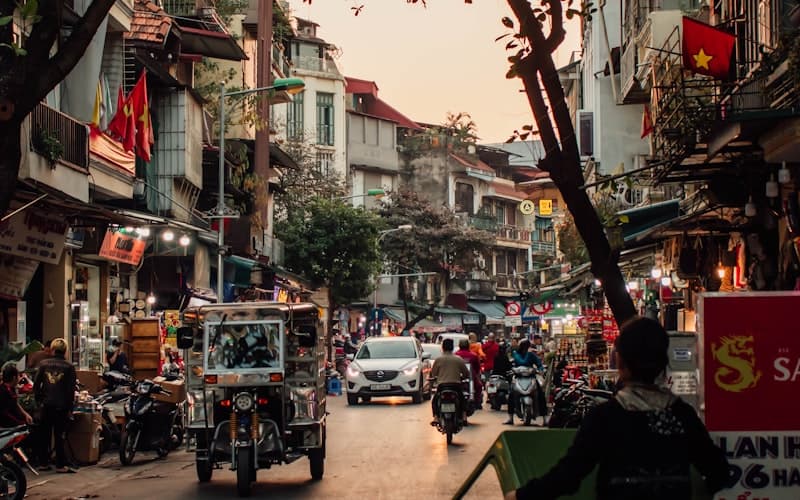
Hanoi — 17–20 °C, cloudy, with drizzle. Swimming? No. But the Old Quarter, the Ho Chi Minh Mausoleum, the Temple of Literature and the street food are all nicer at 18° than at 35° in summer. A bowl of hot phở in the drizzle is the authentic Hanoi experience. Everything about the city is in the Hanoi guide.
Ha Long Bay — cruises run year-round. January is foggy, but that lends the karst cliffs a mysterious atmosphere. There are fewer tourists than in summer and cruise prices are 20–30% lower. A day tour runs from about 1,500,000 VND (~$60), and a two-day cruise with an overnight on a junk from about 3,500,000 VND (~$140).
The wind is noticeable on the top deck when the boat goes at full speed, but jeans, a sweater and a light autumn jacket with a hat sort that out… Kayaking was on the programme; it takes place in a quiet spot between the islands and the pearl farmsNeighbor_Hanoi, Vinsky forum, 2012, translated by VietnamSpot
Sapa — rice terraces, Hmong hill villages and the trek up Fansipan (3,143 m, the highest point in Indochina). Nights drop to 7 °C, and frost sometimes settles on the peaks. A warm jacket and trekking shoes are essential. Check the current Fansipan cable car fare on the Sun World website before you go.
Fast Track — no queue at the border
5–10 minutes instead of an hour in the immigration queue
from$11per passenger
Can you swim in Vietnam in January?
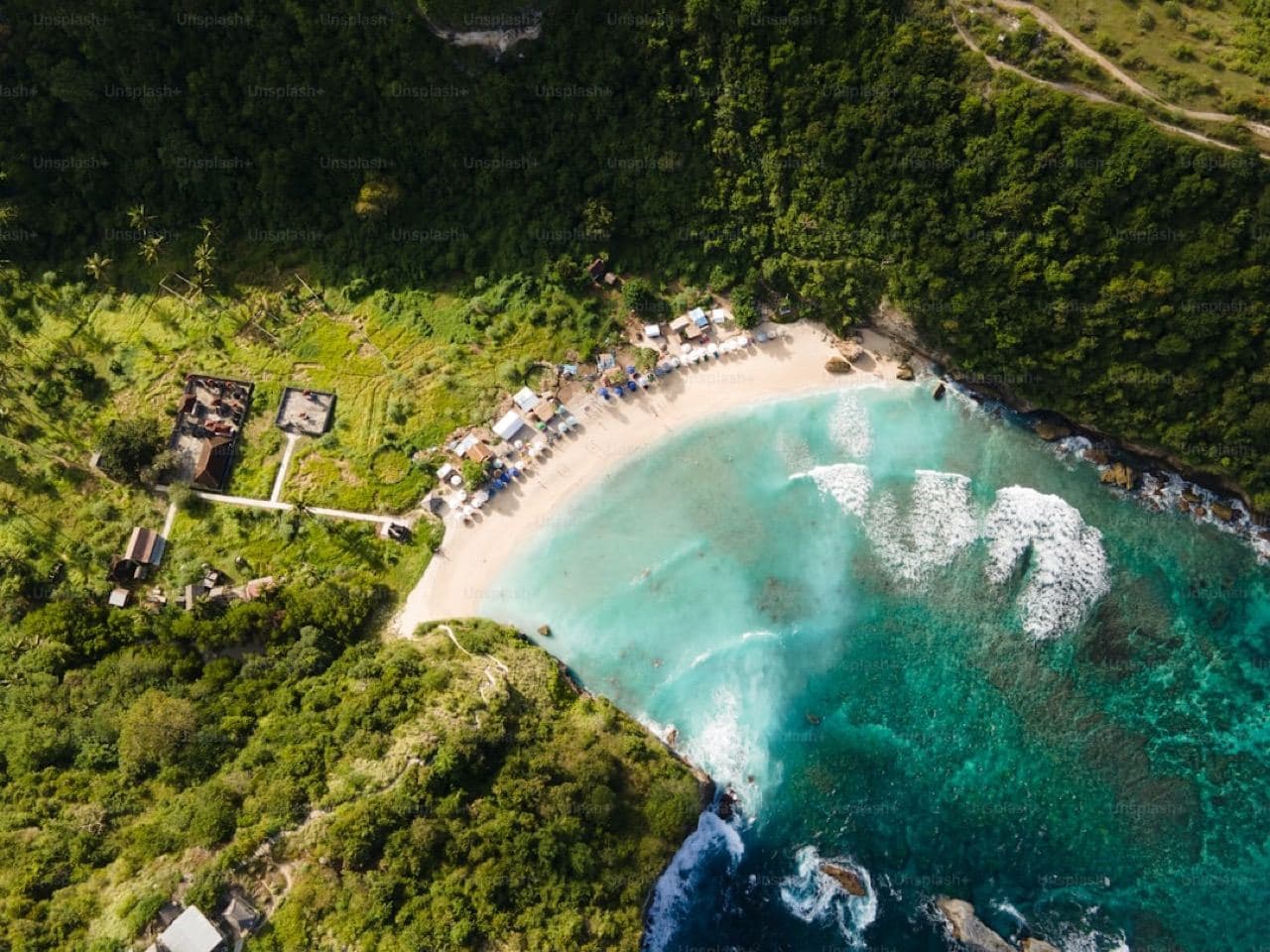
Swimming is comfortable in southern Vietnam in January — water 25–28 °C, a calm sea. In the centre it's a maybe: the water is warm (23–25 °C), but waves and wind spoil it. In the north, swimming is off the table.
| Resort | Sea t° | Waves | Comfort |
|---|---|---|---|
| Phu Quoc | 26–28 °C | Calm | Excellent |
| Phan Thiet | 25–27 °C | Gentle | Excellent |
| Mui Ne | 25–27 °C | Moderate (kite spots) | Good |
| Nha Trang | 23–25 °C | Moderate–high | With caveats |
| Da Nang | 22–23 °C | High | Surfing only |
| Ha Long | — | — | No |
On Phu Quoc and in Phan Thiet you can swim all day. The entry is gentle and there are almost no jellyfish in winter. Bãi Sao on Phu Quoc is one of Vietnam's best beaches: fine white sand and turquoise water, straight off a postcard.
Nha Trang is a lottery. One day it's calm and turquoise; the next, waves and murky water from the wind. Lifeguards raise red flags and swimming is banned. If you're coming for the beach, April to August is a better bet.
This year we were there at the end of January: it was windy, we swam little, but still managed to get sunburnt… It's down to luckingener59, Vinsky forum, 2015, translated by VietnamSpot
Da Nang isn't swimming season. But if you surf, January is ideal. The waves are consistent and the water isn't freezing. My Khe Beach has surf schools — a board with an instructor runs from 500,000 VND (~$20) a session.
How much a trip to Vietnam costs in January

January is high season, and prices reflect it. Flights and hotels run 15–30% higher than in December. But costs on the ground stay low — this is still Southeast Asia.
Getting there
January is peak arrival season, so book flights well ahead — fares to Vietnam's three main hubs (Hanoi, Da Nang, Ho Chi Minh City) climb over New Year. Most of Southeast Asia connects through Bangkok, Singapore or Kuala Lumpur; long-haul travellers usually route via the Gulf (Doha, Dubai) or East Asia (Seoul, Hong Kong). Watch for New Year and pre-Tet spikes on domestic flights.
Costs on the ground
- Lunch at a café80,000–150,000 VND ≈ $3–6
- Dinner at a restaurant200,000–500,000 VND ≈ $8–20
- Taxi (base fare)16,000–24,000 VND ≈ $0.60–1
- Taxi per km5,500–9,500 VND ≈ $0.20–0.40
- 3-star hotel (night)400,000–800,000 VND ≈ $16–32
- 4–5-star hotel (night)1,500,000–5,000,000 VND ≈ $60–200
- Spa / massage (1 hour)200,000–400,000 VND ≈ $8–16
Vietnam is still one of the most affordable destinations in Asia. Budget for two: about $30–50 a day for food, transport and activities — hotel not included. Cards are widely accepted in cities and at hotels, but keep cash for markets, street food and taxis. Prices are in Vietnamese dong (VND); at roughly 26,000₫ to the dollar, mental maths is easy.
Prices current as of July 2026. Rates and conditions can change — confirm before you travel.

Things to do in Vietnam in January
January opens the door to every kind of trip: from lazy beach days doing nothing to serious adventure. Here are the main options.
Beach and water sports
Kitesurfing in Mui Ne — January falls in the windy season. Wind 15–25 knots, warm water, dozens of schools on the shore. Lesson prices are in the Phan Thiet and Mui Ne guide.
Diving on Phu Quoc — clear water, 26–28 °C. Turtle Island (Hòn Quy) has coral, sea turtles and reef fish. Two dives with gear from 2,000,000 VND (~$80).
Surfing in Da Nang — big waves at My Khe Beach. A board rental from 300,000 VND (~$12) a day.
Tours and sights
Ha Long Bay — a UNESCO site. A day cruise from 1,500,000 VND (~$60), a two-day trip with an overnight on a junk from 3,500,000 VND (~$140). January has fewer tourists and lower prices.
The Mekong Delta — a full-day river cruise from Ho Chi Minh City. Floating markets, fruit orchards, craft villages. From 800,000 VND (~$32) with transfers.
Da Lat — a mountain resort at 1,500 m, 18–22 °C. Waterfalls, coffee plantations and the "Crazy House" (Crazy House). A flight from Ho Chi Minh City from 700,000 VND (~$28). Da Lat grows Vietnam's best coffee — robusta and arabica — and a coffee-farm tour runs from 400,000 VND (~$16).
VinWonders (Nha Trang, Phu Quoc) — a water park, rides, an aquarium and a safari zoo on Phu Quoc. A VinWonders Nha Trang ticket with the cable car is 1,050,000 VND (~$40), or 700,000 VND (~$27) after 4 pm, per the park's price list as of September 2026. Check Phu Quoc prices on the park's website. A must-stop for families with kids.
Fruit in season
January isn't the peak of the fruit season, but the choice is still impressive. At markets and supermarkets:
- Mango — start of the season, the green varieties are already sweet. From 30,000 VND/kg (~$1.20)
- Pineapple — juicy, sweet, year-round. From 15,000 VND each (~$0.60)
- Dragon fruit (pitaya) — pink or white. From 20,000 VND/kg (~$0.80)
- Pomelo — a huge citrus, sweet without bitterness. From 25,000 VND each (~$1)
- Coconut — from 15,000 VND each (~$0.60), sipped through a straw right on the beach
- Sapodilla — a brown fruit with a caramel taste that few tourists try. From 30,000 VND/kg (~$1.20)
The main fruit markets are Ben Thanh (Ho Chi Minh City), Dam (Nha Trang) and the Phu Quoc night market. Haggling is expected — halve the first price offered.
Events in January — and the run-up to Tet

The main event of January is the international New Year on 1 January. In Ho Chi Minh City fireworks go up over the Bến Nghé riverside, in Hanoi by Hoan Kiem Lake, and in Nha Trang on the city beach. Restaurants and clubs throw parties, with cover charges ranging from free to 1,000,000 VND (~$40) at the top venues.
The second half of January is the run-up to Tết, the Vietnamese Lunar New Year. In 2027 Tet falls on Saturday 6 February, so the week before it (30 January to 5 February) takes in the end of January. The flower markets and fairs are already up by then. Streets fill with hoa mai (apricot) and hoa đào (peach) trees — the symbols of Tet in the south and north. Pre-holiday Hanoi has an atmosphere all its own.
A real treat is visiting the flower markets before Tet. In Ho Chi Minh City the main one is on Nguyễn Huệ street, and in Hanoi by Hoan Kiem Lake. Thousands of pots of apricot trees, orchids and chrysanthemums — a sight and a scent you won't forget.
What to pack for January
January Vietnam means three different wardrobes. Pack for your route.
For the south (Phu Quoc, Mui Ne, Ho Chi Minh City)
- T-shirts, shorts, light trousers
- Swimwear and beach shoes
- SPF 50+ sunscreen (the sun is fierce — you can burn in 30 minutes)
- Sunglasses and a hat
- A light rain jacket — for a short downpour
- Insect repellent (especially for Phu Quoc)
For the centre (Nha Trang, Da Nang)
- Everything for the south, plus:
- A windbreaker — the evenings get breezy
- A warm sweater or hoodie for evening walks
- Closed shoes for mountain excursions
For the north (Hanoi, Sapa)
- A warm jacket (nights in Sapa drop to 7 °C)
- A fleece or thermals
- Jeans or heavier trousers
- Trainers or trekking boots
- An umbrella — near-daily drizzle
- A scarf and gloves — handy for Sapa
For any region — a plug adapter (Vietnam uses types A and C; European plugs don't fit everywhere), a power bank (if you're doing day trips), and a dry bag for documents and electronics. Set up an eSIM before you fly, or buy a local SIM at the airport with your passport — either way you'll have data from the moment you land.
One universal tip: bring a small first-aid kit. Activated charcoal, an anti-diarrhoea remedy, plasters, antiseptic and a fever reducer. Vietnamese food is delicious, but your stomach may take a day or two to adjust.
Rainy-day ideas
January rain in Vietnam is short and predictable: usually under half an hour after lunch, then sun again. But if a day turns grey, here are the proven options.
- VinWonders (Nha Trang, Phu Quoc) — indoor water-park zones, rides, an aquarium. In Nha Trang, tickets start at 700,000 VND (~$27) after 4 pm
- Spa and massage — from 200,000 VND (~$8) an hour. In Nha Trang and Ho Chi Minh City there's a spa on every corner
- Mud baths (Nha Trang, Thap Ba) — hot mineral baths and mud treatments. From 300,000 VND (~$12)
- Cooking classes (Hoi An) — make bánh mì, spring rolls and cao lầu with a local chef. From 500,000 VND (~$20)
- The War Remnants Museum (Ho Chi Minh City) — a powerful exhibition on the war. Entry 40,000 VND (~$1.60)
- The Museum of Ethnology (Hanoi) — traditional houses of Vietnam's peoples outdoors, plus indoor halls. Entry 40,000 VND (~$1.60)
- Shopping — Ben Thanh Market in Ho Chi Minh City, the Nha Trang night market, the malls in Da Nang
FAQ
The south is hot and dry: 30–33 °C, with rain on only 2–3 days a month, and those showers are short, usually under half an hour, after lunch. The centre is warm but windy: 22–27 °C, with possible rain, especially in Da Nang and Hue, where 80–100 mm falls over the month. The north is cool: 17–20 °C, fog and drizzle, and Sapa drops to 7 °C at night. January is the most contrasting month — the gap between south and north reaches 15 degrees, so you're essentially choosing between a tropical summer and a mild winter. For the beach, go south: Phu Quoc, Mui Ne, Phan Thiet.
For the beach — Phu Quoc and Phan Thiet/Mui Ne: peak dry season, water 25–28 °C, minimal rain. Phu Quoc is for families and snorkelling (up to 15 m visibility off Turtle Island), Mui Ne for kiters (wind 15–25 knots). For sightseeing — Hanoi and Ha Long Bay: cool but comfortable for walking, and cruises in January are 20–30% cheaper than in summer. For surfing — Da Nang: waves up to 2 metres at My Khe Beach, a board with an instructor from 500,000 VND (~$20). Nha Trang is a compromise: warm, but the sea is choppy from the winter monsoon, though accommodation is among the cheapest.
Yes, comfortably in the south. Phu Quoc: water 26–28 °C, calm, almost no jellyfish in winter — ideal for kids. Phan Thiet: 25–27 °C, gentle waves, a shallow entry. Nha Trang: 23–25 °C, but wind and waves make swimming hit-or-miss, with red flags up 2–3 times a week. Da Nang and the north aren't for swimming: high waves, water 22 °C and below. Tip: if you're coming specifically to swim, choose the south; if sightseeing matters more, any region works.
- On the ground, for two$30–50 a dayfood, transport and activities (hotel not included)
- A 3-star roomfrom ~$16/night
- A 4–5-starfrom ~$60/night
Flights climb over New Year, so book two to three months ahead. Cards work in cities and hotels; keep cash for markets and taxis. January is high season, with prices 15–30% above December
January is high season in the south: dry, hot, the best conditions for the beach. It's one of the three best months alongside February and March. The centre is a transition — the rainy season is ending, good for sightseeing and surfing. The north is low season for the beach but a good time for touring: a hot bowl of phở in Hanoi's Old Quarter at 18° is a pleasure in itself. Flights and hotels cost more in January than in December because of New Year demand — if you want to save, look at late November. Planning the next month instead? See Vietnam in February, or compare the whole year in the month-by-month weather guide.
It depends on the region — and the difference is huge. South (Phu Quoc, Mui Ne, Ho Chi Minh City): light clothes, shorts, T-shirts, swimwear and SPF 50+ — you can burn in 30 minutes. Centre (Nha Trang, Da Nang): add a windbreaker and a sweater; the seafront gets breezy in the evening. North (Hanoi, Sapa): a warm jacket, fleece, closed shoes and an umbrella — most hotels have no heating, so ask for a space heater at check-in. Nights in Sapa drop to 7 °C — without warm layers you'll freeze.
- Weather
Doc Let Beach Weather by Month 2026: Sea, Seasons, Wind
Month-by-month table, the third windy season nobody mentions, how it differs from Nha Trang, typhoon risk and what to pack.Doc Let Beach Weather by Month 2026: Sea, Seasons, Wind - Weather
Phu Quoc Weather by Month: Best Time to Visit 2026
Phu Quoc weather and seasons month by month: dry (Nov–Apr) vs rainy, the best time to go, sea temperature and what to pack.Phu Quoc Weather by Month: Best Time to Visit 2026 - Weather
Vietnam Weather 2026: Best Time to Visit, Month by Month
Vietnam's three climate zones, month-by-month weather, rainy season, high and low season, and where to go when — with what to pack.Vietnam Weather 2026: Best Time to Visit, Month by Month