Working in Vietnam: work permit, salaries and where to find a job
A Vietnam work permit now takes 10 working days to decide instead of the old fifteen (10 + 5). Decree 219/2025/ND-CP took effect on 7 August 2025, replaced Decrees 152/2020 and 70/2023, and merged two separate procedures into one filing. Most English-language guides still describe the repealed rules.

Two more things almost nobody has updated. A capital contribution of VND 3 billion (~$115,000) exempts you from the work permit entirely — not a fast track, a full exemption under Điều 7 of the decree. And from 11 September 2026 an apostille replaces consular legalisation for documents coming from Hague Convention states, which removes the slowest step in the whole file.
Foreign employment in Vietnam concentrates in four niches: language teaching, IT and engineering, management roles in foreign-invested companies, and hospitality. What follows is what each niche wants on paper, what it pays, and what gets deducted from that.
Do you actually need a work permit
You need one if a Vietnamese entity pays you for work performed in the country, unless your situation appears in Điều 7 of Decree 219/2025/ND-CP. Where the money comes from matters more than where your laptop sits: a Vietnamese payroll means a work permit, a foreign client does not.
Four typical scenarios and what each one requires:
| Situation | Work permit | Visa | Covered in |
|---|---|---|---|
| Hired by a Vietnamese company | required | LĐ2 | this article |
| Remote work for a foreign client | not required | e-visa, visa exemption | freelancing from Vietnam |
| Your own company in Vietnam | depends on the contribution | DT or LĐ1 | opening an LLC |
| Under 90 days in a calendar year | not required | DN, business | the exemption section below |
The permit and the visa are separate documents, and people mix them up constantly. The permit is issued by the provincial People's Committee and proves your right to work. The visa is issued by immigration and proves your right to stay. Category LĐ1 goes to people exempt from the permit, LĐ2 to people who hold one. Both run for a maximum of two years under khoản 5 Điều 9 of Law 51/2019/QH14.
Permit first, visa second. The other order does not work.
There is also the grey zone: remote workers who live here for years on a chain of e-visas. Formally that is not employment and no permit applies, but Vietnam has no digital nomad status either. The mechanics of that setup are unpacked in the guide to visa options for remote workers.
The VND 3 billion exemption nobody explains properly

An owner or capital-contributing member of a limited liability company, and a chairman or board member of a joint-stock company, are exempt from the work permit requirement when the contribution is VND 3 billion or more — roughly $115,000 at September 2026 rates. The rule sits in Điều 7 khoản 2 (for a công ty TNHH, LLC) and khoản 3 (for a công ty cổ phần, JSC) of Decree 219/2025/ND-CP.
Several English guides describe this as "51% or more foreign capital". That is a different rule from a different context. What the decree measures is the value of the contribution, not an ownership percentage, not turnover and not a valuation of the business. The money has to be genuinely paid into charter capital and reflected in the corporate documents.
The threshold is identical for both company types, but the eligible person differs. In an LLC it is the owner or the contributing member. In a JSC it is the chairman or a board member who holds a contribution of that size. An ordinary shareholder without a board seat does not qualify.
A notification, not a certificate
Normally an exempt foreigner obtains a giấy xác nhận không thuộc diện cấp giấy phép lao động — a certificate confirming the exemption. Contributors above the VND 3 billion line do not need it.
Under khoản 4 Điều 9 of Decree 219/2025/ND-CP, the cases in khoản 2, 3, 5, 8, 10 and point "a" of khoản 13 of Điều 7 skip the certificate procedure altogether. The employer only has to notify the competent authority at least 3 working days before the foreign worker is due to start. No queue, no document pack, no ten-day wait.
The caveat: this is not a loophole. Three billion dong has to be actually contributed, and it stays company money rather than yours. For most salaried hires an ordinary permit is cheaper and faster. Where the rule pays off is a narrow case: you were opening a Vietnamese company anyway, and you would rather not spend six weeks on permit paperwork on top of incorporation.
Other grounds for exemption
Điều 7 lists fifteen. The ones that come up most often:
- Total work of under 90 days in a calendar year for managers, executive directors, experts and technical workers. Entries are unlimited and the year runs 1 January to 31 December. This ground was widened — the previous decree allowed such work only with restrictions.
- Work in finance, science, technology, innovation, national digital transformation and priority development sectors, confirmed by a ministry, a ministerial-level body or a provincial People's Committee.
- The cases in khoản 3–8 Điều 154 of the 2019 Labour Code: heads of representative offices of international and non-governmental organisations, entry for under three months to offer services, entry for under three months to fix a complex technical fault.
- Consulting and technical services on official development assistance projects.
- Foreign correspondents confirmed by the Ministry of Foreign Affairs.
Where a certificate is still needed, it can now be extended once, for a maximum of two years.
How the permit is issued: five steps
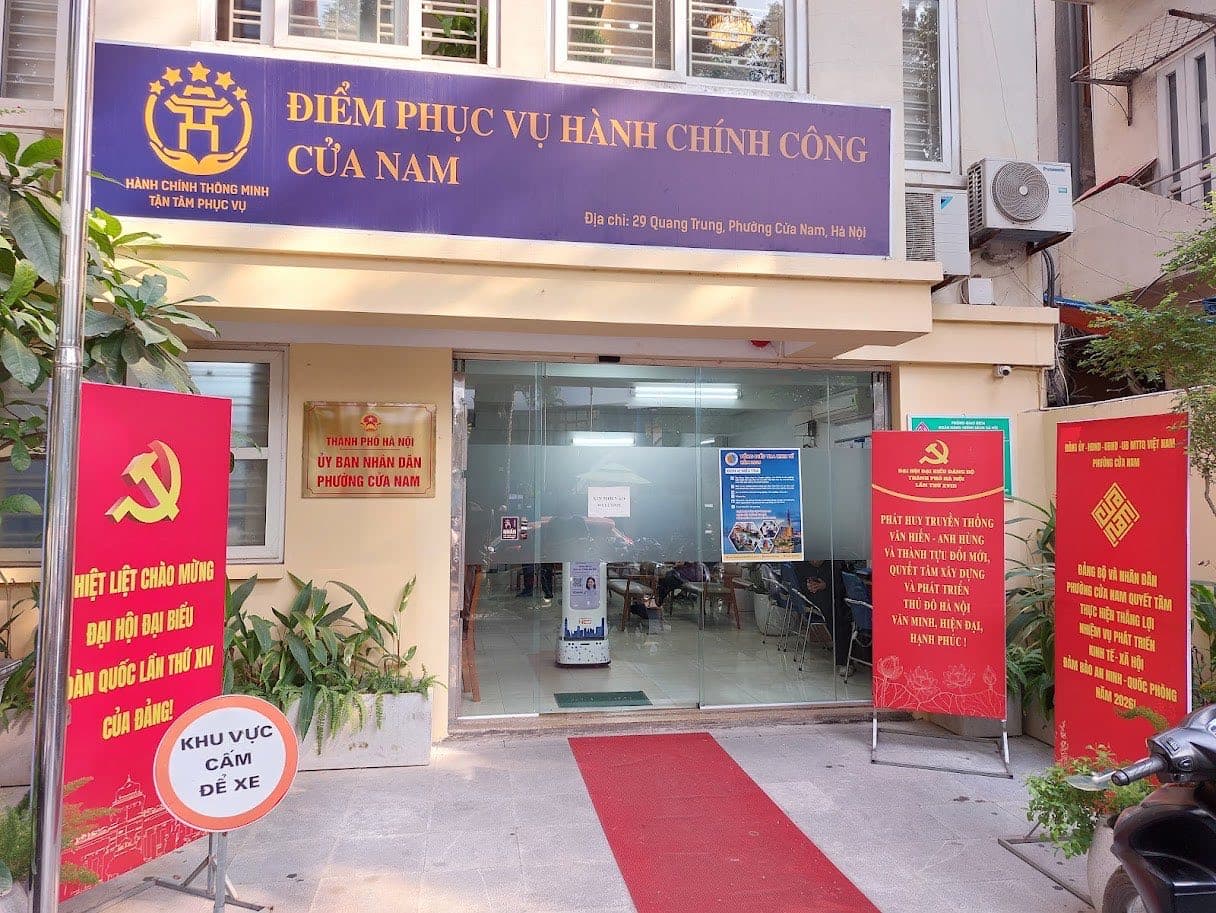
Your employer files, not you. The decision comes within 10 working days of a complete file, and a refusal has to be reasoned within 3 working days. Authority to issue, reissue, extend and revoke permits belongs to the provincial People's Committee.
- The employer fixes your category. Expert, technical worker, manager or executive director — this determines which qualification documents you need. Getting it wrong costs a month.
- Advertising the vacancy to Vietnamese candidates. Required in three cases only: employment under a labour contract, participation in bidding packages or projects, and work for foreign diplomatic missions and organisations. The notice period dropped from 15 days to at least 5 days before filing, and the employer now picks the channel.
- Filing. Form Mẫu số 03 annexed to the decree carries both the justification of need and the permit application. Submission goes through the National Public Service Portal or a public administrative service centre.
- Ten working days. The authority approves the need and issues the permit in the same window. Under the old rules these were two procedures of 10 and 5 working days.
- Visa and residence card. With the permit in hand you get an LĐ2 visa, then a work-based temporary residence card. What the TRC covers and how it is renewed is in the guide to the Vietnam residence card.
What changed against the old procedure
| Item | Before 07.08.2025 | From 07.08.2025 |
|---|---|---|
| Vacancy advertising | almost always, 15 days, on the employment service portal | three cases, 5 days, channel of the employer's choice |
| Justification of need | separate procedure, 10 working days | folded into the permit application |
| Decision time | 10 + 5 working days | 10 working days |
| Renewal | once, up to two years | unchanged |
| Expert experience | 3 years, matched to the degree | 2 years, degree-to-role matching dropped |
Qualification criteria loosened with the decree:
- Expert (chuyên gia): a university degree plus at least two years of relevant experience. One year is enough in science, technology, innovation, national digital transformation and priority sectors.
- Technical worker (lao động kỹ thuật): at least one year of specialist training plus two years of experience, or three years of experience without formal training.
- Manager and executive director: the position evidenced by corporate documents and an appointment decision.
One thing to know about addresses. Vietnam moved to a two-tier administrative structure: the merger of 63 provinces into 34 took legal effect on 12 June 2025, and from 1 July 2025 the district level was abolished. The labour department was merged into the provincial Sở Nội vụ.
And a warning. In its August 2025 briefing KPMG flagged that pushing authority down to provinces may lengthen real processing times and is unlikely to be applied consistently across localities any time soon. The statutory ten working days and the actual wait are not yet the same number.
💬 "The relaxation of certain regulations related to the conditions, timelines, and procedures for obtaining work permits under Decree 219 is a welcome development. However ... the decentralization of authority ... may prolong processing times and are unlikely to be implemented consistently across localities in the near future." — KPMG Vietnam, Alert on Immigration, August 2025
Fast Track — no queue at the border
5–10 minutes instead of an hour in the immigration queue
from$11per passenger
Documents, timing and what it costs

The file has seven components, the government fee runs VND 400,000–600,000 (~$16–24) depending on the province, and the police clearance must be no more than six months old. The composition is set by Điều 18 of Decree 219/2025/ND-CP.
| Document | Requirement | Prepared by |
|---|---|---|
| Application on Mẫu số 03 | form annexed to the decree | employer |
| Health certificate | valid 12 months; waived if results already sit in the national health database | employee |
| Criminal record check | issued within the last 6 months | employee |
| Photos 4×6 cm | two, white background, no hat, no glasses | employee |
| Passport copy | valid passport | employee |
| Degree and proof of experience | depends on category: expert, technical worker, manager | employee |
| Proof of vacancy advertising | only in the three cases above | employer |
Your police clearance comes from the country where you have been living, and the name changes with the jurisdiction: ACRO in the UK, an FBI Identity History Summary in the US, a National Police Check in Australia. Turnaround swings from a few days to several weeks, so start it early — but not too early, because the six months run from issue, not from filing.
Apostille replaces consular legalisation from 11 September 2026
Vietnam acceded to the Hague Convention of 5 October 1961 on 31 December 2025, and the Convention enters into force for Vietnam on 11 September 2026. From that date a foreign public document carrying an apostille is accepted in Vietnam without consular legalisation: one certificate instead of a chain of stamps through a foreign ministry and an embassy.
Inside Vietnam, apostilles are issued by the Ministry of Foreign Affairs — the Consular Department in Hanoi and the Department of Foreign Affairs in Ho Chi Minh City.
There is an exception worth checking before you book anything. Germany, Austria and the Czech Republic objected to Vietnam's accession, so documents from those three countries still go through consular legalisation. Documents already legalised the old way stay valid — nothing needs redoing.
Government fees by city
Provincial councils set the amount, so it varies.
| City | Issuance | Renewal or reissue | Legal basis |
|---|---|---|---|
| Ho Chi Minh City | VND 600,000 (~$24) | VND 450,000 (~$18) | Resolution 09/2022/NQ-HĐND |
| Hanoi | VND 400,000 (~$16) | VND 300,000 in person, VND 250,000 online | Resolution 06/2020/NQ-HĐND |
| Da Nang | VND 600,000 (~$24) | VND 450,000 (~$18) | Resolution 56/2021/NQ-HĐND |
| Khanh Hoa (Nha Trang, Cam Ranh) | VND 600,000 (~$24) | VND 450,000 (~$18) | Resolution 06/2021/NQ-HĐND |
These rates were set by provincial councils before the 2025 mergers, and the new councils may have changed them — confirm with the office where you file. The fee is the smallest line in the budget. The real money goes on legalisation, translation and the medical check. Consular legalisation runs about $10 per stamp at official rates and $20–25 through agents. There is no published price list for notarised translation or the medical exam, and inventing a plausible number here would be dishonest — ask your employer, who has assembled these files before.
File early, ahead of your intended start date, and check the exact filing window with your employer.
Who pays. The obligation to obtain the permit sits with the employer, and so does liability for breaching it. How legalisation and translation costs are split is a matter of agreement — settle it in the offer before you buy a ticket.
Fees, timelines and the apostille date are current as of September 2026.
Who actually gets hired

Four niches carry most foreign employment: language teaching, IT and engineering, management roles in foreign-invested companies, and hospitality.
Teaching English
The largest niche and the clearest path to a permit. The file needs:
- a bachelor's degree in any subject, apostilled or legalised;
- a TEFL or TESOL certificate of at least 120 hours, likewise authenticated, or two years of documented teaching experience;
- a police clearance no older than six months;
- a medical certificate from an approved clinic.
Non-native speakers additionally show proficiency — IELTS 6.5 or the equivalent. Employer preference for native speakers has not gone anywhere, and it is worth building into your timeline rather than pretending otherwise.
IT and engineering
Foreigners are processed here as "experts": a degree plus two years of relevant experience. Decree 219 dropped the requirement that the degree match the role, so a self-taught engineer with a mismatched diploma now clears.
The local talent pool is deep, so foreign hires happen where a language, international experience or a specific stack is the point. Hanoi pays roughly 10–15% less than Ho Chi Minh City across most engineering roles.
Management and hospitality
Foreign-invested manufacturing, international schools, hotel and resort groups along the coast, and regional offices of international companies hire foreign managers fairly regularly. Usually into roles where a head office wants its own reporting line rather than a local hire. These jobs rarely show up on public boards; they move through people who already know someone inside. Coworking spaces are one way in, and the ones in the country's main remote-work hub are reviewed in the guide to coworking in Da Nang.
What you cannot do
Foreigners cannot work as licensed tour guides. The 2017 Tourism Law conditions the guide card on Vietnamese citizenship and permanent residence in Vietnam, for domestic and international guiding alike. A tour company can hire you for sales, coordination or client management, but leading a group as a licensed guide is closed.
Medical practice needs a Vietnamese professional licence — a degree and a work permit are not enough. Massage, driving and personal services are fields where a foreigner is very rarely put on the books.
Salaries and what lands in your account

The national average wage was about VND 8,684,000 a month (~$335) in the fourth quarter of 2025. The Region I minimum rose to VND 5,310,000 on 1 January 2026. A foreigner on a labour contract is generally paid from VND 15 million upward, and that is the floor rather than the middle.
Minimum wage by region
Decree 293/2025/ND-CP of 10 November 2025 raised the regional minimum by an average of 7.2% from 1 January 2026.
| Region | VND per month | ~$ | Applies to |
|---|---|---|---|
| Region I | 5,310,000 | ~204 | Hanoi, Ho Chi Minh City and equivalents |
| Region II | 4,730,000 | ~182 | large provincial cities |
| Region III | 4,140,000 | ~159 | smaller urban districts |
| Region IV | 3,700,000 | ~142 | rural areas |
The increase ranged from VND 250,000 to 350,000. For a foreign specialist this is not an income benchmark — it is the legal floor your contract has to clear.
What the niches pay
| Niche | VND per month | ~$ | Note |
|---|---|---|---|
| Language centre, new teacher | 31–41 million | 1,200–1,600 | entry rates |
| Language centre, experienced | 41–56 million | 1,600–2,200 | with local track record |
| International school | 64–115 million | 2,500–4,500+ | licensed teachers |
| IT, mid-level | 30–55 million | 1,180–2,160 | ITviec report 2025–2026 |
| IT, senior with 7+ years | 50–61 million | 1,960–2,390 | Hanoi 10–15% below HCMC |
| Tech lead, median | 51.8 million | ~2,030 | ITviec report 2025–2026 |
| CTO / CIO, median | 101.25 million | ~3,970 | ITviec report 2025–2026 |
Currency converter
IT bands come from the ITviec IT salary and recruitment report 2025–2026. Teaching bands are aggregated employer ranges rather than official statistics.
What gets deducted
Two things: social insurance and income tax.
Social insurance. The 2024 Social Insurance Law (Luật Bảo hiểm xã hội 41/2024/QH15) has applied since 1 July 2025. A foreign employee pays 9.5% (8% retirement and survivorship, 1.5% health), the employer pays 20.5%. Thirty percent of payroll in total. Foreign employees do not contribute to unemployment insurance and are not covered by it.
The obligation arises with a labour contract and a valid work permit, on a contract of 12 months or more. Exclusions are intra-company transfer, reaching retirement age at signing, and a different rule in an applicable treaty.
Income tax. From the 2026 tax period the new scale in Personal Income Tax Law (Luật Thuế thu nhập cá nhân 109/2025/QH15) applies — five brackets instead of seven.
| Taxable income, VND per month | Rate |
|---|---|
| up to 10,000,000 | 5% |
| 10,000,000 – 30,000,000 | 10% |
| 30,000,000 – 60,000,000 | 20% |
| 60,000,000 – 100,000,000 | 30% |
| above 100,000,000 | 35% |
Deductions were raised separately by Resolution 110/2025/UBTVQH15 of 17 October 2025: VND 15,500,000 a month (~$610) for yourself, up from 11 million, and VND 6,200,000 (~$243) per dependant, up from 4.4 million.
A worked example. Salary VND 40 million, no dependants. Social insurance: 40 million × 9.5% = 3.8 million. Personal deduction: 15.5 million. Taxable base: 40 − 3.8 − 15.5 = 20.7 million. Tax across the first two brackets: 10 million × 5% + 10.7 million × 10% = 0.5 + 1.07 = 1.57 million. Take-home lands near VND 34.6 million, about $1,360.
The progressive scale and the deductions apply to tax residents. On a contract of three months or more the employer withholds tax on the scale; on a shorter one a resident gets the scale through the annual return. A non-resident pays a flat rate on Vietnam-sourced income with no deductions, and residency turns on the 183-day rule — set out in the guide to tax residency in Vietnam.
Salary is paid into a local account, which you will need to open; the process is in the article on opening a Vietnamese bank account.
Tax rates, deductions and contribution rates are current as of September 2026.
Contract, validity and what happens if you leave

A labour contract with a foreigner is always fixed-term, and its length cannot exceed the validity of the work permit — Điều 151 khoản 2 of the 2019 Labour Code. Open-ended contracts are not available to foreign employees, though fixed-term contracts can be signed repeatedly.
The permit itself runs up to two years. It can be extended once only, again for up to two years. The rule is not new: Điều 155 of the 2019 Labour Code set the same limit, and Điều 19 of Decree 152/2020 repeated it. After four years the cycle restarts: fresh police check, fresh medical, degree authenticated again.
The permit is tied to a specific employer. Change companies and you apply again through the new sponsor; nothing transfers. The same goes for the residence card.
Expiry of the permit is itself a ground for its termination under Điều 156 of the 2019 Labour Code, and the labour contract ends with it. In practice an expired permit wipes out both your job and your legal basis for staying.
When you leave, the company notifies immigration and the residence card is cancelled. From there it is either a new sponsoring employer or an exit. What the TRC covers, which categories exist and how renewal works is unpacked in the Vietnam residence card guide.
The practical takeaway: do not sign an offer that is silent on who files the permit and when. A verbal "start now, we will sort the paperwork" means months of working outside the law, with your name on the fine.
What happens if you work without a permit
A foreigner working without a permit or an exemption certificate faces a fine of VND 15–25 million (~$590–980) plus deportation. The employer faces VND 30–75 million depending on the number of workers involved, plus suspension of operations.
| Who | Fine, VND | ~$ | Additional sanction |
|---|---|---|---|
| Worker without a permit | 15–25 million | 590–980 | deportation (trục xuất) |
| Employer, 1–10 workers | 30–45 million | 1,180–1,760 | suspension of operations |
| Employer, 11–20 workers | 45–60 million | 1,760–2,350 | suspension of operations |
| Employer, 21 or more | 60–75 million | 2,350–2,940 | suspension of operations |
Until 9 September 2026 these offences sat in Decree 12/2022/ND-CP; from 10 September 2026 Decree 283/2026/ND-CP replaces it with the same amounts. The doubling rule for organisations carried over — khoản 1 Điều 7 of the new decree: the rates above are for an individual employer, and a legal entity pays double. The limitation period for labour offences is one year.
Common mistakes
- Working on a tourist visa or visa exemption. The most frequent and the most expensive: fine, deportation, and trouble re-entering afterwards.
- Starting before the permit is issued. "Begin now, the paperwork will catch up" is a breach from day one, not from the day of an inspection.
- An expired police check. The six months run from issue, not from filing. Ordering it first is a bad idea.
- Changing employers without reapplying. The permit does not travel between companies, even for the same job title.
- Counting on a second renewal. There is only one. Plan year four well in advance.
- An offer with no written commitments. Who pays for authentication and when the file goes in belongs on paper.
Where to find jobs in Vietnam

Three platforms sponsor permits most often: LinkedIn, VietnamWorks and Glints. For engineering, add ITviec and TopDev. The big Vietnamese-language boards are larger overall but carry far fewer roles open to foreigners.
| Platform | Focus | Interface language | Sponsorship odds |
|---|---|---|---|
| leadership and expat roles | English | high | |
| VietnamWorks | general, running since 2002 | English and Vietnamese | high |
| Glints | Southeast Asia | English | medium |
| ITviec | IT only | English and Vietnamese | medium |
| TopDev | IT | Vietnamese | medium |
| TopCV | volume hiring, graduates | Vietnamese | low |
| CareerViet | volume, blue-collar | Vietnamese | low |
How to read a listing. Look for "work permit sponsorship", "visa support", "foreigners welcome". Their absence is not a refusal, but it does mean the question belongs in the first call: is the company willing to put a foreigner on the books at all? Smaller Vietnamese firms often are not — usually because they have never run the procedure, not out of principle.
One more channel worth naming: expat groups and city-based chats. Real openings surface there in hospitality, property management and small agencies, but a large share come without paperwork. Ask about the permit before you start, not after.
A practical closing move: collect documents while you are still applying. The police check, the apostille and the translations move at their own pace regardless of whether you have found an employer. A candidate with a ready file beats one without, simply because no company wants to wait three months.
FAQ
No. The permit applies to people paid by a Vietnamese entity. If your client or employer sits abroad and the money arrives from abroad, no work permit is issued. Your status stays a visa question: you live on an e-visa or visa exemption and extend under the general rules. There is no separate legal status for remote workers either; see visa options for remote workers. The full setup is covered in the guide to freelancing from Vietnam.
Yes. Being in the country does not block the filing: the company submits, and you can be in Vietnam on any valid visa meanwhile. What you cannot do is start working before the permit is issued, which is a breach from day one rather than from the day of an inspection. Once it is granted, your status converts to an LĐ2 visa and a residence card.
The government fee is small: VND 400,000–600,000 (~$16–24) depending on the province. The real spending goes on authenticating the degree and the police check, notarised translations and the medical exam. Consular legalisation runs about $10 per stamp officially and $20–25 through agents. No published price list exists for translation or the medical, so ask your employer or a law firm.
Yes, but the field narrows to international companies, language centres, IT and expat-facing businesses. English is the working language there and Vietnamese is for daily life and dealing with accounting. Vietnamese-language boards like TopCV and CareerViet are close to unusable without the language, since both the interface and the listings are local. Start with LinkedIn, VietnamWorks and Glints.
No. The 2017 Tourism Law requires Vietnamese citizenship and permanent residence in Vietnam for a guide card, for domestic and international guiding alike. A foreigner can hold other roles at a tour company: sales, group coordination, client management, itinerary design. Leading a group as a licensed guide is closed, and checks at major sites do catch it.
Apply for a new one from scratch. The 2019 Labour Code (Article 155) allows a single extension of no more than two years, so after four years the full file is assembled again: a fresh police check, a fresh medical, an authenticated degree and a new employer application. Start at least two or three months out, because document authentication abroad does not get faster.
Officially, almost never. A permit is issued for one employer and one position, and compulsory social insurance kicks in on contracts of 12 months or more. Side work for another company needs its own permit. The "under 90 days a year" route in Điều 7 exists, but it covers short specialist assignments, not a weekend shift behind a bar.
Data current as of September 2026. Rules, fees and rates change — check against the current wording of the decree and with your employer before you sign an offer.
Read next: Vietnam residence card (TRC) · Opening a company in Vietnam · Freelancer taxes · Digital nomad visa options






- Preparation
Start a Company in Vietnam 2026: LLC, ERC and IRC Guide
How a foreigner registers an LLC in Vietnam in 2026: the new ERC-first rule and its catch, steps, $3-10k budgets, 20% CIT, the DICA account and work permits.Start a Company in Vietnam 2026: LLC, ERC and IRC Guide - Preparation
Da Lat Airport 2026: Flights, Fares and the Ride Into Town
Lien Khuong Airport reopened on 19 August 2026. Routes, ticket prices from $25 and how to cover the 30 km into Da Lat in 35–45 minutes by taxi or Grab.Da Lat Airport 2026: Flights, Fares and the Ride Into Town - Preparation
Vaccinations for Vietnam: What You Need Before You Go
Vaccinations and health prep for Vietnam: recommended and required shots, malaria and dengue, a first-aid kit and the timeline — per CDC/WHO/NHS.Vaccinations for Vietnam: What You Need Before You Go