Digital nomad in Vietnam 2026: the remote-work guide
Vietnam has quietly become one of Asia's best bases for remote workers. Fast internet, cheap living, superb food and easy entry are the obvious draws. Behind the postcard, though, sit the details: visa runs every 90 days, no dedicated nomad visa, and a tax status that lives in a grey zone. Here is how it actually works in 2026.
Why digital nomads pick Vietnam
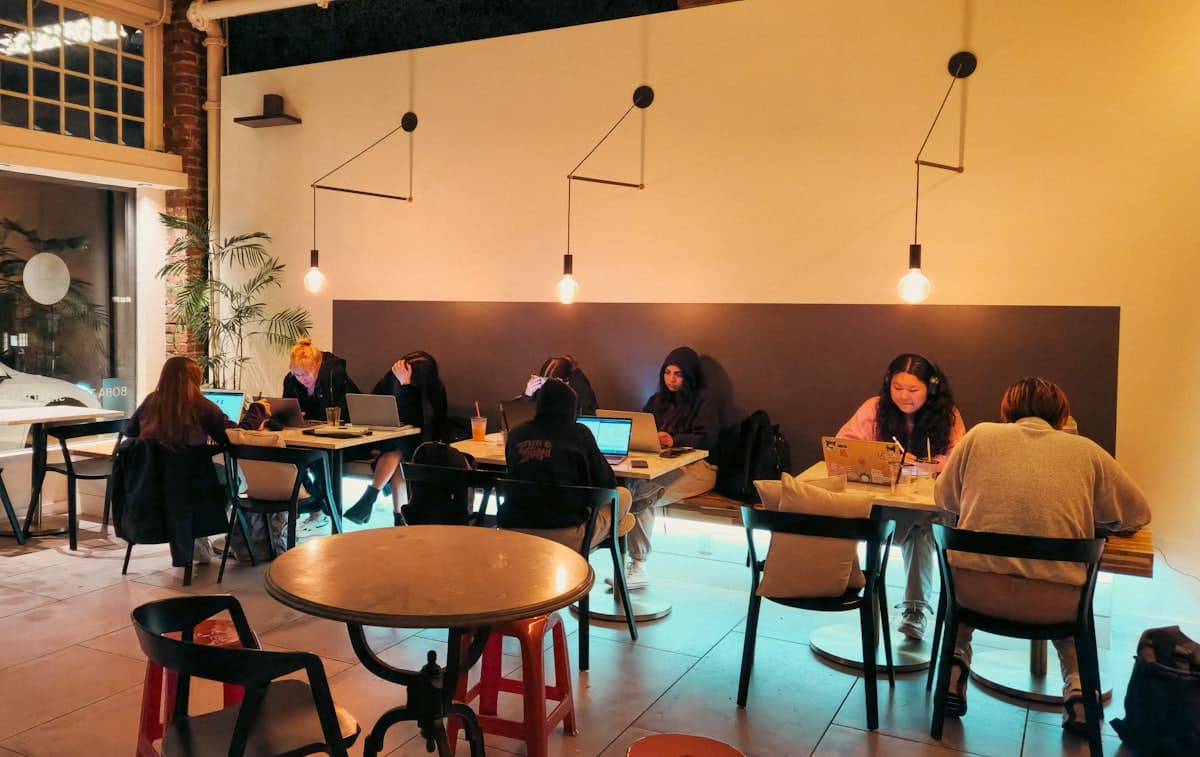
Is Vietnam good for digital nomads? Yes — Da Nang is one of Asia's top bases, with fast internet, low costs and a growing community. Vietnam is rarely the first country that comes to mind for remote work, since Bali and Thailand hog the spotlight. Yet more and more nomads are basing themselves here, and the reasons are concrete.
Cheap living. A comfortable month in Nha Trang runs around $755; in Da Lat as little as $685. That is two to three times cheaper than most Western cities and roughly a third under Thailand.
Fast internet. Per Ookla's August 2026 index, Vietnam ranks 8th in the world for fixed broadband (~301 Mbps) and 9th for mobile (~220 Mbps). A base home plan starts around 190,000 VND (~$7.30) a month for 300 Mbps. For a remote worker, that matters more than palm trees.
Easy entry. Most nationalities get an e-visa for up to 90 days at $25–50, and several passports also enjoy 15–45 days visa-free. When the visa runs out, a quick hop to Cambodia or Thailand resets the clock.
Food. Lunch at a local eatery starts around 50,000 VND (~$2). Phở bò, bánh mì, spring rolls — tasty, varied and cheap enough that many nomads barely cook.
Community. Da Nang is turning into the country's nomad capital, with meetups, coworking and a friendly English-speaking crowd, while Ho Chi Minh City delivers the biggest professional scene.
Vietnam vs Thailand vs Bali vs Georgia
| Criterion | Vietnam | Thailand | Bali | Georgia |
|---|---|---|---|---|
| Budget/mo | $700–1,200 | $1,000–1,800 | $1,200–2,000 | $800–1,200 |
| Nomad visa | None (e-visa 90 d) | DTV — 5 yrs ($280) | B211A — 60–180 d | 1 year (free) |
| Fixed internet | ~301 Mbps | 200–500 Mbps | 20–50 Mbps | 30–100 Mbps |
| Mobile internet | ~220 Mbps | 51–80 Mbps | 15–30 Mbps | 30–50 Mbps |
| Rent 1BR | $150–400 | $225–660 | $250–600 | $300–500 |
| Nomad community | Growing (Da Nang) | Large (Chiang Mai) | Large (Canggu) | Medium (Tbilisi) |
On budget and internet speed, Vietnam wins comfortably. Where it lags is the visa: there is still no dedicated nomad visa (a Golden Visa is discussed but far from passed). If you want to settle for years, Thailand's five-year DTV or Georgia's free one-year stay are simpler.
Visas for remote workers
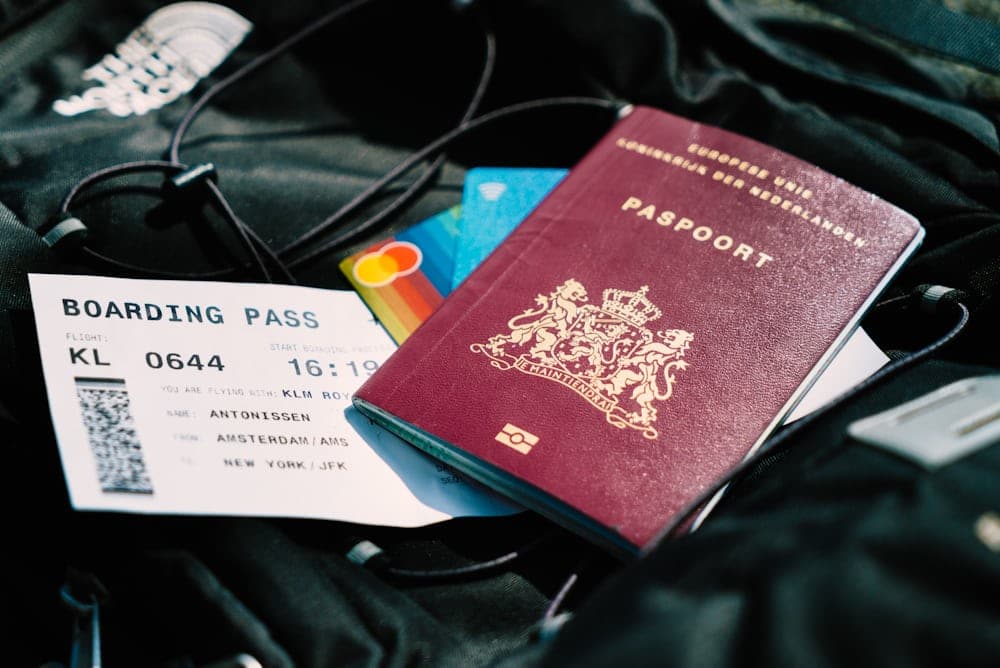
There is no dedicated remote-work visa in Vietnam. In practice nomads combine visa-free entry, the e-visa and visa runs — and it works. Which route you take depends on your passport, so check your nationality first.
Visa-free entry
Several nationalities enter without a visa: UK, France, Germany, Italy, Spain and the Nordics get up to 45 days; ASEAN neighbours and a few others get 15–30 days.
- Single entry only
- Extension is not guaranteed: the law allows it through a sponsor, but immigration decides. Exiting or switching to a visa is simpler
- Passport valid 6+ months
This is enough for a scouting trip: fly in, look around, pick a city. For actually living here it is too short.
E-visa (90 days)
The nomad favourite, open to almost every nationality. Apply online at evisa.gov.vn.
The multiple-entry e-visa is the smart pick — it lets you leave and return freely within the 90 days.
Visa runs
When the e-visa runs out, nomads do a visa run — a quick exit and re-entry on a fresh visa. The usual routes:
- Cambodia (Phnom Penh) — closest from Ho Chi Minh City
- Thailand (Bangkok) — plenty of cheap flights
- Laos (Vientiane) — even doable overland by border crossing
Longer-term options
| Visa type | Duration | Cost | Notes |
|---|---|---|---|
| Business (DN) | 3–12 mo | on request | Needs a Vietnamese company as sponsor |
| Work visa (LD) | up to 2 yrs | on request | Requires a work permit |
| Golden Visa | 5–10 yrs | proposed | Draft stage (2025), not yet law |
A practical setup for nomads
- Visa-free days — scouting trip
- Multiple-entry e-visa, 90 days — the main format
- Visa run every 90 days (Cambodia / Thailand)



How much it costs to live as a nomad

Prices are the headline argument for moving here. But "cheap" is elastic — here are concrete numbers.
Overall budget
| Tier | Budget/mo | In VND |
|---|---|---|
| Budget | $500–700 | 12.5–17.5M VND |
| Comfortable | $1,000–1,500 | 25–37.5M VND |
| Premium | $2,500–4,000 | 62.5–100M VND |
Budget means a studio in a residential area, local food and a motorbike. Comfortable is a one-bed with air-con, cafés and restaurants, a coworking pass. Premium is a serviced apartment or condo, restaurants and taxis.
Rent
| City | Budget (1BR) | Comfort (1BR) |
|---|---|---|
| Ho Chi Minh City | $220–350 | $400–600 |
| Da Nang | $200–300 | $450–600 |
| Nha Trang | $150–250 | $300–500 |
| Da Lat | $150–250 | $300–450 |
| Phu Quoc | $150–300 | $300–500 |
In Ho Chi Minh City, Districts 1, 2 and 7 cost the most. In Da Nang, anything near Mỹ Khê beach is pricier. Many places are found through local Facebook and Zalo groups or agents, not big portals.
Main monthly costs
Full monthly budget by city (comfortable tier)
| Item | HCMC | Da Nang | Nha Trang | Da Lat |
|---|---|---|---|---|
| Apartment (1BR) | $400 | $350 | $250 | $250 |
| Utilities | $100 | $80 | $80 | $60 |
| Food | $250 | $200 | $180 | $170 |
| Transport | $100 | $80 | $80 | $70 |
| Internet + mobile | $15 | $15 | $15 | $15 |
| Coworking | $110 | $95 | $50 | $40 |
| Leisure | $150 | $100 | $100 | $80 |
| Total | ~$1,125 | ~$920 | ~$755 | ~$685 |
Da Lat is the cheapest base; Ho Chi Minh City the most expensive, but with the most infrastructure. For a full breakdown, see our Vietnam prices guide.
Fast Track — no queue at the border
5–10 minutes instead of an hour in the immigration queue
from$11per passenger
Internet & connectivity
For a remote worker, internet is tool number one — and Vietnam delivers. The full breakdown of providers, plans and setup is in our Vietnam internet guide, and SIM/eSIM specifics in the SIM card guide.
Speed and world ranking
| Type | Average speed | World rank |
|---|---|---|
| Fixed (fibre) | ~301 Mbps | 8th |
| Mobile (4G/5G) | ~220 Mbps | 9th |
| 5G | 595 Mbps | — |
Home internet
| Provider | Entry plan | Speed |
|---|---|---|
| Viettel | ~195,000 VND/mo (~$7.50) | from 300 Mbps |
| VNPT | ~190,000 VND/mo (~$7.30) | from 300 Mbps |
| FPT | ~195,000 VND/mo (~$7.50) | from 300 Mbps |
For 250,000–300,000 VND (~$10–12) you can get up to 1 Gbps. Installation takes 1–3 days and is often free; Viettel supplies a Wi-Fi 6 modem. Note: a home line usually wants a longer-term address, so short-stay nomads often rent places where internet is already included.
Mobile internet, SIM & eSIM
| Provider | Plan | Price |
|---|---|---|
| Viettel (best coverage) | 15–30 days, data + calls | 60,000–200,000 VND (~$2.40–8) |
| MobiFone | 1–30 days, 1–250 GB | 90,000–250,000 VND (~$3.60–10) |
| Vinaphone | 30 days | 150,000–200,000 VND (~$6–8) |
| eSIM (Airalo/Holafly) | 7–30 days, data only | ~$5–35 (buy before you fly) |
Buying a physical SIM needs your passport and an unlocked phone — registration is required by law. Kiosks for Viettel, MobiFone and Vinaphone run around the clock at the Ho Chi Minh City and Hanoi airports. If you want data the second you land, buy an eSIM (Airalo, Holafly) before departure and switch to a local SIM once you settle in.
Wi-Fi in cafés and coworking
- Coworking: 50–200 Mbps (stable)
- City cafés: 15–50 Mbps (wobbly at peak hours)
- Da Lat cafés: ~35 Mbps
Best cities for remote work

Picking a city is the big decision. Each suits a different work-and-life style.
Ho Chi Minh City — for networking
Vietnam's largest city. The most coworking, an international crowd, world cuisines. District 1 is the centre of expat life.
Pros: 5+ professional coworking spaces, WeWork, nightlife, networking events. Cons: no beach, noisy, hot and humid year-round (35–40 °C in summer), traffic. Budget: ~$1,125/mo. More in our Ho Chi Minh City guide.
Da Nang — the nomad capital
Vietnam's nomad hub. Mỹ Khê beach is 10 minutes from the centre. In March 2026 the city hosted the Da Nang Nomad Fest.
Pros: beach + city + coworking, a growing community, great work-life balance. Cons: monsoon season (October–December), quieter nightlife. Budget: ~$920/mo. See our Da Nang guide.
Nha Trang — beach on a budget
A coastal resort city with a city beach and warm sea, popular for its low cost of living.
Pros: affordable, city beach, warm water, plenty of rentals. Cons: few professional coworking spaces (2–3), so many nomads work from cafés. Budget: ~$755/mo. See the Nha Trang guide.
Da Lat — cool and quiet
A mountain town at 1,500 m. Temperatures of 18–25 °C year-round — one of the few places in Vietnam where you can manage without air-con. A serious coffee culture too.
Pros: cool climate, quiet, low prices, Wi-Fi cafés on every corner. Cons: no sea, no proper coworking, a small expat community. Budget: ~$685/mo.
Phu Quoc — the workation island
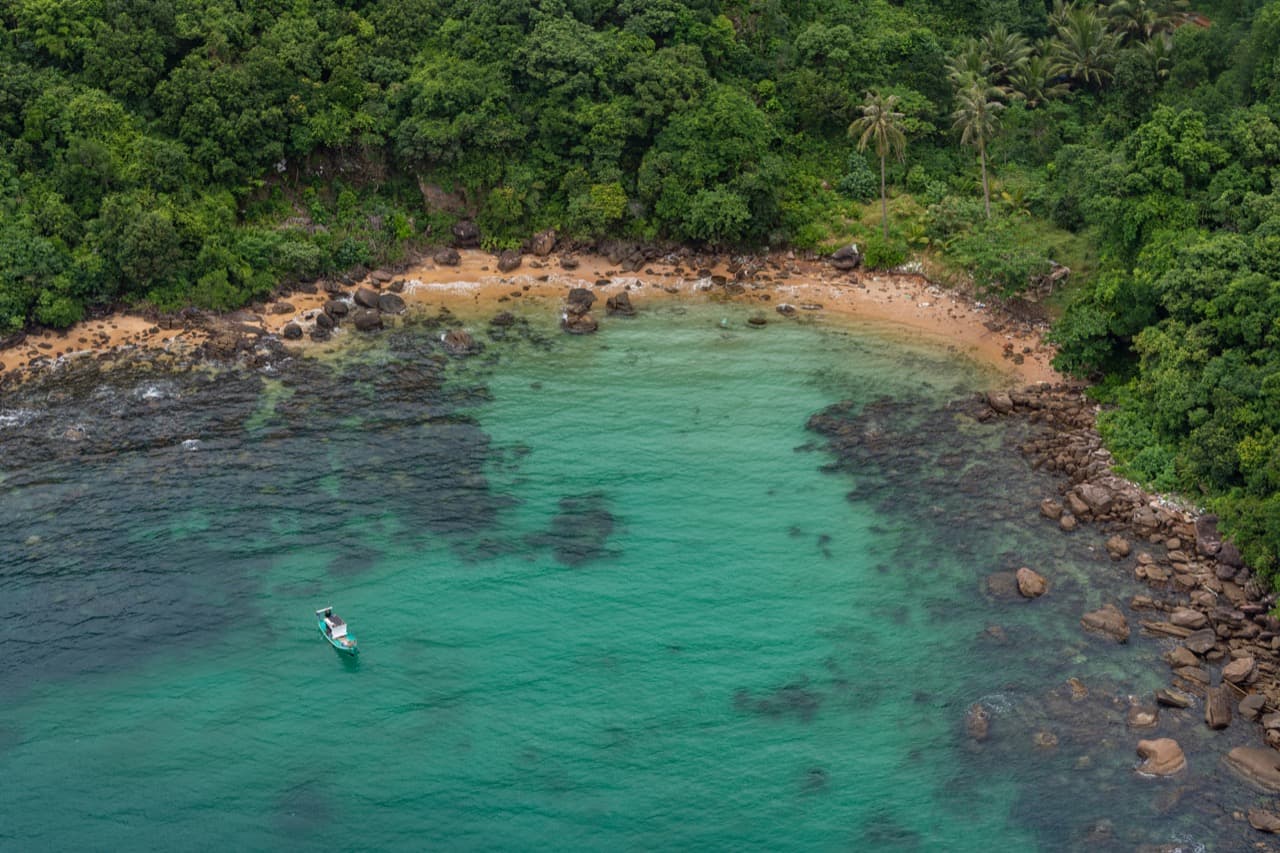
A tropical island with excellent beaches. Great for a short working retreat, less so as a permanent base.
Pros: beaches, a relaxed vibe. Cons: no coworking, patchier internet, occasional power cuts. Budget: $700–1,200/mo. See the Phu Quoc guide.
Five cities compared: budget, coworking, internet
| Criterion | HCMC | Da Nang | Nha Trang | Da Lat | Phu Quoc |
|---|---|---|---|---|---|
| Budget/mo | $1,125 | $920 | $755 | $685 | $700–1,200 |
| Coworking | Lots | Good | Few | Cafés | None |
| Internet | Excellent | Excellent | Good | Good | Average |
| Nomad scene | Medium | Growing | Small | Small | Small |
| Beach | None | Mỹ Khê | City beach | None (mountains) | Excellent |
| Climate | Hot | Hot + monsoon | Hot, windy | 18–25 °C | Tropical |
Coworking spaces in Vietnam

Professional coworking clusters in Ho Chi Minh City and Da Nang. Elsewhere, nomads mostly work from cafés.
Ho Chi Minh City
The city has 20+ spaces, clustered in District 1 and Thao Dien: a day pass runs 110,000–250,000 VND (~$4–10) at local operators, a month from 1,500,000 VND (~$60) up to 9,000,000 VND (~$360) at the international chains. WeWork is here too, but that's two locations in the whole country — both in Saigon, neither refurbished since 2019–2020. Prices, opening hours and metro access for each are in the Ho Chi Minh City coworking guide.
Da Nang
| Name | Day pass | Month | Notes |
|---|---|---|---|
| Seaview Coworking | 135,000 VND (~$5) | 2,000,000 VND (~$77) | 9th floor, sea and mountain view |
| ACE Coworking | 200,000 VND (~$8) | 3,500,000 VND (~$135) | 3 floors + café |
| cirCO Da Nang | from 150,000 VND (~$6) | — | Central location |
| Enosta Space (formerly Enouvo) | 110,000 VND (~$4) | on request | 2 locations, has co-living |
Seaview is the only coworking in Da Nang open 24/7 to everyone — 135,000 VND a day or 2,000,000 VND a month, with a view of the sea. Prices as of August 2026; more in our Da Nang coworking guide.
Nha Trang and Da Lat
Nha Trang has few professional coworking spaces — Toong Nha Trang and a couple of small spots. Many nomads simply use Wi-Fi cafés.
Da Lat has no coworking in the classic sense — people work from cafés, and the coffee culture here beats anywhere else in Vietnam. Which places hold their speed, when they close and what to do about the power cuts is in the Da Lat remote-work guide.
Money & getting paid

Vietnam is largely a cash economy, but cards and apps are catching up fast. Here is how to spend and get paid without friction.
Cards and ATMs
Foreign Visa and Mastercard work in most ATMs and at mid-range and up venues; small eateries and markets are cash only. ATM withdrawal fees are typically 1–3% plus your home bank's charge, and many machines cap a single withdrawal at 2–5 million VND (~$80–200). Notify your bank before you travel so the card isn't flagged.
How to get paid
| Method | Pros | Cons |
|---|---|---|
| Wise | Multi-currency, low fees | No VND balance available |
| USDT/USDC (crypto) | Instant, no banks | Legal grey area |
| PayPal | Familiar to clients | High fees |
| Vietnamese account | Receives local transfers | Needs a long-term visa |
The setups nomads use most:
- Wise + local ATM — receive on Wise, withdraw cash from an ATM
- Crypto P2P — receive USDT, swap to VND via a P2P exchange
- Cash USD — carry dollars, change them at a bank
Changing money
Bring USD or EUR — they get the best rates. Where to change:
- Banks and licensed exchange counters — legal and reliable
- Airport — the worst rate, use only for first expenses
Since 9 February 2026, changing money outside licensed points is an offence: Decree 340/2025/NĐ-CP sets a fine of up to 20 million VND for a private individual on sums of $1,000–10,000, and more above that. A gold shop may legally exchange currency only if it holds an exchange-agent certificate from the State Bank, and a visitor has no way to check. The bank is the safer option.
Indicative rate (July 2026): 1 USD ≈ 26,000 VND. See our Vietnamese dong exchange-rate guide for more.
Taxes for remote workers
Tax residency
A resident is taxed on worldwide income; a non-resident only on income earned inside Vietnam.
Resident income-tax rates — progressive
The PIT reform (from the 2026 tax year)
| Item | Before | After |
|---|---|---|
| Personal deduction | 11M VND/mo | 15.5M VND/mo (~$620) |
| Dependant deduction | 4.4M VND/mo | 6.2M VND/mo |
| Sole-trader tax-free threshold | 200M VND/yr | 500M VND/yr (~$19,200) |
The threshold applies to household businesses and sole traders registered in Vietnam earning up to ~$19,200 a year. Official sources don't say whether it covers a foreigner on an e-visa working for overseas clients, so check with a tax adviser.
The practical reality
Most nomads working for foreign clients and spending under 183 days a year in Vietnam pay no Vietnamese tax in practice. On paper, remote work on Vietnamese soil without a permit is a grey zone, and you still owe tax wherever you are a resident back home, so factor that in. Our Vietnam freelance taxes guide walks through the 183-day line, the progressive scale and double-taxation treaties in detail.
Healthcare & insurance
Healthcare for foreigners is paid out of pocket. Prices are affordable, but without insurance a serious treatment will dent the budget.
Cost of care
Clinics for foreigners
- Vinmec — a large chain in Ho Chi Minh City, Nha Trang, Da Nang and Hanoi. High standard
- FV Hospital (Ho Chi Minh City) — French-Vietnamese hospital, internationally accredited
- English-speaking staff are common at these international clinics
Insurance for nomads
| Provider | Cost | Coverage |
|---|---|---|
| SafetyWing Nomad | ~$56 / 4 weeks | Emergency care, evacuation |
| SafetyWing Complete | $90–150/mo | + routine care, mental health, oncology |
| World Nomads | $117–171 / 4 weeks | Emergency care, adventure sports |
| Genki | from $35/mo | Flexible plans |
SafetyWing is the nomad standard — cheaper than World Nomads, covers 175+ countries, billed monthly. Whatever you pick, check that Vietnam and any adventure activities (motorbikes especially) are covered. Full breakdown in our Vietnam health insurance guide.
Finding your community
The nomad scene in Vietnam is small but friendly, and it lives mostly online. Da Nang has the most organised community, with regular meetups and coworking events.
Where nomads gather
| Channel | Where | What for |
|---|---|---|
| Facebook groups | Da Nang Expats, HCMC Expats | Housing, tips, buy/sell |
| r/digitalnomad, r/VietnamTravel | Visa and city Q&A | |
| Coworking events | Enouvo, Seaview (Da Nang) | Meetups, networking |
| Meetup / Nomad List | Da Nang, HCMC | Events, finding peers |
These channels are the best source of up-to-date, on-the-ground information — housing from owners, doctor recommendations, visa-run buddies and answers to just about anything.
Common mistakes and headaches

Power cuts
A real issue, especially in the hot season (May–June) and on islands.
Heat and humidity
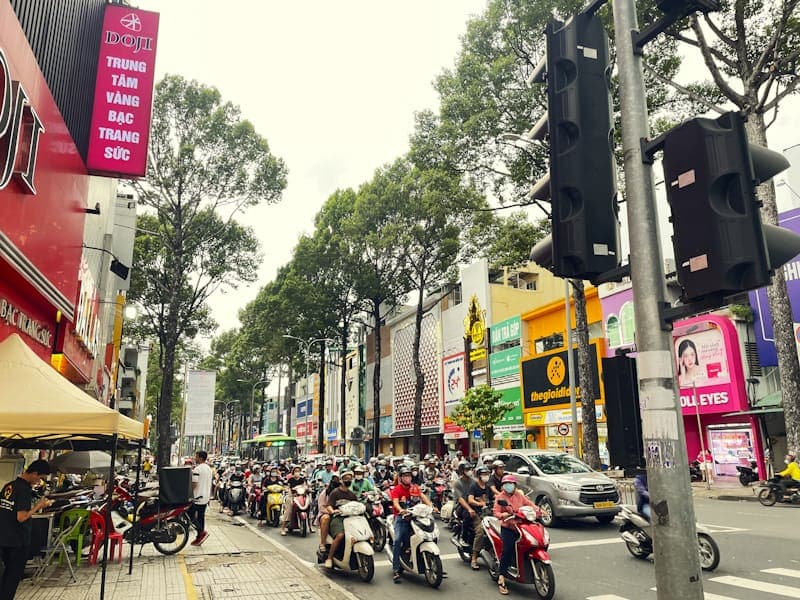
Ho Chi Minh City and Da Nang hit 35–40 °C in summer with 80%+ humidity. Air-con isn't a luxury but a necessity (+$30–50 on the electric bill). Choose Da Lat (18–25 °C year-round) or a place with strong air-con.
Noise
Motorbikes, construction, karaoke bars — constant background noise, especially in central districts. An upper-floor apartment in a quiet area plus noise-cancelling headphones is a must-buy.
Tap water
Tap water isn't drinkable. You need a filter or bottled water (a 19 L jug is ~40,000 VND / ~$1.60).
Bureaucracy
Opening a bank account, extending a visa, signing a lease — all take patience. A little basic Vietnamese (xin chào, cảm ơn), Google Translate and help from local groups go a long way.
Cultural notes
- Vietnamese people avoid a direct "no" — learn to read context
- Bargaining is expected at markets and on rentals
- Some places close for lunch (11:30–13:30)
FAQ
Formally, remote work without a permit is a grey area, and there is still no dedicated freelancer visa. In practice thousands of foreigners work online on an e-visa — nobody checks what you do behind a laptop in a café. Vietnam is actively courting nomads: a Golden Visa has been under discussion since 2025. The one line not to cross: don't take local employment with a Vietnamese company without a work permit.
Not as of mid-2026. A Golden Visa (5–10 year residence for investors and skilled professionals) was proposed in 2025 but hasn't passed. For now nomads use the 90-day e-visa plus visa runs. Watch the news — it could be adopted in 2026–2027. For comparison, Thailand already issues the DTV (Destination Thailand Visa) for five years. See our digital nomad visa guide.
It depends on your passport. Many nationalities get 15–45 days visa-free; for longer, the e-visa runs up to 90 days ($25–50, applied for at evisa.gov.vn). Visa runs every 90 days are standard — nearest options are Cambodia ($30 visa on arrival) or Bangkok. Some nomads alternate Vietnam and Thailand, three months each.
Yes, without limits. YouTube, WhatsApp, Telegram, Instagram, Google, Zalo and ChatGPT all work with no VPN — Telegram was blocked for six weeks in 2025, but that ended in July. The only exceptions are a few betting and gambling sites. Coworking Wi-Fi runs 50–200 Mbps, cafés 10–50 Mbps, plenty for video calls.
A comfortable tier is $685–1,125/mo depending on the city. Da Lat and Nha Trang are the cheapest ($685–800); Ho Chi Minh City is pricier ($900–1,125) but with more to network into. That covers a studio ($250–400), food ($200–350), transport ($30–60), coworking ($50–100) and leisure ($50–150). Full breakdown in our Vietnam prices guide.
It depends on your priorities. Da Nang is the best balance of work and beach with a growing scene. Ho Chi Minh City has the most coworking, meetups and networking. Nha Trang offers a beach on a budget. Da Lat brings quiet, cool air (18–25 °C) and cafés on every corner. Phu Quoc suits mixing a holiday with work, though the infrastructure is thinner.
- Guide
Quy Nhon Attractions 2026: Cham Towers, Coves, Lighthouses
What to see in Quy Nhon in 2026 — 11th-century Cham towers, Ky Co cove, an 1890 French lighthouse, pagodas. Verified fees in VND and USD, day routes, map.Quy Nhon Attractions 2026: Cham Towers, Coves, Lighthouses - Guide
Hoi An Lantern Festival 2026: Dates, Tips & What to See
The Hoi An Full Moon Lantern Festival: 2026 dates, floating lanterns on the river, the best photo spots and how to experience it.Hoi An Lantern Festival 2026: Dates, Tips & What to See - Guide
Phu Quoc vs Nha Trang, Da Nang, Mui Ne & Cam Ranh (2026)
Phu Quoc or Nha Trang, Da Nang, Mui Ne, Cam Ranh? Beaches, weather, prices, food and who each resort suits — a clear verdict for your 2026 trip.Phu Quoc vs Nha Trang, Da Nang, Mui Ne & Cam Ranh (2026)