Cam Ranh weather month by month in 2026
Cam Ranh is one of the rare Vietnamese resorts where the dry season runs eight months straight. January to August: sun, calm sea, water 25-29 C. The rain arrives in October and clears by New Year — three wet months against five in Da Nang and Hoi An.
Below: a month-by-month weather table, a breakdown of the seasons, the best dates to travel and a packing checklist. Prices are in Vietnamese dong with a rough USD conversion (~26,000 VND = $1). For a broader look at the area, see the Cam Ranh guide; for the coastline itself, the Cam Ranh and Bai Dai beaches guide.
Climate data current as of 03/2026. Sources: modelled data from climate-data.org and weatherspark.com.
Weather in Cam Ranh month by month
colour depth — rainfall per month
October
Rainyrainfall 250 mm · rainy days 10Rainy season. The sea turns rough, and waves often close the beaches for swimming.
| Month | Day / night air | Sea | Rain (mm / days) | Verdict |
|---|---|---|---|---|
| January | 26 / 22 C | 25 C | 40 mm / 4 | Ideal |
| February | 27 / 22 C | 25 C | 29 mm / 1 | Ideal |
| March | 29 / 24 C | 26 C | 28 mm / 2 | Ideal |
| April | 31 / 25 C | 27 C | 35 mm / 2 | Ideal |
| May | 32 / 26 C | 29 C | 55 mm / 4 | Good |
| June | 32 / 26 C | 28 C | 48 mm / 4 | Good |
| July | 32 / 25 C | 28 C | 43 mm / 4 | Good |
| August | 32 / 25 C | 28 C | 53 mm / 5 | Good |
| September | 31 / 24 C | 28 C | 200 mm / 9 | Mixed |
| October | 30 / 24 C | 27 C | 250 mm / 10 | Rainy |
| November | 28 / 23 C | 27 C | 300 mm / 10 | Rainy |
| December | 27 / 22 C | 26 C | 145 mm / 8 | Mixed |
Cam Ranh seasons: dry, wet and shoulder
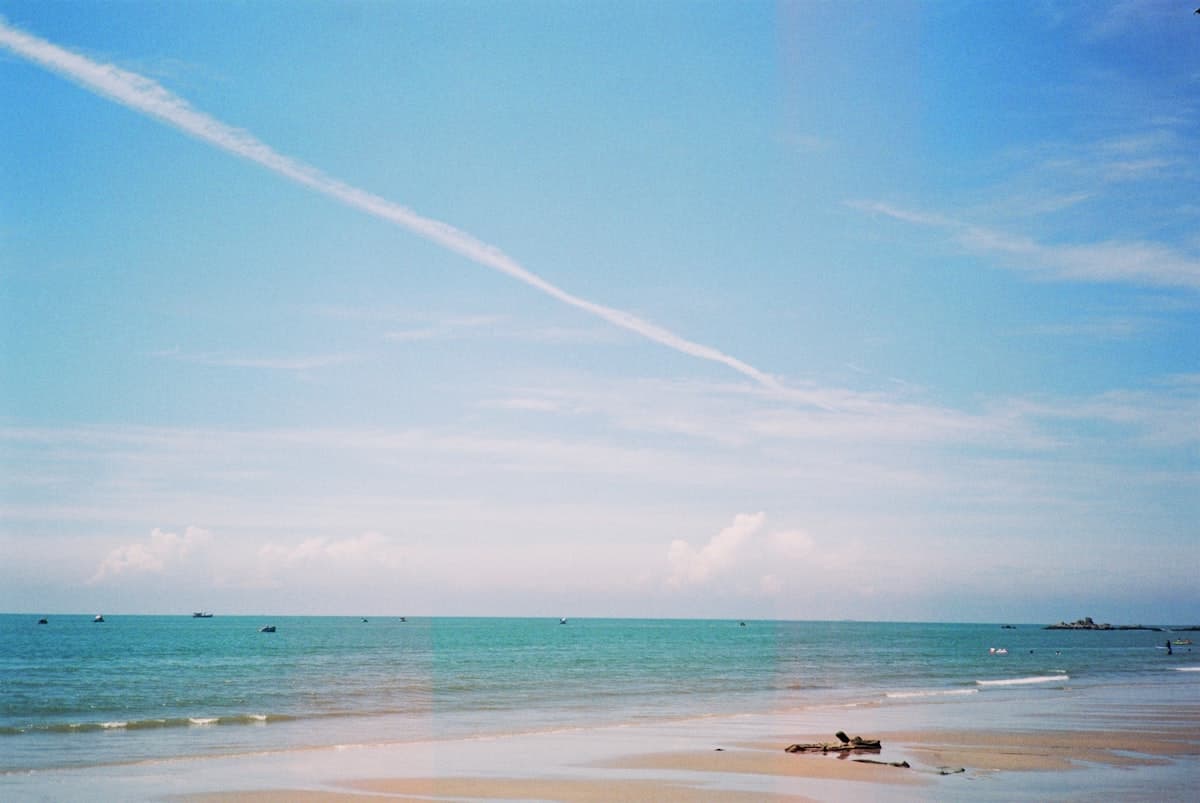
January to August: eight months with no serious rain. The downpours squeeze into October-December, and September works as a transition zone.
Dry season (January-August)
Clear skies, little rainfall, calm sea. You can leave the umbrella at home.
The peak is January to April: 26-31 C, humidity around 75%, almost no rain. Cam Ranh gets 1,630-1,700 mm of rain a year, but nearly all of it falls in October-December. January to August is left with the bare minimum.
From May to August the heat climbs to 32 C and the UV index hits 10-12. Without SPF 50+ you will burn in half an hour — skin starts to redden after just 15-20 minutes. Locals swim only early in the morning or after 16:00, and they have the right idea.
High-season hotels cost 20-40% more. For February-March, book two or three months ahead: the popular rooms go fast. The bay-front resorts — Duyen Ha, Mövenpick, Melia Vinpearl — fill up first.
Shoulder month (September)
September is the shoulder month. Rainy days are up to 9 and rainfall runs 150-250 mm, but the showers are short: an hour or two, then sun again. The sea starts to get restless and the surf builds.
In September prices are already sliding while the weather is still bearable: it suits anyone happy to wait out a shower or two a day.
Rainy season (October-December)

The rain falls mostly in the evening and at night, from around 20:00 to 06:00. Daytime is often sunny. Many people picture a nonstop wall of water, but in reality you walk out to the beach in the morning with no trouble. A downpour rarely holds longer than 2-3 hours, then the heat returns.
- October — 200-300 mm, 10 rainy days. The sea gets choppy and the surf builds. Between showers you can still sunbathe.
- November — the peak: 280-320 mm, 10 days with rain. Maximum typhoon risk. Per weatherspark.com, the heaviest rainfall lands mid-month.
- December — the decline: 120-170 mm, 8 rainy days. By the end of the month the weather evens out, so the New Year holidays often fall on sunshine.
The main fear of October-November is typhoons. Khanh Hoa province sits in the typhoon zone, but direct hits on Cam Ranh are rare. Example: Typhoon Kalmaegi in November 2025 made landfall further north, in Gia Lai and Dak Lak. Six central airports suspended operations on 6 November; Cam Ranh was not on that list (VnExpress).



Best time to visit Cam Ranh

January to April: dry, 26-31 C, a mirror-flat sea. Want the warmest water? Take May to August (28-29 C). Chasing discounts? October-November, minus 30-50% on hotels.
| Trip goal | Best time | Why |
|---|---|---|
| Beach holiday | January-April | Dry, 27-31 C, calm sea |
| Swimming in warm water | May-August | Water 28-29 C — the annual peak |
| Diving and snorkelling | March-August | Best visibility, weak currents |
| Sightseeing | January-March | Not too hot, little rain |
| Budget trip | October-November | Low season, discounts 30-50% |
| With kids | January-April | Mild sun, calm sea, no typhoons |
Trip locked to a specific month? Check the table. January to April — you can't go wrong. May to August is hot, but the beach and sea are excellent. September is 50/50. October to December is a gamble, but cheap.
New Year in Cam Ranh. December is a lottery. Early in the month there are still downpours; by the 20th it usually settles. Many travellers fly in for the holidays and catch the sun. But it happens that the rain runs until December 28-30. Tip: book a hotel with free cancellation.
Late spring. April-May brings 32 C, dry weather and water at 29 C — the warmest sea of the year, warmer than the winter months. The trade-off is the heat itself: the midday UV is brutal, so pace your beach time around the mornings and late afternoons.
What to pack for Cam Ranh

In winter (January-April) the basics are enough: light clothing and sun protection. In summer (May-August) add heat protection. In the September shoulder month and the rainy season (October-December) you will need a waterproof layer.
Dry season (January-August)
- Light cotton and linen clothing — shorts, T-shirts, dresses
- SPF 50+ sunscreen (UV index 10-12 — you burn in 20-30 minutes)
- A hat and sunglasses — without them your head will pound by lunchtime
- Water shoes — some beaches have coral and sharp rocks
- A swimsuit, better two — one is always drying
- A windbreaker or cardigan — malls and restaurants crank the air-con genuinely cold
- Sandals or light trainers for day trips
September-December: shoulder month and rain
Everything above, plus:
- A rain jacket or poncho (an umbrella is useless — the wind flips it inside out)
- A waterproof phone case
- Quick-drying clothing — cotton takes half a day to dry after a downpour
- A dry bag for documents and electronics
- Insect repellent — mosquitoes multiply after the rains
- Closed sandals or waterproof trainers — puddles and wet pavement
First time in Vietnam? A single carry-on of light clothes, sunscreen and a raincoat covers any region of the country.
Fast Track — no queue at the border
5–10 minutes instead of an hour in the immigration queue
from$11per passenger
Things to do in Cam Ranh when it rains

Rain is no reason to sit in your room. A shower lasts an hour or two, then the sun is back. Locals simply wait it out in a cafe over a cup of Vietnamese coffee. And if you want action, here are eight options in the Cam Ranh-Nha Trang zone (airport to Nha Trang ~35 km, 45-60 minutes by taxi).
1. Tháp Bà mud baths. Mineral mud, sulphur pools, a hot pool at 38 C. Twenty minutes in the mud and post-flight fatigue melts away. Price: ~300,000 VND (~$12).
2. Hotel spas. Massage, hammam, sauna — all running even in a downpour. Average bill: 500,000-1,000,000 VND (~$20-40).
3. Nha Trang Oceanographic Museum. The institute dates from 1922. Tanks of tropical life and an 18-metre whale skeleton. Kids won't want to leave.
4. VinWonders Nha Trang. An island complex of 500,000 m². Water park, aquarium, rides.
5. Covered markets. Xóm Mới Market, Dam Market — food, souvenirs, shopping. Haggle without hesitation: they will knock 30-50% off the opening price.
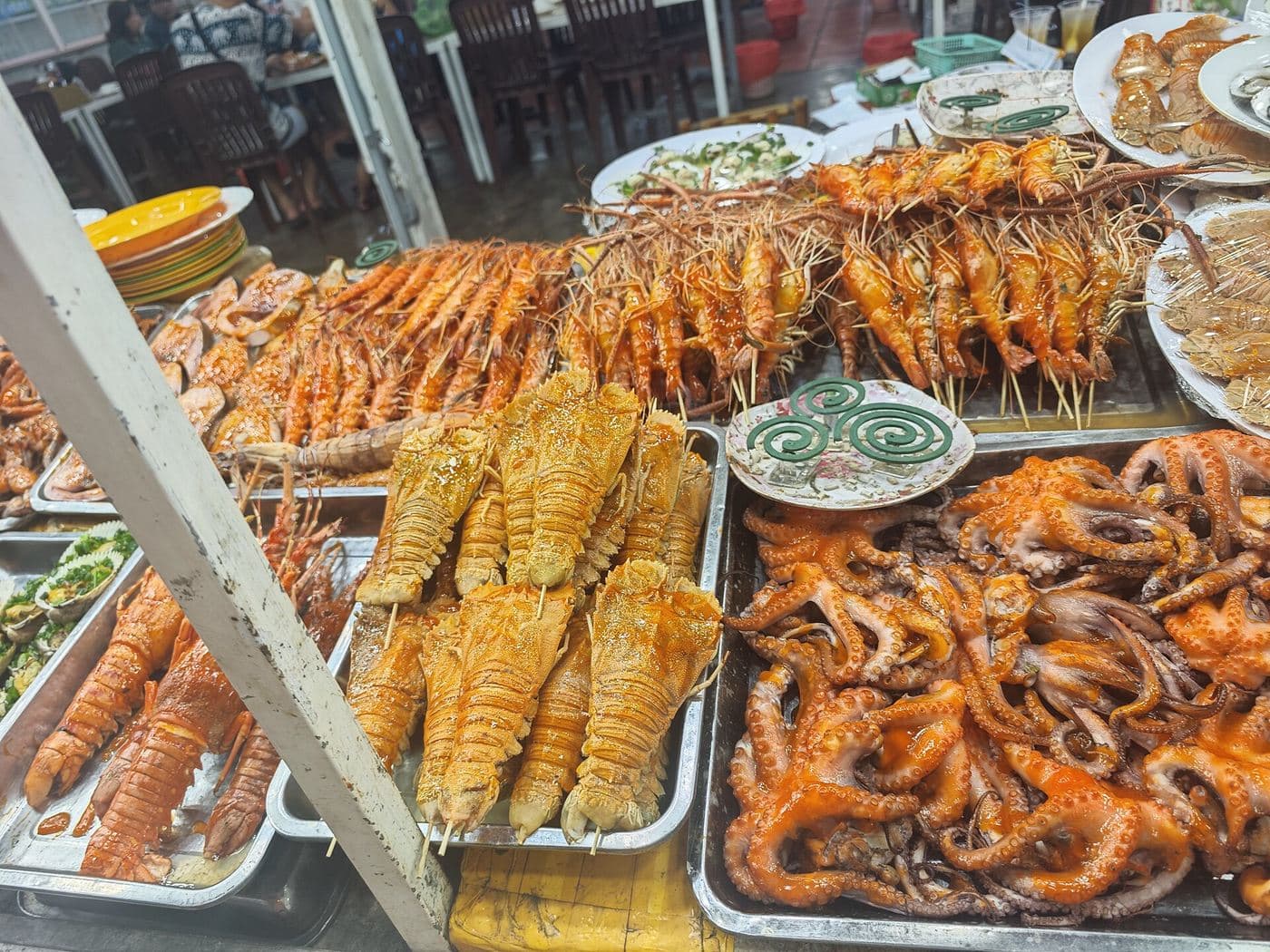
6. Seafood buffets. Oysters, crab, prawns — all-you-can-eat. Bill: 300,000-500,000 VND (~$12-20). The waterfront restaurants stay open in any weather.
7. Po Nagar Cham towers. A temple complex from the 8th-13th centuries on a hill. Part of the site is covered, and the views are worth it even under drizzle.
8. Long Sơn Pagoda. A 24-metre White Buddha on a lotus at the top. It is 193 steps up — and all of Nha Trang laid out below.
Cam Ranh vs Nha Trang: the weather difference

~35 km from the airport, one Khanh Hoa province, one airport (CXR). The weather is identical. The difference is 1-2 C at most on some days. You can read a single forecast for both towns.
One nuance: the Cam Ranh coast is a little more exposed to wind than Nha Trang's bay. In the rainy season the waves on the Cam Ranh and Bai Dai beaches can run higher. In practice most travellers never notice the difference.
Choosing between Cam Ranh and Nha Trang? Weather is not the deciding factor. The difference is elsewhere: Cam Ranh means resorts and quiet, Nha Trang means the promenade, restaurants and nightlife.
Another common question is "Cam Ranh or Phu Quoc?" There the weather really does differ. Phu Quoc gets rain from June to October (five months); Cam Ranh from October to December (three months). In winter both resorts are dry.
For nearby weather and orientation, the Nha Trang weather guide covers the same climate in more detail.
Practical weather tips

Things you won't find in a weather forecast but should know before you fly.
UV index. In the dry season it reaches 10-12. SPF 50+ every 2 hours, even under an overcast sky. Getting burned through the clouds is a classic beginner mistake.
Air-con. It is 32 C outside and 18-20 C inside malls and restaurants. A 12-14 degree swing hits the body. Throw on a windbreaker and skip the cold.
Humidity. 75-85%. Clothes barely dry and the camera lens fogs the moment you step out of an air-conditioned room. Silica gel packets for your gear are a must, not overkill.
Acclimatisation. The first 2-3 days your body adjusts to the heat. Drink 3-4 litres of water a day, skip alcohol in the sun and don't plan any marches on day one. Don't drink from the tap — bottled water runs 5,000-10,000 VND (~$0.20-0.40) for 1.5 litres.
Mosquitoes. There are mosquitoes, especially in the rainy season and at dusk. Air-conditioned rooms keep them out, but on an evening walk or in an open-air restaurant, repellent saves you. Look for products with 30%+ DEET at any pharmacy for 30,000-50,000 VND (~$1.20-2).
Passport and visa. Visas depend on your passport. Citizens of the UK, Norway, Switzerland, Japan, South Korea and 18 EU countries get 45 days visa-free. Most others, including US, Australian and Canadian travellers, apply for the e-visa at evisa.gov.vn. Full rules — visa guide. Sort it out before you fly, and keep a photo of your passport on your phone.
Frequently asked questions about Cam Ranh weather
It depends on what matters most. For snorkelling and comfort, go March to April: clear water, no wind. For the warmest sea and cheaper flights, May to June (about 30% lower). For a budget hotel, late October: discounts up to 50%, rain in the evening, sun for the beach by day. The worst month is November — peak rainfall and typhoon risk.
It never drops below 24 C — you can swim even in January. By month: January-February 25 C, March-April 26-27 C, May-August 28-29 C (the peak), September 28 C, October-December 26-27 C.
October to December, just three months — the same short wet season as Nha Trang. That is shorter than Phu Quoc (five months) or Da Nang (five). The downpours fall in the evening and at night. You head to the beach in the morning and by 10:00 it is dry again. Travellers who visited in November say the beach time barely suffered.
The same: ~35 km from the airport, one province. One nuance: in autumn the waves on Cam Ranh beaches (Bai Dai) run higher than in Nha Trang's sheltered bay. If you travel in October-November and want calm swimming, Nha Trang is the safer bet. In the dry season there is zero difference.
Absolutely. It is the best time: water 25-26 C, air 26-27 C, only 1-4 rainy days a month. Ideal with kids: a gentle shore, calm sea. The downside: the sun sets early, around 17:30. Swim before the afternoon.
There is a risk in October-November, but a direct hit is rare. What to do: book a hotel with free cancellation, get travel insurance that covers natural disasters, and check windy.com a week before departure. If a typhoon passes offshore, the airport keeps running — a 6-12 hour delay at most.
Tropical savanna (Koppen: Aw). In practice: eight dry months (January-August), three wet ones (October-December) and one shoulder month (September).
- Housing
Melia Vinpearl Cam Ranh: Review, Rooms & Prices 2026
Meliá Vinpearl Cam Ranh reviewed: villa categories, the Bai Dai beach, dining, The Level, spa and family facilities — prices and how to book.Melia Vinpearl Cam Ranh: Review, Rooms & Prices 2026 - Food
Cam Ranh Food 2026: Where to Eat, Seafood and Prices
Where to eat in Cam Ranh: resort restaurants on Bai Dai, lagoon seafood, local cafes and markets. Real 2026 prices in VND and USD, plus a map of 10 spots.Cam Ranh Food 2026: Where to Eat, Seafood and Prices - Guide
Things to Do in Cam Ranh: Water Sports, Islands & Spa
What to do in Cam Ranh: resort water sports, island trips, VinWonders and Nha Trang day trips, spa and family picks — a quiet, low-key base.Things to Do in Cam Ranh: Water Sports, Islands & Spa