Con Dao weather month by month
The sea off Con Dao never drops below 25°C, and from April to October it holds 29-30°C. The island is also angled so that each monsoon hits only one side: while the west coast churns, the east coast lies flat. Here are all twelve months in numbers — air, water, rainfall, rainy days — plus how to pick a month for what you actually came for: beach time, diving, nesting turtles, or a cheap room.
Con Dao climate in one paragraph
Con Dao (Côn Đảo) has a tropical monsoon climate with two seasons: dry from December to April, wet from May to October. Mean annual air temperature is 28°C and the sea averages about the same. Around 2,070 mm of rain falls in a year, and about three quarters of it lands between June and October.
One administrative note, because half the guidebooks are now wrong. Con Dao is no longer a district of Ba Ria-Vung Tau province. Since 1 July 2025 it has been a special zone (đặc khu) under Ho Chi Minh City. The weather did not change; the addresses did.
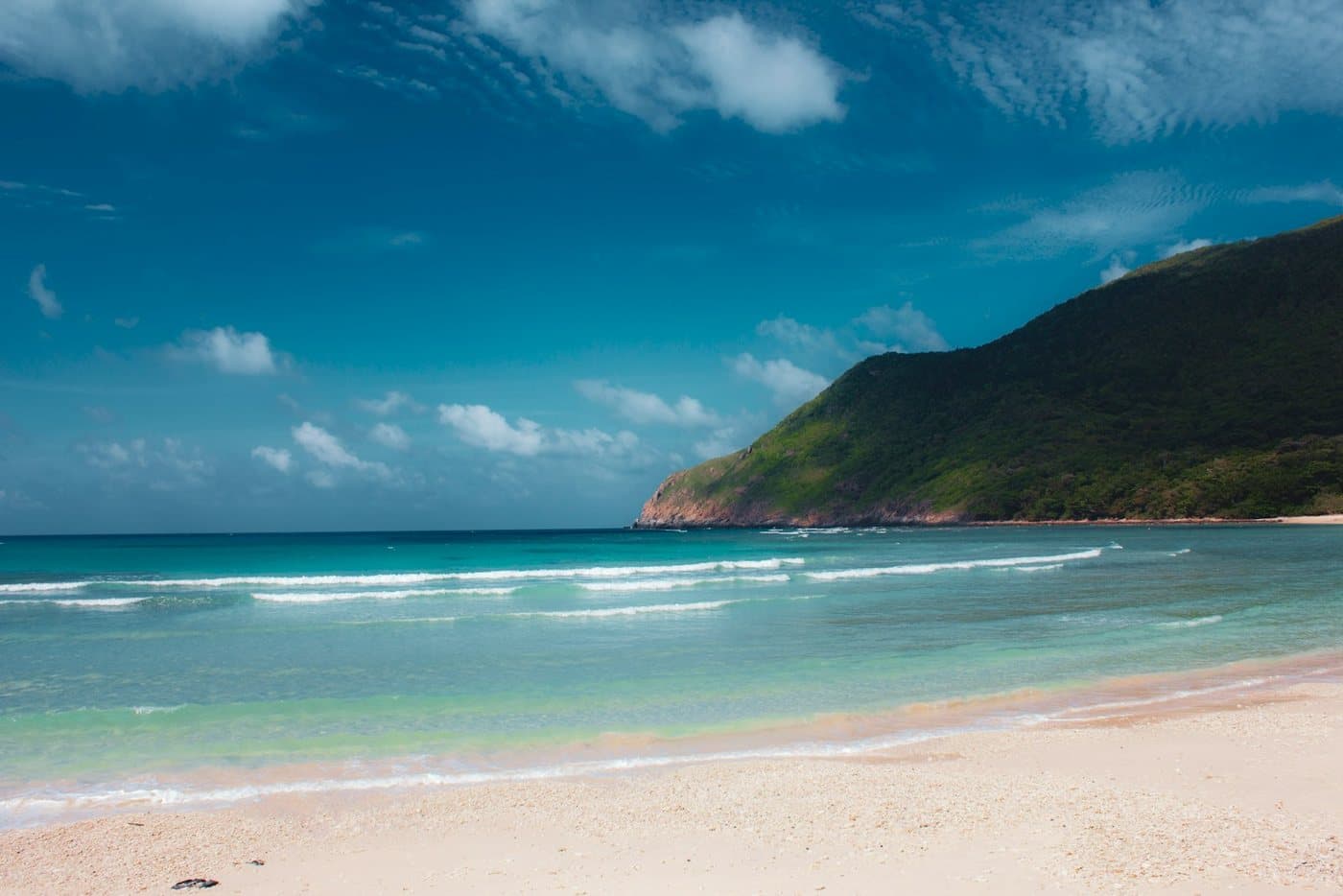
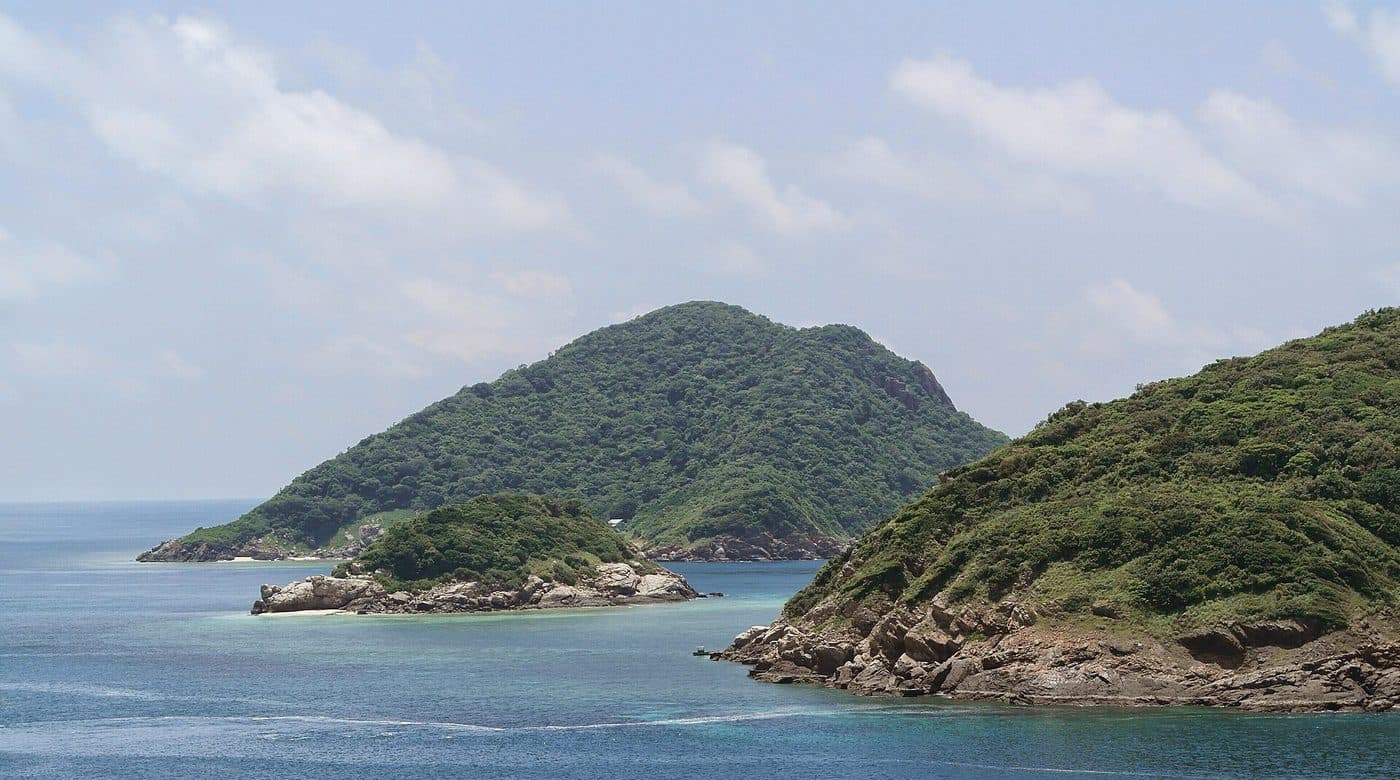
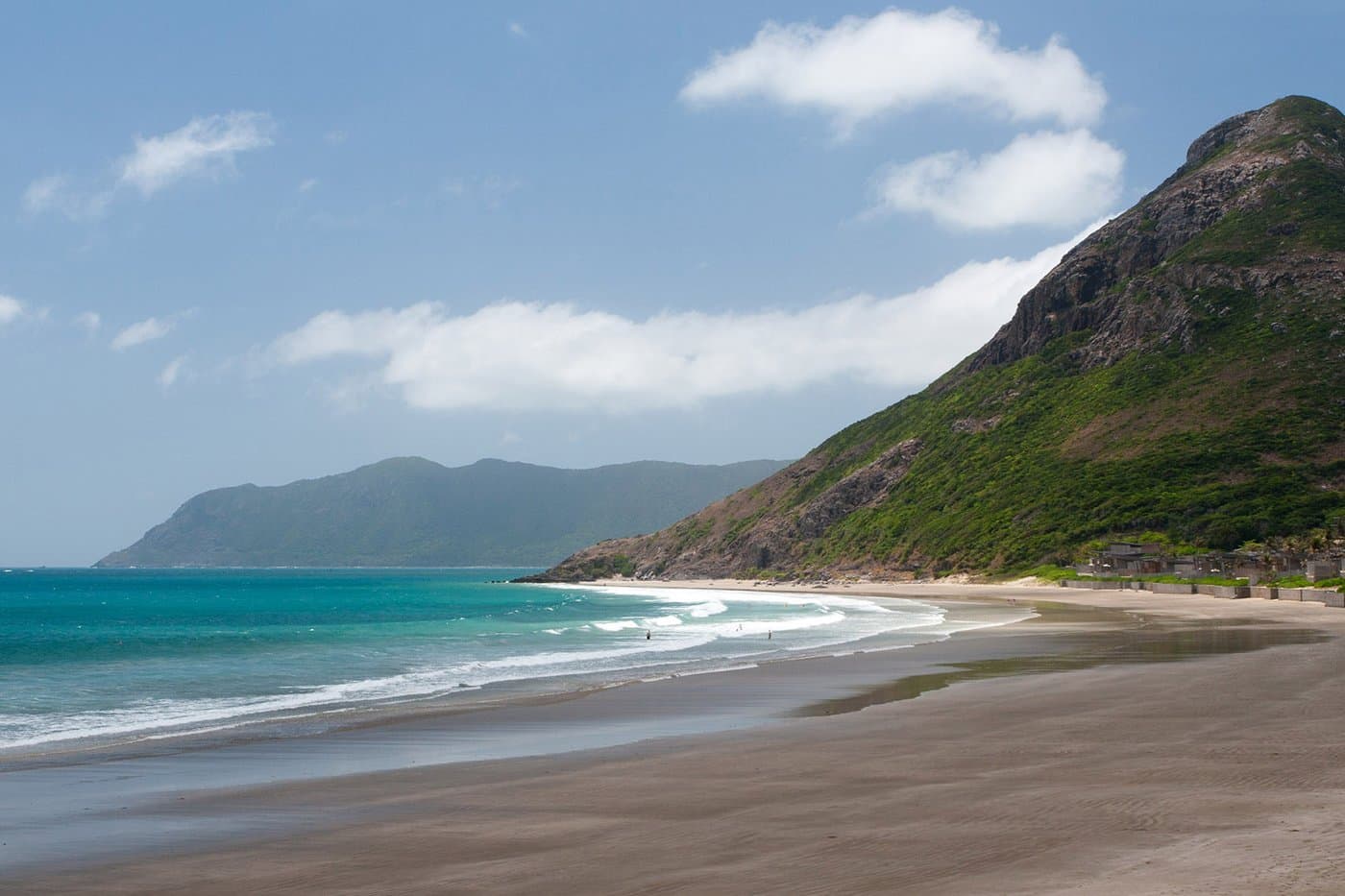
Phu Quoc is also an island, but it sits in the shallow Gulf of Thailand. Con Dao sits in open South China Sea water, and that changes two things. Wind is stronger here and the monsoons bite harder. And the main island runs southwest to northeast, so each monsoon only ever hits one flank: the lee side stays calm.
Which leads to the one thing worth remembering. Con Dao almost never has bad weather in the literal sense. It has badly chosen beaches.
Three seasons: dry, wet and typhoon
Officially there are two seasons. On the ground it feels like three. Dry is for the beach and the trails. Wet is for turtles and cheap rooms. The typhoon window overlaps the tail of the wet season and plays by different rules: it is not about umbrellas, it is about losing a day to a cancelled flight.
Dry season: December to April
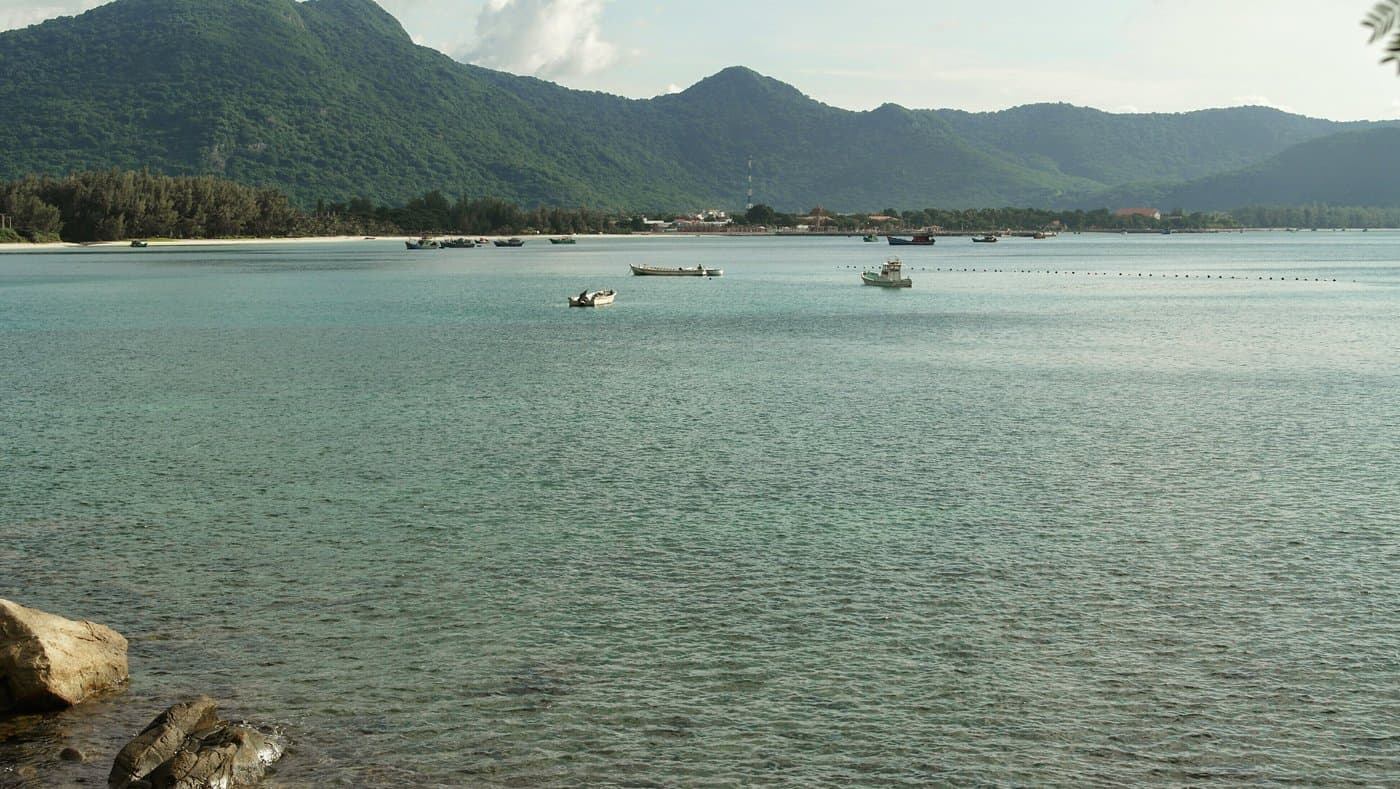
This is the tourist peak. The northeast monsoon pushes dry continental air across the island, monthly rainfall stays at 11-55 mm, and you get 6.5 to 9 hours of sun a day. Humidity holds around 79-81%, which by tropical standards counts as dry.
Air runs 28-32°C by day and 24-26°C at night. In January a light windbreaker earns its place, especially on a boat: out on open water the wind strips the warmth off you fast. The east coast is choppy in these months, since that is where the wind lands, while the west-coast beaches turn to glass.
Wet season: May to October
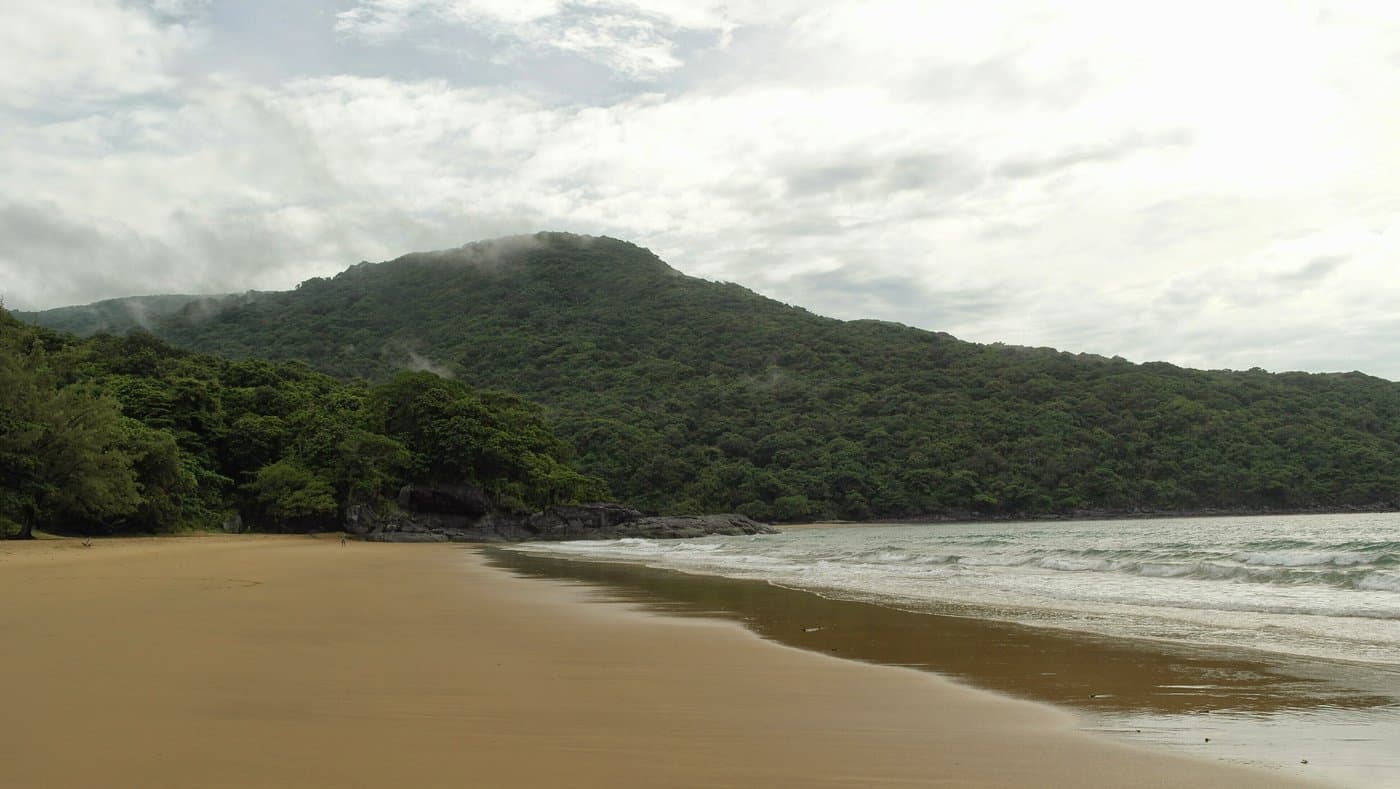
The southwest monsoon brings humid air in off the Indian Ocean. It rains most days, but not all day. The standard pattern is a clear morning, a 30 to 60 minute downpour around midday, then sun again. By evening everything has dried out.
Rain falls on 15 to 20 days out of 30, but the genuinely wet time is one to three hours a day. If your plan is not "lie on a beach from dawn to dusk", the wet season works fine. It is also the only window for turtles and the only time hotels discount.
- ✓ You came for the turtles: there is no other window
- ✓ You are counting money: 30-40% off hotel rates
- ✓ You do badly in open sun: the cloud cover takes the edge off
- ✗ You dive: centres shut from October, and summer boats only run before lunch
- ✗ You have three days and no buffer: one lost day is a quarter of the trip
Typhoon window: mid-October to December
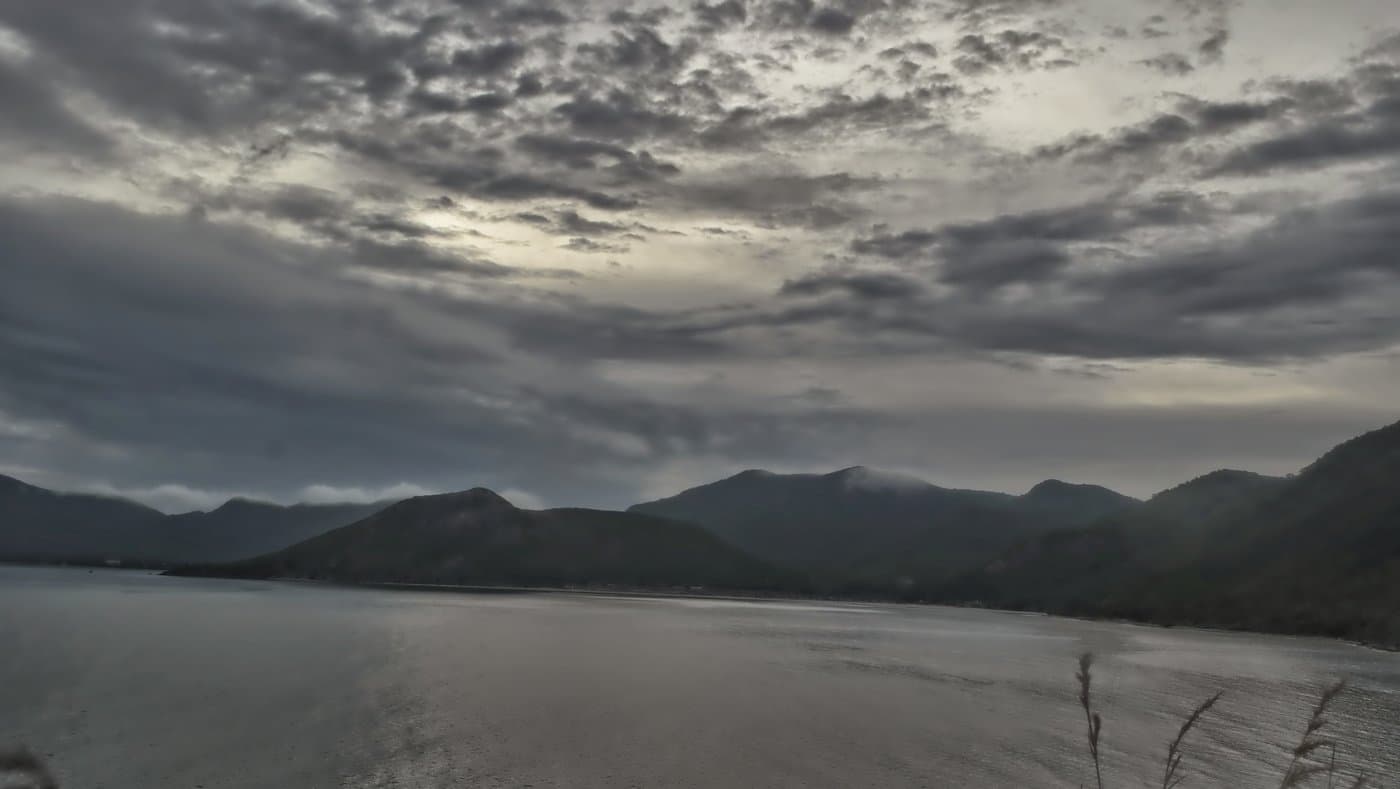
Direct typhoon hits on Con Dao are rare: southern Vietnam sits off the main storm tracks. But a system passing anywhere across the South China Sea still throws swell and wind at the island. Peak risk is early November.
The fragile part is the logistics. One airport serves the island, Co Ong, and the last scheduled departure leaves around 16:00 (as of 08.2026). The aircraft is a turboprop ATR-72, grounded by strong crosswinds and poor visibility. Ferries do not sail in heavy swell, and the port authority makes that call on the morning of the crossing. December 2017 is the example everyone quotes: as Tembin weakened into a depression south of the country, Ho Chi Minh City to Con Dao flights were cancelled.
Con Dao weather month by month
These are long-term climate normals. Any given year swings 1-2°C on air temperature and 50-100 mm on rainfall, especially in the wet season. The Day column is the mean daily high, Night is the mean nightly low, not records.
Weather in Con Dao month by month
colour depth — rainfall per month
October
Rainyrainfall 350 mm · rainy days 20Wettest month of the year. Dive centres shut down and the typhoon risk window opens.
| Month | Day, °C | Night, °C | Sea, °C | Rain, mm | Rainy days | Humidity, % | Verdict |
|---|---|---|---|---|---|---|---|
| January | 28 | 24 | 25 | 12 | 2 | 80 | Dry and breezy, best hiking |
| February | 29 | 25 | 26 | 13 | 1 | 80 | Clear almost daily, Tet crowds |
| March | 30 | 25 | 27 | 11 | 2 | 79 | Driest month, dive season opens |
| April | 32 | 26 | 29 | 40 | 5 | 79 | Hottest and sunniest |
| May | 32 | 27 | 30 | 210 | 15 | 81 | Warmest sea, turtles arrive |
| June | 31 | 26 | 30 | 290 | 19 | 84 | Monsoon on, sun still shows up |
| July | 31 | 26 | 29 | 295 | 19 | 85 | Morning diving, few visitors |
| August | 31 | 26 | 29 | 300 | 20 | 85 | Nesting peak |
| September | 31 | 26 | 29 | 315 | 20 | 86 | Hatchling peak, cheapest rooms |
| October | 30 | 26 | 29 | 350 | 20 | 86 | Wettest month of the year |
| November | 30 | 26 | 28 | 175 | 12 | 84 | Peak month for cancellations |
| December | 29 | 25 | 26 | 55 | 6 | 81 | Dry season returns |
The scary-looking "20 rainy days" in August and September only means rain fell at least once in 24 hours. A fifteen-minute burst at three in the morning counts, and the month goes down as wet. In practice most of the daylight is sun or broken cloud.
Each month up close
January and February
January is the steadiest month of the year: 28°C by day, 24°C at night, sea at 25°C. That is the annual low and it is still comfortable, just not bathwater. The east coast is choppy, so head for the west-coast beaches. Hotel rates are at peak with no discounts, so book two months out.
February is the clearest month: 13 mm of rain and a single rainy day. Air 29°C, sea 26°C. Not every dive centre has reopened yet, because the northeast monsoon still keeps the water murky.
Lunar New Year (Tết) usually falls in February, and for four or five days the island fills with Vietnamese visitors from Ho Chi Minh City. Room rates jump 30-50%.
March and April
March is the driest month of the year: 11 mm across all 31 days. The northeast monsoon lets go, the sea warms to 27°C, and underwater visibility settles into a workable 10-20 m. If you plan to do a PADI course here, March is a good bet. Walk the park trails early: after eleven they get airless.
We were on Con Dao in March 2016. …for all the days of our stay (8 days, I think) a strong wind blew and the sea always had wavesЛагуна Буссе, Vinsky Forum, 2017, translated by VietnamSpot
April is the hottest month, 32°C by day and 26°C at night, with nine hours of sun. The first showers appear, short and mostly after lunch, adding up to 40 mm. The sea is at its best: 29°C and flat on both sides of the island. Low season has not started, so prices are still high.
May to July
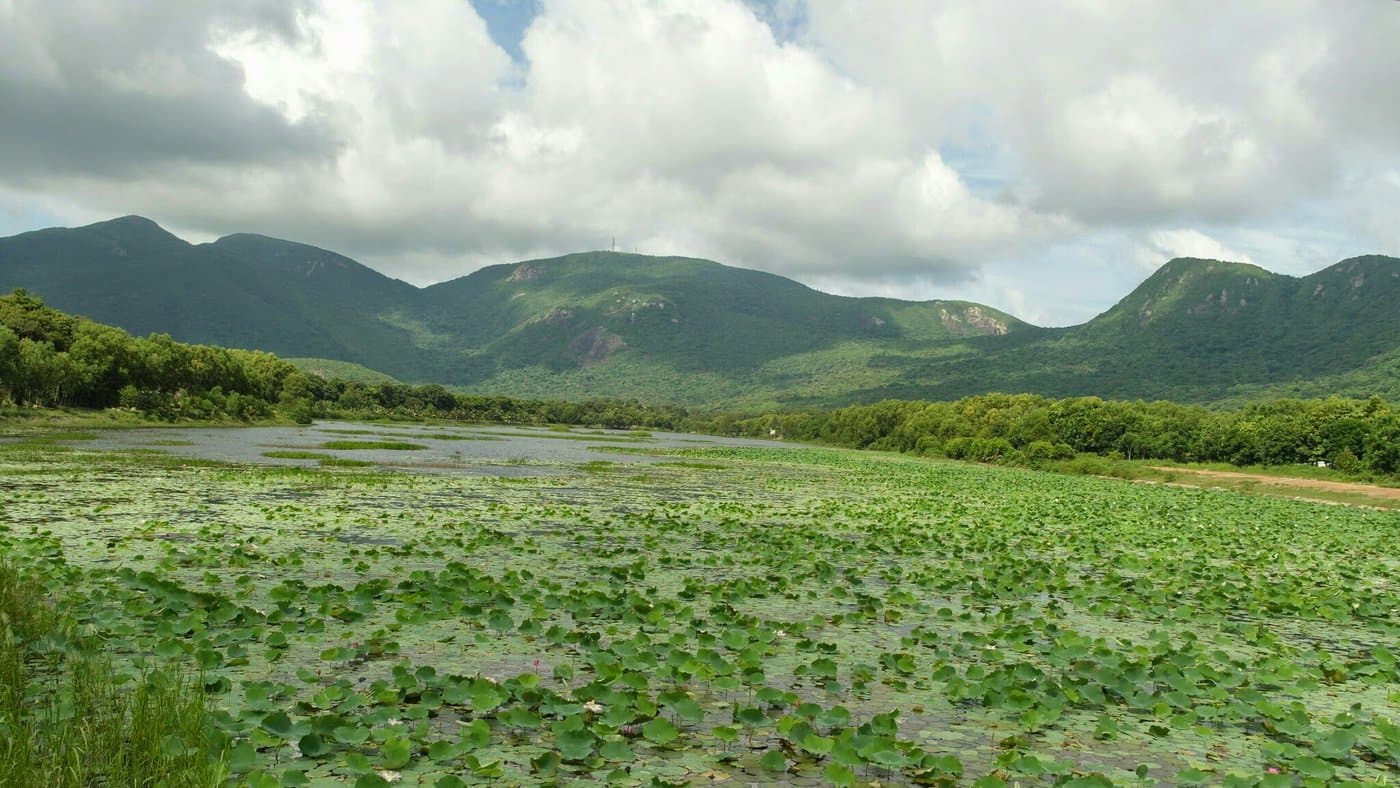
May flips the season. Rainfall jumps from 40 to 210 mm and rain falls on 15 days out of 31. In exchange you get the warmest water of the year at 30°C and the start of nesting on Bãi Cạnh. Hotel rates begin to slide, roughly 20% off peak.
June and July are near-identical: 290-295 mm, 19 rainy days, air 31°C, sea 29-30°C. The west coast churns while the east coast (Đất Dốc, where Six Senses sits) stays calm. Dive boats run in the morning only; afternoon trips get called off for swell. Few visitors, no queues anywhere, hotels down 30%.
August and September
August is the nesting peak. At the height of the season park rangers patrol the 18 nesting beaches every night. Eggs laid in May and June start hatching at the same time, so from August you can realistically catch both halves of the cycle in one trip. Rain on 20 days, 300 mm total. Swim on the east coast.
September is the most turtle-heavy month of all: nesting is still going and hatchling releases peak. Rainfall 315 mm. The west coast is rough, the east coast reasonably calm. There are almost no visitors and rates bottom out at 35-40% below peak.
October to December
October is the wettest month of the year: 350 mm across 20 days. Dive centres wind down and visibility falls to 5-10 m. If the weather cooperates, though, you get a very quiet and very cheap island. Build in a spare day on the mainland.
November is the typhoon peak, statistically the likeliest month to lose a flight. Rainfall 175 mm over 12 days. From mid-month the monsoon swings to the northeast: the west-coast beaches settle and the east coast starts to churn.
December brings the dry season back with 55 mm of rain over six days, air at 29°C and sea at 26°C. Visitors return and rates climb; for Christmas and New Year, book three months ahead. The typhoon risk fades by late December, though December 2017 is exactly when Tembin came past, so the calendar guarantees nothing.
Best time to visit Con Dao, by goal
The best month depends entirely on why you are going, and the goals fight each other. Turtle season and dive season barely overlap, and the best month for the beach is the worst one for your budget.
Beach and swimming: December to April
Dry season, flat water, sea at 25-29°C. If the beach is the whole point, that is your window. You can still swim in summer, though, as long as you pick the sheltered side: east coast from June to September (Đất Dốc and the Six Senses stretch), west coast from November to March (Ông Đụng).
Diving and snorkelling: March to September
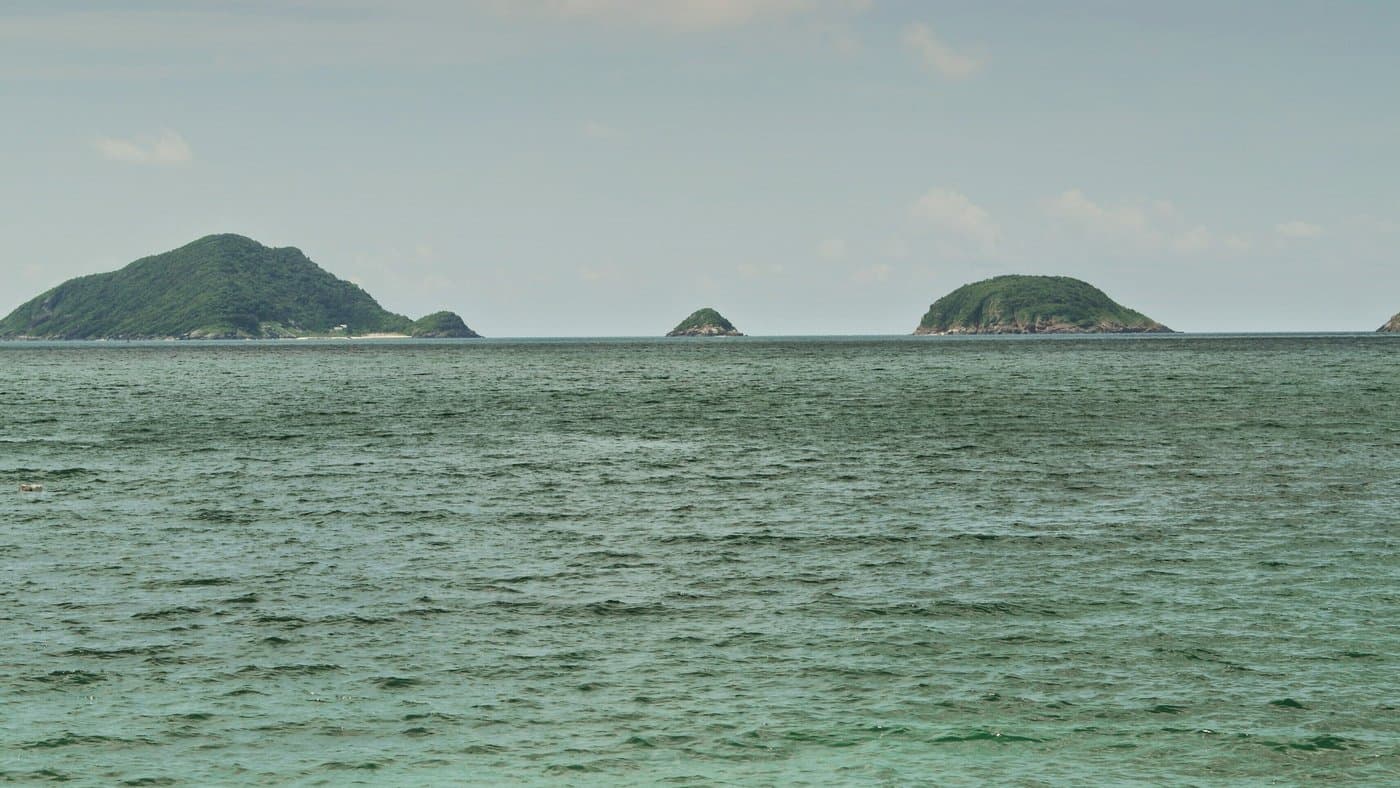
The working dive season runs March to September, and the visibility is best at the front of it: 10-20 m in the dry months, more on a good day. Côn Đảo is one of the better dive destinations in Vietnam, with green turtles, rays, moray eels and reef sharks.
Summer diving happens, but morning only and only when no cyclone is active in the region. From October to February the northeast monsoon raises swell and stirs sediment, visibility falls to 5-10 m, centres close, and sometimes the port keeps the boats in altogether.
Turtles: June to September
Nesting runs from May to October with a June-September peak. Eggs hatch 45-60 days after laying, so releases peak in August and September. The main site is Bãi Cạnh (Bay Canh island), though the park also runs trips to Hon Cau, Hon Tai, Hon Tre Lon and Duong beach. The main organiser is Con Dao National Park, and local dive centres sell similar trips too.
The format is fixed: a boat from the main port in the afternoon, a ranger briefing, dinner in a basic hut, out onto the beach after sunset around 20:00, back in the morning. Register through the park office at least a week in advance. The park's overnight tour (code CDP 009) costs 2,150,000–5,100,000 VND (~$83–196). There is also a short no-overnight option, the park's half-day hatchling release tour (CDP 008); ask the park office for the price.
Saving money: July to September
Low season takes 30-40% off hotel rates and up to half off the airfare. Ballpark numbers for 2026:
| Item | High season | Low season | Low season, USD |
|---|---|---|---|
| Six Senses Con Dao, per night | from 20,000,000 VND | from 13,000,000 VND | ~$500 |
| Guesthouse in Con Son town, per night | 1,200,000-1,500,000 VND | from 700,000 VND | ~$27 |
| Flight from Ho Chi Minh City, one way | 1,800,000-2,800,000 VND | from 1,100,000 VND | ~$42 |
| Fast boat from Tran De pier, one way | 363,000 VND + 18,000 VND fee | 363,000 VND + 18,000 VND fee | ~$15 |
Rate used here: 1 USD ≈ 26,000 VND, checked August 2026. Flights from Ho Chi Minh City are run by VASCO, the regional arm of Vietnam Airlines; Bamboo Airways dropped Con Dao back in 2024. Boat fares, unlike airfares, barely move with the season.
Fast Track — no queue at the border
5–10 minutes instead of an hour in the immigration queue
from$11per passenger
Hiking the national park: January to April
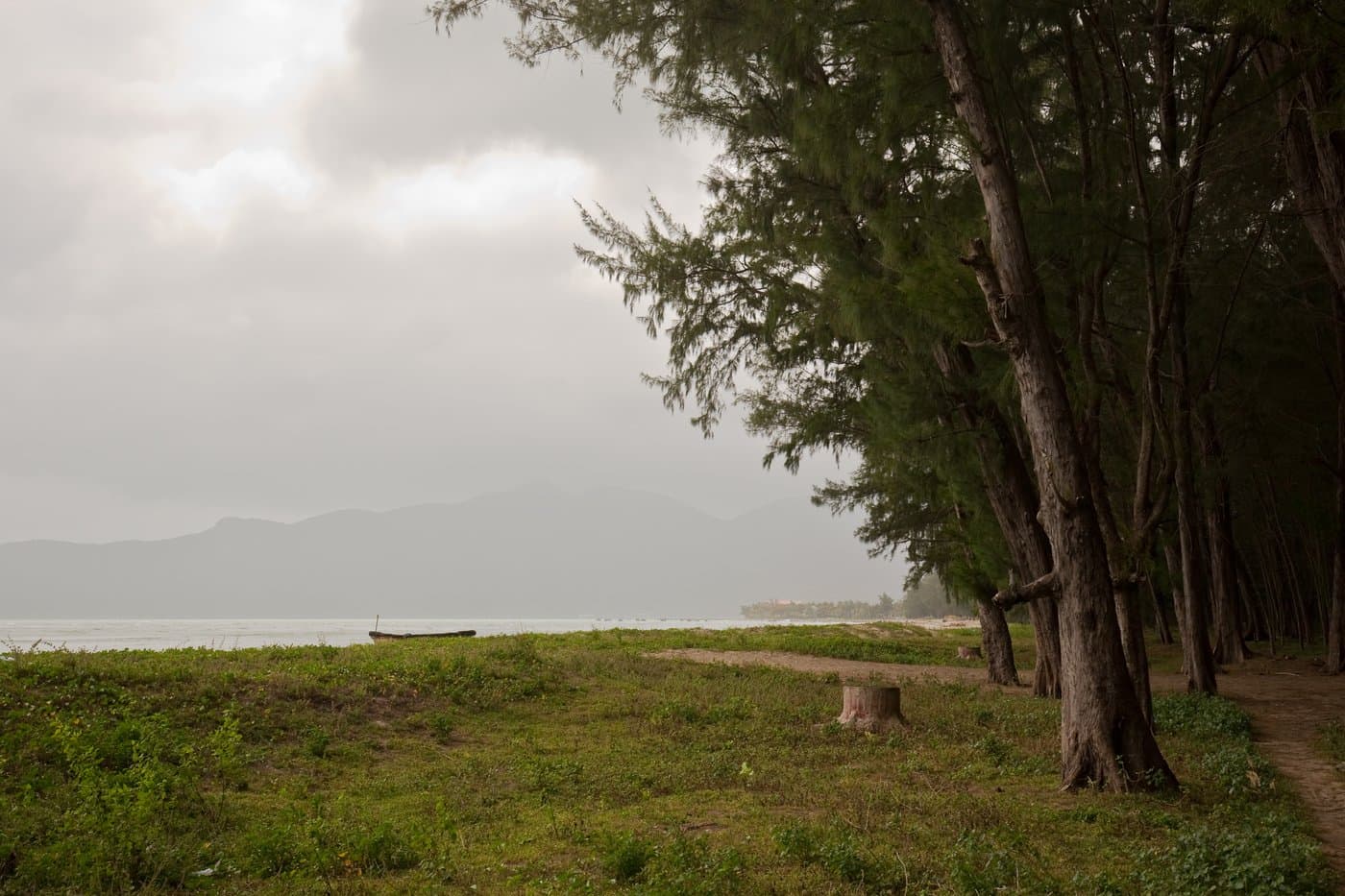
Trails are dry, the footing is good, and there are no leeches. The best routes are So Ray (3 km through forest to a viewpoint), the trail down to Ông Đụng beach (4 km each way) and the climb up Núi Thánh Giá, the Cross Mountain, 577 m and 6 km round trip.
In the wet season the trails turn slick and leeches appear in the long grass. Not dangerous, but it takes most of the fun out of it.
Typhoons, cancellations and plan B
Direct typhoon hits on Con Dao are rare. The case everyone remembers, Tembin in December 2017, had weakened to a tropical depression by the time it approached and never made landfall here, yet flights were still cancelled in bulk. A cyclone crossing the South China Sea happens every year, and the swell and wind arrive whether or not the storm does.
What gets cancelled and when
| Route | Operator | Stops when |
|---|---|---|
| Ho Chi Minh City to Con Dao (SGN-VCS) | VASCO (Vietnam Airlines), ATR-72 | Strong crosswinds, poor visibility. No evening flights on the schedule: the last departure is around 16:00 |
| Can Tho to Con Dao (VCA-VCS) | VASCO, ATR-72 | Same, but far fewer frequencies, so a cancellation hurts more |
| Fast boat from Vung Tau | Several companies, tickets via agents | Heavy swell; the port authority decides on the morning of sailing |
| Fast boat from Tran De pier, Mekong delta | Superdong, Phu Quoc Express | Same. Crossing takes 2 h 15 min to 2 h 30 min; Superdong sails once a day, at 08:00 |
| National park trips: turtles, diving | Con Dao National Park | Ranger call on the day, based on conditions |
Two things trip up first-time visitors. There are no international flights to Con Dao at all, so you always connect through Ho Chi Minh City or Can Tho. And with the last departure at around 16:00, a same-day connection onto a long-haul out of Saigon is a gamble even in perfect weather.
One naming note: Tran De pier used to be listed under Soc Trang province. After the 2025 reforms it belongs to Can Tho. If an older guide says "ferry from Soc Trang", it means the same jetty.
Plan B when it gets cancelled
- A spare day on the mainland. Get back to Ho Chi Minh City at least two days before your international departure.
- The other mode of transport. Flight cancelled? Try a boat, from Vung Tau (bus from Saigon plus about 3.5 hours at sea) or from Trần Đề pier in the Mekong delta. Boat cancelled? Fly.
- A changeable fare. Vietnam Airlines makes date changes cheaper on mid and higher fare classes; on the cheapest one it is either paid or barred outright. October and November are not the months to save there.
- Insurance that covers weather cancellations. Most standard policies do, but read the wording rather than assuming.
Out at sea you get really seasick, it just turns you inside out… I don't recommend going by sea in a period of big waves, or you'll spend another day recovering from the tripOleg Gabdraupov, Vinsky Forum, 2020, translated by VietnamSpot
For forecasts, windy.com shows cyclones 5-7 days out and ventusky.com is easier to read for swell. For a specific departure, the airline app and the boat operators' pages are the only things that settle it on the day.
What to pack, by season
Con Dao is an island with no large shops. Anything you actually need is easier to bring. There are pharmacies in Côn Sơn town, but the range of sunscreen and toiletries is thin.
| Period | Pack this |
|---|---|
| December to March | Light windbreaker (boats and viewpoints are exposed), reef-safe SPF 50+, hat, polarised sunglasses |
| April and May | Electrolyte sachets (April is the hottest month), DEET 25% repellent, water shoes, SPF 50+ |
| June to October | Poncho rather than an umbrella (wind makes umbrellas useless), quick-dry clothes, waterproof phone pouch, head torch for turtle trips, stronger repellent |
| November | Everything from the wet season, plus a forecast check two days before your flight and tickets saved offline as well as printed |
On reef-safe sunscreen. Dive instructors in Côn Đảo national park may ask you to swap your cream before a dive if it contains oxybenzone or octinoxate. Bring a zinc-based or mineral-based one.
On cash. There are ATMs in town, but power cuts happen in the wet season. Carry a day or two of cash. Exchange rates on the island are close to Saigon rates.
Con Dao, Phu Quoc, Nha Trang and Da Nang
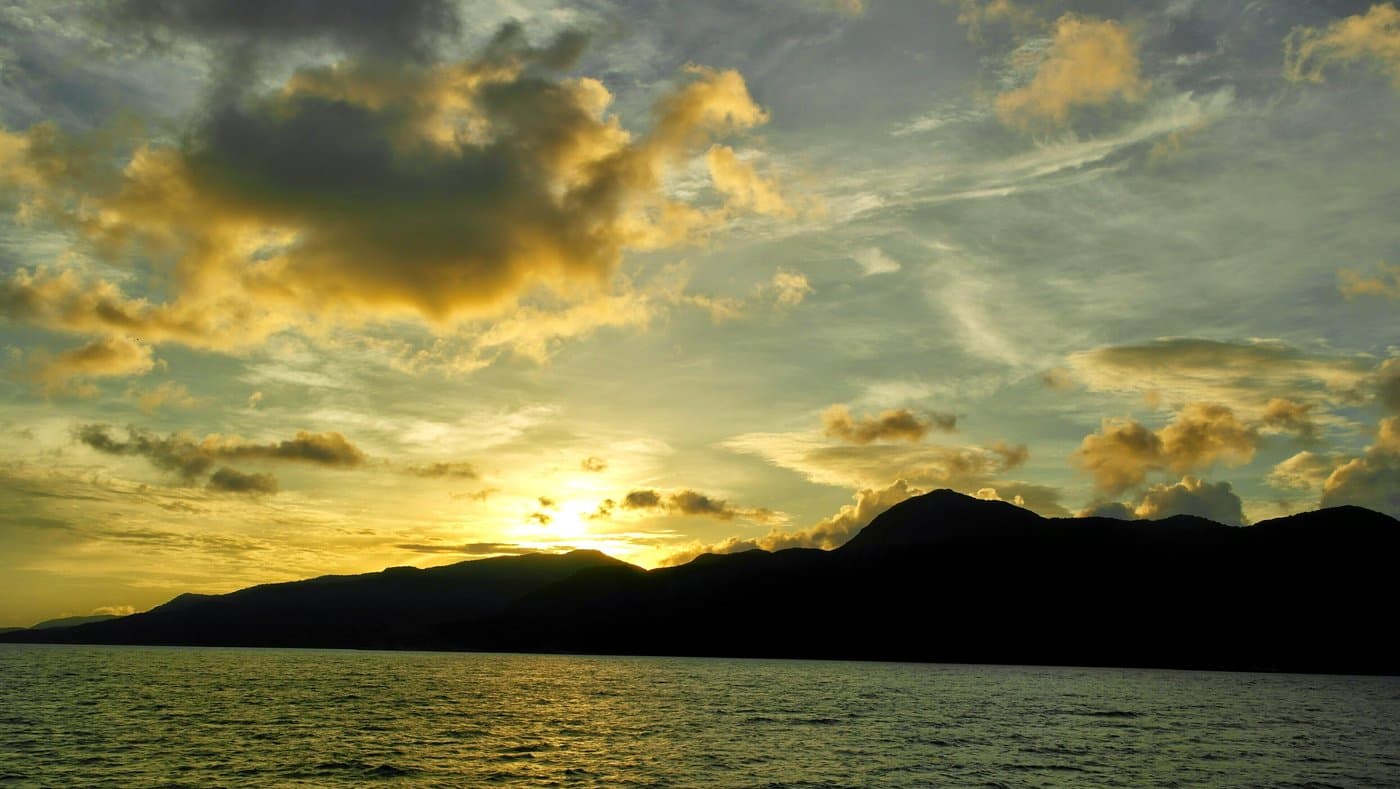
If you are choosing between Vietnamese beach destinations, each has its own window, and they barely overlap.
| Metric | Con Dao | Phu Quoc | Nha Trang | Da Nang |
|---|---|---|---|---|
| Dry season | Dec-Apr | Nov-Apr | Jan-Aug | Feb-Aug |
| Wet season | May-Oct | May-Oct | Sep-Dec | Sep-Jan |
| Typhoons | Oct-Dec, rare | Very rare | Oct-Dec, frequent | Sep-Nov, frequent |
| Sea in January | 25°C | 27°C | 24-25°C | 22-23°C |
| Annual rainfall | ~2,070 mm | ~2,800 mm | ~1,400 mm | ~2,100 mm |
| What people come for | Turtles, ocean diving, empty beaches | Big beaches, resorts, Vinpearl | Nightlife and package infrastructure | City comforts next to the sea |
Here is the part that decides it. In winter, of these four destinations only Con Dao and Phu Quoc let you get into the water without thinking twice: Nha Trang sits at 24-25°C in January and Da Nang at 22-23°C, which many people call cold. Phu Quoc is actually warmer than Con Dao in those months, but it sits in the shallow Gulf of Thailand, with neither the ocean diving nor the nesting beaches. Con Dao also has an unusual typhoon profile for this country. The risk window is short and direct hits are exceptional, while the central coast takes one most years.
Common mistakes
- Coming in November with no slack in the itinerary. One cancelled flight and the whole plan collapses. Budget two spare days.
- Booking a room on only one side of the island. In the wet season take the east coast (Six Senses on Đất Dốc beach); in the dry season the west side works too.
- Planning a dive trip for October to February. Centres are closed and visibility is 5-10 m. The working window is March to September, and the best of it is March to May.
- Reading "20 rainy days" as "a month of rain". It means rain fell at least once in 24 hours, not that it rained all day.
- Assuming there is an evening flight off the island. The last scheduled departure from Co Ong is around 16:00 (as of 08.2026), and there are no international arrivals at all, so build the Saigon connection with room to spare.
- Packing ordinary sunscreen for diving. Reef-safe is not optional here: oxybenzone kills coral and park dive sites genuinely check.
- Skipping the forecast two days out. Windy shows cyclones 5-7 days ahead and the boat operators update sailing status about 24 hours before departure.
Con Dao weather FAQ
May through October, peaking August to October with 300+ mm a month. October is the wettest: roughly 350 mm across 20 rainy days. But these are tropical rains, usually a 30-60 minute downpour in the afternoon. Actual wet time is one to three hours a day; the rest is sun or broken cloud.
Between 25°C in January and February and 30°C in May, so it is swimmable all year. The annual low in January is still warmer than Da Nang or Nha Trang in the same weeks. From April to October it sits at 29-30°C. There is no upwelling here, so the temperature barely moves over a day.
Yes. The water is 29°C and the rain comes in short bursts. The trick is picking a beach on the east coast (Dat Doc, where Six Senses sits), which the southwest monsoon cannot reach. West-coast beaches get choppy in August. Bring a poncho, but expect sun or broken cloud for most of the daylight.
Direct hits are rare because southern Vietnam sits off the main storm tracks. The risk window runs from about mid-October into December, peaking in early November. Most systems pass by but still generate swell and wind that ground the ATR-72 flights and the mainland ferries. In December 2017, storm Tembin led to cancelled Ho Chi Minh City to Con Dao flights.
June to September. Nesting runs May to October with a June-September peak; eggs hatch 45-60 days later, so hatchling releases peak in August and September. Con Dao National Park is the main organiser, mostly to Bay Canh island, and you register through the park office at least a week ahead. Local dive centres sell similar trips too.
The working dive season is March to September, and visibility is best at the start of it: usually 10-20 m in the dry months. From October to February the northeast monsoon lifts swell and sediment, visibility drops to 5-10 m, and dive centres close. The "25-30 metres" you see in brochures is not the Con Dao norm.
July to September, when hotels drop 30-40% off peak
- Six Senses, low season13,000,000 VND~$500a night
- High season20,000,000 VND~$770
- Town guesthouses in Con Sonfrom 700,000 VND~$27
- One-way flight from Ho Chi Minh City1,100,000 VND~$42
The trade-off is rain and a real chance of cancelled boat trips
Read next: Con Dao guide · Things to do on Con Dao · Con Dao beaches · Vietnam weather month by month
VietnamSpot on InstagramTips, lifehacks and news for living in VietnamFollow



- Guide
Con Dao Beaches: Which One to Visit and When (2026)
A practical guide to Con Dao beaches: which swim year-round, which appear only at low tide, park permits, snorkeling and turtle season. 2026 prices.Con Dao Beaches: Which One to Visit and When (2026) - Guide
Con Dao Diving 2026: Dive Sites, Turtles and Prices
Con Dao diving in 2026: 8 dive sites, turtle nesting on Bay Canh, month-by-month visibility, dive center prices in USD and how it compares to Phu Quoc.Con Dao Diving 2026: Dive Sites, Turtles and Prices - Guide
Con Dao 2026: Vietnam's Wild Islands Guide
Con Dao guide: pristine islands, eco-luxury, diving and sea turtles, the former prison-island history, how to get there and when to go.Con Dao 2026: Vietnam's Wild Islands Guide