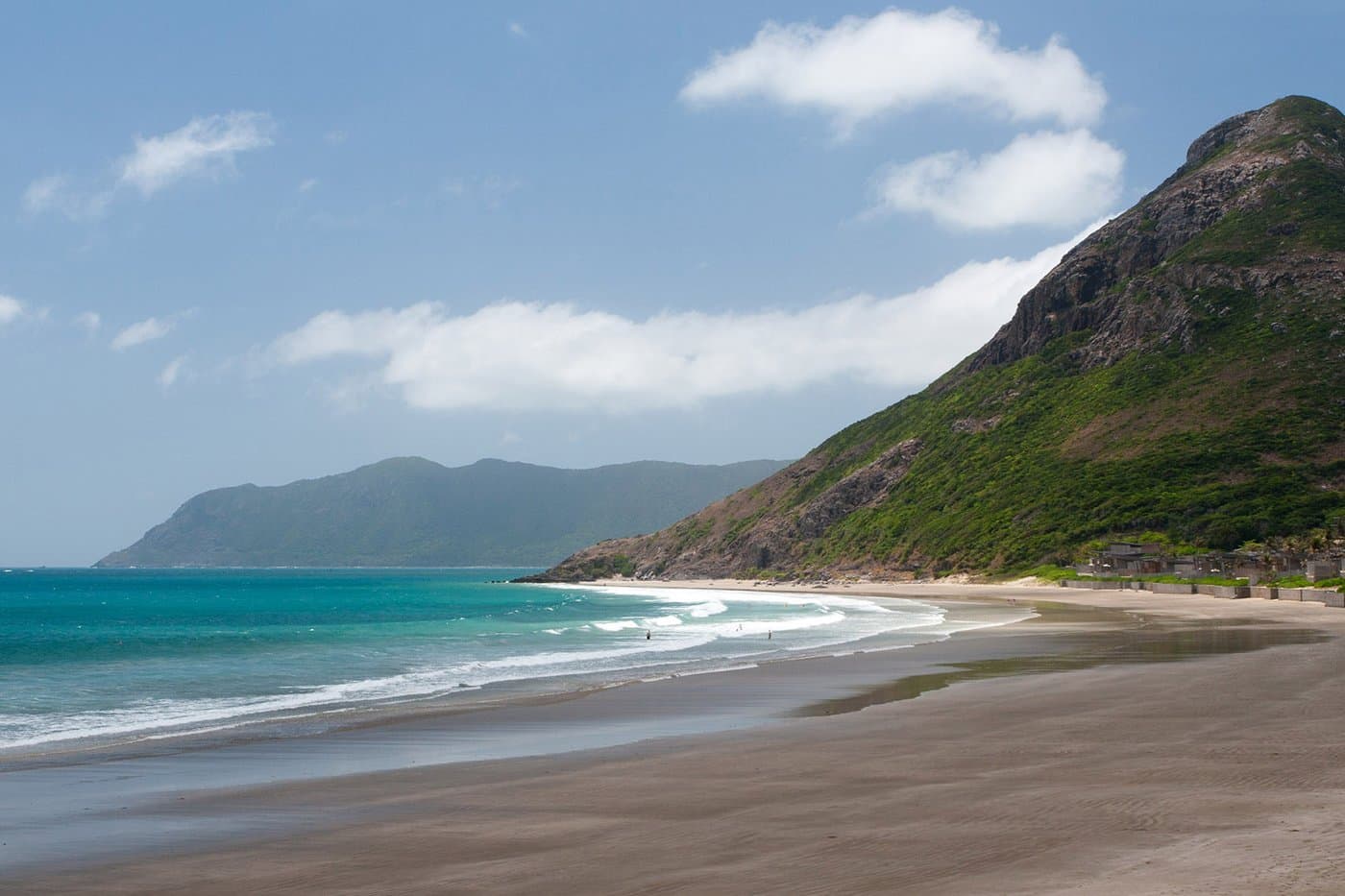
Getting around Con Dao: flights, ferries, bikes and the island's first bus
Open Grab when you walk out of Cỏ Ống terminal and the map will be empty. Grab does not work on Con Dao, and that is the first thing to know about transport here. It no longer means there is nothing, though: Xanh SM electric taxis arrived in September 2025, and since December 2025 there is an actual bus running from the market to the airport for the price of a coffee. Here is how to reach the archipelago and what to ride once you are on it, in VND and dollars.
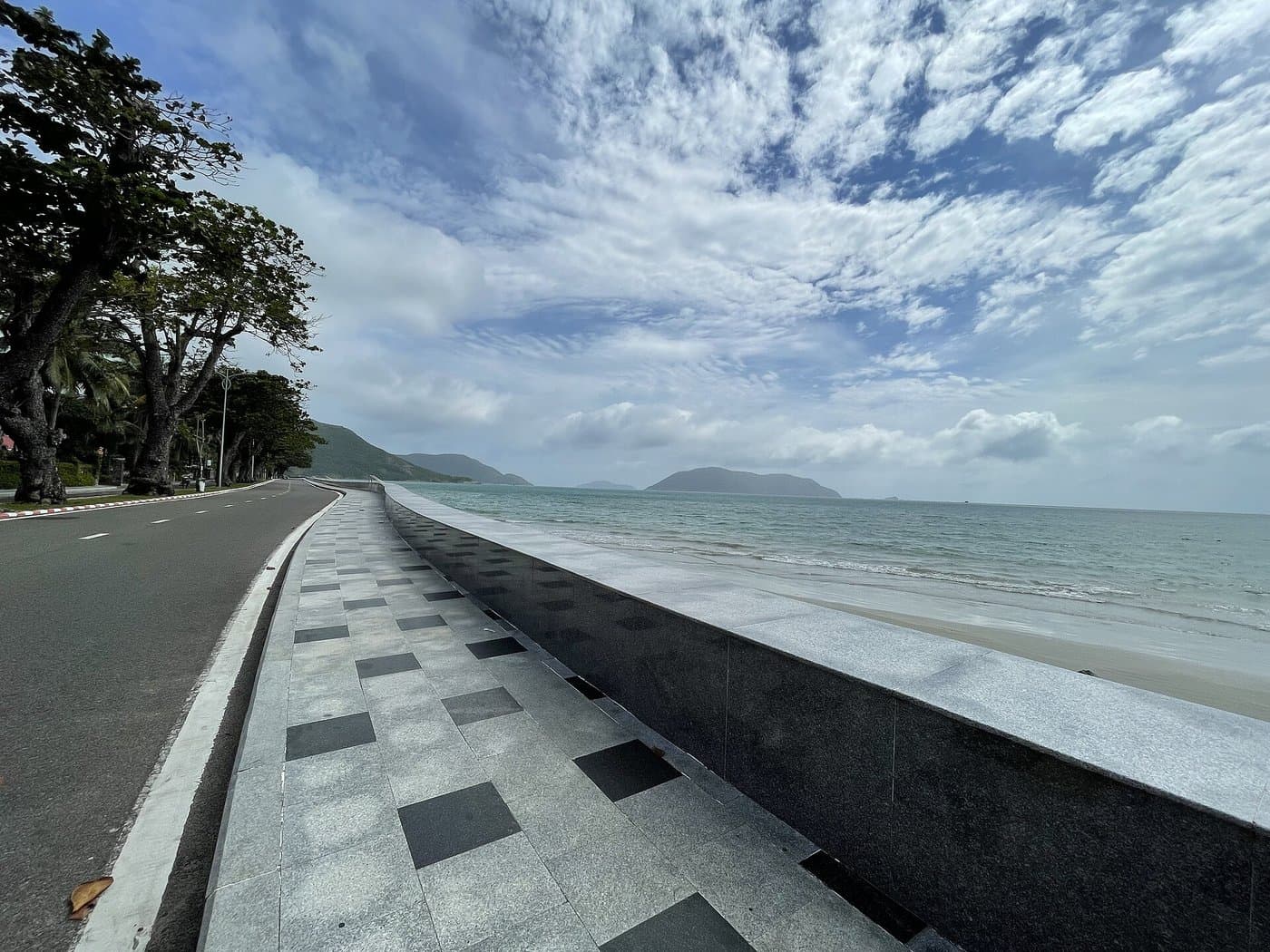
Prices and schedules checked in August 2026. Rate used: 1 USD ≈ 26,000 VND.
How transport works on Con Dao
- Con Son town (Thị trấn Côn Sơn): The only town in the archipelago — 2 × 1.5 km, walkable end to end
- Con Dao market (Chợ Côn Đảo): Terminus of electric bus 173 — Bike parking 5,000–10,000 VND
- Co Ong airport (Sân bay Côn Sơn (VCS)): Short runway, no night flights — 14–15 km from town
- Ben Dam port (Cảng Bến Đầm): Every ferry docks here — 12–15 km from town, 15–20 minutes
- Tran De pier (Cảng Trần Đề): Mekong Delta, Can Tho — Superdong: 2 h 15 to the island
- Cau Da port, Vung Tau (Cảng Cầu Đá): Thăng Long catamaran — 3.5 hours, three sailings a week
- Dam Trau beach (Bãi Đầm Trầu): 12–14 km over hairpins — The most nerve-racking road on the island
Côn Đảo sits 230 km off Ho Chi Minh City, and only one island in the group, Côn Sơn, is inhabited. Two ways in: a 45-minute flight or a fast ferry taking anywhere from two to five hours. Six ways around, and the choice between them is mostly a question of distance, because almost everything sits within 15 km of town.
Currency converter
| Getting there | From | Time | One-way fare |
|---|---|---|---|
| Vietnam Airlines / VASCO | Ho Chi Minh City (SGN) | 45–55 min | 1,100,000–1,800,000 VND ($42–69) |
| Vietjet (Comac C909) | HCMC, Hanoi | 55 min / 2 h 15 | from 1,200,000 VND (~$46) |
| Superdong fast ferry | Trần Đề, Mekong Delta | 2 h 15 | 363,000 VND (~$14) |
| Thăng Long ferry | Vũng Tàu | 3.5 h | 790,000–1,100,000 VND ($30–42) |
| Phu Quy Express | Ho Chi Minh City | 5 h 15 | 965,000–1,325,000 VND ($37–51) |
Book ahead. Flights, a hotel that meets you, and a bike are all things you want locked in before you leave the mainland. Walking up and asking usually works, but in high season — January to March, Tet, the long weekends around 30 April and 2 September — bike prices climb 20–30% and return flights genuinely sell out.
The other thing worth knowing before you land: there is barely any traffic. Roads are narrow but empty, lane markings come and go, and there is nobody to overtake. For the island itself, its beaches, prisons, hotels and prices, see our Con Dao guide.
Flying to Con Dao: VASCO, Vietjet and the ATR-72
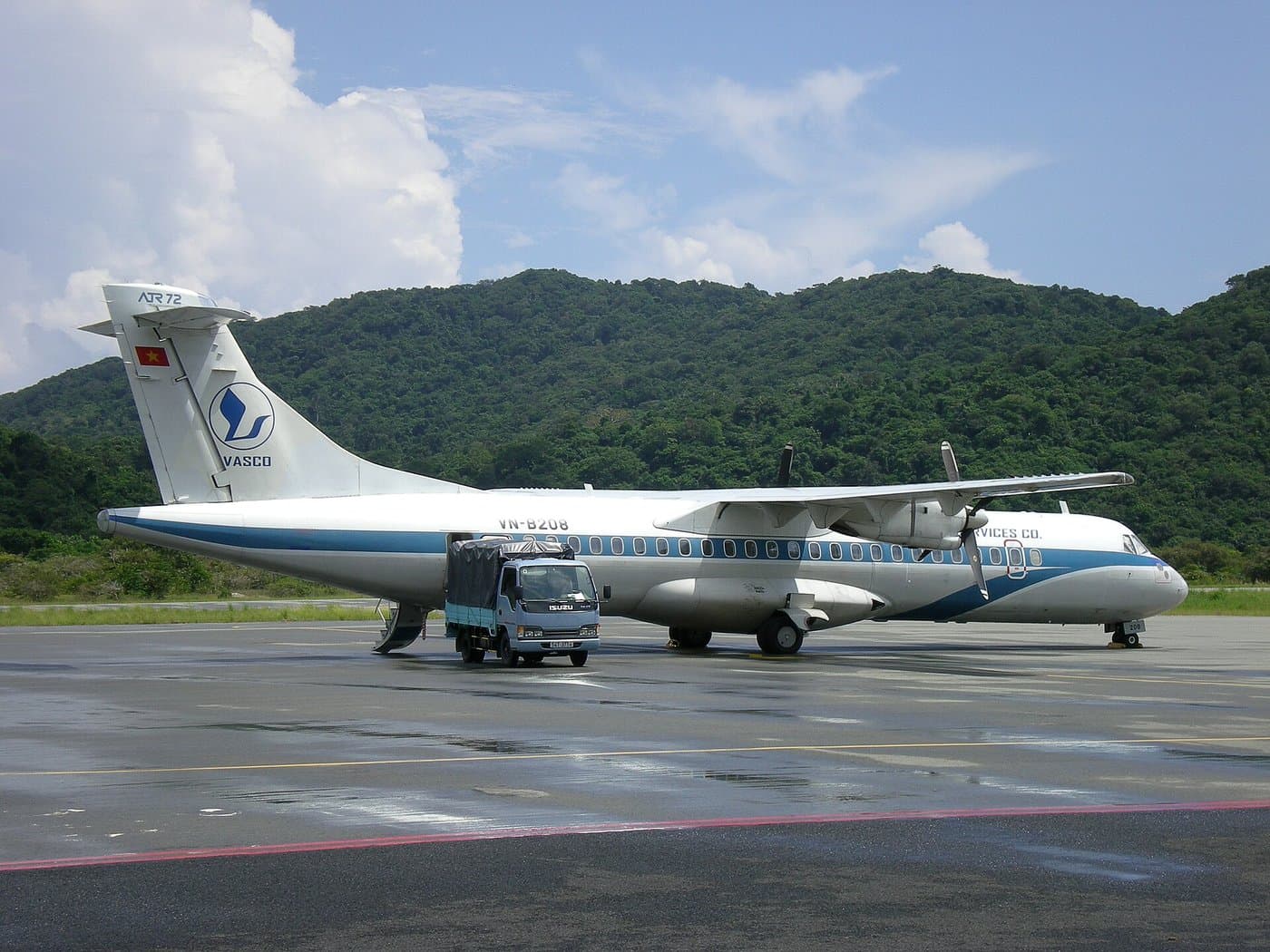
About ten flights a day connect Ho Chi Minh City to Con Dao, which makes it closer to a shuttle than an island hop. The workhorse is the same as it was twenty years ago: VASCO, a Vietnam Airlines subsidiary, flying 66-seat ATR 72 turboprops. Tickets sell under the Vietnam Airlines brand and VN flight codes.
VASCO
The SGN–VCS line runs around ten flights a day each way. The first leave early in the morning and the last in the afternoon, since the airport closes at 18:00. Check the Vietnam Airlines schedule for exact times on your dates.
The ATR-72 is a turboprop, not a jet. That means engine noise, a rattly take-off roll and an unpleasant surprise for nervous flyers. It also means it can land on the short runway at VCS, which no A320 or 737 can. Expect 1,100,000–1,800,000 VND ($42–69) one way depending on how far ahead you book, or 2,200,000–3,600,000 VND ($85–140) return.
Baggage is standard Vietnam Airlines domestic: 23 kg checked in economy (none on fares without baggage), 7 kg cabin. Check-in at Con Dao closes 40 minutes before departure, which the terminal is small enough to make painless.
Vietjet and the Hanoi direct
Vietjet joined the route in April 2025 with Comac C909 regional jets wet-leased from Chengdu Airlines. It opened two routes at once: HCMC–Con Dao and, for the first time in the island's history, a direct Hanoi–Con Dao service, about 2 hours 15 minutes in the air.
The service has been stop-start: in autumn 2025, when the first lease ran out, Vietjet pulled the C909s for a while, then put them back.
Bamboo Airways, still listed as a Con Dao carrier in most guidebooks, has left the route and, as of August 2026, has not come back.
Everything else
Can Tho gets seasonal direct flights, which is convenient if you are already spending a couple of days in the Mekong Delta. Check specific dates rather than assuming.
There are no international flights to Con Dao and there will not be any until the runway is extended. Everyone arrives via Ho Chi Minh City. For routes into Vietnam, see our flights guide.
When to book
Three to four weeks ahead in high season: on peak days the 66-seat aircraft fill up. From June to October seats are almost always available and fares drop 20–30%, but that is also storm season: two-to-four-hour delays are routine and cancellations happen.
Ferries: Tran De, Vung Tau, Ho Chi Minh City
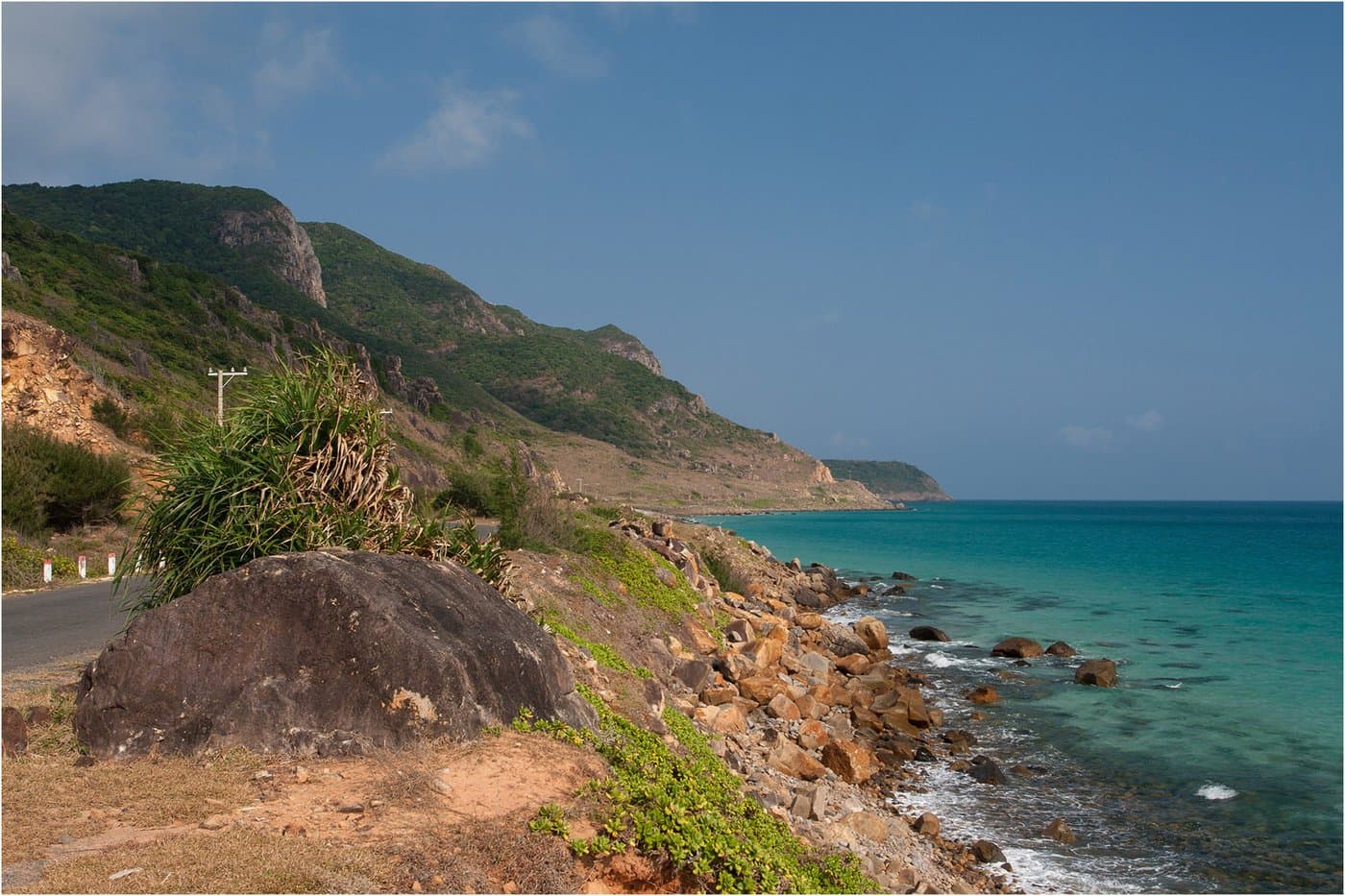
Every ferry docks at the same place: Bến Đầm port on the south-west tip of the island, 12–15 km from town. Three routes, and they differ a lot in money, time and how much the sea throws you around.
Tran De — fastest and cheapest
Trần Đề pier sits in the Mekong Delta at the mouth of the Hau river. Until July 2025 it belonged to Sóc Trăng province; after the administrative reform it belongs to Can Tho. The pier did not move. It is still about four hours by bus from Ho Chi Minh City.
Superdong runs it. According to agents' 2026 listings, it sails daily, leaving at 08:00 and reaching Ben Dam at 10:15. Two hours fifteen. In peak season they add a 07:00 sailing. There is one class of seat. Check times and fares on the Superdong website before you buy. Phu Quoc Express also sails from the same pier: 08:00 departure, Ben Dam around 10:30, fares from 390,000 VND.
| Passenger | Fare (VND) | USD |
|---|---|---|
| Adult | 363,000 | ~$14 |
| Senior (60+) | 308,000 | ~$12 |
| Child 6–11 | 275,000 | ~$10.50 |
| Ben Dam port fee, per person | 18,000 | ~$0.70 |
The port fee is charged separately from the ticket and applies in both directions. Book online and an e-ticket lands in your inbox; the pier ticket office works too, but weekends and holidays sell out.
One warning the operators give themselves: actual departure can slide 30–60 minutes with the tide and sea state. Do not schedule anything tight on either end.
That very day a strong wind picked up. …we took a small Superdong ferry… It shook really hard, and most people turned green…Khanun, Vinsky Forum, 2025, translated by VietnamSpot
Vung Tau — big boat, three sailings a week
The Vũng Tàu route, according to agents, restarted in early 2026 after a long pause for vessel repairs. It is worked by Thăng Long, a three-deck catamaran: VIP on the bottom deck, Eco on the two above.
Departures from Cầu Đá port are Tuesday, Thursday and Saturday at 07:30, arriving Ben Dam around 11:00. Return sailings leave the island Wednesday, Friday and Sunday at 13:00. Three a week, not daily. The schedule and fares here come from the agent condao.express as of September 2026; confirm with the operator before you travel. The same agent reports the route suspended from 1 August 2026, with a restart expected in January 2027.
| Class | Weekday (VND) | Weekend (VND) | USD |
|---|---|---|---|
| Eco adult | 790,000 | 950,000 | $30–37 |
| Eco child or 60+ | 630,000 | 760,000 | $24–29 |
| VIP adult | 1,000,000 | 1,100,000 | $38–42 |
The logic: Vung Tau is 90 minutes from Ho Chi Minh City by bus, which beats four hours to Tran De. The trade-off is more time in open water and more motion.
Ho Chi Minh City — no transfers
The Phu Quy Express 02 fast ferry, run by GreenlinesDP, has sailed straight from Saigon since 6 June 2026, taking about 5 hours 15 minutes. There are four classes: standard and VIP seats, economy berths and VIP berths. The operator does not publish days and times on its website; call its hotline on 0988 009 579. The fares below are a guide from summer 2026 sales, so check when you book. According to the agent condao.express, sailings are suspended from 1 September 2026 until January 2027.
| Seat type | Weekday (VND) | Weekend (VND) |
|---|---|---|
| Seat, standard | 965,000 | 1,055,000 |
| Seat, VIP | 1,125,000 | 1,225,000 |
| Berth, economy | 1,095,000 | 1,215,000 |
| Berth, VIP | 1,205,000 | 1,325,000 |
Take it if you want no bus transfers and have the time. Skip it if you get seasick, because five hours of open sea is a very different proposition from two.
What to pack for the crossing
The north-east monsoon blows from October to February, and sailings get shifted or cancelled through that stretch. Bring motion sickness tablets and take them half an hour before boarding, a hoodie (the air conditioning is aggressive), headphones and water.
Large wheeled suitcases do not come into the cabin. They go into the hold and you collect them against a token on the way out. Keep valuables with you.
Fast Track — no queue at the border
5–10 minutes instead of an hour in the immigration queue
from$11per passenger
Co Ong airport (VCS)
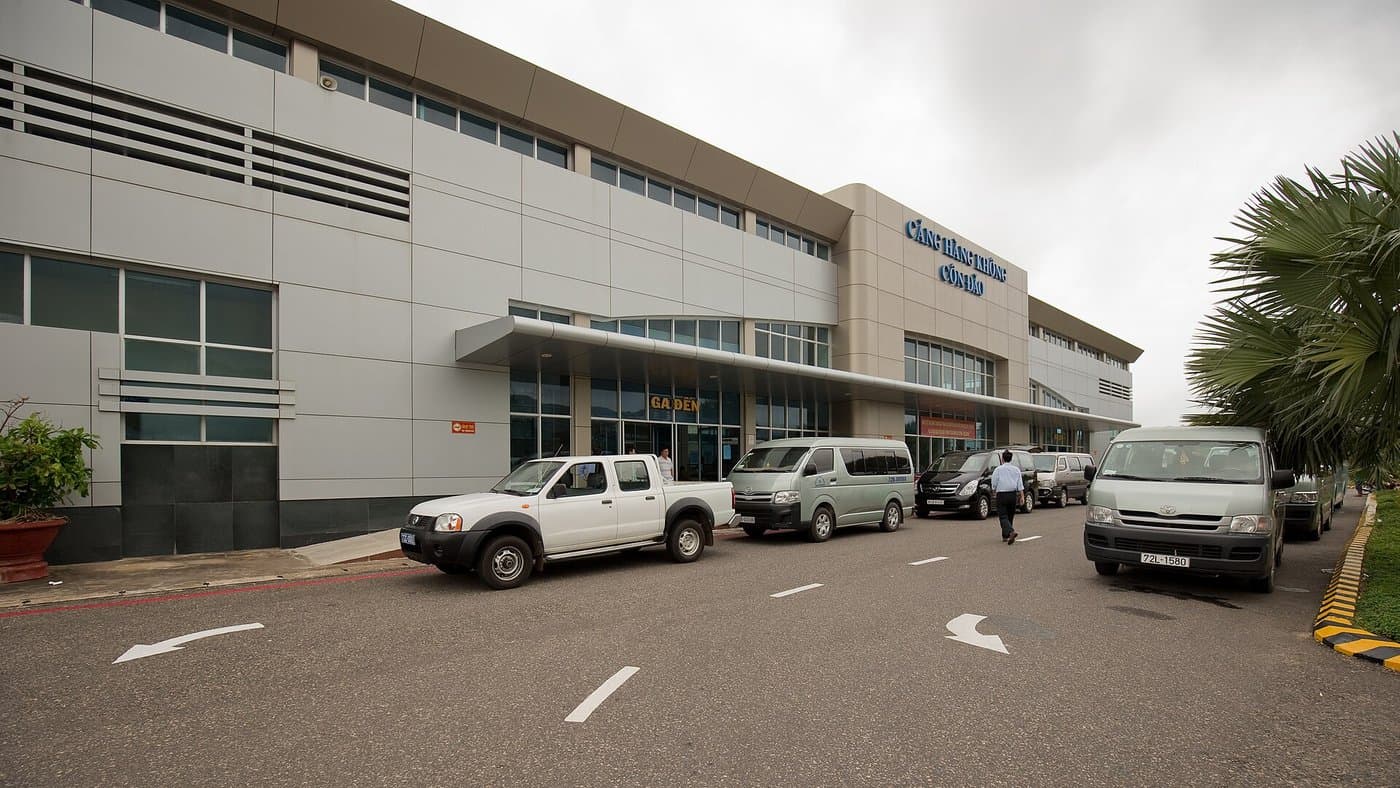
Cỏ Ống airport, also called Côn Sơn and coded VCS, sits 14–15 km from town on the north-east side of the island. One single-storey terminal, one short runway. In practice: ATR-72 and Comac C909 can land, A320 and 737 cannot.
The detail no airline website mentions: the runway has no lighting. There are no night operations at all, the airport shuts after 18:00, and the last departure off the island leaves in the afternoon. That sounds technical until your flight is three hours late, at which point it stops being rescheduled and starts being cancelled.
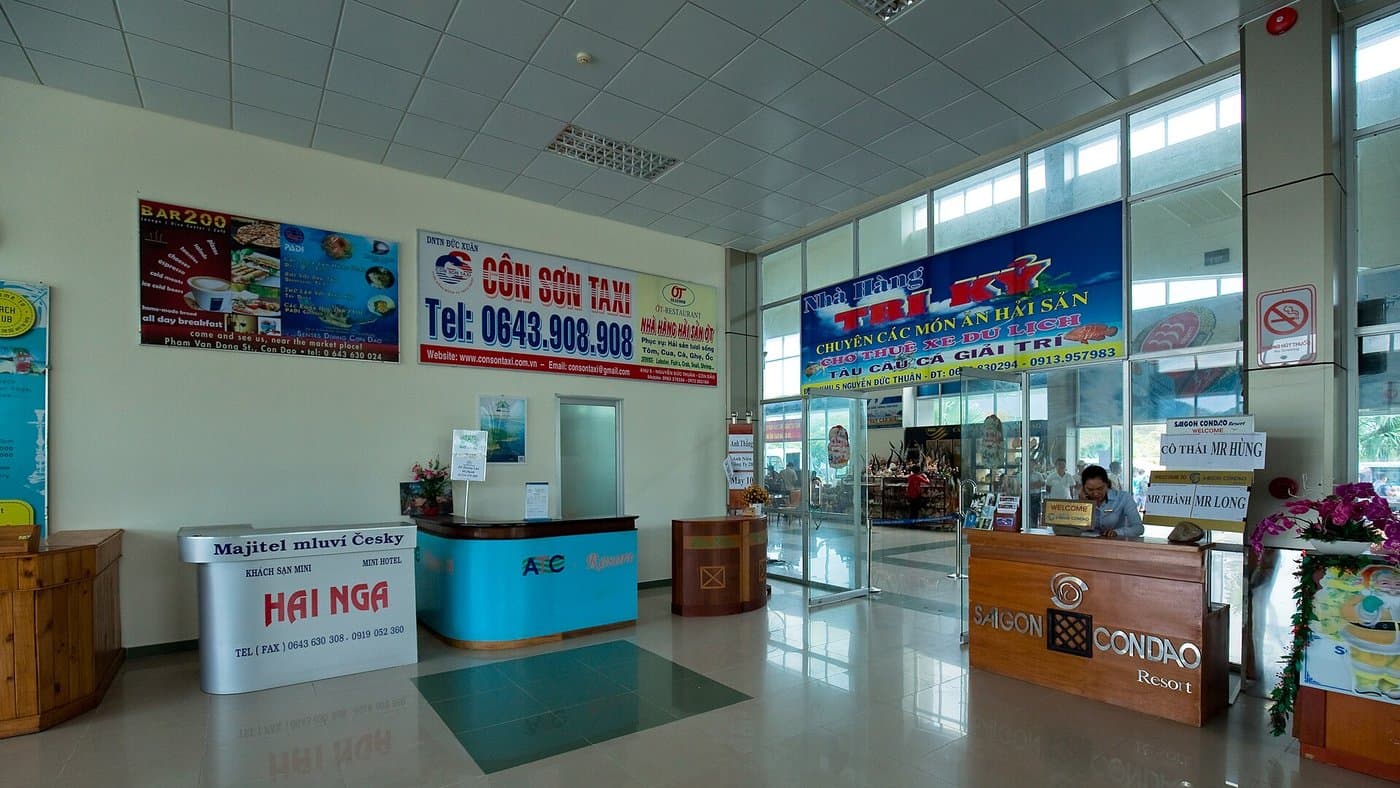
Inside the terminal you get a café, an ATM, hotel staff holding welcome signs in the arrivals hall, a bike rental desk, boards with local taxi numbers, a souvenir shop and free Wi-Fi. One baggage belt, which fits an entire flight. Arrivals and departures are essentially the same room with plastic seats.
From June to October, delays of two to four hours come with thunderstorms, crosswinds and low visibility. A cancellation pushed to the next day is not an emergency here. Domestic flights in Vietnam come with no hotel-and-compensation culture, so the airline apologises and that is the end of it.
The arrival itself is quick. The aircraft taxis for about a minute and stops, you walk fifty metres from the stairs to the terminal, bags appear within ten minutes. Wheels-down to kerbside is usually under a quarter of an hour.
From the airport or the port into town
The airport is 14–15 km from central Côn Sơn over a low pass, 20–30 minutes. Ben Dam port is 12–15 km away on the other side, 15–20 minutes. Both roads are empty and both are worth the window seat.
| Option | Price | Time | Who it suits |
|---|---|---|---|
| Free hotel transfer | 0 | 20–30 min | 4–5★ guests who asked in advance |
| Electric bus 173 | 5,000–40,000 VND ($0.20–1.50) | 30 min | Anyone travelling light |
| Taxi or Xanh SM from the airport | 300,000–450,000 VND ($11.50–17) | 20–30 min | Families, anyone with suitcases |
| Taxi or Xanh SM from the port | 140,000–300,000 VND ($5.50–11.50) | 15–20 min | Families, anyone with suitcases |
| Shared minivan | 50,000–80,000 VND ($2–3) per person | up to 50 min | Cheap if a group fills it |
| Rental bike at the terminal | from 100,000 VND ($4) per day | immediate | Solo, light luggage |
Hotel transfers. Four- and five-star hotels run them free, but almost always on request. Email separately when you book and give your flight number, and the person with your name on a card will be standing in the arrivals hall. At resorts like Six Senses and Poulo Condor a pickup is usually part of the service, but email ahead there too; smaller places do it if you ask. Which hotels meet you at the airport and what they charge: our Con Dao hotels guide.
If your ferry lands in the evening and check-in is later, arrange luggage storage in advance. Most guesthouses hold bags for free or for pocket change.
Taxis. The airport-to-town run has settled at a fixed 300,000–450,000 VND ($11.50–17). From Ben Dam port it is cheaper, 140,000–300,000 VND ($5.50–11.50), since the road is shorter and skips the pass.
Xanh SM (rebranded Green SM) has been on the island since September 2025, running VinFast electric cars as part of a green-transport rollout with Con Dao Group. Book through the app, at a desk, off the street or by hotline. The company does not publish an island-specific tariff, so go by the fare the app quotes before you confirm, because that number is locked in.
Shared minivans. Two or three sit outside the terminal with drivers calling for passengers. 50,000–80,000 VND a head, leaving when six to eight people are aboard. The catch is obvious: the driver works through every hotel on the list, and a twenty-minute ride becomes fifty.
Electric bus 173, the thing that did not exist before
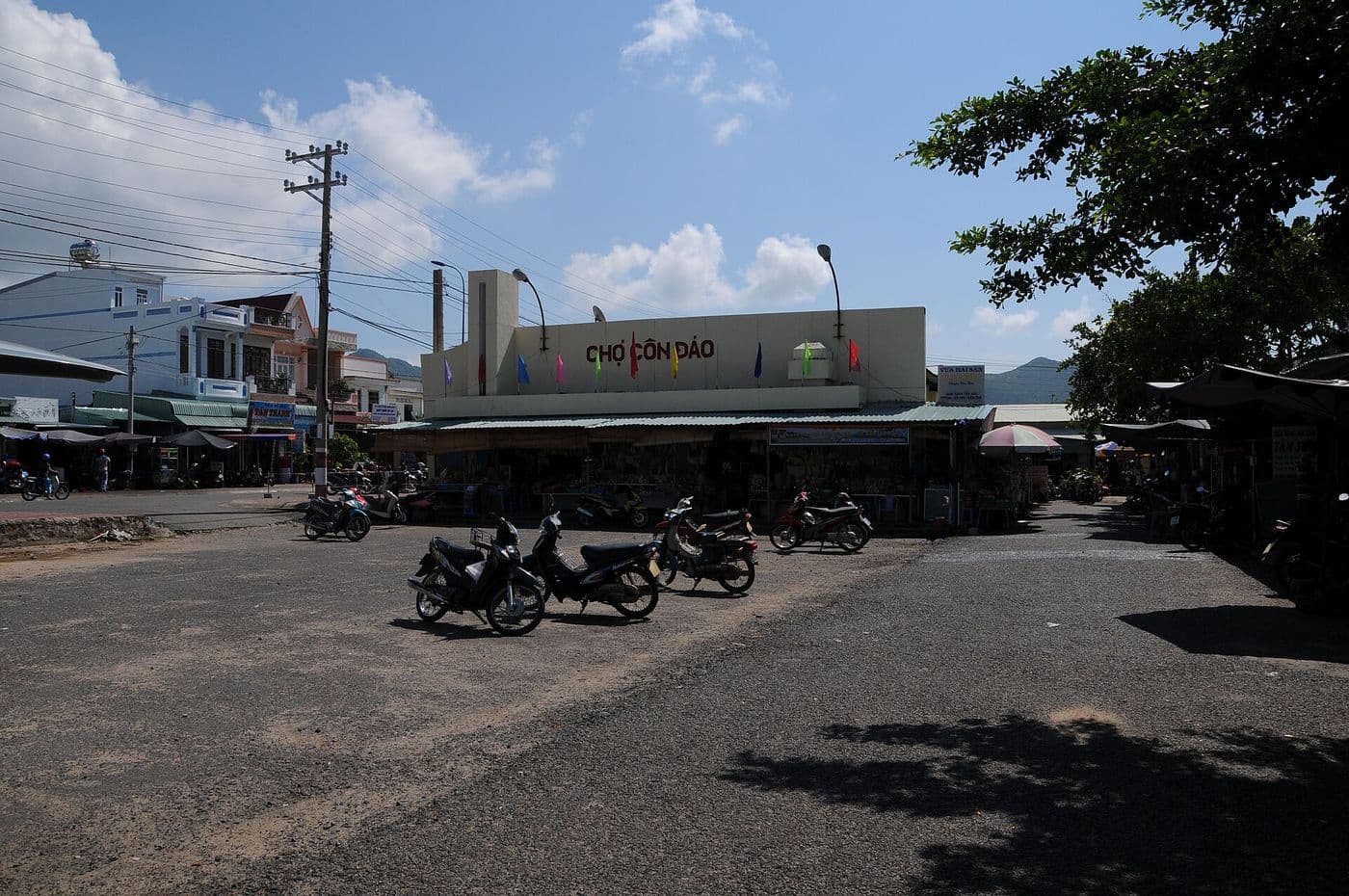
On 25 December 2025 Con Dao got its first bus route ever, and it went straight to electric. Route 173, Kimlong buses with 30–40 air-conditioned seats, running between Chợ Côn Đảo market and Cỏ Ống airport.
The launch was bumpy. After the opening ceremony the route stopped running for a while, and travellers in February 2026 reported no bus at all despite Google Maps insisting otherwise. According to local press, regular service came back on 1 June 2026. It is still a young route, so ask at your hotel whether it is running this week.
| Field | Value |
|---|---|
| Route length | 17.1 km |
| Journey time | about 30 minutes |
| Hours | 05:00–19:00 daily |
| Trips per day | 114 |
| Stops | 39 |
| Fare | 5,000–40,000 VND ($0.20–1.50) |
| Running since | 25 Dec 2025; back after a pause from 1 Jun 2026 |
The fare is zoned by distance: under 3 km costs 5,000 VND, 3–5 km is 12,000, 5–10 km is 24,000, and anything over 10 km or the full route is 40,000 VND. Airport to market for a dollar and a half, against $11.50–17 in a taxi. The route runs along Phạm Văn Đồng, Võ Thị Sáu, Nguyễn Huệ, Tôn Đức Thắng and Nguyễn Văn Cừ, and passes the turn-off for Đầm Trầu beach.
- ✓ Solo travellers with a backpack: $1.50 instead of $15
- ✓ Couples without suitcases landing mid-afternoon
- ✓ Anyone heading to Đầm Trầu who would rather not ride the hairpins
- ✗ Families with luggage: 39 stops and 40 seats
- ✗ The first flight out: the bus starts at 05:00, departure is 06:25
Five more routes, 174 to 178, are planned. Separately, open-sided electric carts seating 7–12 work the island as tourist taxis rather than a scheduled service: around 25,000 VND per km, or 500,000–600,000 VND for a three-to-four-hour circuit.
Renting a bike
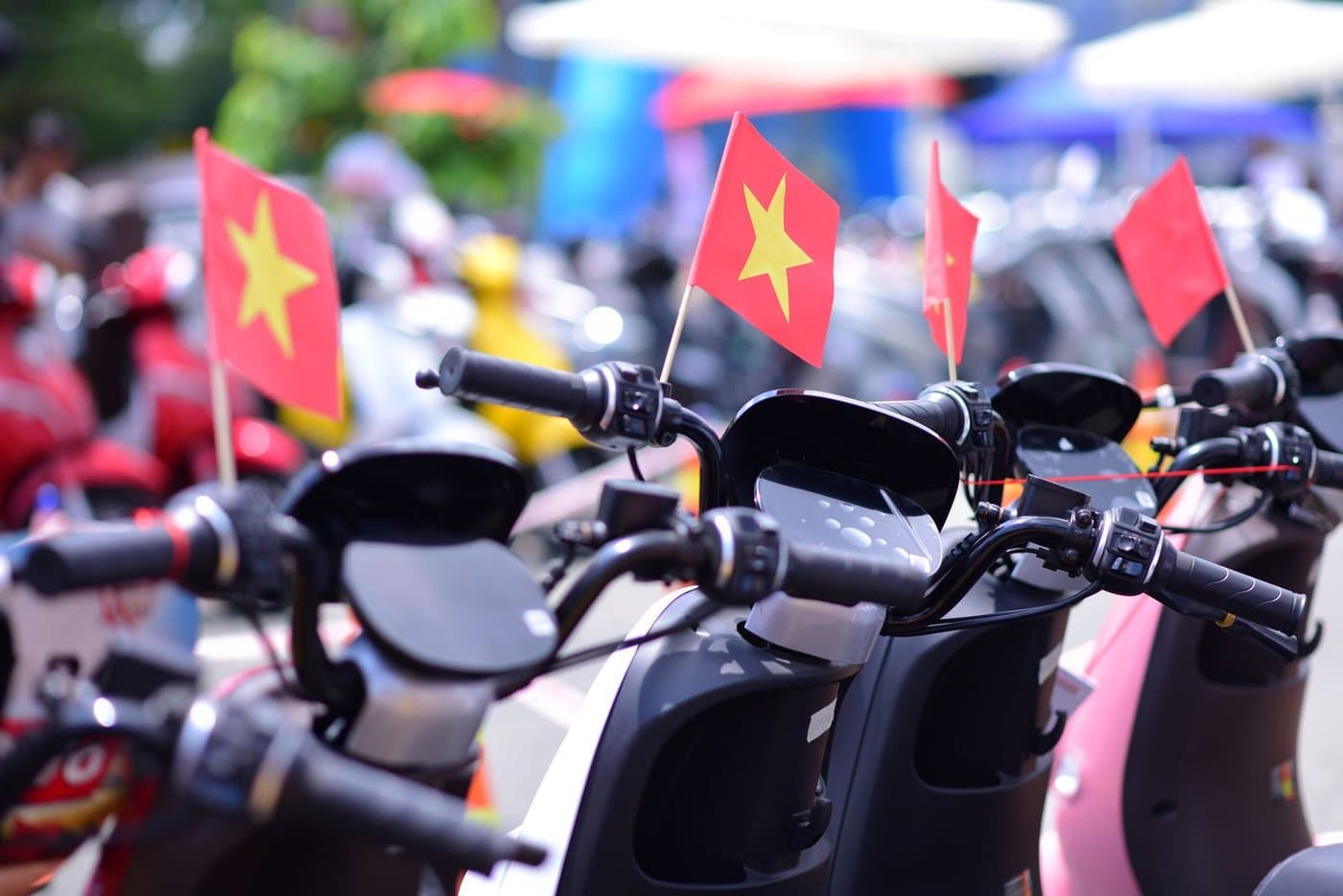
The bike is still the island's main vehicle. Distances are short, traffic is nonexistent, parking is free everywhere. Average rate is around 140,000 VND a day (~$5.40), with a range of 100,000–200,000 VND ($4–8) depending on the model. Three days or more gets you a discount; public holidays add 20–30%.
| Bike | Per day (VND) | USD | Best for |
|---|---|---|---|
| Honda Wave, Yamaha Sirius (semi-auto) | 100,000–130,000 | $4–5 | Budget |
| Honda Vision (110 cc, automatic) | 120,000–160,000 | $4.50–6 | The default choice |
| Honda Air Blade (125 cc) | 150,000–200,000 | $6–8 | Two people with bags |
| Electric bike | 150,000–250,000 | $6–9.50 | Quiet, limited range |
The Honda Vision is what most people end up on: light, cheap to run, with storage under the seat, and it carries two without complaining. The Air Blade is heavier and stronger, which matters if you are two up with a case.
Where to rent: your hotel is the easiest option and the bike will have been checked, though you pay a little more. Desks at the airport exit will hand you one straight off the plane against your passport and a deposit. Cafés and guesthouses in town are cheapest with an older fleet, and haggling is normal on multi-day rentals. Booking platforms cost 20–30% more but guarantee the model, which is worth it in high season.
Before you pay, check the brakes, the lights, the fuel level (renters love handing bikes over empty), the tyres, and that you get two helmets. Photograph the bike from all sides. That is the standard defence against damage claims on return.
Licence, and what it costs to skip it
Legally you need an International Driving Permit issued under the 1968 Vienna Convention with category A, carried with your home licence. This is the part that catches out American and Japanese travellers: the 1949 Geneva permit is not recognised in Vietnam. Rental shops will usually hand you a bike anyway, because they care about the deposit. The police care about the paperwork.
Under Decree 168/2024/NĐ-CP, in force since 1 January 2025:
- Riding without a licence: 2–4 million VND ($77–154) for bikes up to 125 cc, 6–8 million above that. The bike can be held by the police, and the rental shop will still charge you daily for those days.
- No helmet: 400,000–600,000 VND ($15–23), for rider and passenger alike.
Con Dao has fewer checkpoints than Nha Trang or Ho Chi Minh City, but the arithmetic that actually matters has nothing to do with police: without a licence, your travel insurance will not cover a crash. That is a hospital bill, not a fine.
Distances by bike
| Route | Km | Time | Difficulty |
|---|---|---|---|
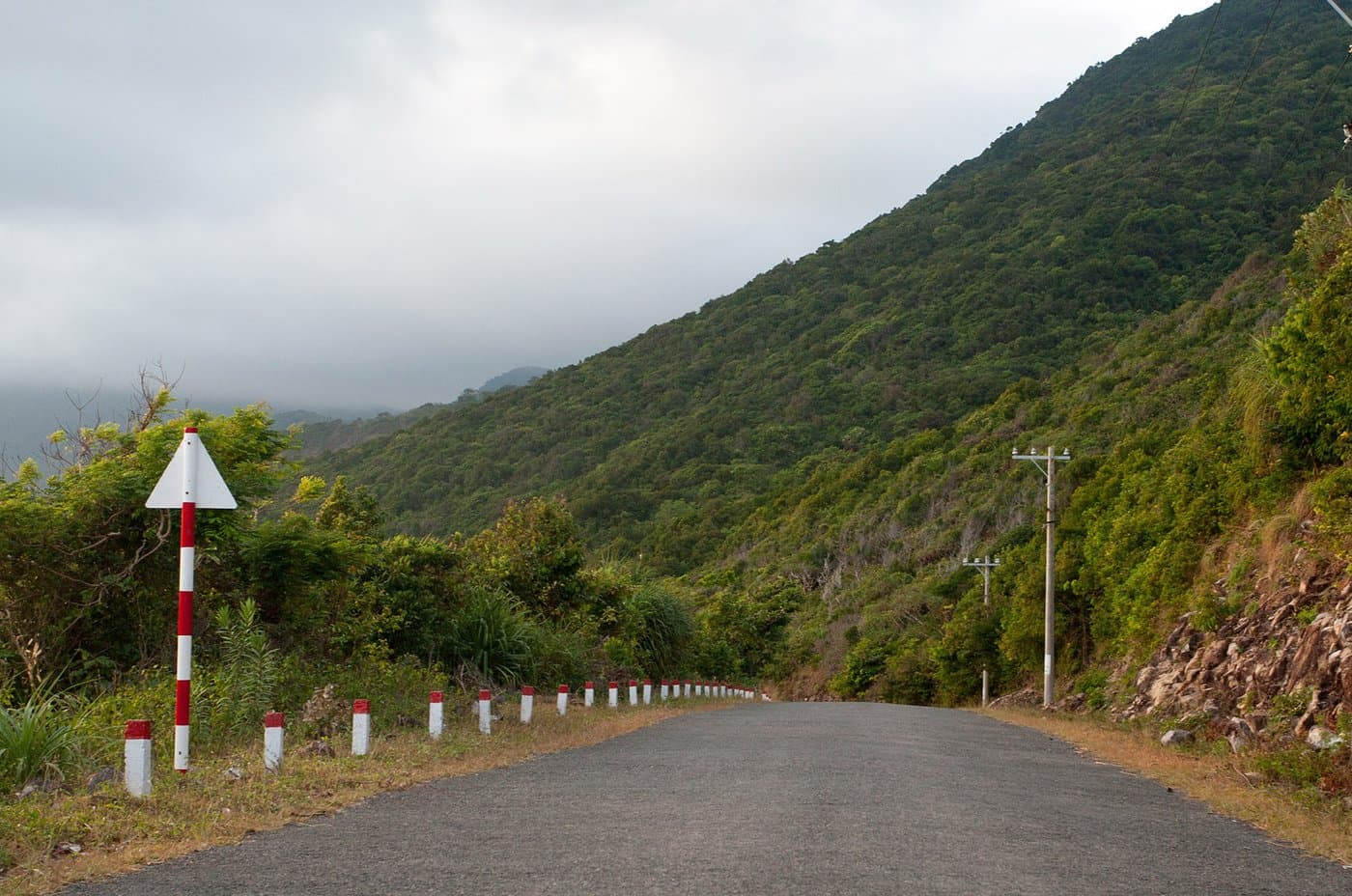
| Town → Đầm Trầu beach | 12–14 | 18–20 min | Moderate, hairpins |
| Town → Bãi Nhát beach | 8 | 12 min | Easy |
| Town → VCS airport | 14–15 | 20–25 min | Moderate, over the pass |
| Town → Bến Đầm port | 12–15 | 15–20 min | Easy |
| Full island loop | 30–45 | 1.5–2 h | Moderate |
The climb to Đầm Trầu is the prettiest and the most nerve-racking stretch on the island: narrow road above a drop, oncoming traffic appearing out of blind corners, no markings. If this is your first week on a bike, take a taxi or the 173, which goes past anyway.
Start the loop between 08:00 and 10:00, before the heat and while the light is good. Street lighting outside town is close to nonexistent, and cows and dogs use the verge, so halve your speed after dark.
Taxis instead of Grab
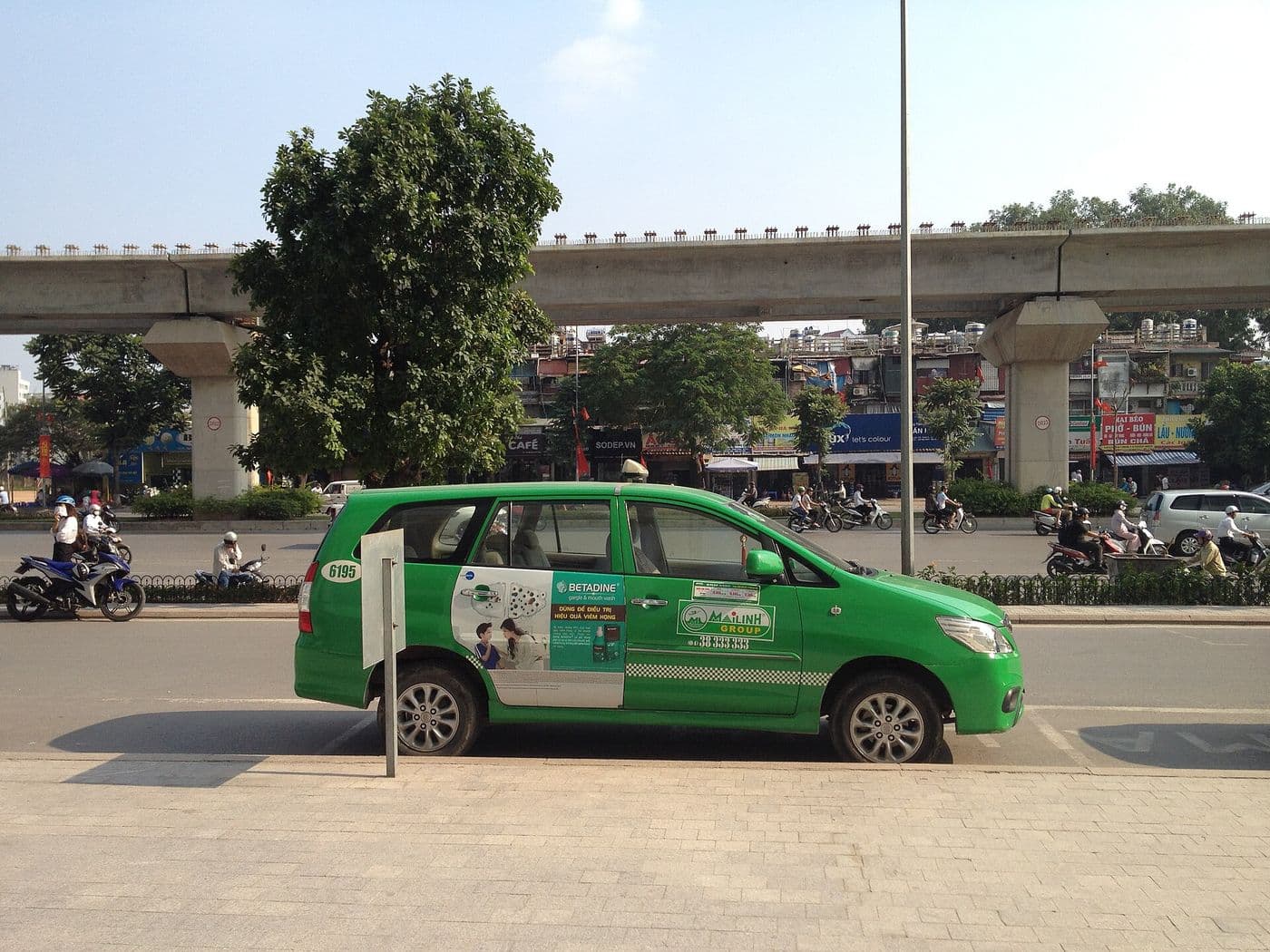
No Grab, but plenty of taxis. Four local firms and one app.
| Company | How to call | Cars |
|---|---|---|
| Mai Linh Côn Đảo | Phone or your hotel | Toyota Vios, Innova |
| Côn Sơn Taxi | Phone | Hyundai i10, Vios |
| Côn Đảo Sunrise Taxi | Phone | Sedans |
| Sài Gòn Côn Đảo Taxi | Phone | Vios, Innova |
| Xanh SM / Green SM | App, street, hotline | VinFast, electric |
Rough numbers: flagfall 12,000–15,000 VND, 18,000–22,000 VND per km, a short hop in town 50,000–100,000 VND ($2–4), airport to town 300,000–450,000 VND, port to town 140,000–300,000 VND.
Metered cars run the meter and there is no haggling. Cash is universal, cards are not. Xanh SM quotes the fare in the app and takes payment there, which is the calmest option if you would rather not negotiate anything in a language you do not speak.
Four ways to get a car, in order of how well they work: ask the front desk and it arrives in five to ten minutes; open the Xanh SM app, the only aggregator that functions here; call a company directly, keeping your destination written in Vietnamese on your phone, because there are no English-speaking drivers on the island; or flag one down in the centre, which is theoretically possible and practically unreliable.
Take a taxi over a bike when you have suitcases and a beach to reach, after dark on unlit roads with livestock on the verge, in a group of three or four where it beats renting two bikes, in the rain, and on long trips where you want the driver to wait.
Cycling, and walking
A bicycle costs 30,000–60,000 VND a day ($1.15–2.30), and Six Senses and The Secret lend them to guests. It works in exactly one scenario: the flat centre of Con Son and the nearest beaches.
It does not work for the climb to Đầm Trầu (12 km uphill with no shoulder), for afternoons between April and October when it hits 33–35 °C, on wet descents, or with any real luggage.
Côn Sơn town measures roughly 2 × 1.5 km, and most of what you came to see is walkable.
| From → to | Distance | On foot |
|---|---|---|
| Market → waterfront | 600 m | 8 min |
| Pier → Con Dao museum | 1.1 km | 14 min |
| Museum → Phú Hải prison | 800 m | 10 min |
| Town → Bãi An Hải beach | 1.5 km | 20 min |
| Town → Đầm Trầu beach | 12–14 km | not walkable |
Walkable: the market, the waterfront, the museums, the prison memorials, Hàng Dương cemetery, the closer restaurants. The evening walk along the seafront is the one thing on the island that is both compulsory and free. Not walkable: the airport, Dam Trau, Ben Dam port, the far bays. Those need a bike, the bus or a taxi.
Parking and fuel
Parking is free almost everywhere: hotels, restaurants, museums, beaches. The exception is the market, where an attendant takes 5,000–10,000 VND and sticks a number on your handlebars. That is standard practice across Vietnam, not a scam.
Bikes are essentially never stolen here, because there is nowhere to take them. Mirrors and chargers do walk off, so take anything loose with you.
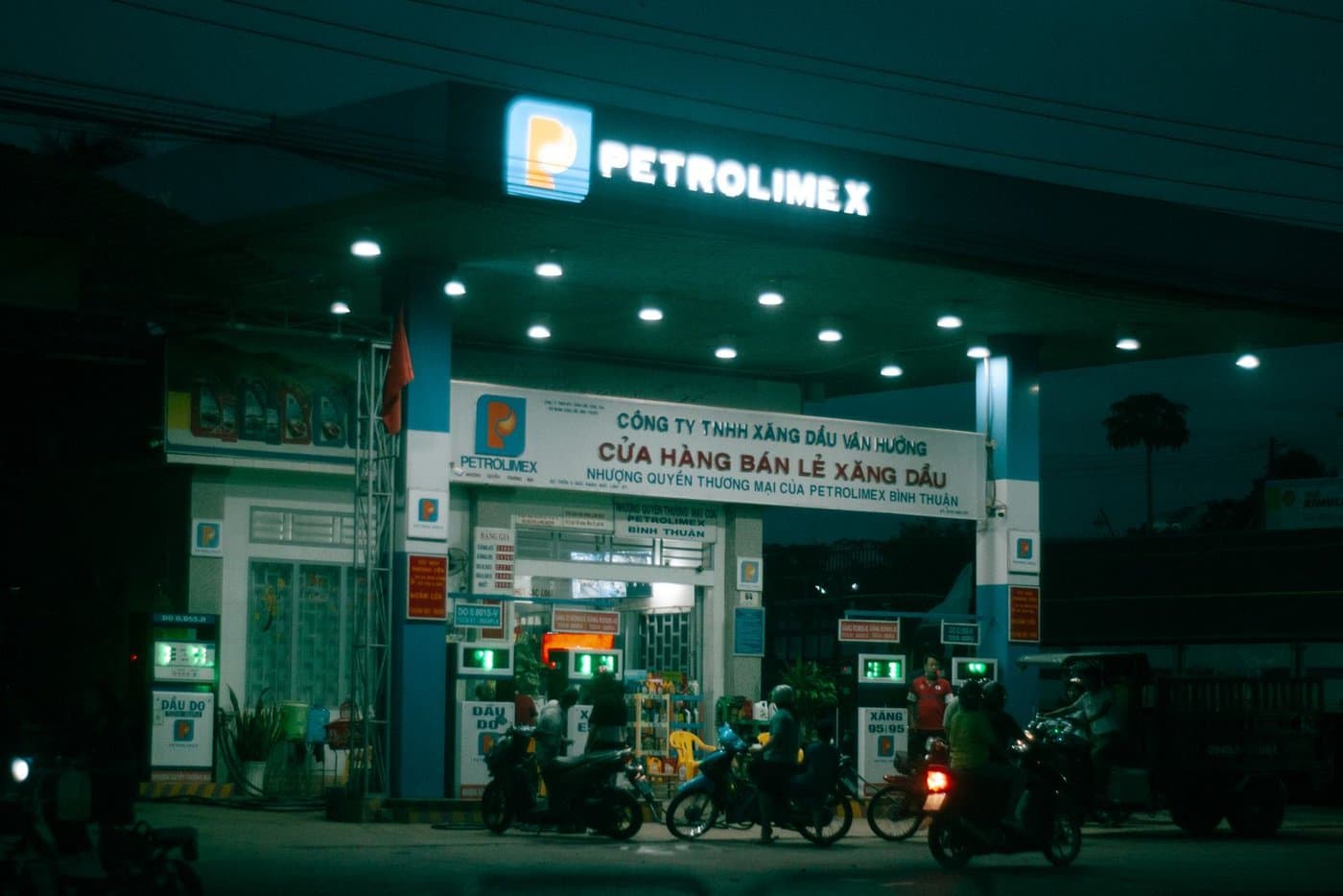
Guides have said for years that Con Dao has one petrol station with a lunch break. Vietnamese business directories now list two, one in town on Phạm Văn Đồng and one at Ben Dam port, both running roughly 05:30 to 21:00. English guidebooks still describe far narrower windows, down to "07:00–10:30 and 14:00–16:00". The sources genuinely disagree, so treat this as something to confirm on the ground.
Fuel follows the national price, revised weekly. In August 2026, E5 RON 92 runs about 21,800–22,300 VND a litre and E10 RON 95 about 22,700–23,100 VND ($0.85–0.88). Islands and remote districts sit in "zone 2", a few hundred dong above mainland prices.
Nine ways people get this wrong
- Counting on Grab. As of August 2026 it is not here. Install Xanh SM before you fly, save a taxi number, or let the hotel call.
- Booking a flight a week out in high season. January to March, those 66 seats go three to four weeks ahead.
- Scheduling an international departure the same day you fly off the island. One delay at VCS and the connection is gone.
- Assuming the Vung Tau ferry is daily. Three sailings a week: Tuesday, Thursday, Saturday.
- Ignoring bus 173. A dollar fifty from the airport to the market against fifteen in a taxi, if you are travelling light.
- Cycling to Dam Trau. Twelve kilometres uphill with no shoulder in the heat is not a beach day.
- Leaving fuel until the evening. After the pumps close you are buying bottles at double the price.
- Riding without a 1968-convention IDP. The fine is 2–4 million VND, the bike can be held, and your insurance walks away from any crash.
- Travelling in rainy season with no slack in the dates. June to October means delayed flights and cancelled ferries.


Con Dao transport FAQ
Not as of August 2026. The app opens and no cars appear, because Grab never launched here. One English guide claims it sometimes connects you to local taxis; treat that as a bonus, not a plan. What works:
- The Xanh SM (Green SM) app with VinFast electric cars, on the island since September 2025
- Four local taxi companies by phone (Mai Linh, Con Son, Con Dao Sunrise, Sai Gon Con Dao)
- And electric bus 173
Asking your hotel to call one is still fastest, usually five to ten minutes
Yes. Route 173 opened on 25 December 2025, paused, and, according to local press, has been running regularly again since 1 June 2026. It links Chợ Côn Đảo market with Cỏ Ống airport: 17.1 km, 39 stops, about 30 minutes end to end, 114 trips a day between 05:00 and 19:00, on air-conditioned electric buses seating 30–40. Fares run from 5,000 VND under 3 km up to 40,000 VND for the full route. Five more routes, 174–178, are planned.
Vietnam Airlines / VASCO on the ATR-72 costs 1,100,000–1,800,000 VND ($42–69) one way, or 2,200,000–3,600,000 VND return, with around ten flights a day. The Vietjet Comac C909 is usually cheaper but the schedule is unstable. The cheapest route in is the ferry: Superdong from Tran De is 363,000 VND (~$14) plus an 18,000 VND port fee, though reaching the pier from Ho Chi Minh City is four hours by bus.
Yes, with a caveat. Vietjet flies Hanoi–Con Dao direct on a Comac C909, about 2 hours 15 minutes, a route opened in April 2025. The aircraft are wet-leased from Chengdu Airlines: the service was suspended for a while in autumn 2025, then restored. Check your specific dates in a booking engine, and do not make that flight your only way home. Connecting through Ho Chi Minh City is the reliable alternative.
Yes. The Thăng Long (Phu Quoc Express) leaves Cầu Đá port on Tuesday, Thursday and Saturday at 07:30 and reaches Ben Dam around 11:00, roughly 3.5 hours. According to condao.express, sailings are suspended from 1 August 2026 until January 2027
- Return sailings leave the island13:00Wednesday, Friday and Sunday at
- Eco790,000 VNDon weekdays, 950,000 at weekends
- VIP1,000,000–1,100,000 VND
- A port fee per person18,000 VNDadd
Legally yes: an International Driving Permit issued under the 1968 Vienna Convention with category A, carried with your home licence. The 1949 Geneva permit does not count in Vietnam, which is the trap for US and Japanese licence holders. Rental shops hand over bikes without checking, because they hold your deposit. Under Decree 168/2024, in force since 1 January 2025, riding unlicensed costs 2–4 million VND for bikes up to 125 cc, the bike can be held by the police, and insurance will not cover a crash. No helmet is 400,000–600,000 VND.
There are two stations: one in town on Phạm Văn Đồng, one at Ben Dam port, opening roughly 05:30 to 21:00, though hours drift and older guides list much shorter windows. E5 RON 92 is about 22,000 VND a litre in August 2026 and E10 RON 95 about 23,000. Outside opening hours, roadside stalls sell petrol in plastic bottles at 30,000–40,000 VND a litre; look for a sign saying "Xăng". Fill up in the morning and you never think about it.
14–15 km over a pass, 20–30 minutes
- A taxi300,000–450,000 VNDtakes about 20 minutes at a fixed
- Electric bus 17340,000 VNDtakes about 30 minutes for
- A shared minivan doing hotel drop-offsup to 50can stretch
- On a bike20–25 minutes
- A free hotel transfer20–30 minutescovers it in the same, but you have to request it when booking
With a driver, yes, through the taxi companies, from about 1,500,000 VND a day. Self-drive, effectively no: there are no international rental desks on the island and private offers are inconsistent with thin insurance. Almost everyone uses a bike, the bus and taxis, and over 15 km distances that is enough.
Read next: Con Dao guide · Con Dao attractions · Con Dao weather by month · Getting around Phu Quoc · Renting a motorbike in Vietnam · Vietnam SIM cards and eSIM
- Guide
Con Dao 2026: Vietnam's Wild Islands Guide
Con Dao guide: pristine islands, eco-luxury, diving and sea turtles, the former prison-island history, how to get there and when to go.Con Dao 2026: Vietnam's Wild Islands Guide - Guide
Con Dao Attractions: Prison Museum, Beaches & Diving
What to see on Con Dao: the prison museum, the national park, beaches, sea turtles, Vo Thi Sau temple and diving — with tickets and how to get there.Con Dao Attractions: Prison Museum, Beaches & Diving - Weather
Con Dao weather month by month
Con Dao climate month by month: air and sea temperature, rainfall, typhoon window. When to go for the beach, diving or nesting turtles.Con Dao weather month by month