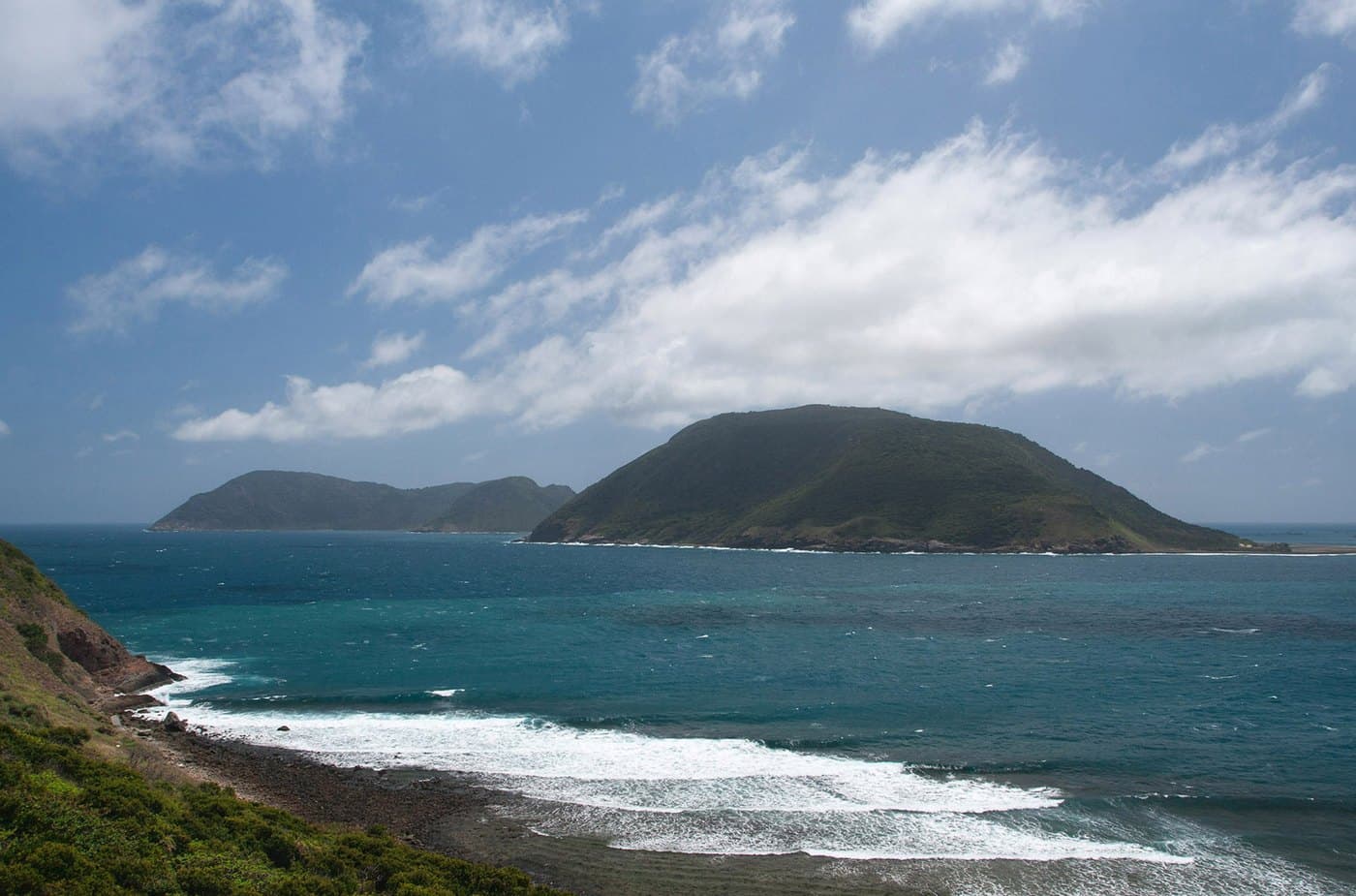
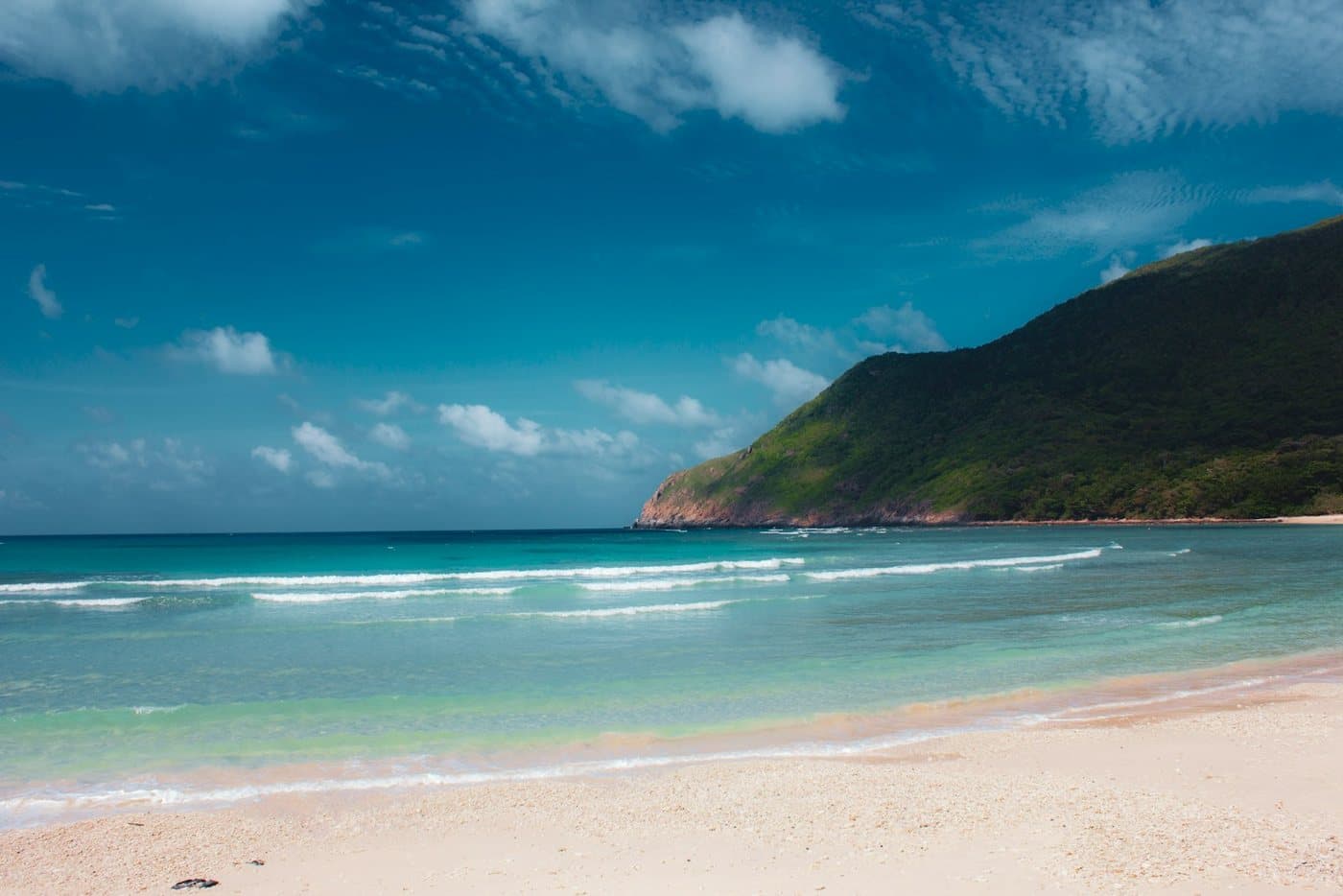
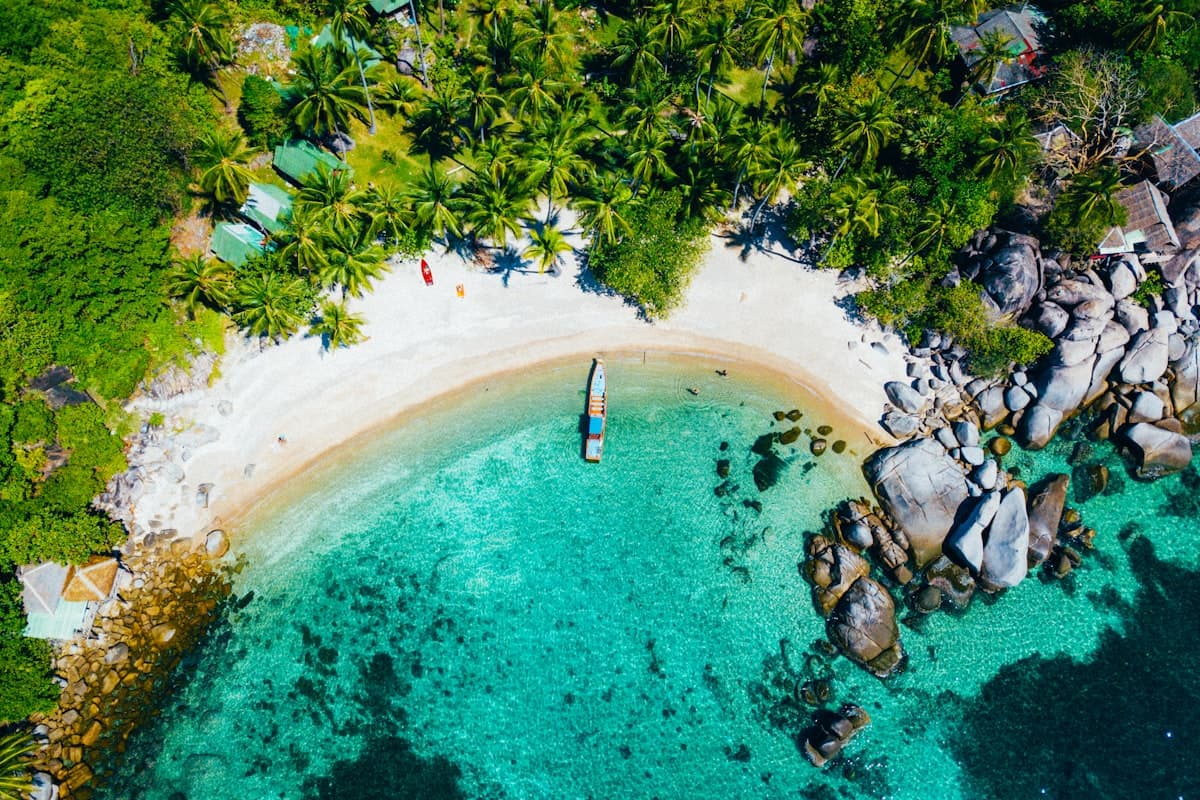
Con Dao diving: the best dive sites and sea turtles in Vietnam
Con Dao diving is as good as Vietnam gets. The archipelago accounts for around 90% of all sea turtle nests in the country, visibility reaches 30 m in season, and live coral cover on some reefs runs as high as 95%.
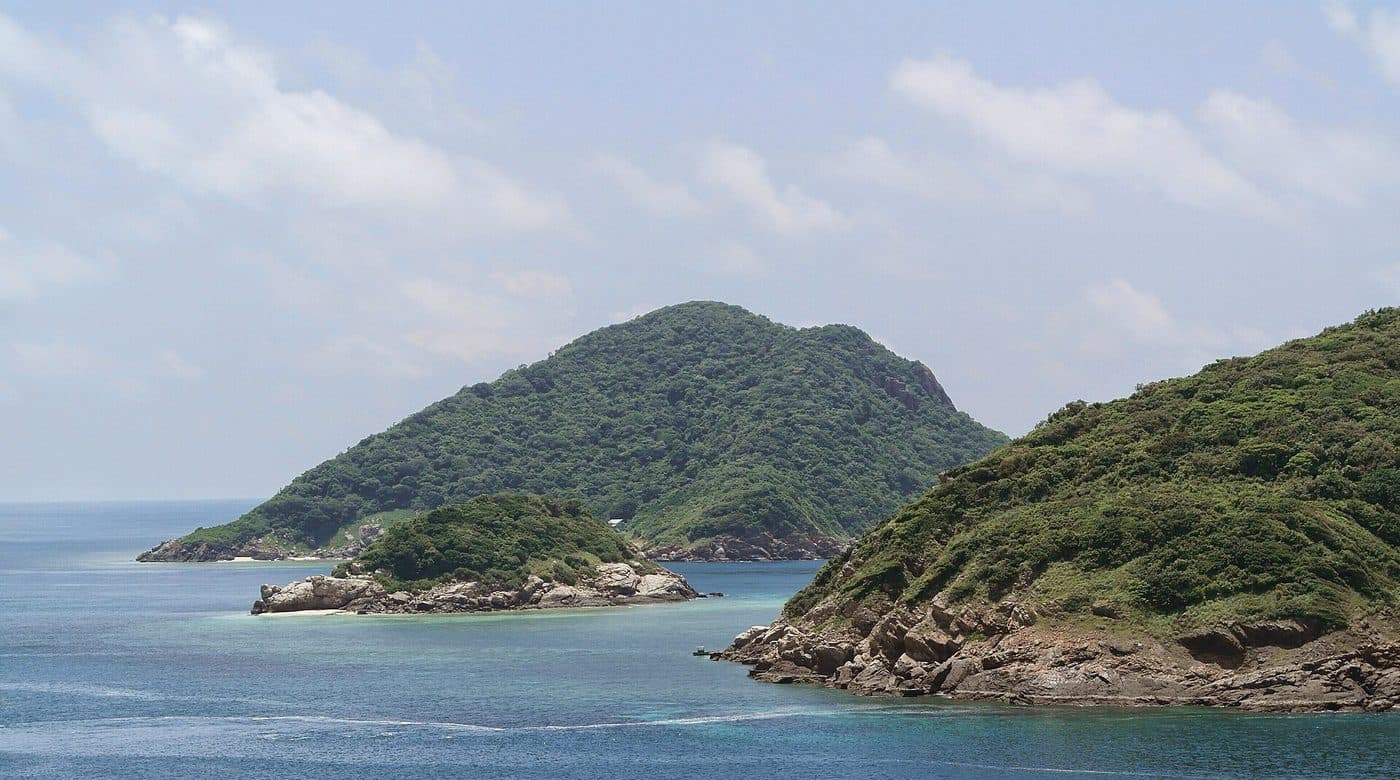
Those numbers come from a 2023 study in MDPI Diversity ("Coral Oasis on Con Dao Islands") and from Con Dao National Park reports, not from a dive shop brochure. The islands are remote, visitor numbers are a fraction of Phu Quoc’s, and park rangers actually fine people for breaking coral.
This guide covers eight dive sites with depths and what lives there, the night turtle-nesting tours on Bay Canh, a month-by-month table of visibility and water temperature, the dive centers that operate here, prices in VND and USD (at $1 ≈ 26 000 VND), and an honest comparison with Nha Trang and Phu Quoc.
Why Con Dao is the best place to dive in Vietnam
Con Dao has the clearest water and the healthiest reefs in Vietnam. The park lists 342 coral species and 202 species of reef fish. Compare that with Nha Trang, where mass tourism has damaged much of the coral, or Phu Quoc, where visibility is typically 5–10 m worse. Con Dao is also one of only two places in Vietnam with dugongs (the other is Phu Quoc), although the park estimates the local population at just 8–12 animals. From April to October hundreds of green turtles come ashore on Bay Canh to nest, with the peak in June to August.
The archipelago has 16 islands and sits 230 km southeast of central Ho Chi Minh City. Since 1 July 2025 it has also been part of the city administratively: under Vietnam’s local government reform the former Con Dao district of Ba Ria–Vung Tau province became a special zone (đặc khu Côn Đảo) of Ho Chi Minh City. Most of the land and surrounding sea is Con Dao National Park, a Ramsar wetland and an ASEAN Heritage Park. Fishing is banned in the core zone, dropping anchor on coral gets you fined, and every dive operator needs a park licence. It sounds like paperwork, but you see the result the moment you descend: fish that don’t flee, living coral, very little trash.
- Hon Bay Canh (Hòn Bảy Cạnh): Turtles and the main nesting beach — 5–18 m, 10–15 min from Con Son
- Hon Cau (Hòn Cau): Best coral, visibility 20 m+ — Open Water and up
- Hon Tai (Hòn Tài): Closest site, 5–10 min — All levels, lots of fish
- Hon Tre Nho (Hòn Tre Nhỏ): Walls, rays, barracuda — Advanced, down to 25 m
- Hon Tre Lon (Hòn Tre Lớn): Soft coral, eels — Open Water and up, 10–22 m
- Hon Trung (Hòn Trứng): Bird island, isolated reef — Can have current, 60+ min by boat
- Horseshoe Reef (Horseshoe (north Bảy Cạnh)): Bamboo sharks, rays — 18–25 m, Advanced
- Ong Dung Beach (Bãi Ông Đụng): Shore snorkelling, 1–5 m — No boat needed
- Con Dao Dive Center (Con Dao Dive Center): PADI 5 Star, since 2013 — 2 dives 3 600 000 VND (~$138)
- Amadive Con Dao (Amadive): Speedboat trips, freediving — Multi-site day trips
- Con Dao Airport (Cảng hàng không Côn Đảo): VCS, about 1 hour from Ho Chi Minh City — Vietnam Airlines and Vietjet
- Bay Canh Lighthouse (Hải đăng Bảy Cạnh): Old lighthouse — Next to the turtle nesting beach
Con Dao diving in numbers
| Parameter | Value |
|---|---|
| Visibility in season | 20–30 m |
| Coral species | 342 |
| Reef fish species | 202 |
| Coral cover in the core zone | 62.8–95.5% |
| Share of Vietnam’s turtle nests | ~90% |
| Main dive sites | 8+ |
| Dive season | March – September (October – February: weather permitting) |
| Flight from Ho Chi Minh City | about 1 hour |
| Water temperature in season | 27–30 °C |
| 2 dives at Con Dao Dive Center | 3 600 000 VND (~$138) |
People come here for the reef, not the nightlife. About 12 000 people live on the archipelago, and there are no clubs or malls. Before you go, read our complete Con Dao guide for hotels, food and history, plus the rundown of Con Dao beaches.
Best Con Dao dive sites: map and descriptions
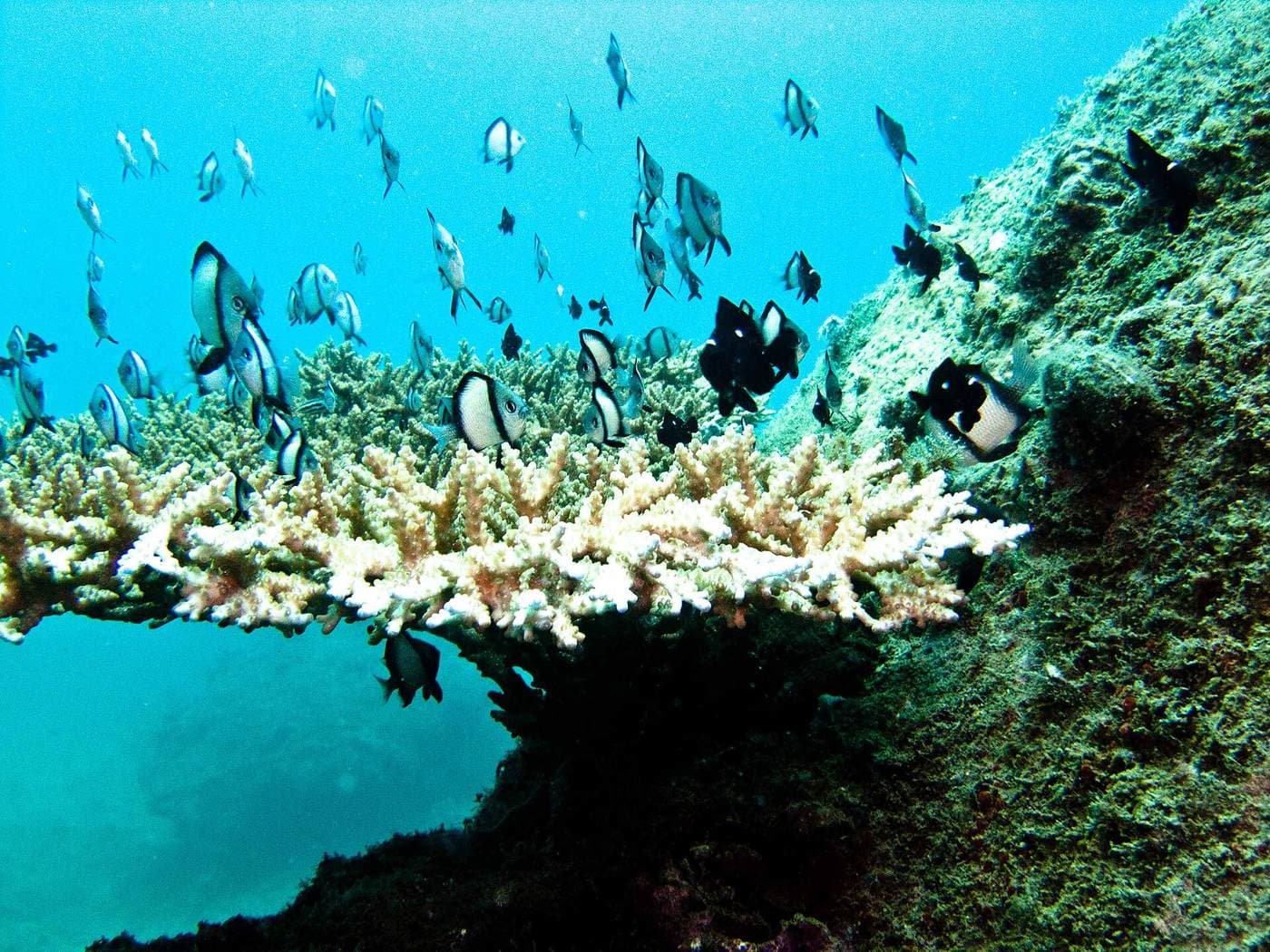
The eight main dive sites sit within 5 to 60 minutes of the Con Son pier. Licensed centers have been diving them for years, and current is mild at most of them; you only notice it at the Advanced-level sites. Depths run from 5 to 25 m, and the water is 27–30 °C in season. Summary table first, then a short card for each site.
| Site | Depth | Level | Boat time from Con Son | Known for |
|---|---|---|---|---|
| Hon Bay Canh (Hòn Bảy Cạnh) | 5–18 m | All | 10–15 min | Turtles, nesting beach, reef |
| Hon Cau (Hòn Cau) | 8–25 m | Open Water+ | 30–45 min | Best coral, 20 m+ visibility |
| Hon Tai (Hòn Tài) | 5–15 m | All | 5–10 min | Dense fish life, closest site |
| Hon Tre Nho (Hòn Tre Nhỏ) | 12–25 m | Advanced | 20–30 min | Walls, rays, barracuda |
| Hon Tre Lon (Hòn Tre Lớn) | 10–22 m | Open Water+ | 25–35 min | Soft coral, eels |
| Hon Trung (Hòn Trứng) | 5–12 m | Open Water+ | 60+ min | Bird island, isolated reef |
| Horseshoe Reef | 18–25 m | Advanced | 15 min | Bamboo sharks, rays |
| Ong Dung Beach (Bãi Ông Đụng) | 1–5 m | Snorkelling | 15 min by scooter + walk | Shore snorkelling |
Hon Bay Canh: turtles and reef
Bay Canh is the signature site. It’s the one place in Vietnam where meeting an adult turtle in the water is a realistic expectation rather than a lucky break. The island’s beach gets more turtle nests than anywhere else in Con Dao, and a few meters offshore the reef starts at 5 m and drops to 18 m. The bottom mixes hard coral (Acropora and Porites), soft coral and sandy patches. Expect turtles, eagle rays and moray eels, and now and then a humphead wrasse.
The boat ride from Con Son takes 10–15 minutes. A standard day out is two dives with a surface interval in between, with water and snacks on board. Con Dao Dive Center charges 3 600 000 VND (~$138), including gear, 10% VAT and park fees.
Hon Cau: the best coral in Vietnam
If Vietnam has a dream reef, it’s here. Hon Cau lies 30–45 minutes northeast by boat, and few commercial boats bother with the trip. Visibility is reliably 20 m or more, and live coral cover on some patches reaches 95% (the MDPI 2023 study backs that figure up). Depth is 8–25 m, and you need at least Open Water.
Because of the distance, a Hon Cau trip usually costs more than the standard outing and runs only with a minimum group, so ask the center about price and numbers in advance. What you get is an untouched garden of table corals and giant gorgonians, with a decent chance of a reef shark.
Hon Tai: close and easy
Hon Tai is the pick for beginners and for anyone on a two-day visit. The boat gets there in 5–10 minutes, depths are a gentle 5–15 m, and there’s barely any current. For sheer fish density it’s one of the best sites on the archipelago.
It works well for Try Dives and Open Water training, and a good share of training dives happen here. Price is the standard 3 600 000 VND (~$138) for two dives.
Hon Tre Nho and Hon Tre Lon: for experienced divers
Two neighbouring islands on the western side of the archipelago. Hon Tre Nho has walls dropping to 25 m, eagle rays and barracuda. Hon Tre Lon has soft coral, eels and the occasional humphead wrasse. Both call for Advanced Open Water because of the depth and some current.
Centers usually add these to advanced trips once you’ve done Bay Canh. These are the sites where pelagic encounters are most likely: big fish passing by the reef.
Horseshoe Reef and Hon Trung: the odd ones
Horseshoe Reef is the northern part of Bay Canh. Divers go for the bamboo sharks, small harmless sharks that sleep on the bottom during the day. Depth is 18–25 m, so you need Advanced. Hon Trung is a remote bird island more than an hour away by boat, with an isolated reef that sees few visitors. It’s shallow, 5–12 m, but there can be current, so some experience helps. Boats don’t go often; arrange it in advance.
Ong Dung Beach: snorkelling from the shore
The only site you can reach without a boat is Bãi Ông Đụng on the west coast of Con Son. From town it’s about 15 minutes by scooter to the trailhead, then roughly a kilometer on foot through the national park forest. Walk in, put your mask on, and the reef is right there: 1–5 m, coral close to shore, plenty of fish. Good for families and for divers on a day off who don’t want to pay for a boat.
Rent a mask and snorkel in town (around 100 000 VND, ~$4, per day); there may be nothing to rent at the beach itself. More on this and the other beaches in our Con Dao beaches guide.
Con Dao turtles: how to see them in the water and on the beach
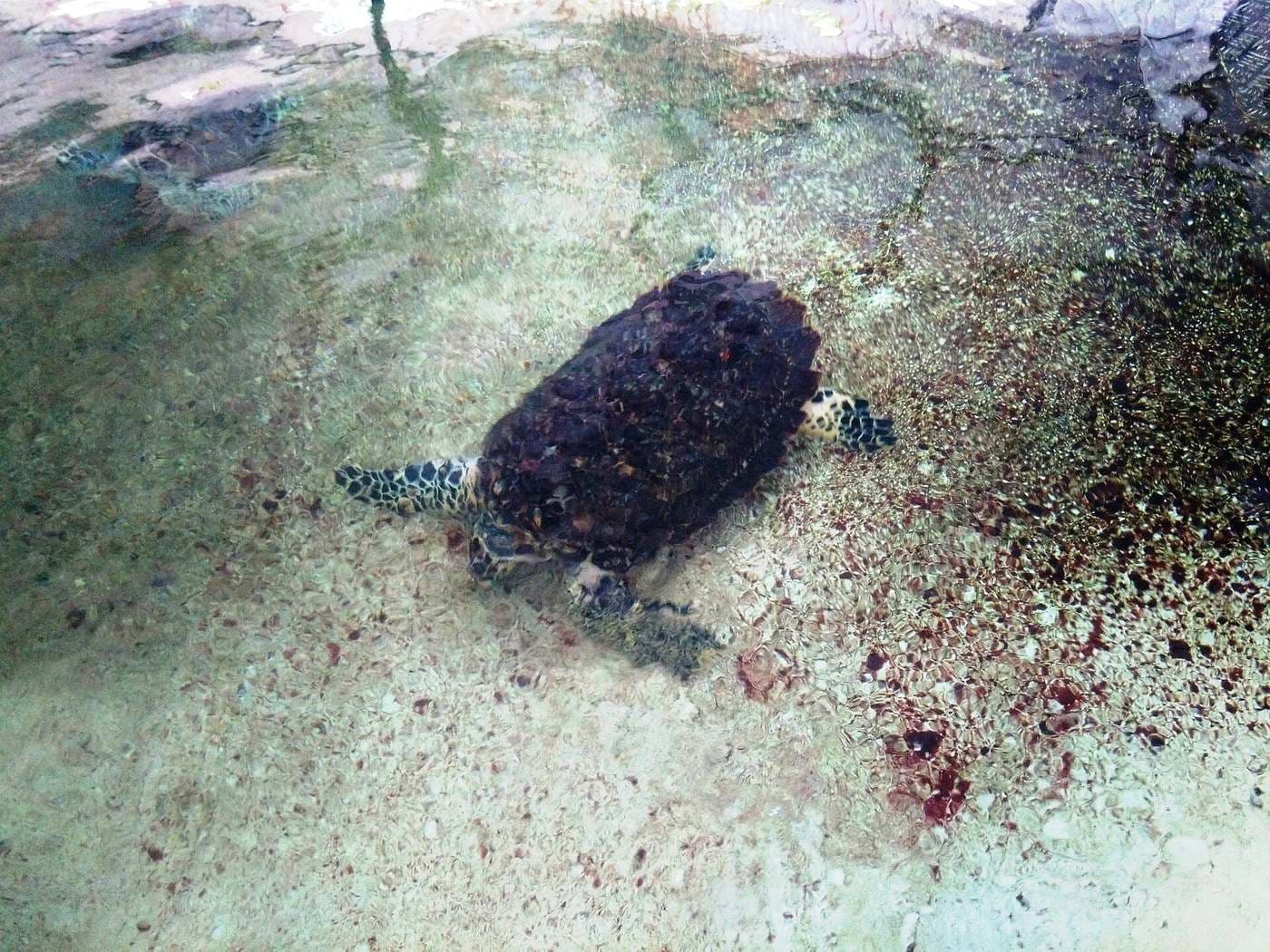
Sea turtles are the reason many people fly to Con Dao. Two species nest here, the green turtle (Chelonia mydas) and the hawksbill (Eretmochelys imbricata). Nesting season runs from April to October, peaking in June to August. According to Con Dao National Park, the archipelago accounts for around 90% of Vietnam’s sea turtle nests, and Bay Canh gets the most.
There are two ways to meet a turtle: in the water by day, and on the beach at night. They complement each other, and plenty of divers do both.
Diving and snorkelling with turtles
Adult turtles live around Bay Canh and Hon Cau all year. April to September is best, when the water is clearer. The turtles are used to divers: they keep grazing on seagrass, come up to breathe and sometimes swim over to have a look. Typical encounter distance is 2–3 m, close enough for a decent GoPro shot.
The rules are strict. No touching, no torch in their eyes, no chasing or blocking their way to the surface. Fines run into millions of dong, and rangers do watch the boats. Licensed centers repeat the rules before every dive.
Night turtle-nesting tour
This is a separate national park program, not a dive. From May–June to October, rangers take small groups to a tented camp on Bay Canh for the night. After dark the females crawl up the sand, dig and lay 80–150 eggs each. At dawn you may see hatchlings emerging from older nests and help rangers release them into the sea.
Through local agencies the tour costs roughly 1 500 000 – 3 000 000 VND (~$58–115), including the boat, tent, dinner and breakfast. Book at least a week ahead, because the number of places on the island is capped. Hatchling releases usually happen from June to October.
Best time to dive Con Dao: season, visibility, water temperature
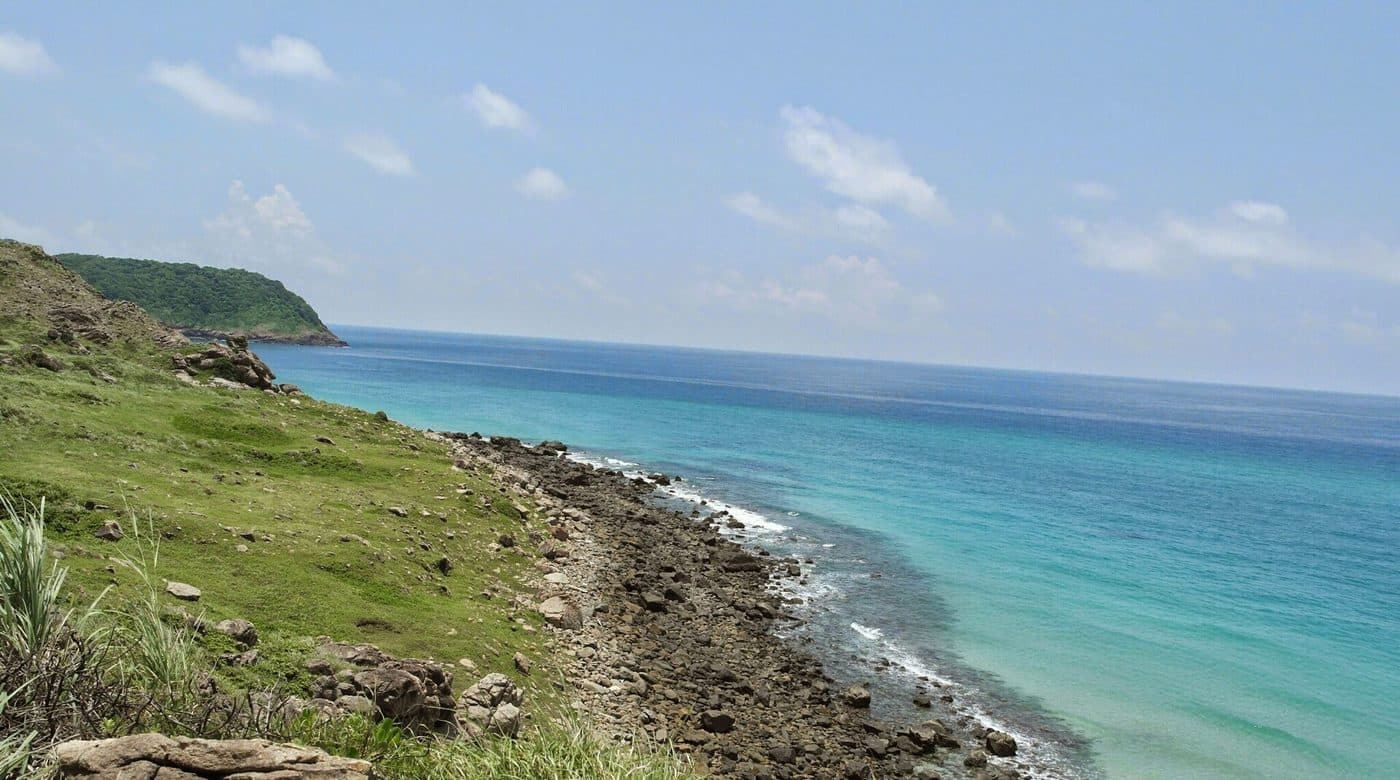
The Con Dao dive season runs from March to September, with the clearest water in April and May. Visibility is then a steady 20–30 m, the water is 28–30 °C, there’s little wind and boats go out every day. From October to February the northeast monsoon brings waves of up to 2–3 m and visibility drops to 5–15 m. In a storm the harbor closes and nobody goes out. Centers stay open on a limited schedule and dive only on calm days, at sites sheltered from the wind.
| Month | Air °C | Water °C | Visibility | Sea conditions | Worth going? |
|---|---|---|---|---|---|
| January | 25–28 | 25–26 | 5–10 m | Storms, NE monsoon | Weather permitting |
| February | 26–28 | 26–27 | 10–15 m | Calming, still choppy | Season starts |
| March | 27–30 | 27–28 | 15–25 m | Calm | Great |
| April | 28–32 | 28–29 | 20–30 m | Flat, clear | Ideal |
| May | 28–32 | 28–30 | 20–30 m | Flat, warm water | Ideal |
| June | 28–32 | 28–30 | 15–25 m | Calm, warm | Great + turtles |
| July | 28–31 | 28–30 | 15–25 m | Some rain | Great + turtles |
| August | 28–31 | 28–29 | 15–20 m | Rain, diving possible | Good + turtles |
| September | 28–30 | 28–29 | 10–20 m | Turning rainy | Good + turtles |
| October | 27–30 | 27–28 | 5–15 m | NE monsoon starts | End of season |
| November | 26–29 | 26–27 | 5–10 m | Storms, currents | Weather permitting |
| December | 25–28 | 25–26 | 5–10 m | Storms, big swell | Weather permitting |
What to pack
Every center has 3 mm wetsuits, and the water is warm enough that you won’t need anything thicker. Worth bringing yourself: a mask that fits your face, your own dive computer if you have one, a GoPro with a mount, and a torch for night dives and peering into crevices. Sunscreen should be reef-safe, without oxybenzone.
For turtles plus good visibility, aim for late June and July. The turtles are nesting by then and the water is still clear. After about 20 August the rain picks up and visibility drops, though there are still plenty of turtles around. For the full island weather picture, see our Con Dao weather guide.
Con Dao dive centers: who operates here and how to choose
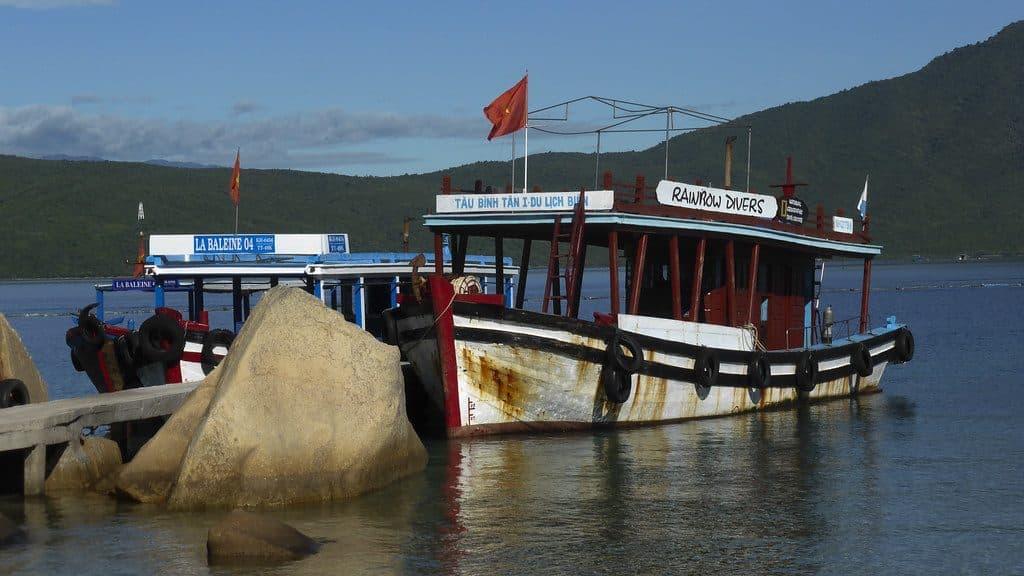
In 2026 two PADI centers have their own base on Con Dao: Con Dao Dive Center and Amadive. Rainbow Divers, Vietnam’s oldest dive chain, no longer runs its own shop on the island and sells Con Dao diving through a local partner. The differences come down to style, boats and trip format. Whoever you go with, ask about group size, your instructor’s name and insurance.
| Center | Accreditation | Since | What stands out | Website |
|---|---|---|---|---|
| Con Dao Dive Center | PADI 5 Star | 2013 | Oldest center on the island, max 8 divers per trip, courses up to Rescue | divecondao.com |
| Amadive Con Dao | PADI Dive Center | — | Speedboats, freediving, multi-site day trips | amadive.com.vn |
| Rainbow Divers | PADI 5 Star | 1996 (in Vietnam) | No own base on Con Dao, books via partner, seasonal | divevietnam.com |
Con Dao Dive Center
The best-known center on the island, based in Con Son town since 2013. Trips take no more than 8 divers, and the crew washes and dries your gear after each dive, so in the morning you just put it on. It’s a family-run place with old-school training and a strong conservation streak: they explain each coral and insist you touch nothing. All listed prices already include 10% VAT and park fees.
Amadive Con Dao
A younger center built around speed and flexibility. Fast speedboats cut the ride to far sites like Hon Cau considerably. They teach freediving and run day trips that hit several sites in one outing. Good for experienced divers who want to cover as many sites as possible on a short visit.
Rainbow Divers
A large chain that has been in Vietnam since 1996. It used to have its own base on Con Dao; now courses and daily dives on the island go through an official PADI partner, and the chain closes some locations in the off-season. It makes sense if you’ve dived with Rainbow in Nha Trang or Phu Quoc and prefer to book through a familiar office.
How to choose
- Group size: look for trips where one divemaster leads no more than 4 people. Bigger groups mean less attention and more risk
- Boat: a regular boat is fine for two nearby sites; for Hon Cau a speedboat is worth it
- Language: both centers work in English, and that’s the working language on the island
- Inclusions: ask whether lunch and park fees are included; sometimes they’re extra
- Insurance: DAN or equivalent is standard. Without it, an accident gets complicated fast
PADI courses and Try Dives on Con Dao
Learning to dive here is a pleasure: warm water, good visibility, lots of fish and coral. The catch is price, which is higher than in Nha Trang or Phu Quoc. In exchange you get fewer students per instructor and a more serious conservation briefing. The courses are the standard international ones, and your PADI card is valid worldwide.
| Course | Days | What you do | Price VND | ~USD |
|---|---|---|---|---|
| Try Dive | 1 | Briefing + 2 dives with an instructor, no certification | 3 600 000 | ~$138 |
| PADI Discover Scuba Diving | 1 | Official PADI program, credited toward Open Water | 4 500 000 | ~$173 |
| PADI Open Water Diver | 3–4 | Theory + confined water + 4 open water dives, certified to 18 m | 12 900 000 | ~$496 |
| PADI Advanced Open Water | 2 | 5 dives incl. deep and navigation, to 30 m | 12 900 000 | ~$496 |
| PADI Rescue Diver | 3 | Rescue skills | 12 900 000 | ~$496 |
| Fun Dives (certified) | 0.5 | 2 dives, no training | 3 600 000 | ~$138 |
Three scenarios
Never dived before. Do a Try Dive or Discover Scuba Diving on day one to see if you like it. If you do, Open Water takes another 3–4 days. The card never expires, and the Discover Scuba dives count toward the course.
Already Open Water. Book fun dives, or go straight for Advanced. Advanced takes you to 30 m and adds a night dive and compass navigation, which you’ll want later in Malaysia, the Philippines or the Maldives.
Want to level up. Rescue Diver is a serious course and the step before Divemaster. On Con Dao you train in the open sea, not in a hotel pool.
How it compares with Koh Tao
Open Water on Con Dao costs about $496. On Koh Tao in Thailand the same course typically runs $300–400, but visibility is usually lower and groups are bigger. Con Dao wins on quality and loses on price.
How much does diving in Con Dao cost in 2026
Two dives for a certified diver cost 3 600 000 VND (~$138), and a snorkelling trip about 1 000 000 VND (~$38). At Con Dao Dive Center the price already includes gear, 10% VAT and marine park fees, so there’s little to add on the day.
| Item | VND | ~USD | What’s included |
|---|---|---|---|
| Snorkelling trip | ~1 000 000 | ~$38 | Boat, mask, fins, water |
| Try Dive (2 dives) | 3 600 000 | ~$138 | Instructor, gear |
| Fun Dives (2 dives) | 3 600 000 | ~$138 | Divemaster, gear, park fees |
| PADI Open Water | 12 900 000 | ~$496 | Course, 4 open water dives, certification |
| Turtle night tour | 1 500 000 – 3 000 000 | ~$58–115 | Boat, tent, dinner, breakfast |
| Mask and snorkel rental | ~100 000 per day | ~$4 | Gear only |
Currency converter
Budget separately for flights, a room and DAN cover: Con Dao isn’t a cheap island.
Pay the dive center by card. For street food, taxis and scooter rental carry cash; ATMs are only in Con Son town.
Con Dao snorkelling: for people who don’t want to dive
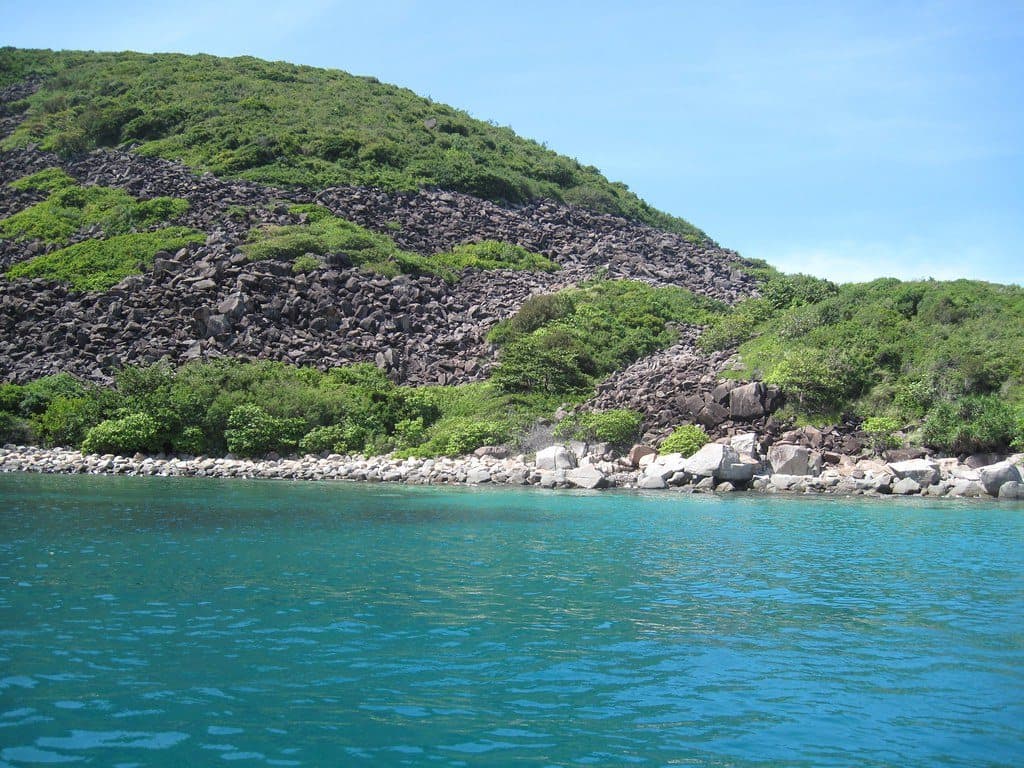
Snorkelling on Con Dao costs about 1 000 000 VND (~$38) for a boat trip with gear from a dive center; local agencies are sometimes cheaper. That’s about 3.5 times cheaper than diving, and you see much of the same: turtles at Bay Canh, coral at Hon Tai, fish around Hon Tre. Depth is usually 1–5 m, close enough for a good look at the reef.
Best snorkelling spots
- Ong Dung Beach (Bãi Ông Đụng): the only shore entry. 15 minutes by scooter to the trail, then about a kilometer through the forest. Bring a mask from town
- Hon Bay Canh (Hòn Bảy Cạnh): boat trip, morning groups. Turtles and dense reef
- Hon Tai (Hòn Tài): the nearest island, good for families with kids. 1–3 m, sand and coral shallows
- Hon Tre Nho (Hòn Tre Nhỏ): for confident swimmers, deeper and sometimes with current
With kids
Most snorkelling tours take children from 5, and from 3 in a life jacket. The easiest spot with small kids is Ong Dung: you can wade in knee-deep and help them get used to the mask, as long as you’re ready for a kilometer of forest trail to get there. Boat trips with toddlers are harder: seasickness, and jumping in from the boat.
For the rest of the country, see our guide to diving and snorkelling in Vietnam.
Con Dao vs Nha Trang vs Phu Quoc: where to dive
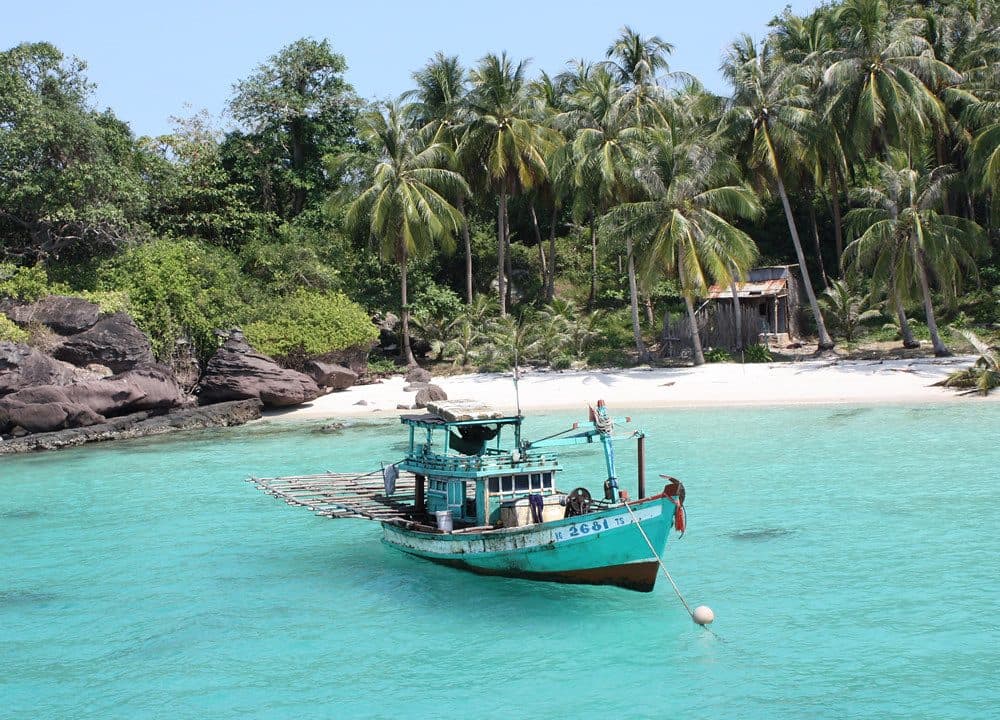
All three are Vietnam’s main dive destinations, and they suit different trips. Con Dao is the premium option: the best water, untouched reefs, turtles. The downsides are price and a strict season. Phu Quoc is the middle ground, with mid-range prices, international flights and diving from October to April. Nha Trang is the training ground: cheap certification and lots of dive shops, but the coral has taken a beating.
| Parameter | Con Dao | Phu Quoc | Nha Trang |
|---|---|---|---|
| Season | March – September | October – April | January – September |
| Visibility | 20–30 m | 10–15 m | 8–15 m |
| Coral | Up to 95% cover, best in Vietnam | Good | Damaged |
| Turtles | ~90% of Vietnam’s nests | Rare | None |
| 2 dives | ~$138 | $70–120 | $50–80 |
| PADI Open Water | ~$496 | $350–420 | $260–320 |
| International flights | None (connect via SGN or Hanoi) | Yes | Yes (CXR) |
| Crowds | Low | Medium | High |
Verdict
- On a budget. Nha Trang is the only real option. Certification is cheapest there, but expect crowds and tired reefs. More in our Nha Trang diving guide
- Family trip. Phu Quoc: direct international flights, easy shore entries and plenty of hotels. The sites around An Thoi are decent; see diving in Phu Quoc
- Experienced diver. Con Dao, no contest. One trip and you’ll feel the difference
Fast Track — no queue at the border
5–10 minutes instead of an hour in the immigration queue
from$11per passenger
Con Dao marine park rules: what not to do
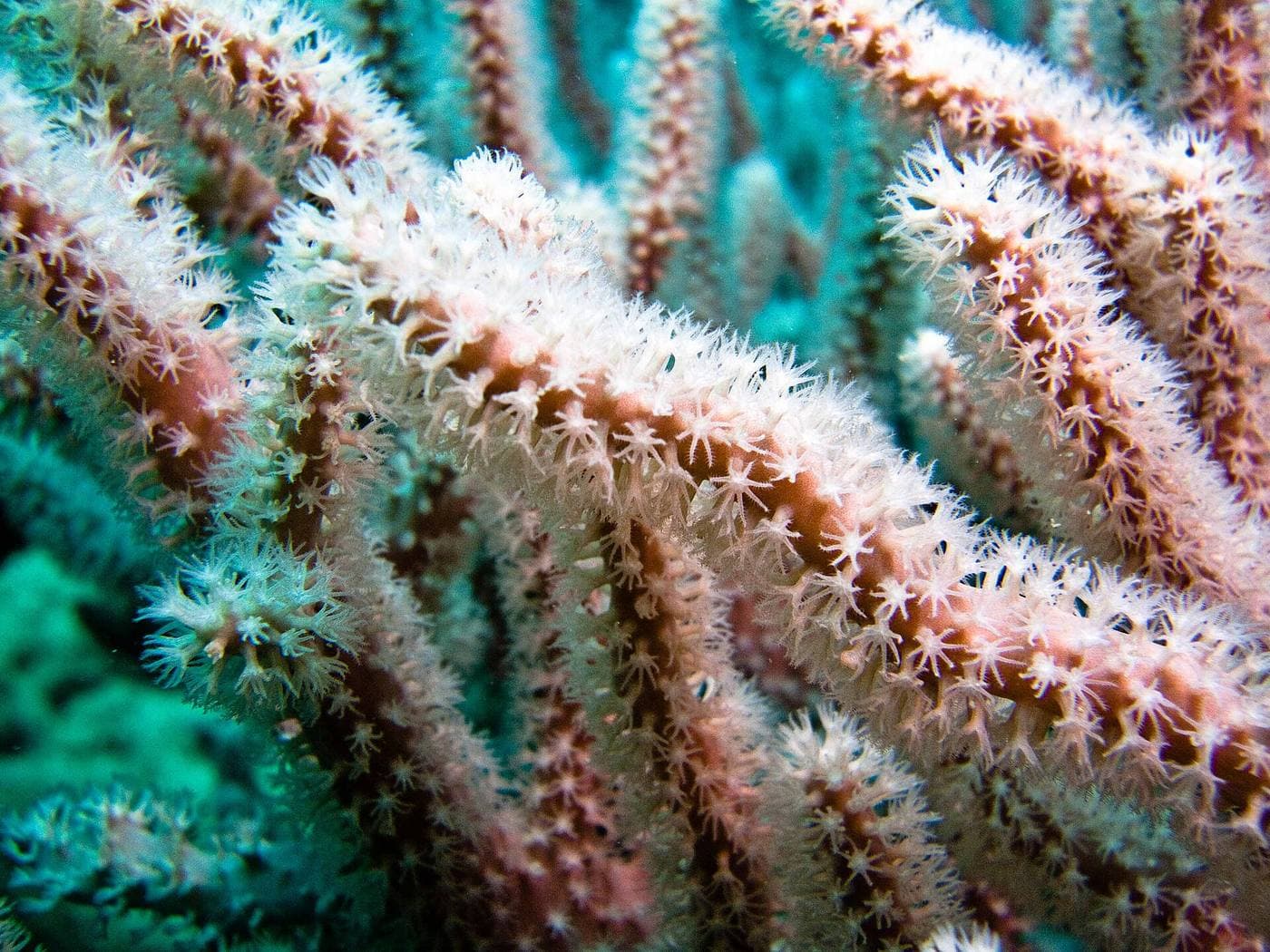
Con Dao is a marine protected area, a Ramsar wetland and an ASEAN Heritage Park. On paper that’s bureaucracy. In practice rangers patrol the reefs, check dive boats and fine people. That’s why Con Dao still has what the rest of Vietnam’s coast has lost.
Not allowed:
- Touching turtles, coral, starfish or shellfish
- Feeding fish
- Anchoring on coral (boats have to tie up to mooring buoys)
- Sunscreen with oxybenzone
- Shining a torch in animals’ eyes
- Taking anything from the seabed (coral, shells, bits of shipwreck)
- Fishing in the park’s core zone
- Splashing around a turtle, chasing it or cutting it off from the surface
The park’s other protected spots, from forest trails to beaches and outer islands, are covered in our guide to Con Dao attractions.
The minimum etiquette for a diver here: good buoyancy control, fins off the bottom, hands close to your body, and nothing left in the water. A good center reminds you of this at the briefing. If yours doesn’t, bring it up yourself.
How to get to Con Dao
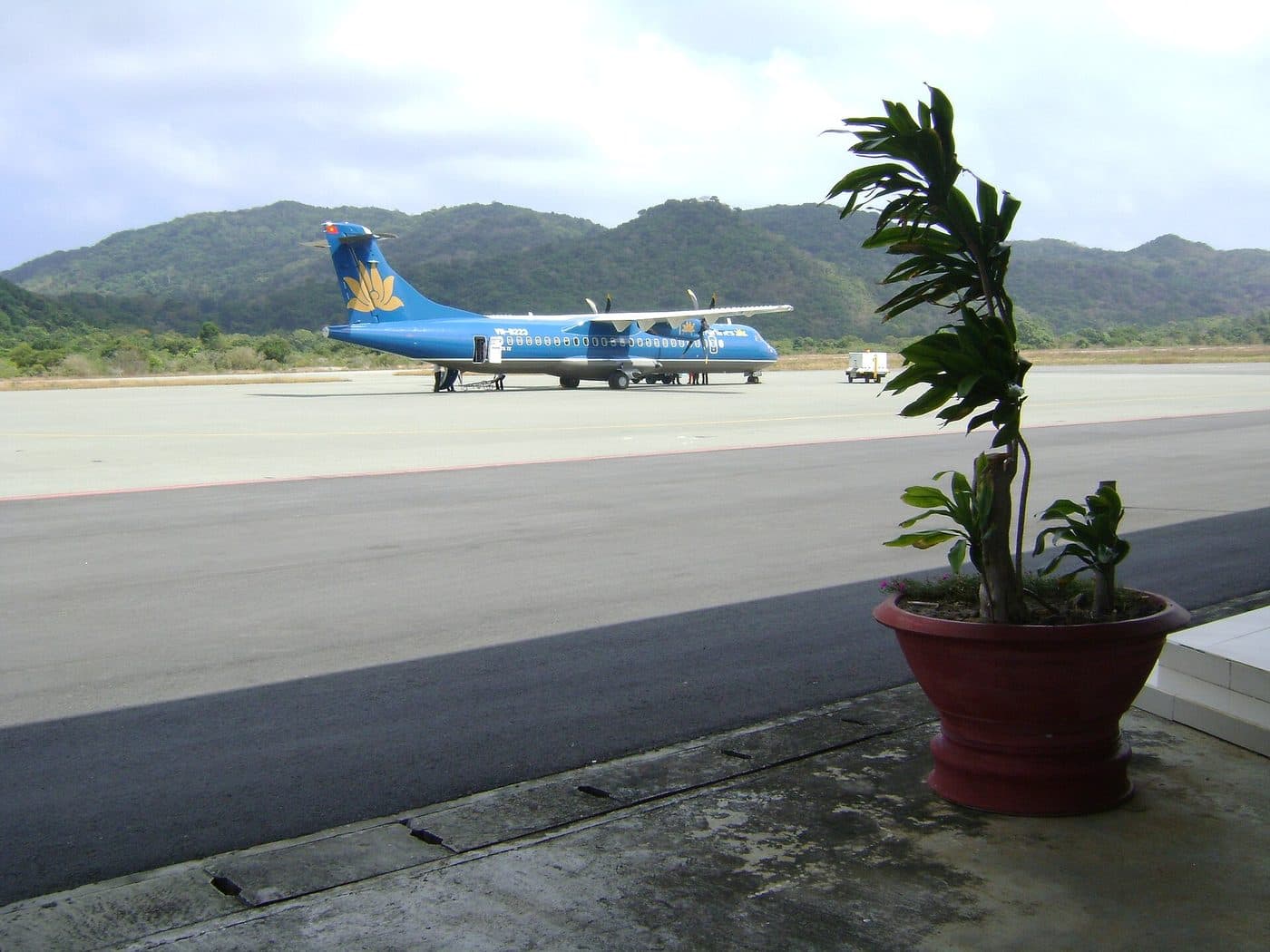
You can fly or take a fast ferry. Flying is the default: about an hour from Ho Chi Minh City, so you can land in the morning and be on a boat at Hon Tai by lunch. The ferry is slower and cheaper, but it gets cancelled in rough weather, mostly from November to February.
Entry and visa
Con Dao has no special entry rules. Enter Vietnam on your e-visa (up to 90 days, single or multiple entry, apply at evisa.gov.vn) or on the visa exemption your passport allows, then take a domestic flight. There are no international flights to Con Dao. Details on both routes are in our Vietnam visa guide.
Flying
Everyone connects through the mainland. Airlines on the route:
- Vietnam Airlines: the main carrier, ATR-72s flown by its subsidiary VASCO, from Ho Chi Minh City and Can Tho
- Vietjet Air: back on the route since November 2025, with flights from Ho Chi Minh City and Hanoi
Bamboo Airways has dropped Con Dao, so older guides that list it are out of date.
A one-way SGN → VCS ticket costs 1 100 000 – 2 500 000 VND (~$42–96). Book 2–4 weeks ahead, because flights fill up in season.
Ferry
From Vung Tau (part of Ho Chi Minh City since the 2025 reform), Phu Quoc Express and Con Dao Express take about 3.5 hours, with fares from ~790 000 VND (~$30); Phu Quoc Express sails three times a week. There’s also a shorter route from Trần Đề port in the Mekong Delta (now part of Can Tho city), about 3 hours and cheaper. Sailings are cancelled in storms, so the ferry only works if you have a spare day in your plans.
For the full picture, see our guide to getting to and around Con Dao, and tours from Ho Chi Minh City if you’re spending a day in the city before the flight.
Where to stay near the dive centers
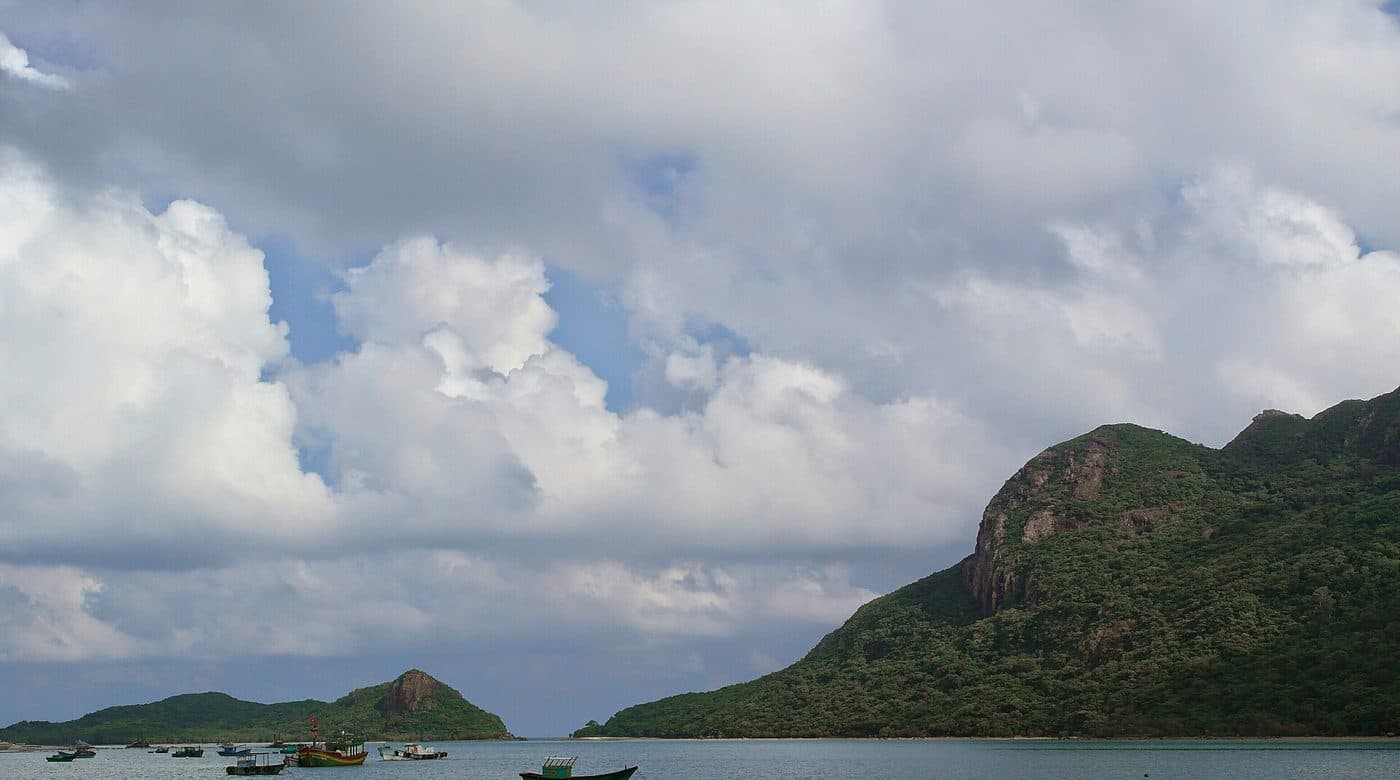
The dive centers are in Con Son, the island’s only real town. Stay within 1–2 km of the pier and you can walk to the boat in the morning. Prices in season are higher than on Phu Quoc, and there are few budget hostels.
| Example | Category | Price per night | To dive centers |
|---|---|---|---|
| Six Senses Con Dao | Luxury | 22 000 000 VND (~$846) | 15 min by shuttle |
| Saigon Con Dao Resort | 3★+ | from ~1 500 000 VND (~$58) | 5 min walk |
| Con Dao Sea Travel Hotel | Mid-range | 1 200 000 VND (~$46) | 10 min walk |
| Hung Khanh guesthouse | Budget | 600 000 VND (~$23) | 15 min walk |
If you’re choosing between being close to the pier and extra comfort, pick central Con Son. Distances are short, taxis are few, and it’s all easier with the dive shop 10 minutes away. Full breakdown in our Con Dao hotels guide.
Safety and medical care for divers
What to know
- DAN or equivalent insurance. Standard travel insurance almost never covers scuba. Buy it separately or as an add-on; an annual DAN plan costs a few dozen dollars
- Hyperbaric chamber. There is none on Con Dao. The nearest is in Vung Tau, where Ba Ria–Vung Tau hospital has run a chamber since 2017; there are also chambers in Ho Chi Minh City. Evacuation from the island goes through your insurer, and a doctor decides how you travel: flying with decompression sickness is dangerous
- Medical care on the island. The medical center in Con Son handles the basics, with limited surgery. Serious cases go to the mainland
- Bring: a dive computer, vinegar for jellyfish stings, antihistamines, and the emergency contact of your dive center
When not to dive
- A cold, blocked sinuses or an ear infection
- Pregnancy (any trimester)
- Serious heart or circulatory conditions
- Epilepsy, poorly controlled diabetes
DAN guidelines call for at least 12 hours between a single dive and a flight, and 18 hours after multiple dives or days; many centers suggest 24. This matters here because almost everyone leaves Con Dao by plane, so keep your last day dive-free.
FAQ: diving in Con Dao
The season runs from March to September, with the clearest water in April and May. Visibility is then 20–30 m, the water 28–30 °C and the sea calm. From October to February the northeast monsoon brings waves up to 2–3 m and 5–15 m visibility, and the harbor closes in storms. Centers keep a limited schedule and only go out on calm days
Con Dao Dive Center and local agency prices for 2026
- Snorkelling trip~1 000 000 VND~$38
- Two dives3 600 000 VND~$138for a certified diver
- Try Dive3 600 000 VND~$138for beginners, with an instructor
- PADI Open Water12 900 000 VND~$496
Con Dao Dive Center prices already include gear, 10% VAT and marine park fees, so you’ll pay little or nothing extra on the day
Yes, and your chances are good. Adult turtles stay around Hon Bay Canh and Hon Tai all year, a few meters below the surface. From April to September the water is clearer and sightings happen on almost every trip. On morning snorkelling trips you often see more than one. Don’t touch them, don’t use a torch on them, and don’t block their way
Not for your first dives. A Try Dive or PADI Discover Scuba Diving takes one day with an instructor: a short briefing and one or two dives to 12 m, for 3 600 000 – 4 500 000 VND (~$138–173). To dive without an instructor you need Open Water, which certifies you to 18 m. Advanced Open Water takes you to 30 m. PADI and SSI cards are both accepted
Con Dao has Vietnam’s best water and coral: 20–30 m visibility and live coral cover up to 95% on some reefs. It also has about 90% of the country’s turtle nests. It costs more: two dives are around $138 against $50–80 in Nha Trang. The season is March to September, while Phu Quoc’s runs from October. There are no international flights, so you’ll connect in Ho Chi Minh City or Hanoi
Full comparison in the section on the three destinations
A standard 3 600 000 VND (~$138) trip at Con Dao Dive Center includes
- the boat and crew
- two dives with a divemaster
- full gear: BCD, regulator, mask, fins, 3 mm wetsuit
- water and snacks
- marine park fees and 10% VAT
Trips take no more than 8 divers. Not included: DAN insurance, your own gear, and photos or video by the instructor
Yes. From May–June to October, the national park and local agencies run overnight tours to Bay Canh with a tented camp. Hatchlings are released at dawn, usually from June to October. The tour costs roughly 1 500 000 – 3 000 000 VND (~$58–115) with the boat, camping and meals. Book at least a week ahead, since places on the island are limited
Read next: Con Dao travel guide · Con Dao tours · Con Dao beaches · Diving in Vietnam



- Guide
Con Dao Tours 2026: Sea, Jungle, History and Turtles
Con Dao tours in 2026: snorkeling and diving, national park treks, the prison complex and the 24-a-night turtle sleepover. Prices, operators, seasons.Con Dao Tours 2026: Sea, Jungle, History and Turtles - Guide
Con Dao Beaches: Which One to Visit and When (2026)
A practical guide to Con Dao beaches: which swim year-round, which appear only at low tide, park permits, snorkeling and turtle season. 2026 prices.Con Dao Beaches: Which One to Visit and When (2026) - Guide
Con Dao 2026: Vietnam's Wild Islands Guide
Con Dao guide: pristine islands, eco-luxury, diving and sea turtles, the former prison-island history, how to get there and when to go.Con Dao 2026: Vietnam's Wild Islands Guide