
Tours from Hoi An in 2026: My Son, Cham Islands and a farm
Hoi An is more than the Old Town and its lanterns. Within an hour of those yellow walls sit Champa ruins built from the 4th to the 13th century, a UNESCO coral archipelago, coconut jungle you paddle in a round basket boat, rice paddies, and a herb village on UN Tourism's 2024 Best Tourism Villages list. Here are the twelve trips that actually run, with 2026 prices, the season each one needs, and an honest comparison of where to book.
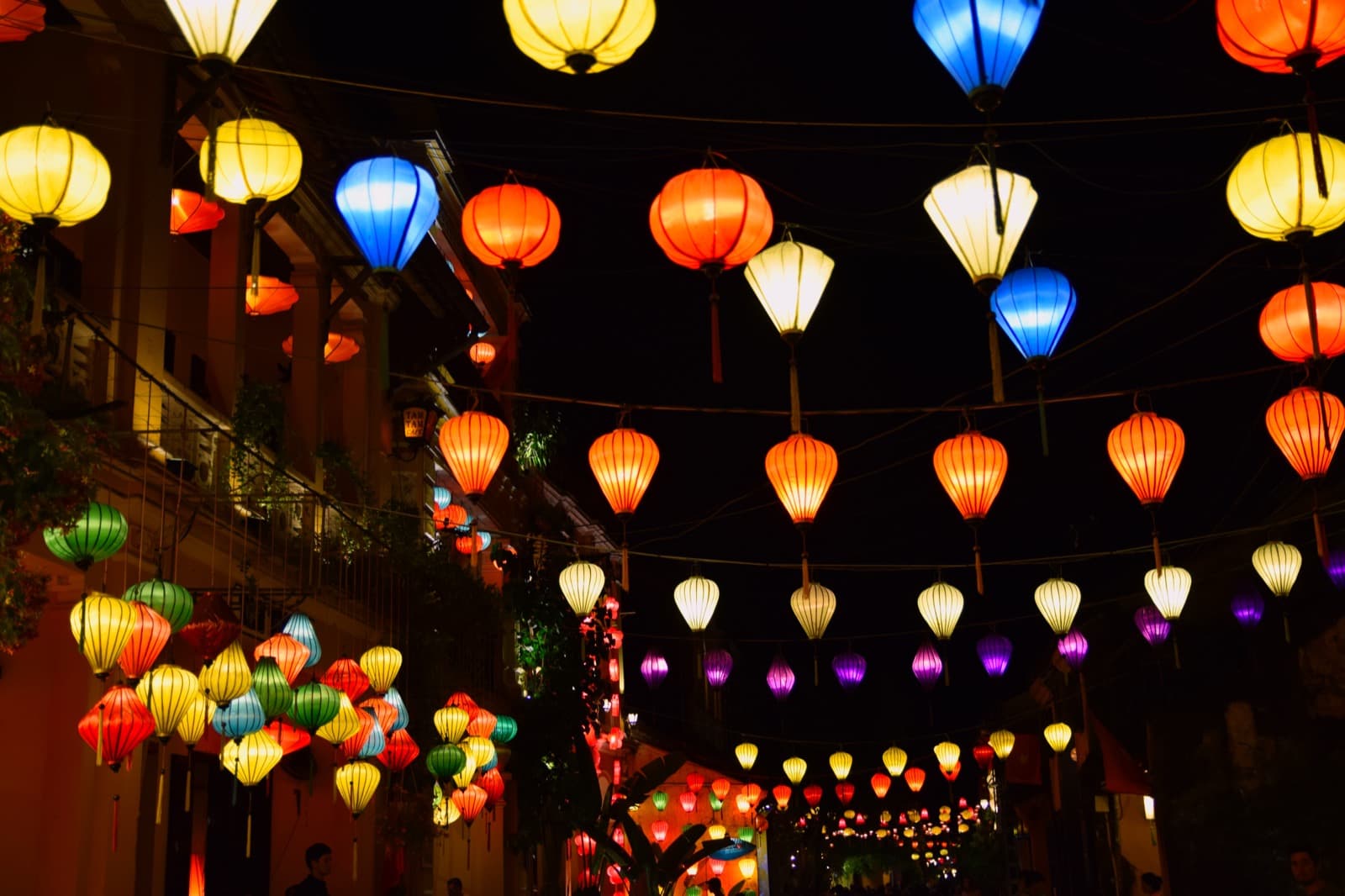
This guide covers all twelve with quick cards, then a full section per trip (My Son, Cu Lao Cham, the Cam Thanh basket boats, cooking classes, the Tra Que farm, lantern workshops, countryside cycling, the Marble Mountains, the Hai Van Pass and the evening shows), plus three day budgets, a booking-platform comparison and a month-by-month availability matrix.
12 tours from Hoi An — what to choose
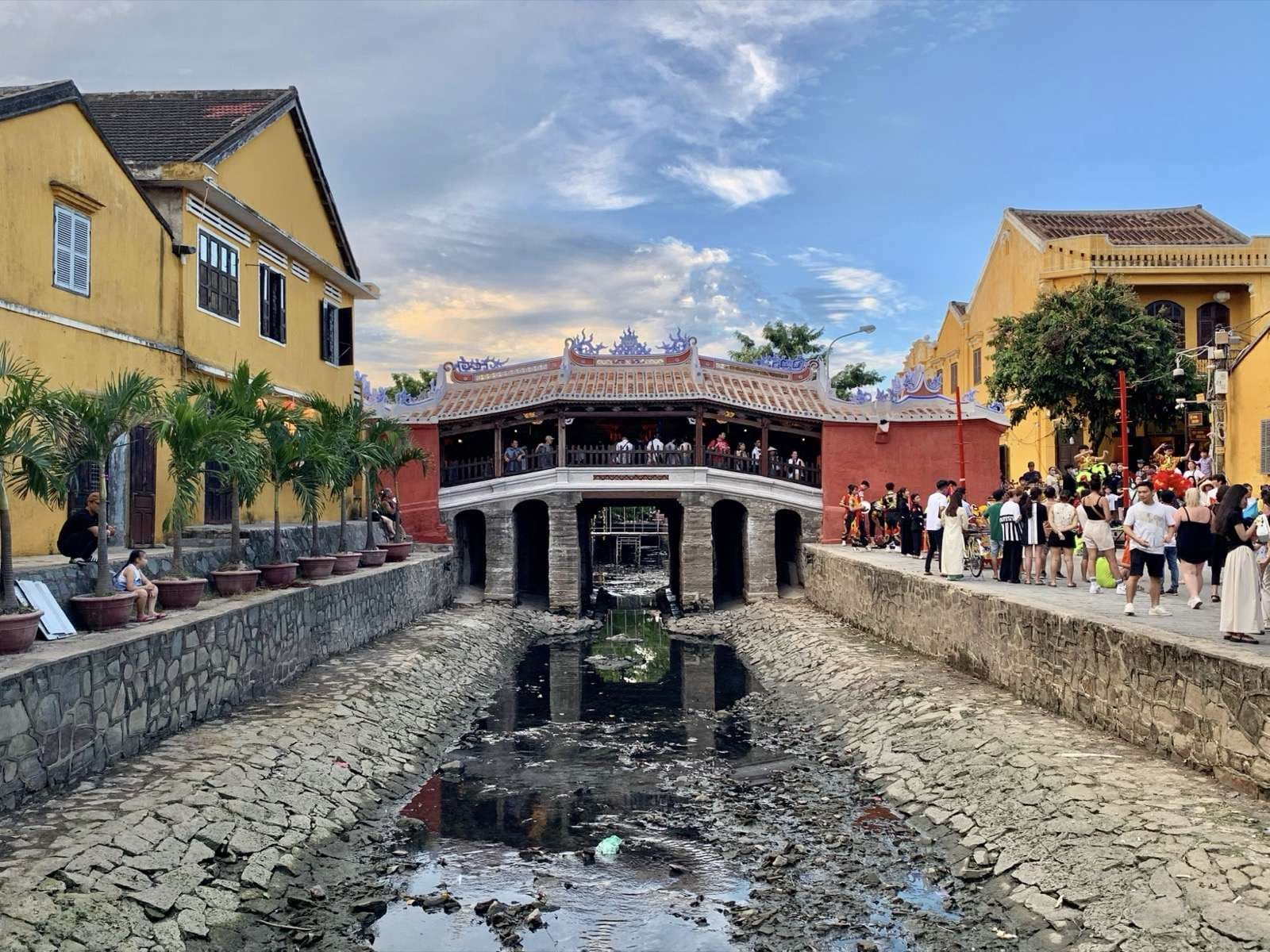
Twelve trips run regularly out of Hoi An, but ten of them take 90% of the demand. My Son and Cu Lao Cham are the must-sees; the basket boats and a Tra Que cooking class are the must-dos. Everything else is a matter of taste and budget. What to see inside the town itself is in the Hoi An attractions guide.
All places on the map · 11
Tap a name to show it on the map
- Hoi An Old Town (Phố cổ Hội An): Where every tour starts — Lantern quarter and the An Hoi pier
- My Son Sanctuary (Thánh địa Mỹ Sơn): 40 km, about an hour by car — Ticket 150,000 VND (~$6), UNESCO
- Cham Islands, Bai Lang (Cù Lao Chàm — Bãi Làng): 18 km by sea, speedboat 25 min — UNESCO biosphere reserve
- Cua Dai port (Bến tàu Cửa Đại): Speedboat pier for Cu Lao Cham — Departures around 09:00
- Bay Mau coconut forest (Rừng dừa Bảy Mẫu): 5 km, 15 min from Old Town — Boat 80,000–100,000 VND (~$3–4)
- Tra Que farm (Làng rau Trà Quế): 3 km, 10 min — UN Best Tourism Village 2024, entry 35,000 VND
- Marble Mountains (Ngũ Hành Sơn): 25 km, 35 min — Ticket 40,000 VND (~$1.60)
- Hai Van Pass (Đèo Hải Vân): 65 km, 1 h 45 min, 496 m — The motorbike route to Hue
- Lang Co lagoon (Đầm Lập An): The standard stop on the Hai Van run — Turquoise shallows, prawn shacks
- Ba Na Hills and Golden Bridge (Bà Nà Hills): 50 km, 1 h 15 min — Ticket 950,000 VND (~$38)
- Cam Kim island (Đảo Cẩm Kim): Where the cycling tours start — Five-minute ferry, bikes on board
| Tour | Duration | Price (USD) | Best season |
|---|---|---|---|
| My Son sanctuary | half day, 4–5 h | $15–45 | all year |
| Cham Islands (speedboat) | full day, 8 h | $48–70 | March–September |
| Cam Thanh basket boats | 1 h plus transfer | $3–10 | all year |
| Cooking class, Tra Que | 3–5 h | $20–69 | all year |
| Tra Que farming experience | 2–4 h | $15–35 | all year |
| Lantern-making workshop | 1–1.5 h | $4–15 | all year |
| Countryside cycling tour | 3–5 h | $25–45 | dry season |
| Marble Mountains | half day, 4–6 h | $25–50 | all year |
| Hai Van Pass (bike or car) | full day | $60–130 | March–August |
| Ba Na Hills and Golden Bridge | full day | $50–95 | all year |
| Evening shows and lantern boat | 2–3 h | $10–48 | all year |
| Hue day trip over Hai Van | full day | $35–85 | dry season |
Rate used, July 2026: 1 USD ≈ 26,000 VND.
Three typical profiles
- Family, kids 6+: basket boats at Cam Thanh, a lantern class in Old Town, the Tra Que farm with the conical hat, then dinner and a lantern boat on the Thu Bon. Around $40–50 a day for four.
- Solo and active: the Heaven & Earth cycling loop on Cam Kim, then the Hai Van Pass with an easy rider, then snorkelling at the Cham Islands. About $110–150 for the three days.
- Couple, romantic: sunrise at My Son, an evening lantern boat, a premium cooking class at Eat Hoi An, a lantern class at Reaching Out. Around $190–230 for two over two days.
My Son sanctuary — Champa temples of the 4th–13th centuries
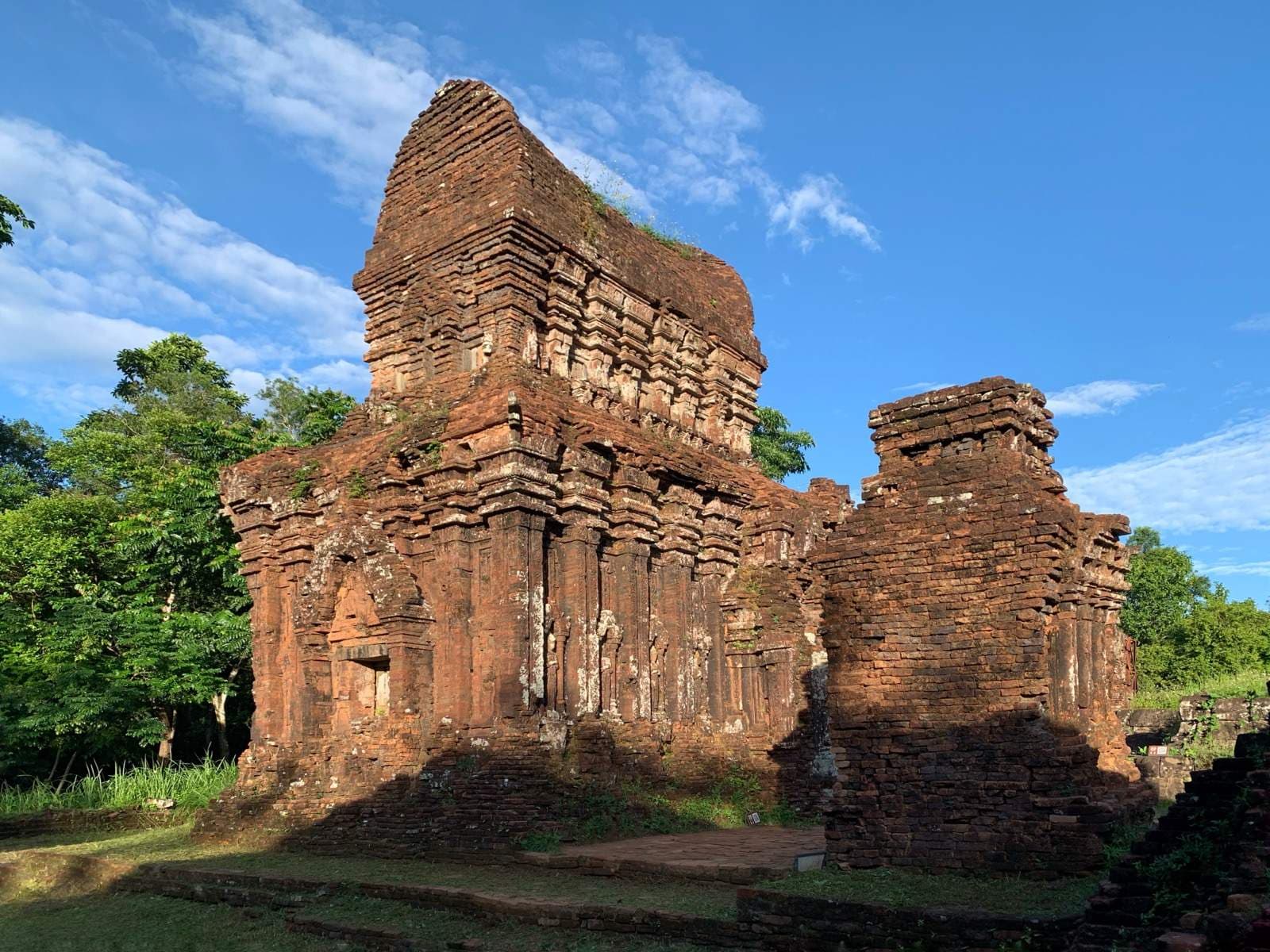
Entry to My Son is 150,000 VND (~$6) and includes the shuttle buggy to the temples, the Champa museum and the Apsara dance show. It is 40 km from Hoi An, about an hour by car. The site opens at 06:00 and closes at 17:00, and the only way to beat the coaches from Da Nang is to leave at five in the morning.
What is actually there
Seventy-plus red-brick temples, built without mortar. The Cham knew a technique that has since been lost: their walls have stood for a thousand years in the jungle, while the twentieth-century French restoration joints are already crumbling. The groups worth your time:
- B, C and D — best preserved, the photogenic core. This is where the linga and yoni stand, the Hindu symbols of Shiva.
- A1 — the largest and finest temple, destroyed by American bombing in 1969. What is left is a foundation and a warning.
- The Champa museum — sculpture and fragments rescued before the bombing. Included in the ticket.
The Apsara dance runs twice a day, usually 09:15 and 10:45. It lasts 25 minutes, is included, and takes place by the B group.
Tour formats
| Format | Price | Included | For whom |
|---|---|---|---|
| Budget group tour | $15–25 | transfer, English guide | entry not included, you pay 150,000 VND yourself |
| Standard with river cruise | $30–45 | transfer, entry, guide, lunch, boat back down the Thu Bon | solo and couples |
| Sunrise tour, 05:00 departure | $30–45 | transfer, entry, guide, light breakfast | photographers, anyone who wants quiet |
| Private with a dedicated guide | $80–150 per group of 1–4 | everything plus a private guide | families, premium |
English-language trip reports converge on the same point: the sunrise format costs the same and delivers a different site. Pickup is 04:30–05:15, you are at the ruins by around 06:30, and you get 1.5–2 hours before the Da Nang coaches arrive at 09:30.
Before you go
- Closed shoes. Stone, mud after rain, steps. Flip-flops will not do.
- Repellent. It is jungle, and mosquitoes are serious in the wet season.
- Water, 1.5 l per person. There is a kiosk on site at triple the price.
- Two hours on site for an unhurried look at all the groups.
- Cash. There is a café, but cards are not accepted everywhere.
Cham Islands (Cu Lao Cham) — a biosphere reserve
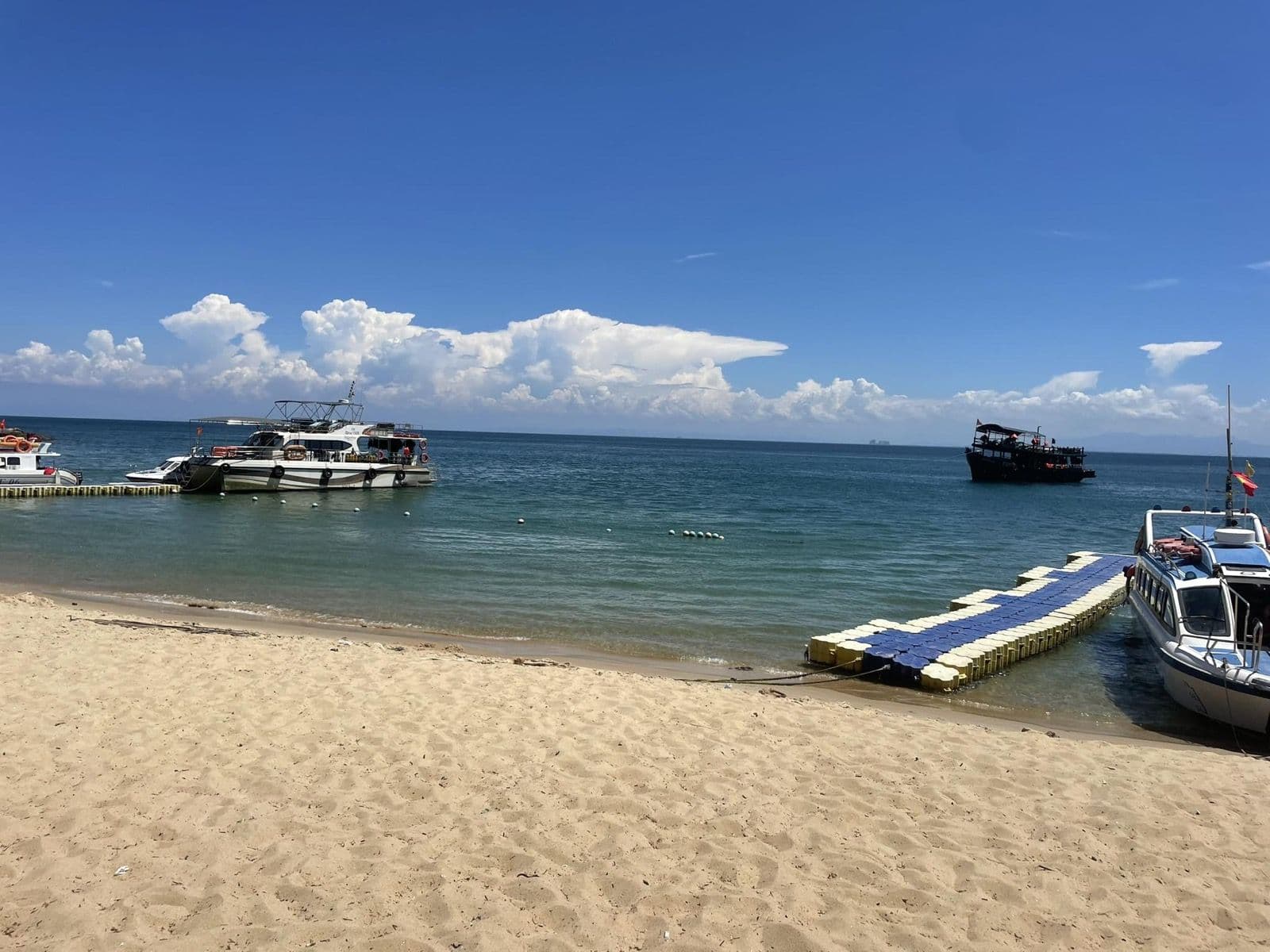
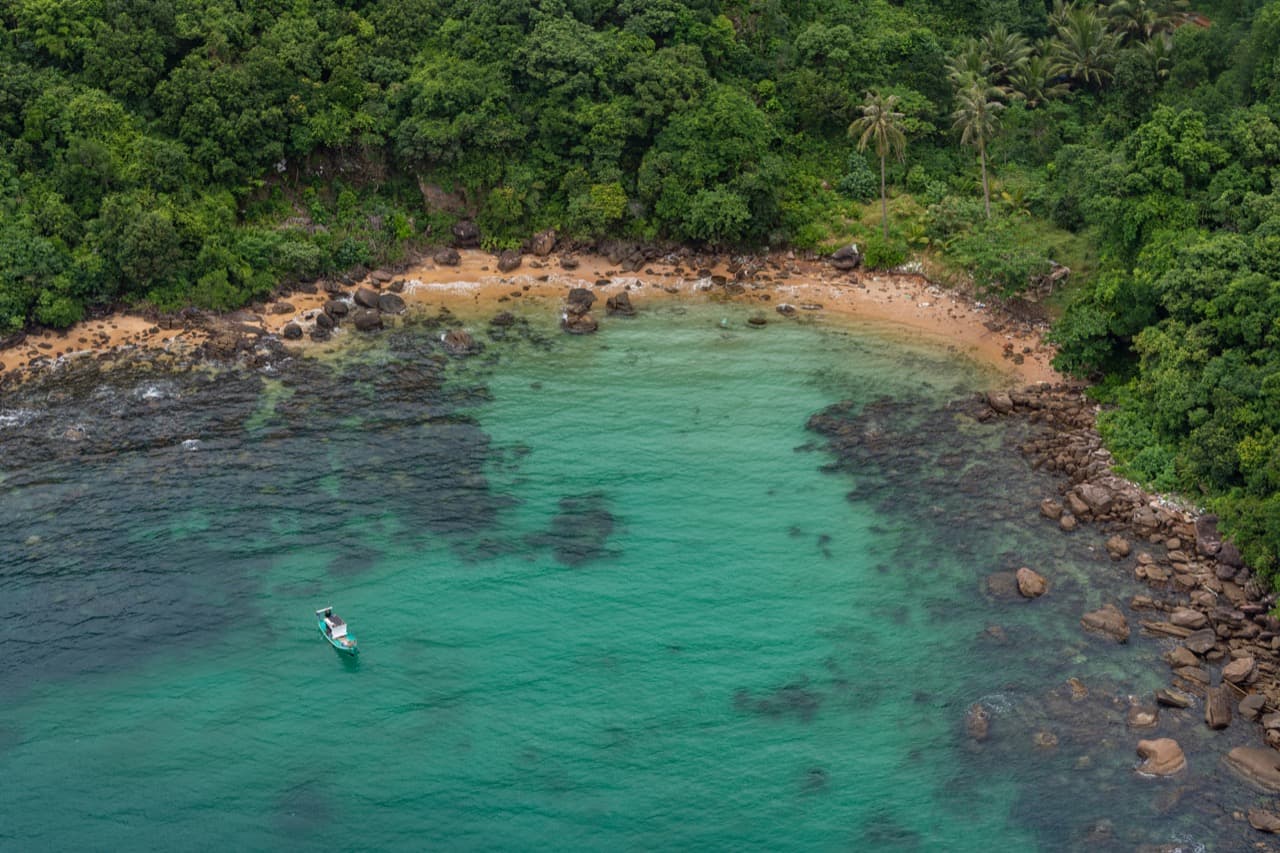
The Cham Islands are eight islands 18 km off the mouth of the Thu Bon, a UNESCO Biosphere Reserve since 2009. The season is unforgiving: usually open March to September. From October to February the monsoon drives the swell and the authorities close the crossing to passenger boats depending on the weather. Do not try to work around it, because operators get fined rather than accommodated.
This is the single most common way an English-speaking visitor wastes a day in Hoi An: arriving in October with snorkelling booked in their head and finding the pier shut.
What a standard tour looks like
The programme is identical across 95% of operators: speedboat from Cua Dai port (25 minutes) to the main village of Bai Lang, a walk through the village with a guide, a family-style seafood lunch on the beach, an hour of snorkelling at Bai Chong or Bai Xep, back by 15:30.
| Time | What happens |
|---|---|
| 08:00 | Hotel pickup in Hoi An |
| 08:30 | Cua Dai port, briefing, life jackets |
| 09:00 | Speedboat, 25 minutes to Bai Lang |
| 09:30 | Village walk: the thousand-year-old Xom Cam well, Hai Tang pagoda, the fish market |
| 11:00 | Transfer to Bai Chong, one hour of snorkelling |
| 12:30 | Beach lunch: prawns, squid, grilled fish, rice, fruit |
| 14:00 | Free time — beach, coconut, café |
| 15:00 | Speedboat back to Hoi An |
Prices and the extras nobody mentions
| Boat type | Price | Crossing | For whom |
|---|---|---|---|
| Speedboat, standard | $48–55 | 25 min | 90% of visitors |
| Wooden boat, budget | $30–45 | 50–70 min | if you have the day to spare |
| Speedboat plus sea-walking | $90–110 | +30 min underwater | non-swimmers |
| Beginner diving | from $80 | 2 dives | PADI Discover |
Rules and reef etiquette
- Bring reef-safe sunscreen. Cream without oxybenzone or octinoxate does less harm to the reserve's coral.
- Don't take or buy coral and shells — the islands are a marine reserve.
- Visibility: 10–15 m April to August, 5–8 m in March and September when the water is still cloudy from the monsoon.
- Go on a weekday. Bai Chong can hold 200+ people at once on a weekend.
…There’s great coral diversity… The best months to visit are June and July when there’s really clear, Thailand-esque watersHolly Hokenson, marine biologist, Lonely Planet, 2026
Basket boats at Cam Thanh and Bay Mau
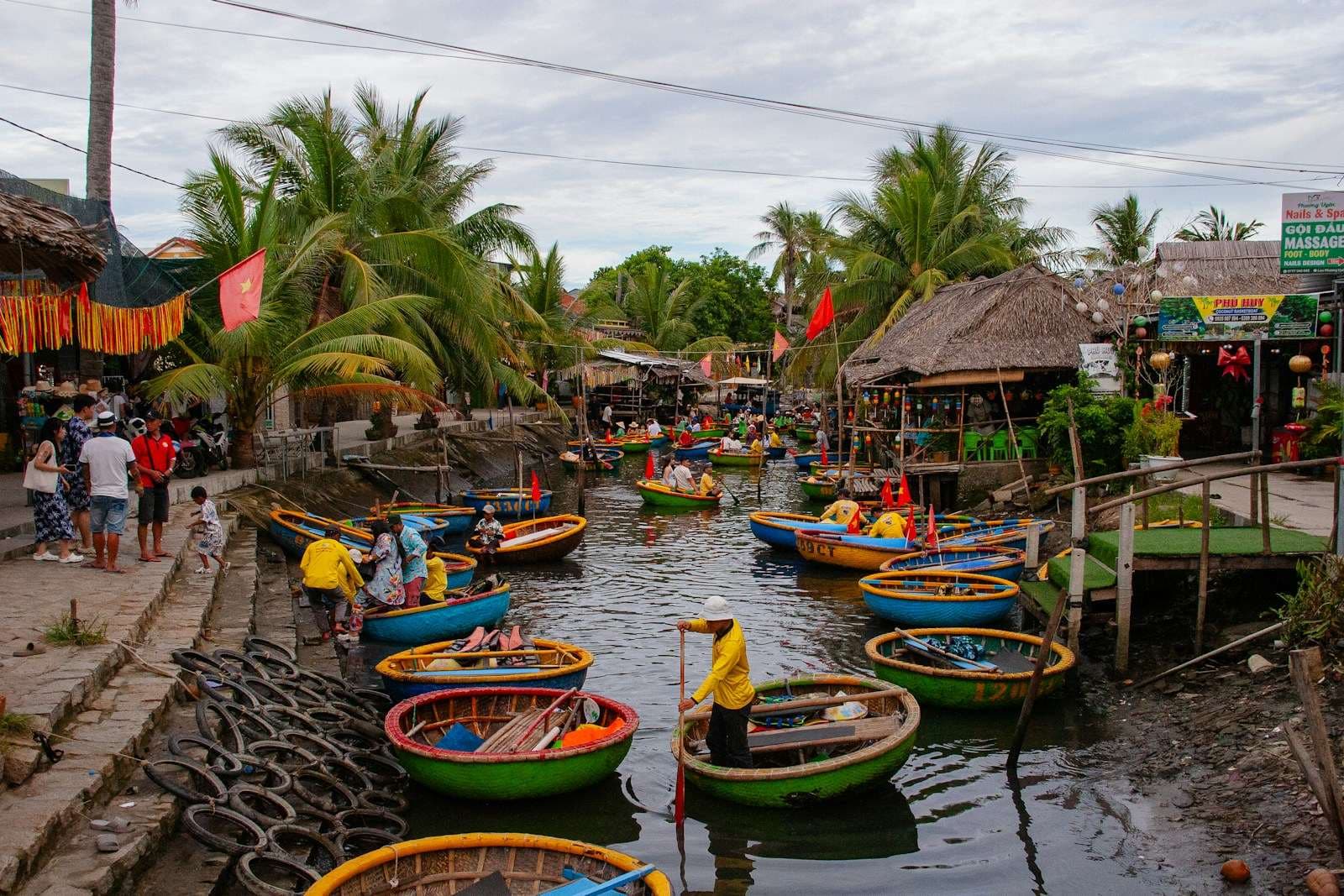
The Bay Mau coconut forest in Cam Thanh village is five kilometres from the Old Town and the easiest thing to do near Hoi An. Renting a round basket boat (thúng chai) at the pier officially costs 80,000–100,000 VND (~$3–4) for 50–60 minutes with a boatman, plus 30,000 VND to enter the forest.
What happens on the water
You paddle narrow channels between water coconut palms, the same channels the Viet Cong used for cover during the war. The programme is the same wherever you book:
- Twenty to twenty-five minutes of paddling through the channels.
- The "dancing boat" show, where the boatman spins the coracle on the spot at up to 20 revolutions a minute and throws spray three metres.
- A crab-netting demonstration. The crab goes back in.
- Rings, grasshoppers and hearts woven from coconut leaf, handed over as souvenirs.
- Renditions of "Hello Vietnam" and "Despacito", which you will either enjoy or endure.
The pricing trap
The touts around the pier are the whole problem. They intercept you two hundred metres before the water and offer a boat "right now" for 150,000–400,000 VND per person. You get the same boat that costs 80,000 at the pier, and no receipt.
| Where you book | Price per boat (2 people) | What you get | Advice |
|---|---|---|---|
| Official Bay Mau pier | 80,000–100,000 VND (~$3–4) | standard, with a receipt | walk straight to the water |
| Street tout | 200,000–800,000 VND (~$8–32) | exactly the same | ignore |
| Klook or GetYourGuide | 250,000–400,000 VND (~$10–16) | plus transfer from Hoi An | worth it if you have no bike |
| Through your hotel | 350,000–500,000 VND (~$14–20) | plus transfer | premium hotels add 30–40% |
When to go
The forest runs 06:00 to 18:00 and gets busy from 08:00. The good hours are 09:00–10:30, when it is quiet, or 15:30–17:00 for the light. Weekends and Vietnamese public holidays add a 100,000 VND surcharge per boat.
It combines well with a Tra Que cooking class or the farming experience, and the combo tours run $25–35 for half a day with lunch. How to get around the area at all is in the Hoi An transport guide.
Cooking class — learning cao lau and white rose
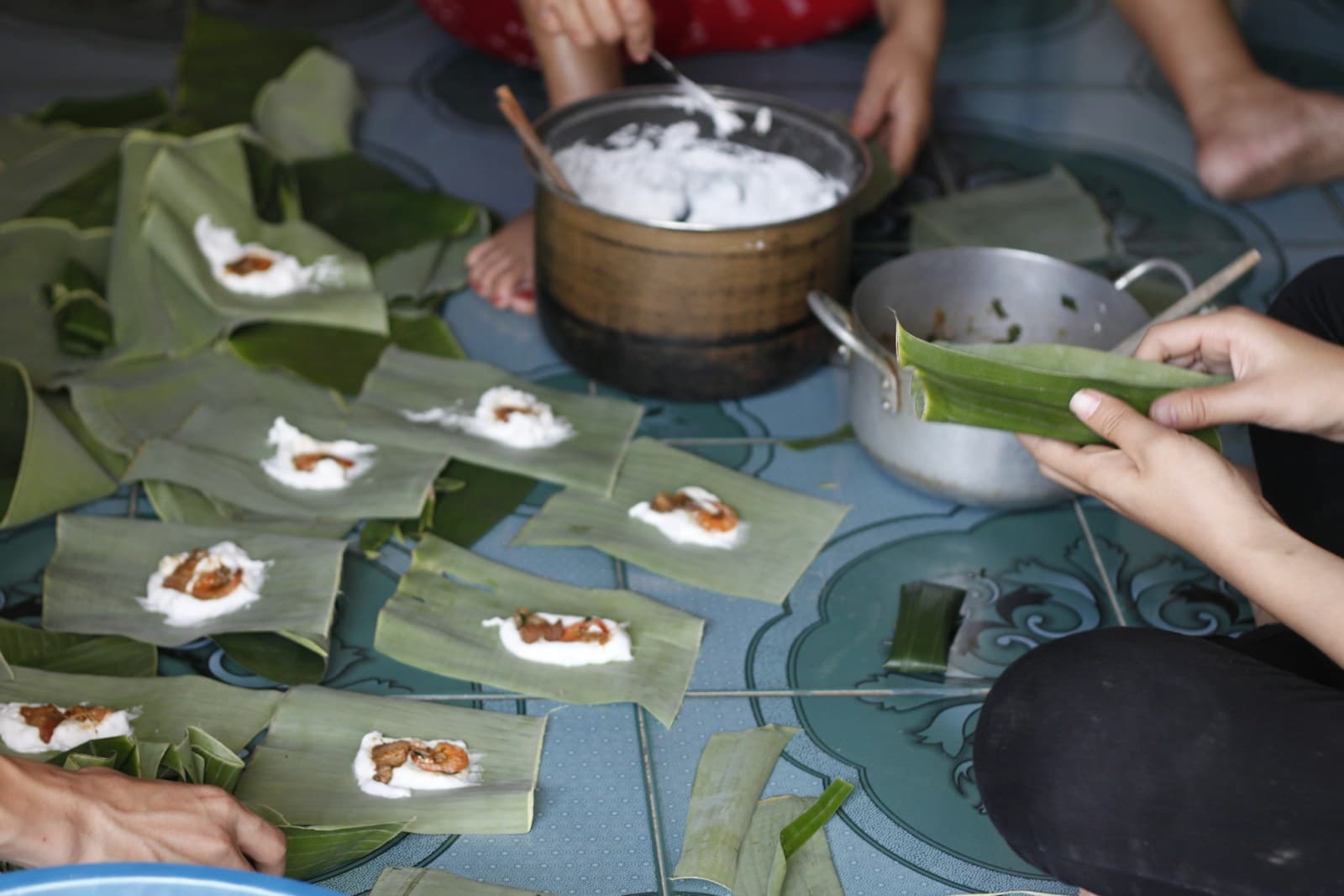
A cooking class in Hoi An runs from $20 for a basic programme in Tra Que to $69 at the premium schools in Old Town. A standard class takes 3–5 hours and includes a market visit with the chef, transfer to a farm or studio, cooking three to five dishes, eating them, and a certificate you will never look at again.
Five schools by format
| School | Where | Price | Length | Known for |
|---|---|---|---|---|
| Mai Home Hoi An | Tra Que | $20–30 | 4 h | family atmosphere, local chef |
| Red Bridge Cooking School | Cam Thanh, by the river | $35–45 | 5 h | river boat ride, own farm |
| Hoi An Tropical Cooking | Tra Que and Cam Thanh | $25–35 | 5 h | combo: cooking, market, basket boat |
| Morning Glory / Vy's Market | Old Town | $40–69 | 3 h | premium, owner-chef Trịnh Diễm Vy |
| Eat Hoi An | Old Town and farm | $45–55 | 4 h | small groups |
What you cook
The menu in 90% of classes revolves around central Vietnamese dishes:
- Cao lầu — the Hoi An dish: noodles made with lye water from the old Cham wells, char siu pork, bean sprouts, crisp crackling. Genuinely local, and the water is why.
- Bánh bao bánh vạc — "white rose", rice dumplings with prawn and pork, hand-pinched into a flower.
- Bánh xèo — crisp rice crêpe with prawn, sprouts and herbs, wrapped and dipped in nước chấm.
- Fresh spring rolls (gỏi cuốn) — the un-fried summer version.
- Green papaya salad (gỏi đu đủ) — sharp, with dried beef.
What a good class looks like
- 07:30–09:00 — meet at the school or get picked up.
- 09:00–10:00 — Hoi An market: the chef shows you spices, fish sauce, how to choose herbs.
- 10:00–10:30 — transfer to the farm or studio, often by boat.
- 10:30–13:30 — you cook three to five dishes alongside the chef. You do the chopping.
- 13:30–14:00 — lunch off everything you made, certificate, recipes by email.
What to look for once you are eating out is in the Hoi An food guide.
Tra Que Vegetable Village — a farming experience
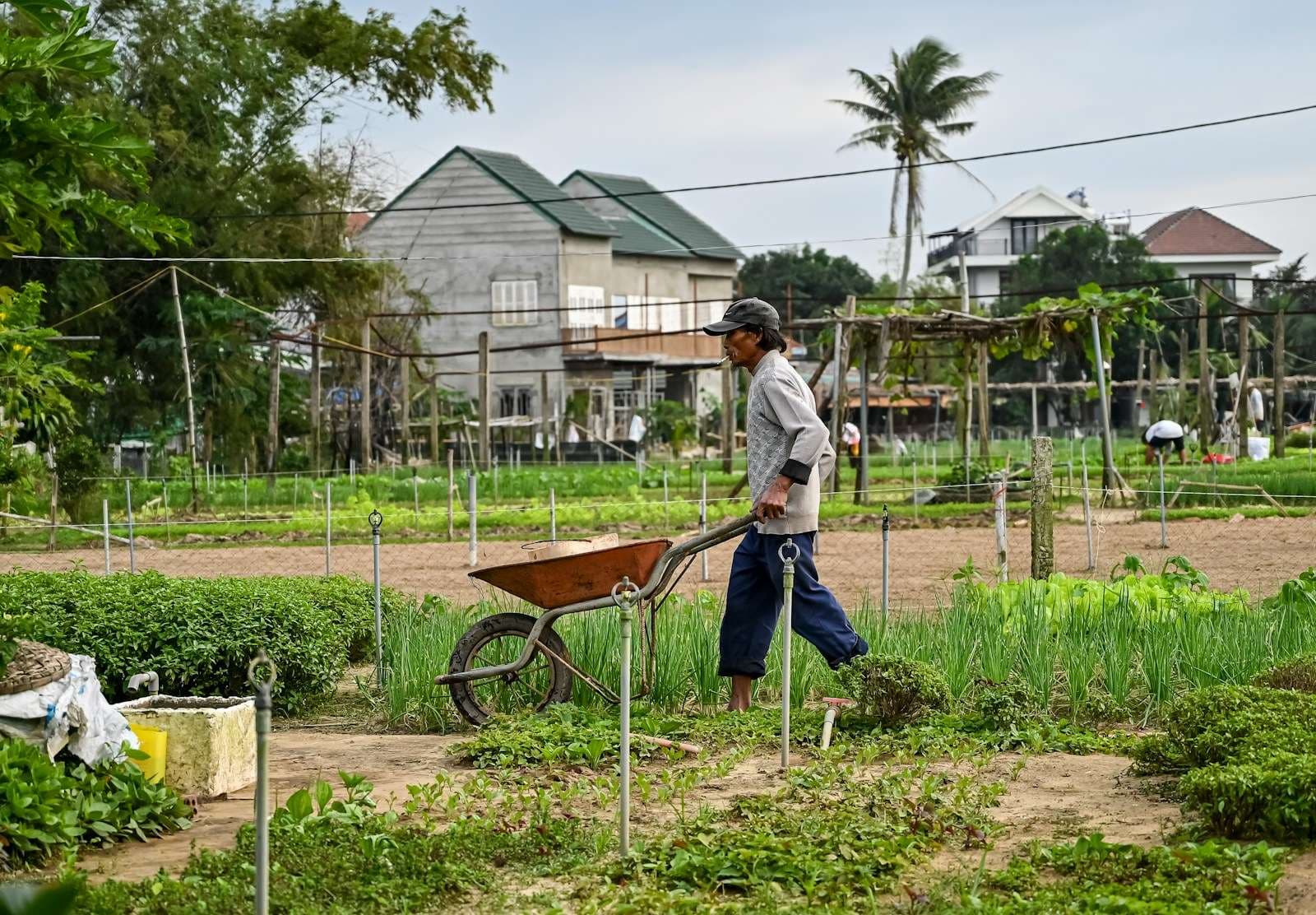
Tra Que is over 300 years old and sits three kilometres from the Old Town between the Co Co river and An Bang beach. Thirty varieties of herb grow here without chemicals: instead of fertiliser, river algae. In 2024 Tra Que joined UN Tourism's Best Tourism Villages list.
Entry is 35,000 VND (~$1.40) and a bike from the stands nearby is 30,000 VND a day. Some sources say the village is free to walk and only the activities cost. In practice the ticket gate charges, so budget for it. You can turn up without a tour and just wander, or take a programme.
Formats
| Format | Price | Length | Included |
|---|---|---|---|
| Entry and a bike ride | 35,000–65,000 VND (~$1.40–2.60) | 1–2 h | entry, bike, café |
| Farming experience | $15–25 | 2–3 h | nón lá hat, beds, watering, tea |
| Farming plus cooking class | $30–45 | 4–5 h | all of the above plus three dishes |
| Full package with family lunch | $40–55 | 5–6 h | plus lunch with a local family and fruit |
What the farming experience actually involves
This is not standing in a hat for a photo. The real programme:
- You put on a nón lá and an apron.
- You are taught to carry a yoke with two 8 kg buckets of water.
- You break a bed with a hoe, rake it, and sow basil or mint.
- You water by "rain" — a can with holes in the base.
- You harvest the mature herbs for the next guest.
Afterwards there is tea and tam hữu: five herbs in one roll (lettuce, basil, mint, coriander, chervil) dipped in nước chấm.
Best time of day
- 06:30–08:30 — the morning watering, soft light, farmers actually working, no other tourists.
- 16:30–18:00 — sunset over the beds, cool enough to sit, and a local café with a view of the plots.
- Midday is too hot even in winter. Twenty minutes of that sun and you are burnt.
Lantern-making workshop in Hoi An
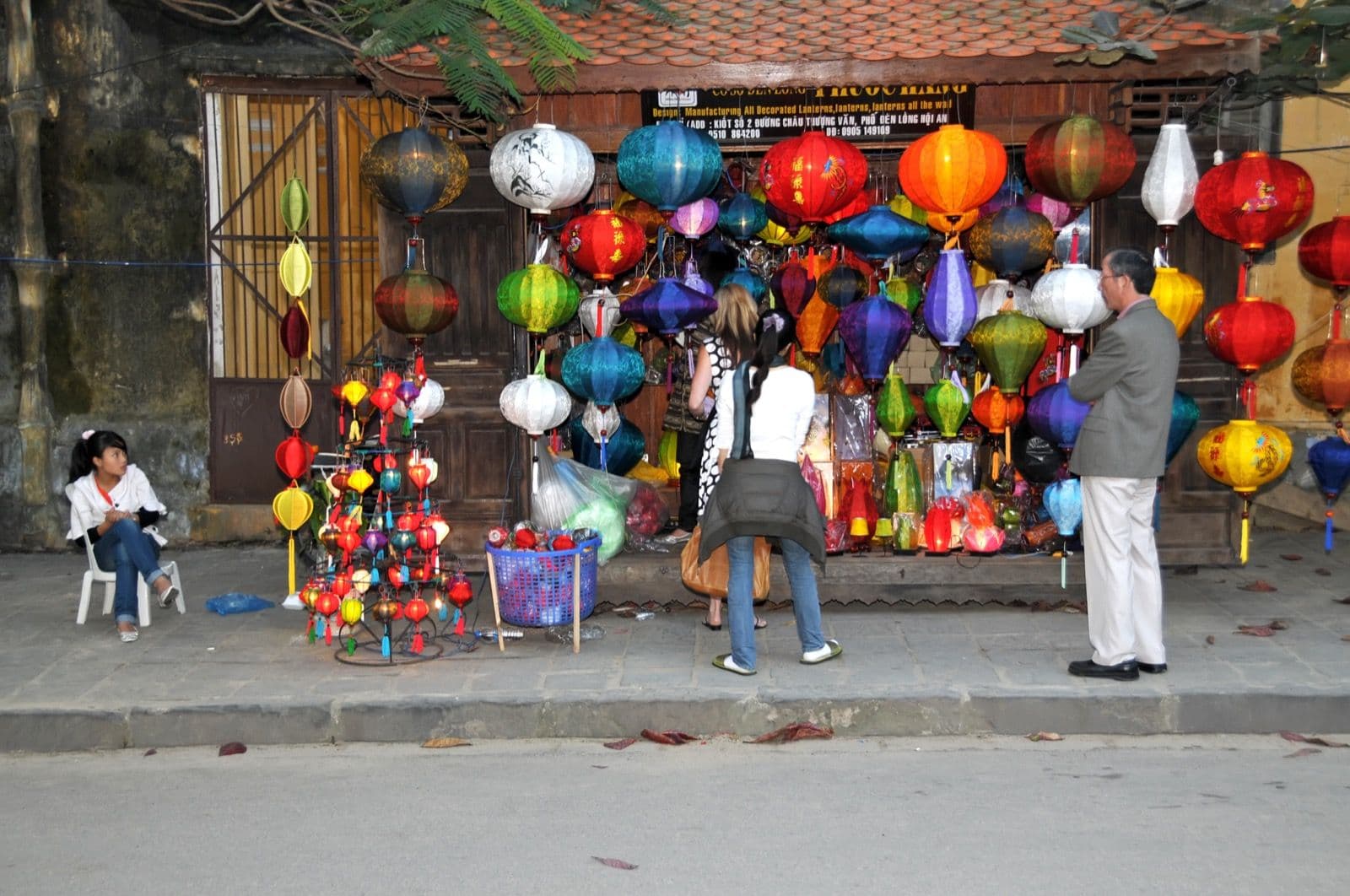
A lantern workshop in Hoi An costs from 90,000 VND (~$3.60) for an hour with a ready-made frame to 345,000 VND (~$14) for a full class where you bend the bamboo yourself. You leave with a collapsible silk lantern 20 cm across that packs flat in a suitcase, lights from an included LED candle and runs 30+ hours on one battery. It is the best souvenir in this town and the only one that survives the flight.
Four workshops
| Workshop | Price | Length | Known for |
|---|---|---|---|
| Happy Smile Lantern | about 150,000–200,000 VND (~$6–8) | 1 h | budget-friendly, ready-made frame |
| Express Lantern Class | $11 | 1 h | for people short on time |
| The Yang's Lantern | $8–12 | 1.5 h | third-generation maker |
| Reaching Out Tea House | $15 | 1 h | social enterprise, artisans with disabilities |
How a lantern is made
- Bamboo frame — 8 to 12 ribs bent into a circle and lashed. In the full class you do this yourself in about 30 minutes; in the express version it is ready.
- Choosing fabric — silk or cotton, 20+ colours and patterns. Silk costs more and looks better lit from inside.
- Stretching and gluing — the fabric goes over the frame, is fixed with PVA and trimmed.
- The collapsible base — a spring and metal rings let the lantern fold flat.
- LED candle — warm-toned, flickers like a flame, included.
Reaching Out is a special case
Reaching Out is a social enterprise staffed by artisans with disabilities; the teahouse staff are speech and hearing impaired. The class runs on picture cards and sign language, and that is part of the experience rather than an obstacle. Profits fund employment for people with disabilities in Hoi An and the surrounding area (formerly Quang Nam province).
Cycling tours through the rice fields and Cam Kim
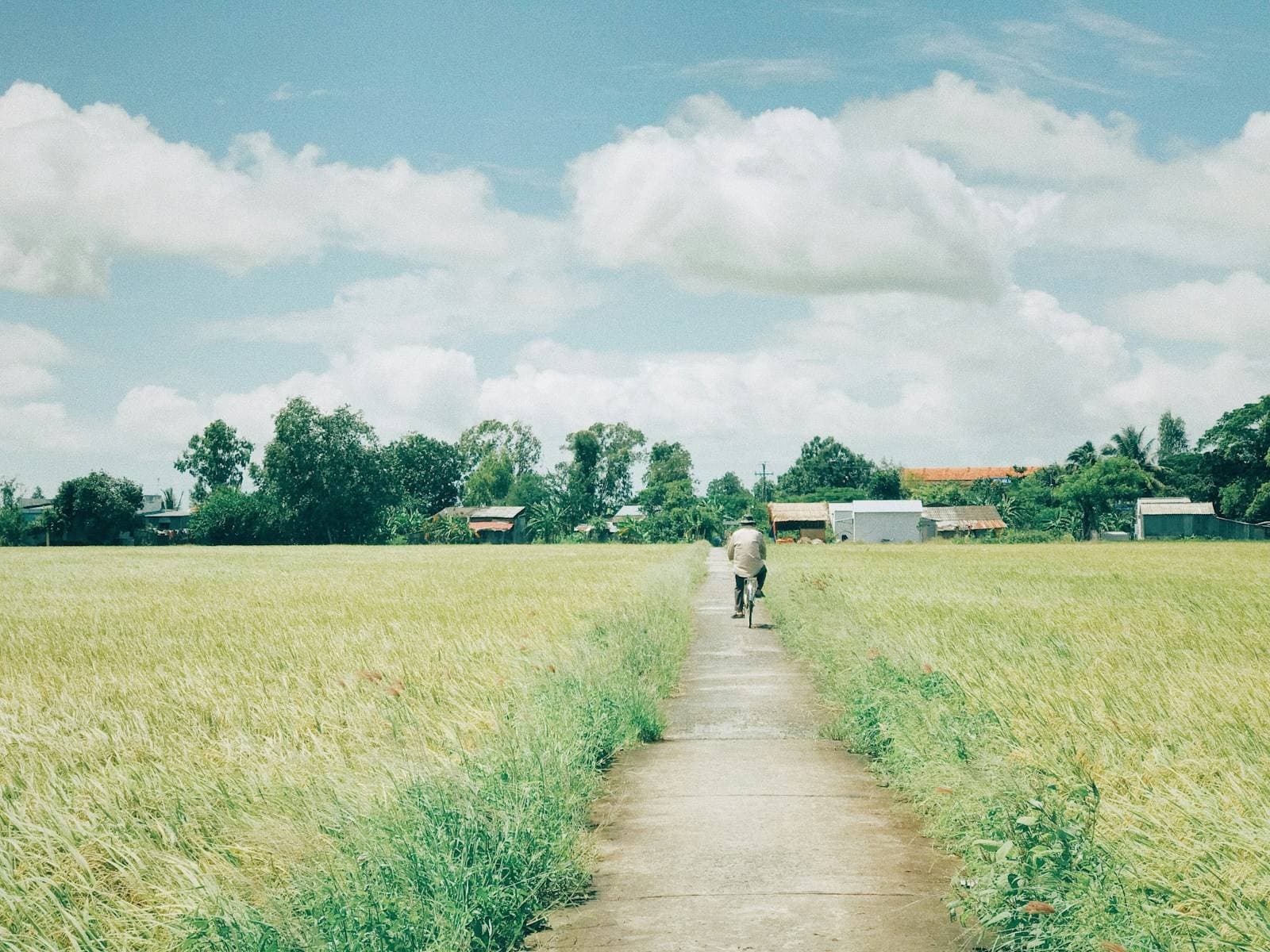
A countryside cycling tour costs $25–45 for three to five hours with a guide, bike, water, a snack and the ferry crossing. The highest-rated operator on TripAdvisor is Heaven & Earth Bicycle Tours: 5.0 across 600+ reviews, small groups up to eight.
The classic route
An 18–25 km loop, entirely flat, on cruiser bikes:
- 07:30 or 14:00 — start at the Thu Bon bridge, bike and helmet briefing.
- 08:00 — the Cam Kim ferry, five minutes, bikes loaded on board.
- 08:15–10:00 — the paddies of Cam Kim island, stops in the carpentry village of Kim Bong where they make lanterns and furniture, and a Buddhist temple.
- 10:00–11:00 — Cam Phu or Triem Tay village, tea with a local family, tropical fruit.
- 11:00–12:30 — the loop back along the far bank of the Thu Bon, lunch at a family restaurant.
Operators compared
| Operator | Price | Group | What people praise |
|---|---|---|---|
| Heaven & Earth | $35–45 | up to 8 | #1 on TripAdvisor, family lunch, local guide |
| Eat Hoi An Country Bike | $40–50 | up to 6 | combined with food |
| Original Hoi An Bicycle | $25–30 | up to 12 | budget, larger groups |
| Vespa Adventures Countryside | $85–95 | up to 6 | premium, on vintage Vespas — not a bicycle |
Practicalities
- Departure time. From May to August take the 07:30 slot only. After 11:00 the heat is genuinely dangerous.
- Wet season (September–January): tours still run, but the fields are wet and the mud is real. Ponchos provided.
- Children — from 8 on their own bike, from 5 on a child seat behind the guide.
- Bring a hat or bandana, sunscreen, and 100,000–200,000 VND in cash for incidentals.
Marble Mountains
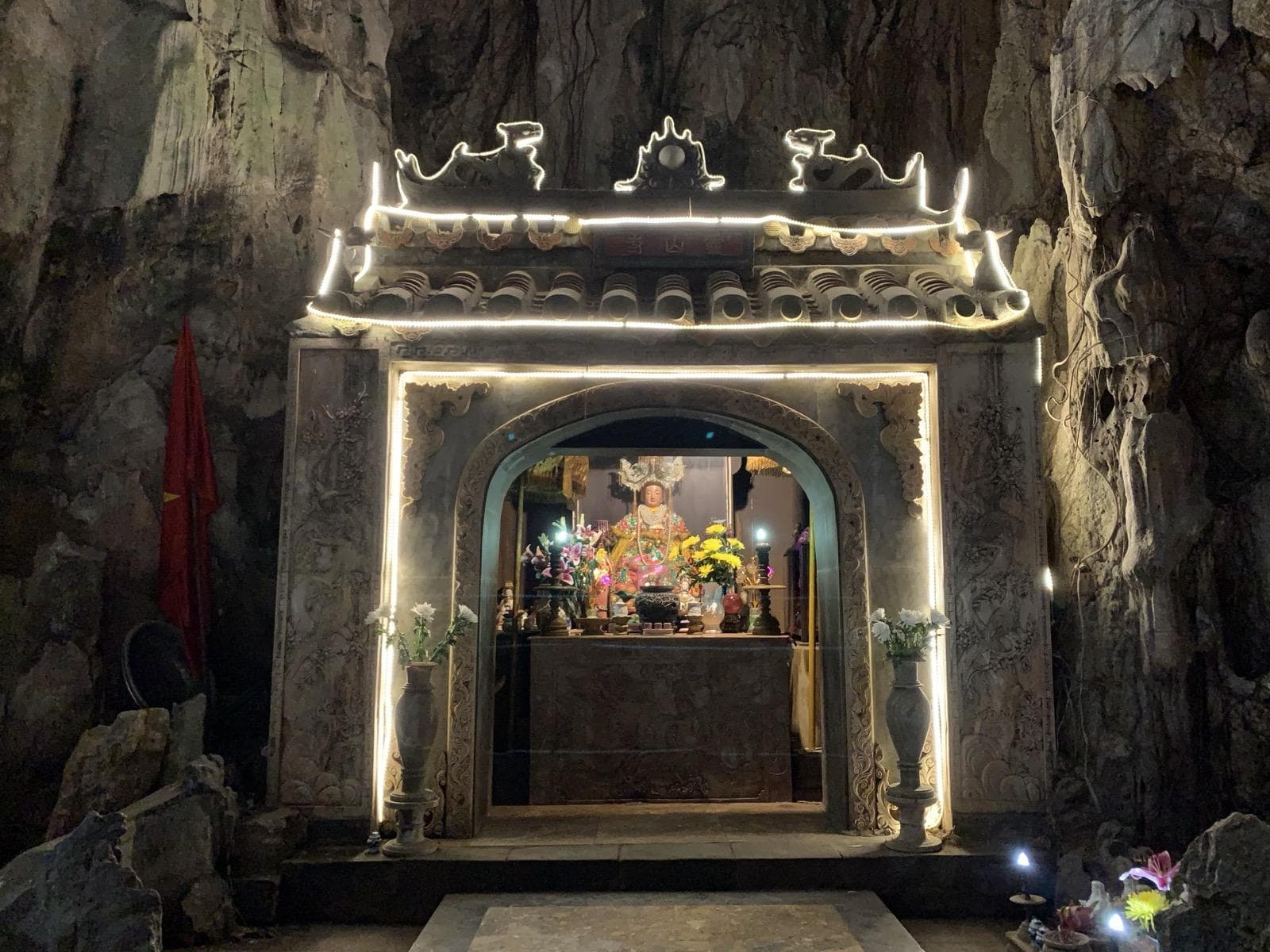
The Marble Mountains (Ngũ Hành Sơn) are five limestone hills rising out of the plain 25 km from Hoi An on the road to Da Nang. The ticket is 40,000 VND (~$1.60), the lift is an optional 15,000 VND, and the Am Phu cave costs another 20,000 VND. A combined tour with Old Town or Lady Buddha runs $25–50 for half a day.
What is inside
The five hills are named for the five elements: fire, water, earth, wood and metal. Visitors climb Thuy Son, the water one, which is the biggest and the most interesting:
- Huyen Khong cave — the main draw, an enormous chamber with a hole in the roof that drops a shaft of light onto Buddhist altars and statues left from the French period.
- Linh Ung pagoda — a working monastery with a white Buddha.
- Am Phu cave, the "hell cave" — grim tableaux of the Buddhist underworld. Not for easily spooked children, and a separate ticket.
- The viewpoint — at the top, with Da Nang, the Non Nuoc coast and the outline of Hoi An in the distance.
Getting there
- On a tour is the sensible option. Combos of "Marble Mountains + Old Town" or "Marble Mountains + Lady Buddha + My Khe beach" run $30–45.
- On your own — a Grab from Hoi An is 350,000–450,000 VND one way, a taxi with waiting 800,000–1,000,000. Renting a scooter at $7 a day is cheaper. The city itself is covered in the Da Nang guide.
- Best time — before 10:00, ahead of the heat and the Da Nang coaches, or after 15:30.
- Shoes. The stairs are steep, 200+ of them even if you take the lift. Trainers.
Hai Van Pass — the motorbike run to Hue
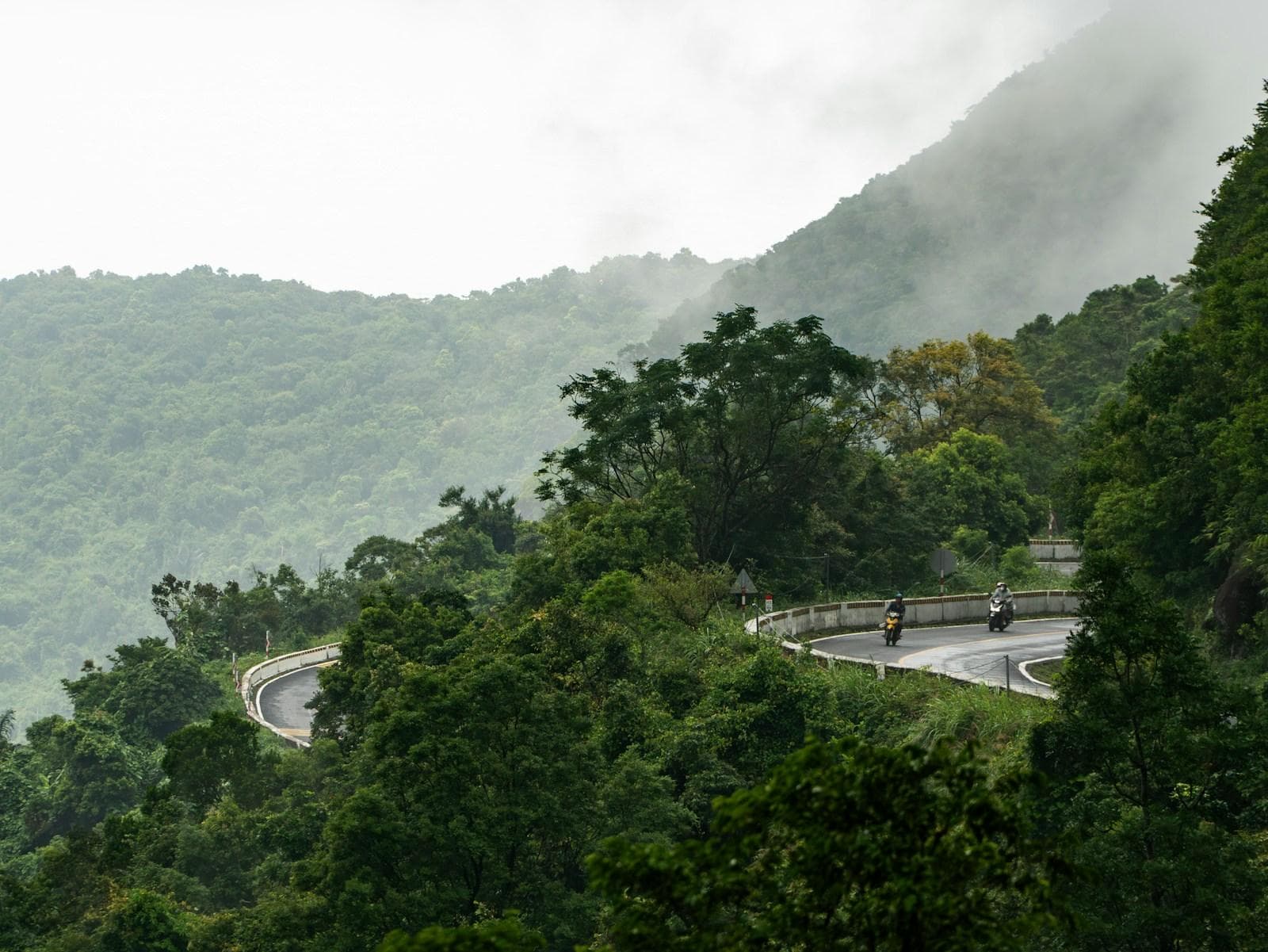
The Hai Van Pass (Đèo Hải Vân, "pass of the ocean clouds") is a 496 m switchback between Da Nang and Hue that Jeremy Clarkson called one of the best coast roads in the world in the 2008 Top Gear Vietnam Special. An easy rider tour from Hoi An costs $60–80 for a full day with a guide-driver, or $30–50 if you ride yourself, plus $10–15 for the bike.
Three formats
| Format | Price | For whom |
|---|---|---|
| Easy rider, riding pillion | $60–80 | 90% of visitors, and the safe answer |
| Self-ride | $30–50 plus $10–15 rental | only with a licence Vietnam recognises, see below |
| Car with a driver-guide | $90–130 per group of 1–4 | families, non-riders, rain |
The route
The standard one-way Hoi An to Hue along the coast road is 130 km and 8–10 hours with stops:
- 08:00 — leave Hoi An, through Da Nang and along My Khe beach.
- 09:00 — Lady Buddha (Linh Ung pagoda), the 67 m white statue on the Son Tra peninsula.
- 10:30 — Lang Co lagoon, turquoise shallows between the sea and the hills. Prawn shacks.
- 11:30 — the climb to the pass, stopping at the old French fort on the summit.
- 13:00 — a fishing village and a seafood lunch.
- 14:30 — Tu Hieu temple or the Khai Dinh tomb, optional.
- 17:00 — arrive in Hue. Luggage goes separately, and the guide arranges it.
A round trip back to Hoi An in one day exists, but that is 260 km and 12 hours. It is a slog.
Season and small print
- Best months — March to August: clear and dry.
- Winter (November–February) — fog on the summit regularly kills the view, and rain makes the road slick.
- Poncho and a warm layer. It is 18°C at the top even in summer.
- Camera mount — the guides allow it and will help you fix a GoPro.
Fast Track — no queue at the border
5–10 minutes instead of an hour in the immigration queue
from$11per passenger
Evening tours and the Lantern Festival
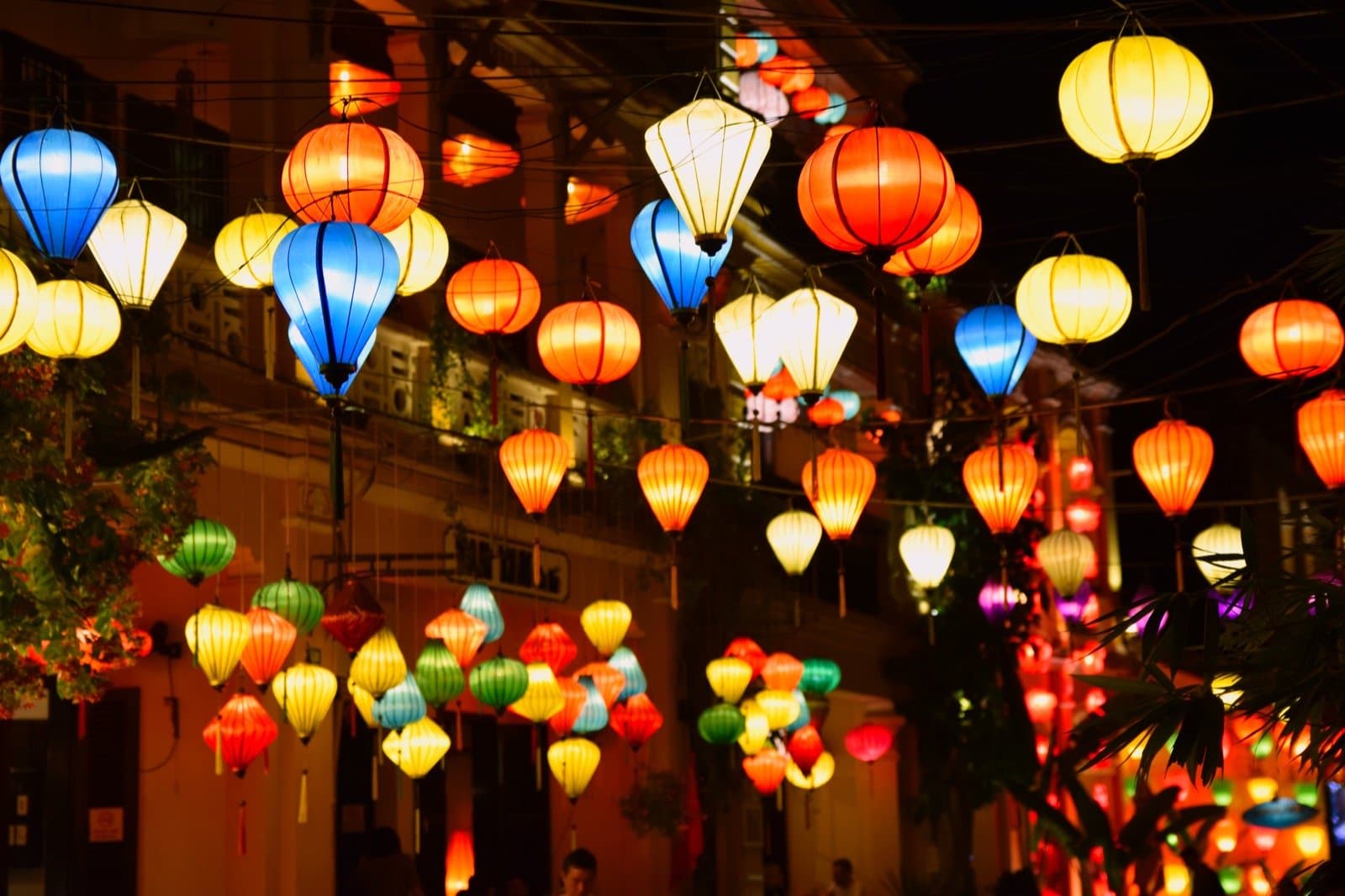
Hoi An after dark is a separate town, and it costs anything from 150,000 VND for a lantern boat to $48 for a ticket to the Hoi An Memories show. Things start at 18:30 when the Old Town lighting comes on and run to midnight.
What to pick
| Activity | Price | Length | For whom |
|---|---|---|---|
| Lantern boat on the Thu Bon | 150,000–250,000 VND per boat up to 4 (~$6–10) | 30–45 min | couples, families, the must-do |
| Hoi An Memories Show | 600,000–1,200,000 VND ($24–48) | 60 min | fans of large-scale staging |
| Night food tour | $25–45 | 3–4 h | eaters |
| Lantern Festival, 14th lunar day | free | 18:30–22:00 | everyone |
The lantern boat
The most popular evening thing in town: you get into a wooden boat by the An Hoi bridge, a boatwoman rows quietly, and you light a candle in a paper lotus and set it on the river. Dozens of boats around you, hundreds of lights on the banks, small flames drifting downstream. Thirty to forty-five minutes, no music, no show.
Hoi An Memories Show
An open-air production on Hoi An Memories Land with nearly 500 performers, music, costumes and projection. The story runs from the first Champa settlements to the French period. Sixty minutes, starting at 20:00, no show on Tuesdays (show website). Tickets by zone run from $24 standard to $48 VIP. Book two or three days ahead in high season.
Whether it is worth it is genuinely contested. People praise the scale and the staging and criticise the Disney-flavoured reading of history. Families with kids 8+ almost always come out happy.
The Lantern Festival
Once a lunar month, on the 14th day, the Old Town cuts its electricity from 18:30 to 22:00. Only lanterns, candles on lotus floats and light spilling from doorways. Free, but the peak after 19:30 puts five thousand people on Bach Dang street. Come at 18:00 or after 21:30.
2026 dates: 1 April, 30 April, 30 May, 28 June, 27 July, 26 August, 24 September, 23 October, 22 November, 22 December. The full programme is in the Hoi An Lantern Festival guide.
What Hoi An tours cost: prices and budgets
Everything in one table, for planning. Rate used, July 2026: 1 USD ≈ 26,000 VND.
- Cam Thanh basket boat (ticket)100,000 VND ≈ $3.80
- Tra Que entry35,000 VND ≈ $1.35
- Lantern class, 1 h125,000 VND ≈ $4.80
- Marble Mountains (ticket)40,000 VND ≈ $1.55
- My Son (ticket)150,000 VND ≈ $5.80
- Cooking class, Tra Que, basic650,000 VND ≈ $25
- My Son group tour780,000 VND ≈ $30
- Heaven & Earth cycling tour1,040,000 VND ≈ $40
- Cham Islands speedboat1,430,000 VND ≈ $55
- Ba Na Hills tour1,820,000 VND ≈ $70
- Hai Van Pass easy rider1,950,000 VND ≈ $75
- Vespa Adventures food tour2,210,000 VND ≈ $85
- Hoi An Memories Show (VIP)1,200,000 VND ≈ $48
Currency converter
Three day budgets
- Budget day, about $27 for two: morning cycling around Tra Que ($1.35 entry plus $1.15 bike each), a basket boat at Cam Thanh ($3.80 for the boat plus $1.15 forest entry each), then a lantern class ($4.80 each) and a lantern boat (from $5.80 for the two of you).
- Standard day, about $85 for two: the sunrise My Son tour ($35 each), then dinner and a lantern boat in the evening.
- Premium day, about $130 for two: a cooking class at Eat Hoi An ($50 each) plus an evening lantern class at Reaching Out ($15 each). A Vespa Adventures food tour does not fit that budget, at $85 a head.
What everything else costs in town is in the Hoi An prices guide.
Where and how to book
Tours out of Hoi An sell on seven channels, and there is no single right answer. It depends on whether you optimise for price, for flexibility, or for not having to think about it.
| Platform | Price | Pros | Cons | For whom |
|---|---|---|---|---|
| GetYourGuide | mid | instant confirmation, free cancellation 24 h | +10–20% over direct | most people, especially first time |
| Viator | mid | large catalogue, price guarantee | duplicate listings | price comparison |
| Klook | 10–15% under GYG | cheaper, QR vouchers | fewer English-speaking guides | budget |
| KKday | low | Asia-focused, loyalty credit | thin English review base | comparison |
| In Old Town shops | 15–30% under online | you can haggle, book same-day | not always licensed operators | flexible itineraries |
| Through your hotel | +20–40% | effortless, pay on checkout | the markup | people who do not want to shop around |
| Home-country operator | 2–4× | native-language guide, pay at home | far more expensive | when language is a hard requirement |
What to book when
- Premium tours (Vespa Adventures, Heaven & Earth, Eat Hoi An, Red Bridge) — 5 to 7 days ahead. Small groups sell out.
- Standard day trips (My Son, Cham Islands, Cam Thanh, cooking classes) — 1 to 2 days ahead. There is always space.
- Lantern class and basket boat — walk up, no booking needed.
- Hoi An Memories Show — 2 to 3 days ahead in high season, or you are left with VIP seats.
- Hai Van easy rider — a day ahead. Easy to move if it rains.
Small tricks
- Compare Klook and GetYourGuide on the identical product. The gap reaches 25%.
- Do not prepay 100% through a hotel. Ask to pay on arrival, or leave a 30% deposit.
- Booking in a shop often matches the online price but without free cancellation. If the forecast is unstable, book online.
- A freelance local guide costs $80–120 a day, which undercuts the home-country operators by a wide margin.
Season — what runs when
Hoi An has two seasonalities stacked on each other. The general one is weather: dry February to August, wet September to January. The specific one is the Cham Islands, which usually close completely from October to February. Cycling tours in winter become mud runs, and the Hai Van Pass becomes a fog experience. Month-by-month weather is in the Hoi An weather guide.
| Month | Cham | My Son | Cam Thanh | Hai Van | Cycling | Cooking |
|---|---|---|---|---|---|---|
| January | closed | OK, cool | OK | rain and fog | OK | OK |
| February | closed | OK | OK | patchy | OK | OK |
| March | opening | ideal | OK | OK | ideal | OK |
| April | ideal | ideal | OK | ideal | ideal | OK |
| May | ideal | hot | hot | ideal | mornings only | OK |
| June | ideal | very hot | hot | OK | mornings only | OK |
| July | ideal | very hot | OK | OK | mornings only | OK |
| August | ideal | hot | OK | OK | mornings | OK |
| September | OK, typhoons | OK | OK | OK | OK | OK |
| October | closed, storms | rain | flooding | rain | rain | OK |
| November | closed | rain | flooding | rain | rain | OK |
| December | closed | OK | OK | rain | OK | OK |
Going for one specific thing
- Snorkelling and beach — April to August, with May the pick.
- Sunrise at My Son without the heat — February–March or October–November.
- Hai Van by bike — March to August, April best.
- Lantern Festival — every lunar month, best October to February when it is cool.
- Cycling — March–April and September–October, between the heat and the rain.
- Lantern and cooking classes — all year, no difference.
FAQ — tours from Hoi An
Three full days minimum, five is better. Three days covers:
- Day one, the Old Town, a lantern class and an evening boat
- Day two, My Son in the morning and Cam Thanh in the afternoon
- Day three, the Cham Islands or Tra Que with a cooking class
Five days lets you add a cycling tour, the Marble Mountains and a Hai Van day trip to Hue
A private sunrise tour with a dedicated guide runs $80–150 for a group of one to four, including transfer, the 150,000 VND ticket and five to six hours of guiding. The group English-language sunrise tour is $30–45 per person and is often the better experience: less waiting around, more time at the temples.
Usually March to September. From October to February the authorities close the crossing to passenger boats depending on the weather: monsoon swell and storms. The best months for snorkelling are May and June, when visibility is 10–15 m. September brings typhoons, and tours are cancelled with refunds when they hit.
Technically yes, practically no. My Son runs 06:00 to 17:00 and the island boats run 08:00 to 15:30, so the timetables do not overlap. You would have to sacrifice either lunch on the My Son sunrise tour or the second half of the island day. Split them across two days; both deserve a morning.
Yes, from about three years old. Every child gets a life jacket and sits on the low bench in the centre of the coracle. The boatman only spins the boat if you ask, so say no to the dancing if it worries you. There is no formal age limit; the sensible condition is that a parent can swim. The water in the channels is waist-deep but murky.
In Old Town shops the standard tours (My Son, Cham, Cam Thanh) usually run 15–30% under GetYourGuide. The trade-offs are no free cancellation, operators that are not always licensed, and the walking around to compare. Klook online is often 10–15% under GetYourGuide for the identical tour and is far less effort.
A basic class is 90,000–200,000 VND (~$3.60–8) for an hour to ninety minutes. The finished lantern is collapsible, 20 cm across, and packs flat in a suitcase or goes in hand luggage: bamboo and silk clear security fine. The LED candle is included; take the battery out for the flight. No problems on Vietnam Airlines domestic legs.
Only if you hold a licence Vietnam recognises: a Vietnamese one, or an International Driving Permit issued under the 1968 Vienna Convention together with your home licence. The 1949 Geneva-style permit issued in the US, Canada, Australia and New Zealand does not count here, which means no legal cover and no insurance payout. Otherwise take an easy rider at $60–80. The guide knows where to turn off and where the views are, which usually makes it the better day anyway.
Depends what you want. Tra Que and around (Mai Home, Tropical, Red Bridge in Cam Thanh) is farm atmosphere, a walk through the herb beds, more rustic, $20–35. Old Town (Morning Glory, Vy's, Eat Hoi An) is premium, known chefs, better technique, $40–69. First cooking class: Tra Que. Already cooked Vietnamese before: Old Town.
SPF 50 sunscreen, a hat, closed shoes, repellent, 1.5 l of water per person, small notes in cash (100,000–200,000 VND for incidentals) and a poncho in the wet season from September to January. For the Cham Islands, reef-safe sunscreen is the better choice: it does less harm to the coral. For My Son, closed shoes are non-negotiable, because the steps get slippery.
Checklist — what to pack for a day trip
The same kit works for any day out of Hoi An, whether that is a basket boat, My Son or the Hai Van Pass.
For the morning:
- SPF 50 sunscreen, reef-safe for the Cham Islands
- Hat or bandana
- Trainers or closed shoes, mandatory for My Son and the Marble Mountains
- Repellent, for the jungle at My Son and the beds at Tra Que
- 1.5 l of water per person
- A light layer — it is 18°C on Hai Van and at Ba Na
Money and documents:
- Small notes, 100,000–200,000 VND for water, tea and ice cream
- A photo of your passport and e-visa on your phone
- Travel insurance, with motorcycle cover if you are doing a bike tour
Electronics:
- A 10,000 mAh power bank — a day of photos will flatten your phone
- A plug adapter: Vietnam uses type A and C
- A camera or GoPro for Hai Van and the Cham Islands
- A dry bag for the boats, both Cham and Cam Thanh
Seasonal:
- September to January: a poncho, sold on every corner for 30,000 VND
- May to August: electrolytes
- Winter: a warm layer for the Hai Van Pass, where the fog sits at 18°C
Read next: Hoi An guide · Hoi An attractions · Hoi An workshops · Hoi An beaches
VietnamSpot on InstagramTips, lifehacks and news for living in VietnamFollow

- Guide
Hoi An Lantern Festival 2026: Dates, Tips & What to See
The Hoi An Full Moon Lantern Festival: 2026 dates, floating lanterns on the river, the best photo spots and how to experience it.Hoi An Lantern Festival 2026: Dates, Tips & What to See - Guide
My Son Sanctuary 2026: Cham Ruins Near Hoi An
My Son guide: the UNESCO Champa temple ruins near Hoi An — history, what to see, how to visit from Hoi An or Da Nang, tickets and tips.My Son Sanctuary 2026: Cham Ruins Near Hoi An - Guide
Hoi An Reviews 2026: Is the Old Town Worth Visiting?
Honest Hoi An reviews: what travellers love and criticise, how many days you need and who it suits — with real quotes and a clear verdict.Hoi An Reviews 2026: Is the Old Town Worth Visiting?


