Things to do in Mui Ne 2026: 12 sights and prices
Everything worth seeing around Mui Ne sits inside a 45 km radius: twelve stops running from a warm red canyon to a French lighthouse and a 49-metre reclining Buddha. Half of them fit into one day if you leave before sunrise. Entry fees barely register, and the Red Dunes cost nothing at all. Most people are here for the wind, so this guide prices each stop in hours rather than superlatives.
Most people do not fly to Vietnam for Mui Ne's sights. They come for wind: this stretch of coast gets around 227 days a year above 12 knots and spends every winter arguing with Boracay over which one is Southeast Asia's kite capital. So this guide is written the way a kiter reads it, in hours rather than superlatives.
Mui Ne attractions: map and the top 12
Twelve main sights, almost all inside a triangle between Phan Thiet in the west, Bàu Trắng in the north-east and Ta Cu mountain in the south-west. Two unhurried days covers the lot. One day covers five or six of the closest: the jeep circuit of dunes, Fairy Stream and fishing village in the morning, the Cham towers after lunch.
- Fairy Stream (Suối Tiên): Entry 15,000 VND (~$0.60) — 6:00–18:00, a 1–2 hour barefoot walk
- Red Dunes (Đồi Hồng): Free, open round the clock — Best light 17:30–18:30, board 30,000–40,000 VND
- White Dunes (Đồi Cát Trắng): Entry 10,000–25,000 VND (~$0.40–1), 5:00–18:00 — ATV 600,000–800,000 VND for 20 min
- Lotus Lake (Bàu Bà): Free entry — Rowboat 80,000–150,000 VND per person
- Fishing village (Làng Chài Mũi Né): Free, best at 5:00–7:00 — Morning seafood market on the sand
- Po Sah Inu Cham towers (Tháp Po Sah Inu): Entry 15,000 VND, 7:00–17:00 — Three 8th–9th century towers, 45–60 min
- Ke Ga lighthouse (Hải đăng Kê Gà): Entry 10,000–15,000 VND — Boat to the islet 40,000–100,000 VND per person
- Ta Cu mountain (Núi Tà Cú): Cable car 200,000 VND return — A 49-metre reclining Buddha at the top
- Hon Ghenh island (Hòn Ghềnh): Boat 200,000–300,000 VND for up to 10 — Daylight and calm weather only
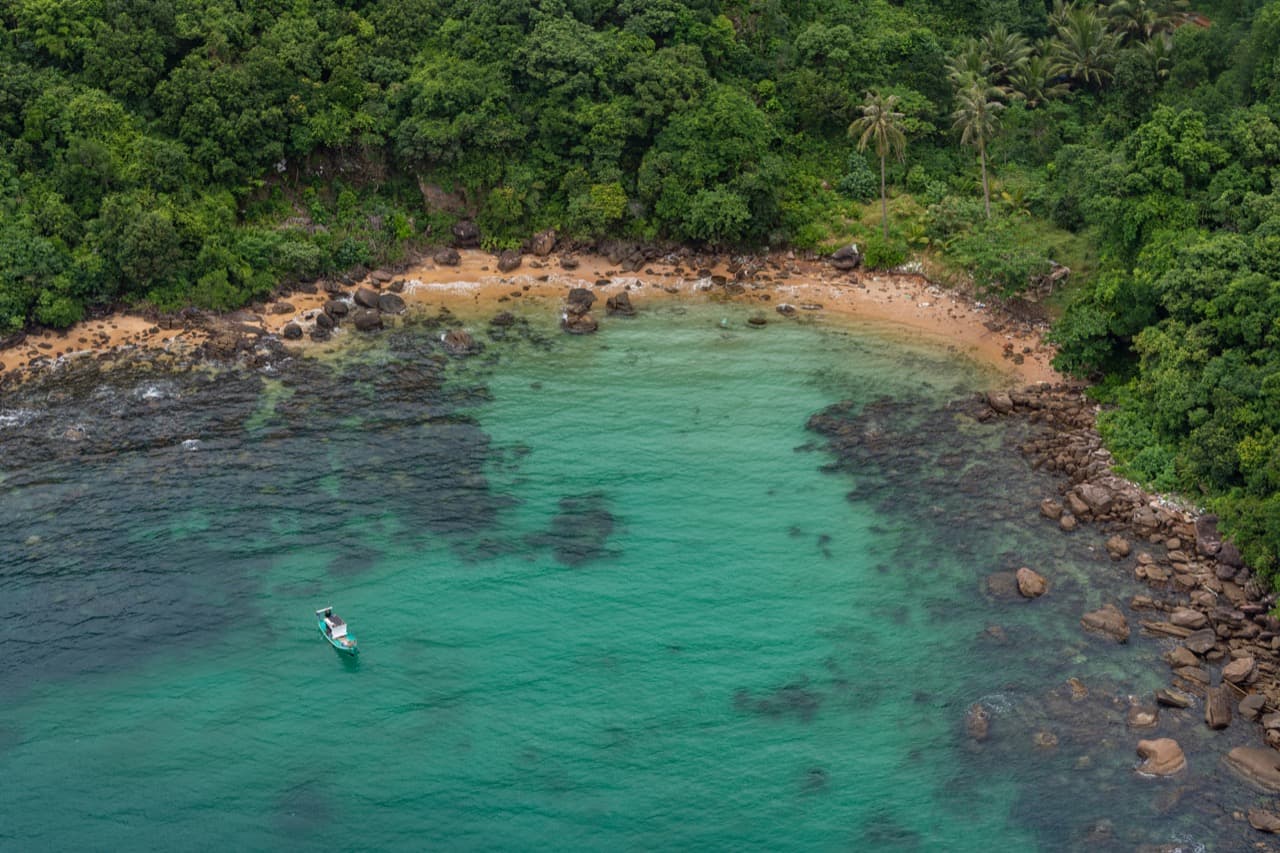
- Hon Rom (Hòn Rơm): Free, always open — Headland with quiet beaches and cafes
- Phan Thiet fishing harbour (Cảng cá Phan Thiết): Free — Unloading 4:00–7:00 and 16:00–18:00
The full list, near to far:
- Fairy Stream (Suối Tiên) — a shin-deep canyon walk, inside Hàm Tiến itself.
- Red Dunes (Đồi Hồng) — 6 km north-east, free, best at sunset.
- White Dunes (Đồi Cát Trắng) — 28 km out, sunrise and quad bikes.
- Lotus Lake (Bàu Trắng) — next to the White Dunes, rowboats through the lotuses.
- Fishing village (Làng Chài) — 3–4 km east of Hàm Tiến, dawn market and coracle boats.
- Po Sah Inu Cham towers — about 15 km west, on the edge of Phan Thiet, 8th–9th century brick temples.
- Hon Ghenh island (Hòn Ghềnh) — a kilometre offshore, uninhabited.
- Hon Rom (Hòn Rơm) — 5–10 km north-east, a quiet headland with empty beaches.
- Ke Ga lighthouse (Hải đăng Kê Gà) — about 40 km south-west, built by the French in 1897–1898.
- Ta Cu mountain and the reclining Buddha — 45 km south-west, cable car and pagoda.
- Phan Thiet fishing harbour — 23 km west, the morning unload.
- Fish sauce factories — in Phan Thiet, a museum tour of nước mắm.
Fairy Stream — Vietnam's pocket canyon
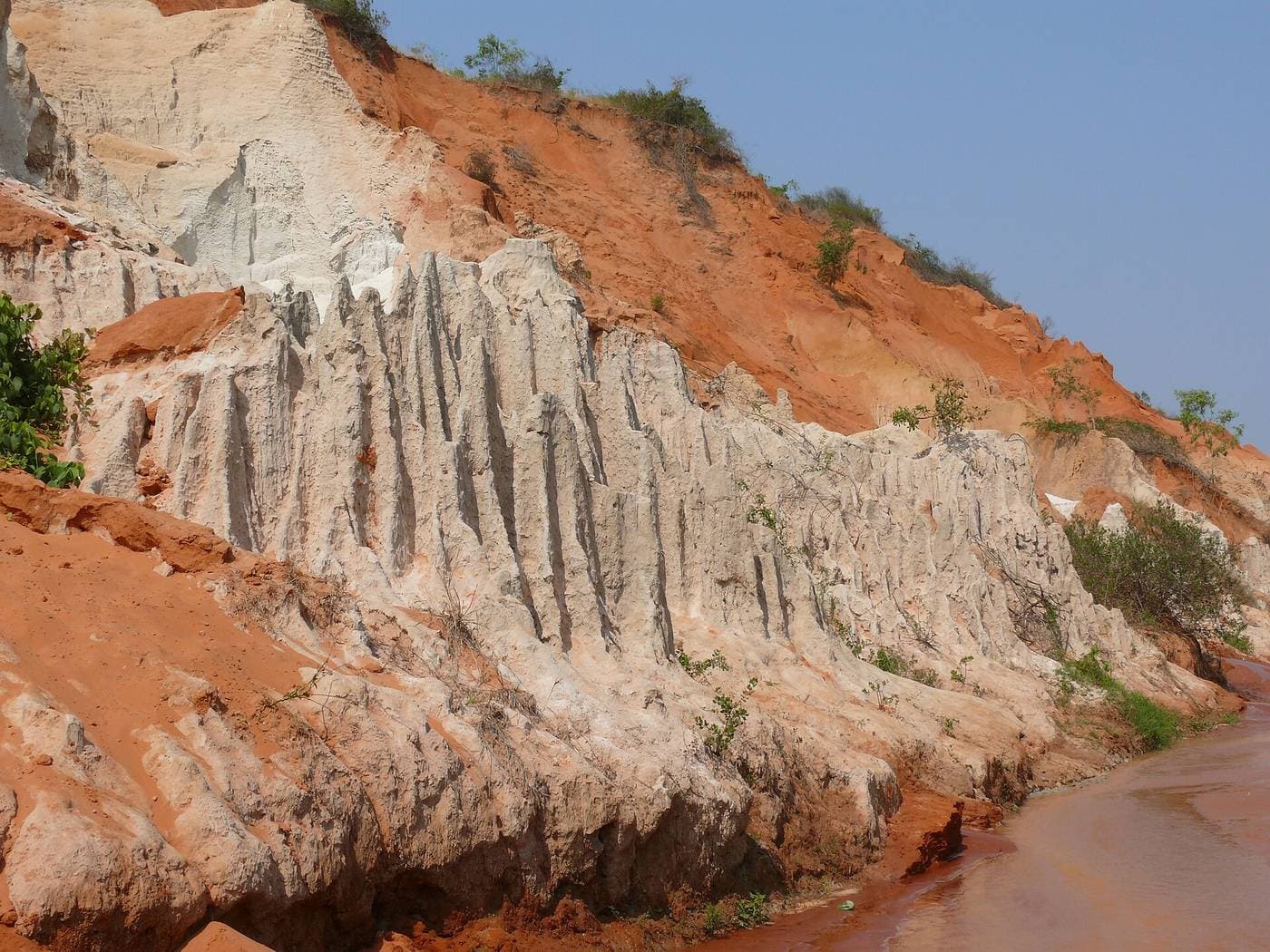
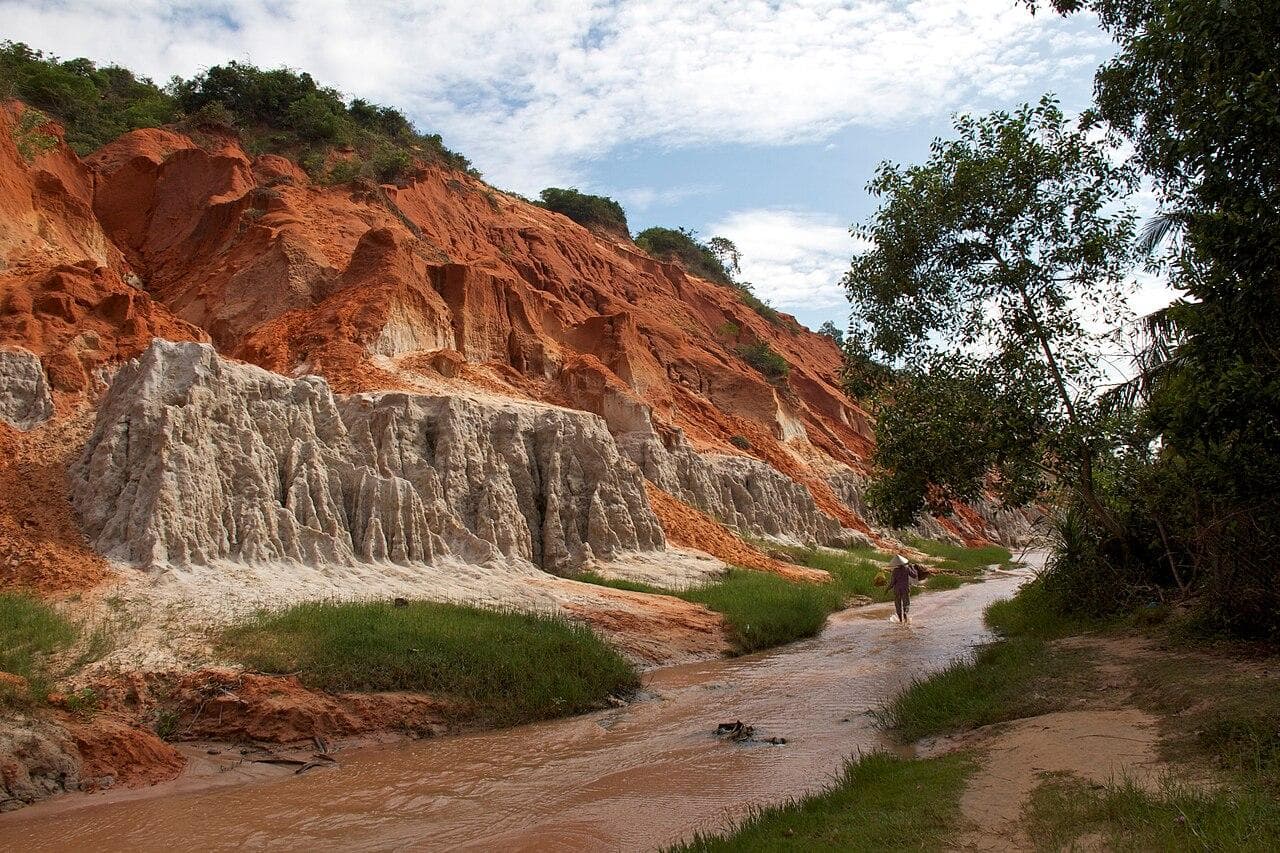
Fairy Stream is a warm, rust-coloured creek running ankle-deep through a canyon of red and white sandstone. Travellers nicknamed it the mini Grand Canyon, which oversells it, but the walk is genuinely strange and genuinely pleasant. You go barefoot, straight up the streambed, 30–40 minutes to a waterfall. Entry is 15,000 VND (~$0.60) for adults and 6,000–7,000 VND for children.
Address: Hàm Tiến, Mui Ne. Coordinates 10.9538° N, 108.2577° E. Hours: 6:00–18:00, daily.
The water sits at ankle height over fine sand. Leave your flip-flops in the car or at the entrance: clay sticks to the soles instantly and turns them into skis. Barefoot is better anyway, and your feet come out smoother than after a pedicure. The walls run two to ten metres high, wind-eaten into shapes that look like melted wax.
Go early, 6:00 to 8:00, or after 16:00. At midday the sun comes straight down and there is no shade anywhere in the canyon. A small market of fruit and souvenirs sits at the entrance. The cool water makes the heat bearable, but bring a hat regardless.
What to know before you go:
- Locals at the entrance will offer photos with ostriches for 20,000–50,000 VND. Saying no is fine and nobody takes offence.
- After rain the water turns muddy and the whole effect vanishes.
- December to February the tour buses arrive and the canyon gets crowded.
Bring: water, a hat, sunscreen, your phone in a waterproof pouch, and small notes for parking and snacks.
Time to allow: 1.5–2 hours including travel. Pairs naturally with the Red Dunes and the fishing village in one morning circuit.
Then they take you to the Fairy Stream and give you 30 minutes — that's far too little! We got less than halfway and turned backaaanita, Vinsky Forum, 2016, translated by VietnamSpot
Getting there: 5–7 minutes by scooter from central Hàm Tiến, three kilometres. Parking at the entrance costs 5,000 VND. A taxi runs 60,000–80,000 VND one way. Walking from the resort strip takes 30–40 minutes along a dusty highway shared with trucks, which is not recommended.
At the site: paid toilets at 5,000 VND, a cafe with iced coffee and fruit, a photographer with props from 100,000 VND for ten frames, and the usual magnets and coconuts.
In the rainy season, May to October, a downpour can raise the stream to knee height and turn it opaque. On days like that the canyon simply is not visible. If you are already there, wait two or three hours after the rain stops and the water clears.
Red Dunes, White Dunes and the lotus lake
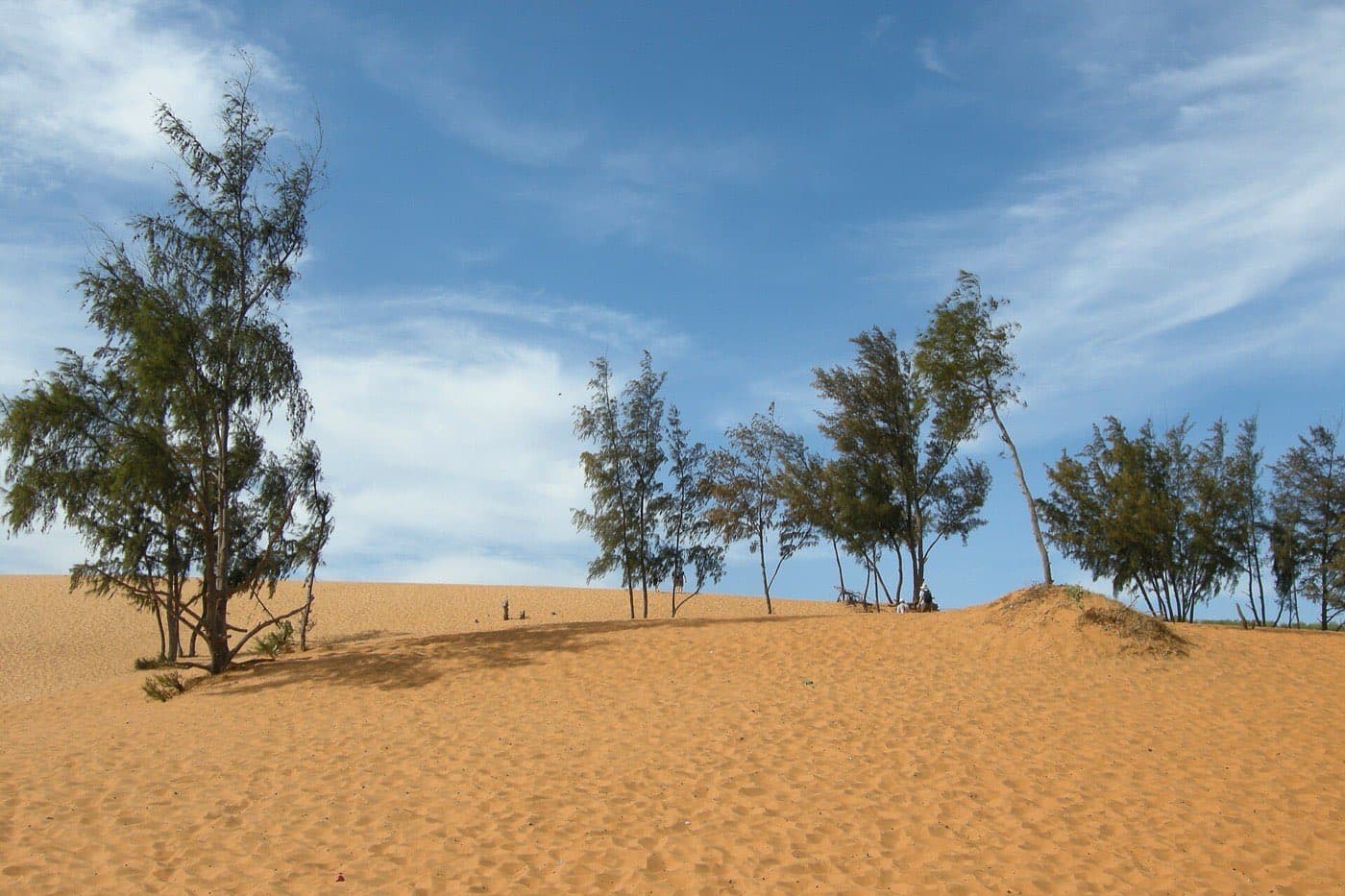
The Red Dunes (Đồi Hồng) are low hills of rust-coloured sand 6 km north-east of the centre. Free, open at all hours, and worth timing for sunset between 17:30 and 18:30, when the sand goes properly orange. The White Dunes (Đồi Cát Trắng), 28 km further out, look like an actual miniature desert, and only work at sunrise, 5:30 to 7:00.
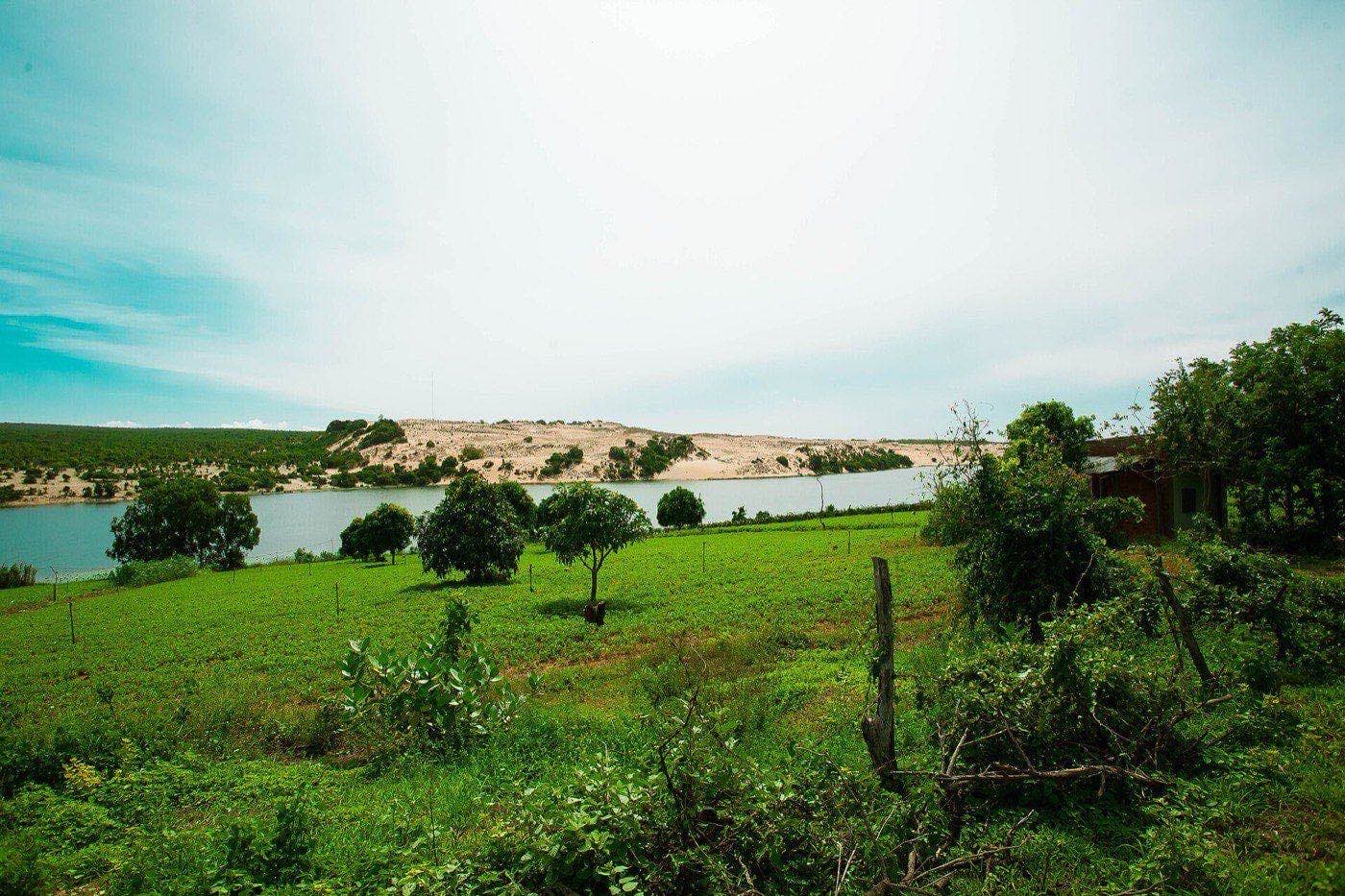
Between them lies Bàu Trắng, two lakes covered in lotus flowers from June to August. Small boats take you out for 80,000–150,000 VND per person, best at dawn when the flowers open.
Prices and logistics:
- Red Dunes: free. A plastic sledding board runs 30,000–40,000 VND.
- White Dunes: a token entry fee, reported at anywhere from 10,000 to 25,000 VND; check on site. Quad bike 600,000–800,000 VND for twenty minutes, jeep across the dunes 800,000 VND per car for up to six people.
- Lotus lake: free entry, boat 80,000–150,000 VND.
Being honest about it, the Red Dunes are more like red mounds. If you have seen the Sahara or Namibia you will be underwhelmed. The White Dunes are bigger and genuinely photogenic, but only at sunrise. By late morning the sand hits 50 °C and flip-flops stop protecting anything.
Getting there: the Red Dunes are 10–15 minutes by scooter from Hàm Tiến, with no car park — everyone leaves bikes at the roadside. The White Dunes and Bàu Trắng need a tour or taxi, an hour each way; by scooter it is 1.5 hours and about 100,000 VND of fuel. On a sunrise tour you leave at 4:30 and are back by 9:30.
The fishing village (Lang Chai Mui Ne)
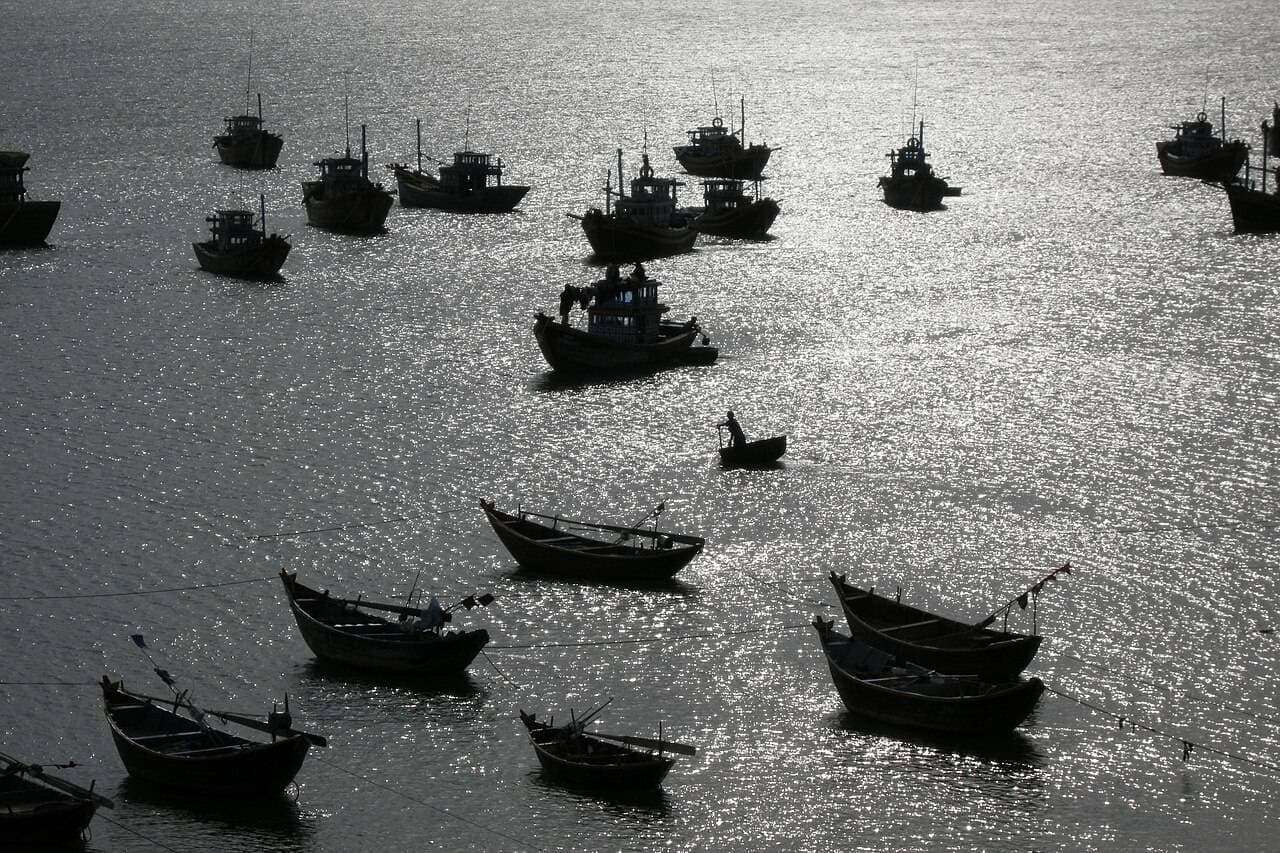
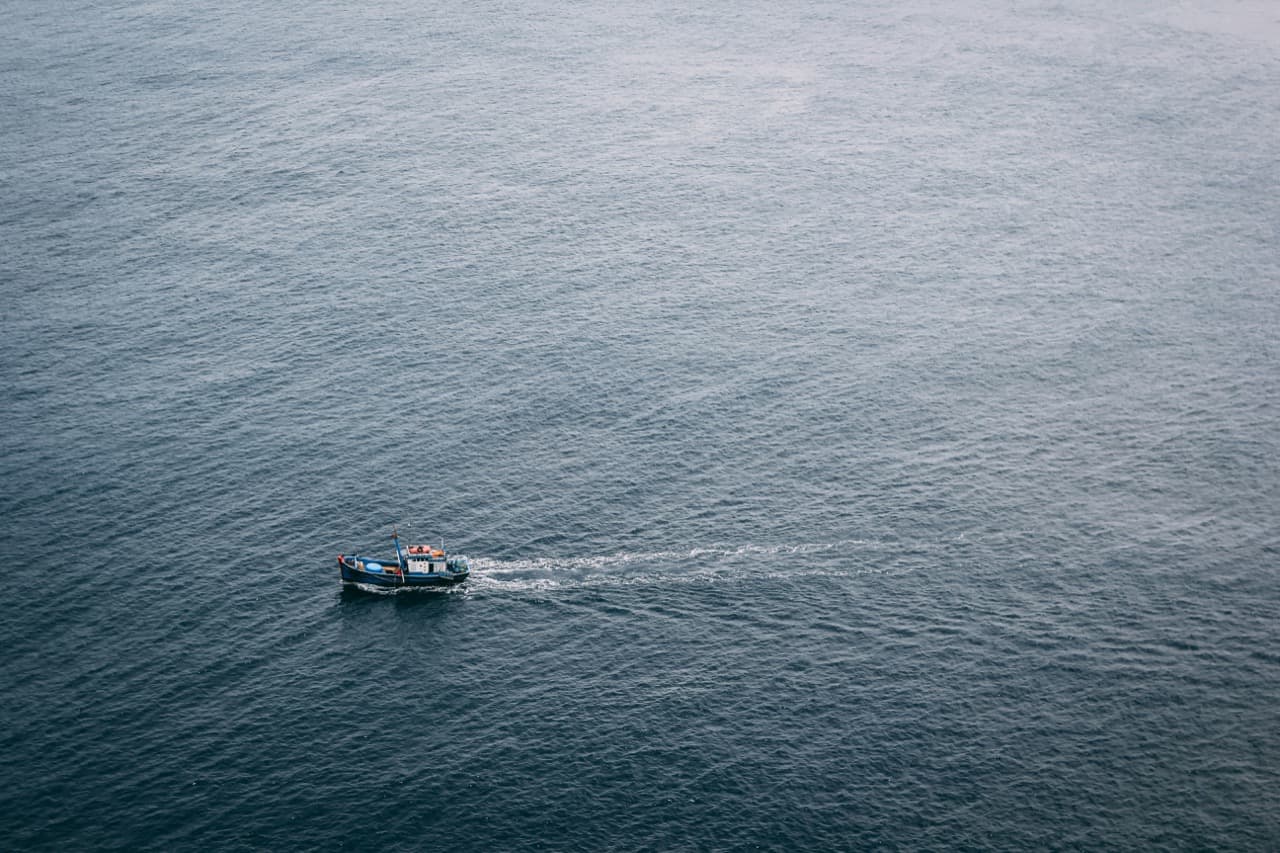
The fishing village is a bay on the northern edge of the resort strip where dozens of boats unload their catch every morning. The real attraction is not the boats but the viewpoint on the way in, looking down on a few hundred blue and green hulls rocking in the swell. Free, and 3–4 km from central Hàm Tiến, easiest by scooter or taxi.
When to go: 5:00 to 7:00. By eight the market is packing up and the good fish has gone to restaurants and wholesalers. After nine there is nothing left but photographs.
What you will see:
- Thúng chai — round woven basket boats, a Vietnamese speciality, paddled short distances from shore.
- The morning market: prawns 200,000–300,000 VND/kg, squid 150,000/kg, crab 300,000/kg, mussels 50,000/kg.
- Fish being gutted on the sand, which is not for everyone.
Buying fish: haggle, and expect to knock 20–30% off the first price. Ask for it to be cleaned and they will do it on the spot for 10,000 VND. Arrange with your hotel kitchen beforehand; cooking your catch usually costs 50,000–100,000 VND.
Time to allow: 1–1.5 hours including travel.
Where to shoot from: the viewpoint at the entrance for the wide bay shot, the sand slope where fishermen drag the coracles up, a seafood tray for close-ups, and anchored boats for long exposures.
With kids: the viewpoint yes, the working beach no. Children gravitate towards boats and nets, and the fishermen are working, not watching other people's toddlers. Shoot from above, then leave for breakfast.
Po Sah Inu Cham towers
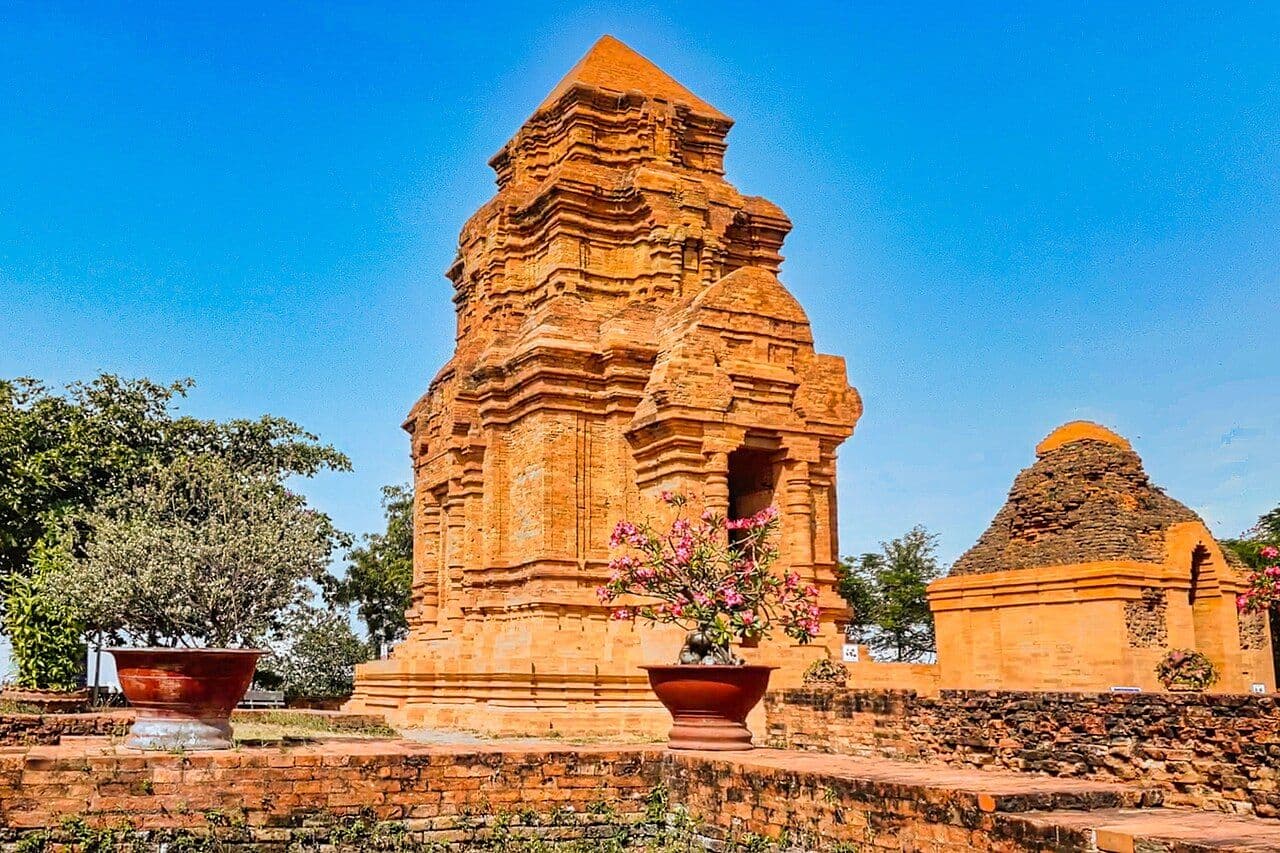
Po Sah Inu, also written Po Shanu, is the only surviving Cham temple complex near Phan Thiet and Mui Ne. Three brick towers from the 8th–9th centuries, built for the Hindu god Shiva, standing on a hill 7 km north-east of central Phan Thiet, on the road from Mui Ne (about 15 km from Mui Ne). Entry costs 15,000 VND (~$0.60) for adults and 7,000 VND for children aged 6–12; scooter parking is another 2,000 VND. Open 7:00–17:00.
Address: Phú Thủy ward, Lam Dong province (before 2025: Phú Hài, Phan Thiet). Coordinates 10.9361° N, 108.1461° E. Fifteen minutes by taxi from Hàm Tiến at around 100,000 VND, or 20–25 minutes by scooter.
The main tower is fifteen metres tall with two smaller ones beside it. All three are fired red brick laid without mortar. From the hill you look out over Phan Thiet bay and the fishing harbour.
Inside: the main tower still holds its Shiva altar, a linga-yoni. The two smaller towers are shrines to Nandi, Shiva's bull, and to Agni, god of fire. A small museum on site holds ceramics and fragments of sculpture.
What fills 45–60 minutes: walking all three towers, climbing to the viewpoint for the bay, and looking down at the farmhouses and dragon fruit plantations at the foot of the hill.
Roughly once a month, usually at weekends, the site hosts evening Cham culture shows with dance, music and weaving demonstrations. Ask your hotel desk for the current schedule — there is no reliable listing in English.
Do not climb the towers themselves (the brick crumbles and the fine is 200,000 VND), buy "ancient" statuettes at the gate (they come from Ho Chi Minh City markets at a fifth of the price), or arrive without water and a hat, because there is no shade on that hill at all.
If you make it up by 16:00, stay for sunset. Old brick in low golden light is the best thing about the place, and the free viewpoint over the bay is the best in the region.
Ke Ga lighthouse — a day out of town
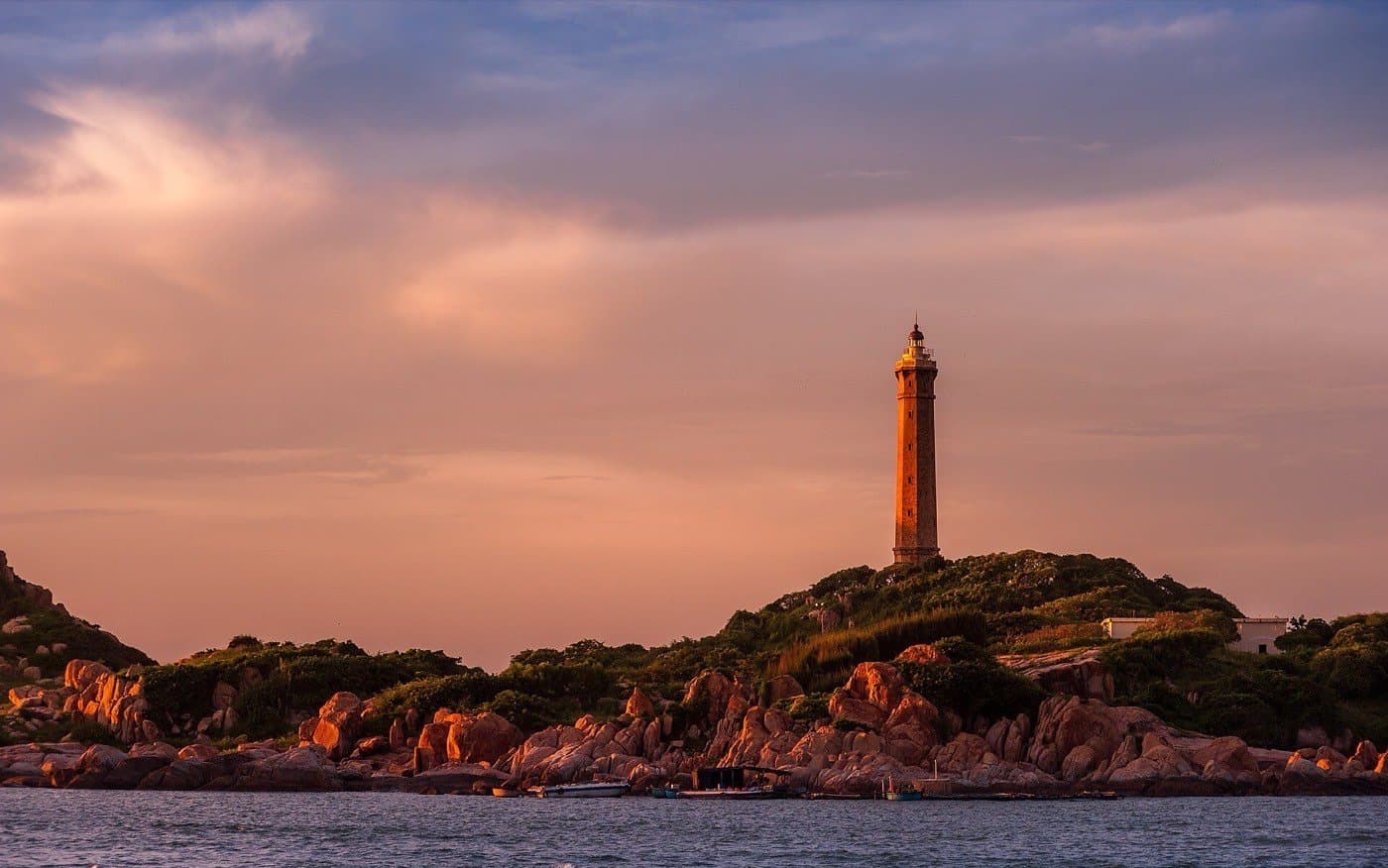
Ke Ga lighthouse (Hải đăng Kê Gà) is a working light on a rocky islet 500 metres offshore: the tower is 35 metres tall and the lamp sits 65 metres above the sea. The French built it in 1897–1898, and it is the tallest and oldest lighthouse in Vietnam. Entry is 10,000–15,000 VND and the boat across costs 40,000–100,000 VND per person. From Mui Ne it is about 40 km south-west as the crow flies, further by road.
Address: Tân Thành commune, Lam Dong province (before 2025: Hàm Thuận Nam district, Binh Thuan). Coordinates 10.7029° N, 107.9907° E.
What is there: the lighthouse inside and out, with 183 steps to the viewing gallery; the islet's granite boulders, which is what most people actually come for; and Ke Ga beach on the mainland side, empty, with no hotels or cafes for hundreds of metres.
How to get there:
- Half-day tour — the easy option, $20–35 for 4–5 hours with a guide and transfer, usually leaving hotels at 8:00.
- Taxi with waiting time — 800,000–1.2 million VND for the car, return.
- Your own scooter — 1.5 hours each way on out-of-town roads shared with trucks. Not a beginner's ride.
A realistic timeline: leave at 8:00, reach Ke Ga by 9:00 and take the boat across. Lighthouse, photos and beach until 11:00. Lunch at a local place around 11:30, seafood at 200,000–300,000 VND per person, and back on the road by 12:30.
When not to go: November and late December. The swell picks up and the boats stop running, which leaves you looking at the islet from the beach. March to August is the reliable window.
Ta Cu and Ke Ga are about 17 km apart, Ta Cu by highway QL1 and Ke Ga out on its cape, so combining them works: Ta Cu in the morning when the cable car opens at 7:00, Ke Ga after lunch.
The road from Ta Cu to Ke Ga is probably one of the brightest memories I have left. …There are little villages with shacks, cows and other livestock, flooded rice fields with white cranes walking through them, and dragon fruit plantationsnatalia_i, Vinsky Forum, 2013, translated by VietnamSpot
Nearby: Princess D'Annam Resort, about 1.5 km from the lighthouse, will serve you lunch without a room booking. Bien Xanh cafe does seafood by the water for 200,000–300,000 VND per person. Scooter parking is free, cars pay 20,000 VND.
Worth it if you have four nights or more in Mui Ne and want a change of scene. On a two or three-night stop, skip it: the dunes and Ta Cu are better value for the same hours.
Ta Cu mountain and the 49-metre reclining Buddha
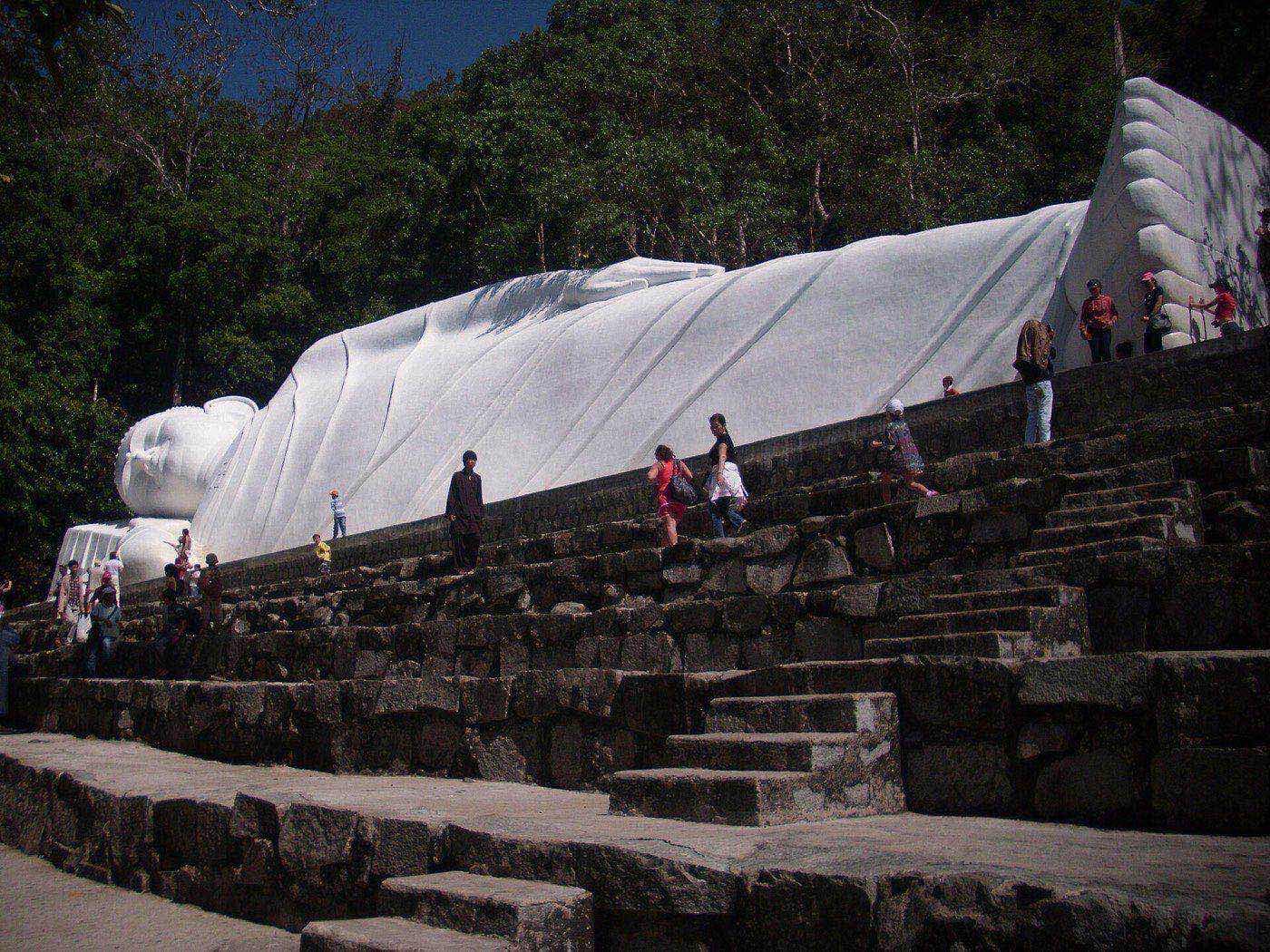
Ta Cu (Núi Tà Cú) is a 649-metre sacred mountain 45 km south-west of Mui Ne. On top sit the Linh Sơn Trường Thọ pagoda and a 49-metre reclining Buddha, one of the largest statues of its kind in Vietnam. The cable car takes ten minutes and costs 200,000 VND return for an adult; site entry is 15,000 VND. There is also a combined ticket covering entry, the shuttle buggy and the cable car both ways for around 250,000 VND (~$10), which is easier to buy when nobody at the window speaks English.
Coordinates: 10.8245° N, 107.8830° E. An hour from Mui Ne, roughly 600,000 VND for a taxi there and back.
What is up there:
- The cable car — 1.6 km over jungle, with Phan Thiet bay and dragon fruit fields below.
- Linh Sơn pagoda — 19th century, still active.
- The reclining Buddha — 49 metres long, 7 metres tall.
- A standing Buddha and three smaller statues in the same compound.
- The viewpoint, jungle to the horizon.
Instead of the cable car you can walk up: two hours each way on a marked trail. It is not technical, but in the heat it stops being fun quickly. Only worth it below 25 °C and not in the rain.
…We went up the mountain on the cable car… Since our budget was very tight, we walked down on the trail. It was also a way to get into the spirit of Buddhism, since there used to be no lift at allmangofrukt, Vinsky Forum, 2016, translated by VietnamSpot
Go early and leave by 7:30. By midday the viewpoint bakes and the tour buses have filled the pagoda.
On a tour: a half-day trip with transfer and cable car runs $30–45 per person. A full day taking in the Cham towers and the fishing harbour costs $50–70.
Time to allow: 4–5 hours including the drive.
Fast Track — no queue at the border
5–10 minutes instead of an hour in the immigration queue
from$11per passenger
Hon Ghenh and Hon Rom
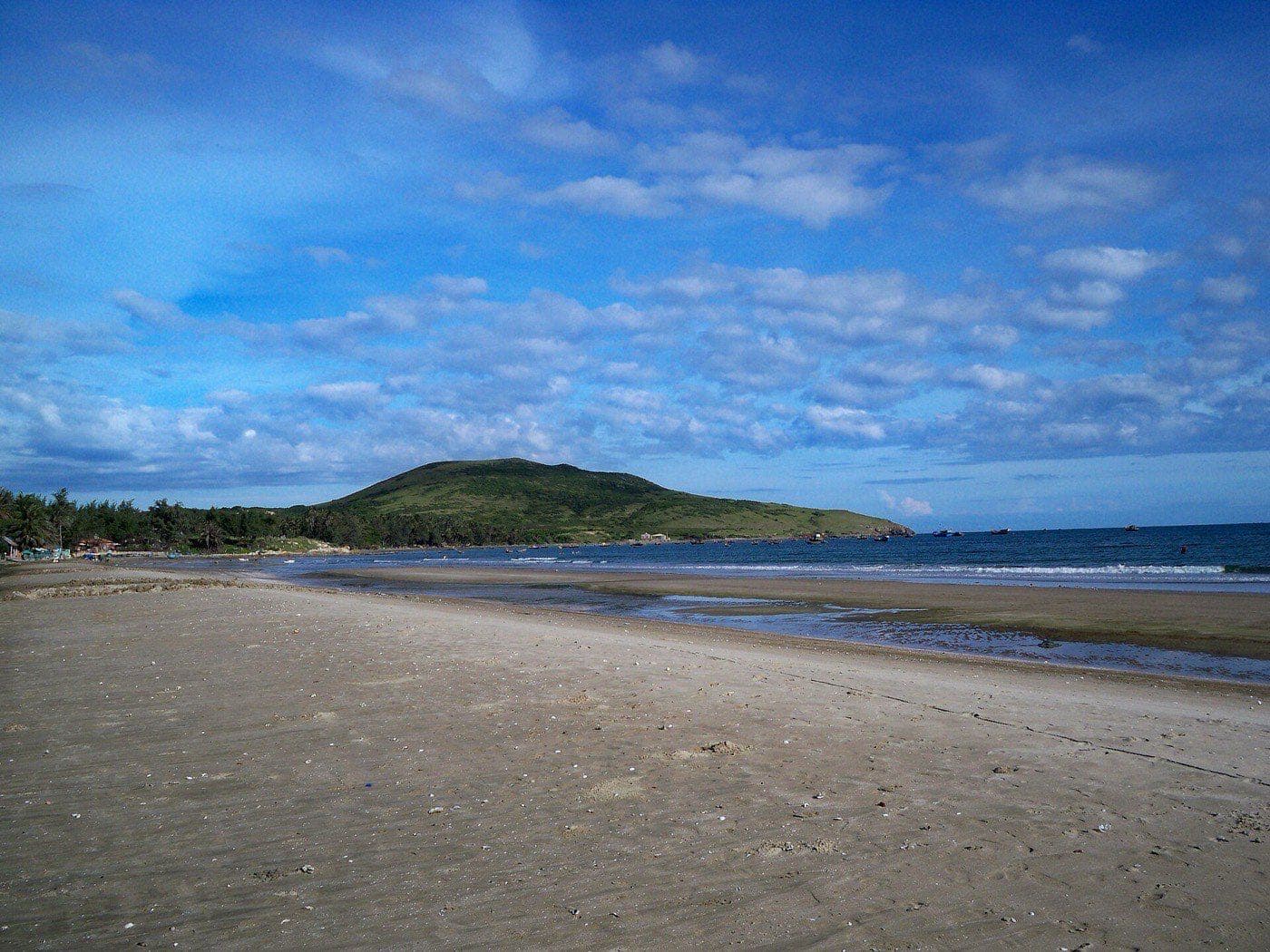
Hon Ghenh (Hòn Ghềnh) is an uninhabited islet a kilometre off the Mui Ne shore: no facilities, no shade, no cafe. Hon Rom (Hòn Rơm) is a headland 5–10 km north-east of the centre with quiet beaches, a few hotels and cafes. Both exist for people who want to be away from the strip.
Hon Ghenh — for kayaking and sunsets
A thirty-metre rock with granite outcrops, small caves and a couple of pocket beaches. Nobody lives there and nothing has been built. The sunsets have a reputation across Vietnam. Coordinates 10.9527° N, 108.2978° E.
Getting across: a fishermen's boat from Mui Ne costs 200,000 VND for a group of up to ten, thirty minutes each way. Boats from Siva Resort run 300,000 VND for ten people and take fifteen minutes.
Bring: 1.5 litres of water per person, repellent, sun protection and food. There is nothing to buy on the island.
Hon Rom — for quiet and empty sand
A long headland of small bays with hotels well away from the noise of the centre. No crowds, no beach vendors, no bar music. Free beaches, a few cafes, places like Hon Rom 2 Resort. Address: Long Sơn, Mũi Né, ten to fifteen minutes from the centre by taxi or scooter.
What to do: swim on the quiet beaches, take a scooter on to Bàu Trắng past rice paddies and dragon fruit farms, and eat seafood at a local cafe for 150,000–250,000 VND per person.
The catch. Hon Ghenh has nothing but scenery, and three hours is the limit before boredom sets in. Hon Rom has the opposite problem: without a scooter you are at the mercy of taxi drivers, and that adds up fast.
Building it into a route
The efficient way to see Mui Ne is a combined tour. The standard jeep circuit links four stops — White Dunes, Red Dunes, Fairy Stream, fishing village — in about four hours for $25–35 per vehicle carrying two to six people. Doing it yourself on a scooter costs 150,000 VND a day, but the White Dunes are far enough out that the jeep still wins.
| Route | Length | Price | Stops |
|---|---|---|---|
| Sunrise jeep tour | 4–5 hours | $25–35 / vehicle | White Dunes, Red Dunes, Fairy Stream, fishing village |
| Sunset jeep tour | 4 hours | $25–30 / vehicle | Same stops, evening light |
| Half-day Ke Ga | 4–5 hours | $20–35 / person | Lighthouse, islet, lunch |
| Full-day Ta Cu and Po Sah Inu | 8–10 hours | $50–70 / person | Cham towers, fishing harbour, Ta Cu |
Sunrise jeep tour, step by step
| Time | Stop | What happens |
|---|---|---|
| 4:30 | Hotel pickup | Grab coffee at reception |
| 5:30 | White Dunes | Sunrise, photos, optional ATV |
| 7:00 | Red Dunes | Morning light, sledding board |
| 8:00 | Fairy Stream | Thirty minutes up the streambed |
| 9:30 | Fishing village | Viewpoint, then breakfast |
If you have exactly one full day, this is it.
On your own scooter
Rental runs 120,000–200,000 VND a day plus about 50,000 for fuel. That covers Fairy Stream, the Red Dunes, Po Sah Inu and the fishing village. The White Dunes and Bàu Trắng are too far to add sensibly in one day without experience — take the jeep.
Coming from Ho Chi Minh City or Da Lat
If you are only dropping in for a day, coach tours run from Ho Chi Minh City at four hours each way for $40–55, and from Da Lat at four to five hours over the pass for $25–35. Every route into the resort, with prices, is in the Mui Ne transport guide.
Entry fees and opening hours
Most sights around Mui Ne are free or cost a symbolic 10,000–25,000 VND. The most expensive single item is the Ta Cu cable car at 200,000 VND return. A day of Red Dunes, fishing village and Hon Rom costs nothing in entry fees at all. A day of Ta Cu plus Ke Ga with a guide and meals runs to about 2.5 million VND (~$100) per person.
| Sight | Entry, adult | ~USD | Hours | Extras |
|---|---|---|---|---|
| Fairy Stream | 15,000 VND | ~$0.60 | 6:00–18:00 | Scooter parking 5,000 VND |
| Red Dunes | free | — | 24/7 | Sledding board 30,000–40,000 VND |
| White Dunes | 10,000–25,000 VND | ~$0.40–1 | 5:00–18:00 | ATV 600,000–800,000, jeep 800,000 VND |
| Lotus lake (Bau Ba) | free | — | daylight | Boat 80,000–150,000 VND per person |
| Fishing village | free | — | 5:00–7:00 (peak) | — |
| Po Sah Inu towers | 15,000 VND | ~$0.60 | 7:00–17:00 | Parking 2,000–10,000 VND |
| Hon Ghenh | free | — | daylight | Boat 200,000–300,000 VND for 10 |
| Hon Rom | free | — | 24/7 | — |
| Ke Ga lighthouse | 10,000–15,000 VND | ~$0.40–0.60 | 6:30–17:00 | Boat 40,000–100,000 VND per person |
| Ta Cu mountain, entry | 15,000 VND | ~$0.60 | 7:00–17:00 | Cable car 200,000 VND return; combo ~250,000 |
| Phan Thiet harbour | free | — | 4:00–7:00 and 16:00–18:00 | — |
Budgeting a day
Cheap day — fishing village, Red Dunes, Hon Rom and food: transport 200,000 VND for a taxi and scooter, nothing on entry, food 400,000 VND per person. Total around 600,000 VND, about $24 each.
Standard day — four-stop jeep tour plus food: the tour at $30 or 750,000 VND per vehicle, roughly 250,000 each with three aboard; entry fees inside the tour 50,000 VND; food 500,000 VND. Total around 800,000 VND, about $32.
Expensive day — Ta Cu and Ke Ga with a guide and a restaurant lunch: tour at $60 or 1.5 million VND, entry with cable car and boat 300,000 VND, food 700,000 VND. Total around 2.5 million VND, about $100 per person.
What to pack for a sightseeing day
Mui Ne days are predictable: hot, windy, sand in everything. How well you prepared decides whether the day reads as a good one or a forced march.
Take with you:
- SPF 50. Fifteen minutes on the dunes is enough to burn.
- A hat.
- At least 1.5 litres of water per person.
- Flip-flops and trainers both: flip-flops for Fairy Stream, trainers for the lighthouse and the mountain.
- Swimwear and a towel if the beach is in the plan.
- Small notes, 10,000–50,000 VND, for parking, entry and snacks.
- Insect repellent, especially in the evening and in the jungle around Ta Cu.
- Phone or GoPro in a case. Sand destroys electronics here.
- A scarf: dust on the scooter, covered legs at the pagoda.
Morning route, 5:00–10:00: leave at 5:00 on the jeep tour, White Dunes at 5:30 for sunrise and ATVs, Red Dunes at 7:00, Fairy Stream at 8:00, fishing village and breakfast at 9:30.
Evening route, 15:00–19:30: Po Sah Inu at 15:00 if you are heading into Phan Thiet, Red Dunes for sunset at 17:00, seafood at a bờ kè place by the water at 18:30.
The usual mistakes:
- Wearing flip-flops up Ta Cu — the pagoda expects closed shoes.
- Reaching the White Dunes after 8:00, when the sand is already at 50 °C.
- Riding to the lighthouse in the rain. Out-of-town roads with trucks are not the place.
- Turning up without cash. Most places out here do not take cards.
- Forgetting the pagoda dress code at Linh Sơn.
FAQ — things to do in Mui Ne
One full day covers five or six of the twelve. The morning jeep tour takes the White Dunes, Red Dunes, Fairy Stream and the fishing village in 4–5 hours, then Po Sah Inu in Phan Thiet after lunch, and the Red Dunes or a boat to Hon Ghenh at sunset. Leave Ke Ga lighthouse and Ta Cu mountain for a second day: each is an hour of driving each way.
No. Mui Ne is not Angkor and it is not Ha Long. People come here for wind, dunes, seafood and a fishing village that still works for a living. The sights are a good bonus on top of two or three beach days, not a reason to book the trip. If you have ten days in Vietnam, give Mui Ne two or three nights.
- A standard 4–5 hour jeep tour$25–35 per vehiclecovering the White Dunes, Red Dunes, Fairy Stream and the fishing village; carrying two to six people, so $4–6 each at full load
- An ATV on the White Dunes600,000–800,000 VND$24–32adds for twenty minutes
- A sledding board on the Red Dunes30,000–40,000 VND
Any hotel desk books it
No. The twelve stops are spread across a 45 km radius. One day realistically gets you the five or six closest: the dunes, Fairy Stream, the fishing village and the Cham towers. Ke Ga at about 40 km south-west and Ta Cu at 45 km south-west are a separate day. Two unhurried days is the minimum, three is better.
You will be walking through water, so leave your shoes in the car. Bring a litre of water per person, a hat, SPF 50 and your phone in a waterproof pouch, because the water is warm and ankle-deep. Small notes for parking and snacks. You will not need a towel, feet dry in five minutes. Bring a change of shorts though, because yours will be wet to the knee.
Four options. The Red Dunes are the classic, 17:30–18:30, silhouettes on orange sand. Hon Ghenh, from the boat or the island itself, is one of the better sunsets in Vietnam. The fishing village gives you coracle silhouettes on the water. And any terrace bar along Ham Tien works. The two to avoid are Ke Ga, where the sun drops behind a hill, and Ta Cu, which you will not reach in time.
Three ways
- A half-day tour for 4–5 hours$20–35with transfer and guide, booked at any hotel
- A taxi with waiting time800,000–1.2 million VNDfor the car return
- Your own scooter1.5 hours each wayon out-of-town roads with trucks, which is not a beginner ride
The tour is the sensible choice: the driver waits, the boat is arranged and lunch is included. It is about 40 km south-west of Mui Ne as the crow flies, further by road
Yes, if Buddhist sites interest you or you simply want jungle instead of sea for a day. The cable car is 200,000 VND return and takes ten minutes; walking up takes two hours. At the top there is a 19th-century pagoda, a 49-metre reclining Buddha that ranks among Vietnam's largest, and a viewpoint over unbroken jungle. Dress code applies: long shorts or trousers, shoulders covered. Worth it on a stay of four days or more.
No. It is a working harbour with boats, nets and debris in the water. For swimming use the beaches instead: Bai Truoc a kilometre along, the main Mui Ne beach, or Hon Rom 5–10 km north-east. At the fishing village you look from the viewpoint and buy fish, and that is the whole visit.
Sunrise only. Leave the hotel at 4:30 and be on the sand by 5:30–6:00. Four reasons: the sand cooled overnight so you can walk barefoot, the low sun gives long shadows and photographs that work, the coaches from Ho Chi Minh City have not arrived, and it is 25 °C instead of the 40 °C you get by midday. After 8:00 there is no point. Book at reception the night before.
Read next: The complete Mui Ne guide · Kitesurfing in Mui Ne · Mui Ne beaches · Things to do in Phan Thiet
VietnamSpot on InstagramTips, lifehacks and news for living in VietnamFollow

- Guide
Kitesurfing in Mui Ne: Season, Schools & Prices 2026
Kitesurfing in Mui Ne, Asia's kite capital: the wind season, IKO schools, courses and rentals, the best spots and what it costs.Kitesurfing in Mui Ne: Season, Schools & Prices 2026 - Guide
Tours from Mui Ne: Dunes, Fairy Stream & Day Trips
Tours and day trips from Mui Ne: the sunrise dune jeep, Fairy Stream and Cham towers, Ta Cu and Ke Ga lighthouse, Da Lat, Ho Chi Minh City and Cambodia, with 2026 prices.Tours from Mui Ne: Dunes, Fairy Stream & Day Trips - Guide
Mui Ne 2026: Kitesurfing, Sand Dunes & Beaches
Mui Ne guide: the kitesurfing capital of Southeast Asia, red and white sand dunes, beaches, resorts, food and getting there from Saigon.Mui Ne 2026: Kitesurfing, Sand Dunes & Beaches