Ninh Binh food guide 2026 — dê núi, cơm cháy and where to eat them
Ninh Binh eats two things seriously: mountain goat and deep-fried crispy rice. Both were invented here, and both entered record books in 2012, one Vietnamese and one Asian. This is what to order, how to say it out loud, what it tastes like, which seven restaurants actually exist in 2026, and how to fit the whole thing between the morning train in and the evening train out.
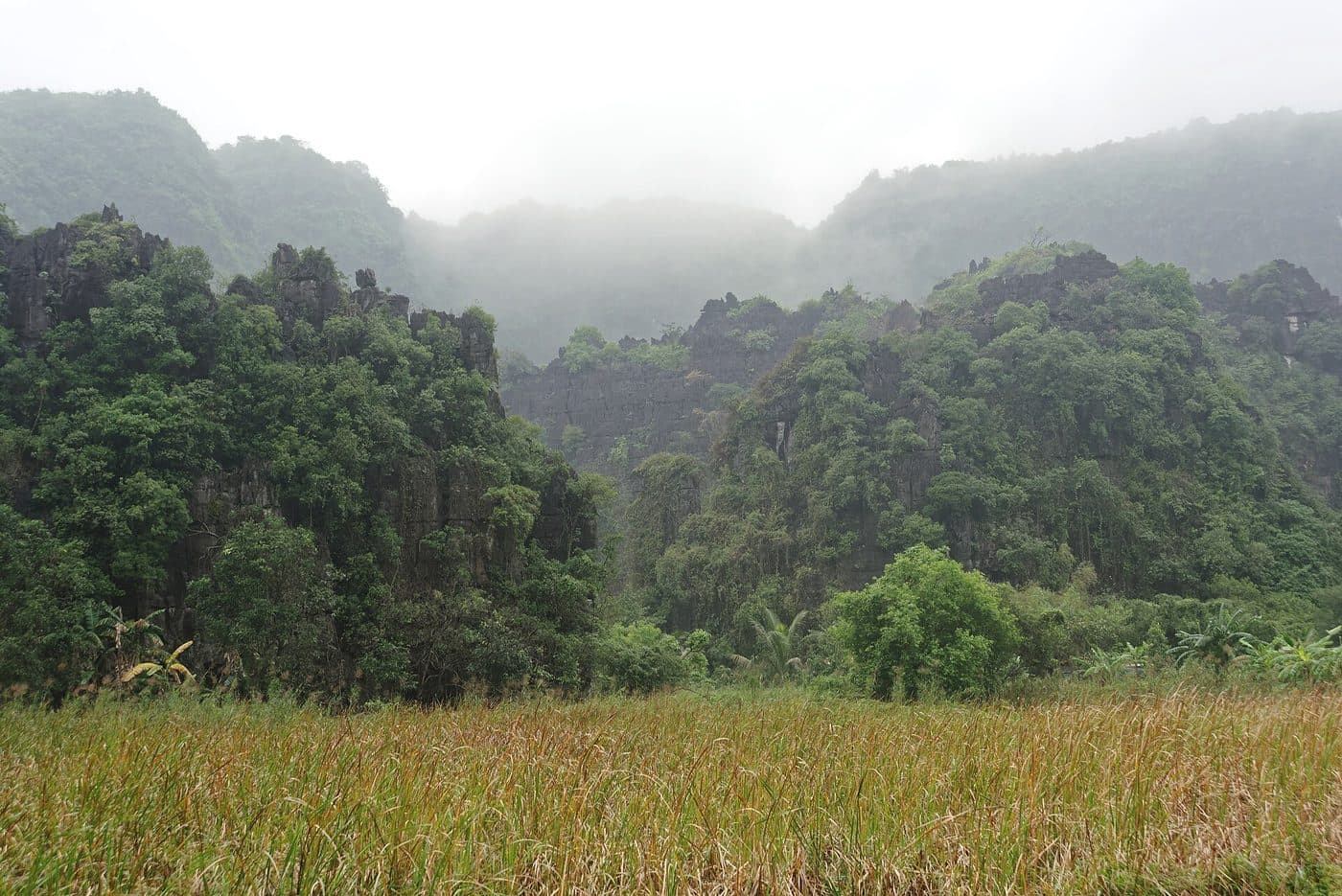
Ninh Binh sits 90 km south of Hanoi, about two hours by train or bus, and the food changes as much as the scenery on the way. This is the province where goat became the culinary symbol: the animals graze on bare limestone, eat wild hill herbs, and end up closer to game than to farmed meat. The second symbol is a slab of fried rice crust invented by accident in the 1890s and now carried home by the suitcase.
For the region itself — routes, boats, Mua Cave viewpoint, where to sleep — see our full Ninh Binh guide. This piece is narrower: what to order, where, what it costs in August 2026, and which famous addresses from older listicles no longer exist.
How to pronounce the two words you will need
Northern Vietnamese turns the letter d into a z sound, which is why almost every foreigner orders goat wrong on the first try. Rough approximations, good enough for a waiter to nod:
- Dê núi — "zay noo-ee". Mountain goat. Lean, firm, faintly herbal; the barnyard funk you may be bracing for is not there.
- Cơm cháy — "kuhm chai". Crispy rice. Think a savoury rice cracker the size of a dinner plate, shattered by hand and drowned in meat gravy.
- Dê tái chanh — "zay tie chan". The raw-in-lime version, the one locals order first.
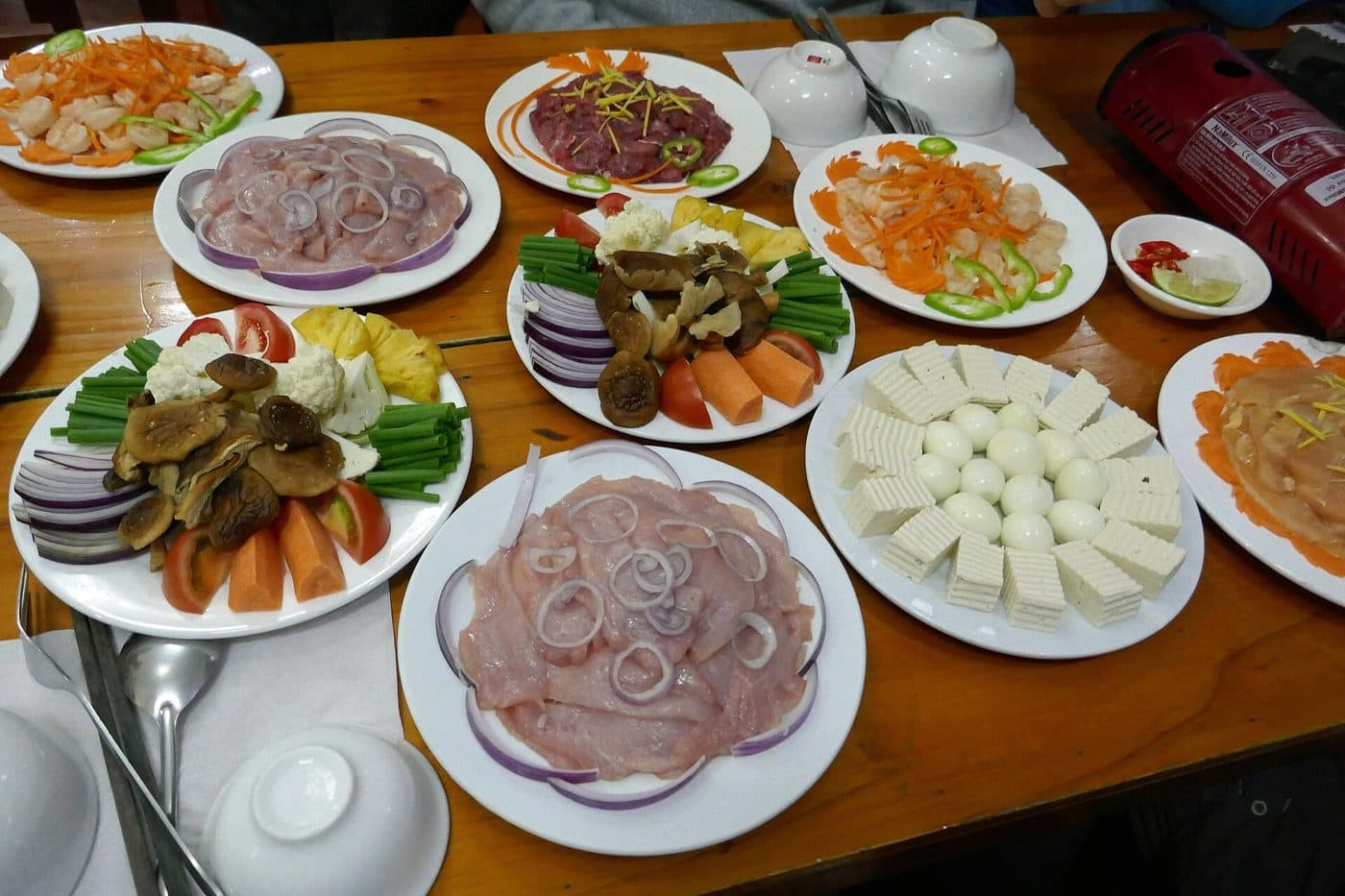
- Lẩu dê — "lau zay". Goat hotpot, a shared pot on a table burner.
Ten Ninh Binh dishes and what they cost
- Duc De (Nhà hàng Đức Dê): The full seven-dish goat set — Nguyen Hue St · 600k–1m VND (~$23–38) for two
- Hoang Long (Nhà hàng Hoàng Long): Goat and crispy rice in one order — Trang An road · 500–800k VND (~$19–31)
- Chinh Thu (Quán dê Chính Thư): Family kitchen since 2008 — Goat hotpot · 400–700k VND (~$15–27)
- Thang Long (Nhà hàng Thăng Long): 500 seats, built for tour buses — QL38B between Hoa Lu and Bai Dinh
- Ba Cua (Nhà hàng dê núi Ba Cửa): Cheapest of the big rooms — Trang An village · check hours
- Dung Pho Nui (Nhà hàng Dũng Phố Núi): Opens at 07:00 — Khe Thuong village · 150–300k VND (~$6–12) per person
- Cuong De (Nhà hàng Cường Dê): Dishes priced one by one, 60–400k VND — Trang An village · 08:00–21:00
- Chay Hoa Lu (Nhà hàng Chay Hoa Lư): The city vegetarian restaurant — 56 Luong Van Thang · 07:00–21:00
- Bai Dinh (Chùa Bái Đính): Vegetarian kitchens inside the complex — Grounds open 06:00–21:00
- Pho Huy Lu (Phở Huy Lư): Mornings only, 05:30–10:00 — 25,000–100,000 VND (~$1–4)
- Banh Mi Tu Phong (Bánh Mì Tú Phong): 300 Hai Thuong Lan Ong · 05:00–21:30 — 5,000–20,000 VND (~$0.20–0.80)
The compulsory list is short: dê tái chanh, the seven-dish goat set if there are two or more of you, and one plate of cơm cháy with gravy. Everything below that line is optional and some of it is seasonal.
Currency converter
| Dish | What it is | Price 2026 |
|---|---|---|
| Dê tái chanh | Raw goat cured in lime juice, wrapped in rice paper | 150–250k VND (~$6–10) |
| Dê nướng | Charcoal-grilled goat with lemongrass | 150–250k VND (~$6–10) |
| Lẩu dê | Goat hotpot, feeds three or four | 300–800k VND (~$12–31) |
| Dê 7 món | The seven-dish goat set, for two | 600k–1m VND (~$23–38) |
| Cơm cháy in a restaurant | Hot rice slab under a meat gravy | 50–180k VND (~$2–7) |
| Cơm cháy chà bông | Take-home pack with pork floss | 36–45k VND (~$1.40–1.75) |
| Ốc núi luộc sả | Mountain snails steamed with lemongrass, seasonal | 150–300k VND (~$6–12) |
| Cá rô kho tộ | Local perch braised in a clay pot with caramel | 80–150k VND (~$3–6) |
| Miến lươn | Glass noodles with rice-paddy eel | 60–120k VND (~$2.30–4.60) |
| Cơm chay | Buddhist vegetarian set, pagoda or city | 80–150k VND (~$3–6) |
Dollar figures throughout use 26,000 VND to $1, the mid-market rate in late August 2026. A full day of eating with drinks lands at 200,000–400,000 VND, roughly $8–15 a head.
The map holds twelve points, compiled in August 2026. Green pins are the ones to start with. On a day trip from Hanoi two stops are plenty: lunch near the Tam Coc pier and a proper dinner back in town.
Dê núi — the goat people come for
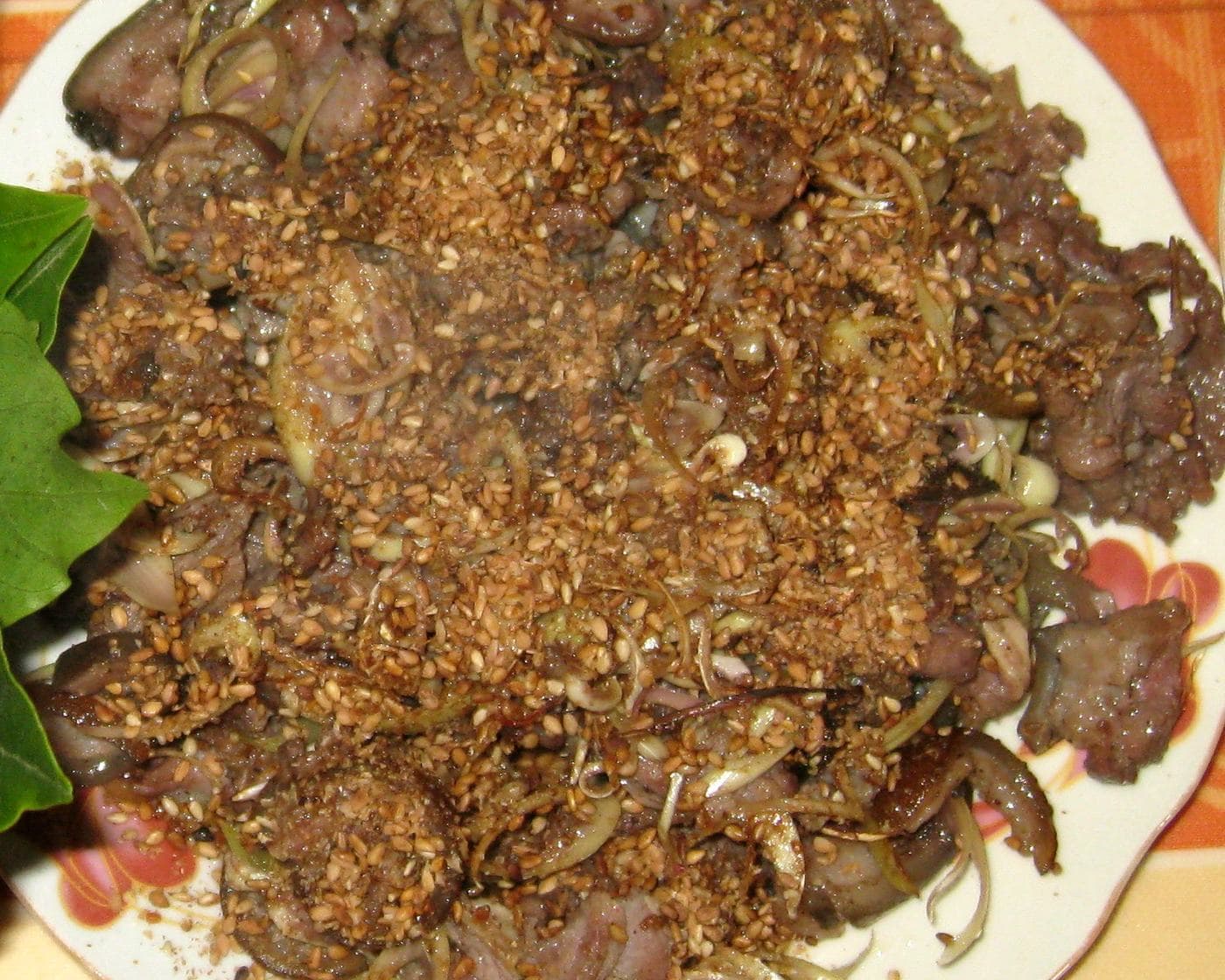
Dê núi is goat from the limestone hills around Hoa Lu, grazing on wild herbs straight off the rock face. Raw meat sells for 350,000–750,000 VND a kilo (~$13–29) depending on the cut, two to four times the price of pork. What you are paying for is texture and the absence of a smell: the meat is dense, nearly fat-free, and none of the gaminess that puts people off farmed goat is in it.
Why the goat here is different
The karst is solid limestone under a thin scrub of tough grasses and shrubs. The local breed was selected for that ground over centuries: small, agile, heavily muscled. It reaches slaughter weight at 15–18 months instead of 8–10, and all that climbing shows up as structure in the meat. The diet of hill herbs, several of them medicinal, is what replaces the smell with a faint green note.
Goat has been raised around Hoa Lu for a long time, and local cooks say the recipes have changed little.
The seven preparations
You do not need to memorise these. The waiter will offer a set and you choose between the light version of three or four dishes and the full seven.
- Dê tái chanh — the headline act. Paper-thin raw slices cured in fresh lime juice, served with ginger, garlic, lemongrass, rice paper and a tray of herbs. You wrap it yourself and dip it in tương bần. Texture is closer to carpaccio than to steak; the lime does the cooking.
- Dê nướng — over charcoal. Marinated in garlic, lemongrass and soy, finished at your table. Smoky, the most familiar flavour on the tray for a first-timer.
- Dê hấp — steamed. The honest way to taste the meat itself. No sauce in the process, only ginger, with a bowl of tương bần on the side.
- Dê xào lăn — curry-fried. Stir-fried with curry powder, onion, lemongrass and coconut milk. Spicy, aromatic, the South Asian cousin of the set.
- Lẩu dê — hotpot. Goat broth with medicinal herbs simmering on the table; you drop in vegetables, mushrooms, noodles and more meat. Best in a group and best in December to February, when Ninh Binh drops to 15–20°C.
- Nem dê (also chạo) — cold meatballs. Minced goat rolled in toasted rice powder, wrapped in rice paper with herbs and peanuts. Nutty and safer than the raw version.
- Tiết canh dê — raw blood. Congealed goat blood with herbs and peanuts, eaten at Tet and on special occasions. Not recommended for visitors: the intestinal infection risk is real and it is the one dish where local authenticity is genuinely not worth it.
What comes with it
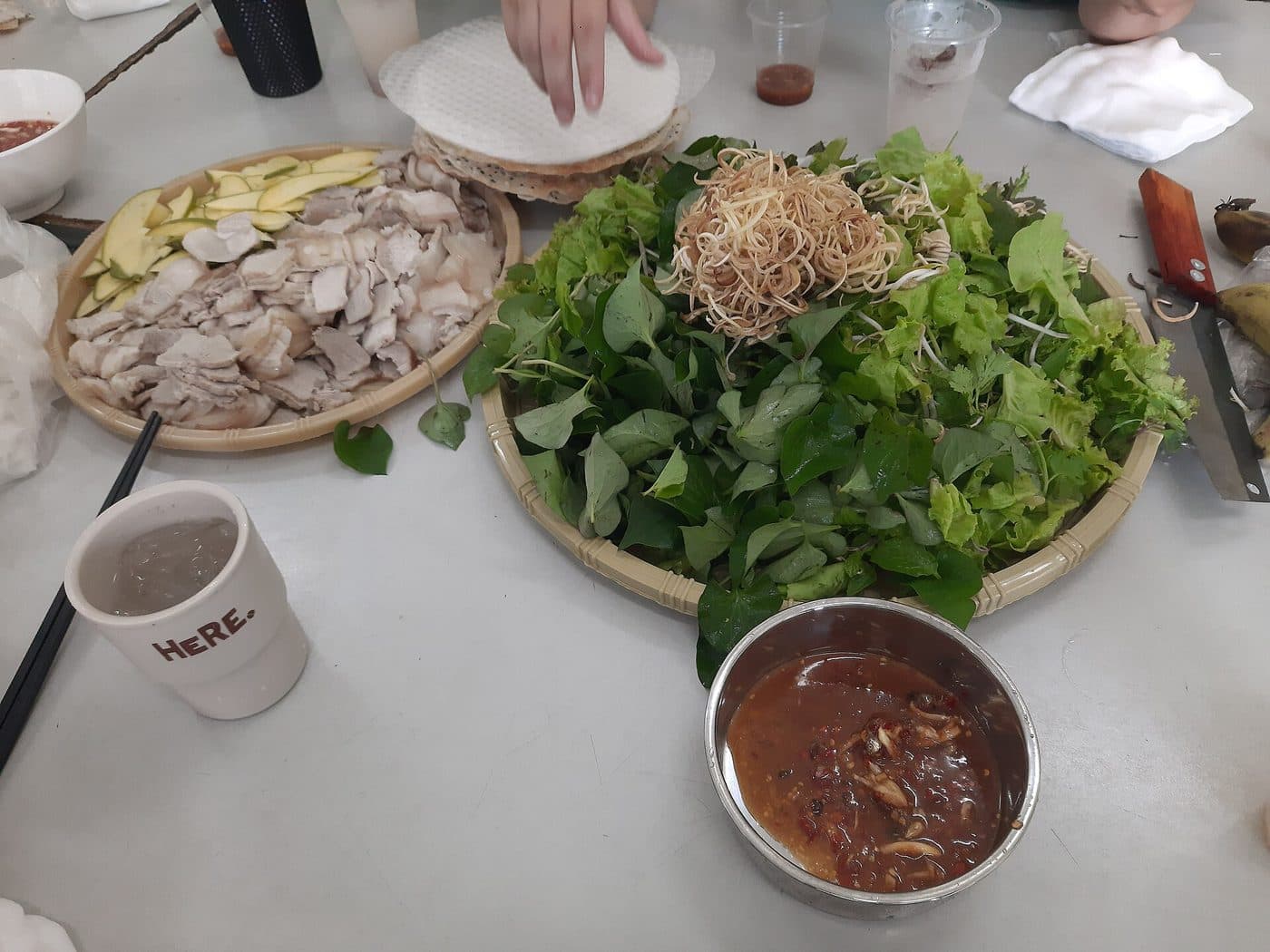
Two sauces arrive and they are not interchangeable. Tương bần is a dark fermented soybean paste from Ban village in neighbouring Hung Yen: thick, salty-sweet, with a sour ferment edge. Without it dê tái chanh falls flat. Chao is fermented bean curd — creamy, pungent, heavy umami. Closer to blue cheese than to soy sauce, and not everyone gets on with it on the first spoon.
The herb tray is the other half of the meal: lá mơ to cut the richness, Thai basil, a citrusy coriander called ngổ, cucumber, sliced green banana and sour starfruit. All of it goes into the rice-paper roll with the meat, which is why a goat portion stretches further than it looks.
How much of the set to order
| Group | What to order | VND | USD |
|---|---|---|---|
| 2 people | Light seven-dish set | 600,000–1,000,000 | ~$23–38 |
| 3–4 people | Seven-dish set plus hotpot | 1,200,000–1,800,000 | ~$46–69 |
| 6–8 people | Banquet: goat, crispy rice, river fish | 2,500,000–4,000,000 | ~$96–154 |
A standard set runs tái chanh, nướng, hấp, xào lăn, nem, hotpot and rice with vegetables to finish. Tiết canh is normally left out of the tourist version. Addresses are in the restaurant section below.
- ✓ There are two or more of you and this is your one Ninh Binh dinner
- ✓ You want to compare the preparations rather than gamble on one
- ✓ It is winter — the hotpot inside the set is a different dish in December
- ✗ You are eating alone — the set assumes two and half goes in a box
- ✗ Raw meat is off the table for you: two of the seven dishes go untouched
- ✗ It is lunch before a boat ride. Rowing after this is not a plan
Fast Track — no queue at the border
5–10 minutes instead of an hour in the immigration queue
from$11per passenger
Cơm cháy — crispy rice, and the souvenir that survives the flight
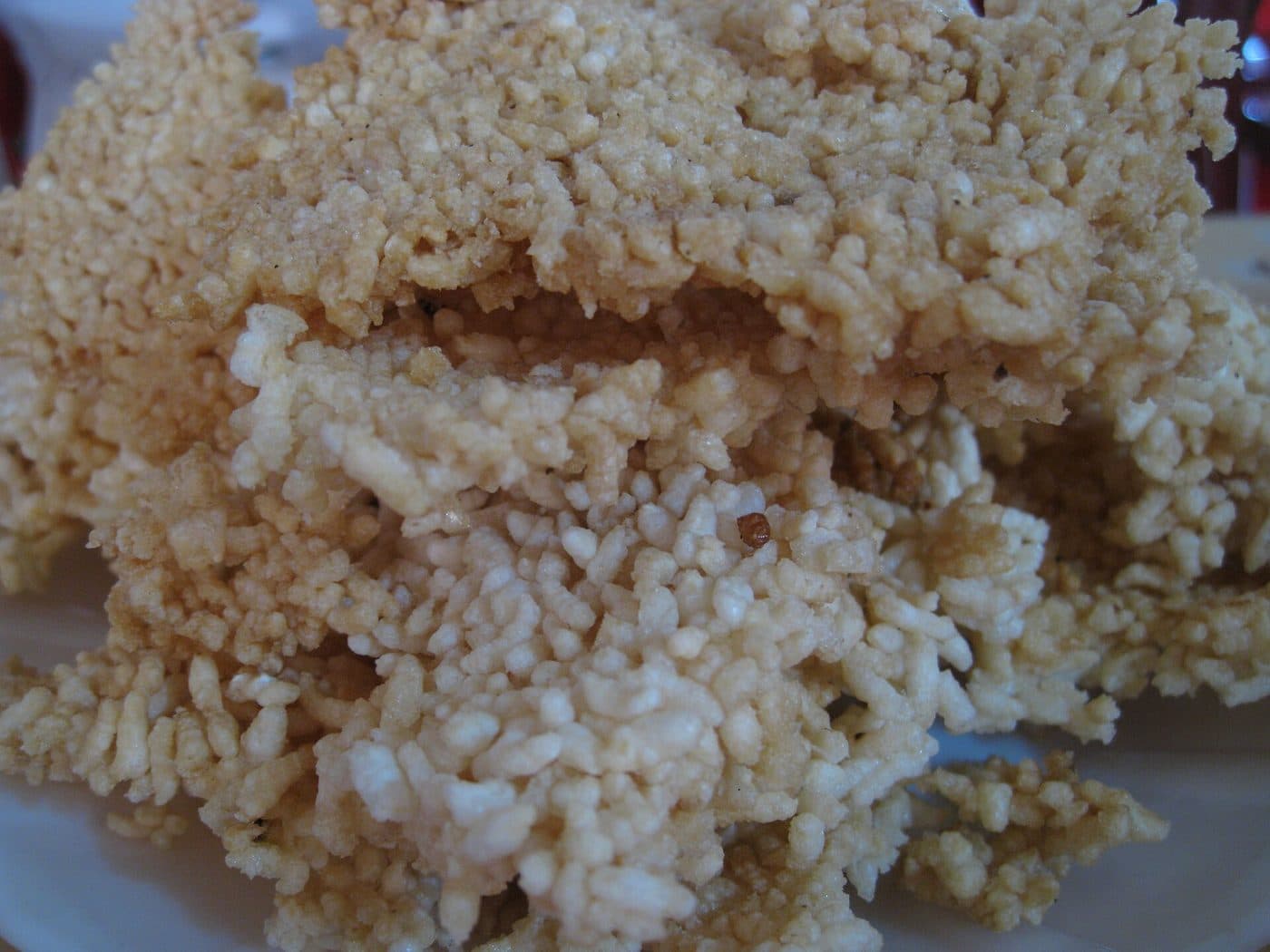
Cơm cháy is pressed rice deep-fried into a golden crust. Two formats exist: a hot restaurant plate under meat gravy (50,000–180,000 VND, ~$2–7, depending on slab size) and a sealed pack to carry away (36,000–45,000 VND, ~$1.40–1.75). Texture-wise, imagine a rice cracker with real chew under the crunch; the flavour is toasty and mildly savoury, closer to popcorn than to bread.
Where it came from
The dish has a named inventor: Đinh Hoàng Thăng, a Ninh Binh man, late nineteenth century. From there the story slides into folklore. He works at a Chinese restaurant in Hanoi, misses home cooking, and forgets a pot of rice from his aunt on the fire until the bottom bakes into a solid disc. Rather than bin it he fries it, breaks it up and pours braised beef sauce over the pieces. The guests approve, the recipe travels back to Ninh Binh, and it never leaves.
Today it is not a handful of workshops but hundreds: by 2016 the province counted roughly 250 producers and 400 tonnes a year. The better brands run under OCOP (One Commune One Product), a state scheme you can spot by the "OCOP 3 sao / 4 sao" star logo on the pack. The largest producer, Đại Long, also carries an ISO 22000 food-safety certificate.
Types and prices
| Type | What is in it | Price |
|---|---|---|
| Cơm cháy chà bông | Crispy rice with pork floss | 36–45k VND (~$1.40–1.75) |
| Cơm cháy ruốc | With dried shrimp or shredded pork | 40–50k VND (~$1.55–1.90) |
| Cơm cháy in a restaurant | Hot slab under braised-meat gravy | 50–180k VND (~$2–7) |
| Cơm cháy ngọt | Sweet version with caramel and sesame | 35–50k VND (~$1.35–1.90) |
The default souvenir is cơm cháy chà bông. It crunches, it does not grease your hands, it has no strong smell, and it contains no seafood — which matters if anyone in the office has a shellfish allergy.
Buying it without paying triple
- Judge by price, not packaging. An honest pack is 36,000–45,000 VND. The names on the shelf are Đại Long, Cố Đô, Hoa Lư, Việt Hưng, Nếp Hương, Trường An, and the spread between them has little to do with taste.
- Do not buy it in a supermarket outside the province. A pack labelled "Ninh Binh" but made in Hanoi is factory output on cheaper rice with preservatives. About 30% cheaper, and a different food.
- Three to five packs is the right amount. Producers print one to three months of shelf life; once opened it needs an airtight bag or the crust softens within days. Checked luggage is fine — no melting, no odour, no liquid rules.
How to eat it in a restaurant
Order cơm cháy with gravy and a 20–25 cm slab arrives on one plate with a bowl of braised beef or goat sauce beside it. You break the slab with your hands, pile the pieces up and spoon the sauce over. Crisp outside, soaked soft inside. Eat it hot: cold cơm cháy loses most of the point.
Three things separate a good plate from a lazy one. The rice was fried today rather than defrosted, the gravy has visible meat in it, and the sesame is a seasoning rather than a coating.
Snails, perch and eel — the easy misses
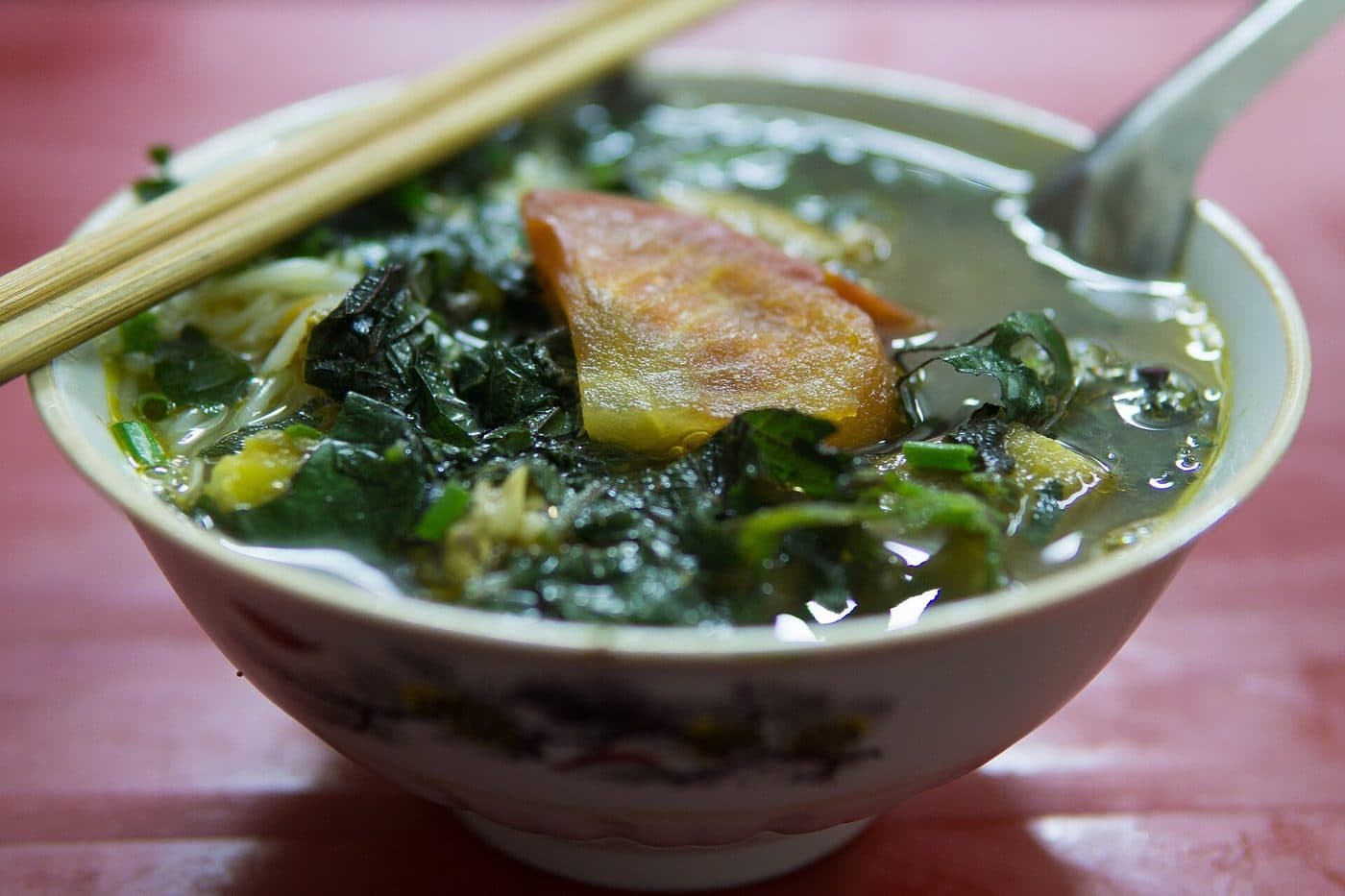
Past the goat and the rice there are three regional dishes that a visitor walks straight past without knowing they exist. Mountain snails, a small perch from the Hoa Lu streams, and rice-paddy eel with glass noodles.
Ốc núi — the snails that are not always there
Ốc núi live in limestone crevices and feed on hill greenery. The thing to know: they are seasonal. Collectors work by hand and only in the warm months — Vietnamese sources usually say April to August, though the edges of that window move with the rains each year. Out of season the snails retreat into the rock, and asking for them gets you either a no or a bag from the freezer.
In season expect roughly 200,000–400,000 VND per kilo (~$8–15); there is no fixed price because the catch is whatever came down the hill that morning. A restaurant portion is 150,000–300,000 VND (~$6–12) and works as a starter for two.
- Ốc núi luộc sả — steamed with lemongrass and lime leaf. The cleanest version; you actually taste the snail, which is firm and vaguely herbal rather than muddy.
- Ốc núi nướng tiêu xanh — grilled with green peppercorns. Sharper, hotter, a beer dish.
- Ốc núi xào dừa — stir-fried in coconut milk. Sweeter, for anyone who does not want the heat.
The mechanics: you hook the snail out of its shell with the toothpick they bring, then dip it in mắm gừng, a ginger-and-chilli fish sauce. If you are here out of season, put the money into a second portion of goat instead.
Cá rô Tổng Trường — perch from the old capital
A local perch strain found only in the streams around Hoa Lu. Small, 15–20 cm, firm flesh, few bones. Three treatments: kho tộ, braised in a clay pot with caramel, pepper and fish sauce, sticky and intensely savoury; chiên giòn, fried whole until the bones crunch and eaten with your hands; and cháo cá rô, a rice porridge with the fish picked through it, eaten for breakfast or very late.
A dish runs 80,000–150,000 VND (~$3–6). It is not on every menu — ask at the places near water, such as Chinh Thu on the Trang An road or Cuong De in Trang An village.
Miến lươn — glass noodles with eel
The eel (lươn) comes out of local rice paddies and canals: thin, delicate, much closer to a river sardine than to the fatty unagi most people picture. Three versions: miến lươn xào giòn, stir-fried with glass noodles, onion and herbs, the noodles crisp on arrival and softening as the sauce works through; miến lươn nước, the soup with spring onion and fried shallot; and lươn om chuối đậu, stewed with green banana, tofu and turmeric — thick, earthy, faintly bitter.
Price: 60,000–120,000 VND (~$2.30–4.60). Look for it in the morning street cafés in the centre, in the same blocks where the pho pots stand.
Cơm chay — vegetarian food at the pagodas and in town
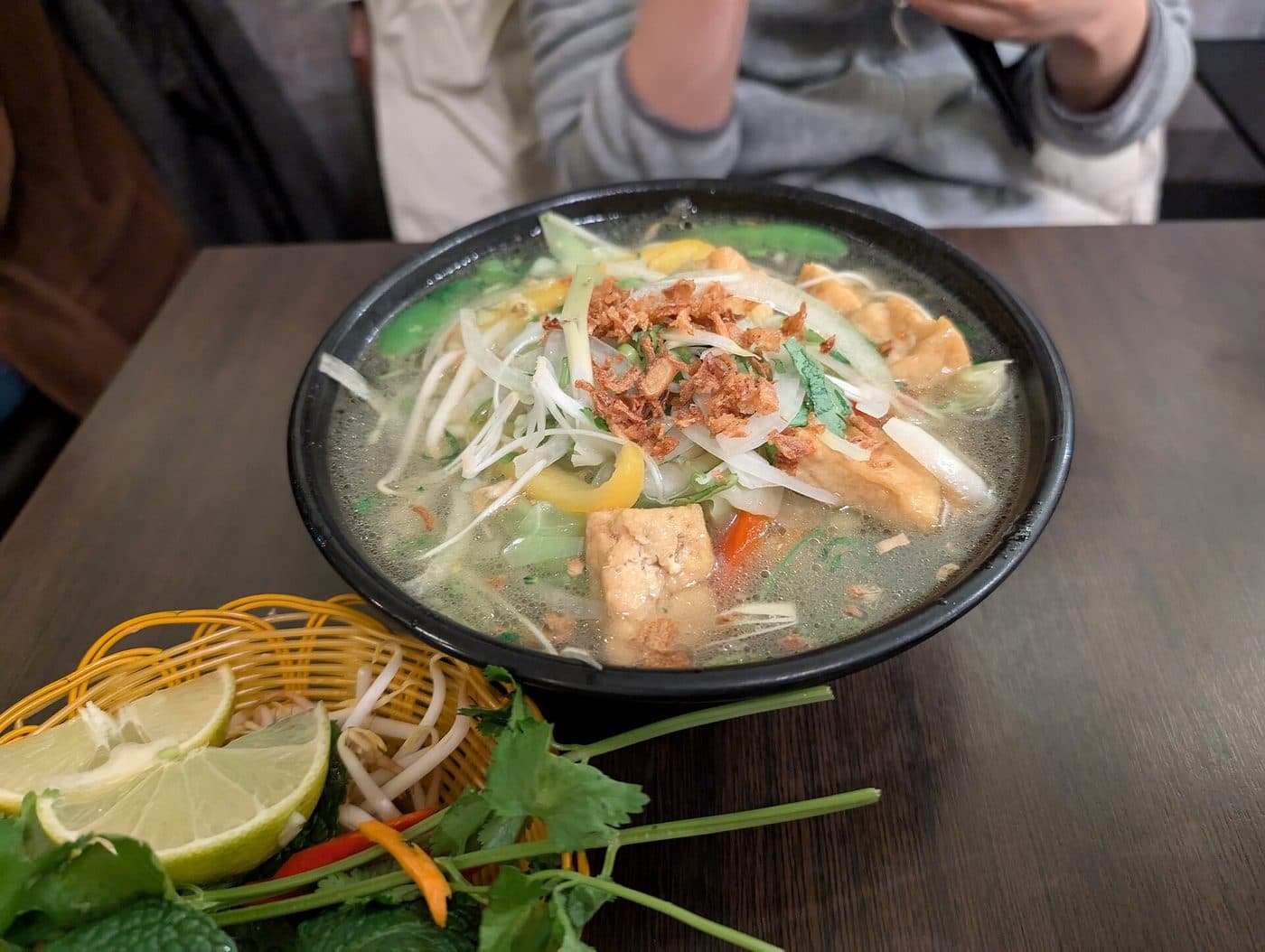
Ninh Binh holds two of northern Vietnam's largest Buddhist pagodas: Bái Đính and Bích Động in the Tam Coc cliffs. Vegetarian kitchens grew up around both, cooking cơm chay to the Buddhist canon — vegan in practice. A set of four or five dishes plus rice and soup is 80,000–150,000 VND (~$3–6). For committed carnivores it is not a destination, but for vegetarians it is the only reliable option in the province.
Where the tradition comes from
Northern Vietnam is Mahayana territory and the rules are strict: no meat, no fish, no dairy, and for monastics none of the "five pungents" either — onion, garlic, leek and spring onion are out. The cooking leans on tofu, straw mushrooms, lotus root and wheat gluten shaped into meat analogues, some of them uncannily convincing. On the first and fifteenth day of the lunar month lay Buddhists eat vegetarian too, and the vegetarian places are packed.
Where to eat
| Place | Address | Hours | Notes |
|---|---|---|---|
| Nhà hàng Chay Hoa Lư | 56 Lương Văn Thăng, city centre | 07:00–21:00 | The main vegetarian restaurant in town |
| Cơm Chay An Lạc | Đường 30 Tháng 6, phường Hoa Lư | 08:00–21:00 | Canteen format, cheaper |
| Chay Khai Tâm | 15 Đông Phương Hồng | 10:30–14:00 and 17:30–22:00 | Vegan restaurant: vegetarian bun, mushrooms, fried tofu |
| Kitchens inside Bái Đính | Bai Dinh complex | grounds 06:00–21:00 | Cat Tuong restaurant and the canteen under the Tam The hall |
On the Bai Dinh kitchens, the honest answer is that no official source publishes their hours. The complex itself is open 06:00 to 21:00, entry is free, the shuttle cart and the Bao Thap tower climb are paid separately; check the fares at the ticket desk. The kitchens operate inside that window and follow the pilgrim flow: at lunchtime everything is running, by evening half the counters have packed up, and on full-moon and new-moon days by the lunar calendar there is a queue from opening. Planning a pagoda lunch for 19:00 is a bad idea. Planning it for noon works.
What is in a set
A standard cơm chay at 100,000–150,000 VND (~$4–6) is rice plus three or four dishes plus soup and tea. The usual line-up: đậu hũ kho (tofu braised in caramel and soy), nấm xào sả (mushrooms with lemongrass), stir-fried water spinach, canh chua chay (sweet-sour soup with tofu, pineapple and tomato), unlimited white rice and lotus tea.
If onion and garlic matter to you, go to the city places — Chay Hoa Lư and Chay Khai Tâm use both. Strict monastery kitchens do not, and to an unaccustomed palate that reads as bland where a Buddhist reads it as correct.
Seven restaurants that actually exist
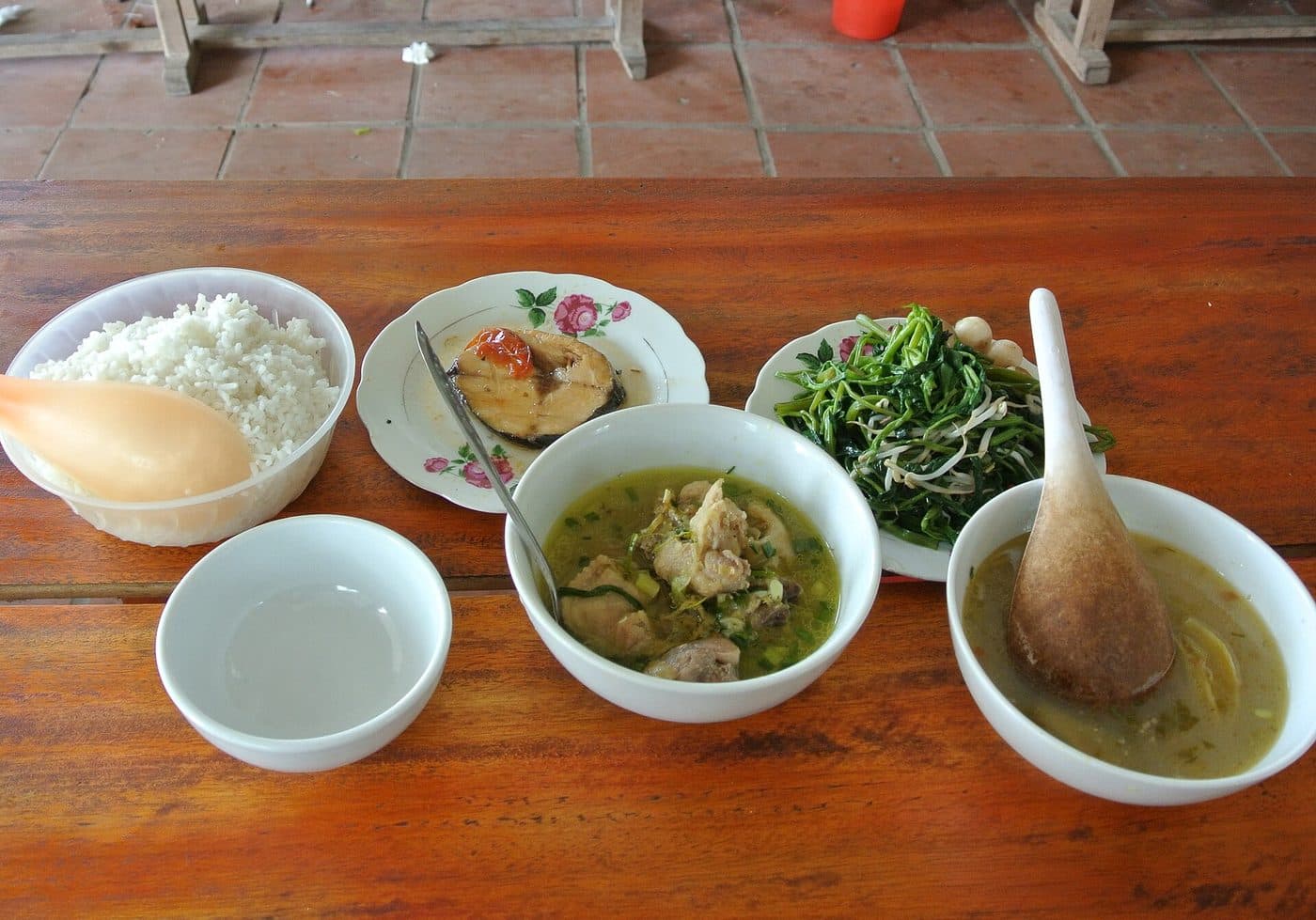
The filter for this list was dull and non-negotiable: a place is in only if Vietnamese restaurant guides from 2026 can find it. Three well-known names from older English-language listicles failed that test — the guides did not have them — so they are not here. What is left is seven addresses across three tiers: showroom restaurants built for coaches, family kitchens with a history, and roadside places on local prices. Bills below are for two, with beer.
| Restaurant | Known for | Where | Bill for two |
|---|---|---|---|
| Đức Dê | The fullest seven-dish set in town | Nguyen Hue St | 600k–1m VND (~$23–38) |
| Hoàng Long | Goat and crispy rice in one order | Trang An road | 500–800k VND (~$19–31) |
| Chính Thư | Family kitchen since 2008, hotpot | Khe Thuong village | 400–700k VND (~$15–27) |
| Thăng Long | 500 seats, tour groups | QL38B, Truong Yen | 500–900k VND (~$19–35) |
| Ba Cửa | Cheapest of the big rooms | Trang An village | 300–600k VND (~$12–23) |
| Dũng Phố Núi | Open 07:00 to 23:00 | Khe Thuong village | 300–600k VND (~$12–23) |
| Cường Dê | Dishes priced one by one, no full set needed | Trang An village, Trường Yên | 300–500k VND (~$12–19) |
Đức Dê — the default answer
Address: Nguyen Hue Street in the south of the city (formerly Ninh Phong ward, now phường Nam Hoa Lư). Hours: roughly 08:00–22:30, though directories give anything from 07:00 to 23:00. Bill for two: 600,000–1,000,000 VND (~$23–38).
If you only eat goat once in Ninh Binh, eat it here. Vietnamese food guides have put this place first for two decades and it is where tour operators book groups. The seven-dish set holds up across the board: the lime-cured meat arrives on a morning delivery rather than from a freezer, and the hotpot broth is built on bones and roots instead of a stock cube, which in Ninh Binh is not a given. The downside is the one every headline restaurant has: prices run 15–20% above the town average.
No booking needed on weekdays. Friday and Saturday after 19:00, message ahead — the number is on their Facebook page.
Hoàng Long — both specialities in one sitting
Addresses: the Trang An road between Trang An and Bai Dinh, plus a second branch at Tan An – Tan Thanh in the city. Bill for two: 500,000–800,000 VND (~$19–31).
The concept is on the sign: dê núi – cơm cháy – gà đồi. Order the goat set and it comes with a large hot slab of crispy rice and its own bowl of gravy, so both provincial specialities are handled in a single evening. The scale is absurd — the main hall is huge, with private rooms on top — so atmosphere is not what you are buying. In exchange, they almost always seat walk-ins.
A third branch sits at Tam Chuc in the former Ha Nam province. After the 2025 merger that is technically Ninh Binh too, just an hour north.
Chính Thư — the family kitchen on the Trang An road
Address: Khe Thuong village, on the road from the city to the Trang An complex. Hours: approximately 10:00–21:00. Bill for two: 400,000–700,000 VND (~$15–27).
Running since 2008, with forty years of goat cooking behind the owning family — one of the rare cases where "family recipe" is not marketing. The signature is lẩu dê: a big shared pot, herbal broth, unlimited vegetables and noodles. It comes into its own on a cool day, and Ninh Binh is cool from December to February. The other reason to stop is the dê tái chanh — sliced thin, fresh lime, ginger kept in check.
Thăng Long — for groups of six or more
Address: Chi Phong, Truong Yen, on highway QL38B — 3.5 km from Bai Dinh and about 4 km from Trang An. Bill for two: 500,000–900,000 VND (~$19–35).
Five hundred seats, and the core clientele is coaches out of Hanoi. Travelling with kids or older relatives, this is simply the easier room: round tables, working toilets, its own car park. The banquet package — seven-dish goat plus crispy rice plus river fish — is priced per head and comes out predictable. No revelations, but nothing goes wrong either.
Ba Cửa — cheap and local
Address: Trang An village, Truong Yen. Check the hours locally. Bill for two: 300,000–600,000 VND (~$12–23).
The cheapest of the large rooms, and Vietnamese round-ups say so bluntly. Reckon on 110,000 VND (~$4) per person upward, and for that the goat is no worse than downtown: Ninh Binh restaurants share suppliers, and the difference is markup on the signage. Open until eleven at night, which is rare in a province that switches off by ten.
Dũng Phố Núi — early breakfast, late dinner
Address: Khe Thuong village, halfway between the city and Tam Coc. Hours: 07:00–23:00. Bill for two: 300,000–600,000 VND (~$12–23).
The schedule is the selling point. Seven in the morning is almost indecent for a Vietnamese goat restaurant, which is exactly why people who took the first bus from Hanoi end up here for a heavy late breakfast instead of pho. Reckon on 150,000–300,000 VND (~$6–12) per person. Roadside setting, honest food.
Cường Dê — goat by the plate near Trang An
Address: Trang An village, Trường Yên. Hours: 08:00–21:00. Bill for two: 300,000–500,000 VND (~$12–19).
Handy if your boat trip is in Trang An rather than Tam Coc. Dishes are priced individually at 60,000–400,000 VND, so two people do not need the full set: three or four plates cover lunch.
Markets, street food and breakfast
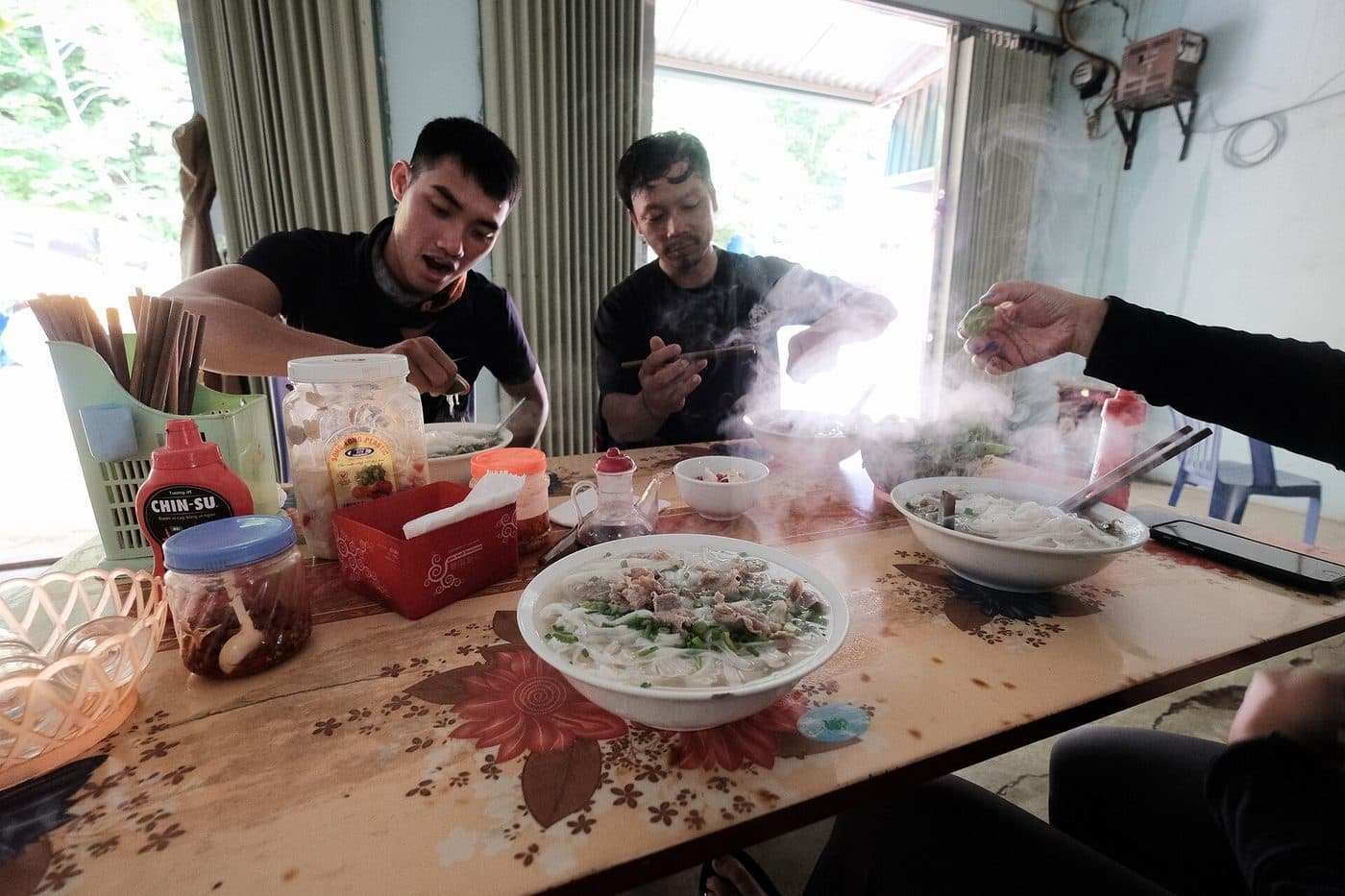
Taking hotel breakfast in Ninh Binh is a wasted morning.
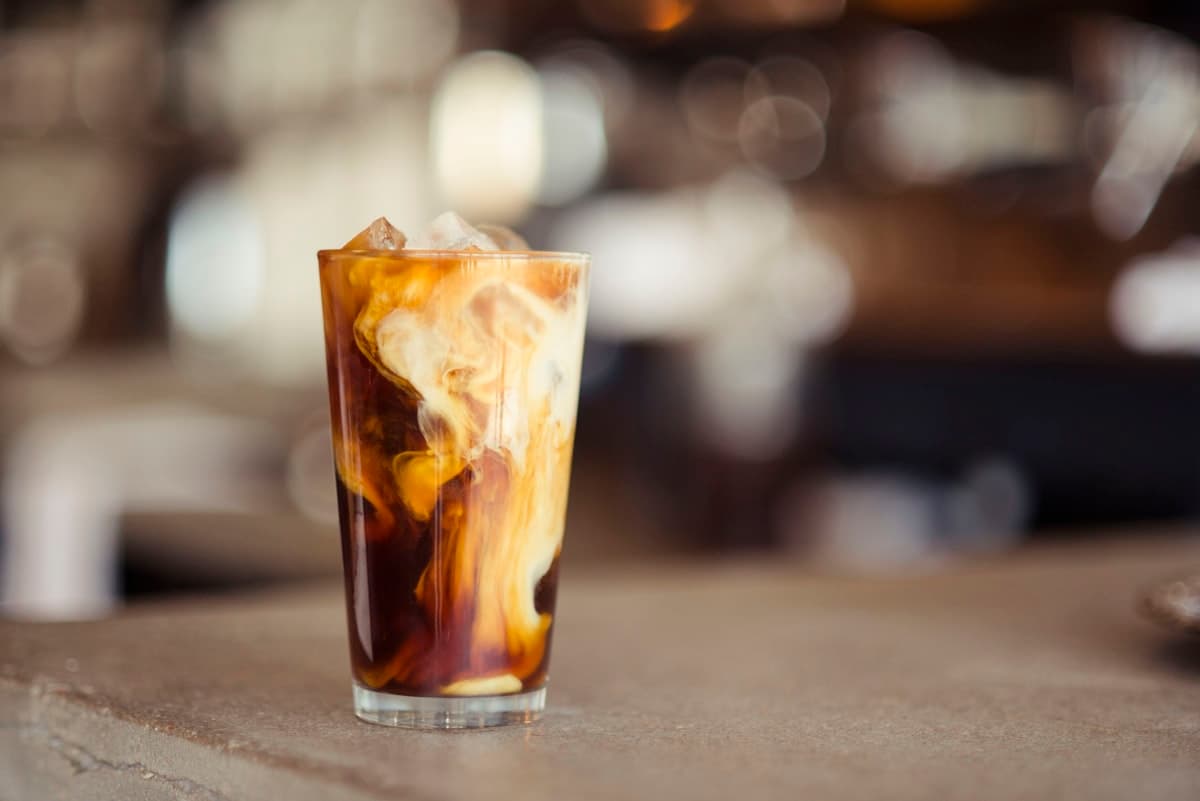
Street breakfast costs 40,000–80,000 VND (~$1.50–3) and is an order of magnitude more interesting: phở, bún, bánh mì and a glass of cà phê sữa đá, iced coffee with condensed milk. It also runs on a hard schedule — the best places shut by ten in the morning and reopen the next day.
The markets
| Market | What to look for | When |
|---|---|---|
| Chợ Tam Cốc | Village market: vegetables, souvenirs, dried goat | mornings, gone by noon |
| Chợ Cầu Đông (Hoa Lu) | Rural market by the ancient capital, no tourists at all | early morning |
| Night market | Fast food and sweets; does not run every evening | evenings, ask locally |
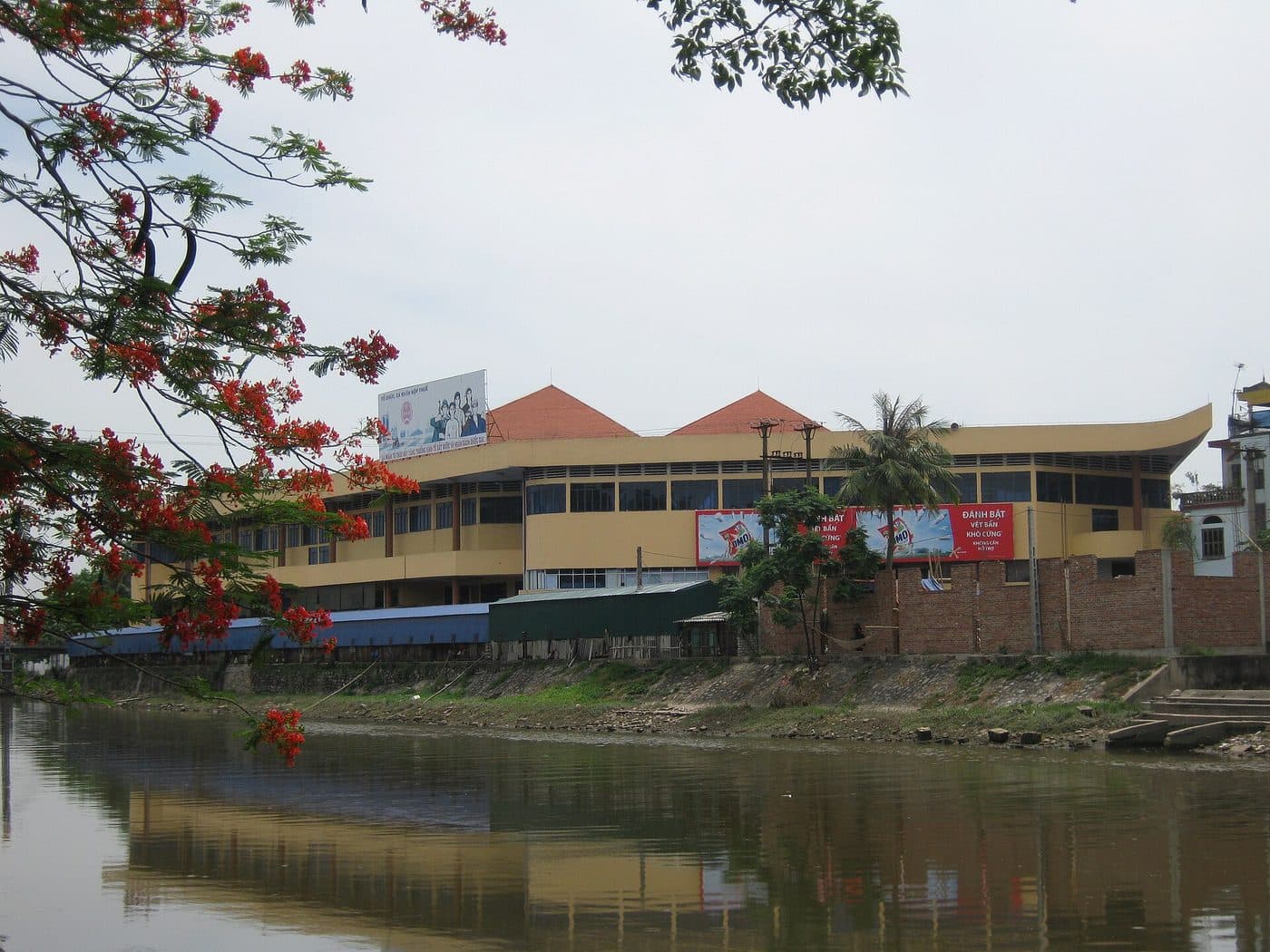
The city's main market, Chợ Rồng (the Dragon Market) by highway QL10, was demolished in December 2025 for an irrigation project. Traders were moved to temporary stalls, to Chợ Nam Thành and to nearby markets, and some rows were promised a return to the old market site by the end of January 2026. We have not yet checked how trading works there now: ask your hotel for hours and directions.
Street addresses worth the walk
- Phở Huy Lư — the morning pho: alley 252, Ngo Gia Tu Street, 05:30–10:00, 25,000–100,000 VND (~$1–4). The pot empties by ten and the place closes until tomorrow, which is the clearest evidence the broth is made once a day.
- Phở Bò 24 — 109 Le Hong Phong, 08:00–22:00, 30,000–50,000 VND (~$1.15–1.90). The fallback for anyone who slept through the morning.
- Bánh Mì Tú Phong — 300 Hai Thuong Lan Ong, 05:00–21:30, 5,000–20,000 VND (~$0.20–0.80). Opens before everything else and costs almost nothing.
- Bánh Mì Giòn — alley 43, Luong Van Tuy Street, 07:00–21:00, 15,000–65,000 VND (~$0.60–2.50). Heavier fillings, closer to a sandwich than a snack.
What to drink
Beer is the same everywhere: Bia Hà Nội at 12,000–18,000 VND in a shop and 20,000–30,000 VND (~$0.80–1.15) in a restaurant. If a menu promises "local draught", it is often the same Hanoi lager from a keg.
For spirits there is rượu Kim Sơn, rice liquor from the south of the province: 40–45% ABV, cloudy white, sharp on the nose. A 500 ml bottle costs 80,000–150,000 VND (~$3–6). It is drunk with goat hotpot and it does make the meat go down easier. At festivals people drink rượu cần — fermented rice wine through bamboo straws from a communal jar. Tourists are rarely offered it, but if a homestay host invites you, saying no is rude.
Every restaurant meal comes with free trà đá, iced tea. It is not bottled water but tea brewed that morning and poured over ice, and the tea and ice are usually made from boiled water; locals drink it without a second thought.
What eating in Ninh Binh costs
Summary table as of August 2026.
| Item | VND | USD |
|---|---|---|
| Street pho, breakfast | 25,000–60,000 | ~$1–2.30 |
| Banh mi | 5,000–35,000 | ~$0.20–1.35 |
| Seven-dish goat set for two | 600,000–1,000,000 | ~$23–38 |
| Goat hotpot for 3–4 | 300,000–800,000 | ~$12–31 |
| Crispy rice in a restaurant | 50,000–180,000 | ~$2–7 |
| Crispy rice, take-home pack | 36,000–45,000 | ~$1.40–1.75 |
| Vegetarian set | 80,000–150,000 | ~$3–6 |
| Mountain snails, in season | 150,000–300,000 | ~$6–12 |
| Iced milk coffee | 15,000–25,000 | ~$0.60–1 |
| Bia Ha Noi in a restaurant | 20,000–30,000 | ~$0.80–1.15 |
| A day of eating, per person | 200,000–400,000 | ~$8–15 |
Three reference budgets. Day trip from Hanoi, lean — $4–7 a head: street pho in the morning and a light lunch in Tam Coc. Day trip, comfortable — $38–56 for two: lunch in Tam Coc plus a proper dinner with the full set. Two nights in Tam Coc for two — 1.3–2m VND (~$50–77) on food altogether, including one big goat dinner and packs of crispy rice to carry home.
A one-day food plan
Built for day-trippers out of Hanoi: morning train or limousine bus in, evening one out. Budget for two, food and souvenirs included: 1,300,000–1,900,000 VND (~$50–73).
Morning, arrive 09:00–09:30. Iced coffee at any of the cafés outside the station (15,000–25,000 VND). Breakfast is pho at Phở Huy Lư on Ngo Gia Tu, 25,000–100,000 VND a bowl — do this first, not third, because after ten it is closed. Then Chợ Nam Thành, where many traders from the demolished Dragon Market moved, to see how the town works before the tourists arrive, and fruit for the road.
Midday, 10:00–13:00. Grab or motorbike to Tam Coc, 7 km, 40,000–80,000 VND (~$1.50–3). Boat, Mua Cave or a bicycle through the villages, your call. Lunch by the pier: three or four goat dishes rather than the full set, so there is room for dinner. 300,000–450,000 VND for two (~$12–17).
I chose route No. 3, which takes 3 hours… I'd also advise taking some food with you: on the route they only sell drinks and ice creamКысь on the Trang An boat, Vinsky Forum, 2025, translated by VietnamSpot
Afternoon, 14:00–17:00. One more sight, then a snack from a stall: crispy rice by the piece and fresh juice, 50,000–80,000 VND.
Evening, 18:00–20:00. Back into town for dinner at Đức Dê or Hoàng Long: the full seven-dish set and a bottle of Bia Ha Noi. 700,000–1,000,000 VND for two (~$27–38).
Before you leave. Crispy rice from the market on the way to the station — but only if you get there before 18:00. Five packs of Dai Long or Co Do run 180,000–225,000 VND (~$7–9).
Eight things worth knowing
- Tiết canh dê is not for visitors. Raw goat blood is the one genuine hygiene problem in the local repertoire. Locals eat it at Tet and on special occasions; the infection risk does not care about that. If a waiter offers it, declining politely is a normal answer.
- Mountain snails only appear in the warm months, roughly April to August. Out of season what is on the menu came out of a freezer, and it tastes like it.
- Buy crispy rice by price, not packaging. Look for the OCOP stars: Dai Long, Co Do, Hoa Lu, Viet Hung. An honest pack is 36,000–45,000 VND; double that at a boat pier is markup, not a better product.
- Pier markup exists but is not universal. Some places by the boat stations run 30–50% above town rates. Read the menu before you sit down — per-item prices are printed.
- The seven-dish set is a lot of food. It comfortably feeds two. Solo, order the half set of three or four dishes.
- Pagoda kitchens cook without onion or garlic. If that matters to your palate, the city vegetarian places use both.
- Carry cash. The big restaurants generally take cards and QR payment, but roadside and family places do not. Withdraw VND from ATMs in the centre rather than at the Tam Coc piers, where fees are higher. Most machines cap a single withdrawal at 3,000,000–5,000,000 VND.
- Plan dinner before 20:00. Most kitchens close between 21:00 and 22:00; Ba Cua and Dung Pho Nui stay open the longest. The market shuts at 18:00, so buy souvenirs during the day.
FAQ — eating in Ninh Binh
Two dishes carry the province: de nui, mountain goat served seven classic ways, and com chay, deep-fried crispy rice. After that it is optional — oc nui (mountain snails, warm months only), mien luon (glass noodles with eel) and a com chay vegetarian set near Bai Dinh pagoda. Budget about 500,000 VND (~$19) for two people in one restaurant to try the core of it.
The breed is small and lives on bare limestone, so the meat is dense, almost fat-free and carries a herbal note instead of the barnyard smell most people associate with goat. These animals reach slaughter at 15-18 months against 8-10 on a lowland farm. Raw meat runs 350,000-750,000 VND per kilo (~$13-29) depending on the cut, two to four times the price of pork. The dish entered Vietnam's top-50 national specialities in 2012 and the name has been under legal protection since 2018.
- For two people600,000-1,000,000 VND~$23-38at a front-line restaurant like Duc De or Hoang Long
- For a group of three or four with hotpot1,200,000-1,800,000 VND~$46-69
- Roadside places such as Ba Cua and Dung Pho Nuifrom 110,000 VND~$4-6charge per head: Ba Cua from 110,000, Dung Pho Nui from 150,000 VND; roughly a third less, with none of the presentation
Yes. Producers print a shelf life of one to three months and it travels fine in checked luggage — it does not melt and it has almost no smell. Once opened it needs an airtight bag or the crust goes soft within days. Buy local OCOP-certified brands: Dai Long, Co Do, Hoa Lu. A pack costs 36,000-45,000 VND (~$1.40-1.75), so five packs for an office of ten is under $9.
There is no single answer, only three scenarios. Duc De on Nguyen Hue has the fullest seven-dish set and is where tour groups land. Hoang Long on the Trang An road serves goat and crispy rice in one order. Chinh Thu in Khe Thuong village is a family kitchen running since 2008 with the best goat hotpot. If you want goat without the full set, Cuong De in Trang An village prices dishes one by one.
Yes. Inside the Bai Dinh complex there is the Cat Tuong restaurant and a canteen under the Tam The hall; neither publishes hours, the grounds run 06:00-21:00 and the kitchens follow the pilgrim flow, so lunchtime is the safe bet. In town, Nha hang Chay Hoa Lu (56 Luong Van Thang, 07:00-21:00) and Com Chay An Lac (08:00-21:00). A four or five dish set costs 80,000-150,000 VND (~$3-6). Monastery kitchens cook without onion or garlic; city ones use both.
Broadly yes, under three rules. Pick stalls with a local queue — turnover is the freshness indicator. Skip tiet canh de, raw goat blood, which is the one genuine hygiene problem in the local repertoire. And avoid cooked food that has been sitting in the sun. Street pho, bun and banh mi at established addresses are fine.
Read next: Ninh Binh guide · Tam Coc and Trang An boat tours · Eating in Hanoi · Vietnamese street food
VietnamSpot on InstagramTips, lifehacks and news for living in VietnamFollow
- Weather
Ninh Binh Weather by Month 2026: When to Go
Ninh Binh weather month by month: rain, sunshine, the 10-day golden rice window at Tam Coc, lotus season, typhoons and what to pack.Ninh Binh Weather by Month 2026: When to Go - Guide
Ninh Binh Boat Tours: Trang An & Tam Coc Guide 2026
Ninh Binh boat tours: Trang An vs Tam Coc, the foot-rowing boats, the "inland Ha Long", tickets, the golden-rice season and day trips from Hanoi.Ninh Binh Boat Tours: Trang An & Tam Coc Guide 2026 - Preparation
Getting to Ninh Binh 2026: train, limousine van, prices
Hanoi to Ninh Binh in 2026: train from $4, limousine van with hotel pickup for $10, buses, Grab. Plus how to move around a region with no public transport.Getting to Ninh Binh 2026: train, limousine van, prices