Getting to Ninh Binh — and getting around once you are there
The 92 km from Hanoi is the easy half. Five workable options, from a $4 train seat to a $42 car for the whole group, all of them 1.5 to 2.5 hours. The hard half starts at Ninh Binh station: you cannot count on a bus or a shuttle between Tam Coc, Trang An and Mua Cave. Here is how to cover both halves without wasting a day on logistics.
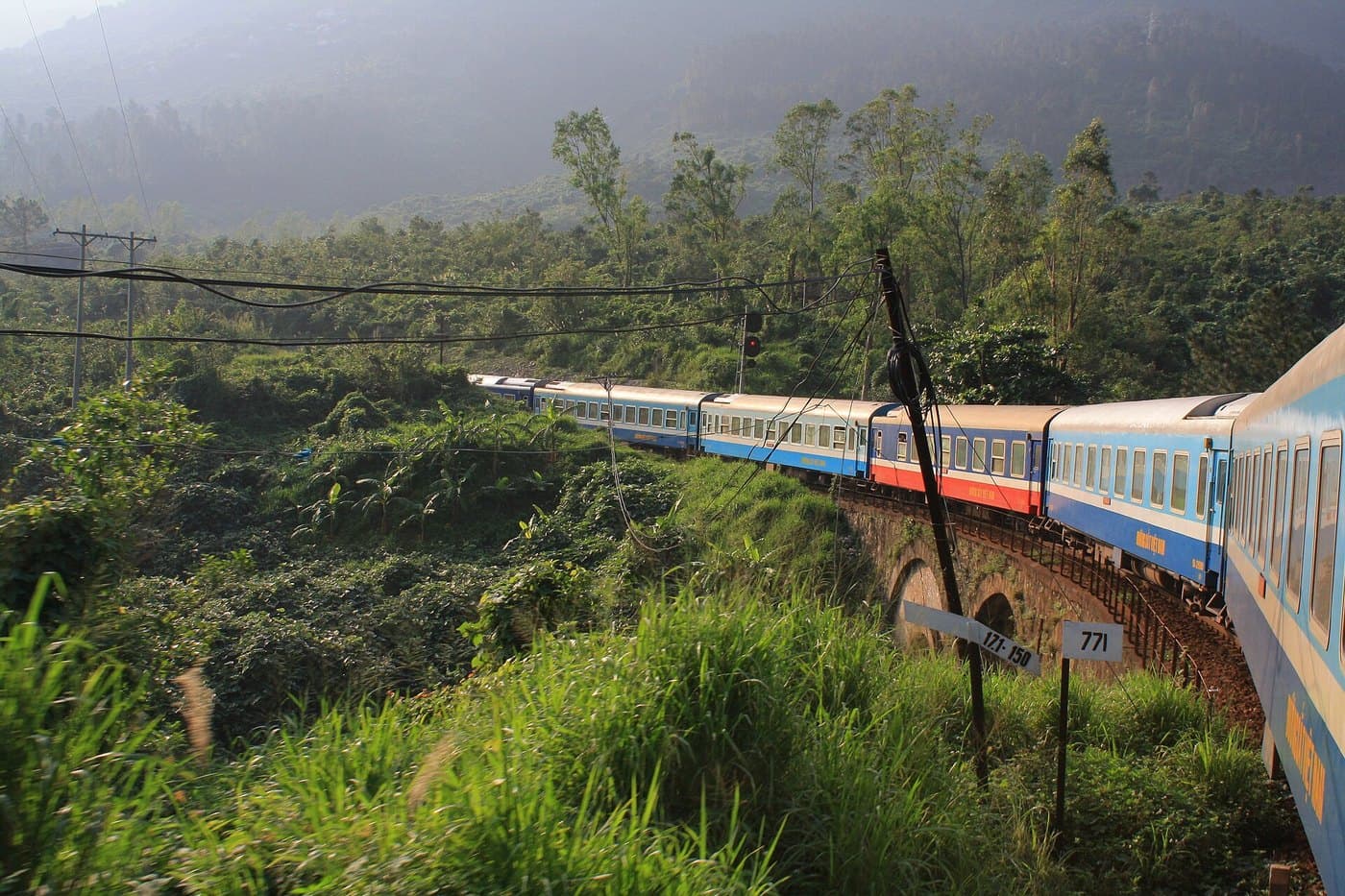
Hanoi to Ninh Binh: five ways in five minutes
It is 92 km by road on highway AH1 and 115 km by rail. Every option lands between 1.5 and 2.5 hours, so what you are really buying is the number of transfers.
Currency converter
| Option | Time | VND | ~USD | Best for |
|---|---|---|---|---|
| Train, soft seat | 2 h 10 min – 2 h 30 min | 110,000–150,000 | $4–6 | Solo, couples, anyone who likes windows |
| Train, sleeper berth | 2 h 10 min – 2 h 30 min | 160,000–280,000 | $6–11 | Evening departures, late arrivals |
| Limousine van | 2–2.5 h | 200,000–350,000 | $8–13 | Most travellers, door to door |
| Public bus | 2–2.5 h | 120,000–180,000 | $5–7 | Backpackers, no booking needed |
| Grab, whole car | 1.5–2 h | 700,000–1,100,000 | $27–42 | Groups of three or four |
| Ride your own motorbike | 2–3 h | 120,000–150,000 per day | $5–6 | Experienced riders only |
Rates used throughout: 1 USD ≈ 26,000 VND, checked August 2026. Dollar figures are rounded and meant for comparison, not for the exchange counter.
Which one is yours
- Travelling light, watching money — the train. Cheaper than a van, immune to the traffic jam on Hanoi's southern exit, and it drops you in the centre rather than on the ring road.
- Travelling light, watching your patience — the limousine van. Picked up at your hotel desk, dropped at the Tam Coc jetty. Zero transfers, zero negotiating.
- Three or four people — Grab. A car at 800,000 VND works out at 200,000 VND each, under the van price, with no waiting for other passengers.
- Absolute minimum spend — the public bus from Giáp Bát. Turn up, pay, go.
- Landing late — a night train or a private transfer. Vans and public buses stop running by about nine in the evening.
One detail guidebooks skip: this trip has two legs, not one. The 92 km between the cities is the easy leg. The 7–8 km from the station or bus terminal to Tam Coc and Trang An is where your options collapse to a single taxi. A van covers both legs at once, so compare the full door-to-door cost rather than the ticket price — a $5 train plus a $4 taxi is already van territory.
Renting a motorbike in Hanoi and riding down is the other scenario. You arrive with transport already sorted and skip the rental conversation entirely. The cost is the first fifteen kilometres out of Hanoi on AH1, which is dense, fast and unforgiving if you have never ridden in Vietnamese traffic.
The train: slowest to book, best to ride
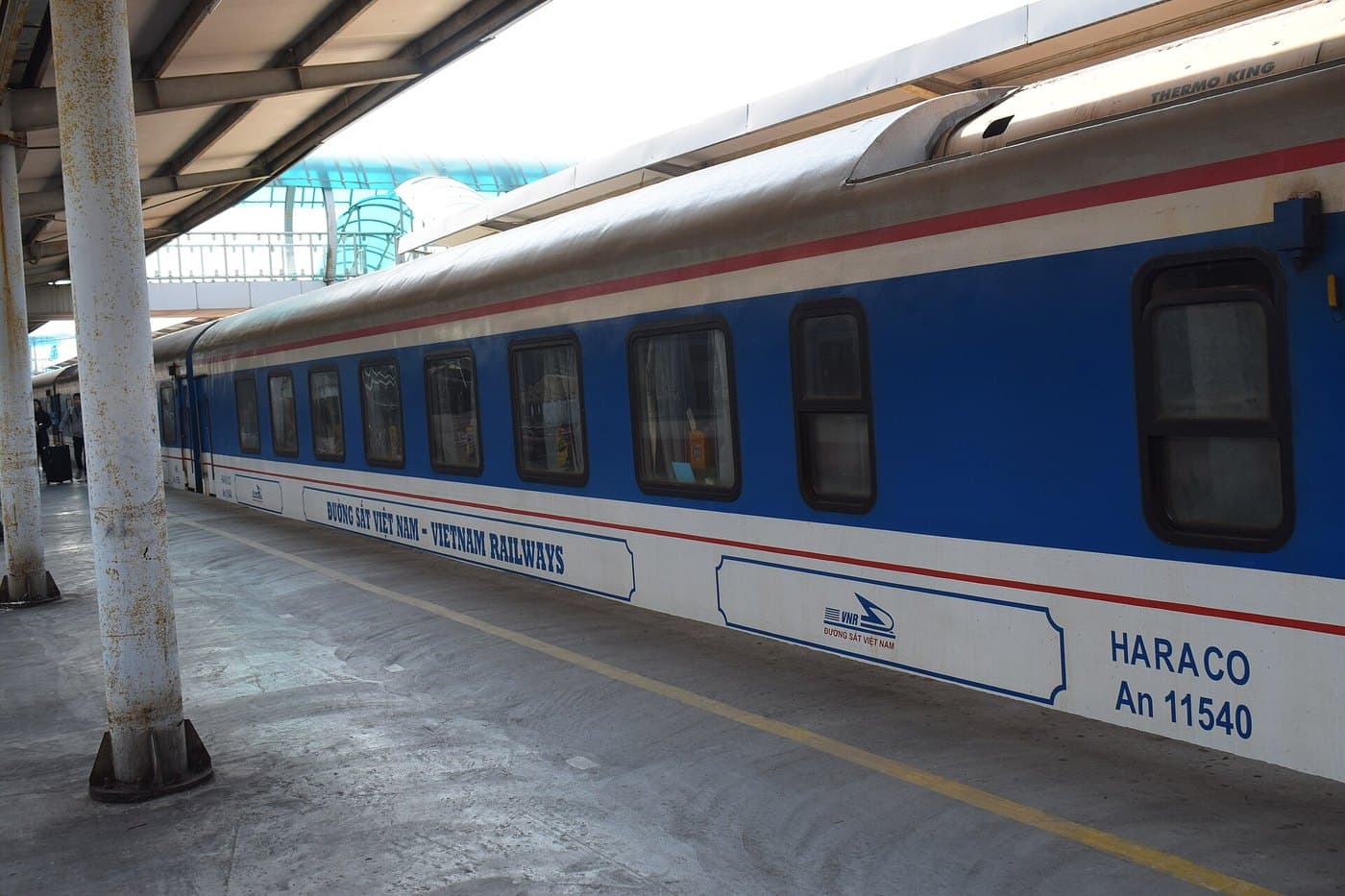
The Hanoi to Ninh Binh leg is part of the North–South line — the 1936 route foreigners know as the Reunification Express. Two hours and change: no traffic, no roadside pickups, air conditioning, and a trolley of instant noodles working the corridor. Outside the window it is the Red River Delta, which means paddy fields, water buffalo and people working in conical hats knee-deep in water.
Departure: Hanoi station, 120 Lê Duẩn. Ten minutes and 30,000–50,000 VND by Grab from the Old Quarter. Ticket windows open around four in the morning and close about ten at night.
Arrival: Ga Ninh Bình, right in the centre. Worth knowing: the 2025 administrative reform left the station name alone. In January 2025 the city merged with Hoa Lư district and took the name Hoa Lư; since July 2025, when the district tier was abolished, the provincial centre has been Hoa Lư ward. That same July the province swallowed neighbouring Hà Nam and Nam Định. Signs, tickets and apps all still say Ninh Bình, so nothing changes for you in practice.
Seven departures a day
| Train | Dep. Hanoi | Arr. Ninh Binh | Why take it |
|---|---|---|---|
| SE7 | 06:00 | ~08:15 | The one everyone takes: first boats at Trang An |
| SE5 | ~08:00 | ~10:15 | Second morning run, easier to get seats |
| SE9 | ~13:00 | ~15:15 | Check in and still make Mua Cave for sunset |
| SE3 | ~19:20 | ~21:35 | Evening run, usually the cheapest seats |
| SE19 | ~19:45 | ~21:55 | Da Nang service, newer rolling stock |
| SE11 | ~20:40 | ~23:00 | Sleeper carriages if you want to lie down |
| SE1 | ~21:45 | ~00:05 | Night train; book your bed before you board |
Classes and fares
| Class | VND | ~USD | When to pick it |
|---|---|---|---|
| Air-conditioned soft seat (ghế mềm) | 110,000–150,000 | $4–6 | Default for any daytime run |
| 6-berth sleeper, upper bunk | 160,000–190,000 | $6–7 | Barely more than a seat, and you can lie flat |
| 6-berth sleeper, lower bunk | 220,000–250,000 | $8–10 | Headroom, and somewhere to put the backpack |
| 4-berth sleeper | 230,000–280,000 | $9–11 | Two people can realistically buy the whole cabin |
The soft seat is the sensible default. Two hours is not long enough to justify paying for a bed, and the ranges above exist because fares move with the specific train and the day of the week — weekends and public holidays cost more. Fares are as listed by vetau247.vn in September 2026.
Where to buy
dsvn.vn is the official Vietnam Railways site. Vietnamese interface with an English toggle, Visa and Mastercard accepted, no booking fee. The seat picker is unusual but it works.
12Go, Baolau and Klook charge 5–10% and give you a clean English interface, a readable seat map and an emailed QR code. No need to print anything: the conductor scans the code against your passport.
The station counter suits anyone changing plans on the day. Short queues on weekdays, cash and cards both fine.
I bought a ticket at the counter… and got to Hanoi just fine in a couple of hours. The train is very dirty, properly filthy. A couple of hours in the evening is bearable…Кысь on the Ninh Binh — Hanoi train, Vinsky Forum, 2025, translated by VietnamSpot
From October to April, book a day or two out. Morning departures at weekends fill up — this is the one stretch where you are competing with Vietnamese travellers heading south rather than with other tourists.
What to do the moment you step off
Ga Ninh Bình is small, there is one exit, and the forecourt always has green Mai Linh cars and xe ôm riders waiting. Tam Coc is 8 km and 90,000–130,000 VND by car; Trang An is 7 km and 80,000–120,000 VND. A GrabBike runs 30,000–50,000 VND if you are travelling light and happy to hold your bag.
Almost every Tam Coc homestay offers a station pickup for 80,000–150,000 VND. That is the same taxi with a name board and no haggling, and it earns its keep on the evening trains: after ten at night only two or three drivers are left outside the station, and their prices stop resembling the meter.
Honest pros and cons
- Plus: you skip the southern exit jam, which at rush hour is worth up to forty minutes.
- Plus: arrival in the city centre, roughly equidistant from both main areas.
- Plus: air conditioning, power sockets, a toilet and room to stand up.
- Minus: you still have to get yourself to Hanoi station, which is another 30,000–50,000 VND and half an hour of faff.
- Minus: seven departures a day instead of a bus every fifteen minutes. Miss one and you wait.
- Minus: a taxi is still required at the far end.
The limousine van from the Old Quarter
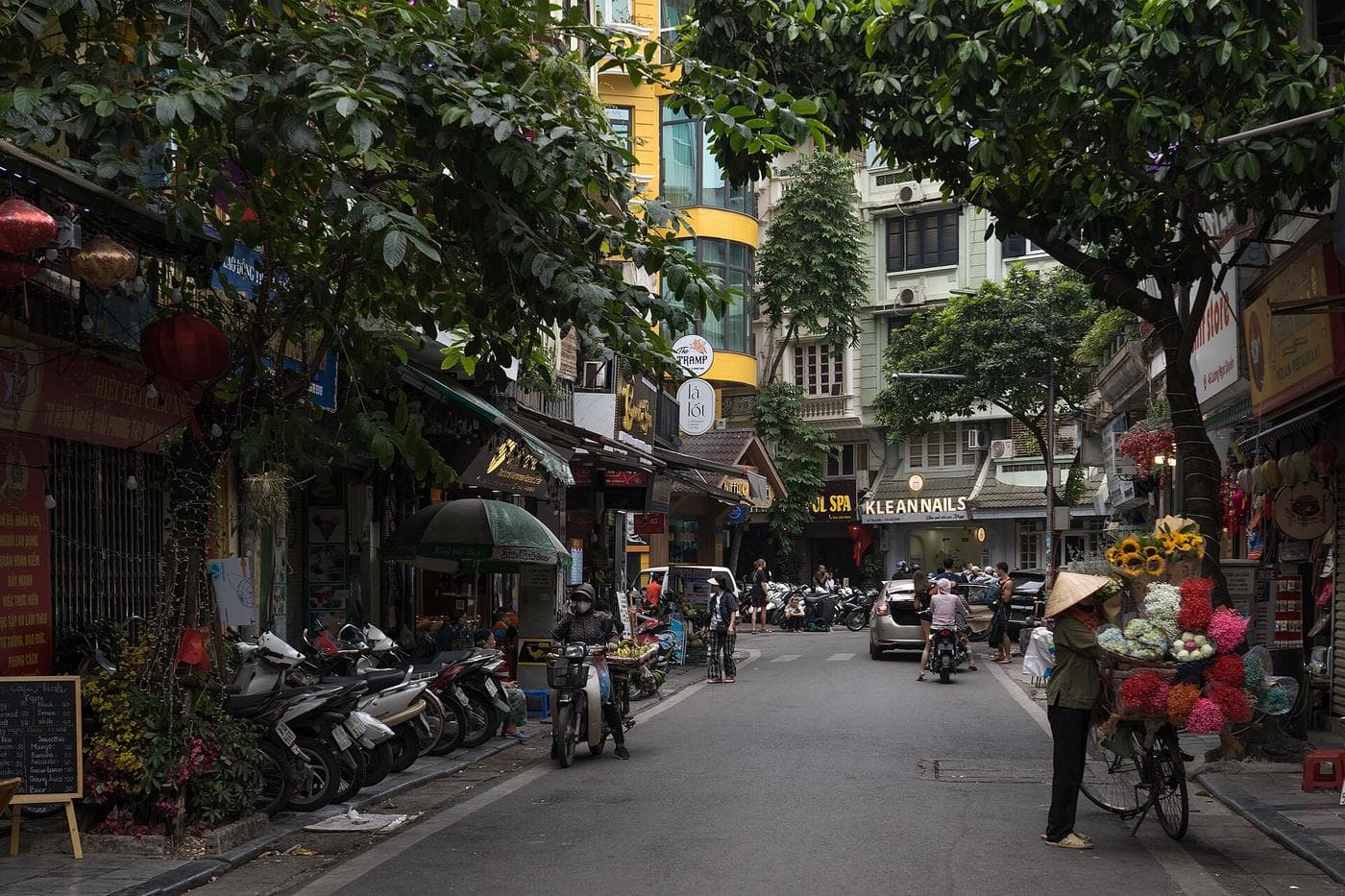
The word "limousine" misleads everyone once. There is no stretched sedan. It is a Ford Transit or Hyundai Solati converted to nine or eleven wide reclining seats, with Wi-Fi, air conditioning and a bottle of water in the cup holder. The seats are not the point; the logistics are. They collect you from your hotel reception in the Old Quarter and drop you in Tam Coc.
For most travellers this is the right trade: $10–14 a head, no bus terminals, no explaining your homestay address to a driver who has never heard of it. Picked up in the morning, standing at the jetty by lunchtime.
Operators and prices
| Operator | Price | Notes |
|---|---|---|
| Hoang Long Limousine | 200,000–280,000 VND (~$8–11) | One of the oldest, frequent departures |
| Xuan Truong Limousine | 250,000–300,000 VND (~$10–12) | Ninh Binh based, knows every homestay |
| A21 Tours | $10–16, September 2026 | Pickup across the Old Quarter radius |
| Cat Ba Express | 320,000 VND (~$12) | Mainly a Hai Phong operator, runs here too |
| Hop On Vietnam | 350,000 VND (~$13) | Hop-on/hop-off format, English support |
| Culture Pham Travel | 300,000–400,000 VND (~$12–15) | Premium tier with genuine legroom |
Timings, pickup, drop-off
Each operator keeps its own timetable. A21 Tours, for example, lists departures from Hanoi almost every hour from 08:40 to 17:40 as of September 2026. Confirm your time when you book.
Pickup is free from any hotel in Hoàn Kiếm. Outside the centre you either meet the van on the nearest main street or pay 50,000–100,000 VND. In practice you give your address when booking and the driver messages you the evening before with a doorstep time.
Four drop-off points come free with most operators: Ninh Binh city, Tam Coc, the Mua Cave area and Trang An. Bai Dinh, Van Long and Thung Nham cost $3 extra. If your homestay is one the driver knows, you usually get taken to the door.
Where to book
- 12Go has the clearest English flow: pick the operator, the time and your pickup hotel, and the ticket lands in your inbox.
- Bookaway, Klook and Viator sell the same seats with a platform markup on top.
- Your hotel desk often charges no commission, but only sells its partner operators.
- Direct at hopon.vn, xuantruonglimousine.com and a21tours.com.
The one real drawback: these vans run full. Eleven people in a sealed cabin for two hours is a lot of company, and if you are travelling with a small child it is worth the extra for a Grab.
The public bus, and why the terminal may have moved

120,000–180,000 VND (~$5–7), departures every 15–20 minutes from 05:00 until late evening, 2–2.5 hours on the road. This is how Vietnamese travellers and budget backpackers do it: no pickup, no booking, no premium for the word "tourist".
Which terminal
| Terminal | Where | What to know |
|---|---|---|
| Giáp Bát | Southern approach, Hoang Mai | The main one for southbound routes |
| Nước Ngầm | Same area, 2 km further south | Handles part of the southbound traffic |
| Mỹ Đình | Western edge of the city | Only convenient if you are staying west |
| Yên Sở | Between the other two southern terminals | Under construction for southbound routes, no opening date announced |
From the Old Quarter to Giáp Bát: 80,000–100,000 VND by Grab, or city bus 3 for 7,000 VND.
Operators, tickets and where you end up
The regular names on this route are Sao Viet, Xe Cau Vang, Que Anh and Hung Thanh. Tickets go on sale at the counter by the entrance or directly from the driver, cash only. You can also book ahead through Vexere, which shows the next departure and the correct terminal.
How it plays out: you walk the length of the platforms reading windscreens, because destinations are written large. Say "Ninh Bình" out loud and a tout will find you first. The bus leaves once it fills, which might be five minutes after you sit down or twenty. Seats are ordinary, luggage goes underneath or in the aisle, and the conductor has change.
You get dropped at Bến xe Ninh Bình in the centre, 1.5 km from the railway station and 8 km short of Tam Coc. Mai Linh, Grab and xe ôm all wait outside. Backpacker trick: tell the driver in advance and he will let you off at the Tam Coc turn-off on the highway, which leaves 4 km and halves the taxi.
The downsides are real. The schedule is elastic, the bus picks up passengers along the way, the air conditioning is a rumour on some vehicles, and the driver speaks Vietnamese only. But it is cheap and you can leave whenever you show up.
Fast Track — no queue at the border
5–10 minutes instead of an hour in the immigration queue
from$11per passenger
Grab, taxis and private transfers
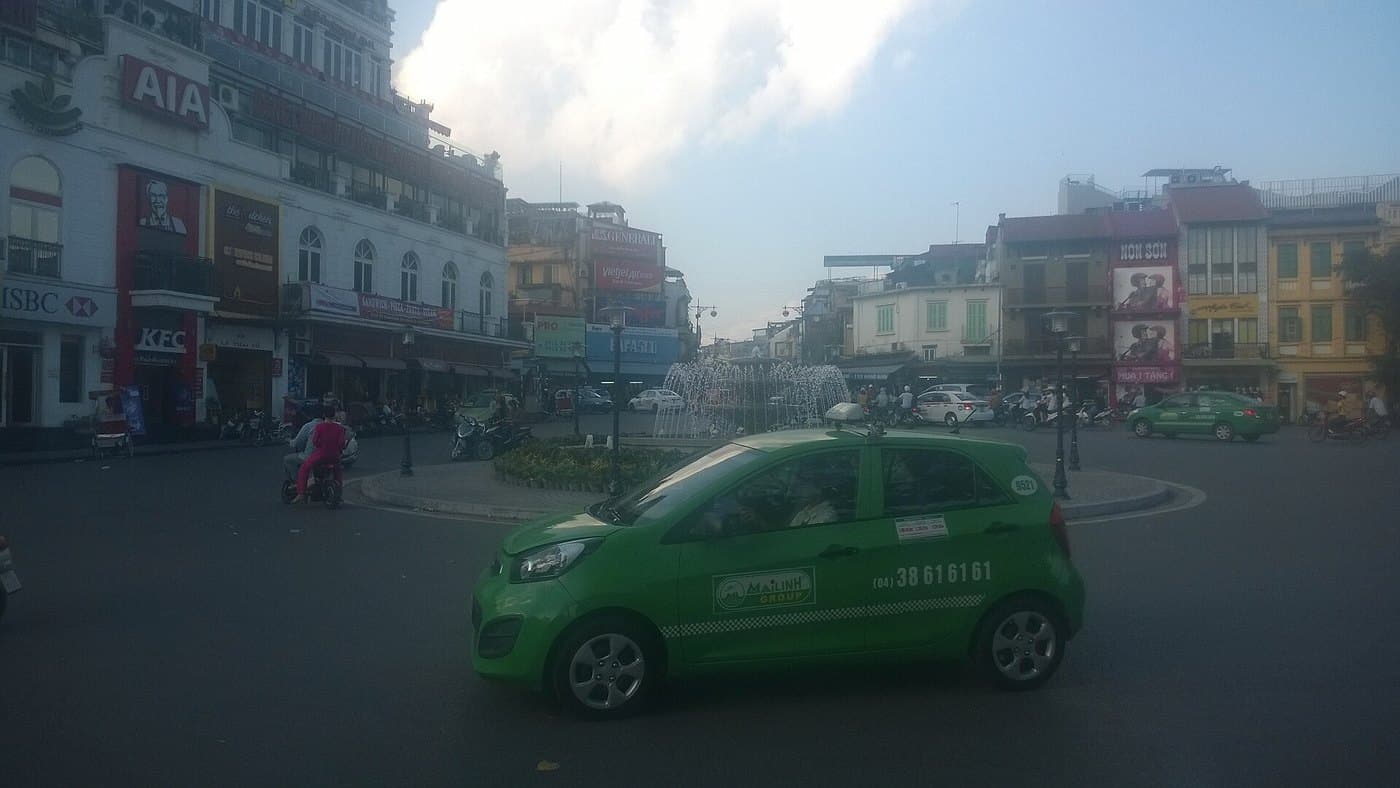
For three or four people a car usually wins outright: the fare splits, and it collects you in Hanoi and delivers you to the homestay door in Tam Coc.
Grab between cities
- Four-seat sedan: 700,000–850,000 VND (~$27–33)
- Seven-seat minivan: 900,000–1,100,000 VND (~$35–42)
Journey time is 1.5 to 2 hours non-stop. Book before seven in the morning and the southern exit is clear; after nine you can lose thirty or forty minutes to traffic.
Coming back, Grab still works but the driver pool is far thinner. Order ahead, or ask your homestay to call a local driver — a direct arrangement usually lands at 700,000–900,000 VND.
Private transfers
Through a hotel or a platform like Bookaway or Klook: 800,000–1,200,000 VND (~$31–46) per car, with international sites listing premium sedans up to $170. What you are buying is a fixed price and a driver holding a name board at arrivals. Worth it with heavy luggage, with children, or on a late flight.
Straight from Noi Bai airport
You don't have to overnight in Hanoi to reach Ninh Binh.
- Shared minivan to Tam Coc: $15–30 per person, collected at the terminal, around three hours.
- Private car: from about $35 per vehicle, same journey time.
- Via the city: city bus 86 runs from Noi Bai through Hoan Kiem to Hanoi railway station from 30,000 VND (~$1.15, per xe-buyt.com in September 2026) in roughly 68 minutes, departing the airport between 06:18 and 22:58. Take a train or a van from there.
Route 86 deserves its own line: it is the only single-ticket link between the airport and the railway, and its terminus is at the station door. If you land before lunch and are not in a rush, that combination is the cheapest honest way south. If you land after ten at night, there is exactly one option and it is a private transfer — vans and public buses have finished for the day.
Arriving from Da Nang, Hue or Ho Chi Minh City
Ninh Binh has no airport and no direct flights of any kind. Everything routes through Hanoi.
Flying is the fast answer: Ho Chi Minh City to Noi Bai takes 2 hours 10 minutes, Da Nang 1 hour 25, Hue 1 hour 20 — then add about three hours on the ground, giving five to seven hours door to door with check-in. Tickets from Ho Chi Minh City start around 700,000 VND (~$27) on VietJet and Vietnam Airlines.
The Reunification Express also runs straight through, but from Ho Chi Minh City that means more than thirty hours and around 1,800,000 VND (~$69) for a soft sleeper. It is a genuine experience if trains are your thing; otherwise the plane is five times faster and no more expensive.
From Da Nang the same train takes 13 to 14 hours and a sleeper costs 700,000–900,000 VND (~$27–35). That one is worth considering: one night on board, central Vietnam out of the window in the evening and the delta by morning. It also slots neatly into the overland route most travellers are already on.
Getting around Ninh Binh

This is the part that actually needs planning. Do not count on public transport inside the region: there is no convenient bus between Tam Coc and Trang An, minibus to Mua Cave or shuttle from the station. Distances are short — 2 to 15 km between the main sites — but you arrange every kilometre yourself.
Four options: a bicycle (usually free from your homestay), a motorbike at 120,000–150,000 VND a day, a metered taxi at 50,000–300,000 VND a ride, and Grab, which goes quiet the moment you leave town.
Bicycle: everything inside 8 km
Most homestays in Tam Coc and Trang An lend bicycles free or charge 30,000–50,000 VND a day. Rental shops near the jetty want 50,000–80,000 VND for a basic bike, 100,000–150,000 VND for a mountain bike and about 200,000 VND for an e-bike.
Good for: the Tam Coc loop (15 km: jetty, Bich Dong, Thung Nham and back), Tam Coc to Hoa Lu (7 km on quiet lanes), Tam Coc to Mua Cave (2 km, dead flat).
Not for: Cuc Phuong at 40 km, Bai Dinh at 15 km with climbs, Van Long at 25 km. Those need a motorbike or a taxi.
The terrain here is flat, which is unusual for the north. Between the karst towers run quiet farm roads with almost no lorries. You pedal past buffalo, stop at a pagoda, carry on. Calling it transport undersells it: this is half the reason people come.
Motorbike, and the licence you might not have
An automatic (Honda Vision, Yamaha Janus) costs 120,000–150,000 VND a day (~$5–6) at any Tam Coc homestay. A Honda Wave manual runs 80,000–100,000 VND, and sport bikes like the Honda Winner 180,000–220,000 VND. Homestays rarely take a deposit; a passport photocopy is the usual arrangement. Dedicated rentals worth knowing are Ninh Binh Motorbike, which delivers to your hotel, and Pioneer Sail, which posts transparent prices.
Fuel is 22,000–24,000 VND a litre. A Honda Wave's 3.7-litre tank covers roughly 150 km, comfortably a full day. Petrolimex and PV Oil stations sit on every main road.
| Your IDP was issued in | Convention | Valid in Vietnam |
|---|---|---|
| UK, Germany, France, most of the EU | 1968 Vienna | Yes, carry the physical booklet |
| Russia, Ukraine, Kazakhstan | 1968 Vienna | Yes |
| South Korea, Philippines, Thailand | 1968 Vienna | Yes |
| USA, Canada, Australia, New Zealand | 1949 Geneva | No — not recognised |
| Japan, Ireland | 1949 Geneva | No |
If your permit falls in the bottom half of that table, the honest options are a bicycle for the near cluster and a taxi or a driver for the rest. Rental shops will still hand you the keys; they care about the deposit, not the paperwork. The exposure is entirely yours.
Parking, helmets and small print
Parking at every site is paid and trivial: 5,000–10,000 VND for a motorbike, 10,000–20,000 VND for a bicycle at busy entrances like Mua Cave and the Trang An jetty. You get a numbered tag and your bike joins a row. Leaving the helmet on the mirror is normal practice and it will still be there.
A helmet always comes with the rental, but it is usually a thin half-shell. If you are going further than the Tam Coc loop, ask for a proper one — decent rentals have them. Check the brakes before you leave, too: homestay bikes run all season without seeing a mechanic.
Taxis, Xanh SM and xe ôm
Mai Linh is the biggest network in the country and has a full fleet here. Green cars wait at the railway station, the bus terminal and both boat jetties. To call one, use Mai Linh’s nationwide line 1055. Flagfall is 12,000–14,000 VND, then 13,000–15,000 VND per kilometre.
- Short hop in town, 5–10 minutes50,000–80,000 VND ≈ $2–3
- Railway station → Tam Coc, 8 km90,000–130,000 VND ≈ $3–5
- Railway station → Trang An, 7 km80,000–120,000 VND ≈ $3–5
- Tam Coc → Trang An100,000–150,000 VND ≈ $4–6
- Tam Coc → Bai Dinh250,000–300,000 VND ≈ $10–12
- Tam Coc → Cuc Phuong400,000–500,000 VND ≈ $15–19
Grab works but unevenly. Plenty of cars in the city; in Tam Coc and Trang An about half of your requests come back empty. Fares track Mai Linh, sometimes 10% below, and GrabBike costs far less than a car. Xanh SM, the VinFast electric fleet, operates here too — book in their own app, newer cars, similar money, same rural coverage problem.
Xe ôm are motorbike taxis. There are always riders outside the station and the bus terminal, and you agree the fare before getting on: 30,000–50,000 VND for a short hop, 80,000–100,000 VND to Tam Coc. Awkward with a big backpack. Instant, though.
Hiring a car with a driver
Underrated option. A homestay or taxi company will give you a car and driver for eight to ten hours at 1,200,000–1,500,000 VND (~$46–58), waiting time and the return leg included. Split four ways that is 300,000–375,000 VND each, less than four motorbike rentals and with the licence question removed entirely. It makes obvious sense for a far-flung day: Bai Dinh plus Van Long, or Cuc Phuong properly.
Agree it the evening before and settle three points: how many stops, until what time, and whether the driver's lunch is included. It usually is not, and that is another 50,000–100,000 VND you would rather know about in advance.
Routes and distances from Tam Coc
Everything worth seeing sits within 40 km of Tam Coc. The core cluster of Tam Coc, Trang An, Mua Cave and Hoa Lu fits inside ten kilometres, while Bai Dinh, Van Long, Cuc Phuong and Phat Diem are half-day trips in their own right.
- Ninh Binh railway station (Ga Ninh Bình): Trains from Hanoi — 8 km to Tam Coc, 7 km to Trang An
- Ninh Binh bus terminal (Bến xe Ninh Bình): Public buses from Hanoi — 1.5 km south of the railway station
- Tam Coc (Bến thuyền Tam Cốc): All distances below are measured from here — Bicycle and motorbike rentals
- Mua Cave (Hang Múa): 2 km from Tam Coc, 10 minutes by bicycle — This is the road with the licence checkpoints
- Trang An (Bến thuyền Tràng An): 8 km from Tam Coc, a couple of climbs — Taxi 100,000–150,000 VND (~$4–6)
- Hoa Lu (Hoa Lư): 7 km from Tam Coc on flat back roads — The most bike-friendly ride in the region
- Bai Dinh (Bái Đính): 15 km from Tam Coc, 25 minutes by motorbike — Electric cart from the car park to the temple
- Van Long (Vân Long): 25 km from Tam Coc, 40 minutes by motorbike — Too far for a bicycle
- Cuc Phuong (Cúc Phương): 40 km, an hour of mountain road — A car with a driver makes more sense here
- Phat Diem (Phát Diệm): 30 km south, 50 minutes by motorbike — Stone Catholic cathedral, almost no tourists
| From Tam Coc to | Distance | Bicycle | Motorbike | Taxi VND |
|---|---|---|---|---|
| Mua Cave | 2 km | 10 min | 5 min | 50,000 |
| Bich Dong | 3 km | 15 min | 7 min | 60,000 |
| Thung Nham | 5 km | 20 min | 10 min | 80,000 |
| Hoa Lu | 7 km | 25 min | 15 min | 100,000 |
| Trang An | 8 km | 30 min, some climbs | 15 min | 100,000–150,000 |
| Bai Dinh | 15 km | not advised | 25 min | 250,000–300,000 |
| Van Long | 25 km | not advised | 40 min | 300,000 |
| Kenh Ga | 30 km | strong riders only | 50 min | 350,000 |
| Phat Diem | 30 km | no | 50 min | 350,000–400,000 |
| Cuc Phuong | 40 km | no | 60 min | 400,000–500,000 |
How this becomes a day
The rule is one mode per day, not three. Mixing only pays off when the morning goes to the near cluster and the afternoon to a single distant site.
A bicycle day. Trang An in the morning, since the boat takes 2.5 to 3 hours, Hoa Lu after lunch, Mua Cave at sunset. Thirty kilometres of flat ground across a whole day is a strolling pace with stops, not a training ride.
Then I walked to Tam Coc; the path runs through rice terraces, and the views are stunning! I caught the sunset on the way, and soon I was in Tam CocКысь on the walk from Mua Cave, Vinsky Forum, 2025, translated by VietnamSpot
A motorbike day. Bai Dinh early before the heat, Van Long and its quiet boats afterwards, back through the paddies. About 60 km, a comfortable daily total.
A driver day. Cuc Phuong: leave at eight, an hour on the road, four or five hours in the park including the primate rescue centre, back by six. On a motorbike that same day finishes in the dark on a mountain road, which is nobody's idea of fun.
Two routes deserve a specific note. Tam Coc to Trang An is cyclable but has a couple of climbs that feel much longer at midday, so take wheels or a taxi if you want to arrive dry for a boat trip. Tam Coc to Phat Diem is 30 km through open rice fields to a stone Catholic cathedral that is almost empty of visitors — here the ride genuinely is half the point.
Onward from Ninh Binh

For most travellers Ninh Binh is a link in the overland chain: Hanoi, then here, then Phong Nha, then Hue and Hoi An. Buses collect from homestays in Tam Coc; trains leave from the city station.
| Destination | How | Time | Price |
|---|---|---|---|
| Ha Long | Tourist bus | 4 h | 250,000–350,000 VND (~$10–13) |
| Hai Phong | Public bus | 3 h | 150,000–200,000 VND (~$6–8) |
| Sapa | Overnight sleeper bus | 8 h | 350,000–450,000 VND (~$13–17) |
| Phong Nha | Sleeper bus | 8–10 h | 400,000–550,000 VND (~$15–21) |
| Hue | Train or sleeper bus | 11–13 h | 400,000–700,000 VND (~$15–27) |
| Ho Chi Minh City | Reunification Express | 30 h | 1,200,000–1,800,000 VND (~$46–69) |
Those are local prices, the kind your homestay or Vexere quotes. International platforms sell the identical seats for one and a half to two times more: the Hue run starts at $40 and Phong Nha at $30 on the big booking sites. The gap is what you pay for an English checkout and a card payment.
The sleeper bus trick. Leave Tam Coc at 19:00 or 20:00, sleep through, arrive between six and eight in the morning. You save a day and a night of accommodation at once. The other side of it: sleeping on a swaying bunk with no seatbelt is an acquired skill, and the berths are short.
The train to Hue. SE1 or SE3 from Ga Ninh Bình, soft sleeper around 700,000 VND, 11 to 12 hours. More civilised than the bus and roughly a third more expensive. What happens once you arrive is covered in getting around Hue.
Book onward tickets at any Tam Coc homestay — partner operators charge no commission — or through Vexere and 12Go.
Cheat sheet
Worth a screenshot before you leave Wi-Fi.
Hanoi to Ninh Binh
Around the region
Numbers and apps
- Mai Linh, nationwide line: 1055
- Trains: dsvn.vn, the official Vietnam Railways site
- Buses and vans: vexere.com for local prices, 12go.asia for English
- Ride-hailing: Grab and Xanh SM
- Cash: buses, xe ôm, parking and most rentals are cash only — carry small notes
Mistakes worth avoiding
- Comparing ticket prices only. Trains and buses leave you 8 km short of Tam Coc; add the taxi before you judge the van as expensive.
- Assuming there is a bus inside the region. There is no convenient one. Tam Coc to Trang An is your own problem to solve.
- Renting a bike on a 1949 Geneva IDP. The shop will not care. The police on the Mua Cave road will, and so will your insurer.
- Trusting last year's timetable. Vietnam Railways rewrites it by season; check dsvn.vn on the day you buy.
- Arriving on the night train without a booking. At 00:05 the forecourt is nearly empty and the meter becomes negotiable in the wrong direction.
- Counting on Grab for the ride back from a village. Half the time there is nobody. Ask the homestay instead.
- Riding to Cuc Phuong as a beginner. An hour of mountain road each way, and the return leg is after dark.





FAQ — getting to and around Ninh Binh
A public bus from Giáp Bát terminal: 120,000–180,000 VND (~$5–7), leaving every 15–20 minutes from 05:00. Buy at the counter or straight from the driver, cash only. The ride takes 2–2.5 hours. The catch is at both ends — you pay to reach Giáp Bát, and from the Ninh Binh terminal it is still 8 km to Tam Coc, roughly 90,000–130,000 VND by taxi. Hanoi is also gradually moving its bus terminals out beyond Ring Road 3, so confirm the departure point in your booking app.
Between 2 hours 10 minutes and 2 hours 30 minutes over 115 km of track. The morning SE7 leaves at 06:00 and arrives around 08:15, which puts you at the Trang An jetty for the first wave of boats. An air-conditioned soft seat costs 110,000–150,000 VND (~$4–6). Book on dsvn.vn with no commission, or through 12Go and Baolau for an English interface and a 5–10% fee. Vietnam Railways reissues its timetable in seasonal packages, so check exact minutes on the day you buy.
Yes, and the type matters. Vietnam recognises only IDPs issued under the 1968 Vienna Convention, and only together with your national licence for the right category. If your permit was issued under the 1949 Geneva Convention — the United States, Canada, Australia, New Zealand, Japan and Ireland all issue that one — it is not valid here. Under Decree 168/2024 riding without a valid licence costs 2–4 million VND (~$77–154) up to 125cc and 6–8 million VND above that, and your travel insurance will not cover a crash.
It works, unevenly. In the city there are enough cars; in Tam Coc and Trang An roughly half of your requests come back as "no drivers nearby". Prices sit close to Mai Linh, occasionally 10% under, and GrabBike is far cheaper than GrabCar. Reliable fallbacks: Mai Linh on the meter, Xanh SM electric taxis and xe ôm motorbike taxis outside the stations, where you agree the price before getting on.
It is 7 km
- Mai Linh or Grab80,000–120,000 VND~$3–5charge; a GrabBike is about half that
- From Tam Coc it is 8 km — by taxi100,000–150,000 VND
- By motorbike15 minutes
- By bicycleroughly 30 minuteswith a couple of climbs on the way
Do not count on a bus or minibus between Tam Coc and Trang An, and that is the detail that catches people out
Mai Linh flagfall is 12,000–14,000 VND, then 13,000–15,000 VND per kilometre. A short hop in town runs 50,000–80,000 VND (~$2–3), station to Tam Coc 90,000–130,000 VND, Tam Coc to Bai Dinh 250,000–300,000 VND, Tam Coc to Cuc Phuong 400,000–500,000 VND one way. To call one, use Mai Linh’s nationwide line 1055.
Yes. A shared minivan to Tam Coc costs $15–30 per person and takes about three hours from the terminal; a private car starts around $35. The budget route is city bus 86, which runs from Noi Bai through Hoan Kiem to Hanoi railway station from 30,000 VND (~$1.15, per xe-buyt.com in September 2026) in about 68 minutes, with departures from the airport between 06:18 and 22:58 — from there you take a train or a limousine van. After 22:00 a private transfer is the only option left.
- Guide
Things to Do in Ninh Binh 2026: 10 Sights, Prices in USD
Ninh Binh attractions for 2026: Trang An, Tam Coc, Mua Cave, Hoa Lu, Bai Dinh, Phat Diem. New ticket prices in VND and USD, a map and 1–3 day itineraries.Things to Do in Ninh Binh 2026: 10 Sights, Prices in USD - Guide
Ninh Binh Tours from Hanoi 2026: Day Trips, Costs, Routes
Every way to do Ninh Binh from Hanoi in 2026: group, small-group and private tour prices, one-day and two-day routes, trains, buses and the DIY maths.Ninh Binh Tours from Hanoi 2026: Day Trips, Costs, Routes - Food
Ninh Binh Food Guide 2026: Goat, Crispy Rice, 7 Spots
What to eat in Ninh Binh: mountain goat de nui, crispy rice com chay, prices in VND and USD, seven verified restaurants and a map.Ninh Binh Food Guide 2026: Goat, Crispy Rice, 7 Spots