Doc Let weather by month: sea, seasons and wind
Doc Let is a 10-kilometre sand spit 50 km north of Nha Trang, and it shares the climate of the rest of Khanh Hoa: eight dry months, four wet ones. What decides whether your January trip works is exposure — Doc Let faces open water, and from November the northeast monsoon turns the winter beach into a windy strip with cooler sea and resort flags standing horizontal.
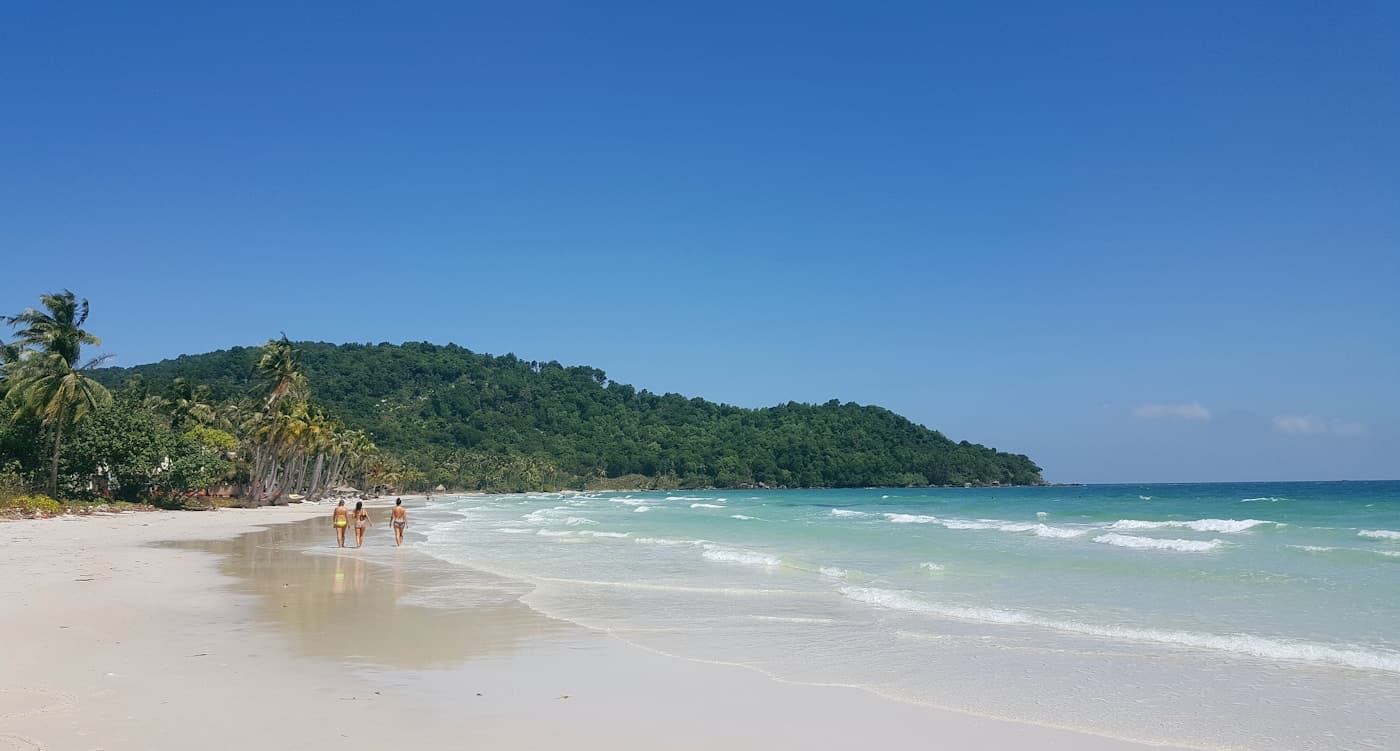
Doc Let weather month by month
Average annual temperature at Doc Let is about 26.5 °C (80 °F), and the sea runs from 24 °C in January to 29 °C in May. The driest month is February (25-33 mm over one or two wet days), the wettest is November (up to 324 mm over eleven). The climate is tropical monsoon, split cleanly into a dry and a wet half.
Weather in Doc Let month by month
colour depth — rainfall per month
October
Rainyrainfall 250 mm · rainy days 10–11Rough sea and seaweed in the water. Sun between showers, but swimming is unpleasant. Hotels drop 30–50%.
| Month | Day °C | Night °C | Sea °C | Rain, mm | Wet days | Verdict |
|---|---|---|---|---|---|---|
| January | 26 | 22 | 24 | 40–50 | 4 | Dry but windy |
| February | 27 | 22 | 24 | 25–33 | 1–2 | Dry, wind easing |
| March | 29 | 24 | 25 | 51 | 5 | Season starts |
| April | 31 | 25 | 26 | 30–40 | 2 | Excellent |
| May | 32 | 26 | 29 | 50–60 | 4 | Hot, flat sea |
| June | 32 | 26 | 28 | 40–55 | 4 | Peak season |
| July | 32 | 25 | 28 | 35–50 | 4 | Peak season |
| August | 32 | 27 | 28 | 45–60 | 5 | Good, some downpours |
| September | 31 | 24 | 28 | 150–250 | 9 | Shoulder |
| October | 30 | 24 | 27 | 200–300 | 10–11 | Rain and swell |
| November | 28 | 23 | 27 | 280–324 | 11 | Peak rain, typhoon risk |
| December | 27 | 22 | 26 | 120–170 | 8 | Rain fading, wind rising |
Approximate normals from climate aggregators for Nha Trang: weather-and-climate.com, climate-data.org, weatherspark.com.
The hottest stretch is May to August: 32 °C (90 °F) by day, sea at 28–29 °C, humidity 78–79%. Coolest is January, and "cool" here means 26 °C by day and 22 °C at night. You will not need a jacket. A light hoodie for the evening, yes, especially walking the beach after sunset when the wind picks up off the water.
Winter: January and February
Dry and clear. One to four rainy days a month, air 26–27 °C, nights around 22 °C. On paper, a perfect winter escape.
In practice there is a catch. The northeast monsoon drives cooler water up from depth toward the shore (upwelling), and the sea at Doc Let usually sits about 1 °C below Nha Trang's sheltered bay: 24 °C against 25 °C. Swimmable, but the first thirty seconds are a negotiation. Add the constant breeze: flags stand horizontal, sand travels, and a sun lounger only works behind a bamboo windbreak.
February is softer than January. The wind eases, rain is still almost absent at 25–33 mm. The last week of February is the tipping point, after which Doc Let gradually becomes the beach people fly here for.
Spring: March to May
March starts the real season. Air climbs to 29 °C, sea to 25–26 °C, wind drops off. It is also the sunniest month of the year, with more than 8 hours of sun a day. The sea flattens and the shallows clear up: you can see the bottom three or four metres out.
April is the sweet spot: 31 °C by day, 25 °C at night, barely two rainy days, sea at 26–27 °C. Humidity has not yet climbed past 75%, so the heat is still comfortable rather than heavy.
May brings the real heat. 32 °C, sea at 29 °C, which is the annual maximum. Rainfall ticks up to 50–60 mm, but showers are short: an hour or so, then sun again.
Summer: June to August
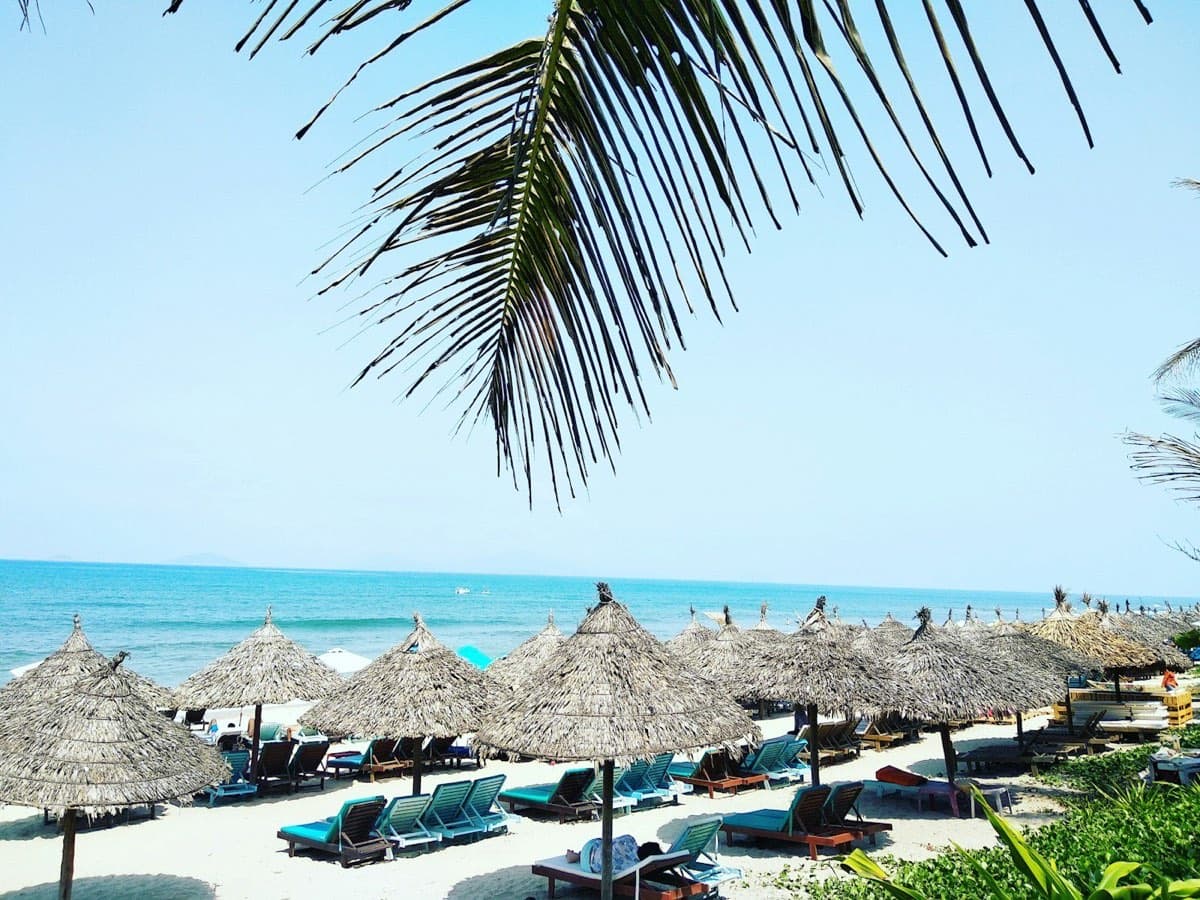
Hot. Humid. Still manageable. Air holds at 32 °C, sea at 28 °C, and the water goes flat. Rain runs 35–60 mm a month in short afternoon bursts. The shallows at Doc Let warm to bathwater, so small kids can wade a long way out without getting cold.
The UV index hits 10–12 in these months, which is the extreme band. SPF 50+ is not optional; unprotected skin burns in about 25 minutes. Locals swim early or after 16:00 and stay in the shade at midday.
June and July are also the domestic peak: Vietnamese school holidays land on the most stable weather of the year. Book beachfront two to three months ahead, and one to two weeks ahead at the absolute minimum. Which properties are worth it is covered in the Doc Let hotels guide.
Autumn: September to December
September is the turn. It brings more rain (nine wet days, 150–250 mm) and the sea starts to move. October and November are the peak of the wet season and the peak of typhoon risk. December walks it back: less rain, more wind, air down to 27 °C.
The three seasons at Doc Let: dry, wet and windy
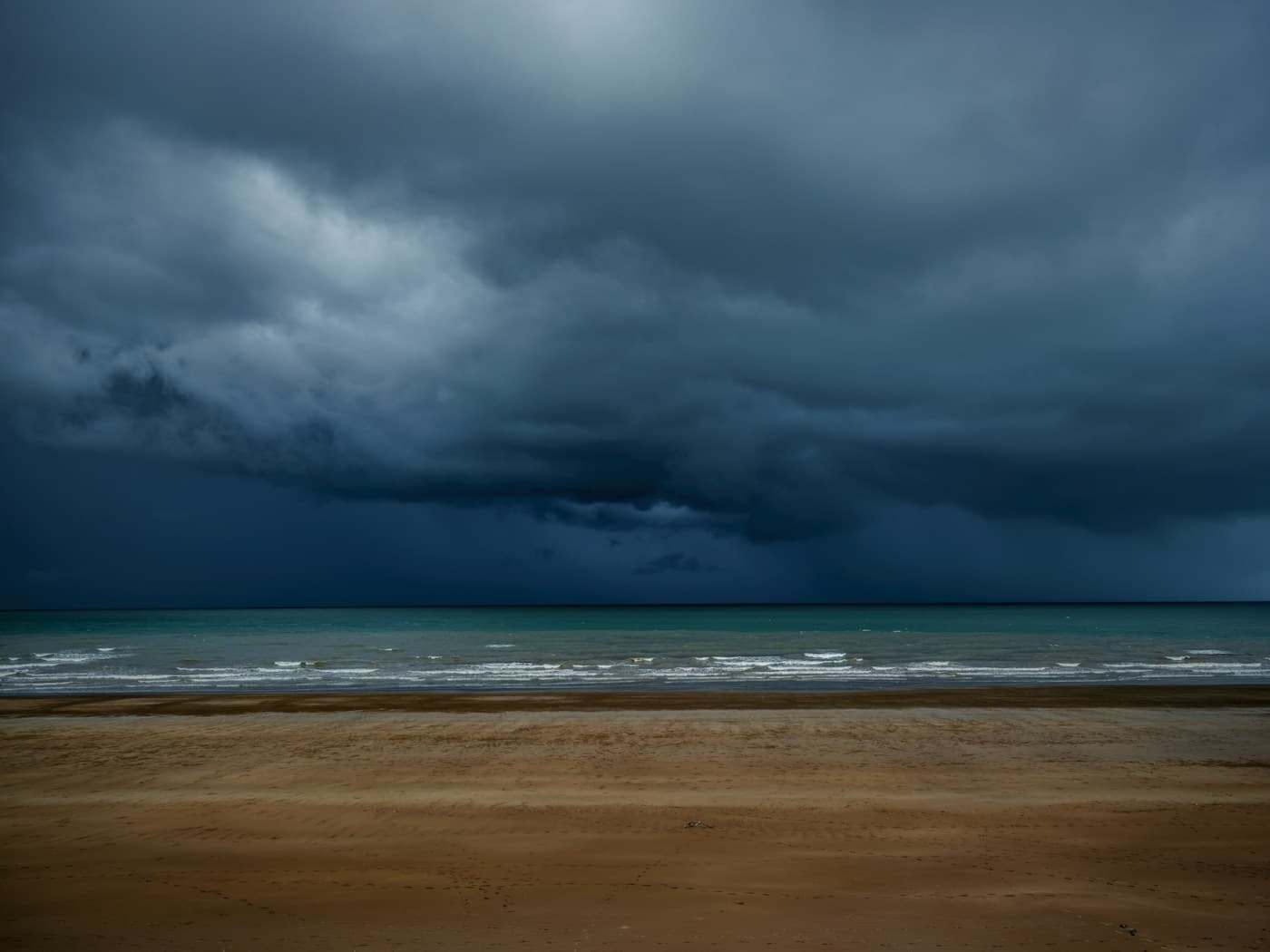
The dry season at Doc Let runs January through August. Eight months, noticeably longer than most Vietnamese beach resorts. The wet season is four: September to December, peaking in November. But that two-way split hides the thing that actually ruins trips. There is a third season here, a windy one, and it overlaps the dry one.
Dry season (January to August)
Clear skies, minimal rain, calm sea from March onward. Annual rainfall at Doc Let is about 1,280 mm, and most of it falls across those four autumn months. January to August takes less than a third of the yearly total.
Inside the dry season there are two sub-seasons:
- January and February are dry but windy. The sea breeze never stops and the water sits about 1 °C below Nha Trang. Fine for reading behind a windbreak; not the "lie by the water and listen to the surf" beach the photos promise.
- March through August is dry and still. The sea levels out and snorkelling visibility runs 3–5 metres. This is the Doc Let people book.
Resort rates in high season run 20–40% above low. The most contested months are March, April and July. Popular places like Paradise Resort and GM Doc Let go two to three months out.
Northeast monsoon (November to February)
Not a calendar season so much as a wind regime laid over the others. From November to February a steady northeasterly blows across the South China Sea. Nha Trang's bay is screened by Hòn Tre and Hòn Tằm, so the wind arrives there weakened. Doc Let is open coast and takes it at full strength: bigger waves, sand in the air, and a felt temperature two or three degrees below the reading.
In November the monsoon coincides with peak rain, which is the worst combination available. December through February the rain has mostly gone but the wind stays. That is exactly why January and February are the argued months at Doc Let: the forecast looks great and the beach does not match it.
We're in Nha Trang from 28 January to 8 February… We went to Doc Let beach, where the hotel guide promised a calm sea… We tried swimming in life jackets!MariafromK, Vinsky Forum, 2016, translated by VietnamSpot
Shoulder month (September)
September flips both ways. Rain increases to nine wet days and 150–250 mm, but the sea still holds 28 °C and the downpours are usually short. An hour or so, then sun. The swell picks up.
For travellers September is the compromise month: weather still workable, prices already sliding. Good if you will trade a couple of wet hours a day for the saving.
Peak rain (October to December)
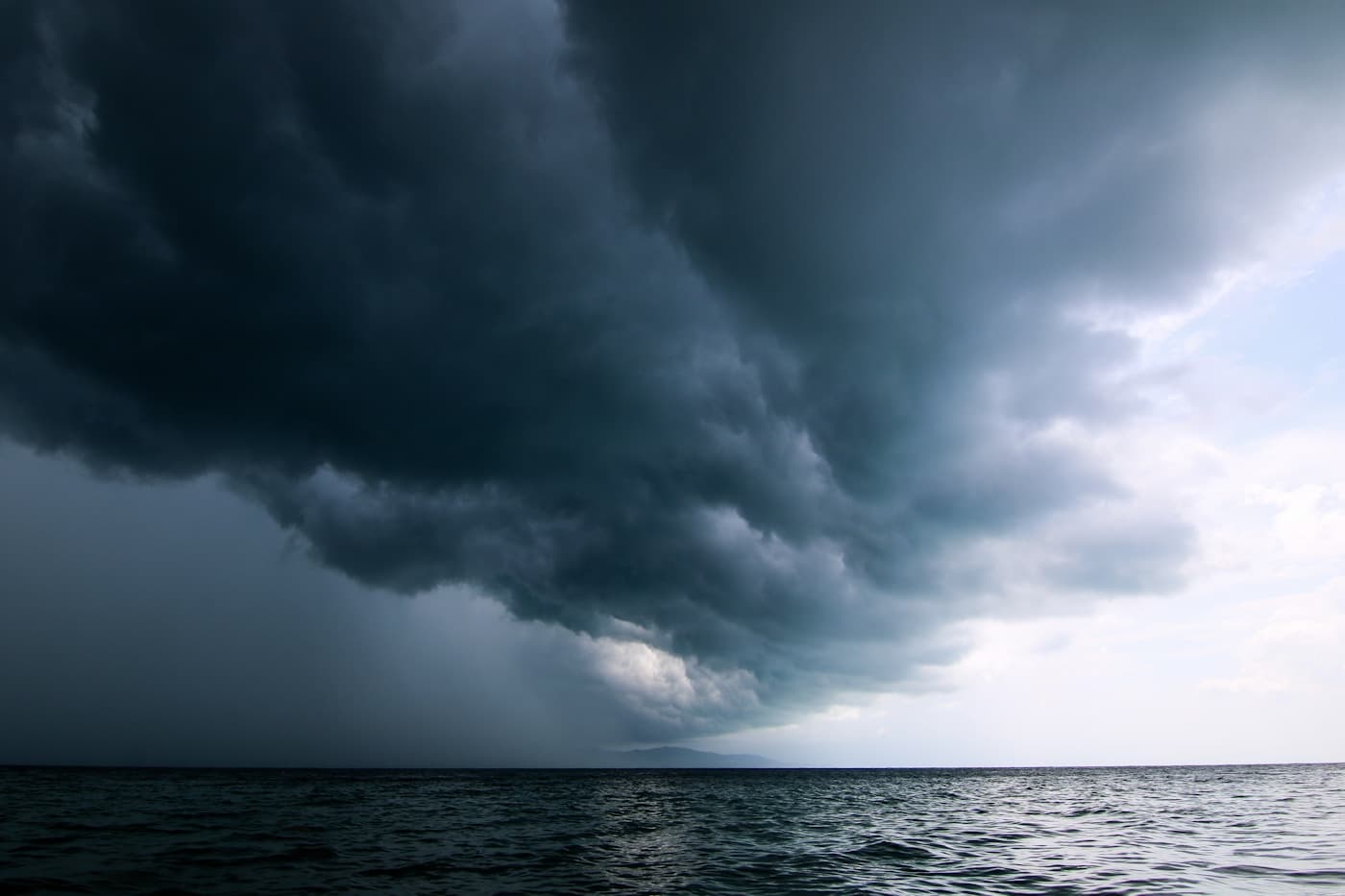
The rain falls mostly in the evening and overnight, roughly 20:00 to 06:00. Days are often sunny. That matters: people picture the wet season as a wall of water, when in practice you can usually get a morning on the beach. Rain rarely lasts more than two or three hours.
- October brings 200–300 mm over 10–11 wet days. Rough sea, high surf, seaweed in the water. There is sun between showers, but swimming is unpleasant.
- November is the peak: 280–324 mm, 11 wet days, maximum typhoon risk. Per weather-and-climate.com, November is the wettest month of the year for Khanh Hoa.
- December tapers to 120–170 mm over 8 wet days. By late month it settles and the New Year holidays often run sunny, but the wind is building as the dry, windy season starts.
Low season is discount season. Hotels drop 30–50%, beaches are empty, nothing has a queue. If you are travelling deliberately for the price and can live with a daily downpour, October and November work.
When to go to Doc Let
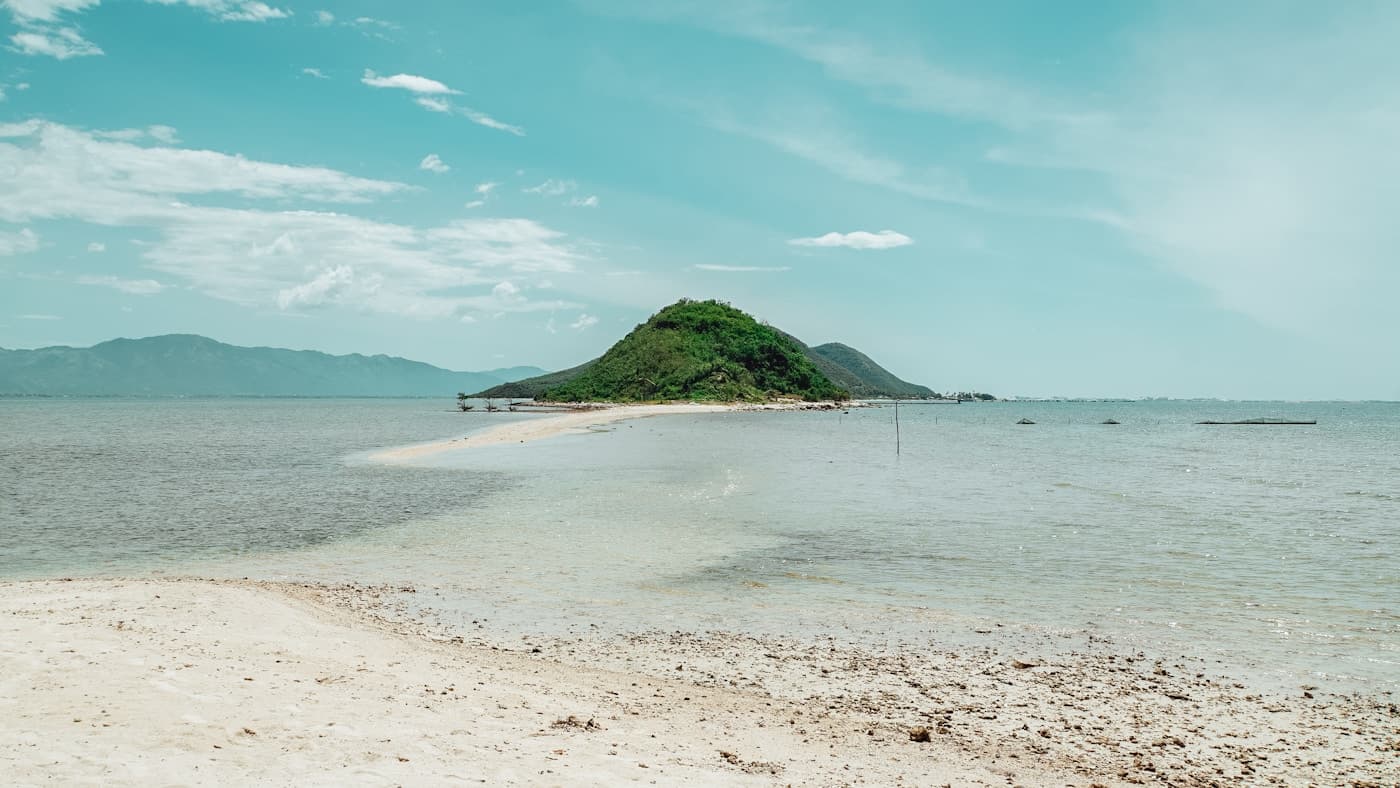
The best window is March to August: dry, still, sea at 25–29 °C, shallows warm enough to be called bathwater. Families with small children want June or July. Winter is only worth it if you have no choice: expect wind and water a degree cooler than Nha Trang.
| What you want | Best window | Why |
|---|---|---|
| Beach days | March–August | Dry, calm, sea 25–29 °C |
| Small kids | June–July | Shallows at 28 °C, no waves, no rain |
| Warmest sea | May–August | 28–29 °C, the annual maximum |
| Snorkelling | March–May | Best visibility, flat water |
| Budget trip | September, October | 30–50% off, weather still workable |
| Empty beach | February, September | Lowest visitor numbers |
| Day trips to Nha Trang | January–April | Not yet stiflingly hot |
If your leave is fixed to one month, read the table straight. March through August, you cannot go wrong. September is borderline. October and November are a lottery with both rain and wind. December is a compromise. January and February are the argued case: sunny and dry, but windy with cooler water.
April is the quietest brilliant month here: 31 °C, two rainy days, no domestic crowd yet. If your calendar allows spring rather than summer, take spring.
Still costing the trip out? The Nha Trang and Cam Ranh price guide applies to Doc Let almost line for line, and the full picture of the resort is in the Doc Let beach guide.
Doc Let vs Nha Trang: why the same forecast feels different
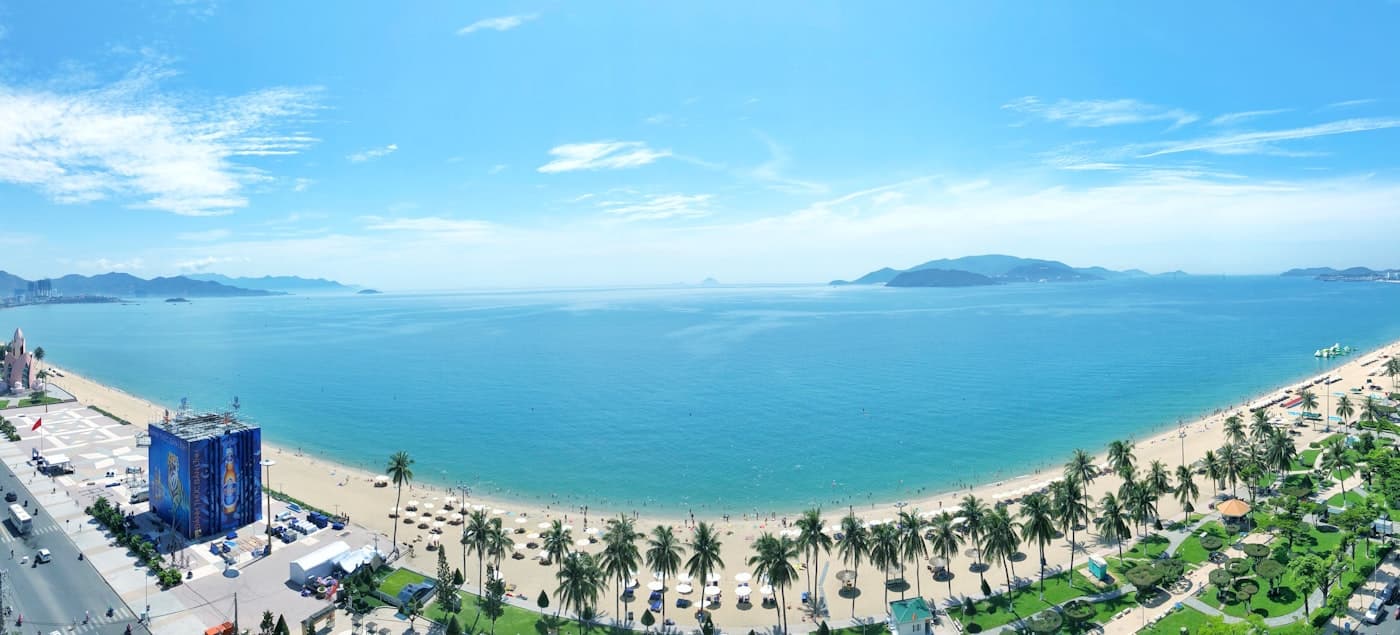
Doc Let and Nha Trang sit in the same province, 50 km apart. Air temperature is effectively identical, never more than 1 °C between them, and the seasons line up to the day. Yet the two feel different, and the reasons are wind, coastal shape and winter upwelling.
Open coast versus sheltered bay. Nha Trang lies inside a horseshoe screened by Hòn Tre, Hòn Tằm and Hòn Miễu. Those islands kill the swell and block a good share of the wind. Doc Let is a long straight spit facing the South China Sea head-on. Whatever blows off the water arrives undiminished.
Winter upwelling. From November to February the northeast monsoon pushes the warm surface layer away from shore and draws colder water up from depth. On Nha Trang's protected beaches the effect is muted; on exposed Doc Let it is not. In January the gap between the two runs up to 1.5 °C: 25 °C in Nha Trang against 23.5–24 °C at Doc Let. Small on paper, obvious on the first step in.
The salt-wind microclimate. The constant breeze cuts both ways. Upside: swimsuits and towels dry in an hour, and the beach never feels stifling even at 32 °C.
Downside: metal corrodes 1.5–2 times faster, suitcase locks seize over a two-week trip, and metal-framed glasses fog with residue. Bungalow owners here replace hinges and locks once a year as routine maintenance. If you travel with camera gear, keep it bagged between shots.
Which beach wins when:
- December to February: Nha Trang, no argument. Sheltered bay, warmer water, no permanent wind.
- March to August: Doc Let, and comfortably. Cleaner water, whiter sand, far fewer people.
- October and November: equally poor at both, but the wind makes Doc Let worse.
The Doc Let beach breakdown covers which stretch of the spit holds its shallows longest. The nearest climatic neighbour is Cam Ranh, and its month-by-month pattern is nearly identical minus the wind correction.
Typhoons: the real risk and what to do
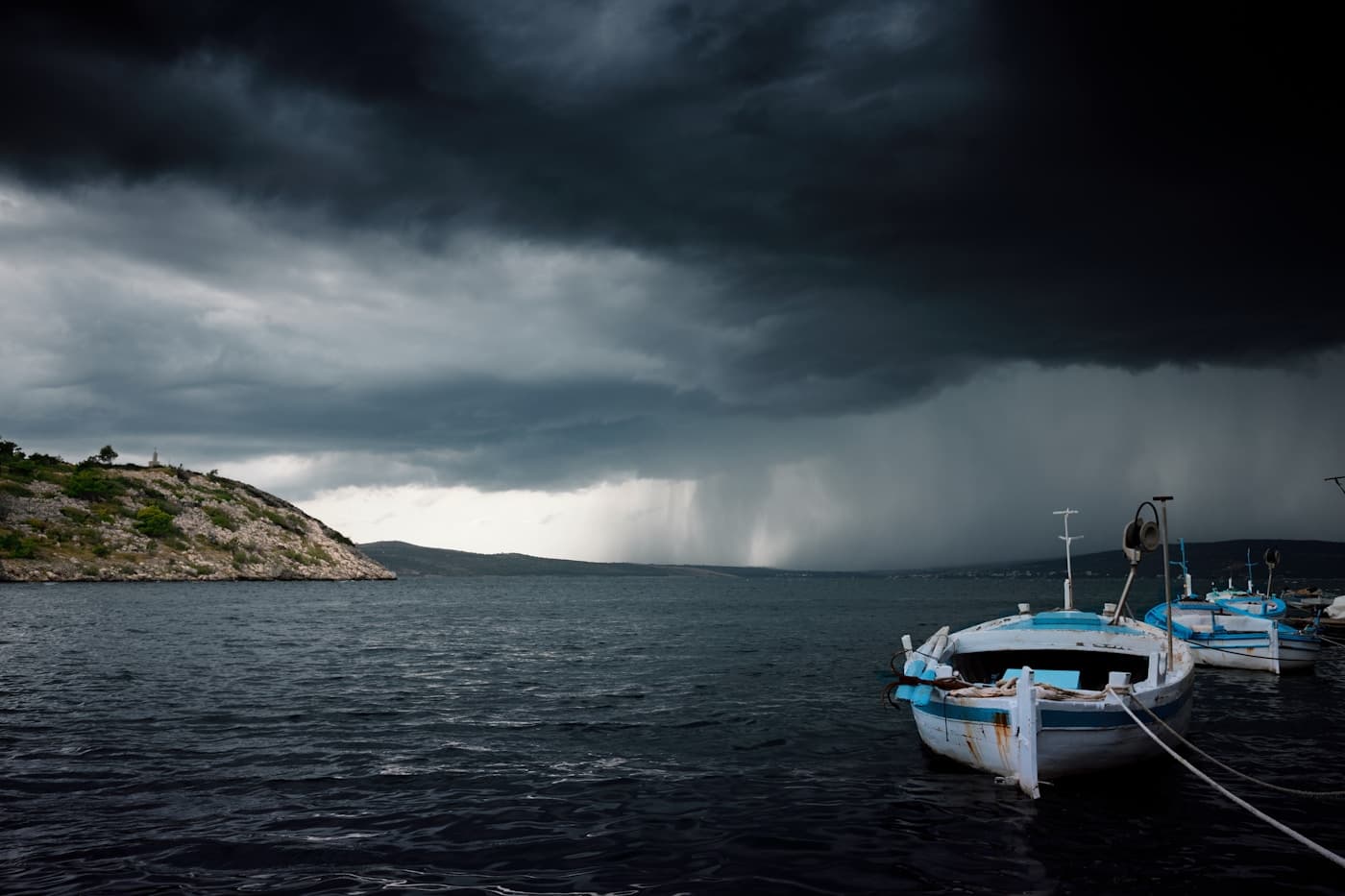
Typhoon season in the South China Sea runs June to November, and the peak for the Khanh Hoa coast is late October through November. Doc Let, like the rest of south-central Vietnam, sits formally inside the risk zone. In practice direct hits are rare. Most storms track north past Da Nang and Hue, or south toward Phan Thiet.
Recent history:
- November 2017, Typhoon Damrey. One of the most destructive in a decade. It made landfall on 4 November in northern Khanh Hoa, at Vạn Ninh.
- November 2025, Typhoon Kalmaegi. Vietnam's thirteenth storm of the season. Landfall was north of the province, in Gia Lai and Đắk Lắk, but airports in central Vietnam suspended operations during the storm.
What that means for a foreign traveller is not "you might get blown away". It is "you might lose a few days and a flight". So:
- Book accommodation with free cancellation. Most Doc Let resorts offer it on Booking or Agoda for 5–10% over the locked rate. In October and November that is cheap insurance.
- Buy travel insurance that names weather disruption. Trip-interruption cover for storm closures is not standard on every policy, so read the wording rather than the marketing page.
- Follow NCHMF, Vietnam's National Center for Hydro-Meteorological Forecasting, which publishes in English, and cross-check on Windy. A typhoon's track is usually visible several days ahead.
- Leave a spare day or two before your outbound flight. If a storm passes close, the airport can shut for a day or more.
- Do what the resort says. When staff clear the beach, that is not caution theatre.
A direct typhoon hit at Doc Let in October or November is rare. The far likelier outcome is simply a wet week with no drama at all. That, not the typhoon, is the real risk of low season.
Fast Track — no queue at the border
5–10 minutes instead of an hour in the immigration queue
from$11per passenger
What to pack

The packing list for Doc Let is not quite the standard Vietnam list, and the difference is the wind. In winter you will want things the rest of the country does not call for: a windbreaker and something warm for the evening.
Dry, still season (March to August)
- Cotton and linen: shorts, tees, dresses
- SPF 50+ sunscreen (UV 10–12; you burn in 25 minutes)
- A hat with a chin strap, because anything else leaves without you
- Plastic-framed sunglasses; metal corrodes in the salt air
- Water shoes, because there are shells on the sand
- Two swimsuits, so one is always drying
- A light jacket for over-air-conditioned interiors
- Walking sandals for day trips
Windy winter (December to February)
Everything above, plus:
- A fleece hoodie for early mornings and evenings. With the wind up after sunset, 22 °C reads like 18 °C
- A light windbreaker for the beach and walks along the spit
- Long trousers or covering shorts for evenings
- A sarong or light throw to wrap in after swimming, because the water is cooler
Wet season (September to December)
Base list plus:
- A rain jacket rather than an umbrella, which the wind turns inside out
- A waterproof phone pouch
- Quick-dry clothing; cotton takes hours after a downpour
- A dry bag for documents and electronics
- Repellent with 30%+ DEET, since mosquitoes multiply after rain
- Closed sandals for wet pavement
The general Vietnam packing checklist covers the rest. The Doc Let version is that list plus winter wind protection.
Rainy-day plan

Rain at Doc Let is not a day lost. Downpours usually run one to two hours with sun in between. The beach strip itself has little to do indoors, but there is a full set of covered options within 50 km, in Nha Trang. A Grab car takes 40–50 minutes and runs 300,000–400,000 VND (~$12–15) each way. One caveat: Grab works reliably from Nha Trang outward, not always from Doc Let inward, so arrange the return before you go.
- Tháp Bà mud baths: mineral mud, sulphur pools and a 38 °C soak. Twenty minutes in the mud undoes a week of travel. A basic mud bath starts from 260,000 VND (~$10).
- Resort spas at Doc Let: massage, hammam and sauna without leaving the beach. Expect 500,000–900,000 VND (~$19–35) for an hour of massage.
- The Nha Trang Oceanographic Museum, founded in 1923: 23 tanks of tropical species and an 18-metre whale skeleton. Fully covered, good with kids.
- Vinpearl on Hòn Tre: water park, aquarium and rides. Much of it is covered or semi-covered and runs through the rain.
- Nha Trang's covered markets, Xóm Mới and Chợ Đầm: shopping, street food, souvenirs. Haggle; 30–50% off the opening price is normal.
- Seafood in Ninh Hòa, the nearest town, where local restaurants do oysters, crab and prawns. Around 300,000–500,000 VND (~$12–19) a head.
FAQ
March to August. Dry, calm, sea at 25-29 C, and the water stays flat. Families with small children do best in June and July, when the shallows hold 28 C and there is no swell. If price matters most, September drops rates 30-50% while the weather still works. Winter, December to February, is only worth it if the dates are fixed: expect wind and water about 1 C cooler than Nha Trang.
Warm all year, from 24 C in January and February to 29 C in May. In winter, upwelling driven by the northeast monsoon puts Doc Let about 1 C below Nha Trang. The warm peak runs May to August at 28-29 C.
Four months, September to December: September is the shoulder, the main rain falls October to December. The peak is November: up to 324 mm and eleven wet days. Rain falls mostly in the evening and overnight, roughly 20:00 to 06:00, and days are often sunny. December tapers back toward normal, but the wind rises as the dry, windy season begins.
Air temperature is effectively the same, within 1 C, and the seasons match. The difference is exposure: Doc Let is open coast, so the November to February northeast monsoon hits harder, with bigger waves, constant wind and water about 1 C cooler because of upwelling. In the dry season the difference nearly disappears; in winter Nha Trang is the more comfortable of the two.
Yes, with a caveat. Sea temperature from December to February is 24-26 C and air is 26-27 C, which is swimmable. But wind and chop make it feel cooler than the numbers suggest. If you want a still, flat beach, pick Nha Trang sheltered bays for those months. If wind and waves do not bother you, Doc Let works in any month of the year.
Typhoon season in Vietnam runs June to November, peaking October to November. Khanh Hoa is formally in the risk zone, but direct hits are uncommon. The two that mattered in the last decade were Damrey in 2017 and Kalmaegi in 2025; Kalmaegi passed north of the province, but airports in central Vietnam still suspended operations during the storm. Booking on October or November dates, choose free cancellation, insure against weather disruption, and watch NCHMF.
Tropical monsoon (Koppen: Aw/Am), split cleanly into dry and wet. Annual average around 26.5 C, annual rainfall about 1,280 mm with most of it falling October to December, humidity 78-84%. Compared with northern Vietnam there is no cold winter at all. Compared with Phu Quoc, the wet season is half as long. The one thing that sets it apart from Nha Trang is the open coast and the winter wind.
Read next: Doc Let guide · Doc Let beach · Doc Let hotels · Cam Ranh weather
VietnamSpot on InstagramTips, lifehacks and news for living in VietnamFollow




- Housing
Where to Stay in Doc Let: Beach Resorts & Budget Stays
Where to stay at Doc Let: beachfront resorts and budget options for a quiet break away from Nha Trang — what to pick and how to book.Where to Stay in Doc Let: Beach Resorts & Budget Stays - Guide
Things to Do Near Doc Let Beach 2026: 9 Day Trips
Hon Khoi salt fields, Ba Ho waterfall, Hon Ba mountain, Ninh Van Bay and Nha Trang — distances, transport and 2026 prices in USD.Things to Do Near Doc Let Beach 2026: 9 Day Trips - Guide
Day Trips from Doc Let 2026: Islands, VinWonders, Ba Ho
What you can reach from Doc Let Beach in 2026: the four-island boat tour, VinWonders, Ba Ho waterfall and Nha Trang mud baths, with the transfer cost added in.Day Trips from Doc Let 2026: Islands, VinWonders, Ba Ho