
Vietnam visa overstay in 2026 — fines, exit and entry bans
You opened your passport and the date in the stamp is already behind you. An overstay in Vietnam is an administrative offence, not a criminal one: you get fined, not jailed. But Decree 282/2025 doubled the ceiling in December 2025, and since April 2026 a separate decree governs deportation. Here is what to do, where to go, and when the airport is the wrong move.
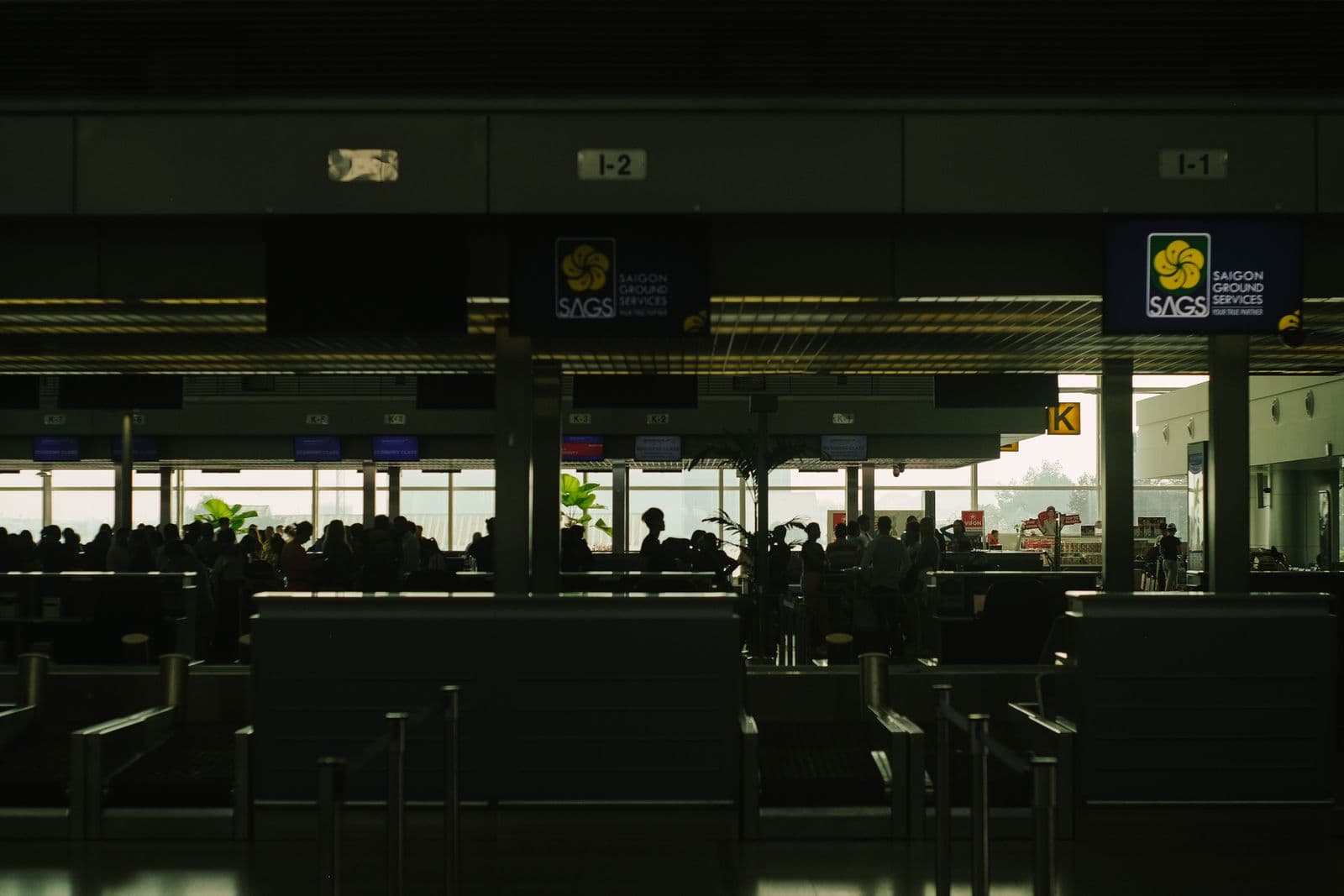
One warning before anything else. A lot of English-language pages on this topic are wrong in two specific ways: they date the new penalties to 1 January 2026, and they still print the old 2021 fine bands. Both errors are easy to check, and this article shows you where.
What counts as an overstay
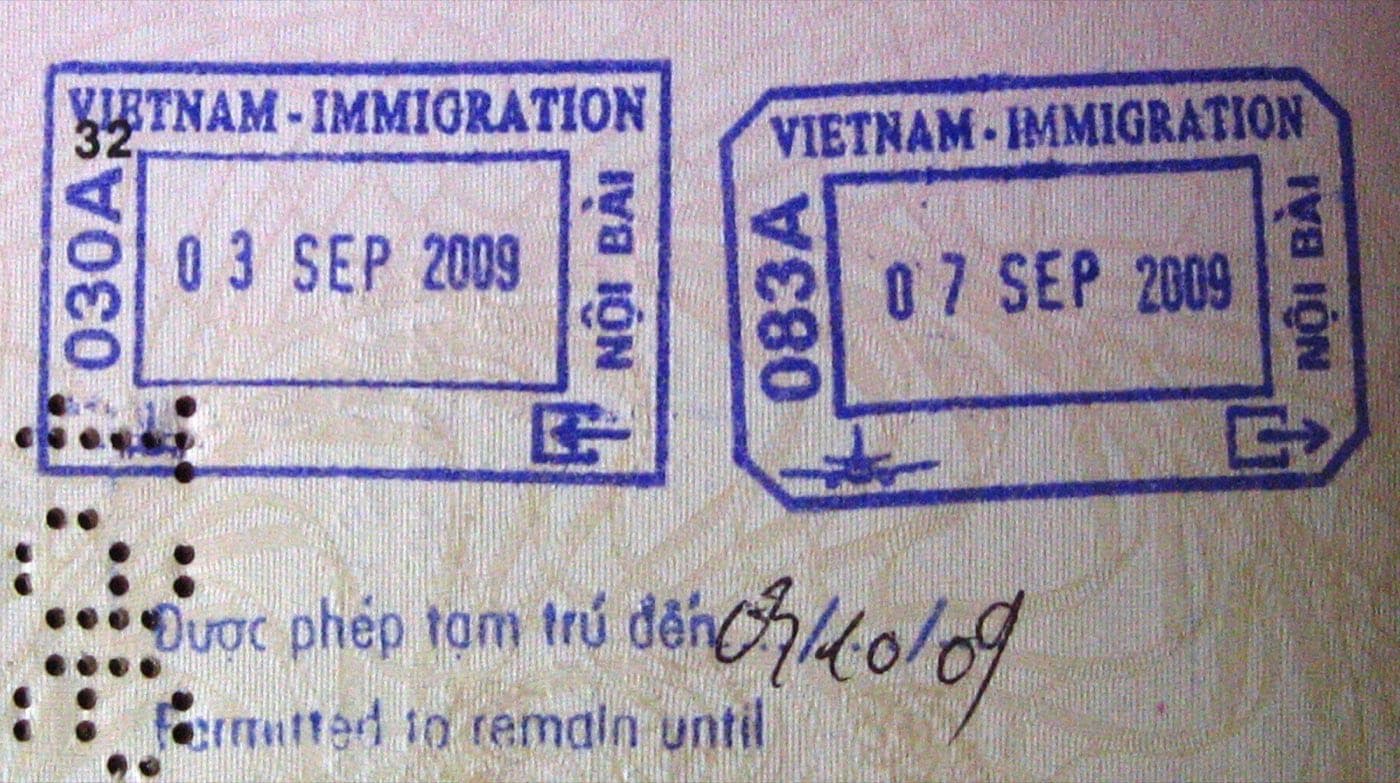
An overstay in Vietnam starts the day after the date printed in your temporary residence stamp (chứng nhận tạm trú), the one you got at the border. Not the date on your visa. Not your return ticket. The stamp.
Where your clock starts depends on your passport. Some nationalities enter under a visa exemption of 45 days, others get 15, many get none at all and arrive on an e-visa of up to 90 days. The penalty ladder is identical for everyone — only the starting number differs. Check yours before you count anything.
The e-visa is where most people get caught. Its validity runs from the dates you entered on the application form, not from the day you landed. Put down the first of the month, arrive on the sixth, and those five days are gone — they do not reappear at the far end. The window is fixed once approved, and the PDF cannot be edited.
That produces a classic off-by-one. On a 90-day e-visa the exit date is your entry date plus 89 days, because both boundary days count as full days. Not plus 90.
There is a third trap. The officer at entry can stamp you for less than your visa allows: the stamp matches the remaining visa period, and if less than 15 days remain, you get 15. Worse, a stay period can be shortened or cancelled outright if you break Vietnamese law. On paper you are still inside your window; in practice you are not.
One more group at risk: anyone who extended through an agent and never checked the result. Photograph your stamp on arrival day and count from that, not from what you were told.
If you are still in the planning stage, sort the dates out first — there is a step-by-step guide to the arrival QR code and a breakdown of the 45-day visa-free entry.
What it costs, and under which law
A short overstay costs 500,000 – 2,000,000 VND (roughly $20 – $80). The top of the scale is 40,000,000 VND, around $1,600, and it only applies past a full year. Between those two points sit seven bands, each tied to a number of days.
Decree 282/2025/NĐ-CP was signed on 30 October 2025, took effect on 15 December 2025, and replaced Decree 144/2021. The previous ceiling was 20,000,000 VND. If a page tells you the new rules started in January 2026, that page has not read the decree.
We deliberately do not reprint the full ladder here. It lives in one place and calculates itself from your day count.
Each band is a range, and that range does real work. The bottom edge goes to mitigating circumstances, the top edge to aggravating ones. Came forward yourself, papers in order, reason explained — the number moves down. Caught during a check, stalled to the last moment, vague about dates — up.
About the numbers you will find elsewhere. A good share of English guides still publish the Decree 144/2021 ladder, where 16–29 days cost 3–5 million VND rather than 5–10 million, and 30–59 days cost 5–10 million rather than 10–15 million. Any table without a citation to 282/2025 is out of date.
One detail almost nobody mentions: if an organisation sponsored you — an employer, a hotel, a host — its fine is double yours.
Vietnam visa types and durations · What actually happens at the border
Where you pay: immigration office or departure counter
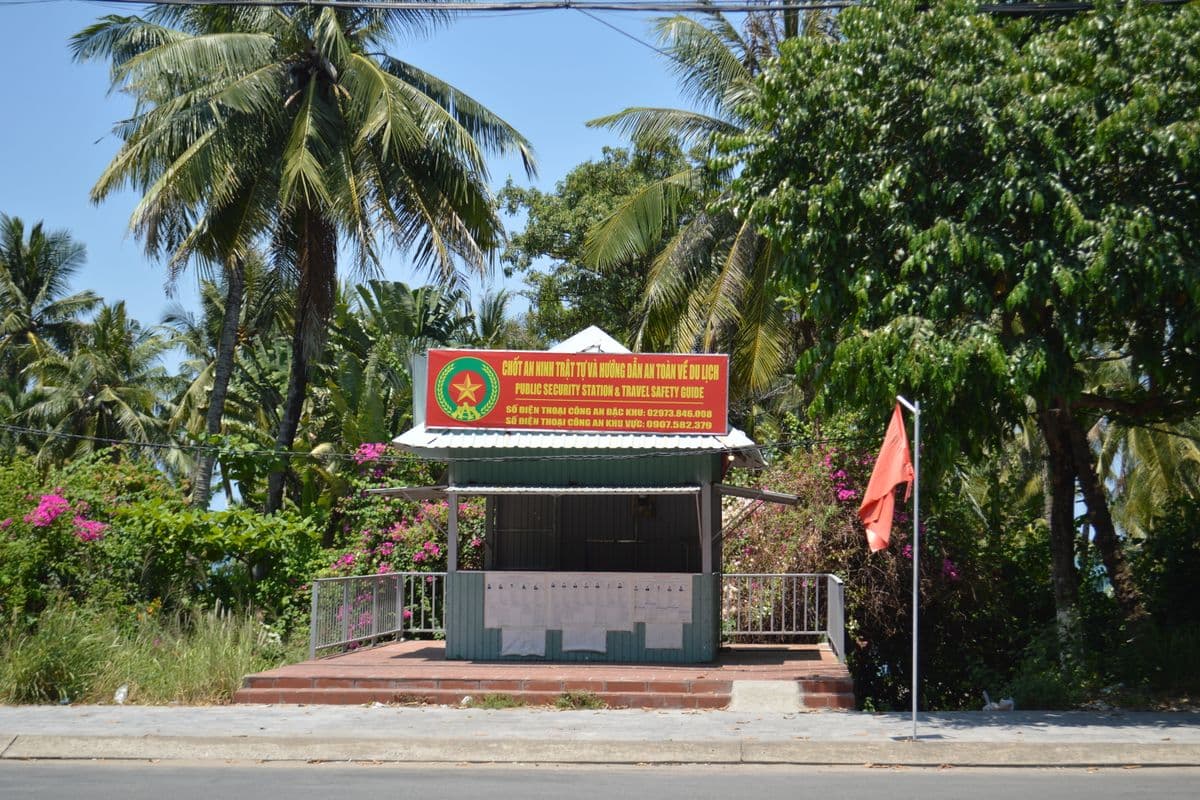
There are exactly two places this gets settled: an immigration office in town, or the passport control counter at the airport. The choice is made by your day count, not by what is convenient.
| Factor | Airport departure counter | Immigration office |
|---|---|---|
| Suits | an overstay of a few days | anything longer, and anyone staying on |
| Time needed | 30–60 minutes on top of check-in | several working days |
| What you walk out with | receipt and an exit stamp | written record, decision, sorted status |
| When available | day of departure only, ticket in hand | office hours, weekdays |
| Main risk | not released, flight lost | you reschedule the ticket knowingly |
Which office you actually need
Two bodies, routinely confused. The Immigration Department (Cục Quản lý xuất nhập cảnh) is the central authority and handles the complicated cases: lost passports, exit visas. The provincial immigration division of the police (Phòng Quản lý xuất nhập cảnh) handles an ordinary overstay.
The rule is that you appear in person, in the place where you actually live, not where you entered. Landed in Hanoi, living in Da Nang — you go in Da Nang.
| City | Immigration Department | Provincial police division |
|---|---|---|
| Hanoi | 44–46 Trần Phú, Ba Đình | 44 Phạm Ngọc Thạch, weekdays 08:00–11:30 and 13:00–17:00 |
| Ho Chi Minh City | 333–335–337 Nguyễn Trãi, phường Cầu Ông Lãnh | 196 Nguyễn Thị Minh Khai, phường Xuân Hòa |
| Da Nang | 7 Trần Quý Cáp, Hải Châu | 78 Lê Lợi, weekdays 07:30–11:30 and 13:30–16:30 |
We are not printing an address for Nha Trang: sources give two different ones, and guessing on your behalf helps nobody. Same for other provinces — check the provincial police site (Công an tỉnh). The administrative reform of mid-2025 abolished districts and renamed wards, so addresses copied from 2023–2024 blogs are often written in a format that no longer exists.
The lunch break is absolute. Between 11:30 and 13:30 the windows are closed, and knocking does not help.
Bring a translator or a Vietnamese-speaking friend if you can. Provincial offices are not reliably English-speaking, and a misunderstanding costs a day.
How payment really works
This is the part almost every overstay article skips. In Vietnam a fine can be issued without a written record only up to 250,000 VND. Every overstay starts at 500,000 VND, which means two documents are legally required: a record of administrative violation (biên bản vi phạm hành chính) and a penalty decision (quyết định xử phạt).
The practical conclusion is simple. If money is requested and no paperwork appears, that was not a fine. It happens at land crossings — cash, no receipt, "faster this way". The violation stays open on the record and resurfaces later.
What follows catches out anyone expecting a cashier:
- Immigration draws up the record and issues a decision stating the amount.
- You go and pay at the designated bank — your passport stays with immigration.
- You come back with the stamped receipt and collect your passport with an exit stamp or an exit visa.
Formally you can pay in cash to the State Treasury, by transfer to the account named in the decision, or through the national public services portal. In practice, bring cash in dong. Cards are not accepted for administrative fines, and at the airport the ATMs sit airside — past the counter where you were stopped.
Bring more than you think. The officer names the exact figure inside the band, and you cannot know it in advance.
Fast Track — no queue at the border
5–10 minutes instead of an hour in the immigration queue
from$21per passenger
What happens at passport control
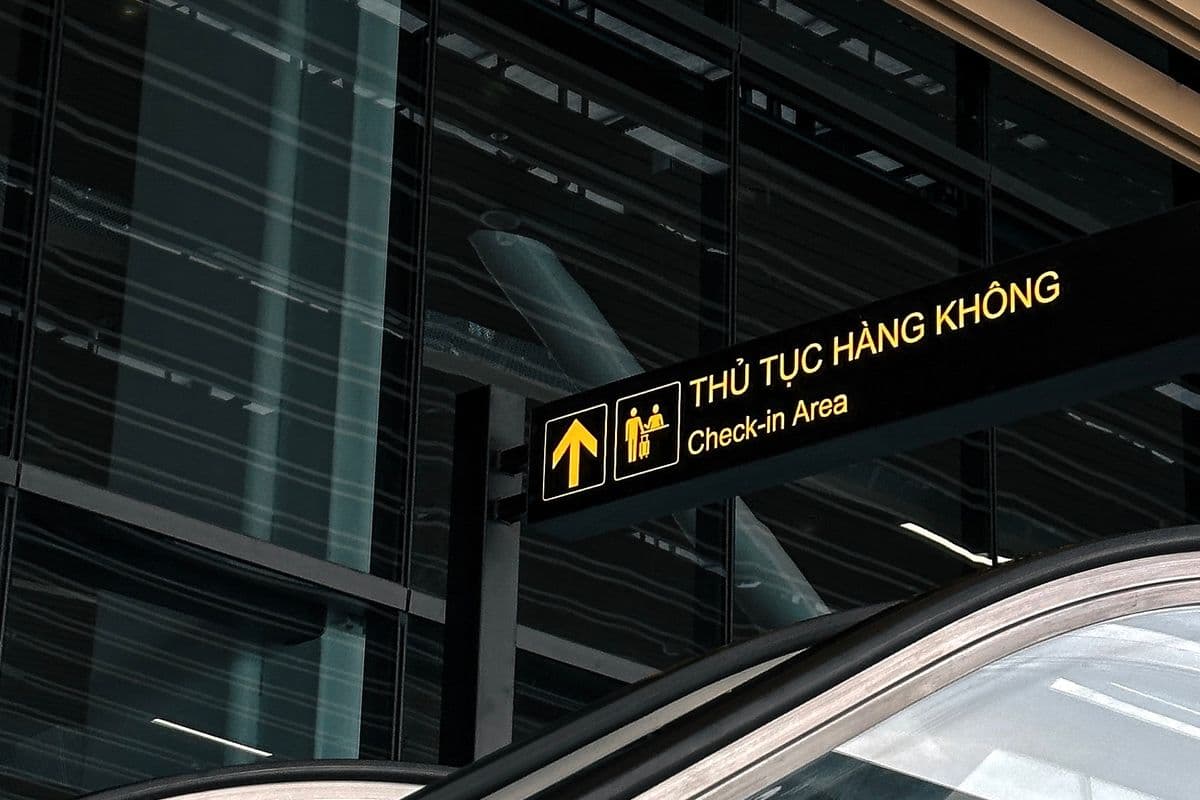
The first person to stop you is not a border officer — it is the airline check-in desk. The boarding pass simply does not come out. From there it goes like this:
- Check-in staff decline and send you to the immigration officers in the departure area.
- An officer takes your passport, checks the system, counts the days. Expect questions about where you were staying and why you overstayed.
- A written record is drawn up and an amount is named.
- You pay, take the receipt, and get clearance to proceed.
- You return to check-in, collect the boarding pass, and pass control normally.
Agency estimates put the paperwork at 30–60 minutes, but that assumes a quiet shift. One officer and two people ahead of you turns thirty minutes into ninety. The flight will not wait.
Arrive three to four hours early, not the usual two. And note the constraint: an overstay can only be settled at the airport on the day you fly, with a ticket in hand. You cannot show up early to clear it in advance. The ordinary queue eats time too — how to skip it is covered in the piece on fast track at Vietnamese airports.
Honestly about the risk: the ticket can burn, and rebooking is on you. That said, documented first-person accounts of a flight actually missed because of an overstay are hard to find in the open — it is an agency warning rather than a measured outcome. No reason to test it personally.
One more thing worth knowing in advance. The overstay leaves a mark in your passport, and some visa agencies argue that paying on the way out looks worse to immigration than turning up voluntarily. There is logic to it: coming forward is one thing, being stopped at the border is another.
Common mistakes at this stage:
- Arriving two hours before the flight. Not enough.
- Counting on a card or an ATM. The machines are airside; you are stopped landside.
- Arguing that the visa said 90 days. The stamp wins, not the visa.
- Hoping the overstay goes unnoticed. The check is automatic.
- Going to the airport with a long overstay. That is the next section.
Past 16 days, skip the airport
From day 16 of an overstay, Decree 282/2025 allows deportation as an additional penalty on top of the fine. It sits in Article 21, clause 11, point (b): the decision accounts for the nature and gravity of the violation and for mitigating and aggravating circumstances.
What matters is not that deportation is possible but who decides it. That is not a fifteen-minute question at a counter. Turning up with a suitcase becomes a lottery where winning means simply flying, and losing means a burnt ticket and a trip into town anyway.
No law says "beyond N days the airport will not process you" — that is practice, and it drifts. Combining agency guidance with reported experience, the picture looks like this:
| Overstay | What usually happens |
|---|---|
| 1–3 days | almost always processed at the airport on departure |
| 4–15 days | a coin toss: may be processed, may be sent into town |
| 16 days or more | no longer a money question — go to immigration first |
The order reverses: immigration first, ticket second.
What to bring to the office:
| Document | Why |
|---|---|
| Passport | the whole conversation depends on it |
| Proof of address | lease or hotel confirmation — you will be asked where you stayed |
| Cash in dong, generous | the amount is set on the spot |
| Evidence for the reason | hospital discharge, airline letter, police report |
| Written explanation | cause, period overstayed, what you intend to do next |
Budget days, not hours. There is no service standard for overstay cases: an exit visa takes 5–7 working days, and one documented case in Nha Trang ran eight calendar days from filing to decision. Buy the ticket after they give you a departure date, not before.
If your plan is to stay rather than leave, that is a different conversation with immigration. Long-term options are covered in the guide to residence permits and the TRC.
Deportation, forced exit and entry bans
Three things routinely mashed together in blogs: the fine, deportation, and forced exit. They carry different consequences, and the difference is worth two and a half years of your life.
| Measure | Legal basis | Who decides | Entry ban |
|---|---|---|---|
| Fine | Decree 282/2025, Art. 21 | immigration officer | none |
| Forced exit (buộc xuất cảnh) | Law 47/2014, Art. 30 — stay expired and person did not leave | immigration authority | 6 months |
| Deportation (trục xuất) | Decree 282/2025 Art. 21(11); procedure in Decree 59/2026 | head of department or provincial police | 3 years |
The typical outcome of a serious overstay is forced exit, not deportation. Article 30 names exactly this situation as a ground: the temporary stay expired and the person did not leave. Six months, then, rather than three years.
Now the myths. "One to five years", "up to ten years", "lifetime" — none of these appear in the law. There are two verifiable durations: six months and three years. Everything else is agency folklore repeated until it sounded official.
The refusal itself is made by the head of the border control unit, at entry. So the problem surfaces not when you apply for a visa but at the border, with tickets bought and a hotel paid for. The ban is lifted by the same authority that imposed it — the law provides no separate appeal body.
What decree 59/2026 adds
Since 1 April 2026 the deportation procedure has its own decree, 59/2026/NĐ-CP, running to six chapters and forty-four articles. A few points are worth knowing before you ever need them:
- The state budget covers enforcement. Ticket, custody, escort. The common claim that a deportee pays for their own flight contradicts the decree.
- The decision is served at least 48 hours before it is carried out, with reasons given.
- You may contact your embassy, request a review of the decision, and get an interpreter and legal assistance.
- You are housed in a police-managed facility until departure; the decree sets out food, communication, visits and medical care.
- Deportation can be postponed on five grounds now instead of two — for instance if you are party to a criminal case, or a natural disaster prevents departure.
The blacklist, and form NA5
There is no public database of entry bans. You cannot check yourself online, and paid services promising otherwise have nothing to query. Two legitimate routes exist: a written request to the Immigration Department, or an approach through a Vietnamese embassy. Nobody publishes response times or success rates.
Form NA5 is often described as "the blacklist form". It is not. NA5 (Tờ khai đề nghị cấp thị thực, gia hạn tạm trú) is the ordinary application for a visa or a stay extension, issued under Circular 22/2023/TT-BCA. One form per person, passport and a 4×6 cm white-background photo. One detail catches people out: the form requires the signature and seal of a sponsoring party — a company, or a relative holding a residence card. You cannot complete it alone.
How an overstay follows you
The matter does not close when the fine is paid. Immigration keeps a centralised record of stays, and the violation stays in it after you have flown home.
The most common consequence is an e-visa refusal, and it works unpleasantly: the application is declined without a stated reason, because the reason field is simply left empty. There is no formal appeal for an e-visa. You can reapply, but if the record is the cause, the result repeats. The workaround agencies suggest is applying through a Vietnamese embassy with a written explanation attached.
Scale matters here. One to three days rarely triggers an automatic refusal. Weeks or months make refusal likely.
The second layer is long-term status. Work permit and temporary residence card applications involve a look at your stay history, and a violation can undermine one. No law says "overstay equals refusal", and no documented cases are public either, so we will not overstate it: this is a factor, not a verdict.
There is also a limit people discover too late: an expired visa cannot be extended. Extensions are filed while the visa is still valid, typically 5–7 days before it runs out. Once it has expired, the only path is to close the violation first and then take whatever status immigration offers. How to extend on time is covered in the guide to extending a Vietnamese visa.
This hits hardest on people living in Vietnam in 45- or 90-day cycles. One slip puts the whole arrangement in question, because the next e-visa may not arrive, and without it the cycle breaks. The limits of that approach are examined in the piece on digital nomad visa options.
What genuinely helps: keep the payment receipt and the penalty decision. They prove the violation is closed rather than outstanding. Scan and paper, both.
When the overstay was not your fault

You were hospitalised, the flight was cancelled, your passport was stolen — and days went by while you dealt with more urgent things. The law anticipates this. It is a provision, not an officer's mercy.
The instrument is the 2012 Law on Handling of Administrative Violations, the general framework sitting above Decree 282/2025. Article 11 lists situations where no penalty is imposed at all, among them force majeure (sự kiện bất khả kháng) and unforeseen events (sự kiện bất ngờ). The law defines force majeure as an event that occurs objectively, cannot be foreseen, and cannot be overcome despite all possible measures.
Article 9 lists mitigating circumstances (tình tiết giảm nhẹ). These do not cancel the fine but push it toward the bottom of the band. Four apply to overstays: voluntarily reporting the violation and cooperating, illness or pregnancy, exceptionally difficult circumstances arising through no fault of your own, and voluntarily remedying the consequences.
All of it rests on paperwork. Talking about a hospital without a discharge letter achieves nothing.
| Situation | What to bring |
|---|---|
| Hospitalisation or injury | a Vietnamese hospital report with dates, explaining why departure was impossible |
| Cancelled or rescheduled flight | airline letter with flight number and date, and proof no alternative existed |
| Stolen or lost passport | a report from Vietnamese police, plus proof you applied for a replacement |
| Extension already filed | confirmation that the application was submitted and is pending |
Attach a written explanation to whichever applies: the cause, the period overstayed, your current situation, and what you plan to do next.
Lost passports deserve their own note, since they cause a lot of overstays. Report to the ward police within two working days and get a certified report — immigration accepts a Vietnamese police document, not a consular letter, and this is where foreigners most often lose time assuming their embassy can handle the Vietnamese side. The embassy issues a replacement passport or emergency travel document plus a letter to immigration. Immigration then issues an exit visa: 5–7 working days, valid for a maximum of 15 days, with departure expected within a week of issue.
Someone who overstayed a business visa by 23 days initially had three separate records drawn up, totalling roughly 22.5 million VND. Two were dropped and only the overstay fine remained — 4 million VND. Cooperation with the investigation and a consular letter confirming a pending passport made the differencepublished first-person account, t-j.ru, 2023
Note the year. That case predates both new decrees, so the amounts have moved since; the sequence of events has not. And its real lesson is about behaviour, not money. Go before the deadline if you can see you will not make it, or immediately after if something happened suddenly. Quietly accumulating days and explaining later is the worst option: the longer it runs, the weaker the force majeure argument looks.
There is no guarantee here, and pretending otherwise would be dishonest. The officer decides, and no statistics on how often Article 11 is applied to overstays are published. The accurate way to put it: you have a legal basis for requesting relief, and with documents it carries far more weight than without.
Your host is on the hook too
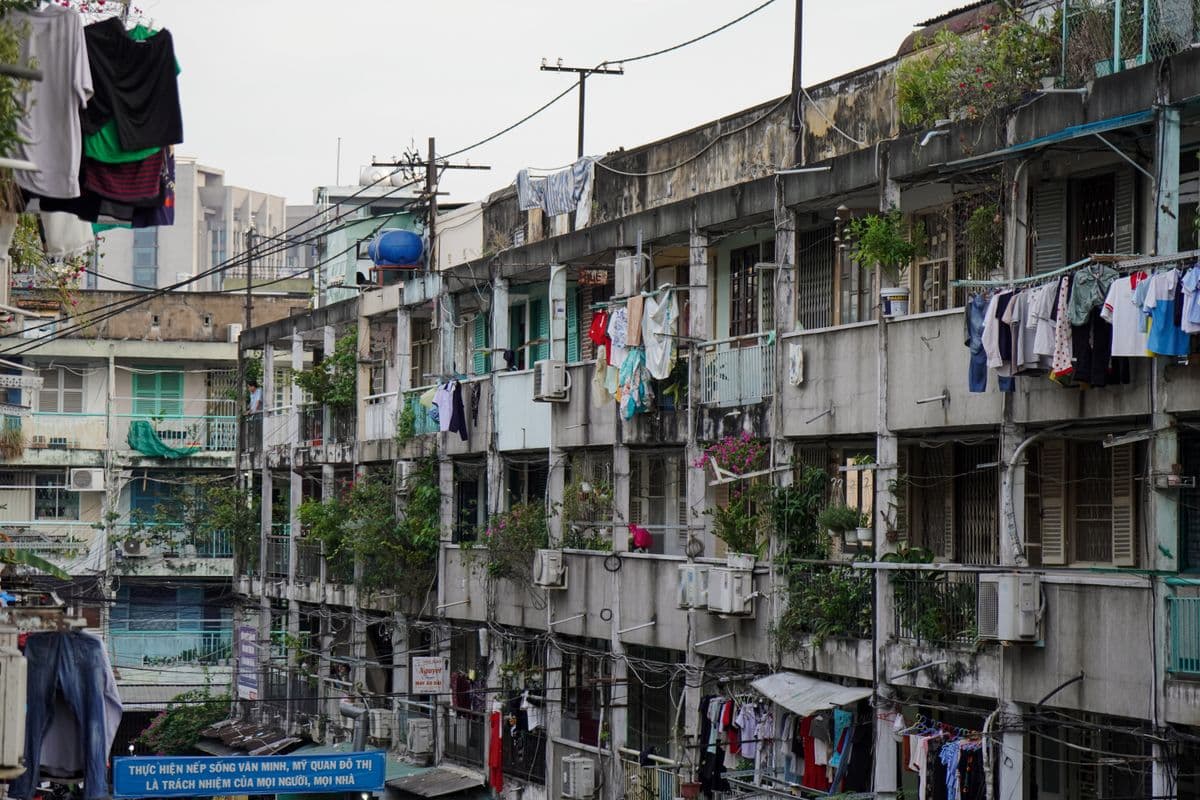
The temporary residence notification (khai báo tạm trú) is filed by whoever hosts you: hotel, hostel, landlord. It is their duty, not yours, and the deadline is tight — 12 hours from check-in, or 24 in remote and mountainous areas.
Failing to file is fined by the number of undeclared guests: 3,000,000 – 5,000,000 VND (about $120 – $200) for one to three people, 10,000,000 – 15,000,000 for four to eight, and up to 20,000,000 VND (around $800) for nine or more. There used to be a single rate; now there is a ladder.
The decree contains no separate offence of "hosting someone who overstayed" — we are not going to invent one. But authorities explicitly encourage hotels and employers to check documents and report suspected overstays, and the non-declaration fine dwarfs your own fine for a short overstay. The arithmetic decides whose interest wins.
There is something in it for you too. The declaration is the document tying you to an address, and immigration will ask for it alongside your lease when processing the overstay. Keep a copy.
How not to end up here again

Preventing an overstay comes down to one thing: knowing the exact date your stay ends, and not relying on memory for it.
- Photograph the stamp on arrival day, while the passport is still in your hand. That date is the only one that counts.
- Recalculate your e-visa window from the application, not from your landing. Days lost at the front do not come back at the end.
- Set two reminders: one week and three days out. The week is for filing an extension, the three days for buying a ticket.
- Stop looking for an online day counter. It does not exist. Government portals check e-visa application status by registration code, nothing more.
- Keep a plan B. If an extension is not available, leaving and re-entering is the alternative — the mechanics are in the guide to visa runs from Vietnam.
- Do not lean on last time. The rules changed in December 2025 and again in April 2026.
Still in the planning stage and want the right status from the start? Begin with the overview of whether you need a Vietnam visa and the Vietnam visa guide.
Read next: visa extension · visa runs · residence card · safety in Vietnam
FAQ — common questions
You get the lowest band under Decree 282/2025: 500,000 to 2,000,000 VND, roughly $20 to $80. It will most likely be handled at the airport on departure — the officer counts the days, takes payment, issues a receipt and clears you to proceed. Deportation is not on the table for a single day. The record of the violation stays in the system though, and it surfaces on your next application.
Yes, if the overstay is short. At one to three days the fine is almost always processed at the airport and you are released after paying. From 16 days, do not count on it: deportation becomes legally available from that point, and a departure counter cannot make that call. You will be sent to a city immigration office and the flight is lost. Airport processing happens only on your travel day, with a ticket.
No. Extensions are filed while the visa is still valid, usually 5 to 7 days before expiry. Once it has lapsed, that route closes: you first have to settle the violation, meaning a written record, a penalty decision and payment. Immigration then decides whether to grant a new status or a short exit visa. Filing on time is covered in the guide to extending a Vietnamese visa.
Two durations exist in law. Six months if a forced exit was applied, which is the typical outcome when a stay expires and the person does not leave. Three years if it was a deportation. Both are set by Article 21 of Law 47/2014/QH13 and run from the date the decision takes effect. Phrases like "one to five years" or "up to ten years" in blogs have no legal basis.
No. Formally you may pay cash to the State Treasury, transfer to the account in the penalty decision, or use the national public services portal, but cards are not accepted for administrative fines at either the airport or an office. Bring cash in dong: airport ATMs sit airside, past the point where you get stopped. Also remember the threshold — a fine above 250,000 VND without a written record and decision is not lawful.
You can apply, but approval is not guaranteed. A short overstay rarely causes an automatic refusal; weeks or months make one likely. The refusal arrives without a stated reason and there is no formal appeal process for e-visas. The usual workaround is applying through a Vietnamese embassy with a written explanation. Keep your receipt and penalty decision as proof the violation is closed.
Decree 282/2025 contains no offence of "hosting an overstayer" as such. What it does impose is the duty to file a temporary residence notification within 12 hours of check-in, with fines by number of undeclared guests running from 3,000,000 to 20,000,000 VND. So your host has a direct financial interest in your status being in order, and limited reason to cover for you.
Vietnam First-Trip Checklist: Everything Before You Go
A first-trip-to-Vietnam checklist: visa and documents, money, SIM, insurance, what to pack, apps and health — step by step before you fly.
Da Lat transport 2026: bikes, easy riders and canyoning
How to reach Da Lat, the airport transfer, scooter rental from $5 a day, easy rider tours and canyoning at Datanla — 2026 prices, routes and mountain-road safety.
Vietnam Visa Run: Border Runs, Routes & Costs 2026
The Vietnam visa run: resetting your stay via a border with Cambodia or Laos — the routes, costs, risks and whether it's still worth it.