
Da Lat for remote work — internet, cafes and rentals
Da Lat has two published internet speeds and they disagree by a factor of five. Nomads.com puts the city at 10 Mbps. Travel blogs claim 50+ Mbps and business-grade WiFi in the cafes. Neither side shows a method, and you are the one who finds out which is true — usually mid-call, on camera.
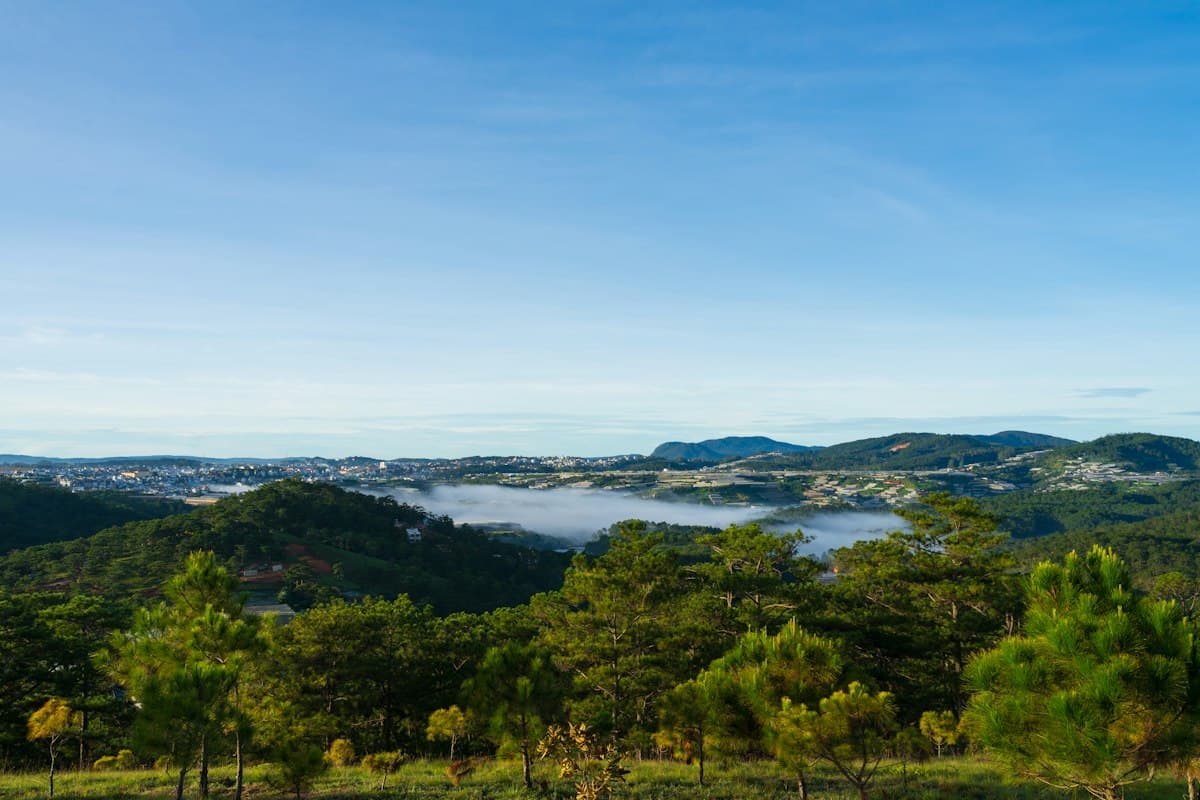
The honest version: Da Lat works for remote work, but not out of the box. The city has no real coworking space, the power goes out on a published schedule, and two of the three mobile networks thin out the moment you leave the centre.
Everything good about Da Lat comes from its altitude — 1,500 m, 22–24 °C all year, pine forest, coffee grown on the hills you can see from town. Everything awkward comes from the same place. Mountains eat mobile signal. The rain arrives exactly when your calls do. And in December your room drops to 10 °C, because a city that never needs air conditioning never installed anything that produces heat.
- No dedicated coworking space exists. There is One More (08:00–17:00, closed Wednesdays) and about seven cafes with real power outlets
- Only Viettel is dependable in the highlands. Most travel eSIMs roam onto Vinaphone or MobiFone instead
- The "100 Mbps" in a rental listing is download. Zoom asks for 3.8 Mbps upload for 1080p group video
- Power cuts are scheduled, on weekdays, from 08:00, and run 7–10 hours. A charged laptop with a dead router is a calculator
- Budget $45–140 a month on top of normal living costs, plus about $30–40 one-off for a router UPS
- ✓ Your work is asynchronous: code, writing, design, editing. Da Lat may be the best city in Vietnam for it
- ✓ You struggle with coastal heat and humidity. You will not touch an air conditioner here
- ✓ You are willing to spend two days setting up: SIM, UPS, a lease with the right clauses
- ✗ You have five camera calls a day. Building a redundant connection here is harder and costlier than in Da Nang
- ✗ You came for community. The expat scene is small and there is no reliable meetup calendar
- ✗ You expect a 24/7 office. That format does not exist in this city at any price
What actually breaks a workday here

Five things break a workday in Da Lat, and none of them is money: a scheduled power cut, weak upload, a carrier that drops in the hills, venues that close early, and the afternoon downpour. All five are solvable — in advance, not while a client is waiting in the meeting room.
| What fails | How it shows up | What fixes it |
|---|---|---|
| Electricity | The block goes dark from 08:00 for 5–7 hours, router included | Router UPS plus a mobile backup |
| Upload | Their video is fine, yours turns to blocks | Measure before you sign, use Ethernet |
| Carrier | Four bars on one street, Edge two blocks over | A physical Viettel SIM instead of an eSIM |
| Opening hours | Coworking shut at 17:00, cafes by 22:00 | A second venue and home as your base |
| Rain | A daily downpour, 13:00–16:00, May to October | Move errands to the morning |
| Cold rooms | 8–12 °C at night, nothing to warm the room | Get a heater written into the lease |
Why here specifically. Da Lat is a tourist town, not a business one. Its infrastructure is built for someone who stays three nights and drives out to the waterfalls, not for someone on a six-month lease who logs into Zoom every evening. That is why the cafes are designed for photographs, why the rentals have no desk, and why the one coworking space keeps the hours of a souvenir shop.
The second reason is terrain. A kilometre and a half up, built across a dozen hills, the city needs more cell sites than a flat coastal town and each one costs more. The carrier that paid for them works everywhere. The ones that did not work in the centre and fade two blocks out.
💬 Nomads.com rates Da Lat at 10 Mbps average and notes plainly that no dedicated coworking spaces exist, that few cafes are truly suitable for work, and that the city is "best suited for short-term visits or downtime" rather than a long-term base. nomads.com, 2026
That verdict is worth arguing with, and this guide argues with it — but only after going through each point. If you are still choosing a city, start with the Da Lat city guide.
There is no coworking space in Da Lat
Da Lat has no proper coworking space. No CirCO, no Dreamplex, nothing with the format those imply: 24-hour access, a tariff card, bookable meeting rooms, a backup internet line. There is one venue that calls itself a coworking space, and about seven cafes where you can put in a full shift.
One More Cafe & Coworking
77 Hai Bà Trưng · 08:00–17:00, closed Wednesdays · you pay by ordering downstairs
An Australian-style cafe with a work floor above it. Open desks, sofas, a separate conference room for calls, free green tea and water, a printer, English-speaking staff. Guests measure the WiFi at 25–35 Mbps. There is no membership: you buy food or coffee downstairs and sit upstairs.
As a third floor above a coffee shop, it is genuinely good. The problem is the clock. Five in the afternoon is the end of the local working day, but the start of yours if your client is in Europe and the middle of the night if they are in New York. Add Wednesday, when the whole place is shut.
Workspace Coffee Dalat
09 Hoàng Hoa Thám · advertised as 24/7
The only venue in town claiming round-the-clock hours, with a valley view. One caveat, and it matters: we only found the 24/7 claim in the venue's own material, never confirmed independently. If you plan to work nights, call first — do not build a schedule on it.
How this compares to Da Nang
The difference is not quality, it is scale. In Da Nang we walked into eleven coworking spaces, day rates 110,000–320,000 ₫ (~$4.40–12.80), monthly 2,000,000–6,000,000 ₫ (~$80–240). Some have a redundant line, some have unconditional 24-hour access, some have phone booths. Da Lat has none of that.
Which leads to the one rule that shapes everything below: in Da Lat you cannot buy reliability. You assemble it — from cafes, a home line, a mobile backup and a UPS.
Cafes that work as offices
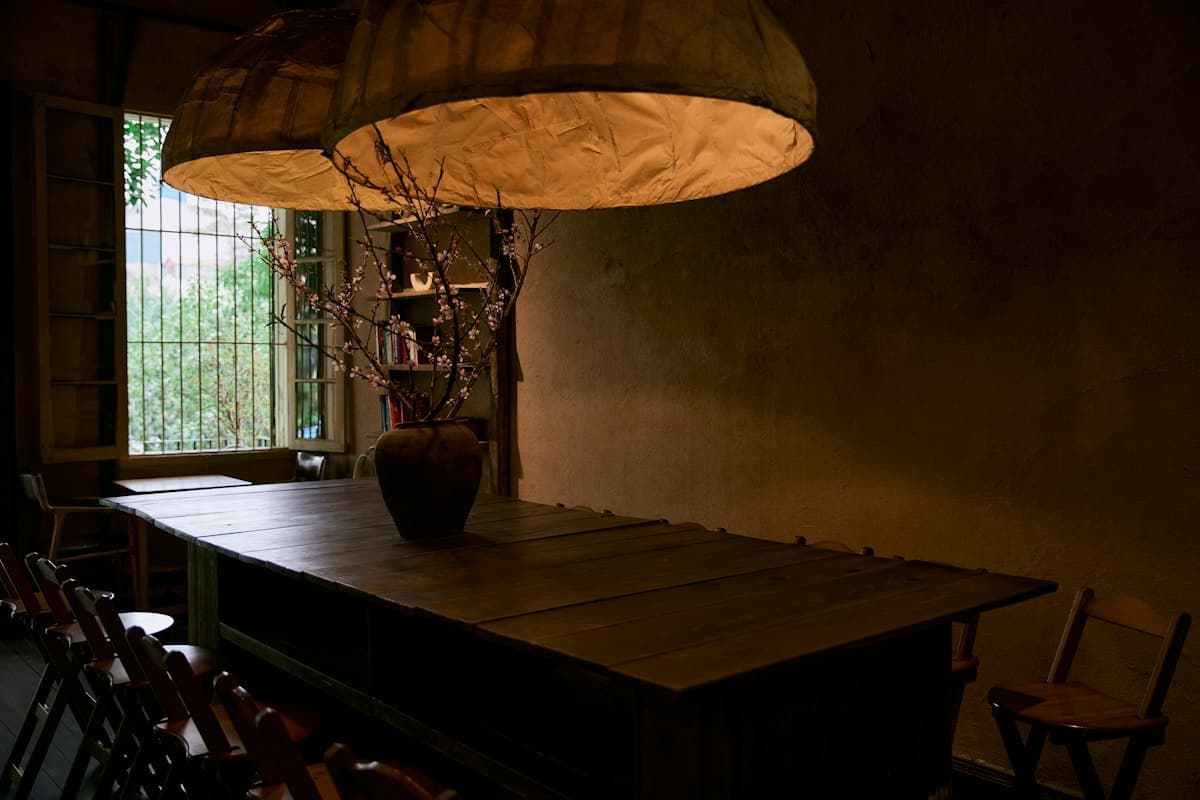
There are six or seven workable cafes in Da Lat, and you choose them by three things: whether there is an outlet at your specific table, how tall the table is, and how late the place stays open. The city sits in the middle of the plantations that supply it.
| Venue | Address | Hours | Drink | Outlets |
|---|---|---|---|---|
| One More Cafe & Coworking | 77 Hai Bà Trưng | 08:00–17:00, closed Wed | cafe menu | at every table |
| Daily Log Coffee | 15 Thông Thiên Học | 07:30–22:30 | from 20,000 ₫ (~$0.80) | at every table |
| The Married Beans Workspace | 44 Hùng Vương | 08:00–22:00 | 30,000–70,000 ₫ (~$1.20–2.80) | some seats only |
| An Cafe | 63Bis Ba Tháng Hai | 07:00–21:30 | 50,000–90,000 ₫ (~$2–3.60) | spread around the room |
| Là Việt Coffee | 200 Nguyễn Công Trứ | 07:00–22:00 | 45,000–80,000 ₫ (~$1.80–3.20) | at some tables |
| Q Coffee Roastery | 305 Tô Ngọc Vân | 06:30–16:30 | 35,000–60,000 ₫ (~$1.40–2.40) | unconfirmed |
| Workspace Coffee Dalat | 09 Hoàng Hoa Thám | advertised 24/7 | from 30,000 ₫ (~$1.20) | advertised |
Daily Log Coffee is the only venue in town designed for work on purpose rather than by accident. It publishes the things you normally have to discover in person: a dedicated internet line, 5 GHz WiFi, an outlet at every table, furniture at desk height. Open 07:30 to 22:30, the longest window in the city. Drinks from 20,000 ₫ (~$0.80). The owners say the honest part themselves: it is still a public cafe, not a quiet office.
The Married Beans Workspace sits on its own plot, and you hear the difference — or rather, you do not. Wood, warm light, coffee roasted in house. The brand has more than one address and not all of them run as a workspace, so check you are heading to Hùng Vương before your first visit.
An Cafe is a green courtyard 450 m from the night market, a five-minute walk. Outlets are spread around the room rather than clustered on one wall, and the WiFi holds. The downside is its popularity: on weekend afternoons this is a tourist spot with everything that implies.
Là Việt Coffee combines a roastery and a cafe. Fine as a backup for the evening, hard to make your regular desk — the machinery is loud and the footfall is constant.
Q Coffee Roastery opens at 06:30, which is rare in a city that wakes up late. Useful if you want three hours in before anyone else is awake. It closes at 16:30, so a second venue for the evening is mandatory.
Our picks
- A day with calls — One More, for the conference room, if you finish before five
- A long shift with no calls — Daily Log, longest hours and the right table height
- Quiet writing — The Married Beans on Hùng Vương
- Early start — Q Coffee, from 06:30
- Late evening — Daily Log until 22:30 or Là Việt until 22:00
What to check in your first hour somewhere new
Run a speed test and read the upload figure. The big download number the apps show first is the one that lies to you. Sit at the actual table and find the outlet — under your hand, not somewhere in the room. Measure the table height with your elbow; a 40 cm coffee table will wreck your neck inside a week. Listen to what happens at 16:00 when the second wave arrives. And watch whether they kill half the lights an hour before closing, which is a common habit here.
For the coffee itself — varieties, plantations, what to take home — we have a separate piece on Da Lat coffee and wine. That one is about taste. This one is about outlets.
The power goes out on a schedule
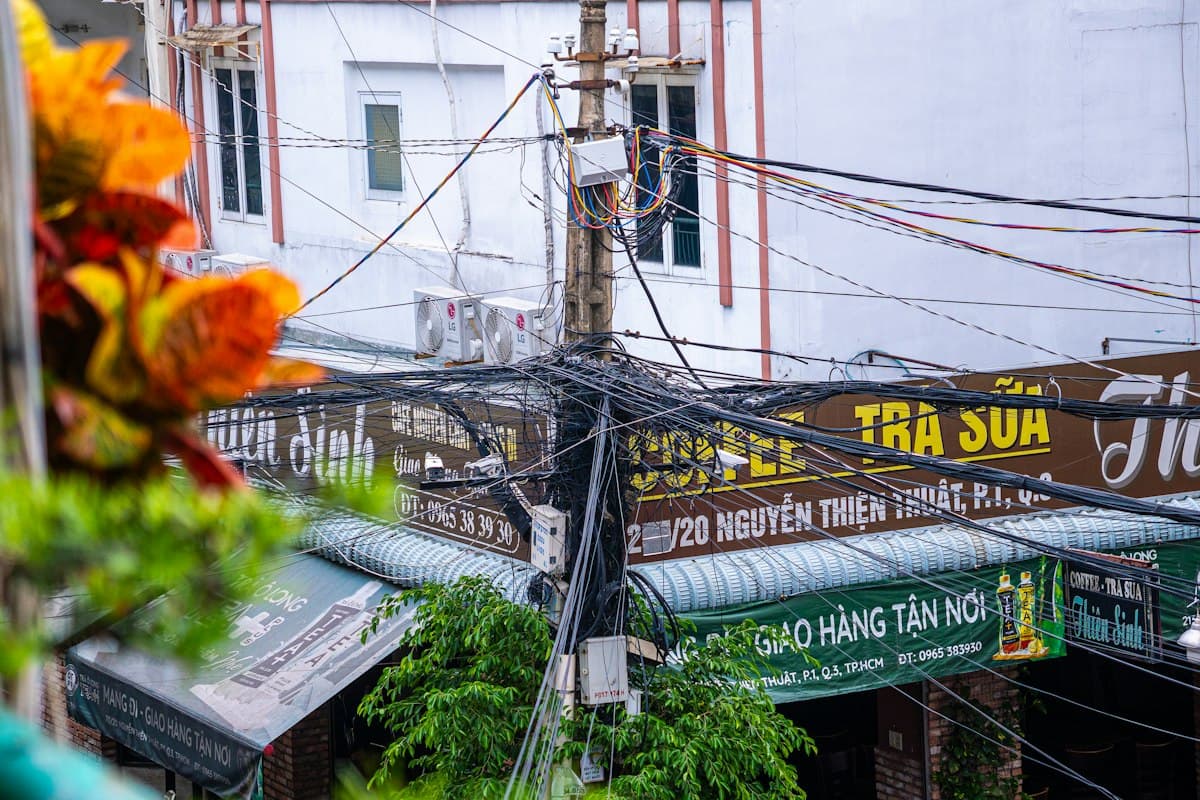
Power cuts in Da Lat are planned, not accidental. They are published in advance, they fall on weekdays, and they usually start at 08:00. A single cut runs five to seven hours; across the province some days reach ten hours.
| Date, 2026 | Streets in Da Lat | Hours | Time without power |
|---|---|---|---|
| 3–5 April | Lữ Gia, Phan Chu Trinh, Nguyễn Đình Chiểu, Yersin | from 08:00 | several hours |
| 24–26 April | — | — | no cuts scheduled |
| 29 May | Yersin, Phạm Hồng Thái | 08:00–15:00 | 7 hours |
| 29–31 May, province-wide | parts of Lâm Đồng | varies | up to 10 hours a day |
The stated reason is always the same: testing and maintenance on medium- and low-voltage networks. This is not a fault someone fixes in an hour. It is planned work that ends when it ends.
The rookie mistake is assuming a charged laptop solves it. It does not. The outlet dies and the router dies with it, along with your landlord's WiFi and the coffee machine across the road, because the grid drops a whole block at a time. A full battery with no internet is a calculator.
What actually works:
- Check the schedule the night before. The EVNSPC CSKH app and the provincial utility publish affected streets days ahead. Five minutes in the evening buys you a working day.
- A mini DC UPS for the router. A box the size of a paperback, 700,000–900,000 ₫ (~$28–36), keeps a router alive for two to five hours. The single best purchase you will make here.
- A full UPS if you work off a desktop: an 800 VA unit runs about 2,100,000 ₫ (~$84) and carries a router plus small loads for four to six hours.
- A mobile backup. The Viettel V150B plan is 150,000 ₫ for 30 days (~$6) with 60 GB. Tethering covers you for as long as your phone battery lasts.
- A geographic plan B. They cut a block, not the city. A cafe two kilometres away is usually fine — if you already know which one.
There is a tell, by the way. If you walk into a work cafe on a weekday and there is a queue for tables, somebody's neighbourhood has no power.
One carrier out of three
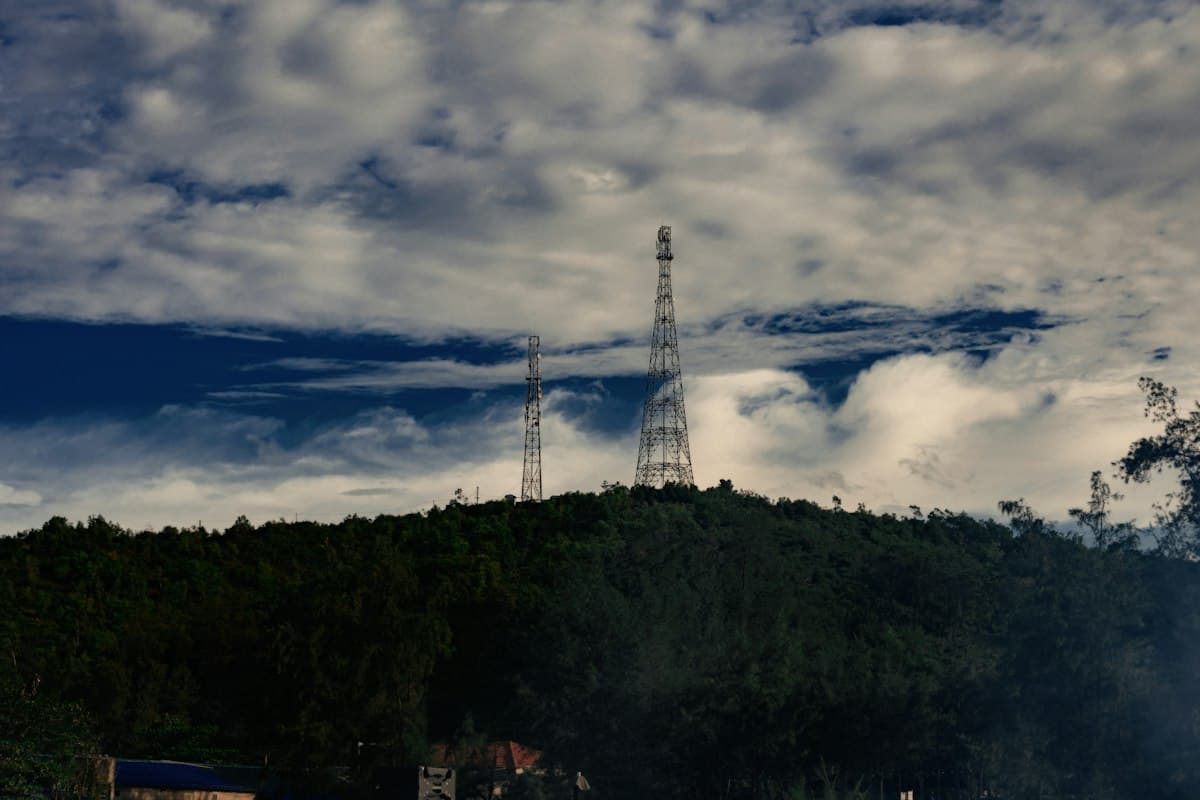
In Da Lat, Viettel works. Its 5G covers 95% of the city and of Bảo Lộc, and across rural and mountainous Vietnam it has the best coverage of any operator — English-language network comparisons say the same thing as the Vietnamese ones. Vinaphone is strong in cities and along highways but noticeably weaker in the highlands, sometimes falling back to 3G. MobiFone is fine in town and patchy outside it.
On the coast this difference barely registers, which is why almost nobody writes about it. In the Central Highlands it decides your day.
The eSIM trap
This is the part that catches travellers specifically. Most travel eSIMs sold in apps roam onto Vinaphone or MobiFone, not Viettel. You have signal, you have paid, the status bar looks healthy — and calls still fall apart, and you have no idea why.
So before you buy an eSIM, check which network it actually uses, and prefer one that explicitly gives you Viettel. If you already landed with the wrong one, the fix is a physical Viettel SIM: bring your passport, registration is required by law, and there are counters at the airport and all over town.
| Viettel plan | Price | What you get |
|---|---|---|
| V120B | 120,000 ₫ / 30 days (~$4.80) | baseline monthly data |
| V150B | 150,000 ₫ / 30 days (~$6) | 60 GB over 30 days |
| 5G combo | from 230,000 ₫ / month (~$9.20) | 5G, higher daily allowance |
Viettel advertises 5G at 700 Mbps to 1 Gbps and led the country on 5G speed in early 2026. Real-world numbers at any given corner are lower, but even half of that carries a video call with room to spare.
The full breakdown of carriers, plans and home providers across the country is in our Vietnam internet and SIM guide. This section is only about what the mountains change.
Upload, not the "100 Mbps" in the listing
Zoom asks for 3.8 Mbps upload and 3.0 Mbps download for 1080p group video. Google Meet wants up to 3.6 Mbps for 1080p. The "100 Mbps internet" in a rental listing refers to download and tells you nothing about the number that matters.
The asymmetry is structural. On a group call your download scales with how many faces you can see, while your upload stays flat — you send one stream. That single stream is the first thing to break when the line is congested. Hence the classic: you can see everyone perfectly, and they ask you to turn your camera off.
| What you need | Figure | What you often get |
|---|---|---|
| Zoom, 1080p, group | 3.8 Mbps up | a cafe at peak hour gives 1–2 |
| Google Meet, 1080p | up to 3.6 Mbps | Viettel 5G clears it easily |
| Home with several devices | 5–10 Mbps up, latency under 50 ms | entry-level FTTB ECO: 640 Kbps up |
| Da Lat average | — | 10 Mbps (Nomads.com) |
| Vietnam fixed-line average | — | ~282 Mbps, 12th in the world |
That FTTB ECO line is not a rhetorical example. It is a real entry-level Vietnamese package: 12 Mbps down, 640 Kbps up. Six times short of what Zoom asks for — and a landlord will describe it, accurately, as "there is internet".
How to measure properly
A speed test at nine in the morning in an empty room proves nothing. Test at peak, from about seven in the evening, when the whole block is on their phones. Read the upload line, not the headline download number. And ping a server near your client separately, because latency is felt in a call more than throughput is.
| Destination | Ping from Vietnam |
|---|---|
| Singapore | 46 ms |
| Dubai | 212 ms |
| Frankfurt | 235 ms |
| Amsterdam | 264 ms |
| London | 287 ms |
| New York | 310 ms |
Those readings come from Ho Chi Minh City, and Da Lat reaches the world through it, so add the domestic hop. Roughly 290 ms to London means a real pause before your counterpart answers. Survivable, but you will talk over each other for the first week.
The international leg is its own variable
On 25 August 2026 segments of the SJC2 and AAE-1 submarine cables failed almost simultaneously, followed by problems on AAG and Intra Asia. Four systems out of eight — around 30% of Vietnam's international capacity. Operators warned of higher latency and slower peak-hour speeds, mainly for services hosted abroad, and rerouted traffic onto surviving cables and terrestrial paths. Repairs on Intra Asia were due to begin in early September; no dates were given for the other three.
Home internet
The same three providers cover Da Lat as the rest of the country. The 2026 baseline is around 300 Mbps from Viettel, VNPT and FPT, from 165,000 ₫ a month (~$6.50), with FPT nearer 180,000–200,000 ₫ (~$7–8). Installation takes one to three days and is often free.
Two questions to ask before you sign anything: what is the upload figure on this specific plan, and can you plug into the router with a cable. A five-metre Ethernet cable costs almost nothing and solves half of your call problems — Wi-Fi through thick Da Lat walls, from one access point serving three rooms, is mediocre at best.
Internet in Vietnam · Da Lat prices · Freelancing from Vietnam
Working on someone else's clock
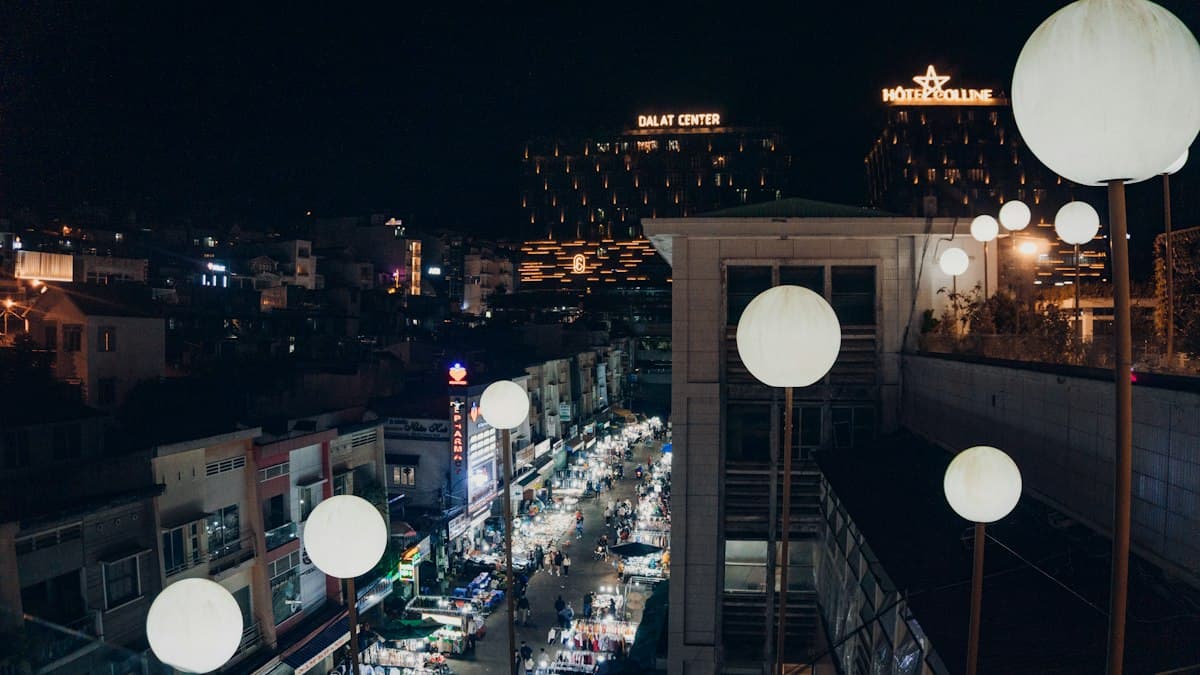
Vietnam runs on UTC+7. Whether that is comfortable depends entirely on where your clients sit, and it changes which venues are available to you at all.
| Client base | Offset from Da Lat | Your peak, local time | What stays open |
|---|---|---|---|
| Singapore, Hong Kong, Bangkok | −1 to +1 h | a normal day | everything, One More included |
| Australia (Sydney) | +3 h | 12:00–21:00 | Daily Log, Là Việt, home |
| Europe (Berlin, Lisbon) | +5 to +6 h | 14:00–00:00 | home, with cafes for the first half |
| UK (London) | +6 h | 15:00–01:00 | home only after 22:30 |
| US East Coast | +11 h | night and early morning | home; Q Coffee from 06:30 |
Now do the arithmetic before you buy the ticket. The one coworking space shuts at 17:00. The rainy-season downpour starts early in the afternoon and runs about three hours. Power cuts begin at 08:00 and go into the afternoon. All three land on a European or American work peak — not by design, simply because the city keeps its own hours.
Which gives the only workable conclusion: in Da Lat you need two places. Home as the primary base, with a line you have actually tested and a UPS on the router. A cafe as a change of scenery in the first half of the day, before the rain and before the calls. "Cafe in the morning, home in the evening" is not a lifestyle choice here, it is physics.
If your offset is more than nine hours, weigh it honestly. Night shifts are possible anywhere. In a town that goes quiet at ten, a night shift is you, the kettle and the fog.
The rainy season is a work problem

Da Lat's wet season runs May to October, and the rain does not arrive at random. It comes in the afternoon. Early in the season it starts around one or two o'clock and falls for about three hours before clearing. By mid-season it is daily and stretches into the evening.
| Month | Rainfall | Wet days | What it means for work |
|---|---|---|---|
| December — February | 15–40 mm | 3–6 | The best window. Cold nights, bright days |
| March | 65 mm | 9 | Still dry, already warm |
| April | 145 mm | 18 | Transitional, showers are short |
| May — August | 190–215 mm | 20–23 | A downpour every afternoon |
| September | 275 mm | 25 | The worst month of the year |
| October | 225 mm | 21 | Eases off towards the end |
| November | 90 mm | 14 | You can plan trips again |
Twenty-five wet days out of thirty in September is not "occasional drizzle". It is a month in which you leave the house before noon or you do not leave it.
A storm hits three things at once. The mobile link degrades — it does not die, but latency climbs and video starts stuttering. Power goes off outside the published schedule, which is exactly why the utility's notices include that weather caveat. And a wet mountain road in fog turns a fifteen-minute ride into half an hour, which is its own argument against hopping between cafes mid-afternoon. How people get around here is covered in the Da Lat transport guide.
The full month-by-month breakdown with temperatures sits in our piece on Da Lat weather. For work planning one rule is enough: December to March the city stays out of your way, May to October you build the day around the rain.
Fast Track — no queue at the border
5–10 minutes instead of an hour in the immigration queue
from$21per passenger
Renting a place you can work from
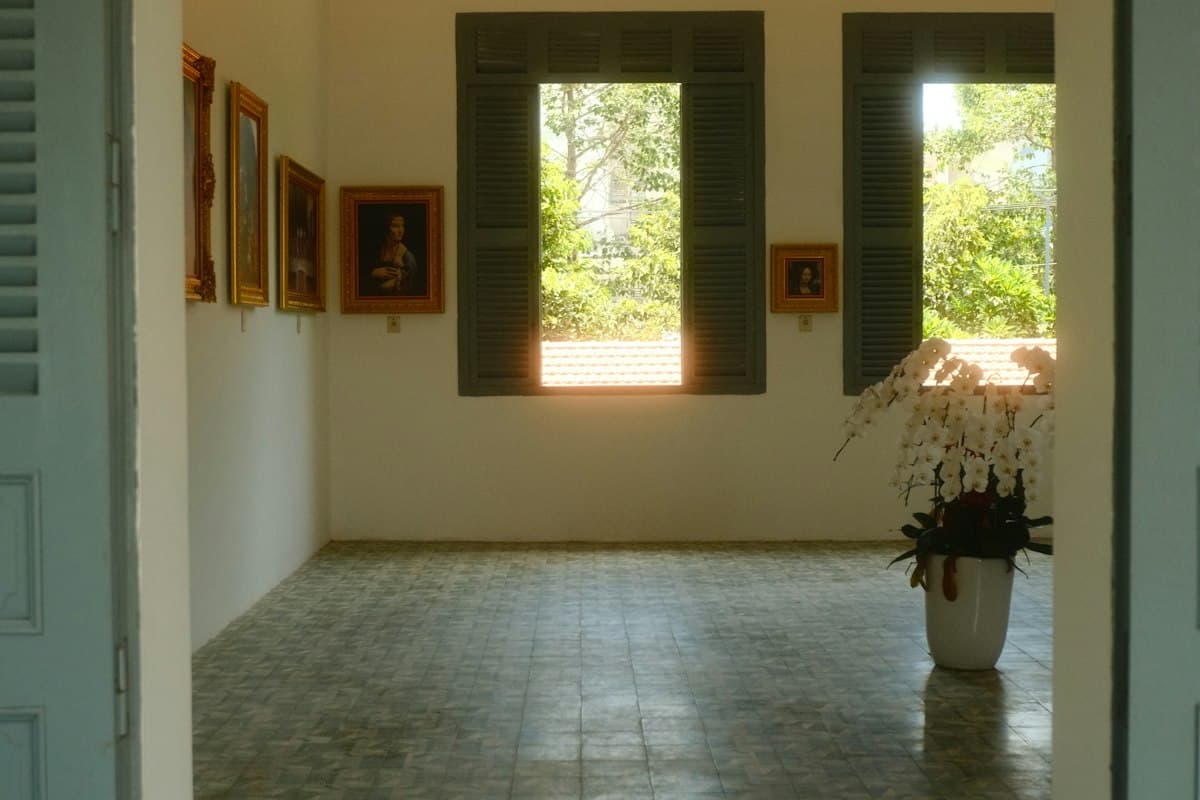
A desk and a heater are options in Da Lat, not defaults, and you ask about both before the deposit. The rental market here is built for a tourist staying three nights: bed, nightstand, pine view.
About heat
Da Lat has no air conditioning. Not as a shortage — as a fact of life, because there is nothing to cool: daytime temperatures sit at 22–24 °C all year. The side effect is that with no air conditioner there is also no heat mode. And in December and January nights drop to 6–12 °C. The city's record low is 5.3 °C.
Walls are thin, central heating does not exist, and by morning the room is at outdoor temperature. Vietnamese booking guides put it bluntly: in December and January it gets properly cold without a heater, so ask for a máy sưởi (heater) or chăn điện (electric blanket) when you book. Hotels and better homestays have them. Cheap long-term rentals almost never do.
You can work in a jacket and fingerless gloves for about two days before it starts to grate.
About the desk
A 40 cm coffee table and a low armchair is the standard Da Lat set-up. Eight hours a day in that position produces neck pain by the end of week one. Options: hunt for a place with a real desk (rare, but newer buildings have them), buy one yourself (a basic work desk at the local market runs from 1,500,000 ₫, ~$60), or negotiate with the landlord to put one in.
Questions to ask before the deposit
- What is the upload speed on the home connection — the actual figure, not the plan headline
- Can you connect to the router by cable, and is there a free port
- Where does the router sit, and does the signal reach the room you will work in
- Is there a desk at proper height and a chair with back support
- Is there a heater or electric blanket, and is it included in the rent
- How is electricity billed: metered, or at the landlord's rate (usually 3,000–5,000 ₫ per kWh, ~$0.12–0.20)
- Has this building appeared in the outage schedules recently
- How much street and neighbour noise comes through — central Da Lat is loud and soundproofing is poor
- How many outlets are in the room, and where exactly
- Deposit, contract length, terms for leaving early
Prices and addresses
A 25–35 m² studio in the centre runs 6,000,000–9,000,000 ₫ a month (~$240–360), a one-bedroom in a newer building 8,000,000–12,000,000 ₫ (~$320–480), a house with a garden on the edge of town from 12,000,000 ₫ (~$480). Deposit is normally one month, contracts start at six. Full breakdown in our Da Lat cost of living piece.
Give yourself two or three weeks in a hotel or guesthouse first and look for a lease on foot: long-term rentals here are badly represented online, and half of them are advertised on a sign taped to a gate. What to book for that period is in our list of Da Lat hotels and guesthouses.
What a work month costs
Working from Da Lat adds roughly $45 to $140 a month on top of ordinary living costs, depending on whether you work at home, in cafes, or both. This covers only the ability to work: connectivity, backup, the coffee you pay as rent on a table, and the premium for a flat with a desk.
| Line item | At home | From cafes | Hybrid |
|---|---|---|---|
| Home fibre | 165,000–250,000 ₫ | — | 165,000–250,000 ₫ |
| Viettel mobile backup | 150,000 ₫ | 150,000 ₫ | 150,000 ₫ |
| Cafes (drink plus food per day) | — | 1,000,000–1,500,000 ₫ | 500,000–800,000 ₫ |
| Rent premium for desk and heater | 1,000,000–2,000,000 ₫ | — | 1,000,000–2,000,000 ₫ |
| Extra electricity | 150,000–300,000 ₫ | — | 150,000–300,000 ₫ |
| Monthly total | 1,465,000–2,700,000 ₫ | 1,150,000–1,650,000 ₫ | 1,965,000–3,500,000 ₫ |
| In dollars | ~$59–108 | ~$46–66 | ~$79–140 |
Currency converter
One-off purchases you will end up making anyway:
- Mini DC UPS for the router — 700,000–900,000 ₫ (~$28–36)
- Power strip and extension lead — 100,000–200,000 ₫ (~$4–8)
- Five-metre Ethernet cable — from 50,000 ₫ (~$2)
- A work desk, if the rental has none — from 1,500,000 ₫ (~$60)
The cafe-only column looks cheapest and is not. It excludes the flat you have to rent regardless, and it buys no redundancy at all: you are living on somebody else's opening hours and somebody else's line. The hybrid costs more and is the only one that survives an outage and a wet season.
There is no full cost-of-living table here on purpose — that lives in Da Lat prices, with food, transport and everything else. For a benchmark, Nomads.com puts a nomad month in Da Lat at $1,239, though that assumes a Western basket and most people land well under it.
Prices checked in September 2026 at roughly 25,000 ₫ to the dollar. Carrier plans and cafe menus move; re-check before you budget.
Da Lat or Da Nang
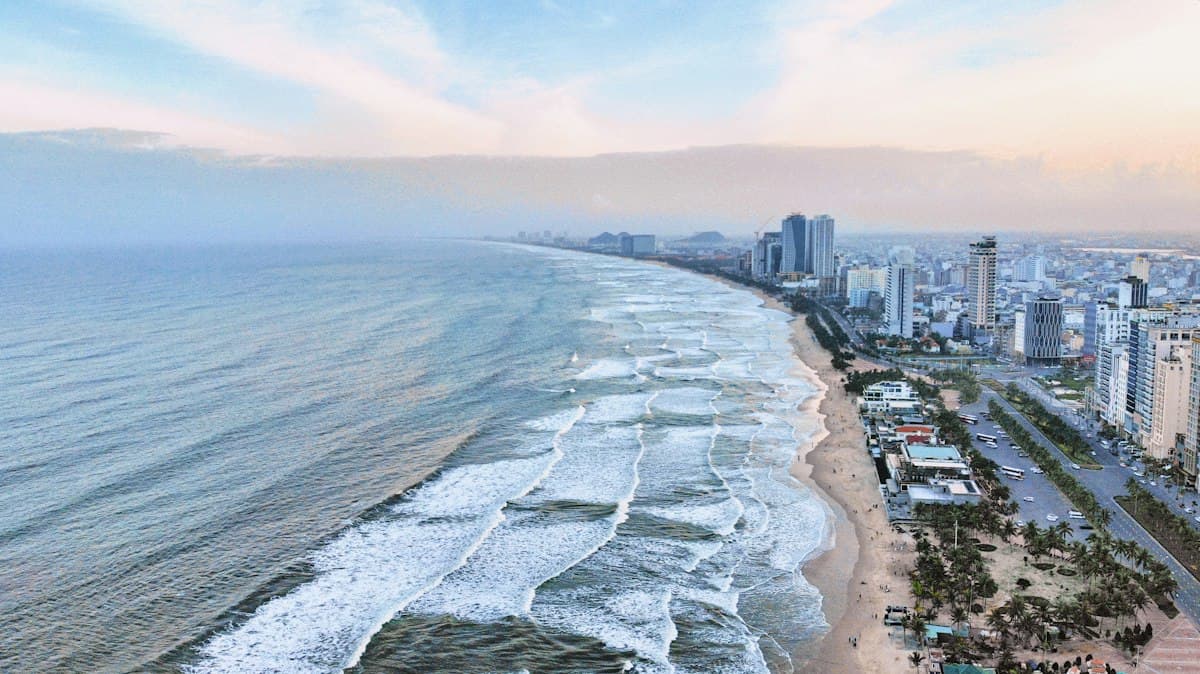
Daily calls on camera: Da Nang. Asynchronous work where the priority is nobody bothering you: Da Lat. That is the whole answer; the rest is detail.
| Criterion | Da Lat | Da Nang |
|---|---|---|
| Coworking | none worth the name | 11 venues, from 110,000 ₫/day (~$4.40) |
| Backup internet line | you build it yourself | several venues have one |
| 24-hour access | claimed by one cafe, unverified | available, unconditional at one venue |
| Climate | 22–24 °C year-round, no AC needed | hot and humid, typhoons September — December |
| Noise and distraction | quiet, small expat scene | lively, large community |
| Studio in the centre | from 6,000,000 ₫ (~$240) | 20–40% more |
Da Lat wins on two things outright: climate and quiet. No other city in Vietnam lets you work without air conditioning twelve months a year, and few are this calm.
It loses wherever you would rather buy reliability than build it. In Da Nang you pay a membership and someone else owns the problem of internet, power and opening hours. In Da Lat that problem is yours.
Deciding at country level rather than city level? Our overview of freelancing and remote work in Vietnam covers visas, tax, banking and five cities by budget.
What to bring
Four pieces of hardware matter in Da Lat: a power strip, an Ethernet cable, a PD power bank and a decent headset. Everything else you can buy locally in an afternoon.
- A power strip with three or four sockets. There is usually one free outlet near your table and three devices. Vietnamese sockets are types A and C at 220 V, so flat and round pins both fit almost everywhere
- A three- to five-metre Ethernet cable. Still on the list in 2026, because a cable beats Wi-Fi through two walls. On calls that is the difference between fine and good
- A power bank with PD support. Not for the phone — to top up a laptop during an outage
- A headset with a boom mic. In a cafe the built-in mic picks up everything: the grinder, the next table, rain on the roof
- A warm layer and proper socks. Sounds unserious until your first December in a room with no heating
- A passport scan on your phone. You will need it for the SIM and for signing a lease
What you can leave at home: a plug adapter (Vietnamese sockets take most pins) and an external monitor, which is heavy, expensive to fly and useless in a cafe.
FAQ
Yes, but it is inconvenient. The city is built on hills, and a kilometre uphill at an 8–10% gradient turns a coffee run into exercise. Grab operates here, a car across the centre costs 30,000–80,000 ₫ (~$1.20–3.20), but waits stretch in the rain and at peak hours. The efficient answer is a rental within a ten-minute walk of two work cafes
Sometimes, though not for the reason people assume. When the submarine cables are congested, routing through a VPN endpoint in Singapore or Hong Kong can take a less loaded path and cut latency. It depends on your provider and the day, and only testing tells you. It does nothing for Vietnamese domestic services, which stay fast throughout
December through March. Rainfall is minimal, days are sunny at 22–26 °C, and nothing gets cancelled.
- December to March15–65 mmof rain a month, the best window
- September275 mm, 25 daysthe worst month of the year
- April and November90–145 mmtolerable shoulder months
The trade-off is cold nights: 11–14 °C, dropping to 6–8 °C in December and January
Vietnam has no digital-nomad visa. Most people arrive on the e-visa, which is available online to nearly all nationalities for stays of up to 90 days, single or multiple entry, and several European passports also get short visa-free entry. Remote work for a foreign client on a tourist visa is a grey area nobody polices, but overstaying is fined on exit.
Details in our Vietnam digital nomad visa guide
In the larger work cafes usually yes, and QR transfer is accepted almost everywhere. Foreign cards are hit and miss, and small family-run places take cash only. Keep 200,000–500,000 ₫ (~$8–20) on you and the question disappears. ATMs are easy to find in the centre; withdrawal fees are typically 50,000 ₫ (~$2) per transaction on top of your own bank charge
Quieter than Da Nang or Ho Chi Minh City, but this is not a library. The peaks are weekend afternoons and anything after 16:00, when the second wave of customers arrives. The calmest options are The Married Beans on its own plot and Daily Log on a weekday before noon. A headset with a directional mic solves most of it; a laptop's built-in mic drags the whole room into your call
It depends whether you want warmth or quiet. Winter here is dry and sunny by day but genuinely cold at night, and you feel that in a room with no heater. The coast is warmer and livelier, though humid and crowded in high season. For work, Da Lat wins from December to March: minimal rain, no crowds.
We compared the options across the country in our guide to wintering in Vietnam
Read next: Da Lat city guide · Da Lat prices · Da Nang coworking spaces · Digital nomad visa
Da Lat Attractions: Crazy House, Lakes & Waterfalls
The best things to see in Da Lat: the Crazy House, waterfalls, pagodas, the Valley of Love, flower gardens and viewpoints — with tickets and routes.
Da Lat 2026: Vietnam's Cool Mountain Town Guide
Da Lat guide: the cool climate, coffee and wine, waterfalls, canyoning, the Crazy House and where to stay in Vietnam's mountain retreat.
Dalat Flower Festival 2026: Dates, Programme, Tips
Dalat Flower Festival 2026 runs 19-31 December. Confirmed programme, venues, December weather, where to stay, how to get there and what it costs.