Chè: Vietnam’s sweet soups — 12 types, prices and where to eat them
Beans, corn and tapioca under coconut milk, about $0.40 a bowl. What the twelve main types are, how the north differs from the south, eight addresses on a map, and the three phrases that get you served.
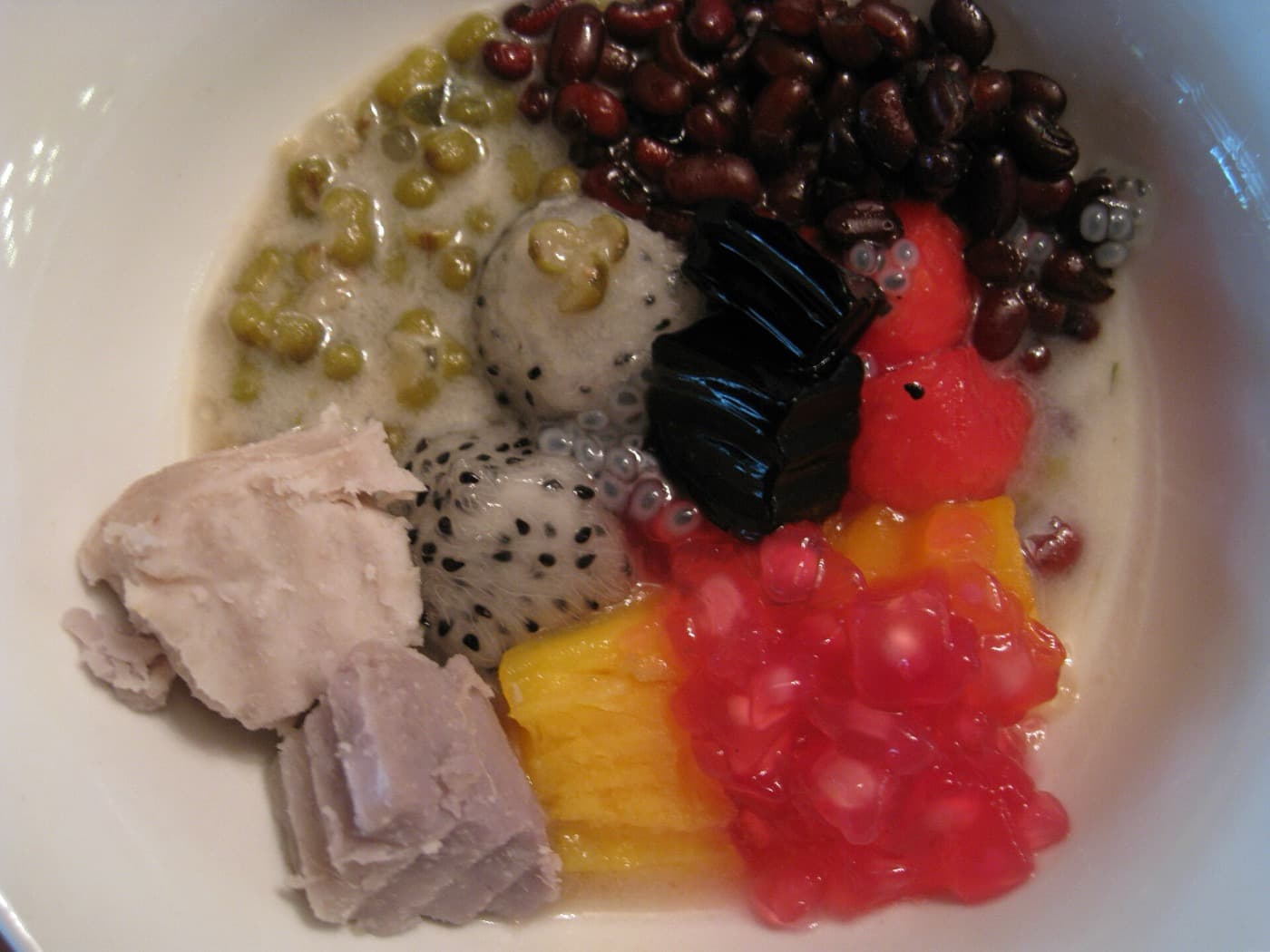
Chè (chè) is not a single dish. It is an entire category of Vietnamese sweet soups and puddings: beans, corn, tapioca, fruit and jelly under a pour of coconut milk. A serving runs 10,000–25,000 VND (~$0.40–0.95), there are dozens of versions, and half of them look nothing like what you picture when someone says "dessert."
That mismatch is why most visitors walk straight past. The layered glass on the cart looks like a cocktail. The bowl of beans looks savoury. And when you ask what it is, the answer is one word — "chè" — which explains nothing.
What follows: a table of every type worth knowing, Hue’s royal chè, August 2026 prices, eight addresses from Hanoi to Cholon with a map, a pointing-and-counting guide to ordering, and one recipe you can actually make at home. If you are building a wider food route, start with our Vietnamese cuisine guide and the street food roundup.
What chè actually is
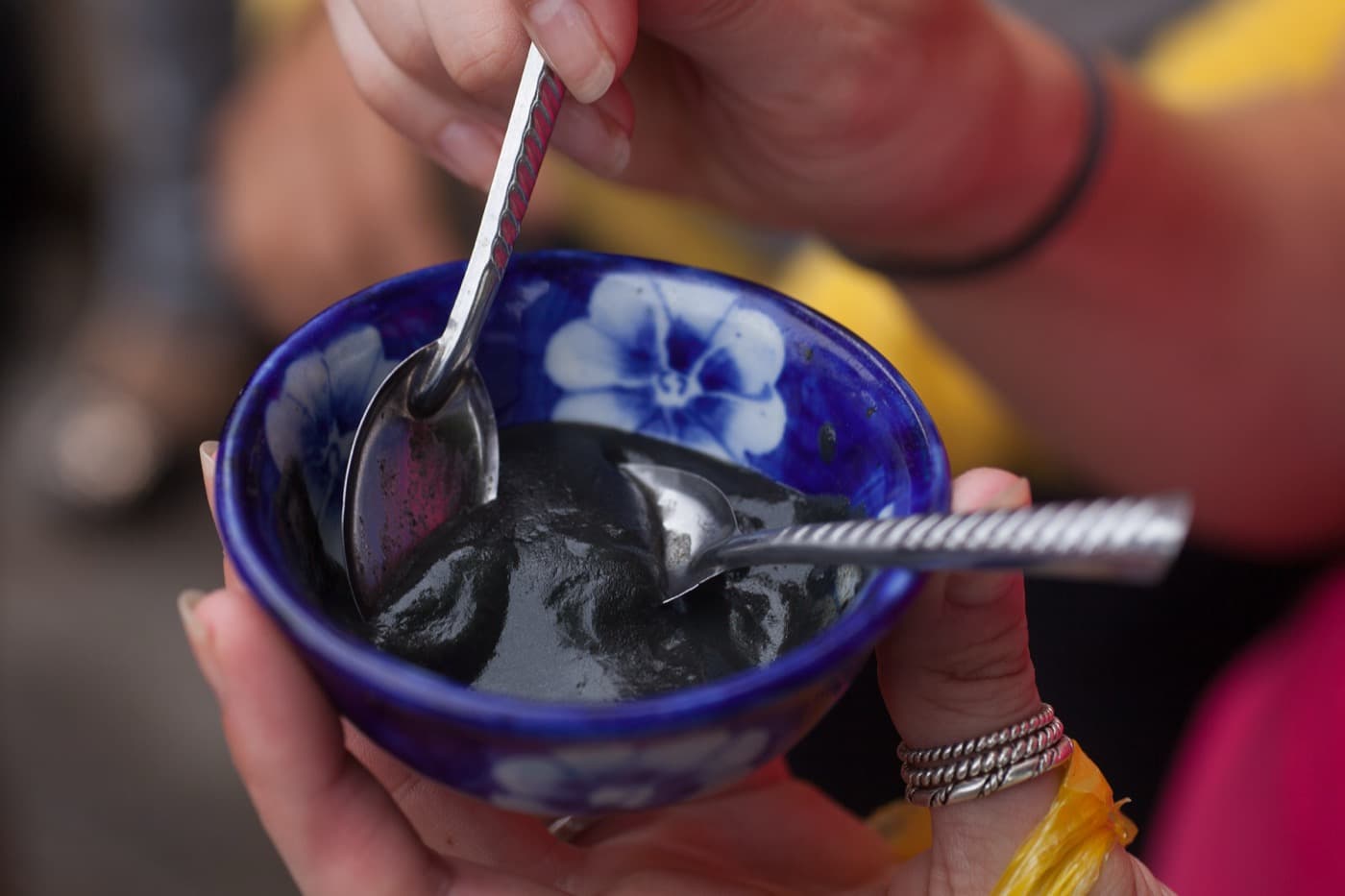
Chè covers everything sweet you eat with a spoon from a bowl or drink from a glass. Wikipedia defines it as "a wide variety of distinct sweet beverages, puddings and desserts" in Vietnamese cuisine. It is a category, not a recipe — closer to "soup" or "pastry" than to "tiramisu."
The building blocks are simple: beans (mung, azuki, black, lablab), grains and tubers (corn, taro, sweet potato, glutinous rice), fruit, agar or grass jelly, tapioca pearls. Coconut milk goes on top, sometimes with crushed roasted peanuts and sesame.
There are two serving modes. Chè nóng is hot, thick and comforting — what people order in Hanoi when damp wind comes off the river. Chè đá arrives in a tall glass over crushed ice, with a spoon and a straw at the same time. The same mung bean chè in Saigon in July and in Hanoi in January are two different experiences.
The bigger difference from a Western dessert is timing. Chè does not end a meal. People buy it at three in the afternoon because it’s hot and lunch feels like too much effort. They buy it after school. They buy it instead of dinner. A quán chè can open at 2 PM and close at 11 PM, as Chè Hẻm in Hue does.
One linguistic trap worth knowing. In the north, chè also means the tea plant, so in a village outside Hanoi "chè" is green tea. The drink is more commonly called trà. If you ask for chè in the mountains and get a cup of tea, nobody made a mistake.
12 types of chè and what to order first
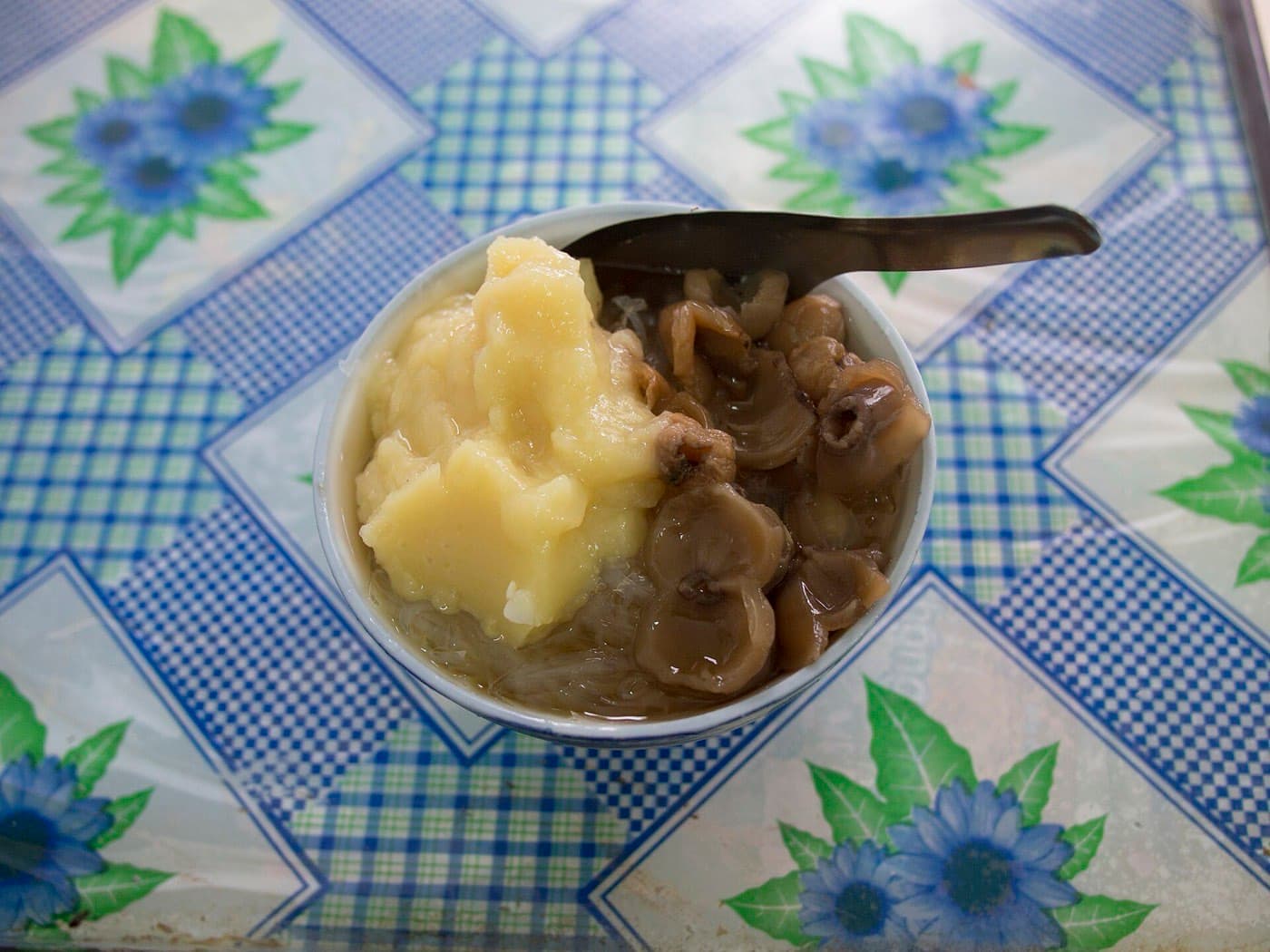
No canonical list exists; sources give anywhere from 11 to 36. Below are the twelve you will meet in any city, plus two regional additions. The last column shows where each one comes from.
| Vietnamese | Roughly | What’s in it | Served | Home region |
|---|---|---|---|---|
| chè ba màu | cheh ba mau | mung beans, azuki, pandan jelly, coconut cream | iced, in a glass | south |
| chè chuối | cheh choo-oy | banana, tapioca, coconut cream, peanuts | warm | south |
| chè bưởi | cheh buh-oy | pomelo pith, mung beans, pandan | cold | Mekong Delta |
| chè đậu xanh | cheh dow sanh | mung beans, sugar, coconut milk | hot or cold | nationwide |
| chè đậu đen | cheh dow den | black beans in syrup, ice | cold | nationwide |
| chè khúc bạch | cheh kook bak | milk-panna-cotta cubes, lychee, almond | iced | Saigon, 2010s |
| chè trôi nước | cheh troy nook | glutinous rice balls, ginger syrup | hot | north and south |
| chè thái | cheh tai | durian, jelly noodles, fruit, condensed milk | iced | from Thailand |
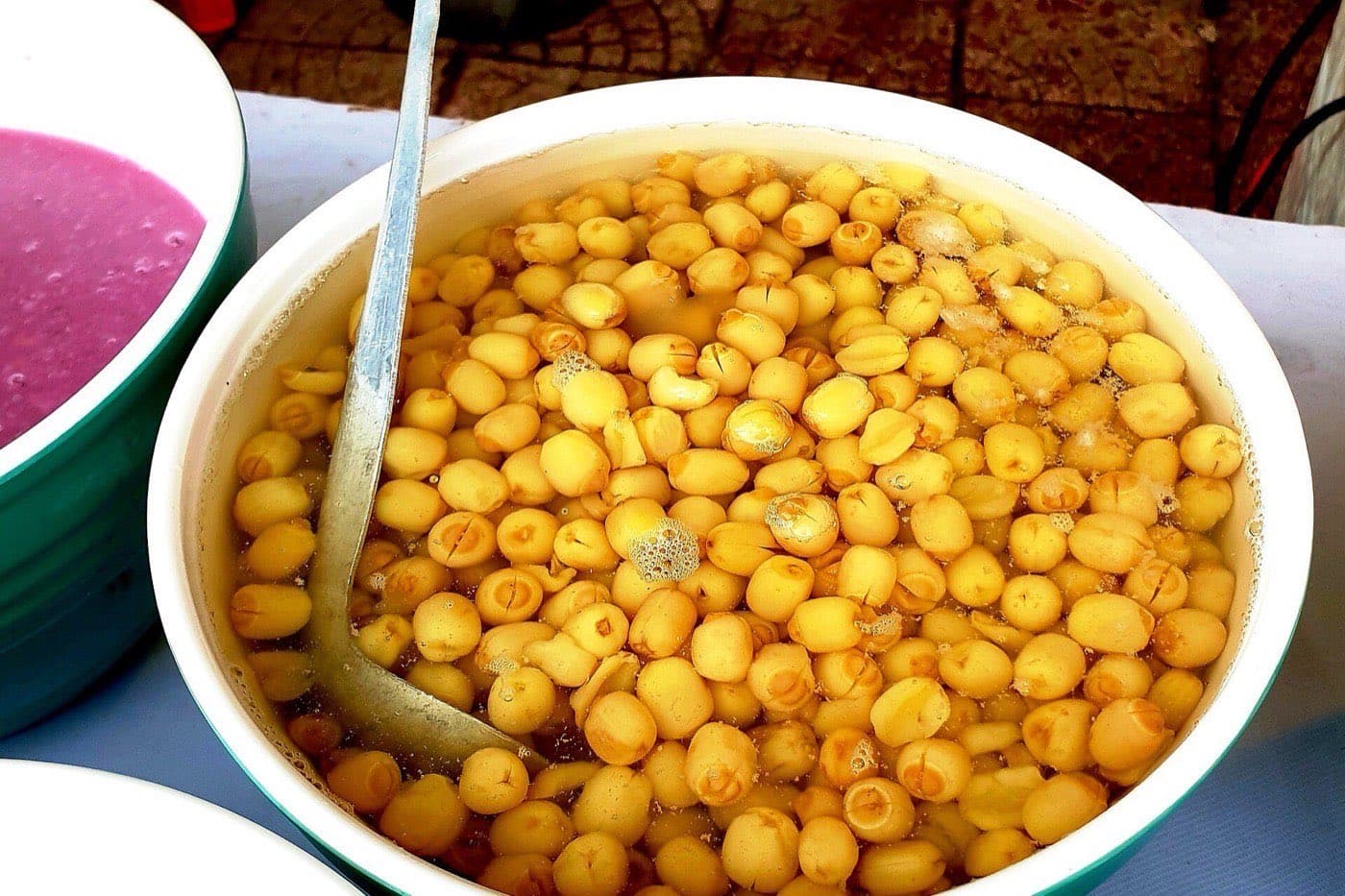
| chè hạt sen | cheh hat sen | lotus seeds in clear syrup | hot or cold | Hue |
| chè bắp | cheh bap | young corn, coconut, tapioca | warm | Hoi An |
| chuối nếp nướng | choo-oy nep nuong | banana in sticky rice, grilled over coals | hot | Mekong Delta |
| chè bà ba | cheh ba ba | sweet potato, taro, mung beans, peanuts | warm | south |
| chè hạt lựu | cheh hat luu | tapioca "pomegranate seeds", agar, coconut | iced | Da Nang |
| chè đậu ván | cheh dow van | lablab beans, coconut milk | cold | Hue |
Che ba mau — the three-colour one everyone starts with
Three bands in a clear glass: yellow mung bean paste, red azuki, green pandan jelly. Crushed ice and coconut cream on top. The layers are poured carefully so the lines stay sharp, and that is the whole point of the presentation.
The flavour is mild and beany until you stir it. Once you do, it collapses into one sweet mush and half the pleasure is gone. Eat it in layers, spooning down from the top.
Che chuoi and chuoi nep nuong — the banana pair
Chè chuối is ripe banana simmered in coconut milk with tapioca pearls and a pandan leaf, served warm or at room temperature and finished with crushed roasted peanuts and sesame. It is the most home-cooked of all chè — people make it more often than they buy it.
Chuối nếp nướng is a different animal. A ripe xiêm banana is marinated with sugar and salt, wrapped in glutinous rice dough mixed with coconut milk, bundled in a banana leaf and grilled whole over charcoal. It is sliced hot, drowned in coconut cream and scattered with peanuts. Caramelised crust outside, hot soft fruit inside. If you eat one thing from this list, make it this.
Che buoi — the one made from what everyone throws away
You peel a pomelo, eat the segments, and discard the thick white pith between rind and fruit. In southwestern Vietnam that pith gets soaked, squeezed dry, coated in tapioca starch and simmered. The result is translucent cubes that behave like jelly and bounce slightly when you bite them.
It comes from the Mekong Delta, Long Xuyen in particular, and made its name in Can Tho and Vinh Long. If your route goes through the delta, order it first.
Che khuc bach — a 2010s invention, not a tradition
White milk-jelly cubes (milk, cream, gelatine) in rock-sugar syrup, topped with tinned lychees and flaked almonds. The Vietnamese Wikipedia entry is refreshingly blunt about the origin: it grew out of đậu phụ hạnh nhân, a Chinese-Saigonese almond tofu served at weddings and birthdays. Someone made it richer, and a hit was born.
The name is literal. Khúc means "cut into pieces," bạch means "white." No emperors involved.
Note for vegetarians: this one contains gelatine.
Che troi nuoc — the only chè with a ritual
Glutinous rice balls stuffed with mung bean paste, floating in hot ginger syrup made with palm sugar, finished with coconut cream and sesame.
It belongs to Tết Hàn Thực, the cold food festival on the third day of the third lunar month. Northerners make bánh trôi and bánh chay that day; the southern version is exactly this chè. The symbolism is direct: a round ball with a square sugar centre echoes the phrase mẹ tròn con vuông, "mother round, child square," meaning mother and baby both came through fine.
Che thai — Thai in name only
The original is ruam mit: coconut milk with rose syrup or palm sugar, jelly noodles, tapioca "pomegranate seeds," sweet corn. When it crossed into Vietnam, the rose syrup was dropped and durian purée whipped with fresh and condensed milk took its place.
Durian is now the signature of the Vietnamese version. The sauce is thick and heavy and the smell carries down the block. If durian is not your thing, walk past this one politely — and if it is, do not carry it back to your room, since many hotels ban durian outright.
Che bap and che hat luu — two regional signatures
Hoi An’s chè bắp uses corn grown on the Cẩm Nam river sandbank a few minutes from the Old Town. Locals insist it is milkier and sweeter than ordinary corn, and the stalls by the market back that up: the soup comes out creamy, with whole kernels still intact.
Chè hạt lựu is Da Nang’s calling card. The "pomegranate seeds" are tapioca-starch beads boiled in pandan syrup — translucent, and they squeak faintly against your teeth. Add agar jelly, coconut milk and ice and you get the most refreshing chè of the lot.
Which one to start with
- You like sweet things and want the photo — chè ba màu.
- You find most Asian desserts too sweet — chè đậu xanh or chè hạt sen, ideally in the north.
- You want the strange one — chè bưởi, or Hue’s pork-filled chè bột lọc heo quay.
- You have kids with you — chuối nếp nướng. It’s eaten by hand and doesn’t spill.
Hue: royal chè and the one with pork in it
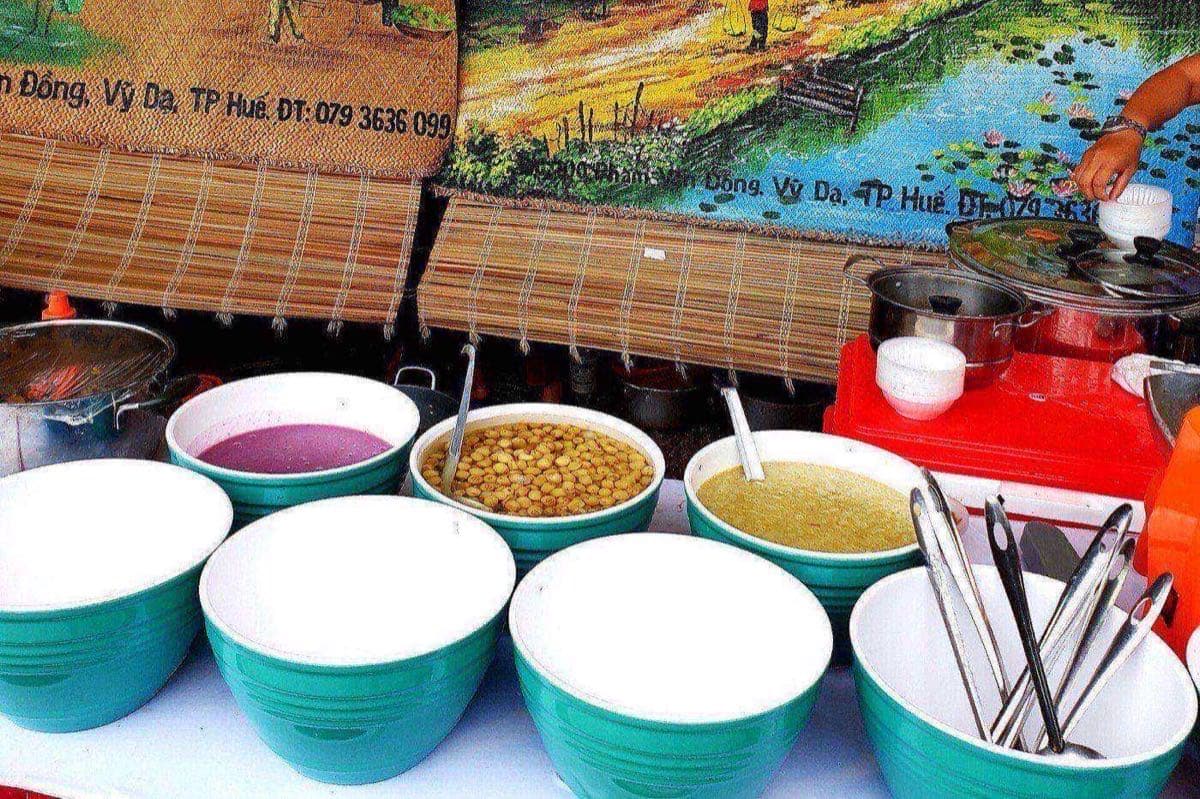
People in Hue joke that Hanoi has 36 streets and Hue has 36 chè, as An Ninh Thu Do’s piece "36 món chè xứ Huế" retells it. It is a comparison, not a register of royal chè (chè cung đình). The portions are tiny by design — two or three spoonfuls per bowl, so you can taste five or six kinds in one sitting.
The logic of a former imperial capital explains it. The Nguyen court demanded variety, cooks competed, and the result includes things that exist nowhere else:
- chè hạt sen bọc nhãn — a lotus seed wrapped inside longan flesh, floating in clear syrup;
- chè long tu — made from seaweed, with a jelly-like set;
- chè đậu ngự — lima beans, historically the "imperial" bean;
- chè bột lọc bọc dừa — coconut sealed inside tapioca dough.
Che bot loc heo quay — yes, pork in a dessert
A piece of roast pork with crackling is wrapped in tapioca-starch dough, boiled, and served in sweet syrup. It is not a gimmick invented for tourists; by the common account the recipe was kept inside the palace kitchens, which is why you rarely see it outside Hue.
It tastes less bizarre than it sounds. The dough is neutral and springy, the syrup is sweet, and the salty-fatty centre works roughly the way salted caramel does. People either get it immediately or never do. There is very little middle ground.
The portion is small, so the risk is small: if it isn’t for you, order the next thing on the list.
Lotus seeds from a palace pond
For Hue’s chè hạt sen, the best lotus is said to come from Tịnh Tâm lake, once part of the Nguyen inner court. It is prized because it softens without disintegrating: the seed holds its shape in syrup instead of dissolving into paste.
Dried Hue lotus seeds are sold as a souvenir from roughly 250,000 VND (~$9.50) a kilo. They make the same chè at home, minus the atmosphere.
North, centre, south: one dessert, three personalities
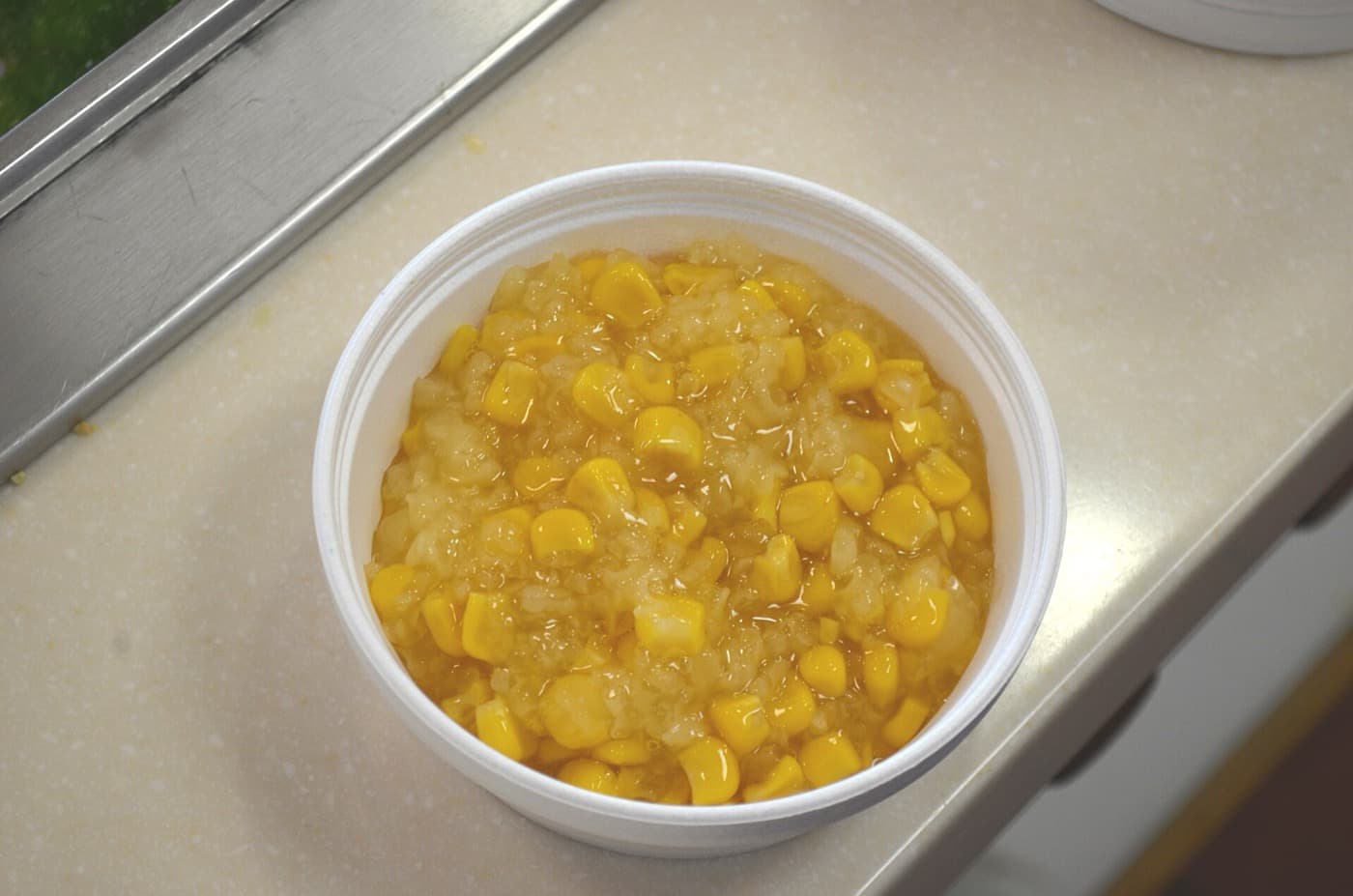
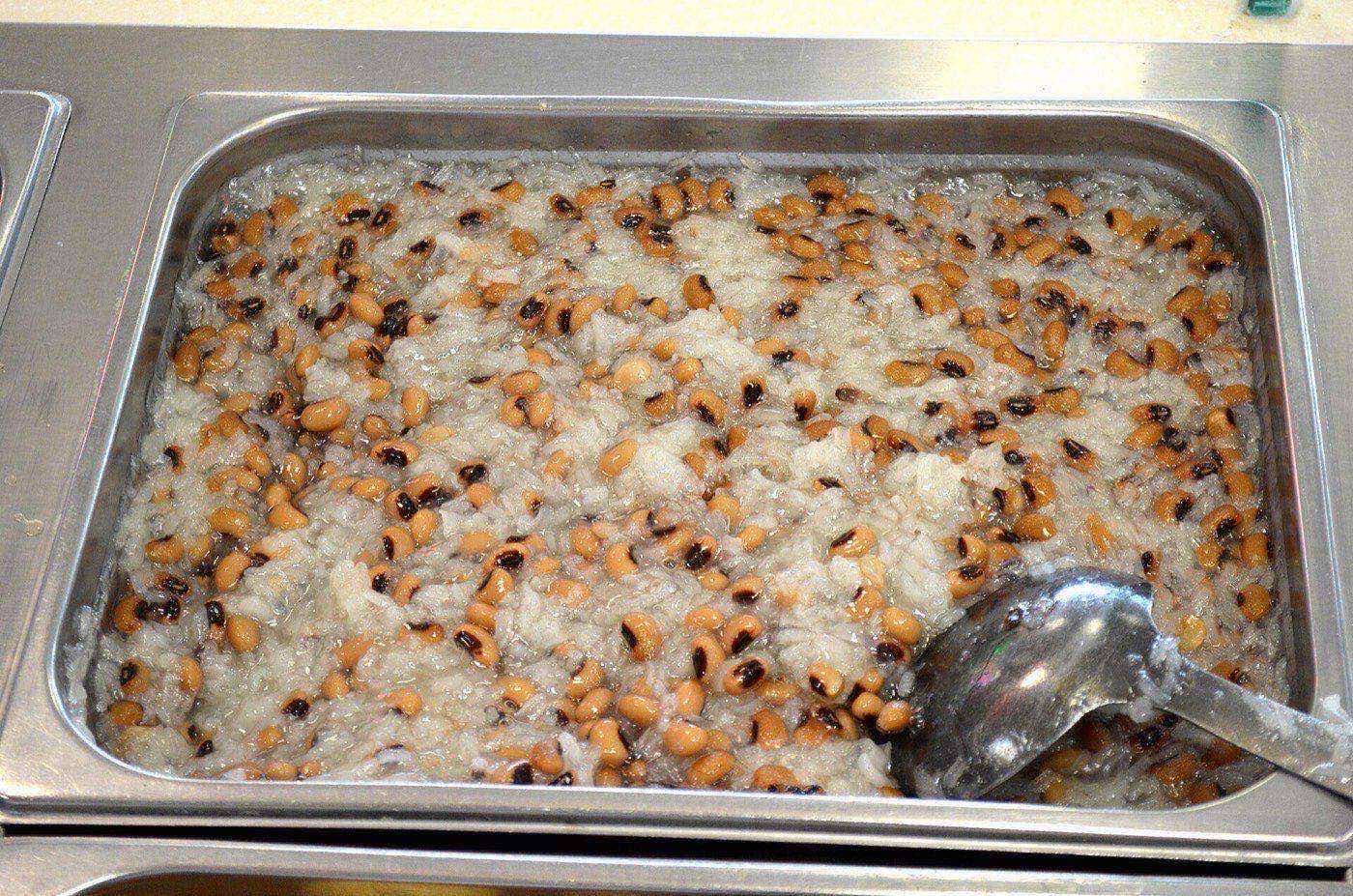
The further south you go, the sweeter, richer and colder chè gets. That rule holds across Vietnamese cooking, but chè shows it most clearly — the same mung bean chè in Hanoi and in Can Tho is nearly two different dishes.
| Region | Style | Typical types |
|---|---|---|
| North (Hanoi) | Restrained sweetness, ngọt thanh. Coconut milk drizzled on top for aroma, not bulk. Plenty of hot versions | chè đậu xanh, chè bắp, chè khoai môn, chè sen |
| Centre (Hue, Da Nang) | More textures, less sugar than the south. Tiny portions, court tradition | chè hạt lựu, chè đậu ván, chè bột lọc heo quay |
| South (HCMC, Mekong) | Coconut goes into the pot and over the top. Mountains of ice. Sweetest of the three | chè ba màu, chè bà ba, chè bưởi, chè thái |
The south is coconut country, and that decides everything. Coconut milk is simmered into the chè itself for chè bà ba and chè thưng, or cooked separately into a thick sauce and poured over nearly every other kind. The north uses it sparingly — a couple of spoonfuls for aroma.
In Hanoi’s winter the same shops switch to hot. Where an iced chè stood in July, a pot of bánh trôi tàu sits in January: hot glutinous rice balls in ginger syrup. Technically not chè, sold by the same people, doing the same job.
An honest warning: visitors often find southern chè flatly too sweet. If your first glass in Ho Chi Minh City tasted like syrup, that is the south, not the country. Order the same type in Hanoi and the difference is obvious. Or just say ít ngọt.
Eating in Hanoi · Da Nang food · Ho Chi Minh City food
What chè costs in 2026
A serving costs 10,000–25,000 VND, which is about $0.40–0.95. Almost nowhere charges more than 50,000 VND (~$1.90), and when it does, it’s either a shop with a thirty-plus item menu or a bowl with durian in it.
| Where | VND | ~$ |
|---|---|---|
| Street cart, anywhere | 10,000–15,000 | 0.40–0.60 |
| Sit-down quán chè | 12,000–25,000 | 0.45–0.95 |
| Chè Mười Sáu, Hanoi | from 10,000 | from 0.40 |
| Chè Bốn Mùa, Hanoi | 15,000–22,000 | 0.55–0.85 |
| Chè Hẻm, Hue | 12,000–15,000 | 0.45–0.60 |
| Chè Mợ Tôn Đích, Hue | 8,000–20,000 | 0.30–0.75 |
| Chè Xuân Trang, Da Nang | 10,000–33,000 | 0.40–1.25 |
| Corn chè by the market, Hoi An | 10,000–20,000 | 0.40–0.75 |
| Chè Hà Ký, Cholon | 15,000–38,000 | 0.55–1.45 |
| Chè Kỳ Đồng, HCMC | 10,000–22,000 | 0.40–0.85 |
For scale: a street chè usually costs less than an iced milk coffee at a chain like Highlands or Phuc Long. Our Vietnamese coffee guide has the full drinks price picture.
Two things push the bill up: ordering chè in a tourist restaurant with an English menu, and ordering anything durian-based. Both are choices, not scams.
Where to eat it: 8 places on the map and a few more
All places on the map · 8
Tap a name to show it on the map
- Che Bon Mua (Chè Bốn Mùa): 4 Hàng Cân, Hanoi. 9 AM–10 PM — 15,000–22,000 VND (~$0.55–0.85). Mixed and khuc bach
- Che Muoi Sau (Quán Chè Mười Sáu): 21A Lò Đúc, Hanoi. Open since 1978 — From 10,000 VND (~$0.40) a bowl
- Che Hem (Chè Hẻm): House 1, kiệt 29 Hùng Vương, Hue. 2–10 PM — 12,000–15,000 VND (~$0.45–0.60). Pork chè
- Che Mo Ton Dich (Chè Mợ Tôn Đích): Corner of Đinh Tiên Hoàng and Trần Hưng Đạo, Hue. Evenings — 8,000–20,000 VND (~$0.30–0.75). Court varieties
- Che Xuan Trang (Chè Xuân Trang): 31 Lê Duẩn, Da Nang. 9 AM–11 PM — 10,000–33,000 VND (~$0.40–1.25). House-made coconut milk
- Hoi An Market (Chợ Hội An): 19 Trần Phú. Corn chè carts, 10,000–20,000 VND (~$0.40–0.75) — Corn from the Cẩm Nam sandbank
- Che Ha Ky (Chè Hà Ký): 138 Châu Văn Liêm, Cholon. 10 AM–10:30 PM — 15,000–38,000 VND (~$0.55–1.45). Nearly 40 varieties
- Che Co Co (Chè Cô Có): Hồ Thị Kỷ alleys, Ho Chi Minh City. Evenings — Cambodian-style chè on palm sugar
One warning about addresses first. On 1 July 2025 Vietnam abolished the district tier: District 3 and the rest no longer exist as administrative units (Hoàn Kiếm is now a ward, phường, not a district), and Hoi An is now part of Da Nang. Older guidebook addresses are formally out of date. Street name and house number still work — navigate by those.
Hanoi
Chè Bốn Mùa, 4 Hàng Cân. Open 9 AM to 10 PM, 15,000–22,000 VND (~$0.55–0.85). An Old Quarter institution, right on the street, impossible to miss. Order chè thập cẩm (the mixed one), mung bean, or lotus seed; in winter bánh trôi tàu appears on the menu.
Quán Chè Mười Sáu, 21A Lò Đúc. From 10,000 VND (~$0.40) a bowl. The shop has been running since 1978 — almost half a century — and is named after the house number of its first home on Ngô Thì Nhậm, before it moved here. You sit on a plastic stool, which is exactly the point: this is the Hanoi ngọt mà thanh style, sweet but clean.
Xôi Chè Bà Thìn, 1 Bát Đàn, on the corner of Hàng Bồ. 15,000–25,000 VND (~$0.55–0.95). The menu turns with the season: iced lotus, black bean and mung bean in summer, hot bánh trôi tàu and lục tào xá in winter.
More on eating in the capital in our Hanoi food guide.
Hue
Chè Hẻm, house 1 in alley kiệt 29 Hùng Vương. 2 PM to 10 PM, 12,000–15,000 VND (~$0.45–0.60). Around forty years old, roughly thirty varieties, and the pork chè is the headline act.
Chè Mợ Tôn Đích, on the corner of Đinh Tiên Hoàng and Trần Hưng Đạo, by the Thượng Tứ gate at the western edge of Thương Bạc park. Evenings only, 8,000–20,000 VND (~$0.30–0.75). Over fifty years in business, handed from mother to daughter, court-style varieties including the pork one.
Da Nang
Chè Xuân Trang, 31 Lê Duẩn. 9 AM to 11 PM, 10,000–33,000 VND (~$0.40–1.25). Four branches around the city. The draw is house-made coconut milk and dried coconut; the mixed chè is the signature.
Chè Thái Liên, 189 Hoàng Diệu. 10,000–25,000 VND (~$0.40–0.95). The place that started Da Nang’s durian chè craze: durian purée, tapioca, grass jelly. See our Da Nang food guide for the rest of the city.
Hoi An
Corn chè stalls cluster around Chợ Hội An (19 Trần Phú, with a side entrance on Trần Quý Cáp), right beside the vegetable sellers. 10,000–20,000 VND (~$0.40–0.75). Named options: Chè Cô Nga at 36 Bạch Đằng by the river, and Chè Cô Hai at 110 Trần Phú with a wider menu — corn, mixed, lotus, tapioca, black bean.
Ho Chi Minh City
Chè Hà Ký, 138 Châu Văn Liêm, in Cholon. 10 AM to 10:30 PM, 15,000–38,000 VND (~$0.55–1.45). Over thirty years old and family-run, with nearly forty varieties hot and cold. This is the Chinese-Vietnamese school of chè, and the ingredient list differs noticeably from a standard Vietnamese shop.
Chè Cô Có, in the Hồ Thị Kỷ alleys. Evenings, 15,000–30,000 VND (~$0.55–1.15). This is Saigon’s Khmer quarter, so the chè is Cambodian-Vietnamese: thốt nốt palm sugar, tamarind, pumpkin custard, charcoal-grilled banana. Nothing else in the city tastes like it.
Chè Hiển Khánh, 718 Nguyễn Đình Chiểu. The first shop opened in 1965 in the Dakao quarter; the owners later added a second one on Nguyễn Đình Chiểu, and that is the one still trading. It is one of the oldest dessert shops in the city. The signature is white agar jelly, thạch trắng, in jasmine-scented syrup. The walls are covered in poems and customers have been coming back for decades.
Chè Kỳ Đồng, 16C Kỳ Đồng. 9 AM to 10 PM, 10,000–22,000 VND (~$0.40–0.85). Thirty-plus years, run by a Hanoi transplant, which is why the sweetness is dialled well below the southern norm.
The full city breakdown lives in our Ho Chi Minh City food guide.
Che, tao pho and sinh to — three things sold side by side
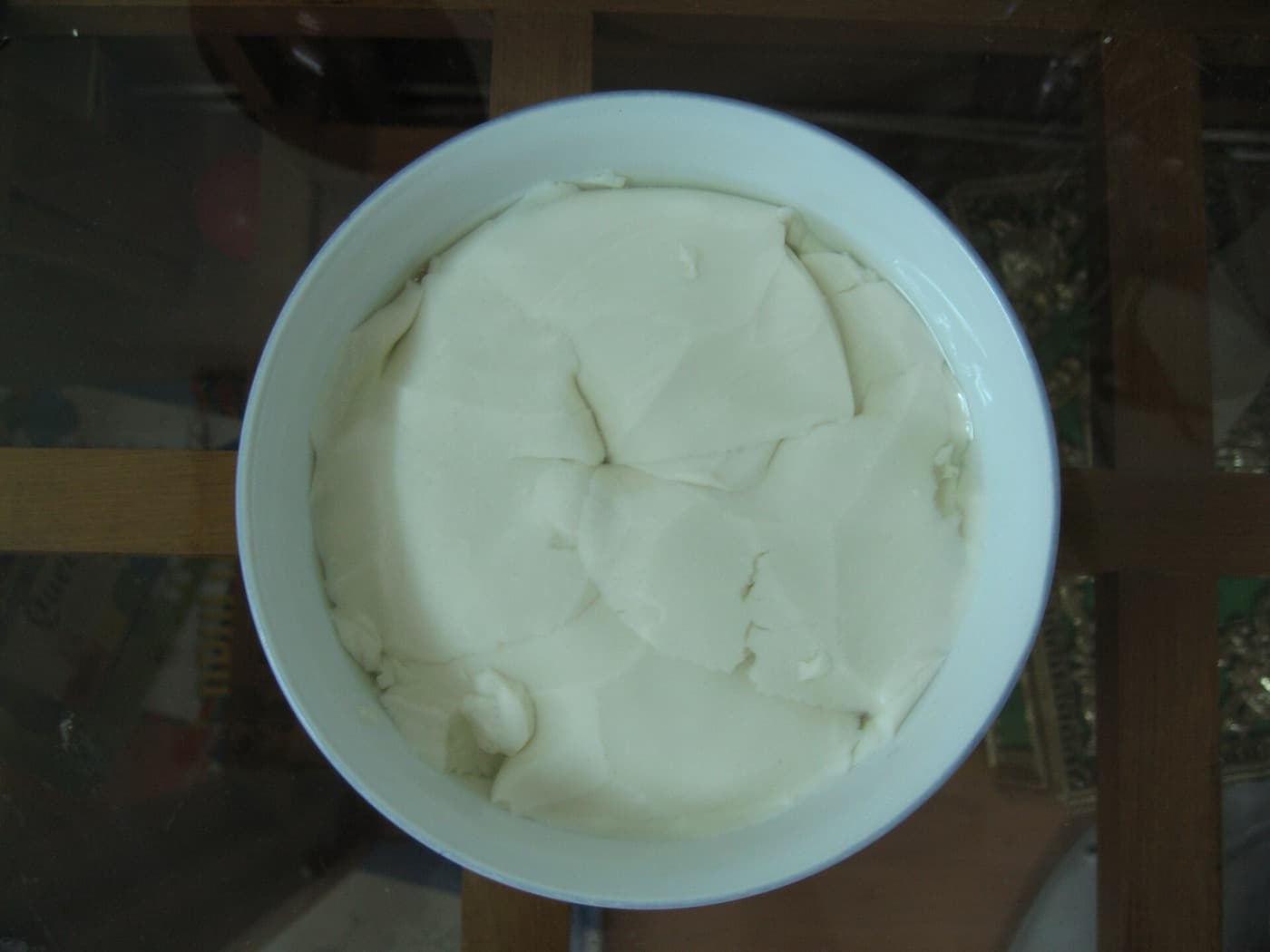
They sit on the same carts at the same prices and look similar, but they are different foods. Tào phớ is silken soy tofu in syrup. Sinh tố comes out of a blender. Chè is a sweet soup with things in it.
| What | Made from | Looks like | Technically chè? |
|---|---|---|---|
| chè | Beans, grains, fruit, jelly, tapioca + coconut | Glass or bowl with visible pieces | It is the category |
| tào phớ | Soy, sugar syrup with ginger or jasmine | Smooth white curd that wobbles | No |
| sinh tố | Fruit, condensed milk, ice, blended | Thick drink, no pieces | No |
Tào phớ is Chinese in origin, a relative of douhua. The north calls it tào phớ, the south tàu hũ nước đường, "tofu in sugar water." The texture is close to weightless: it dissolves before you finish a spoonful. It’s sold by the same vendors and often listed on the same board, which is where the confusion starts.
Sinh tố is easy to spot by the blender. The workhorses are sinh tố bơ (avocado with condensed milk) and sinh tố xoài (mango). It’s a drink; no spoon comes with it.
Practical rule: if you want chè, look for a name starting with chè. Anything starting with tào phớ, tàu hũ or sinh tố belongs to a neighbouring genre.
How to order without speaking Vietnamese
Three phrases cover most situations: ít ngọt (less sweet), ít đá (less ice) and mang về (takeaway). Everything else can be handled by pointing.
| Phrase | Say it roughly | Meaning |
|---|---|---|
| Cho tôi một ly chè… | cho toy mot lee cheh | One glass of che, please… |
| ít ngọt | it ngot | less sweet |
| ít đá | it dah | less ice |
| không đá | khong dah | no ice |
| mang về | mang veh | takeaway |
| ăn ở đây | an uh day | eat in |
| không sữa | khong suh-a | no milk |
| không đậu phộng | khong dow fong | no peanuts |
| chay | chai | vegetarian |
| Bao nhiêu tiền? | bao nyew tien | How much? |
A street cart usually has no menu at all — just a row of enamel bowls with different fillings. Point at two or three bowls and the vendor assembles the glass. Want everything at once? Say thập cẩm, which means "mixed."
Sit-down shops mostly number their menu items. Say the number and hold up fingers for the quantity. English is rarely spoken, but digits and gestures work everywhere.
Fast Track — no queue at the border
5–10 minutes instead of an hour in the immigration queue
from$11per passenger
Is street-cart chè safe, and what about the ice
Yes, if the ice is factory-made and the cart has steady custom. Cafés, restaurants and busy stalls usually use factory ice. If your stomach is sensitive, ask for không đá — no ice.
Telling factory ice from risky ice is straightforward. Factory ice comes as cylinders with a hole through the middle, delivered daily in sealed plastic sacks. Risky ice is the large cloudy block chipped by hand with a pick — historically used to chill fish and beer crates, and it should not be going into drinks.
How to pick a cart:
- A queue of locals. Turnover is the real freshness metric; chè never sits long enough to warm up.
- Ice comes out of a sealed bag, not a communal bucket.
- Fillings sit in covered bowls, not open to the air.
- Toppings are handled with a spoon, not fingers.
- The glass is assembled in front of you rather than pre-poured and waiting.
The honest downsides: syrup can sit out in the heat for hours, and street carts wash glasses in a basin rather than a dishwasher. If that bothers you, order mang về and it goes into a disposable cup. The open bowl of crushed peanuts is also a poor bet for anyone with a nut allergy.
If your stomach hasn’t adjusted yet, Vietnam’s tourism board suggests sticking to hot, freshly cooked food for the first few days. In chè terms that means starting at sit-down shops like Chè Xuân Trang or Chè Hà Ký and working up to the carts after a week. General street food rules are in our street food guide.
Vegans, allergies, and people who don’t like very sweet things
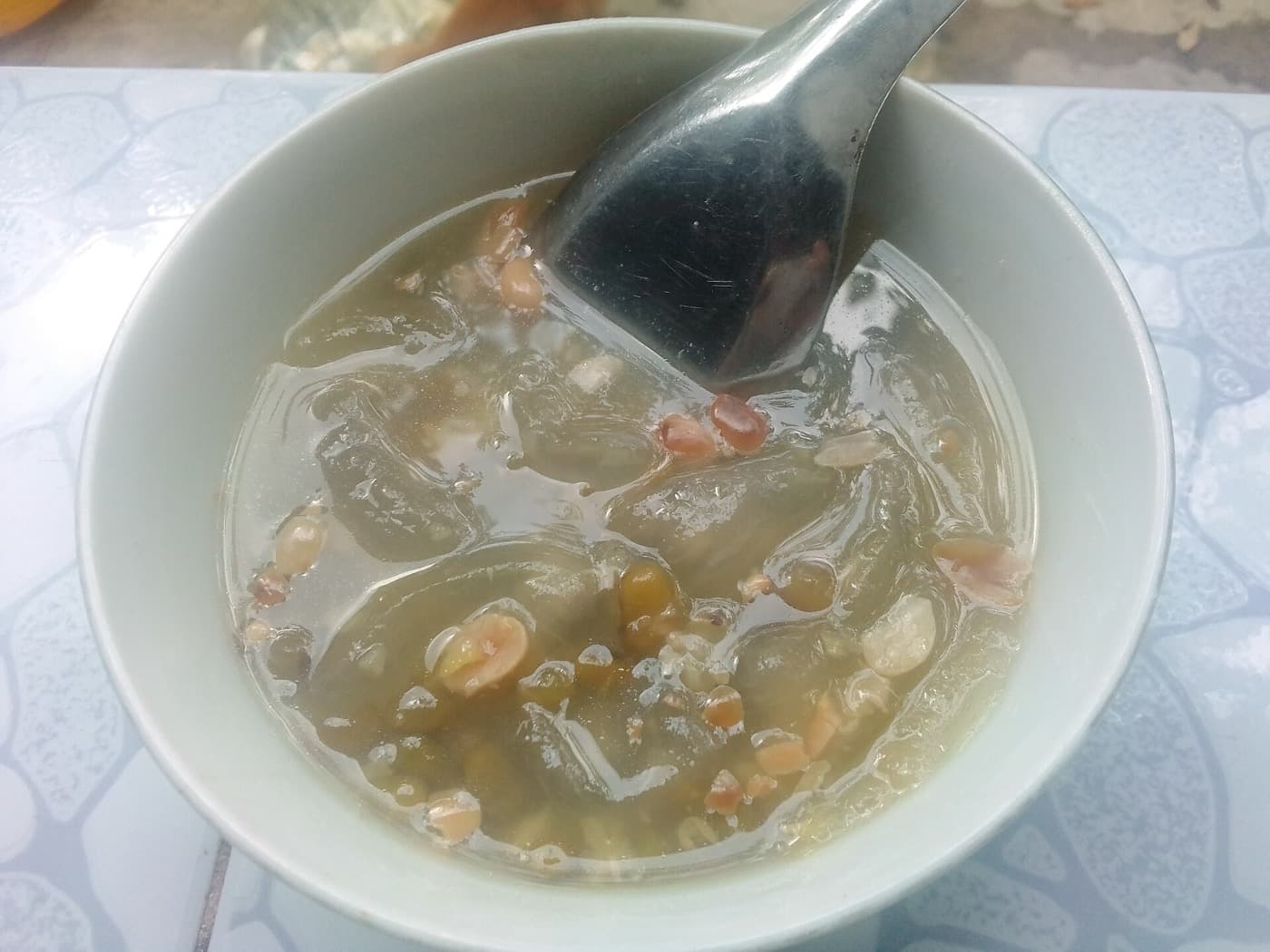
Most chè is vegan by default, because traditional Vietnamese cooking barely uses dairy — coconut milk does that job. It’s a rare case where you don’t have to explain anything to the vendor.
Vegan as standard: chè đậu xanh, chè đậu đen, chè bắp, chè bà ba, chè khoai môn, chè bưởi, chè hạt lựu, chè trôi nước, chè hạt sen.
Check before ordering:
- chè khúc bạch — milk, cream and gelatine, so it fails for vegans and vegetarians alike;
- chè thái — the Vietnamese version almost always uses fresh and condensed milk;
- chè bột lọc heo quay — contains pork, and the name gives no hint of it in English;
- anything finished with sữa đặc (condensed milk) — ask whether it’s poured on top.
The word to know is chay, meaning Buddhist vegetarian. Any shop near a pagoda understands it instantly, and coconut-based chè fits the category with no modification.
On sugar: no per-variety calorie tables exist, but even a glass of mung bean chè is fairly calorie-dense, most of it from sugar and coconut milk. Three ways to cut it down: ask for ít ngọt, choose hot bean varieties over iced syrupy ones, and skip the condensed milk on top.
A recipe that works at home: che dau xanh
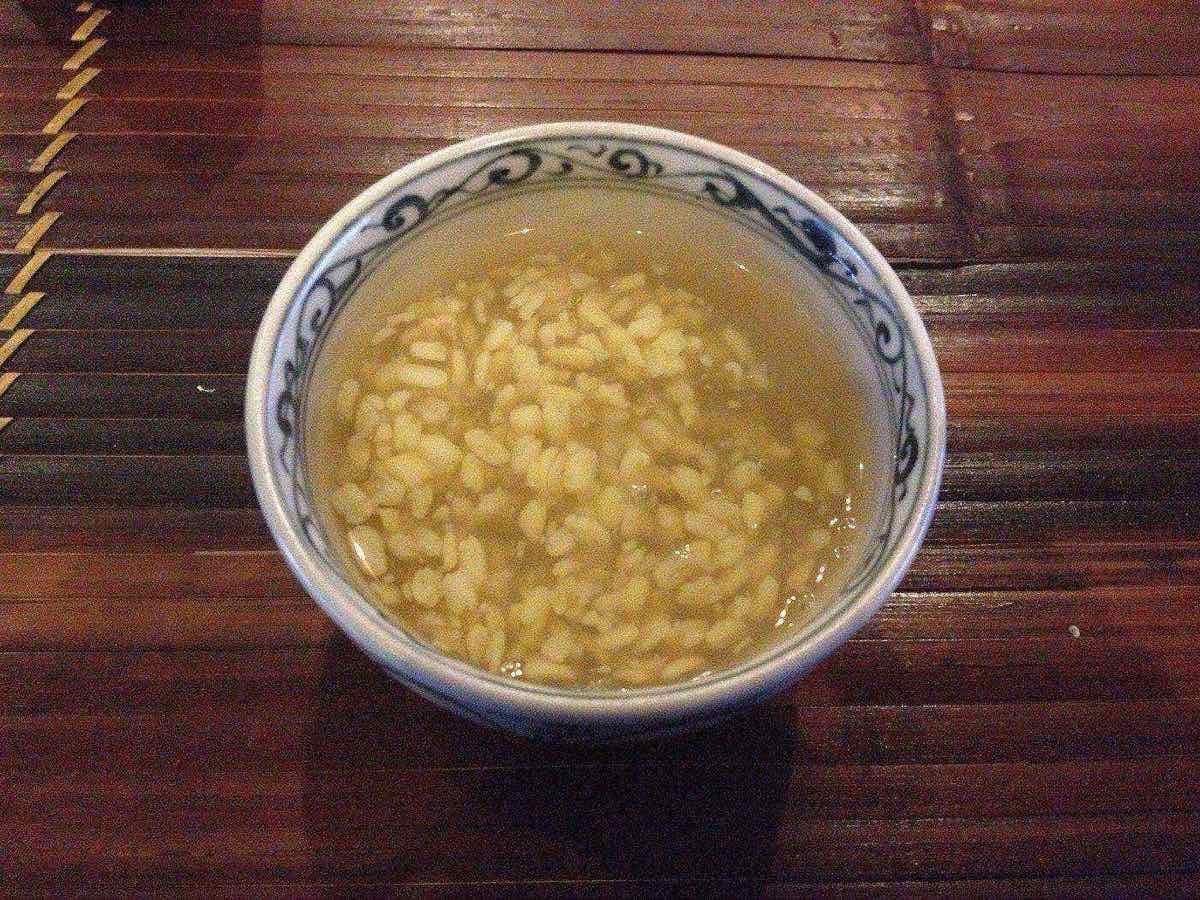
Of all the varieties, mung bean chè with coconut milk is the easiest to reproduce outside Vietnam. About twenty-five minutes of active work; the rest is soaking.
Serves 4:
- 200 g mung beans (whole or split)
- 500 ml water
- 200 ml coconut milk
- 30 g kudzu starch (bột sắn dây)
- 2.5 g cornflour for the coconut sauce
- a few pandan leaves
- sugar to taste, a pinch of salt
- optional: shredded coconut, crushed roasted peanuts
Method:
- Soak the beans. Whole beans need 4–5 hours, split ones about an hour. Drain.
- Simmer in 500 ml water until soft, roughly 20–25 minutes.
- Add sugar, cook 5 more minutes, salt at the end. Slake the starch in cold water and stir it in if you want it thicker.
- Separately warm the coconut milk with a couple of spoons of sugar, a pinch of salt and the pandan leaves over low heat until it just boils, then stir in the cornflour slaked in a spoon of water.
Pandan is sold frozen or dried in most Asian groceries across the US, UK and EU. There’s no real substitute — vanilla points in a completely different direction. Without it the chè is still good, just less Vietnamese.
Six mistakes first-timers make
Starting with the mixed one. Thập cẩm is the default order, but it puts seven ingredients in one glass and you learn nothing about what you actually like. Order single-ingredient versions the first few times.
Waiting for dessert time. Chè isn’t the end of a meal. Plenty of shops don’t open until 2 PM and trade until late at night.
Judging all chè by one southern glass. A cloying cup in Ho Chi Minh City doesn’t mean the whole country cooks that way. The northern version of the same thing is noticeably restrained.
Skipping the hot versions. Hanoi at 14°C with wet wind is a different climate, and hot chè is a different dish there. Don’t write it off as a summer thing.
Treating chè khúc bạch as ancient. It’s a 2010s hit that grew out of Chinese-Saigonese almond tofu. Delicious, but no emperors were involved.
Asking for it sugar-free. Not a thing. Ít ngọt is the only lever you have.
FAQ
Roughly "cheh" with a falling tone, the vowel short and clipped — closer to the "e" in "bet" than the "ay" in "day". The tone matters less than you would think in practice, because context does most of the work: nobody is going to serve you something else. If you are unsure, point at the cart and say the word, and the vendor will ask which type by gesturing at the bowls.
Both, depending on the variety and the season. Chè đá over ice is the hot-weather default; chè nóng comes out in northern winters and in the mountains. A few types only exist one way: chè trôi nước in ginger syrup is always hot, chè ba màu is always iced. Bean varieties like mung bean work either way, and the choice is yours.
There is no fixed number, because chè is a category rather than a fixed list. An ordinary shop carries 10–15 options, Chè Hà Ký in Cholon has nearly 40, Chè Hẻm in Hue about 30. In Hue people joke that Hanoi has 36 streets and Hue has 36 chè, but that is a saying, not a register. New varieties keep appearing: chè khúc bạch became a hit in the 2010s and durian chè thái arrived from Thailand and then mutated locally. Any "complete" list is out of date within a couple of years.
Yes, and roughly half of all cart orders are takeaway. Say mang về and it goes into a plastic cup or bag, with the ice bagged separately so it does not melt on the way. Coconut milk often comes in its own small pouch to pour on at the last minute. A spoon goes in automatically, no need to ask. One exception: do not carry durian chè into a hotel room, since many properties ban the fruit outright.
Chè bột lọc heo quay, a Hue speciality: a piece of roast pork wrapped in tapioca-starch dough and served in sweet syrup. It works on the salted-caramel principle, with neutral springy dough, sweet syrup and a salty-fatty centre pulling against each other. Opinions split cleanly down the middle. The portion is tiny, so the downside is small. Find it at Chè Hẻm or Chè Mợ Tôn Đích in Hue — the rest of the city is in our Hue guide.
- Street carts outside tourist areas10,000–15,000 VND~$0.40–0.60at, a serving
- The cheapest named shop on this list is Quán Chè Mười Sáu in Hanoifrom 10,000 VND~$0.40a bowl, and the market stalls in Hoi An and Hue hold roughly the same line
- The upper end is Cholon, where the menu runs to nearly 40 items, and anything containing durian50,000 VND~$1.90which can reach
Cold versions hold up badly in the heat: the ice melts, the layers merge and the coconut milk separates. An hour in a day bag at 34°C is already pushing it, and the issue is the coconut-milk base as much as the taste. Hot bean varieties travel considerably better, especially when the coconut comes in a separate pouch. Eat on the spot or within half an hour, and for long journeys take mung bean chè without ice.
Current as of September 2026. Prices and opening hours change and shops move — the map coordinates were checked against OpenStreetMap and Google Places in September 2026, but confirm the address in your maps app before you set off.
Read next: Vietnamese cuisine · Street food · Vietnamese coffee · Vietnam prices
- Food
Vietnamese Coffee Guide 2026: What to Order and Where
Eight Vietnamese coffee drinks explained: how they taste, what they cost in VND and USD, and 12 cafés in seven cities, from Hanoi to Nha Trang.Vietnamese Coffee Guide 2026: What to Order and Where - Food
Vietnamese Cuisine 2026: 20 Dishes to Try
A guide to Vietnamese food: pho, banh mi, banh xeo, bun cha, coffee and more — what to order, what it costs and which dishes are spicy.Vietnamese Cuisine 2026: 20 Dishes to Try - Food
Da Lat Coffee & Wine: Farms, Cafés & What to Buy
Da Lat's coffee and wine scene: hillside cafés, coffee farms, weasel-coffee ethics, local wine and artichoke tea — where to taste and what to take home.Da Lat Coffee & Wine: Farms, Cafés & What to Buy