21 days in Vietnam: the classic loop for slow travellers, 2026
Three weeks is the sweet spot for Vietnam: north, centre, south and islands without rushing. This 21-day loop fits 11 stops and 5 UNESCO sites — trekking in Sapa, the imperial tombs of Hue, the lanterns of Hoi An, Da Lat's coffee hills and a beach finish on Phu Quoc. Mid-range budget from about $2,200 per person, plus your international flight. Current for 2026.

Most first-timers fly into Cam Ranh or Phu Quoc, lie on a beach for two weeks and come home convinced that "all of Vietnam is a sun lounger and a bowl of pho." They see a small slice of the country. Three weeks is the window that fits everything else: thousand-year-old Hanoi, the rice terraces of Sapa, Ha Long Bay in its karst pillars, imperial Hue, artisan Hoi An, mountain Da Lat, the Mekong Delta and a tropical finish on Phu Quoc.
And for many nationalities, all of it fits inside a visa-free stay. Depending on your passport you get either a 45-day exemption or a straightforward e-Visa; either way, 21 days sits comfortably inside it. This article is a step-by-step plan — trains, flights, prices in VND with a rough USD conversion, and three budget tiers. Prices are quoted in Vietnamese dong (VND) with a ~$ equivalent at roughly 26,000₫ to $1; check the live rate before you go. Shorter on time? See the 14-day version, or just the north or the south in a week.
Why 21 days in Vietnam: three countries, 5 UNESCO sites, one loop
Vietnam is three different countries in one. The north has cool winters, thousand-year-old Tonkin, the rice terraces of Sapa and the karst maze of Ha Long Bay. The centre is imperial: the old Nguyen capital of Hue, lantern-lit Hoi An, Da Nang with its My Khe beach. The south lives in tropical heat year-round — the Saigon megacity, the Mekong Delta, the island of Phu Quoc. From Sapa to Phu Quoc it is 2,200 km and four climate zones.
In 14 days you can only gallop through it — no Sapa, no proper Hue, no Da Lat. Three weeks is a different animal. You get a full day in Sapa to trek and stay in an H'mong homestay. Hue stretches into a real 2 nights (one day only gets you the citadel; you miss the tombs). Da Lat fits — a mountain town at 1,500 m unlike anywhere else in the country. The loop ends on Phu Quoc: an evening on arrival and a beach day before the flight home. Want more sea time? One of the variations below adds 2 days on the island.
Five UNESCO sites on one route: Ha Long Bay, the Tràng An landscape complex in Ninh Binh, imperial Hue, the old town of Hoi An and the My Son sanctuary.
Who this route suits:
- First trip to Vietnam, wanting the highlights without sacrifices
- Independent travellers happy to plan transfers and hotels
- A couple, or a family with kids over 10
- Slow travellers who would rather do fewer places well than tick boxes
Who should skip it:
- If you only want a beach, stay put in Phu Quoc or Nha Trang
- If your kids are under 7 — the transfers and the Sapa trek will be brutal
- If you have exactly 14 days — take the compact route and don't try to cram a 21-day programme into it
A looped route removes the "how do I get back to my flight" worry. A finish on Phu Quoc pairs neatly with a direct return out of Ho Chi Minh City. If your main ticket is from Hanoi, add a day 22 for the PQC → HAN hop (Vietjet, 2h 30m, $60–110).
The 21-day route: map and overview
Start in Hanoi, trek in Sapa and cruise Ha Long in week one, the imperial centre in week two, the south with its mountains and beaches in week three. Eight segments you hop by plane or train; the rest are short 30–100 km transfers. In total, 3–4 domestic flights and 1–2 overnight-train rides.
- Hanoi (Hà Nội): Days 1, 4, 5 — start of the route — HAN airport, Old Quarter
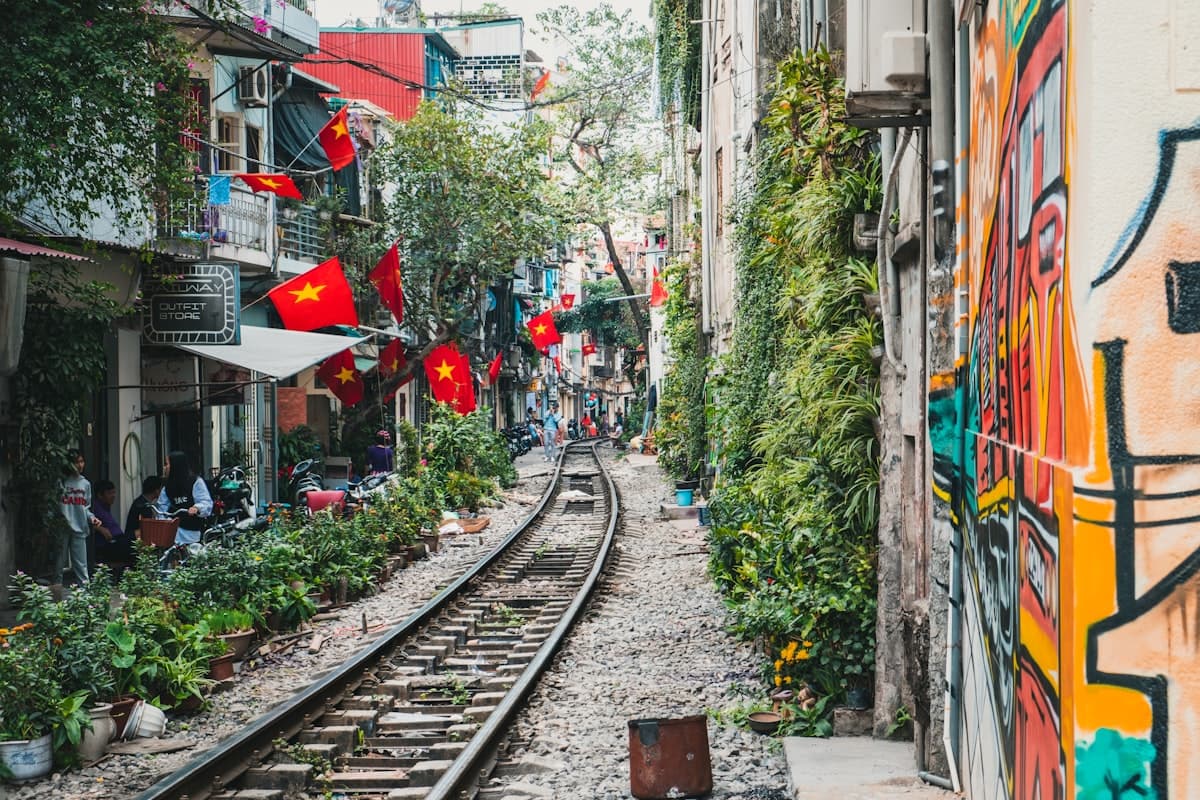
- Hanoi Old Quarter (Phố Cổ Hà Nội): 36 craft streets — Hoan Kiem Lake
- Sapa (Sa Pa): Days 2–4, trekking — H'mong homestay, 320 km from Hanoi
- Lao Chai (Lao Chải): H'mong village — Day 3 trek, 9 km on foot
- Ta Van (Tả Van): Giay village — Homestay night, $20–30
- Ha Long Bay (Vịnh Hạ Long): Days 5–6, 1-night cruise — $105–250, UNESCO
- Ninh Binh (Ninh Bình): Days 6–7, boats, goat meat — 95 km from Hanoi
- Trang An (Tràng An): Boat tour 2.5h — 250,000 VND (~$10), UNESCO
- Tam Coc (Tam Cốc): Alternative to Trang An — Boats rowed with the feet
- Mua Cave (Hang Múa): 500 steps — Best sunset over Ninh Binh
- Hue (Huế): Days 8–10, imperial capital — HUI airport
- Imperial Citadel (Đại Nội): 200,000 VND (~$8), open 6:30–17:30 — UNESCO
- Tomb of Khai Dinh (Lăng Khải Định): Gothic + Asian carving — 10 km from the centre
- Tomb of Minh Mang (Lăng Minh Mạng): Classical harmony — Lakes and gardens
- Thien Mu Pagoda (Chùa Thiên Mụ): 7-tier tower — On the Perfume River
- Da Nang (Đà Nẵng): North–south hub — DAD airport, DAD–CXR flight
- Hai Van Pass (Đèo Hải Vân): Between Hue and Hoi An — Vietnam's best road trip
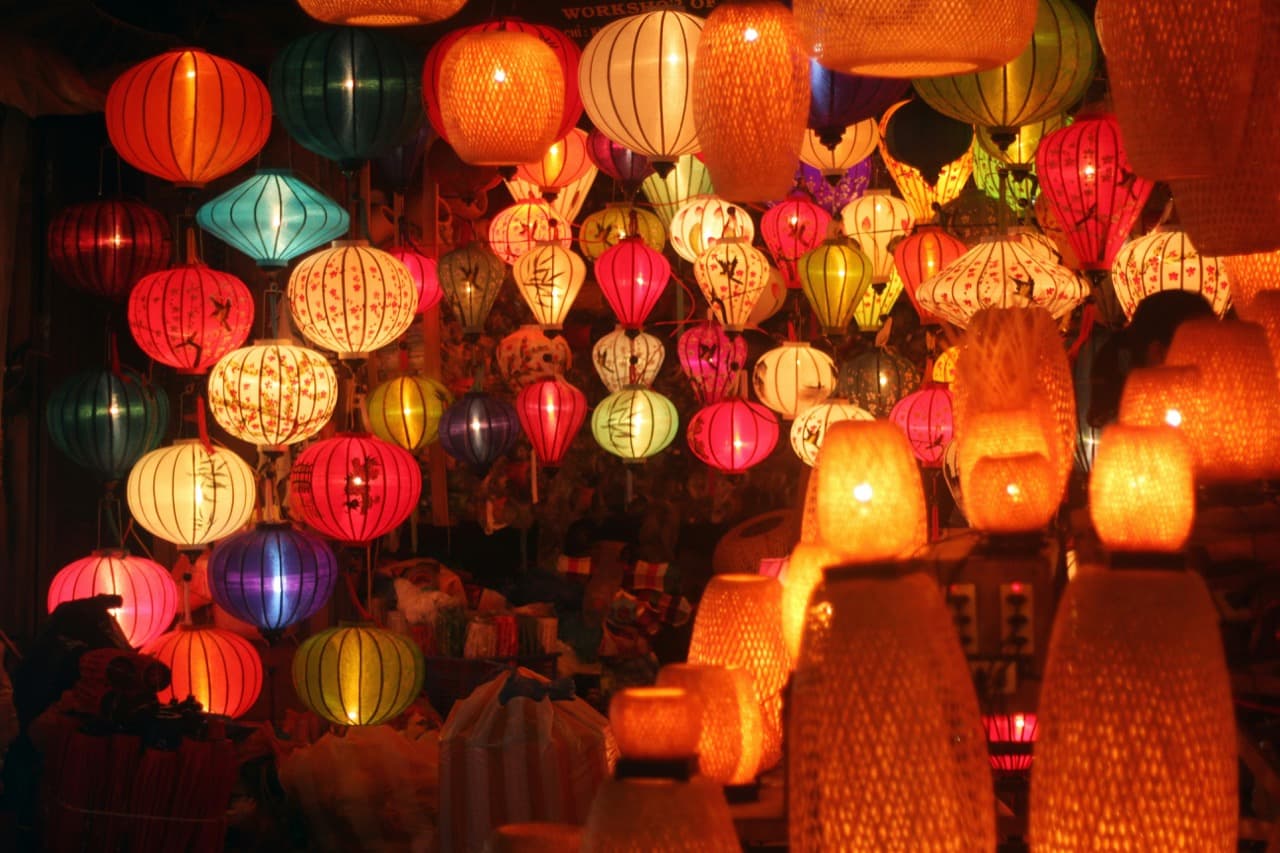
- Hoi An (Hội An): Days 11–13, old town — Lanterns, UNESCO
- An Bang Beach (Bãi biển An Bàng): 4 km from Hoi An — Free entry, lounger ~$2
- My Son (Mỹ Sơn): Champa ruins, 7th–13th c. — 70 temples, UNESCO
- Nha Trang (Nha Trang): Days 13–14, beach resort — CXR airport
- VinWonders Nha Trang (VinWonders Nha Trang): Island theme park — Ticket ~1,050,000 VND, cable car
- Da Lat (Đà Lạt): Days 15–17, mountains at 1,500 m — Coffee, waterfalls
- Datanla Waterfall (Thác Datanla): 50,000 VND + alpine coaster — 150,000 VND (~$6)
- Lang Biang (Núi Langbiang): Peak at 2,167 m — Jeep tour 60–80,000 VND
- Ho Chi Minh City (Hồ Chí Minh): Days 17–18, megacity — SGN airport
- War Remnants Museum (Bảo tàng Chứng tích Chiến tranh): The main war museum — 40,000 VND (~$1.60)
- Ben Thanh (Chợ Bến Thành): Central market — Haggle down 50%
- My Tho (Mỹ Tho): Day 19, day trip — $25–50 group tour
- Can Tho (Cần Thơ): Alternative to My Tho — Cai Rang floating market
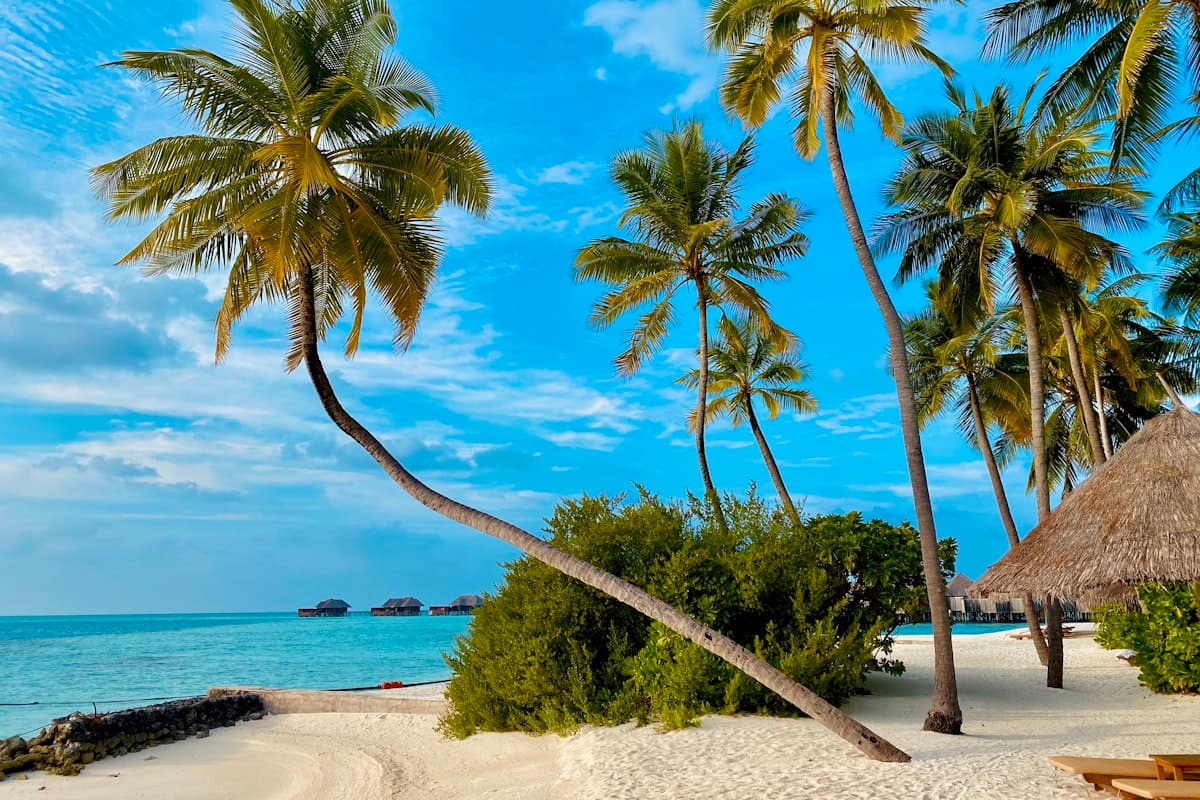
- Phu Quoc (Phú Quốc): Days 20–21, beach finish — PQC airport
- Long Beach (Bãi Trường): 20 km of beach — Lounger 50–80k VND
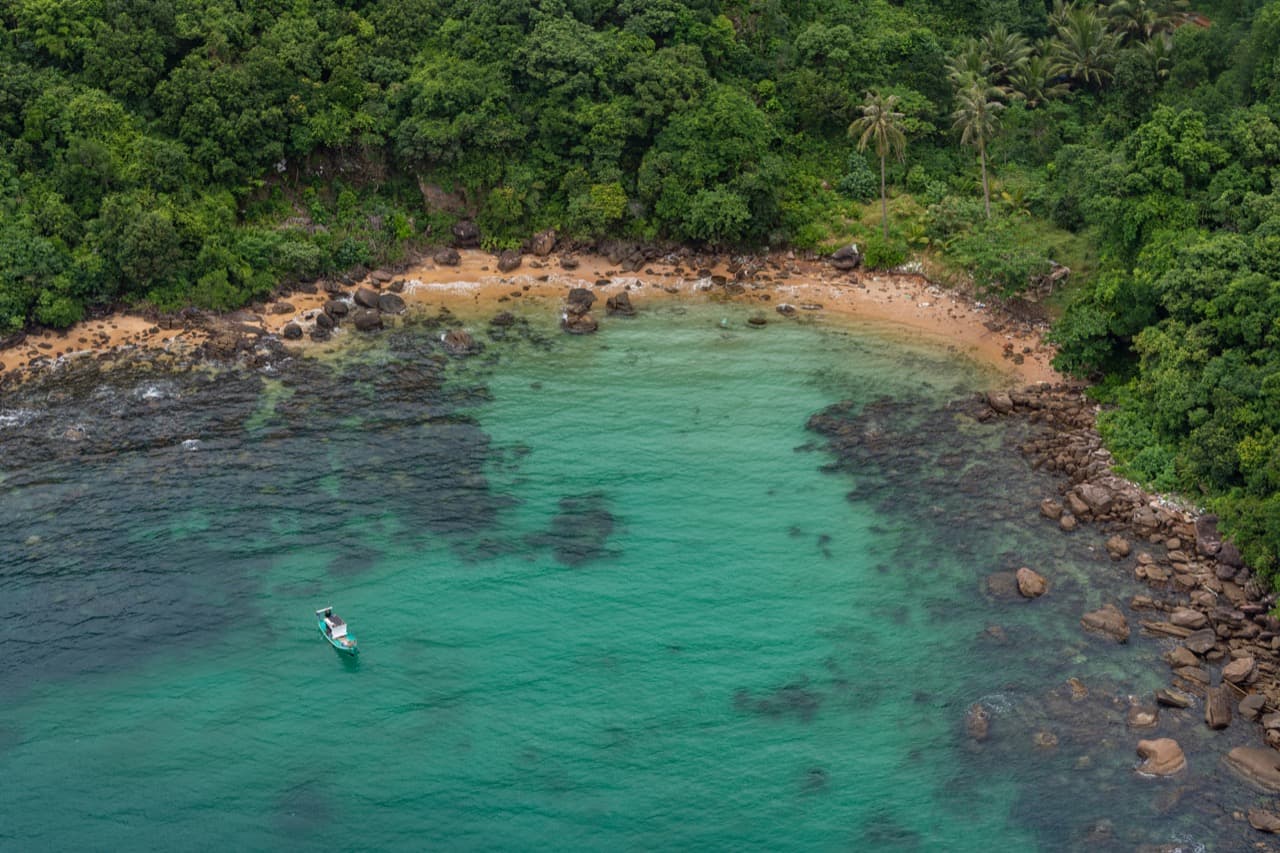
- Sao Beach (Bãi Sao): White sand, south of the island — Fewer facilities
- Hon Thom Cable Car (Cáp treo Hòn Thơm): Longest in the world — $20–28, Guinness 2018
The whole 21 days at a glance:
| Day | Location | Highlight | Overnight |
|---|---|---|---|
| 1 | Hanoi | Arrival, Old Quarter, Hoan Kiem Lake | Hanoi |
| 2 | Hanoi → Sapa | Morning in Hanoi, evening limousine to the hills | Sapa |
| 3 | Sapa | Trek Lao Chai → Ta Van, homestay | Homestay |
| 4 | Sapa → Hanoi | Cat Cat in the morning, night train / limousine | Hanoi / train |
| 5 | Hanoi → Ha Long | Shuttle, boarding, kayaking, dinner on the junk | Junk boat |
| 6 | Ha Long → Ninh Binh | Return, transfer to Ninh Binh | Ninh Binh |
| 7 | Ninh Binh | Trang An, Mua Cave, Hoa Lu | Ninh Binh |
| 8 | Hanoi → Hue | Flight HAN–HUI or night train SE19 | Hue |
| 9 | Hue | Imperial Citadel, Thien Mu | Hue |
| 10 | Hue | Tombs (combo + private car) | Hue |
| 11 | Hue → Hoi An | Hai Van Pass, Marble Mountains | Hoi An |
| 12 | Hoi An | An Bang, cooking class, tailor | Hoi An |
| 13 | Hoi An → Nha Trang | My Son in the morning, flight DAD–CXR | Nha Trang |
| 14 | Nha Trang | Beach, VinWonders or the islands | Nha Trang |
| 15 | Nha Trang → Da Lat | Limousine bus over mountain switchbacks | Da Lat |
| 16 | Da Lat | Datanla, Crazy House, coffee farm | Da Lat |
| 17 | Da Lat → HCMC | Flight DLI–SGN or night bus | HCMC |
| 18 | Ho Chi Minh City | War Remnants, Ben Thanh, Cu Chi (optional) | HCMC |
| 19 | HCMC → Mekong | My Tho day trip or Can Tho overnight | Can Tho |
| 20 | Mekong → Phu Quoc | Cai Rang at dawn, flight SGN–PQC | Phu Quoc |
| 21 | Phu Quoc | Long Beach, Hon Thom Cable Car, departure | — |
The map points are grouped by colour: north and Phu Quoc in green, the centre in blue, the south (Nha Trang, Da Lat, HCMC, Mekong) in the default marker. The airport circles — HAN, HUI, DAD, CXR, DLI, SGN, PQC — show where you land and take off.
Days 1–7: the North — Hanoi, Sapa, Ha Long, Ninh Binh

The northern week is the busiest and the coolest. In winter (December–February) Hanoi sits at +15…+20°C, Sapa can hit 0°C at night and −5°C in the mountains. In summer (June–August) Hanoi runs +30…+35°C with humidity near 90%, and Sapa's downpours turn the trek to a mudslide. The best window for the north is March–April (young green terraces) or September–October (golden terraces before harvest).
Day 1: arrival in Hanoi, settling in
Your flight lands at Noi Bai (HAN), 30 km from the centre. Three ways into the Old Quarter:
- Grab — 250,000–320,000 VND (~$10–13), the easiest. The app takes a VISA/Mastercard, and it is in English. See our Grab in Vietnam guide.
- Metered taxi Mai Linh / Vinasun — 350,000–400,000 VND (~$14–16), 40 minutes. Other firms tend to rig the meter or add "phantom" fees.
- Airport bus 86 — 45,000 VND (~$1.80), 1 hour, if budget is the priority.
Base yourself in the Old Quarter (Hoan Kiem District): walking distance to the main sights, cafés and restaurants. A hostel bunk is 250,000–350,000 VND (~$10–14), a 3-star room 800,000–1,200,000 VND (~$32–48), a 4-star 1.5–2.5 million VND. For a deeper dive into the capital, see the Hanoi guide.
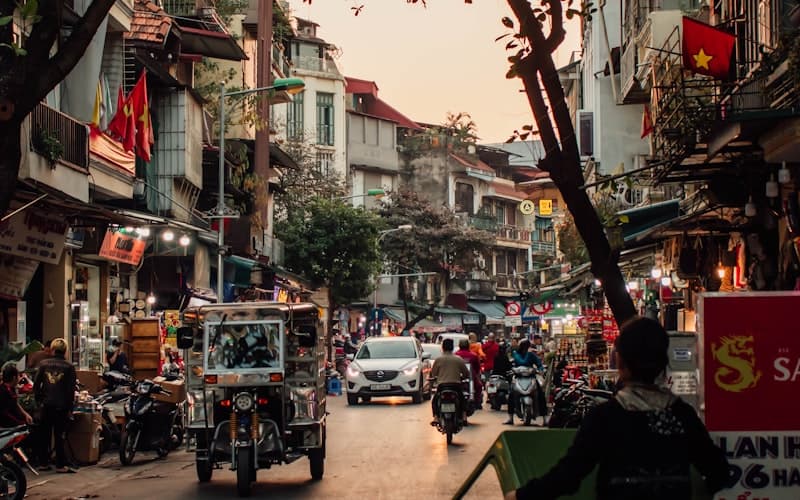
After check-in, drop your bags and wander the 36 streets of the Old Quarter — a maze of craft lanes dating back to the 15th century, each named after its trade (Silk Street, Tin Street, Bamboo Street). The main landmark is Hoan Kiem Lake (Hồ Hoàn Kiếm), the "Lake of the Returned Sword." Dinner is pho or bún chả on Tạ Hiện street. Bed by 22:00 — tomorrow is an early departure for Sapa.
Day 2: Hanoi → Sapa (Sapa Express or night train)
Morning in Hanoi: the Ho Chi Minh Mausoleum (mornings only: 7:30–10:30 in April–October, 8:00–11:00 in November–March; closed Mondays and Fridays), the Temple of Literature (70,000 VND), the water-puppet show (100,000 VND). Be back at the hotel for your pack by 13:00.
Three ways from Hanoi to Sapa:
| Transport | Time | One-way | Pros / cons |
|---|---|---|---|
| Sapa Express limousine bus | 6h | $16 seat, $24 cabin | Cheap, door to door; seats 7:00 / 15:00, cabins 7:00 / 22:00 |
| Train SP1/SP3 + 1h car | 8h + 1h | $30–60 soft sleeper | Romantic, but a change at Lao Cai |
| Victoria Express (Mon–Thu) | 8h | $104 for a 4-berth cabin | Le Tonkin dining car, shower on board |
| Private transfer | 5h | $80–120 | For a family / lots of luggage |
The pick for a 21-day route is the daytime Sapa Express at 15:00. You are in Sapa around 21:00, in time for dinner and a proper sleep. The night train is romantic, but you arrive wrecked, and the trek turns into torture.
Day 3: trek Lao Chai → Ta Van, overnight in a homestay

Sapa is less a town than a base for trekking the Mường Hoa valley, with its rice terraces and villages of the H'mong and Giay. A standard 2-day programme runs $73–82 per person:
- A 15 km trail: Y Linh Ho → Lao Chải → Tả Van (terraces, villages)
- An H'mong guide, $15–20/day (often in traditional dress)
- Homestay with an ethnic family: shared room, mattresses, sheltered toilet, $20–30
- 1 breakfast, 2 lunches, 1 dinner of local food
The difficulty is moderate. There are climbs, and after rain the clay becomes a skating rink. Bring trekking shoes (trainers work at a pinch), a rain jacket and a warm layer for the evening in the homestay. In winter, add a down jacket.
Day 4: Cat Cat in the morning, back to Hanoi
Morning: Cát Cát village right by Sapa (150,000 VND, 3h). For the ambitious: the Sun World cable car up Fansipan (3,143 m), the "roof of Indochina" (850,000 VND, ~$33). The views run for half the country, though you land inside the clouds every other trip.
Be back at your Sapa hotel by 13:30. The Sapa Express returns at 15:00 (seats) or 14:00 (cabins), about 6 hours to Hanoi. The alternative is the night train SP2/SP4 from Lao Cai (22:00 → 6:00). The next morning it is off to the Ha Long cruise.
Day 5: Hanoi → Ha Long (2-day / 1-night cruise)
Vịnh Hạ Long has been UNESCO-listed since 1994: 1,969 limestone islands across about 1,550 km²; since 2023 the site also takes in the Cat Ba archipelago. The best way to see it is an overnight cruise on a junk, 2 days / 1 night. Per person:
- 3-star ($105–160) — standard junks of 12–20 cabins, a deck pool, a basic dinner
- 4-star ($145–250) — Bhaya, Paradise Sails, Indochina Junk, a sunset barbecue, jacuzzi
- 5-star ($250+) — Paradise Elegance, Au Co, Ylang — butler, wine sommelier, designer cabins
You'll ride a bus for 3 hours one way (and then another 3 hours back), plus they're sure to take you to a souvenir shop for an hour. … It makes sense to go with an overnight on the boat so you see the sunset and sunrisepsiros, Vinsky Forum, 2025, translated by VietnamSpot
The price includes the shuttle from Hanoi (~3h to Tuan Chau / Ha Long City), all lunches and dinners, and the excursions (Hang Sửng Sốt cave, kayaking, a cooking class). Drinks and extras are separate. A full breakdown of operators and categories is in the Ha Long guide.
Day 6: Ha Long → Hanoi → Ninh Binh
09:00 — brunch on the junk, then back to port, and by 12:30 the transfer toward Hanoi. Don't return to the capital — go straight to Ninh Binh, about 170 km from Ha Long on the expressways. A limousine van or Grab car takes 2.5–3h; check the price when you book. Settle in around Tam Coc or Ninh Binh city, and have the local goat (thịt dê) for dinner — Ninh Binh is the home of the dish.
Day 7: Ninh Binh — Trang An, Mua Cave, Hoa Lu

Ninh Binh is often called "Ha Long on land": the same karst pillars, only among rice paddies and rivers instead of the sea. The UNESCO-listed Tràng An boat tour runs 2.5h, three routes to choose from, 250,000 VND (~$10). The boats are rowed with the feet or hands — a hypnotic sight.
Lunch and a rest until 15:00. Then Mua Cave (Hang Múa), 100,000 VND, 500 steps up to a viewpoint with the best sunset over the Tam Coc valley. By 18:00, dinner, then back to Hanoi for the night (or stay in Ninh Binh and head to the airport in the morning). More on the region is in the Ninh Binh guide.

Days 8–13: the Centre — Hue, Hoi An, Da Nang

Central Vietnam is a different Vietnam. The north is thousand-year-old Tonkin with Chinese roots; the centre is the 19th-century Nguyen empire, with European influence and its own cuisine. Climate-wise it is the wettest region in October–November (typhoons), and dry from February to August. Budget the central week at about $400 per person mid-range, including the Hanoi → Hue flight.
Day 8: Hanoi → Hue (flight or night train)
Two options:
- Flight VN/VJ/Bamboo: 1h 20m, $35–65 booked 3–4 weeks out. The morning HAN–HUI lands around 9:00, and you are in your hotel before lunch.
- Night train SE19: a night in a soft-sleeper cabin, romantic for train lovers. Check times and fares on dsvn.vn; carriage classes are covered in our Reunification Express guide.
If you fly, Hue has its own airport, HUI, 15 km from the centre. From the airport into town it is 250,000 VND by taxi or 200,000 by Grab.
Base yourself in the Le Loi area (the south bank of the Perfume River, closer to the citadel across the bridge). Lunch is bún bò Huế, the cult spicy beef-and-pork soup, $2–4 at any street stall. In the evening, walk the Le Loi pedestrian street or take a dragon-boat cruise on the Perfume River (Hương Giang) with lanterns: a seat on a shared boat is 80,000–90,000 VND, a whole boat 450,000 VND for the first hour.
Day 9: Imperial Citadel + Thien Mu
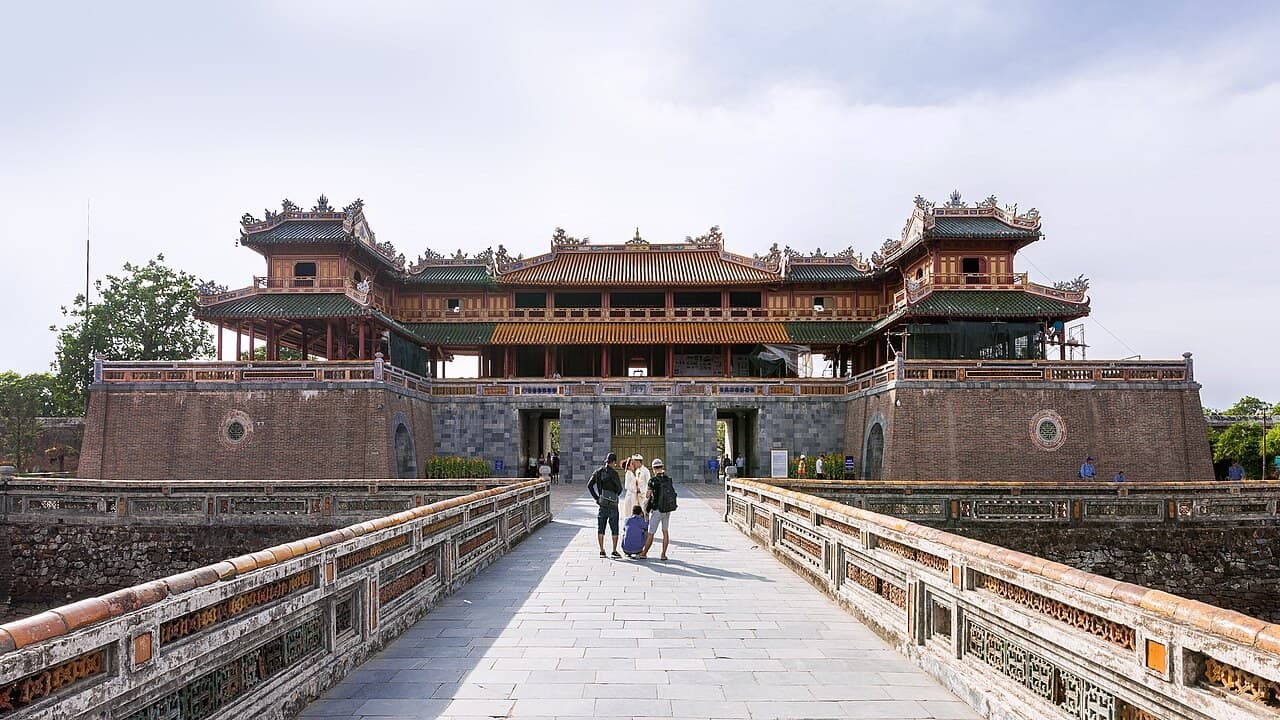
From 08:00 — the Đại Nội Citadel (200,000 VND adult, 40,000 for kids 7–12, free under 7). Open 6:30–17:30 daily, including Tet. This is the former imperial palace of the Nguyen dynasty (1802–1945), with the Ngọ Môn gate to the south and the Forbidden Purple City inside. A full walk-through takes 4–5 hours.
Lunch is bánh khoái, the Hue-style shrimp pancakes. Then a boat up the Perfume River to Thien Mu Pagoda (Chùa Thiên Mụ), a seven-tier tower from 1844. It is the symbol of Hue, and the best sunset is from its platform. Evening on Le Loi with a HUDA beer (the local brew, $1 a bottle).
Day 10: the imperial tombs (private car)
The key hack for the tombs: buy the combo ticket, 530,000 VND (~$21). It covers the citadel plus 3 tombs — Khải Định, Minh Mạng and Tự Đức. Bought separately it comes to 200,000 + 150,000 × 3 = 650,000 VND. You save 120,000 (about $5).
The tombs are scattered 8–12 km from the centre, so a private car is the way to link them: $30/day for a car with driver. The route runs Khai Dinh (gothic + Asian carving), Minh Mang (classical symmetry with lakes), Tu Duc (the largest, with a poetic pond and pavilions).
| Tomb | What sets it apart | From the centre |
|---|---|---|
| Khải Định | European gothic + Asian carving, in concrete | 10 km |
| Minh Mạng | Classical harmony, lakes, gardens | 12 km |
| Tự Đức | The largest, a poetic pond, pavilions | 8 km |
Lunch at a local place near Tự Đức (a plate of rice and meat is 50,000 VND). By 17:00, the Đông Ba market in the centre — the main city market of Hue.
Day 11: Hue → Hoi An over the Hai Van Pass
09:00 — a private car for the 3.5-hour run to Hoi An, $55–80 per vehicle. Three stops on the way:
- Hai Van Pass (Đèo Hải Vân) — Vietnam's best road trip, switchbacks 500 m above the sea. An old wartime bunker, views over Lap An lagoon.
- Lap An Lagoon — oysters with lime right by the water, 30,000 VND a serving.
- Marble Mountains (Ngũ Hành Sơn) in Da Nang — 5 marble hills with pagodas and caves, 40,000 VND.
By 14:00 you check in at Hoi An (the Cẩm Phô area by the Old Town or An Bàng by the beach). In the evening, the Old Town with its lanterns after dark. More on that leg is in the Hai Van Pass guide.
Bonus: if you hit the 14th day of the lunar calendar, it is the Hoi An lantern festival. In 2026 there are 13 chances. Thousands of paper lanterns are floated on the river and the town lights go off. A boat ride with a lantern is 150,000 VND for 1–3 people, 200,000 for 4–5.
Day 12: Hoi An — An Bang beach, cooking class, the tailor

Morning: An Bàng beach, 4 km from the Old Town. Free entry, a lounger ~$2, a seafood lunch in a beach bar $10–15. A bike hire at 30,000 VND/day is the ideal way to get around.
Lunch in the Old Town — cao lầu (Hoi An noodles with pork and crispy croutons, $2–3) or mì quảng (flat yellow noodles with shrimp). For the afternoon, two options:
- Tra Que village + cooking class: $25–40, a 4 km cycle from Hoi An through the rice fields. You learn three classics (cao lầu, bánh xèo, gỏi cuốn), then eat them.
- Order an ao dai from a tailor: Yaly Couture, Bebe Tailor, A Dong Silk. 2026 prices: ao dai $30–60, blazer/dress $40–80, a 3-piece suit $150–300. Allow 24–48 hours for two fittings.
While I really like the dress, in the end it doesn't quite fit perfectly around the bust. I should possibly have asked for more amendments, but I was staying in An Bang and didn't want to come back into Hoi An again the following dayEm, Em's Globetrotting Gems, 2025
Evening: the lanterns of the Old Town, coffee on Bạch Đằng by the river. More on the town is in the Hoi An guide.
Day 13: My Son or a free day + transfer to Nha Trang
Two scenarios:
- My Son (UNESCO): 05:30 departure, a half-day tour $15–25. 70 Champa temples from the 7th–13th centuries in the jungle, from before the Vietnamese came down from the north. No shade, hence the early start.
- A free day: a second trip to the tailor for the finished ao dai, a lazy breakfast, one more go at An Bàng beach.
By 18:00, the transfer: Hoi An → Da Nang (30 km, 30 min by Grab) → DAD airport → flight DAD–CXR (1h 5m, $35–60) to Nha Trang. Check in to a hotel on Tran Phu or Bãi Dài by 22:00. More on the north–south hub is in the Da Nang guide.
Fast Track — no queue at the border
5–10 minutes instead of an hour in the immigration queue
from$11per passenger
Days 14–21: the South — Nha Trang, Da Lat, HCMC, Mekong, Phu Quoc

The southern week is all contrast: beachy Nha Trang → mountain Da Lat at 1,500 m → the HCMC megacity → the Mekong Delta → tropical Phu Quoc. The climate is easier here: dry and warm from November to April, short afternoon showers from May to October. Budget about $700 per person mid-range, including two domestic flights.
Day 14: Nha Trang — beach, VinWonders or the islands
Nha Trang (CXR) is Vietnam's big package-beach resort, so it can feel crowded and touristy. On a 21-day route it is a stopover: one day is enough.
Morning: the city beach on Trần Phú (central entry) or Bãi Dài (20–25 km out, closer to Cam Ranh, cleaner and emptier). Two options for the day:
- VinWonders + Vinpearl Cable Car: a full day on the island theme park. The cable car — 3.3 km across the bay; a day ticket to VinWonders is 1,050,000 VND (~$40), or 700,000 VND after 16:00. Waterpark, rides, a dolphin show.
- Diving / snorkelling: $30–50, a 6–8 hour boat with lunch, 2–3 dive spots. The Hon Mun reserve has been closed to swimmers and divers since 2022: snorkelling happens at Hon Mot, scuba dives at Hon Rom rock. Visibility 10–15 m, average reefs.
Evening: dinner near the port, the night market on Tran Phu. More on the resort is in the Nha Trang guide.
Day 15: Nha Trang → Da Lat (mountain pass, 4h)
09:00 — a limousine bus, $14–22, 4 hours of mountain switchbacks. The alternative is a private car, $80–100. The train won't do it: the line was never built.
The switchbacks are just awful. On the way back I barely held it together, even though I sat in the front seats, where you get the least motion sick. … I don't get motion sick on buses, but this time it got to a lot of peopleАнастасия П, T—Zh, reader comment, translated by VietnamSpot
By 13:00 you are in Da Lat. Base yourself by Hồ Xuân Hương lake or around Hoa Binh Square. The town sits at 1,500 m — warm days (+18…+25°C), cool nights (+10…+15°C). You won't need SPF 50 and air-con here; you'll need a sweater for the evening. After the drive: lunch, a rest, the Da Lat night market (18:00 to midnight) with grilled chicken and corn, silk scarves, mountain-coffee souvenirs.
Day 16: Da Lat — Datanla, Crazy House, a coffee farm
Da Lat is about nature, coffee and activities you won't find elsewhere in the country. A day plan:
- Morning: Datanla Waterfall (50,000 VND, +150,000 for the alpine coaster). A waterfall in the forest, reached by an alpine slide — an adrenaline oddity.
- Lunch: Crazy House (60,000 VND). The surreal fairytale house by architect Đặng Việt Nga, daughter of Trường Chinh, Vietnam's head of state in 1981–1987. You can even stay the night (from $50).
- Afternoon: a Lang Biang jeep tour (60,000–80,000 VND) up the 2,167 m peak, or a K'Ho / Me Linh coffee plantation ($19–25 private day tour, $50+ luxury with lunch).
- Evening: Linh Phuoc Pagoda (a temple mosaicked in broken ceramic, free) or dinner at a lakeside café.
The Da Lat Easy Riders are a local institution — groups of motorbike drivers in branded jackets who take travellers pillion through the mountain roads and coffee farms. A day tour is $25–40, a 2-day Da Lat → coast run $80–150. Great for solo travellers: you get transport and an informal guide in one. They gather by Xuan Huong lake and near Crazy House.
Day 17: Da Lat → HCMC (a 50-min flight or a night bus)
The best pick is the DLI → SGN flight, 50 minutes, $30–60 (Vietnam Airlines / VietJet, 4–5 flights a day). The alternative is the FUTA (Phuong Trang) night bus, 7–8 hours, $13–18 — only worth it on a shoestring, since otherwise you throw a day away.
By 11:00 you are in Ho Chi Minh City (SGN). Stay in District 1 (Bui Vien, Le Thanh Ton) — the tourist core, everything walkable. Lunch is cơm tấm (broken rice with pork) or phở at Pho Le or Pho Quynh. Evening on the Bui Vien walking street, dinner with a Saigon beer ($1 a bottle). Compared with Hanoi, HCMC is more modern, more aggressive and 10–15% pricier.
Day 18: HCMC — War Remnants, Ben Thanh, optional Cu Chi
08:00 — the War Remnants Museum (40,000 VND, ~$1.60). The main war museum in the country: Larry Burrows photographs, a captured helicopter, aircraft and a tank in the yard, accounts of war crimes. Harrowing but essential; it takes 2–3 hours.
After: a walk through the centre — Notre-Dame Cathedral (closed for restoration until 2027, but handsome from outside), the Saigon Post Office (architect Alfred Foulhoux, 1886–1891), Reunification Palace (80,000 VND — the former presidential palace of South Vietnam). Lunch is Banh Mi Huynh Hoa (the legendary sandwich, $3.10).
14:00 — two options:
- Cu Chi Tunnels: a half-day tour, $25–40, 70 km from the centre. 250 km of Viet Cong tunnels. Inside it is narrow and airless; there is a short 30-metre version for the claustrophobic.
- Alternative: the Bến Thành market (haggle 50–60% off the first price) + the Bitexco Tower observation deck (200,000 VND, 49th floor).
Evening: restaurants on Le Thanh Ton, the Japanese quarter, or old Saigon with a rooftop drink at the Saigon Saigon bar in the Caravelle Hotel. More on the megacity is in the Ho Chi Minh City guide.
Day 19: the Mekong — My Tho day trip or Can Tho overnight

The Mekong Delta is floating markets, coconut farms, mazes of canals and Khmer pagodas. Two scenarios:
- My Tho / Ben Tre day trip: a $25–50 group tour from HCMC (a day of boats, a coconut farm, a honey works, a fruit lunch). Back in HCMC by evening. Good if you dislike long transfers.
- Can Tho overnight: 3 hours by FUTA bus ($5–10) to the delta's capital. A night in a riverside guesthouse ($15–30). The highlight is the Cai Rang floating market at dawn (06:00, best 5:30–7:00, then the trading closes). My Tho is touristy; Can Tho is the real thing.
For a 21-day route, take Can Tho overnight: the extra day in the delta's capital for a sunrise floating market is exactly why people come to the Mekong.
Day 20: Mekong → HCMC → Phu Quoc (flight SGN → PQC)
06:00 — sunrise at the Cái Răng floating market. Take a boat from the Can Tho pier (200,000 VND for 2 hours). Traders display their goods on a long pole — watermelons, pineapples, cloth. From a floating café you buy a shrimp pho for 30,000 VND.
10:00 — the FUTA bus back to HCMC (3h). In the city by 14:00, jump in a Grab to SGN. The 16:00–17:00 SGN → PQC flight (1h, $27–60) has you on Phu Quoc by evening. Check in around Long Beach (Bãi Trường), the island's main beach with 20 km of infrastructure. Dinner is seafood at Duong Dong night market: tamarind crab 300,000 VND, lobster 400,000 a kilo.
Day 21: Phu Quoc — Long Beach, Sao Beach, Hon Thom + departure

The finish is a slow day on the beach. Morning at Long Beach (full infrastructure, a lounger 50,000–80,000 VND) or Bãi Sao (40 minutes south, white sand, fewer facilities, a lounger ~$2).
The must-do is the Hon Thom Cable Car (Cáp treo Hòn Thơm), the world's longest sea-crossing cable car (7.9 km, Guinness 2018). A ticket is $20–28, a 15-minute ride with views over 100+ islets. On the island itself is VinWonders Aquatopia (free with the cable-car ticket).
Lunch is grilled seafood around Sao Beach. Evening: the flight home. If your main flight is from Hanoi, take the looped finish: a PQC → HAN flight (Vietjet, 2h 30m, $60–110). It adds a day 22 and a night in Hanoi, but it removes the hassle of changing an international ticket. More on the island is in the Phu Quoc guide.
Getting between cities: plane, train, bus, private car
You can't do 21 days without domestic flights: the regions are 1,000–1,500 km apart. The Reunification Express Hanoi → Saigon takes 32–37 hours — 1.5 days lost to a single leg. The sweet spot is 3–4 flights (HAN–HUI, DAD–CXR, DLI–SGN, SGN–PQC) for a total of $150–250 per person.
Domestic flights: 9 routes in 2026
| Route | Time | 3–4 weeks out | Last-minute |
|---|---|---|---|
| Hanoi → Hue (HAN–HUI) | 1h 20m | $35–65 | $100–160 |
| Hanoi → Da Nang (HAN–DAD) | 1h 25m | $40–70 | $120–180 |
| Hanoi → HCMC (HAN–SGN) | 2h 10m | $50–90 | $140–220 |
| Da Nang → Nha Trang (DAD–CXR) | 1h 5m | $35–60 | $100–140 |
| Da Nang → Da Lat (DAD–DLI) | 1h | $40–70 | $120–160 |
| Da Nang → HCMC (DAD–SGN) | 1h 30m | $40–80 | $130–200 |
| Da Lat → HCMC (DLI–SGN) | 50m | $30–60 | $90–130 |
| HCMC → Phu Quoc (SGN–PQC) | 1h | $27–60 | $100–150 |
| Phu Quoc → Hanoi (PQC–HAN) | 2h 30m | $60–110 | $180–260 |
Optimisation rules:
- VietJet "Eco" includes only a 7 kg carry-on. A 20 kg checked bag is $15–25 in advance, $40+ at the airport. Across 4 flights that is $160 wasted if you didn't pre-buy.
- Bamboo Airways is the middle ground: cheaper than Vietnam Airlines by 10–20%, dearer than VietJet, but bag and food included.
- Vietnam Airlines (full-service) is 30–50% dearer than VietJet, but includes 23 kg and a hot meal.
- Trunk routes HAN↔SGN, HAN↔DAD, DAD↔SGN run 8–12 flights a day — you'll always find a seat.
- Phu Quoc and Da Lat: in high season (December–February) prices double. Book a month out.
More on flights is in the Vietnam flights guide.
Reunification Express — the train for individual legs
The country's main train, 1,726 km from Hanoi to Saigon. The full run is 32–37 hours in a soft sleeper, $90–120. For a 21-day plan it makes no sense, but the Hue ↔ Da Nang segment (2.5h, $8–15) is the best rail stretch in Vietnam: the train runs along the sea slope of the Hai Van Pass.
Tickets open 60 days ahead (90 for Tet). Buy at dsvn.vn (the official site) or via 12go.asia / baolau.com (English-language aggregators, +$3–5 commission).
Sapa Express, FUTA, private car — buses and special transfers
- Sapa Express limousine bus HAN → Sapa: $16 (28 seats, 7:00 / 15:00) or $24 (24 cabins, 7:00 / 22:00), 6h. Back: seats 7:30 / 15:00, cabins 14:00 / 22:00.
- Victoria Express HAN → Lao Cai (premium, Mon–Thu): 2,605,000 VND ($104) for a 4-berth cabin, Le Tonkin dining car.
- FUTA (Phuong Trang) SGN → Da Lat: $13–18, 7–8h, departures every 30 minutes.
- Private car Hue → Hoi An over Hai Van: $55–80 for 4 hours with stops.
- Grab is the go-to app in the country. It works in HCMC, Hanoi, Da Nang, Hue, Hoi An and Nha Trang. On Phu Quoc, Grab and Xanh SM electric taxis both work.
Want it all in one place? See the Vietnam transport guide.
Budget for 21 days — three tiers (backpacker / mid-range / comfort)
Prices are in VND with a rough USD equivalent at ~26,000₫ to $1 (check the live rate in the dong exchange-rate guide before you travel). Budgets exclude the international flight.
Backpacker: $700–1,000 for 21 days
- Dorm hostels $8–12/night = $200 for 21 nights
- Street food only, $10–15/day = $250
- Transport: night buses instead of flights, skipping SGN–PQC and DAD–CXR = $80
- Sapa treks with local agents, no middlemen = $40
- Activities: only free beaches + must-see entries (Hue citadel, Trang An)
- No 4-star+ cruises, no VinWonders, no Hon Thom Cable Car
Where to find hostels and how else to cut costs: our Vietnam backpacking guide.
Mid-range: $2,200–3,000 for 21 days
The main tier for most independent travellers. A detailed breakdown:
| Category | USD | Note |
|---|---|---|
| Lodging 3–4★ (21 nights, ~$55/night) | $1,050 | Central, en-suite rooms |
| Food (restaurants + street) | $450 | ~$21/day |
| Domestic flights (3–4) | $200 | Booked in advance |
| City transport (Grab, taxi) | $120 | Across all cities |
| Ha Long cruise 4★ (1 night) | $180 | Per person |
| Sapa trek 2d/1n | $80 | Guide + homestay |
| Hue combo + private car | $50 | Citadel + tombs |
| Hoi An My Son + cooking class | $50 | Half-day + class |
| Da Lat tour + Easy Riders | $80 | Day activities |
| Mekong overnight Can Tho | $60 | Guesthouse + boat |
| Phu Quoc VinWonders + Cable Car | $120 | Tickets |
| SIM, extras, tips | $80 | Miscellaneous |
| Mid-range total | ~$2,520 | Per person |
Prices are current for 2026; if the exchange rate shifts, recheck the VND figures.
Comfort 4–5★: $5,500–8,000 for 21 days
- Lodging $150–250/night (Sofitel Legend Metropole in Hanoi from $400, InterContinental Da Nang Sun Peninsula from $500): $3,500
- Luxury Ha Long cruise (Paradise Elegance, Au Co, Ylang): $400+
- All flights with bag + meal on Vietnam Airlines / Bamboo: $400
- Private car with driver for 3–4 days: $400
- VinPearl Resort on Phu Quoc: $1,000+
- Guide escort in Sapa / Hue: $200
For two, and versus a package tour
- Mid-range for a couple, 21 days: $4,000–5,500 (excluding the international flight)
- Comfort for a couple: $11,000–16,000
- Backpackers as a pair: $1,400–2,000
An all-inclusive package for 21 days is rare (the standard is 10–14 days), and usually costs about 1.5× a solo mid-range trip. Doing it yourself is 25–40% cheaper, but it needs planning. This article is that planning.
When to go — the best window for a 21-day route
The ideal window for all 5 regions at once is late February to mid-April. The north is warm, the centre dry, the south not yet baking, Sapa fog-free. It is a narrow window — 6–7 weeks a year. The second option is October, with a caveat: the centre is exposed to the first half of the typhoon season.
| Month | North | Sapa | Centre | Da Lat | South + Phu Quoc |
|---|---|---|---|---|---|
| January | +13…+18, cool | +5…+12, fog | +20…+25, rain | +12…+22 | +27…+32, dry |
| February | +15…+20 | +8…+15 | +22…+27 | +14…+24 | +28…+33 |
| March | +18…+25 | +12…+18 | +24…+28 | +15…+25 | +29…+34 |
| April | +22…+28 | +15…+22 | +26…+30 | +17…+27 | +30…+35 |
| May | +25…+32 | +18…+24 | +28…+33 | +18…+26 | +30…+34, rain |
| June | +28…+34 | +20…+25 | +25…+35, dry | +18…+27 | downpours |
| July | +28…+35 | downpours | +25…+35, dry | +18…+27 | downpours |
| August | +28…+34 | downpours | +25…+34, dry | +18…+27 | +28…+32 |
| September | +25…+30 | +18…+24 | typhoons | +17…+26 | +28…+32 |
| October | +20…+27 | +15…+22 | early typhoons | +14…+24 | +27…+32 |
| November | +18…+24 | +10…+18 | rain to mid-month | +13…+23 | +27…+32 |
| December | +15…+20 | +5…+12, fog | +20…+25 | +12…+22 | +27…+32 |
When not to do the 21 days with Sapa: December–February (fog hides the terraces for weeks) and July–August (rain makes trekking impossible, and the centre hits peak heat). Rework the route: swap Sapa for Ninh Binh + Phong Nha (caves), push Hoi An to the end, start from the south.
Tet (Lunar New Year, late January to early February) is a story of its own. Hotel and flight prices are up 30%, much is closed for 3–5 days (restaurants, shops, museums), and the trains are packed. Shift the trip two weeks earlier or later.
Da Lat is comfortable year-round — that is its whole appeal. At 1,500 m, warm days, cool nights. The rainy season runs May–October, with showers mostly in the afternoon.
Visa, documents, and what to pack for the loop
Your entry rules depend on your passport. Many nationalities — most EU countries, the UK and others on the exemption list — get 45 days visa-free, and 21 days fits with room to spare. Everyone else uses the e-Visa: $25, up to 90 days, single or multiple entry, via evisa.gov.vn. If you plan to add Cambodia or Laos with a return to Vietnam, a multiple-entry e-Visa covers the re-entry.
Documents on entry
- A passport valid 6+ months from the date of entry
- A return or onward ticket (airlines check it at your departure airport)
- Your e-Visa printout, if you are not on the visa-exemption list
- Booking confirmation for the first night (occasionally asked for, usually not)
- Travel insurance isn't mandatory but is strongly advised (about $20–40 for a month)
More detail is in the Vietnam visa guide and the visa-free entry guide.
What to pack for 5 microclimates
This is the real challenge of a 21-day route: you pack a case for what feels like 5 different trips.
- Sapa (mountains, 1,500 m): trekking shoes, a rain jacket, a warm fleece. In winter (December–February), a down jacket and hat. Without them, cold and wet clay underfoot.
- North (Hanoi / Ha Long): a light windbreaker in December–February, T-shirts and shorts the rest of the year. An umbrella.
- Centre (Hue / Hoi An / Da Nang): a light windbreaker, a compact umbrella (especially in October–November), water shoes for the beach.
- Da Lat: always a sweater for the evening, long trousers. It never gets hot.
- South (HCMC / Mekong / Phu Quoc): summer only, plus SPF 50, a hat, insect repellent (DEET 30%+).
Universal: SPF 50, insect repellent, USD in $50 and $100 notes for exchange (small notes get a worse rate), a 10,000+ mAh power bank, a type C / A adapter (Vietnamese sockets mostly fit European plugs, but not always). A minimal medical kit: loperamide, an antihistamine, a painkiller, dressings, broad-spectrum antibiotics (only on a doctor's advice), blister plasters.
Alternative 21-day configurations + tour vs solo
The classic loop is the optimum for a first trip, but not for everyone. Five alternative configurations for different priorities:
| Version | Who it suits | What changes vs the classic |
|---|---|---|
| No Ha Giang (classic) | First visit, couple, family | The base plan above |
| With the Ha Giang Loop (moto) | Solo, backpackers, bike experience | Drop the Mekong + a Nha Trang day, +4 days on the loop |
| Longer beach finish | Those who want a real rest | Drop the Mekong and an HCMC day, +2 days on Phu Quoc |
| Con Dao instead of Phu Quoc | Off-the-beaten, higher budget | Swap Phu Quoc for Con Dao (flight SGN–VCS) |
| South → north loop | Direct flight into HCMC | Mirror the plan: HCMC → Mekong → Phu Quoc → Da Lat → … |
The Ha Giang Loop is a 350 km motorbike loop in the northern mountains near the Chinese border — 3–4 days on the legendary Ha Giang road with the Ma Pi Leng switchbacks. For experienced riders, or with an escort driver. Not for beginners: mountain switchbacks + monsoon = high risk. A day-by-day breakdown is in the Ha Giang Loop guide.
Con Dao is an archipelago in the Gulf of Thailand, 200 km off the coast. A former French colonial prison, now a quiet island with no mass tourism. Flights SGN–VCS run 4–5 times a day, $80–150. Hotels from $80, dearer than Phu Quoc. But there are turtles on the beach and you can walk the whole island in a day without meeting a soul.
Package tour vs solo: a quick comparison
| Criterion | Package | Independent |
|---|---|---|
| What's included | Flight + 4★ hotel + transfer + 2 excursions | Only what you book yourself |
| Price for two, 14 days | ~$4,000–6,000, single-resort | ~$3,500–5,500, whole country mid |
| Flexibility | Low (fixed programme) | High |
| Risk | Low (operator handles it) | Medium (you solve problems) |
| Who it suits | First time in Asia, kids under 7, no time | Want Sapa, Da Lat, Hue; budget matters |
| Typical length | 10–14 days | 14–30 days |
When to take a package: first trip to Asia, kids under 7, no time to plan, or a single-resort holiday (then you only see the south and lose nothing). When to go solo: you want the Sapa trek, the Hue tombs, the Da Lat coffee farms — packages don't include them. You save 25–40% on long routes.
The reality in 2026: a 21-day package tour is rare (the standard is 10–14 days), and most travellers on a package never leave a single resort. If you want all three regions, it is solo or nothing.
7 common mistakes when planning 21 days
Typical mistakes on this route. Each mistake costs 1–2 wasted days or an extra $100–200.
1. Too tight a pace
Trying to add the Ha Giang Loop + Mui Ne + Phong Nha to the classic programme turns the route into a transfer every day. Squeeze Ha Giang between Sapa and Ha Long and you lose about 2 days to transfers, which then comes out of something later on, such as My Son. The rule: for 21 days, a maximum of 11 stops, no more.
2. Sapa in December–February
Weeks of fog, +5°C at night, the terrace views hidden, the trek slippery. In December, rework it: swap Sapa for Phong Nha (caves in the centre of the country). The best months for Sapa are March–April and September–October.
3. Hue as a day trip from Da Nang
In one day you only manage the citadel — you miss the tombs and Thien Mu, which is half the city. Hue needs 2 nights. If time is tight, cut a day in Hoi An or Nha Trang instead.
4. Mekong via My Tho instead of Can Tho
My Tho is too touristy, and its floating market is small and more of a show. Cai Rang in Can Tho is a real wholesale market, opening at 5:30 in the morning. It is worth the extra night in a guesthouse ($15–30).
5. Booking flights last-minute
VietJet and Bamboo fares double or triple within 3 days (especially SGN–PQC, DAD–CXR in high season). Book 3–4 weeks out via vietjetair.com or Trip.com.
6. VietJet "Eco" with a big case
7 kg carry-on, $40+ at the airport for a 20 kg case. Across 4 flights that is $160 extra. Buy the bag on the website up front ($15–25), not at the airport.
7. Changing USD to VND at the airport
The rate is 8–10% worse than a city exchange. Change $50 for the ride to your hotel, and the rest at exchanges around Ben Thanh (HCMC), Hoan Kiem (Hanoi) or the Han Market (Da Nang). City ATMs dispense 2–3 million VND at a time with a 50,000–80,000 fee.
FAQ — common questions on the 21-day route
Mid-range runs about $2,200–3,000 per person, or $4,000–5,500 for a couple, excluding the international flight. Backpackers manage $700–1,000 solo. Comfort at 4–5 star level is $5,500–8,000. Your long-haul flight into Vietnam is a separate line item on top.
Yes, the classic loop (Hanoi → Sapa → Ha Long → Ninh Binh → Hue → Hoi An → Nha Trang → Da Lat → HCMC → Mekong → Phu Quoc) fits comfortably. 11 stops, 5 UNESCO sites, 3 regions. Don't try to bolt on the Ha Giang Loop or Phong Nha — you will end up moving every day.
It depends where your long-haul flight lands. Arriving into Cam Ranh or HCMC, go south to north (a mirror plan finishing in Sapa and Ha Long). Arriving into Hanoi, run the classic north to south with a beach finish on Phu Quoc. Weather-wise there is no difference — both work in April and October.
You can go by train only, but the single Hanoi–HCMC leg eats about 1.5 days. The sweet spot is 3–4 domestic flights for $150–250: HAN–HUI (1.5h instead of 13), DAD–CXR (1h), DLI–SGN (50min instead of a 7h bus), SGN–PQC (1h). Keep the Reunification Express for the scenic Hue–Da Nang stretch (2.5h over the Hai Van Pass).
Yes. On a 21-day route they run back to back: days 2–4 Sapa, days 5–6 Ha Long (via a return through Hanoi). On a 14-day plan you have to pick one. On a 7-day north loop both fit easily. The only rule is not to attempt both in a rushed 5 days.
For a 21-day route, Phu Quoc: in the base plan that is an evening plus a day before the flight, and the version without the Mekong adds 2 days. It is the most tropical beach in the country — white sand, the Hon Thom Cable Car, seafood restaurants in Duong Dong. Mui Ne is for kitesurfing and dunes (closer to HCMC but shorter). Nha Trang sits on days 13–14 as a transit stop between Hoi An and Da Lat — a city beach, not a place for a long finish.
Not for trekking. Fog hides the terraces for weeks, nights drop to +5°C, and the mountains hit −5°C. After rain the clay turns to a skating rink. Go in March–April (fresh green after the rice planting) or September–October (golden terraces before harvest). On a December route, swap Sapa for Ninh Binh plus Phong Nha.
- Mid-range for a couple$4,000–5,500is, excluding the international flight
- Comfort at 4-star and up$11,000–16,000
- Backpackers as a pair$1,400–2,000manage
Add your long-haul flight on top. Conversion here uses roughly 26,000 VND to $1
It depends on your passport. Many nationalities (most EU countries, the UK and others on the exemption list) get 45 days visa-free, and 21 days fits easily. Others use the e-Visa: $25, up to 90 days, single or multiple entry, via evisa.gov.vn. Everyone needs a passport valid 6+ months and a return ticket.
Realistic, but adapt the route. Drop Sapa (hard trekking, cold homestays), trim Hue to 1 day, add +2 days on Phu Quoc. For children under 7, consider a 14-day plan or just Nha Trang plus Phu Quoc with no transfers. Kids 10+ handle everything except Fansipan and the Ha Giang Loop.
Current for 2026. Flight, hotel and cruise prices shift seasonally — check them at the time of booking. Confirm domestic schedules on vietjetair.com and vietnamairlines.com. Confirm visa rules for your nationality on evisa.gov.vn.
- Guide
Is Hue Worth Visiting in 2026? An Honest 8/10 Review
Is Hue worth visiting? Our verdict is 8/10. The Citadel, the tombs and bun bo make the case for; ruins, rain and dead nights make the case against.Is Hue Worth Visiting in 2026? An Honest 8/10 Review - Guide
Da Nang Reviews 2026: Is It Worth Visiting?
Honest Da Nang reviews: the pros, the cons and who it suits — beaches, food and season, with traveller quotes and a Da Nang vs Nha Trang verdict.Da Nang Reviews 2026: Is It Worth Visiting? - Guide
Hoi An Reviews 2026: Is the Old Town Worth Visiting?
Honest Hoi An reviews: what travellers love and criticise, how many days you need and who it suits — with real quotes and a clear verdict.Hoi An Reviews 2026: Is the Old Town Worth Visiting?