Renting an apartment in Da Nang — prices, lease, deposit and the electricity bill
A one-bedroom near An Thuong beach is listed at 7–9 million VND (~$269–345) on Vietnamese sites and at 14–19 million (~$537–729) on the English ones. Same street, often the same building. That gap is the biggest number on this page, and the first one worth fixing.
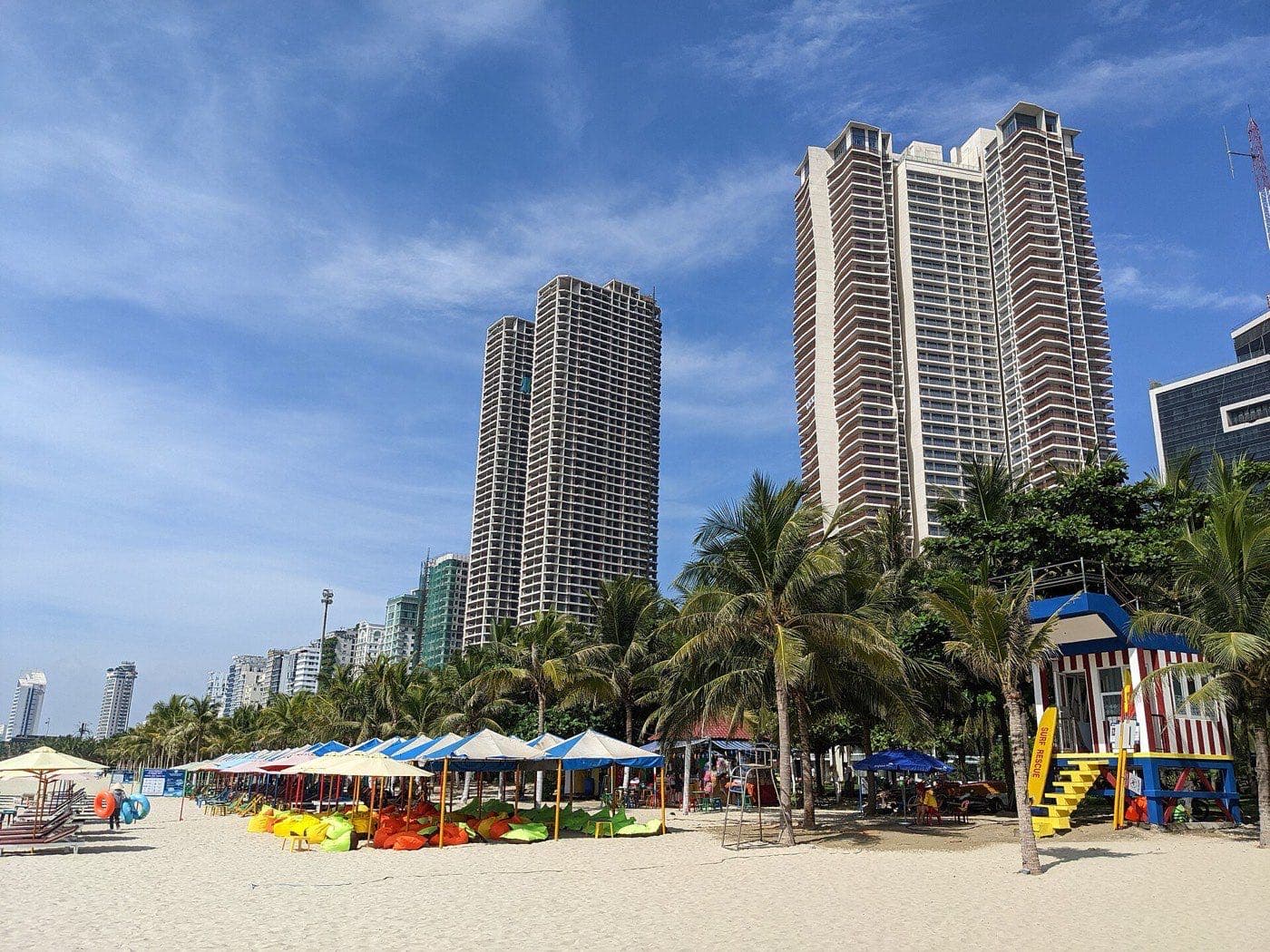
This is not a guide to which neighbourhood suits you — that question is answered in the breakdown of Da Nang’s districts. This is about the transaction. What you sign, what you hand over on day one, why your first electricity bill lands twice as high as you expected, and what actually happens if you take a condo apartment for two weeks.
Prices and tariffs on this page were checked on 6 September 2026. Rate used throughout: 1 USD ≈ 26,050 VND, so 1 million VND ≈ $38.
What renting actually costs in Da Nang
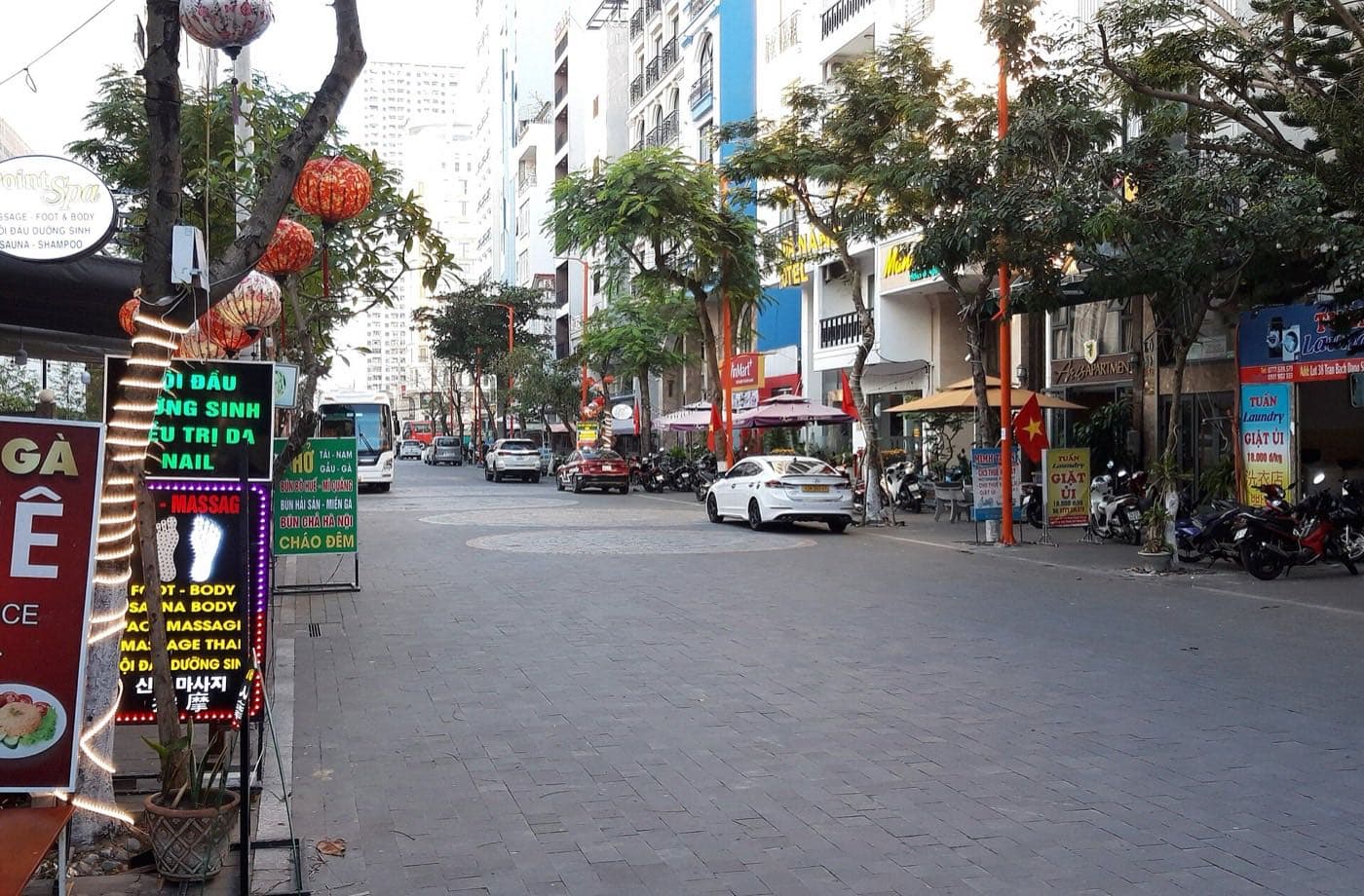
A studio in Da Nang runs 2.5–10 million VND a month (~$96–384); a one-bedroom, 4–22 million (~$154–845). The bottom of that range is the student north on Vietnamese platforms; the top is beachfront stock on English-language sites. Floor area moves the number far less than those two factors do.
| What the market calls it | What the paperwork calls it | Studio, M ₫ | 1BR, M ₫ |
|---|---|---|---|
| An Thuong, My An | phường Ngũ Hành Sơn | 7–10 | 9–14 |
| My Khe, beachfront | phường An Hải | — | 12–22 |
| Son Tra, fishing side | phường Sơn Trà | 5–7 | 7–10 |
| Hai Chau, city centre | phường Hải Châu | 4–6 | 6–10 |
| New blocks by Marble Mountains | phường Ngũ Hành Sơn | 5–8 | 8–13 |
| Hoa Khanh, Lien Chieu | phường Hòa Khánh / Liên Chiểu | 2.5–4.5 | 4–6 |
That second column is not decoration. The market says "An Thuong"; your lease will say something else entirely, and why that matters is a section of its own.
The foreigner premium, ward by ward
Two independent sources measured the gap between local and foreigner-facing prices in Da Nang, and they landed in the same place. At the beach, a foreigner pays roughly double. A few kilometres inland the premium evaporates.
| Ward | Premium | Where it is smallest |
|---|---|---|
| An Thuong, My An | ×1.8–2.2 | Word of mouth, local contacts |
| My Khe condos | ×1.3–1.5 | Renting directly from the owner |
| Hai Chau | ×1.3–1.5 | Notices posted in building lobbies |
| Ngu Hanh Son | ×1.2–1.4 | Vietnamese platforms |
| Lien Chieu, Hoa Khanh | ×1.0 | Local agents |
💬 "The same one-bedroom in An Thuong: 7–9M VND on Vietnamese platforms, 14–19M on the English-language ones. A furnished one-bedroom in My An is 7.5M locally and 15M-plus on sites aimed at newcomers." — Da Nang cost of living, Find Away Abroad, 2026
What the rent includes
Almost everything on the expat-facing market comes furnished: bed, wardrobe, air conditioner, fridge, washing machine, hob. Wi-Fi is usually already connected and folded into the rent. Unfurnished stock exists but goes to Vietnamese families on multi-year leases, not to you.
What is almost never included: electricity, water, rubbish collection, motorbike parking and the building management fee. Together these add 700,000–2,500,000 VND (~$27–96) a month.
Length works in your favour. A six- or twelve-month lease costs $50–100 a month less than a three-month one for the same apartment. The landlord is buying certainty that he will not be showing the place again in December.
Where to look, and what each channel costs you
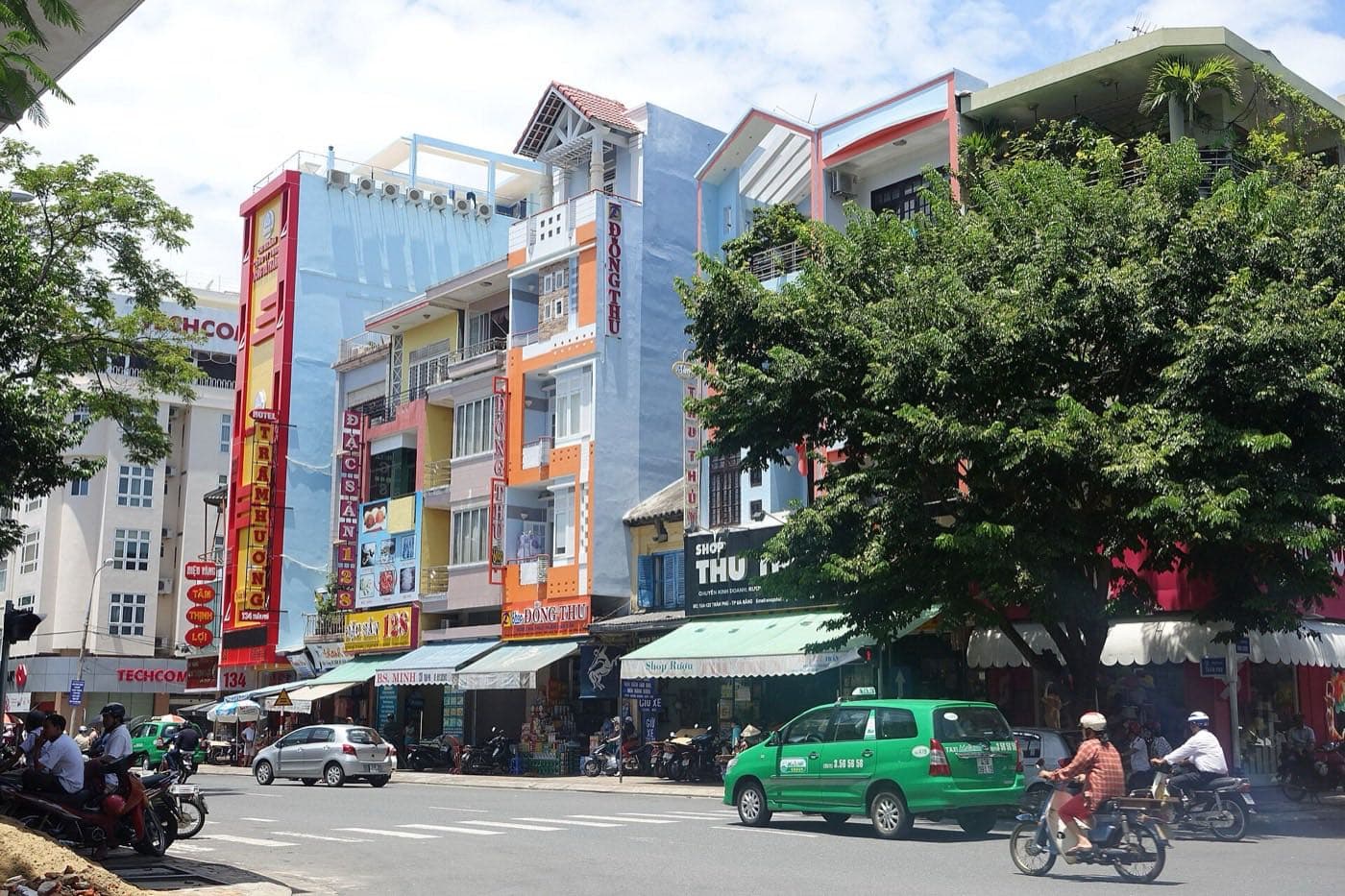
Six channels, and the spread between them on an identical apartment reaches 2×. The cheapest are Vietnamese platforms and word of mouth; the most expensive are the English-language property sites, where the asking price already assumes you flew in.
| Channel | Prices | Language | Commission |
|---|---|---|---|
| Facebook expat rental groups | Local to mid | English, Vietnamese | None |
| Chợ Tốt | Local | Vietnamese | None |
| Local agents (môi giới) | Mid | Vietnamese, some English | Landlord pays |
| Zalo and lobby notices | Local | Vietnamese | None |
| fazwaz.vn, dotproperty | Marked up | English | Built into the rent |
| Walking the streets for signs | Local | A phone number on a wall | None |
About agents, honestly: the commission, usually around half a month’s rent, is paid by the owner rather than by you. But it is already inside the asking price, so the "free agent" is only free on paper. That said, dropping the agent rarely pays: he opens doors you will never find and does the talking in Vietnamese.
The oldest method still works best in An Thuong, My An and Son Tra. Paper signs with a phone number hang on the buildings themselves, and half of that stock never reaches any platform. Bring a translation app and expect the call to be short.
The timing that saves you $200–400 a month
Do not book long-term from abroad. English- and Russian-language sources converge on the same sequence:
- Hotel or Airbnb for one to two weeks, so you have somewhere to sleep.
- Five to ten viewings, in different wards, in person.
- Negotiate on the spot — 10–15% off is normal for a direct monthly booking.
- Sign for three months minimum, six if you can.
One local habit to plan around: if you schedule a viewing for the afternoon, the owner will let it to whoever turns up in the morning with a deposit. Speed beats politeness here. September and October are a good window — the high season has not started and owners are still willing to talk price. The country-wide mechanics of each channel are covered in the guide to renting long-term in Vietnam; this page stays with Da Nang.
The viewing: six things to check before you talk price
Check six things before you name a number: the meter, the air conditioner, the water pressure, the noise, any construction next door, and building access. Everything else — furniture, view, wall colour — can be fixed or tolerated. These six cannot, once you have signed.
The meter. Find it physically. Is it one per apartment or one for the whole floor? Photograph the reading on move-in day; that photo is worth money later. What to do with those digits is the electricity section.
The air conditioner. Switch it on and leave it for ten minutes. You are watching for two things: whether it actually cools, and whether it drips. An old unit in Da Nang is not an inconvenience, it is 500,000–800,000 VND (~$19–31) added to every summer bill, because it never stops running.
Water. Open the shower and a tap at the same time. In older buildings without a pump, the fifth floor gets a trickle at peak hour.
Noise and construction. View twice: once in daylight, once after eight in the evening. Da Nang builds continuously, and a pit across the road turns a quiet flat into an unliveable one within a week. A clause letting you exit the lease if construction starts nearby is a normal request, not paranoia, and owners usually accept it.
Access. In a condominium, ask about the lift access card and the motorbike parking slot. Sometimes the card costs extra; sometimes it is issued to owners only, and you spend the whole lease asking reception to send the lift.
The lease: what has to be in it
A residential lease in Vietnam must be in writing — Housing Law 2023, article 163. It does not have to be notarised: article 164(2) explicitly takes leases out of the list of transactions requiring notarisation. A notary is involved only if both parties want one.
The claim that leases over six months must be notarised turns up in expat guides regularly and is not in the law. Notarisation is mandatory for sale, gift, exchange and mortgage. Not for renting.
The mandatory clauses, and why each one is yours
| Clause under article 163 | Why you care |
|---|---|
| Names and addresses of both parties | Confirms the owner is signing, not "the owner’s brother" |
| Description of the property | Fixes unit number and floor area — the building fee is charged per m² |
| Price and currency | VND only. A USD-denominated rent is a currency bet you did not ask to make |
| Payment terms and schedule | This is where the early-exit penalty lives. Read it first |
| Handover date and lease term | The date you start paying and the date you are committed to |
Add four clauses of your own to that minimum: who pays for appliance repairs, what rate electricity is billed at, what happens if construction starts next door, and how many days the deposit takes to come back. The first two are the expensive ones.
Appliance repairs deserve a sentence of their own. A growing share of owners now push air-conditioner and washing-machine repairs onto tenants, and if the lease is silent the argument is won by whoever is more stubborn.
What to ask the owner for
Three documents. The sổ hồng — the "pink book" ownership certificate, where the name must match the name on the lease. The CCCD national ID card. A power of attorney, if a relative or manager is letting the place.
Insist on a bilingual contract, Vietnamese and English. The Vietnamese column is the legally operative one; the English column exists so you know what you agreed to. If only a Vietnamese text appears, run it through a translation app at the table rather than at home that evening.
You will need your passport and a valid visa to sign. The lease itself grants no immigration status whatsoever — for long stays the sensible path is a temporary residence card.
Your address after the 2025 reform
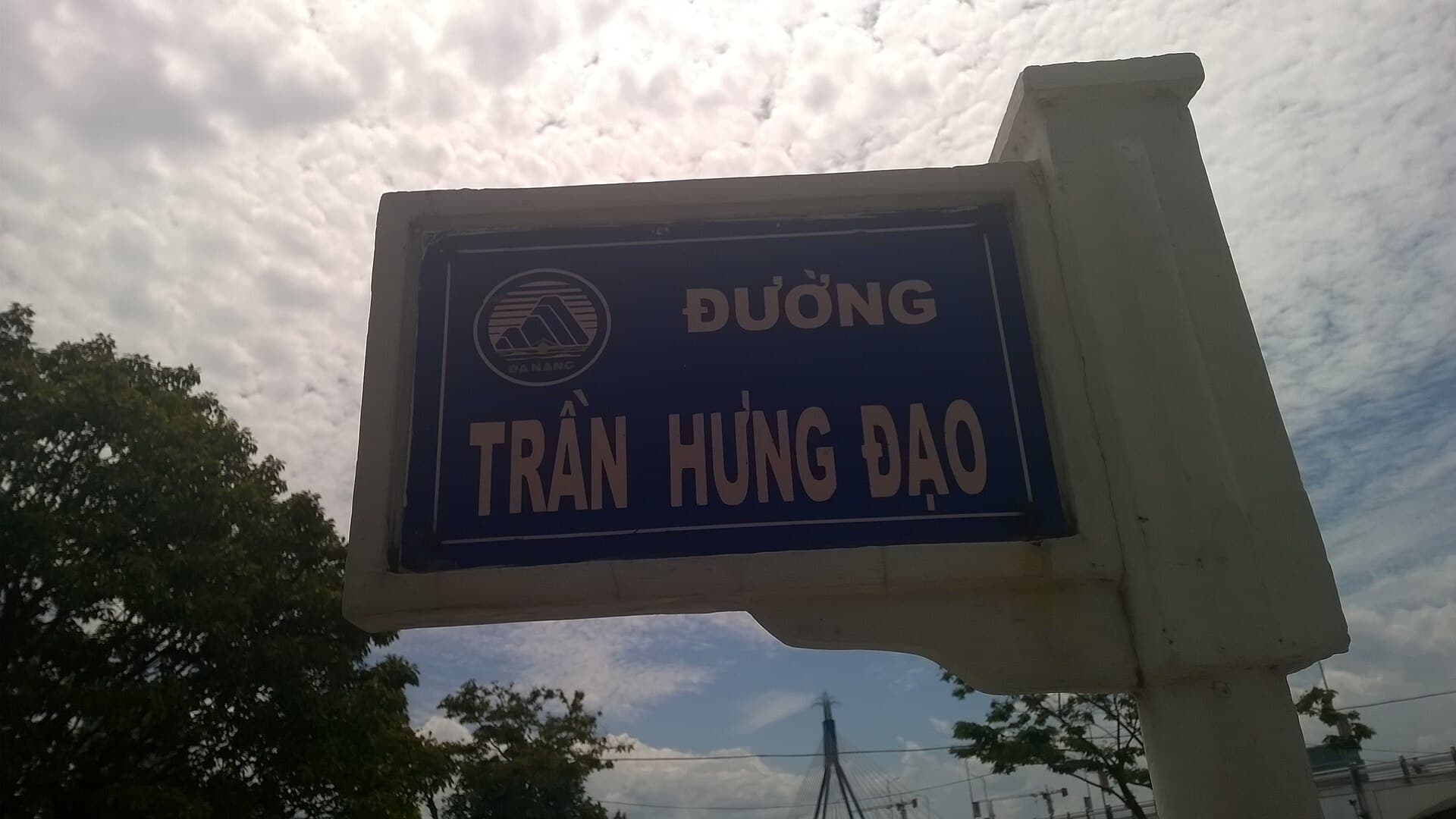
Vietnam abolished the district tier on 1 July 2025. Da Nang absorbed Quang Nam province and now consists of 94 units: 23 wards, 70 communes and one special zone. The address line lost a level — and that line is the one most often written wrong in a lease.
| When | Address line |
|---|---|
| Before 07/2025 | house, street — phường Mỹ An — quận Ngũ Hành Sơn — thành phố Đà Nẵng |
| Now | house, street — phường Ngũ Hành Sơn — thành phố Đà Nẵng |
The quận level must not appear. The district names did not vanish — they became ward names, which is precisely why the confusion is so persistent.
| What the market calls it | Written before 07/2025 | Written now |
|---|---|---|
| An Thuong, My An | phường Mỹ An, quận Ngũ Hành Sơn | phường Ngũ Hành Sơn |
| My Khe, Phuoc My | phường Phước Mỹ, quận Sơn Trà | phường An Hải |
| Son Tra, fishing side | phường Thọ Quang, quận Sơn Trà | phường Sơn Trà |
| Hai Chau, centre | phường Thạch Thang, quận Hải Châu | phường Hải Châu |
| By the Tran Thi Ly bridge | phường Hòa Cường Bắc, quận Hải Châu | phường Hòa Cường |
| Thanh Khe | phường Xuân Hà, quận Thanh Khê | phường Thanh Khê |
| Hoa Khanh, north | phường Hòa Khánh Nam, quận Liên Chiểu | phường Hòa Khánh |
| Hoi An | thành phố Hội An, tỉnh Quảng Nam | phường Hội An / Hội An Đông / Hội An Tây, thành phố Đà Nẵng, depending on the former ward; An Bang and Cua Dai are Hội An Đông |
Three errors show up most often in paperwork:
- quận Ngũ Hành Sơn — a hybrid. The word survived in the ward’s name; the rank did not. No such unit exists.
- The old ward name. Phường Mỹ An was dissolved into Ngũ Hành Sơn. Leases take the new one.
- Tỉnh Quảng Nam for Hoi An. The province is gone; Hoi An is a ward of Da Nang.
Why the listing and the lease disagree — and why that is fine
Worth not over-correcting here. In listings, at agencies, with Grab drivers and on shop signage, the old district names are alive and will stay alive for years. "Apartment in Ngu Hanh Son district" in a listing is market inertia, not a red flag. Maps and navigation apps update slowly too.
The full picture of what changed is in the write-up of Vietnam’s 2025 administrative reform. A useful habit: add the old name in brackets as a courtesy. "Phường Ngũ Hành Sơn (formerly My An)" is not prohibited and helps the delivery driver find you.
The deposit: how much, what gets withheld, how to get it back
Standard entry is one month’s rent as deposit plus the first month upfront. No agency fee, no "insurance", no processing charge — those simply do not exist on the Da Nang market. For a 9M VND one-bedroom in An Thuong, moving in costs 18M (~$690).
The Vietnamese term is đặt cọc, a security payment under the Civil Code. It is not prepaid rent: you cannot apply it to your final month unless the lease says so. Ask for that clause at signing, because asking on move-out day is too late.
What can be withheld
Legitimately: damaged property, unpaid utility bills, breaking the agreed term. Not legitimately, though it happens: fair wear and tear, cleaning after ordinary occupancy, or general dissatisfaction with how you left.
The line between the two is drawn by the handover record. If you wrote down meter readings, appliance condition and every existing defect together on day one, the move-out conversation takes five minutes. If you did not, the party holding the money wins, and the party holding the money is the landlord.
On the way out
Give written notice two to three weeks ahead, in a message that will still exist later. On the day, read the meters together, settle the final bills and collect a biên nhận receipt for every cash payment. A two-week refund window is normal market practice, not a statutory right — put the number of days in the lease.
If the owner stalls, the arithmetic favours you: he has no documents, you have photographs, receipts and a message thread. Disputes rarely escalate in Da Nang. The rental market here is small enough that a landlord’s reputation in the expat groups is worth more than half a deposit.
The electricity bill: the state price and the landlord’s price
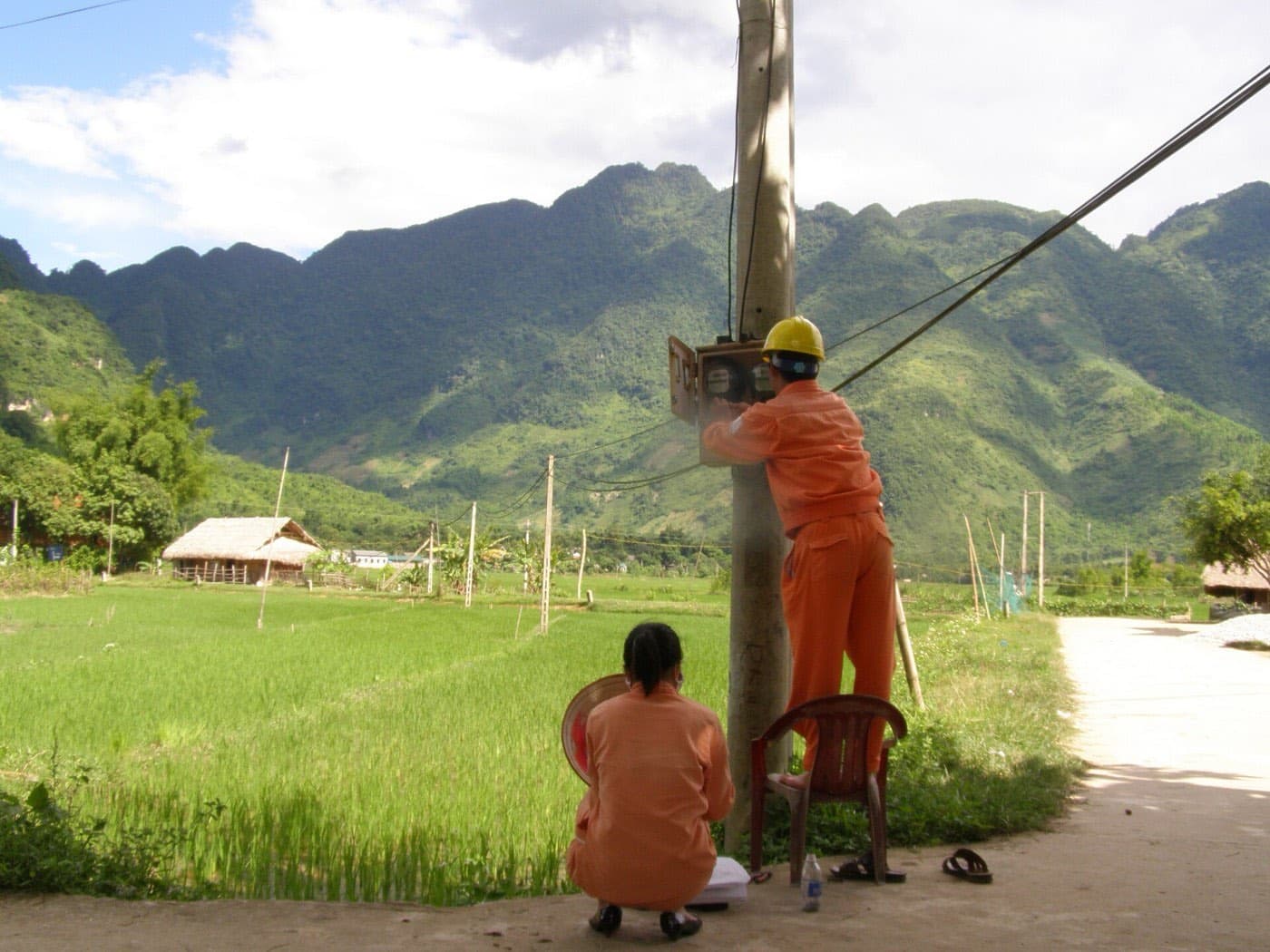
Vietnam’s household electricity tariff runs from 1,984 to 3,460 VND per kWh across six tiers, before 8% VAT. Landlords in Da Nang bill a flat 3,500–4,000 VND per kWh regardless of volume. The distance between those two numbers is where tenants quietly lose the most money.
How the state tariff is built
Bills are issued on the six-tier schedule of Ministry of Industry and Trade Decision 1279/QĐ-BCT of 9 May 2025, which sets the average retail price at 2,204.0655 VND per kWh excluding VAT. Prime Minister’s Decision 14/2025/QĐ-TTg of 29 May 2025 cuts the scale to five tiers, from 1,984 to 3,967 VND, but it reaches bills only with the next adjustment of the average price.
| Tier and volume | Excl. VAT, ₫ | Incl. 8% VAT, ₫ | ≈ $ per 100 kWh |
|---|---|---|---|
| Tier 1 · 0–50 kWh | 1,984 | 2,143 | 8.2 |
| Tier 2 · 51–100 kWh | 2,050 | 2,214 | 8.5 |
| Tier 3 · 101–200 kWh | 2,380 | 2,570 | 9.9 |
| Tier 4 · 201–300 kWh | 2,998 | 3,238 | 12.4 |
| Tier 5 · 301–400 kWh | 3,350 | 3,618 | 13.9 |
| Tier 6 · 401 and above | 3,460 | 3,737 | 14.4 |
The scale is progressive, and that is the key to this whole section. A studio running the air conditioner overnight stays around 150–200 kWh and lands in tier three. The same studio with the air conditioner on around the clock in July burns 400–600 kWh and climbs to tier six. The bill does not rise by a few percent; it rises by half again.
Who sells electricity in Da Nang, and where to see your kWh
Da Nang is served by PC Đà Nẵng within the central utility EVNCPC. It runs an app called EVNCPC CSKH, and that app settles half the arguments before they start.
You log in with the phone number on the supply contract or with the customer code, a PA… string printed on the invoice. Inside, under "Tra cứu", there is a remote-reading section: consumption updates several times a day and is kept for more than forty days. The hotline is 19001909.
The account belongs to the owner, so the app opens on his phone, not yours. Asking him to show you the screen is a perfectly reasonable request. A refusal tells you something on its own.
The "four people, one household" rule
Circular 60/2025/TT-BCT of 2 December 2025 addresses rented housing directly: for dormitories, worker and student housing and rental apartments, tier allowances are counted by headcount — every four people count as one household account. One person gets a quarter of the allowance, two get half. If the landlord has not declared the number of tenants, the whole volume is billed at the 101–200 kWh tier price.
You can move the account into your own name and pay the state price directly, but only if two conditions line up: a lease longer than twelve months and registered residence. Then a tenants’ representative can sign the supply contract with the utility. For a four-month stay that is out of reach, which means the meter stays the landlord’s.
Where the line actually is
A flat 3,500–4,000 VND is not automatically a scam. When four apartments hang off one meter, consumption is pooled, the total climbs into the upper tiers, and the owner genuinely is paying around three and a half thousand. The flat rate is how he avoids doing proportional maths every month.
What is not allowed is different. The government newspaper puts it plainly: the amount a landlord collects may not exceed the amount on the utility invoice. Anything above that is overcharging.
💬 "Landlords charge a flat 3,500–4,000 VND per kWh regardless of volume. With the air conditioner running constantly the bill reaches 1.5–2 million VND a month." — breakdown of Da Nang utility bills, vc.ru, 2026
Since 25 May 2026 that rule has teeth. Decree 133/2026/NĐ-CP sets a fine of 20–30 million VND (~$768–1,152) for a landlord who charges a tenant more than the regulated price, plus a refund with interest and forfeiture of the illegal gain.
The practical value of this is not that you should go and file a complaint. It is that the conversation about tariffs now has something solid behind it, and your landlord knows it.
Five questions before you sign
- Is the meter for this apartment only, or shared with the floor?
- What rate per kWh do you charge, and why that one?
- Will you show me last month’s utility invoice?
- What did the previous tenant pay in July, and in January?
- Can we record today’s reading in the handover note?
Question four is the honest one. A summer bill for a studio with round-the-clock air conditioning reaches 2 million VND (~$77); the winter bill for the same flat is 300,000–500,000. If the owner quotes one figure for the whole year, he either does not know or does not want to say.
Water, internet, building fees and rubbish
On top of rent, expect 700,000–2,500,000 VND (~$27–96) a month. Electricity takes between half and three quarters of that; the rest are small, predictable lines that nonetheless like to appear after signing.
| Item | Per month, ₫ | Per month, $ | Usually paid by |
|---|---|---|---|
| Electricity | 300,000–2,000,000 | 12–77 | Tenant |
| Water | 60,000–250,000 | 2.3–9.6 | Tenant |
| Internet, 300 Mbps | 195,000 | 7.5 | Usually in the rent |
| Building management (condo) | 264,000–792,000 | 10–30 | Per the lease |
| Rubbish collection | 30,000–60,000 | 1.2–2.3 | Tenant |
| Motorbike parking | 80,000–200,000 | 3–7.7 | Tenant |
Currency converter
Water. The city utility DAWACO bills in tiers: roughly 4,550 VND per cubic metre for the first ten, up to 6,810 above thirty, before VAT. Published tiers differ between the utility’s own page and 2026 city coverage, so treat the band as approximate. For a tenant it is an argument about small change: 60,000–250,000 VND per person per month including drainage.
Internet. A basic Viettel or FPT fibre plan at around 300 Mbps costs 195,000 VND (~$7.5) a month; a gigabit plan, 270,000–310,000. Most rentals already have Wi-Fi included, so you only pay separately if you upgrade for work. Operators and plans are compared in the guide to internet and mobile in Vietnam.
Building management. This is the line nobody asks about at the viewing. Since June 2026 Da Nang has its own price framework, city decision 78/2026/QĐ-UBND: 4,400–13,200 VND per m² per month in a building with a lift, 1,600–7,500 without. For a 60 m² apartment that is 264,000–792,000 VND (~$10–30). Fire insurance, parking and extra services sit outside it.
Ask exactly one question at the viewing: is the management fee inside the rent or billed separately? Owners split roughly evenly on this, and 800,000 VND a month reshapes a budget.
Temporary residence registration — whose job it is
The temporary residence declaration for a foreigner is filed by the accommodation provider, meaning your landlord, not you. The deadline is 12 hours from check-in, 24 in remote areas. It is now done online through the national Ministry of Public Security portal at tbltkbtt.bocongan.gov.vn. The old danang.xuatnhapcanh.gov.vn address redirects there.
Decree 282/2025/NĐ-CP replaced Decree 144/2021 on 15 December 2025. Fines for the accommodation provider went up and are now counted by how many foreigners went undeclared:
| Undeclared foreigners | Fine on the accommodation provider |
|---|---|
| 1–3 people | 3–5M VND (~$115–192) |
| 4–8 people | 10–15M VND (~$384–576) |
| 9 or more | 15–20M VND (~$576–768) |
English-language expat guides still quote fine amounts from the repealed decree.
Formally this is the owner’s problem. But the tenant carries risk too: a foreigner who fails to show a passport to the accommodation provider for registration faces a 3–5 million VND fine under Decree 282/2025.
And you are the one who feels the consequences. Without a filed declaration, visa extensions stall, so do temporary residence card applications and opening a Vietnamese bank account — all of them ask for your address and proof of it. Ask for a screenshot of the filed declaration on day one and keep it on your phone. Who must file, how the national portal works and what to do if your landlord never files: our guide to temporary residence registration.
Separately, on overstaying: the penalties are heavy, from 5–10M VND for 16–29 days up to 30–40M for a year or more. It only touches renting indirectly, but it explains why a careful landlord asks for a copy of your visa and watches its expiry as closely as you do.
Fast Track — no queue at the border
5–10 minutes instead of an hour in the immigration queue
from$11per passenger
Why condo apartments cannot be rented by the night
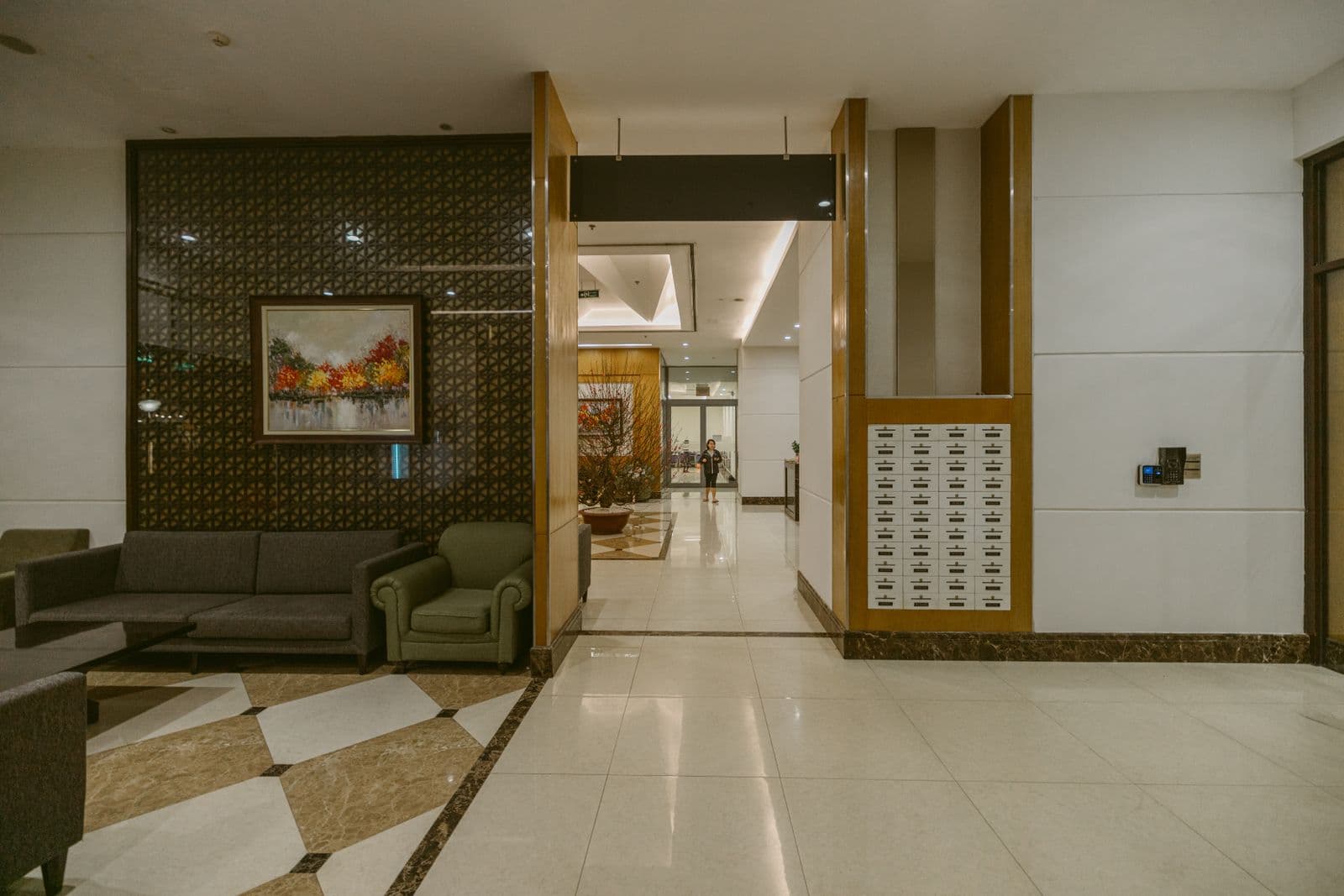
Housing Law 2023 (27/2023/QH15) prohibits using an apartment in a multi-unit building for anything other than living in it. The rule is already in force nationwide. Nightly letting through Airbnb or Booking falls under it for a simple reason: that is accommodation service, not residence. If your plan for Da Nang is a two-week Airbnb in a tower block, this section is the one that decides how it goes.
Who enforces it, and how
Ho Chi Minh City went furthest. Under its city rules for apartment buildings, owners letting by the night or by the week must register tourist accommodation and comply with tax, residence, fire safety and e-commerce requirements.
Da Nang has issued no explicit ban of its own: its city rules for apartment buildings govern building records, resident meetings, management boards, maintenance and the sinking fund.
So the question gets settled one level down, by the management board of each individual building. Boards in Hanoi, Da Nang and Ho Chi Minh City routinely circulate notices forbidding residents from letting units for tourist accommodation. The industry association HoREA proposed in January 2026 that short-term letting be regulated rather than banned, through a dedicated chapter in the implementing rules. So far it remains a proposal.
The fine for non-residential use of an apartment is set under Decree 16/2022/NĐ-CP, plus an order to restore residential use.
What this means for you specifically
The owner pays the fine. The guest absorbs the consequences, and they are mundane: the management board will not issue a lift access card, security will not let "guests" through the lobby, the booking gets cancelled the day before arrival, and the money for unused nights turns into a conversation with the owner rather than with the platform. Nobody will treat you as the offender — you will simply have nowhere to sleep.
- ✓ A few days to two weeks — hotel or aparthotel: licensed accommodation, and no board notice can cancel your stay
- ✓ A month or longer — an ordinary residential lease: that is residence, not accommodation service
- ✓ A house or townhouse instead of a condominium: the rule covers apartments in multi-unit buildings
- ✗ A condo apartment for two weeks through a platform — exactly the format where bookings get cancelled
- ✗ A monthly stay papered as a nightly booking "because it is simpler": his convenience, your risk
- ✗ Counting on the board to look the other way: the building next door does, this one does not
Legal short-stay options are collected in the Da Nang city guide.
Seven ways people lose money
An honest caveat first. Da Nang is a calmer market than Hanoi or Ho Chi Minh City: fewer transactions, softer schemes, very few professional rental scammers. Most losses here come from inattention, not fraud.
1. Not reading the term clause. The most common and the most expensive. Leaving before the lease ends costs anywhere from half the deposit to all of it.
2. Paying for a place you have not seen. Listing photos can be old, borrowed or from the building next door. No exceptions: viewing first, money second.
3. Skipping the handover record. Six months later, an argument about a scratched table is won by whoever has a dated photograph.
4. Not asking about the electricity rate. The difference between the state ~3,000 and a flat 4,000 VND per kWh at summer volumes is 450,000–500,000 VND a month (~$17–19). Over half a year that is about 3 million VND.
5. Forgetting the management fee. Eight hundred thousand dong a month that nobody mentioned at the viewing is a routine story in newer buildings.
6. Taking a condo apartment for two weeks. See above: the format is not legal, and you pay for it in inconvenience rather than fines.
7. Accepting the first asking price. Haggling is part of the protocol here, not rudeness. Ten to fifteen percent comes off almost every time, more in low season or when you pay several months upfront.
There is no eighth item, only a principle: whatever looks like a detail at the viewing becomes a line on a bill a month later.
Checklist before you sign
If three or more boxes are still empty, do not sign today. The apartment will keep: outside high season, Da Nang has more supply than demand.
FAQ — renting in Da Nang
Two months of rent: one month as deposit plus the first month upfront. For a 5M VND studio in Hai Chau that is 10M VND (~$384); for a 9M VND one-bedroom in An Thuong, 18M (~$690). The agent commission is paid by the owner, not by you. Separate "processing" or "agency" fees are not a thing on this market — if you are asked for one, that is a signal.
Yes, but you pay for it. Monthly rates run 15–30% above a six-month lease, and the choice is thinner because owners hold the best stock for long terms. For one or two months, aparthotels and serviced apartments are usually the better trade: the price is honest and the format is legal. A six- or twelve-month lease cuts $50–100 off the monthly rate.
No, the law does not require it. What gives the contract force is the written form and the signatures, not a notary stamp. What is worth doing: sign both columns of the bilingual text, initial every page, and keep an original rather than a scan. A notary is only useful if the sums are large and both sides want the extra comfort.
It depends on what he pays. A flat rate is defensible when several apartments share one meter and pooled consumption reaches the upper tiers. But the total he collects may not exceed the utility invoice. Since 25 May 2026, exceeding it carries a 20–30 million VND fine for the landlord under Decree 133/2026/NĐ-CP. Ask to see the invoice — that request is entirely reasonable.
Write the ward and the city, with no quận level: for example phường Ngũ Hành Sơn, thành phố Đà Nẵng. Districts ceased to exist on 1 July 2025. Listings, agents and map apps will keep the old names for years, so a mismatch between listing and lease is normal. A phantom district inside the document itself is not. What else the reform moved is in the write-up of Vietnam’s 2025 administrative reform.
Technically yes, sensibly no. Booking remotely means booking through an English-language platform, which adds 60–100% to the rate. And you cannot test the air conditioner, the water pressure, the street noise or the building site around the corner. The working sequence is a hotel for one to two weeks, five to ten viewings, then negotiate on the spot. The gap is $200–400 a month: the hotel pays for itself in week one.
What next
Keys in hand, the rest is daily life. Where to work if the apartment does not cut it is covered in the roundup of Da Nang coworking spaces; getting between wards is in the guide to transport in Da Nang. And if Da Nang turns out not to be the place, the same transaction in another city is broken down in renting in Nha Trang.
Read next: Da Nang districts · Prices in Da Nang · Renting a home in Vietnam · The 2025 administrative reform






- Housing
Da Nang Hotels 2026: Where to Stay by Area
Da Nang hotels guide: best areas (My Khe, An Thuong, city centre), 5-star resorts to hostels, how to book and getting from the airport.Da Nang Hotels 2026: Where to Stay by Area - Weather
Da Nang Weather 2026: Month by Month & When to Go
Da Nang weather guide: a month-by-month table, the dry and rainy seasons, sea temperatures, the best time to visit and what to pack.Da Nang Weather 2026: Month by Month & When to Go - Guide
Da Nang Reviews 2026: Is It Worth Visiting?
Honest Da Nang reviews: the pros, the cons and who it suits — beaches, food and season, with traveller quotes and a Da Nang vs Nha Trang verdict.Da Nang Reviews 2026: Is It Worth Visiting?