The classic 14-day Vietnam route: north to south in 2026
A 14-day north-to-south Vietnam itinerary, day by day: Hanoi, a Ha Long Bay cruise, the Hoi An lanterns, imperial Hue, Ho Chi Minh City and the Mekong Delta, finishing on a beach. With 2026 prices, transport, budget and weather. Route current as of July 2026.

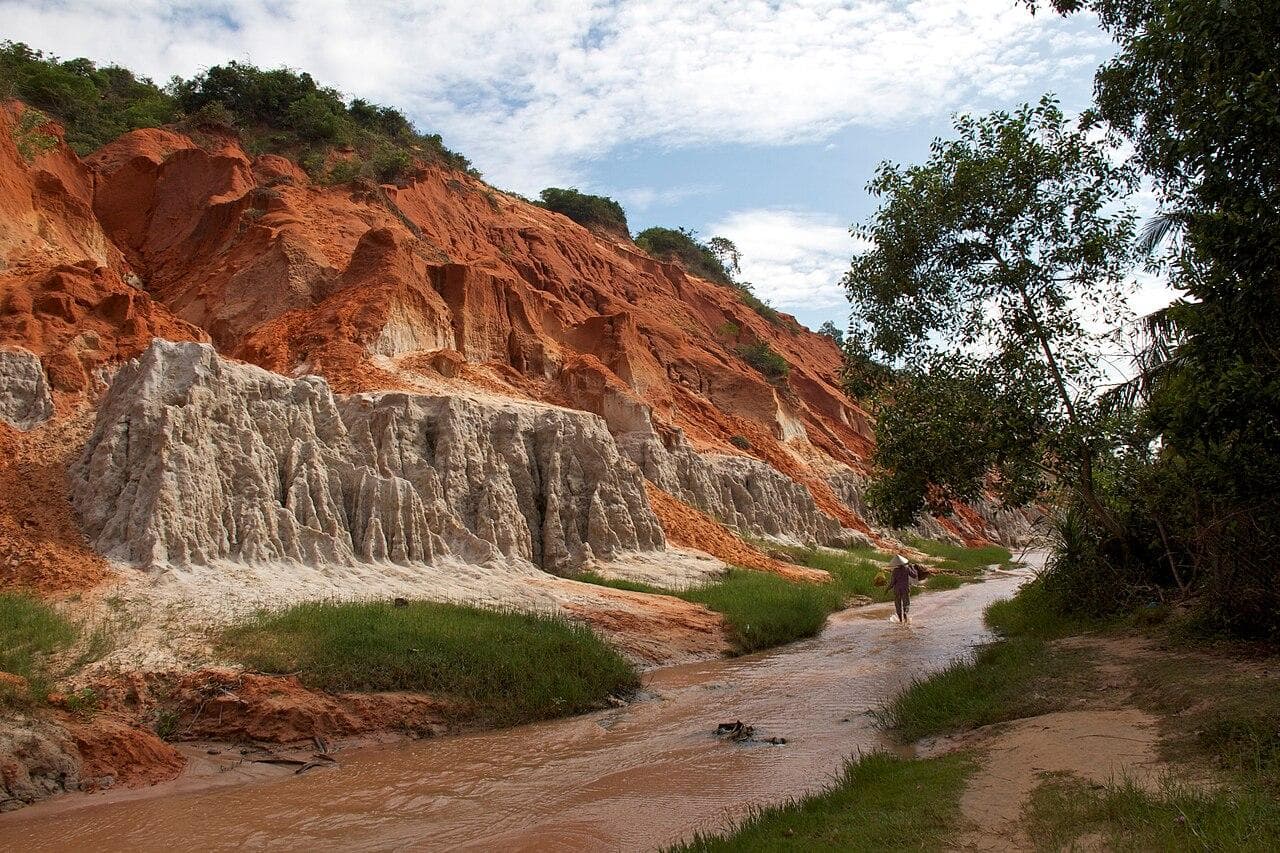
Most first-time visitors fly straight to Nha Trang or Phu Quoc, spend two weeks by a pool and go home thinking Vietnam is "a resort with good seafood." They skip a thousand-year-old capital, a bay full of karst cliffs, imperial Hue, the craft town of Hoi An, sunrise on the Mekong. All of it fits into 14 days without a mad dash — and, for many nationalities, without a visa, thanks to the 45-day exemption in force since August 2023.
If you want to see the country rather than one sun lounger, this is a step-by-step plan with real 2026 prices, schedules, weather and logistics. It is built for independent travellers, but works just as well as a template you hand to a local operator.
Why cross the whole country in 14 days
Vietnam is really three countries in one. The north has cool winters and the thousand-year culture of Tonkin. The centre is imperial history, lantern-lit Hoi An and My Khe beach. The south lives in tropical heat year-round, home to the megacity of Saigon and the Mekong Delta. From Hanoi to Ho Chi Minh City is 1,700 km — roughly London to Rome, but with three climates and different dialects along the way.
Settle on one beach and you see about 5% of the country. That is fine if you just need a break. But if it is your first time in Vietnam and you can spare two weeks, don't box yourself into a resort. Fourteen unhurried days are enough to run the classic north-to-south loop, with three nights at the key stops and a beach finish.
Who this route suits:
- First time in Vietnam, wanting to cover the highlights
- Independent travellers, not tied to all-inclusive
- A couple or a family with kids over 7
- Anyone comfortable with a moving itinerary rather than one base
Who should skip it:
- If you only want to lie on sand — stay in Phu Quoc or Mui Ne
- If your group includes kids under 4 — the frequent transfers are brutal, so base yourself at one resort
- If you only have exactly 10 days — see the shorter version below
No "half a day on a bus for one temple." A $50 domestic flight saves you a whole day. The beach days at the end pay back the culture marathon.
The 14-day route: map and overview
You start in Hanoi and finish on a southern beach. Land in the capital, spend three days in the north, hop two VietJet or Vietnam Airlines flights down to Ho Chi Minh City, and end with a couple of beach days. If your international flight lands in HCMC instead, flip the route (south to north) — no loss.
- Hanoi (Hà Nội): Days 1–3, start of the route — Old Quarter, flight to Da Nang
- Ha Long Bay (Vịnh Hạ Long): Day 2, one-night cruise — $108–300 per person, 3.5 h from Hanoi
- Ninh Binh (Ninh Bình): Days 4–5, Tràng An boats — Karst cliffs, 90 km from Hanoi
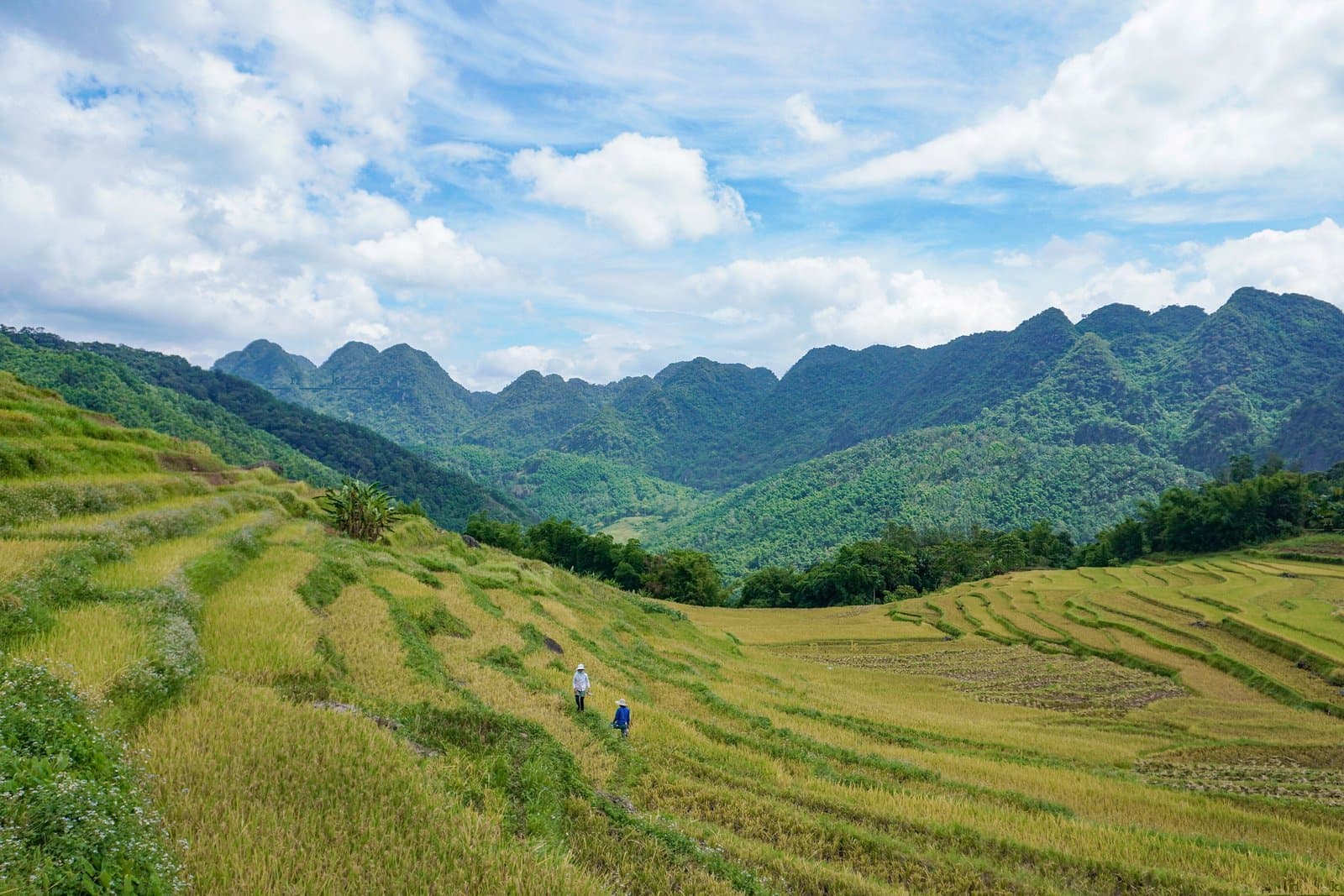
- Sapa (Sa Pa): Alternative to Ninh Binh — Rice terraces, needs 16+ days
- Da Nang (Đà Nẵng): Day 6, arrival DAD — My Khe beach, Dragon Bridge
- Hoi An (Hội An): Days 7–8, UNESCO site — Lanterns, 30 km from Da Nang
- Hue (Huế): Day 9, day trip from Da Nang — Over the Hai Van Pass, Imperial City
- Ho Chi Minh City (Hồ Chí Minh): Days 10–11, the megacity — War Remnants Museum, Ben Thanh, flight SGN
- Mekong (My Tho) (Mỹ Tho): Day 12, day trip from HCMC — Boats, coconut, tour $25–50
- Mui Ne (Mũi Né): Days 13–14, option A — Kitesurfing, sand dunes, 5 h from HCMC
- Phu Quoc (Phú Quốc): Days 13–14, option B — Bãi Sao beach, 1 h flight from HCMC
The day-by-day overview:
| Day | Location | Main event |
|---|---|---|
| 1 | Hanoi | Arrival, Old Quarter, Hoan Kiem Lake |
| 2 | Hanoi → Ha Long | Morning transfer, night on the cruise |
| 3 | Ha Long → Hanoi | Return, early dinner |
| 4 | Hanoi → Ninh Binh | Tràng An boats, Hang Múa viewpoint |
| 5 | Ninh Binh → Da Nang | Return, evening HAN-DAD flight |
| 6 | Da Nang | My Khe, Marble Mountains, Dragon Bridge |
| 7 | Da Nang → Hoi An | Check in, Old Town under the lanterns |
| 8 | Hoi An | An Bang beach or the My Son temples |
| 9 | Hoi An → Hue → Hoi An | Day trip over the Hai Van Pass |
| 10 | Da Nang → HCMC | DAD-SGN flight, check in to D1 |
| 11 | Ho Chi Minh City | War Remnants Museum, Palace, Ben Thanh |
| 12 | HCMC → Mekong → HCMC | Day trip to My Tho / Ben Tre |
| 13 | HCMC → beach | Fly to Phu Quoc or bus to Mui Ne |
| 14 | Beach + departure | Relax, flight home |
There are three big transfers: the bus from Hanoi to Ha Long and the flights Hanoi to Da Nang and Da Nang to HCMC. The Phu Quoc option adds two short HCMC↔Phu Quoc flights. Everything else is a short 30–100 km day trip. Budget around $120–200 per person for internal moves.
Days 1–3: Hanoi and a Ha Long Bay cruise

The north is the political capital and the country's one bucket-list bay. Three days is enough to acclimatise, see colonial Hanoi and sleep aboard a cruise among the karst cliffs. Winters are cool (15–20°C), summers hot and humid (30–35°C). The best month to start is March.
Day 1: arrive in Hanoi, Old Quarter, Hoan Kiem Lake
You land at Noi Bai (HAN), 30 km from the centre. Three ways into the Old Quarter:
- Metered taxi — 350,000–400,000 VND (~$14–16), 40 minutes. Use only Mai Linh or Vinasun; others may rig the meter.
- Grab — 250,000–320,000 VND (~$10–13), the easiest option. The app takes Visa/Mastercard, and English works fine in it.
- Airport bus 86 — 45,000 VND (~$1.80), 1 hour, if budget comes first.
Stay in the Old Quarter (Hoan Kiem District): walkable to the main sights, cafés and restaurants. A hostel bed runs 250,000–350,000 VND (~$10–14), a 3★ room 800,000–1,200,000 VND (~$32–48), a 4★ room 1.5–2.5 million VND (~$60–100). Booking.com prices as of July 2026.
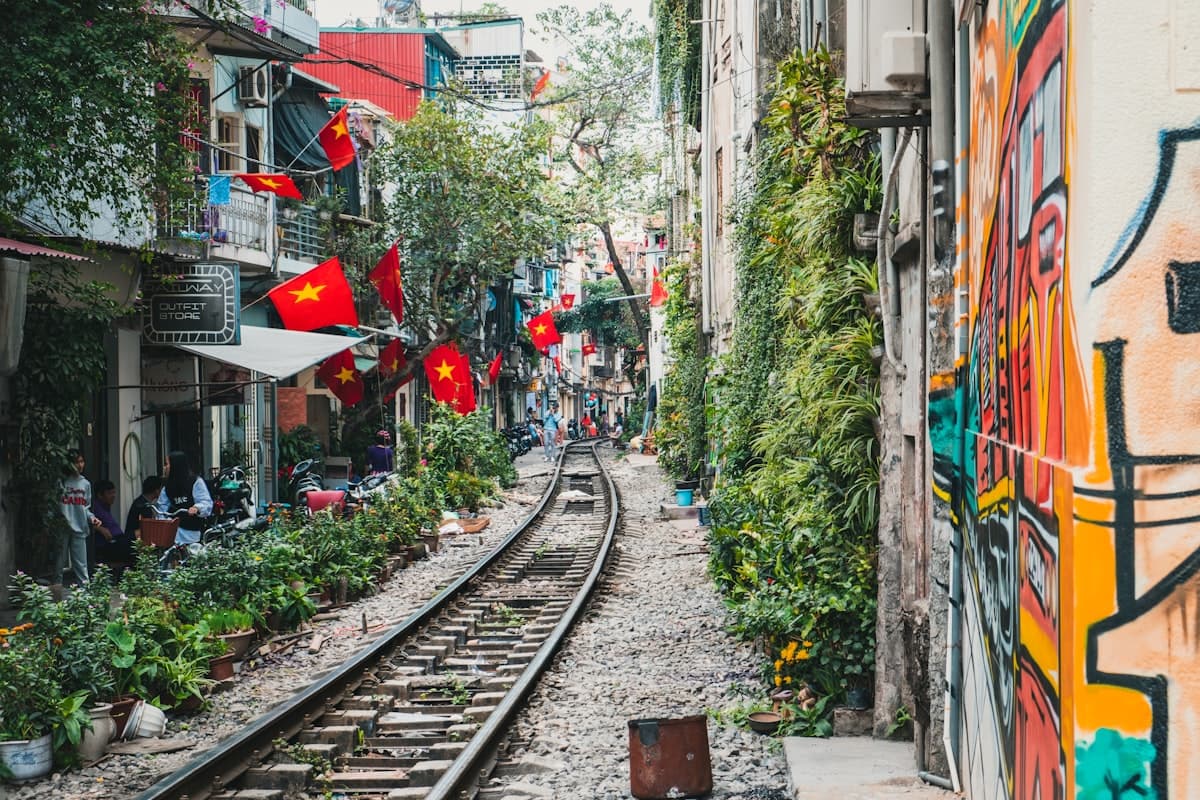
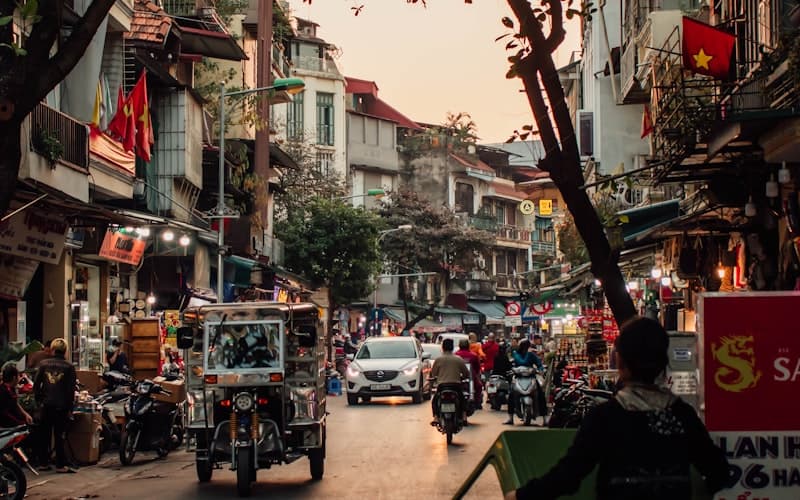
Drop your bags and wander the 36 streets of the Old Quarter — a maze of trade lanes from the 15th century, each named for its old craft (Silk Street, Tin Street, Bamboo Street).
The anchor is Hoan Kiem Lake (Hồ Hoàn Kiếm), the "Lake of the Returned Sword," with Turtle Tower on its islet and the red The Huc bridge leading to a temple on another. On weekend evenings, street musicians play along the promenade.
Keep dinner light: a bowl of phở bò (beef pho) on the street is 50,000–70,000 VND (~$2–3). Top spots are Phở Gia Truyền at 49 Bat Dan and Phở 10 Lý Quốc Sư. Don't go heavy on bún chả or chả cá on day one — your stomach is still adjusting. Get to bed by 22:00 to beat the jet lag before the long cruise day.
Day 2: transfer to Ha Long, night on the cruise
Ha Long is a UNESCO World Heritage site since 1994: close to 2,000 karst islands and islets in the Gulf of Tonkin, 165 km and 3.5 hours by bus from Hanoi. Most cruises pick up from your hotel around 8:00; you are aboard by noon and having lunch on deck by 13:00.
You'll ride a bus for 3 hours one way (and then another 3 hours back), plus they'll be sure to take you to a souvenir shop for an hour. … It makes sense to go with an overnight on the boat, to see the sunset and sunrise psiros, forum.awd.ru, 2025, translated by VietnamSpot
One-night cruise prices as of July 2026 (per person):
| Class | Price (USD) | Price (VND) | What's included |
|---|---|---|---|
| Budget 3★ | $108–150 | 2.7–3.75 million | Inside cabin, 3 meals, kayaking, cave |
| Mid-range 4★ | $180–280 | 4.5–7 million | Balcony cabin, deck jacuzzi, sundeck |
| Luxury 5★ | $300–550 | 7.5–13.7 million | Boutique cabin, private cave tour, sunset dinner |
The transfer from Hanoi usually costs an extra $20–40 unless it is bundled into a premium package. Book through halongbaytours.com, bestpricetravel.com or straight through your Hanoi hotel — the last is often 10–15% cheaper, since hotels use the same agencies anyway.
A standard cruise runs: kayaking in hidden lagoons, Sung Sot Cave (Hang Sửng Sốt), the "Cave of Surprises," dinner on deck, a spring-roll class and tai chi the next morning.
What to pack for the cruise: swimwear (you can jump off the boat), closed shoes (wet deck), a light layer (chilly at night even in March), SPF 50+, and cash in VND for the bar (cards are often not accepted). Leave the laptop at the hotel — onboard Wi-Fi is weak or paid.
Alternative: Lan Ha Bay — the same landscape via Haiphong port, but with fewer tourists and fewer cruise boats in your photos. It is a common r/VietnamTravel tip for anyone on a second trip to Vietnam.
Day 3: back to Hanoi and prep for the flight
Ha Long cruises reach the pier around 11:00 and drop you in Hanoi by 16:00. Before that you usually fit in one more cave (often Hang Luon by rowing boat), a cooking class and lunch aboard.
Back in Hanoi you have two options for the rest of the day:
- Head straight to Ninh Binh. Saves a day. A FUTA bus is 200,000 VND (~$8), 2.5 hours, arriving around 19:00.
- Sleep in Hanoi, take a morning train. Calmer, but you lose four hours the next morning.
Go with the first if you aren't wrecked after the cruise. Ninh Binh is rural, with plenty of guesthouses that put karst cliffs right outside your window.
Days 4–5: Ninh Binh or Sapa, your call

After Ha Long you have two versions of the north: Ninh Binh (2 hours from Hanoi, karst and rivers) or Sapa (6 hours by bus, mountain terraces and hill tribes). They are different beasts. Sapa needs at least two full days plus an overnight transfer. For a 14-day route that is too much — you end up rushing Hoi An and Hue. For 14 days, I pick Ninh Binh.
| Factor | Ninh Binh | Sapa |
|---|---|---|
| From Hanoi | 90 km / 2 h | 320 km / 6 h / overnight train 8 h |
| Highlight | Karst, boats, rice fields | Rice terraces, treks with locals |
| Days needed | 1 day + a night | min. 2 days + transfer |
| Best time | Mar–Apr (green), Sep (gold) | Sep–Oct (golden terraces) |
| Downside | Tour crowds at Tràng An after 11:00 | Fog Dec–Mar, 5–12°C at night |
| Fits 14 days? | yes | no, needs 16+ |
Day 4: down to Ninh Binh, Tràng An, Hang Múa viewpoint
Leave Hanoi at 7:30 by FUTA bus or SE train (ticket 90,000 VND, 2.5 hours). Base yourself in Tam Cốc or Trang An: rural homestays with a veranda over the rice fields, 600,000–900,000 VND a night (~$24–36). Good picks are Tam Coc Bungalow and Trang An Garden Homestay. In high season they sell out 3–4 weeks ahead, so book early.
At 9:00, the Tràng An boats. A UNESCO site with three routes of 2–3 hours; the ticket is 300,000 VND (~$11.50), the boat holds four. A Vietnamese woman rows, often with her feet — not a circus act but a local technique. Route 3 (the long one) runs through 12 caves, one a kilometre-long dark tunnel your torch can barely pierce.
After lunch, the Hang Múa viewpoint: 500 steps up, ticket 100,000 VND (~$4). The top gives the best view over Tam Cốc, especially at golden hour, 16:30–17:30 — the postcard shot of green karst cliffs in the river.
Dinner is home-style cơm gà (chicken and rice) with Bia Hơi draft beer at 10,000 VND (~$0.40) on the corner.
Day 5: Bich Dong, back to Hanoi, evening flight to Da Nang
In the morning look in on Bich Dong Pagoda (Bích Động) — three tiers built into the cliff, quiet and crowd-free, 5 km from Tam Cốc (a 30,000 VND scooter ride, ~$1.20). By 11:00 head back to Hanoi. From there you fly to Da Nang. Domestic flights:
| Airline | One-way, booked ahead | Time |
|---|---|---|
| VietJet (VJ) | $40–70 | 1 h 25 m |
| Vietnam Airlines (VN) | $50–80 | 1 h 25 m |
| Vietravel Airlines (VU) | $35–60 | 1 h 25 m |
Book 3–4 weeks out at vietjetair.com or vietnamairlines.com. Skyscanner and Trip.com are sometimes pricier — they add a service fee. If you fly VietJet, add checked baggage when you book: the basic "Eco" fare covers hand luggage only, and the same bag costs noticeably more at the counter. Check your fare's allowances and prices on vietjetair.com.
The evening HAN→DAD flight lands in Da Nang around 22:00. A Grab to your hotel is 80,000–150,000 VND (~$3–6).

Days 6–9: central Vietnam — Da Nang, Hoi An, Hue

The centre is the most contrasting stretch. Da Nang is a modern city with Dubai-style bridges. Hoi An, 30 km away, is a trading port frozen in the 17th century, all lanterns. Hue, another 100 km north, was the imperial capital of the Nguyen dynasty. Four days covers it all if you get the logistics right.
Day 6: getting to know Da Nang
Wake in Da Nang and have breakfast overlooking My Khe beach (Bãi biển Mỹ Khê) — 10 km of white sand where fishermen still work with basket boats. The 2024 Tripadvisor Travellers' Choice awards put it sixth among Asia's best, up from eighth the year before. A lounger is 50,000–80,000 VND (~$2–3) a day.
In the morning head to the Marble Mountains (Ngũ Hành Sơn), 8 km from the centre: five karst peaks riddled with caves and pagodas. Entry is 40,000 VND (~$1.60), the lift another 15,000 VND. The main peak, Thủy Sơn, gives you the whole city. Wear closed shoes — the stairs are steep and slick after rain.

Spend the afternoon by the pool, then in the evening the Dragon Bridge (Cầu Rồng). A 666-metre yellow dragon runs along the deck and, on Saturday and Sunday at 21:00, it breathes fire and water. Stand on the south bank of the Hàn river, around DHC Marina, for the best angle. After the show, dinner at the Sơn Trà Night Market or B.Fair at the Helio complex.
For lodging in Da Nang, pick My An / My Khe (along the beach) or Hai Chau (the centre). 3★ runs 700,000–1,100,000 VND (~$28–44), 4★ is 1.8–3 million VND (~$72–120).
Day 7: move to Hoi An, Old Town under the lanterns
After breakfast, check out and head to Hoi An — 30 km, 30 minutes, a taxi for 350,000–500,000 VND (~$14–20) or a Grab for 200,000 VND (~$8). Base yourself in Cẩm Phô (next to the Old Town) or at An Bàng beach (a quiet beach village 4 km out).
After check-in, lunch. Try the three dishes you only find in Hoi An:
- cao lầu — noodles with pork, sprouts and greens in a gravy. Locals insist the real thing uses water from the ancient Bá Lễ wells.
- mì quảng — yellow noodles with shrimp and peanuts in a turmeric broth.
- bánh bao bánh vạc (white rose) — rice dumplings shaped like a rose.
Best spots: Morning Glory (touristy but consistent), Bánh Mì Phượng (the banh mi Anthony Bourdain praised), and Bale Well (good for a group dinner).
By 17:00, into the Old Town (Phố cổ Hội An). The 120,000 VND ticket (~$5) gets you into 5 of 22 sights. I'd pick the Japanese Bridge, the Tan Ky house, the Phước Kiến assembly hall and the ceramic-trade museum.
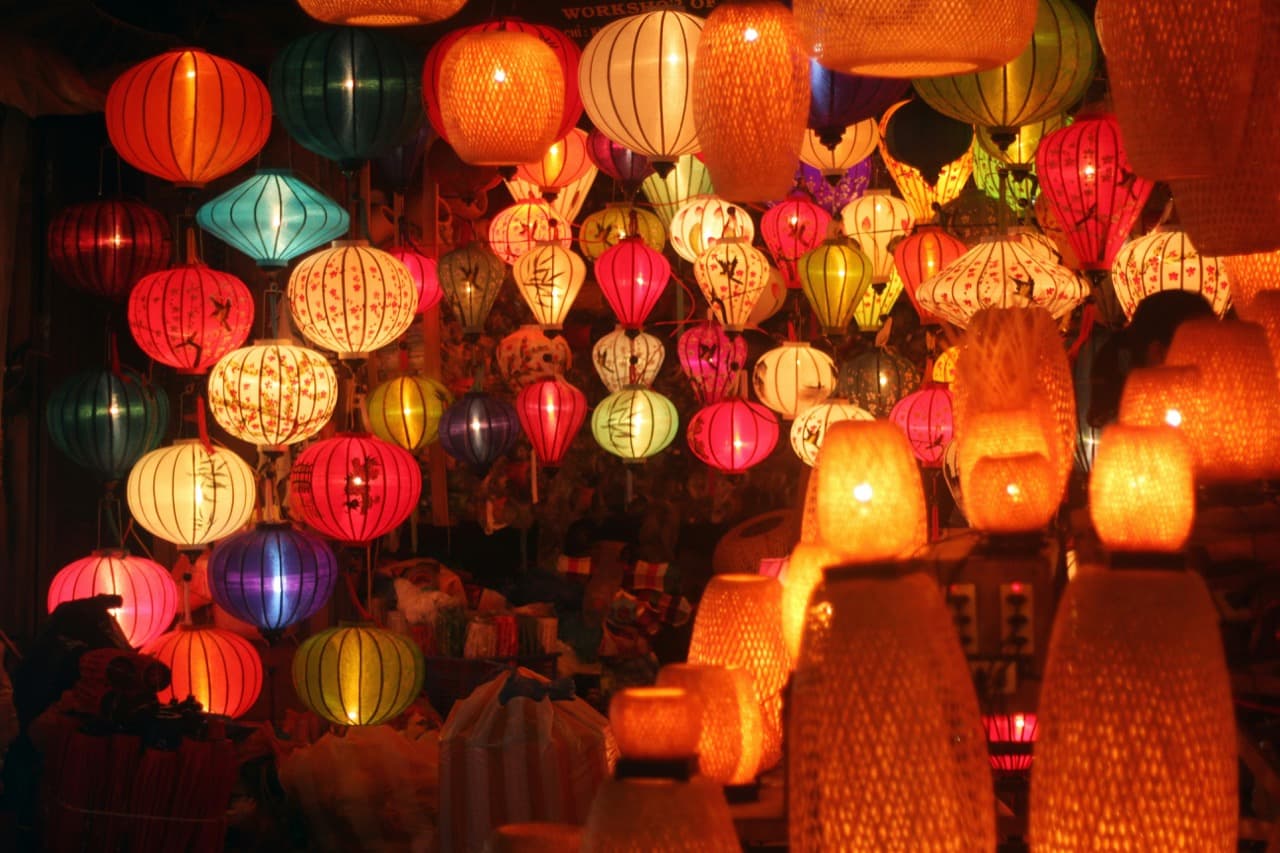
At dusk, thousands of lanterns light up along the Thu Bồn river — the classic Hoi An image. The 18:00–20:00 peak is crowded; by 21:00 the tour buses leave and it opens up. Once a lunar month, on the 14th day, the Old Town closes to traffic and switches off its electric lights, and the whole place becomes a glowing maze.
Day 8: An Bang beach or the My Son temples
Two forks in the morning. If you're culture-fatigued, hit An Bàng beach — 4 km from Hoi An by scooter (15 minutes) or taxi (60,000 VND, ~$2.40). A long white strip with sand cafés; a lounger with umbrella is 60,000–100,000 VND (~$2.40–4). Best spots: Soul Kitchen, La Plage.
If you want more history, go to My Son (Mỹ Sơn): the ruins of a 4th–13th-century Cham temple kingdom, about 40 km from Hoi An, a UNESCO site. Entry 150,000 VND (~$6), a tour with return transfer 350,000–500,000 VND (~$14–20). Leave by 7:00 — after 10:00 the brick heats to 45°C and the visit turns into a slog.
Or, for the hands-on crowd, Hoi An workshops: tailored clothes (a suit made in 24 hours for $80–150), a cooking class ($25–40), a lantern-making session ($15). All three are worth a slot if you're interested.
In the evening, back to the Old Town. On the second night it's nicer to find a café with live music (Q Bar or Tap House) or drop into Reaching Out Tea House, a teahouse staffed by deaf and mute workers.
Day 9: day trip to Hue over the Hai Van Pass
Hue was the imperial capital of the Nguyen dynasty (1802–1945). The headline sight is the Imperial City (Đại Nội), modelled on Beijing's Forbidden City: palaces, gates, mausoleums. It is 130 km from Hoi An, 2.5 hours by car over the famous Hai Van Pass (Đèo Hải Vân) — a switchback with views over the East Sea, the same pass from Top Gear.
Ways to get there:
| Option | Price | Time | Pros |
|---|---|---|---|
| Private car day tour | 1.5–2.5 million VND (~$60–100) | full day | Guide, photo stops, flexible route |
| Da Nang → Hue train | 100,000–250,000 VND (~$4–10) | 2.5 h | The prettiest stretch of the Reunification Express |
| Open bus (Sinh Tourist) | 200,000 VND (~$8) | 4 h | Cheap, but via the tunnel — no pass |
I'd take a private car as a one-way "Hoi An → Hue with stops" — you get the Hai Van Pass and Lăng Cô beach along the way.
The best months for good weather and conditions are March to September. At other times, the pass might be covered in cloud and very wetVietnam Coracle, 2024
A half-day programme in Hue:
- Đại Nội (Imperial City) — ticket 200,000 VND (~$8), 2 hours
- Lăng Tự Đức (Tu Duc's tomb) — ticket 150,000 VND (~$6), 45 minutes
- Lunch: bún bò Huế — the spicy beef noodle soup born here. Try Bún Bò Huế Bà Tuyết Đông Ba.
- The Perfume River (Sông Hương) — a short trip to Thien Mu Pagoda
By 17:00 you head back to Hoi An or Da Nang. An alternative is a night in Hue plus a morning train back — but reviews often say Hue feels pale after Hoi An, so an overnight isn't essential.
Fast Track — no queue at the border
5–10 minutes instead of an hour in the immigration queue
from$11per passenger
Days 10–14: the south — HCMC, Mekong and a beach finish

The south is a different Vietnam. Ho Chi Minh City (Saigon) moves faster than Hanoi, speaks the Saigon dialect, has better English and sweeter food. Heat runs year-round, 28–33°C, with rain only in short storms after 16:00 in the wet season. Five days is enough for the megacity, the Mekong Delta and two beach days as a contrast after the culture marathon.
Day 10: fly to HCMC, check in to District 1
Check out in Hoi An, drive to Da Nang airport (DAD) — about an hour with a bag stop — and fly DAD→SGN in 1 h 30 m. Book 3–4 weeks ahead on VietJet or Vietnam Airlines, $40–80 in advance.
You land at Tân Sơn Nhất (SGN), 7 km from the centre. A Grab to District 1 is 150,000–250,000 VND (~$6–10). Stay in D1 — it is central, close to the main sights, restaurants and nightlife. Sub-areas within D1:
- Bến Thành / Nguyễn Thiệp — touristy, lively, convenient
- Bui Vien (Phạm Ngũ Lão) — the backpacker street, bars till 4 a.m., not for families
- Notre Dame / Đồng Khởi — upscale, quiet, near the colonial architecture
3★ runs 800,000–1,300,000 VND (~$32–52), 4★ is 1.8–3 million VND (~$72–120). Plenty of options on Booking for July 2026.
For a first evening: walk Nguyễn Huệ Walking Street (the pedestrian strip opposite City Hall), take in the giant Bitexco Tower, and have dinner up high — say the Saigon Saigon Rooftop Bar at the Caravelle. A cocktail is 250,000–400,000 VND (~$10–16), and the 360° view is a must.
Day 11: historical Ho Chi Minh City
One of the route's important days. HCMC is not only a megacity but the centre of Vietnam War memory. A plan for the day:
- War Remnants Museum — one of the country's best-known museums. Ticket 40,000 VND (~$1.60). Brace yourself: it is a heavy place with an honest look at the war — photos, weapons, the legacy of Agent Orange. Allow 2 hours.
- Reunification Palace — the South Vietnamese president's residence, where Saigon fell on 30 April 1975. Ticket 80,000 VND (~$3.10); the 1970s interiors are untouched.
- Notre Dame Cathedral (under restoration) + the Central Post Office (designed by Alfred Foulhoux, though often wrongly credited to Eiffel). 15 minutes from the outside.
- Bến Thành Market — the main market, everything from silk to fruit. Haggle down to half the opening price.
- In the evening, Bui Vien street or dinner at Cơm Tấm Ba Ghiền (legendary Saigon broken rice with pork, ~$3 a plate).
If that isn't enough history, add a half-day tour of the Cu Chi tunnels (Củ Chi): 70 km out, 4 hours, from $8 in a big group or from $32 in a small one (tunnels guide) — the wartime tunnel network, reconstructed booby traps and a shooting range.
Day 12: Mekong day trip (My Tho – Ben Tre)

The Mekong Delta spans several provinces of river country in the south (fewer since the 2025 merger): floating markets, coconut plantations, narrow canals, lunches with local families. The simplest option is a one-day tour to My Tho and Ben Tre, 75 km from HCMC.
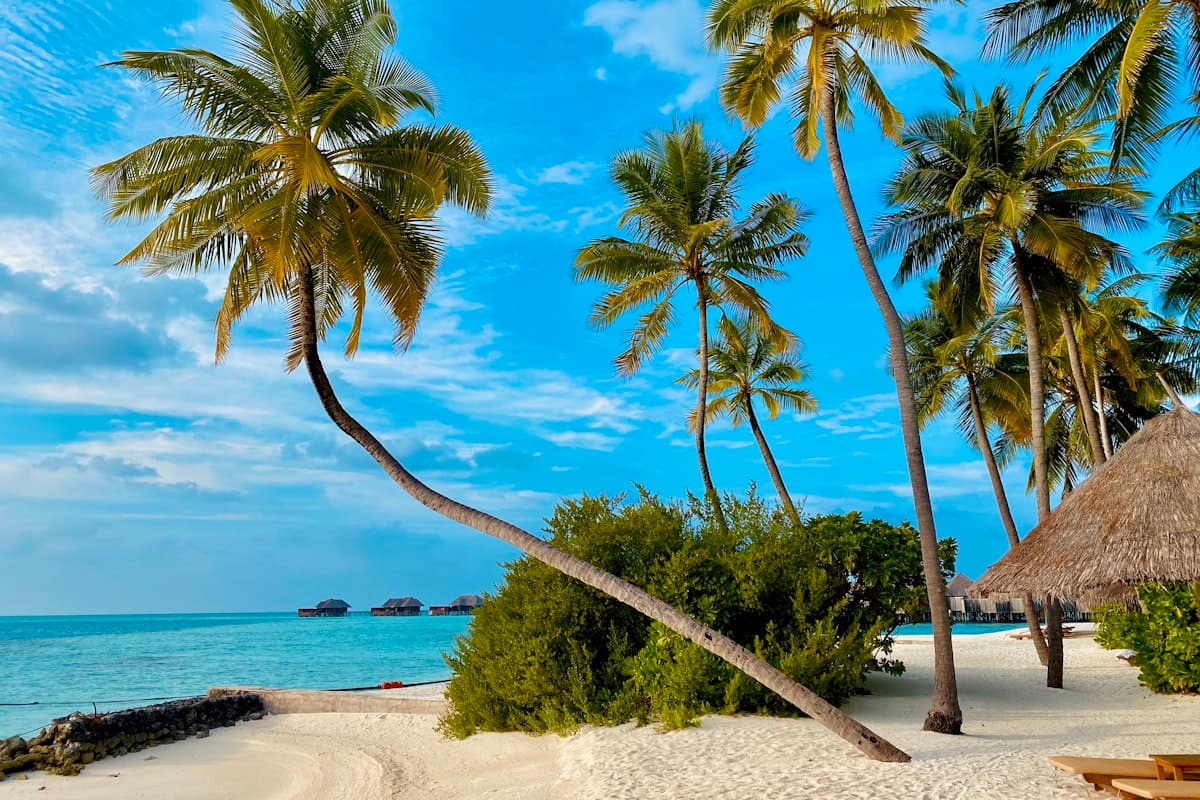
| Tour | Price | Length | What's included |
|---|---|---|---|
| Group (Sinh Tourist) | $25–35 | 8 hours | Transfer, boat, lunch, guide |
| Small group (8–12) | $40–55 | 8 hours | Same, fewer people |
| Private | $80–120 | 10 hours | Your own pace, flexible route |
Book on Viator, GetYourGuide or through your hotel. A standard programme: a motorboat down the Mekong to Thới Sơn island, a coconut farm with caramel tasting, a bee farm with honey tea, lunch with a local family featuring cá tai tượng (fried elephant-ear fish), then narrow canals on a small boat through the mangroves. Back by 17:00.
For the more ambitious: go to Can Tho and overnight to catch the Cai Rang floating market at 5 a.m. That is 170 km from HCMC, 4 hours by bus, and doesn't fit a strict 14-day plan — but with some reshuffling it's doable.
Days 13–14: the beach finish

The last two days are your reward for a packed programme. Choose between two resorts:
Option A: Phu Quoc (my pick)
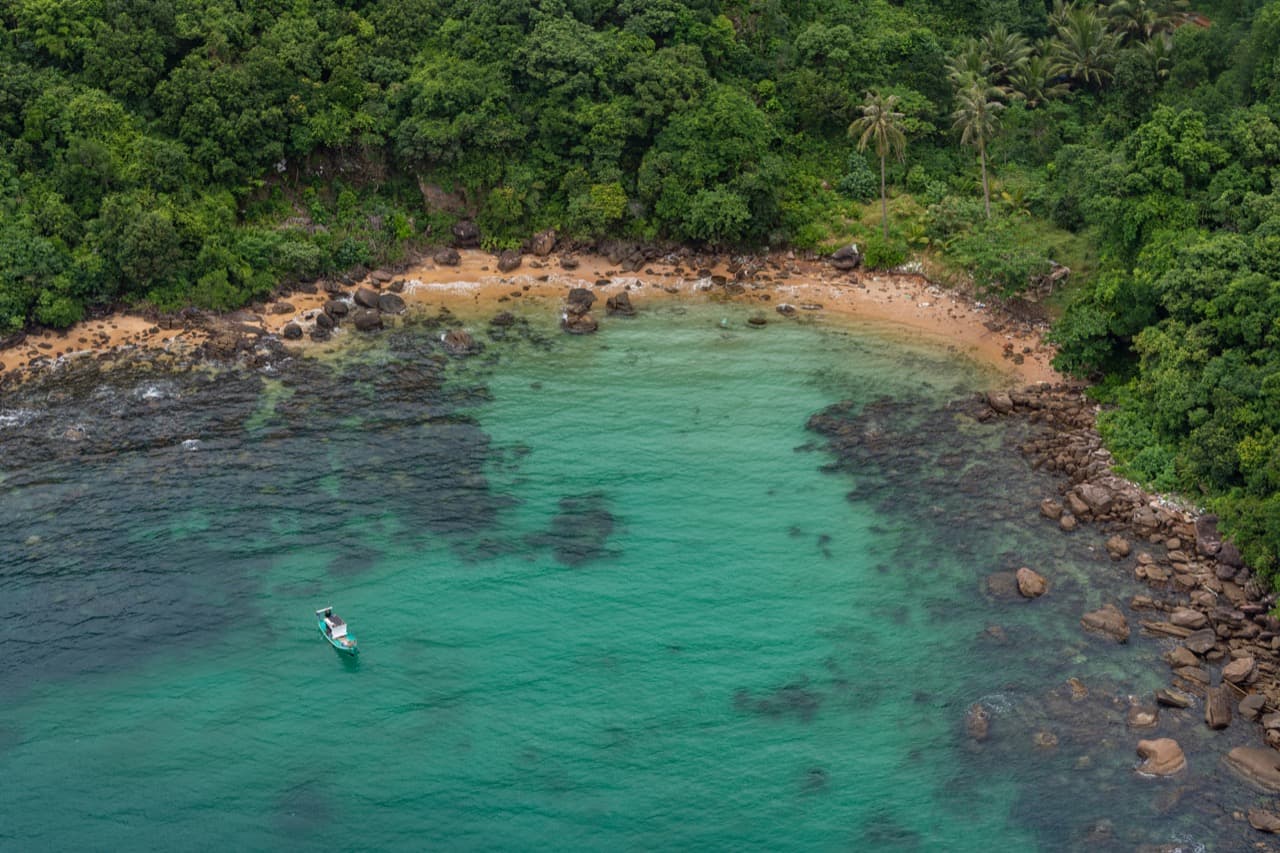
Fly HCMC → Phu Quoc (PQC) in 1 hour, $30–60 ahead. An island in the Gulf of Thailand: long white beaches, cheap rum, plenty of 5★ resorts. Stay on Long Beach (Bãi Trường) or further south near Bai Sao (Bãi Sao). Day 13 — beach, spa, dinner at the Đinh Cậu Night Market with seafood. Day 14 — a last breakfast, morning PQC→SGN flight, international flight from SGN after 14:00.
Option B: Mui Ne (cheaper)
Bus HCMC → Mui Ne, 5 hours, 250,000 VND (~$10), Sinh Tourist or FUTA. Kitesurfing (season November–March), red and white sand dunes at sunrise/sunset, cheaper lodging. The downside: you have to return to SGN by bus or train, adding roughly 6 hours of travel.
| Factor | Phu Quoc | Mui Ne |
|---|---|---|
| From SGN | 1 h flight | 5 h bus |
| 4★ per night | 1.8–3 million VND (~$72–120) | 1.2–2 million VND (~$48–80) |
| Beach | Long and white | Grey sand, windy |
| Activities | Spa, snorkelling, rum distillery | Kitesurf, dunes, fishing port |
| Better for | Relaxing before the flight home | Active types, kiters |
I go with Phu Quoc: after two weeks on the move you want a lounger under a palm, not surf. Its downside is the extra $60–120 for the flight; Mui Ne's is that your final day goes to the bus back to HCMC.
Budget: what the 14-day route costs in 2026
Cost depends on comfort level. For two people, mid-range comes to about $1,630 per person; backpacker around $600; comfort around $3,200 — all excluding your international airfare. Here is the per-person breakdown.
Mid-range (3★–4★, flights booked ahead)
| Item | USD |
|---|---|
| Lodging, 13 nights (3★–4★, $50) | $650 |
| Food (restaurants + street) | $300 |
| Domestic flights (2) | $120 |
| Phu Quoc: flights from HCMC and back (option A) | +$60–120 |
| City transport (Grab, taxis) | $80 |
| Ha Long cruise (1 night, mid) | $180 |
| Tours (Mekong, Hue, Ninh Binh) | $250 |
| SIM, misc. (museum entries) | $50 |
| Total without Phu Quoc | ~$1,630 |
Backpacker (~$43/day)
Hostels, street food, trains instead of planes, group tours — about $600 for 14 days. Realistic if you're used to Southeast Asia and comfort is secondary. You still have to spend at least $108 on the Ha Long cruise — that is the floor even for the cheapest option. Hostels, sleeper buses and other ways to cut costs are in our Vietnam backpacking guide.
Comfort (4★–5★)
Hotels at $120–200/night, business taxis, private tours, a premium Ha Long cruise — about $3,200 for 14 days. That figure already covers 5★ resorts in Hoi An and Phu Quoc.
International airfare
This is your biggest single line after lodging, and it swings hard by origin. Rough round-trip guide for 2026:
| From | Round-trip (per person) | Typical hubs |
|---|---|---|
| London | $650–1,000 | Doha, Dubai, Singapore |
| Western Europe | $600–950 | Istanbul, Doha, Bangkok |
| US East Coast | $900–1,500 | Seoul, Tokyo, Taipei |
| US West Coast | $800–1,300 | Seoul, Taipei, HCMC |
| Australia | $500–900 | Singapore, Bangkok, direct |
Book 2–3 months out and compare through a metasearch (Skyscanner, Google Flights).
Independent vs a package
For comparison: a typical all-inclusive two-week package to Nha Trang works out cheaper than this route, but keeps you on one beach. Doing it yourself costs more, but gives you several times the experience. It comes down to priorities — a quiet beach, or a country full of stories.
Transport: how to move between cities
The route has two long flights, Hanoi→Da Nang and Da Nang→HCMC, plus the HCMC↔Phu Quoc hops in option A. Each has its own options. Flying saves a day. Trains give you views and local colour. Night buses save money.
Flying (the usual choice)
Vietnam's domestic network is among the cheapest in Southeast Asia. The main carriers:
- Vietnam Airlines (VN) — the national carrier, no baggage games. $50–80 ahead.
- VietJet Air (VJ) — low-cost from $30, but the basic fare has no baggage. Book direct at vietjetair.com.
- Bamboo Airways (QH) — a middle option, sometimes the cheapest.
- Vietravel Airlines (VU) — a fourth carrier, new routes, competitive fares.
Compare on Skyscanner, then book direct — aggregators add a 5–10% fee. VietJet's "Eco" fare excludes checked baggage: add a bag when you book, as it costs more at the counter.
The Reunification Express
The Hanoi ↔ HCMC line runs 1,726 km, and the through train takes about 32–35 hours. Cabins sleep four, with air conditioning and bedding. Tickets at dsvn.vn.
For a north-to-south route, the train makes sense on one leg: Da Nang ↔ Hue (2.5 hours, 100,000–250,000 VND / ~$4–10). It is the most scenic stretch of the whole line — the switchbacks over the Hai Van Pass above the sea.
On the long legs the train doesn't pay off: Hanoi→Da Nang is 16 hours versus 1.5 by air. For a $40 difference you lose a day and a half.
Open buses
Tourist buses run between all the cities. The main operators are Sinh Tourist and FUTA Bus Lines. Fares are $15–25 a leg. Some are sleeper buses with three tiers of reclining berths. They run overnight, so you save on a hotel.
The catch: drivers push it, and the roads aren't all smooth. If you have a bad back, fly instead.
Around town
- Grab — the essential app. Bikes (cheaper) and cars, takes Visa/Mastercard, has GrabFood, works in English.
- Metered taxis — only Mai Linh and Vinasun; others may rig the meter.
- Scooter rental — 120,000–200,000 VND/day (~$5–8). Only if you hold a valid motorcycle licence: an International Driving Permit under the 1968 Convention with the A1 category (up to 125 cc, A above that), carried with your national licence. Without it you risk a 2–4 million VND fine on a bike up to 125 cc and no insurance cover.
When to go: weather by region
The ideal window is mid-February to mid-April. The whole country is dry and warm: north 18–28°C, centre 22–30°C, south 28–34°C. The catch is high season — lodging and the Ha Long cruise run 25–35% above base.
| Month | North (Hanoi) | Centre (Da Nang) | South (HCMC) | Route feasible? |
|---|---|---|---|---|
| January | 13–18°C, cool | 20–25°C | 27–32°C, ideal | Yes, dress warm |
| February | 15–20°C | 22–27°C | 28–33°C | Good compromise |
| March | 18–25°C, great | 24–28°C | 29–34°C | Best month |
| April | 22–28°C | 26–30°C | 30–35°C, hot | Excellent |
| May | 28–33°C, humid | Storms | Rainy season | Tricky |
| June | 29–34°C, hot | Dry | Afternoon rain | Not ideal |
| July | 29–34°C, humid | Dry, 35°C | Afternoon rain | Not for the route |
| August | 28–33°C | Dry | Afternoon rain | So-so |
| September | 25–30°C | Typhoons begin | Rain | Tricky |
| October | 20–27°C, cool | Typhoons, wall of rain | Dry | Risky in the centre |
| November | 18–24°C, dry | Rain until mid-month | 27–32°C, ideal | Yes, if you skip Hue |
| December | 15–20°C, cold | 20–25°C, OK | 27–32°C, ideal | Good compromise |
Visa, documents, what to pack
Your visa situation depends on your passport. Since 15 August 2023, citizens of the UK, France, Germany, Italy, Spain and most Nordic countries get a visa exemption of up to 45 days (up from 15); the current extension, Resolution 44/NQ-CP, runs until 14 March 2028. Since 15 August 2025, tourists from 12 more European countries, including the Netherlands, Poland, Belgium and Switzerland, get the same 45 days under Resolution 229/NQ-CP. Most others — including US, Australian and Canadian travellers — apply for the $25 e-visa, valid up to 90 days. Full rules are in our visa guide.
Entry basics
| Requirement | Detail |
|---|---|
| Visa-free stay | up to 45 days for exempt nationalities |
| Passport | valid 6+ months from entry |
| Blank pages | a couple of blank pages for stamps is wise |
| Return ticket | the airline may ask for it at check-in |
| Arrival form | prearrival.immigration.gov.vn for Noi Bai, Da Nang, Cam Ranh and Tan Son Nhat — gets you the priority lane, not an entry condition |
A 14-day route fits comfortably inside any of these allowances.
If you plan to stay over 45 days, or need multiple entries (a Cambodia hop and back, say), get an e-visa:
- Cost: $25 single entry, $50 multiple entry
- Validity: up to 90 days
- Site: evisa.gov.vn
- Processing: usually up to 3 working days
What to pack (north vs south)
The classic mistake is packing one set of clothes. In the north from December to February it's genuinely cold at night. In the south it's hot year-round.
North (Hanoi, Ha Long, Ninh Binh) in December–February:
- A warm layer or light down jacket (Hanoi hits 12°C at night)
- Closed shoes for the cruise deck
- A rain jacket or umbrella (drizzle in Ninh Binh)
Centre (Da Nang, Hoi An, Hue) — changeable:
- A light windbreaker
- Shorts and T-shirts for daytime
- Flip-flops plus trainers (My Son is dust and brick)
South (HCMC, Mekong, Mui Ne, Phu Quoc):
- Light clothes only (cotton, linen)
- Covered shoulders for temples and the War Remnants Museum
- SPF 50+ (the sun is stronger than it looks)
- A dry bag for the Mekong boats
Universal kit:
- Sockets are types A and C: two-pin European and US flat plugs fit, grounded plugs need an adapter
- A 10,000 mAh power bank for long transfers
- Mosquito spray — the Mekong and Ninh Binh
- Small USD notes ($1, $5, $20) for tips and exchange
- A basic first-aid kit (antacid, loperamide, activated charcoal for the first days)
Alternatives: if 14 days is too much or too little
Not everyone can spare two weeks. Not everyone finds two weeks enough. Options for different timelines:
| Length | What to include | When it fits |
|---|---|---|
| 7 days (south) | HCMC + Mekong + Mui Ne/Phu Quoc | If you start from HCMC |
| 7 days (north) | Hanoi + Ha Long + Sapa or Ninh Binh | If it's mountains and culture, no heat |
| 10 days | North + centre (no south), or centre + south | If 14 didn't work but 7 is too few |
| 14 days | The full classic route (this article) | The baseline, recommended |
| 21 days | + Sapa, + Phong Nha (caves), + Da Lat | If you have three weeks |
| 30 days | Everything + Mui Ne workshops + Cát Bà | For digital nomads |
If you only have 7 days
Pick the south (HCMC–Mekong–Mui Ne) or the north (Hanoi–Ha Long–Ninh Binh). The south is simpler logistically: one arrival airport, everything within 250 km, warm year-round. The north is deeper culturally but needs warm clothes in winter and is weaker on beaches.
If you have 21 days or more
Add to the 14-day classic:
- Sapa — 2 days, an overnight train from Hanoi, rice terraces, treks with locals
- Phong Nha — the world's largest caves (Hang Sơn Đoòng), 3–4 hours by bus or train from Hue
- Da Lat — a mountain resort with coffee plantations, 7 hours from HCMC
- Cát Bà — an island near Ha Long for active trips
- Ha Giang Loop — a northern mountain motorbike route for experienced riders
7 common planning mistakes
Know them in advance and you save money and stress.
1. Going too fast
You want to cram in everything: Hanoi, Ha Long, Sapa, Hoi An, Hue, HCMC, Mekong, Phu Quoc, Da Lat. One night per city isn't a trip, it's a transfer marathon. The fix: 4–6 key stops of 2–3 days each.
2. Hue in November
From October to mid-December the centre floods under typhoons. In Hue, 21 of 30 November days are rainy; in Hoi An the Old Town sometimes sits under knee-deep water. If your dates land in November, trim the centre or shift the whole trip to February–April.
3. Lodging on the main strips
In Hanoi, don't stay on Tạ Hiện (beer street) — karaoke runs until 2 a.m. In HCMC, avoid Bui Vien — DJs go till 4 a.m. Pick a street 1–2 blocks from the noise: the sound drops 20–30 dB.
4. A VietJet bag with no baggage paid
The basic VietJet "Eco" fare covers hand luggage only. A checked bag is cheapest to add at booking: at the check-in counter the same bag costs noticeably more. Check your fare's allowance before you fly.
5. Changing dollars at the airport
Rates at Nội Bài and Tân Sơn Nhất are 5–10% worse than in town. Change $50–100 for the first day and do the rest at a bank or a licensed counter in the Old Quarter (Hanoi) or District 1 (HCMC). Since 9 February 2026 changing money outside licensed points is punishable under Decree 340/2025/NĐ-CP. A jewellery shop may exchange currency only with an exchange-agent certificate from the State Bank, and a tourist has no way to check it. A bank is the safer bet.
6. A big SUV on the islands
On Cát Bà and Phú Quốc, some roads are just 2.5 metres wide, and a scooter or small SUV is better for the dirt tracks. A big rental SUV won't make it.
7. Sapa + Ha Long + Mekong in 14 days
Sapa adds 3 days (an overnight train plus 2 trekking days). To include it, you need at least 16, ideally 17. On 14 days, choose: Sapa without the Mekong, or the Mekong without Sapa.
FAQ
Yes, and it is often easier if your international flight lands in Ho Chi Minh City rather than Hanoi. Flip the order: days 1–4 south (HCMC + Mekong + Mui Ne), days 5–8 centre (Da Nang + Hoi An + Hue), days 9–14 north (Hanoi + Ha Long + Ninh Binh). The only quirk is chronology — the north is historically older, so going from craft-town Hoi An to colonial Hanoi feels like moving back in time.
- Mid-range for twoabout $2,800–4,200excluding international flights
- Comfort$5,000–7,000
- Backpacker$1,200–1,800
That covers hotels, food, domestic flights, tours and the Ha Long cruise. Add your international airfare on top, which varies a lot by where you fly from
It depends on your passport. Citizens of the UK, Norway, Switzerland, Japan, South Korea and 18 EU countries (including Germany, France, Italy, Spain, the Netherlands and Poland) get 45 days visa-free. Most others, including US, Australian and Canadian travellers, apply for the e-visa at evisa.gov.vn: up to 90 days, $25 single entry or $50 multiple entry. Full rules — visa guide. Everyone needs a passport valid 6+ months. If you land at Noi Bai, Da Nang, Cam Ranh or Tan Son Nhat, you can fill in the arrival form at prearrival.immigration.gov.vn beforehand and use the priority lane.
With children over 7, the whole route works — kids love the Ha Long cruise, the Hoi An lanterns and the Mekong boats. With ages 4–7, simplify: drop Sapa and Hue and add beach days in Phu Quoc or Mui Ne. Under 4, base yourself at one resort instead; the frequent transfers are rough on a small child.
The sweet spot is mid-February to mid-April, when it is dry along the whole route: a warm north (~20°C), a rain-free centre and a south not yet at peak heat. December is a good alternative (warm south, cool north). Avoid May–September (rainy season in the south, heat and downpours in the north; the centre is actually dry in July–August, but the full route is awkward) and October–November (typhoons in the centre).
You can, but you lose two full days: Hanoi→Da Nang is 16 hours versus 1.5 by air, and Da Nang→HCMC is 17 hours versus 1.5. On a 14-day trip that means cutting the Mekong or Hoi An. Domestic flights are cheap ($40–80 ahead), so the train romance rarely pays off — except the short Da Nang→Hue leg (2.5 hours over the Hai Van Pass), which beats any bus.
Yes. On the mid-2026 Numbeo crime index, Vietnam scores lower than Indonesia or Cambodia and close to Thailand. The real hazard is motorbike traffic in Hanoi and HCMC. The main petty-crime risk is pickpockets and phone-snatching in crowds, so keep your bag in front of you in busy areas.
- In small USD notes ($1, $5, $20) for arrival daybring $200–300taxis, dinner, first exchange
- Cities have plenty of ATMs, capped per withdrawal2–3 million VND~$80–120usually, with a 50,000–80,000 VND fee
- Visa and Mastercard work in hotels, restaurants and larger shopsaround 30% of placeseverywhere else it is cash only
Keep a mix: cash for markets and cafés, card for hotels
The takeaway
A 14-day route is the compromise between "see everything" and "actually rest." In two weeks, north to south, you cover five UNESCO sites (Ha Long, Trang An, Hoi An, Hue, My Son), three climate zones and three ways to travel — plane, train and boat. It is the most all-round plan for a first trip to Vietnam.
Going independent? Book domestic flights 3–4 weeks out, the Ha Long cruise and the Mekong tour 2 weeks out, and Hoi An hotels a month ahead in high season. Prefer to hand it off? A local operator can turn this same itinerary into a fixed package with transfers and hotels.
If your passport qualifies, the 45-day visa exemption runs to March 2028, and a 14-day route fits inside it with room to spare.
- Guide
Things to Do in Mui Ne 2026: 12 Sights, Prices, Map
Things to do in Mui Ne in 2026: Fairy Stream, the dunes, the fishing village, Cham towers and Ke Ga lighthouse. Entry fees in USD, a map and one-day routes.Things to Do in Mui Ne 2026: 12 Sights, Prices, Map - Guide
Cu Chi Tunnels Private Guide 2026 — Tour from Saigon
A private Cu Chi Tunnels tour from Saigon with local expert guide Denny: itinerary, inclusions, per-person pricing from $40, easy booking via VietnamSpot.Cu Chi Tunnels Private Guide 2026 — Tour from Saigon - Guide
Pu Luong Nature Reserve 2026: Rice Terraces & Homestays
Pu Luong Nature Reserve guide: getting there from Hanoi, two rice harvests a year, stilt-house homestays, treks, prices in USD and a map of 9 spots.Pu Luong Nature Reserve 2026: Rice Terraces & Homestays