Quy Nhon tours in 2026: islands, Phu Yen and what each one really costs
The same island day costs 850,000 VND at an operator's office on Trần Phú street and about $58 on Klook. Identical boat, identical lunch. This guide prices all five tour formats in dong and dollars, says which operator sells what, and flags the two things the internet still gets wrong about the region.
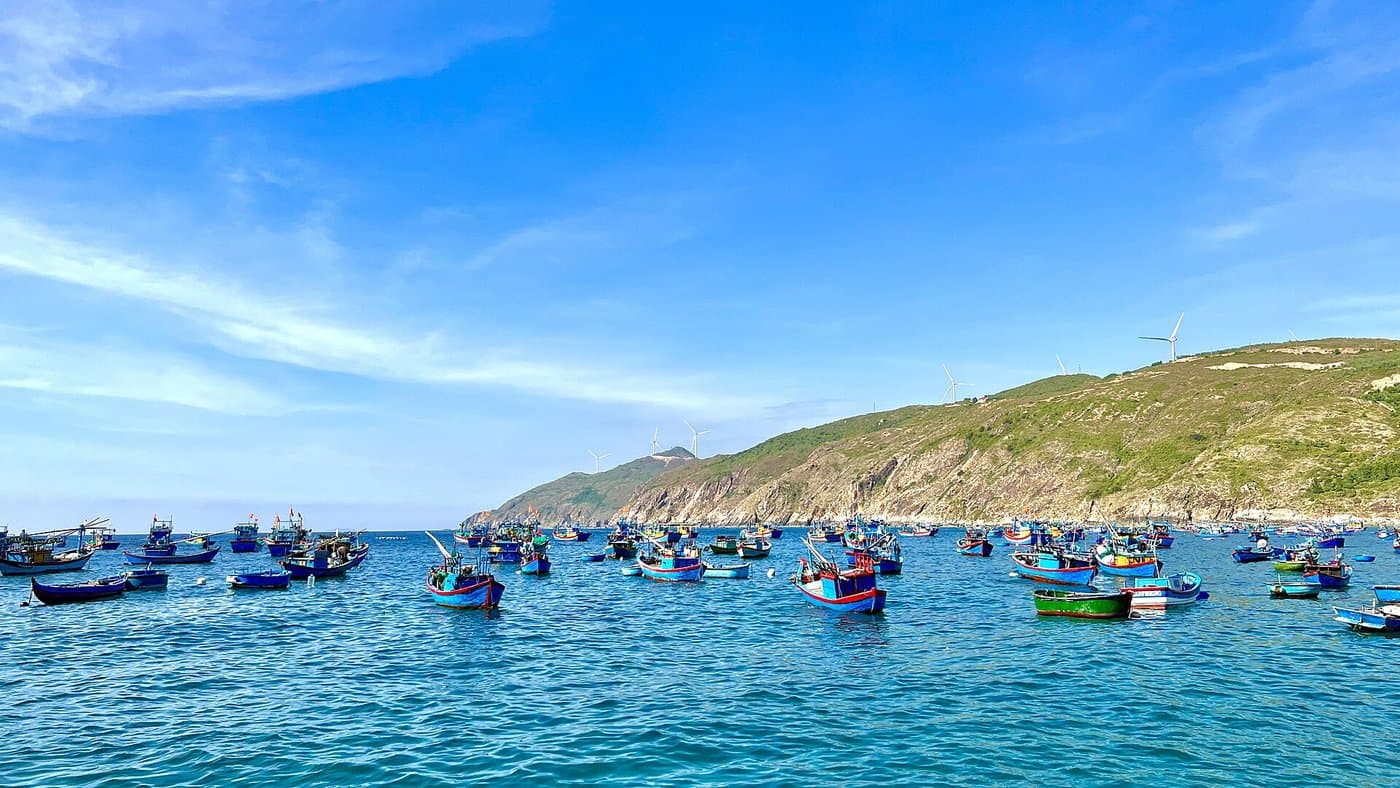
The same island day out of Quy Nhon costs 850,000 VND booked at an operator's office on Trần Phú street and about $58 booked on Klook the night before. Identical boat, identical lunch, identical guide. The extra roughly twenty dollars buys a card payment, an English voucher and someone to email when it rains.
That decision, which channel rather than which tour, is the one most visitors get wrong here, and nobody writes about it. Quy Nhon has five kinds of tour worth your money: a three-island sea day, a long run south into Phu Yen, the Cham towers, the far island of Cù Lao Xanh, and a couple of green half-days inland. This guide prices all of them in dong and dollars, says which operator sells what, and flags the two things the internet still gets wrong about the region.
Prices and schedules verified 08/2026 against Vietnamese operator listings and official fee resolutions. Ticket prices on the Phương Mai peninsula were actively disputed this year — treat every figure, ours included, as approximate and confirm at the gate.
The tours that exist, and the map
Five formats, and that is genuinely the whole menu: the three-island sea day (Kỳ Co, Eo Gió, Hòn Khô), a day trip south into Phu Yen, a Cham towers run, the overnight island of Cù Lao Xanh, and short green trips inland to the Hầm Hô river gorge or the Hội Vân hot springs. Prices land between 350,000 VND (~$13.50) for a half day and 1,800,000 VND (~$69) for two days on the island with a bed and three meals.
None of which changes anything about the tours. Operators still sell the "Phu Yen day trip," road signs still say Bình Định, and searching the old names still finds the right places. Both words mean a geographic region in this guide, not an address on a document. Know it so you are not thrown when your ticket, your map and your guide all disagree.
- Ky Co (Kỳ Co): Main cove, 25 km north — Gate 120,000 VND (~$4.60) + shuttle 110,000 VND
- Eo Gio (Eo Gió): Clifftop walkway above the open sea — Entry 22,000–40,000 VND
- Hon Kho (Hòn Khô): Best snorkelling within reach — Landing 60,000 VND + boat 150,000 VND return
- Nhon Hai village (Nhơn Hải): Departure point for Hon Kho — 16 km from the centre, lunch stop on the tour
- Cu Lao Xanh (Cù Lao Xanh): Far island, 24 km offshore — Ferry 70,000 VND one way, canoe 300,000 VND return
- Thap Doi (Tháp Đôi): Two Cham towers downtown — Entry 30,000 VND (~$1.15), 07:00–18:00
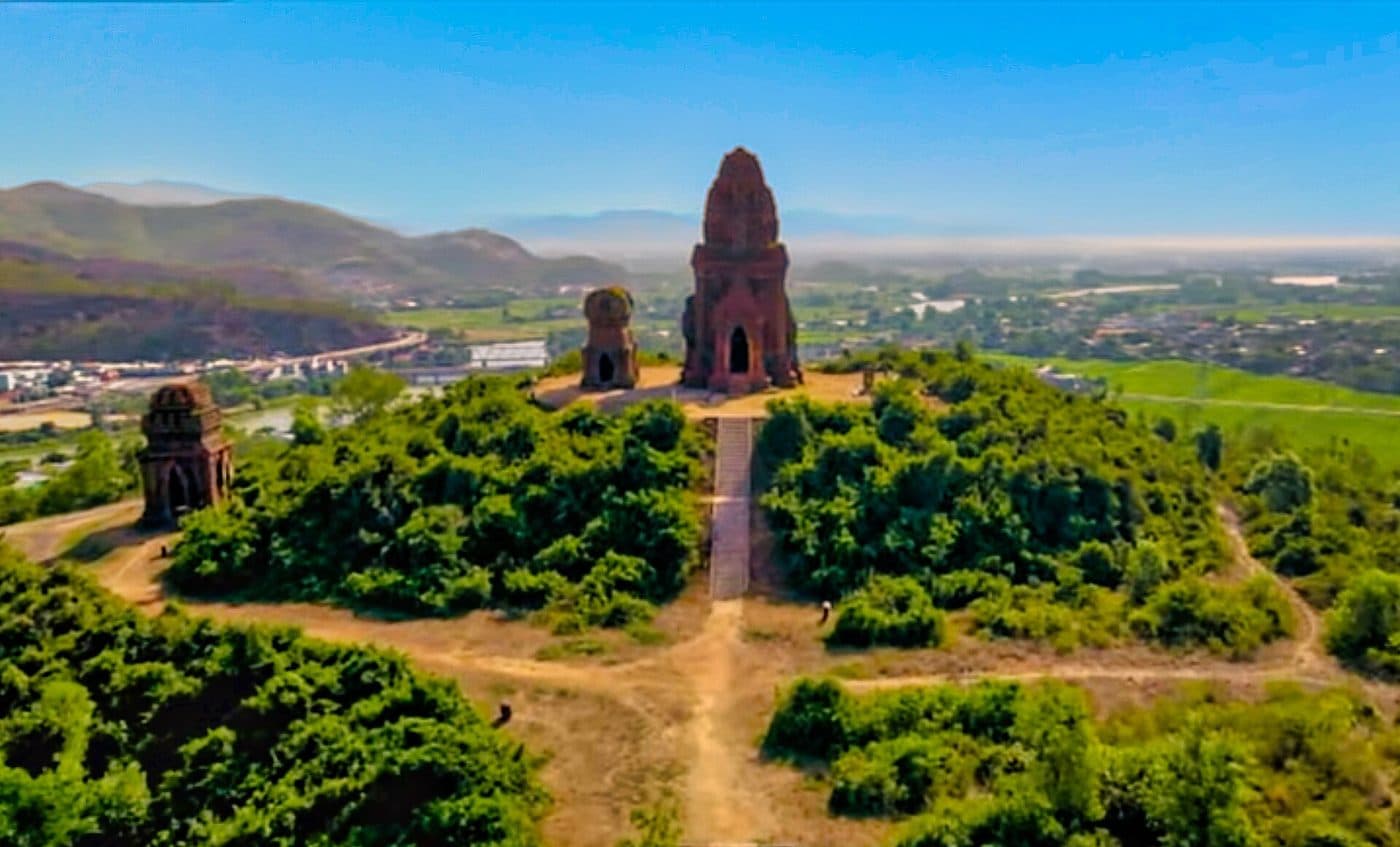
- Banh It Towers (Tháp Bánh Ít): Four 11th-century towers on a hill, 20 km — Entry 20,000 VND (~$0.75)
- Duong Long Towers (Tháp Dương Long): Tallest surviving Cham towers, 40 km — Entry 20,000 VND (~$0.75)
- Cha Ban citadel (Thành Chà Bàn): Champa capital from the 11th century, 27 km — Free entry
- Ganh Da Dia (Gành Đá Đĩa): Basalt column reef, 70 km south — Entry 40,000 VND (~$1.55)
- Mui Dien lighthouse (Hải đăng Mũi Điện): French lighthouse of 1890, 110 km — Zone ticket 20,000–30,000 VND
- Bai Mon (Bãi Môn): White sand beach below the lighthouse — Sheltered bay, calm swimming
- O Loan lagoon (Đầm Ô Loan): Lunch stop on the Phu Yen run — Blood cockles and blue-fin tuna
- Vung Ro bay (Vũng Rô): Wartime supply bay — Underwater wreck museum
- Mang Lang church (Nhà thờ Mằng Lăng): Neo-Gothic church of 1892 — Free entry, 30 minutes
- Ham Ho (Hầm Hô): River gorge eco zone, 55 km — Entry 20,000 VND, boat 100,000 VND
- Trung Luong (Trung Lương): Glamping zone CLOSED after storm damage — Check before you go
Five tour types: price, length, who they suit
| Tour | Group price | ~USD | Length | Who it suits |
|---|---|---|---|---|
| Three-island sea day | 850,000–975,000 VND | ~$33–37 | 9 h | First-timers, almost everyone |
| Phu Yen day trip | 690,000–855,000 VND | ~$26–33 | 10–12 h | Landscape and history people |
| Cham towers | 350,000–650,000 VND | ~$13–25 | 4–8 h | A change of register after the beach |
| Cù Lao Xanh | 750,000–1,800,000 VND | ~$29–69 | 1–2 days | Backpackers, people chasing quiet |
| Hầm Hô / Hội Vân | 350,000–700,000 VND | ~$13–27 | 4–8 h | Families, non-swimmers |
Everything starts from central Quy Nhon and hotel pickup is normally included. The Phu Yen run leaves earliest, around 07:30, because the driving eats the day.
How this compares to Nha Trang
Three honest differences, and one myth to bury.
- Groups are smaller. Twelve to twenty-five people on a sea day here against forty to sixty in Nha Trang. On the sand that is the difference between a beach and a queue.
- Cheaper is no longer the argument. In 2026 a Quy Nhon island day costs 850,000–975,000 VND, which is roughly what the equivalent costs in Nha Trang. What you save is not money. It is the twenty minutes of your life you would have spent waiting for the last person to get off the boat.
- English is thinner. Guides work in Vietnamese and English, and the English ranges from fluent to a memorised safety briefing. Boatmen usually have none at all. Download offline Vietnamese in Google Translate before you go out on the peninsula.
The sea day: Ky Co, Eo Gio, Hon Kho
This is the product Quy Nhon actually sells. One day, three stops, a speedboat, seafood lunch at a fishing village, an hour of snorkelling over live coral. Local operators charge 850,000–975,000 VND (~$33–37) per person. Klook and GetYourGuide list the same day at around $58. Book by the afternoon before, either online or through your hotel desk.
The route, hour by hour
| Time | Stop | What happens |
|---|---|---|
| 07:30 | Hotel | Minivan pickup |
| 08:30 | Kỳ Co | Swimming, free time in the cove |
| 10:00 | Hòn Khô | Snorkelling over the reef |
| 11:30 | Nhơn Hải | Seafood lunch in the fishing village |
| 13:30 | Eo Gió | Clifftop walkway |
| 14:30 | Ngọc Hòa sanctuary | Twin Buddha statues, photo stop |
| 15:30 | Phương Mai dunes | Sand sliding, optional |
| 16:30 | Return | Hotel by about 17:00 |
Operators shuffle the order — some open with Hòn Khô, some with Kỳ Co. The dunes and the Ngọc Hòa sanctuary are filler that almost every programme includes; skip them mentally when you compare quotes, because they cost the operator nothing.
What is and is not included
| Item | Included |
|---|---|
| Hotel transfer | |
| Speedboat / canoe | |
| Kỳ Co gate ticket and shuttle | |
| Seafood lunch | (4–6 dishes) |
| Water, 1.5 l | |
| Guide (EN/VN) | |
| Life jacket | |
| Mask and snorkel | |
| 10% VAT | (check whether the quote includes it) |
| Locker | (10,000 VND) |
| Diving | (250,000–400,000 VND, on-site rates) |
| SUP at Kỳ Co | (100,000 VND/hour) |
| Towel | (bring your own) |
Child pricing goes by height, not age: under 1.2 m the gate ticket and the shuttle are free, above it you pay adult. Local operators need four people to run; Klook and GetYourGuide guarantee departure for one.
Ky Co, and the myth about getting there
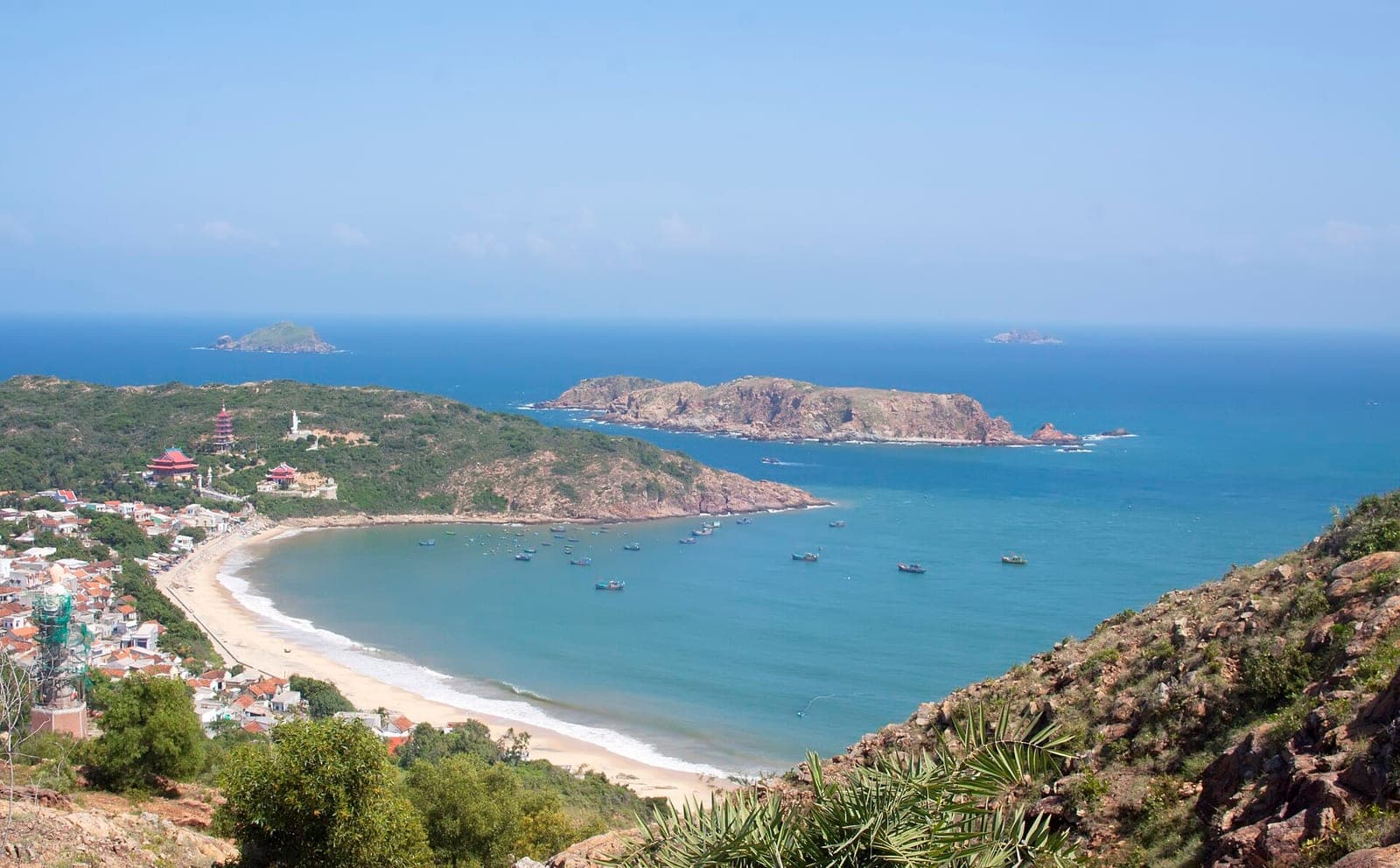
A closed cove 25 km north of the city, cliffs on two sides, open sea on the third, fifty metres of white sand in between. Visibility is five to seven metres. Vietnamese bloggers nicknamed it the Maldives of Vietnam in 2016 and it stuck — the colour comes from a pale sandy bottom in sheltered water, not from reef.
This matters for one practical reason: between October and March, when canoes stay in port, tours here are not cancelled. The minivans go anyway. You get the cove, the cliffs and the lunch, and you lose the snorkelling. If a company tells you the whole day is off because of wind, they are choosing not to run it, not being prevented.
The tickets come in two lines and together they are not cheap:
| Item | Price | ~USD |
|---|---|---|
| Gate ticket | 120,000 VND | ~$4.60 |
| Shuttle, gate → cove | 110,000 VND | ~$4.20 |
| Shuttle from the M19 slope (short version) | 50,000 VND | ~$1.90 |
| Children under 1.2 m | free | — |
On a group tour both lines are already in your price. Going independently, budget 230,000 VND (~$8.80) per person just to walk in and get down to the water, before anything you eat or rent.
The one genuine downside: for thirty or forty minutes around lunch every group tour is on the sand at once. Come with a private tour, or come independently at opening, and the cove is a different place.
Hon Kho: the snorkelling stop
A bare islet a kilometre and a half off the fishing village of Nhơn Hải, which is 16 km up the coast road. There is nothing on the island — no café, no toilet, no shade. What there is, on the northern side, is the best living coral reef within reach of the city, and five to eight metres of visibility in the dry season.
What you see down there: brain, branching and table corals; butterflyfish, parrotfish, the usual reef crowd; sea urchins and starfish on the bottom, which is a reason to keep your fins off the substrate rather than a hazard. No fins needed near shore, the water is shallow. In the rainy season the visibility collapses and the snorkelling stop gets dropped.
Independently it is 60,000 VND (~$2.30) to land plus 150,000 VND (~$5.75) for the scheduled boat return, or 250,000–400,000 VND for a private boat of up to six from the pier at Nhơn Hải with a pickup time agreed in advance. On a tour both are in the price.
Eo Gio: the cliff walk
"Windy strait" is a literal translation and an accurate one. A rock headland north of Kỳ Co with a kilometre of walkway along the top, thirty to eighty metres above the water. Swimming is not an option — there is a rip along the cliffs. Views and photographs are the point, and the tour gives it an hour.
The entry fee has its own small saga worth knowing. In June 2026 the operator tried to lift the ticket from 22,000 to 50,000 VND. Gia Lai authorities rejected a 127% rise and told them to hold the old price until the promised facilities actually existed. After public complaints the operator agreed to go back to 22,000, yet at the end of June the booth was still charging 40,000 VND (~$1.55). Vietnamese media covered the whole thing. Read it as a signal: fees on this peninsula move mid-season, and any number you see printed anywhere is a starting position.
Bring a windbreaker even in heat. You will have just been swimming, and the headland does not stop blowing.
Packing list: sea day
- ☐ Swimwear and a change of clothes
- ☐ A proper towel
- ☐ Reef-safe SPF 50+, no oxybenzone
- ☐ Hat and sunglasses
- ☐ Water shoes, for the rocky bits on Hòn Khô
- ☐ 250,000 VND cash for extras — locker, SUP, drinks
- ☐ Dry bag for phone and documents
- ☐ Light windbreaker, for Eo Gió
- ☐ Power bank
- ☐ Seasickness tablets, taken before you board rather than after
The full Quy Nhon guide · getting to the city · month-by-month weather
The Phu Yen day trip
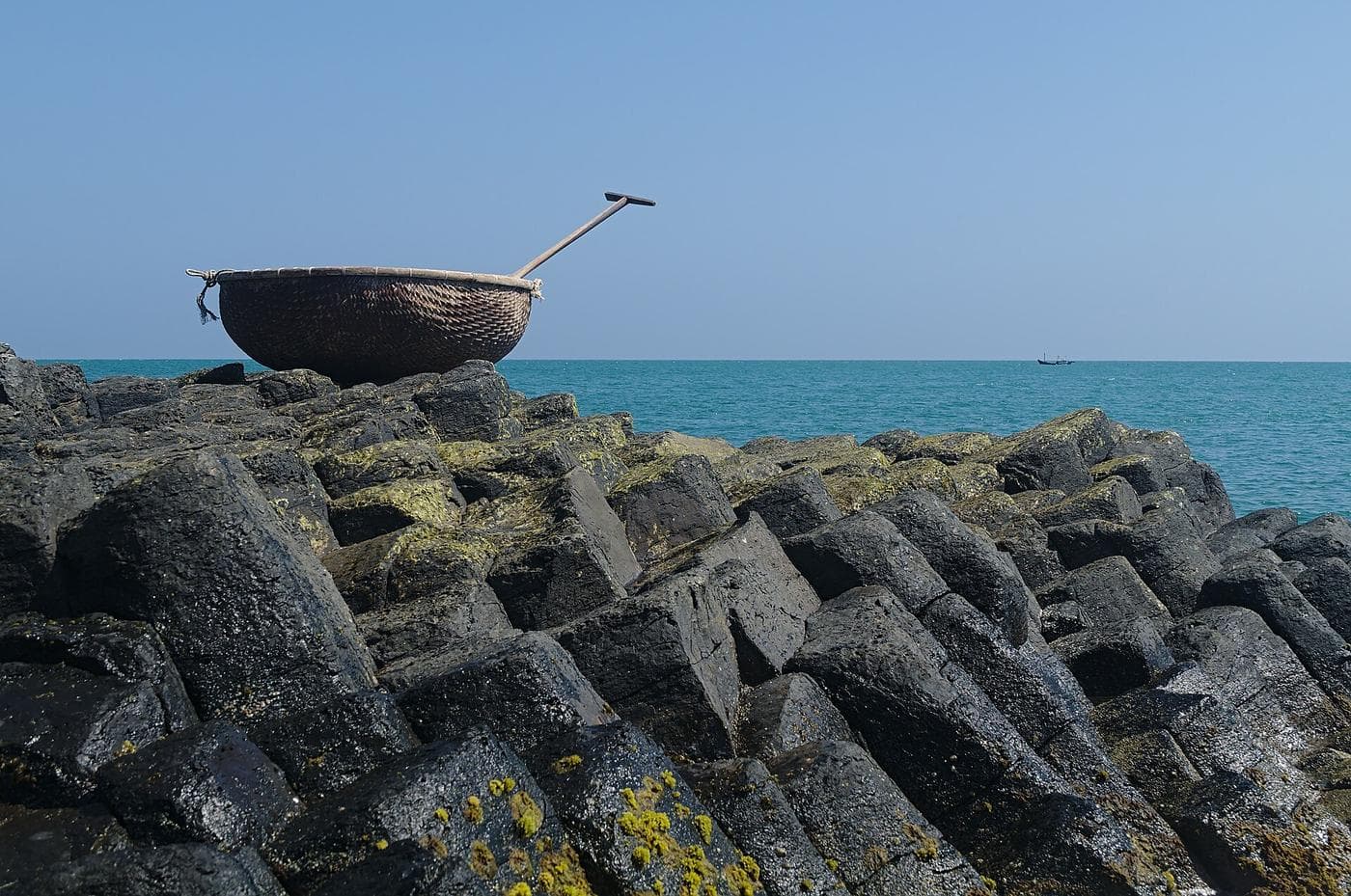
South along the coast, roughly 95 km to Tuy Hòa. One day covers a basalt column reef that looks like the Giant's Causeway, an 1890 French lighthouse on a cape, a wartime bay with a wreck on the bottom, and lunch on a lagoon famous for blood cockles and tuna. Group price 690,000–855,000 VND (~$26–33); a private car with driver runs 1,500,000–2,500,000 VND (~$58–96) for the vehicle.
Two notes on the name. Phú Yên stopped being a province in July 2025 — it is part of Đắk Lắk now, and the provincial capital moved inland to Buôn Ma Thuột. And every operator, booking site and road sign still says Phu Yen, so that is what you search for and that is what this section calls it.
The route
| Time | Stop | Length |
|---|---|---|
| 07:30 | Hotel departure | — |
| 09:30 | Bãi Môn beach | 45 min |
| 10:15 | Mũi Điện lighthouse | 90 min |
| 12:00 | Nghinh Phong tower, Tuy Hòa | 30 min |
| 13:00 | Ô Loan lagoon | 90 min (lunch) |
| 15:00 | Bãi Xép — Gành Ông | 45 min |
| 16:00 | Gành Đá Đĩa reef | 90 min |
| 19:00 | Back in Quy Nhon | — |
Programmes differ more than you would expect. Some swap Bãi Xép for Mằng Lăng church; some drop the lighthouse entirely, since adding it costs 150,000 VND more per person; some add Vũng Rô bay instead. Get the stop list before you pay, not on the bus.
The pace is hard either way. If you want to linger on the cape or actually swim at Bãi Môn, take the private car.
What's included
| Item | Group | Private |
|---|---|---|
| Vehicle | ||
| Guide | EN/VN | on request |
| Lunch | ||
| Entrance fees | ||
| Mũi Điện lighthouse stop | (+150,000 VND/person) | on request |
| Boat at Vũng Rô | on request |
Ganh Da Dia: the basalt reef
The region's headline natural sight and a genuinely strange piece of geology. Cooling lava fractured into hexagonal columns packed together like a cobbled floor running down into the sea — the same phenomenon as the Giant's Causeway in Ireland or the Scottish island of Staffa. You can walk out across the columns to the water.
| Parameter | Value |
|---|---|
| Distance from Quy Nhon | 70 km |
| Drive time | 1 h 30 |
| Entry | 40,000 VND (~$1.55), insurance included |
| Electric cart, gate → reef | 10,000 VND (~$0.40) |
| Hours | 08:00–18:30 daily |
| Time needed | 60–90 min |
| Swimming | No — the swell breaks straight onto rock |
The 40,000 VND figure came in under Resolution 19/2023 of the Phú Yên People's Council, effective 13 November 2023, which doubled the old price. If you find a guide quoting 20,000, it predates that.
The rock is wet and slick where the spray reaches. Trainers or trekking sandals, not flip-flops. Ninety minutes on a group tour is enough for a circuit and a dozen photographs.
Mui Dien: the lighthouse and an argument
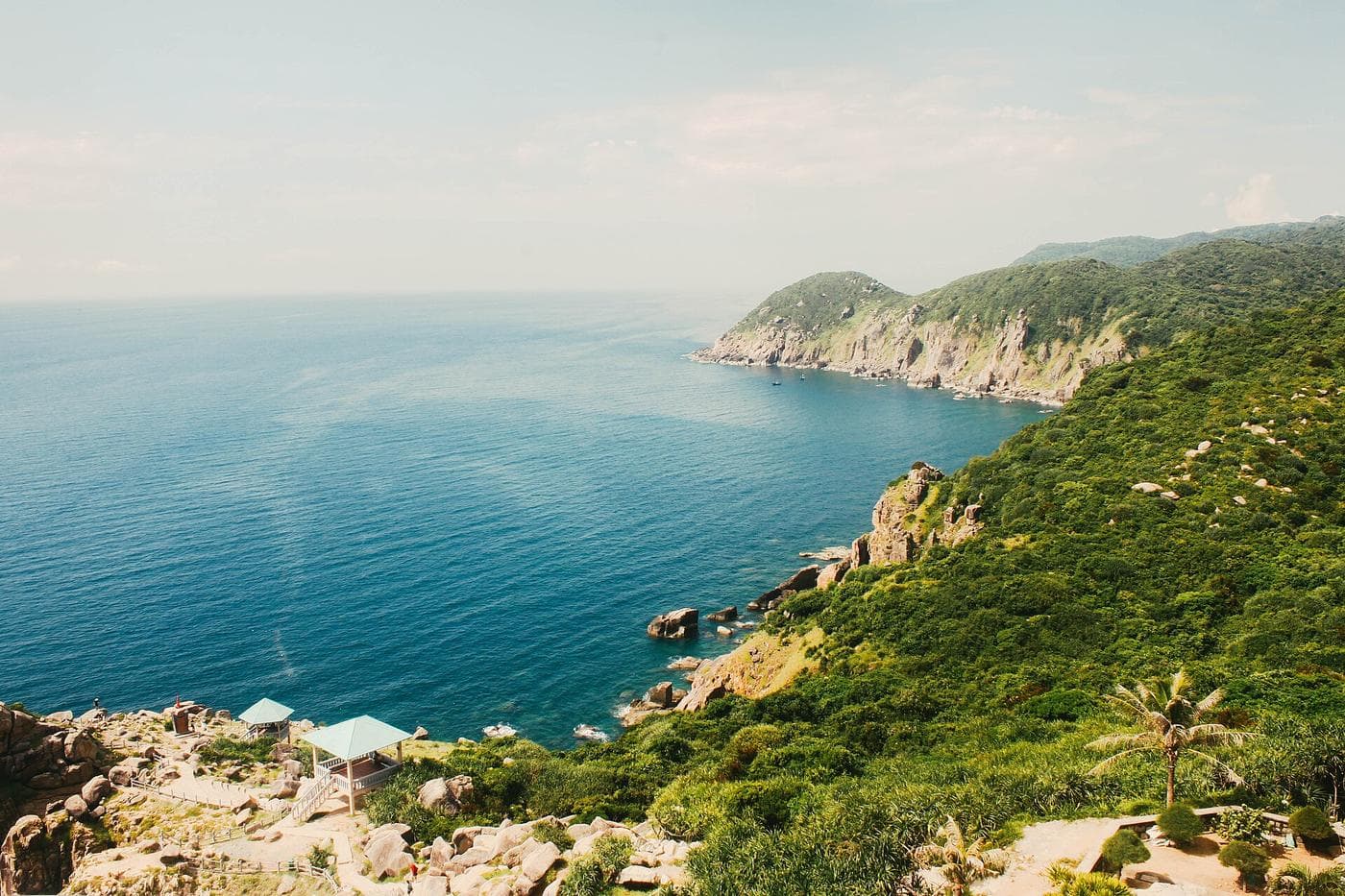
A French lighthouse from 1890 on Đại Lãnh cape, the tower 26.5 m tall and standing 110 m above the sea. Spiral stairs inside, a cramped lamp room at the top, and an uninterrupted view east over open water.
About the "easternmost point of mainland Vietnam" claim on all the signs — it is disputed, and has been for years. Mũi Điện sits at 109°27′06″E. Mũi Đôi, in neighbouring Khánh Hòa, sits at 109°27′55″E, which is further east, and the Vietnamese school geography curriculum names Mũi Đôi as the country's eastern extremity. Both capes have erected a "Cực Đông" marker; both provincial tourism boards have spent years claiming the title. None of which changes the experience: sunrise here is among the first in Vietnam, and the cape is worth the drive regardless of who wins.
| Parameter | Value |
|---|---|
| Height above sea | 110 m |
| Tower height | 26.5 m |
| Built | 1890, by the French |
| Bãi Môn – Mũi Điện zone ticket | 20,000–30,000 VND (~$0.75–1.15) |
| Climbing the tower | no separate charge |
| Visiting hours | 07:30–11:30 and 13:30–17:00 |
| Time needed | 60–90 min |
The same 2023 resolution raised this ticket from 20,000 to 30,000, though booths were still selling the old price in 2026 — carry both amounts in cash. From the car park it is about a kilometre uphill on steps, with almost no shade. Drink before you climb; there is nothing to buy at the top.
Vung Ro bay and Bai Mon beach
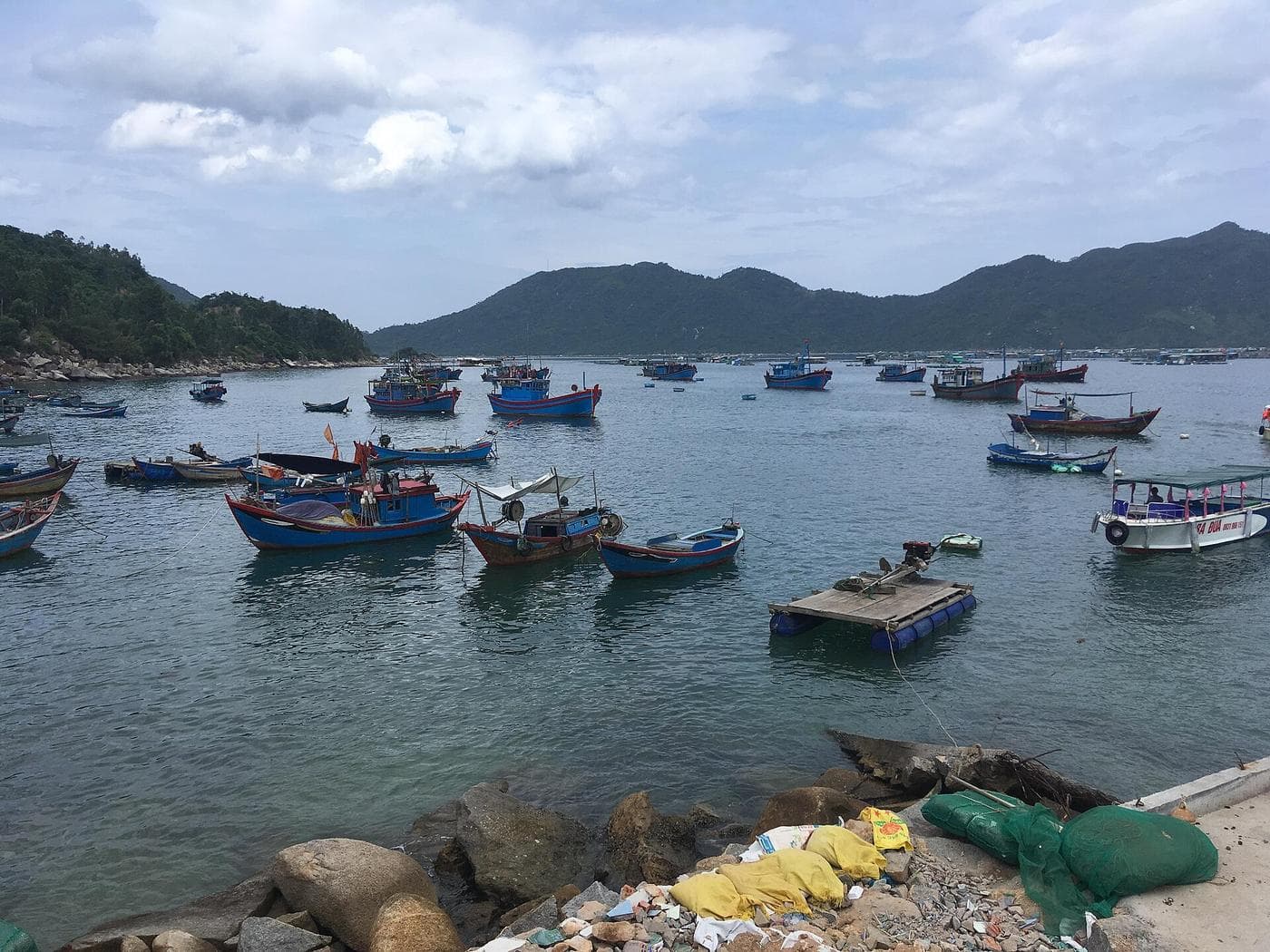
Vũng Rô is a bay with a war in it. During the American war, North Vietnamese vessels with no registration numbers ran weapons down the coast to the southern insurgency and unloaded here. In 1965 US aircraft finally caught one. The wreck is still on the bottom and the site is now an underwater museum.
Bãi Môn, immediately below the lighthouse, is the opposite mood: white sand, clear water, almost no infrastructure, calm swimming in a sheltered bay. Group tours give it an hour, which is enough for a swim and not enough for a proper afternoon.
O Loan lagoon: lunch
A wide shallow lagoon 30 km north of Tuy Hòa, known for two things. Sò huyết Ô Loan, the local blood cockles, and tuna caught off this coast.
Worth ordering, beyond whatever the tour set menu includes:
- Sò huyết, blood cockles — 100,000 VND (~$3.85)
- Cá ngừ đại dương, tuna steak — 180,000 VND (~$7)
- Mắt cá ngừ um, braised tuna eye — 80,000 VND (~$3), an acquired taste and a rite of passage
- Bún sứa, jellyfish noodle soup — 50,000 VND (~$2)
Lunch is in the tour price. Extra dishes are not, and alcohol never is.
Mang Lang church
An 1892 neo-Gothic church, the oldest in the region, free to enter. It holds the first book ever printed in the quốc ngữ script — Alexandre de Rhodes' catechism, printed in Rome in 1651. English sources habitually call it the first Vietnamese Bible. It is not; it is the catechism, and it is why Vietnamese is written in Latin letters today. Thirty minutes is enough.
Doing Phu Yen without a tour
For three or more people a private car with a driver and no guide costs 1,500,000–2,500,000 VND (~$58–96) for the vehicle, against 2,070,000–2,565,000 VND for three seats on a group tour. Same route, your own pace.
Cheaper still if you have the time: buses from the Quy Nhon bus station to Tuy Hòa run all day, 80,000–120,000 VND (~$3–5), about two hours. How the buses, trains and domestic flights fit together nationally is in the Vietnam transport guide, and how they work in this city specifically is in the getting-to-Quy-Nhon guide. There is also a train from Diêu Trì station 10 km west of the centre, 50,000–100,000 VND, ninety minutes, on a timetable designed for somebody else. From Tuy Hòa you continue by local transport or rented bike.
Riding it yourself is the best version of this trip if you are comfortable on a bike: three to four hours with stops, over the Cù Mông and Cả passes, on one of the better coastal roads in the country. Rentals run 100,000–180,000 VND a day. Leave by seven, check the rear brake before the passes, and read the motorbike rental guide first — a foreign licence alone is not enough here, and riding uninsured is a medical-bill problem, not a fine problem.
One thing not to count on: Grab usually does not do inter-province runs. Check the app for a Quy Nhon to Tuy Hòa booking, but have a backup. More on that in the Grab and taxi guide.
Cham towers: the cultural day
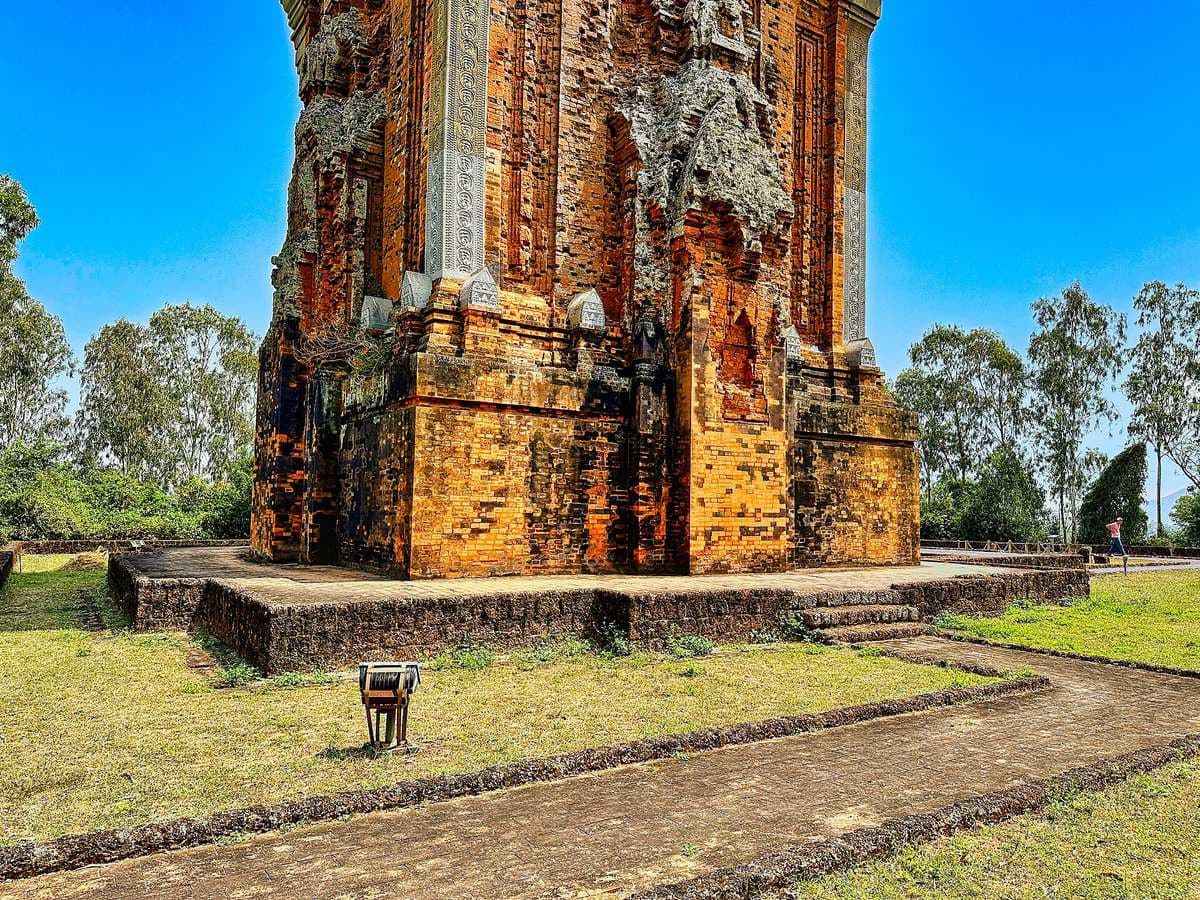
This region holds more Cham towers than anywhere else in Vietnam — eight surviving complexes, built by the kingdom of Champa between the 8th and 13th centuries, from fired brick laid without mortar. The bricks hold by grinding and a plant-based binder, and twentieth-century restorers never fully reproduced the method. Formally the towers now carry Gia Lai addresses and commune names; the signage still says Bình Định.
Budget 350,000–650,000 VND (~$13–25) in a group, or 800,000–1,200,000 VND (~$31–46) for a private car and driver for four.
Thap Doi, in the middle of town
Two towers from the 11th–12th century standing in a residential block on Trần Hưng Đạo street, 18 and 20 metres tall, restored, with a park around them. Entry is 30,000 VND (~$1.15). Open 07:00–18:00. Twenty minutes' walk from the centre — this is the one you do on foot, without a tour, on an afternoon you have nothing else planned.
Banh It, on the hill
Four towers on a hilltop 20 km north, the main one 22 metres, carved with a dancing Shiva and apsaras on the walls. From the top: rice fields and a river. Entry 20,000 VND (~$0.75) — one of the rare 2026 prices that went down.
This is one of the best-preserved complexes in the country and Vietnamese tour groups mostly skip it, so the hill is usually quiet. Half an hour covers it. If you only see one set of towers, see this one.
Duong Long, the tallest
Three towers 40 km out, the central one, at 39 metres, the tallest surviving Cham tower in Vietnam, dated to the 12th century, carved with elephants, lions and dancers. Entry 20,000 VND (~$0.75). Reachable by bike, taxi or tour only, and there is usually nobody there at all.
Cha Ban citadel, the old capital
Thành Chà Bàn was the capital of Champa from the 11th century, 27 km northwest. Walls, a gate and palace foundations survive across a large site that takes an hour or more to walk. Free.
In 1471 the Vietnamese emperor Lê Thánh Tông destroyed the last Cham army here, and Champa ceased to exist as a state. The Cham people did not — around 170,000 live in southern Vietnam today, and the towers are still active places of worship for some of them.
Thap Thap pagoda
A Buddhist monastery founded in 1665 on the ruins of a Cham temple, one of the oldest in central Vietnam, next door to Chà Bàn and normally combined with it. Free. Cover your shoulders.
What it costs and who sells it
There is no shelf product called "five towers in a day." Operators build combined routes — two or three towers plus the citadel plus a pagoda, usually with a beach or a restaurant tacked on. A purely cultural day means a private car.
| Format | Stops | Group | Private |
|---|---|---|---|
| Half day | Tháp Đôi + Bánh Ít + Thập Tháp | 350,000 VND | 600,000 VND |
| Full day | All towers + citadel + pagoda + lunch | 650,000 VND | 1,200,000 VND |
| Towers + beach combo | Two towers + Kỳ Co | 850,000 VND | 1,500,000 VND |
Cu Lao Xanh: the far island
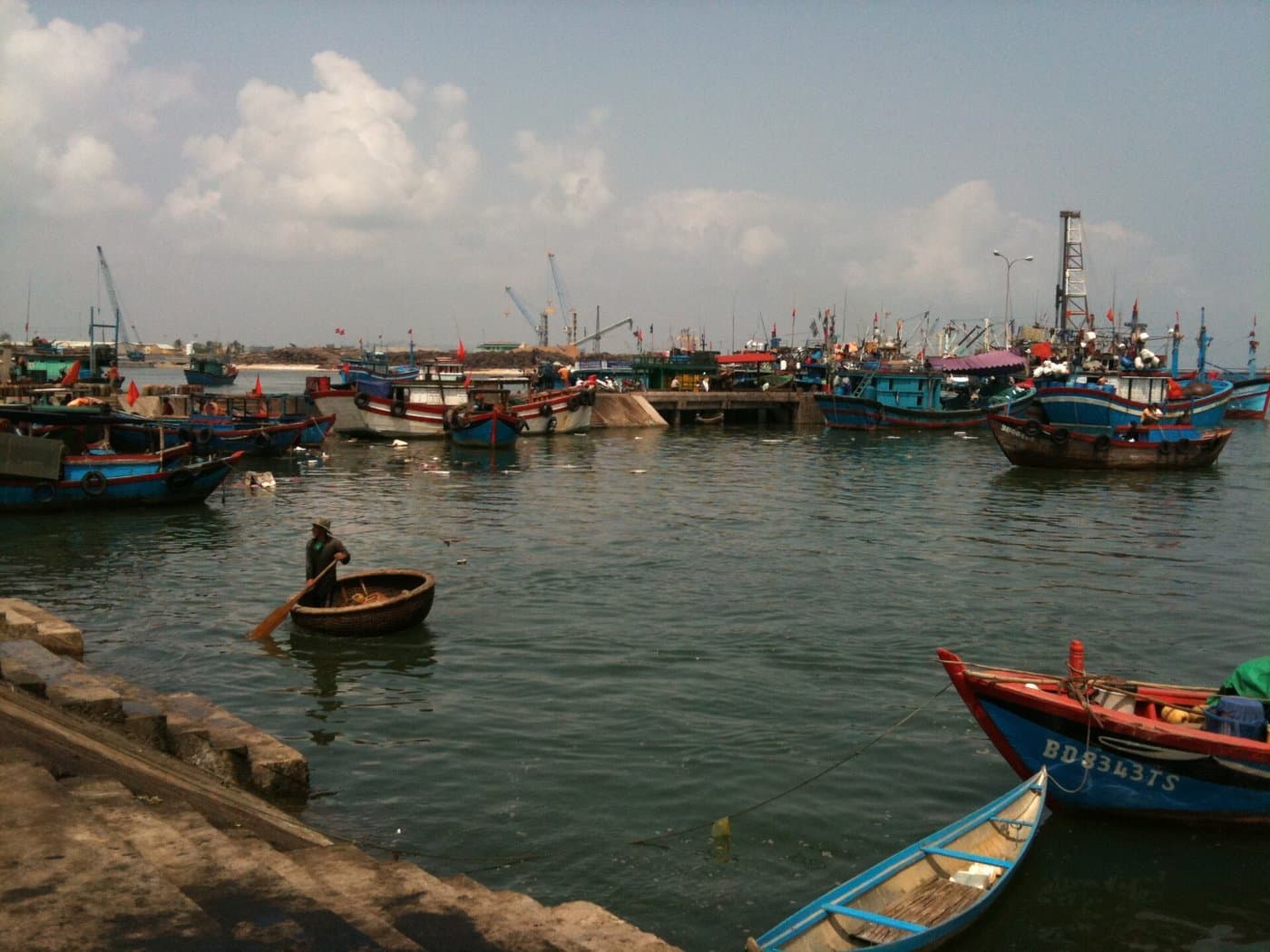
Twenty-four kilometres offshore, 365 hectares, about 2,300 people, four fishing villages and farmland in the middle. Power comes from solar panels and a generator — assume light in the evening and none in the day. Mobile internet exists and is slow. There is no ATM anywhere on the island, so bring cash for everything at once.
One day or two
| Format | Price | ~USD | Included |
|---|---|---|---|
| Day trip | 750,000–1,200,000 VND | ~$29–46 | Canoe return, lunch, guide, gear |
| 2 days / 1 night | 1,095,000–1,800,000 VND | ~$42–69 | Plus bed, BBQ dinner, breakfast |
Tours leave from Hàm Tử pier in the city, hotel pickup around 08:30, boat out at 09:00. The canoe takes 30 to 45 minutes.
What is there
- The lighthouse — French, 1890, still working, on a rock 119 m up. Climbing is by arrangement with the keeper rather than by ticket, and everyone describes it as normal practice.
- Snorkelling on the south side, over live coral
- A hill trail, about two hours end to end
- Seafood straight out of the pens, lobster included, at prices you negotiate
- Sunrise from the eastern shore — the actual reason to stay over
- A small sand beach with no loungers and almost nobody on it
Sleeping there
Five to seven nhà nghỉ guesthouses at roughly 200,000–400,000 VND (~$8–15) a night. Fan, shared bathroom, sometimes air conditioning. Wi-Fi generally not. Viettel has the best signal, clustered around the coastal villages — download offline maps before you sail, and see the SIM and connectivity guide if you have not sorted a number yet.
When the boats actually run
| Month | Boats | Snorkelling | Swimming |
|---|---|---|---|
| Jan–Mar | Wind-dependent | Murky | Cool |
| Apr–Aug | Reliable | Ideal | Ideal |
| Sep–Nov | Frequently cancelled | ||
| Dec | Sometimes |
If a crossing is cancelled the operator moves you to the next day or refunds. Confirm which before you pay.
Green half-days: Ham Ho and Hoi Van
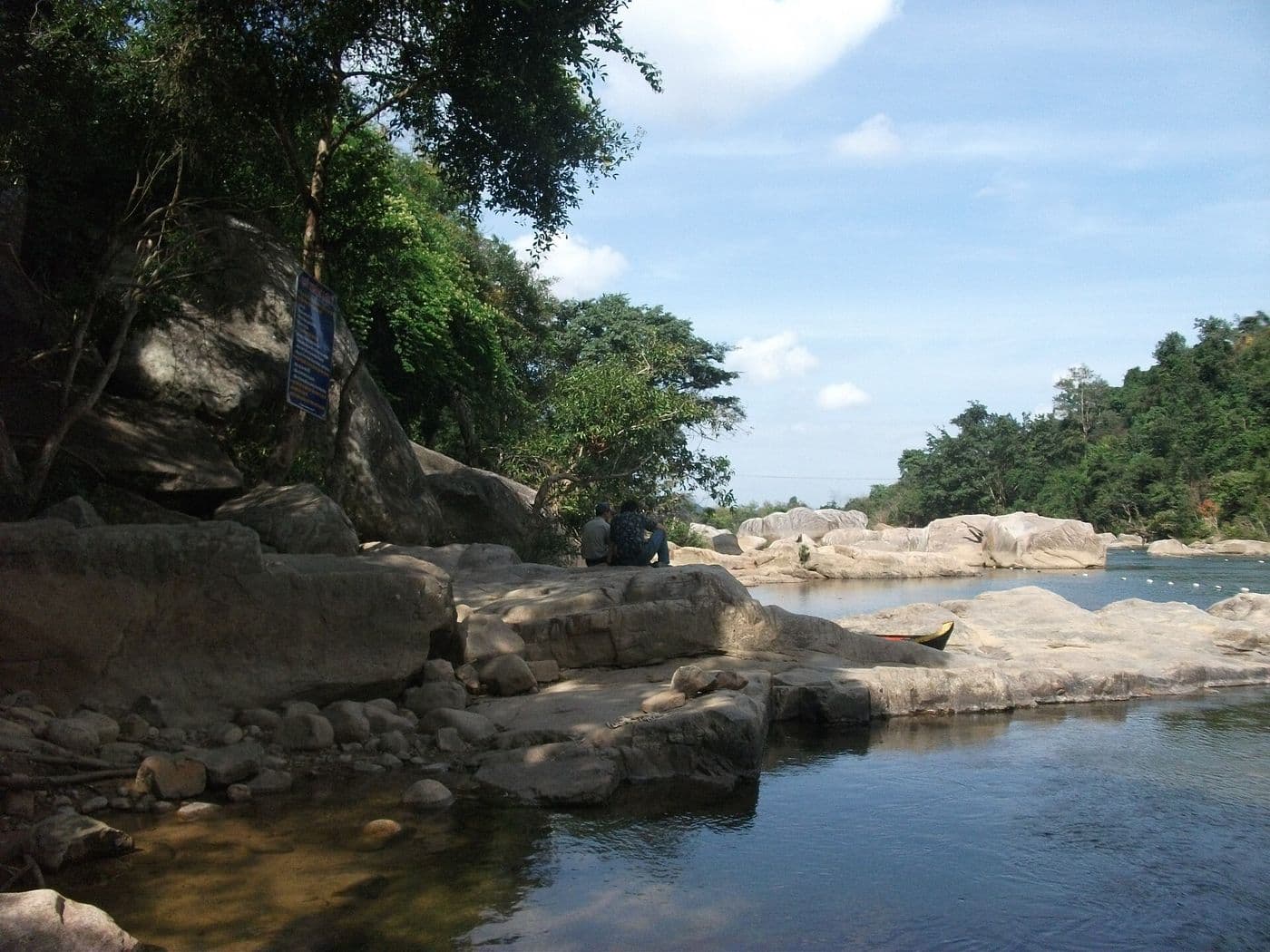
Two inland options for when you have had enough salt water, both short and both easy. And one place that is still in every listicle and is not open.
Ham Ho river gorge
A river valley 55 km northwest, with cascades, rapids, suspension bridges and boats along the water. It is a managed park with laid trails.
| Parameter | Value |
|---|---|
| Distance | 55 km |
| Entry | 20,000–25,000 VND (~$0.85), free under 1.2 m |
| River boat | 100,000 VND per boat of four |
| Electric cart on site | 30,000 VND |
| Full-day tour | 450,000–700,000 VND (~$17–27) |
| Lunch | Included, grilled fish by the water |
Good with children — the river is clean and shallow enough to swim in, and there are picnic areas. Weekends bring families out from Quy Nhon. The entrance is almost free; what you actually pay for is the boat and the food. Independently on a bike, two people can do the whole day inside 300,000 VND before eating.
Hoi Van hot springs
Natural thermal water 30–40 km out, coming out of the ground at 79°C and mixed down to 38–42°C in the pools. Several baths at different temperatures, mud treatments, massage.
| Parameter | Value |
|---|---|
| Distance | 30–40 km |
| Entry | 30,000–50,000 VND (~$1.15–1.90) |
| Mineral bath | 200,000–700,000 VND depending on format |
| Half-day tour with transfer | 350,000 VND (~$13.50) |
Weekday and the pools are yours. Weekend and it is local families with children, wall to wall. Two to three hours is plenty.
Trung Luong is closed
The Trung Lương glamping zone 30 km north — tents and bungalows on a grassy slope above the sea, swings over the drop, restaurant terraces — is still being sold in half the "things to do near Quy Nhon" lists in English. In 2026 Vietnamese operator price lists flag it as temporarily closed following storm damage, with nobody stating when it reopens.
Every tour compared
| Tour | Group | Private | Hours | Effort | Best season |
|---|---|---|---|---|---|
| Three-island sea day | $33–37 | from ~$58 per group | 9 | Easy | Feb–Aug |
| Phu Yen day trip | $26–33 | $58–96 per car | 10–12 | Medium | Feb–Aug |
| Cham towers, full day | $13–25 | $31–46 | 8 | Easy | Year-round |
| Cham towers, half day | $9–17 | $23–35 | 4 | Very easy | Year-round |
| Cù Lao Xanh, day trip | $29–46 | $77–115 | 10 | Medium | Apr–Aug |
| Cù Lao Xanh, overnight | $42–69 | $115–190 | 30 | Medium | Apr–Aug |
| Hầm Hô | $17–27 | $38–58 | 8 | Easy | Year-round |
| Hội Vân | $13–19 | $31–46 | 5 | Very easy | Year-round |
Which combination, by trip shape
Three days, first visit
- Sea day — Kỳ Co, Eo Gió, Hòn Khô
- Phu Yen day trip
- Walk the city, Tháp Đôi, sunset at Queen's Beach
Family, children 5–10, four days
- City beach and Tháp Đôi
- Sea day, adapted — tell the operator you are skipping the snorkelling
- Hầm Hô, which children like more than any island
- Hội Vân hot springs
Couple, five days, no rush
- Hotel and dinner by the water
- Private island tour, no group
- Private Phu Yen
- Cù Lao Xanh overnight
- Spa, then the towers in the late afternoon light
Independent traveller, five to seven days
- Sea day, group, cheapest version
- Towers on a rented motorbike
- Cù Lao Xanh, two days
- Phu Yen under your own steam, overnight in Tuy Hòa
- Back via Bãi Xép, one night in a guesthouse
Fast Track — no queue at the border
5–10 minutes instead of an hour in the immigration queue
from$11per passenger
Where to book, and what each channel costs you
Four channels, and they are not equivalent. This is where the money is.
The price gap, stated plainly
The same three-island day:
Currency converter
| Channel | Price | What you get |
|---|---|---|
| Local operator, direct | 850,000–975,000 VND (~$33–37) | Cash, Vietnamese-speaking office, no recourse |
| Klook / GetYourGuide | ~$58 | Card payment, English voucher, free cancellation to 24 h |
| Hotel desk | Operator price + 5–15% | Zero effort, no choice of operator |
| Private car and driver | 1,500,000–3,000,000 VND | Your own itinerary and pace |
That is a 55–75% premium on the OTA, and it is genuinely worth paying for some people. Solo, no Vietnamese, arriving late and leaving early: pay it. Four of you, a week in town, a bit of patience: walk into an office and save $80.
Local operators
| Operator | Site | Notes |
|---|---|---|
| Quy Nhon Tourist | quynhontourist.com | The oldest, office on Trần Phú, daily departures, sells the road route to Kỳ Co |
| Cỏ Travel Quy Nhon | cotravelquynhon.vn | Private tours, SUP, drone footage, diving |
| Quy Nhon Open Tour | quynhonopentour.com | Join-a-group format |
| Kavo Travel | kavotravel.com | Sea day at 850,000 VND, discounted from 990,000 |
| Dana Travel | danatravel.vn | Runs from both Da Nang and Quy Nhon, useful if you are chaining the two |
Book a day ahead. Payment is cash in VND or USD, typically a 50% deposit with the balance on the day. Cards are the exception. Check whether the quoted price includes 10% VAT — several operators list it as an exclusion, which is a 90,000 VND surprise at the end.
Online: Klook and GetYourGuide
Both work well and both cost more. Klook tends to run slightly under GetYourGuide and carries the Phu Yen join-bus; GetYourGuide has more private products and free cancellation to 24 hours as standard. Voucher by email, and the operator collects you from your hotel exactly as if you had booked direct — because it is the same operator.
The case for booking online is not the tour. It is that you pay by card, you have an English-language record of what you bought, and if something goes wrong there is a company that answers email in English.
The hotel desk
The lowest-effort option and not a bad one. Your hotel calls its partner operator and adds 5–15%. Ten minutes of conversation in the evening, deposit handed over in your room, done.
The cost is 50,000–150,000 VND on top and no say in which operator turns up. If you have a preference, and after reading this you might, book direct.
Private versus group
| Criterion | Group | Private |
|---|---|---|
| Price | 850,000–1,200,000 VND/person | from 1,500,000 VND per group |
| Route flexibility | ||
| Free time | Fixed schedule | Yours |
| Group size | 12–25 | Just you |
| Guide | Shared, EN/VN | Personal |
| Best seat on the boat | Whatever is left | Any |
Go private if there are four or more of you, if you want to stay somewhere longer than the schedule allows, if you are travelling with small children, or if group dynamics make you tired. Go group if the budget matters more or this is your first day here and you want a ready-made shape to the day.
Paying for things once you are out there
Every ticket booth, boatman and pier on these routes is cash only. No card readers at the Kỳ Co gate, at Eo Gió, at the towers, at Gành Đá Đĩa, at the piers. Carry 20,000 and 50,000 notes — booths routinely cannot break 500,000. ATMs exist in central Quy Nhon and at the airport, nowhere useful on the peninsula, and not at all on Cù Lao Xanh.
About guide languages
Local operator listings say EN/VN without committing to a standard, and the English you get ranges from genuinely good to a memorised safety script. OTA listings do guarantee an English guide, which is part of what the premium buys. Boatmen usually have no English whatsoever.
Two things make the day work anyway: agree the pickup time and the return time in writing, or by pointing at a clock on your phone, and download offline Vietnamese in Google Translate before you leave the city. Neither costs anything and together they solve almost every misunderstanding that actually happens.
When to come
Quy Nhon runs two seasons: dry from January to August, wet from September to December. Each tour type has its own window inside that.
| Month | Sea | Phu Yen | Towers | Cù Lao Xanh |
|---|---|---|---|---|
| January | OK | OK | Ideal | Wind-dependent |
| February | Ideal | Ideal | Ideal | |
| March | Ideal | Ideal | Ideal | |
| April | Ideal | Ideal | Ideal | |
| May | OK, hot | OK | Hot | Ideal |
| June | OK | OK | Hot | Ideal |
| July | OK | OK | Hot | Ideal |
| August | OK | OK | OK | Ideal |
| September | Rain starts | OK | ||
| October | By road only | Roads | OK | |
| November | By road only | Roads | ||
| December | Improving | OK |
February to April is the window. Dry, 24–30°C, calm sea, best underwater visibility of the year, everything running daily.
May to August is dry and hot, up to 34°C. Fine for the water, punishing on the towers at midday. Wide-brimmed hat, and start early.
September to November is not the season for boats. But remember the road: Kỳ Co runs by minivan when the canoes stay in, so a sea day in October is still a day at the cove, just without snorkelling. The towers are fine, and the rain is usually short.
December to January is the turn. Rain eases, swell drops slowly, Cù Lao Xanh stays unreliable longest. Sea tours run, but not every day.
Month-by-month temperature, rain and swell → Quy Nhon weather guide. Hotels, food and costs in the city → full Quy Nhon guide.
Safety, and the mistakes people make
Quy Nhon is one of the safer cities in Vietnam and petty crime is rare. The risks on tours here are environmental and logistical instead.
On the water
- Wear the life jacket. Captains usually insist, but if nobody hands you one, ask. Conditions change fast.
- If the operator cancels for wind, accept it. A speedboat goes over in a two-metre swell. A captain calling it off is doing his job.
- Stay near the group when snorkelling. There are weak currents. Do not stand on urchins — the spines break off under the skin and are miserable to remove.
- Diving only with a certified instructor, PADI Open Water minimum. Decline the 200,000 VND "just try it, no certificate" offer.
- Check your travel insurance covers boat travel and water sports. Many policies exclude them by default.
In Phu Yen
- Gành Đá Đĩa — the columns are wet and slick near the water. Closed shoes.
- The lighthouse climb — a kilometre uphill on steps with no shade. Drink first; there is nothing at the top.
- The path to the Cực Đông marker — fifteen minutes of full sun. Early morning or late afternoon, not noon.
Inland
- Chà Bàn and Dương Long sit in long grass. Snakes are around, mostly harmless and occasionally not. Stay on the path.
- Hầm Hô has deep pools in the river. Do not let children swim unsupervised.
- Hội Vân water leaves the ground at 79°C. The pools at source are scalding — use the built baths, not the natural ones.
The five mistakes
- Coming in October or November expecting boats. Most sea departures are cancelled or land-only.
- Not carrying cash. Every booth, boat and rural restaurant on these routes is cash only.
- Doing Phu Yen with no water and no snacks. The gaps between stops are long and there is nothing between them.
- Wearing flip-flops to Gành Đá Đĩa. You will fall over.
- Assuming the OTA price is the price. It is roughly half again what the operator charges at the counter.
FAQ
A group day covering Ky Co, Eo Gio and Hon Kho runs 850,000–975,000 VND (~$33–37) per person booked direct with a local operator. That includes hotel transfer, the boat, lunch, a guide, and all entrance fees including the Ky Co shuttle. On Klook or GetYourGuide the same day is around $58, with card payment and free cancellation to 24 hours. Going independently, the Ky Co gate and shuttle alone cost 230,000 VND (~$8.80) per person.
Direct is 35–45% cheaper and it is the same boat. The OTA premium buys card payment, an English-language voucher, guaranteed English guiding and a company that answers email. Solo travellers on tight schedules generally find that worth $20. Groups of four generally do not — that is $80 for the same day out.
No, and this is the most persistent myth in English coverage of the region. A sealed road runs to the resort gate; only the final descent to the sand is closed to private vehicles, and the operator’s shuttle covers that for 110,000 VND. So when the canoes stay in port between October and March, the day still runs by minivan: you get the cove, the cliffs and lunch, and you lose the snorkelling. Ask which version you are buying.
Only just on the ferry. It leaves Ham Tu at 08:00 and 13:00 and comes back from the island at 07:00 and 15:00. Out at 08:00 and back at 15:00 is possible, but tight, and if the last boat is cancelled you stay the night. A reliable day trip needs the canoe (~300,000 VND / ~$11.50 return, 30–45 minutes) on at least one leg, which is why every one-day tour uses one. Boats run reliably April to August; October to March is a lottery either way.
Local operators list EN/VN and deliver anything from fluent to a memorised script. Klook and GetYourGuide guarantee English. Boatmen generally speak none. Agree pickup and return times by writing them down or pointing at a clock, and download offline Vietnamese in Google Translate before you head out to the peninsula.
No. Phu Yen was merged into Dak Lak on 1 July 2025, and Binh Dinh was merged into Gia Lai on the same day. Districts were abolished nationwide. Every operator, sign and booking page still uses the old names, and searching them still finds the right places, so the practical effect on your trip is zero.
Yes
- The bus to Tuy Hòa80,000–120,000 VND~$3–5is and takes two hours
- A private car for the day1,500,000–2,500,000 VND~$58–96
- A rented bike a day100,000–180,000 VNDis, and the coastal road over the Cù Mông and Cả passes is one of the best rides in the country
Grab usually will not take an inter-province booking, so do not plan around it. If you ride, leave by seven and check your rear brake before the passes
Different things. The sea day is swimming, sand and time on the water. Phu Yen is landscape, history and photographs of places that look like nowhere else in Vietnam. If you only do one, do the sea day — it is the more characteristic Quy Nhon experience and suits almost everyone. Phu Yen belongs on day two or three, when you want a change from the beach.
The verdict
Five formats, one city, no coach parks. Nobody regrets the sea day. Phu Yen is the one people describe to other people afterwards. Cù Lao Xanh is worth rearranging a trip for, as long as you give it the overnight it actually needs. And the towers keep catching visitors off guard: eight complexes of thousand-year-old brick that Vietnamese tour groups mostly drive straight past.
Lonely Planet put Quy Nhon in its Best in Travel 2026 list, tagged "best for coastal adventures and seafood delights." The Eo Gió ticket fight in June, where an operator tried to raise a fee by 127% and the province said no, reads like an early symptom of what that recognition brings. Prices here are going one direction.
Two things to hold on to when you book. The Kỳ Co road exists, so a windy forecast is not a cancelled day. And the counter price is not the app price — the gap is $20 a head, every time, on the same boat.
Chaining central Vietnam? Quy Nhon sits comfortably between Hoi An and Nha Trang, and three or four days here is the right dose. For what to see between the tours, the attractions guide; for the country-level picture, tours across Vietnam and Vietnam's top attractions.
- Guide
Quy Nhon Attractions 2026: Cham Towers, Coves, Lighthouses
What to see in Quy Nhon in 2026 — 11th-century Cham towers, Ky Co cove, an 1890 French lighthouse, pagodas. Verified fees in VND and USD, day routes, map.Quy Nhon Attractions 2026: Cham Towers, Coves, Lighthouses - Guide
Quy Nhon 2026: Vietnam's Quiet Beach Town Guide
Quy Nhon guide: quiet beaches like Ky Co and Eo Gio, Cham towers, seafood, how to get there and why this town is still off the trail.Quy Nhon 2026: Vietnam's Quiet Beach Town Guide - Guide
Quy Nhon Beaches 2026: Best Coves, Prices, Seasons, Map
All 12 Quy Nhon beaches and coves: Ky Co, Bai Xep, Queen's Beach, the city beach. 2026 entry fees in VND and USD, swimming season, rip currents, map.Quy Nhon Beaches 2026: Best Coves, Prices, Seasons, Map