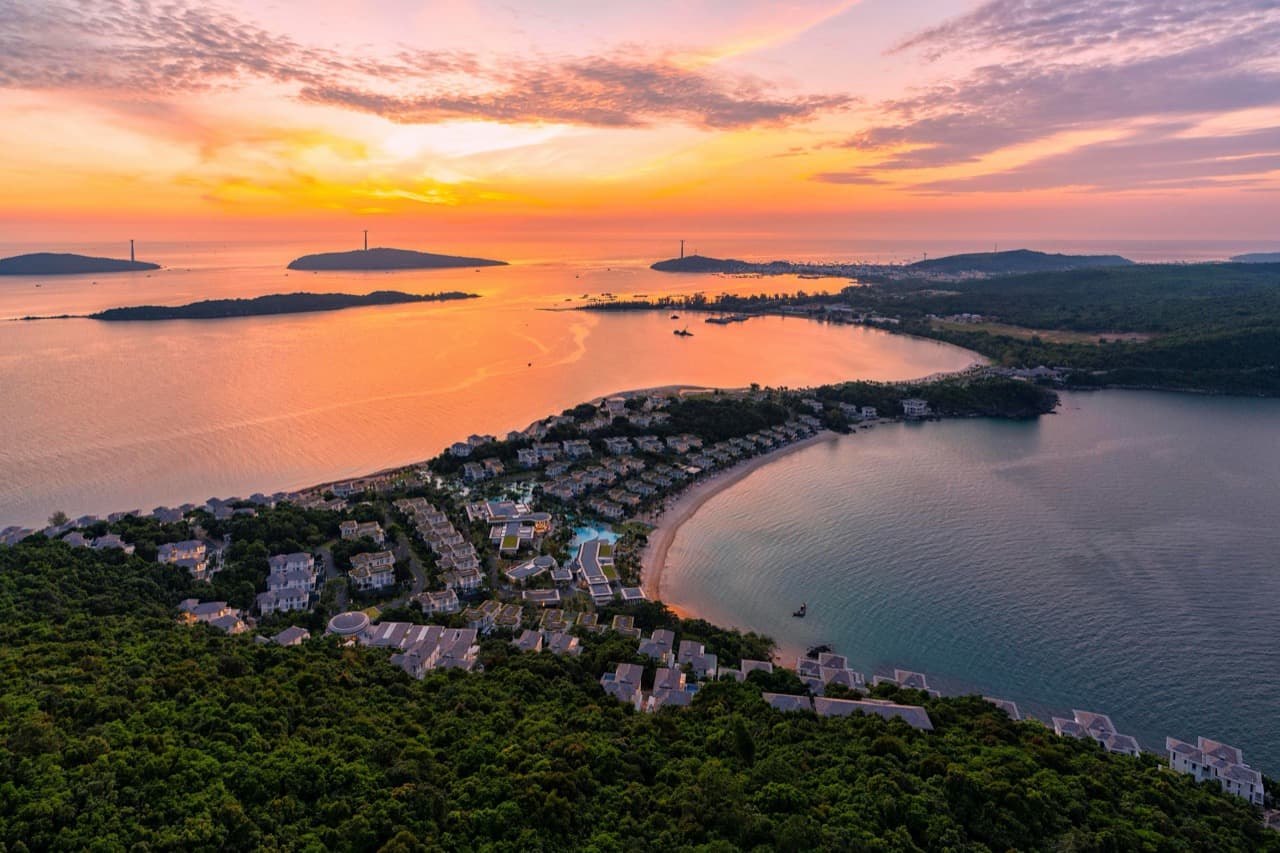
The best beaches in Vietnam: 2026 ranking
Vietnam has about 3,260 km of coastline, dozens of white- and gold-sand beaches, and water between 24 and 30°C most of the year. A ranked guide to the country's 15 best beaches, broken down by region, with 2026 prices in VND and USD, season advice and notes from people who actually live here.
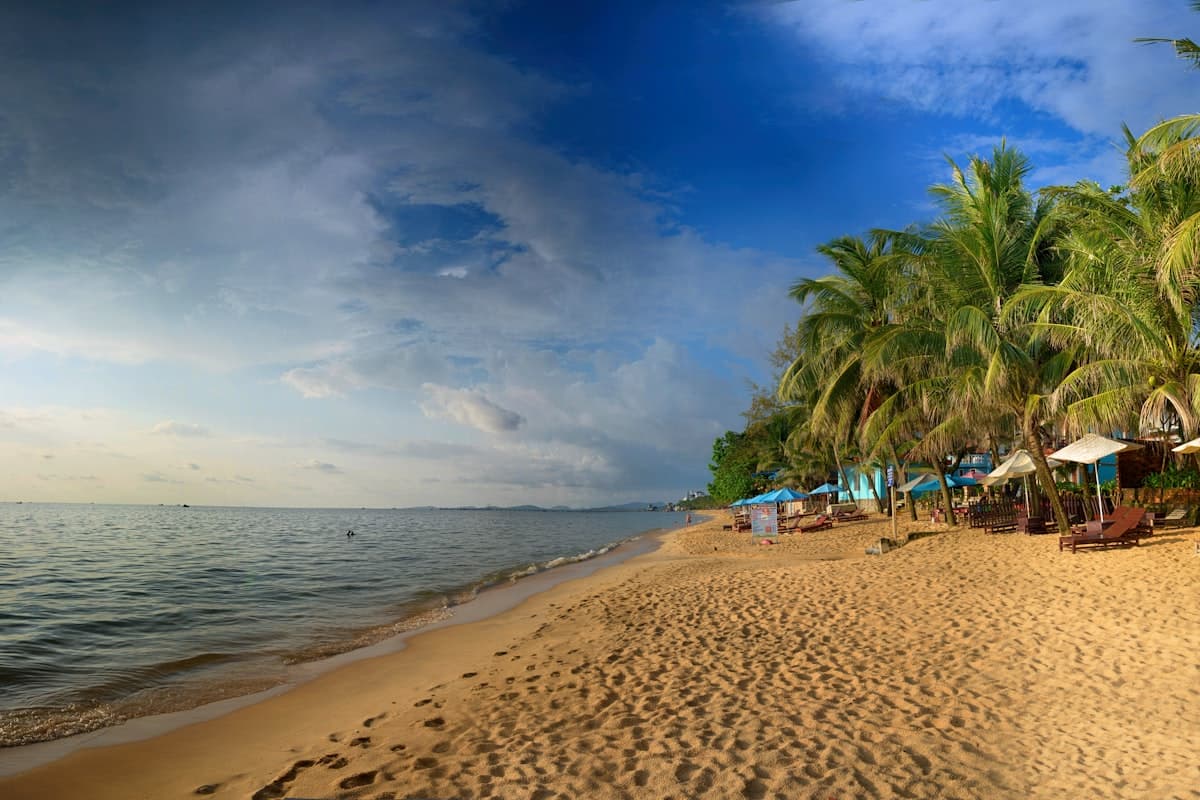
Phu Quoc, Nha Trang, Da Nang, Mui Ne — each resort has its own character. One suits families with toddlers, another suits kitesurfers, and mass tourism is only now discovering Quy Nhon and Con Dao.
Which sea does Vietnam sit on?
Vietnam faces the South China Sea, part of the Pacific Ocean. The coastline stretches about 3,260 km (not counting islands) from the Chinese border in the north to Cape Ca Mau in the south. Vietnamese themselves call it Biển Đông — the East Sea.
Ocean or sea? Technically a sea within the Pacific basin. In practice you will not notice the difference: the water is salty, clear, and on the southern resorts warm all year.
In the south — Phu Quoc, Phan Thiet, Con Dao — you can swim 12 months a year. The centre (Nha Trang, Da Nang) is comfortable from March to August. The north (Ha Long Bay and the beaches near Hanoi) is a summer-only affair; in winter the water drops to 18°C.
Map & the top 15 beaches in Vietnam
Vietnam's beaches span the whole coast — from the hidden coves of Quy Nhon to the 20-km Long Beach on Phu Quoc. Here is the 2026 ranking, based on sand quality, infrastructure, water clarity and reviews.
- Bai Sao (Phu Quoc) — snow-white sand and turquoise water, the island's best beach
- My Khe (Da Nang) — 10 km of city beach
- Doc Let (Nha Trang) — 10 km of white sand, gentle entry, ideal for kids
- An Bang (Hoi An) — a boho vibe with cafés right on the sand
- Long Beach (Phu Quoc) — 20+ km, the best sunsets in Vietnam
- Bai Dai (Cam Ranh) — 15 km of empty coast
- Non Nuoc (Da Nang) — for surfers, next to the Marble Mountains
- Ky Co (Quy Nhon) — a turquoise cove you reach by road or by boat
Con Dao and Doc Let are about 500 km apart as the crow flies, and a numbered list hides that. The map sorts it out, and the colour tells you what is nearby. Green means developed: cafés, sunbeds and hotels within walking distance. Blue is moderate. Amber is close to wild — bring your own food and water. Tap a pin for the sand, the length and who it suits. Four of the fifteen are missing: Hon Rom, Doi Duong, Paragon and China Beach have no separate entry in OSM, so look for them in the table. Cities, airports and distances between regions are on the map of Vietnam.
- My Khe (Mỹ Khê): Da Nang · ranked #2 — Fine white sand, ~10 km — For everyone · developed infrastructure
- Long Beach (Bãi Trường): Phu Quoc · ranked #5 — Fine yellow sand, ~20 km — For everyone · developed infrastructure
- Nha Trang city beach (Trần Phú): Nha Trang · ranked #9 — Yellow sand, ~7 km — For everyone · developed infrastructure
- Bai Sao (Bãi Sao): Phu Quoc · ranked #1 — Fine white sand, ~2 km — Couples, photos · moderate infrastructure
- An Bang (An Bàng): Hoi An · ranked #4 — White sand, ~4 km — Couples, backpackers · moderate infrastructure
- Non Nuoc (Non Nước): Da Nang · ranked #7 — White sand, ~5 km — Surfers · moderate infrastructure
- Doc Let (Dốc Lết): 45 km from Nha Trang · ranked #3 — Fine white sand, ~10 km — Families with kids · minimal infrastructure
- Bai Dai (Cam Ranh) (Bãi Dài): Cam Ranh · ranked #6 — Fine white sand, ~15 km — Families, solitude · minimal infrastructure
- Ky Co (Kỳ Co): Quy Nhon · ranked #8 — Golden sand, ~0.5 km — Couples, snorkelling · gate + shuttle
- Dam Trau (Đầm Trầu): Con Dao · ranked #10 — White sand, ~1 km — Solitude · minimal infrastructure
- Bai Dai (Phu Quoc) (Bãi Dài): Phu Quoc · ranked #14 — White sand, ~3 km — Families, solitude · minimal infrastructure
| # | Beach | Region | Sand | Length | Best for | Infrastructure |
|---|---|---|---|---|---|---|
| 1 | Bai Sao (Bãi Sao) | Phu Quoc | Fine white | ~2 km | Couples, photos | Medium |
| 2 | My Khe (Mỹ Khê) | Da Nang | Fine white | ~10 km | Everyone | Developed |
| 3 | Doc Let (Dốc Lết) | Nha Trang (45 km) | Fine white | ~10 km | Families, kids | Minimal |
| 4 | An Bang (An Bàng) | Hoi An | White | ~4 km | Couples, backpackers | Medium |
| 5 | Long Beach (Bãi Trường) | Phu Quoc | Fine yellow | ~20 km | Everyone | Developed |
| 6 | Bai Dai (Bãi Dài) | Cam Ranh | Fine white | ~15 km | Families, solitude | Minimal |
| 7 | Non Nuoc (Non Nước) | Da Nang | White | ~5 km | Surfers | Medium |
| 8 | Ky Co (Kỳ Co) | Quy Nhon | Golden | ~0.5 km | Couples, snorkelling | Minimal |
| 9 | Nha Trang City Beach | Nha Trang | Yellow | ~7 km | Everyone | Developed |
| 10 | Dam Trau (Đầm Trầu) | Con Dao | White | ~1 km | Solitude | Minimal |
| 11 | Hon Rom (Hòn Rơm) | Mui Ne | Yellow | ~3 km | Surfing, young crowd | Medium |
| 12 | Doi Duong (Đồi Dương) | Phan Thiet | Yellow | ~2 km | Families | Medium |
| 13 | Paragon | Nha Trang | White | ~0.3 km | Families with kids | Developed |
| 14 | Bai Dai (Bãi Dài) | Phu Quoc | White | ~3 km | Families, solitude | Minimal |
| 15 | China Beach | Da Nang | White | ~30 km | Surfers | Minimal |
This ranking is not gospel. Some people will find Ky Co more interesting than Bai Sao. But weigh everything together — sand, water clarity, access, infrastructure — and the order lands roughly here.
Phu Quoc beaches
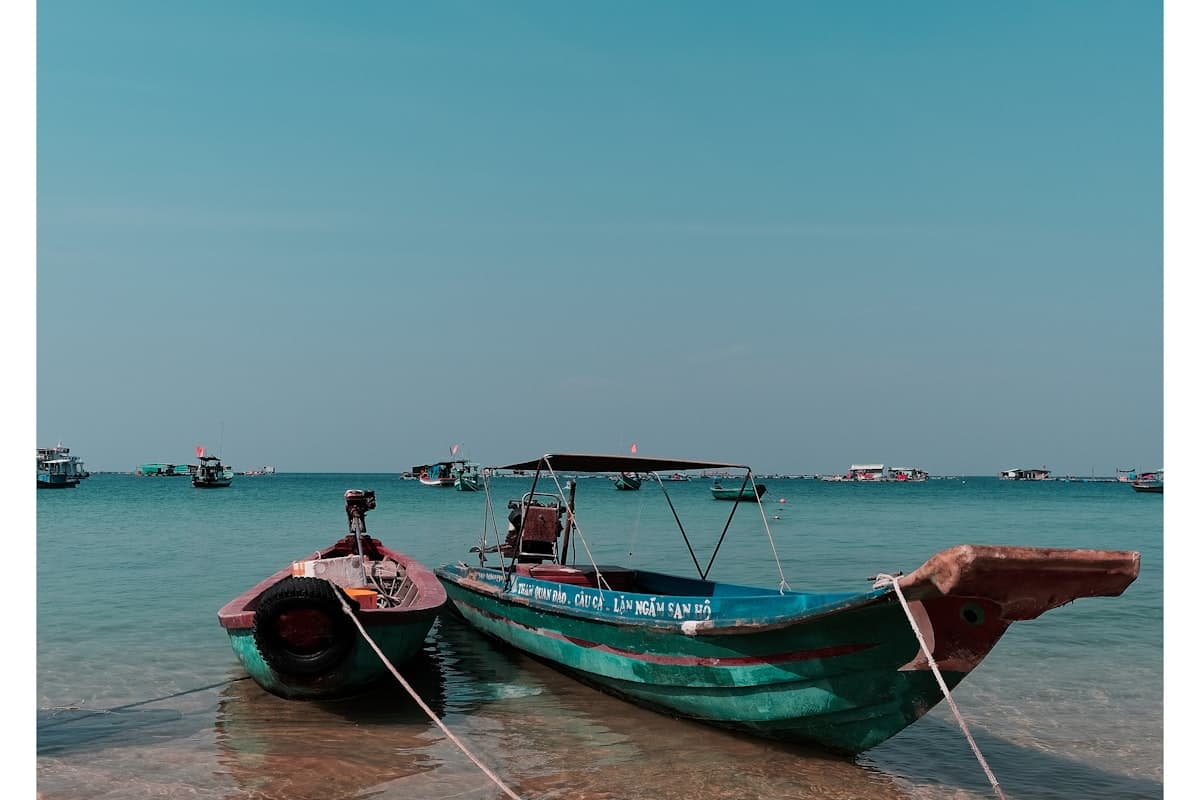
Phu Quoc is Vietnam's largest island and the country's most hyped beach destination. Three beaches deserve a closer look. The full beach breakdown is in our guide to Phu Quoc beaches.
Bai Sao — the island's prettiest beach
Bãi Sao sits on the southeast of Phu Quoc, 25 km from Duong Dong town. Fine white sand — genuinely flour-like — and clear turquoise water. The entry is gentle and the depth builds slowly.
Infrastructure: beach bars, loungers, seafood cafés. A lounger from 50,000 VND (~$2).
One downside, but a real one: 50 metres from the bars there can be litter. After rain the water turns cloudy. Come early, before 10:00, ahead of the tour groups.
Instead of sunbathing and enjoying the scenery, I was surrounded by sanitation workers rushing to clear trasha visitor at Sao Beach on Jan. 2, VnExpress International, 2026
Long Beach — Phu Quoc's main strip
Bãi Trường runs more than 20 km along the west coast. The sand is yellow-brown and fine. Infrastructure is at its peak: hotels, restaurants, bars, dive centres. This is the number-one sunset spot on Phu Quoc — the sun drops straight into the sea.
The strip near Duong Dong is narrow, and in high season (December–March) it gets crowded. The southern end is quieter.
Bai Dai — a quiet beach in the northwest
Three kilometres of white sand, few people, and the Vinpearl complex nearby. It suits anyone after quiet who does not want to fight for a spot under an umbrella. There are almost no cafés or facilities — bring your own water.
Fast Track — no queue at the border
5–10 minutes instead of an hour in the immigration queue
from$11per passenger
Nha Trang and Cam Ranh beaches
Nha Trang is Vietnam's most popular resort with tourists, and everyone knows the city beach. But within an hour's drive there are several spots that outdo the central beach on quality.
Nha Trang City Beach
Seven kilometres along the Trần Phú promenade. Yellow medium-grain sand, developed infrastructure: loungers, cafés, water sports. Lifeguards on the towers. Best season is March–August, when the sea is calm. Full context on the resort is in the Nha Trang guide, and every beach is broken down in the Nha Trang beaches guide.
From November to February expect strong waves and a red flag. Swimming is banned, though some people ignore it. Do not.
Doc Let — the "Vietnamese Maldives"
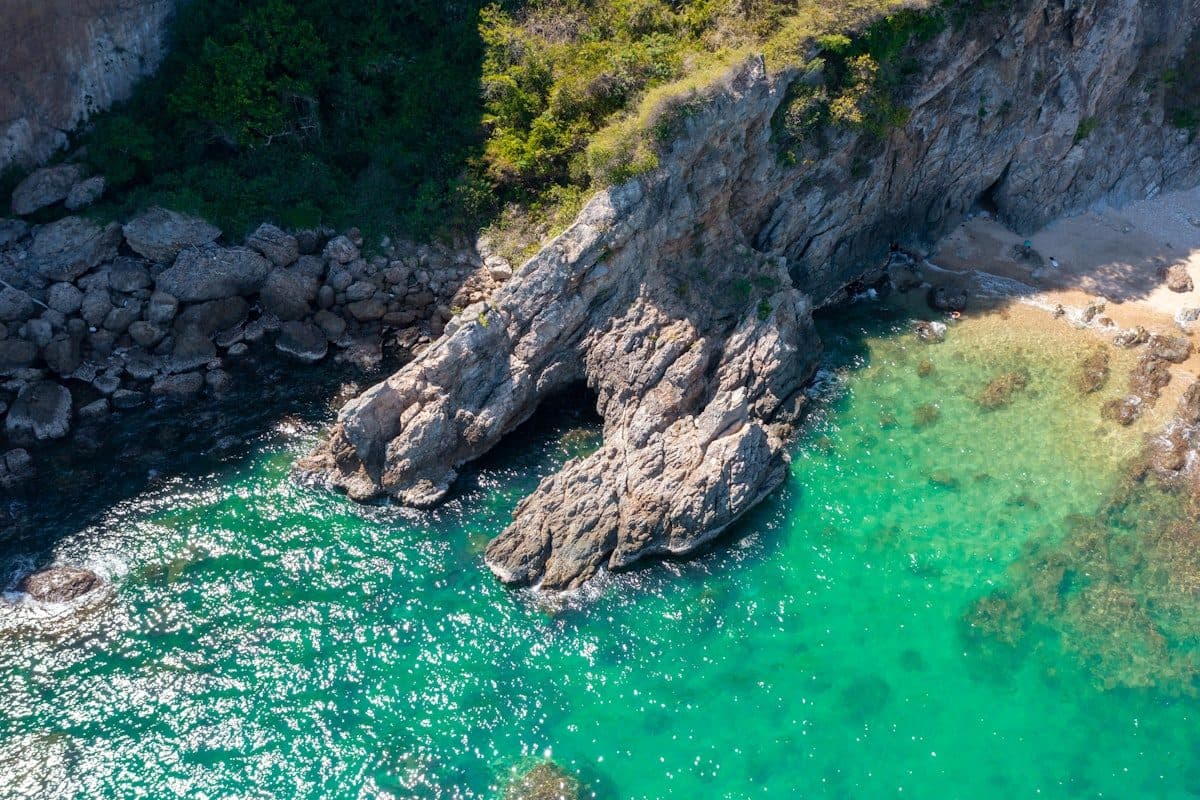
Dốc Lết is ten kilometres of fine white sand 45 km north of Nha Trang. The entry is gentle and it stays shallow far out — a child can stand in the water 30–50 metres from shore. That is why Doc Let earned the nickname the "Vietnamese Maldives."
Infrastructure is minimal: a couple of cafés, hammocks, loungers. Which is exactly why people love it.
Getting there: a taxi from Nha Trang is around 500,000 VND (~$20) one way. You can catch a bus with a transfer, but it takes an hour and a half. All the detail on facilities, cafés and nearby hotels is in the Doc Let guide.
Bai Dai (Cam Ranh) — long and quiet
Bãi Dài in Cam Ranh is 15 km, one of the region's longest beaches. Fine white sand, a gentle entry and — the quirk — planes passing right overhead, because Cam Ranh airport is next door. It looks dramatic and sounds loud, but you get used to it fast. Full context in the Cam Ranh guide.
Seafood at the local cafés is cheap: a plate of grilled prawns runs 100,000–150,000 VND (~$4–6).
Paragon — a bay with hardly any waves
A fenced-off bay by the Paragon hotel on the south side of Nha Trang. Breakwaters almost always kill the swell — the entry is gentle and the water is calm. Ideal for families with small children. Infrastructure is developed: changing rooms, showers, cafés.
Da Nang and Hoi An beaches
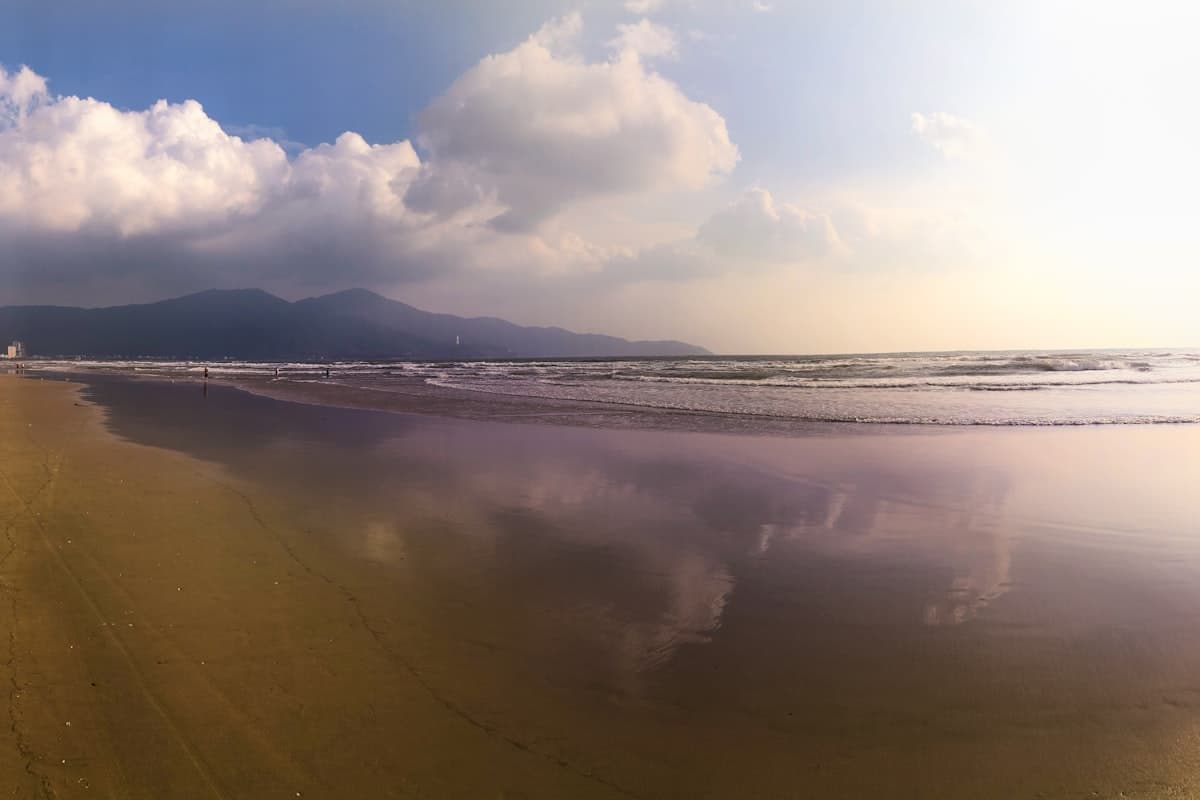
Central Vietnam is 30 km of unbroken coast from Da Nang to Hoi An. The season is shorter than in the south — May to August — but those four months are worth the trip.
My Khe — Vietnam's best city beach
Mỹ Khê is ten kilometres of fine white sand up to 60 metres wide, nicknamed the "Vietnamese Miami." Infrastructure is at its peak: loungers and umbrellas from 30,000 VND (~$1.20), lifeguard towers, surfboard rental. A café-and-bar promenade is within walking distance.
My Khe is a city beach, five minutes by taxi from central Da Nang. Busy on weekends, roomy on weekdays. More on the city is in the Da Nang guide, and every stretch of coast is in the Da Nang beaches guide.
An Bang — Hoi An's boho beach
An Bàng is four kilometres from Hoi An's Old Town. White sand, a relaxed vibe: juice-bar cafés, hammocks, music. It suits couples and backpackers who want to alternate culture in Hoi An with beach time. All the shoreline near town is in the Hoi An beaches guide.
A lounger with umbrella is 50,000 VND (~$2) for the whole day. Order food at a café and the lounger is free.
Non Nuoc — for surfers
Non Nước lies in the south of Da Nang, at the foot of the Marble Mountains. Five kilometres of sand, less crowded than My Khe. The waves here are steadier, and surfers claimed the spot long ago. A board rents from 150,000 VND (~$6) an hour.
Phan Thiet and Mui Ne beaches

Phan Thiet and Mui Ne are resorts with character. The wind here is a feature, not a bug. From October to March the coast turns into a kitesurfing and windsurfing mecca. If you want calm water for swimming, come between April and September. Full context on the resort is in the Phan Thiet and Mui Ne guide, and the beach breakdown is in the Mui Ne guide.
Hon Rom — best for swimming in Mui Ne
Hòn Rơm is three kilometres of wide, even sand with no sharp coral. The entry is gentle. In the rainy season there can be waves, but overall it is the most comfortable beach for swimming in the whole Mui Ne area.
Infrastructure is medium: loungers, a few cafés, kite rental. A kitesurfing lesson is around $40 for two hours.
Doi Duong — Phan Thiet's family beach
Đồi Dương is a quiet beach in central Phan Thiet. No nightclubs, no bars blasting speakers. Yellow sand, calm sea, a shaded park nearby. Good for families with children who do not want to travel far from town.



Secret beaches: Quy Nhon, Con Dao, Ha Long
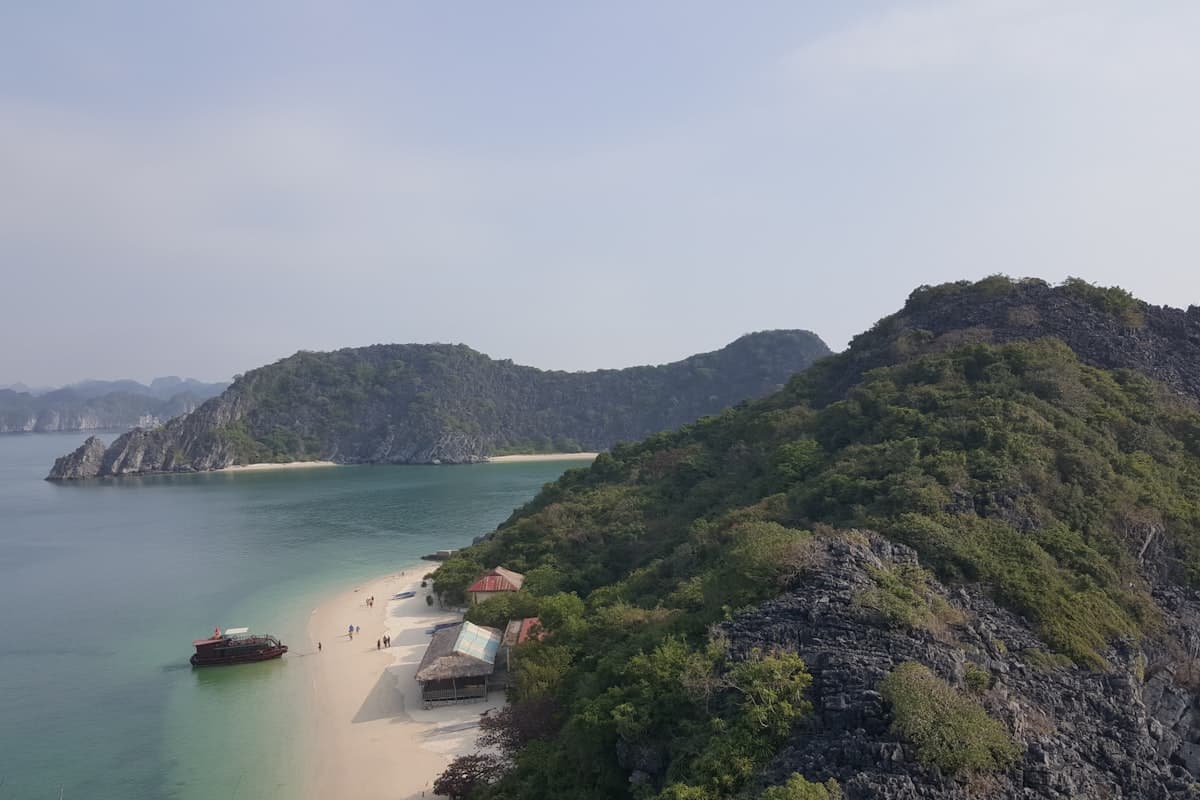
Vietnam is not only Nha Trang and Phu Quoc. There are places mass tourism has not reached yet. Quy Nhon is one of them: its beaches are noticeably quieter than Nha Trang's.
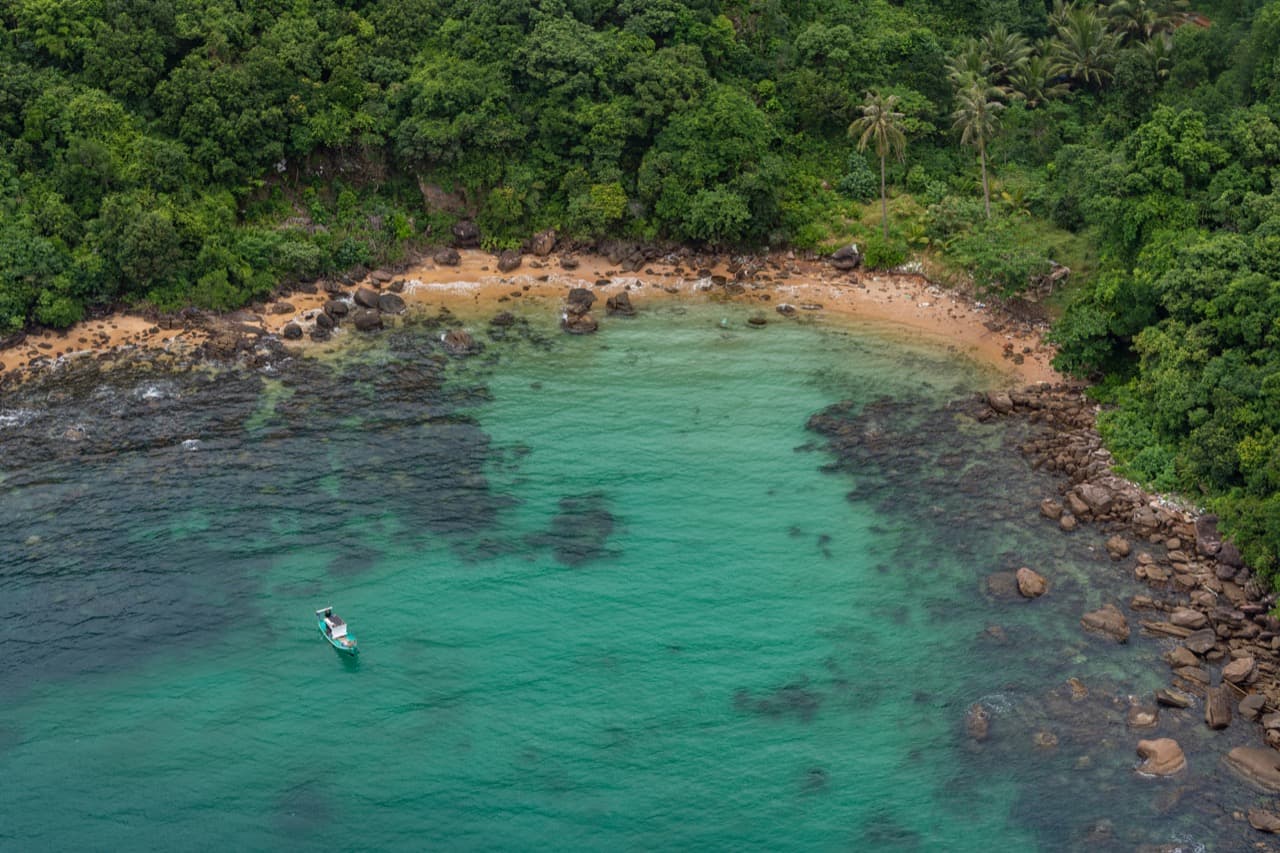
Ky Co — the turquoise cove of Quy Nhon
Kỳ Co is a half-moon cove with golden sand and turquoise water. A paved road runs to the gate, a shuttle takes you down to the water, and a boat from Nhon Ly is an option you arrange on the spot. Entry is 120,000 VND (~$4.60), the shuttle 110,000 VND (~$4.20). It is shallow near shore, good for kids. Kayaks and snorkelling by the rocks are the extent of the activities, but the cove more than makes up for it. Base yourself in the Quy Nhon guide.
The catch: minimal infrastructure, two or three cafés, and toilets at the "well, okay" level. But there are few people, the water is clear, and the sunset over the cove is one of the best you will see in Vietnam. The other eleven Quy Nhon beaches are in our Quy Nhon beaches guide.
Dam Trau — the untouched beach of Con Dao
Đầm Trầu is white sand, clear water and few people — one of the most pristine beaches in Vietnam. It sits near Con Dao airport, but flights are rare, so noise is not an issue. Full context in the Con Dao guide.
Diving and snorkelling here are the best in Vietnam. The coral reefs survived because Con Dao was a closed territory for a long time. Getting to the island: a flight of about an hour from Ho Chi Minh City, or a fast boat — 2 h 15 min from Tran De in the Mekong Delta, 3.5–4 hours from Vung Tau. Schedules and fares are in the Con Dao transport guide.
Where the white sand is in Vietnam
Vietnam is not all about white sand. Along Mui Ne and Phan Thiet the sand is yellow, in places rust-coloured. But if white sand is a non-negotiable for you, here is where to go.
| Beach | Region | Shade | Grain |
|---|---|---|---|
| Bai Sao | Phu Quoc | Snow-white | Fine, "flour-like" |
| Doc Let | Nha Trang (45 km) | White | Fine |
| My Khe | Da Nang | White | Fine |
| Bai Dai | Cam Ranh | White | Fine |
| Dam Trau | Con Dao | White | Fine |
| An Bang | Hoi An | White | Medium |
| Bai Dai | Phu Quoc | White | Fine |
| Non Nuoc | Da Nang | White | Fine |
The most "Maldives-like" is Bai Sao on Phu Quoc. The longest white beach is Bai Dai in Cam Ranh (15 km). The most untouched is Dam Trau on Con Dao.
Want white sand with infrastructure? My Khe in Da Nang. Want white sand without crowds? Doc Let or Bai Dai in Cam Ranh.
The best beaches for families with kids

Three things matter for a beach with kids in Vietnam: a gentle entry into the water, no strong waves, and facilities (shower, toilet, shade). Here are four beaches that tick all three.
Doc Let (Nha Trang) — the champion for shallow water. A child can wade 30–50 metres from shore and still be waist-deep. White sand, no coral, no sharp rocks. The catch: it is far from Nha Trang (45 km), so you need a taxi.
Paragon (Nha Trang) — a fenced bay where breakwaters almost always kill the swell. The best pick for toddlers under 3. Full facilities. A lounger from 50,000 VND (~$2).
Bai Dai (Cam Ranh) — long, gently sloping, few people. Good for older kids who want to run along an empty beach. There are cafés, but not many — bring snacks.
Doi Duong (Phan Thiet) — a city family beach with no nightlife. Quiet, calm, with a tree-shaded park nearby.
| Beach | Depth near shore | Waves | Infrastructure | Getting there |
|---|---|---|---|---|
| Doc Let | Very shallow | None | Minimal | Taxi from Nha Trang, 45 min |
| Paragon | Shallow | None (bay) | Developed | South Nha Trang, 10 min |
| Bai Dai (Cam Ranh) | Shallow | Weak | Minimal | 10 min from the airport |
| Doi Duong | Medium | Weak | Medium | Central Phan Thiet |
Travelling with kids means sorting the paperwork first: check the SIM and connectivity guide so you can stay reachable, and confirm your family's visa route by passport before you fly.
When to go — beach season by region
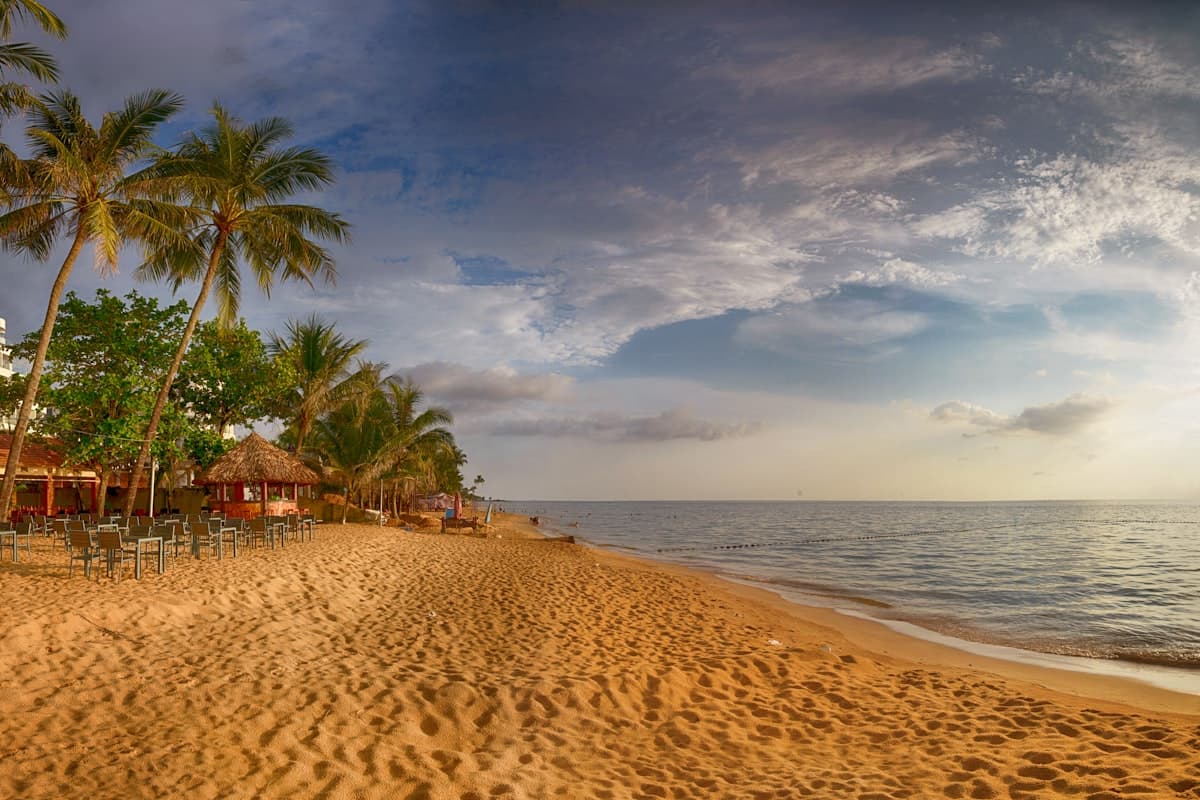
Beach season in Vietnam lasts all year — but not at the same resort. While it rains in Da Nang, the weather is great on Phu Quoc, and vice versa. You are not choosing "when to visit Vietnam" but "where to go in a given month."
| Region | Best season | Avoid | Why |
|---|---|---|---|
| Phu Quoc | Nov – Apr | Jun – Sep | Rainy season, cloudy water |
| Nha Trang, Cam Ranh | Mar – Aug | Nov – Feb | Strong waves, wind |
| Da Nang, Hoi An | May – Aug | Oct – Jan | Rain, waves, red flag |
| Phan Thiet, Mui Ne | Nov – Apr | May – Oct | Rainy season |
| Quy Nhon, Ky Co | Mar – Sep | Oct – Dec | Rain |
| Con Dao | Mar – Jun | Jul – Sep | Strong waves |
| Ha Long | May – Aug | Nov – Feb | Too cold to swim |
March is the universal month. Phu Quoc is still in its dry season, Nha Trang has just opened for swimming, and Da Nang is on the way. If you are visiting for the first time and unsure where to go, March is hard to get wrong. Ha Long is the exception — go in summer; the Ha Long Bay guide has the detail.
October–November is the "riskiest" window: the centre and north are closed and the south is only entering its dry season. Phu Quoc and Phan Thiet are the only safe bets.
Accurate as of 03/2026. Weather anomalies happen — check the forecast before you travel.
Water temperature by month
The water in Vietnam is warm. In the south it does not drop below 26°C even in winter. The central coast is a touch cooler in December–February but still comfortable at 24–25°C. The north is another story: 18–20°C in winter, and few people risk a swim.
| Month | South (Phu Quoc, Phan Thiet) | Centre (Nha Trang, Da Nang) | North (Ha Long) |
|---|---|---|---|
| January | 26–27°C | 24–25°C | 18–20°C |
| February | 26–28°C | 24–25°C | 18–21°C |
| March | 28–29°C | 25–26°C | 20–22°C |
| April | 29–30°C | 26–27°C | 23–25°C |
| May | 29–30°C | 27–28°C | 26–28°C |
| June | 28–30°C | 28–29°C | 28–30°C |
| July | 28–29°C | 28–29°C | 29–30°C |
| August | 28–29°C | 28–29°C | 29–30°C |
| September | 28–29°C | 27–28°C | 27–29°C |
| October | 27–28°C | 26–27°C | 25–27°C |
| November | 27–28°C | 25–26°C | 22–24°C |
| December | 26–27°C | 24–25°C | 19–21°C |
The best swimming water is May–August, when even the north hits 26–30°C. But in the south you can skip the wetsuit any month of the year.
What a beach trip costs
Beaches in Vietnam are free. You only pay for a lounger, umbrella and food. Compared with Thailand or Bali, it is two to three times cheaper.
| Item | Price (VND) | Price (~USD) |
|---|---|---|
| Lounger + umbrella, per day | 30,000–100,000 | ~$1.20–4 |
| Lounger at My Khe (Da Nang) | 30,000–40,000 | ~$1.20–1.60 |
| Lounger at An Bang (free with a meal) | 50,000 | ~$2 |
| Ky Co entry + shuttle | 230,000 | ~$9 |
| Taxi Nha Trang → Doc Let | ~500,000 | ~$20 |
| Surfboard rental (1 hour) | ~150,000 | ~$6 |
| Kitesurfing lesson (2 hours) | ~1,100,000 | ~$44 |
| Plate of grilled prawns (beach café) | 100,000–150,000 | ~$4–6 |
The cheapest beaches are the city ones (My Khe in Da Nang, Nha Trang City Beach). A lounger from 30,000 VND (~$1.20) — cheaper than a coffee back home.
The priciest are the ones with a gate fee and shuttle (Ky Co) or taxi (Doc Let). But even there you are talking about $5–20, not hundreds of dollars.
Prices current as of 03/2026. Rate: ~26,000 VND ≈ $1. Cards work in resorts and cities; keep some cash for street cafés and boat tickets.
FAQ
The South China Sea — part of the Pacific Ocean. Vietnamese call it the East Sea (Biển Đông). Water is 26–30°C year-round in the south and 24–29°C on the central coast. It is a warm tropical sea with good visibility for snorkelling and diving. The mainland coastline runs about 3,260 km, not counting islands, so there are beaches for every taste.
There are sharks in the South China Sea, but attacks on people are almost unheard of. Near the shore you are more likely to meet small reef species. At popular resorts — Nha Trang, Phu Quoc, Da Nang — you will realistically never see one near the shore.
The whitest sand is at Bai Sao (Phu Quoc), often called "flour sand" for its very fine grain. Next come Doc Let (45 km from Nha Trang), My Khe (Da Nang), Bai Dai (Cam Ranh) and Dam Trau (Con Dao). Along Mui Ne and Phan Thiet the sand is mostly yellow — if white is a priority, choose Phu Quoc or Cam Ranh.
Year-round — but in different regions. Phu Quoc and Phan Thiet are best from November to April (dry season). Nha Trang and Cam Ranh: March to August. Da Nang and Hoi An: May to August. March is the most universal month, when almost anywhere works. Avoid Da Nang and Hoi An from October to January, Nha Trang and Cam Ranh from November to February, and Phu Quoc from June to September.
It depends on your passport. Most nationalities apply online for a 90-day e-visa at evisa.gov.vn; UK, most EU countries, South Korea and Japan get a short visa-free stay, and Phu Quoc island has its own visa-free rule for direct arrivals. Beaches themselves need no permit — but always confirm the entry rules for your nationality on the official government site before booking.
Most beaches in Vietnam are free
- Entryopen
- A lounger and umbrella30,000–100,000 VND~$1.20–4you only pay to rent
- ExceptionsKy Coentry 120,000 VND + shuttle 110,000 VND, ~$9, and some private resort beaches
On Phu Quoc and in Nha Trang you can lay out a towel and stay for free — no one will move you on
It depends on your priorities. Phu Quoc for white sand (Bai Sao), sunsets (Long Beach) and an island feel. Nha Trang for infrastructure, city life, and Doc Let and Cam Ranh nearby. For a first trip with kids — Nha Trang (Paragon, Doc Let). For romance — Phu Quoc. For kitesurfing — neither; head to Mui Ne. Full context in the Nha Trang and Phu Quoc guides.
- Guide
Getting to Ha Long: From Hanoi, Airport & Around
How to reach Ha Long: the expressway from Hanoi, limousine buses and shuttles, the airport route, getting around town and island ferries.Getting to Ha Long: From Hanoi, Airport & Around - Guide
Ha Long Bay Tours from Hanoi: Day Trips & Cruises 2026
Tours to Ha Long Bay from Hanoi: day trips, overnight and 3-day cruises, what's included, group vs private — how to choose and what they cost.Ha Long Bay Tours from Hanoi: Day Trips & Cruises 2026 - Guide
Things to Do in Cam Ranh: Water Sports, Islands & Spa
What to do in Cam Ranh: resort water sports, island trips, VinWonders and Nha Trang day trips, spa and family picks — a quiet, low-key base.Things to Do in Cam Ranh: Water Sports, Islands & Spa